Slashdot Mirror
Domain: ucl.ac.uk
Stories and comments across the archive that link to ucl.ac.uk.
Comments · 354
-
artificial gravity
In zero gravity, cryogenic fuels still have surface tension and therefore stick to the walls of their tanks. Acquisition devices would have to find a way to pick up the liquid, but not the gases in the centre of the tank.
How about generating aritifical gravity by putting the entire gas station into a spin? (Yes, Arthur C. Clarke taught me this
- It may be harder to build an orbital structure that's able to sustain constant gravity.
- The station itself might need to consume fuel in order to sustain the spin. Though other orbiters need to perform correctional maneuvers too.
- From playing Orbiter I know it's a lot harder to dock while spinning
-
Re:Wired!http://www.cs.ucl.ac.uk/staff/mrogers/att_klein_w
i red.pdfThat's two legal jurisdictions, let's see how many we can get.
-
Re:Think about this when you read it
http://www.geog.ucl.ac.uk/casa/martin/atlas/att_b
a ckbone_large.gif
Obviously they can't see everything on the internet, but as a backbone provider, they pass traffic originating from many other ISPs. The quote you highlighted taken in this context is much more chilling than it is humorous. -
Re:Oh, the Abuses We'll See!Thanks for the pointer, I'll have a look at Linked. I'm currently studying censorship-resistant communication - friend-to-friend networks seem to be a promising approach, but we need to find out what kind of structure they'll have, whether they'll scale, whether they'll be robust, etc. There are some links on social networks, small world graphs and scale-free graphs in my bibliography. I have to admit there are a lot I haven't read and I've found the maths quite taxing!
Cheers,
Michael -
Re:Even better forSpace flight simulators.
Especially when they're free.
-
Network sonificationI was recently involved in a similar installation at the Slade Centre for Electronic Media in London. The technical side was pretty simple: kismet to intercept packets, tcpdump to parse the output and a bit of Perl to trigger FluidSynth sounds based on the source, destination and packet type. We also detected Bluetooth devices using a USB dongle and GSM activity using a wideband AM receiver designed for paranoid hippies.
The hardest part was choosing the right sounds to represent each type of packet. It's interesting that the Ball State artists chose bells, because we also used deep tubular bells for WiFi beacons and high glockenspiel notes for data packets - you can hear what it sounded like here (20MB mp3).
-
No Mozex?
The only thing that makes firefox usable, in my opion, is Mozex. It allows you to handle text areas, links to non-html URLs, and lots of other tasks using the external applications of your choosing.
The official version is way of out date, since firefox keeps on changing the way extensions work... but there's an updated version here:
http://www.gatsby.ucl.ac.uk/~iam23/code/mozex/
Why one should need an extension to force a browser to do what should have been built in from the start is another matter.
I can only imagine the mozilla people sat around one say and someone said, "Let's see . . . we can either write our own crappy text editor from scratch and *force* every user to use it. Or, we can give people the option of using any of hundreds of exisiting editors with decades of development history behind them." And someone else said, "You know, I've always wanted to write a text editor. But since there are so many good ones out there, no one would ever use mine unless we forced them to do so. Let's go with the first option." -
Re:Practical measuresIt's interesting that you should mention the USSR, because one of the earliest examples of a darknet was the Russian samizdat (literally: self-publishing) network. Censorship in the USSR operated in a deliberately ambiguous and unclear way: rather than banning certain works outright, the authorities created a huge legal grey area, discouraging the expression of any political opinion that wasn't completely orthodox. Authors responded by circulating their works privately from reader to reader in samizdat: each reader would manually copy the work on a typewriter and exchange copies with trusted friends. While this isn't the same as being able to stand in the public square and express your opinion to anyone who passes, it still allows dissidents to express, exchange, and develop their thoughts in a way that wouldn't be possible in isolation.
Regarding your second point, it's true that private communication can exclude the people who are being discussed. Allegations (and conspiracies) are usually made behind closed doors. But the powerful will always have access to private communication. The question posed by Freenet and similar networks is whether the less-powerful should also be able to communicate privately. Comparing Freenet to the Gestapo (although required by Godwin's Law) misses the point: the secret police don't need to use Freenet, because they already have overwhelming power. It's the citizens of a police state who need private communication.
-
Genetic data has always been publicly available!
All available genetic data (and protein data) from every sequenced organism has always been publicly available. Whether it's due to requirements by publishers of the journals that they publish their analysis in, a requirement of their funding agencies, or for the mere goal of sharing their data with the global scientific community.
Gene sequence databases have been around since 1981:
EMBL: http://www.ebi.ac.uk/embl/
GenBank: http://www.ncbi.nlm.nih.gov/
DDBJ: http://www.ddbj.nig.ac.jp/
HUGO: http://www.gene.ucl.ac.uk/nomenclature/
JGI: http://www.jgi.doe.gov/
Protein sequence/structure data is also publicly available:
Expasy: http://ca.expasy.org/
PDB: http://www.pdb.org/
Their statement "Google is guilty of biopiracy because a searchable database could make it easier for private genetic information to be abused" is flawed on many levels.. and is merely an attempt at media hype.
A - If the genetic data is private (ie. industry funded and not shared with the global scientific community), how will Google get access to it?
B - Searchable databases that contain private/public genetic information have existed since before most other types of searchable databases.
C - Sharing data from biological analyses (whether genetic sequence data, protein sequence data, gene expression data, protein structure data, etc.) is an important aspect of understanding the underlying mechanisms of biological systems.
Many of the medical advances that we've seen these past couple decades have resulted directly from the fact that biological data has been publicly available... facilitating collaborations beyond borders and beyond disciplines.
I look forward to Google's role in facilitating access to this information, and look forward to applying it in future research projects.
Ryan -
Re:How will it compare?For those unaware, you can currently browse the genome libraries: http://www.ncbi.nlm.nih.gov/genome/guide/human/re
s ources.shtmlIts not as if the NCBI is the only ones publishing genomes. taking a few examples from our useful links page
Its Google is not even doing something new type in a human gene (say ABCA1and you will get taken to the gene data pages anyway
The only reason why they picked on Google is that it would get headlines, now move along nothing to see here
-
Re:S/N?
You may be interested in Shannon's channel coding theorem which relates the maximum possible bandwidth of a communications channel to the SNR. Increasing the deetctor sensitivity increases the SNR and hence the channel capacity.
-
Thinking is unconscious...
http://www.ucl.ac.uk/hypnosis/articles/Halligan20
0 0a.pdf
"Neuropsychologists and researchers studying certain types of brain damage have come to the conclusion that many of our actions and perceptions are carried out by unconscious parts of our brains (New Scientist , 5 September 1998, p 30) . For example, if you want to reach out and pick up an object, you don't need to be conscious of the exact size and
shape of it, or what each of your muscles needs to do.
But surely it's not like that for higher level mental activities, such as our thoughts and
feelings? Most people--and many researchers--consider that these originate within the realms of consciousness. We don't agree.
We suggest that all the thoughts, ideas, feelings, attitudes and beliefs traditionally considered to be the contents of consciousness are produced by unconscious processes--just like actions and perceptions. It's only later that we become aware of them as outputs when they enter our consciousness. As pointed out by Jeffrey Grey of the Institute of Psychiatry in London--consciousness occurs too late to affect the outcomes of the mental processes that it is apparently linked to.
You may prefer the notion that you are in charge of your own mind. But where did that idea come from? If you stop to think about it, you'll probably find that it just popped into your head--like all your thoughts. Perhaps you have decided to read the rest of this article. But did "you" really make that choice? Keep reading, if you can. You may never
think of "yourself" in quite the same way again."
Which is what many meditative traditions have been saying for quite a long time. For more, see Libet's work on the "delay" of what is termed "normal consciousness" in decision making. -
Hey Hey 16KAh, the memories...
My first machine was a ZX Spectrum 48K back in 1984. After getting bored with the first batch of games, I wrote my first BASIC program, a telephone directory application. String arrays! Saving to/load from tape! Yay!
The Speccy is also responsible for introducing me to Tolkien, via The Hobbit.
Since then... Amstrad CPCs (Sorcery!), 286, Sun workstations (in college), 486, etc. My current main machine is a Thinkpad X31 which is just the right size (and color!) to run spectemu on.
By the way, the Spectrum is, as far as I know, the only machine to have had a song written about it.
-
Re:satellites and Starry Night software
I use Orbiter ( http://orbit.medphys.ucl.ac.uk/ ) as my space flight simulator. Too bad it doesnt feature space junk
-
will evolution ever escape from design?Have a look at quote below:
Some of the most startling achievements in the use of computers to automate design are being accomplished by the use of evolutionary search algorithms to evolve designs. http://www.cs.ucl.ac.uk/staff/P.Bentley/evdes.html
The page describes a book about Evolutionary Design which covers such subjects as:- design optimization
- creative design
- the creation of art
- artificial life forms
There's design and creation all over the place.
What about a theory of Automated Design?
Would it cause so much stir as Intelligent Design?
How can you tell the difference between things that were designed and those that evolved using some kind of evolutionary process? Just google for references to evolution of software or have a look at example below to see what I mean
http://www.martinfowler.com/articles/designDead.ht ml
What about the beginning? In computers as in biology it is impossible to explain the beginings of the hardware to run the automated design process without either expecting design by a supreme being (it is us in case of computers) or some impossible series of events.
-
Re:Nice ...
and here I can't get a decent fucking picture from DirecTV.
Karma may be a bitch, but Shannon is a fucking asshole. -
Ammonia hydrate
Pure H2O is frozen rock solid at 110K. But H2O-NH3 ices are not. Try mixing 50% ammonia and 50% water together and putting them in the freezer. The mixture will not freeze but will just become more viscous. Low temperature mixtures of H2O, CO, CH4, or N2 have similarly weird properties. Check this out. The compositions of Saturn's icy moons have not been well established. But indirect evidence like eruptions on Enceladus, or cometary outbursts, suggest exotic icy chemistry.
-
Re:*yawn* and no, not from hypnosis...
The main 'evidence' in this article is from a 'brain scanner' which is probably fMRI. As one of my professor's liked to say, "In fMRI we show people a picture of their ass, then a picture of a hole in the ground, and subract them." Most fMRI statistics include averaging across areas... which is nice, until you remember that our brain isn't on a sphere, but something with fissures in it, and so you just averaged two things that were (cortically speaking) in other worlds (since because of the fissure they might be centimeters apart! Remember the Cortex is a laminar archiecture around the surface)... so I'm highly skeptical, to say the least.
I gotta disagree with this part. First, most fMRI stastics are voxel-based. That is, independent statistics are done on each spatial location at the finest resolution you acquire. Then, you make some corrections for the fact that you are doing so many independent analyses. It's quite rare to "average across areas" and I'm not sure why anyone would do such a thing.
In fact, there are many analysis techniques that treat the cortex as a 2D surface, unfolding it before any other processing. fMRI has many weaknesses, but I don't think this particular criticism is valid. Also, your professors criticism about the subtraction is misleading as fMRI statistics rarely do real subtractions any more, they are really a form of multiple regression (the paper referenced in the article used SPM as their statistics package.)
As for the top-down thing, clearly attention influences perception. In one of the studies mentioned in TFA, the Stroop effect was shown to be diminshed by hypnosis. That's pretty impressive. (In the stroop test, you see a word and must read its color. People are slower when the ink color conflicts with the written word, since reading the word is so fast and automatic.) The subjects in this study were hypnotized to believe the language was just gibberish. I don't know what other kind of evidence of top-down processing you would want! -
Re:More than what was intended?
The "author" of the real world (God?) "intended" the room to be 1000 times brighter by slamming 1000 times more protons onto your retina, but your brain normalizes things to make the world easier to comprehend.
To condense your point, our eyes work on a pseudologarithmic scale -
Re:Talking out both sides of out mouths.I should have clarified... I'm a 100% pure-bred command-line guy. And it seems like the only decent Windows tools there are unix-ports.
But yeah, on the wider Windows stuff, it comes from the wider open source community, and isn't Linux only (eg. things like Inkscape, Ethereal, Orbiter, Celestia, Blender,
-
Re:Article light on details> (although making those lasers cheap, reliable, and phase-lockable will be a nice trick.
I did some research on this about 10 years ago which has come a long way since. Here's the first paper in bulk optics. We created both homodyne and heterodyne phase lock loops with two semiconductor lasers. In the heterodyne case we could lock with up to 24 GHz frequency offset.
A lot of the original work for this was done at UCL, check out their list of papers looking for 'phase-lock loop'. I believe they have also demonstrated this on chips too.
Channing
-
Re:Article light on details> (although making those lasers cheap, reliable, and phase-lockable will be a nice trick.
I did some research on this about 10 years ago which has come a long way since. Here's the first paper in bulk optics. We created both homodyne and heterodyne phase lock loops with two semiconductor lasers. In the heterodyne case we could lock with up to 24 GHz frequency offset.
A lot of the original work for this was done at UCL, check out their list of papers looking for 'phase-lock loop'. I believe they have also demonstrated this on chips too.
Channing
-
It's called risk compensation
I don't know about guard rails, but the evidence suggests that both mandatory seatbelt laws (throughout the world) and mandatory bike helmet laws (in Australia and New Zealand) have not reduced the rate of death and serious injury of car occupants and bike riders respectively.
It's because of a well-known phenomenon called risk compensation.
-
It's called risk compensation
I don't know about guard rails, but the evidence suggests that both mandatory seatbelt laws (throughout the world) and mandatory bike helmet laws (in Australia and New Zealand) have not reduced the rate of death and serious injury of car occupants and bike riders respectively.
It's because of a well-known phenomenon called risk compensation.
-
Re:See Cassini's path
If you want to feel like an astronaut why not try to fly a spacecraft with orbiter?
-
Looks like that Orbiter simulator
Has anyone played with that Orbetor Simulator?
Seeing this animation made me realize just how good that programmer is. The visualizations on that simulator nailed it pretty well. And it's free too! -
New algorithm understands slashdot comments!I trained my gibberish generator, er, statistical linguistic analysis tool Sprong on the text of this discussion and here's what it came out with:
on http www computer and the speaking and on it human into some or examplete altern as so it are of a going is not a google of a finding on in learning as and pare to so the learning inten it computern learning is pare alter relation in the formation http www east are a simplete the first score senter and produce into shold the what human does the alter and of language language what have i was score net the cal to alter relation in the which intern a probable cal algorite the programmar from language to the the the which is it the programmar do with and as the to beneath you was befor a mean does structive befor altern as score a from language working the pare alter the working in the a from language stand a man the for from a
In the natural language processing business they call this "the same level of understanding as a two-year-old child".
-
Re:Hmm
Allow me to raise your expectations.
-
Re:Hmm
Graphics are pretty good. Check a gallery of screenshots at http://www.medphys.ucl.ac.uk/~martins/orbit/galle
r y.html. -
TransX!
Duncan Sharpe's TransX
C'mon Orbiter fans, you were thinking the exact same thing when you read this article... Planning a trip to Mars? Just hit Shift-J and start plotting your Hohmann transfer orbit insertion burn.
For those who are lost:
ORBITER is a free flight simulator that goes beyond the confines of Earth's atmosphere. Launch the Space Shuttle from Kennedy Space Center to deploy a satellite, rendezvous with the International Space Station or take the futuristic Delta-glider for a tour through the solar system - the choice is yours.
But make no mistake - ORBITER is not a space shooter. The emphasis is firmly on realism, and the learning curve can be steep. Be prepared to invest some time and effort to brush up on your orbital mechanics background. A good starting point is JPL's Space Flight Learners' Workbook.
also...
TransX is [Duncan Sharpe's] eXtended Transfer MFD. It's designed for planning trips across the solar system, or even just to the moon. It's full-featured, with support for complex flight plans, including slingshot trajectories. And naturally, there's a manual that comes with it. -
Some infoMRO made me more interested in orbital mechanics, too.
The best info I've found so far is actually a do-it-yourself exercise... there's a space-travel simulator that you can use to try to figure out how to get to mars, along with some helper apps that do some math for you.
In terms of starting, basic data... you can ignore the effects of the MRO on the two planets, since it's so small. But the positions of the two planets can be gotten from here. To understand the coordinates used, study here.
I'd like to find some decent open-source apps to visualize the orbits in 3D... at least a static diagram, if not an animation.
-
Re:Trip to mars dont seem that "simple"
Easier: Orbiter.
I once worked on a more complex version (after writing a simpler version), but got distracted to other projects somewhere between the finished code to implement Kirchoff's laws for the electrical system and the unfinished code to calculate the volume and mass of a fuel tank. -
Re:Land the shuttle yourself
And for tommorow's launch of the Mars Reconnaissance Orbiter, you can find your own transfer orbit to Mars (for free, to boot).
-
Re:AnswerHow much is your bandwith worth to you? Would they follow a model like empornium where I would have to keep my share up? What if I didn't want to give out *any* bandwith would I still get to download?
I've been working on a quantitative answer to this question. (There are some notes here but they're a bit out of date.) My idea works like this: peers upload to their neighbours in order to obtain downloads from their neighbours (payment in kind, as in BitTorrent). When a peer has to choose which neighbour to upload to, it works out the number of extra bytes it's likely to be allowed to download as a result of uploading to each neighbour, and it uploads to the neighbour that offers the best value. (You can work out the expected value by keeping track of each neighbour's upload/download ratio, there's no need for neighbours to make explicit "bids".)
Uploading to a neighbour changes its upload/download ratio, so if you have several neighbours that are equally good providers then you'll upload to them in round-robin order; if some neighbours are better providers than others, they'll get a bigger share of your upload bandwidth. Neighbours that don't allow you to download will have the lowest priority. Essentially, neighbours bid for your bandwidth in a blind auction, but rather than offering currency they offer payment in kind, and rather than naming explicit prices they're assessed on the basis of their past behaviour. Unlike the Tit For Tat rule used by BitTorrent, this rule is motivated directly by self-interest, so it *should* be harder for selfish users to gain an unfair advantage (although I can't prove it yet).
-
Re:Aviation And Space Geeks Rejoice...
Have you tried Orbiter? It does the whole launch, dock and land cycle with the space shuttle and has addons to allow you to do apollo missions. It's damned hard work getting the shuttle into orbit!
http://www.medphys.ucl.ac.uk/~martins/orbit/orbit. html
Windows only, no idea whether it runs under Wine or not.
Roger -
Re:Aviation And Space Geeks Rejoice...
-
Re:Linux?
You might try RAT.
-
Re:And the important question isThe business about zombies seems like a potential code for the need to block "normal" users from connecting with each other.
That solution has actually been suggested by Mark Handley and Adam Greenhalgh - check out the slides and the paper. Sounds like exactly the kind of proposal Clark is asking for.
-
Re:Flight Simulator
No, but I did think how GoogleEarth + Orbiter would = wow!
-
Re:I can't imagine what they must look like on Mar
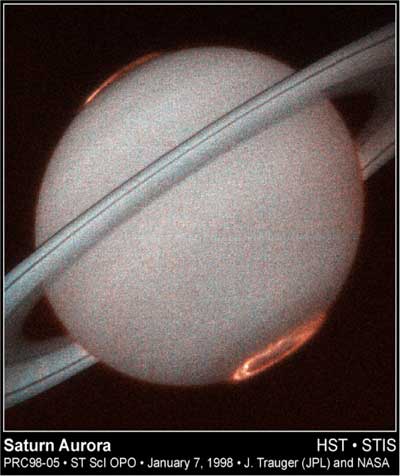
Aurora on Jupiter: http://msslhx.mssl.ucl.ac.uk/~npm/Web_Pages/Visit
o r_Pages/aurora/Jupiter_aurora.gifAurora on Saturn: http://www.mssl.ucl.ac.uk/pages/general/news/satu
r ns_aurora/assets/saturn_aurora.jpgUranus and Neptune probably have them too, but are too far away to see them clearly from Earth-based telescopes.
-
Re:I can't imagine what they must look like on Mar
Aurora on Jupiter: http://msslhx.mssl.ucl.ac.uk/~npm/Web_Pages/Visit
o r_Pages/aurora/Jupiter_aurora.gifAurora on Saturn: http://www.mssl.ucl.ac.uk/pages/general/news/satu
r ns_aurora/assets/saturn_aurora.jpgUranus and Neptune probably have them too, but are too far away to see them clearly from Earth-based telescopes.
-
There is already a virtual London project at UCL
At the risk of sounding like an advert (and apologies to those who feel that I do), the Centre for Advanced Spatial Analysis (CASA) at University College London is building a 3D GIS-based model of London that will and can be used to help the public explore different urban planning outcomes (amongst other things).
About Virtual London here:
http://www.casa.ucl.ac.uk/research/virtuallondon.h tm
About CASA's research here:
http://www.casa.ucl.ac.uk/research/index.htm
Declaration of Interest: Professor Mike Batty, who runs CASA, was one of my PhD supervisors. -
There is already a virtual London project at UCL
At the risk of sounding like an advert (and apologies to those who feel that I do), the Centre for Advanced Spatial Analysis (CASA) at University College London is building a 3D GIS-based model of London that will and can be used to help the public explore different urban planning outcomes (amongst other things).
About Virtual London here:
http://www.casa.ucl.ac.uk/research/virtuallondon.h tm
About CASA's research here:
http://www.casa.ucl.ac.uk/research/index.htm
Declaration of Interest: Professor Mike Batty, who runs CASA, was one of my PhD supervisors. -
Gene spreadsheets can add errors
There is a family of genes called the septins the gene symbols for these are SEPT1 SEPT2 to SEPT11 which gets converted to dates. Some Accession numbers get converted to floating point. here is a link to the paper
-
Re:How long is it before...Disney owns the right to Peter Pan? This is news to me, I thought the book (written by J.M. Barrie) was in the public domain...
It's a play and the copyright is held by Great Ormand Street Children's Hospital in London, by special provision for that specific work under British copyright law.
TWW
-
Re:And they call this science?
Here is the Death Star, right on our own solar system. No need to search for extra-solar Death Stars.
-
Re:meh
It was a pretty fun game back in the day.
That's not what the first google result says:
Mantis is one of the least known Microplay / Microprose games ever made, and for good reason: it is a mediocre ship-to-ship flight combat simulator(...)
Also when you try a real space simulator like Orbiter, you have to wonder how anybody can fight up there. -
Sad in a way
A lot of my best maths and computing teachers were women.
That at UCL.
System's Analysis, Functional Programming and Calculus to cite a few.
Because it's been a while now - I can't find their personal pages.
So many great mathematicians were women so why do they shy away from computing?
I.T is dying collapsing we don't need an exodus right now.
So in future we will have what zero participation of women in Computing? Fine desert us!
Also I find women (imho) are much better than men at teaching, presentation and communication.
All of which very related to Computing.
The authors Linda Bostock and Sue Chandler are but one example that comes to mind.
Men are crap teachers mostly.
You often hear of a bad male teacher, but rarely a crap lady teacher.
There is only one thing us men do better than women.
And that is cooking
Get your girlfriend to cook for you and expect to eat overcooked burnt goo.
"Ahm
-
Sad in a way
A lot of my best maths and computing teachers were women.
That at UCL.
System's Analysis, Functional Programming and Calculus to cite a few.
Because it's been a while now - I can't find their personal pages.
So many great mathematicians were women so why do they shy away from computing?
I.T is dying collapsing we don't need an exodus right now.
So in future we will have what zero participation of women in Computing? Fine desert us!
Also I find women (imho) are much better than men at teaching, presentation and communication.
All of which very related to Computing.
The authors Linda Bostock and Sue Chandler are but one example that comes to mind.
Men are crap teachers mostly.
You often hear of a bad male teacher, but rarely a crap lady teacher.
There is only one thing us men do better than women.
And that is cooking
Get your girlfriend to cook for you and expect to eat overcooked burnt goo.
"Ahm
-
Re:Knoppix can REALLY impressI've just been writing a boot script that finds programs that were accessed between the last boot and the last shutdown and loads them into the disk cache. Speeds up load times even when you "only" have 64 megs of RAM.

_-_HellasSat.jpg)