Slashdot Mirror
Domain: utexas.edu
Stories and comments across the archive that link to utexas.edu.
Comments · 1,356
-
and btw: Dijkstra did not use the phraseAs you can see from http://www.cs.utexas.edu/~EWD/transcriptions/EWD13xx/EWD1308.html quote:
Finally a short story for the record. In 1968, the Communications of the ACM published a text of mine under the title "The goto statement considered harmful", which in later years would be most frequently referenced, regrettably, however, often by authors who had seen no more of it than its title, which became a cornerstone of my fame by becoming a template: we would see all sorts of articles under the title "X considered harmful" for almost any X, including one titled "Dijkstra considered harmful". But what had happened? I had submitted a paper under the title "A case against the goto statement", which, in order to speed up its publication, the editor had changed into a "letter to the Editor", and in the process he had given it a new title of his own invention! The editor was Niklaus Wirth.
-
Dear DARPA
By clicking on this post, you agree to pay the author, Kilgore Trout, the sum of Euro 1,000,000,000,000. in one
payment via electronic deposit into the bank account of my choice within 24 hours of your reading this post.
Use ACL2.
Cordially,
Kilgore Trout -
Re:Who made you judge?
No one gets hurt if I roleplay rape or knifeplay with my consenting adult partner.
Right. So? WTF does that have to do with anything that we are talking about. Are you just making shit up? WhoTF mentioned anything about you and your "partner"?
And even if we do induldge in S&M, that's none of your business, and not what I consider "violent", but it will be caught by this law. The only "sick fucks" are people who have a perversion about locking people up for three years because they don't like what they get up to or fantasise about in private.
OK, you just showed that you have not been paying attention. We are talking about people watching videos of rapes. WTF does that have to do with what you do with whoever in your basement? No one is saying that you can't do S&M with your willing partner. We're saying you can't make a video of a rape (real or acted) and make it publicly available. If you want to do that in the privacy of your own home, have at it. So put the red ball back in your mouth and stick that strawman up your ass, leather boy.
So? Is murder wrong? Says who? What about stealing? How about fucking that 10-yr old girl down the street if she's willing? How about exposing yourself to children? Are these all not moral situations?
These are not issues of taste - these are issues of non-consensual harm towards others.
So if the 10-yr-old down the street consents, you're OK with it? How about if I take naked pictures of that 10-yr-old and post them on the MySpace page I made for her? Is that OK? No one is hurt, right? That is your determining factor if something should be illegal.
Evidence, please, not speculation. We're talking about locking people up here.
Sure. Unfortunately, I could find no studies done on people who watch rape videos. I guess even the most open minded research never thought that people would be so fucking sick as to want to watch rape videos, much less defend that behavior. Most of what I could find dealt with video games and movies but the premise is the same:
Here is one on video games.
Here is another.
Here is one that deals with violent videos. I believe even you will agree that rape is a violent act and we are talking about rape videos. I believe a rape video would qualify as a violent video by any definition.
Here is another.
However, since you are probably going to call foul because there are no actual RAPE stories here, I went ahead and found one. I had to wade thought a swamp of virus infecting sites to find it (literally! "You must download thisI went to a porno bookstore, put a quarter in a slot, and saw this porn movie. It was just a guy coming up from behind a girl and attacking her and raping her. That's when I started having rape fantasies. When I saw that movie, it was like somebody lit a fuse from my childhood on up... I just went for it, went out and raped." Rapist interviewed by Beneke, 1982, pp. 73-74.
HERE is another.
Unfortunately, many of these sites lump violent films with porn. Now, there is nothing wrong with porn. I love my porn. Now sick fuckers like these are going to end up taking it away because they want to watch rape flicks and act it out on real people. It's really sad when people like you want to let them. I hope it's out of ignorance. I really hope you genuinely thought that watching rape videos would somehow h -
Only the integers
Integers were discovered. Beyond that, it's human invention.
I used to do work on mechanical theorem proving, and spent quite a bit of time using the Boyer-Moore theorem prover. When you try to mechanize the process, it's clearer what is discovered (and can be found by search algorithms) and what is made up. Boyer-Moore theory builds up mathematics from something close to the Peano axioms. But it's a purely constructive system. There are no quantifiers, only recursive functions. It's possible to start with a minimal set of definitions and build up number theory and set theory. The system is initialized with a few definitions, and, one at a time, theorems are fed in. Each theorem, once proved, can be used in other theorems. After a few hundred theorems, most of number theory is defined.
But you never get real numbers that way. Integer, yes. Fractions, yes. Floating point numbers, representation limits and all, yes. But no reals. Reals require additional axioms.
-
Re:For those too lazy too read the article:
The thing is, Andy's back, and as far as I can tell, he doesn't give a rat's ass about Solaris. He just wants to make interesting hardware. That's where the money is, after all. Software is a pathetic fraction of corporate revenues here. All the more reason to be mystified about the internal hostility toward Linux.
So, for example, the Thumper is one of Andy's creations. It's pretty hard to beat the storage density you get for the price. Put a mess of those under a Lustre filesystem, and people start to take notice of Sun as a player in HPC. The recent TACC Ranger system is all Sun gear: storage, compute, and network (with sun-built Magnum switches). The OS? Linux.
There's more interesting stuff coming down the pike, and from my perspective, it seems that there's a shift toward making money on volume rather than margins. In other words, somewhat less awesome, but more of it.
I dunno. I don't profess to have much more special knowledge than anyone outside of the upper echelons. I'm hopeful, though. I read somewhere that many of the big Solaris egos were hired away by teh google. Hopefully they keep going. They can have our kool-aid-drunk sales and marketing people too. -
Sounds like what he told me two months ago ...
billg recently visited utexas.edu and lectured computer science and computer engineering students. I was able to luckily attend even though Im a lowly Unix sysadmin for ece.utexas.edu.
I asked him during the Q&A if his view of the GPL and free|open source software had changed since the days of his (in)famous 'Open Letter To Hobbyists', especially given the explosion of Linux in the enterprise during the last decade.
His response? The GPL is a poison, more or less. Sigh. -
Sounds like what he told me two months ago ...
billg recently visited utexas.edu and lectured computer science and computer engineering students. I was able to luckily attend even though Im a lowly Unix sysadmin for ece.utexas.edu.
I asked him during the Q&A if his view of the GPL and free|open source software had changed since the days of his (in)famous 'Open Letter To Hobbyists', especially given the explosion of Linux in the enterprise during the last decade.
His response? The GPL is a poison, more or less. Sigh. -
Sounds like what he told me two months ago ...
billg recently visited utexas.edu and lectured computer science and computer engineering students. I was able to luckily attend even though Im a lowly Unix sysadmin for ece.utexas.edu.
I asked him during the Q&A if his view of the GPL and free|open source software had changed since the days of his (in)famous 'Open Letter To Hobbyists', especially given the explosion of Linux in the enterprise during the last decade.
His response? The GPL is a poison, more or less. Sigh. -
Sounds like what he told me two months ago ...
billg recently visited utexas.edu and lectured computer science and computer engineering students. I was able to luckily attend even though Im a lowly Unix sysadmin for ece.utexas.edu.
I asked him during the Q&A if his view of the GPL and free|open source software had changed since the days of his (in)famous 'Open Letter To Hobbyists', especially given the explosion of Linux in the enterprise during the last decade.
His response? The GPL is a poison, more or less. Sigh. -
Re:Why knock yourself out?
"- Computer science is changing very quickly. What is being taught now could be completely irrelevant in 15 years. Aggressive technical exposure might not be as valuable as you think."
No it's not. Pick 10 random EWDs and see how many of them don't still apply today. If you're actually being taught computer science, the info you're learning should be useful for a very long time. -
link to project page
http://www.ph.utexas.edu/~utlasers/texas_petawatt_files/texas_petawatt.htm
with fotos and shematics, etc.. -
RF calculatorIf they're so concerned about effects why not just calculate the health risks? WiFi has a limit of 4watts EIRP (includes antenna gain and output wattage). So, example of a 15db antenna would be a max of
Considering the fact that most City wifi antennas are on powerpoles, light poles or other such high-up places, a cellphone would be a higher source of radiation than wifi.
-
Re:None of the above...
Very true. And here's something from E.W. Dijkstra about Formal Verification. http://www.cs.utexas.edu/~EWD/transcriptions/EWD02xx/EWD288.html
-
Re:Deadly sins?
It may not be a deadly sin, but Dante puts hypocrites at the 8th level of hell, putting it at almost the worst sin in his mind. And people have also quoted the bible, so I won't do that... but suffice it to say that hypocrisy is a very bad thing to most people. Saying you shouldn't steal while taking someone else's money doesn't sit as well with people as if you had just stolen it because you needed/wanted it.
-
Re:Not sure I get their argument
You are assuming that there is only one variable (resolution) that can be adjusted. Actually the quality of the scene is a function of two variables: resolution and scene complexity. When the complexity of scenes was low, rasterization produced much better results than raytracing for the same effort. Now that scene geometry has increased so much we are reaching the point where raytracing will produce the same (or better quality) for less effort. The main issue is that rasterization is O(n) in scene complexity while raytracing is O(log n). Of course there are lots of other issues and tradeoffs otherwise we would be using raytracing in games already.
If you're interested there is a detailed comparison available here. -
Re:Global climate change, new energy sources...
With that many cores, they will need to find new energy sources just to power it,
Luckily, UT has its own power plant.
-
Re:Peter Norton (Accelerating change)
Displays in our eyeglasses sounds pretty tame compared to Vernor Vinge or Ray Kurzweil.
http://www.kurzweilai.net/articles/art0518.html?printable=1
"Vernor Vinge's Hugo-award-winning short science fiction story "Fast Times at Fairmont High" takes place in a near future in which everyone lives in a ubiquitous, wireless, networked world using wearable computers and contacts or glasses on which computer graphics are projected to create an augmented reality."
Hans Moravec was talking about "magic glasses" in the 1980s,
http://www.gslis.utexas.edu/~palmquis/courses/reviews/erin.htm
and you can buy variants of them today
http://www.i-glassesstore.com/
(not quite heads-up, but it is not much of a stretch I've seen prototypes for those, likely even on Slashdot).
If magic glasses was "sci fi" I can imagine why Peter Norton left in disgust. Many people have a real difficulty understanding the nature of exponential growth in technological capacity. See:
http://en.wikipedia.org/wiki/Accelerating_change
Or:
http://www.kurzweilai.net/articles/art0134.html?printable=1
"An analysis of the history of technology shows that technological change is exponential, contrary to the common-sense "intuitive linear" view. So we won't experience 100 years of progress in the 21st century -- it will be more like 20,000 years of progress (at today's rate). The "returns," such as chip speed and cost-effectiveness, also increase exponentially. There's even exponential growth in the rate of exponential growth. Within a few decades, machine intelligence will surpass human intelligence, leading to The Singularity -- technological change so rapid and profound it represents a rupture in the fabric of human history. The implications include the merger of biological and nonbiological intelligence, immortal software-based humans, and ultra-high levels of intelligence that expand outward in the universe at the speed of light." -
Re:Yawn...
I must say I don't think it's quite as "freakin' awesome" as you seem to. I believe that natural language is not only hard to handle correctly, but also hard to use correctly. There is a reason why we have formal specifications and legal language -- "natural" language is just too vague. Now in some niche areas where you don't have your hands available I can see the allure of voice recognition, but I honestly think that speaking to computers to have them do stuff in anything resembling natural language will be harder to use to get to a specific goal than what we have now. I suppose if you just want some kind of result, that's not so bad, but I kinda like getting exactly what I ask for. A much better argument here. I know it's about programming, but that's basically what we do with computers on any level of use.
-
So sure, so wrongI'm sure you guys will just view this as more "word soup", but to be honest, I think maybe you need to get off of your strict diet of mathematics. I can't speak for anyone else who may have read this, but I would not say this is just more word salad; rather, it seems to convey - rather clearly - a profound ignorance of plasma physics.
Worse, for one who has written so glowingly about Alfvén, it seems pln2bz has not read much of the plasma physics which earned Alfvén his scientific reputation.
What, if not a mathematical tour de force, is MHD (magnetohydrodynamics http://farside.ph.utexas.edu/teaching/plasma/lectures/node60.html)? And who got a Nobel Prize for developing this?
But wait! What does the author of this graduate course in plasma physics have to say about the domain of applicability of Alfvén's great work?
This, from the introduction section (my emphasis): It is often observed that the above set of equations [the MHD equations] are identical to the equations governing the motion of an inviscid, adiabatic, perfectly conducting, electrically neutral liquid. Indeed, this observation is sometimes used as the sole justification for the MHD equations. After all, a hot, tenuous, quasi-neutral plasma is highly conducting, and if the motion is sufficiently fast then both viscosity and heat conduction can be plausibly neglected. However, we can appreciate, from Sect. 3, that this is a highly oversimplified and misleading argument. The problem is, of course, that a weakly coupled plasma is a far more complicated dynamical system than a conducting liquid. So, if one insists on drawing conclusions about what plasma physics is, and how it is applied, without even reading introductory texts on it, what could we say about the approach which leads to such a conclusion? -
Why not do some hard yakka of your own?why don't you guys focus on explaining why [misunderstood aspect of latest news article's hyped summary]? In today's wired world, you can obtain a great deal of high quality astronomical data, for free*.
You can even get the lecture notes for a (graduate) university course in plasma physics (http://farside.ph.utexas.edu/teaching/plasma/plasma.html - as an aside, note how often the word "astrophysics" occurs in these lecture notes^).
What do you say to rolling up your sleeves and doing some research yourself?
* As an example, here is a list of publications on Cas A (a.k.a. G111.7-2.1), from the 1990s to 2006; note that many of these publications tell you how to go about getting the observational data used in the papers, and that much of it is available online, for free: http://www.mrao.cam.ac.uk/surveys/snrs/snrs.G111.7-2.1.html
^ I found this, in the introduction section, quite interesting, in light of a common, unsubstantiated, assertion in so many of your SD comments: "astrophysicists quickly recognized that much of the Universe consists of plasma, and, thus, that a better understanding of astrophysical phenomena requires a better grasp of plasma physics. The pioneer in this field was Hannes Alfvén, who around 1940 developed the theory of magnetohydrodyamics, or MHD, in which plasma is treated essentially as a conducting fluid. This theory has been both widely and successfully employed to investigate sunspots, solar flares, the solar wind, star formation, and a host of other topics in astrophysics. Two topics of particular interest in MHD theory are magnetic reconnection and dynamo theory." -
Re:@_@
Why did you laugh when I said GOTO?
Maybe this is why? As a CS student, I can tell you that people fresh out of college these days will laugh at goto since every CS teacher they've ever had has slapped them on the wrist for even *mentioning* the use of a goto statement, not to mention the damage that would be done to their grade if they actually used one in a program.
-
I agree one thousand percent (long)
The CS program at my University is a joke and apparently it is as I have always feared: my University is on par with CS programs at other Universities. Partially you can blame the Universities, but mostly you have to blame the students. Let me tell you why:
I've been programming since I was 8 when my father (who has worked for IBM since before I was born) taught me C (I am now 25). My Junior year in high school (10 years ago), I stopped using Windows and started using Linux, and have never turned back because I immediately fell in love with Bash.
When I went to school, I started as a Music Major and actually stayed one for quite a while, but I was never very good at it since, instead of practicing my sax for three hours a day like I was supposed to be doing, I was coding about six hours a day. In my first three years of college, I taught myself Java, Lisp, Ruby, and OCaml, and not just the languages but the libraries as well. I read everything I could find about algorithms, data structures, software engineering (URL, Design Patterns, etc.), compilers, theory (FSAs/PDAs/TMs), and even some true graphics programming (ray tracing). All of this I learned from the internet, completely isolated from any direct contact with other computer science professors or students. I did it because I wanted to learn it because it was interesting, and not because anyone told me I had to.
When I realized I was going to starve as a musician I decided to get a minor in CS, since it was something I had always just done for fun, and it would look good on my resume. My first month into the minor, I was already tutoring seniors in their classes, and simultaneously laughing at how easy their assignments were and being horrified that they couldn't do them. I had done more complex projects for fun and threw away the code because I didn't think anyone would want such trivial junk. I quickly found out that I had essentially put myself through a CS degree on my own and completely by accident!
The next semester, I changed majors, was in senior level classes and was actively involved in a research project with one of the professors. Whenever I got an assignment due in two weeks, I would complete it in class, and then spend the next two weeks implementing it in other languages and extending it to something that isn't incredibly trivial. For example, we had two weeks to implement a Turing machine, and because the majority of the class couldn't do it, it got extended to almost a month. I wear shirts from ThinkGeek and my peers don't get the jokes. When I pull up a terminal their eyes glaze over, as if I'm performing some mystical black magic.
The point is that any and all the information for the CS degree is out there and publicly available, but the students are simply not willing to go out and find it. I think the only positive thing I have gleaned out of the CS degree is what they are stripping from the degree programs: being forced to take the advanced math classes. My math classes taught me how to think formally about something that has always been intuitive and have been the most enlightening classes I have ever taken in college!
Whenever I get frustrated with my University or my peers, I just reread theses and remind myself that there are others out there:
http://www.pbm.com/~lindahl/mel.html[The Story of Mel]
http://www.pbm.com/~lindahl/real.programmers.html[Real Programmers Don't Use Pascal]Also, the point of the above article is by no means a new idea. Edsger Dijkstra said it over a decade ago in one of my favorite EWDs:
http://www.cs.utexas.edu/~EWD/transcriptions/EWD10xx/EWD1036.html[On the Cruelty of Really Teaching Computer Science] -
Re:Don't do the corporation's bidding!
I agree that it would be better for networks to expand capacity than to rate-limit their users, but the current state of things is that Internet access is a scarce resource that ought to be allocated fairly. Bandwidth caps aren't perfect; as you pointed out, avoiding peak hours is important as well, but it would prevent users from running bittorrent cliens 24/7 (which tend to eat up an unfair portion of the bandwith, as they use many TCP connections instead of one).
It would be great if applications like bittorrent could be made to use only the idle network capacity. I read a paper awhile back about the merits and implementation details of having a deliberately less aggressive TCP algorithm; of course, users currently have no incentive to use that sort of thing, and ISPs might have a hard time discriminating between customers based on the fairness of their congestion control algorithms.
-
Re:Cloning in nature
You're claiming that "clone" is a homophone and I'm confusing two words with entirely different meanings because they sound the same. Or if not homophones, that I'm at least confusing different definitions of the same word. For your example of "speaker," Dictionary.com lists four definitions, and you make reference to two of the different meanings given there in your example.
However, you have entirely misapplied this in my case. I am using exactly the same, precisely defined, scientific definition of the word "clone," and you are wrong in claiming I'm trying to "compare scientific things based on linguistics." I'm comparing scientific things based upon science, and using the accurate scientific word for both things used with the exact same definition.
I'm quite curious what it is that you think "clone" means. Here are some examples of what it actually means. Note that they all apply to both the cloned animal and apple case.
From Dictionary.com: "a cell, cell product, or organism that is genetically identical to the unit or individual from which it was derived."
From Wikipedia: "In horticulture and biology, any organism whose genetic information is identical to that of a 'mother organism' from which it was created."
From Merriam Webster: "the aggregate of genetically identical cells or organisms asexually produced by a single progenitor cell or organism"
From University of Texas' Life Sciences Dictionary: "A population of cells all descended from a single cell."
From McGraw-Hill's Access Science: "Cloning
The asexual creation of a genetic copy, a capability possessed by plants but not by most animals. Thus, plants generate genetic copies spontaneously, and rooting "cuttings" is widely used by horticulturists to propagate millions of clones annually. In animals, only some lower invertebrates can be cloned by "cutting"; for example, earthworms when bisected will regenerate the missing half, resulting in two whole, genetically identical individuals. However, asexual reproduction and cloning do not normally occur in vertebrates except for the special case of identical twinning. This is despite the fact that individual cells, called blastomeres, within the very early embryo are totipotent; that is, each is capable, if evaluated on its own, of developing into a viable term pregnancy and infant."
I see in the Access Science entry, and other places, what I think is confusing you: there certainly are many different ways cloning can occur. That doesn't mean I'm using the word wrong. It's as if I said that both Bill Clinton and Pervez Musharraf became leaders of their countries, and you said I'm wrong because they came to power in different ways. While you're right there are distinctions to be made in different ways of "becoming leaders," and different methods of making "clones," I am entirely correct in calling both animal and plant clones "clones," just as I'm entirely correct in calling both Clinton and Musharraf "leaders." And it's the same definition of "clone" and "leader." The ability to draw further distinctions does not mean they don't both meet the same greater definition. You are trying to draw semantic distinctions that do not exist.
I don't even know what word you're looking for. "Artificial Cloning" doesn't apply, because they're both artificial: those Apple trees do not make natural clones, they are grafted artificially by people, usually onto foreign rootstock. Apples have their own natural method of procreation, which is trees sprouting from the seeds inside Apples, that we bypass entirely to create the artificial man-made c -
Re:Mosquitos
Nahh, they just "bugged out". Maybe mites did them in.
http://www.bio.utexas.edu/grad/krushnamegh/Moorings/PhotographyOtherAnimals/pages/Trombiculoid%20mites_jpg.htm
http://www.tvrhl.com/Photos/pages/Mites_jpg.htm -
Re:and?
Actually, the fingers are surprisingly spare when it comes to muscle. What's actually keeping them curved around the jungle gym are muscles in your arms which pull on the fingers via tendons, in a vaguely marionette-like fashion. As I understand the issue with regards to crucifiction, the more important issue with nailing through the palms of the hand is that the bones at that point are all more or less radial. They go out to become your fingers, but they lack any cross-pieces to trap a nail. (see http://www.emedicine.com/plastic/topic296.htm) Therefore, it seems to me that the question of whether or not the metacarpals or phalanges (bones in your palm/fingers) could support the weight is immaterial; the nail doesn't need to break the bones, it just needs to tear the flesh between the fingers and slip out that way. This would take far less force, especially when the nail has already been driven through the hand between two of the metacarpals.
Bringing language back into things, the division of the body into parts has historically been a bit arbitrary, and the modern English distinction between "hand", "wrist", and "forearm" is hardly universal. (I couldn't find a quick overarching study, but as an example info on body parts in indo-european languages is at http://www.utexas.edu/cola/centers/lrc/iedocctr/ie-ling/ie-sem/pie-body.html) If the hand and wrist were labeled as a combined unit in Aramaic or ancient Greek, the original word would not have contained enough information for later translators to know which of the two terms would be most accurate.
And finally, to bring this back within a hundred miles of the purported topic, looking it up I can't find many references to crucifiction in video games. Looking at Thompson's statements in the past, I do at least have to give him credit for being consistent in opposing both religious and secular violence in video games. Although I can't find any examples of religious crucifiction in video games, he did come out strongly against "Left Behind." (See http://www.npr.org/templates/story/story.php?storyId=6669946
-
Re:If only...
Or a solar focus telescope, then you can use the sun as your lens. There's just that little detail about getting out to 550 AU!
-
Problem is impedance, not lossAt high voltages over long distances AC looses more than DC does.
More specifically, AC at 60Hz is a big problem when the line is exactly 1250km long. This is a quarter of a wave length, which means a short circuit at one end of the line will appear as an open circuit at the other end, and vice versa. -
former actlabbie here
You end up making so much awesome stuff you never knew you had in you in these programs. definitely made my college experience worthwhile. some of mine:
http://home.actlab.utexas.edu/~charlesv/ -
Re:Some clarification about "adaptive optics"What is the difference between the TMT and the HET with regards to "adaptive optics" and being able to negate the effects of atmospheric turbulence in real time (which the HET can do)?
Are you sure? I could not find any indication that the HET can negate the effects of atmospheric turbulence in real time at the web site you referenced. In fact http://het.as.utexas.edu/HET/hetweb/Overview/Overview.html says:
...the focus only needs to be adjusted once in a trajectory if the temperature and SAMS is stable. -
Some clarification about "adaptive optics"
Can someone in the know reconcile this statement:
TMT will be the first ground-based astronomy telescope designed with adaptive optics as an integral system element that will sense atmospheric turbulence in real-time, correct the optical beam of the telescope to remove its effect, and enable true diffraction-limited imaging on the ground.
with the adaptive optics capability of the quite beautiful HET at McDonald Observatory? I suppose with any number of very specific qualifiers, one could claim to be "first".
What is the difference between the TMT and the HET with regards to "adaptive optics" and being able to negate the effects of atmospheric turbulence in real time (which the HET can do)?
BTW, if you ever have the chance, the McDonald Observatory in Ft. Davis, TX is well worth the trip! -
Re:Can't these people do maths?!So higher frequencies are actually _less_ dangerous. Quite wrong!
As a ham radio operator I have to point out that RF radiation exposure limits are a function of frequency and time, and the higher the frequency you deal with the less time you should be exposed to it!
Some helpful stuff on that for the concerned:
http://www.fcc.gov/Bureaus/Engineering_Technology/Documents/bulletins/oet65/oet65b.pdf
http://n5xu.ece.utexas.edu/rfsafety/ -
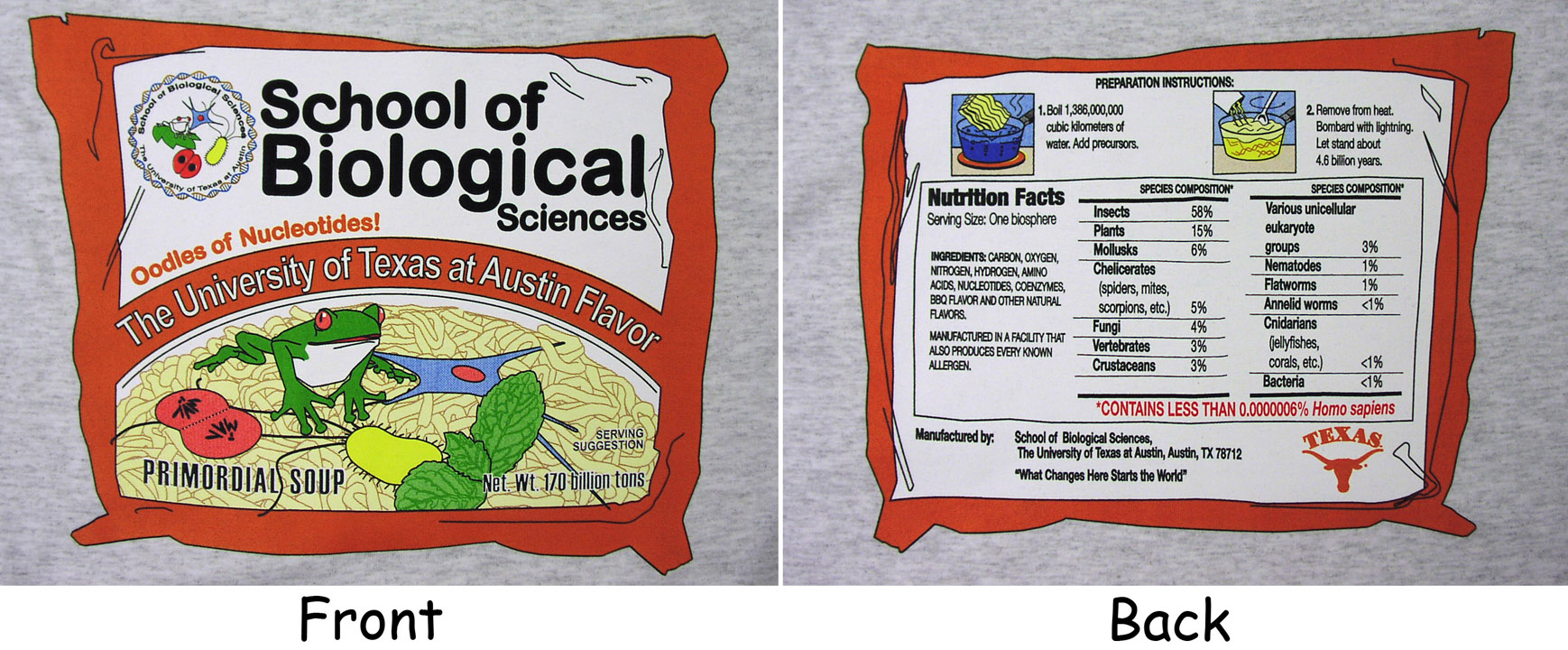
Primordial Soup
They should try some.
-
Interestingly, Mexico had a role in WWI and WWII
Although Mexico was technically neutral and recovering from years of bloody civil war and skirmishes with the US, they certainly were up to some skullduggery in the years leading up to WWI; google for "Zimmermann Telegram". It would have been an interesting time to be a spy in Mexico.
http://en.wikipedia.org/wiki/Zimmermann_Telegram
And Mexico thought about siding with the Axis in WWII, but dropped their support after Hitler broke his nonaggression pact with Russia. Mexico finally switched sides in 1942 when Germany began sinking Mexican shipping, and by the end of the war a few Mexican citizens had served their country in the Pacific theater:
http://www.lib.utexas.edu/exhibits/ww2latinos/narratives/02PEREZ_GALLARDO.HTML
http://www.laprensa-sandiego.org/archieve/may09-03/pilot.htm -
Re:Democracy?
I'm a bit short on time - but I'm guessing most states do something similar to what is described here for the state of Texas. It looks like people who vote in a primary can vote for delegates who vote for members of the committee- but like I said, I'm in a rush right now.
-
Re:Peer Review Rules
It is a shame. Thinking is not vulgar.
-
Re:Great ReviewIt's great to see Ars Technica pumping out another of their signature ridiculously-in-depth technical reviews. - by AndrewStephens (815287) on Monday October 29, @11:16PM (#21166241) Maybe the person who wrote this is decent at actual technical information, but one of their "hack reporters" in Jeremy Reimer doesn't even have a degree or certification in the art & science of computing, & nor does he have any years to decades of hands-on professional experience in the trenches in this field.
Jeremy Reimer has no degree or certifications in computers and no professional hands on years to decades of experience in them either.
Jeremy Reimer was caught email harassing, impersonating, & bothering others online needlessly. That ended up having Jeremy Reimer's website have portions removed and his friends that helped him in it (a Mr. Jay Little of Atlanta Ga. USA) had their websites removed in their entirety. See here for that:
http://www.windowsitpro.com/articles/index.cfm?articleid=41095&cpage=212#feedbackAnchor
Also, others from educational institutions where actual professional journalism & writing are taught, are questioning Jeremy Reimer's validity & credibility as a writer, period, here:
http://www.cwrl.utexas.edu/node/933
All Reimer does is spit back what others wrote already anyhow. He is an ambulance chaser at best. A mere "hack" reporter.
Jeremy Reimer and his friends were also caught here:
http://www.windowsitpro.com/articles/index.cfm?articleid=41095&cpage=213#feedbackAnchor
Posting as others (i.e. same person posting under multiple names/guises/nicks/handles) along with his friend Jay Little above to "support one another" when they were found SO technically inacurrate, they were laughed off that site and both of them outright left & that was after law enforcement were called on them both. Windows IT Pro is a widely read publication in the field of computers. You read, you judge. -
meh.
University of Texas came out with an electronic tongue 8 years ago: http://www.engr.utexas.edu/news/articles/19981026319/index.cfm
I think they've developed a nose since then, but can't find a good link. -
Re:Guess he wants cheaper OEM licenses
You're quoting Jeremy Reimer the 'hack reporter' (at best) from arstechnica?
Jeremy Reimer doesn't even have a degree or certification in the field of computer sciences, nor does he have professional hands on experience (much less years to decades of it) in computers either. I wouldn't cite he. He was caught email harassing others online, impersonating and libelling them and had portions of his website (and his friend Jay Little had his entire website kicked from his hosting provider) removed forcibly by his hosting provider(s), see here:
http://www.windowsitpro.com/articles/index.cfm?articleid=41095&cpage=212#feedbackAnchor
This has happened to Reimer many times now. He is a pest, and nuisance, and unqualified to do anything computers-wise. A fake is a fake, that's all there is to it. My 6 yr. old could do the same things he does in fact, which is read what others write, & spit it back out (merely plagiaristic hack reporting), & in fact, see what people wrote about Jeremy Reimer being an unqualified hack, from an educational institution:
http://www.cwrl.utexas.edu/node/933 -
I love this misguided attempt at securityIts kinda like when someone says they are using 4096 bit encryption for their SSL banking, and not realising their password is being stolen by a keylogger.
The biggest problem we face today is *not* the encryption. We have bags of good encryption technologies out there, from AES (symmetric) to a variety of Public Key techniques. The problem actually comes from the people and processes at either end of the encryption pipe.
Guess what - no-ones SSID has (probably) ever been stolen while in transit via SSL over the internet. The millions of SSIDs stolen to date have been theft of laptops or admins not securing their websites properly. Hopefully they will understand this, and spend an equal portion of their time/energy securing their endpoints.
-
e-books
I've seen very few textbooks released in e-book format; most of the ones I have seen were in very specialized subjects and released under the GNU FDL.
Do you live in the Third World? They are most useful there, however they are used elsewhere. U Penn list more than 25,000 e-books. The University of Texas lists more. Those are just the first 2 results of a Google of e-books "text books", which lists almost 25,000 results. Of the XO ZDNet" has this to say:
"Assuming this device can survive its harsh environment and continue to function over a period of a half-dozen or more years (still a stretch, in my estimation), a single lightweight (but rugged) device, could easily outlast 100 textbooks in a hot and humid environment. And, by any measure, a $100 laptop equipped with 100 electronic textbooks could be worth its weight in gold in such a third-world setting."
Falcon -
Is this old news?
AT&T wants to filter the network.
http://sentra.ischool.utexas.edu/~i312co/blog/?p=185 -
Re:TenDRA?
This is nice...funded by UK's defense agency...BSD license...
The very nice part; they say one of their goals is to formally verify correctness with ACL2. -
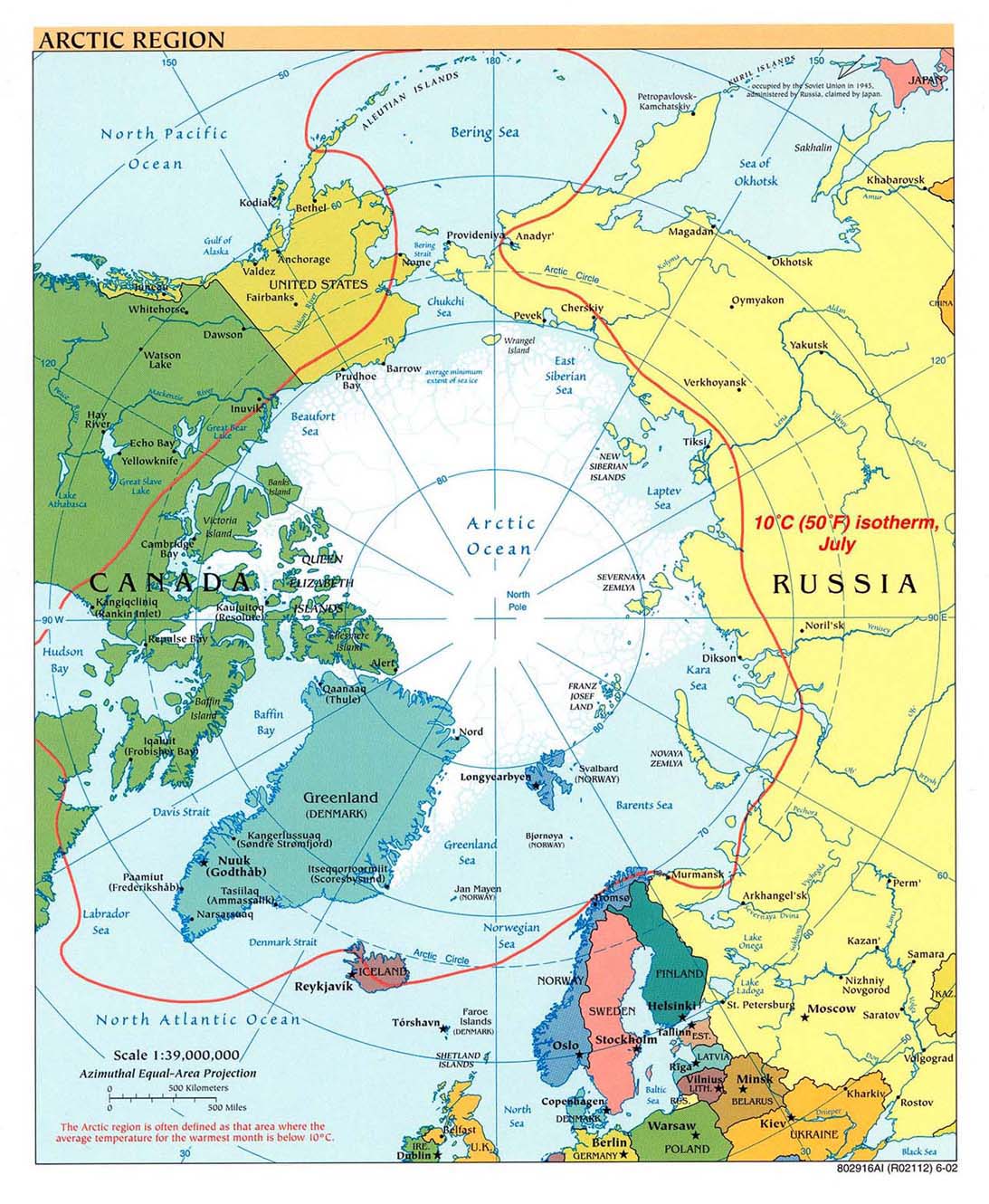
Polar map.
For anyone not intimately familiar with the geography of the Arctic, here's a map in roughly the same orientation as the article's picture.
-
Re:Who's your daddy?well, white sands looks like this:
http://www.geo.utexas.edu/courses/660/photo_gallery/99photos/Sacs/White_sands_trucks.jpg
hocking a lugie onto white sands would probably have a huge positive effect on the net amount of flora/fauna there.
and if you want to fertilize a large area, you could just fertilize it, instead of sucking out the lungs of every living creature near ground zero, and incinerating them along with everything else there.
-
60 nm features?
So this method is interesting, but the resolution of these gratings is only 60nm. Other experimental groups have achieved a resolution as small as 30nm (http://willson.cm.utexas.edu/research/index.php)
. ..and Intel is already producing chips at 45 (http://hardware.slashdot.org/article.pl?sid=07/08 /20/1611202/) -
Re:Paying for uploads is the only way P2P can work
It seems very related to a work published in the USENIX Technical Conference 07 as well as an SOSP 06 one. http://www.ics.uci.edu/~msirivia/publications/dan
d elion-usenix.pdf http://www.cs.utexas.edu/users/lorenzo/papers/bar- gossip.pdf -
Re:I was just looking at this yesterday...I attend University of Texas at Austin with a flat-rate tuition (for full time students). I hate it because those who have part-time jobs don't have the time to take much more than 12 hours per semester (myself included).
Undergrad, full time resident semester rates (pdf):- Architecture: 3945
- Business: 4454
- Communication: 4019
- Education: 4020
- Engineering: 4292
- Fine Arts: 4154
- Geosciences: 4068
- Liberal Arts: 3835
- Natural Sciences: 4030
- Nursing: 4127
- Pharmacy: 5127
- Social Work: 4000
UT Austin MBA and Law school rates (pdf).
Computer Science is in the Natural Science college, MIS is in the Business college. There are no software engineer, computer programming, informational technology, or computer graphic majors offered. - Architecture: 3945
-
Re:I was just looking at this yesterday...I attend University of Texas at Austin with a flat-rate tuition (for full time students). I hate it because those who have part-time jobs don't have the time to take much more than 12 hours per semester (myself included).
Undergrad, full time resident semester rates (pdf):- Architecture: 3945
- Business: 4454
- Communication: 4019
- Education: 4020
- Engineering: 4292
- Fine Arts: 4154
- Geosciences: 4068
- Liberal Arts: 3835
- Natural Sciences: 4030
- Nursing: 4127
- Pharmacy: 5127
- Social Work: 4000
UT Austin MBA and Law school rates (pdf).
Computer Science is in the Natural Science college, MIS is in the Business college. There are no software engineer, computer programming, informational technology, or computer graphic majors offered. - Architecture: 3945
-
Re: [ot] intelli-aggie