Slashdot Mirror
Domain: wikimedia.org
Stories and comments across the archive that link to wikimedia.org.
Comments · 6,832
-
Re:Energy density.
Yeah but the Tesla is shit at mining, which is why I drive a buket wheel excavator to the strip mall on the off chance that I need to level a small mountain with no notice.
When I first read that, I thought you said you might want to strip mine the mall, so I figured you were driving one of these.
I can only assume you were going for the Ironic Snark Prize today in your choice of a bucket wheel excavator, since that monstrosity (and all of its brethren) is electrically powered.
-
Re:Small problem set
My own idea for a CAPTCHA is to use images from Google Street View. Show random street view images of a bunch of houses, and ask, "what's the house number"? That would probably take a while to crack, long enough for me to dump my startup site's shares before all the porn gets leaked- if not for those assholes at Google interfering.
That's exactly what reCAPTCHA (which was acquired by Google) does. For example: screenshot of reCAPTCHA.
-
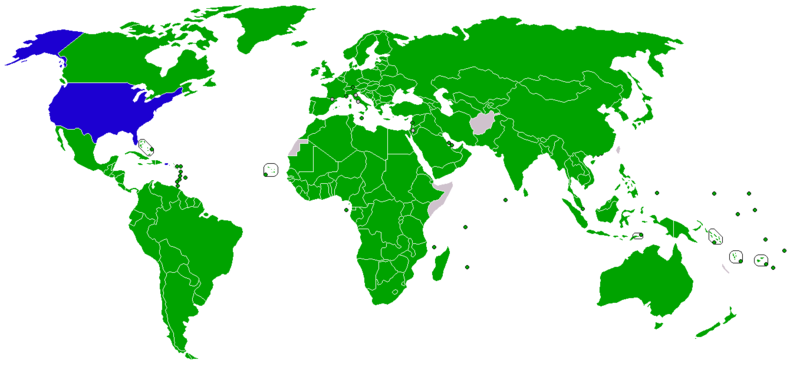
Re:the sky is (not) falling... you're thinking abo
Stare at this honey till your eyes fall out: https://upload.wikimedia.org/wikipedia/commons/thumb/9/9d/Kyoto_Protocol_participation_map_2009.png/800px-Kyoto_Protocol_participation_map_2009.png
-
Re:If he's a real billionaire...
Have you seen the history of leu? It probably explains why he got into Bitcoin - he wanted to convert his savings into a more stable currency.
-
Re:So what happens to the hydrogen? That's usable.
A simple solution is to start with the air already in the diver's lungs,
Already done. It is called a rebreather. Notice it needs a volume to breath in and out of.
For deep dives, start with a breath of argon instead of nitrogen.
Already done as well but they use helium instead. The problem with argon is that it can displace oxygen and cause a danger. Helium just makes one talk funny.
-
Re:9.1
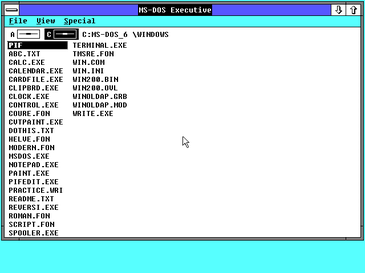
Win7 had a fairly big difference in the way the new taskbar works - the ability to pin apps. In practice, this changed the usage patterns significantly - where previously people generally used some combination of desktop+taskbar+quick launch, now most Win7 power users use taskbar almost exclusively, with start menu search as fallback. So I'd say it's as big of a difference as was 3.1 Program Manager -> 95 Start Menu.
Also, your grouping for pre-95 Windows versions is wrong. Only Win 1.0 was tiled - 2.x already had the usual overlapping windows.
-
Global vs. local effects
Global warming is exactly that- a global trend, not a local one. Locally, the effects have been most pronounced near the north pole, which is not exactly a place where many people live.
Global climate change seems to have resulted recently in a "warming" trend, but as we know from Al Gore's movie, if the North Atlantic current gets shut off we are in for a polar vortex on a much longer time scale.
I am not sure who coined the phrase "global warming"; is it a PR failure by the scientists involved or a reporting failure by the news media? To quote a well known meme: "why not both?"
-
Re:Tiny little airbags like the polystyrene foam?
Aluminium honeycomb is used as a single-use shock absorber and deforms very evenly and I imagine that the same thing is true of this paper stuff. It's fairly impressive, but is best seen in an image: http://commons.wikimedia.org/wiki/File:Single-use_crushable_aluminium_honeycomb_shock_absorber.jpg.
-
Re:in the context of society..
(alcohol isn't "addictive" in the same way as cannabis, I assume from a background of absolutely zero knowledge)
Alcohol is significantly more addictive than cannabis. This relatively well-known chart is a good starting point (despite being ugly and imprecise; it covers the general idea).
My theoretical solution for a lot of things is "legalise it, tax it, regulate it" - a solution that cuts out a lot of the problems of illicit SUPPLY (which is the main problem with such things), not illicit, personal substance abuse. But I'm just not sure that approach is worth the gain for something like cannabis.
While I have no personal interest in cannabis (I don't like any drug that messes with my ability to think clearly - cannabis and alcohol both included), I do think this approach is exactly what is needed for a variety of drugs, cannabis included. Take a look at how many people are currently in prison for cannabis related offences around the world (and especially in the US) and think about what it's costing to keep them there. This - in and of itself - is enough of a reason that it'd be worth it.
-
Re:Its counter productive
Certainly I was not playing games. This is the first time I've been accused of using a straw man argument, but I suspect you may be correct about it. I always thought that logical fallacies were more of a debating tactic, but now I guess they are usually just made in error. Oops.
Anyway, I think my reasoning and arguments have so far been rather poor, perhaps mostly because I've been flailing around in the fog of my own opinions: something that I'm sure is more likely if you don't put enough effort into listening (or in this case reading) what is actually being said. Again, my bad.
I'll give it another try. In your first reply to me you were very clear and there was no need for me to search for analogies: "Compare parts of the US to parts of the US if you want to talk about the US statistics. You cannot compare states across national lines with any credibility." That was your apples and oranges argument all along and and I should have recognized it immediately. My apologies for the lengthy and unnecessary digression.
Instead, I should have immediately pointed out to you that I see nothing scientifically wrong with making numerical comparisons like that between countries; something that is in fact done all the time. Here are more than a dozen examples:
- List of countries by HIV/AIDS adult prevalence rate
- List of countries by traffic-related death rate
- The 15 Countries With the Highest Smartphone Penetration
- List of countries by electricity production from renewable sources
- Countries with the Highest / Lowest Average IQ
- Obesity country comparison
- Cancer rates: see how countries compare worldwide
- Paid Vacation Around the World
- Average temperature in the countries of the world
- List of countries by rail transport network size
- Highways > Total (per capita) (most recent) by country
- Total Water Use per capita by Country
- List of countries by suicide rate
- List of countries by incarceration rate
- Drug Use Death Rate Per 100,000
- Teenage pregnancy (most recent) by country
- Snakebite in The Americas
Why would it be unscientific to make comparisons like these? As long as the numbers are always collected in the same way, then they are just numbers and don't attempt to explain anything about differences that may be cultural, legal, socioeconomic, etc. In all cases it's left up to the reader to explain the differences ("it's a police state", "it's probably a poor country", "perhaps they
-
Re:Good parenting
Freedom? Freedom?? FREEDOM??? Man! You must be one old mofo
-
Re:Chinese
On a definitely smaller scale: Around 1950 several small towns in South Tyrol, Italy, had to be relocated to make place for an artificial lake (Reschensee).
The bell tower of the submerged 14th-century church is still sticking out of the water.
-
Re:Shocking facts
Wealth Inequality in America exposed:
http://www.youtube.com/watch?v=QPKKQnijnsMThis image says it all:
http://upload.wikimedia.org/wikipedia/commons/b/b3/If-us-land-mass-were-distributed-like-us-wealth.pngAlso interesting:
http://en.wikipedia.org/wiki/Wealth_inequality_in_the_United_StatesMost complaints about wealth distribution are completely clueless. The top 10% owns a large amount of "wealth" because they are the owners of the same companies that would be under the control of the top 0.01% of any socialist government. The difference is simple: the survival of top 10% of a capitalist system depends on innovation, quality and productivity, while the top 0.01% of a socialist system are chosen based on long government careers so their survival is determined by their desire or ability to be violent, be corrupt or to have political influence.
That's exactly what is happening in China right now: less than 100 thousand government officials completely control 90% of all "wealth" for a country with more than a billion people. And they're not there because they invented a new search engine or a new kind of robot but because they spent decades building up a carrer based on corruption violence, intimidation and influence.
The top X% are simply the owners of the means of production. In capitalism, the amount of wealth under control of a single person is determined by the amount of added value provided to the economy. On a socialist system, controlling the means of production is achieved not by technical competency but by violence/politics. Is that really the world you want to live in?
-
Shocking facts
Wealth Inequality in America exposed:
http://www.youtube.com/watch?v=QPKKQnijnsMThis image says it all:
http://upload.wikimedia.org/wikipedia/commons/b/b3/If-us-land-mass-were-distributed-like-us-wealth.pngAlso interesting:
http://en.wikipedia.org/wiki/Wealth_inequality_in_the_United_States -
Re:Extinction is good in this case because...
http://upload.wikimedia.org/wikipedia/en/5/59/LavaCreekTuff.jpg
The moderates in Boise will be screwed, but the real nutters are concentrated up north and have a decent chance of not getting significant direct effects. Weather permitting.
San Diego, CA could get hit worse than Coeur d'Alene, ID.
-
Re:Extinction is good in this case because...
http://upload.wikimedia.org/wikipedia/en/5/59/LavaCreekTuff.jpg Show the likely extend of a Yellowstone eruption.
Maximum thickness right at the eruption site is only 200m thick.
Also, a lot of the doom and gloom is overblown. Would it be a major life-changing event? Yes. But you can't use the biggest eruptions recently and then just scale up and "OMG." Much smaller volcanos that spew the right (eg, wrong) mix of stuff high enough into the atmosphere cause huge effects, but that doesn't mean that an eruption 20x bigger will cause 20x as much stuff to stay in the atmosphere for years. It just doesn't work that way. The effects could be as you describe, or just a really bad year (outside of the ash zone, anyways)
Also, the worst of the volcanic winter would only last a decade or so. Sure, some super-volcanos in the past have cooled things for a thousand years... but there is a big difference between a measurable difference, and the immediate worst period. You certainly don't need to develop low-light crops (which is actually kinda silly anyways, if you think about energy conservation) in order to scrape by for 10 years. I could go into the mountains and drop a portable hydro generator into a stream and run a greenhouse on it, sun or no. Obviously people would die. But even eating eat other, probably 10% or more would survive 10 years. And we're probably more resourceful than that. Oil or gas rich nations (like most of the Americas) could probably even just burn that to power greenhouses and make it 20 years with no population loss... politics permitting.
-
Only a pipe?
Damn.
My money was on it being one of these: http://upload.wikimedia.org/wikipedia/en/thumb/9/90/Fringe_The_Arrival.jpg/250px-Fringe_The_Arrival.jpg -
Creationists Defecate In Alignment With God's Will
[yawn] Bill Nye is jumping into an fight of squawking and feather-ruffling with no spurs on his toes. No clear victory is possible because the only referee who could call the plays and tally the score is God. Since God is strictly hands-off, there will be no thunderclap and deep booming voice to announce the winner.
Since Nye does not own a science theme park whose ticket sales could be bolstered by this event, he has already lost the debate.
Since Ham owns a theme park where it is fun to imagine Tyrannosaurus Rex as a vegan doggie being petted by a smiling cave woman in a sexy (loom-woven) tunic
Now if Bill Nye should instead choose to debate Christopher Monckton on anthropogenic climate change, the true nature of the CO2 as relates to the Greenhouse effect, and the applicability and veracity of long term computer models
-
Re:20 year old news?
That is not going to cut it for a “work” truck which is constantly being banged into, sat on, having things tied on, etc.
Eh, no I think you are kind of missing the point. Did you read the part about using military grade aluminum parts?
If it can withstand machine gun fire or better, it can withstand commercial use, let alone a woman's butt prints.
-
Re:I wish people would stop
The Internet is not a Sentient Being. It doesn't live nor breathe, nor is it a set of tubes.
Well the wires are not sentient yet, but the Internet is cybernetic entity. The Internet has servers that connect to other servers autonomously. Data flows through the web's organic structure via web crawlers, email servers, and other web services. Compromised systems still spew packets of past exploits across the web. I can tell what time of day it is by looking at the traffic graphs alone. As the sun spins around the digital world and wakes the entities living thereupon, a brain wave of stimulus pulses across the web while others exhaust their activity and drop into a more dormant state. Much the way porpoises and other animals rest one half a mind at a time.
You have amoebas in your blood that can be removed and placed in a Petri dish, and these individual immune system cells will carry out their behaviours outside of you. You have a colony of bacteria that lives on your skin and gives you your identifying odor, killing some other harmful bacteria. In your guts thrives an essential colony of microbes. You are a cybernetic being formed from many smaller individual living cells... Much like the Internet is a single cybernetic being formed of all the clients and servers in the world -- and its users. You are one of billions of organic input aggregation, stimulation, and accumulator cells; Just like the blood cells you depend on for survival, the Internet survives on you.
In aggregate we are the Internet -- A cultural mind formed of self aware beings, far greater than the whole. This cybernetic symbiotic system is billions of times more aware of all its many selves than you. We do breathe information, we live online, we can be injured and even die. Is it not a set of tubes, it is a world wide neural network. The internet does remember. The more sensational, interesting, or entertaining the more impact the memory has and the stronger and longer the information is remembered; Just like in humans or other cybernetic creatures with memories.
-
Re:Evolution of complex structure.
http://upload.wikimedia.org/wikipedia/commons/f/f0/Representative_lifetimes_of_stars_as_a_function_of_their_masses.jpg
Really massive stars last only as long as 3mil years. Even a star of 3 solar masses only lasts about 370mil years, 1/3 of a bil. -
Re:nothing of any us to us on moon
You're massively overestimating the relative depth of the gravity wells (and the convenient lack of atmosphere). For a visual comparison:
-
Re:nothing of any us to us on moon
You're massively overestimating the relative depth of the gravity wells (and the convenient lack of atmosphere). For a visual comparison:
-
Re:so famous
i've never heard of it
It's also known as The Eye of Sauron
-
Re:More importantly
Uhhh..somebody that likes handing everything over to NSA^H^H^HMicrosoft instead of handing everything over to NSA^H^H^HFB maybe?
There, FTFY.
(Source: https://upload.wikimedia.org/wikipedia/commons/d/d8/Upstream-slide.jpg)
-
Re:We vote on leaders not lightbulbs
Can you say "hyperbolic paranoia", before you start hyperventilating?
The US has never had hyperinflation, despite printing greenbacks and an exponential increase in the money supply.
The inflation rate is psychological, influenced by things such as war or OPEC political decisions rather than the money supply. Why else would the US have experienced its highest rates of inflation when the money supply was increasing at its slowest rate in the past 100 years?
Why haven't we had hyperinflation despite the doubling or tripling of the Fed's balance sheet in the past few years? Why did housing prices increase despite the Fed's raising interest rates in the mid-2000s?
Clearly, your quantity theory of money is more faith than fact.
-
Re:problem is
Sorry, but that is simply wrong.
In 2012 defense spending was $677.8 billion, and should be falling from there due to cuts and sequestration. US participation in the war in Iraq is over, and Afghanistan will be winding down next year. Even if intelligence weren't counted in that we know the budget is about $90 billion, so it is well under $1T whereas Federal spending is more than $3.5T. In 2013 defense spending should be about 4% of GDP. If you examine this chart you will see that there are many sectors of the economy that are equal to or larger than 4%. And note that the long term trend for defense spending is downward as a percentage of GDP.
And as a correction, healthcare is approximately 17.6% of GDP, not 11%. That makes it roughly equal to 4x the size of defense spending at present.
As far as South Korea goes, US defense spending is about equal to the GDP of Florida, not much more than that of Illinois or Pennsylvania, and well under that of Texas, California, and New York. Many US states are the size of foreign countries in both area and population.
It is also worth remembering that defense spending is a composite of spending on many different goods and services, such as civilian and military salaries and benefits, construction, equipment, land, food, petroleum, ammunition, spare parts, weapons and equipment, services of many types, and so on, involving many different companies.
The bottom line is that it is ridiculous to think that the US would go to war based on the advocacy of any single company, or even the defense industry.
-
not only buying "nuclear" electricity
But also buying from coal central, or using a lot of coal electricity (think enorm open field, for which they even moved/destroyed whole town http://upload.wikimedia.org/wikipedia/commons/thumb/a/a6/Tagebau_Vereinigtes_Schleenhain_panorama_midi.jpg/1000px-Tagebau_Vereinigtes_Schleenhain_panorama_midi.jpg here is anotehr one : http://upload.wikimedia.org/wikipedia/commons/thumb/9/9a/Tagebau_Garzweiler_Panorama_2005.jpg/800px-Tagebau_Garzweiler_Panorama_2005.jpg) and I am not even touchign the thematic that biurning brown coal is terrible. Not sure what is the amount of heavy metal radioelement there is in brown coal, but in black coal it ain't rosy.
So yeah, it is the perfect example how nuclear irrational panics threaten a whole economy (heavy electricity prices) and make it worst for CO2 emission. I am pretty sure the german politician are fucking hyprocit and realize that nuclear could be made better, but would rather think "vote!" and bent to the folks panic. -
not only buying "nuclear" electricity
But also buying from coal central, or using a lot of coal electricity (think enorm open field, for which they even moved/destroyed whole town http://upload.wikimedia.org/wikipedia/commons/thumb/a/a6/Tagebau_Vereinigtes_Schleenhain_panorama_midi.jpg/1000px-Tagebau_Vereinigtes_Schleenhain_panorama_midi.jpg here is anotehr one : http://upload.wikimedia.org/wikipedia/commons/thumb/9/9a/Tagebau_Garzweiler_Panorama_2005.jpg/800px-Tagebau_Garzweiler_Panorama_2005.jpg) and I am not even touchign the thematic that biurning brown coal is terrible. Not sure what is the amount of heavy metal radioelement there is in brown coal, but in black coal it ain't rosy.
So yeah, it is the perfect example how nuclear irrational panics threaten a whole economy (heavy electricity prices) and make it worst for CO2 emission. I am pretty sure the german politician are fucking hyprocit and realize that nuclear could be made better, but would rather think "vote!" and bent to the folks panic. -
Re:Mordor...
Yeah, if you look at a climate map, West Texas, as you said, is clearly arid or semiarid, depending on exactly where we're talking about. East Texas is classified as subtropical, but, then again, so is almost all of the southeastern US, and I'd imagine that a place like the backwoods of the deep South is hardly what most people have in their head when they think of what "subtropical" looks like, despite the fact that it actually is.
But Houston is a great example. Houston is essentially a massive marsh that was built over rice fields, hence why it's still referred to as the Bayou City to this day. If you think of that field where all of the dead were at in Mordor (the book's take on it, not the film's, which is clearly in a colder place with fog and mountains), that's pretty much Houston. I've lived either in or within an hour of it for the last 14 years, and it does get rather humid with the Gulf winds blowing in and the thick "gumbo" soil preventing the water from soaking in, meaning a lot of it sits on the surface and stagnates (or becomes mosquito-ridden). For additional reference, I spent the 9 years prior to my current time in Texas in south Florida, which is where the only truly tropical (as opposed to subtropical) climate is located in the continental US, and in many ways I'd consider some of the descriptions from LotR to be more descriptive of a climate like what we had there (which really is quite different than what we have here).
-
Re:Just drive there
Ok so Hawaii has one... What about Alaska? Oh wait, aside from a few sections of controlled access highway (in Anchorage, Wasilla, and Fairbanks), Alaska is expresswayless. Technically the roads are still funded through the interstate system, but they aren't exactly highways. From Wikipedia:
Currently, all Interstates in Alaska are unsigned [3] and are not generally referred to by their highway numbers. In fact most Alaskans are unaware of those numbers.
Most of the lengths of the Interstates in Alaska are not constructed to Interstate Highway standards, but are small, rural, two-lane, undivided highways. Title 23 provides that "Highways on the Interstate System in Alaska and Puerto Rico shall be designed in accordance with such geometric and construction standards as are adequate for current and probable future traffic demands and the needs of the locality of the highway."
Picture of an Alaskan Interstate: http://upload.wikimedia.org/wikipedia/commons/thumb/8/8b/Glenn_Highway_and_Mount_Drum.jpg/800px-Glenn_Highway_and_Mount_Drum.jpg
-
Re:Theft is theft, but...
Citation needed
Here you go, but pretty sure it's not an EV.
-
Re:What the heck has happened to the West ?
Christ on a crutch, all you have to do is look at the budget. It's all there.
The budget is here:
As you can see, about 60% is Social Security, Medicare, Medicaid, unemployment/welfare, and interest. That leaves 40% for everything else. There is no way social programs are smaller than corporate subsidies.
Re farm subs - the original stuff worked, to an extent, and the incentives weren't bad.
Such government programs tend to work in the short term; but they fail in the long term as people learn how to game the system.
_Some_ are healthier, wealthier, and better educated
You're trying to spin this as if some ended up better off at the expense of others and that's wrong. A lot of people are better off, and some just stayed where they were. The net result is more inequality. That inequality reflects a larger inequality among the value of different workers and professions to the economy.
Aaargh. If you look at income distribution alone, the fact of the shrinking middle class ought to be a sufficient sign.
Here is a comparison of income distributions:
http://www.cato-unbound.org/sites/cato-unbound.org/files/old/images/burkfig2.jpg
Yeah, a significant part of the middle class (the green peak) disappeared; it became wealthy (in part just because of demographics), but even the low end of the income distribution shifted upwards slightly. So the US as a whole is better off than it used to be and no income group profited at the expense of other groups.
I don't mean to show a false sense of impending disaster. We're living inside one already, there's no impending, unless you wish to count all the jobs that will be lost due automation alone in the next thirty years. What will we do with all the jobless?
Oh my god, not that tired old Luddite argument. Automation doesn't produce joblessness; it never has and it never will. What will happen? They'll get cleaner, better jobs than they had before, either making more of the stuff they were making before, or making stuff nobody had time to make before. Automation makes us all better off.
I dunno, man; I think it'd be good to sit around a table and follow the numbers - where does money come from and where does it go, and what is it doing for whom as it flows. This is really what Congress is supposed to be doing. Of late in particular they're not doing so well at it.
No, it is not the job of Congress to direct money around the economy or make sure everybody gets a share; we don't have central planning in the US.
Ah, crap, I'm not good at this, I can but try, even so poorly. The numbers are there. YMMV.
The numbers are clear, and they don't support your views.
-
Re:Gothenburg the capital?!?
Actually Karlsborg was supposed to be a backup capital for Sweden.
If you look at this picture I guess you can figure out why:
http://goo.gl/maps/JXSTAhttp://commons.wikimedia.org/wiki/File:Karlsborg7.jpg
(Built 100-200 years ago.)Cooler:
http://sv.wikipedia.org/wiki/Bodens_f%C3%A4stning
http://www.rodbergsfortet.com/
http://www.youtube.com/watch?v=zWLBuc12z24
That one is more north though: http://goo.gl/maps/OOvocDoubt either can be seen as current today though.
Wanna see more?
http://www.youtube.com/watch?v=G217tJL4_xA
http://www.youtube.com/watch?v=_EKUwNUmex0
http://www.youtube.com/watch?v=qtAPA5O3qSg(http://www.youtube.com/watch?v=Q-PmRUkgyds http://www.youtube.com/watch?v=zv46kbHqJL0)
I don't really know why we show such things today. Sure they have been decided not to be used any more I suppose and the locations are likely already known by the one who would care the most. But anyway, just seem weird =P. Then one need to build new stuff
-
Re:Idiots
This turns out to be much safer than holding it yourself
Depends on for how long. For example, any cash you saved before the 2008 banking crisis is only worth ~90% of its value now. For banks to be "safer", cold wallets will need over 2% annual risk of loss - even more if you count BTC deflation.
-
Re:Bitcoin hype over?
People have to **USE** Bitcoin or Bitcoin dies...until you can directly exchange Bitcoin to currency this will just be an elaborate hoax.
The ease of exchange is not nearly the only problem with BC. Let me list a few others:
1. Deflation. Because there's a set cap on the total amount of Bitcoins that can ever exist (made worse by the fact that it is possible for coins to disappear permanently, limiting the supply even more), the currency is by nature deflationary (this does not however mean that it cannot go down in value but I'll get to that later). Deflation is of course good for those who use BC for investment/speculative purposes, but very bad for anyone wanting to actually use it for trade. For the consumer, having currency that looks like it will be worth more next week than now does not really encourage spending in any way. Pricing is difficult as hell because of the deflation since you have to keep adjusting prices down because of the deflation (and people have to convert the amounts to standard currencies anway, because saying something is worth "0,02 bitcoins", doesn't really tell you anything unless you go and check how much the current rate is)
2. Useability: let's be honest: what's the one thing people use BC for at the moment in addition to speculating? Paying for suspicious goods or services online. And I know there are other things you can get with bitcoins as well, but the main reasons people exchange their regular currencies for bitcoins is because even though BC is not anonymous (unlike some people think), it's the closest/most used equivalent we currently have for cash in the online world, making it the currency of choice for those who want to order something which they do not want to get caught buying (not just drugs btw, gambling is also a big thing with BC).
Now, these two factors are entwined: currencies only have value because people expect that they will be accepted (ie. retain their value) later on. In the case of bitcoin, the reason the value has shot up as fast as it has, and what makes it so lucrative at the moment for speculators, is the 'quasi-anonymous' nature of it - and services such as silkroad. That is to say, in a completely hypothetical scenario wherein drugs would become legal to buy and sell online using 'old fashioned' currencies the price of the BC would likely plummet fast. Now, while such a scenario seems rather unlikely, it's just meant to show how dependent BC currently is on such sites/services. For reference, this is what happened to the exchange rates of bitcoin when silkroad was closed. Which gets us to the third point:
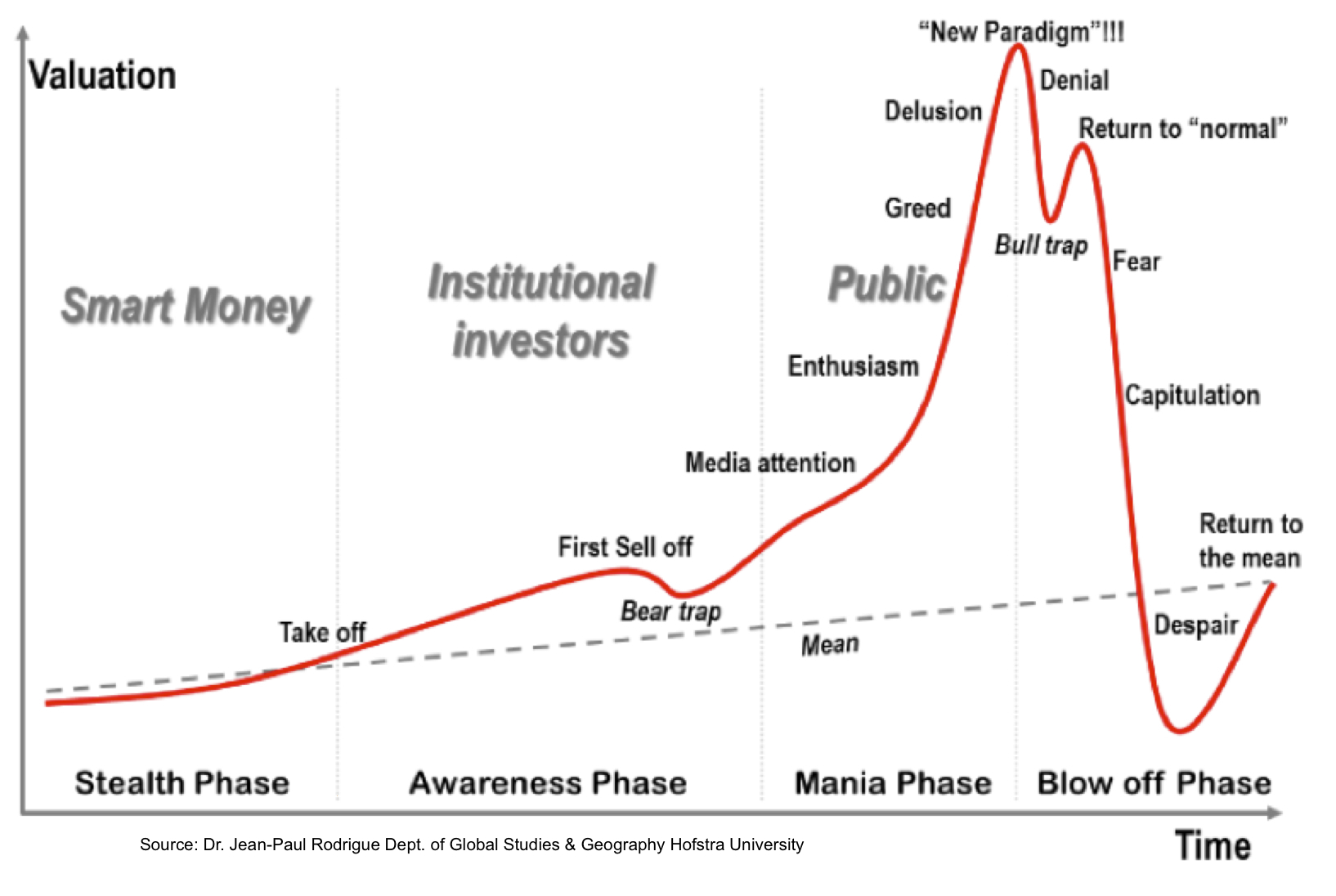
3. Volatility. Right now BC has been fairly steadily increasing in value, as people have become more interested in it, but there is no guarantee that this situation will continue. In fact, looking at the rather massive increase in value and comparing it to a classic model of a bubble (got the links from a recent BC story and its comments here on
You're right, people need to use bitcoin or it dies, but the essential question is: would you be confide
-
Noah
This proves it! Noah and his sons have been found through genetics.
Isn't this really what this is all about? Not the research, but **why** the research is noteworthy...
There are **alot** of people who believe the Torah, New Testament, etc not as litteral truth but as mythology which can represent truthful stories under a layer of abstraction.
I don't believe science can prove OR disprove a god or buddah or FSM or anything beyond the natural world. Supernatural is unprovable scientifically by definition....**super** natural.
Why not talk about the mythology?
Are we projecting (because the Noah story is still widely told) onto this finding if we compare it to the Torah's account of Noah and the repopulation of the world after?
There are several ancient maps showing **very testable** notions of population distribution. If these are anywhere near accurate in explaining human population distribution why not do more science based on it?
Is anyone really concerned about proving god exists somehow? what's the downside if the ancient mythology correlates with modern science?
-
Re:Healthcare
Does anyone have the brakedown by city? for example in VA I believe it was the other day the democrat won, eventhough he won like 5 counties in the entire state (inner cities) and the rest of the state was red http://upload.wikimedia.org/wikipedia/commons/4/43/2013_virginia_gubernatorial_election_map.png
-
Re:bad @ biz
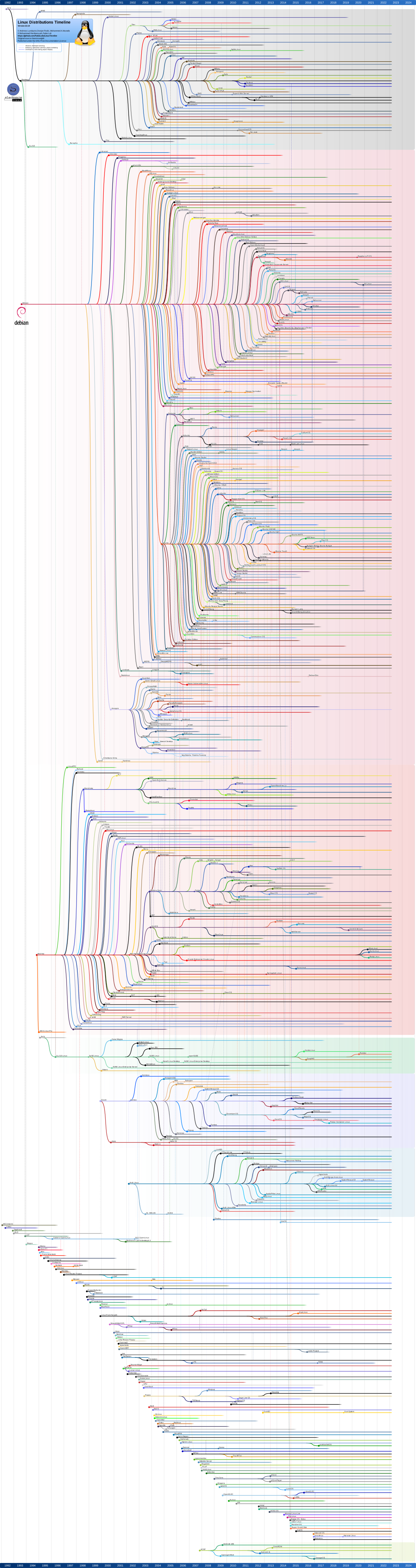
You're thinking CentOS (and derivatives), not Debian. See also.
-
Re:No internet connection required!
How do I download it if I don't have an internet connection? Does this require special hardware?
Order Wikipedia on DVD, from Wikipedia themselves. http://dumps.wikimedia.org/dvd.html
-
Re:Finally!
You've always been able to download every page and image. Am I missing something?
-
Re:for me 100GB is a bit to large
Can I have a slightly smaller copy without the images and references?
Use Wikitaxi (Windows only, works in Wine): http://www.yunqa.de/delphi/doku.php/products/wikitaxi/index
Get dumps from here:
http://dumps.wikimedia.org/enwiki/
look for: pages-articles.xml.bz2
You have to process the dump. One I did earlier in the year resulted in a 15GB file. -
Re:Let me guess....
Based on the Wikipedia picture, yep:
https://upload.wikimedia.org/wikipedia/en/3/3c/Monarchy2.jpg -
Re:Spoof the line as disconnected..
You don't need a device, just play the disconnect tone. https://upload.wikimedia.org/wikipedia/commons/c/cf/IC_SIT.ogg
-
Re:Belgium is a NATO member
Existential risk? Since 800 AD? Wars? Um, Finland has not existed at all as a country during most of that time.
Yes, existential risk to Finns .
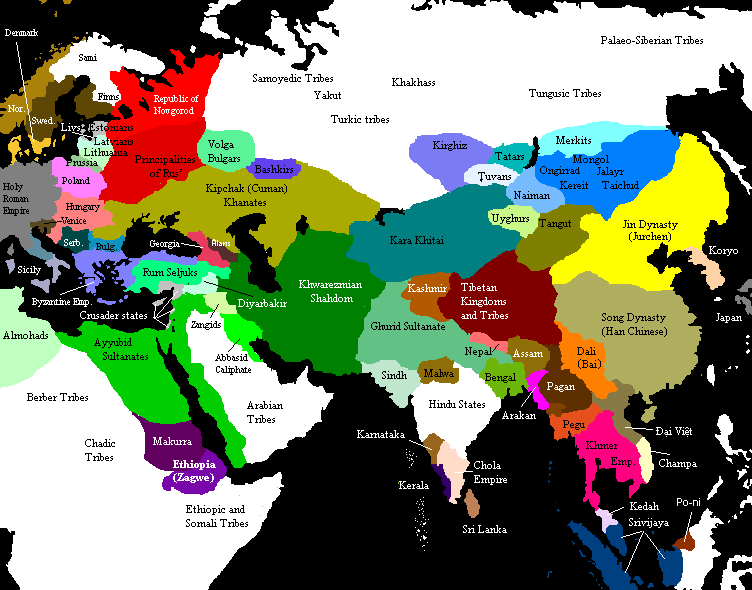
Finnic tribe habitation. 800 ad Finnic tribe habitation. 912 ad, also,
Earliest conflicts with Russians during existance of written records.
And by the 14th century we arrive at this -
Re:Belgium is a NATO member
Existential risk? Since 800 AD? Wars? Um, Finland has not existed at all as a country during most of that time.
Yes, existential risk to Finns .
Finnic tribe habitation. 800 ad Finnic tribe habitation. 912 ad, also,
Earliest conflicts with Russians during existance of written records.
And by the 14th century we arrive at this -
Re:Good Luck
Sure, USD and USA are not the center of the universe. Still, BTC is even less so with daily circulation and market cap on par with something like a smallish supermarket chain.
Trying to claim "BTC is not volatile, USD and all the other currencies are" is nonsense, because goods and services you try to buy for BTC fluctuate in BTC price wildly - while they don't do that in USD, EUR, RUR or CNY.
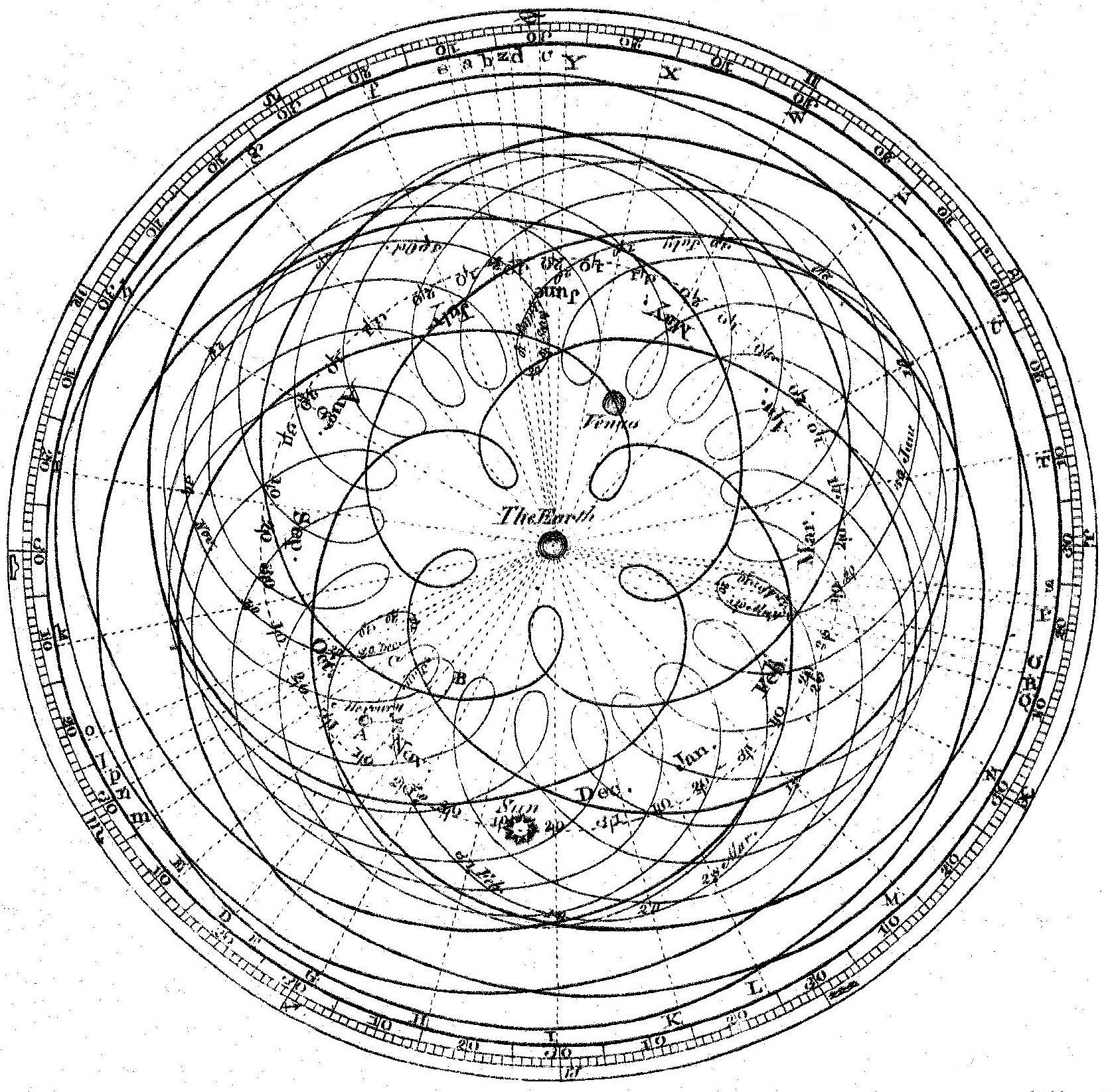
Everything is relative, sure, and you can say that Earth is standing still while everything else goes in orbits like these - but it's not a useful description by any measure.
-
Another year, another disappointing Toyota...
Another year, another disappointing Toyota...
the green(ish) vehicle we want is the SARD Supra HV-R
http://en.wikipedia.org/wiki/SARD
http://upload.wikimedia.org/wikipedia/commons/1/10/Toyota_Supra_HV-R_02.jpgso why won't they build a few?!?!?!
-
How to interpret results
Use this chart to quickly interpret blood test results:
https://upload.wikimedia.org/wikipedia/commons/7/7c/Reference_ranges_for_blood_tests_-_by_mass.svg
(shamelessly stolen from this post a few months back) -
Re:They're lying...
Pedantically you may be correct. Cartographically, however, Antarctica is, in fact, divided into East and West. The feature that divides them is the Transantarctic mountains. See this map. West Antarctica contains the Antarctic Peninsula (which stick out towards South America) and most of the floating ice sheets. East Antarctica contains the broad, high plateau containing most of the land ice.
More generally, the dividing line could be said to be the prime meridian. Places whose coordinates are given using west longitude are generally part of West Antarctica. Most maps of Antarctica are oriented with the prime meridian pointing up towards England. Things on the left side of the map are West Antarctica, the right side is East. Again, this is just a general convention - a way to get yourself oriented. (Even though McMurdo Station (77.8 S 166.6 E) would be in East Antarctica by this definition, it is traditionally part of West Antarctica because it lies on that side of the Transantarctic mountains.)
This is a cartographer's convention - giving names to places - and it has a particular European bias. But everyone that works in Antarctica uses the same naming convention, so there you go.





.svg/380px-Rational_scale_to_assess_the_harm_of_drugs_(mean_physical_harm_and_mean_dependence).svg.png)


.png)
.JPG)





.png)