Slashdot Mirror
Domain: wikimedia.org
Stories and comments across the archive that link to wikimedia.org.
Comments · 6,832
-
Re:A more appropriate quote seems to be...
Perhaps possibly, the transition from Paul Allen and Bill Gates (true computer geeks/nerds) to Ballmer the insurance salesman, was about as uncool as you can get and also a huge mistake, why does he bring this image http://upload.wikimedia.org/wikipedia/en/7/73/Slim-pickens_riding-the-bomb_enh-lores.jpg to mind.
-
Power Over Ethernet doesn't provide enough power
(Insert some lame joke about how YOU can have POWER over Ethernets, bwahaha, or about how in Soviet Russia, Ethernets power You.....)
PoE only provides 15.4 watts - it's not enough. And you end up needing a bunch of power equipment back in the switching room anyway, which you're buying at Cisco prices instead of No-Name-Netbook mfr prices, and if you've got PoE on your desk, it's because they've talked your boss into buying an IP Phone, which already wants that power.
-
Re:Not for my laptop
[Apple]
You know, given their current market capitalization as the 2nd most valued company in the US, I think that their striving for competetive differentiation has worked out well for them. Note, their desire isn't pathological, or they'd still be on PowerPC, and using Apple Desktop Bus.
Still think they wouldn't license MagSafe unless they got a significant premium... which might be possible once they finally make an iOS data hub... right now, iOS devices require OSX (or windows) devices to sync.
-
Re:Hmmm...
As US courts said several times, citizens of the USA don't even have a right [standing] to ask the President to prove, with papers in hand, that he is a qualified US citizen.
birthers are nutjobs. Do you really think a system that lets any nutjob make demands of the president would be workable?
-
Re:Hypocrasy
Maybe it has something to do with the fact that nobody has invaded the USA recently enough for currently alive people to remember it.
That's because you figured out that you shouldn't provoke Canadians beyond lame jokes about ending phrases with "eh". Even that is getting tiresome. Stop it.
-
Re:iPhone (and Android) have both kinds
It's only a matter of time before corporate use of these two platforms totally eclipses Symbian development in the enterprise, if it's not already happened.
Ehem, Blackberry?
Symbian was the OS when no one knew a mobile phone could do more than just make calls.
Then they'd upgrade to WinMo/Palm/Blackberry.Then WinMo tanked, which left Blackberry as the dominant smartphone OS. (no, I don't count Symbian as a smartphone OS)
Despite all the press iPhone/Droid get, BB still leads.
-
1998 was a spike, not a reversal in the trend
-
Re:We All Wish
If the global trend was a cooling one, and then after industralization it started warming, there might not be so much controversy, but that is not the case. The earth has been warming for quite some time now; way before humans had their fancy machines.
The temperature peaked around 8000 years ago and it's been getting cooler since then up until industrialization started the current warming. The global trend was a cooling one and it did start warming. Have a look at this graph.
-
Re:Since when did "good enough" matter?
DuChamp didn't spawn the modern art movement, he was part of the dada movemement. It could be said that the post-impressionists spawned modern art, and that movement is older than dadaism.
Dadaism is anti art art; or more precisely, anti establishment art, and DuChamp made his point quite well when he hung the urinal on the gallery wall and the critics praised it for its form and beauty. The surrealist movement started about the same time as dadaism.
In the meantime we have a fine arts establishment where a stack of bricks is called art. A tent made of PVC tubes is art. A set of 4 folded and straightened sheets of paper is called art.
This is just a pile of bricks, but I don't see how it's NOT art. As a graffitti on the wall of my college's painting studio said, "shit can be beautiful if the light hits it right."
None of what was in the galleries during the impressionist movement is noted by art historians today, except to display as an example of triteness and unoriginality. Vincent Van Gogh only sold one painting in his life, to his brother, in payment for a small debt (about ten bucks in today's money).
We're in a world where calling someone's work "pretty" is the most grievous insult you can get away with in front of a professor, in some arts colleges.
A work can be pretty and still be art (e.g., Audrey Flack), but pretty pictures seldom are, in fact, art. If it doesn't provoke some sort of intellectual or emotional reaction, it's not art. The best art will move one deeply. Jacques-Louis David's "The Death of Marat" is said to have started the French revolution.
-
Since when did "good enough" matter?
Since when did something have to be "good enough" to be art? I think that would come as a surprise to Duchamp and the whole modern art establishment he had spawned.
For whoever doesn't know the story, the whole modern art phenomenon started in 1917 with a guy called Marcel Duchamp, who signed an urinal and sent it to an art gallery under the title "Fountain."
It was not the first of Duchamp's "readymades", basically just objects he found and signed, but otherwise didn't even make or anything. The first was a found bicycle wheel he signed and displayed under the name "Bicycle Wheel" in 1913. Sometimes he at least used funny names for them, like titling a shovel "Prelude To A Broken Arm" in 1915, others were like that Bicycle Wheel. But the urinal is what became famous and redefined art.
The funny thing is that Duchamp spells it out in interviews, some even much much later, that he just wanted to destroy "art". He found the whole establishment to be little more than a circle-jerk clique (not his exact words, but the general gist of it) and obsessed with form above and beyond anything else. He wanted to destroy it all. His urinal was supposed to convey the message, basically, "your work is worth as much as this urinal to me."
But funnily that's not what the art world understood. The art world suddenly found itself trying to imitate the unconventionalism and shock value of that urinal. And it's been in that rut ever since.
And funnily enough everyone seems to still don't get what Duchamp actually did there, even if you show them an interview where he says it himself. E.g., I remember an interview with Michael Craig where he explains that Duchamp actually wanted to show that even everyday objects can be beautiful and art. (No, he didn't.)
In the meantime we have a fine arts establishment where a stack of bricks is called art. A tent made of PVC tubes is art. A set of 4 folded and straightened sheets of paper is called art. (No, really, I've actually seen exactly and literally that in someone's private collection.) A glass of water on a shelf is art. Or a hack like Hirst can pay someone else to put a grid of random coloured dots on a rectangle, sign it and not only get it called art, but be acclaimed for it. (Here's one sample of his 300+ pictures made of dots: http://upload.wikimedia.org/wikipedia/en/0/08/Hirst-LSD.jpg.) A rectangular box made of sheet metal can be called art. A flickering TV in an empty room can be called art. A crucifix in a jar of piss can be called art.
We're in a world where calling someone's work "pretty" is the most grievous insult you can get away with in front of a professor, in some arts colleges. But it is an insult and use it only if you want to make an enemy. Nowadays you don't want "pretty", you want "thought provoking", and "original", and such.
So Ebert is, what, telling me that it isn't art because it's completely unlike what he calls art? Has he checked with the aforementioned modern art establishment? Because it seems to me like that being different is exactly what would make it "art" there.
(And I've played plenty of games which fit the "thought provoking" criterion too. But then I'm the kind of guy easily provoked in that aspect. E.g., Chucky Egg provoked much thought about the struggle of the working class against the oppressor chickens.;))
Heck, probably the best example is another painting I've seen in someone's private collection. Essentially it looked like a screenshot of Tetris. No, literally. I'm not exaggerating. Yes, I know what "literally" means. I mean it. It looked not just sorta like Tetris, but exactly like a screenshot of Tetris. Well, except for the part that in actual Tetris two rows should have been removed because they were full, but obviously on the painting they hadn't been. I wonder if it was supposed to be symbolic of the unfairness of life or something
So basically, let me get that straight: _that_ is art, or so I'm told, but Ebert tells me that if it were actually animated as a game of Tetris, it wouldn't be art any more? Why? It's the same image.
-
Misapplication
It was noted in the original paper that the wisdom of crowds applies when comprised of aggregate decisions of individuals making decisions as individuals. On most websites this is not what you get.
Drew goes so far as to imply (by my reading) that crowds act more stupidly than individuals. These crowd failures are identified and discussed even on the Wiki page, most notably relevant to Fark.com and Americans Speaking Out:
Where choices are visible and made in sequence, an "information cascade"[2] can form in which only the first few decision makers gain anything by contemplating the choices available: once past decisions have become sufficiently informative, it pays for later decision makers to simply copy those around them. This can lead to fragile social outcomes.
Emotional factors, such as a feeling of belonging, can lead to peer pressure, herd instinct, and in extreme cases collective hysteria.
Due to the nature of the websites various factors come into play which ruin contra to requirements for "the wisdom of crowds". Not forgetting that if it's on the internet, it's probably not being taken seriously and therefore is hardly a gauge of anything.
(I'm not wanting to be seen as endorsing the "wisdom of crowds", I'll take the wisdom of a few experts instead thank you very much, but the argument presented here is extremely flawed).
-
Re:Abusing children now profitable?
Wouldn't be surprised... and during the trial all the skeletons come out of the closet and the little kid tells the judge that 'daddy gave me some pills and a shot whiskey to chase it down after we came from the dentist...'. You'll be amazed what some of these fucking assholes do to their own spawn just for some attention/power/money. This shit occurs so often they even identify it as a true child-abusing syndrome like MSbP.
-
Re:Extremism
Moore has definitely taken a more combative approach.
In fact, in a recent speech, Moore decried copyright "radical extremists" with a "babyish" attitude toward copyright.
Notice the same phrase?
Same phrase, same PR firm's that organize all the International Intellectual Property Alliance (IIPA) sounds bites, talking points, strategies for lobbyists and bought politicians alike. All extremely well crafted to incite emotional response (in this case, Balanced Copyright Proponent == Extremist, associates with Terrorists) in the minds of listeners, against any balanced copyright point of view. Unfortunately the label loving public will most probably lap it up and believe it.
-
Well...
Jules was dressed like this at the time.
-
Ha, a bad interpertation by Detroit
The United States Constitution is the charter for the federal government. It creates an entity known as the "United States". In numerous statutes, the "United States" is confined to federal possessions: D.C. and its territories. There is also no such thing as federal "common law". The Constitution governs itself, interstate commerce (see "commerce clause") international trade, wars, etc, state's limitations. It does NOT create a parent government. It creates a government that only operates under certain conditions, namely interstate commerce (The FDA, FCC, FTC, SEC, etc, all are created under the commerce clause) Additionally and originally, the bill of rights was used to supply rights to citizens fo the federal government. But after the civil war, the 10th and 14th amendments brought everyone under the protection of the constitution. That was validated yesterday in the McDonald case...
Here, Detroit is saying that intrAstate commerce (the state franchise is illegal) because of federal law. That is preposterous, The federal government does not have jurisdiction. If you claim it does, then that is an educated reading of Article IV Section 2.
"This Constitution, and the Laws of the United States which shall be made in Pursuance thereof; and all Treaties made, or which shall be made, under the Authority of the United States, shall be the supreme Law of the Land; and the Judges in every State shall be bound thereby, any Thing in the Constitution or Laws of any State to the Contrary notwithstanding. "What they fail to mention is the 10th Amendment. The Detroit interpretation is ignoring the fact that unless there is an enabling statute, the federal law is void. It would make the 10th amendment at odds with the article, and void both provisions. It would be impossible to reserve any power to the states if federal law trumps state law. We've avoided this so far by having the federal only govern international and interstate commerce.
-
Ha, a bad interpertation by Detroit
The United States Constitution is the charter for the federal government. It creates an entity known as the "United States". In numerous statutes, the "United States" is confined to federal possessions: D.C. and its territories. There is also no such thing as federal "common law". The Constitution governs itself, interstate commerce (see "commerce clause") international trade, wars, etc, state's limitations. It does NOT create a parent government. It creates a government that only operates under certain conditions, namely interstate commerce (The FDA, FCC, FTC, SEC, etc, all are created under the commerce clause) Additionally and originally, the bill of rights was used to supply rights to citizens fo the federal government. But after the civil war, the 10th and 14th amendments brought everyone under the protection of the constitution. That was validated yesterday in the McDonald case...
Here, Detroit is saying that intrAstate commerce (the state franchise is illegal) because of federal law. That is preposterous, The federal government does not have jurisdiction. If you claim it does, then that is an educated reading of Article IV Section 2.
"This Constitution, and the Laws of the United States which shall be made in Pursuance thereof; and all Treaties made, or which shall be made, under the Authority of the United States, shall be the supreme Law of the Land; and the Judges in every State shall be bound thereby, any Thing in the Constitution or Laws of any State to the Contrary notwithstanding. "What they fail to mention is the 10th Amendment. The Detroit interpretation is ignoring the fact that unless there is an enabling statute, the federal law is void. It would make the 10th amendment at odds with the article, and void both provisions. It would be impossible to reserve any power to the states if federal law trumps state law. We've avoided this so far by having the federal only govern international and interstate commerce.
-
Re:Some background: The Satellite Itself
> That's some serious engineering precision.
If that is your cup of tea, then you will be interested in the in-development https://secure.wikimedia.org/wikipedia/en/wiki/Gaia_probe : it will measure arcs of the order of the diameter of a hair from 1000 km away !!
-
Interesting contrivance of math and grammar
This is an interesting and highly technical application of math and grammar, but biology is too messy for it. Probabilities are for when you don't have all of the information. You might be able to refine the estimate slightly, but if you knew everything then you have a 100% "chance" of the actual outcome (assuming a deterministic universe... or maybe not). Since the Y chromosome is lighter, more males are born than females. OTOH, females are more likely to survive. Apparently birth order also affects the distribution of sexes. Birthdays also aren't entirely randomly distributed, so did a Tuesday fall nine months after a holiday 10-15 years ago? There's probably some more epidemiology you could throw in, so this quickly rises outside the scope of a mathematical problem. It just depends on how technical you want to get, and what your area of expertise is. But it's just refinement, and at some point you'll run into the L'effet Tetris.
-
Re:Did they do battery tests?
my understanding is that it will be available anywhere they can get it to work, like say android.
but as windows is the biggest platform out there, and its needed especially on netbooks, that was where they focused their marketing efforts.
it will for instance be able to make use of this:
https://secure.wikimedia.org/wikipedia/en/wiki/Video_Acceleration_API -
Re:Euler's identity
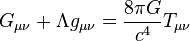
General relativity has some simple but expressive formulas.
-
Re:Simple really...
If one party attempts to change the terms of an existing contract, the other party has a right to renegotiate, reject the changes, or discard the contract. Avail yourself of your local small claims court. In most jurisdictions, this means spending 30 minutes hanging around your local courthouse figuring out the right forms to fill out and submitting the paperwork.
Mandatory binding arbitration is designed to prevent this from happening. It doesn't always work, but it works at least some of the time.
-
Maths is less slippery
-
Re:Charge YOU?
Yes, taxes are bad.
Some things have externalities. The government has a responsibility to tax them to correct their costs (oil in the US is possibly undertaxed from that view).
Additionally, accountants cost money. Paying taxes simply costs a large corporation less money than it costs each individual person. Of course, the current US tax system has complexity for both individuals and large corporations, so there is not actually any help there.
-
Conway's Game of Life
-
Euler's Identity, Entropy & Gaussian Distribut
Personally, I've always enjoyed the beauty of Euler's identity, any form of Gaussian (normal) distribution which has a standard form here and entropy in regards to information theory. Of course, these are just personal favorites -- the last two because I am a computer scientist with so much college work hinging on them. You probably have personal favorites in chemistry or physics or another field even. Honestly, the loan formula is probably one of the most widely used and life changing formulas in the United States today -- especially given the recent financial crisis. I think it would be best for you to draw up your own formulas in a geometric display rather than someone else's symbols. I suppose that would require extreme precision on the end of the artist and also introduce interesting problems with the elasticity of your skin
-
Euler's Identity, Entropy & Gaussian Distribut
Personally, I've always enjoyed the beauty of Euler's identity, any form of Gaussian (normal) distribution which has a standard form here and entropy in regards to information theory. Of course, these are just personal favorites -- the last two because I am a computer scientist with so much college work hinging on them. You probably have personal favorites in chemistry or physics or another field even. Honestly, the loan formula is probably one of the most widely used and life changing formulas in the United States today -- especially given the recent financial crisis. I think it would be best for you to draw up your own formulas in a geometric display rather than someone else's symbols. I suppose that would require extreme precision on the end of the artist and also introduce interesting problems with the elasticity of your skin
-
Re:One more decision today
It's nice that the Court made a decision, but we've all known that since July 9, 1868.
No State shall make or enforce any law which shall abridge the privileges or immunities of citizens of the United States...
-
Re:Little bigger than Apollo?
Apollo was barely big enough for 3. Something only a "little" bigger is supposed to hold 7?
As others have pointed out, there was room in the Apollo space craft in the lower bay (i.e, under the seats) that could "snugly" fit two additional astronauts. The amount of supplies would offer little space savings since the majority of consumables (water and oxygen) were provided by the Service Module. Food did not take up much space since it was all dehydrated. The water was generated as a byproduct of the fuel cells.
One of the largest cubic space savings inside the spacecraft would come from all the avionics. Check out the Command Module interior. Note the size of Command Module Computer (lower right of the Left Side of spacecraft diagram). Examine the Data Storage Equipment (upper right of the Right Side diagram). The control panel was huge. As noted in the wikipedia entry "In total, the command module panels included 24 instruments, 566 switches, 40 event indicators, and 71 lights." Now it could be replaced by four flat screen displays, much smaller and less power hungry instruments, and a lot fewer switches (10-15% maybe?) My guess that equipment specific to Apollo missions would be a wash compared to future missions. Though I do wonder how much space can be recovered by ditching the film and their cameras.
Now consider that the Boeing spacecraft will be a little larger. I haven't gone over the figures but I would expect that seven economy class airline seats will fit comfortably inside. In any case I expect it would be much more comfortable without that pesky gravity that forces you to keep shifting you body weight to keep your ass from getting numb.
-
Re:I'll bite.
-
Re:I'll bite.
-
what this is
Just to clarify, since the description isn't exactly clear, basically they're doing for IP TV what they did for free-to-air digital television with Freeview.
That is, bundling it together for convenient free access on a cheap box to go under the TV.
Like Freeview, this is not "a BBC project", but a coalition between all the major broadcasters in the UK plus a few others on the technology/infrastructure side. Again like Freeview, a company (apparently "YouTV" is most likely) will be set up to manage it and each broadcaster will have a share and board representation. BBC will probably take lead, because they initiated it and because the other broadcasters trust it more than they trust each other.
They have stated that it will be an "open standard", but no, not "open" in the sense of what
Personally I think it's about time. Just like they did with Freeview (and iPlayer, and well, quite a lot of TV/radio throughout history), the BBC have sat back, given capitalism the first opportunity, saw the lacklustre efforts going nowhere then stepped in to get the job done. It's really quite absurd that a non-commercial entity is consistently the one pushing media technology forward in the UK with any enthusiasm, and even more ridiculous that they are the one that comes across as consumer-focused. Don't get me wrong, I still think they do things around the time I would expect a non-profit "me too" organisation would, what is strange is that capitalism isn't already there. Nearly all the traditional media companies seem to just crap their pants at the sound of the word "internet".
Not sure exactly where this leaves the cable and satellite operators though, what with this + Freeview HD all that infrastructure is starting to look redundant.
There's some apparently independent wiki-type site with lots of info here.
-
Re:Little bigger than Apollo?
Looks even better when colorised, gives the imppression (true or not, nvm) that two crew members are sitting essentially in a drawer
(I still wouldn't mind, certainly not with the perspective of docking to a spacious station)
-
Re:Little bigger than Apollo?
Apollo was barely big enough for 3. Something only a "little" bigger is supposed to hold 7?
Do they sit on each other's laps?Actually, they do practically sit in each others laps. Most people don't realize that beneath the couches of the Apollo command module was more-or-less open space - the crew slept down there during flight. Using this space to carry people was first planned back in the 1970's when they modified one command module into the Skylab rescue configuration.
So yes, making the capsule just a little taller and a little wider enlarges the crew compartment enough to pack in seven seats.
The previous posters are partly wrong on supply weight and volume though though: First, the majority of the supplies in the capsule were carried at the astronauts feet in the Lower Equipment Bay (the astronauts actually sat off center in the spacecraft), and you'll need almost the same amount for a station taxi. (The Apollo's configuration was to control the center of gravity, offsetting it controlled re-entry attitude and allowed the spacecraft the limited ability to 'fly' a non ballistic trajectory during re-entry. Almost certainly the station taxi will do the same.) There were also considerable supplies carried in the service module.
Supplies save less than you might think because of the increase in crew size. Both will require roughly 42 person days of supplies - 3 crew times 14 days for Apollo, 7 crew times 6 days for the new module. Yes, six days. Two days to fly to the station, two days to fly from the station to re-entry, and two days for contingencies. (No, you can't shorten the fly to or fly home portions, those are dictated by orbital mechanics.)
Considerable weight savings will also come from the the weight reduction in the electrical and electronic systems in the past forty or fifty odd years. (The Apollo guidance system, which weighed a couple of hundred pounds, would weigh less than ten today.)
But real biggie in terms of weight savings will be in the thinner heat shield (Apollo's needed to be able to stand a high velocity return from the moon, which a station taxi will not). Additional weight can be saved by using modern materials (composites, AL/Li alloys, etc.) for structural components. More weight can also be saved by shrinking the propulsion system - a station taxi has no need to brake itself into lunar orbit or blast itself free from the same. -
Re:saturated market
found this:
https://secure.wikimedia.org/wikipedia/en/wiki/Windows_for_Pen_Computingseems it was not really a dedicated concept like the the tablet/umpc that gates presented, and more a bunch of addons to windows to support non-keyboard&mouse inputs.
-
Re:How Sad...
-
Re:While I agree that anonymity is a good thing...
I'm not a historian, it's just what I was taught. Here's an article I found which points out why I think what I think, and why it might be wrong.
http://hnn.us/articles/5641.html
This wiki article also has some numbers, saying maybe 40% supported the revolution. (What "support" means is not given.)
https://secure.wikimedia.org/wikipedia/en/wiki/Loyalist_%28American_Revolution%29
I wasn't there doing public opinion polls so I don't know what's right or wrong. If my facts can be shown to be wrong, I'll concede the point. But, again, that's how I was taught it in American public school.
-
Portal cat?
Those implants look a lot like Chell's heel springs. (image)
-
Re:Can someone explain?
Probably the same way the Emergency Broadcast System for TV/Radio works.
The FCC requires all broadcast stations and multichannel video programming distributors (MVPD) to install and maintain EAS decoders and encoders at their control points. These decoders continuously monitor the signals from other nearby broadcast stations for EAS messages. For reliability, at least two other source stations must be monitored, one of which must be a designated local primary.
So basically every ISP in the US will be forced to slap an antenna on the top of their datacenters (and no, you can't use the internet to send the message that the internet needs to be shut down).
-
Re:Wait! -- What's that?
What a brutish approach to politics."So a few million die" - so why haven't you resorted to violence against anything your government does that you don't like?
I don't know about you, but if the government does something I don't like, I can peacefully protest without being hauled off or driven over with a tank. Perhaps MightyMartian is lucky enough to live in a country where it is unnecessary to resort to violence in order to protest against the government. When you have a government that won't use violent force against protesters you get the million man march instead of the Boston tea party.
When the strong oppress the weak and no one does anything about it, it's unlikely that the situation will change in any appreciable manner. The weak don't deserve what they get, but they're going to keep on getting it until they stand up for themselves. If you want rights and freedoms you currently don't have, you'd better be willing to die for them because the powers that be aren't just going to give to you freely. Sugarcoating the sad truths of life doesn't magically make the world a better place.
It's horribly depressing, but if the Chinese people want to enjoy a greater level of freedom, a lot of people must be willing to die for it, and a lot of them probably will. As conditions in their country continue to improve, the greater thirst for freedom and subsequent revolution will be as inevitable as the sunset.
-
Re:Wow. Just... WOW!
So this is a volumetric style display. It can only display objects within its volume. However full volumetric displays this display has only natural horizontal parallax. It can fake vertical parallax using head tracking. It does have one conceptual advantage over proper volumetric displays, namely that it does not require that you can always see through to the back of he shape, but it should be able to emulate that if desired.
- - - -
Let me attempt to create a classification system for 3D display technology.
Volumetric refers to any technology that is restricted to displaying an image within some fixed size area. It cannot show things like stereoscopic movies. Volumetric displays have natural parallax in both directions, so can be observed correctly by any number of viewers. They can be viewed from any direction, except that equipment may obscure the views from some direction.
Some examples:
- A 3d cube of LEDs: http://www.youtube.com/watch?v=Aj3_v7xCyJ0
- This volumetric plasma display: http://upload.wikimedia.org/wikipedia/en/c/cb/Laser_plasma_volumetric_display.jpeg
A pseudo-volumetric display is one that can only display in a fixed volume, but fails to meet the one of the requirements of a volumetric display, such as having only natural parallax in one direction, not being viewable from all directions, or only being able to display points on the exterior of the volume.
Examples:
- The display of this article, since it lacks natural vertical paralax.
- This Sony 3d display that lacks natural vertical parallax: http://www.youtube.com/watch?v=lAS55_RngoQ
- Certain types of holograms meat this definition. they have natural parallax in both directions, but can only be viewed from a limited number of angles.
- The following device based on a a structure of rotating LEDs. http://www.youtube.com/watch?v=oLygWkHo9nw This is pesudo-volumetric only because this particular device can only show things on a sphere, and a ring around the sphere. It also does not let you see the far side of the shape. It is entirely possible to build a full volumetric device using the same technology.
Now we have the remaining technology. These pretty much always use one or more flat screens, but that is not a requirement.
A very familiar technology is 2D projection . This is the projection of a 3D image on a 2D surface. This is what we used to mean when we talked about 3D video games, for example. I don't think any examples are needed here.
Now before I go on to talk about additional display types, I should define some terms.
Autosteroscopic indicates that a display gives a stereoscopic image without the need for glasses, goggles, etc. There seems to be no standardized term for the opposite, whIch i will call variosteroscopic
Semi-Immersive means that the view changes depending on the observers position. I mean this beyond parallax. Think of a display acting like a window, so if you stand to the far left or far right you can see different things, while only parallax would give stereoscopy, but you would see the same image from both sides of the display.
Fully-immersive has not just a single window, but surrounds you, or seems to, anyway. VR goggles that track head movement and rotation can supply this kind of display. Volumetric displays that can be walked through also qualify. Later I will discuss how the holodeck fits in.
Now we can get on to our display types.
Variosteroscopic, non-immersive displays. These should be very familiar. They are what mov
-
Re:Nothing new
The ol' spinning mirror used to fake a real 3d display trick. Yes, Max, the old spinning mirror used to fake a real 3d display trick. We're thinking of having one installed in your other shoe.
-
Re:Good
Sometimes, people can be held VICARIOUSLY liable for the acts of others, but only if the legislature explicitly makes it so.
Vicarious liability developed under common law. This means that it is a judge-made law, and statutes are not necessary for its enforcement. In fact, the US Copyright Act of 1976 doesn't include vicarious liability, and yet courts do find some defendants vicariously liable.
The following is taken directly from Sony Corp. of America v. Universal City Studios, Inc., 464 U.S. 417, 434-35 (1984):
"The Copyright Act does not expressly render anyone liable for infringement committed by another.
-
Re:Good
Sometimes, people can be held VICARIOUSLY liable for the acts of others, but only if the legislature explicitly makes it so.
Vicarious liability developed under common law. This means that it is a judge-made law, and statutes are not necessary for its enforcement. In fact, the US Copyright Act of 1976 doesn't include vicarious liability, and yet courts do find some defendants vicariously liable.
The following is taken directly from Sony Corp. of America v. Universal City Studios, Inc., 464 U.S. 417, 434-35 (1984):
"The Copyright Act does not expressly render anyone liable for infringement committed by another.
-
Re:.org first over .com ??
Correction: The DNS root servers are currently serving intentionally invalid DNSSEC records. They are supposed to get normal signatures July 1, 2010 (so, pretty soon). See: Wikipedia's entry on DNSSEC.
-
VAX-11/785, Restaurant at the end of the Unibus
The VAXen also used MASSBUS, a honking fat parallel cable bus that connected disk and tape drives to the computer. It was also supported on PDP-10s and some PDP-11s. IIRC, it was about 2.2MB/s, much faster than the Unibus.
-
IEEE-488 GPIB aka HPIB
It was a 8-bit-parallel 1 MB/s bus mainly used for connecting measurement equipment together - sensors, digital oscilloscopes, etc. HP did also use it for connecting disk drives and printers to some of their early PCs. Wikipedia still remembers how it worked.
-
Re:The one real data model: XML
I never understood this either, until I fell in love with XPath.
It seems there are 2 types of developers.
1. Developers who want to hand code wedb content and just hope it looks ok
2. Developers who want to have software generate code, that can be queried, transformed and made usable by something other than eyeballs.Before I became the latter, I never cared. Now that I make the occasional "screen scraper" I see the complete value in having a structured document that will validate. We need XHTML to be the standard because it allows us to interconnect sites and data without requiring the data provider to provide and maintain API. With X[*]ML the XPath/XQuery/XSLT and http are the API.
-
Re:Maybe you noticed
There's a pretty heavy recession going on, there wasn't one when Bill was at MS. I wonder if these two points are related.
Like pirates and global warming are related? http://upload.wikimedia.org/wikipedia/commons/d/d1/PiratesVsTemp_English.jpg
-
No problem in FranceIn France, we get one (and sometimes two (tv decoder+recorder), depending of the provider) free modem-routeur from the ISP, for 30€/month.
- ISP documentation;
- Wikipédia (French page is more complete and up-to-date).
-
Re:So?Let me say that if 24 years from now (or longer) there is another deep sea drilling rig incident in the US Gulf Coast I will invite you out to dinner and formally apologise for being wrong with what I'm about to say.
would be perfectly happy to see the rigs gone, lest this get worse, or happen again
Honest question: Why do people seem to accept this argument as valid for oil rigs, but using Chernobyl as a reason against nuclear is (generally, and rightfully) rejected as irrelevant and a piss poor argument?
How about the simple fact that all of this has happened 24 years ago. The government moratorium now proposed to shake up the industry is only 6 months. That is 6 months is all the regulators think is needed for an industry to get it's act together.
The statement you're questioning is talking about current events. Clearly something has gone wrong with current technology in the industry as it is currently regulated. People have every right to want these things gone out of their water. 24 years from now things may look very different! The same applies here to the Nuclear industry.
Would I support a really old Chernobyl style reactor being built anywhere in the world? Hell no! Since then reactors have been redesigned several times over. Some reactor designs like Pebble bed reactors are fail safe, i.e. will not suffer thermal runaway in a self sustained reaction, and thus will not melt down even without the presence of an active safety system. Other modern reactor designs such as CANada Deuterium Uranium or CANDU reactors are also inherently safer, and not only produce little and far less radioactive waste, but it can also use existing radioactive waste as a feedstock.
This is a sign of an industry that has for 24 years been trying to appease the world and rid itself of the past reputation as unsafe and deadly. It is time to embrace the changes that are there for the taking, and not get caught up with a past which does not at all reflect the nature of the present.
If we applied the line of thinking that if a part of an industry is even remotely dangerous we'd have no chemical industry left. The Bhopal incident killed 10000 people and injured 200000 (yes two hundred thousand), yet that didn't cause a cease in production of methyl iso-cyanate (an intermediary in a lot of chemical processes). The process industry especially is defined by not repeating a past mistake. I wonder what it will look like in the next 24 years to come.
As an aside one of the local refineries in my city in the last 25 years has gone from having a small standard process distributed control system to installing a brand new distributed control system along with an independent SIL3 rated emergency shutdown system, and from a control room made of asbestos with windows pointing directly into the process area 5m away to a completely blast proof bunker. Things change.