Slashdot Mirror
Domain: anandtech.com
Stories and comments across the archive that link to anandtech.com.
Comments · 3,318
-
Re:Wireless wire?
And it won't get thinner unless Apple ditches the camera or make a breakthrough in optics:
-
Re:Mythbusting time!
Are they at the 1mW/MHz level of ARMs yet or aren't they?
I think they passed that quite some time ago, the Medfield platform had these figures for SoC Power Consumption last year:
100MHz 600MHz 1.3GHz 1.6GHz
~50mW ~175mW ~500mW ~750mWThat is more like 0.5 to 0.3 mW/MHz, of course presumably without any GPU load. They're just one in the crowd though, they'll have to do better to win.
-
Cortex A15 processors in the Samsung Chromebook
Could these recent mobile phone processors be adapted to the desktop?
You can find Cortex A15 processors in the Samsung Chromebook. According to anandtech ( http://www.anandtech.com/show/6422/samsung-chromebook-xe303-review-testing-arms-cortex-a15/6 ):
"The Cortex A15 is fast. Across the board we're seeing a 40 - 65% increase in performance over a dual-core Atom. Although it's not clear how performance will be impacted as companies work to stick Cortex A15 based SoCs in smartphones with tighter power/thermal budgets, in notebooks (and perhaps even tablets) the Cortex A15 looks capable of delivering a good 1 - 2 generation boost over Intel's original Atom core.
The IE10 browser tests tend to agree with our JavaScript performance tests, although the CSS Maze Solver benchmark shows a huge advantage for ARM over Intel's Atom here."
-
Re:Class 6 are useally as fast as Class 10
Yes, you do sound illogical, and a bit incoherent. You buy one class of cards because they are cheaper and smile at you? Class 10 cards are faster, which is what makes them Class 10 and not Class 6, though I've never seen one smile, so maybe you're onto something.
The problem is, many Class 10 cards boosted their ratings by over-optimizing for long sequential reads/writes, causing random-read/write speeds to suffer. I think the gap has shrunk with newer Class 10 cards, but a few years ago the effect was pretty dramatic. Lower-class cards could be significantly faster for non-contiguous workload patterns (such as running apps directly from a card):
For instance: http://forums.anandtech.com/showpost.php?p=33007926&postcount=26
-
Re:Why this is REALLY really stupid
Data morphing can be done with near zero computational processing, unlike proper encryption.
What kind of CPU/Internet connection do you have? According to Anandtech's Bench, both an Intel 3770K and AMD FX-8350 can encrypt/decrypt >3GB/s - that's 24 Gbit/s. They could encrypt my measly 60 Mbit fiber line with both hands tied behind their backs, that is not the problem at all.
-
Re:"Uses an X86 Processor"
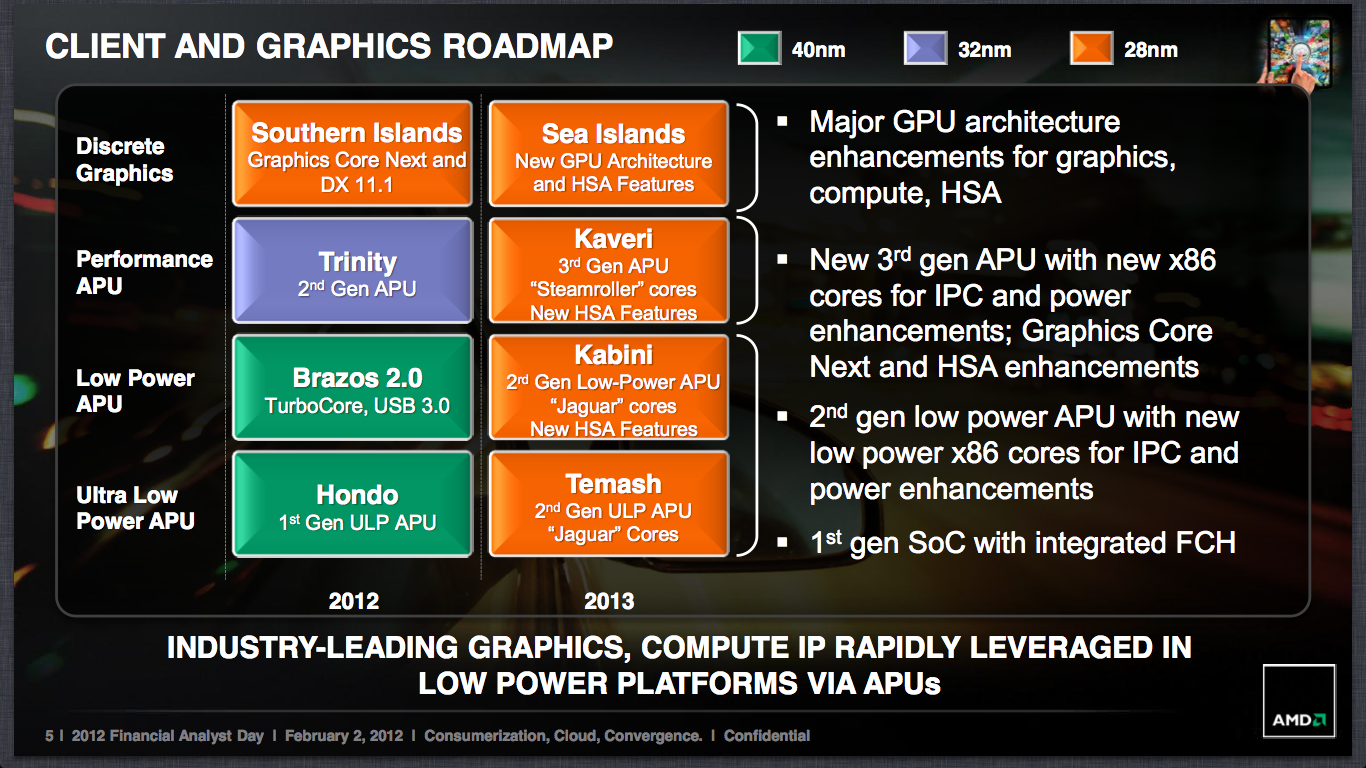
8 *Bulldozer* cores, which makes it comparable to an i5 - mid-level for gaming. And underclocked to 2GHz - so maybe more like an i3. Which makes it...
It's not Bulldozer. It's the Jaguar architecture which is the successor to Piledriver for Embedded SoC. This one is a custom SoC as it has not the requisite 2-4 cores but 8 cores with a strapped on 7800 GPGPU on it using a shared 8GB DDR5 set up.
http://images.anandtech.com/doci/5503/Screen%20Shot%202012-02-01%20at%202.14.03%20PM.png
-
Intel graphics
Of course a PC will cost more. But you're going to have one anyway.
A lot of families live with a console and a PC with Intel integrated graphics. Only very recently (Ivy Bridge, as reviewed by Anandtech) have Intel graphics caught up to PS3 detail levels.
-
Much more informative
-
Re:"Uses an X86 Processor"
> This is on the low side of high-end, but definitely not mid-end.
Yes, for now... when they have not even shown the console on stage. It will be mid-range by the time it is out in the market.
> 176 GBps and around 2 teraflops
AnandTech puts the GPU performance between Radeon HD 7850 and 7870. 7870 is currently a $250 GPU. By the time this launches, it will have a $150-$200 GPU inside. Hardly premium hardware.
> Also, no PC GPU is going to have 8 GB of GDDR5
No. GPU won't use it all. 8 GB is the combined RAM being shared by CPU + GPU. It would be interesting to see what faster memory does for PS4, but historically, CPU RAM speed upgrades never provided significant improvements. But perhaps having common fast memory pool will bring some advantages.
-
Re:"Uses an X86 Processor"
Benchmark-wise, an FX 8350, the 8-core top-end Piledriver,
Anand, who is almost always right about everything in the industry, seems to think these will be Jaguar (slower) cores rather than Piledriver. http://www.anandtech.com/show/6770/sony-announces-playstation-4-pc-hardware-inside
-
Re:GK110 vs. 7970
Probably used 7970 GHz edition numbers.
2048 stream processors * 1.05GHz core * 2(muladd) = 4.3 TF peak SP
DP rate on Tahiti is 1/4 SP, so that'd be 1.075 TF DPBtw, If you are into that sort of number wankery, Dual-Tahiti cards have been out for a while, ~$900, 7.3TF SP / 1.8TF DP.
-
Re:GK110 vs. 7970
I think this new board does ~1.3TF of double-precision (FP64), whereas the Radeon 7970 does about 947MF, which, while not double, is a significant increase (radeon 7970 src, titan src). They also state the theoretical FP32 performance is 3.79 TF for radeon 7970, which is lower than the number you gave. Maybe yours is OC, I didn't check that.
tl;dr version, FP64 performance is 37% better on this board. -
Re:GK110 vs. 7970
I think this new board does ~1.3TF of double-precision (FP64), whereas the Radeon 7970 does about 947MF, which, while not double, is a significant increase (radeon 7970 src, titan src). They also state the theoretical FP32 performance is 3.79 TF for radeon 7970, which is lower than the number you gave. Maybe yours is OC, I didn't check that.
tl;dr version, FP64 performance is 37% better on this board. -
SSD write to death chart P/E Cycles.
This chart is almost 2 years old now, but it is a fun read and has some good testing information:
http://www.xtremesystems.org/forums/showthread.php?271063-SSD-Write-Endurance-25nm-Vs-34nmI have read that some of the newer SSD have only 500-1000 P/E cycles (eg. Kingston V300, Samsung 840), but I don't have proof. It is well documented that most of the current MLC drives have 3000 to 5000 P/E cycles while may of the SLC units are 100000 (eg. Intel X25-E, SuperSSpeed SLC S301).
Here is another good article about TLC SSD:
http://www.anandtech.com/show/6459/samsung-ssd-840-testing-the-endurance-of-tlc-nandYou have to buy and use the correct type of SSD for your application. A new TLC SSD should not be used in any write intensive application (eg. ZFS ZIL) but it may be great for that new fast laptop that can use the speed and does not do a lot of writes to disk. For most standard uses a good SSD will outlast the laptop/desktop where it is installed. The key for good SSD use is detection of pre-failure (SMART is a good start). The SSD is now a consumable part, just like the battery or brakes on a car. We all know drives fail, but standard hard drives don't have the same fixed life expectancy as an SSD.
Don't forget about Write Amplification. It can help kill a drive faster than total bytes written:
http://en.wikipedia.org/wiki/Write_amplification -
100,000?
100,000 is only for SLC NAND. MLC, what is currently in most SSDs, is only 3,000, and TLC (found in usb drives, samsung 840, and probably more SSDs soon because it's cheaper) is only 1,000.
Is 1,000 fine for most people, yes.. but you should be aware of it. I have a fileserver that writes 200gb per day.. which would kill a Samsung 840 in about 6-7 months.
http://www.anandtech.com/show/6459/samsung-ssd-840-testing-the-endurance-of-tlc-nand -
lg-29ea93 +++
I wished the http://www.anandtech.com/show/6741/lg-29ea93-monitor-review-rev-125 would be x1200. but in any case it seems to be a good compromise between a single large monitor and two monitors with the bezel, etc.
-
Re:iDiots
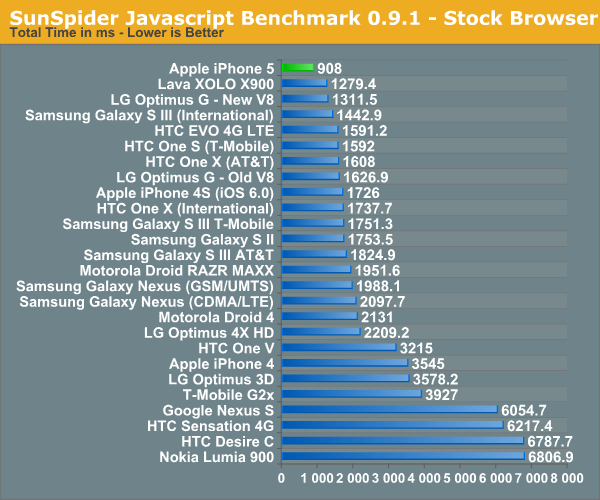
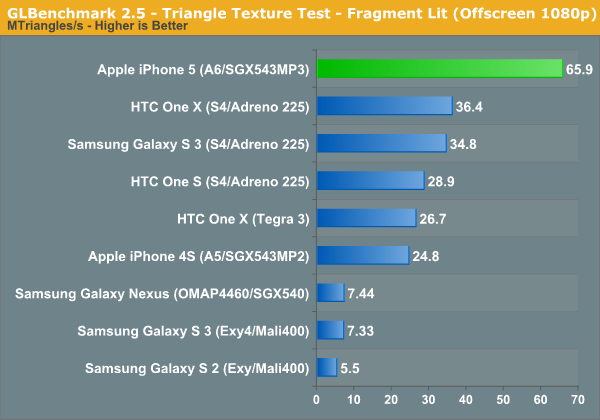
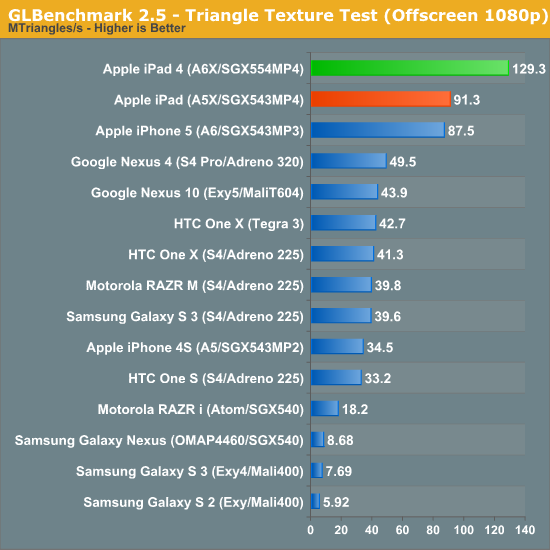
Will buy anything they put out. Who needs useful features? iOS is behind in features compared to Android and even WP yet touted as the "most advanced". And people will defend that to their death. Apple is just moving closer and closer to what they have always been: A jewelry/fashion company. Doesn't matter WHAT it does. It'll make millions 'cuz its shiny.
Shiny stuff that is consistently higher performing than competitor products. The ease of use, aluminum (rather than plastic) build quality, and higher stability are just bonuses.
http://images.anandtech.com/graphs/graph6324/49988.png
http://images.anandtech.com/graphs/graph6324/49981.png
http://images.anandtech.com/graphs/graph6426/51307.png -
Re:iDiots
Will buy anything they put out. Who needs useful features? iOS is behind in features compared to Android and even WP yet touted as the "most advanced". And people will defend that to their death. Apple is just moving closer and closer to what they have always been: A jewelry/fashion company. Doesn't matter WHAT it does. It'll make millions 'cuz its shiny.
Shiny stuff that is consistently higher performing than competitor products. The ease of use, aluminum (rather than plastic) build quality, and higher stability are just bonuses.
http://images.anandtech.com/graphs/graph6324/49988.png
http://images.anandtech.com/graphs/graph6324/49981.png
http://images.anandtech.com/graphs/graph6426/51307.png -
Re:iDiots
Will buy anything they put out. Who needs useful features? iOS is behind in features compared to Android and even WP yet touted as the "most advanced". And people will defend that to their death. Apple is just moving closer and closer to what they have always been: A jewelry/fashion company. Doesn't matter WHAT it does. It'll make millions 'cuz its shiny.
Shiny stuff that is consistently higher performing than competitor products. The ease of use, aluminum (rather than plastic) build quality, and higher stability are just bonuses.
http://images.anandtech.com/graphs/graph6324/49988.png
http://images.anandtech.com/graphs/graph6324/49981.png
http://images.anandtech.com/graphs/graph6426/51307.png -
Re:I think the spec is all wrong
Keep an eye on this.. It is not your old Atom..
-
Instead of the FUD...
Instead of the FUD in the summary, head over to Anandtech for a better review. Or just continue supporting the dumbification of PCs by promoting iPads.
http://www.anandtech.com/show/6695/microsoft-surface-pro-review/
-
Rebadged 7xxx
This might not be as big of a thing as TFS is making it out to be. AMD has yet to give any details on their truly next-gen GPUs. AnandTech reports that all of the currently announced HD 8000 parts are simple rebadges for OEMs.
-
Re:1.6 ghz?
Except that you're forgetting one key component of the 360 CPU: SMT.
Fine-grained SMT (the only SMT worth pursuing) allows for a second thread to populate unused execution units, allowing for an in-order CPU core to potentially exceed 1.0 IPC when running highly-threaded code (or maintain near 1.0 in I/O-blocked instances)..
The 360 cores are dual-decode, dual-issue (just like the Pentium, Intel Atom), as anything less would make zero sense to implement SMT for, and anything more would be overkill for an in-order design. It features triple 128-bit vector units, but will usually only be able to execute 2 vector instructions per-cycle. Here are the specs if you want to peruse them.
The AMD Bobcat core is not a very powerful out-of-order unit. Like the 360 CPU, it features dual-decode and dual-issue (a trait shared by the Jaguar refresh). You can see how little boost Bobcat receives from out-of-order by putting it up against the Intel Atom.
The Atom gets trounced in single-threaded operations, and also in some c tests where Brazos can keep itself fed. But in some tests the I/O becomes the bottleneck, and in those cases Atom catches-up (or exceeds Brazos).
Thus, for certain operations SMT offers similar per-clock performance to out-of-order execution. This means that an optimized multi-threaded load on the 3.2 GHz 360 CPU may run 50-75% faster than on a 1.6 GHz Jaguar core.
Thus if you assume PERFECT scaling for those 3 cores on the 360 and 8 cores of Jaguar, you really see only a 2x overall speedup (especially since Jaguar is getting an upgrade to dual 128-bit vector units).
-
Re:Just goes to show. . .People are stupid
Indeed, I kept laughing at the MHz / GHz wars in the smartphone arena the last 18 months and couldn't help but nearly choke when I looked at solid integer / floating point performance and saw most of this wiz-bang 1 GHz Dual core stuff still getting stomped by stuff in the PII-450 / PIII-600 range (as I recall Atom started as more or less a process shrunk and trimmed down PIII with some of the Core series improvements and modularity grafted in).
It's a little weird to consider how much I wish there was a popular Atom x86 based Android in the US. Seriously, running Android and doing ARM emulation, they still stomp the ARM stuff. I wish Intel marketing would have some of their late 90's spirit and push themselves into the US smartphone industry with slogans like, "faster than ARM... at running ARM." Mind you, I actually mostly hate Intel. Nothing to inspire hatred like their GPU driver mess on Windows and Linux.
(From a year back) http://www.anandtech.com/show/5365/intels-medfield-atom-z2460-arrive-for-smartphones
-
CPU can be a bottleneck
Here, have a look at this Anandtech E-350 review:
http://www.anandtech.com/show/4499/fusion-e350-review-asus-e35m1i-deluxe-ecs-hdci-and-zotac-fusion350ae/15They pair very low-end AMD CPU with best GPU on the market at the time. Results: the CPU does affect the performance. No suprises there..
You need to be more specific with your hardware.
Also, take a look here:
http://www.anandtech.com/bench/CPU/48 -
CPU can be a bottleneck
Here, have a look at this Anandtech E-350 review:
http://www.anandtech.com/show/4499/fusion-e350-review-asus-e35m1i-deluxe-ecs-hdci-and-zotac-fusion350ae/15They pair very low-end AMD CPU with best GPU on the market at the time. Results: the CPU does affect the performance. No suprises there..
You need to be more specific with your hardware.
Also, take a look here:
http://www.anandtech.com/bench/CPU/48 -
Re:Overpriced
I tend to think that the high end ASUS boards are the best money can buy
My experience with ASUS has been frustration with low quality third party chips used to provide excessive numbers or SATA and USB ports and other features. These chips are never as good as the integrated Intel circuits. ASUS is the best of the non-Intel lot, but the others do the same thing; solder on whatever is cheapest and makes the specs look better, damn the bugs or driver issues. Intel also uses third party stuff but they're nowhere near as cavalier about it. Intel's work is not flawless, but they fix it when they screw up. If some Silicon Image chip on a Megasustrix motherboard doesn't work right they aren't going to fix it, or even acknowledge the problem.
I've always thought Intel motherboards only compete in the OEM sector.
That hasn't been true for years. On Newegg only ASUS has more (Intel based) motherboard models available than Intel; Intel has been very responsive to the market of people that want good boards. People like me have long since stopped debugging the poorly engineered products of all these little Taiwanese board makers. My last three personal machines were Intel boards and they're all still running perfectly. Two survived transition from XP to Windows 7 with no driver drama; the OS recognized all the important bits out-of-the-box, which is exactly what I expected and intended.
Dear ASUS, this is an opportunity beyond simply gobbling up the market Intel leaves behind. Now is the time to step up your engineering and qualification of components and produce a line of grown-up boards. I don't need or want 35 USB ports provided by 3 phy implementations, all different. I want conservative, well engineered boards that run cool and don't leak capacitor juice all over the place three years after I buy it. Thanks.
-
Why?
Maybe this would be useful in some HPC environments where applications can be written to maximize the use of CPU cache, but the bandwidth of a PCI
A core i7 has been clocked at 37GB/sec bandwidth, while PCIe
Is replacing the CPU socket with a PCIe card really worth giving up 90% of the memory bandwidth? I've never upgraded a CPU on a motherboard even when new generation CPU's are backwards compatible with the old motherboard since if I'm going to buy an expensive new CPU, I may as well spend the extra $75 and get a new motherboard to go along with it.
Likewise, by the time I'm ready to retire a 3 or 4 year old server in the datacenter, it's going to take more than a CPU upgrade to make it worth keeping.
-
Re:yea they fell by 44%
TLC has not a "less-then-year life expectancy".
See the endurance test here:
http://www.anandtech.com/show/6459/samsung-ssd-840-testing-the-endurance-of-tlc-nand -
Re:yea they fell by 44%
There's an interesting article on how do TLC drives compare to others on anandtech: http://www.anandtech.com/show/6459/samsung-ssd-840-testing-the-endurance-of-tlc-nand
-
Re:"Doomed to fail"....
Ouya has the strongest GPU that's on the tablet market, so your $80 Chinese tablet doesn't compete with it.
lol
http://www.eurogamer.net/articles/df-hardware-how-powerful-is-tegra-3"HDMI output on demanding titles causes noticeable frame-rate drops compared to running from the tablet screen"
"Grand Theft Auto 3, for example, regularly hits 15 frames per second on HDMI output"
Mali-400/MP4 is standard in super cheap chinese tablets (Rockchip RK3066)
Tegra SoCs have TERRIBLE GPU (think GeForce3 performance level), only CPU was fast when they were coming out, and that was due to Nvidia cramming 4 NOT designed by them, licensed from ARM, cores in there.
-
Re:This is why God invented encryption
Encryption is slow.
Not with a Macbook Pro running OS X 10.7 Lion (or later) it isn't. It offers "Filevault 2" nearly instantaneous (insignificant performance hit) whole-disk encryption that is standards-compliant, quite robust, and completely and utterly transparent to the user.
Also, unless you are dual-booting with Bootcamp, even running a windows or Linux VM under Parallels or Fusion should afford the "drive container" the same encryption.
And if you are running Bootcamp, Windows Vista and 7 (and presumably 8) also offer whole-drive protection (I think it's called "Bitlocker"?) that would work for that partition as well, although I have no idea regarding performance, and since MacBooks don't have TPM chips, the "verification" routine is a little more clunky for Bitlocker, but still available.
Considering the cost of the alternative ($10k penalty (or more)), that $1100 MacBook Pro looks like a pretty damned good deal. -
Let's hope it is more efficient than Tegra 3
According to a study of power efficiency focused in tablets with different CPUs (nVidia Tegra3, Qualcomm Krait APQ8060A, Samsung Exynos Cortex A15) from anandtech.com ( http://www.anandtech.com/show/6536/arm-vs-x86-the-real-showdown and http://www.anandtech.com/show/6529/busting-the-x86-power-myth-indepth-clover-trail-power-analysis ), nVidia Tegra3 is less efficient than Intel Clovertrail platform:
* Intel Clovertrail vs nVidia 3: "Ultimately I don't know that this data really changes what we already knew about Clover Trail: it is a more power efficient platform than NVIDIA's Tegra "
* Intel Clovertrail vs Qualcomm Krait: "We already know that Atom is faster than Krait, but from a power standpoint the two SoCs are extremely competitive. At the platform level Intel (at least in the Acer W510) generally leads in power efficiency. Note that this advantage could just as easily be due to display and other power advantages in the W510 itself and not necessarily indicative of an SoC advantage."
* Intel Clovertrail vs Samsung Exynos Cortex A15: "The Cortex A15 data is honestly the most intriguing. I'm not sure how the first A15 based smartphone SoCs will compare to Exynos 5 Dual in terms of power consumption, but at least based on the data here it looks like Cortex A15 is really in a league of its own when it comes to power consumption. Depending on the task that may not be an issue, but you still need a chassis that's capable of dissipating 1 - 4x the power of a present day smartphone SoC made by Qualcomm or Intel. Obviously for tablets the Cortex A15 can work just fine, but I am curious to see what will happen in a smartphone form factor" -
Let's hope it is more efficient than Tegra 3
According to a study of power efficiency focused in tablets with different CPUs (nVidia Tegra3, Qualcomm Krait APQ8060A, Samsung Exynos Cortex A15) from anandtech.com ( http://www.anandtech.com/show/6536/arm-vs-x86-the-real-showdown and http://www.anandtech.com/show/6529/busting-the-x86-power-myth-indepth-clover-trail-power-analysis ), nVidia Tegra3 is less efficient than Intel Clovertrail platform:
* Intel Clovertrail vs nVidia 3: "Ultimately I don't know that this data really changes what we already knew about Clover Trail: it is a more power efficient platform than NVIDIA's Tegra "
* Intel Clovertrail vs Qualcomm Krait: "We already know that Atom is faster than Krait, but from a power standpoint the two SoCs are extremely competitive. At the platform level Intel (at least in the Acer W510) generally leads in power efficiency. Note that this advantage could just as easily be due to display and other power advantages in the W510 itself and not necessarily indicative of an SoC advantage."
* Intel Clovertrail vs Samsung Exynos Cortex A15: "The Cortex A15 data is honestly the most intriguing. I'm not sure how the first A15 based smartphone SoCs will compare to Exynos 5 Dual in terms of power consumption, but at least based on the data here it looks like Cortex A15 is really in a league of its own when it comes to power consumption. Depending on the task that may not be an issue, but you still need a chassis that's capable of dissipating 1 - 4x the power of a present day smartphone SoC made by Qualcomm or Intel. Obviously for tablets the Cortex A15 can work just fine, but I am curious to see what will happen in a smartphone form factor" -
Re:About bloody time...
I think the in-order architecture was just as much based on the other key feature of Atom that Intel didn't talk so much about to consumers - die size and cost for Intel. If we compare the early 230 and 330 to contemporary 45nm processors then a single core Atom was 25 mm^2, dual core 2x25 mm^2, Wolfsdale dual-core 107 mm^2 and quad core 2x107 mm^2. On top of that comes better edge utilization of wafers and lower defect rate since each chip is smaller. In practice Intel could probably produce 5 single-cores Atoms for the cost of one Wolfsdale dual core, allowing Intel to sell a $29 CPU in a market they'd otherwise charge $100+.
I think that even if Atom and Haswell starts to overlap they'll belong to two quite different markets for Intel, one is the low performance - low cost market and the other the high performance - high cost market even if they're in the same power envelope. And if the Atoms are smaller than the Haswells, well Intel can have high margins on both. Besides I doubt Intel has forgotten that the Atoms are their SoC solution for smart phones and such, Anandtech did a pretty solid power analysis of their Clovertrail platform and the Atom CPU peaked at <1W, the platform at <5W. Haswell has a long way to go to reach those levels, even if a turbocharged Atom and ULV Haswell could intersect at 10W.
-
Re:Wildly Over Optimistic For Intel
Really? So this comparison is somehow stacked? Because in it latest Cortex-A15 based Exynos in Nexus 10 draws more power than Z-series Atom while being slower.
-
Re:Competing against LAST YEARS Arm
They keep talking about idle less than 10 watts,
I'm pretty sure you'll find that's under 10 watts when active, for any low-power offering.
Anandtech did a surprisingly decent comparison of the power usage of Clover Trail (Atom Z2760) vs.Cortex-A15 (Exynos 5250).
There are nits to be picked, but they do a good job of showing the power usage, including the energy benefits of race-to-idle, and the low idle draw of all tested platforms.
These are both recent releases; I think comparing them is entirely fair, and they do appear close enough to trade blows.
-
Re:Welcome to the new Value Add
Score: -1 Lying
For you? I agree. After all, the first link you posted was this:
http://www.anandtech.com/bench/Product/675?vs=677
Which compares the Fusion A10-5800K to an i3. You also claimed "piledriver is not much better" where it actually wins by a wide margin in every single benchmark.
-
Re:Welcome to the new Value Add
Score: -1 Lying
For you? I agree. After all, the first link you posted was this:
http://www.anandtech.com/bench/Product/675?vs=677
Which compares the Fusion A10-5800K to an i3. You also claimed "piledriver is not much better" where it actually wins by a wide margin in every single benchmark.
-
Re:Welcome to the new Value Add
The top end non fusion CPU genreally comes between the i5 and close to much more expensive i7, sometimes beating out the i7 in multithreaded benchmarks. It's over 75% of the speed of the i5 single threaded now.
No, no it doesn't. It gets beaten by the i3 3220 for everything except for very multithreaded tasks, where it roughly draws with it:
http://www.anandtech.com/bench/Product/675?vs=677Piledriver is not much better - it's the same architecture as trinity, but with the GPU stripped off.
There actually really aren't that many tasks where multithreading makes up the difference, as you can see from a comparison of a top end piledriver, against a cheaper i5 that consumes about half the power:
http://www.anandtech.com/bench/Product/697?vs=701As you can see, even in a lot of the parallel benchmarks the i5 wins, and that's ignoring the i5's hardware video encoder, which utterly demolishes software mode. Overall, the i5 is a significantly better chip, at significantly lower power, and cheaper to boot.
-
Re:Welcome to the new Value Add
The top end non fusion CPU genreally comes between the i5 and close to much more expensive i7, sometimes beating out the i7 in multithreaded benchmarks. It's over 75% of the speed of the i5 single threaded now.
No, no it doesn't. It gets beaten by the i3 3220 for everything except for very multithreaded tasks, where it roughly draws with it:
http://www.anandtech.com/bench/Product/675?vs=677Piledriver is not much better - it's the same architecture as trinity, but with the GPU stripped off.
There actually really aren't that many tasks where multithreading makes up the difference, as you can see from a comparison of a top end piledriver, against a cheaper i5 that consumes about half the power:
http://www.anandtech.com/bench/Product/697?vs=701As you can see, even in a lot of the parallel benchmarks the i5 wins, and that's ignoring the i5's hardware video encoder, which utterly demolishes software mode. Overall, the i5 is a significantly better chip, at significantly lower power, and cheaper to boot.
-
I don't know what you're smoking...
The A6X puts everything else in the mobile industry to shame.
http://images.anandtech.com/graphs/graph6472/51764.png
http://images.anandtech.com/graphs/graph6472/51759.pngThe first graph is a masure of memory bus bandwidth; while this has historically sucked on ARM in general, and Apple has had the lead in this area because they started life with their own memory controller design replacing the one normally supplied by the ARM folks, this lead has been significantly narrowed in the Samsung Exynos line. There are still some optimizations to be had to match the A6X speed, but it's close enough that for an optimized pipeline, it's not going to matter as much as the graph shows. nVidia's ARM offerings still have pretty sucky memory bandwidth, as do the Qualcomm chips, like the SnapDragon series.
The second graph measures the GL pipeline, and since the Linux stack moves copies of surfaces rather than GL over the user/kernel boundary, there's significant overhead in the protection domain crossing, as well as in amount of data being moved (which devolves, again, to the memory bandwidth issue).
Unless you go direct GL across the user/kernel boundary, and run the surface processing entirely in kernel space, if you are doing software compositing, even in the case of 2D, which applies to the vast majority of surface transforms, since people simply do not watch YouTube videos on rotating cubes or on spheres, you are talking 3 protection domain crossings to get the data from user space to the GPU, process it in the GPU, bring it back to user space, and then push it again across the boundary to get it into the frame buffer.
Basically you are comparing a graphics stack that sucks with one that generally doesn't, except under specifically defined circumstances (and in those cases DirectX beats GL in terms of reduced system vulnerability to unbounded texture processing for both the Linux and MacOS X/iOS stacks).
Either way, the comparisons in those graphs are not straight apples-to-apples unless you happen to be running Android on all your devices, and so have the additional expensive-on-ARM copy and protection domain operations on all the platforms.
-
I don't know what you're smoking...
The A6X puts everything else in the mobile industry to shame.
http://images.anandtech.com/graphs/graph6472/51764.png
http://images.anandtech.com/graphs/graph6472/51759.pngThe first graph is a masure of memory bus bandwidth; while this has historically sucked on ARM in general, and Apple has had the lead in this area because they started life with their own memory controller design replacing the one normally supplied by the ARM folks, this lead has been significantly narrowed in the Samsung Exynos line. There are still some optimizations to be had to match the A6X speed, but it's close enough that for an optimized pipeline, it's not going to matter as much as the graph shows. nVidia's ARM offerings still have pretty sucky memory bandwidth, as do the Qualcomm chips, like the SnapDragon series.
The second graph measures the GL pipeline, and since the Linux stack moves copies of surfaces rather than GL over the user/kernel boundary, there's significant overhead in the protection domain crossing, as well as in amount of data being moved (which devolves, again, to the memory bandwidth issue).
Unless you go direct GL across the user/kernel boundary, and run the surface processing entirely in kernel space, if you are doing software compositing, even in the case of 2D, which applies to the vast majority of surface transforms, since people simply do not watch YouTube videos on rotating cubes or on spheres, you are talking 3 protection domain crossings to get the data from user space to the GPU, process it in the GPU, bring it back to user space, and then push it again across the boundary to get it into the frame buffer.
Basically you are comparing a graphics stack that sucks with one that generally doesn't, except under specifically defined circumstances (and in those cases DirectX beats GL in terms of reduced system vulnerability to unbounded texture processing for both the Linux and MacOS X/iOS stacks).
Either way, the comparisons in those graphs are not straight apples-to-apples unless you happen to be running Android on all your devices, and so have the additional expensive-on-ARM copy and protection domain operations on all the platforms.
-
Re:Wow
Oh, come on. The new chip will be slightly more powerful than the old chip, which itself is about as powerful as the previous chip, which manages to compete with high end tablets from 2 years ago in terms of processing power.
Aren't you excited to have the most powerful iPad yet? This evolutionary tiptoe ahead in the leaping and bounding table marketspace?
Think you need to do your homework. The A6X puts everything else in the mobile industry to shame.
http://images.anandtech.com/graphs/graph6472/51764.png
http://images.anandtech.com/graphs/graph6472/51759.png -
Re:Wow
Oh, come on. The new chip will be slightly more powerful than the old chip, which itself is about as powerful as the previous chip, which manages to compete with high end tablets from 2 years ago in terms of processing power.
Aren't you excited to have the most powerful iPad yet? This evolutionary tiptoe ahead in the leaping and bounding table marketspace?
Think you need to do your homework. The A6X puts everything else in the mobile industry to shame.
http://images.anandtech.com/graphs/graph6472/51764.png
http://images.anandtech.com/graphs/graph6472/51759.png -
Anyone inside a Best Buy or Walmart store
Maybe as a guide for those who know nothing about specs, have no interest in learning, and are buying from a source where they cannot get decent advice
In other words, anyone inside a Best Buy or Walmart store.
All modern computers (save some servers) have audio, some level of 3D performance, etc
But only recently (circa Ivy Bridge) did Intel integrated graphics come to equal the graphics of a 2005-spec console like the Xbox 360 or PlayStation 3.
On the other hand, if you want to ensure decent game performance then you have wildly different specs to aim for depending on the game
Should the industry get behind this new proposed son-of-MPC, game developers will target a particular MPC level just as they targeted the original MPC spec. That's what the Vista-era "Windows experience index" was for, but it ended up not catching on.
the resolution the user will be running
With LCD panels having standardized on 1920x1080 because of the economies of scale of the TV market, is there really a choice here anymore?
-
Re:Fixed Refresh Rates
http://www.anandtech.com/show/2794 "So, this article is as much for gamers as it is for developers. If you are implementing render ahead (aka a flip queue), please don't call it "triple buffering," as that should be reserved for the technique we've described here in order to cut down on the confusion. There are games out there that list triple buffering as an option when the technique used is actually a short render queue. We do realize that this can cause confusion, and we very much hope that this article and discussion help to alleviate this problem."
-
Re:WTF?!?!?!
Here are the hard numbers for anyone who's curious:
http://www.behardware.com/articles/881-7/components-returns-rates-7.html
- Intel 0.45% (against 1.73%)
- Samsung 0.48% (N/A)
- Corsair 1.05% (against 2.93%)
- Crucial 1.11% (against 0.82%)
- OCZ 5.02% (against 7.03%)
Return rates specifically for OCZ models:
- 40.00% for the OCZ Petrol 64 GB
- 39.42% for the OCZ Petrol 128 GB
- 30.85% for the OCZ Octane 128 GB SATA II
- 29.46% for the OCZ Octane 64 GB SATA II
- 9.73% for the OCZ Vertex 2 120 GB 3.5"
- 9.59% for the OCZ Vertex 2 120 GB
- 6.73% for the OCZ Vertex 2 60 GB
- 5.43% for the OCZ Agility 3 240 GB
- 5.12% for the OCZ Vertex Plus 128 GB
Also if you have a Crucial M4 make sure you have the correct firmware as Crucial keeps releasing/shipping units with buggy firmware updates that can brick your drive.
-
Article Summary Is Incorrect
Current NVIDIA K20X compute card produces 5.575 Gflops double precision/Watt:
http://www.anandtech.com/show/6446/nvidia-launches-tesla-k20-k20x-gk110-arrives-at-last
Note that these cards are slightly different than consumer graphics cards. They have more double-precision pipelines because scientific computing cares more about that kind of math. They are also much more expensive than consumer cards. The underlying chip design is similar to the 600-series graphics cards. You can think of it as a modified version optimized for math, since the 600 series came out first, and is being produced in higher volume.
-
Save more by buying small
A PSU has a power efficiency curve that looks like this. That article also explains what I'm about to summarize:
Pick a PSU that is no more powerful than you need, to keep your system in the middle of that curve, for maximum efficiency. 100% margin is more than plenty, so if your components will use 250W max, you don't need a 900W PSU. Look for something in the 500 range, or even less if you pick a good-quality PSU.
You probably won't be able to make a cost argument for maximizing efficiency, but you can build a quieter system focusing on efficiency, and it's quite satisfying obsessing over something different.