Slashdot Mirror
Domain: berkeley.edu
Stories and comments across the archive that link to berkeley.edu.
Comments · 3,539
-
NEE: Non-Extinction EventThere have always been huge holes in the asteroid theory. The vulcanism theory came out at the same time and matches evidence better, it even has correlation. All the asteroid theory has really is correlation: there's a layer of meteorite dust around the time of the dinosaur extinction, ergo a giant meteor killed the dinosaurs.
Unfortunately for the meteor theory, it was found that even such a huge dust cloud would not have killed off much of the eco-system, even taking the web of life into account. The dust from the meteor strike was too course to stay up in the atmosphere for long enough to kill off plant life by blocking sunlight or change the climate
To compensate for this, the theory was adjusted to suggest that the meteor strike set off world wide conflagrations sending up fine ash which would blot out the sun. This is, however a stretch. Combined with the fact that the mass extinction happened hundreds of thousands of years after the Chicxulub impact, the theory seems to be on shaky ground. Even supporters of the meteor theory recognize the problem and are looking for a better candidate impact.
It's been said that the Alverez's had done a better job at selling their theory than on developing it. Their actions in shouting down competing theories set off one of the biggest scientific feuds in modern history.
For a balanced view of the competing theories, check out this site.
-
A Helpful Comment
-
A Helpful Comment
-
Re:beat me to it
"Support our troops" means respect that they signed up to do a patriotic duty to fight (sometimes to the death) the position and desires of our government
Ah, the unintentional typo reveals the truth -- the patriot is often the one fighting (metaphorically, generally) the position of our government, not the one doing its bidding.
As Thoreau put it,
The mass of men serve the state thus, not as men mainly, but as machines, with their bodies. They are the standing army, and the militia, jailers, constables, posse comitatus, etc. In most cases there is no free exercise whatever of the judgement or of the moral sense; but they put themselves on a level with wood and earth and stones; and wooden men can perhaps be manufactured that will serve the purpose as well. Such command no more respect than men of straw or a lump of dirt. They have the same sort of worth only as horses and dogs. Yet such as these even are commonly esteemed good citizens. Others--as most legislators, politicians, lawyers, ministers, and office-holders--serve the state chiefly with their heads; and, as they rarely make any moral distinctions, they are as likely to serve the devil, without intending it, as God. A very few--as heroes, patriots, martyrs, reformers in the great sense, and men--serve the state with their consciences also, and so necessarily resist it for the most part; and they are commonly treated as enemies by it.
It also means RESPECT THEM WHEN THEY GET HOME!!!
I respect those who served honorably them for their courage and their desire to serve a higher cause. I pity them for their lack of judgment in choosing to serve the stupid and brutal foreign policy of the U.S. government.
The correct message to most of our troops is not "Thank you", but "Sorry you got defrauded and ripped off." (For the handful who participated in war crimes, of course, the correct message is, "This way to your jail cell".)
-
Re:Intent isn't the issue
Ask how the producers of Spider Man feel about copyright when it caused them to be sued because billboards were visible on the streets they filmed there and then sued for modifying the billobard owners works when they replaced the images digitally.
Oh please, the case was dismissed.
That had nothing to do with copyright law, it had to do with some advertising companies trying to make a quick buck. Keep in mind that people can sue for ANY reason. Dismissal usually means that you don't even have grounds for a case.
-
Re:I've got your denial right here.
They totally intentionally installed the software. You can't make a machine Malware proof without also making it software proof... Anyone who tells you different is confusing the issue. OS X has plenty of problems, this isn't one of them.
You're presenting a false dichotomy. You can make OS's more resistant to malware and harder to write malware for without making it completely proof from malware.
In fact, this semi-academic essay goes even further by arguing that OSes can and should be made completely resistant to malware, through things such as sandboxing (which you mention). Of course, there is no OS that fully achieves this—let alone conveniently—but that's no reason not to ask for it.
-
Links to Articles
The problem is not that it is impossible, just that most current implementations are extremely slow. Song implemented ranged query over encrypted data on gMail and even with encryption accelerators the performance was low. Some more papers: http://www.springerlink.com/index/370086k273w1587t.pdf http://www.cs.berkeley.edu/~dawnsong/papers/rangequery-full.pdf http://www.springerlink.com/index/u2007h5706482j51.pdf There have also been some different multi-server database schemes that do the same thing, although, once again, due to performance and the cost of maintenance I do not know of any that have actually gone to market Hope those help. Hit me up if you want more info. -Nav
-
Re:searching encrypted datahttp://www.cs.berkeley.edu/~dawnsong/papers/se.pdf
Doh! Just noticed you already are aware of that particular work. Anyway, congrats, you're already aware of the state of the art!
-
searching encrypted dataThere are techniques to do this but none have made it out of academia. Most are quite inefficient and support very restricted querying models. Here's one paper that claims their methods are "practical" (but always keep in mind that academic claims of practicality should always be taken with a grain of salt):
-
UCB Fearing Lab
Ron Fearing's lab at UC Berkeley also does work on biomimetic materials such as synthetic gecko pads:
his biomimetics lab
has a link to their self-cleaning gecko adhesive material on the front page.
Self-Cleaning Gecko Adhesive (Sep. 2008)
First synthetic gecko adhesive which cleans itself during use, as the natural gecko does. After contamination by microspheres, the microfiber array loses all adhesion strength. After repeated contacts with clean glass, the microspheres are shed, and the fibers recover 30% of their original adhesion. The fibers have a non-adhesive default state, which encourages particle removal during contact.
Contact Self-Cleaning of Synthetic Gecko Adhesive, Langmuir 2008 -
UCB Fearing Lab
Ron Fearing's lab at UC Berkeley also does work on biomimetic materials such as synthetic gecko pads:
his biomimetics lab
has a link to their self-cleaning gecko adhesive material on the front page.
Self-Cleaning Gecko Adhesive (Sep. 2008)
First synthetic gecko adhesive which cleans itself during use, as the natural gecko does. After contamination by microspheres, the microfiber array loses all adhesion strength. After repeated contacts with clean glass, the microspheres are shed, and the fibers recover 30% of their original adhesion. The fibers have a non-adhesive default state, which encourages particle removal during contact.
Contact Self-Cleaning of Synthetic Gecko Adhesive, Langmuir 2008 -
a solution
sign up for a boinc project, then your computer won't be 'unused,' enabling you to run it 24/7 w/o guilt.
-
Fearing Lab at UCB
Ron Fearing's lab at UC Berkeley also does work on biomimetic materials such as synthetic gecko pads:
has a link to their self-cleaning gecko adhesive material on the front page.
Sorry about the prior post.
Self-Cleaning Gecko Adhesive (Sep. 2008)
First synthetic gecko adhesive which cleans itself during use, as the natural gecko does. After contamination by microspheres, the microfiber array loses all adhesion strength. After repeated contacts with clean glass, the microspheres are shed, and the fibers recover 30% of their original adhesion. The fibers have a non-adhesive default state, which encourages particle removal during contact.
Contact Self-Cleaning of Synthetic Gecko Adhesive, Langmuir 2008 -
Fearing Lab at UCB
Ron Fearing's lab at UC Berkeley also does work on biomimetic materials such as synthetic gecko pads:
has a link to their self-cleaning gecko adhesive material on the front page.
Sorry about the prior post.
Self-Cleaning Gecko Adhesive (Sep. 2008)
First synthetic gecko adhesive which cleans itself during use, as the natural gecko does. After contamination by microspheres, the microfiber array loses all adhesion strength. After repeated contacts with clean glass, the microspheres are shed, and the fibers recover 30% of their original adhesion. The fibers have a non-adhesive default state, which encourages particle removal during contact.
Contact Self-Cleaning of Synthetic Gecko Adhesive, Langmuir 2008 -
Re:links?
Maybe these tools will help generate "correct" code for some definition of correctness. But have these guys defended their choice of definition of "correctness"?
A little bit. There are two bits of how they would need to justify it: is it guaranteed to make sense, and how complete/useful it is.
The first bit is easy: the sorts of things they check for are the sorts of things that cause program or system crashes, or other clear failures. A null pointer dereference is almost always an error. Trying to lock an already-locked mutex is always an error if it's not designed to allow that. In a device driver, making a potentially-blocking function call while interrupts are disabled is always an error. (This is true on both Linux and Windows.)
The second bit, showing that proving a program is free of these errors is useful, is a little harder, because there's no program- or driver-specific behavior they can check. They can't figure out that, for instance, a program would produce incorrect output. If a calculator says that 1+1 is 3, SLAM wouldn't be able to tell you that is wrong. This problem is mitigated somewhat by the fact that SLAM takes as input a specification of the property that you want to prove, so if you DO have an application-specific check you want to make, there's a chance you could express it as something SLAM could check. No guarantee however.
At the same time, how many people around
And I wouldn't be alone; this is basically the current state of program analysis. Proving that a program actually does what it is supposed to is generally seen as out of reach, at least for now. (I would argue that it will be in the future too. For most programs, specifying what it means for a program to actually do what it is supposed to would require a specification on the same complexity order as the code itself. What's a formula that describes what Word is supposed to do? Or Emacs? Or Firefox?) There are tons and tons of papers out there that use some measure of correctness comparable to what the SLAM project used. One example that comes to mind is some stuff on concolic execution that came out of Lucent Labs and UIUC (Dart and the followup work Cute) that uses a definition of correct that includes things like null-pointer dereferences, divisions by zero, or the program reaching an assert statement. Again, there's no application-specific behavior that it knows about (unless you encode it in the program itself in an assert; presumably SLAM could pick this up too). But there are many other examples.
Is the application field a niche field, or will it help with OSses and general end-user applications?
How much it will help is still up in the air. Right now all of the verification methods out there are limited to very small programs. (This is the primary reason that the SLAM project targeted device drivers -- they tend to be very small.) So you won't be able to verify the whole OS any time soon, and you won't be able to verify anything but the smallest utilities.
But today's techniques actually DO work on device drivers. SLAM has been packaged up with the Driver Development Kit starting a bit over 2 years ago, and IIRC MS has added it to the WHQL driver certification process. I have no idea how much it actually helps in practice though. (It certainly has the potential to; most of Windows crashes are caused by third-party drivers.)
(There are other program analysis techniques that DO scale to large (millions of lines) programs. However, they are neither sound nor complete, so they aren't guaranteed to catch every bug and can also return l
-
Re:PostgreSQL
PostgreSQL is still a *huge* player (in fact, they're pretty-much the only open-source, fully-transactional DB available).
I love PostgreSQL, but I have to acknowledge:
Firebird
H2
Ingres (ancestor of Postgres)
SQLiteNone of these are Oracle-killers, but they are all robust, open-source SQL RDBMSs in their own right.
-
Re:As I've Said Before
-
Re:As I've Said Before
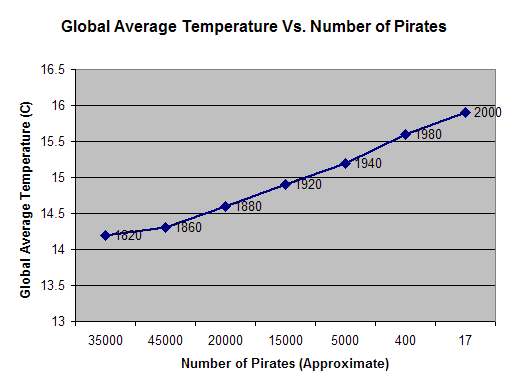
If you really, really wanted to save the polar ice caps, you'd create a time machine and travel back..say, 19,000 years ago. Back when the polar ice cap extended down into what is modern day Illinois. Which predates SUVs and industrialization by around...19,000 years or so.
You could also increase the number of pirates.
-
My post to his blog
Charles-
You're so right.
Here are links to some related things I've written, to maybe give you some more inspiration.
This posting asks, if copyrights are so valuable, why is there not an annual tax on them for the burden they impose on society?
http://journalism.berkeley.edu/projects/biplog/archive/000431.htmlThis long essay talks about the deeper social issue is the transition to a "post-scarcity" society.
"Post-Scarcity Princeton"
http://www.pdfernhout.net/post-scarcity-princeton.html
(Sorry, I did not go to Harvard, but I do mention it there in passing.This is a satire about what the practice of law would be like if the law was set up the way most lawyers advise the rest of the world to live:
"Microslaw"
http://www.pdfernhout.net/microslaw.htmlAlbert Einstein said: "If at first, the idea is not absurd, then there is no hope for it".
We need to move beyond a lottery model for supporting creativity.
Keep trying. History will ultimately be on your side.
--Paul Fernhout
-
Discrete versus continuous?
Being a mathematician myself, I too find this theory quite refreshing. It seems to tie the scattering of complex ideas that I know as quantum physics into one nice little, intuitive package.
For instance, I've always wondered about the seemingly-coincidental, repetitious nature of the universe. Why is it that an electron is to a nucleus, like a planet is to a star, like a solar system is to a galaxy, like a galaxy is to a super cluster? This cyclic nature is well described and documented in fractals, http://www.ocf.berkeley.edu/~wwu/fractals/mandelbrot.html, and so, the universe having fractal roots makes sense.
Another example: the uncertainty of quantum measurements. Why must everything be measured in statistical values? The continuous nature of the fractal again gives nice intuition into this quandary as well. However, this point leads me to wonder just how reconcilable this mathematical simplification actually is. I'm not a physicist, but I do know that much of quantum physics deals with the concept of discrete: discrete time, energy quanta, etc. Fractals, are, by definition, continuous.
Are these two at all acquiescent?
-
MS in IT is the way to go
Any of the "School of Information" (I personally went to the Berkeley iSchool) will do you well, giving you a much greater breadth of real world skills to talk about in an interview. Bonus points if they have a program that gets you more time working with the business school.
-
MS in IT is the way to go
Any of the "School of Information" (I personally went to the Berkeley iSchool) will do you well, giving you a much greater breadth of real world skills to talk about in an interview. Bonus points if they have a program that gets you more time working with the business school.
-
Re:Still Important
If it's to save money... maybe they should try not leaving all several hundred of our puplic computers on all night, and for the whole summer and winter vacations!
You are aware that those lab machines will probably be running Condor or BOINC during that time? Just because the machine isn't in use by someone sitting at it doesn't mean that it's doing nothing useful.
-
Paul needs to drop the "R"
"The digital age has its positives and negatives but it has created a society of massive exploitation for all artists. I hope this campaign can help to change the course of 'our' future.
Paul Mooney, The Revolvers, songwriter - 25 March 2009Paul needs to drop the R in his band name. It is 2009 for 'Christ sake! It's called a theory, but that doesn't mean it is theoretical Paul! I suppose the name The Revolvers is more apropos than The Evolvers for Paul, as it alludes to the thought of him shooting himself in the foot along with all of the other ill informed musicians.
Note: I have been a musician for longer than I have been a Software Engineer (i.e. 32+ and 25+ years respectively), so I see the whole picture. These folks over at fairplayforcreators are just totally misinformed or actively clueless. -
A related interesting project
One of the CS professors here is working on a research project that seems to have a similar use, except it relies on binary analysis. http://bitblaze.cs.berkeley.edu/ They also made a tool to automatically generate exploits based on Microsoft patches, and I guess they're just hoping that that capability doesn't fall into the wrong hands... Professor Song is scary.
-
Dragonflies
There are excellent 155 million year old dragonfly fossils and other less beautiful ones that are roughly 300 million years old.
There are a lot of very ancient insect orders. Mammals and birds are newcomers, and still changing a lot, but there have been animals pretty similar to turtles and crocodiles for millions of years, too. -
Re:Who reboots?
How long does it take your transistor radio to switch on? What about your television? (Unless it is decades old, it is probably two seconds or less.) When you turn on your kitchen tap, how long is it before water starts coming out
General purpose computers with complex operating systems that start dozens of applications during boot are relatively new technology compared with what you list. The PC is what, 20-30 years old depending on your definition of Personal and Computing?
I bought a house that had been in probate for a year. The water lines had been flushed with air. When I got the water running, it took maybe 30-40 seconds for the water to pressurize the line and come out the faucet.
Also, I've used old restored radios from the 1920s that had to warm up the tubes before they worked. 'Boot' times on those were around 2-3 minutes. Beautiful pieces of wood furniture, but horrible impractical compared with an 'almost instant' boot iPod.
To use a car analogy, One hundred and twenty years of innovation can do a lot. When you got into your automobile this morning did you remember to manually advance the engine timing and work the clutch leavers while someone cranked over the engine to get it started? No, you put the key in ignition and turned it.
But it's still nice to see someone taking note that Ubuntu can be dog slow starting up. Just one more reason to keep the system running your favorite distributed app while away.
-
Re:Who reboots?
How long does it take your transistor radio to switch on? What about your television? (Unless it is decades old, it is probably two seconds or less.) When you turn on your kitchen tap, how long is it before water starts coming out
General purpose computers with complex operating systems that start dozens of applications during boot are relatively new technology compared with what you list. The PC is what, 20-30 years old depending on your definition of Personal and Computing?
I bought a house that had been in probate for a year. The water lines had been flushed with air. When I got the water running, it took maybe 30-40 seconds for the water to pressurize the line and come out the faucet.
Also, I've used old restored radios from the 1920s that had to warm up the tubes before they worked. 'Boot' times on those were around 2-3 minutes. Beautiful pieces of wood furniture, but horrible impractical compared with an 'almost instant' boot iPod.
To use a car analogy, One hundred and twenty years of innovation can do a lot. When you got into your automobile this morning did you remember to manually advance the engine timing and work the clutch leavers while someone cranked over the engine to get it started? No, you put the key in ignition and turned it.
But it's still nice to see someone taking note that Ubuntu can be dog slow starting up. Just one more reason to keep the system running your favorite distributed app while away.
-
Re:Floating Point
The second way is that mainframes have always been able to execute IEEE floating point in software,
Not before the mid '70's or so, at the earliest, they weren't - because IEEE floating point didn't exist before then. Work on the standard started in the mid '70's.
z/Architecture - and, I think, later if not all versions of S/390 - include instructions to do IEEE binary floating point as well as IBM floating point.
-
Re:Dogs follow the same rules of genetics
When you breed animals free from genetic issues, you have a much better chance for offspring that are free from genetic issues.
How would you find dogs that are "free of genetic issues"? It's too expensive to routinely sequence the DNA of pets, and we haven't yet identified the genes that code for many rare genetic disorders. If you could find dogs that were free of deleterious alleles, then feel free to mate them with their immediate families.
A healthy individual, be it dog or human, is likely to have several recessive genes that code for rare genetic disorders. Those genes seldom pose a problem unless we mate with someone who happens to carry the same gene. This is one of the reasons why breeding within a small gene pool often leeds to the expression of rare birth defects. I understand why dog breeders are defensive about the problems associated with the founder effect. Nevertheless, it is possible to address a non-scolarly audience without spreading misinformation and abusing terms like hybrid vigor.
Jennie Chen's essay made the point that outbreeding does not guarantee the health of the progeny. She also discussed the issue that dogs do not always carry the same number of genes that code for diseases. She shouldn't have polluted the essay with misleading and false statements.
For all intensive purposes of dog breeding, you assume that the parents are passing on their genes.
For all intensive purposes, huh? I know it's rude to point out spelling, grammatical, an typographical errors, but I think I'm doing you a favor.
Please read the following pages:
-
Gemini planet imager
Keep them coming! One more place to point the Gemini planet imager in 2010 http://gpi.berkeley.edu/index.html
Once we can do direct imaging, we can sample the planet spectra, and determine the atmosphere, composition, etc. -
War of the Bugs
I saw a demonstration of something just like this at UC Berkeley. Cool stuff. http://www.eecs.berkeley.edu/Research/Projects/Data/105682.html
-
Re:Not quite...
Now Alice opens her envelope and sees tails. So she knows Bob must have heads. (...) Alice only has access to the information she *brought* with her when they separated.
That's correct, but that's not the whole story. From what you said, it looks like classic mechanics is good enough to explain it, and it's not.
The problem is that there is not only one way you can measure the state of this "coin" -- depending on the orientation of your measurement, you get heads or tails on that specific orientation. So, when Alice measures the coin in a specific orientation, this *orientation* is "felt" by Bob's coin, and it may influence the result of Bob's measurement. That effect simply can't be explained by classic mechanics.
For a more detailed explanation, see the section on Bell's Inequality in http://www.eecs.berkeley.edu/~vazirani/f04quantum/notes/lecture1.pdf (warning: requires a bit of math).
-
Re:Donate to At Home Projects
The IT guy in me thinks that's a waste of FLOPS.
In this financial climate? Only if those projects are willing to pay you (hah!) or you really believe in supporting what they do.
The wanna-be businessman in me thinks its probably a waste of money as well.
You look like you're in a position to use virtualization to create X application servers over Y machine servers
There's really hardly any money to speak of in plain old CPU cycles. Amazon does OK out of it, but their model relies on being really big. Most of us don't operate at that size.
OTOH, if you can offer some sort of value-add, you can charge more. For example, you might run and support specialist applications for small businesses; there's a reasonable amount to be made in that area, but you need to be thinking then in terms of not just having computers but support staff too and, indeed, a whole business. You can't do it half-assed; this isn't the tech bubble.
Have you thought about just selling the servers?
As others have explained, that may well be a solid suggestion. Right now, better to have cash in hand than servers you don't need.
-
SETI @ Home
http://setiathome.berkeley.edu/
You never know... -
Donate to At Home Projects
The IT guy in me thinks that's a waste of FLOPS.
The wanna-be businessman in me thinks its probably a waste of money as well.
You look like you're in a position to use virtualization to create X application servers over Y machine servers
Have you thought about just selling the servers? -
Re:I wants a giraffe neck
Mods: it's not offtopic, just difficult to read!
Have you ever broken a limb and had it in a plaster cast? Notice how the limb has lost muscle (maybe even bone) when the cast comes off?
Have you heard that thinking about exercise imporves muscle tone?
Ever re-learnt something? Or re-re-learnt seomthing? Each time, it's quicker.
"Use it or you lose it"
Epigenetics is a feedback mechanism, just like all the others. It must be a good one because it has been around for a long time.
The case of the Irish Elk is a good example of a feedback mechanism that failed.
Be careful with that giraffe neck - it might be bad for your kids! -
Group Blog and Video Discussion
We will be responding to feedback and continuing the discussion at our blog: http://abovetheclouds.cs.berkeley.edu/
-
Re:Going a bit overboard with the links...
I try to provide links so I may support my position and so that people not simply assume I'm making stuff up.
As do I, I was just mentioning that you got a little basic there - I generally post links for any specific statistics or information, not general stuff.
However neither solar nor wind should need nearly as much of either than a nuclear power plant will.
Solar, well, it depends a LOT on the specifics of the installation. Biggest user of concrete would probably be a stand alone plant with concrete supports, but you could probably substitute metal for a lot of concrete. On the other hand, the concrete needed for monopole type wind turbines will surprise you.
Though I'm not sure I'd think 200 pylons for 5 megawatt wind turbines would use less concrete and steel than a 1 gigawatt nuclear power plant.
First, I'd like to apologize for crashing your machine. I simply ended up closing the browser after a while. Today I saved the pdf before opening it, works fine. Apparently Adobe's downloading system is messed up.
Do you have a counter for the Berkeley study, showing that wind needing 10 times the steel and 4 times the concrete per MW? (Duplicating the nice html link with the excerpt)
Back on topic - Have you ever seen how much concrete goes into putting footings in for a simple chain link fence? Now consider your 5MW turbine.
Some relevant parts, pulled from the article:
"The machine has the capability of generating approximately 17 GWh of power a year" - 17 GWh/year. Including a 90% capacity factor, a 1GW nuclear plant would produce ~7,884 GWh You'd need 463 turbines to equal the power generation of the nuke plant. Much longer, and you'll be looking at 2 GW plants, right now 1 GW is on the low end for 'big' plants, 1.4 and even 1.6 GW are showing up.
"Winds as low as 3.5 m/s will disengage the electromagnetic disc brakes and the turbine should have peak performance during winds of 13 m/s. Winds of 25 m/s or more will cause the turbine to cut-out."
Minimum wind to produce power: 7.8mph, Max: 55mph, Max power: 29mph.
"The world's largest wind turbine, a 120-meter (394-feet) behemoth" - It's 120 meters tall, and given even the lightweight blades is a monopole design, requiring a good base to withstand the wind in all weather.
Hmm - 45 foot tower, requires a base 3' deep, 6' in diameter. 1/15th in depth, double the depth as width. Scale that up, the 120 meter tower would require a base 8 meters deep, 16 meters wide - 1.6k cubic meters of concrete. To replace the nuke plant you'd need 740k m^3 of concrete.How much would the nuke plant itself take? Modern nuclear reactors need less than 40 metric tons of steel and 190 cubic meters of concrete per megawatt of average capacity. Alternate site, Berkeley study(PDF warning)
So, using 1970s figures, of which modern plants are designed to 'use even less', a GW plant would require only 190k m^3 of concrete. 40k tons of steel (Imagine how much steel those 463 turbines would need!)
Oh - found a link to that 5MW turbine with steel usage - 1100 tons of steel PER TOWER, for the tower alone. Various parts in the 425 ton head are also made of steel. 509.3k tons of steel to replace that nuke plant. 469k more tons than the
-
Re:Going a bit overboard with the links...
I didn't exactly need links to such simple near universal construction materials as concrete, steel, cement, and such. I'm well aware of the nuclear cycle.
I try to provide links so I may support my position and so that people not simply assume I'm making stuff up.
It's not like wind doesn't need them either - and a stand alone solar complex will use them as well.
However neither solar nor wind should need nearly as much of either than a nuclear power plant will. Though I'm not sure I'd think 200 pylons for 5 megawatt wind turbines would use less concrete and steel than a 1 gigawatt nuclear power plant. And all the steel used to make the turbine, tower, and pylons would be less too. Even your link to the environmental effects of wind power "suggested a payback time of 1.1 years". That charter only considers CO2 not other environmental considerations also.
Interesting article on green nuclear power
It offers no substance though, basically it's about greenwashing nuclear power.
Update - found it! - but doesn't want to download completely on my system.
It's not just you, I clicked on the link then the browser and preview stopped responding. I tried to force quit then the computer froze. I've had my Mac for almost 1 1/2 years and that's only the second or third tyme that happened. I wish I didn't have the problem, I'm not going to try again.
While Uranium mining and refining is fairly nasty, the trick is that you need so little of it - You'd end up mining more cadmium and other rare and nasty minerals for photovoltaic panels.
I'm not sure if it was you, or someone else who posted about it above, but someone brought up CSP, Concentrating solar power. While PVs are good for roofs, CSP is better in places like the US southwest.
But you lose the bonus points
Darn, that was stupid. Though I didn't try to get the bonus points I put the part about them in my post.
my article still has relevance, since 'Hooked on Subsidies' only mentions putting it up against coal, which I don't consider a viable clean alternative, even with 'clean' and carbon sequestration.
It may be relevant as far as subsidies are concerned, but I think that's part of the problem, subsidies. At most subsidies should only be used temporarily. Those I hate most are the farm subsidies. Take a look at the Farm bill congress passed last year. Enacted on 22 May 2008 it provided $288 billion in subsidies.
And yes, I do consider 'rebates' subsidies.
Subsidies are taxpayer money, in Germany's case it's not government paying it's the utilities. And like with the states that have net metering laws utilities enjoy an avoided cost.
Not that I necessarily object to all subsidies. For example, energy efficiency deductions. I don't think insulation and other energy saving measures should be factored into real estate taxes. Yes, I include solar panels and such in there. Call it my 'people shouldn't be penalized for owning a quality house'. Not a big house, not a fancy house, but a quality one - safe, efficient, well insulated, etc... People shouldn't be penalized for painting their shack and installing good windows.
Darn, I lied above. Actually I hadn't thought of this but I do support the subsidies
-
Going a bit overboard with the links...
I didn't exactly need links to such simple near universal construction materials as concrete, steel, cement, and such. I'm well aware of the nuclear cycle.
It's not like wind doesn't need them either - and a stand alone solar complex will use them as well. For solar, roof mounts would be the lightest, structural material wise, but photovoltaic panels use all sorts of nasty stuff anyways.
Nuclear has very low life-cycle CO2 emissions - scroll down a bit for the chart. Coal is 966-1306, Gas 439-688, Solar PV 100-280, Wind 10-48, Nuclear 9-21.
Interesting article on green nuclear power
I'd rather directly link the referenced UC Berkeley study - but This should do:
Wind: 460 Metric tons steel, 870 cubic meters concrete for 1 MW
Nuclear: 40 MT steel, 190 m^3 concrete
Coal: 98 MT, 160 m^3 (there only for comparison purposes)
Update - found it! - but doesn't want to download completely on my system.While Uranium mining and refining is fairly nasty, the trick is that you need so little of it - You'd end up mining more cadmium and other rare and nasty minerals for photovoltaic panels.
Yes I have. "Hooked on Subsidies: Why conservatives should join the left's campaign against nuclear power" is one. CATO, a Freemarket Institute, also has articles that say something about coal subsidies.
But you lose the bonus points, my article still has relevance, since 'Hooked on Subsidies' only mentions putting it up against coal, which I don't consider a viable clean alternative, even with 'clean' and carbon sequestration. For the energy produced the subsidies on wind/solar are far, far higher than nuclear. And yes, I do consider 'rebates' subsidies.
Not that I necessarily object to all subsidies. For example, energy efficiency deductions. I don't think insulation and other energy saving measures should be factored into real estate taxes. Yes, I include solar panels and such in there. Call it my 'people shouldn't be penalized for owning a quality house'. Not a big house, not a fancy house, but a quality one - safe, efficient, well insulated, etc... People shouldn't be penalized for painting their shack and installing good windows.
Oh, and your syngas link brings up an interesting point. If I got my way, the building of the 300 or so plants needed to shut down our actively carbon emitting power plants would free up a LOT of coal for syngas activities. I know it can be done - the Germans did it during WWII. Economically? That's a better question. Personally, I prefer the idea of algae trays in the desert for biodiesel and biogasoline.
-
Re:There's no way they'll abuse this
Yup, just like they did in Massachusetts
State hits crime lab on DNA cache, Some files improperly kept, IG says
The State Police crime laboratory is storing the DNA profiles of hundreds of people whose crimes do not warrant it, according to an investigation of the historically troubled lab, raising the specter of what one civil libertarian called a "shadow DNA database."- SR
Or in California in 2004. Stupid voters passed Prop 69!
(Winston Churchill once said that the greatest argument against democracy was "a five-minute conversation with the average voter." I could not agree more.)
-
Re:erase my mortgage
Yeah, you think that is funny, but there is no telling how many guys are out there right now trying to cook up the Warhol Worm just so they can say they "shut down the earth". Can you imagine if they figure out a way to get it to wipe out the databases while they are at it? While it would be a good money day for us tech guys can you imagine how long it would take to restore all those backup tapes? And they would have to probably pay us time and a half too......What the hell are you guys waiting for? Write the damned worm already! Don't you want to create jobs and help the economy?
-
Is that for real?
I doubt this is for real.
I cannot found anything on the http://berkeley.edu/ web site.
The "official" web site is http://michaelo.phswebs.com/BerkeleyStarcraft/index.html. This page look much like a "student" page and not like a "cours page"
Does anybody got an "official" link on the berkeley web site?
-
Car Event Horizon
This reminds me of Frogstar B. (or Brontitall, if you will.) And the "Shoe Event Horizon"
-
Re:Point-to-Point
You mean like these guys: http://tier.cs.berkeley.edu/wiki/Wireless ? In this project, we address the following question: What are the link- and MAC-layer modifications essential to achieve good transport performance in multi-hop WiLD networks? In addressing this problem, an important constraint is that any solution should continue to leverage existing 802.11 hardware to preserve the cost savings.
-
Re:Err..what?
Maybe because Lithium (a real metal) was also produced in the Big Bang :
-
On the effectiveness of fiscal stimulus
To date, the only effective government mechanism to help the economy in a time of recession has been monetary policy (such as FDR's devaluation or Paul Volker's fight against stagflation).
There is no evidence that fiscal spending stimulus has ever been effective in helping the economy.
Christina Romer, Obama's pick to chair the Council for Economic Advisors, has done research that shows that tax cuts can provide some short-term help to the economy.
So for short-term help to reduce joblessness, I suggest lowering taxes on jobs, the payroll tax. This could be paid for with an offsetting carbon tax. By keeping the tax cuts general and not targeted, it would allow the economy to properly shift jobs and resources to where they are actually needed for economic growth instead of where lobbyists think they should go.
I think it is important that we stick to evidence-based economics rather than what "feels good", otherwise we will end up with the economic equivalent of creationism.
-
Re:Interesting, but lacking some crucial details..
http://www.cs.berkeley.edu/~kubitron/courses/cs252-F00/lectures/lec20-disks.pdf
I was just having this conversation the other day. According to the pdf linked above bandwidth on the outer tracks is 1.7x times that of the bandwidth on the inner tracks (I assume this variation is greater on larger drives). Definitely worth looking into, but an optimized benchmark is ridiculous if you are testing for desktop use. Better to test a huge amount of default installs.
-
Re:Nuclear?
How about this?
http://www.nrc.gov/about-nrc/radiation.html
You could look at a nuclear engineering text if you wanted to know more.
http://www.nuc.berkeley.edu/NE-39
http://www.nuc.berkeley.edu/NE-101
http://www.nuc.berkeley.edu/NE-124