Slashdot Mirror
Domain: columbia.edu
Stories and comments across the archive that link to columbia.edu.
Stories · 110
-
University of Columbia Researchers Translate Brain Signals Directly Into Speech (columbia.edu)
dryriver writes: There is good news for people who have limited or no ability to speak, due to having suffered a stroke for example. Researchers at Columbia University have managed to turn brain signals in the auditory cortex of test subjects into somewhat intelligible speech using a vocoder-like system with audio output cleaned up by neural networks. The findings have been published in the journal Nature. Here's an excerpt from the Zuckerman Institute's press release, which contains example audio of a number sequence being turned into robotic speech: "In a scientific first, Columbia neuroengineers have created a system that translates thought into intelligible, recognizable speech. By monitoring someone's brain activity, the technology can reconstruct the words a person hears with unprecedented clarity. This breakthrough, which harnesses the power of speech synthesizers and artificial intelligence, could lead to new ways for computers to communicate directly with the brain. It also lays the groundwork for helping people who cannot speak, such as those living with amyotrophic lateral sclerosis (ALS) or recovering from stroke, regain their ability to communicate with the outside world." -
New Spray-On Coating Can Make Buildings, Cars, and Even Spaceships Cooler (bgr.com)
Long-time Slashdot reader davidwr and Iwastheone both submitted this story about "a paint-like coating that facilitates what is known as 'passive daytime radiative cooling,' or PDRC for short...when a surface can efficiently radiate heat and reflect sunlight to a degree that it cools itself even if it's sitting in direct sunlight." BGR reports on research from the Columbia School of Engineering: Their newly-invented coating has "nano-to-microscale air voids that acts as a spontaneous air cooler," which is a very technical and fancy way of saying that the coating is great at keeping itself cool all on its own. "The air voids in the porous polymer scatter and reflect sunlight, due to the difference in the refractive index between the air voids and the surrounding polymer," Columbia writes in a post. "The polymer turns white and thus avoids solar heating, while its intrinsic emittance causes it to efficiently lose heat to the sky."
It sounds great, but the best news is that it can be applied to just about anything, from cars to spaceships and even entire buildings. The team believes their invention would be an invaluable resource for developing countries in sweltering climates where air conditioning is impractical or unavailable. -
Study Links Rapid Ice Sheet Melting With Distant Volcanic Eruptions (upi.com)
schwit1 quotes UPI: New research suggests volcanic eruptions can trigger periods of rapid ice sheet melting... "Over a time span of 1,000 years, we found that volcanic eruptions generally correspond with enhanced ice sheet melting within a year or so," Francesco Muschitiello, a postdoctoral researcher at Columbia University's Lamont-Doherty Earth Observatory, said in a news release. The volcanoes of note weren't situated next-door, but thousands of miles from the ice sheet, a reminder of the unexpected global impacts of volcanic activity.
The new research -- detailed this week in the journal Nature Communications -- suggests ash ejected into the atmosphere by erupting volcanoes can be deposited thousands of miles away. When it's deposited on ice sheets, the dark particles cause the ice to absorb more thermal energy and accelerate melting... Some scientists have even suggested melting encouraged by volcanic eruptions could trigger even more eruptions, a positive feedback loop. As glaciers and ice sheets melt, pressure is relieved from the planet's crust, allowing magma to rise to the surface. -
Teens' Penchant For Risk-Taking May Help Them Learn Faster, Says Study (npr.org)
An anonymous reader quotes a report from NPR: The teenage brain has been characterized as a risk-taking machine, looking for quick rewards and thrills instead of acting responsibly. But these behaviors could actually make teens better than adults at certain kinds of learning. "In neuroscience, we tend to think that if healthy brains act in a certain way, there should be a reason for it," says Juliet Davidow, a postdoctoral researcher at Harvard University in the Affective Neuroscience and Development Lab and the lead author of the study, which was published Wednesday in the journal Neuron. But scientists and the public often focus on the negatives of teen behavior, so she and her colleagues set out to test the hypothesis that teenagers' drive for rewards, and the risk-taking that comes from it, exist for a reason. When it comes to what drives reward-seeking in teens, fingers have always been pointed at the striatum, a lobster-claw-shape structure in the brain. When something surprising and good happens -- say, you find $20 on the street -- your body produces the pleasure-related hormone dopamine, and the striatum responds. But the striatum isn't just involved in reward-seeking. It's also involved in learning from rewards, explains Daphna Shohamy, a cognitive neuroscientist at the Zuckerman Mind Brain Behavior Institute at Columbia University who worked on the study. She wanted to see if teenagers would be better at this type of learning than adults would. To test this, Shohamy and her colleagues used an fMRI scanner to watch brain activity in a group of adults and teenagers. They were looking at the striatum, but also in a different part of the brain called the hippocampus. The hippocampus (which looks like, and is named after, a seahorse) helps people remember things like dates and times: the who, what, when and where. As the adults and teens had their brains scanned, they played a game that rewarded players for guessing correctly. Between questions, participants saw random pictures of neutral objects. As expected, the reward-hungry teenagers figured out the game faster than the adults did. Surprisingly, the striatum was equally active in both teenagers and adults. But in teens, it also worked closely with their hippocampus. -
Study: 33% of Facebook Users Want Less News In Their Feed (businessinsider.com)
An anonymous reader writes from a report via Business Insider: According to a survey of 526 random Facebook users conducted by Spot.IM, 33% of Facebook users in the U.S. want to see fewer news articles in their feeds. The survey comes at a time when Facebook is desperately trying to improve the quality of publisher articles that gain traction on its platform. Here are some important takeaways from the study: Older people are likelier to want less news in their Facebook feeds. While 33% of all respondents indicated there was too much news and shared links in their Facebook feeds, the majority of this group was individuals aged 30 or older. Those 30-44 (37%), 45-59 (36%), and 60+ (36%) said they want less news in their feeds. Young Facebook users enjoy consuming news on social media. While middle-aged and older Facebook users don't like seeing news in their feeds, those aged 18-29 were much more interested and excited to see even more news articles on Facebook. 32% of respondents in this group wanted to see more news, while just 21% wanted less. This is an encouraging sign for publishers who want to reach a new generation of news consumers. The majority of people don't care about how much news they see on Facebook. Overall, 51% of all surveyed said they simply don't care if more or less news shows up in their Facebook feeds. A study conducted in June by Columbia University says that 59% of people don't even read the articles they share. -
Google ReCAPTCHA Cracked In New Automated Attack
An anonymous reader writes: A trio of security researchers have devised a new automated attack that can break the CAPTCHA systems employed by Google and Facebook. On Google's reCAPTCHA system, researchers recorded a 70.78 percent success rate over 2,235 CAPTCHAs. Average CAPTCHA solving time was 19.2 seconds. They achieved a better success rate on Facebook's system, where they had a success rate of 83.5 percent on over 200 CAPTCHAs, but this was mainly because of higher quality images, and photos were selected from different topics, and were also easier to recognize and classify. For attackers, the whole automated system would cost only $110 a day, per IP address, and would allow them to crack around 63,000 CAPTCHAs in 24 hours from one IP address without being detected and getting banned. -
Lasers Could Hide Us From Evil Aliens (washingtonpost.com)
An anonymous reader quotes a report from Washington Post: Most of the time when we talk about silly scientific papers related to alien life, we're talking about crazy ideas for how to find aliens. But a new study in the Monthly Notices of the Royal Astronomical Society proposes a way of hiding from aliens. Humans are so fickle. A lot of our search for Earth-like planets (and, by extension, for life as we know it) hinges on transiting planets. These are planets that pass in front of their host star in such a way that the transit is visible from our perspective. The movement of the planet in front of the host star makes the light from that star dim or flicker, and we can use that to determine all sorts of things about distant worlds -- including how suitable they may be for life. Professor David Kipping and graduate student Alex Teachey, both of Columbia University, determined how much laser light it would take to mask the dimming caused by our planet transiting the sun, or cloak the atmospheric signatures associated with biological activity, [such as oxygen, which is achievable with a peak laser power of just 160 kW per transit]. From the report: "According to their math, it would take 10 continuous hours of shining a 30 MW laser once a year to eliminate the transit signal in visible light. Actually replicating every wavelength of light emitted by the sun would take about 250 MW of power." -
The New Technique That Finds All Known Human Viruses In Your Blood
schwit1 writes with this story at the Atlantic that profiles Ian Lipkin and his new method for quickly detecting all known human viruses in a sample: Ian Lipkin, a virus hunter from Columbia University, recently received a blood sample from colleagues at the National Institutes of Health. They came from a man who had received a bone-marrow transplant and had fallen mysteriously ill, with evidence of severely inflamed blood vessels. In analyzing a similar case a few years back, Lipkin had discovered a new polyomavirus, part of a family that can cause disease in people with compromised immune systems. Perhaps this new case would yield another new virus. It didn't. Instead, when Lipkin's team ran the sample through a system that they had devised to detect human viruses, they found that the man was infected with dengue virus. In hindsight, that made sense-he had recently returned from Vietnam, where dengue is prevalent. But the thing is: The team wasn't looking for dengue virus.
"It wasn't what we anticipated, but we didn't have to make a priori decisions about what we planned to find," Lipkin says. "When people analyze samples from people who are ill, they have some idea in mind. This is probably an enterovirus, or maybe it's a herpesvirues. They then do a specific assay for that particular agent. They don't usually have the capacity to look broadly." The new system, known as VirCapSeq-VERT, barrels past this limitation. Lipkin, together with fellow Columbia professors Thomas Briese and Amit Kapoor, designed it to detect all known human viruses, quickly, efficiently, and sensitively. By searching for thousands, perhaps millions, of viruses at once, it should take a lot of the (educated) guesswork out of viral diagnosis. -
The New Technique That Finds All Known Human Viruses In Your Blood
schwit1 writes with this story at the Atlantic that profiles Ian Lipkin and his new method for quickly detecting all known human viruses in a sample: Ian Lipkin, a virus hunter from Columbia University, recently received a blood sample from colleagues at the National Institutes of Health. They came from a man who had received a bone-marrow transplant and had fallen mysteriously ill, with evidence of severely inflamed blood vessels. In analyzing a similar case a few years back, Lipkin had discovered a new polyomavirus, part of a family that can cause disease in people with compromised immune systems. Perhaps this new case would yield another new virus. It didn't. Instead, when Lipkin's team ran the sample through a system that they had devised to detect human viruses, they found that the man was infected with dengue virus. In hindsight, that made sense-he had recently returned from Vietnam, where dengue is prevalent. But the thing is: The team wasn't looking for dengue virus.
"It wasn't what we anticipated, but we didn't have to make a priori decisions about what we planned to find," Lipkin says. "When people analyze samples from people who are ill, they have some idea in mind. This is probably an enterovirus, or maybe it's a herpesvirues. They then do a specific assay for that particular agent. They don't usually have the capacity to look broadly." The new system, known as VirCapSeq-VERT, barrels past this limitation. Lipkin, together with fellow Columbia professors Thomas Briese and Amit Kapoor, designed it to detect all known human viruses, quickly, efficiently, and sensitively. By searching for thousands, perhaps millions, of viruses at once, it should take a lot of the (educated) guesswork out of viral diagnosis. -
The New Technique That Finds All Known Human Viruses In Your Blood
schwit1 writes with this story at the Atlantic that profiles Ian Lipkin and his new method for quickly detecting all known human viruses in a sample: Ian Lipkin, a virus hunter from Columbia University, recently received a blood sample from colleagues at the National Institutes of Health. They came from a man who had received a bone-marrow transplant and had fallen mysteriously ill, with evidence of severely inflamed blood vessels. In analyzing a similar case a few years back, Lipkin had discovered a new polyomavirus, part of a family that can cause disease in people with compromised immune systems. Perhaps this new case would yield another new virus. It didn't. Instead, when Lipkin's team ran the sample through a system that they had devised to detect human viruses, they found that the man was infected with dengue virus. In hindsight, that made sense-he had recently returned from Vietnam, where dengue is prevalent. But the thing is: The team wasn't looking for dengue virus.
"It wasn't what we anticipated, but we didn't have to make a priori decisions about what we planned to find," Lipkin says. "When people analyze samples from people who are ill, they have some idea in mind. This is probably an enterovirus, or maybe it's a herpesvirues. They then do a specific assay for that particular agent. They don't usually have the capacity to look broadly." The new system, known as VirCapSeq-VERT, barrels past this limitation. Lipkin, together with fellow Columbia professors Thomas Briese and Amit Kapoor, designed it to detect all known human viruses, quickly, efficiently, and sensitively. By searching for thousands, perhaps millions, of viruses at once, it should take a lot of the (educated) guesswork out of viral diagnosis. -
The Case For Teaching Ignorance
HughPickens.com writes: In the mid-1980s, a University of Arizona surgery professor, Marlys H. Witte, proposed teaching a class entitled "Introduction to Medical and Other Ignorance." Far too often, she believed, teachers fail to emphasize how much about a given topic is unknown. "Textbooks spend 8 to 10 pages on pancreatic cancer," said Witte, "without ever telling the student that we just don't know very much about it." Now Jamie Holmes writes in the NY Times that many scientific facts simply aren't solid and immutable, but are instead destined to be vigorously challenged and revised by successive generations. According to Homes, presenting ignorance as less extensive than it is, knowledge as more solid and more stable, and discovery as neater also leads students to misunderstand the interplay between answers and questions.
In 2006, a Columbia University neuroscientist named Stuart J. Firestein, began teaching a course on scientific ignorance after realizing, to his horror, that many of his students might have believed that we understand nearly everything about the brain. "This crucial element in science was being left out for the students," says Firestein."The undone part of science that gets us into the lab early and keeps us there late, the thing that "turns your crank," the very driving force of science, the exhilaration of the unknown, all this is missing from our classrooms. In short, we are failing to teach the ignorance, the most critical part of the whole operation." The time has come to "view ignorance as 'regular' rather than deviant," argue sociologists Matthias Gross and Linsey McGoey. Our students will be more curious — and more intelligently so — if, in addition to facts, they were equipped with theories of ignorance as well as theories of knowledge. -
Researchers Design a Self-Powered Digital Camera
Jason Koebler writes: Researchers at Columbia University have designed a fully electric digital camera that powers itself using ambient light. Put in a well-lit room, it would work indefinitely. The camera's image sensor does double duty. It measures the light needed to make the photograph, and it also takes excess light and uses it to power a capacitor (it has no battery) that runs the camera (PDF). The research team says the technology can be used to create self-powered cameras that can live on the internet of things. -
Full-Duplex Radio Integrated Circuit Could Double Radio Frequency Data Capacity
Zothecula writes Full-duplex radio communication usually involves transmitters and receivers operating at different frequencies. Simultaneous transmission and reception on the same frequency is the Holy Grail for researchers, but has proved difficult to achieve. Those that have been built have proven complex and bulky, but to be commercially useful in the ever-shrinking world of communications technology, miniaturization is key. To this end, engineers at Columbia University (CU) claim to have created a world-first, full-duplex radio transceiver, all on one miniature integrated circuit. -
Mathematicians Uncomfortable With Ties To NSA, But Not Pulling Back
An anonymous reader writes: When we talk about how the NSA operates, it's typically about the policymakers and what the agency should or should not do. It's worth remembering that the NSA is built upon the backs of world-class mathematicians, whom they aggressively recruit to make all their underlying surveillance technology work. A new piece in Science discusses how the relationship between mathematicians and the NSA has changed following the Snowden leaks (PDF). But as Peter Woit points out, these ethical conundrums are not actually spurring any change. This is perhaps due to the NSA's generous funding of mathematics-related research.
The article talks about the American Mathematical Society, which until recently was led by David Vogan: "...after all was said and done, no action was taken. Vogan describes a meeting about the matter last year with an AMS governing committee as 'terrible,' revealing little interest among the rest of the society's leadership in making a public statement about NSA's ethics, let alone cutting ties. Ordinary AMS members, by and large, feel the same way, adds Vogan, who this week is handing over the presidency to Robert Bryant, a mathematician at Duke University in Durham, North Carolina. For now, U.S. mathematicians aren't willing to disown their shadowy but steadfast benefactor." -
Imagining the Future History of Climate Change
HughPickens.com writes "The NYT reports that Naomi Oreskes, a historian of science at Harvard University, is attracting wide notice these days for a work of science fiction called "The Collapse of Western Civilization: A View From the Future," that takes the point of view of a historian in 2393 explaining how "the Great Collapse of 2093" occurred. "Without spoiling the story," Oreskes said in an interview, "I can tell you that a lot of what happens — floods, droughts, mass migrations, the end of humanity in Africa and Australia — is the result of inaction to very clear warnings" about climate change caused by humans." Dramatizing the science in ways traditional nonfiction cannot, the book reasserts the importance of scientists and the work they do and reveals the self-serving interests of the so called "carbon combustion complex" that have turned the practice of science into political fodder.
Oreskes argues that scientists failed us, and in a very particular way: They failed us by being too conservative. Scientists today know full well that the "95 percent confidence limit" is merely a convention, not a law of the universe. Nonetheless, this convention, the historian suggests, leads scientists to be far too cautious, far too easily disrupted by the doubt-mongering of denialists, and far too unwilling to shout from the rooftops what they all knew was happening. "Western scientists built an intellectual culture based on the premise that it was worse to fool oneself into believing in something that did not exist than not to believe in something that did."
Why target scientists in particular in this book? Simply because a distant future historian would target scientists too, says Oreskes. "If you think about historians who write about the collapse of the Roman Empire, or the collapse of the Mayans or the Incans, it's always about trying to understand all of the factors that contributed," Oreskes says. "So we felt that we had to say something about scientists."" -
Be True To Your CS School: LinkedIn Ranks US Schools For Job-Seeking Programmers
theodp writes "The Motley Fool reports that the Data Scientists at LinkedIn have been playing with their Big Data, ranking schools based on how successful recent grads have been at landing desirable software development jobs. Here's their Top 25: CMU, Caltech, Cornell, MIT, Princeton, Berkeley, Univ. of Washington, Duke, Michigan, Stanford, UCLA, Illinois, UT Austin, Brown, UCSD, Harvard, Rice, Penn, Univ. of Arizona, Harvey Mudd, UT Dallas, San Jose State, USC, Washington University, RIT. There's also a shorter list for the best schools for software developers at startups, which draws a dozen schools from the previously mentioned schools, and adds Columbia, Univ. of Virginia, and Univ. of Maryland College Park. If you're in a position to actually hire new graduates, how much do you care about applicants' alma maters? -
Lechal Haptic Footwear Guides You By Buzzing Your Feet
Zothecula writes "Three years ago, we heard about a prototype shoe that could be used to guide the wearer via haptic feedback. Designed by Anirudh Sharma, who was then a researcher at Hewlett-Packard Labs in Bangalore, India, the Lechal shoe was intended for use mainly by the blind. This week, however, Sharma and business partner Krispian Lawrence announced that the production version of the Lechal will soon be available for preorder, and it's aimed at helping all people navigate the city streets." Sensor-laden shoe computers aren't a new idea; in the past, they've just been put to different purposes (PDF). -
Scientists Study Permian Mass Extinction Event As Lesson For 21st Century
Hugh Pickens DOT Com writes "About 252 million years ago, cracks in the Earth's crust in Siberia caused vast amounts of lava to spill out and blanket the region with about 6,000,000 cubic kilometers of molten material—enough to cover the continental U.S. at a one mile depth. It triggered a huge change in climate, causing a mass extinction event that killed roughly 90 percent of life on earth. Now Helen Thompson writes in the Smithsonian that a team at MIT has focused its efforts on this major extinction event, which marks the end of the Permian period and the beginning of the Triassic period. Their results suggest that the die-out happened a lot faster than previously thought — perhaps over a span of only 60,000 years. The shorter time scale means that organisms would have had less time to react and adapt to changes in climate, atmospheric CO2 and ocean acidity. Without the ability to adapt, they died. Other mass extinction events have also been narrowed down to short timeframes. The asteroid impact that killed the dinosaurs at the end of the Cretaceous period only took about 32,000 years. A similar study of another mass extinction triggered by volcanic eruptions at the end of the Triassic period suggests it lasted less than 5,000 years. Even though all of these extinction events were caused by different things, the ecosystem collapse happened very quickly. 'Whatever the causes of the extinctions may be, and it looks like there are very different causes for some of them, the biosphere may collapse in very similar ways once it gets beyond a tipping point,' says Doug Erwin. Some scientists see the end of the Permian as a lesson for the 21st century (PDF) and say that understanding the conditions leading up to, within, and after a mass extinction event may help us to avoid human-induced ecosystem collapses in the future. As Erwin puts it, 'you don't want to start a mass extinction, because once a mass extinction begins, the prognosis is pretty grim.'" -
Scientists Induce New Hair Growth In Balding Men
sciencehabit writes "Scientists have successfully grown new hair follicles from the skin cells of balding men. While the research team (abstract) hasn't yet shown whether the structures, which produce strands of hair on our bodies, are fully functional and usable for transplants onto a scalp, experts say the discovery is a significant step toward finding new treatments for hair loss. Previous attempts used standard two-dimensional cell culturing techniques, but the new works grows the follicles in suspended droplets, better replicating the 3-D environment of the body. Using one's own cells to generate new follicles is useful because hair color and thickness will match perfectly with the rest of someone's head of hairs. And with the new technique, clinicians would be able to take just a few dermal papilla cells from a balding patient and expand the number of hair follicles available for transplant, rather than only be able to move follicles around." -
Monopoles and Magnetricity
szotz writes "Although there was once a hint from a cosmic ray experiment (on Valentine's Day, no less), no one's found any solid evidence of monopoles (unpaired north and south magnets) flying around the cosmos. But physicists did find monopole-like quasiparticles in some exotic crystals in 2009. One of the discoverers has an article this month in IEEE Spectrum that looks at how the particles were found and what's happened since. They might seem like a wacky curiosity, but the author says we shouldn't write them off — they might one day make useful new 'magnetronic' devices." -
The Two Big Problems With Online College Courses
Hugh Pickens writes "The NY Times reports that while online college classes are already common, on the whole, the record is not encouraging because there are two big problems with online teaching. First, student attrition rates — around 90 percent for some huge online courses — appear to be a problem even in small-scale online courses when compared with traditional face-to-face classes. Second, courses delivered solely online may be fine for highly skilled, highly motivated people, but they are inappropriate for struggling students who make up a significant portion of college enrollment and who need close contact with instructors to succeed. Research has shown that community college students who enroll in online courses are significantly more likely to fail or withdraw than those in traditional classes, which means that they spend hard-earned tuition dollars and get nothing in return. Worse still, low-performing students who may be just barely hanging on in traditional classes tend to fall even further behind in online courses. 'Colleges need to improve online courses before they deploy them widely,' says the Times. 'Moreover, schools with high numbers of students needing remedial education should consider requiring at least some students to demonstrate success in traditional classes before allowing them to take online courses.' Interestingly, research found that students in hybrid classes — those that blended online instruction with a face-to-face component — performed as well academically as those in traditional classes. But hybrid courses are rare, and teaching professors how to manage them is costly and time-consuming. 'The online revolution offers intriguing opportunities for broadening access to education. But, so far, the evidence shows that poorly designed courses can seriously shortchange the most vulnerable students.'" -
Interviews: Ask Free Software Legal Giant Eben Moglen
At this summer's HOPE, Eben Moglen was one of the most incisive and entertaining speakers. But since only a small fraction of the Earth's population can fit into an aging hotel meeting room, you can watch his HOPE presentation via Archive.org on making the first law of robotics apply to cell phones. Besides being a professor at Columbia Law, former clerk in U.S. federal court as well as to Supreme Court Justice Thurgood Marshall, and a prolific writer, Moglen is founding director of the Software Freedom Law Center as well as the creator of the FreedomBox Foundation, and was for many years general counsel of the Free Software Foundation. Moglen has strong opinions, and a lot to say, about software licensing and freedom, copyright, patents, and (as you can see from the video linked above) about the privacy implications of always-on, always-on-us technology. Next week, I'll be meeting up with Moglen for a short interview. If you have a question for Eben, please post it below; I can't guarantee how many reader questions I'll have a chance to ask him, but the more, the merrier. -
A Critical Examination of Bill Gates' Philanthropic Record
sam_handelman writes "The common perception among Slashdotters is that while Bill Gates may cause us some professional difficulties, he makes up for it with an exemplary philanthropic record. His philanthropic efforts may turn out to be not as altruistic as one may think. Edweek, not ordinarily an unfriendly venue for Gates, is running a series of blog post/investigative journalism pieces into what the Gates' foundation is doing, and how it is not always well received by stakeholders." -
The Crisis of Government-Funded Science
eldavojohn writes "The New York Review of Books has an article penned by Steven Weinberg lamenting the future of physics, cosmology and this era of 'big science' in which we find ourselves. A quote from Goldhaber sums up the problem nicely, 'The first to disintegrate a nucleus was Rutherford, and there is a picture of him holding the apparatus in his lap. I then always remember the later picture when one of the famous cyclotrons was built at Berkeley, and all of the people were sitting in the lap of the cyclotron.' The article is lengthy with a history of big physics projects (most painfully perhaps the SSC) but Weinberg's message ultimately comes across as pessimism laced with fatalism — easily understandable given his experiences with government funding. Unfortunately he notes, 'Big science has the special problem that it can't easily be scaled down. It does no good to build an accelerator tunnel that only goes halfway around the circle.' Apparently this article mirrors his talk given in January at the American Astronomical Society. If not our government, will anyone fund these immense projects or will physics slowly grind to a halt due to fiscal constraints?" -
Peoples' Immune Systems Can Now Be Duplicated In Mice
cylonlover writes "Because everyone's immune system is different, it's impossible to predict with absolute certainty how any given person will react to a specific medication. In the not-too-distant future, however, at-risk patients may get their own custom-altered mouse, with an immune system that's a copy of their own. Medications could be tried out on the mouse first, and if they are shown to have no adverse effects, the person could take the medication with a higher degree of confidence. If the person has an autoimmune disease, the mouse could also provide valuable insight into its treatment. A team led by Columbia University Medical Center's Dr. Megan Sykes has recently developed a method of creating just such a 'personalized immune mouse.'" -
Light Barrier Repels Mosquitoes
kodiaktau writes "Dr. Szabolcs Marka has received one of five $1M grants from the Bill & Melinda Gates Foundation to continue his experiments with using light beams to create mosquito barriers. This is the second grant he has received from the foundation and proves to be a deviation from the previous and more dangerous use of lasers to control mosquitoes. A video of the light barrier in action can be seen here" -
Rumors of Higgs Boson Discovery At LHC
Magnifico writes "LiveScience is reporting that scientists are abuzz over a controversial rumor that the 'God particle' has been detected by a particle-detection experiment at LHC at CERN. The Higgs boson rumor is based on what appears to be a leaked internal note from physicists at the Large Hadron Collider (LHC), a 17-mile-long particle accelerator near Geneva, Switzerland. It's not entirely clear at this point if the memo is authentic... The buzz started when an anonymous commenter recently posted an abstract of the note on Columbia University mathematician Peter Woit's blog, Not Even Wrong. This could be a flat-out hoax or a statistical anomaly or... confirmation of the particle that bestows mass on all the other particles." -
Columbia University Ending the Kermit Project
An anonymous reader writes "Columbia University has announced that the Kermit Project will be ended in July 2011, after more than 30 years in existence. Open Kermit (C-Kermit) will remain available, but without any support or ongoing development. Kermit-95, which cannot be open-sourced, will remain available for license purchases but without support or maintenance." -
Columbia University Ending the Kermit Project
An anonymous reader writes "Columbia University has announced that the Kermit Project will be ended in July 2011, after more than 30 years in existence. Open Kermit (C-Kermit) will remain available, but without any support or ongoing development. Kermit-95, which cannot be open-sourced, will remain available for license purchases but without support or maintenance." -
The Hidden Reality Draws Ire From Physicists
eldavojohn writes "Scientific American is running a piece by science journalist John Horgan attacking pop physicist Brian Greene's latest offering, titled The Hidden Reality. He's not entirely alone; Not Even Wrong backs him up and reminds us of a growing list of multiverse propaganda. The journal Nature ran a short piece (subscription required) trying to remind everyone that Greene's book is more theory than fact, but apart from those three responses, the popular press seems to be gobbling up this tantalizing concept of a multiverse. NPR offers an excerpt while SFGate and The Wall Street Journal entertain us with interviews of the controversial Greene. The New York Times and Salon seem to think it's worthwhile, with Salon even calling it 'the science behind' the multiverse theory. The New York Times thought it worthwhile to give Greene an op-ed column. For better or for worse, Greene has certainly brought this great debate to the public's attention — similar to his exhibition of String Theory." -
String Theory Tested, Fails Black Hole Predictions
eldavojohn writes "Back in 2006 there was a lot of talk of testing String Theory. Well, today CERN has released a statement for the Compact Muon Solenoid Experiment. The short of it is simply that as far as they could tell, 'No experimental evidence for microscopic black holes has been found.' The long statement indicates that since the highly precise CMS detector found no spray of sub-atomic particles of normal matter while LHC smashed particles together, the hypothesis by String Theory that micro black holes would be formed and quickly evaporated in this experiment was incorrect. These tests have given the team confidence to say that they can exclude a 'variety of theoretical models' for the cases of black holes with a mass of 3.5-4.5 TeV (1012 electron volts). Not Even Wrong points us to the arxiv prepublication for those of you well versed in Greek. While you may not be able to run around claiming that String Theory is dead and disproved, evidently there are some adjustments that need to be made." -
Learning By Playing
theodp writes "This week's NY Times Magazine — a special issue on education and technology — is tailor-made for the Slashdot crowd. For the cover story, Sarah Corbett explores the games-and-education movement, which she notes is alive and well at Quest to Learn, a NYC middle-school that aims to make school nothing less than 'a big, delicious video game.' Elsewhere in the issue, Paul Boutin writes about Microsoft's efforts to inspire The 8-Year-Old Programmer with its Kodu Project, and Nicholas Carlson reports on Columbia University's efforts to mix journalism and hard-core computer science with its unique dual-degree master's in journalism and CS. There's also an accompanying timeline that nicely illustrates how learning machines have progressed from the Horn-Book to the iPad." -
New Calculations May Lead To a Test For String Theory
dexmachina writes "A team of theoreticians, led by a group from Imperial College London, has released calculations that show string theory makes specific, testable predictions about the behaviour of quantum entangled particles. Professor Mike Duff, lead author of the study from the Department of Theoretical Physics at Imperial College London, commented, 'This will not be proof that string theory is the right "theory of everything" that is being sought by cosmologists and particle physicists. However, it will be very important to theoreticians because it will demonstrate whether or not string theory works, even if its application is in an unexpected and unrelated area of physics.' In other words, string theory may finally have shed its critics' most common complaint: unfalsifiability. However, given the second most common complaint, I can't help but wonder: which string theory?" Update: 09/03 23:34 GMT by S : Columbia University's Peter Woit, author of the Not Even Wrong blog, says these claims are overblown, and adds that a number of string theorists said as much to Wired. -
Study Shows People In Power Make Better Liars
oDDmON oUT writes "MSNBC is reporting that a Columbia Business School study shows those who hold power over others make better liars. According to one of the study's coauthors, 'It just doesn't hurt them as much to do it.' For the average liar, she said, the act of lying elicits negative emotions, physiological stress and the fear of getting caught in a lie. As a result, she added, liars will often send out cues that they are lying by doing things like fidgeting in a chair or changing the rate of their speech. But for the powerful, the impact is very different: 'Power, it seems, enhances the same emotional, cognitive, and physiological systems that lie-telling depletes. People with power enjoy positive emotions, increases in cognitive function, and physiological resilience such as lower levels of the stress hormone cortisol. Thus, holding power over others might make it easier for people to tell lies.'" -
Bandwidth Fines Bad, But Not Net Neutrality Issue
Frequent Slashdot contributor Bennett Haselton writes with his take on the recent Time Warner Cable fiasco: "Net Neutrality crusaders at FreePress.net recently called attention to Time Warner's plan (later rescinded) to impose fines on users for going over bandwidth limits. I agree generally, but I think this is easily confused with the reasoning in favor of Net Neutrality, and it's important to keep the arguments separate." Read on for the rest of Bennett's thoughts.On April 13th I received an e-mail from FreePress.net, one of the organizations that led the fight in favor of Net Neutrality:
Just as we're suffering economically, Time Warner Cable is trying to squeeze us even further, forcing millions of customers to pay steep fees for exceeding an absurdly low monthly limit on Internet use. [...] The company's scheme would cost customers $15 per month for one gigabyte — the equivalent of one 30-minute HD television show — with a penalty fee of $2 for every additional gigabyte over the limit.
Later, FreePress.net triumphantly announced that Time Warner had reversed their position. Now, I would appear to have painted myself into a corner on this issue, because I wrote in an editorial two years ago arguing in favor of Net Neutrality:
[Net Neutrality is] not about how much a service costs, but about the ethics of double-billing for it. [...] If vastly more people start trying to stream CNN over the Internet 24/7, and fully using the services that ISPs have "only been pretending to sell," as Brad Templeton put it, then ISPs may have to charge more for users who consume too much bandwidth, encouraging people to stay at today's average levels by rationing themselves and perhaps watching 24 on their $5,000 TV sets sometimes instead of downloading it off of BitTorrent to their laptop every week because it makes them feel like a haX0r. Much as we all love our unmetered connections, it wouldn't be a violation of Net Neutrality for ISPs to charge users for bandwidth hogging, to keep everyone from going too far above today's levels.
And yet, even after writing those words, I still think there is an argument against letting ISPs impose bandwidth fines, at least under some conditions. However, I think the argument is completely separate from the argument in favor of Net Neutrality, so it's important to derive both of them independently of each other.
I would try to make both arguments by deriving the conclusions from first principles. This might seem pedantic at times, but I think it's helpful to have a precise mathematical-style "proof" of why a conclusion follows from its premises, because then you can see how changing one premise would change the conclusion.
To me the simplest argument in favor of Net Neutrality follows from three assumptions. You don't have to agree with the assumptions, but I think that all three of them are obvious because the opposite would be untenable.
-
An ISP that blocks (or slows access to) certain websites is defrauding its users UNLESS either (a) the ISP has made its users aware of the filtering, or (b) it's overwhelmingly clear that the filtering protects the users or improves their experience (so more experienced users would assume it is taking place anyway). If your ISP has told you that they're selling "Internet access" but they're silently blocking some Web sites, then this is straightforward. You're paying for one thing, and the ISP is selling you something else that is inferior. In the incident that I wrote about, ISPs like Rogers.com that used AboveNet as their upstream provider, were actually blocking their subscribers from reaching certain websites, even though their customers thought they were getting unfiltered Internet access. Now if the ISP advertises that its Internet connections are filtered, as some "family friendly" providers do — so that virtually all users knew about the filtering — then this would not be a violation of Net Neutrality. And if the ISP is blocking mail from actual spam sources, then this is something that protects users and improves their experience, and so is usually not considered a violation of Net Neutrality either. But if the ISP is silently blocking access to Web sites, or blocking mail from servers that are not sending spam but simply because the ISP owner has a political disagreement with those server owners, then that would violate this principle.
-
"Make its customers aware" means just that — make its customers aware — and not bury something in the Terms of Service. Imagine if the opposite principle were accepted — that websites and software vendors could do anything they wanted as long as they put the right disclaimer in the 23rd paragraph of their site's or program's "Terms of Service" that nobody reads. Scam artists' eyes everywhere would light up with dollar signs thinking of the possibilities: Create a popular program and get people to install it, while putting a clause deep in the TOS that permits them to remotely take over your computer after you've installed their software! Or for a real-world example, Yahoo! once tried to amend the GeoCities Terms of Service to give Yahoo! the copyright on any content uploaded by their users. Yahoo! reversed itself after a public backlash, but even if they hadn't, it would have been good public policy for a court to say that Yahoo!'s copyright claim on their users' content was invalid. You can, of course, strengthen your legal rights by putting the right language in your Terms of Service, but it would mean total chaos if companies could bury "gotchas" in your TOS that are wildly contrary to what users are reasonably likely to assume.
- If company A sells something to company B which company B then re-sells to the public, but company B almost certainly cannot resell the good without committing fraud as outlined above, then company A is complicit in the fraud as well. Some of AboveNet's defenders argued that they mostly sold Internet connectivity to ISPs, not to the public, and the ISPs knew that the connections were filtered. Even assuming this were true, the ISPs still would not be able to re-sell the service to the public without representing it as "regular Internet access" — nobody would pay full price for a broken or degraded connection when a competitor could offer a regular connection for the same price.
So, an ISP that blocks or degrades access to certain Web sites, when users think they are getting full unfettered Internet access, is cheating customers (or, in the case of a backbone provider, complicit in the downstream ISPs cheating their customers) in violation of the principles of Net Neutrality. QED. I would tentatively call these assumptions airtight; at least, I cannot think of any corporate behavior that violates one or more of these principles and should be allowed under good public policy.
By contrast, the argument against Net Neutrality — that the free market will ensure that ISPs provide effective service without the need for government regulation — relies on assumptions that might sound reasonable, but have loopholes, and the loopholes are precisely where Net Neutrality violations can slip through. An anti-Net-Neutrality editorial by Sonia Arrison, for example, argued that "consumers would never stand for blocked Web sites." However, in the case of AboveNet's filtering, downstream users did of course "stand for it," because they didn't know about it, and the natural assumption, when the user sees a website not responding, is to think that the site is down, not that their provider blocked it.
But the argument against bandwidth fines is different. While "broken" Internet access could never be sold to the public without some sort of misrepresentation, it is conceivable that people would still pay for Internet access even if the price were $15 for the first 1 GB and $2 per GB after that. However, it would still be good public policy to prohibit two variants of this scheme: (a) ISPs silently racking up charges, scummy-cell-phone-company style, against users who may not realize what charges they're incurring, and then shocking them with overage bills at the end of the month; and (b) ISPs charging draconian bandwidth fines in cases where they have a monopoly, or near-monopoly, on users' Internet access options.
Prohibiting "shock" overage bills essentially follows from principles #1 and #2 above — users should know what they're getting, and sneaking something into the fine print doesn't count. If someone is approaching their bandwidth limit, and is on track to run over (and incur a lot of charges) before the end of the month, it wouldn't be too much trouble to send them an e-mail or an automated (or live) phone call to warn the user what's going on. If the ISP objects that this would cost them too much, I'd say I'll happily pay $1 for the trouble of them placing a call to my house if it saved me $20 in surprise overages.
Prohibiting bandwidth fines in the case of monopoly situations simply follows from the principle that without competition, the bandwidth overage fees are likely to be much higher than they would be in a competitive market. It may not be the motivation of the ISP simply to make as much money as possible; perhaps they want to discourage high-bandwidth usage for other reasons. As FreePress.net theorized about the proposed Time Warner bandwidth surcharges: "This trick is designed to make customers think twice before switching off their cable TV and finding the shows they want online." But whether it's to squeeze subscribers for extra money or to stop them from streaming content from the Internet, either way, the plan could not be sustainable if users can find higher bandwidth at a lower cost from other providers. For most of its subscribers, Time Warner doesn't have a pure monopoly — in some areas, you can get only one cable Internet provider and only one DSL provider, but the two still compete with each other to provide "Internet access," and other areas have a choice between cable providers. However, in a situation with only a small number of competitors, companies can still keep prices higher than they would in a purely competitive market, because there are fewer chances for an upstart competitor to find ways to provide a more efficient service at a lower cost.
What if neither of these conditions were true? If an ISP actually did make sure that its subscribers knew about the bandwidth limits, and users got warnings if they were approaching those limits, and there were enough competing providers to ensure real competition, then in that situation it would be harder to make an argument against the bandwidth surcharges. (Admittedly, it may be something of an academic point, because there are so few situations where there are "enough competing providers" to guarantee healthy competition.)
But it's important to keep the arguments for Net Neutrality separate from the arguments against bandwidth surcharges. Bandwidth fines are bad mainly when there are few competing providers, because it will be hard for users to get a better deal somewhere else, and providers like Time Warner may have a vested interest in keeping users' bandwidth limits low to keep them glued to their TV. Violations of Net Neutrality are bad regardless of whether there are few or many competing providers, because users cannot avoid the harm if they're unlikely to discover what's happening in the first place.
-
-
Some Eye-Popping Research From Siggraph
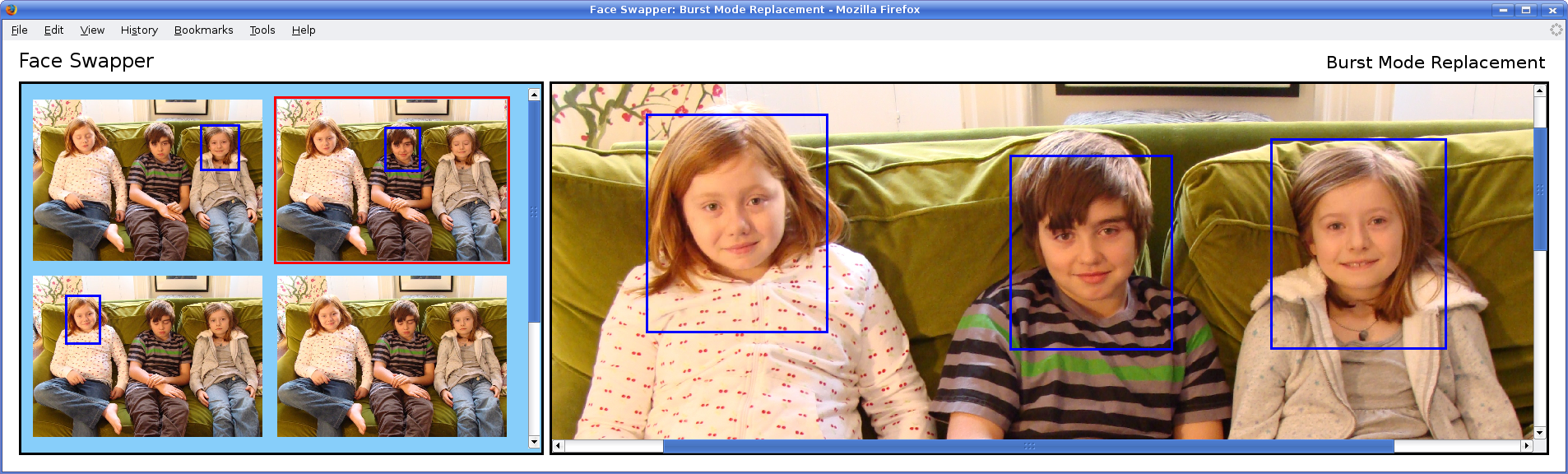
jamie found links to a discriminating selection of Siggraph papers at waxy.org. Among the more captivating: automatically improving the attractiveness of faces in portraits; automatic substitution of similar faces into photographs (with potential applications such as a privacy-enhanced Google Street View); and using still photographs to enhance video of a static scene. -
FISA and Border Searches of Laptops
With the recent attention to the DHS's draconian policy on laptop searches at borders, a blog post by Steven Bellovin from last month is worth wider discussion. Bellovin extrapolates from the DHS border policy on physical electronic devices and asks why authorities wouldn't push to extend it to electronic data transfers. "...it would seem to make little difference if the information is 'imported' into the US via a physical laptop or via a VPN, or for that matter by a Web connection. The right to search a laptop for information, then, is equivalent to the right to tap any and all international connections, without a warrant or probable cause. (More precisely, one always has a constitutional protection against 'unreasonable' search and seizure; the issue is what the definition of 'unreasonable' is.)" -
Face-Swapping Software To Protect Privacy
(0d0 writes "Some researchers at Columbia University's Computer Vision Labratory have developed software to automatically replace faces in batches of photos. Practical applications include protecting the identities of people in Google's Street View, coupling it with a digital camera's burst mode to create a perfect group photo, or protecting the identities of witnesses or law enforcement and military personnel. Other links to coverage include Boing Boing, American Public Media, and New Scientist." -
Face-Swapping Software To Protect Privacy
(0d0 writes "Some researchers at Columbia University's Computer Vision Labratory have developed software to automatically replace faces in batches of photos. Practical applications include protecting the identities of people in Google's Street View, coupling it with a digital camera's burst mode to create a perfect group photo, or protecting the identities of witnesses or law enforcement and military personnel. Other links to coverage include Boing Boing, American Public Media, and New Scientist." -
Face-Swapping Software To Protect Privacy
(0d0 writes "Some researchers at Columbia University's Computer Vision Labratory have developed software to automatically replace faces in batches of photos. Practical applications include protecting the identities of people in Google's Street View, coupling it with a digital camera's burst mode to create a perfect group photo, or protecting the identities of witnesses or law enforcement and military personnel. Other links to coverage include Boing Boing, American Public Media, and New Scientist." -
Cell Phones Tracking Nightlife Activity
Roland Piquepaille writes "A Columbia University computer science professor has co-founded a New York-based company named Sense Networks to sell tracking software to other companies. It is also distributing a free version of this software, named Citysense, which shows on your cell phone where the wild things are happening in your own town. Citysense 'uses advanced machine learning techniques to number crunch vast amounts of data emanating from thousands of cell-phones, GPS-equipped cabs and other data devices to paint live pictures of where people are gathering.' Citysense is available today in San Francisco, before being soon deployed in Chicago and five other U.S. cities." -
Columbia Holds Wake For Historic Cyclotron
Pickens writes "They called it leviathan, behemoth, Big Bertha. At 12 feet wide, rising 7 feet above the cement floor and weighing an estimated 65 tons, the Columbia cyclotron, the particle accelerator built in the late 1930s by Columbia physicist John Dunning, played a crucial role in the dawn of the nuclear era. Dunning's experiments verified fission, established many of its properties, and, most significantly, demonstrated that the rare isotope Uranium 235, and not the more common U-238, was the more fissionable form of the element. 'In a week or two, they will dismantle it, and they will sell it for scrap,' says George Hamawy, Columbia University's director of radiation safety. 'This is the last chance to see it,' Hamawy added as students held a wake and contractors arrived to remove the cyclotron. 'We're going to make two-thousand-pound sections,' said one contractor before taking the cyclotron's measurements. 'We'll start slicing on Monday.'" -
How PALS Help Secure Nuclear Weapons
Hugh Pickens writes "The BBC reported last week that until 1998 no code or dual key system was required to arm British nuclear weapons. Bombs were armed by inserting a bicycle lock key (video) into the arming switch and turning it 90 degrees. Permissive Action Links (PALs) were introduced in the 1960s in America to prevent a mad General or pilot launching a nuclear war on their own and to control nuclear weapons that were at least partially controlled by other nations but as late as 1974, when an armed quarrel broke out between two members of NATO, Greece and Turkey, the Secretary of Defense learned that many tactical nukes were still not equipped with PALS. It has been reported that PALs have been installed on Pakistan's nuclear weapons to disarm or disable their triggering mechanism if the wrong code is entered or if the bomb is tampered with in any manner." -
James Hansen on the Warmest Year Brouhaha
Jamie writes "In response to earlier reports, Dr. James Hansen, top climate scientist with NASA, has issued a statement on the recent global warming data correction. He points out 'the effect on global temperature was of order one-thousandth of a degree, so the corrected and uncorrected curves are indistinguishable.' In a second email he shows maps of U.S. temperatures relative to the world in 1934 and 1998, explains why the error occurred (it was not, as reported, a 'Y2K bug') and, in response to errors by 'Fox, Washington Times, and their like,' attacks the 'deceit' of those who 'are not stupid [but] seek to create a brouhaha and muddy the waters in the climate change story.'" -
Eben Moglen Leaving the FSF
An anonymous reader writes "Eben Moglen, general counsel and board member of the FSF and chairman of the SFLC, has announced on his blog that he will be resigning from his leadership position with the FSF now that GPLv3 draft 3 is out the door. " -
Sprint Rolls out WiMAX Access
Tokin84 writes "Today, Sprint announced that it would pour over $4.5Bn into a 2.5Ghz WiMAX system to be rolled out across the country. From the article: 'Sprint Nextel, the nation's largest holder of radio spectrum in the precious 2.5 GHz band, has reportedly chosen to deploy Worldwide Interoperability of Microwave Access (WiMAX) as the foundation of its technology platform for the carrier's mobile broadband Next-Generation Network (NGN) build-out.'" -
Antarctic Subglacial Lakes May Not be Isolated
core plexus writes "Plans to drill deep beneath the frozen wastes of the Antarctic, to investigate subglacial lakes where ancient life is thought to exist, may have to be reviewed following a discovery by a British team. In a Letter to Nature they report that rivers the size of the Thames have been discovered which are moving water hundreds of miles under the ice. The finding challenges the widely held assumption that the lakes evolved in isolated conditions for several millions years and thus may support microbial life that has evolved 'independently'. It has been suggested that if microbes exist in the lakes, they could function in the same way as those in the subsurface ocean of Jupiter's moon Europa or within subsurface water pockets on Mars." -
Help Solve the Mystery of the Pioneer Anomaly
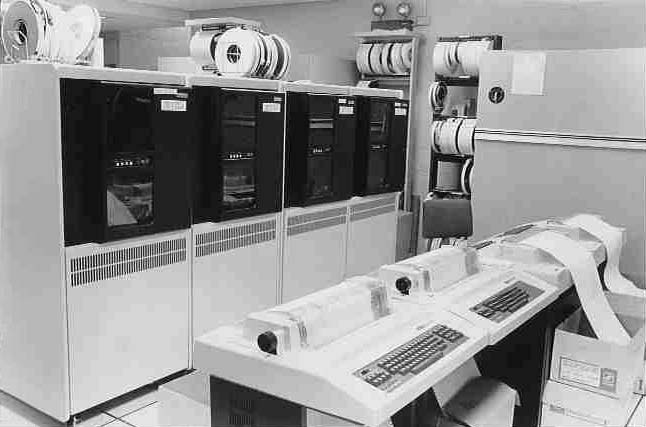
deglr6328 writes "Very soon, NASA will be dismantling and scrapping its only computer left which is able to access and process the data on its ancient 7- and 9-track magnetic tapes. "Who cares", you say? Well, the Planetary Society for one and they're hoping you might care as well. The data held on these (few hundred) tapes is no ordinary forgettable data, it is the complete archive of the first 15 years of all the data returned to Earth by the Pioneer spacecraft which were sent into interstellar space. This additional and thus far unexamined data (the data after 1988 is available and has already been examined) may hold the key to solving what is considered one of the top problems in physics today, the so called Pioneer anomaly, where the observed trajectory of these spacecraft (and a couple others) deviates noticeably from our very precise expectation. The reason for the anomaly may be as mundane as uneven radiation pressure or escaping thruster fuel or it may be as groundbreaking as a clue to completely new physics, perhaps related to dark matter or dark energy. The Planetary Society is planning on recovering this data and poring over it meticulously to look for something which may have been missed or hidden from current investigations into the phenomenon. They need money to do this, about $250,000, and are asking for donations to fund the project. You do not need to be a member to donate. There are no serious proposals to send any more spin-stabilized spacecraft on solar escape trajectories any time in the near future and this is probably the only tenable method we have to directly investigate this mystery in the interim." -
Oceanic Sounds of Last Year's Earthquake
DoctorBit writes "Columbia University's Lamont-Doherty Earth Observatory is reporting that some of their researchers have analyzed recordings of the underwater sound produced by last year's magnitude 9.3 Sumatra earthquake. By studying the ocean's sound waves rather than the Earth's seismic waves, the researchers measured the earthquake's speed and duration with unprecedented accuracy." -
High-Definition PC Video Conferencing?
dsginter asks: "This year's spring Networld+Interop has ended with little fanfare. However, I noticed that a small nugget slipped between the cracks - HD video-conferencing. Two different manufacturers demonstrated such products which means that we'll probably have interoperability soon. After seeing the massive pricing estimates for such products, I couldn't help but think that I should try my hand at my own HD product (a Mac Mini, some H.264, a pinch of AAC and the glue that is H.323 or SIP). However, I'm missing one piece - a small, 720P camera for video acquisition. I've scoured Google but can't come up with anything suitable. Is there an answer? HD video-conferencing is an important step in complete communication between remote parties. While there will be those that joke about the possibilities, it is important to remember that the bulk of business travel still happens for the sake of face-to-face communication. HD video-conferencing might prove to be a panacea."