Slashdot Mirror
Domain: digibarn.com
Stories and comments across the archive that link to digibarn.com.
Comments · 142
-
Re:Anyone else remember MegaSreen, MegaDrive?
Some recollections
-
Re: Is Gentoo still a viable option for old hardwa
NetBSD was more like a hobby for guys playing with obsolete gear one step away from the landfill.
It's what makes NetBSD so lovable. Why does everything have to have some market motive or ride the bleeding edge of academic research? Sometimes you and your friends want to build a mini-bike out of an old weed-wacker engine you found in the dump.
And as the few developers drifted away to other projects, what was left resembled someone's garage museum of abandoned computers.
Sound like taking a trip to DigiBarn. I highly recommend checking it out if you have spare hours in your life that you aren't using for anything. Several miles away are some old obsolete trains you can ride. You can make a day with your family of seeing obsolete useless junk.
-
Contact Taiwan's MITI and use their PenPoint?
It would be really nice if someone would do something meaningful w/ all the code for PenPoint --- it was one of my favourite operating systems, and amazingly capable for its time, and interface-wise, is still nicer than pretty much anything other than the Newton OS, or NeXTstep (or maybe HP's NewWave).
For those who don't remember it: http://www.digibarn.com/collec...
-
Re:Hardware
Are you a weaver by trade?
-
Re:Pong
Space War
Maze War (earliest version defeated a patent on networked 3D maze games)http://www.digibarn.com/collections/games/xerox-maze-war/index.html
-
Re:Iterations
Pull-down menus weren't invented by Xerox, their GUI used a modal button bar at the top of each window. You can see photographic evidence of the Apple development process here. I know Apple get criticised for being derivative, but they did invent this GUI element, and their early attempts used a per-window model, which they eventually rejected for a global bar. You think per-window is better; as someone who used Windows for many years, then various Linux distros exclusively for 5 years, then latterly Mac OSX, I vastly prefer the global menus. It's a matter of opinion.
-
Bill Gates' complaint
Ahahahahahahahaaaha. Let's see. Bill Gates complained in a newsletter circa 1980 about people copying software and ideas without permission.
I have no recollection of the "ideas" part of your statement. Care to cite your references?
You're kidding, right? I thought this was one of the most famous statements ever made by Gates. However, it was 1976 (close enough to 1980, I suppose) and it wasn't a newsletter, it was an actual letter to the Homebrew Computer Club.
-
Re:Apple Copies
Guys- is it ever any surprise that apple copies a design? They design well, but that is because all of their work is second generation. They take a concept then make it shiny, and sell it. They don't make concepts. Hell- the apple 2 was literally a XEROX!
Wow. Are we so far out in computing history that we don't remember the difference between an Apple ][ (designed in 1976 and first sold by Apple in 1977), and the Lisa (first designed by Apple in 1978 and first sold by Apple in 1981)?
And oh, BTW, Apple didn't "copy Xerox". Apple was shown some technology that Xerox PARC was working on, then they started riffing on it, bringing many improvements. Then, Apple LICENSED the tech from Xerox.
They stole NOTHING. -
Re:Apple Copies
Guys- is it ever any surprise that apple copies a design? They design well, but that is because all of their work is second generation. They take a concept then make it shiny, and sell it. They don't make concepts. Hell- the apple 2 was literally a XEROX!
Wow. Are we so far out in computing history that we don't remember the difference between an Apple ][ (designed in 1976 and first sold by Apple in 1977), and the Lisa (first designed by Apple in 1978 and first sold by Apple in 1981)?
And oh, BTW, Apple didn't "copy Xerox". Apple was shown some technology that Xerox PARC was working on, then they started riffing on it, bringing many improvements. Then, Apple LICENSED the tech from Xerox.
They stole NOTHING. -
Re:Sort of a let down
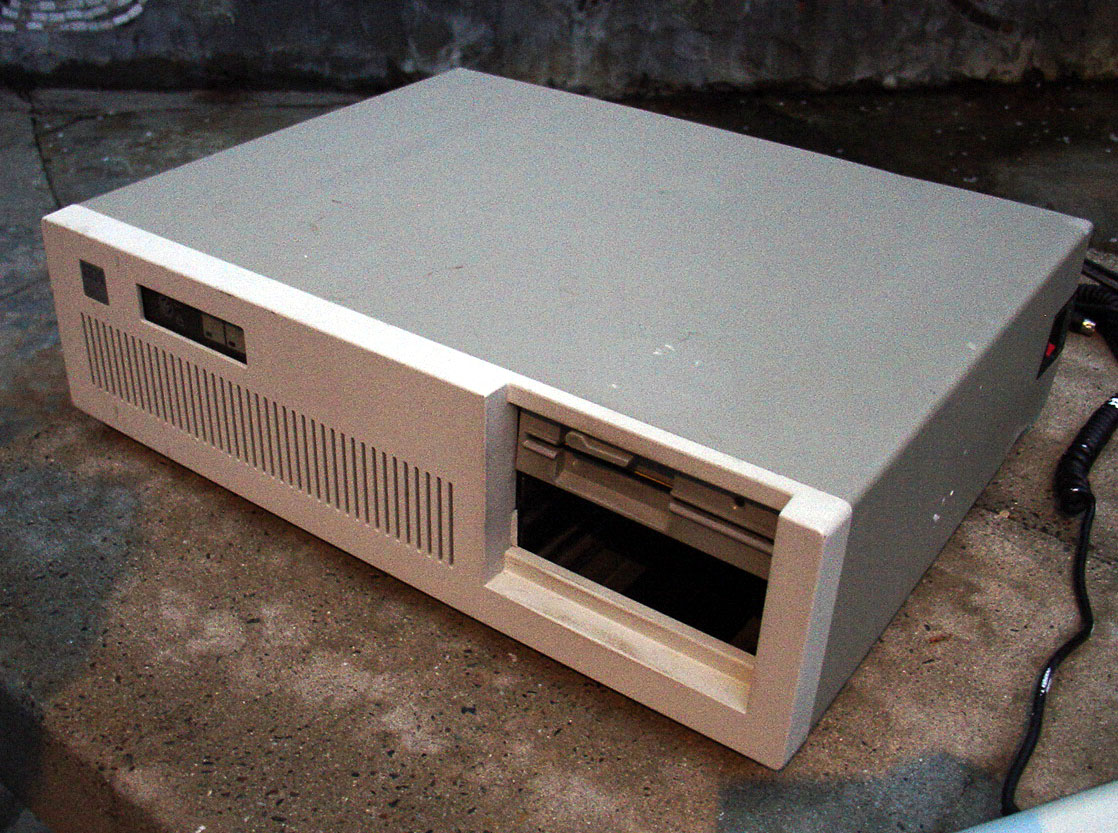
Early *True* IBM PC-ATs had a really big toggle switch on the side. This is because the very first PC-ATs used an identical form factor to the PC-XT class system chasis, and was pretty much the same, other than the inclusion of an RTC, and a 286. (and able to see significantly more RAM.)
The original AT did not have any buttons that I am aware of on the chasis, other than technically the keylock switch... Later iterations, if I recall correctly... (it has been quite some time since my hands have been in one of THOSE things...) had a yellow turbo button, and a red reset button, but that was much later.
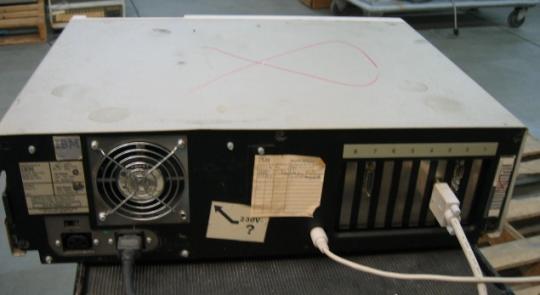
Here is a back of the original PC-AT (IBM 5170) to prove the lack of buttons.
-
Re:Negative Equity
You have to remember that Nathan Myrvold is the founder of Intellectual Ventures, perhaps the biggest patent troll of all.
And that Bill Gates is the uber copyright troll, the prime sponsor of for pay software for PCs.
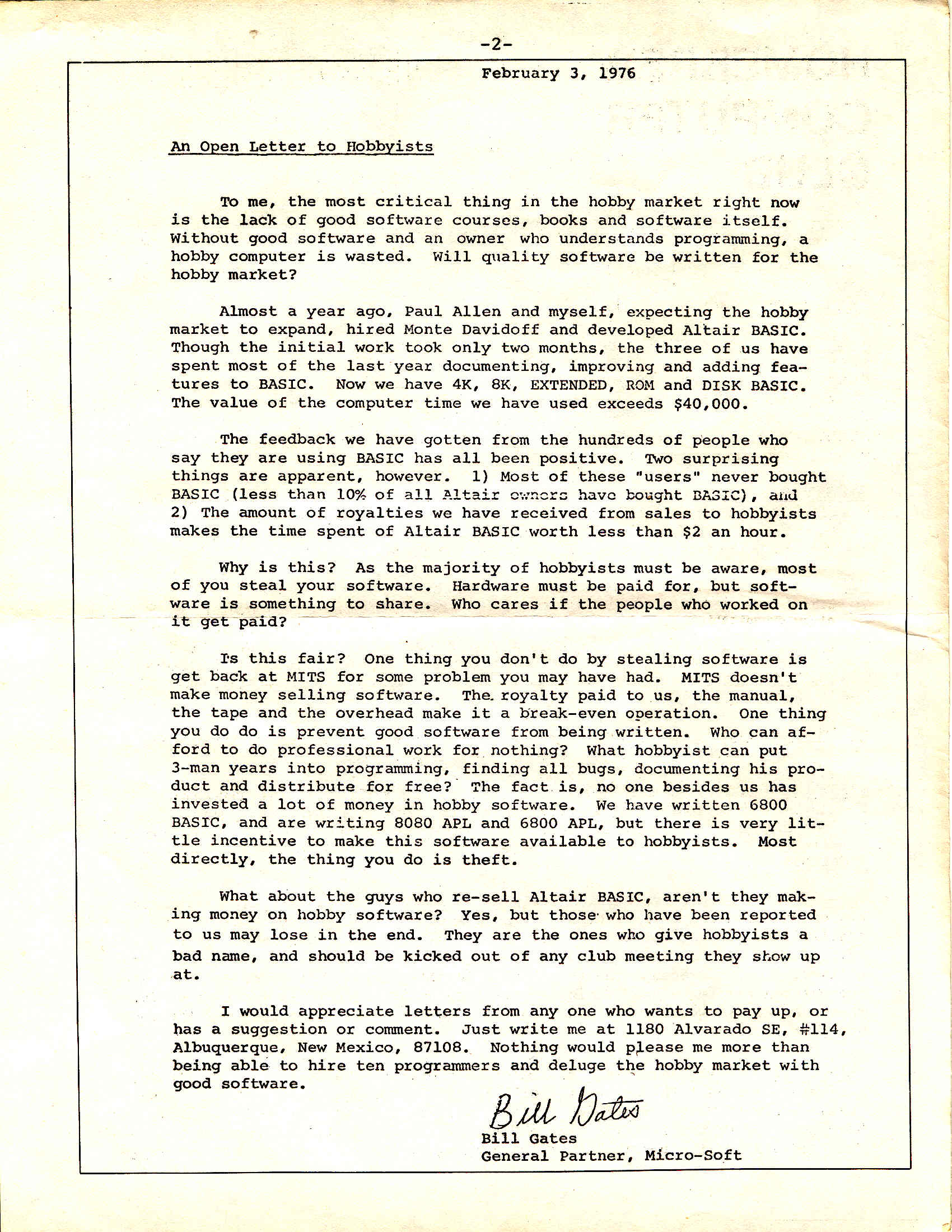
http://www.digibarn.com/collections/newsletters/homebrew/V2_01/homebrew_V2_01_p2.jpg
-
Re:Hey, buddy.
You're wrong about the overlapping windows (and IMO the desktop metaphor, albeit without a trash can):
While Xerox did have overlapping windows, Apple's implementation was much more efficient. It didn't need to redraw every window from bottom to top when a window was moved, while Apple even allowed updating of non-top-of-stack windows.
Now imagine if Apple had patented that.
-
Re:Hey, buddy.
The Alto had overlapping windows too.
-
Re:Hey, buddy.
The Alto had overlapping windows too.
-
Re:Hey, buddy.
The Alto had overlapping windows too.
-
Re:Hey, buddy.
You're wrong about the overlapping windows (and IMO the desktop metaphor, albeit without a trash can):
-
Zenith portable
You must have a big lap. http://www.digibarn.com/collections/systems/zenith-big/index.html
I built one of these as the Heathkit version, back in 1984. Wiring every single circuit board. Just like God intended it.
Even brought this "portable" on a business trip in the overhead compartment once. And only once.
-
Re:nothing wrong with the merger
You claimed that all monopolies are created by government.
- I am still claiming it.
Monopolies are systems that are maintained by government regulations, taxation, laws, subsidies. Monopolies do not form in absence of government, in absence of government economies of scale can form, but if they are not serving the public interest of low cost and high value, then they will lose customers to somebody who will provide lower cost and higher value.
Government created the Internet (apranet) and now Google has a monopoly on searching the Internet.
1. Google is not a monopoly.
2. TCP/IP was only one protocol out of variety of other protocols that already existed prior to government involvement. Internet did not have to start from Arpanet, it did only due to money, which as usually was stolen from the people and thrown at military and other government agencies.
PSTN did not need government intervention to become reality. Phone and radio communications are not far removed from other types of communications, so Internet can as well form with completely private entities.
As far as copyright law goes. Everyone that writes software has the same equal protection. How did copyright law give microsoft the advantage over their competitors that benefit equally from said law?
- Nobody was in business of selling software, systems were sold prior to Gates realizing what he had in front of him with government copyright protections.
Open Letter to Hobbyists by Bill Gates.
He understood the value of government protection of copyright and was the first to use it to his advantage in software development and incidentally he became probably the richest person due to software sales.
-
Fortran Coloring Book
The Fortran Coloring Book, with the program listings in Creative Computing and 101 Basic Games tied for a close second...
-
Re:How dare they sue us!
What about these?
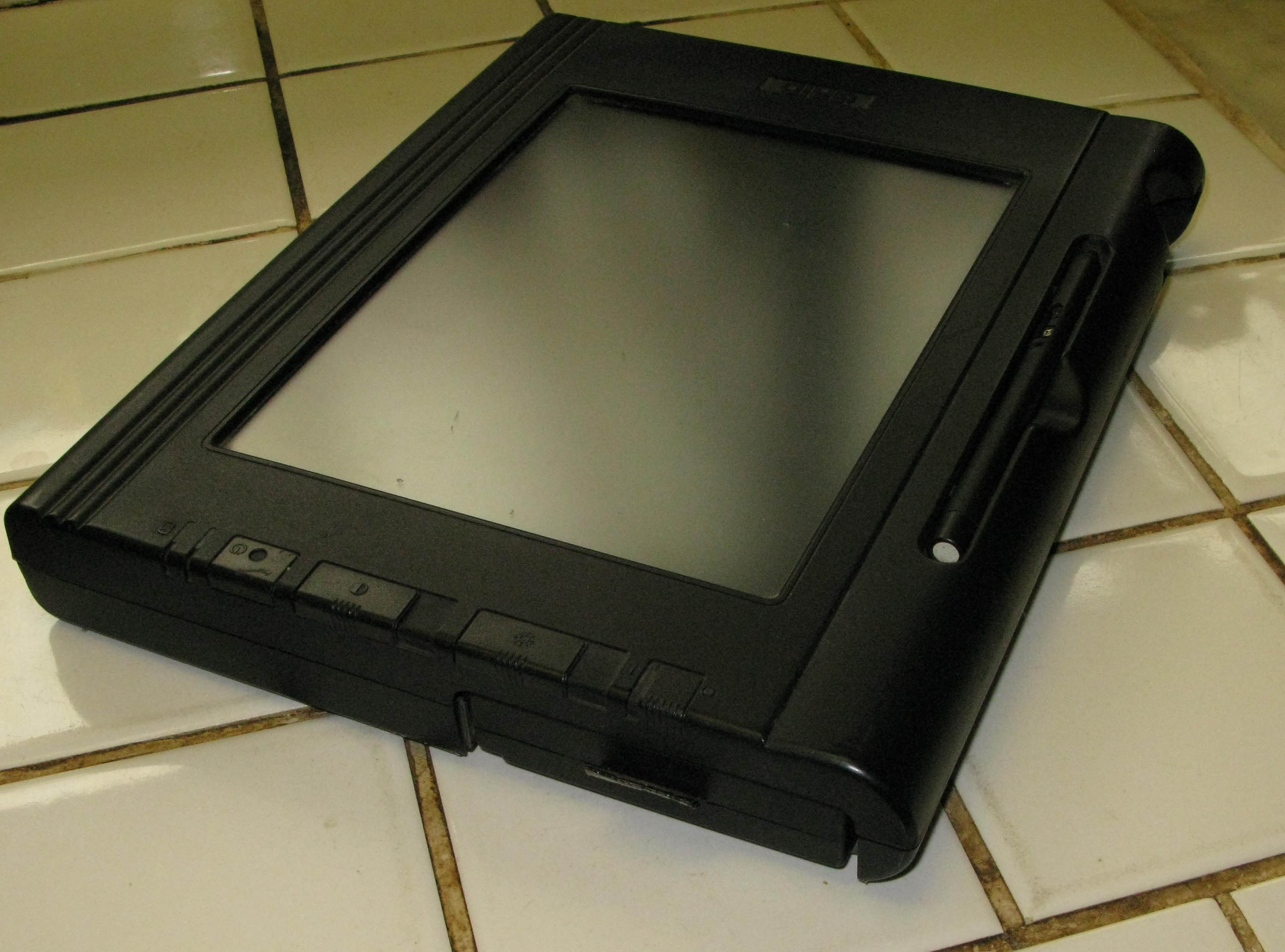
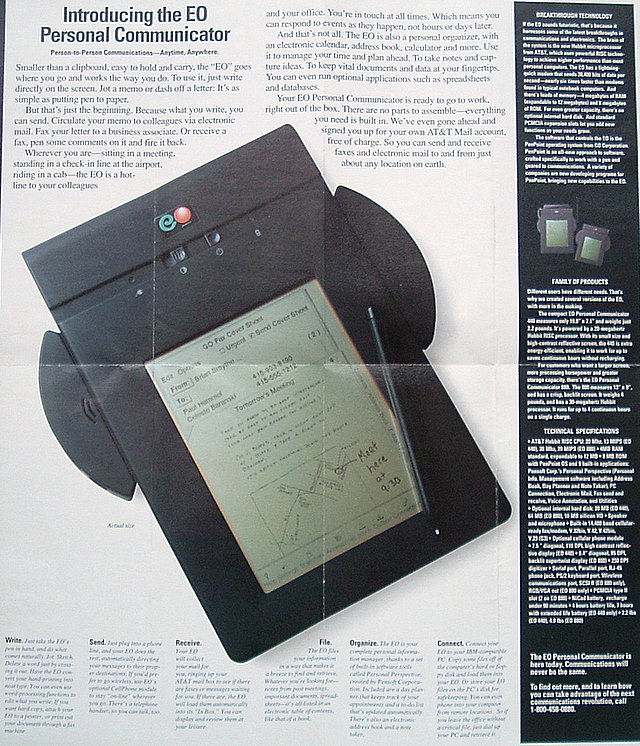
GRiDPad (1989)
EO Personal Communicator (1993)
DEC Lectrice (1996)
PaceBook D110 (2000)
Microsoft Tablet PC (2002)
HP TC1000 (2003)
Samsung Q1 (2006)
JooJoo (2010, about one week before iPad release)
And those are just a few of them. If anyone did some design copying, it was Apple.
-
Re:no surprise
-
Re:here's one
-
Re:He'd have screwed it up.
http://www.digibarn.com/collections/systems/gridpad/index.html
That was ready for use in 1989. Not "still in the development phase" the way the Newton was.
You might be technically correct but the Newton is more well known than that device despite being a failure in the marketplace.
-
Re:He'd have screwed it up.
http://www.digibarn.com/collections/systems/gridpad/index.html
That was in 1989, ready to use, years before the Newton was ready for use. -
Re:He'd have screwed it up.
http://www.digibarn.com/collections/systems/gridpad/index.html
That was ready for use in 1989. Not "still in the development phase" the way the Newton was. -
Re:Windows
It's predated by Xerox Star,
Indeed. I did LISP research in college from 1985-87 on a Xerox Star 8010 "Dandelion". Granted, it was a $50k system, so it was only widely available to people with lots of cash.
-
Tape
The simplest was a restore of a file from the backups of an old Sun SparcStation IPX (still extant, but non-booting at the moment). This was straightforward: dig out the SSI QIC drive, plug it into the SCSI port on my Ubuntu box, load the tape, and type the tar command.
More tedious but no more difficult was restoring a program written in BASIC on my first pocket machine, a 1982 Sharp PC-1500 (now donated to Bruce Damer's DigiBarn museum). This backed up onto a micro audio cassette on a Dictaphone-style Radio Shack handheld recorder. In 1998 or thereabouts I wanted the implementation of Logo I had written for the kids, so I dug out the machine, cleaned it up, and it stayed dead. I had to resurrect the system unit from a clone on Ebay before I could get it to boot; but then loading the file from tape worked fine, and dialing up via the RS-232 port modem at 2400 baud to my VAX and sending the file via Kermit went just fine.
-
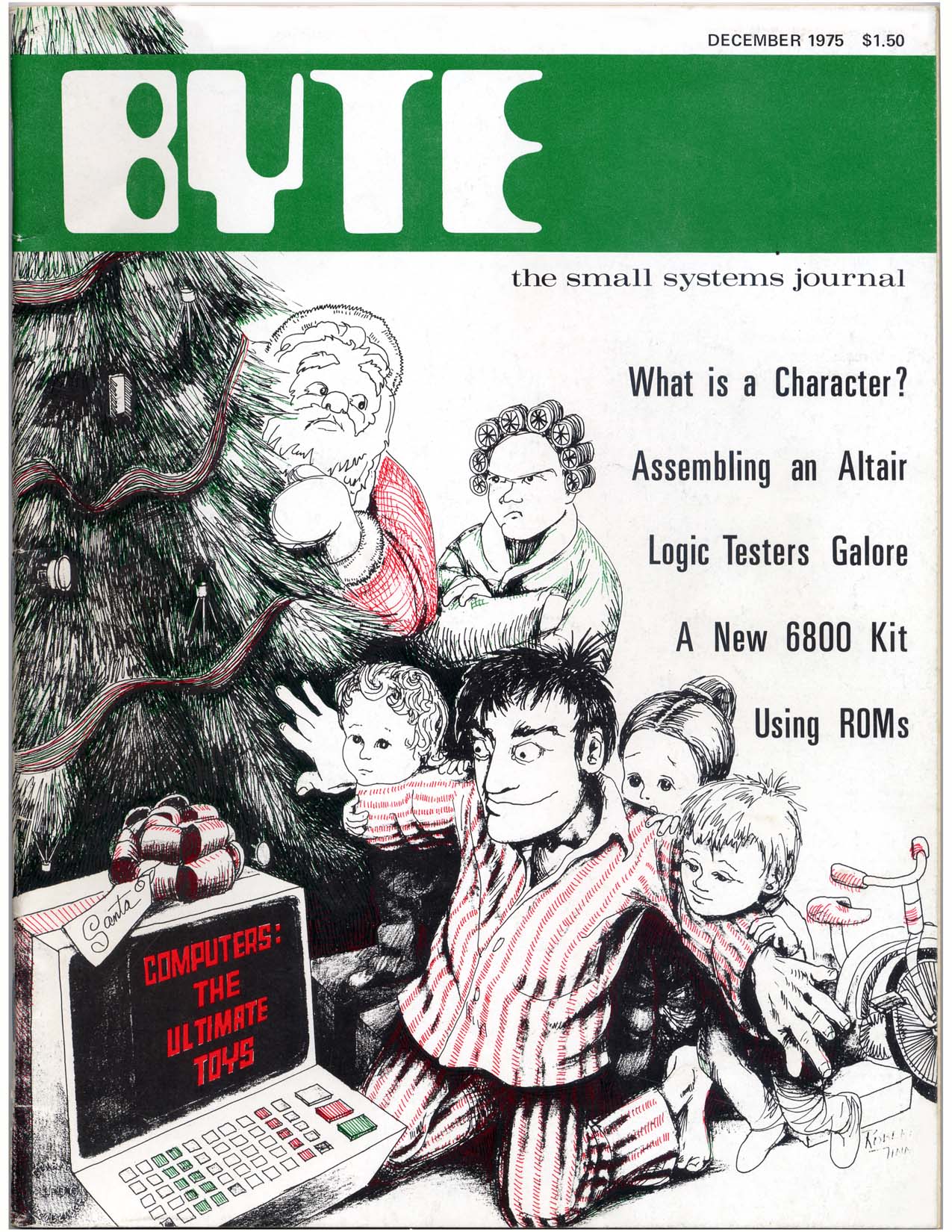
Christmas 1975 BYTE Cover
Christmas 1975 BYTE Cover - Computers: The Ultimate Toys. Digibarn has more BYTE covers from the '70s and '80s. Outstanding!
-
Christmas 1975 BYTE Cover
Christmas 1975 BYTE Cover - Computers: The Ultimate Toys. Digibarn has more BYTE covers from the '70s and '80s. Outstanding!
-
Re:Good on the Chinese
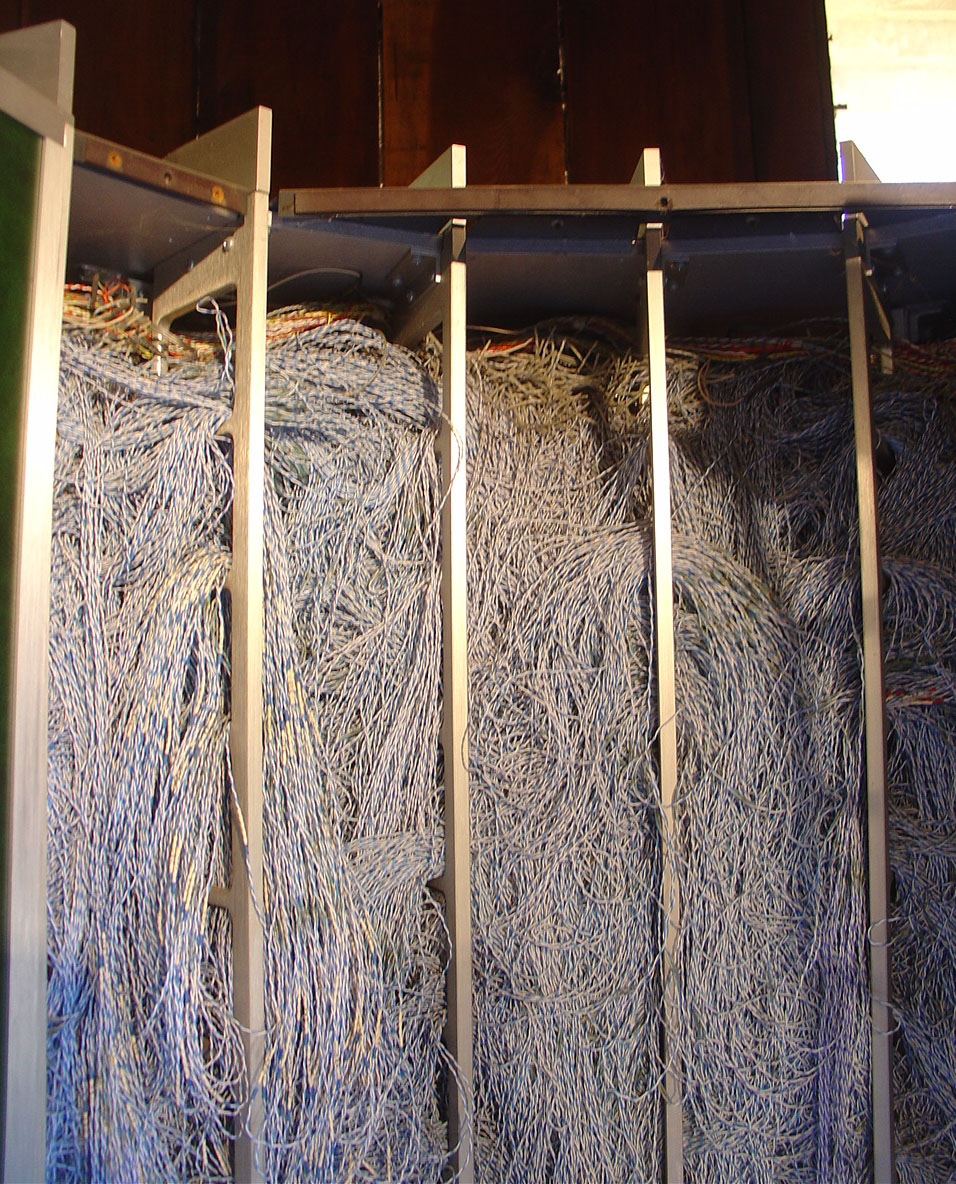
Unfortunately for them, they don't know how to use proper cable management. It kinda reminds me of this disaster. Guess it's par for the course when you compare it to an old Cray-1.
-
Re:Kick in the balls!
I'm not talking about any language derived from Java, especially not
-
Re:Sandbox
Not entirely true, the XEROX PARC being the source of all apple idea's is a bit of an urban myth. See Jef Raskin's story here http://www.digibarn.com/friends/jef-raskin/writings/holes.html
-
Re:Invest in FRDY!
Dust of your parents tempest computers.
http://www.digibarn.com/collections/systems/mac1891T/candes-pix/page_01.htm
Make notes and sell 2013 ready Macs/Linux/Windows units to the preppers.
Its like a next gen Y2K. -
Nice information at Digibarn Computer Museum
-
Serious revisionism from Daniel"Fakes Steve"Lyons
That's some serious revisionism from Microsoft's Daniel "Fakes Steve" Lyons. Even for slashdot, that's lame posting such shit.
Ballmer's no businessman, his only claim to fame is being buddies with the 3rd generation of Gates wealth.
Gates is a geek to be sure, but no computer geek. And sure as hell is no visionary. That goes from his open letter to the home brew club in 1976 to his "the Internet is a passing fad" / "the Internet? We are not interested in it", and onward to other gaffs this year.
-
Knowledge Navigator
Ya know... it looks a little bit like the Apple Knowledge Navigator, a 1987 concept.
-
Re:Reverse Engineered Microsoft DOS???
You guys are ten years too late. Back in the 1970s, when computers ran on 8080 processors, the company Micro-Soft (which is what they were called when they were in Albuquerque before the name change to Microsoft and the move to Washington) had an operating system and a basic interpreter that were widely pirated, reverse engineered, and otherwise ripped-off. At the time, I was running an MITS Altair. This thing started with 256 bytes of RAM, but we eventually upgraded it to, I think, 8k bytes. After loading a few hundred bytes of boot code in using the panel switches, it would suck Micro-Soft's "Disk Basic" boot loader in off the first sector of the 8" floppy drive, then load the OS and BASIC interpreter. It was so nice when we finally burned that first boot loader into a ROM! By 1976, Bill was pissed about people ripping his wares, and he wrote a famous letter about it. This may have happened before you were wearing nappies, but you should still be embarrassed about laughing at the author. I now ROFL at your childish and uninformed antics!
Yes, but that wasn't MS-DOS. MS-DOS did not exist until Microsoft contracted with IBM to supply the OS for IBM's new PC (which Microsoft already had a contract to supply a Basic and a C compiler for). Microsoft bought the rights to what would become MS-DOS off of another company that had developed it as QDOS.
So, what you were using was something completely unrelated (except for the fact that it came from the same company) to what would later be MS-DOS. What Bill Gates was pissed about was people ripping off his (and Paul Allen's) Basic compiler. The original posters were correct and you are incorrect. -
Re:Reverse Engineered Microsoft DOS???
You guys are ten years too late. Back in the 1970s, when computers ran on 8080 processors, the company Micro-Soft (which is what they were called when they were in Albuquerque before the name change to Microsoft and the move to Washington) had an operating system and a basic interpreter that were widely pirated, reverse engineered, and otherwise ripped-off. At the time, I was running an MITS Altair. This thing started with 256 bytes of RAM, but we eventually upgraded it to, I think, 8k bytes. After loading a few hundred bytes of boot code in using the panel switches, it would suck Micro-Soft's "Disk Basic" boot loader in off the first sector of the 8" floppy drive, then load the OS and BASIC interpreter. It was so nice when we finally burned that first boot loader into a ROM! By 1976, Bill was pissed about people ripping his wares, and he wrote a famous letter about it. This may have happened before you were wearing nappies, but you should still be embarrassed about laughing at the author. I now ROFL at your childish and uninformed antics!
-
Re:This stuff is so cool
That is a mess of wires obscuring the Cray 3 CPUs to which they are connected. It cost $300 million to develop the first functional system for NCAR before Cray Computer Corp, Seymore Cray's last start-up company, folded. (Not to be confused with Cray Inc. which is still producing new systems.)
This machine required 90,000 watts of power and gave off 310,000 British thermal units of heat per hour â" enough to warm six 2,000-square-foot homes. Getting the heat out of the data center would have been a serious problem. I'm sure the whole NCAR building was designed to do just that.
DigiBarn has more pictures of the Cray 3 CPUs. -
Re:Copying between servers is NOT backing up
It might cost more in the future given that software patents exist. If you can prove that prior art exists, you can invalidate a patent. Here is a simple one:
Maze War was one of the first multi-player 3D person shoot-out games, written around 1974 on an IMLACS PSD-1 at NASA Ames Research Center.
Having evidence of this prior art, helped to settle many patent claimes related to multi-player and networked gaming.
Our November 2004 30th birthday event for "Maze War," the first-ever first-person shooter, uncovered so much prior art that Sony contacted us about several patent challenges on multi-player gaming. It turns out that by recovering the history of "Maze War," we had knocked the wind out of several patent claims, which are now headed to settlement instead of to court.
Out of curiosity, does anyone remember UNIX games like Grid, Convoy, Dune and Wander, written by Peter. S. Langston?
-
Re:Tandy Model 100
I still have my POQET PC, which runs off 2 AA batteries and is smaller than the TRS100.
Was too cheap to buy the serial interface cable, so I found the dimensions, etched a PCB connector, dialed into the university network and accessed the internet via Lynx browser. Does that make it a netbook? Actually it was more like a net-palmtop.
http://www.digibarn.com/collections/systems/poqet-pc/index.html
-
Re:First PS
Depends on what criteria you want to use.
It really does. If you mean "game with a first-person perspective and combat", that goes back to Maze War in 1973--it was even multiplayer. If you mean "game with true 3D environments", well, wireframe/polygon shooters have been around since the early 80s at least, possibly earlier. ID's Catacomb 3D introduced texture-mapped walls (in 16 colors!) in 1991, but unlike those polygon shooters was really only 2D in layout.
DOOM really kickstarted the modern FPS concept in 1993 with psuedo-vertical 3D, floor and ceiling textures, and immersive lighting and audio effects. DOOM was revolutionary in a lot of ways, but it was far from the first FPS.
-
I'm in SHOCKtane!
-
Re:Real mature
It's already kind of lame when someone spells it M$ or Micro$oft in a comment but...
Yeah. I'm one of the ones that had to learn to not be childish with that use on
Do you go back as far to CP/M? The history of CP/M, CP/M-86, QDOS and the *original* PC-DOS? If you had - and I suspect you don't - you might cut some people some slack for that usage.
There exists a pre-PC-DOS link to a statement that Bill Gates put out regarding piracy of BASIC and denigrating everyone for how much money he was losing, how much he and his guys had invested in time and dollars and so forth. It was a little whiney, but he was pretty much spot on regarding the whole piracy thing. http://www.digibarn.com/collections/newsletters/homebrew/V2_01/gatesletter.html
And in those days - just like today - we all paid close attention to Intel. The 8086 was out there, we were all waiting for CP/M-86 stability to get a better computing environment. And CP/M-86 was taking time because it was work and because it was going to be (and eventually was) a quality product.
Seattle Computer Products, a hardware mfgr, created the Quick and Dirty Operating System (QDOS) and despite revisionist history, to ostensibly debug their hardware in anticipation of CP/M-86.
The follow-on history is very nicely summarized right here: http://74.125.45.132/search?q=cache:tIEkLM0yDDkJ:maben.homeip.net/static/S100/software/microsoft/DOS/The%2520origins%2520of%2520MS-DOS.ppt+qdos+S-100+quick+and+dirty+operating+system&hl=en&ct=clnk&cd=5&gl=us - that's the html/cached version, if you want the PPT file, it's here: http://maben.homeip.net/static/S100/software/microsoft/DOS/The%20origins%20of%20MS-DOS.ppt
Part of the backstory on his money loss was that the Osborne had come out, but then the KayPro did too, was doing better, and was getting a lot of attention for the superior (to MS) S-BASIC. So, sales of MS BASIC were not what the company expected. In fact, here's the backstory on Microsoft's creation and the importance of MS-BASIC. I putting the cached link and the orig - I couldn't get the orig server to respond as I write this: http://74.125.45.132/search?q=cache:kKA51ycXpCAJ:www.thocp.net/companies/microsoft/microsoft_company.htm+history+of+altair+basic&hl=en&ct=clnk&cd=1&gl=us and http://www.thocp.net/companies/microsoft/microsoft_company.htm
But add up the history: BASIC w/ license disputes, QDOS w/ license disputes, OS/2 w/ license disputes, Windows w/ license disputes.
Microsoft was once a darling company to many of us. They freed us from the clutches of IBM mini-computers and mainframes at work. It was a pain in the ass, but we could do desktop programming in BASIC rather than getting time to do our FORTRAN calculations on an IBM.
IBM was under attack by the US Justice Dept. in the early 80s - we couldn't have been happier. Then, Microsoft - as a company - was becoming the new IBM, with all of its evil.
I - and many others - were quite accustomed to calling them Micro$oft and M$ by the mid-to-late 80s for their stunts.
I lived through that history. I watched a company that I supported putting the screws to people in the industry.
I was pissed the first time a pretty good post of mine was labeled troll and attacked with
-
Security Engineering by Ross Anderson
Security Engineering: A Guide to Building Dependable Distributed Systems by Ross Anderson, professor at Cambridge University.
It replaces and expands upon Applied Cryptography by Bruce Schneier, and Practical Cryptography by Ferguson & Schneier to make a more holistic approach to security encompassing the entire system, not just using the latest (coolest) encryption techniques. Most real-life systems are broken by going around or ignoring the encrpytion.
Another classic is
TCP/IP Illustrated by the late Richard Stevens
Most people need/read only Volume I: The Protocols, but there is also Volume II: The Implementation which is wonderful albeit with a smaller following, though Volume III which is considered a big disappointment to many (I've never read the vol 3) isn't worry buying unless you're specifically interested in its contents.The only serious alternative to TCP/IP Illustrated is Douglas Comer's series Internetworking with TCP/IP which is the series I learnt about TCP/IP programming with. Still highly recommended.
For Software development, The Mythical Man-Month by computing pioneer Frederick Brooks should be required reading, and Peopleware: Productive Projects and Teams by Tom DeMarco and Timothy Lister should be handed to every new IT/IM or software manager with their promotion or hiring (if they haven't read it already). Computing would suck so much less if we all held ourselves accounting to the basic ideas in these two books.
For historic, 3 books + bonus item that would have to be included are:
Algorithms + Data Structures = Programs by Niklaus Wirth
Cybernetics: Or the Control and Communication in the Animal and the Machine in 1948 by Norbert Wiener
Computing Machinery and Intelligence, by Alan Turing and published in 1950 in Mind
Computer Lib/Dream Machines by Ted Nelson in 1974, is most often pointed to as the "birth" of hypermedia.
The January 1975 issue of Popular Electronics, which featured the Altair 8800 on its cover.
-
First laptop built and sold
There are two that come to mind that had a similar form factor to a modern laptop and that had more or less the capabilities of a full PC (as opposed to a calculator). You could count the TRS-80 model 100 if you accepted a text only display and no floppy disk (1983). If you wanted an IBM PC compatible with CGA graphics and floppy, the Data General-One is pretty obviously the same style as most modern laptops. Pictures here (1984).
So, it's been since 1983 or 1984 depending upon what you call a laptop computer.
-
Re:How much?
There's no price-tag because this isn't the sort of thing you buy off a store shelf. The first thing they'll need is a budget to do is a museum-grade architectural survey.
Have you seen Bletchley Park? It's not just the main building but the remaining temporary WW2 structures.
http://www.digibarn.com/collections/locations/bletchley-park/bletchlypark-l-lewin/index.htmlThe survey can produce a series of restoration & upkeep senarios, based on how much activity & cost can be devoted over what periods of time, and how much each year of delay will add to the costs and losses. Till that (expensive) survey is done, no one can quote remotely realistic figures.
Another detail: when I was a renovation carpenter it was a firm requirement that any time a project required a wall to be opened, the client MUST have 60% over budget in the bank to deal with unpleasant surprises. Most of the houses I dealt with were less than 100 years old. Even houses built in the 60s regularly had surprise structural problems. About three of those required immediate work that was a good deal more than 60%.
Getting a complex like Bletchley Park surveyed and a reliable maintenance schedule put in place is going to be a major work in itself. Then the costs and compromises (yes, the sheds will probably have to be let go. or replaced by replicas.) are going to be frankly enormous compared to what the place can draw in revenue. No wonder the usual sources have shied away. A serious influx of cash from special-interest groups as proposed is really the only chance the place has of getting to a (still expensive) maintainable state.
-
Re:Hmmmmm..
Yeah, imagine hooking it to your laptop to download songs:
-
Re:Technology finds a way
-
Something is aFoot
At the risk of slashdotting digibarn...
A framed copy of the cover of Ted Nelson's "Computer Lib / Dream Machines" might be apropos.