Slashdot Mirror
Domain: fas.org
Stories and comments across the archive that link to fas.org.
Comments · 2,098
-
Re:AMERICAN CITIZEN KILLED BY TURK ON ISRAELI GROU
Because they are BOUGHT. 50 Billion over 5 years. Per the Federation of American Scientists:
"United States has subsidized Egypt's armed forces with over $38 billion worth of aid. Egypt receives about $2 billion annually--$1.3 billion in foreign military financing and about $815 million in economic support fund assistance --making it the second largest regular recipient of conventional U.S. military and economic aid, after Israel. In 1990, the United States also forgave $7.1 billion in past Egyptian military debt in return for Egypt's support of Operation Desert Shield. In addition, Egypt receives excess defense articles worth hundreds of millions of dollars annually from the Pentagon. The announcement that 23,000 U.S. troops will be based in Egypt to conduct biannual military training exercises (Operation Bright Star) may have longer term implications for U.S. aid to the region, as might Egypt's willingness to support U.S. efforts against the Taliban."
http://www.fas.org/asmp/profiles/egypt.htm
Now, why do American taxes go by the HUNDRED BILLIONS to Israel and Egypt, when your dad can't get insurance to pay for his cancer meds?
-
Re:Fix the r'real' problem first
The Laser Weapon Calculator says that at a distance of 35,786 km, a laser with a wavelength of 2.9e-7m, to vaporize 1cm of aluminum, you would need a 1.0 GW laser operating for 1 second with a lens 20m radius.
The most powerful CW lasers used currently are of MW class, not GW, such as the COIL laser on the Airborne Laser Testbed. It's wavelength is 1.3um, so let's imagine you can run it at 1MW and hold it on target for 100s, to vaporize 1cm of aluminum you'd need a 200m radius lens....even if you crank the laser up to 10 MW, you still need a 90m radius lens.
Currently the largest effective aperture of any telescope is ~11m.
-
Small section of main powerpoint:
When I zoom in on the powerpoint, this is what I see.
-
Re:And for further reading
Url omitted from previous post: Federation of American Scientists, who were and are extremely vocal about the ethics of weapons science.
-
Re:Not quite imagination
We in the military call it Information Operations (IO). Probably the most famous example from the last century was Operation Fortitude from World War II, although there are many who believe that President Reagan was actually engaging in IO when he authorized the Strategic Defense Initiative (SDI, AKA "Star Wars").
-
Re:Why fear terrorists...
There are times I suspect the government actually paying the terrorists to be terrorists.
What? You mean like illegally smuggling cocaine and weapons to steer the outcome of US elections?
-
Re:Bahahah
By pointing to Wikipedia, you undermine your own argument.
By pointing to nothing, you fail to make an argument. I check the sources.
The budget is published, with certain details redacted for national security purposes.
Here's sworn testimony from the Director of the CIA that contradicts your claims:
Finally, in evaluating whether to release the total intelligence appropriation, I have to consider whether a release could add to information that is already available to hostile individuals in a way that could reasonably be expected to reveal or lead to identification of other information that could damage the national security. Information that is in the public domain is not, in fact, entirely accurate. Where official release of the budget total, even if it does not itself reveal all the sensitivities of the intelligence Community, would provide valuable analytic benchmarks or clues to make our sensitive intelligence activities, sources, or methods more readily and precisely identifiable by hostile services and groups, then official release reasonably could be expected to damage the national security.
http://www.fas.org/sgp/foia/2002/tenet.html
No budget is published. There is nothing to redact, and any redaction would be a violation of providing a regular statement of account, notwithstanding the direct violation of taking money out of the treasury for unlawful purposes. Not being aware of the facts undermines your argument pretty seriously, don't you think?
Your Jefferson quote does not support your position.
The word you're missing is context. Medcalf tried to make the assertion that wartime is an excuse for breaking the laws of our country. I demonstrated that this belief was not shared by at least one of our founding fathers.
This ignores the fact that the war on terrorism is just like the war on jealousy - it's never going to end, and it will be an eternal excuse for abuses of power.
-
Re:Video
Yep, you're right. Clearly they should have landed those helicopters, walked over, and said "Hi! We're with the US Military, and we'd really appreciate it if you could tell us: are you the bad guys?".
Don't assign me your poor reasoning skills.
They should have confirmed with intel before they opened fire. If this is outside of their capability, they shouldn't have opened fire. This is if they gave a shit about killing civilians, which they didn't.
The result is a huge decrease in civilian casualties, but results in MORE bitching by uninformed simpletons.
I won't mistake your planet sized ignorance for malice. The US Military doesn't keep a body count for a good reason: they kill a lot of innocent people.
The Brookings Institution has used modified numbers from the UN Human Rights Report, the Iraq Body Count, General Petraeus’s congressional testimony given on September 10-11, 2007, and other sources to develop its own composite estimate for Iraqi civilians who have died by violence. By combining all of these sources by date, the Brookings Institution estimates that between May 2003 and August 22, 2008, 113,616 Iraqi civilians have died.
Finally, the Iraq Coalition Casualty Count (ICCC) is another well-known nonprofit group that tracks Iraqi civilian and Iraqi security forces deaths using an IBC-like method of posting media reports of deaths. ICCC, like IBC, is prone to the kind of errors likely when using media reports for data: some deaths may not be reported in the media, while other deaths may be reported more than once. The ICCC does have one rare feature: it separates police and soldier deaths from civilian deaths. The ICCC estimates that there were 43,099 civilian deaths from April 28,2005 through August 22, 2008.
http://www.fas.org/sgp/crs/mideast/RS22537.pdf
How you can possibly defend driving out 2.5 million people from their own country and killing hundreds of thousands more for oil resources is beyond me. I'm sure someone will be along shortly to applaud you for your capacity for evil, but they'll call it patriotism.
-
Re:Future Information Wars
Very interesting read. Link: Air Force 2025.
-
Techniques generator
I didn't know what one of these is until google helped.
The basic idea appears to be that you bounce a signal off the enemy radar array to jam it or generate false images in it, and use genetic algorithms to optimize the signal (a waveform based on a genetically controlled polynomial it seems) based on what it returns.
The fighter jet would include an "ECM Library" of algorithms from which the radar man and the genetic algorithms presumably can select functions to create new waveforms.The way the article is written, it looks like fighter jets would also be somehow wirelessly hacking into enemy networks but I haven't seen anything in google about that. If there is anything like that, it would be cool if they could somehow "take over" enemy computing systems maybe via induced voltages somehow but the reality is probably more like hacking into a linksys router like some people have mentioned, i.e. war driving at Mach 1. You would have to be able to detect pretty sensitive return signals to know if you're having any effect and would seem like a pretty subtle mission for a fighter jet.
Military ECM concepts
Electronic Combat SystemsBasic concept
Development of successful electronic countermeasure (ECM) techniques against target track radars is a time-consuming and expensive process. Recently, Nunez et al. reported a genetic algorithm (GA) optimization method for ECM techniques generation; this paper outlines the current effort to implement the approach with an operational radar system and to establish a methodology for arbitrary ECM signal generation in a closed-loop system. While this effort employs GA, the method applies equally to other optimization techniques. After defining the GA fitness function for a generic range gate pull off (RGPO) technique, the ECM signal is implemented with a very fast digital arbitrary waveform generator. The RGPO signal is injected into the radar environment, and the tracking radar response is measured and scored for optimization. The method is suitable for more sophisticated ECM signals and will be studied in future work.
Improvement of ECM Techniques through Implementation of a Genetic Algorithm
Abstract : This research effort develops the necessary interfaces between the radar signal processing components and an optimization routine, such as genetic algorithms, to develop Electronic Countermeasure (ECM) waveforms under a Hardware-in-the-Loop (HILS) architecture. The various ECM waveforms are stored in an ECM library, where an operator selects the desired function to use with a particular system. This optimization works with modular components, compared to previous research that embedded a genetic algorithm into the Range Gate Pulloff (RGPO) waveform optimization loop, which can be interchanged based upon the operator's desired hardware/software testing setup. The ECM library's first entries contain the RGPO and Velocity Gate Pull-off (VGPO) signals, developed mathematically for multiple polynomial profiles representing realistic moving false targets. The Lab-Volt training system and jammer pod provided a validation medium for the developed RGPO and VGPO waveforms. These waveforms were optimized using a Simulink model of the Lab-Volt radar system and the MATLAB Genetic Algorithm (GA) and Direct Search toolbox, contained in Version 7.4 (R2007a), using a defined parameter set, specified for the RGPO
-
Re:Read into the record.
After much research I think I agree with you on the speech part. Specifically it appears that any "legislative act" taken by a congressmen or anything/one under their direction (for that legislative act) would be protected (specifically this includes their staff). Also it appears that this includes an immunity from action by congress (criminal or civil but not procedural)
Thanks for the articles. I'm not sure they are totally immune from Congressional action, as referred to in:
http://www.fas.org/sgp/crs/misc/RL33668.pdf
At any rate, it's an interesting issue and it's good to have a reasonable discussion on
-
NASA or DOD ?
So Nasa now has an Aegis cruiser on another world. The War of the Worlds can now begin. Clearly the stationary Spirit rover did not qualify for the upgrade.
-
Re:sounds risky
what if some big foreign country who has anti satellite weapons decides to blow up our GPS satellites?
From http://www.fas.org/spp/military/docops/army/ref_text/chap08.htm
Only the United States and the Soviet Union have ever demonstrated the ability to destroy an orbiting satellite. Of course, if an enemy is willing to expend enough time, money, materiel and other resources, any system can be disrupted, damaged or destroyed.
As with many things, I guess it's a question of hoping someone doesn't do it. And then of course there's:
In spite of the fact that satellites are designed to operate in space, more satellites have failed due to the effects of the environment than any other cause.
-
Re:Child pornographers.
Whew. Thank God you were here to discredit an entire industry, along with NSA/DOD approved methods for the declassification (aka destruction) of classified government media.
Now if you'll just update this Wikipedia article, we can all sleep soundly, knowing that our magnetic media is indeed impervious to magnetic fields.
-
Re:Misleading headline
Before you embarrass yourself further, you might want to actually read up on the various definitions of cruise missile.
(Hint: Launching platform and intended target are irrelevant.)
http://www.fas.org/nuke/intro/cm/index.html
http://www.atomicarchive.com/Glossary/Glossary2.shtml
http://en.wikipedia.org/wiki/Cruise_missile -
Hah!
So you think Google is the rule, and not the exception? Most modern corporations have the will to skirt US law to sell to countries like Iran, Cuba, North Korea, and so forth, despite trade embargoes. US companies helped themselves and Hitler make a killing during WWII. (A guy named Prescott Bush even got in some trouble for it.) The US and her corporations armed Indonesia in the genocide of the East Timorese, right through the 90s. We are still responsible for 70% of the arms sales in the world, all manufactured by US corporations.
So, no. As long as the Chinese government is paying cash, corporations will ignore everything else. Just like they always do.
Hell, US investment in China skyrocketed after Tiananmen Square, because China proved they were willing to kill their own citizens to maintain order while they opened China up to "investment" in the Special Economic Zones. Meanwhile, Cuba is under an embargo because it's a communist state? I think we can all see the true value system of the American corporation. Just be glad you're on this side of the equation -- for now.
-
Re:Domestic vs. Foreign
No, I understand it perfectly well.
1. We don't know that the governments of Pakistan, Iraq, Afghanistan and Yemen have not given consent. Since Afghanistan and Iraq are puppets of the US at this juncture, like the Republic of Vietnam was in 1968, I think its safe to assume they've given consent. Pakistan's government obviously has to have given consent or they would have just shot the damned UAVs down.
2. "Non-state actors" is our definition of the people who are eating Hellfires, they would say that they are fighters for the World Islamic Front for Combat Against the Jews and Crusaders and that they declared war in 1998.
-
You hit the nail on the head
And not only that, in free and democratic societies, individuals deciding on their own to leak classified information is a subversion of that very democratic process. In the US, we have collectively decided, as a society, that some information should be kept secret, even from The People, and we have empowered and entrusted the government with the power to do so.
When an individual, on his or her own, decides that some secret information should be leaked, they subvert that process. It is nowhere near akin to leaking sensitive information from totalitarian or repressive regimes, or even from corporate entities.
Some might assert that information is overclassified, or classified such as to hide wrongdoing or illegal or questionably behavior. Fine, but:
1. You don't get to make that determination yourself, and
2. If you do, generally this kind of decision is a moral one which must be tempered with consequences. I.e., if, in a free and democratic society, you really believe that a piece of classified information should be released, you should be willing to pay your society's consequences for it. People leak to WikiLeaks because they believe (mostly accurately) that there will be no consequences. This creates an unhealthy environment for any kind of protected or sensitive information in a democratic society.
Your own personal view on whether something should or shouldn't be classified is irrelevant. There are well-known and established processes that govern classification.
Just about the only thing WikiLeaks believes should be protected from leaking is negative information about WikiLeaks itself.
-
Re:Well in that case
http://history.howstuffworks.com/world-war-ii/the-atomic-bomb-and-the-surrender-of-japan.htm
The Japanese navy had been destroyed in Leyte Gulf. Japan could no longer import the grain, coal, oil, and vital raw materials needed to sustain its war effort because a large part of its merchant marine had been destroyed and because it was under a tight air and sea blockade.http://en.wikipedia.org/wiki/Ketsu_Go
By August 1945, the Imperial Japanese Navy (IJN) had ceased to be an effective fighting force. The only Japanese major warships in fighting order were six aircraft carriers, four cruisers, and one battleship, none of which could be adequately fueled. They could "sustain a force of twenty operational destroyers and perhaps forty submarines for a few days at sea."[20]http://www.city-data.com/forum/history/223273-what-would-have-happened-if-we.html
"Japan in turn was preparing for the invasion, Ketsu-Go. They had been preparing since 1944. They actually had no shortage of suicide aircraft, thousand of cheap planes, essentially flying bombs. Their plan was to launch massive kamakaze aircraft attacks (from hidden airstrips) at allied vessels to smash the invasion fleet. They estimated they could attack and damage 800 vessels in one strike. If a landing was achieved, the first one in November was aimed at Kyushu, Japan had some 800,000 soldiers to fight. These aren't woman and children, but hard core fanatical soldiers. Organized divisions, tank brigades. etc. They had already stockpiled supplies and ammo. Beyond the beaches, Japan is rocky and mountainous, a natural defendable fort."---
This was total war. We were already killing civilians. They were killing civilians (and raping them, using them as human batteries/slaves). Both sides were killing without quarter and taking no prisoners.
They didn't understand about fallout (and given chernobyl and the 600ish excess deaths in 60 years - I feel like we grossly overweight fallout risk. Cigarette smoking and driving automobiles during that 1945-2010 have probably produced more deaths than fallout).---
There's a lot more on Ketsu Go here:
http://www.fas.org/irp/eprint/arens/chap4.htm
Note the bit on the Subs.---
Read the articles. The lives saved were based on calculations from known battles. They were cold bloodedly estimating the casulties per square mile and per day based on what the japanese had already done. The japanese had 15 divisions, in hardened defense positions and pretty much knew exactly where the americans had to land so it was at least as bad as D-day.
"The Battle of Okinawa, the very last pitched battle against Japan, ran up 72,000 casualties in 82 days, of whom 12,510 were killed or missing. (This is conservative, because it excludes several thousand U.S. soldiers who died after the battle indirectly from their wounds.) The entire island of Okinawa is 464 square miles; to take it, therefore, cost the United States 407 soldiers (killed or missing) for every 10 square miles of island.
If the U.S. casualty rate during the invasion of Japan had only been 5 percent as high per square mile as it was at Okinawa, the United States would still have lost 297,000 soldiers (killed or missing)."
I don't really respect our modern politicians and think they are a bunch of lying scumbags. But I do respect those military and political men of world war 2. It was way too serious for the kinds of games we see them playing today.
-
Re:Nuclear waste
Whilst it doesn't appear that there is actually legislation preventing the reprocessing of nuclear waste on American soil there seems to be a "lack of formal approval" from the government to allow anyone to do it. There's been funding for projects for looking into the technology but as of right now it does not appear that the government has given the required approval for reprocessing to occur.
-
Re:Usefulness
Here is the link to the game.
They are asking for donations for "ll monies that are donated are returned to game development and further research in the field of learning technologies. And "Immune Attack is free to download for educational purposes." -
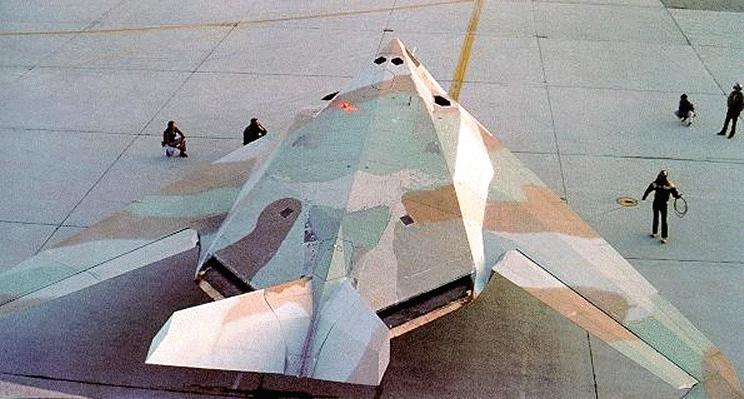
Re:Dazzle Camouflage
"Pink" and "broken outlines" still works, note that Stealth aircraft are black to appeal to aircrew. Black isn't optimal for the night ops required by stealth systems, which is why WWII night fighters were often a lighter color.
Factory stealth camo:
-
Re:No surprise, really
Funny you should mention that. The effectiveness of Patriots in Gulf War I is hotly contested.
Both sides rely on subjective arguments about what constitutes a "successful intercept", neither have any hard data on how many (if any) Scuds were actually downed, and the folks that were having the Scuds aimed at them said that they were getting through pretty well, so I'd have to conclude that the preponderance of evidence is that Patriot was a propaganda weapon in Gulf War I.
I should note that plenty of money has been thrown at defence contractors since then, and there's certainly no technical reason why AMBs can't work. It's just that nobody has shown that they do.
-
Re:No surprise, really
Funny you should mention that. The effectiveness of Patriots in Gulf War I is hotly contested.
Both sides rely on subjective arguments about what constitutes a "successful intercept", neither have any hard data on how many (if any) Scuds were actually downed, and the folks that were having the Scuds aimed at them said that they were getting through pretty well, so I'd have to conclude that the preponderance of evidence is that Patriot was a propaganda weapon in Gulf War I.
I should note that plenty of money has been thrown at defence contractors since then, and there's certainly no technical reason why AMBs can't work. It's just that nobody has shown that they do.
-
inspiration
Killing Constellation might actually be the best thing for increasing the chances that a kid gets to fly in space. Constellation was going to lock us into a flight architecture that was not suitable for anything other than occasional grandstanding flights to the Moon or Mars. It was not suitable for the basis of a space economy or a scalable transportation system that could support a lunar mining base and orbital facilities to build solar power satellites, for example. NASA clearly doesn't have a direction to get people into space, but now that it's out of the way, maybe other efforts can get a toe hold. (NASA hasn't yet arrived at a formula for stimulating this, the COTS model was fundamentally flawed, but I suspect that perhaps as few as five more years of floundering, and buying rides from Russia, along with watching China and India get into space, will focus America on this problem.) Here are a few potential contenders:
Skylon
Mystery Lockheed Martin Test Program
Vulcan (DARPA)
SpaceX Falcon
Right now, there are too many disposable rockets, chasing too small a launch market. Most of the private efforts are not able to get sufficient funding for the sort of technology advancement which will be required to get the cost per pound in orbit down by much, which in turn is required if anything useful is gonna happen up there. A seldom-recanted but critical part of the X-33 story was that the business model for VentureStar fell apart. There were at least one, if not two satellite phone companies planning to orbit hundreds of telecom sats. They were looking for large buys, on the order of a flight per week, for years on end, of Shuttle-class payloads (50,000 lbs), and wanted lower cost per pound. When those companies looked like they were going to fail, the primary contractor concluded that the remaining launch market (NASA plus industry at roughly the level we see today) wasn't big enough to justify private funding for the VentureStar, even after they X-33 notorious technical issues were studied and believed to be resolvable. -
Re:This doesn't just apply to caving I expect.
The Navy shore VLF/LF transmitter facilities transmit a 50 baud submarine command and control broadcast which is the backbone of the submarine broadcast system.
More at http://www.fas.org/man/dod-101/navy/docs/scmp/part07.htm
-
Emergency Review
I'd say the only real fishy thing about it is that they are asking for emergency processing in accordance with 5 CFR 1320.13. The Federal Register listing doesn't say why though. I wonder which one of these was their problem:
(i) Public harm is reasonably likely to result if normal clearance procedures are followed;
(ii) An unanticipated event has occurred; or
(iii) The use of normal clearance procedures is reasonably likely to prevent or disrupt the collection of information or is reasonably likely to cause a statutory or court ordered deadline to be missed.
Did someone miss a deadline or did something unexpected happen?
Link if you are interested:
http://ecfr.gpoaccess.gov/cgi/t/text/text-idx?c=ecfr&rgn=div5&view=text&node=5:3.0.2.3.9&idno=5#5:3.0.2.3.9.0.48.13Other than that I don't think anything horrifically fishy is going on. The whole reason InfraGard is a bit opaque has to do with what authorized it in the first place, PDD 63.
Link: http://www.fas.org/irp/offdocs/pdd-63.htm
To save you the reading time, here's are 2 goals I lifted out:
* Seeks the voluntary participation of private industry to meet common goals for protecting our critical systems through public-private partnerships;
* Protects privacy rights and seeks to utilize market forces. It is meant to strengthen and protect the nation's economic power, not to stifle it.
Sometimes you have to do things behind closed doors to get all the players to the table. Security through obscurity? Maybe.
If you really want to learn more about PDD 63, I suggest you read this: http://www.justice.gov/criminal/cybercrime/white_pr.htm
Discuss.
-
Re:Seriously?
Easy enough. If you're familiar with National Intelligence Estimates, you will know they embody the consensus opinion of the US intelligence community (specifically, all 15 agencies must agree -- or at least agree not to disagree -- for an estimate to make it into a NIE). Here is the Key Judgments section (essentially the Executive Summary) of the declassified October 2002 NIE. I've read the whole thing and it's not that long (~50-60 pages if I remember?); I'm sure you could find it somewhere yourself. http://www.fas.org/irp/cia/product/iraq-wmd.html The opening line of the Key Judgments is: "We judge that Iraq has continued its weapons of mass destruction (WMD) programs in defiance of UN resolutions and restrictions. Baghdad has chemical and biological weapons as well as missiles with ranges in excess of UN restrictions; if left unchecked, it probably will have a nuclear weapon during this decade." At the bottom is a table with confidence intervals, and the statement "Iraq possesses proscribed chemical and biological weapons and missiles" is marked as high confidence, which is as good as it gets in terms of a NIE. You will also see the only alternative view, that of the State Department's INR (which along with the US Air Force has among the best analysts of the 15 agencies), does not contest that Iraq has proscribed stockpiles of chemical and biological weapons; it only disagrees with regards to nuclear weapons. In short: yes, the US intelligence community was unanimous that Iraq possess stockpiles of WMD.
-
Does Homeland Security have this authority?
That guy needs a lawyer. But looking at the authorities referenced in the "subpoena", there are some real questions. It's an "administrative subpoena", not one issued by a court. Some agencies can do that. (The FBI has been refused that authority by Congress). The Department of Transportation has subpoena authority for its hearings and investigations, and Homeland Security inheirited that authority when TSA was transferred from DOT to DHS. For all administrative subpoenas, the party served can file a motion to quash the subpoena with a District Court, and the court has to rule before anything happens.
But that section (49 USC 46104) refers to a "hearing or investigation", a formal proceeding presided over by a hearing officer. This is just some "special agent", and the subpoena is signed by someone with the title "Senior Counsel - Civil Enforcement". There's a list of people who can sign these things at 49 CFR 1503.303, and a "Senior Counsel" isn't high enough up the food chain to sign off. A Deputy Chief Counsel or the Chief Counsel is supposed to sign. This probably reflects who the TSA had in the office on December 26. A more senior official probably would have considered the political implications of doing something this embarrassing.
This is a touchy area, related to the "National Security Letter" debacle. See this Congressional Research Service analysis. The FBI got in trouble for issuing demands for documents without statutory authority.
The Associated Press reports that the blogger is going to challenge the subpoena in court.
-
Guerrilla Gorilla
Fighting spammers is like fighting against a guerilla army. Constant vigilance, swift response times, and, eventually, wholesale destruction of the people supporting the guerrillas will be necessary to win the war.
Is your use of "wholesale destruction" metaphorical, or do you really think guerilla warfare works that way? Because we tried that in Vietnam, and it didn't work. Which is why U.S. counterinsurgency doctrine got revised to exclude the myth that you can win a guerrilla war just by killing people. You also have to change the environment on the ground so that supporting your side instead of the guerrillas is a realistic option for the general population.
Now, if the war against malware is like a guerrilla war, then it's never going to be over. There will always be some place for the other side to run and hide. We can't order other countries to not host services we don't like, if only because we don't want them to do the same to us.
Fortunately, the analogy with guerrilla warfare only goes so far. The Internet is something people invented, not a foreign country with a complicated history and obscure customs. We can rework the thing so that the Bad Guys have a less friendly environment.
-
Re:Chicken Little
> You can't use a nuclear reactor to build a conventional nuclear device -- the best you'll get is a dirty bomb.
As a matter of fact, you can.
http://www.fas.org/rlg/980826-pu.htm
There has been at least one successful US weapons test that used reactor plutonium, precisely to clarify that question, in 1962, in Nevada, underground, with a yield 20 kT.
-
Please learn to read
http://www.fas.org/irp/world/para/docs/880818a.htm
'Israel will exist and will continue to exist until Islam will
obliterate it, just as it obliterated others before it.''The Day of Judgment will not come about until Moslems fight Jews and
kill them. Then, the Jews will hide behind rocks and trees, and the
rocks and trees will cry out: 'O Moslem, there is a Jew hiding behind
me, come and kill him.'So, what do you have to gain from pretending the charter of Hamas, the party that rules "Palestine" with an iron fist, isn't the defacto constitution of the country?
It must suck for you to win on the letter and TOTALLY GET DESTROYED on the spirit.
-
Re:Competitive in the gaming industry?!?!
In order for information to be considered exempt from release under the FOIA it must fit into one of the following categories AND there must be a legitimate Government purpose served by withholding it:
- Information which is currently and properly classified.
- Information that pertains solely to the internal rules and practices of the agency. (This exemption has two profiles, "high" and "low." The "high" profile permits withholding of a document that, if released, would allow circumvention of an agency rule, policy, or statute, thereby impeding the agency in the conduct of its mission. The "low" profile permits withholding if there is no public interest in the document, and it would be an administrative burden to process the request.)
- Information specifically exempted by a statute establishing particular criteria for withholding. The language of the statute must clearly state that the information will not be disclosed.
- Information such as trade secrets and commercial or financial information obtained from a company on a privileged or confidential basis that, if released, would result in competitive harm to the company, impair the government's ability to obtain like information in the future, or protect the government's interest in compliance with program effectiveness.
- Inter-agency memoranda that are deliberative in nature; this exemption is appropriate for internal documents that are part of the decision making process and contain subjective evaluations, opinions and recommendations.
- Information the release of which could reasonably be expected to constitute a clearly unwarranted invasion of the personal privacy of individuals.
- Records or information compiled for law enforcement purposes that (a) could reasonably be expected to interfere with law enforcement proceedings; (b) would deprive a person of a right to a fair trial or impartial adjudication; (c) could reasonably be expected to constitute an unwarranted invasion of the personal privacy of others, (d) disclose the identity of a confidential source, (e) disclose investigative techniques and procedures, or (f) could reasonably be expected to endanger the life or physical safety of any individual.
- Certain records of agencies responsible for supervision of financial institutions.
- Geological and geophysical information concerning wells.
(Excerpted from: http://www.fas.org/irp/doddir/dod/5200-1r/appendix_c.htm)
-
OPSEC/IA
Yeah, if there were an IA/OPSEC 3D simulator, maybe fewer units would keep using passwords that appear in manuals anyone with internet access can read.
-
Re:Take it easy people ...
the Bradley Fighting Vehicle program cost $5.6b
http://www.fas.org/man/dod-101/sys/land/m2.htm
and the resulting machine sucks.
Google was less helpful here and I have no personal experience.
-
Re:Unpopular
NASA's budget is already pretty small, 17.2 billion. The current stimulus plan is valued at 135.15 billion.
Which are both dwarfed by the money spent on the wars in Afghanistan and Iraq. Not trying to start a fight, I'm just sayin'...
According to this report (pdf) by the Congressional Research Service, the "official" expenditures to date are listed as about $944 Billion, the UK Times estimated (in Feb 08) that including other things, like the cost of veteran's benefits, it has/will cost the US closer to $3 Trillion.
-
Re:Self-fulfilling Prophecy
Citation needed. I'll assume you're referring to Putin (surely not Yeltsin or Gorbachev). But 'Russian policy toward the Middle East is often disjointed and has little in the way of military or economic strength to support it' citation here.
-
Re:There would BE no supply problem...
... if we'd use common sense and recycle the fuel, as many other nuclear nations already do. The whole terrorist argument against this was bogus from the start. Recycle the damn fuel, and you can reuse 93 percent of it.
Not in any existing reactor you can't. The fissile content (U235+Pu) going into a reactor in fresh fuel is about 4%, the rest is unusable U-238. Burning the fuel fissions about 4% of the actinide nuclei present, and leaves a fissile content of something slightly under 1% (due to plutonium breeding) at the end. Recycling this spent fuel would extend existing fuel supplies by only 25%.
The fundamental problem with doing this is that it is extremely expensive. The cost of plutonium extracted from spent fuel is equivalent to natural uranium costing $700/kg or so. The actual market price of natural uranium is about $100/kg and for $300/kg you could extract natural uranium from seawater and have a 1000 year supply. Even if the extracted plutonium were free (instead of being far more expensive than the uranium) the cost of fabricating and handling plutonium-bearing fuel is so high that it would still be more expensive that uranium-only fuel. In fact the DOE has to pay utilities to use the mixed plutonium/uranium MOX fuel it makes from ex-Soviet weapons.
France has conclusively proven that a nuclear fuel cycle with recycling is more expensive than one without it. See: http://www.fas.org/press/_docs/021507PlutoniumRecycle3L.pdf.
Reprocessed plutonium is that rarest of industrial products: one that it worth less than nothing (even if the extravagant production cost is completely written off).
Now a breeder reactor fuel cycle could use the U-238 to produce power in principle, but the cost would be much more than conventional nuclear power, and it is hampered by the fact that every breeder reactor project thus built has failed. It may be possible to build a workable breeder pwer reactor, but no one has yet succeeded in doing it.
-
Re:So What? We use "Lie Detectors".
I can't find an FBI report on the polygraph, but this report seems very close to what you're referring to. It was written by the US Office of Technology Assessment in 1983, in response to a house of representatives request.
The report basically concludes that the polygraph's utility can't really be estimated because of high variability in the results of published studies and that regardless, polygraph screening is a really bad idea because, even in the optimistic case, the sensitivity and specificity of the technique isn't anywhere near what you'd need for a screening system.
The report also summarizes several review and primary studies:
The application of the polygraph to specific-incident criminal investigations is the only one to be extensively researched. OTA identified 6 prior reviews of such research (summarized in ch. 3), as well as 10 field and 14 analog studies that met minimum scientific standards and were conducted using the control question technique (the most common technique used in criminal investigations; see chs. 2, 3, and 4). Still, even though meeting minimal scientific standards, many of these research studies had various methodological problems that reduce the extent to which results can be generalized. The cases and examiners were often sampled selectively rather than randomly. For field studies, the criteria for actual guilt or innocence varied and in some studies were inadequate. In addition, only some versions of the control question technique have been researched, and the effect of different types of examiners, subjects, settings, and countermeasures has not been systematically explored.
Nonetheless, this research is the best available source of evidence on which to evaluate the scientific validity of the polygraph for specific-incident criminal investigations. The results (for research on the control question technique in specific-incident criminal investigations) are summarized below:
Six prior reviews of field studies:
average accuracy ranged from 64 to 98 percent.
Ten individual field studies:
correct guilty detections ranged from 70.6 to 98.6 percent and averaged 86.3 percent;
correct innocent detections ranged from 12.5 to 94.1 percent and averaged 76 percent;
false positive rate (innocent persons found deceptive) ranged from O to 75 percent and averaged 19.1 percent; and
false negative rate (guilty persons found nondeceptive) ranged from O to 29.4 percent and averaged 10.2 percent.
Fourteen individual analog studies:
correct guilty detections ranged from 35.4 to 100 percent and averaged 63.7 percent;
correct innocent detections ranged from 32 to 91 percent and averaged 57.9 percent;
false positives ranged from 2 to 50.7 percent and averaged 14.1 percent; and
false negatives ranged from O to 28.7 percent and averaged 10.4 percent.
The wide variability of results from both prior research reviews and OTA’S own review of individual studies makes it impossible to determine a specific overall quantitative measure of polygraph validity. The preponderance of research evidence does indicate that, when the control question technique is used in specific-incident criminal investigations, the polygraph detects deception at a rate better than chance, but with error rates that could be considered significant.(bold face mine)
The OTA report is old, but widely cited, including by anti-polygraph organizations. The report does indeed conclude that polygraph-based lie detection is not a viable technique.
Now read carefully. Nowhere have I said that using a polygraph to try to detect lying is a good idea, should be admissible as evidence, is reasonably accurate or performs (at all) under all circumstances.
However, as poor a technique as it is, the polygraph is a) based on reasonable mechanisms (they don't violate the laws of physics), b) can be assessed scientifically and c) appears to per
-
Re:READ THE GD ARTICLE
I'll concede one point - the clock was indeed an integer, and the rounding error apparently came by multiplying that integer by 0.1, where the 0.1 had only limited precision. (I found the GAO report.) I'm relieved that the programmer wasn't so stupid as to add 0.1 many times (I agree no system designer SHOULD do that, but I've seen some pretty stupid designs...), but I still think the designers are idiots for different reasons than you think the designers are idiots.
I still think that the hardware could have been used just the way it was - and indeed, the software bug was found 14 days before the attack, was fixed 9 days beforehand, and the fix arrived the day after the attack. Different hardware design could've prevented the bug, but in my opinion, the shortfall was that of the programmers not understanding their hardware (or thoroughly testing their software).
Obviously, you feel differently.
-
Re:Curse of binary floating point
Based on what I've seen elsewhere, here's probably what happened: The radar system that went with the patriot battery was already in existence and that is what they used. They wouldn't be able to modify all the systems, so they used them as was. The designers of the patriot battery had the interface specification of the radar system and implemented the patriot software as they choose. While this may not have been a problem for the initial use of shooting down bombers, which fly considerably slower, it became a problem for SCUDS which fly much much faster.
Also, from here we see that the system wasn't originally intended to be turned on for more than a few hours at a time. So, the added functionality of being able to shoot down SCUDS was due to a waterfall design (which is still in use today), but the knowledge of the clock error was probably lost at that point. -
Re:I call bullsh*t
Someone posted the actual GAO report and it seems that it does, but this is only used for predicting a "where will it be seen next" space-time window (not a precise position) for the radar to search. The trouble was that the time corrdinate was absolute not relative to last position, hence accumulated clock accuracy caused it to eventually look in the wrong place and lose the target.
-
Re:Poor QA
Someone posted the actual GAO report on this, which makes a bit more sense than the gibberish TechRadar arcticle.
http://www.fas.org/spp/starwars/gao/im92026.htm
The way the system is sure it's tracking the target it was given is by predicting where it should be seen next based on speed and diretion, and then only looking for it in a window ("range gate") around that predicted position. The window is a point in space-time and therefore has time coordinates as well as space coordinates, and the problem was that the Patriot system apparently used absolute time since power on to specify the time coordinate, hence the error accumulation. The problem could have been avoided simply by using a time coordinate relative to the last tracked postion rather than an absolute one.
The GAO report also blames the 24 bit registers of the 1970's era hardware as limiting accuracy which is just garbage. A good excuse to a politician perhaps, but there was nothing stopping them from using a 64 bit, or whatever, math library if that would have helped.
Of course the Patriot was being used outside of it's original requirements spec when being used to target SCUDs, so it seems someone really screwed up in not reviewing the design beforehand and determining it's limitations (and fixing them) rather than finding out after the fact when 28 people are dead as a result.
-
Patriot success rate was likely extremely inflated
I know that I'm arguing with a trolling AC, but for the other readers of slashdot, you should know that the grandparent's post refers to the controversy regarding the analysis of the Patriot system during the first Gulf war. There was a huge propaganda machine behind the Patriot's "successes" which turned out to be very near zero indeed. This was covered in a series of hearings in the early 90's...
http://www.fas.org/spp/starwars/docops/pl920908.htm
You can also read up on this from transcripts from the hearings after the war.
In the interests of fairness, here is a rebuttal / review.
http://www.fas.org/spp/starwars/docops/zimmerman.htm
I remain unconvinced -- from reading this (almost 20 years ago) I concluded that at best, the military did not know for sure that these worked well.
-
Patriot success rate was likely extremely inflated
I know that I'm arguing with a trolling AC, but for the other readers of slashdot, you should know that the grandparent's post refers to the controversy regarding the analysis of the Patriot system during the first Gulf war. There was a huge propaganda machine behind the Patriot's "successes" which turned out to be very near zero indeed. This was covered in a series of hearings in the early 90's...
http://www.fas.org/spp/starwars/docops/pl920908.htm
You can also read up on this from transcripts from the hearings after the war.
In the interests of fairness, here is a rebuttal / review.
http://www.fas.org/spp/starwars/docops/zimmerman.htm
I remain unconvinced -- from reading this (almost 20 years ago) I concluded that at best, the military did not know for sure that these worked well.
-
Re:Poor QA
There is a good GAO report on this.
This one?
http://www.fas.org/spp/starwars/gao/im92026.htm
Wow. People complain about the US government. Still look at the transparency. The GAO wrote a very readable report for the House Of Representatives and now we can all read it on the web. It's not unreasonable to think that the US's vast military superiority over everyone else on the planet is at least in part due to this sort of thing. I don't think any other government would do this - mistakes in the military would just get covered up as state secrets and anyone who tried to talk about them would get locked up or worse.
-
Re:first post
But it takes a Bush to lower the bar
-
Re:Gerald BullHow about you do your own research? But to get you started, let me point you to this document. It's a British evaluation of Saddam Hussein's WMD program around 2002-2003. While the report appears to be in error about the last few years, it describes the history of Hussein's efforts. For example, for biological weapons:
Iraq started biological warfare research in the mid-1970s. After small-scale research, a purpose-built research and development facility was authorised at al-Salman, also known as Salman Pak. This is surrounded on three sides by the Tigris river and situated some 35km south of Baghdad. Although some progress was made in biological weapons research at this early stage, Iraq decided to concentrate on developing chemical agents and their delivery systems at al-Muthanna. With the outbreak of the Iran-Iraq War, in the early 1980s, the biological weapons programme was revived. The appointment of Dr Rihab Taha in 1985, to head a small biological weapons research team at al-Muthanna,helped to develop the programme. At about the same time plans were made to develop the Salman Pak site into a secure biological warfare research facility. Dr Taha continued to work with her team at al-Muthanna until 1987 when it moved to Salman Pak, which was under the control of the Directorate of General Intelligence. Significant resources were provided for the programme, including the construction of a dedicated production facility (Project 324) at al-Hakam. Agent production began in 1988 and weaponisation testing and later filling of munitions was conducted in association with the staff at Muthanna State Establishment. From mid-1990, other civilian facilities were taken over and some adapted for use in the production and research and development of biological agents.
And of course, the big stick in the WMD deck, a nuclear weapons program:
Iraq's nuclear programme was established under the Iraqi Atomic Energy Commission in the 1950s. Under a nuclear co-operation agreement signed with the Soviet Union in 1959, a nuclear research centre, equipped with a research reactor, was built at Tuwaitha, the main Iraqi nuclear research centre. The research reactor worked up to 1991. The surge in Iraqi oil revenues in the early 1970s supported an expansion of the research programme. This was bolstered in the mid-1970s by the acquisition of two research reactors powered by highly enriched uranium fuel and equipment for fuel fabrication and handling. By the end of 1984 Iraq was self-sufficient in uranium ore. One of the reactors was destroyed in an Israeli air attack in June 1981 shortly before it was to become operational; the other was never completed.
By the mid-1980s the deterioration of Iraq's position in the war with Iran prompted renewed interest in the military use of nuclear technology. Additional resources were put into developing technologies to enrich uranium as fissile material (material that makes up the core of a nuclear weapon) for use in nuclear weapons. Enriched uranium was preferred because it could be more easily produced covertly than the alternative, plutonium. Iraq followed parallel programmes to produce highly enriched uranium (HEU), electromagnetic isotope separation (EMIS) and gas centrifuge enrichment. By 1991 one EMIS enrichment facility was nearing completion and another was under construction. However, Iraq never succeeded in its EMIS technology and the programme had been dropped by 1991. Iraq decided to concentrate on gas centrifuges as the means for producing the necessary fissile material. Centrifuge facilities were also under construction, but the centrifuge design was still being developed. In August 1990 Iraq instigated a crash programme to develop a single nuclear weapon within a year. This programme envisaged the rapid development of a small 50 machine gas centrifuge cascade to produce weapons-grade HEU using fuel from the Soviet research reactor, whi
-
WHO has them matters greatly
Should we really be so shocked? Haven't nuclear weapons been present in the middle east for over 3 decades now, in Israel?
Israel hasn't pledged to push it's neighbors "into the sea". As soon as Israel was created (by the United Nations, backed by American Democratic politicians), Arab neighbor states began attacking immediately, and have regularly attempted invasions since then. Iran's top politician has made a promise to "smash the Jewish" state numerous times, promising to, in fact, wipe them off the map.
The fact is that Israel has used their supply of nukes as a deterrent... indeed, no other state has attacked since they've had them. Surrounding hostile states have relied on funding and equipping terrorists to do their dirty work for them instead. But no one will send an army against Israel anymore.
Iran, on the other hand, has openly made statements to the effect that any new military technologies they develop... nukes included... will be used to eliminate Israel. They've threatened in effect that their nukes will have offensive purposes. These weapons will be in the hands of a leadership that believes they can bring about the end of days... and thus the coming of the 12th Imam... by launching a cataclysmic attack on Israel, and perhaps on her allies.
It matters who has these weapons, and who doesn't.
-
Re:Not the first middle east nuke
Should we really be so shocked? Haven't nuclear weapons been present in the middle east for over 3 decades now, in Israel?
Cry me a fucking river. I'm glad Israel has nukes while Iran does not.
This statement, modded +5 Informative, should clearly be marked flamebait, as if Iran with it's fanatical religious leader Khamemei and lunatic political leader Ahmedinejad should have nuclear weapons at their disposal.
Any country that has repeatedly and openly told the world that it will destroy Israel WHEN it has the nuclear weapons to do so, should not be allowed to create or purchase said weapons.
I am all for a nuke first policy toward Iran.