Slashdot Mirror
Domain: gnome.org
Stories and comments across the archive that link to gnome.org.
Comments · 3,430
-
GNOME Human Interface Guidelines
The OS vendors/distributors themselves aren't providing coherent, unified UI language
Well, there are GNOME Human Interface Guidelines. But why don't more GTK+ apps follow them?
-
Re:It's not a UX designer problem
Interesting that you bring up Gnome software as an example since they are the ones actually trying to do some UI/UX design/redesign every now and then.
I think we all can agree that it would have been better if they didn't.
Maybe you should take up your concerns with their Design Team but I doubt that they will listen. -
Re:related question...
Evolution? https://wiki.gnome.org/Apps/Ev...
KDE pim? https://community.kde.org/KDE_...
-
Misleading comparison to other languages
Pretty major error right in the introduction:
> Legacy programs would need to be ported wholesale to take advantage of these languages,
Not true for Rust. C libraries and applications can be ported to Rust incrementally and, in fact, some examples have already been done and shipped! See Federico's work on librsvg for example: https://people.gnome.org/~fede...
-
Ask the developers here
I don't know any off hand since I'm not really involved with Gimp. Here's the developers mailing list, where you can ask the people who build Gimp about who can help you, people and companies providing paid support, training, customization, or whatever you want.
https://mail.gnome.org/mailman...
I'd first get clear about what you want. Training? Do you want someone to write some custom modules for Gimp? Do you want an on-call Gimp expert?
-
Re: If the dev tests on Wine
You're comparing a set of libraries that (GTK/QT) that you install on a BSD/linux/whatever system
Wine is a set of libraries too: sudo apt install wine-development
which a natively compiled
Wine is also natively compiled for x86 and x86-64 architectures.
intended to be there
If it weren't "intended to be there", I don't see why it would be in the default repositories of major desktop X11/Linux distributions, ready for the administrator to install.
with an entire emulation layer that emulates / translates everything from a network stack
mouse/[...]/keyboard
modem
video
and the list goes on
I'll gallop with you further if you want.
-
Re: If the dev tests on Wine
You're comparing a set of libraries that (GTK/QT) that you install on a BSD/linux/whatever system
Wine is a set of libraries too: sudo apt install wine-development
which a natively compiled
Wine is also natively compiled for x86 and x86-64 architectures.
intended to be there
If it weren't "intended to be there", I don't see why it would be in the default repositories of major desktop X11/Linux distributions, ready for the administrator to install.
with an entire emulation layer that emulates / translates everything from a network stack
mouse/[...]/keyboard
modem
video
and the list goes on
I'll gallop with you further if you want.
-
Re: If the dev tests on Wine
You're comparing a set of libraries that (GTK/QT) that you install on a BSD/linux/whatever system
Wine is a set of libraries too: sudo apt install wine-development
which a natively compiled
Wine is also natively compiled for x86 and x86-64 architectures.
intended to be there
If it weren't "intended to be there", I don't see why it would be in the default repositories of major desktop X11/Linux distributions, ready for the administrator to install.
with an entire emulation layer that emulates / translates everything from a network stack
mouse/[...]/keyboard
modem
video
and the list goes on
I'll gallop with you further if you want.
-
Re: If the dev tests on Wine
You're comparing a set of libraries that (GTK/QT) that you install on a BSD/linux/whatever system
Wine is a set of libraries too: sudo apt install wine-development
which a natively compiled
Wine is also natively compiled for x86 and x86-64 architectures.
intended to be there
If it weren't "intended to be there", I don't see why it would be in the default repositories of major desktop X11/Linux distributions, ready for the administrator to install.
with an entire emulation layer that emulates / translates everything from a network stack
mouse/[...]/keyboard
modem
video
and the list goes on
I'll gallop with you further if you want.
-
GIO, GLib threads, etc.
GTK+ is also "a translation layer" that takes GTK+ calls and maps them onto Xlib. It also has some "quite complex logic", such as the GIO sitting on top of the Linux file system and network interfaces. And just as Wine maps Windows threads onto POSIX threads, GLib provides GLib threads that map onto POSIX threads (under Linux) or Windows threads (under Windows).
-
Re:Maybe easier
Maybe easier is to spot images where PS users kept exif or other information telling that it was PSed (personally I use Gimp)
Obviously, if you want to create a fake you should either remove all metadata (EXIF, IPTC, XMP and proprietary tags) or copy it from the original image. If you claim that you took an image straight from your camera and it contains Photoshop tags or a comment "Created with GIMP", then you will be busted.
Tampering with the metadata is an important step in creating good fakes. However, there is a lesser known property that can often identify the true source of a JPEG image: its quantization tables. The JPEG quantization tables are included in every JPEG file and determine how the image is compressed. GIMP and all other programs using IJG's libjpeg or variants such as libjpeg-turbo are using predefined quantization tables that can easily be recognized (each of the quality levels from 0 to 100 generates a fixed set of 64 integers for the luminance and chrominance quantization tables). Similarly, Photoshop has its own tables for each quality level. Most cameras also have their own quantization tables that are different from GIMP's and Photoshop's; they may even be generated or adjusted dynamically depending on the contents of the image.
I analyzed the quantization tables from GIMP (libjpeg), Photoshop and many cameras more than 10 years ago. I even wrote a blog post in 2007 doing a rough comparison of the quality levels of each program. Even if an image has no metadata or if its metadata has been tampered with, one can tell if it has been modified with GIMP or Photoshop by looking at its quantization tables. I found an interesting article published a year later at the Digital Forensics Research Conference 2008 that explains this clearly: "Using JPEG Quantization Tables to Identify Imagery Processed by Software" (also availble here).
If you use GIMP to save a fake image, then there is an advanced option in the JPEG Save dialog that is only available if you started from a JPEG image. That option is "Use quality settings from original image", which actually copies the quantization tables from the original image instead of letting libjpeg generate new tables based on the quality level that you selected. That would be one more step towards creating a perfect fake.
One more thing that could betray a fake image is the order of the markers and segments in the JPEG file. A JPEG file is made of several segments that are preceded by a two-bytes marker identifying the type of segment: start of image, quantization tables, etc. GIMP (libjpeg) and Photoshop store these segments in the file in a different order. They may also add some markers that are usually not present in the files saved by the cameras, or remove some of them (restart markers, proprietary APPn markers, etc.). The GIMP JPEG plug-in will not allow you to create a perfect fake because it will always save the markers and segments in the same order, but with the right tools it should be possible to re-order them like if the file had been created by a camera.
If you are good at it, you could modify all metadata so that it looks identical to what a camera would produce. Then the only things that could betray your fake image are the pixels of the image: local variations in noise, contrast, etc. This is what is explained in this article about Adobe using AI to detect these variations.
-
without updates
System76 rejected to support LVFS for firmware updates https://blogs.gnome.org/hughsi...
-
Re:Gnome? Nigga, please!
I think it comes down to, a lot of people don't like the design choices made in GNOME 3. Compared to GNOME 2 and GNOME 1, the GNOME 3 desktop looks quite different. You can see screenshots at Wikipedia.
I'm not a big fan of GNOME Shell (GNOME 3) but I don't hate it. I think once they did usability testing, the interface got a lot better. The only thing that stands out for me these days is how they put various controls on the Header bar - which is okay when it's a few controls, but some developers like to put a lot of stuff in the Header bar.
-
Gnome Glib
I honestly sat for 10 seconds trying to figure out why he cared about Gnome or GLib. That capitalization really broke me. https://developer.gnome.org/gl...
-
Re:Who and what?
-
Re:First, and most significantly?
You can read all about them in the release notes. Probably a better choice than an article that picked their favourite ones from there.
-
Re:Gnome Shell and two monitors
I use Multi Monitors Add-On which has this feature.
-
Re:Chongqing
Nobody would have had to look it up if TFS linked to the original release notes.
-
Re:Premature DEjaculation
I bet they haven't fixed the mouse wheel anyway.
You know what to do: https://bugzilla.gnome.org/
-
Registry
I wonder how long until the developers add a registry.
GConf is a Windows registry-alike that GNOME has used since the GNOME 2 days, and has commits from 1999. Someone eventually realised this was a bad idea, so it was replaced with dconf, an improved configuration store with similarities to the Windows registry.
-
Re:God help us
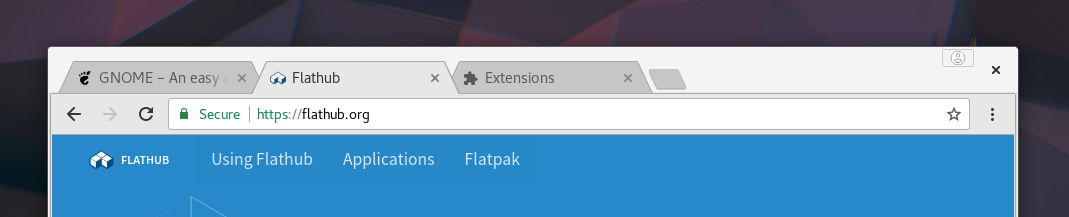
Not sure what you mean with input focus. If you have a GNOME environment, try epiphany (GNOME Web) browser. To move the window, you can click-and-hold (grab) the free space on the title bar or grab the buttons. I like to maximize windows by double clicking, in which case I do need to be a bit more careful with where I put my cursor, but since GNOME shell allows maximizing by dragging to the top of the display, it's not much of an issue in my experience.
Either option is better than the way google chrome does it. With only few tabs open it's not a problem, but if the row is full, grabbing the thin line of the "title bar" is much harder than in Epiphany. YMMW
-
Re:So now, like Windows 10....
Windows 10 is trying to change the styles, too, and all you get is half the applications use one look, half use the other: "Here's a slick new settings interface! Oh... you want to actually do something Useful? Here's the old one." Most users don't care.
Nothing like Windows 10 at all. For the mess of "styles" in Windows 10 at least the fundamental usability items are still consistent. There's still a title bar, minimise, maximise and close buttons. What the Gnome developers are proposing is to leave everything to the developer. Tell me now, how are you going to minimise this fancy new Chromium window: https://wiki.gnome.org/Initiat...
-
Re:Problem is as app complexity grows...
They already have the Gnome Human Interface Guidelines since around the end of Gnome 2, and Its implementation interestingly seems to coincide with the loss of Gnome's popularity.
-
Re:But but ....
I guess that's just a hard to discover easter egg, like mouse paste.
-
Re:Linux doesn't even have a good desktop environm
Linux still doesn't have a good desktop environment, even after two decades of trying.
The problem is Linux doesn't have any central project leadership. (After all Linux is 'just' a kernel or so I'm told.) OSS by nature, is decentralized. Unfortunately that is its Achilles heel because instead of working to make one desktop environment work for everyone like MS and Apple -- because they have ONE product they are trying to sell to their customers -- what you end up with are 50,000 geeks all with completely different ideas of what a desktop environment should look like and going off and creating YADE (yet another desktop environment) instead of working together to make the one, true DE better and more usable.
Hell M$ used to do psychological studies ffs. They would put people in locked rooms with one-way glass while they clicked around a screen while psychologists observed them so they could figure out where best to locate buttons on the screen. (This doesn't explain the abomination that was the Windows 8 Start screen but in retrospect Win8 wasn't as bad of an OS as people made it out to be. It was rough around the edges but made some significant improvements e.g. the ribbon in the File Explorer which I now find to be a much better file manager than Finder on Mac and the 186 different file managers on Linux. I wish they improved it instead of some of the shit that became Win10.)
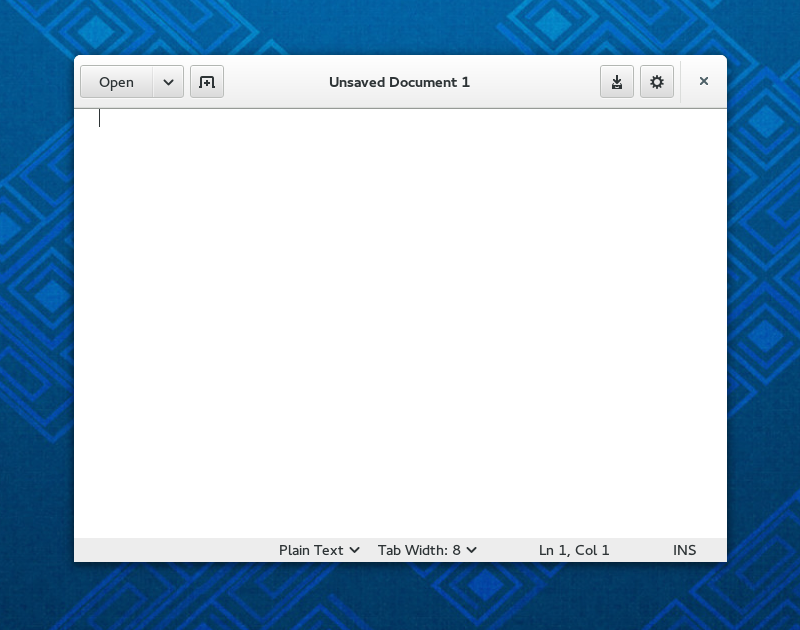
I'm sure Apple does the same usability studies but I dare someone to show me where this was ever done in KDE or GNOME. I'm guessing it wasn't, the buttons are where some cranky dev put them and there they'll stay because you're wrong. Take one look at the shit-show that is gedit and tell me more than one person thought this was a good idea.
-
Re:How about making it start up faster
I recall the first version of MS Word for the Mac. It had rotatable fonts
I'm pretty sure it didn't, but I was more of WordPerfect user back in those days. It might have seemed like it had the ability to render rotated text because it generated a pixmap and then rotated it. But today text is managed as a vector graphic, and rotation is done on each font glyph individually. Font/text handling is one of those things that has just become incredibly sophisticated over the last couple of decades. Just browse through the Pango library sometime to see what it is doing under the hood,
https://developer.gnome.org/pa...It is 3 MB, just for font/text handling, and yes it is written in C. And it still requires Glib, and a 2D graphics backend to do the actual rendering, so it is not capable of standing completely on its own. It is hard to appreciate sometimes, because if you only use the ISO-8859-1 character set (Western Europe) and don't need things like RTL, you don't necessarily notice all of the new features, but I'm willing to bet your eyes are thankful for the reduced eye strain.
it had a-lot of functionality - it had everything that I personally use today when I use MS Word
Yeah, it probably did. And this is another crux of the problem. There is a lot of stuff it does today that you probably don't use, or only use very rarely, but other people use all the time. I was a fan of Abiword once upon a time, because it was nice small stripped down word processor that did everything I needed to write papers, short documents, etc. But it couldn't handle even moderately complex documents, so I found myself turning to StarOffice (now LibreOffice), which was a bloated monolith, more and more. Eventually, it just didn't make sense to be switching between two different word processors, so I gave up and now I use LibreOffice, or Microsoft Office on my Mac, exclusively. Abiword could have been extended to add the needed functionality, but eventually it would have ended up just like LibreOffice, because feature+feature+feature (however rarely used) is what turns these applications into monoliths.
However, I _suspect_ (don't actually know) is that it is due to the large libraries that get linked with apps.
The answer is yes. That is exactly right. Libraries are huge. But they are huge because they incorporate a lot of features. There is some amount of sloppy programming, but mostly it is because of the large number of features. On top of that, Windows and OS X, the two most mainstream operating systems, have basically given up on shared libraries. So every application is bundled with its own set of libraries. And if it is a Java application, it is a very large number of libraries, sometime even bundling the JVM itself, but people want cross-platform and that is unfortunately probably the easiest way to get that at the moment.
I believe that we _could_ have instantaneous apps, but no one is asking for it.
Demand often parallels need. People will demand low resource utilizing applications when they need them. But if they have 4 cores and 16 GB RAM readily available, they just don't really care. And given the option of a less capable and more expensive (due to increased development costs), but slightly faster and more responsive application, most people will opt for the cheaper bloated monolith that has more features, even if they don't use all of them all of the time.
-
Gnome 3.26 removes the Status Bar/System Tray
According to Gnome developers, removing of the system tray is so insignificant, that it is not even worth mentioning in the short list of changes. It is mentioned at the end of the long list, outside of the bullet points.
GNOME 3.26 no longer shows status icons in the bottom-left of the screen. This prevents the status icon tray from getting in the way and is expected to provide a better overall experience. The lack of status icons is not expected to cause serious issues for users. However, if you do find that you need to access them, they can be restored using the TopIcons extension. More information about this change can be found in a blog post on the subject.
This means that if you don't have the latest TopIcons extension already installed, a lot of programs that minimize to Status Bar will become inaccessible. That's mainly non-Gnome programs.
Gnome developers are trying to force application developers to not use the "pretty old" standard that "predated Gnome 2.0" and instead to use Gnome specific API's like their notification.
The big problem is that they do not seem to understand what is the purpose of the Status Bar, how people use it and why it exists in all Desktop platforms - Linux, Windows and Mac.
The Status Bar is for checking the status of an application, with single glance, without need for any actions from the user, like moving mouse to specific position on the screen, having to click, switch desktops or open the program window.
In comparison, notification are for signaling change or event. Their use is not only different, they also could be quite annoying and actively ignored.Here are few more links to read:
https://blogs.gnome.org/aday/2017/08/31/status-icons-and-gnome/
https://lwn.net/Articles/732622/ -
Re:Can't Log Out?
I've been trying to figure out why all Linux desktops suck so much. I think it must be due to barriers to contributing.
I looked at working on KDE, since it's the least bad one I found. They have a page that tells you to start by spending hours on IRC, hoping that helpful people are in your time-zone and suffering from the same level on insomnia as you are. The relevant section on their forum is dead, hardly anyone gets replies. They then start talking about how you should do all the boring, trivial bug fixing crap they can't be bothered with as a way to get started.
Sod that. I want to fix the start menu, fix it opening slowly and sort out the half-baked Windows-clone layout. I'm an experienced programmer. The barriers are too high, KDE loses a potential improvement.
GNOME is basically the same, their guide eventually just tells you to go on IRC and ask someone, and they don't seem interested in fixing the horrible mess they have created. In fact their current goal seems to be to remove as many options and alternative settings as possible.
Maybe one of the other desktops is better. How long am I supposed to spend checking them? This is the kind of thing that keeps people on Windows, because the pain that Microsoft inflicts is not quite as bad as the average Linux desktop.
-
Tests don't fix the problems of identity politics
In my opinion, it is identity politics that has resulted in GNOME being in such poor shape today.
Using past Slashdot submissions, let's track what happened to the GNOME desktop environment project after it started engaging in identity politics, instead of just focusing on software development.
On June 15, 2006, Slashdot featured the story "GNOME Reaches Out to Women".
As we progress from 2007 through to just last week, we can see the decline:
- Godwin's Law Invoked in Linus/Gnome Spat
- GNOME 3 Delayed Until September 2010
- GNOME Developer Suggests Split From GNU Project
- GNOME 2.30, End of the (2.x) Line
- GNOME 3.0 Delayed Until March 2011
- Ubuntu Moves Away From GNOME
- Canonical To Divert Money From GNOME
- GNOME To Lose Minimize, Maximize Buttons
- Proposal For Gnome To Become Linux-Only
- GNOME Shell Hurts Gaming Performance
- Linus Torvalds Ditches GNOME 3 For Xfce
- Debian Changes Default Desktop From GNOME To XFCE
- Gnome Goes JavaScript
- Gnome Founder Miguel de Icaza Moves To Mac
- Giving GNOME 3 a GNOME 2 Look
- The GNOME Foundation Is Running Out of Money
- Dozens Of Canonical Employees Resign As Ubuntu Switches To GNOME, Shuttleworth Returns As CEO
- Debian, Gnome Patched 'Bad Taste' VBScript-Injection Vulnerabilities
- GNOME's Text Editor gedit 'No Longer Maintained', Needs New Developers
The GNOME project went from creating GNOME 2, which was perhaps the most widely used and most liked open source desktop environment ever created, to the GNOME 3 disaster (which was quite delayed), and eventually to the project having trouble finding a maintainer for its text editor!
Some people will misinterpret what happened, and blame women for it. Of course, that's a load of bollocks. As we can
-
Identity politics destroys organizations.
Identity politics destroys organizations, including companies and open source projects.
Using past Slashdot submissions, let's track what happened to the GNOME desktop environment project after it started engaging in identity politics, instead of just focusing on software development.
On June 15, 2006, Slashdot featured the story "GNOME Reaches Out to Women".
As we progress from 2007 through to just last week, we can see the decline:
- Godwin's Law Invoked in Linus/Gnome Spat
- GNOME 3 Delayed Until September 2010
- GNOME Developer Suggests Split From GNU Project
- GNOME 2.30, End of the (2.x) Line
- GNOME 3.0 Delayed Until March 2011
- Ubuntu Moves Away From GNOME
- Canonical To Divert Money From GNOME
- GNOME To Lose Minimize, Maximize Buttons
- Proposal For Gnome To Become Linux-Only
- GNOME Shell Hurts Gaming Performance
- Linus Torvalds Ditches GNOME 3 For Xfce
- Debian Changes Default Desktop From GNOME To XFCE
- Gnome Goes JavaScript
- Gnome Founder Miguel de Icaza Moves To Mac
- Giving GNOME 3 a GNOME 2 Look
- The GNOME Foundation Is Running Out of Money
- Dozens Of Canonical Employees Resign As Ubuntu Switches To GNOME, Shuttleworth Returns As CEO
- Debian, Gnome Patched 'Bad Taste' VBScript-Injection Vulnerabilities
- GNOME's Text Editor gedit 'No Longer Maintained', Needs New Developers
The GNOME project went from creating GNOME 2, which was perhaps the most widely used and most liked open source desktop environment ever created, to the GNOME 3 disaster (which was quite delayed), and eventually to the project having trouble finding a maintainer for its text editor!
Some people will misinterpret what happened, and blame women for it. Of course, that's a load of bollocks. As we can see from t
-
Identity politics worked just great for GNOME...
Using past Slashdot submissions, let's track what happened to the GNOME desktop environment project after it started engaging in identity politics, instead of just focusing on software development.
On June 15, 2006, Slashdot featured the story "GNOME Reaches Out to Women". We can see this as the beginning of the troubles to come.
As we progress through the submission titles from 2007 through to just last week, we can see the decline:
- Godwin's Law Invoked in Linus/Gnome Spat
- GNOME 3 Delayed Until September 2010
- GNOME Developer Suggests Split From GNU Project
- GNOME 2.30, End of the (2.x) Line
- GNOME 3.0 Delayed Until March 2011
- Ubuntu Moves Away From GNOME
- Canonical To Divert Money From GNOME
- GNOME To Lose Minimize, Maximize Buttons
- Proposal For Gnome To Become Linux-Only
- GNOME Shell Hurts Gaming Performance
- Linus Torvalds Ditches GNOME 3 For Xfce
- Debian Changes Default Desktop From GNOME To XFCE
- Gnome Goes JavaScript
- Gnome Founder Miguel de Icaza Moves To Mac
- Giving GNOME 3 a GNOME 2 Look
- The GNOME Foundation Is Running Out of Money
- Dozens Of Canonical Employees Resign As Ubuntu Switches To GNOME, Shuttleworth Returns As CEO
- Debian, Gnome Patched 'Bad Taste' VBScript-Injection Vulnerabilities
- GNOME's Text Editor gedit 'No Longer Maintained', Needs New Developers
The GNOME project went from creating GNOME 2, which was perhaps the most widely used and most liked open source desktop environment ever created, to the GNOME 3 disaster (which was quite delayed), and eventually to the project having trouble finding a maintainer for its text editor!
Some people will misinterpret what happened, and blame women for it. Of course, that's a load of bollocks. As we can see from the GNOME project grou
-
Re:Text Editors, Like Dinosaurs, Die for a Reason
627 text editors
Maybe if we want more text editors what we need is a Framework... oh wait...
Tepl is a library that eases the development of GtkSourceView-based text editors and IDEs. Tepl is the acronym for “Text editor product line”. It also serves as an incubator for some GtkSourceView features.
Tepl was previously named Gtef (GTK+ text editor framework).
-
We all saw it coming...
A Slashdot commenter predicted the demise of gedit almost three years ago. The core of this argument was the following:
Hipsters are killing open source projects left and right with their fucking awful UI changes.
Just look at what happened to gedit. It's a text editor that comes with GNOME.
Gedit used to look like this: https://upload.wikimedia.org/wikipedia/commons/d/df/Gedit2261.png
It had a clean, usable, consistent UI. The major functionality was easily available, and the UI was extremely intuitive and efficient to use.
The hipsters can't stand for usable software, of course. It needed to be "improved"!
This is what gedit looks like more recently: https://upload.wikimedia.org/wikipedia/commons/e/ef/Gedit_3.11.92.png
I'm not joking. That's really what it looks like. Using it is even worse than it looks.
Gedit's UI today is fucking awful.
-
Ubuntu will implement Unity in GNOME
I had thought that Ubuntu was planning to just adopt the GNOME Shell, but that's not their plan. Reading TFS I found out: their plan is to use extensions to change the GNOME Shell experience so that the desktop works more similarly to Unity.
Famously, the GNOME Shell got rid of minimize and maximize buttons completely, opting to keep only the close button.[1] To maximize you snap a window to the top of the screen. There is no minimize, but you can make any number of virtual workspaces and the equivalent of minimize is to send a window to a workspace that is not currently displayed. It's not necessarily a bad way to go, but it's really different from any other desktop environment ever.
The new Ubuntu is going to have a dock, and minimize will make the window disappear the way it does now in Unity, and you will use the dock to re-open the window just as now in Unity.
What about menus... will they be per-window or Mac OS X style? One screenshot (see it here) shows them at the top of the window. Just like Unity.
So the Ubuntu team is going to avoid the needless duplication of effort of making a complete desktop environment, but they will be customizing their GNOME Shell to work pretty much like Ubuntu works today.
I guess I should have expected it but this was surprising news for me. Personally I am still using MATE on my own computers, but I'd rather use a Unity clone than native GNOME Shell.
[1] Note that back in the GNOME 2.x days at Sun Microsystems, Sun paid for usability studies. For GNOME 3.x, a developer made the giant change of removing the minimize button by... thinking about it and talking to two other people on the GNOME 3.x development team. Who needs usability studies? Not the GNOME devs, apparently.
Actual quote: "In the end, I think with GNOME 3 we need to emphasize design coherency and slickness - what is different and better, and that actually is more important than being 100% sure we perfectly meet everybody's workflow." Personally I think the emphasis on "coherency and slickness" vs. "workflow" was a mistake, which is why I'm still using MATE. I just want to get my work done with minimal distractions.
-
Re: GNOME had this
The only explanation is in the commit - https://git.gnome.org/browse/gtk+/commit/?id=bdf0820c501437a2150d8ff0d5340246e713f73f
Instead of testing to see if the DPI values were non-zero, the developer just decided to force 96 DPI fully ignoring the detected values.
I won't comment on the developer's abilities, I think that commit speaks for itself
.
-
Re:GNOME had this
Doh, it seems that the URLs didn't survive the submit, so here they are again:
- reddit comments on gtk+ breaking HiDPI - https://www.reddit.com/r/linux/comments/6cf1dq/what_was_the_most_baffling_problem_in_linux_youve/dhuhuk4/
-bugzilla report - https://bugzilla.gnome.org/show_bug.cgi?id=757142
-
Re:Who cares?
More importantly, nobody is being forced. Every developer and contributor anywhere is completely free to make their own Linux distribution without systemd, or fork an existing one.
you don't have the right to make other free software contributors use the specific tools you like.
That's disingenuous and contradictory. By adding SystemD dependencies to all sorts of unrelated software (including the entirety of GNOME), Lennart et. al. really are asserting that they have some right to make other free software contributors use the specific tools they like.
It is insane to be forced to choose my desktop environment based on its compatibility with my init system.
-
Re:for how long will it be viable?
The people who are working on GNOME, and most distro maintainers, use mostly systemd, so naturally support for alternatives dies off.
But, IIRC, I heard in principle the GNOME people were open to systemd alternatives, if someone would work on supporting those (by way of testing/coding etc). But that doesn't seem to happen enough.
I believe there were some attempts but those failed to live up to their standards, which was by some interpreted as "fuck off you non-systemd pariah".
Don't have any good pointers at hand, but here is some info on which problems should be worked on.I don't know about KDE but perhaps it's the same. Of course if nobody works on supporting alternatives then eventually alternatives are not supported, simple as that.
Perhaps if Devuan is done with releasing, they can fork KDE/GNOME (if they feel the upstreams aren't open to accepting patches for alternatives). -
Re:That's, kinda, a shame
I'll try it again at some point when I can be bothered, but the situation as of just over a year ago was that editing the panels required installing a Firefox plug-in (that might have already been installed) and browsing extensions.gnome.org. That site is still up and running and still describes the same functionality, so I assume that it's still necessary - hopefully, you just haven't had to use it because you were satisfied with the default panels, I wasn't however.
-
Re:SimpleBurn DVDs
This happened even when using VLC?
It saved them as MP4s so when I put them in his DVD, a option popped up on his DVD player saying select photos, or videos, or music. I simply selected video and it played the films and you could simply fast forward past the copyright notice and for some reason it stripped out the "trailers" advertising other films. So it worked perfectly. It also worked perfectly on the system I use for copying them Linux Mint.
On Linux Mint it automatically opened the video player as: Totem 3.10.1 https://wiki.gnome.org/Apps/Vi...
So fast forward worked on the copied DVD, and on Linux Mint. How Windows manages to bring back the lock that stops you from fast forwarding past the copyright notice I do not know. How it got the name of the DVD film and the copyright notice even though sending information is turned off I do know. And I assume that foreign subtitles on Windows was to irritate the watcher because it was a copy.
Multinationals just cannot get enough information and enough power over people. The odds are that eventually they will get Linux under their thumb eventually.
-
Re:wat
Here is a link that regarding Stallman's use of the joke, and a link to Stallman's explanation.
https://geekfeminism.org/2009/...
https://mail.gnome.org/archive... -
Re:I have yet to have any problems with Windows 10
Oh and I'll just leave this hear to show that I was using linux as far back as 1998 as I claim:
-
Re:Dear AMD:
The opensource x.org initiatives, while many of the issues above are now resolved, will never be performant in the way nVidia is and lead to the creation of alternative graphical backends like Wayland, which, are trying to resolve these issues for 'good' opensource citizens
Wayland is not in any meaningful way an alternative to the nVidia driver. It basically says you do the rendering, I'll do the compositing. For say full-screen games that means it's dumped straight to the display buffer while doing practically nothing. Right now the nVidia driver doesn't know how to play nice with Wayland but patches are coming, when it does it'll still do 99% of the heavy lifting.
-
imaginary exploit?
Are you sure you know what you are talking about?
Strange, but the only critical bugs listed in the last few days are for the Windows version on Sunday December 11th and for the Apple version on Wednesday December 7th. Neither of them seems to have caused an exploit. You can use the link above to find that the 0day found in mid-November was patched on November 29th, after an earlier not completely successful patch attempt.
What new 0day are you talking about? It doesn't seem to exist yet.
You can use the web
-
Hey Rich Turner!
Fire up a linux distro, run MonoDevelop or your favourite Mono IDE, run your (.NET) code, host your website on Apache, access your MySQL database from your Java code. Run Solitare, run an Active Directory server, run office. Oh and do it all for free!
Seriously? First Microsoft criticise open-source and linux, then they're trying to win the market back. I don't think it's a bad thing that they're doing this but you'd only develop on windows if you had to. Otherwise, why not develop natively.
-
Re:KDE=bloated pig with bad lipstick
KDE4 is still maintained for a long time, very stable and usable. Why not just keep using that?
How much i wish what you wrote were true, but i am afraid it isn't:
Back in August 2013 we promised to do Long Term Support for kde-workspace for
2 years.This means this August is the last release for kde-workspace.
Anyone has a strong reason we should keep doing kde-workspace 4.11.x releases?
Yes, some distributions still offer KDE4, but i am wondering how secure it is when i read things like this
"Many popular KDE applications use QtWebKit, which is old and deprecated. These deprecated versions of WebKit suffer from well over 100 remote code execution vulnerabilities fixed upstream that will probably never be backported. (100 is a lowball estimate; I would be unsurprised if the real number for QtWebKit was much, much higher."
"QtWebKit is still maintained in Qt and is getting some backports, but from a quick check of their git repository it’s obvious that it’s not receiving many security updates. This is hardly unexpected; QtWebKit is now years behind upstream, so providing security updates would be very difficult. There’s not much hope left for QtWebKit; these applications have hundreds of known vulnerabilities that will never be fixed."
I have been a longtime KDE user, and their refusal to continue supporting KDE4 while KDE5 is being developed is precisely what infuriated me to the point of wishing to abandon it and making me actively look into alternatives. Up until KDE3, i was willing to accept some bloatness and features that i never used because of KWin's configurability and internationalization (there was a time when other DEs would lock you out of your session for good if you were using a non-latin keyboard when you locked the screen!). Then i swallowed the fiasco of the transition from KDE3 to KDE4, during which KDE developers abandoned support of KDE3 long before KDE4 was in a usable form (except perhaps on their own laptops?) telling myself that perhaps this was an error in judgment caused by their inexperience (they are not professionals, after all), and that they would learn their lesson... And let's not even get into the semantic desktop crap...
So we finally arrive at KDE5, where KDE developers shove down their users' throats a half-baked product once again by refusing to keep maintaining KDE4. I cannot even remember how many bugs this thing had when i was forced to install it some months ago, many of which have not yet been fixed to this day... Konsole, my workhorse application, crashing with a mysterious combination of key strikes; the screen going black when opening a new window; things like the session manager autostart sometimes working and sometimes not; irritating taskbar bugs too many to mention here; "focus follows mouse" sometimes working and sometimes failing... To compound the misery, KDE settings are no longer saved under ~/.kde5 but are spread all over the place in ~/.config and other directories; possibly to comply to some desktop standard, except KDE is so bug it overwhelms these directories and it's no longer to rename ~/.kde5 to make an easy fresh start when trying to figure out what's wrong...
I reported some of these bugs, but i must confess that at this point i have very little good will vis a vis KDE to be a happy bug reporter! After all, i am not doing it out of my own free will: KDE5 was forced down my throat, and i find myself obliged to spend hours and hours on their project instead of *my* projects, and at a time that was certainly not of my own choos
-
Re:KDE=bloated pig with bad lipstick
KDE4 is still maintained for a long time, very stable and usable. Why not just keep using that?
How much i wish what you wrote were true, but i am afraid it isn't:
Back in August 2013 we promised to do Long Term Support for kde-workspace for
2 years.This means this August is the last release for kde-workspace.
Anyone has a strong reason we should keep doing kde-workspace 4.11.x releases?
Yes, some distributions still offer KDE4, but i am wondering how secure it is when i read things like this
"Many popular KDE applications use QtWebKit, which is old and deprecated. These deprecated versions of WebKit suffer from well over 100 remote code execution vulnerabilities fixed upstream that will probably never be backported. (100 is a lowball estimate; I would be unsurprised if the real number for QtWebKit was much, much higher."
"QtWebKit is still maintained in Qt and is getting some backports, but from a quick check of their git repository it’s obvious that it’s not receiving many security updates. This is hardly unexpected; QtWebKit is now years behind upstream, so providing security updates would be very difficult. There’s not much hope left for QtWebKit; these applications have hundreds of known vulnerabilities that will never be fixed."
I have been a longtime KDE user, and their refusal to continue supporting KDE4 while KDE5 is being developed is precisely what infuriated me to the point of wishing to abandon it and making me actively look into alternatives. Up until KDE3, i was willing to accept some bloatness and features that i never used because of KWin's configurability and internationalization (there was a time when other DEs would lock you out of your session for good if you were using a non-latin keyboard when you locked the screen!). Then i swallowed the fiasco of the transition from KDE3 to KDE4, during which KDE developers abandoned support of KDE3 long before KDE4 was in a usable form (except perhaps on their own laptops?) telling myself that perhaps this was an error in judgment caused by their inexperience (they are not professionals, after all), and that they would learn their lesson... And let's not even get into the semantic desktop crap...
So we finally arrive at KDE5, where KDE developers shove down their users' throats a half-baked product once again by refusing to keep maintaining KDE4. I cannot even remember how many bugs this thing had when i was forced to install it some months ago, many of which have not yet been fixed to this day... Konsole, my workhorse application, crashing with a mysterious combination of key strikes; the screen going black when opening a new window; things like the session manager autostart sometimes working and sometimes not; irritating taskbar bugs too many to mention here; "focus follows mouse" sometimes working and sometimes failing... To compound the misery, KDE settings are no longer saved under ~/.kde5 but are spread all over the place in ~/.config and other directories; possibly to comply to some desktop standard, except KDE is so bug it overwhelms these directories and it's no longer to rename ~/.kde5 to make an easy fresh start when trying to figure out what's wrong...
I reported some of these bugs, but i must confess that at this point i have very little good will vis a vis KDE to be a happy bug reporter! After all, i am not doing it out of my own free will: KDE5 was forced down my throat, and i find myself obliged to spend hours and hours on their project instead of *my* projects, and at a time that was certainly not of my own choos
-
Re:KDE=bloated pig with bad lipstick
KDE4 is still maintained for a long time, very stable and usable. Why not just keep using that?
How much i wish what you wrote were true, but i am afraid it isn't:
Back in August 2013 we promised to do Long Term Support for kde-workspace for
2 years.This means this August is the last release for kde-workspace.
Anyone has a strong reason we should keep doing kde-workspace 4.11.x releases?
Yes, some distributions still offer KDE4, but i am wondering how secure it is when i read things like this
"Many popular KDE applications use QtWebKit, which is old and deprecated. These deprecated versions of WebKit suffer from well over 100 remote code execution vulnerabilities fixed upstream that will probably never be backported. (100 is a lowball estimate; I would be unsurprised if the real number for QtWebKit was much, much higher."
"QtWebKit is still maintained in Qt and is getting some backports, but from a quick check of their git repository it’s obvious that it’s not receiving many security updates. This is hardly unexpected; QtWebKit is now years behind upstream, so providing security updates would be very difficult. There’s not much hope left for QtWebKit; these applications have hundreds of known vulnerabilities that will never be fixed."
I have been a longtime KDE user, and their refusal to continue supporting KDE4 while KDE5 is being developed is precisely what infuriated me to the point of wishing to abandon it and making me actively look into alternatives. Up until KDE3, i was willing to accept some bloatness and features that i never used because of KWin's configurability and internationalization (there was a time when other DEs would lock you out of your session for good if you were using a non-latin keyboard when you locked the screen!). Then i swallowed the fiasco of the transition from KDE3 to KDE4, during which KDE developers abandoned support of KDE3 long before KDE4 was in a usable form (except perhaps on their own laptops?) telling myself that perhaps this was an error in judgment caused by their inexperience (they are not professionals, after all), and that they would learn their lesson... And let's not even get into the semantic desktop crap...
So we finally arrive at KDE5, where KDE developers shove down their users' throats a half-baked product once again by refusing to keep maintaining KDE4. I cannot even remember how many bugs this thing had when i was forced to install it some months ago, many of which have not yet been fixed to this day... Konsole, my workhorse application, crashing with a mysterious combination of key strikes; the screen going black when opening a new window; things like the session manager autostart sometimes working and sometimes not; irritating taskbar bugs too many to mention here; "focus follows mouse" sometimes working and sometimes failing... To compound the misery, KDE settings are no longer saved under ~/.kde5 but are spread all over the place in ~/.config and other directories; possibly to comply to some desktop standard, except KDE is so bug it overwhelms these directories and it's no longer to rename ~/.kde5 to make an easy fresh start when trying to figure out what's wrong...
I reported some of these bugs, but i must confess that at this point i have very little good will vis a vis KDE to be a happy bug reporter! After all, i am not doing it out of my own free will: KDE5 was forced down my throat, and i find myself obliged to spend hours and hours on their project instead of *my* projects, and at a time that was certainly not of my own choos
-
Re:I'm so out of touch
There is currently some support for this in GNOME (and therefore Fedora Workstation), but it's rudimentary. Some technical bits about this here: https://wiki.gnome.org/HowDoI/.... A lot of the software just wasn't made for it, though, so it's going to be a bit of a bumpy road.
-
Re:Auto-extracting of archives
User research showed that people actually don't want an other app, they just want to access the content of the archive.
Can you please give me a pointer to where the results of the user research were published? I would like to read up on the research that the GNOME team uses to make their decisions.
Frankly, I didn't think the GNOME team did any research anymore. I read about the reason why the "minimize" button was removed for the GNOME 3.x release and it was one developer making a decision after talking to like two people, no actual usability studies run by usability experts. (In contrast, back in the day, Sun Microsystems ran usability studies on GNOME 2.x and the results were used to improve GNOME.)
If GNOME is having usability research done, and making decisions based on that, then good for them. And I'm not being sarcastic, I do want to look at it.
P.S. I just Googled and I didn't find whatever study you are talking about. I found a couple of cases where someone did a usability study on their own, but nothing about the GNOME project officially doing usability studies.