Slashdot Mirror
Domain: harvard.edu
Stories and comments across the archive that link to harvard.edu.
Comments · 3,112
-
How the lawsuit is going to go in court ...Since 1994, both Caldera ( which only changed its name to The SCO Group in 2003 ) and the Santa Cruz Operation ( The original SCO which changed its name to Tarentella ) have accepted, profited from and redistributed copyrighted source code from hundreds of developers under the terms of the GPL license.
http://www.fsf.org/licenses/gpl.html
The SCO Group has failed to put forward ANY substantial legal theory why the SCO Group should not be obligated to abide by the terms of the GPL.
http://www.fsf.org/philosophy/sco/sco-without-fear
The SCO Group obligations under the GPL has been reiterated and reinforced in the legal positions of IBM, Redhat and Novell in their respective cases against the SCO Group.It is a criminal offense to claim, with fraudulent intent, that you have a copyright if you do not. The SCO Group does *NOT* hold the copyrights to the UNIX source code. Novell has *NOT* transfered the title for the works that the SCO Group fraudulently filed for copyright in 2003. The SCO Group do not have the right to sue anybody for violation of copyright works without the assent of the title holder.
The SCO Group claims the right to sue for work in standard UNIX and POSIX interfaces that AT&T and Novell granted full rights to use royalty free in perpetuity for the ISO, ANSI and FIPS federal standards.
The SCO Group's contract claims against IBM and others based upon the AT&T license in respect to rights of so called derivative works is in direct contradiction to evidence presented to the SCO Group by Novell.
The SCO Group though the press and SEC filings, has bolstered the share price of the SCO Group based upon demonstrably false claims to the contrary of above points 1,2 and 3. The SCO Group CEOs and legal agents were notified by Novell and IBM *before* making these false claims and presenting them as fact. The actions of the SCO Group must be in violation of several SEC regulations.
So how is the lawsuit going to go if it gets to court?
Eben Moglen's Harvard Speech
http://jolt.law.harvard.edu/p.cgi/speakers.html
The Transcript
http://www.groklaw.net/article.php?story=200402260 03735733The McBrides, jointly -- I feel sometimes as though I'm in a Quentin Tarantino movie of some sort with them [laughter] -- the McBrides have failed to distinguish adequately between dicta and holding.
I do not like Eldred against Ashcroft. I think it was wrongly decided. I filed a brief in it, amicus curiae, and I assisted my friend and colleague Larry Lessig in the presentation of the main arguments which did not, regrettably, succeed.
Oddly enough, and I will take you through this just enough to show, oddly enough, it is the position that we were taking in Eldred against Ashcroft, which if you stick to holding rather than dicta, would be favorable to the position now being urged by Mr. McBride. What happened in Eldred against Ashcroft, as opposed to the window dressing of it, is actually bad for the argument that Mr. McBride has been presenting, whichever Mr. McBride it is. But they have not thought this through enough.
Let me show you why. The grave difficulty that SCO has with free software isn't their attack; it's the inadequacy of their defense. In order to defend yourself in a case in which you are infringing the freedom of free software, you have to be prepared to meet a call that I make reasonably often with my colleagues at the Foundation who are here tonight. That telephone call goes like this. "Mr. Potential Defendant, you are distributing my client's copyrighted work without permission. Please stop. And if you want to continue to distribute it, we'll help you to get b -
Re:God I hope so.
but since RSS feeds are supplying all that formated data, why don't we all agree on a field that says what the recommended and absolute minimum refresh periods are for each feed? (With a default if it's not present.)
All agree to something - you're new to this RSS specification thing right?
Seriously, there are three elements specified in RSS2.0 which may be of use - skipHours, skipDays and ttl. ttl sounds in the right direction to your original requirements.
-
Think bigger and check out the spec.
RSS is a simple simple thing, much like XML is a simple simple thing.
If you check out the spec for it, you'll notice that there is room for lots of handy info. This in it self may not convice you, as you said, how does this beat going to the site and looking for yourself?
There are two primary benefits: 1. Your site can be syndicated or you can sydicate other sites easily! I can put Slashdot headlines in a box on my site for my users to click on! Neat stuff!! Making machines able to homogeneously deal with this data is a big plus.
That brings me to RSS agregators. Unlike a PHP script which will simply snag and update a display on your home page (as suggested above) you can have a window on your desktop with a list of sites in it. Click on the site and you get the headlines without the overhead of graphics, silly scripts, and graphics. It is a matter of taste, but I absolutly love this technology! I have a bunch of blogs and news sites that I try to stay on top of and it's very annoying to open up 20 tabs in FireFox when I can use the FireFox RSS plug in to brows them in a side bar as a list. I ussually have 20 tabs open anyway and this is a great way for me to get my news.
Also, as the article mentions, how can you spam me via this unless the company directly injects the advertisement as one of their headlines? Email is push method while this is a pull method. Pull methods mean that the client can stop pulling, so if spam shows up in my slashdot.rdf, I 'll stop using it.
Hope this is helpful!
-
Re:RSS acronym
-
Re:Mirror of the webcast?This was mentioned on the LinuxToday article. Here's a response posted by coriordan:
I mailed the JOLT people last week to ask that they make the talk available in a format for which a free software player exists - and they said they would.
They made a previous talk (by Darl McBride), available in Speex format, but it took a few days for the Speex version to appear, so check back to their speakers page in a few days and they should have a playable version
Is the State of the Union address considered public domain? If so, someone could probably record it from TV/radio broadcasts each year and post it on the internet. -
Re:Can outsiders attend these lectures?That's a good point, but trust me, McBride's speech was nothing more than a joke on McBride, not an opportunity for the other side to voice its case. The organization that brought him, the Harvard Journal of Law and Technology, is tech savvy and knows exactly what is going on. They invited him, under pretence of balance, in order to let him make himself look silly at a prestigious institution. His speech was worth attending only as an exhibition of practical satire.
Or, to put it more bluntly, McBride doesn't have a "side". He is sheer incoherence, and you only waste your time trying to follow him.
-
Re:Mirror of the webcast?
-
Transcript is goodbut for anyone with the time, it is absolutely worth going to actually see and hear the speech itself.
Moglen is a treat to watch and hear; in an era of dismal public speakers he's a reminder that people once went to Court and campaign gatherings just to hear English rhetoric as a fine art.
-
See the video versionThis was a great speech. I watched the whole video of the lecture, which is in Real Media on this page. I viewed it with the Helix player; Real's player obivously works as well.
At about an hour in length, it was quite good. I really recommend it, because it puts both SCO and the things you hear Stallman say into very nice perspective, and shows how terribly confused Darl McBride really is. In particular you should watch for Moglen's description of the problems with using Eldred v. Ashcroft to support the odd notion that the GPL is unconstitutional. Darl doesn't realize it, but his argument indicates that he and the FSF are actually on the same side of that Supreme Court case.
-
Can outsiders attend these lectures?I live in the Boston area, and would've liked to attend the last 2 SCO related lectures at Harvard (yes, Darryl's too, out of morbid curiousity).
Anybody from Harvard: Am I allowed to attend lectures without being part of Harvard? Are they public lectures? Can I obtain permission to attend them?
Being a recent grad student at a tech school, I know that school ID's are seldom checked at these occasions, but would like to know if it's against the rules or something.
Thank you.
-
Re:We live in interesting times..
how much legal weight can Fyodor swing if SCO violates his decree?
This is very important IMHO. We need each and every GPL project being distributed by SCO to do this. Call it the shotgun attack if you like. The more times it is publicly made known that SCO is the one violating copyright, the better. It only helps show that its not the big bad Linux community who is in violation. As Eben Moglen said in his wonderful Harvard speech, it was not us who allegedly violated the AT&T contract, thats a matter of SCO vs IBM. If they want to smear us because of that, then they should suffer the wrath. -
Re:why pick on the Aeron?
I used to have back pains every morning after sitting a lot, and discomfort after long coding sessions, even with an alarm that I set to tell me to stand up every 30 minutes. But all that went away with the Aeron, it is a "life changer".
Here is the true life-changer.
Google cache for those who don't want to open a Word document -
Re:Reliving most painful events in one's life?
Well, where do i sign up for that? I mean, it's not like it wasn't bad enough the first time. Let's analyze the psychoanalytic value of VR treatment for PTSD patients in a more C-esque manner:
The idea is that the patient has repressed or supressed emotions from the traumatic event. In order for them to be cured, they must fully experience these emotions. One way of bringing out the repressed/supressed emotions is to have the patient relive the event.
Until they deal with the repressed/supressed emotions, they will have symptoms which the mind creates as a distraction to prevent the emotions from surfacing.
I think we all experience something like this at some level. Take a look at this:
Summary of Dr. John Sarno's ideas (Word document)
Google cache if you don't want to load a Word document
These ideas don't get enough attention and its suprising how few people understand them. And I can vouch for it working myself. -
Re:Safe?
I think we all experience something like a mild form of PTSD. Basically, we repress or supress emotions on a regular basis. It's very important for us to actually experience these emotions fully, otherwise we may exhibit symptoms which try to distract us from these repressed/supressed emtions.
Read all this for one such application of this idea:
Summary of Dr. John Sarno's ideas (Word document)
Google cache if you don't want to load a Word document
These ideas don't get enough attention and its suprising how few people understand them. -
Re:Absorption/re-emission?
Forgot to add this.
-
Re:Absorption/re-emission?
I wanted to incorporate the details, but just didn't know how to, anyway, if you want details, here you go.
-
I'd suggest the following book and articles...
I'm actually taking a class titled "Engineering Leadership and Organization Management" right now. Without practically giving away my notes, I would say go take a look at General Bill Creech's The Five Pillars of Tqm: How to Make Total Quality Management Work for You. This applies to almost any leadership position, from small teams to entire organizations.
With that said, I can recommend several articles from the Harvard Business Review as well. If you're really interested, I'd highly suggest that you look into getting them either through your company, or just for yourself.
Someone damn well better read these links, since I spent the past 20 minutes weeding through articles, picking these out! By the way, if you cringe at the price, here's a hint: The executive summaries in the "previews" will give you a VERY good idea of what's in the article! Also, keep an eye out for the "OnPoint Enhanced" articles, as the "Idea in Brief" and "Idea in Work" give you a very effictive executive summary of the article's text.
Daniel Goldman, "What Makes a Leader?"
When asked to define the ideal leader, many would emphasize traits such as intelligence, toughness, determination, and vision--the qualities traditionally associated with leadership. Often left off the list are softer, more personal qualities--but they are also essential. Although a certain degree of analytical and technical skill is a minimum requirement for success, studies indicate that emotional intelligence may be the key attribute that distinguishes outstanding performers...
John Kotter, "Leading Change"
In the past decade, the author has watched more than 100 companies try to remake themselves into better competitors. Their efforts have gone under many banners: total quality management, reengineering, right sizing, restructuring, cultural change, and turnarounds. A few of those efforts have been very successful. A few have been utter failures. Most fall somewhere in between, with a distinct tilt toward the lower end of the scale. The lessons that can be learned will be relevant to more and more organizations as the business environment becomes increasingly competitive in the coming decade...
J. Sterling Livingston, "Pygmalion in Management"
Experiments and studies conclude that managers' expectations have a direct impact on their subordinates' productivity. High expectations on the part of managers lead to the development of a "super-staff"; low expectations and the resulting damaged egos cause subordinates to behave in a manner that increases the probability of failure...
W. Chan Kim , Renee A. Mauborgne, "Fair Process: Managing the Knowledge Economy"
Unlike the traditional factors of production--land, labor, and capital--knowledge is a resource that can't be forced out of people. But creating and sharing knowledge is essential to fostering innovation, the key challenge of the knowledge-based economy. To create a climate in which employees volunteer their creativity and expertise, managers need to look beyond the traditional tools at their disposal. They need to build trust...
Thomas Donaldson, "Values in Tension: Ethics Away from Home"
What should managers working abroad do when they encounter business practices that seem unethical? Should they, in the spirit o -
I'd suggest the following book and articles...
I'm actually taking a class titled "Engineering Leadership and Organization Management" right now. Without practically giving away my notes, I would say go take a look at General Bill Creech's The Five Pillars of Tqm: How to Make Total Quality Management Work for You. This applies to almost any leadership position, from small teams to entire organizations.
With that said, I can recommend several articles from the Harvard Business Review as well. If you're really interested, I'd highly suggest that you look into getting them either through your company, or just for yourself.
Someone damn well better read these links, since I spent the past 20 minutes weeding through articles, picking these out! By the way, if you cringe at the price, here's a hint: The executive summaries in the "previews" will give you a VERY good idea of what's in the article! Also, keep an eye out for the "OnPoint Enhanced" articles, as the "Idea in Brief" and "Idea in Work" give you a very effictive executive summary of the article's text.
Daniel Goldman, "What Makes a Leader?"
When asked to define the ideal leader, many would emphasize traits such as intelligence, toughness, determination, and vision--the qualities traditionally associated with leadership. Often left off the list are softer, more personal qualities--but they are also essential. Although a certain degree of analytical and technical skill is a minimum requirement for success, studies indicate that emotional intelligence may be the key attribute that distinguishes outstanding performers...
John Kotter, "Leading Change"
In the past decade, the author has watched more than 100 companies try to remake themselves into better competitors. Their efforts have gone under many banners: total quality management, reengineering, right sizing, restructuring, cultural change, and turnarounds. A few of those efforts have been very successful. A few have been utter failures. Most fall somewhere in between, with a distinct tilt toward the lower end of the scale. The lessons that can be learned will be relevant to more and more organizations as the business environment becomes increasingly competitive in the coming decade...
J. Sterling Livingston, "Pygmalion in Management"
Experiments and studies conclude that managers' expectations have a direct impact on their subordinates' productivity. High expectations on the part of managers lead to the development of a "super-staff"; low expectations and the resulting damaged egos cause subordinates to behave in a manner that increases the probability of failure...
W. Chan Kim , Renee A. Mauborgne, "Fair Process: Managing the Knowledge Economy"
Unlike the traditional factors of production--land, labor, and capital--knowledge is a resource that can't be forced out of people. But creating and sharing knowledge is essential to fostering innovation, the key challenge of the knowledge-based economy. To create a climate in which employees volunteer their creativity and expertise, managers need to look beyond the traditional tools at their disposal. They need to build trust...
Thomas Donaldson, "Values in Tension: Ethics Away from Home"
What should managers working abroad do when they encounter business practices that seem unethical? Should they, in the spirit o -
I'd suggest the following book and articles...
I'm actually taking a class titled "Engineering Leadership and Organization Management" right now. Without practically giving away my notes, I would say go take a look at General Bill Creech's The Five Pillars of Tqm: How to Make Total Quality Management Work for You. This applies to almost any leadership position, from small teams to entire organizations.
With that said, I can recommend several articles from the Harvard Business Review as well. If you're really interested, I'd highly suggest that you look into getting them either through your company, or just for yourself.
Someone damn well better read these links, since I spent the past 20 minutes weeding through articles, picking these out! By the way, if you cringe at the price, here's a hint: The executive summaries in the "previews" will give you a VERY good idea of what's in the article! Also, keep an eye out for the "OnPoint Enhanced" articles, as the "Idea in Brief" and "Idea in Work" give you a very effictive executive summary of the article's text.
Daniel Goldman, "What Makes a Leader?"
When asked to define the ideal leader, many would emphasize traits such as intelligence, toughness, determination, and vision--the qualities traditionally associated with leadership. Often left off the list are softer, more personal qualities--but they are also essential. Although a certain degree of analytical and technical skill is a minimum requirement for success, studies indicate that emotional intelligence may be the key attribute that distinguishes outstanding performers...
John Kotter, "Leading Change"
In the past decade, the author has watched more than 100 companies try to remake themselves into better competitors. Their efforts have gone under many banners: total quality management, reengineering, right sizing, restructuring, cultural change, and turnarounds. A few of those efforts have been very successful. A few have been utter failures. Most fall somewhere in between, with a distinct tilt toward the lower end of the scale. The lessons that can be learned will be relevant to more and more organizations as the business environment becomes increasingly competitive in the coming decade...
J. Sterling Livingston, "Pygmalion in Management"
Experiments and studies conclude that managers' expectations have a direct impact on their subordinates' productivity. High expectations on the part of managers lead to the development of a "super-staff"; low expectations and the resulting damaged egos cause subordinates to behave in a manner that increases the probability of failure...
W. Chan Kim , Renee A. Mauborgne, "Fair Process: Managing the Knowledge Economy"
Unlike the traditional factors of production--land, labor, and capital--knowledge is a resource that can't be forced out of people. But creating and sharing knowledge is essential to fostering innovation, the key challenge of the knowledge-based economy. To create a climate in which employees volunteer their creativity and expertise, managers need to look beyond the traditional tools at their disposal. They need to build trust...
Thomas Donaldson, "Values in Tension: Ethics Away from Home"
What should managers working abroad do when they encounter business practices that seem unethical? Should they, in the spirit o -
I'd suggest the following book and articles...
I'm actually taking a class titled "Engineering Leadership and Organization Management" right now. Without practically giving away my notes, I would say go take a look at General Bill Creech's The Five Pillars of Tqm: How to Make Total Quality Management Work for You. This applies to almost any leadership position, from small teams to entire organizations.
With that said, I can recommend several articles from the Harvard Business Review as well. If you're really interested, I'd highly suggest that you look into getting them either through your company, or just for yourself.
Someone damn well better read these links, since I spent the past 20 minutes weeding through articles, picking these out! By the way, if you cringe at the price, here's a hint: The executive summaries in the "previews" will give you a VERY good idea of what's in the article! Also, keep an eye out for the "OnPoint Enhanced" articles, as the "Idea in Brief" and "Idea in Work" give you a very effictive executive summary of the article's text.
Daniel Goldman, "What Makes a Leader?"
When asked to define the ideal leader, many would emphasize traits such as intelligence, toughness, determination, and vision--the qualities traditionally associated with leadership. Often left off the list are softer, more personal qualities--but they are also essential. Although a certain degree of analytical and technical skill is a minimum requirement for success, studies indicate that emotional intelligence may be the key attribute that distinguishes outstanding performers...
John Kotter, "Leading Change"
In the past decade, the author has watched more than 100 companies try to remake themselves into better competitors. Their efforts have gone under many banners: total quality management, reengineering, right sizing, restructuring, cultural change, and turnarounds. A few of those efforts have been very successful. A few have been utter failures. Most fall somewhere in between, with a distinct tilt toward the lower end of the scale. The lessons that can be learned will be relevant to more and more organizations as the business environment becomes increasingly competitive in the coming decade...
J. Sterling Livingston, "Pygmalion in Management"
Experiments and studies conclude that managers' expectations have a direct impact on their subordinates' productivity. High expectations on the part of managers lead to the development of a "super-staff"; low expectations and the resulting damaged egos cause subordinates to behave in a manner that increases the probability of failure...
W. Chan Kim , Renee A. Mauborgne, "Fair Process: Managing the Knowledge Economy"
Unlike the traditional factors of production--land, labor, and capital--knowledge is a resource that can't be forced out of people. But creating and sharing knowledge is essential to fostering innovation, the key challenge of the knowledge-based economy. To create a climate in which employees volunteer their creativity and expertise, managers need to look beyond the traditional tools at their disposal. They need to build trust...
Thomas Donaldson, "Values in Tension: Ethics Away from Home"
What should managers working abroad do when they encounter business practices that seem unethical? Should they, in the spirit o -
I'd suggest the following book and articles...
I'm actually taking a class titled "Engineering Leadership and Organization Management" right now. Without practically giving away my notes, I would say go take a look at General Bill Creech's The Five Pillars of Tqm: How to Make Total Quality Management Work for You. This applies to almost any leadership position, from small teams to entire organizations.
With that said, I can recommend several articles from the Harvard Business Review as well. If you're really interested, I'd highly suggest that you look into getting them either through your company, or just for yourself.
Someone damn well better read these links, since I spent the past 20 minutes weeding through articles, picking these out! By the way, if you cringe at the price, here's a hint: The executive summaries in the "previews" will give you a VERY good idea of what's in the article! Also, keep an eye out for the "OnPoint Enhanced" articles, as the "Idea in Brief" and "Idea in Work" give you a very effictive executive summary of the article's text.
Daniel Goldman, "What Makes a Leader?"
When asked to define the ideal leader, many would emphasize traits such as intelligence, toughness, determination, and vision--the qualities traditionally associated with leadership. Often left off the list are softer, more personal qualities--but they are also essential. Although a certain degree of analytical and technical skill is a minimum requirement for success, studies indicate that emotional intelligence may be the key attribute that distinguishes outstanding performers...
John Kotter, "Leading Change"
In the past decade, the author has watched more than 100 companies try to remake themselves into better competitors. Their efforts have gone under many banners: total quality management, reengineering, right sizing, restructuring, cultural change, and turnarounds. A few of those efforts have been very successful. A few have been utter failures. Most fall somewhere in between, with a distinct tilt toward the lower end of the scale. The lessons that can be learned will be relevant to more and more organizations as the business environment becomes increasingly competitive in the coming decade...
J. Sterling Livingston, "Pygmalion in Management"
Experiments and studies conclude that managers' expectations have a direct impact on their subordinates' productivity. High expectations on the part of managers lead to the development of a "super-staff"; low expectations and the resulting damaged egos cause subordinates to behave in a manner that increases the probability of failure...
W. Chan Kim , Renee A. Mauborgne, "Fair Process: Managing the Knowledge Economy"
Unlike the traditional factors of production--land, labor, and capital--knowledge is a resource that can't be forced out of people. But creating and sharing knowledge is essential to fostering innovation, the key challenge of the knowledge-based economy. To create a climate in which employees volunteer their creativity and expertise, managers need to look beyond the traditional tools at their disposal. They need to build trust...
Thomas Donaldson, "Values in Tension: Ethics Away from Home"
What should managers working abroad do when they encounter business practices that seem unethical? Should they, in the spirit o -
I'd suggest the following book and articles...
I'm actually taking a class titled "Engineering Leadership and Organization Management" right now. Without practically giving away my notes, I would say go take a look at General Bill Creech's The Five Pillars of Tqm: How to Make Total Quality Management Work for You. This applies to almost any leadership position, from small teams to entire organizations.
With that said, I can recommend several articles from the Harvard Business Review as well. If you're really interested, I'd highly suggest that you look into getting them either through your company, or just for yourself.
Someone damn well better read these links, since I spent the past 20 minutes weeding through articles, picking these out! By the way, if you cringe at the price, here's a hint: The executive summaries in the "previews" will give you a VERY good idea of what's in the article! Also, keep an eye out for the "OnPoint Enhanced" articles, as the "Idea in Brief" and "Idea in Work" give you a very effictive executive summary of the article's text.
Daniel Goldman, "What Makes a Leader?"
When asked to define the ideal leader, many would emphasize traits such as intelligence, toughness, determination, and vision--the qualities traditionally associated with leadership. Often left off the list are softer, more personal qualities--but they are also essential. Although a certain degree of analytical and technical skill is a minimum requirement for success, studies indicate that emotional intelligence may be the key attribute that distinguishes outstanding performers...
John Kotter, "Leading Change"
In the past decade, the author has watched more than 100 companies try to remake themselves into better competitors. Their efforts have gone under many banners: total quality management, reengineering, right sizing, restructuring, cultural change, and turnarounds. A few of those efforts have been very successful. A few have been utter failures. Most fall somewhere in between, with a distinct tilt toward the lower end of the scale. The lessons that can be learned will be relevant to more and more organizations as the business environment becomes increasingly competitive in the coming decade...
J. Sterling Livingston, "Pygmalion in Management"
Experiments and studies conclude that managers' expectations have a direct impact on their subordinates' productivity. High expectations on the part of managers lead to the development of a "super-staff"; low expectations and the resulting damaged egos cause subordinates to behave in a manner that increases the probability of failure...
W. Chan Kim , Renee A. Mauborgne, "Fair Process: Managing the Knowledge Economy"
Unlike the traditional factors of production--land, labor, and capital--knowledge is a resource that can't be forced out of people. But creating and sharing knowledge is essential to fostering innovation, the key challenge of the knowledge-based economy. To create a climate in which employees volunteer their creativity and expertise, managers need to look beyond the traditional tools at their disposal. They need to build trust...
Thomas Donaldson, "Values in Tension: Ethics Away from Home"
What should managers working abroad do when they encounter business practices that seem unethical? Should they, in the spirit o -
Re:Classic, huh?
I don't see how anyone can seriously criticise an unfinished book.
Well, I honestly didn't think the parts of it I read were very good. Also I think that if you announce something publicly, you open it to criticism; if it's not in a state where you want criticism, don't publish it (I say this having done some amount of public writing and speaking). I found the prose long-winded, the presentation not amenable to experimentation or reference, the "pure fun" material purely distracting, and the self-aware style pretty irritating. I don't really know anything about Ruby and have nothing against it--seems like a fine language, but this book didn't encourage me to check it out.Also, as an experiment, I asked a friend of mine to take a look at the book. She's a liberal arts person, but did some programming at school and knows the basics. Obviously she didn't have the same sort of cranky attitude I did, but her criticism was essentially similar.
-
Interstellar Advertising
While perusing the other images Chandra has sent back I came across what appears to be a "Quicktime" supernova. Forget about NASA releasing their software, Apple's seems to already have the ability to manipulate Magellanic Clouds!
-
Re:Great results from the great X-ray telescopesDid HRI get used much? You bet... at least after the PSPCs were turned off when they ran out of gas! There was a long period when the HRI was the only thing you could use, and in spite of its low sensitivity and complete lack of any spectral capability it did do some good stuff.
There really isn't much difference between the Chandra ACIS and the HRC in terms of resolution -- the ACIS pixels only slightly undersample the PSF. Which is why nobody much uses the HRC (-:
-
Re:Spammers aren't the only ones
Unless you are counting licensed physicians, they love giving out free samples of the latest high commission pharmaceutical to get you hooked on the latest advancements in allergy fighting.
It is my firm belief that many allergies and certain types of pain are psychosomatic. Seeing the TV ads for allergy medication and things like Tylonol is sickening. It is convincing people that it is normal to have all these symptoms, making it more likely for their minds to create the symptoms.
Yes, I used to have "allergies" and I had pain ("RSI"), but it all went away once I understood what it really was (purely psychological causes, though symptoms were indeed physical). It's too bad these kinds of ideas don't reach enough people. Read some of Dr. John E Sarno's (or Dr. Marc D Sopher's) books and you'll see what I mean.
Here's a summary:
http://www.rsi.deas.harvard.edu/handout.doc -
Slight nitpick...
The International Astronomical Union's Minor Planet Center deals with naming asteroids, not the International Astronomical Federation. As far as I'm aware, there's no such thing as the IAF.
-
Re:Not just for hypochondriancs any more!
Finally, I did find something online that was a little more sane, after a lot of digging, that it might be a compressed nerve in my back; a quick trip to a chiropractor, and it was better.
You still might not know what really happened.
The idea of a "compressed nerve" is rather dubious. Have a look here:
http://www.google.com/url?sa=U&start=3&q=http://ww w.rsi.deas.harvard.edu/handout.doc
All people who think they have "RSI" should check that out as well.
I know this is information on the Internet, but its from a doctor who has helped many people. And it actually provides a logical explanation to hypochondria and a lot of common complaints. And it explains why placebos work, etc. I had many problems that were solved by reading this. -
Diamonds-Value- Ha!
Here's something: Literally give your significant other the sun . . . A white dwarf diamond that is!
Scientists from the Harvard-Smithsonian Center for Astrophysics, the University of Cambridge, and UFSC Brazil have identified in the constellation Centaurus what is likely to be the fate of our own sun. With a rhythmically harmonious core and a 'suface' of hydrogen and helium this carbon-predominant cellestial body is known as BPM 37093. It is the largest diamond ever indentified in the wild at Twenty-five hundred miles across and weighing 5 million trillion trillion pounds!". Artistic Representainions and Videos are available here.
The Catto Diamond
A businessman boarded a plane to find, sitting next to him, an elegant woman wearing the largest, most stunning diamond ring he had ever seen.
He asked her about it.
"This is the Catto diamond," she said. "It is beautiful, but there is a terrible curse that goes with it."
"Oh - what's the curse?" the man asked.
"Mr. Catto." -
Diamonds-Value- Ha!
Here's something: Literally give your significant other the sun . . . A white dwarf diamond that is!
Scientists from the Harvard-Smithsonian Center for Astrophysics, the University of Cambridge, and UFSC Brazil have identified in the constellation Centaurus what is likely to be the fate of our own sun. With a rhythmically harmonious core and a 'suface' of hydrogen and helium this carbon-predominant cellestial body is known as BPM 37093. It is the largest diamond ever indentified in the wild at Twenty-five hundred miles across and weighing 5 million trillion trillion pounds!". Artistic Representainions and Videos are available here.
The Catto Diamond
A businessman boarded a plane to find, sitting next to him, an elegant woman wearing the largest, most stunning diamond ring he had ever seen.
He asked her about it.
"This is the Catto diamond," she said. "It is beautiful, but there is a terrible curse that goes with it."
"Oh - what's the curse?" the man asked.
"Mr. Catto." -
Perhaps...
They're also sending hundreds people here to mine the diamonds for them.
-
privacy....Greplaw has a neat poll this week...
- Real Names When Registering Domains?
- Yes, will decrease online crime!
- No, privacy intrusion!
- Don't know, I am a clueless mammal.
Although most take privacy as something only criminals doing dirty deeds would need... Here is an excerpt of a doc I wrote...
Well, did you know Choicepoint claims to have about 16 billion records on American citizens? 16 billion is a hell of a lot considering there are only about 300 million citizens, so average that out for yourself and ask yourself, what do they have on me? They claim they can track everything and anything known about someone: where they lived, how much money they made, what kind of car they're driving (insurance records), etc. Sure you signed some 'passport' disclaimer on some site that stated they wouldn't sell your information, did they implicitly specify they wouldn't sell your information, and if so to whom, and will they sell your information? Think about law for a second here. If someone stole your automobile in Texas, sold it to someone in Utah, who in turn sold it to someone in New York and you found it, do you lose the right to your car, even if the buyer purchased what he thought was legitimate? How can companies get away with redistributing the most sensitive and vital information of your life with ease? Every step you take...
But heck who the hell am I kidding... Only you, yourself are to blame for giving your privacy away. Instead of only whining about not having privacy, don't some of you think it's time to wag the tail instead of keeping it tucked under your asses. Write to your lawmakers, start complaining. Simply crying about it does nothing, and companies will continue walking all over you.
-
Cheesy?
A cheesy, unrealistic simulation
Oooo... Sparkly! -
Re:Trademark issues?Simply having a database that takes in a trademarked keyword and returns results related to that keyword is legitimate -- even if some of the result refer to competitors.
Depends what you mean by legitimate. Various search engines, including Google, have gotten into hot water over serving up paid sponsor links to competitors of a given trademarked search term. Dunno if any actually reached the legal arena, the search engines normally cease and desist. And let us not forget the brouhaha over MicroSoft's Smart Tags.
I fail to see how SiteFinder is any less of a trademark infringer than the prolific typosquatter John Zuccarini, who not only has lost repeatedly (admittedly not all of these are typosquats, or losses) under ICANN's UDRP, where he was found to have domain names confusingly similar to a trademark, he's been fined almost $2m, had further monetary damages found against him, and been arrested.
Generally, the usage needs to be within the same industry or product category. It is unlikely that people will confuse SiteFinder with your site.
Most of Zuccarini's 5000 + names don't point to competitors, yet he is repeatedly ruled to be illegitimate by both the courts and UDRP arbitration. Let's take an example given by John Berryhill. If I register a typosquattingly similar variant of a search engine and put up a rival search site, do you think the courts or the UDRP will find that legitimate? If not, what makes VeriSign any more legitimate for doing the same thing, or any more immune? Then again, with faux domains they don't have to agree to a clickwrap that binds them to the UDRP. Hmmm.
-
Headline: Linux Makes Bad Code Look Better
The new linux kernel is great, but the reason the this particlular kernel results is better performance ("5 times better") is because the application framework it is testing is horrible.
All of the "enterprise" applications in this test have several performance cripling features in common: socket per thread connections, fundemental reliance on threads, and massive memory foot print. Apache has one thread/process (the diff is a stack) per connections. Java requires a sizable multiple of memory usage as most other application languages (C/C++ obviously, but also Perl, Python, and PHP). J2EE is an inherently thread driven programming framwork.
So yes, Linux 2.6 ameliorates the downsides of unnecessary use of threading. It makes thread creation and context switching even faster on the Linux platform.
And Yes, Linux 2.6 memory management is fundementally better. Reverse Page Table Entry mappings make finding victim pages better; and it is designed to avoid victimizing active pages better.
But could you all imagine if people were designing fundementally better application framworks? Event driven application architectures like TwistedPython and POE, or Event-thread hybrid systems like SEDA.
The performance stats given in that article are shit, complete utter shit. I know. In the proprietary world I work in, I code faster programs on the same Linux platform on a daily basis; orders of magnitude faster.
All the accomplishments of Linux 2.6 can be used for true performance programming. I plead with you all, stop using Threads until you know what they are good for. Stop using the stack to maintain your program state. Throw off the shackles and learn to program network servers.
-
Moving net control back to your own server
> "When its controlled by the government, it will be lobbied into a capitalist tool of consumer exploitation. Profit at its best"
Wake up, it's already happened. At the end of one meeting 4 years ago the head trademark lawyer for IBM bragged they'd spend 2 years of their $30M a year Washington lobbying budget to make sure no new top level domains had been created to protect their intellectual property interests. Dave Farber was at that meeting (as was Vint "Darth" Cerf).
Roger Cochetti, then a VP of IBM, helped Ira Magazier pick the "interim" ICANN board in secret - when that was supposed to have been done by the internet community. Cochetti is now an NSI VP and figures prominently behind the scenes of ICANN.
The IFWP effort, started in Becky Burr's (US Department of Commerce who have oversight over ICANN) office at the suggestion of Kathy Kleinman and Mikki Barry and had 3 meetings worldwide - Reston Va, Geneva, Singapore to determins consensus points to use as guidelines to create bylaws and elect a board for the organization that would replace IANA. While this was going on Cochetti and Magaziner were running around in secret getting the likes of Ether Dysan and Mike Roberts on board. Mike Single handedly tanked the IFWP effort (notice he has Farbers ear) and became the first president of ICANN and his organization was the recipeint of the "intellectual infrastructure fund" - the domain tax fund that we all paid into back then, and and
(" Esther Dyson says that she was approached by Roger Cochetti of IBM and Ira Magaziner in Aspen, Colorado and asked if she would be interested in joining the ICANN Board. The IFWP wrap up was finally completely derailed by ICANN's refusal to participate in the meeting."
ICANN was created to do one thing: make new tlds at a time when it seemed (at least to the US government) the US government had to step in to solve the war between the IAHC camp (who had just been shut down) and the alt root camp (who seemed to be making progress). Magaziner met with us all and created the "white paper" that was going to create 7 new tlds immediatly. Trademark lawyers and the EU freaked and when it was revised as the "green paper" it had punted to "ICANN will create a method to elect a board and a process to create new tlds". Instead they spent 3 years futzing around with the UDRP and other things trademaek laywrs wanted and didn't get round to new tlds till the fall of 2000 and it must have had all of ten minutes thought put into it and was intentinally lame as hell. To this day the new tlds that were picked are still viewed by ICANN as a "feasability study" to deteremine the effect of net stability when adding new tlds. Never mind in that period 100 new cctlds were added almost all of which were commmercial in nature.
Then you have the "Government Advisory Committe" the well named GAC of ICANN. Governments of the world get to meet in secret and "advise" ICANN.
Govrernments and the Tradmark Lobby have already coopted ICANN. It's foolish to worry that the ITU/UN will let this happen if they're in control, it's already happened.
So, don't move control of the internet to ineffective treaty organizations, move it to you -
Re:She was good while she lasted
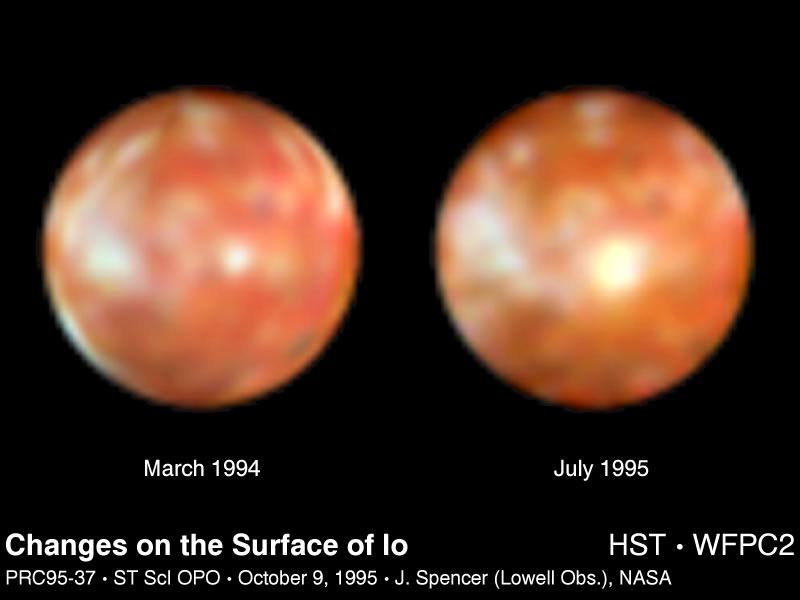
Well, you're wrong about that. Here's a hubble shot of IO. If you can see a poker game there you're the king of ink-blots. Here's another. Compare those to the keck observations I posted earlier and you'll see that hubble's strong point isn't observing planetary bodies; ESO's OWL should be much better for looking at that sort of dim object. And as it turns out, really disant galaxies are better observed in the X-ray spectrum, and NASA has a couple of other satellites for that purpose.
-
Check out Phil Greenspun's similar idea
-
Check out Phil Greenspun's similar idea
-
The other side of India
-
I was one of the law students in attendance...I tried submitting the notice and the address for the live webcast a few days in advance, but it got rejected by the editors. Better late than never, I guess. You can watch the speech at the Journal of Law and Technology's archive.
JOLT's presentation of the event was very odd. They made a few comments at the start that made it sound like they were only grudgingly admitting non-Harvard Law students, which is a shame, because the MIT people really came to play. Their questions were good, and the kept it all professional and on-message. (JOLT does and always has, as far as I know, made their events open off-campus; the editor's comments just made it sound like he wasn't all that happy to have a room packed with non-HLS kids.)
Darl was also impressive, to be honest. He was more than a little bit evasive in his answers, but he was very good about going back to the MIT students for questions, even though there were some obviously more sympathetic law students with their hands up. He also stayed around for a bit after the presentation to talk to a small knot of students, presumably including the author of the linked piece.
While he didn't convince me that SCO has a case, he did a fairly good job of convincing me that he *believes* they have a case, and that it's not a scam. He did, after the speech in the small discussion, address the "pump and dump" allegations; he denies selling any significant stock, and claimed any internal sell-offs have been minor and insignificant. I was just on the periphery of that conversation though, so take my report with a grain of salt.
A couple of people have commented on McBride's bodyguard. He did, in fact, have a bodyguard there; I was told it was because he's received death threats. The other guy (the one who actually looks like a bodyguard) was a Harvard police officer; university policy forbids guest speakers from bringing bodyguards on campus without a peace officer in attendance, apparently.
-
That was me
It turns out I was the one who said that, although I'm not a student.
-
It would be difficult...
It would be difficult. I think you're talking about interferometry. This was originally developed for radio telescopes, and is harder to do at shorter wavelengths. The Submillimeter Array, working at the shorter submm wavelengths, has just opened on Mauna Kea, although some work has already been done with linking the James Clerk Maxwell Telescope and the Caltech Submillimeter Observatory. At optical wavelengths it gets harder still. An example is the Cambridge Optical Aperture Synthesis Telescope (COAST). There's also the proposed `Ohana project.
A major problem is that you have to preserve the phase information of the light when you combine the signals from the telescopes, so you can't just record images with a CCD (which only gets you the intensity) and then try to handle the rest of it in software.
Essentially this means that you'd have to combine light from the telescopes in real time and keep the path lengths between them accurate to a small fraction of the wavelength you're measuring. You can do this "off-line" at radio frequencies, for example with the Very Long Baseline Array (VLBA) but not at optical frequencies.
So, in summary, the Internet lets amateur observers collaborate in various ways. However, combining their optical telescopes to get the resolving power of a larger telescope (the size of the distributed collection of individual telescopes) through optical interferometry is not one of them.
-
Re:FLAC support? On a portable?Yeah, thats a great chart.........lots of facts backing that up. You teach at Yale right? No no, Harvard?
Come on, seriously, audiophiles don't deal with this. They spend their money on quality speakers such as Martin Logan's and Super Audio CDs.
-
Re:How about /. in China?
-
Re:How about /. in China?
-
Bad stuff
If you want to get an idea on just how bad it is over there in terms of filtering, check out this article about a 2002 study by the Hardvard Law. There are about 19,000 sites listed there. Pretty much anything that has to do with the US and other western governments, "smut", anything even remotely related to Taiwan and so on.
-
A couple of non-standard responsesI'd like to see Rodger Doxsey's desktop. I'll have to see if he makes it into the office tomorrow.
These guys have a cool desktop, if you can call it that.
Riccardo Giacconi was using a fairly ordinary CDE on Solaris desktop on a beautiful 24 inch wide-screen monitor the last time I saw it, with some very cool galaxy images from the Chandra Deep Field.
Steven Squyres probably also has an interesting desktop, and I think I saw it on ABC News last week, before they switched to talking about the problems with the rover.
You can see Asia Carrera's desktop in the background, but it's not safe from work. Looks mundane.
I wonder if Pheobe has a cool desktop. Not Alyssa Milano, but her character.
Speaking of fiction, I wonder whether David Kay uses Windows or Mac?
While I like innovators, I'm more interested in users. They at least try to do useful things. That was the problem with Alan Kay. He always has interesting desktops. He showed squeak at a conference a few years ago that just stunned people, but none of us could figure out what we would actually do with it.
-
"Effectively"?
You do have to go to some length to figure it out though.
If it takes no longer to brute-force the CSS key than it takes to read and buffer the first twenty megabytes or so of encrypted data, then the CSS key doesn't protect anything very "effectively" now, does it?
-
Fight fire with fire...
Write your own letter to your Congress Folks... but read this first!