Slashdot Mirror
Domain: ias.edu
Stories and comments across the archive that link to ias.edu.
Comments · 26
-
The backstory of science is the important part
often ignored by the Nobel prizes.
https://www.ias.edu/ideas/usef... -
Re:When Did Code Become A Verb?
Planning and Coding of Problems for an Electronic Computing Instrument, written by Von Neumann and Goldstein in 1947. You'll have to dig them up to see if your neck-beard is longer than theirs.
-
Not the only change
They also made many other changes. See appendix F of draft 1. I'm in the middle of reviewing them
The announcement and RFC is here.
The comments from the previous round addressed far more than just the Dual_EC_DRBG.There are structural issues in the spec. My comments on the previous draft address them:
1) Flow control: ES pushing, vs conditioner pulling. Reseeding on demand vs when entropy is available.
2) A purely software centric API, when all nondeterministic random number generators need a hardware component.
3) Online testing that is too onerous for resource constrained solutions, when effective technical solution exists that have been ignored.
4) Conditioners (really an SP800-90B thing, but A, B and C go hand in hand) are all single source conditioners based on large crypto functions. The current state of math tells us multiple input conditioners can be implemented with non cryptographic methods in fewer gates with higher lower-bounds for min entropy out.There's more. See the comments.
-
Post-Scarcity Princeton: Abundance vs. Elitism
From my essay discussing excellence vs. elitism & privilege: http://www.pdfernhout.net/post...
----
So, the question becomes, how do we go about getting the whole world both accepted into Princeton and also with full tenured Professorships (researchy ones without teaching duties except as desired?
http://www.ias.edu/about/missi...But you might object, who will run the kitchens, repair the roofs, plant Prospect Garden, and so forth? Essentially, who will be the Morlocks to support and maybe eat the Eloi on staff?
http://en.wikipedia.org/wiki/T...Well, that's where this analogy breaks down, although one could perhaps imagine robots as the Morlocks (maybe without the whole eating PU staff for fuel thing).
http://www.wired.com/gadgets/m...
"A prototype robot capable of hunting down over 100 slugs an hour and using their rotting bodies to generate electricity is being developed by engineers at the University of West England's Intelligent Autonomous Systems Laboratory."So, for the rest of this essay, I'll assume the "scarcity" world (at least in the USA) currently works more like, say, G. William Domhoff suggests:
http://sociology.ucsc.edu/whor...
http://sociology.ucsc.edu/whor...
"Q: So, who does rule America?
A: The owners and managers of large income-producing properties; i.e., corporations, banks, and agri-businesses. But they have plenty of help from the managers and experts they hire.
* "The rich" coalesce into a social upper class that has developed institutions by which the children of its members are socialized into an upper-class worldview, and newly wealthy people are assimilated.
* Members of this upper class control corporations, which have been the primary mechanisms for generating and holding wealth in the United States for upwards of 150 years now.
* There exists a network of nonprofit organizations through which members of the upper class and hired corporate leaders not yet in the upper class shape policy debates in the United States.
* Members of the upper class, with the help of their high-level employees in profit and nonprofit institutions, are able to dominate the federal government in Washington.
* The rich, and corporate leaders, nonetheless claim to be relatively powerless.
* Working people have less power than in many other -
Re:Widespread religion
Because of the laws of thermodynamics.
The laws of thermodynamics don't hold for the universe as a whole. Not even energy conservation. Gravitating systems don't even reach a thermal equilibrium if they are too large and/or to cold (the current universe is certainly dominated by gravitation, and quite large and cold). Note also that black holes get hotter as they radiate energy away!
-
Re:I Guess I'll Have To
Gee. Isn't life tough. As I remember from eons ago, Windows is AT LEAST as wrenching. If you're REALLY serious about stability, reliability and freedom from bloat a la systemd, udev, plymouth, la de da, and are willing to invest time up front in return for that continuing stability, allow me to suggest trying out FreeBSD or its desktop friendly derivative, PC-BSD. This would require some real dedication to learn the idiosyncracies. Just to clear one thing up, FreeBSD isn't rocket science to install a DE on. I was doing it a decade ago without much trouble. It doesn't hold your hand and automate everything like PC-BSD does, though.
If you mostly just want a linux desktop that doesn't put you through effing with big changes every year to stay supported, you could do what I did. Install Redhat Enterprise 6 or any of its free derivatives (notably CentOS, Scientific Linux, PUIAS Linux). That way you're good to stay on the same major release, fully supported, hardware-and-feature-back-ported, bug-fixed, and security-updated with good old GNOME 2.32 to at least 2017. I'm a little worried about what RHEL 7's default desktop will look like when it rolls out maybe some time during 2014, but I'm very confident you'll just be able to choose Xfce (as you can now in 6), and anyway there's really no need to make the jump from 6 to 7 until 2017.
-
Re:It's not just a problem with sectarianism
-
Re:It makes sense when compared to string
I remember reading an interesting article in New Scientist a few years back which suggested that particles could be seen as 'knots' in their underlying fields, which makes a lot of intuitive sense.
Ah, I think this was it http://www.sns.ias.edu/~witten/papers/KnotsandPhysics.pdf
-
Re:Affected CPUs
I have an Intel CPU and run RHEL6[*], but I suspect it's handled similarly. You can see it loading firmware at boot time. If I run dmesg I see a boot-time record containing, among a bunch of other lines:
platform microcode: firmware: requesting intel-ucode/06-2a-07
microcode: CPU0 sig=0x206a7, pf=0x2, revision=0x18
once for each core.I'm not sure where it gets the data file, but if you go to this download page at Intel, choose "Processors" in column 1, "Desktop" in column 2, and "Intel Core i3 Desktop Processor" in column 3, it takes you to a new page where you can enter "Linux" in column 1; column 2 will automatically be set to "Firmware" Download Type, and the first line of the results will be "Linux Processor Microcode Data File, 12/12/2011". If you go there, you can press "Download" and end up with tarball named "microcode-20111110.tgz", which extracts to a single big text file "microcode.dat". Actually, regardless of what you entered along the way, it appears the file covers every Intel x86 processor (server, desktop, and mobile).
The file contains a big bunch of hex numbers and some unilluminating comments and tags.
I assume the distro packager gets updates periodically from the same underlying source.
~~~~~
[*] Actually a free repackaging, PUIAS. -
Re:10.10 updates will expire
I don't have any problem with you switching distros for any reason, but wouldn't it be a little more constructive to at least have a LOGICAL and VALID reason? In 12.04, as for any version since a long time ago, you can just install the xubuntu variant, or (not QUITE as clean) just apt-get install the xfce desktop environment. It just isn't so that with the release of 12.04 you will be "forced" to either use gnome3 or switch distros.
PS - I'm not a ubuntu guy myself (I don't particularly like any of the debian camp), and I realize you can readily construct a logical and valid reason to abandon it - but you didn't mention such a reason.
PPS - what I am using is an RHEL6 free repackaging - PUIAS in my case, but CentOS or Scientific Linux is just as good - and I am good with Gnome2 until 2017. Or I could just as well be running Xfce or KDE on it. I really cannot recommend this set of distros enough.
-
PUIAS Linux Peeps...
If you are down that SL Linux has hit this roadblock, check out PUIAS... http://puias.math.ias.edu/ I found it not too long ago, has Princeton University backing, and is extremely mature... I switched the moment I found it. SL and CentOS are not the only RH clones in the world.
-
Re:Another bad Fedora release.
Duh; there is no box. But Fedora is up front about telling you that it is essentially the testing sandbox for Red Hat Enterprise linux. If you don't like bleeding edge, and you don't want to pay for RHEL, just use one of the clones; PUIAS, Scientific Linux, or CentOS. They are absolutely free and absolutely stable, with a long supported life, and are supported with security updates and bug fixes.
-
Re:What a waste of time ....
Hmm. I had never heard of PUIAS. I had to go look it up.
It's not listed in distrowatch (that's weird; the only other distro I know that is not listed there is the Ubuntu Satanic Edition; distrowatch didn't want to list them for fear of pissing off the Christians).A google search found their webpage pretty quick
http://puias.math.ias.edu/
Princeton University Institute for Advanced Study Linux.
Custom Red Hat distribution pre-dating CentOS.The computational repositories look promising.
Thanks for mentioning them. -
Speaking of RHEL clone...
just found out a new RHEL clone (thanks to distrowatch.com News 03.21.2011) - PUIAS http://puias.math.ias.edu/ is an RHEL clone "... started long before CentOS or other projects were available."
The question is: if CentOS fizzles for whatever reasons, how many will switch to one of the less than 5, one-man-show RHEL clone, how many will dig in and pay for RHEL, and how many will switch to non-RHEL?
-
What a coincidence...
Only last night I was reading Edward Witten's article on this very subject, after visiting his little web page at SNS:
The Mass Question -
LCD sub-pixel layouts, RGBW
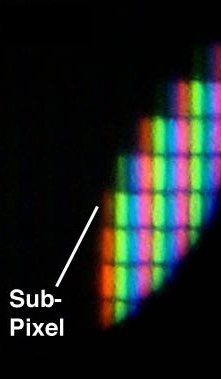
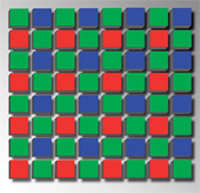
I was recently looking into LCD sub-pixel layouts, and found that there are more than just RGB columns. For one, there's the same arrangement, but with every other row shifted horizontally by 1.5 sub-pixels. This improves things because the spacing between like-colored sub-pixels is similar, no matter what direction; with columns, vertically they are right next to each other, while horizontally they're 3 sub-pixels apart. Others put twice as many greens. There's even RGBW, that adds white into the mix, to increase brightness and efficiency.
But the problem with all the alternate geometries is that you don't have pixels in a normal grid, so it seems that most computers will always be stuck with the sub-optimal grid arrangement. But for custom devices where there isn't lots of legacy software, they can use new arrangements. Things like cell phones and portable games fall into this category. It's very similar to the processor architecture issue, where personal computers are mostly stuck with x86, while others can use things like ARM, MIPS, PowerPC, etc.
Maybe this isn't exactly the "inventor's dilemma", but it reminded me of it.
-
Yeah, well, they also got mad at Galileo.
the Zealots are always willing to burn a heretic.
Dyson is one of the greats and as Einstein said:
"Greatspirits have always encountered violent opposition from mediocre minds."
And God knows there are a sh*tload of mediocre minds involved with gerbil wormening
Not to mention with Lefties, politicians, movie stars..
If movie stars are in favour of it, it pretty much guarantees it's a bad idea.Freeman Dyson has, apparently, angered all the right people.
FOR MORE THAN HALF A CENTURY the eminent physicist Freeman Dyson has quietly resided in Princeton, N.J., on the wooded former farmland that is home to his employer, the Institute for Advanced Study, this country's most rarefied community of scholars. Lately, however, since coming "out of the closet as far as global warming is concerned," as Dyson sometimes puts it, there has been noise all around him. Chat rooms, Web threads, editors' letter boxes and Dyson's own e-mail queue resonate with a thermal current of invective in which Dyson has discovered himself variously described as "a pompous twit," "a blowhard," "a cesspool of misinformation," "an old coot riding into the sunset" and, perhaps inevitably, "a mad scientist." Dyson had proposed that whatever inflammations the climate was experiencing might be a good thing because carbon dioxide helps plants of all kinds grow. Then he added the caveat that if CO2 levels soared too high, they could be soothed by the mass cultivation of specially bred "carbon-eating trees,"His most useful contribution to science was the unification of the three versions of quantum electrodynamics invented by Feynman, Schwinger and Tomonaga.
Wikipedia on Freeman Dyson
Although Dyson has won numerous scientific awards, he has never won a Nobel Prize, which has led Nobel physics laureate Steven Weinberg to state that the Nobel committee has "fleeced" Dyson. Dyson has said that "I think it's almost true without exception if you want to win a Nobel Prize, you should have a long attention span, get ahold of some deep and important problem and stay with it for 10 years. That wasn't my style."Dyson worked as an analyst for RAF Bomber Command at RAF Wyton during World War II, where he would come to create what would be later known as operational research.
Dyson Sphere, Project Orion - on and on.,.
his home page:
http://www.sns.ias.edu/~dyson/ -
Re:Some essentialsIf you are really interested in understanding quantum field theory and string theory, and willing to invest some serious time into it, you could have a look at the two volumes published by the AMS after the IAS special program in 1996--97. You'll find a link to them here: http://www.math.ias.edu/qft
The goal [of the program] is to create and convey an understanding, in terms congenial to mathematicians, of some fundamental notions of physics
They definitely fit your criteria of being aimed at mathematicians, but they might be a bit to thorough for your taste (totaling 1500 pages)..
Sorry for replying to my own post. -
Re:Doosh...One note -- I'm operating on very little sleep right now; please accept my apologies if this is less than coherent.
Whatever some guy can invent late nights working out of his own bungalow can easily be replicated by any larger corporation once it's hit the market, if not for software patents.
Hmm -- that's a somewhat different scenario. See, I've spent the last five years at a startup (also in Austin) making highly specialized software that does some really darned nifty things within our vertical -- and among our company's assets are some patents. They certainly make it easier for us to get investment money -- so why do I think they're a bad idea?
Because that promise is a double-edged sword. Our software is hugely complex, developed over the better part of a decade by (cumulatively) a quite large development team -- and it has so many bits and pieces developed over the years that we can't hope to patent them all.
The thing is, someone else needs to patent only one component of our software (and it's huge, remember!) to enjoin us from being able to distribute it -- period, stop in. And because independent invention is no defense to patent infringement, it's entirely possible that one of the techniques I came up with myself is in fact something I have no legal right to use. That idea -- that the product of my brain may be something that I have no right to -- is in a nutshell why I think software patents are a danger.
You provide an (excellent) example of a case where the "little guy" comes up with an extremely inventive technique and wants to assert ownership over it -- and it is indeed a very good example. The thing is, though, that while the little guy might have one patent, the big guys have thousands -- and lawyers to enforce them. Thus, the only way the little guy can get ahead safely is by turning into a troll -- producing nothing themselves (so as not to risk lawsuits from the companies with tens of thousands of patents) but extracting monopoly rents (magnified by the practice of completely enjoining production or distribution of a complete product even if only a tiny, unimportant fragment of that product infringes) from their one big idea.
I think a system in which the small inventor can only safely profit off their invention by not actively practicing that invention is broken -- very, very broken. The person who invented a process is the person most fit to have the best ideas of how to improve that process in the future -- but if you're not actually practicing your invention (or doing R&D for someone who is, with goals driven by issues and ideas encountered when that invention is put into practice), there's not the necessity of practical improvements which is so often the mother of invention. More importantly, though, I don't want to work in fear that someone else will own the output of my brain, just because they had the same idea first (and more money to spend on patent lawyers) -- whether or not they developed that idea enough to make it actually usable in real life.
And why am I not worried about a megacorp reproducing our product? Because it's hard! To be sure, there are parts that an army of code monkeys could put out in a month or two -- but (without going into more detail than I necessarily can in public) there are also parts which require arcane knowledge to develop, or (non-software) domain knowledge in an area where the practitioner of the field in question could make more in a month than most developers earn in a year. It'd be cheaper to buy us out -- that way one gets not only the code but also the minds that made it, which are every bit as important if one is to have a living, breathing product. Granted, not all products (or all big ideas) are that way -- but I can't believe that development wouldn't get done if it weren't for the extra economic incentive software patents provide. (Indeed, there's quite a bit of economic analysis indicating that the net effect of software patents may be inhibitive with respect to progress in the sciences and arts). -
More junk science
but a "gravitomagnetic one", which is a field that moving objects with "gravitational charge" (i.e., anything that produces gravitational force) make. it acts to repel or attract other gravitational charges.
Gravitational charge is called "mass". The force carrier (analog to the photon in EM) is the Higgs boson. No one yet has linked EM, or the nuclear forces to gravitation. Smart theorists like Ed Witten are trying like heck through M Theory. It is very unlikely that the solution to the problem would come from ESA. More likely from CERN or one of the large universities. This article is complete junk. You posting is completely incoherent.
-
Litigation in 5... 4... 3...
beware of This Guy (TM).
-
Re:I know this isn't a book review, but...
I have the book as well, excellent read. I first saw the NOVA special on PBS and watched it over and over and over again. Fascinating stuff.
But yes, Einstein's later years were spend on trying to develop a GUT/TOE (Grand Unified Theory/Theory of Everything), basically a way to combine the smooth gentle macroscopic world of space-time in relativity and the extremely chaotic unpredictible microscopic view of quantum physics. String theory is the closest thing we have to accomplishing that goal, and with geniuses like Ed Witten working on it, I think we stand a good chance of actually discovering/creating such a theory given enough time.
I digress, but I have to state... the PBS specials are very useful and well put together. Brian Greene does an excellent job hosting the show. I espcially like the part where they first mention Ed, one string theorist says something like "we all think we're pretty smart, and he [Ed Witten] is so much smarter." It's amazing how much raw intelligence you need to really comprehend the underlying mathematical principles behind string theory. -
Re:dust devils?
The mystery is how long it will take Dyson to sue them.
(No, not Freeman Dyson, James Dyson ) -
Re:Two Sun Theory?
Aargh. Screwed up the hyperlink. The Nemesis article is here.
-
Re:Time to celebrate, everyone!Done:
NAME
Full manpage.
dig - send domain name query packets to name servers
SYNOPSIS
dig [@server] domain [<query-type>] [<query-class>] [<query-option>]
[-<dig-option>] [%comment]
DESCRIPTION
Dig (domain information groper) is a flexible command line tool which can
be used to gather information from the Domain Name System servers. Dig
has two modes: simple interactive mode for a single query, and batch mode
which executes a query for each in a list of several query lines. All
query options are accessible from the command line.
-
"Star Bridge" sounds familiar...I rememeber an article in Discover magazine (online here) that talked about a "Star Machine." It was called "GRAPE," it was for the study of globular clusters, and one of it's iterations was the first teraflop system ever built.
It was used for calculating the gravitational interaction of thousands of bodies -- a very parallel and complex problem. The solution was many custom processors in parallel, and it was so successful (and cheap!) that it outperformed multi-million dollar supercomputers at a fraction of the cost.
The downside was that it was a single-use system -- it could only to the calculation it was hard-wired to do.
Since the site is slammed, I can't see what they're actually doing... but the name is sure close. The FPGA idea is neat, because it would relieve the single-use limitation.
I'm still not holding my breath waiting for one of these to appear under my desk, though...