Slashdot Mirror
Domain: kurzweilai.net
Stories and comments across the archive that link to kurzweilai.net.
Comments · 306
-
On our way to human synthetic brains?
http://www.kurzweilai.net/robo...
http://www.pnas.org/content/11...First insects, now rodents? Maybe dogs, then dolphins, then humans?
-
Re:Weak argument
Moore's law is not a blip. Expand it, thinking not in terms of transistors but in terms of computation power of mankind's tools. The exponential goes back much further. Now, expand it again, thinking in terms of technology capabilities in general (not just computation). You get the law of accelerating returns: http://www.kurzweilai.net/the-...
-
Re:Moore's LawIt's evident that you haven't read this, which answered this question over 14 years ago, before it was even relevant. Here's the relevant exerpt:
After sixty years of devoted service, Moore’s Law will die a dignified death no later than the year 2019. By that time, transistor features will be just a few atoms in width, and the strategy of ever finer photolithography will have run its course. So, will that be the end of the exponential growth of computing?
Don’t bet on it.-- Ray Kurzweil, March 2001
The section after that, titled "Moore’s Law Was Not the First, but the Fifth Paradigm To Provide Exponential Growth of Computing", is where you'll find your answer. -
Rigorous Criterion for AI Prize
Have you considered the utility of a compression-based AI prize for not only advancing machine learning, but also redressing information sabotage? Since Google DeepMind cofounder, Shane Legg, demonstrated the utility of a mathematically rigorous measure of problem-solving intelligence, which is based on Hutter's provably "optimal agent", Universal Algorithmic Intelligence, it seems time for an update of The Hutter Prize for Lossless Compression of Human Knowledge in two way tos: 1) a much larger knowledge base and 2) correspondingly much larger prize endowment. As such a prize pays only in proportion to rigorously measurable progress, and that progress is made public in the form of the refinement of knowledge, it would be a low risk public good appropriate for public sector as well as NGO endowment.
-
Rigorous Criterion for AI Prize
Have you considered the utility of a compression-based AI prize for not only advancing machine learning, but also redressing information sabotage? Since Google DeepMind cofounder, Shane Legg, demonstrated the utility of a mathematically rigorous measure of problem-solving intelligence, which is based on Hutter's provably "optimal agent", Universal Algorithmic Intelligence, it seems time for an update of The Hutter Prize for Lossless Compression of Human Knowledge in two way tos: 1) a much larger knowledge base and 2) correspondingly much larger prize endowment. As such a prize pays only in proportion to rigorously measurable progress, and that progress is made public in the form of the refinement of knowledge, it would be a low risk public good appropriate for public sector as well as NGO endowment.
-
Sub-critical (safe) reactors are now possible.
Recent developments in compact particle accelerator technologies means that safe, thorium burning, sub-critical fission reactors are possible. http://www.kurzweilai.net/phys...
While not as ideal as fusion reactors they have the benefit of not being able to "melt-down" and can be used for waste transmutation. -
Recent development in Laser optomechanics is a fixPlus a bit of coding (literally) on the pulses, and given the new units will be so small more than one operating out of phase should allow for majority decisions that override a minority of jammed channels.
Not sure how affected Google is going to be given Ray already knows about this,
-
Clarity or Information sabotage?
-
Re:My Brain
And it is starting to happen... http://www.kurzweilai.net/brai...
-
Law of Accelerating Returns
Just wanted to toss this in. Kurzweil may be an annoying know-it-all but sometimes he makes a point.
-
Re:Buggy whip makers said automobiles aren't...
Computers can do that too: http://www.kurzweilai.net/deep...
http://www.kurzweilai.net/a-pi...
Also, the speed limit is lower in residential neighborhoods. Self driving cars are going to be doing 25-30, not 95. At those speeds, its easy for object detection to stop the car before impact, even without predictive AI. -
Re:Buggy whip makers said automobiles aren't...
Computers can do that too: http://www.kurzweilai.net/deep...
http://www.kurzweilai.net/a-pi...
Also, the speed limit is lower in residential neighborhoods. Self driving cars are going to be doing 25-30, not 95. At those speeds, its easy for object detection to stop the car before impact, even without predictive AI. -
Re:Buggy whip makers said automobiles aren't...
Actually, that's wrong. AI is already at primate level when it comes to object recognition: http://www.kurzweilai.net/deep...
Also, as far as responsibility, would you feel any worse if your taxi driver or bus ran over someone? You would blame the driver, not yourself. Similarly, you would blame the manufacturer of your self driving car.
Anything that a human brain isn't specialized for, an AI can do better. This means that you need humans communicating (with people), making predictions as to what people will do, and a few other cognitive tasks that are "hard" (processing visual imagery was hard until very recently--soon only self referencing/mind modelling tasks like those mentioned will be hard).
The world is changing. I drive for Uber, and I wasn't phased by their plans to introduce self driving cars one bit. Best case scenario, that happens in about three years, by which time the world will have changed so much, its hard to imagine that I would still want to drive for them. -
Race Against the Machine
A quick read by Erik Brynjolfsson and Andrew McAfee of MIT lays out the situation. Technology has always eliminated some jobs while creating others. Generally, manual labor and low skill jobs where replaced, while higher skill jobs where created. The hypothesis is that somehow this time is different. Technology is now eliminating high and semi-skilled labor while not creating new jobs elsewhere.
They introduce the concept that we are entering "the second half of the chess board" The concept is based on wheat and chessboard problem" which demonstrates how poor humans are at conceptualizing exponential growth. See also Ray Kurzweil's Law of Accelerating Returns
-
Re:Why tech zillionaires fund life exension resear
"Man will never fly!"
We've already created machines that have limited cognition. Just recently a lab group trained a neural net to identify not only objects within a still image, but what was actually going on (ie a picture of a girl playing with a dog was identified as such). This is already PRIMATE LEVEL COGNITION, but in a very limited domain. It just has to be expanded on until we can make one that talks.
http://www.kurzweilai.net/deep... -
Re:Not just that.
Space is so big that BILLIONS of years will pass before we even see the light shining from a sun in a different galaxy.
No. The time it takes for light to reach us from another star is exactly equal to the distance from here to the star measured in light years. (Remember, a light year is the distance light travels in one year.) As an example, the Andromeda Galaxy is 2.5 million light years away, so we're seeing it by light that started its journey here 2.5 million years ago, not billions of years as you so ignorantly state. Please learn something about what you're talking about before you make a fool of yourself. Again.It's commonly accepted that the most distant galaxies we can currently see are up to about 14 billion light years away... it's complicated since everything is still moving
http://www.kurzweilai.net/most... -
Re:So remember:
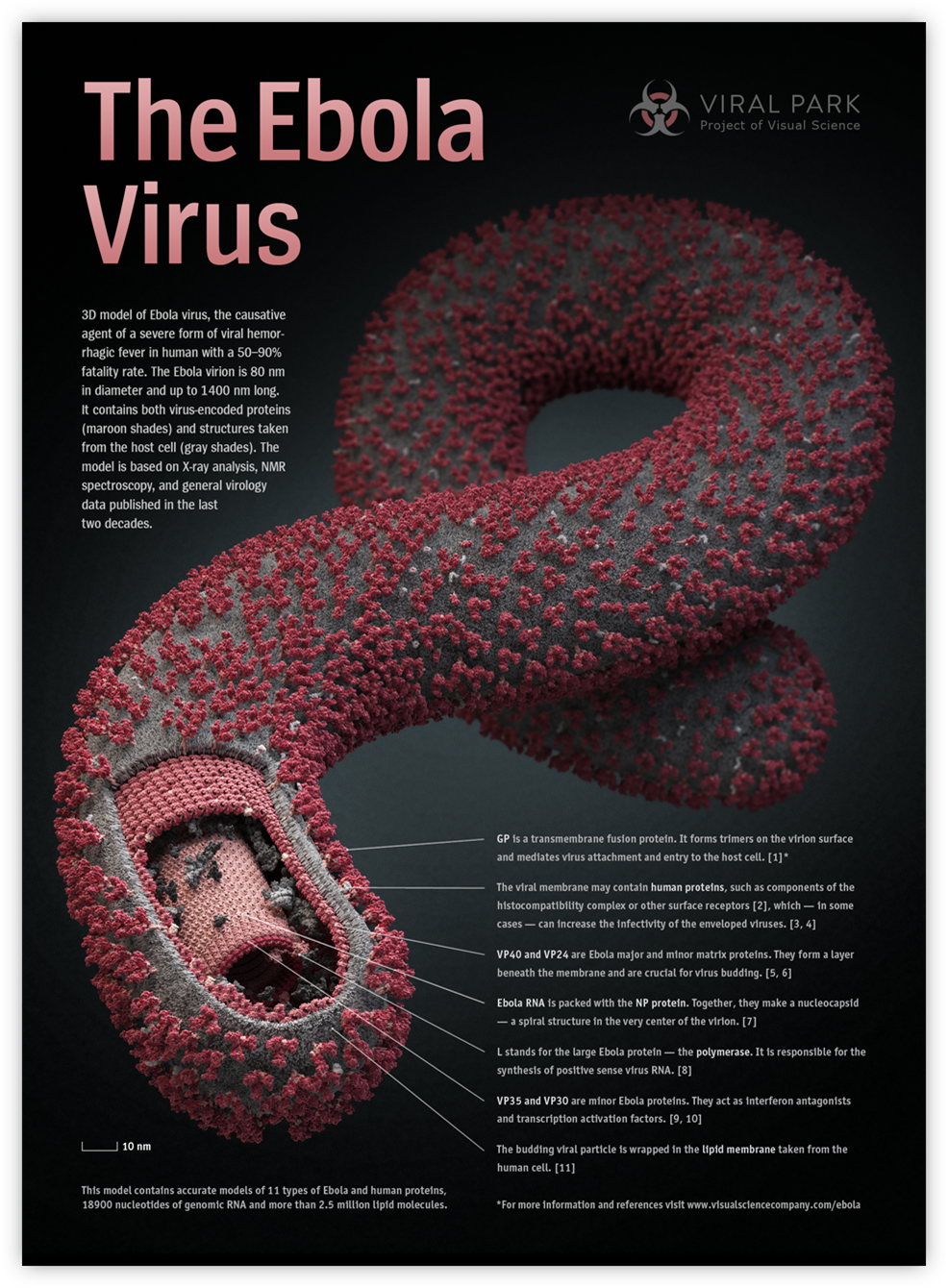
Ebola is a weaker structure than HIV. It also is a failure of a host that causes host-death rather quickly, and can easily wipe itself out. Short-term quarantine is effective against Ebola.
Compare that to HIV, which has far more layers (read: armor). Also, HIV directly attacks the immune system rather than trying to trick it into leaving the virus alone.
-
Re:will it make an ethical choice?
what decision will the car make?
will i be happy to allow it to make that decision?
- will i still be happy for it to make that decision if my 2 kids are in the backseat?All very good questions that no decision-makers are allowing themselves to be seen asking.
To the government none of this will matter, its already a done deal that In a few years this technology will become 24/7 mandatory. Google are already trying hard to get driving controls out of cars totally.
http://www.kurzweilai.net/goog...Regardless of the fact that nearly all of society does it every day, we will be told by the government that driving is an activity that humans are completely incapable of doing safely (somehow these human shortcomings won't be an issue if you work for the government or have a cop badge), and all the treehuggers will totally agree with all the brainwashing because think of the children.
It wont be long before anybody demonstrating independent thought by trying to take control of the vehicle in any way will be considered as unnecessarily endangering lives and therefore a criminal. Mark my words. The loss of your family due to a bad decision by the car in an accident will be considered as "just unlucky" by most people and you won't be able to do a damn thing about it. Welcome to the Google age.
-
Response from original poster
First, thank you, everyone, for the feedback. There are some wonderful stories that I recognize and others that I look forward to reading.
Second, because the solicited essays and fiction will only be a small part of the course, I will have to rely on short stories (including novellas) instead of entire novels. That is part of what makes it hard to research. It's much easier to find out about novels, which have more readers and are better publicized than short stories, especially recent ones that have not yet been widely reprinted.
Third, to those of you who think I am being too lazy to do my research myself, gathering information is part of the research process, and I'd be remiss in not making use of the hive mind if it has useful information that I might not. I would much rather be called a negligent teacher than to be one. Academics study one another's reading lists and syllabi all the time. Believe me, plenty of work remains in deciding what material to include, how present it, etc.
Fourth, thank you for letting me know the history of the word "futurism". The sense I used it ("concern with events and trends of the future or which anticipate the future") is the first one in some dictionaries and is widely used at kurzweilai.net, The Foresight Institute, and other sites I have used, but I will certainly let my students know that some people prefer the word "futurology". For those who are interested, here's a Google n-gram view of "futurism", "futurist", and "futurology".
Fifth, some commenters suggested using primary sources and biography. Agreed. I was already planning to include Turing's Computing Machinery and Intelligence, Vannevar Bush's As We May Think, and the stories of Khan Academy, Iqbal Quadir, Sugata Mitra, and others.
Sixth, it was also suggested that I look at past predictions of the future. Also agreed. I assembled such a reading list for a previous course. It hadn't occurred to me to include in my question what I didn't need, because I'd already assembled it, but I see now that it would be helpful.
Thank you again for the suggestions and even for the criticisms. Soliciting opinions from Slashdot is always a story in itself.
-
pCell to the rescue? How timely ...
The jury may still be out on this due to it's claims of 'unlimited', etc. But have a look:
http://www.kurzweilai.net/new-...
As a colleague once opined, "There is no more spectrum. It's physics. That's it, that's all."
-
Ray's problem is that he doesn't understand FOSS
In general, the problems he wants to solve, like intelligent machines, require lots of data, lots of people working together, etc. It is exactly the Linux model, but applied to topics he cares about. While Linux has succeeded in various places, there is still a ton of proprietary code. Here is a discussion he and I had about it on his website where I tried to bring this up with him: http://www.kurzweilai.net/ask-...
-
Re:Rule of acquisition 18
"Some day socialism will finally work when products magically appear infinitely cheaply."
When robots walk around with hands that are 3D printers, and they can print hybrid
graphene carbon nano tube solar cells and stick them to all the structures on the planet perhaps.And the robots can print more robots...
Maybe we will have to wait for robot to mine the moon for HE3 to power a Fusion reactor ?
http://www.kurzweilai.net/poss...
https://en.wikipedia.org/wiki/...
http://fti.neep.wisc.edu/galle...
I don't like some aspects of socialism, but if we can have a star trek world,
and power becomes so cheap its not worth metering then we are closer
then most ppl think.This is part of Kurzweil's singularity.
https://en.wikipedia.org/wiki/...
It will need the power, and it is coming closer.
Think a billion solar roofs...or more...
-
Re:Oh noez, it's teh Google
-
Re:Emergence of cloud medicine
As is the case with most technological advancement, it will benefit the vast majority of cases while being detrimental to a vast minority of cases. If anything, false positives will be a bigger issue than false negatives, as is the case with most sensor systems (such as in security). More important is that implantable sensors don't do anything other than replacing non-implantable sensors. You can have a series of sensors monitor your body temperature, which might have very important implications in early-warning diagnosis of many diseases in a way that even the patient will likely not realize. The same is the case with this sensor, which allows for the same kind of detection of certain kinds of cancer.
What people tend to be afraid of is going to a doctor when they "know" something is wrong, only to be turned down because their temperature is fine and pain surveys come back inconclusive (As happens to a staggering number of hypochondriacs daily). The issue is, the 'standard' setting for sensors is never 'normal', because 'normal' is never zero. If a sensor breaks or turns off, or even if it reads a constant value looped indefinitely (contrasting against the otherwise-dynamic readings a working sensor would return), that will obviously be a problem with the sensor, and a doctor won't be fooled. -
How likely this will be cost-effective?
http://en.wikipedia.org/wiki/Sodium-ion_battery
I'm wondering how useful this technology would be for large-scale energy storage. Say you have a wind farm, and you want to grab all the power when the wind is blowing, and store it for later.
400 charge/discharge cycles seems like each battery might last a year. Then the battery is swapped out for a new one. How expensive is that part?
How much will it cost to take a wood battery and recover the sodium and tin? Would it be cheaper to dispose of the sodium and just build a new battery? How do you dispose of sodium anyway... mix it with chlorine to make salt, or just dump it in the ocean, or bury it, or what?
Hmm. I did a Google search on "refine sodium" and it looks as if, much like aluminum, you use an electric process to purify sodium. If so, then refining sodium can be viewed as another way to use excess power. Perhaps it would make sense to have a facility to recycle old sodium ion batteries co-located with a major wind farm or other large-scale variable power source?
http://answers.yahoo.com/question/index?qid=20080514052937AAu27e4
And how does this compare with other well-understood technologies for energy storage? For example: using excess power to split water into hydrogen and oxygen.
P.S. Another article:
http://www.kurzweilai.net/a-battery-made-of-wood-long-lasting-efficient-environmentally-friendly
-
Re:More complex molecules?
http://www.kurzweilai.net/dna-and-amino-acid-precursor-molecules-discovered-in-interstellar-space
To be exact, 'precusor' molecules were found so far. They have like half of complexity of what we are talking about, which makes it quite probable that amino acids are out there.
But there is a far way from single particle of adenine to DNA chain. (a lot, lot further than from single atoms flying in space to group of 7or so atoms in adenine). And then there is a mystery of DNA/RNA replicating with help of cellular structures which themselves are encoded in DNA...
It is a bit like throwing a CD with cd-ripper program on top of pile of pure silicon wafers, hoping that somehow they will turn into PC with CD drive, read the program and start copying the CD around.
-
Re:At the rate that we're drinking water...
It is renewable just not at the rate that it is being used. In any case, I think it is likely we will find ways to cheaply desalinate ocean water before the threat of massive death by dehydration is imminent. After all, necessity is the mother of invention. Also, grey water systems would probably become more culturally acceptable as water prices increased. Here is one interesting reverse osmosis technology that is being researched using graphene.
-
Never gona happen
I have heard this pitch before (that china is going to overtake the US). First, it was the military. It was predicted that by the end of this century, China will have a larger and more agile advanced military than the US. As we both know, this never happened. Second, around 2002, it was predicted that it will take less that 10 years for china to topple the US economy, this again has not happened. The latest prediction I remember was in 2008 where they said that in 5 years china will be publishing more in science related subjects than the US, again, looking at the current research in major journals, this flies in your face as not true. I wish I could get the links for the above predictions.... I believe that for a nation to be a super power and leader, there are some basic things that have to be set at the foundational level, that I just do not see the chinese embracing soon. At the very basic level is democracy, which encourages innovative thinking. Authoritarian governance stifles innovation and hampers growth. The second interesting thing is explored in this link: http://www.kurzweilai.net/michio-kaku-explaining-americas-h1b-visa-declining-skilled-worker-population-domestically. More than just the VISA, I think the US has a conducive environment that encourages R&D. In a nutshell, all I say to the naysayers is: Never gona happen.
-
Re:How does Microsoft feel about this?
-
Re:Not watching the trends?No, I think we have only exhausted the demands of what you might call simplistic computing - fragile algorithms that efficiently follow usually a fixed number of steps to transform their input into some determined output, like drawing a rectangle. Given any imperfect input, they simply explode. Nothing in nature works this way. Living things are more messy, rooted in pattern matching and open-ended searching. We still can't even really simulate glass of water tipping over and spilling off the table. Computers that interact more naturalistically, such as IBM's Watson (the Jeapordy machine) and the highest-scoring image recognition algorithms consume massive (by today's standards) computing resources (at least to train if not also to execute).
It would be a shame if naturalistic computing were stunted by lack of demand for more capable processors.
-
Re:its kinda hard to read TFA when
http://www.kurzweilai.net/hacked-terminals-capable-of-causing-pacemaker-deaths works better, very death note
-
fuzzy? Re:Reasons to be hesitant around Kurzweil
Nothing he ever says is really any more solid than Nostradamus. Its all comfortably 30 years hence and arguably the signs are on the wall.
I haven't read much Nostradamus; I never found it that interesting.
I read some Kurzweil; his predictions didn't all seem "fuzzy".Your assertion "Its all comfortably 30 years hence" is not totally accurate; many were for a shorter time frame. Kurzweil's book, "The Age Of Spiritual Machines" (Jan, 1999) has predictions for 2009 (+10 years), 2019 (+20), 2029 (+30), 2049 (+50), 2072 (+73) and 2099 (+100). Saying "only 30 years and beyond" is unfair. btw: the wikipedia article has a nice summary of the predictions; they're thought provoking if nothing else.
Anyway, I don't care so much about "the singularity" and "Nerd Jesus" aspect of it. I'm more interested in the "information processing trends" aspect of it. (I'm generally interested in trends; who else is putting on their "futurist glasses" and doing interesting work in this area? I'd welcome suggested reading.) Kurzweil's Accelerating Returns idea is interesting, even if we don't upload our collective consciousness into the cloud next week.
Kurzweil wrote a ten-year followup talking the specific predictions 1999 vs. 2009 predictions from "The Age Of Spiritual Machines" (written in the mid to late 90's, published in 1999).
(As an aside, I have to ask: did Nostradamus ever published a "how am i doing" followup?)So.... a longer but more detailed read, check out the 2010 "How My Predictions Are Faring" pdf) to see how "fuzzy" and how accurate his predictions are.
Kurzwil quote #1 (excerpt from above link):[How My Predictions Are Faring P a g e | 8]
The status of these predictions changes very quickly. In November 2009, the idea of large-vocabulary, continuous, speaker-independent speech recognition using a cell phone appeared to some observers as still far off in the future.
Just one month later, this became the most popular free app for the iPhone (Dragon Dictation from Nuance, which used to be Kurzweil Computer Products, my first major company) as well as the popular Google Mobile App on iPhone, Blackberry, and Nokia S60 mobile phones, and on Google Nexus One and other Android phones.
[How My Predictions Are Faring P a g e | 9]Just a few days after its official launch, the Dragon app made it to the top rankings in Gizmodo’s Essential iPhone Apps “Best of 2009” and the Chorus Community top iPhone apps in December 2009, as reported by CNET News.
Another prediction that has been cited as wrong is “Warfare is dominated by unmanned intelligent airborne devices.” This prediction is certainly true in Afghanistan and recently in America’s undeclared war in Pakistan. As Wired recently noted, “The unmanned air war has escalated under McChrystal’s watch.” UAVs (unmanned aerial vehicles) were also commonly used in the second Iraq war, and countries like Israel are using them regularly for their own military operations, among many other nations.
One critic cites my prediction that “by 2009, a top supercomputer would be capable of performing 20 petaflops (quadrillion operations per second)” and dismisses my contention that this is “off by a few years,” saying it is “not just a little bit wrong, but wildly, laughably wrong.”
IBM’s 20 petaflop Sequoia supercomputer, to be delivered to Lawrence Livermore National Laboratory in 2011, runs nearly 8 times faster than the world’s current fastest supercomputer, the Chinese Tianhe-1A system. Yet, IBM’s 20 petaflop Sequoia supercomputer is already under construction and IBM has announced that it will begin operation in 2012. The Sequoia supercomputer is the latest of the Blue Gene series by IBM, dedicated
-
Exponential growth & laws of accelerating retu
Notice that the duration of each period that you have cited above grows increasingly short. These durations do not appear to be consistent with any obvious mathematical description, but Kurzweil's law of accelerating returns implies that we might very well see benefits from research on Higgs' phenomena within our (natural, non-extended) lifetimes.
-
Re:Something Fishy
The device is very similar to an ionizer or ozone producing device. here is the circuit diagram:- http://www.kurzweilai.net/handheld-plasma-flashlight-rids-skin-of-pathogens it is very easy to produce by a hobbyist or buy it and adapting it by purchasing a USB ioniser for £2 from ebay. i
-
Not so fast...
Looks like cancer has gotten wise to the plan: http://www.kurzweilai.net/cancer-cells-send-out-the-alarm-on-tumor-killing-virus
-
And mushrooms cause lasting happiness
A federally-funded study found that a single large dose of psilocybin can result in that quality called "openness," which most psychologists agree is a foundation of general happiness. Naturally, magic mushrooms - which literally grow on shit, everywhere - are illegal as hell.
-
Re:What does "net new jobs" mean?
http://www.kurzweilai.net/the-law-of-accelerating-returns
"I emphasize this point because it is the most important failure that would-be prognosticators make in considering future trends. Most technology forecasts ignore altogether this âoehistorical exponential viewâ of technological progress. That is why people tend to overestimate what can be achieved in the short term (because we tend to leave out necessary details), but underestimate what can be achieved in the long term (because the exponential growth is ignored)."Just look at any recent robotics videos and think again. Self-driving Google cars. The US military flying drones. Flexible manipulators. Wasp-like construction robots. The videos go on and on. Just one:
http://www.hizook.com/blog/2009/08/03/high-speed-robot-hand-demonstrates-dexterity-and-skillful-manipulationThe exponential progress is starting to show. The flashover to some other economic regime may be sooner than you think now. Even China is automating to assure quality and reduce labor costs and management costs.
http://www.appleinsider.com/articles/11/07/31/foxconn_to_substitute_workers_with_1_million_robots_in_3_years.html -
Someone needs a whack with a cricket bat.
> Still, EU bans the trade of used technology to Africa, Interpol has describes 'most' African computer importers as 'criminals,'
This is a load of horse shit. It really is a fucking load of horse shit and it makes me fucking angry.
My neighbor when I lived in Saunderstown RI, Alexander Randall, created the Boston Computer Exchange and was the founder of the East-West Education Development Foundation. The former was a brokerage for people who wanted to sell used computers which was revolutionary at the time, and the latter was an application of that concept for the donation of computers to the Eastern Bloc after the fall of the Berlin Wall, because he believes that information technology is a tool for democracy.
For fucks sake. This policy of the EU banning the export of used computers to Africa is idiotic and self defeating. The only reason I can gather that this is being done is that used tech cuts into the market of new technology. But if you can't fucking afford new tech and used tech is banned, you're not getting any tech.
The EU and Interpol can fuck themselves.
http://www.kurzweilai.net/alexander-randall-5th
--
BMO -
Amara's Law
http://en.wikipedia.org/wiki/Roy_Amara "We tend to overestimate the effect of a technology in the short run and underestimate the effect in the long run."
Ray Kurzweil said much the same thing:
http://www.kurzweilai.net/articles/art0134.html?printable=1
"An analysis of the history of technology shows that technological change is exponential, contrary to the common-sense âoeintuitive linearâ view. So we wonâ(TM)t experience 100 years of progress in the 21st century â" it will be more like 20,000 years of progress (at todayâ(TM)s rate). The âoereturns,â such as chip speed and cost-effectiveness, also increase exponentially. Thereâ(TM)s even exponential growth in the rate of exponential growth. -
Re:Facebook not worth as much as people think.
Well I just typed into Google "estimates of the amount of people on the internet" and got ITU estimates two billion people online by end of 2010. So, they've got the possibility to grow to that, if its accurate. While we don't expect 100% market share, and given those numbers are for last year, and we'd be looking at 10-20+ years in the future, then they could grow a LOT more.
They could also grow, as you noted, by monetizing their current users better. Something they've already been doing, and quite successfully. If they did it stupid, certainly there would be a mass abandoning, but if they don't, they could make a lot of money.
This potential upside, is what enables high valuations, as the downside, with a low cost of capital, and a well diversified portfolio (an assumption of these theories), is limited, where as the upside can be almost unlimited.
-
20 years
The overwhelming consensus SPI for flying cars is twenty years.
http://www.businessweek.com/technology/content/aug2004/tc20040825_4462_tc119.htm
http://www.kurzweilai.net/forums/topic/why-flying-cars-are-a-long-way-off
http://webcache.googleusercontent.com/search?q=cache:TuZyTN2xWuwJ:www.slideshare.net/RichStrong/magic-dragon-flying-car-project-presentation+flying+car+20+years+-%22your+flying+car+awaits%22&cd=11&hl=en&ct=clnk&gl=us http://www.davinciinstitute.com/papers/where-is-my-flying-car/
http://www.cobizmag.com/articles/flying-cars-just-give-it-20-years-or-so/page-2/
http://markctu.blogspot.com/2007/08/failed-prediction-flying-car.html -
Re:What is this, a pundit slap fight?
I think it does. Myers whole argument is based upon Kurzweil's explanation of how we will reverse engineer the brain. The problem is he only talks about the genome part of the idea. AFAIK the only place Kurzweil mentions the genome in his lectures is when he's presenting an example of a situation we thought would take decades, and ended up being relatively quick due to the logarithmic increase in computing power. No where have I heard him speak about the genome being the key to reverse engineering the brain.
From Kurzweil's response to Myers (note the 's' at the end of the name):
The amount of information in the genome (after lossless compression, which is feasible because of the massive redundancy in the genome) is about 50 million bytes (down from 800 million bytes in the uncompressed genome). It is true that the information in the genome goes through a complex route to create a brain, but the information in the genome constrains the amount of information in the brain prior to the brain's interaction with its environment.
To summarize, my discussion of the genome was one of several arguments for the information content of the brain prior to learning and adaptation, not a proposed method for reverse-engineering.I don't know about you, but it seems to me that Kurzweil is arguing that the information content of the genome sets an upper boundary on the information needed to simulate or reconstruct the brain. Now can you please tell me how I am misinterpreting what Kurzweil is saying? Or are you just going to call me a liar?
Myers may be wrong. He may be misinterpreting Kurzweil's writing. Personally, I don't think he is, but perhaps Kurzweil is not being terribly clear. If he is wrong, then he is ignorant, not a liar. There is a huge difference. Lying is a serious accusation, and if you are going to level it at someone, you should probably be prepared to back up your claims. -
Re:
To my eternal shame, I have within arm's reach a copy of The Singularity Is Near, Copyright 2005 Ray Kurzweil. I was enthused about this book when I bought it but the claims within it are now verifiably false:-
If we project these computational performance trends through this next century, we can see in the figure below that supercomputers will match human brain capability by the end of this decade [2010] and personal computing will achieve it by around 2020 - or possibly sooner, depending on how conservative an estimate of human brain capacity we use.
An article by Ray Kurzweil written in 2001 says much the same thing:-
In line with my earlier predictions, supercomputers will achieve one human brain capacity by 2010, and personal computers will do so by around 2020.
So where is this computer that can simulate a brain? Will I really have a $1000 personal brain simulator by 2020?
I too have lost admiration for Ray Kurzweil. He's an OCR expert who has pontificated with increasing ludicruousness. His law of accelerating returns may be nothing more than an aberation from peak oil.
-
Amara's law: short term vs. long term estimates
Roy Amara said "We tend to overestimate the effect of a technology in the short run and underestimate the effect in the long run."
http://en.wikipedia.org/wiki/Roy_AmaraRay Kurzweil says something similar:
http://www.kurzweilai.net/articles/art0134.html
"""
I emphasize this point because it is the most important failure that would-be prognosticators make in considering future trends. Most technology forecasts ignore altogether this "historical exponential view" of technological progress. That is why people tend to overestimate what can be achieved in the short term (because we tend to leave out necessary details), but underestimate what can be achieved in the long term (because the exponential growth is ignored).
""" -
Re:Nobel-peas prize (green)
Perhaps you should take a look at this:
http://www.kurzweilai.net/articles/art0134.html?printable=1
A great many things have an exponential growth curve, Moore's Law is only one such 'proof' of this concept. You may just find that things haven't "slowed" quite as much as you think.
-
Ray Kurzweil
would disagree with the article.
http://www.kurzweilai.net/articles/art0134.html?printable=1 -
Just narrow AI
When I saw this headline I was hoping it was about using virtual worlds to train an artificial general intelligence, like Ben Goertzel is focusing on with his "novamente" project http://www.kurzweilai.net/meme/frame.html?main=memelist.html?m=3%23710. So far he's only implemented virtual dogs (well, he's done a lot more than that, but only really experiemented a lot with dogs, I think), but parrots are next up I believe.
-
Re:Specialization / SpeciationMaybe riseaman is referring this story which may have become slightly exaggerated?
The last project that I worked on with Richard was in simulated evolution. I had written a program that simulated the evolution of populations of sexually reproducing creatures over hundreds of thousands of generations. The results were surprising in that the fitness of the population made progress in sudden leaps rather than by the expected steady improvement.
When I got back to Boston I went to the library and discovered a book by Kimura on the subject, and much to my disappointment, all of our "discoveries" were covered in the first few pages. When I called back and told Richard what I had found, he was elated. "Hey, we got it right!" he said. "Not bad for amateurs."
-
One-man orchestra?
Being a one-man orchestra is becoming increasingly difficult; I only can devote so much time to marketing, my skills in that department are lacking,
I also question anyone's need for a Spectrogram editor. Instead of needing audio editing tools, you could just, surprise, produce decent audio in the first place. If you used a Kurzweil K-250, it will produce sounds that are *exactly* the same as real instruments, with *no perceptible difference* to anyone. Marvel at my l33t ski11z: http://www.kurzweilai.net/articles/art0148.html?m=9 Anyway, you're a punk ass little bitch anyway for not accepting the reality. Why don't you calm down, take a few chill pills, some alkaline water. and about 90 other essential supplements, and in 30-40 years you will enter the singularity. Spectrogram editors for audio will be silly at that point, the machines will edit their spectrograms without help from us!
-
Waaaay more than Moore's Law
He's talking about genetic enhancement, nano technology, robotics, AI and more.
And you "only" need one of these to reach a critical level for the Singularity to occur.
For instance:
*Genetically enhance humans to be better at genetically enhancing humans, rinse and repeat.
*Make strong AI capable of creating stronger AI, etcI recommend his book "The Singularity Is Near".
Free preview at google: http://books.google.com/books?id=88U6hdUi6D0C&printsec=frontcover&dq=kurzweil#PPA19,M1His website has some interesting stuff, including opposing points of view.
http://www.kurzweilai.net/