Slashdot Mirror
Domain: lakdiva.org
Stories and comments across the archive that link to lakdiva.org.
Comments · 22
-
Re:It was a "joke" back then
Arthur C. Clarke probably had the most "hits" with future tech of any sci-fi author I know of. He and a Russian predicted satellites in 1945. He's had a few others, and there are more if you google him and "predictions". He was not only a writer but a bit of a scientist and avid scuba diver til the day he died. Wish I could have met him.
-
Re:Well, this is not a
IIRC he's generally credited with the concept of communications satellites
Nope. That was Arthur C. Clarke, another of the grand masters of hard science-fiction.
-
Re:Fun trivia
It's true, but you're omitting how the word got into the American language. It's not through "romance languages like French" (don't you mean roman?), but through the german (as in language group) language Dutch. The German (as in, spoken in Germany) word 'thaler' became our word 'daalder', and was used by Dutch merchants as currency.
Or was it through the Spanish dollar?? Given that this was the closest thing to international currency that existed at the time the word entered English, AND that the US dollar was explicity based on the Spanish dollar (to the extent that US continental currencies had "One Spanish Dollar" printed on them), and that the English word doesn't have a 'd' after the 'l' like daalder does, I'd say it's more likely it came through the Romance languages.
I will give y'all credit for inspiring us to declare ourselves an independent Republic, though.
-
Re:Fun trivia
It's true, but you're omitting how the word got into the American language. It's not through "romance languages like French" (don't you mean roman?), but through the german (as in language group) language Dutch. The German (as in, spoken in Germany) word 'thaler' became our word 'daalder', and was used by Dutch merchants as currency.
-
What about Arthur C. Clarke
-
Re:Because DARPA is a government mess
It is pretty well established that he did in fact invent them in 1945 - and although many people lament the fact that he never bothered to file for a patent - he would often retort that even if he had, the patent would have long expired before the first commercial geostationary communication satellite was launched (Intelsat 1). The first geostationary satellite of any type was the Syncom 2.
-
Re:Wasn't Douglas Adams prior art for this?
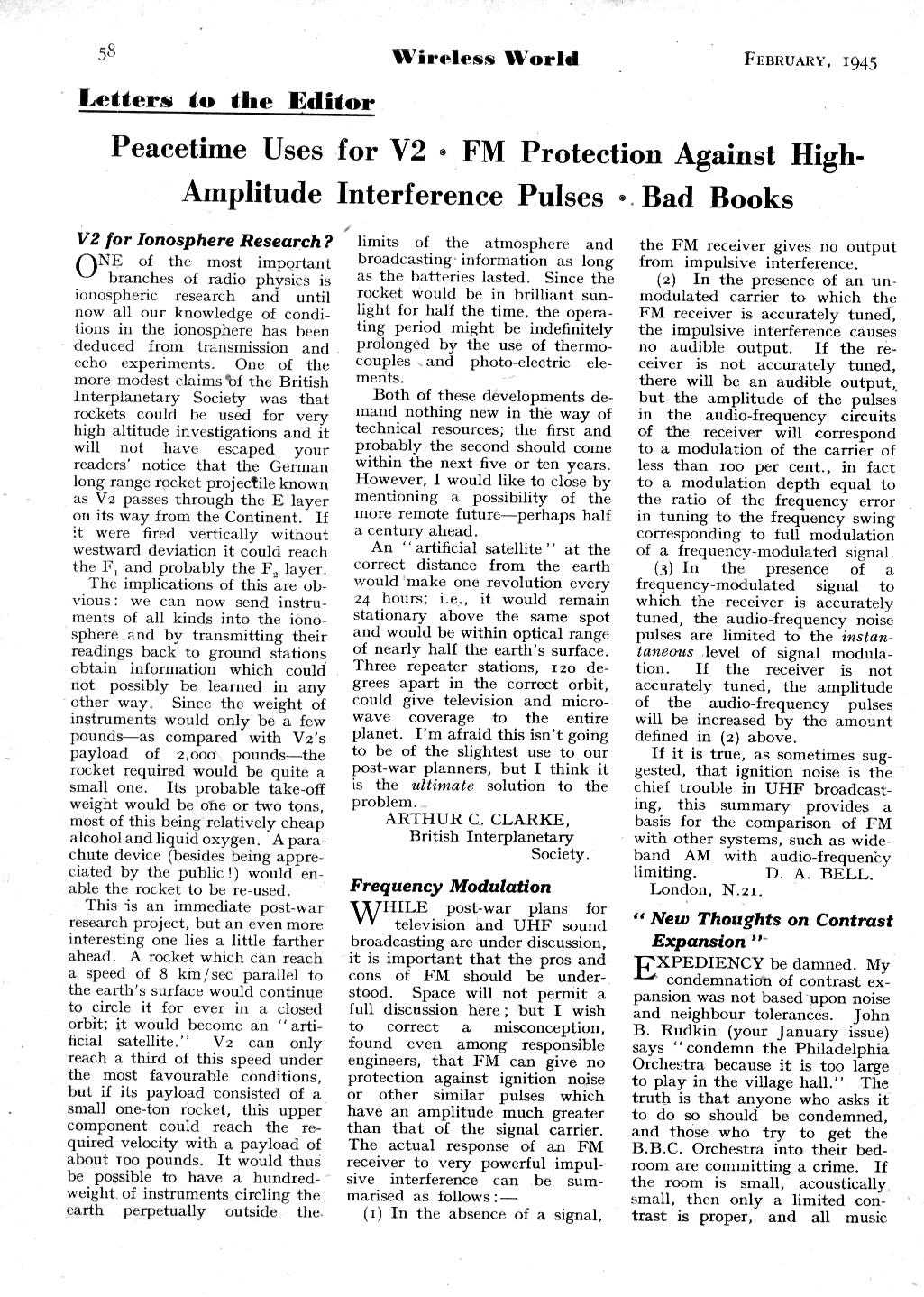
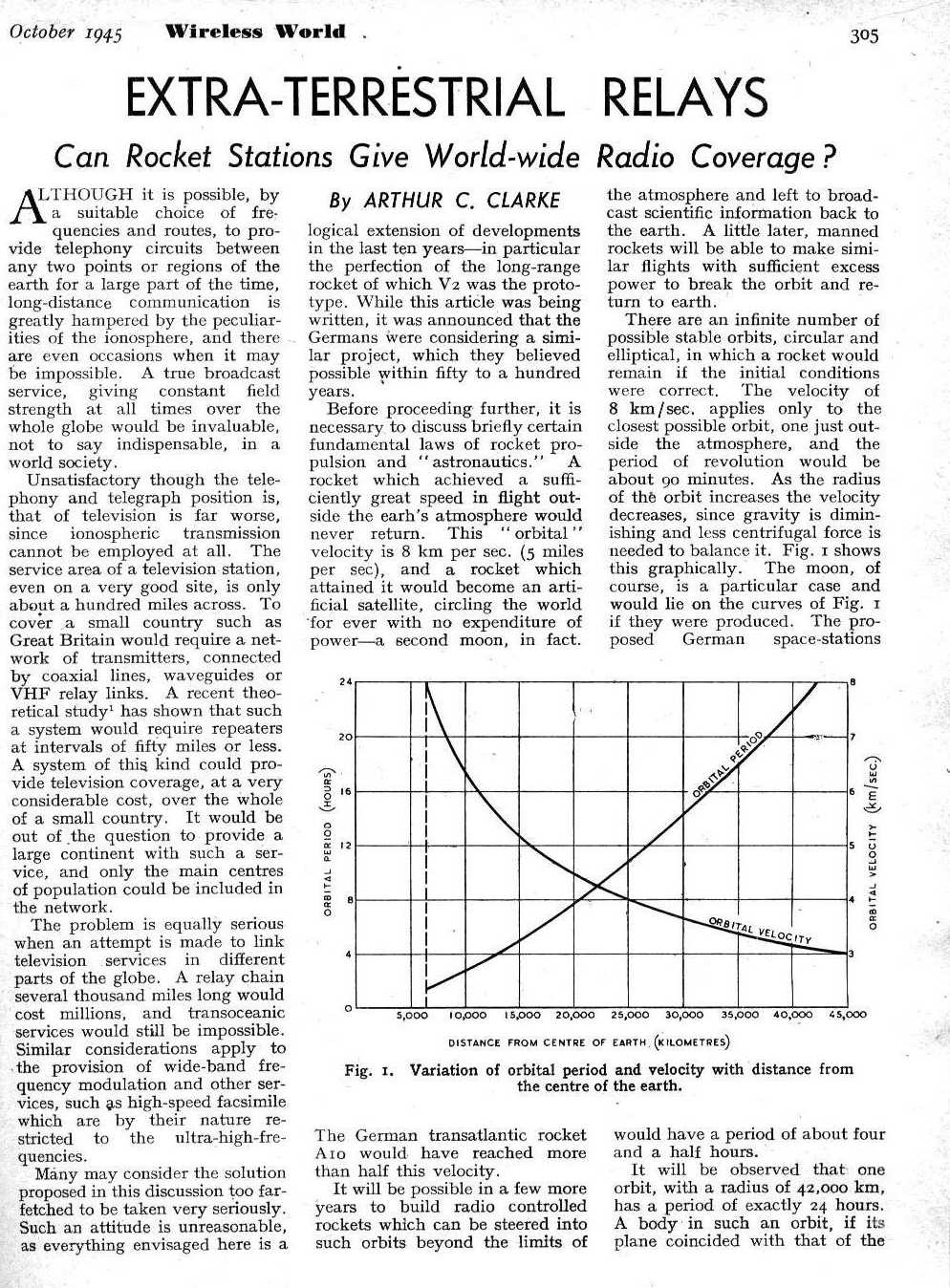
Except Clarke's proposal of the communications satellite wasn't in a work of fiction. See http://lakdiva.org/clarke/1945ww/1945ww_058.jpg and http://lakdiva.org/clarke/1945ww/1945ww_305.jpg and overall http://lakdiva.org/clarke/1945ww/
-
Re:Wasn't Douglas Adams prior art for this?
Except Clarke's proposal of the communications satellite wasn't in a work of fiction. See http://lakdiva.org/clarke/1945ww/1945ww_058.jpg and http://lakdiva.org/clarke/1945ww/1945ww_305.jpg and overall http://lakdiva.org/clarke/1945ww/
-
Re:Wasn't Douglas Adams prior art for this?
Except Clarke's proposal of the communications satellite wasn't in a work of fiction. See http://lakdiva.org/clarke/1945ww/1945ww_058.jpg and http://lakdiva.org/clarke/1945ww/1945ww_305.jpg and overall http://lakdiva.org/clarke/1945ww/
-
Clark's proposal for com. sats in 1945
I couldn't find any such short story, but I did find this proposal for communications satellites, dated 1945. He proposed 3 satellites, 120 degrees apart, to provide TV and microwave coverage for the whole planet.
At least he didn't say "The world will never need more than 3 communications satellites." -
Re:Nutt?
http://lakdiva.org/clarke/1945ww/
Case in point. Look at all the wasted space on the above link.
*scoff* -
Re:Caesium?You think things are less paranoid now? There's more orbital surveillance now than ever! This is "quaint" only because it assumed that orbital surveillance required somebody to be physically present.
Back in the 40s and 50s, there was a lot of talk about doing things like surveillance (you can see a lot) and communications (a lot of people can see you) from orbit. One common assumption (which turned out to be correct) was that these things would be extremely important in the near future. Another assumption (which turned out to be totally wrong) was that this would be done by sending people to go live in orbit. Once there, they'd use photography, electronics, and other technology that wouldn't be much more advanced that what people were familiar with. You can see this in Arthur C. Clarke's original proposals for communications satellites and in fiction from Clarke, Heinlen, and others.
What really happened, of course, is that rocket technology progressed relatively slowly, while electronics progressed very rapidly. So long before it was practical to a space station in orbit, it was practical to put a simple electronic gadget in orbit that would do all those chores pretty cheaply. Kind of sad, really -- if building better rockets had been more of an economic and military necessity, we'd probably be the space-going civilization that eveybody back in the 50s assumed we would be.
Then again, the need to build smaller and more reliable electronics did a lot to jump-start the computer revolution -- so we mustn't complain too much!/p
-
Re:Yeah...You think things are less paranoid now? There's more orbital surveillance now than ever! This is "quaint" only because it assumed that orbital surveillance required somebody to be physically present.
Back in the 40s and 50s, there was a lot of talk about doing things like surveillance (you can see a lot) and communications (a lot of people can see you) from orbit. One common assumption (which turned out to be correct) was that these things would be extremely important in the near future. Another assumption (which turned out to be totally wrong) was that this would be done by sending people to go live in orbit. Once there, they'd use photography, electronics, and other technology that wouldn't be much more advanced that what people were familiar with. You can see this in Arthur C. Clarke's original proposals for communications satellites and in fiction from Clarke, Heinlen, and others.
What really happened, of course, is that rocket technology progressed relatively slowly, while electronics progressed very rapidly. So long before it was practical to a space station in orbit, it was practical to put a simple electronic gadget in orbit that would do all those chores pretty cheaply. Kind of sad, really -- if building better rockets had been more of an economic and military necessity, we'd probably be the space-going civilization that eveybody back in the 50s assumed we would be.
Then again, the need to build smaller and more reliable electronics did a lot to jump-start the computer revolution -- so we mustn't complain too much!/p
-
Re:Caesium?You think things are less paranoid now? There's more orbital surveillance now than ever! This is "quaint" only because it assumed that orbital surveillance required somebody to be physically present.
Back in the 40s and 50s, there was a lot of talk about doing things like surveillance (you can see a lot) and communications (a lot of people can see you) from orbit. One common assumption (which turned out to be correct) was that these things would be extremely important in the near future. Another assumption (which turned out to be totally wrong) was that this would be done by sending people to go live in orbit. Once there, they'd use photography, electronics, and other technology that wouldn't be much more advanced that what people were familiar with. You can see this in Arthur C. Clarke's original proposals for communications satellites and in fiction from Clarke, Heinlen, and others.
What really happened, of course, is that rocket technology progressed relatively slowly, while electronics progressed very rapidly. So long before it was practical to a space station in orbit, it was practical to put a simple electronic gadget in orbit that would do all those chores pretty cheaply. Kind of sad, really -- if building better rockets had been more of an economic and military necessity, we'd probably be the space-going civilization that eveybody back in the 50s assumed we would be.
Then again, the need to build smaller and more reliable electronics did a lot to jump-start the computer revolution -- so we mustn't complain too much!/p
-
Not gone, just byeYou think things are less paranoid now? There's more orbital surveillance now than ever! This is "quaint" only because it assumed that orbital surveillance required somebody to be physically present.
Back in the 40s and 50s, there was a lot of talk about doing things like surveillance (you can see a lot) and communications (a lot of people can see you) from orbit. One common assumption (which turned out to be correct) was that these things would be extremely important in the near future. Another assumption (which turned out to be totally wrong) was that this would be done by sending people to go live in orbit. Once there, they'd use photography, electronics, and other technology that wouldn't be much more advanced that what people were familiar with. You can see this in Arthur C. Clarke's original proposals for communications satellites and in fiction from Clarke, Heinlen, and others.
What really happened, of course, is that rocket technology progressed relatively slowly, while electronics progressed very rapidly. So long before it was practical to a space station in orbit, it was practical to put a simple electronic gadget in orbit that would do all those chores pretty cheaply. Kind of sad, really -- if building better rockets had been more of an economic and military necessity, we'd probably be the space-going civilization that eveybody back in the 50s assumed we would be.
Then again, the need to build smaller and more reliable electronics did a lot to jump-start the computer revolution -- so we mustn't complain too much!/p
-
Re:Thanks for the infoYou think things are less paranoid now? There's more orbital surveillance now than ever! This is "quaint" only because it assumed that orbital surveillance required somebody to be physically present.
Back in the 40s and 50s, there was a lot of talk about doing things like surveillance (you can see a lot) and communications (a lot of people can see you) from orbit. One common assumption (which turned out to be correct) was that these things would be extremely important in the near future. Another assumption (which turned out to be totally wrong) was that this would be done by sending people to go live in orbit. Once there, they'd use photography, electronics, and other technology that wouldn't be much more advanced that what people were familiar with. You can see this in Arthur C. Clarke's original proposals for communications satellites and in fiction from Clarke, Heinlen, and others.
What really happened, of course, is that rocket technology progressed relatively slowly, while electronics progressed very rapidly. So long before it was practical to a space station in orbit, it was practical to put a simple electronic gadget in orbit that would do all those chores pretty cheaply. Kind of sad, really -- if building better rockets had been more of an economic and military necessity, we'd probably be the space-going civilization that eveybody back in the 50s assumed we would be.
Then again, the need to build smaller and more reliable electronics did a lot to jump-start the computer revolution -- so we mustn't complain too much!/p
-
Not gone, just byeYou think things are less paranoid now? There's more orbital surveillance now than ever! This is "quaint" only because it assumed that orbital surveillance required somebody to be physically present.
Back in the 40s and 50s, there was a lot of talk about doing things like surveillance (you can see a lot) and communications (a lot of people can see you) from orbit. One common assumption (which turned out to be correct) was that these things would be extremely important in the near future. Another assumption (which turned out to be totally wrong) was that this would be done by sending people to go live in orbit. Once there, they'd use photography, electronics, and other technology that wouldn't be much more advanced that what people were familiar with. You can see this in Arthur C. Clarke's original proposals for communications satellites and in fiction from Clarke, Heinlen, and others.
What really happened, of course, is that rocket technology progressed relatively slowly, while electronics progressed very rapidly. So long before it was practical to a space station in orbit, it was practical to put a simple electronic gadget in orbit that would do all those chores pretty cheaply. Kind of sad, really -- if building better rockets had been more of an economic and military necessity, we'd probably be the space-going civilization that eveybody back in the 50s assumed we would be.
Then again, the need to build smaller and more reliable electronics did a lot to jump-start the computer revolution -- so we mustn't complain too much!/p
-
Re:Sorry if you miss the OT joke:You think things are less paranoid now? There's more orbital surveillance now than ever! This is "quaint" only because it assumed that orbital surveillance required somebody to be physically present.
Back in the 40s and 50s, there was a lot of talk about doing things like surveillance (you can see a lot) and communications (a lot of people can see you) from orbit. One common assumption (which turned out to be correct) was that these things would be extremely important in the near future. Another assumption (which turned out to be totally wrong) was that this would be done by sending people to go live in orbit. Once there, they'd use photography, electronics, and other technology that wouldn't be much more advanced that what people were familiar with. You can see this in Arthur C. Clarke's original proposals for communications satellites and in fiction from Clarke, Heinlen, and others.
What really happened, of course, is that rocket technology progressed relatively slowly, while electronics progressed very rapidly. So long before it was practical to a space station in orbit, it was practical to put a simple electronic gadget in orbit that would do all those chores pretty cheaply. Kind of sad, really -- if building better rockets had been more of an economic and military necessity, we'd probably be the space-going civilization that eveybody back in the 50s assumed we would be.
Then again, the need to build smaller and more reliable electronics did a lot to jump-start the computer revolution -- so we mustn't complain too much!/p
-
Re:Nothing but good stuff with KnoppixYou think things are less paranoid now? There's more orbital surveillance now than ever! This is "quaint" only because it assumed that orbital surveillance required somebody to be physically present.
Back in the 40s and 50s, there was a lot of talk about doing things like surveillance (you can see a lot) and communications (a lot of people can see you) from orbit. One common assumption (which turned out to be correct) was that these things would be extremely important in the near future. Another assumption (which turned out to be totally wrong) was that this would be done by sending people to go live in orbit. Once there, they'd use photography, electronics, and other technology that wouldn't be much more advanced that what people were familiar with. You can see this in Arthur C. Clarke's original proposals for communications satellites and in fiction from Clarke, Heinlen, and others.
What really happened, of course, is that rocket technology progressed relatively slowly, while electronics progressed very rapidly. So long before it was practical to a space station in orbit, it was practical to put a simple electronic gadget in orbit that would do all those chores pretty cheaply. Kind of sad, really -- if building better rockets had been more of an economic and military necessity, we'd probably be the space-going civilization that eveybody back in the 50s assumed we would be.
Then again, the need to build smaller and more reliable electronics did a lot to jump-start the computer revolution -- so we mustn't complain too much!/p
-
Not gone, just byeYou think things are less paranoid now? There's more orbital surveillance now than ever! This is "quaint" only because it assumed that orbital surveillance required somebody to be physically present.
Back in the 40s and 50s, there was a lot of talk about doing things like surveillance (you can see a lot) and communications (a lot of people can see you) from orbit. One common assumption (which turned out to be correct) was that these things would be extremely important in the near future. Another assumption (which turned out to be totally wrong) was that this would be done by sending people to go live in orbit. Once there, they'd use photography, electronics, and other technology that wouldn't be much more advanced that what people were familiar with. You can see this in Arthur C. Clarke's original proposals for communications satellites and in fiction from Clarke, Heinlen, and others.
What really happened, of course, is that rocket technology progressed relatively slowly, while electronics progressed very rapidly. So long before it was practical to a space station in orbit, it was practical to put a simple electronic gadget in orbit that would do all those chores pretty cheaply. Kind of sad, really -- if building better rockets had been more of an economic and military necessity, we'd probably be the space-going civilization that eveybody back in the 50s assumed we would be.
Then again, the need to build smaller and more reliable electronics did a lot to jump-start the computer revolution -- so we mustn't complain too much!
-
This is not the first timeMost media are reporting that this is the first of this kind in Sri Lanka. I think it is wrong. Sri Lanka has a written history of over 2500 years in a book called "Mahawamsa", which is still maintained, and it reports (along with many other books and of course fork tales) a huge natural disaster in 2nd century B.C., where sea waves came upto Kelaniya (close to Colombo).
This Sunday times article starts with the latter part of the story. Complete, but brief, story can be found here and here.
This article gives a list of kings, but nothing about the disaster.
-
Re:Microbes? I doubt it.
The microscope appears to have a resolution of about 800 dpi (the grinder is supposed to have a 45mm diameter, I'm basing my guess at the resolution off the photos of the grinding holes). An Intel Play QX3 microscope can take an 8000 dpi picture. Is NASA so poor that they can't afford a $40 microscope for their rover?