Slashdot Mirror
Domain: macspeedzone.com
Stories and comments across the archive that link to macspeedzone.com.
Comments · 30
-
Re:I remember a time...
SPARC processors of the day were much faster than PowerPC, and about equivalent to POWER itself. PC processors were highly competitive. The G3 was faster at some kinds of math than the PC processors of the day, but that was it.
The UltraSPARC II of the time beat PowerPC at floating point, but PPC was faster at integer per clock and a LOT cheaper.
By the time the G4 came out, it was hardly worth spending the extra money for a SPARC when a MHz bump the following year would make up the difference.
-
sue for misuse of trademark
Hey, Taylor Swift, you aren't going to get much money out of Apple by complaining about how they license and sell music.
But have you considered suing them over the "Swift" language? Obviously, they are using your trademarked good name in order to sell their new language, and you can probably get a well-deserved buck out of them so that you don't have to starve.
Hey, it worked for Bob Dylan.
-
Re:OS's are...
To support the idea that BSD wasn't a critical component here, it's worth pointing out that Apple considered several alternatives to the BSD derived NeXT the birthed OS X from. BeOS, Solaris, and even Windows NT were all considered at some point. Had the owners of Be lowered their financial expectations, it easily could have been OS X derived from Be instead. The main benefit of basing things on NeXT instead was that it brought Jobs back into day to day operation again. He was the right guy to be heading the expansion into friendlier consumer electronics that revived Apple's financials, and that mattered quite a bit more than the origin of the kernel.
-
Re:Monopoly
How many people sell kit for Apple hardware?
http://www.sonnettech.com/
http://www.powerlogix.com/products/index.html
http://macspeedzone.com/html/hubs/central/upgrades/processor/ (not recent stuff, but that's not the point)
http:/// any hard drive manufacturer
There used to be a few graphics cards available before the move to x86, although they've dried up now. Apple are doing nothing to stop ATi and nVidia from making retail cards for the Mac, so I guess it's just the appearance of low sales (they can only target the Mac Pro, sadly).
Plenty of people make hardware that's either for Macs, or Mac compatible. Some Macs have socket-upgradable processors as well, so you can add Intel to the list.
How many can people sell FairPlay tracks for ipods?
A better question is "How many people can sell music that will play on the iPods?" The answer is about 90% of the world's music retailers, through CDs and non-DRM music. The solution is not to get Apple to licence FairPlay, but to dispose of DRM altogether (and that aim was stated by Steve Jobs in an open letter some time ago). What good does licensing do?
Apple's as much of a monopolist as MS, it's just not as successful (yet).
No, that's just not true. You may think Apple are monopolistic, but they've not been taken to court and convicted of anti-trust charges which have held up under all appeals. They're under fire for the DRM in FairPlay, but they're not being sued around the planet (particularly in the US states and the EU) for their anti-trust misuse of their monopoly. It's a nice convenient little line to trot out that Apple are just as bad as Microsoft, but the evidence doesn't support it and never has. Apple definitely do things their own way, and people disagree with that from time to time, but that doesn't make them a monopolistic company who abuse that power to force others into deals. -
However,
"The Intel iMac Is Almost As Fast As The Quad Core Power Mac." Intersting results, from macspeedzone
-
Trademark and trade dress
By producing a nearly identical product to Apple's and giving it a nearly identical name, Luxpro is clearly trying to make consumers believe they are buying an Apple product. I mean, it's so blatant they're even ripping off the advertising.
Apple can, and will, go after them for trademark issues because of the product's name, and trade dress issues because of the appearance of the device.
If you're not familiar with it, trade dress is when two products "kind of look the same" enough (in the eyes of a court of law) that consumers could be fooled into thinking cheap knockoff B is actually name-brand product A. Trade dress infringement claims are how Apple killed off those cheesy all-in-one PCs with a blue and white/translucent color scheme that quickly appeared after the original iMac was released.
~Philly -
Re:HmmYou need to find better documentation. Actually Apple did make an offer to buy BeOS, but they didn't offer as much as Jean-Lois Gasee and the other Be stockholders wanted, so their offer was turned down. Rather than up their offer on BeOS and pay more than they thought it was worth at the time, they went with NeXT. Those 'sound engineering reasons' came as justification after the financial ones had already been made.
-
Re:On the other handOh, most definitely! Hell, losing 20 cents is always better than losing a dollar. I guess I was being overly pedantic about the definition of success and failure in financial terms.
I came across this excerpt from Apple Confidential that someone (above or below) linked to here. I found the following paragraph very interesting.
On December 20, Apple announced its intention to purchase NeXT Software in a friendly acquisition. When the deal went through on February 4, 1997, the total purchase price, including the fair value of the net liabilities assumed, was $427 million, which comprised $319 million in cash, 1.5 million shares of Apple stock (valued at $25 million), options on 1.9 million shares (valued at $16 million), cash payments of $56 million to the NeXT debtholders, cash payments of $9 million for closing and related costs, and $2 million of net liabilities assumed. As the largest shareholder of NeXT (he owned 45 percent), Jobs personally pocketed $100 million in cash and all 1.5 million shares of Apple stock, which he agreed not to sell for at least six months. All NeXT products, services, and technology research became part of Apple. Amelio now admits that Apple overpaid for NeXT, but it had little choice given the dire straits the company was in at the time.
-
Re:Well, there was another choice.
Be got greedy: The Acquisition of NEXT
-
Wow. The inside sucks.
I've been a Mac user for years and currently use an old dual-processor 450 MHz G4. I realized that Macs are generally better designed inside, but didn't realize that current PCs were this cobbled-together. Compare these two shots:
Dell XPS
PowerMac G4 -
Re:Throw some G5s into the mix
-
Re:no subject
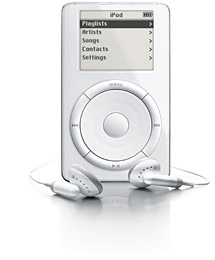
The scroll wheel is amazing, and I'm angry at Apple for patening it.
Well, tough shit. Know what I'm angry about? Twenty years of people pooh-poohing Apple products, and then turning around and cranking out shit-ass knockoffs of those same Apple products so cheap people can delude themselves into thinking what they bought is just as good.
If anyone deserves to use patents to defend distinctive features of their products from being ripped off by shifty competitors, it's Apple. -
Time for a 'trade dress' smackdown.
Must everyone follow a successful Apple product with their own half-assed, 'me too' version of it? This is why Apple now attempts to patent or trademark everything they do, people!
This Dell thing (the "metooPod"?) looks similar enough to the iPod that maybe Apple should seriously kick around the idea of filing another 'trade dress' suit, the way they did to take care of the Future Power e-Power or the eMachines eOne-- I mean, since practically everything else Dell makes is dark in color, it seems mighty suspicious to me that this is white. The screen size and placement looks almost identical. From the photo I've seen it also looks like the GUI is pretty similar. I see they've taken pains to move the battery gauge from the upper right corner (where the iPod has it) to the upper left corner-- reminds me of the difference between the Apple menu and Start menu.
At least the iPod has enough mindshare amongst the target market that no amount of B.S. marketing from Dell will make people think they did it first (I still remember Michael Dell's bullshit claim that Dell was the first company to build wireless networking into their laptops). The only way Dell will move very many of these things is by irrevocably bundling them "free" with their systems. I predict we'll start seeing a lot of them on eBay after a while, and then the product will die a quiet, relatively quick death like Dell's iMac wanna-be, the WebPC.
~Philly -
PB 12" Killer?
-
MacWorld July: Predictions?
From what I have read (mostly at macspeedzone.com), I would think that Apple will NOT be ready to show a 970-based computer at the July Macworld. Notice that I said "show", as opposed to "ship".
I hope I'm wrong though.
So this is my question: what do they do as a stopgap? Ship a G4 with four processors? Punt and simply lower prices until the 970 is ready?
Steve Jobs has been dealing with Motorola since, when.. 1983 or so? Might be high time for a divorce.
-
Re:Huh?
Here's a bandwidth chart so you can better visualize what various tech is capable of.
-
Re:ummmm...
This excuse went out the door several years ago. Apple's hardware isn't ANY more expensive than comparable WIntel hardware. People just don't understand that macs tend to outperform PC stuff hands down. But really, when you go to Dell or any other big manufacturer advertising a whole system for "under $500", you end up paying well over $1000 by the time the machine is remotely usable. When you go to apple and buy an iMac for $1100 (or one of the older ones for as low as $700-800), you're getting a system that's WAY more powerful than that PC one, with a better OS.
LOL, Slashdot's Mac fanbois are simply the best. Saying something as brutally ignorant as "People just don't understand that macs tend to outperform PC stuff" does _not_ automaticly make you the elitist you are so desperatly trying to be.
Next time bring along some benchmarks or numbers PLEASE. anything.
An older benchmark, I see no ass whipping here, and this is from a mac site, so you know the numbers have been skewed in apples favor.
Sorry to be off topic, but trying to rush this guy off to OSX as a alternitive to Linux really just strikes a bad chord with me. Your not his desktop savior, your just a fanboy trying to score browny points for being as "difrent" as apples comercials want you to be. Mac "stuff" is nowhere near supirior, and from hands on experience its not even that good. If I had to pick anything as a speed demon I would advocate PA-RISC, but I live in the real world, and in the real world you will get alot more done, with a lot less headache, and for a lot cheaper with a Single or Dual TBird / P4 then you ever will with a Mac. -
Re:changes in SCSI land ?
This mac-centrenic page has a comparison between SCSI and Firewire. My guess is that Ultra SCSI-3 is currently king. It would be interesting to plot DMA and ATA on such a graph also -- maybe someone can plot that up for us.
-
Re:Look at ppc.
Sorry, I should have been more specific. I've moved to PPC on notebooks for stability, compared with current i8xx based notebooks. i8xx can make any OS come crashing into a heap, which is why I use Linux/OpenBSD/OSX over Windows/MacOS9 in the first place, so choosing unstable hardware is not my idea of fun.
My performance gripe about the i8xx chipsets is regarding the comparative performance between intel systems. I honestly wasn't trying to compare Intel performance to PPC, sorry.
However, here you can see the results of a G4 500MHz running about 3 times faster than a PIII 600MHz with one of Intels own benchmark libraries.
Sure, it's a Mac site. PC sites can tend to show intel favoured results and vice versa. I remember when Tom of Toms Hardware was touting that AGP PROVIDED NO BENEFITS OVER PCI for 3D video card performance. This was back when the performance ceiling of 3D games was limited by the PCI connection of the 3Dfx Voodoo2. That was when he was in bed with 3Dfx, once he got of of that bed and jumped into nVidia's bed and became an "official nVidia review site", his thoughts on AGP made a sudden and public 180 degree turn. He is a whore. I roughly graphed the performance of the Voodoo2 against texture sizes which showed the sudden drop as reliance was placed on the PCI bus, my Voodoo2 groupie friends scoffed at it until they saw a Matrox G200 running 3.5 times faster than the Voodoo2 with large textures in Quake2. So I agree that people should take benchmarks posted on web sites with a grain of salt if they are'nt genuine independent results.
Try both systems and stick with what you like most. After 12 years of x86, I sure have seen the light.
I think PPC IS the place to be for Linux.
-
Re:Intel?
Maybe because it already happened before but was killed because Apple did not want to sell Mac OS for x86?
Sure, the Star Trek project. That project failed for the obvious reasons:
1. Apple didn't think it likely that PC vendors would choose to bundle a Mac OS for Intel with their systems, and Apple didn't like the odds of trying to sell an after-market OS to customers that already had one for their computers.
2. Apple didn't want to start a political battle with Motorola by appearing to endorse Intel's CPUs over the PowerPC.
3. Apple was-- and is-- a hardware company, not a software company. Porting the OS to another platform would do nothing but reduce Apple's hardware revenues, which would very quickly be self-defeating.
Same reasons Apple wouldn't want to port OS X to any other architecture. So the question stands: why would anybody assume that Apple would want to port their OS to a non-Apple hardware platform? -
Apples looked at this in the past
This site talks about a project at Apple some ten years ago to port Mac OS to Intel hardware.
The article also talks about the work done by ARDI, the firm mentioned in the InfoWorld story.
Apple assembled a small team and got Mac OS runnning pretty quickly, but it seemed the firm didn't have the willpower to push it to market.
It probably would be different this time around with the forceful Steve Jobs at the helm.
-
Re:Best is, they might switch to INTEL?
Actually I heard it first... um about 7 years ago.
Which would have been, of course, about when MacOS actually was ported to the x86 platform.
-
Re:Whatever happened..
Do you mean Star Trek? That died in the early 1990's.
-
Re:Apple and Sagan
-
Re:Apple couldnt come to terms with Be?
i'm sorry i didn't notice this original message earlier. i posted it already in this thread, but it might be hard to find.
if you're looking for the whole story between Apple and Be, the full details can be found in this piece out of the book Apple Confidential.
the jist: Be thought they were Apple's only choice, so they played hardball. Apple's due dilligence valued them at about $50 million, be wanted about 3 times that, and Gasee added to that a very arrogant attitute in all negotiations. the rest is history.
- j
-
Re:Years?
Be had a fairly strong marketing plan for invading Apple's market; what they didn't have was a similarly strong plan for invading the PC market, where variety is the norm, not the exception. And on top of that, they squandered the 4 years that Apple took to get OS X out the door.
exactly, and i'd like to add that this is a good reason to argue against MacOS X on Intel machines (unless they're Apple-only, based on Intel processors). Be saw the x86 market as a huge sea where even if they got a little chunk of it, it would be better than half the Mac market. unfortunately for them they were lost in that sea, and couldn't build up enough market share to hit a "critical mass" and go anywhere. now they're suddenly "Internet Appliance" OS manufacturers. right. changing your corporate direction every couple of years is a good way to go bankrupt.
the fact of the matter is that Be was extremely bitter about the fact that they didn't get bought by Apple. they thought they had the greatest technology, and were doing Apple a favour by allowing them to use their OS. the whole story can be found in this bit out of the book Apple Confidential.
in retrospect, Apple was best to buy NeXT. NeXT was (and is) a great operating system that had time to mature and get a lot of the kinks out. Be had good technology, but it wasn't so good that it was leaps and bounds ahead of the rest, and the OS, as flashy as it may be, was still lacking in a LOT of necessary refinements. NeXT gave Apple a good solid UNIX foundation upon which to build MacOS X (which i think is a phenomenal operating system). also, bringing back Steve Jobs who inspired the iMac (and the recent resurgence of Apple) was worth the $427 million alone.
- j
-
Re:only thing worse than mediaplayer is quicktime
Oh... the original poster wasn't complaining about the lack of linux binaries. Just the appearance of Apple's player in Windows and MacOS.
Peter's Player was a great player in it's time. I'm not on a Mac at this moment, so i can't verify that it still works with the newer quicktime versions, but if you respond to this and ask, i'll run upstairs and download it to the mac there and let you know...
BetterPlayer.
You have to remember, quicktime is just an API. The player application just uses the hooks that the extensions (MacOS) and DLLS (Win) provide. -
Re: Linux SMP verses NT**Excuse me?** Would you like to provide facts to back this up? Their bytemarks were plain bogus, because of an optimisation in their compiler (they went >100 times faster on one program of the benchmark, because the compiler removed all the code of a loop - which computed unused data).
Look at the comparison at http://macspeedzone.com/4.0Apple MrC with PowerMathLib:
NUMERIC SORT: Iterations/sec.: 107.164610 Index: 2.769469
STRING SORT: Iterations/sec.: 9.606252 Index: 4.222528
BITFIELD: Iterations/sec.: 3571869546.392807 Index: 612.688667
FP EMULATION: Iterations/sec.: 20.041185 Index: 9.635185
FOURIER: Iterations/sec.: 1602.031493 Index: 1.813977
ASSIGNMENT: Iterations/sec.: 1.510908 Index: 5.756497
IDEA: Iterations/sec.: 462.599684 Index: 7.077719
HUFFMAN: Iterations/sec.: 168.458324 Index: 4.681348
NEURAL NET: Iterations/sec.: 3.053514 Index: 5.166690
LU DECOMPOSITION: Iterations/sec.: 52.623917 Index: 3.106855
This from the bytemark of a PowerMac 604e/180Mhz, compared to a P90 (which would get index=1.0). They both came from a page at Apple, that I linked to slashdot and that seems to have been removed since (no longer available from Altavista). Do some calculations: take the BITFIELDS, iterations per second column ; compute the number of clock cycles taken by iteration considering the 180Mhz frequency of the processor ; conclude.
The "index" column shows that the PPC604e was 600.0 times faster than a P90 (code that you don't run is very fast indeed). This pretty much killed the benchmark. This is why bytemark is plain bogus.
A SIMILAR BYTEMARK BENCH WAS USED BY APPLE TO CLAIM THAT G3 ARE TWICE FASTER THAN PII. Actually they might have taken another compiler to make this claim, but the outrageously better results for the G3 are for the exact same reason, and Apple perfectly knew that its benchmarks were bogus.
Even PC Magazine, a company that almost no one would argue would be biased in favor of Apple vs. Wintel, admits that a G3/400 beats a Dell Dimension XPS T500 Pentium III on tests using an application *widely reported* to be heavily optimized for MMX and SSE! All that with a 20% slower clock speed!
If it is Photoshop benchmark, it is mostly a loop, so not very characteristic of typical applications. Also last time I saw the people added the time of the different filters, which is stupid because it resulted on the slower filters (i.e. unoptimised) being the very preponderant, independantly of how often they are used in real life. Other debatable benchmarks are http://macspeedzone.com/4.0/Wi nvsMacmathematica.html (we don't know which compiler is used, which optimizations, etc.).
Real benchmarks are SPEC CPU benchmarks (see www.spec.org). G3 are about 15% faster than PII at the same clock rate. And of course, a very important point is that all processors aren't available at the same clock speed at the same time. PIII/500 are commercially available that do 22 SPECint. I don't know if I can buy a G3/500 *now* ; and Alpha have had consistently a higher clock than other CPUs.
Another source of SPEC numbers is http://infopad.eecs.berkeley.ed u/CIC/summary/local/ ; if you want to measure the "advocacy effect", have also a look to http://macspeedzone.com/4.0/WinvsM acSPECint.html, which amusingly have lower SPECint numbers for PII than the best published and verified at spec.org (dig spec.org, maybe they took the very first results for PII, or the worse ; there are several different entries with PIIs).
Perhaps you've heard of Project Appleseed? No?
http://exodus.physics.ucla.edu/appleseed/appleseed .html
Imagine that--an independent study of G3 vs. x86 and other processors...hmm...a PII/300 is over 33% slower than a G3/266 (13% slower clock), and over 17% slower than a Rev. A iMac (29% slower clock).The funny thing is that the cluster of 8 G3/266 would have the same performance of a single 21264/667Mhz for floating point (or 2 21264 for integer code). The 21264 may be more expensive than 8 G3, but it is sure much more easy to debug a mono-processor code
You should have noted the fine prints:
This investigation was initially motivated by the impressive single node performance we achieved on our well-benchmarked suite of plasma particle-in-cell (PIC) simulation codes [4-5] on the Macintosh G3/266, as shown in Table I. This was due in part to the availability of an excellent optimizing Fortran compiler for the Macintosh produced by the Absoft Corporation [6]
and of course:
Computer Push Time Loop Time
Macintosh G3/300: 1750 nsec. 191.1 sec.
One iteration runs in 1.75 microsecond (i.e. 500 cycles), which means that it is really short code and loop intensive (about 100 millions loops), very likely to be optimiseable. This is a specific application, that couldn't be generalized. The annoying thing is that, contrary to SPEC which allows any submitter to choose its own compiler, we don't know how they decided to choose the others' compilers. They are also daily Mac users, they probably know very well how to optimize, and choose the compiler for their Mac.
But all in all, it is a good point for G3. Now if only Apple/Motorola released official SPEC numbers for G3, instead of plain bogus bytemarks... -
Re: Linux SMP verses NT**Excuse me?** Would you like to provide facts to back this up? Their bytemarks were plain bogus, because of an optimisation in their compiler (they went >100 times faster on one program of the benchmark, because the compiler removed all the code of a loop - which computed unused data).
Look at the comparison at http://macspeedzone.com/4.0Apple MrC with PowerMathLib:
NUMERIC SORT: Iterations/sec.: 107.164610 Index: 2.769469
STRING SORT: Iterations/sec.: 9.606252 Index: 4.222528
BITFIELD: Iterations/sec.: 3571869546.392807 Index: 612.688667
FP EMULATION: Iterations/sec.: 20.041185 Index: 9.635185
FOURIER: Iterations/sec.: 1602.031493 Index: 1.813977
ASSIGNMENT: Iterations/sec.: 1.510908 Index: 5.756497
IDEA: Iterations/sec.: 462.599684 Index: 7.077719
HUFFMAN: Iterations/sec.: 168.458324 Index: 4.681348
NEURAL NET: Iterations/sec.: 3.053514 Index: 5.166690
LU DECOMPOSITION: Iterations/sec.: 52.623917 Index: 3.106855
This from the bytemark of a PowerMac 604e/180Mhz, compared to a P90 (which would get index=1.0). They both came from a page at Apple, that I linked to slashdot and that seems to have been removed since (no longer available from Altavista). Do some calculations: take the BITFIELDS, iterations per second column ; compute the number of clock cycles taken by iteration considering the 180Mhz frequency of the processor ; conclude.
The "index" column shows that the PPC604e was 600.0 times faster than a P90 (code that you don't run is very fast indeed). This pretty much killed the benchmark. This is why bytemark is plain bogus.
A SIMILAR BYTEMARK BENCH WAS USED BY APPLE TO CLAIM THAT G3 ARE TWICE FASTER THAN PII. Actually they might have taken another compiler to make this claim, but the outrageously better results for the G3 are for the exact same reason, and Apple perfectly knew that its benchmarks were bogus.
Even PC Magazine, a company that almost no one would argue would be biased in favor of Apple vs. Wintel, admits that a G3/400 beats a Dell Dimension XPS T500 Pentium III on tests using an application *widely reported* to be heavily optimized for MMX and SSE! All that with a 20% slower clock speed!
If it is Photoshop benchmark, it is mostly a loop, so not very characteristic of typical applications. Also last time I saw the people added the time of the different filters, which is stupid because it resulted on the slower filters (i.e. unoptimised) being the very preponderant, independantly of how often they are used in real life. Other debatable benchmarks are http://macspeedzone.com/4.0/Wi nvsMacmathematica.html (we don't know which compiler is used, which optimizations, etc.).
Real benchmarks are SPEC CPU benchmarks (see www.spec.org). G3 are about 15% faster than PII at the same clock rate. And of course, a very important point is that all processors aren't available at the same clock speed at the same time. PIII/500 are commercially available that do 22 SPECint. I don't know if I can buy a G3/500 *now* ; and Alpha have had consistently a higher clock than other CPUs.
Another source of SPEC numbers is http://infopad.eecs.berkeley.ed u/CIC/summary/local/ ; if you want to measure the "advocacy effect", have also a look to http://macspeedzone.com/4.0/WinvsM acSPECint.html, which amusingly have lower SPECint numbers for PII than the best published and verified at spec.org (dig spec.org, maybe they took the very first results for PII, or the worse ; there are several different entries with PIIs).
Perhaps you've heard of Project Appleseed? No?
http://exodus.physics.ucla.edu/appleseed/appleseed .html
Imagine that--an independent study of G3 vs. x86 and other processors...hmm...a PII/300 is over 33% slower than a G3/266 (13% slower clock), and over 17% slower than a Rev. A iMac (29% slower clock).The funny thing is that the cluster of 8 G3/266 would have the same performance of a single 21264/667Mhz for floating point (or 2 21264 for integer code). The 21264 may be more expensive than 8 G3, but it is sure much more easy to debug a mono-processor code
You should have noted the fine prints:
This investigation was initially motivated by the impressive single node performance we achieved on our well-benchmarked suite of plasma particle-in-cell (PIC) simulation codes [4-5] on the Macintosh G3/266, as shown in Table I. This was due in part to the availability of an excellent optimizing Fortran compiler for the Macintosh produced by the Absoft Corporation [6]
and of course:
Computer Push Time Loop Time
Macintosh G3/300: 1750 nsec. 191.1 sec.
One iteration runs in 1.75 microsecond (i.e. 500 cycles), which means that it is really short code and loop intensive (about 100 millions loops), very likely to be optimiseable. This is a specific application, that couldn't be generalized. The annoying thing is that, contrary to SPEC which allows any submitter to choose its own compiler, we don't know how they decided to choose the others' compilers. They are also daily Mac users, they probably know very well how to optimize, and choose the compiler for their Mac.
But all in all, it is a good point for G3. Now if only Apple/Motorola released official SPEC numbers for G3, instead of plain bogus bytemarks... -
Re: Linux SMP verses NT**Excuse me?** Would you like to provide facts to back this up? Their bytemarks were plain bogus, because of an optimisation in their compiler (they went >100 times faster on one program of the benchmark, because the compiler removed all the code of a loop - which computed unused data).
Look at the comparison at http://macspeedzone.com/4.0Apple MrC with PowerMathLib:
NUMERIC SORT: Iterations/sec.: 107.164610 Index: 2.769469
STRING SORT: Iterations/sec.: 9.606252 Index: 4.222528
BITFIELD: Iterations/sec.: 3571869546.392807 Index: 612.688667
FP EMULATION: Iterations/sec.: 20.041185 Index: 9.635185
FOURIER: Iterations/sec.: 1602.031493 Index: 1.813977
ASSIGNMENT: Iterations/sec.: 1.510908 Index: 5.756497
IDEA: Iterations/sec.: 462.599684 Index: 7.077719
HUFFMAN: Iterations/sec.: 168.458324 Index: 4.681348
NEURAL NET: Iterations/sec.: 3.053514 Index: 5.166690
LU DECOMPOSITION: Iterations/sec.: 52.623917 Index: 3.106855
This from the bytemark of a PowerMac 604e/180Mhz, compared to a P90 (which would get index=1.0). They both came from a page at Apple, that I linked to slashdot and that seems to have been removed since (no longer available from Altavista). Do some calculations: take the BITFIELDS, iterations per second column ; compute the number of clock cycles taken by iteration considering the 180Mhz frequency of the processor ; conclude.
The "index" column shows that the PPC604e was 600.0 times faster than a P90 (code that you don't run is very fast indeed). This pretty much killed the benchmark. This is why bytemark is plain bogus.
A SIMILAR BYTEMARK BENCH WAS USED BY APPLE TO CLAIM THAT G3 ARE TWICE FASTER THAN PII. Actually they might have taken another compiler to make this claim, but the outrageously better results for the G3 are for the exact same reason, and Apple perfectly knew that its benchmarks were bogus.
Even PC Magazine, a company that almost no one would argue would be biased in favor of Apple vs. Wintel, admits that a G3/400 beats a Dell Dimension XPS T500 Pentium III on tests using an application *widely reported* to be heavily optimized for MMX and SSE! All that with a 20% slower clock speed!
If it is Photoshop benchmark, it is mostly a loop, so not very characteristic of typical applications. Also last time I saw the people added the time of the different filters, which is stupid because it resulted on the slower filters (i.e. unoptimised) being the very preponderant, independantly of how often they are used in real life. Other debatable benchmarks are http://macspeedzone.com/4.0/Wi nvsMacmathematica.html (we don't know which compiler is used, which optimizations, etc.).
Real benchmarks are SPEC CPU benchmarks (see www.spec.org). G3 are about 15% faster than PII at the same clock rate. And of course, a very important point is that all processors aren't available at the same clock speed at the same time. PIII/500 are commercially available that do 22 SPECint. I don't know if I can buy a G3/500 *now* ; and Alpha have had consistently a higher clock than other CPUs.
Another source of SPEC numbers is http://infopad.eecs.berkeley.ed u/CIC/summary/local/ ; if you want to measure the "advocacy effect", have also a look to http://macspeedzone.com/4.0/WinvsM acSPECint.html, which amusingly have lower SPECint numbers for PII than the best published and verified at spec.org (dig spec.org, maybe they took the very first results for PII, or the worse ; there are several different entries with PIIs).
Perhaps you've heard of Project Appleseed? No?
http://exodus.physics.ucla.edu/appleseed/appleseed .html
Imagine that--an independent study of G3 vs. x86 and other processors...hmm...a PII/300 is over 33% slower than a G3/266 (13% slower clock), and over 17% slower than a Rev. A iMac (29% slower clock).The funny thing is that the cluster of 8 G3/266 would have the same performance of a single 21264/667Mhz for floating point (or 2 21264 for integer code). The 21264 may be more expensive than 8 G3, but it is sure much more easy to debug a mono-processor code
You should have noted the fine prints:
This investigation was initially motivated by the impressive single node performance we achieved on our well-benchmarked suite of plasma particle-in-cell (PIC) simulation codes [4-5] on the Macintosh G3/266, as shown in Table I. This was due in part to the availability of an excellent optimizing Fortran compiler for the Macintosh produced by the Absoft Corporation [6]
and of course:
Computer Push Time Loop Time
Macintosh G3/300: 1750 nsec. 191.1 sec.
One iteration runs in 1.75 microsecond (i.e. 500 cycles), which means that it is really short code and loop intensive (about 100 millions loops), very likely to be optimiseable. This is a specific application, that couldn't be generalized. The annoying thing is that, contrary to SPEC which allows any submitter to choose its own compiler, we don't know how they decided to choose the others' compilers. They are also daily Mac users, they probably know very well how to optimize, and choose the compiler for their Mac.
But all in all, it is a good point for G3. Now if only Apple/Motorola released official SPEC numbers for G3, instead of plain bogus bytemarks...