Slashdot Mirror
Domain: nasa.gov
Stories and comments across the archive that link to nasa.gov.
Comments · 16,365
-
Re:Not so small ...
Not small, but also not uncommon. According to NASA JPL:
Although neither of these object has a chance of hitting Earth, a ten meter-sized near-Earth asteroid from the undiscovered population of about 50 million would be expected to pass almost daily within a lunar distance, and one might strike Earth's atmosphere about every ten years on average.
...so this happens pretty much every day. This time, however, we know about it.
-
Re:Pay per flightThat price is three orders of magnitude off.
Total project cost was $ 80 million, using a Titan II converted surplus ICBM as the launch vehicle.
Some of the NASA contributions, such as the Orbiting Meteoroid and Debris Counting Experiment were in the price range you claim.
-
Re:Pay per flight
NASA has a separate budget for promoting commercial launch systems and have been funding them since '06. Its not something new that Obama brought in.
Have a look at some of the COTS contracts where they pay per milestone reached.
http://www.nasa.gov/centers/johnson/news/contracts/cots.html
-
Re:What do I think?
We have yet to solve the medical problems imposed by microgravity. Until we do, the only viable sites for colonies in the near future are the Moon and Mars.
Cylinder station
Stanford torus
Bernal sphere exterior
Bernal sphere interior
Yes, it will take time. There are plenty of un-employed in America as well as elsewhere. Yes it will be expensive, however the return on investments are worth it. -
Re:What do I think?
We have yet to solve the medical problems imposed by microgravity. Until we do, the only viable sites for colonies in the near future are the Moon and Mars.
Cylinder station
Stanford torus
Bernal sphere exterior
Bernal sphere interior
Yes, it will take time. There are plenty of un-employed in America as well as elsewhere. Yes it will be expensive, however the return on investments are worth it. -
Re:What do I think?
We have yet to solve the medical problems imposed by microgravity. Until we do, the only viable sites for colonies in the near future are the Moon and Mars.
Cylinder station
Stanford torus
Bernal sphere exterior
Bernal sphere interior
Yes, it will take time. There are plenty of un-employed in America as well as elsewhere. Yes it will be expensive, however the return on investments are worth it. -
Re:What do I think?
We have yet to solve the medical problems imposed by microgravity. Until we do, the only viable sites for colonies in the near future are the Moon and Mars.
Cylinder station
Stanford torus
Bernal sphere exterior
Bernal sphere interior
Yes, it will take time. There are plenty of un-employed in America as well as elsewhere. Yes it will be expensive, however the return on investments are worth it. -
Re:What do I think?
Next you are going to argue that you actually meant change in speed
So now you're psychic too?
I don't think we're disagreeing with each other at this point.
Being hit by a "pebble" going ~25km/s is going to suck.
-
Re:Exoplanets vs. inter-stellar travel
http://www.nasa.gov/centers/glenn/technology/warp/scales.html Just an obligatory reference to the warp drive when: scales page to remind everyone just how far away even Alpha Centauri is. It turns out that the basic problem is one of fuel to accelerate us to a large enough fraction of c. The most practical choice seems to be an exceedingly large spacecraft built on Moonbase Alpha and ferried to the appropriate Lagrange Point Station manufacturing facility for further assembly. The only practical tech we have would be a scaled up version of Orion pulsed nuke propulsion. We would still need to build a very, very large ship, miles in length and then fill up almost the whole thing with hydrogen bombs. The conclusion on that page is that it is basically hopeless for any reasonable human timescale even if we could figure out a way to manufacture extremely large quantities of antimatter. An alcubierre type of drive that doesn't require fuel would be the only practical way. If such a drive were even theoretically possible it would give us a chance of visiting other star systems. As far as anyone can tell space drives are not possible and they never will be. I actually think we should give the Orion pulsed nuke idea another try.
-
Re:Moon bounce
There's about 1kW of photons centered around the visual spectrum hitting every square meter of the moon. It's very difficult to detect a measly laser among all that noise. In the radio spectrum, it's much easier to get a few kW of transmit power, and there's not all that much natural noise, so the signal is much easier to detect.
If you want to know how hard it is to bounce a laser off the moon, read up on the Apollo Retroreflectors, where "Even under good atmospheric viewing conditions, only one photon is received every few seconds".
-
Re:Well...
If a locking head needs to attach to a patient line now, i'm sure that comparing colors could add unneeded time to compare and contrast a color scheme.
If by locking head you just mean something to cap the tube, I doubt that would matter so much. Besides, you could just put your thumb over the top until you find the right colour - seriously, how long does it take your brain to match 2 colours together? I bet I could find an object of matching colour much faster than I could find an object of matching shape or size.
Funny you should ask. In the apollo program astronauts in the lunar module had a horrible mess of hoses and fittings to deal with. The rule they all memorised was red to red, blue to blue and you can see that repeated many times in the ALSJ. Its how they matched fittings to hoses.
In the case of medicine I would suggest they stick to primary colors for a set of basic properties (liquid, gas, etc) and back the code up with a pattern (say: red gets a straight white stripe; blue gets a zig zag red stripe, and so on) for lighting conditions where colours are hard to make out.
They could back that up by using different hose material for different functions. Just enough to give the hose a unique feel.
-
Re:Don't start planning that vacation just yet
It's funny that you should mention that. They are already developing new propulsion systems that no longer require solid rocket fuel. This one for instance can shorten the trip to mars to just about 3 months:
Variable Specific Impulse Magnetoplasma Rocket
http://spaceflight.nasa.gov/shuttle/support/researching/aspl/index.html
The Advanced Space Propulsion Laboratory is developing a new type of rocket technology, the Variable Specific Impulse Magnetoplasma Rocket. This plasma rocket drive is not powered by conventional chemical reactions as todays rockets are, but by electrical energy that heats the propellant. The propellant is a plasma that reaches extreme temperatures 50,000 and above. Some scientists call this the fourth state of matter.
This new type of technology could dramatically shorten human transit times between planets (about 3 months to Mars). Not only will planetary missions be fast, but the plasma drive will propel robotic cargo missions with very large payloads (more than 100 tons to Mars). Trip times and payloads are major concerns when using conventional rockets.
-
Remember the Artists
I'm glad you were good enough to mention the artists, since it seems they never get the recognition they deserve. Some of the artwork they produced for Atari is exceptional. Unfortunately, much of this work has disappeared, either thrown away or stolen by people at Atari. Among the creators of the "Atari look":
Cliff Spohn is a talented and sought after portraitist of real people, sports figures in particular.
http://www.artworkoriginals.com/JAAAAAOU.htmSteve Hendricks also usually focused on portraiture and has created some of the most evocative and distinctive work to come out of Atari.
http://www.sundancecreative.com/Rick Guidice often worked with NASA doing space illustration.
http://www.nasaimages.org/luna/servlet/view/search?q=Guidice&search=Search
http://commons.wikimedia.org/wiki/Category:Rick_Guidice
http://er.jsc.nasa.gov/seh/advart.htmlJames Kelly is not just an artist, he was one of Atari's art directors for many years.
http://www.orangecountyfineart.com/kelly.htm
http://www.slideshare.net/aditaciobanu/james-kelly-painting-nx-power-lite-presentationBob Flemate is someone I unfortunately haven't found much information on. He worked on Atari arcade cabinets and created the marvelous Atari 400/800 Space Invaders cover art.
http://thenewgamer.com/content/archives/gamephemera_space_invaders_atari_400_800George Opperman was one of Atari's first artists and art director, and is notable for designing the original, iconic, and difficult to reproduce Atari "fuji" logo. The logo is meant to resemble the letter "A" and represents two players facing each other with the Pong "net" between them.
http://www.arcade-history.com/index.php?page=person&name=George+Opperman
http://www.cooganphoto.com/gravitar/cabinets.htmlHiro Kimura has had the honor of creating three US postage stamps.
https://shop.usps.com/webapp/wcs/stores/servlet/ProductDisplay?catalogId=10001&storeId=10052&productId=10001795&langId=-1&parent_category_rn=&parent_category_rn=10000003&categoryId=10000028&top_category=10000003
http://www.virtualstampclub.com/images/flagcity.jpg
http://www.virtualstampclub.com/images/99chalk.jpgWarren Chang was a staff artist at Atari for two years, starting in 1981. His beautiful work can be described as classical realism and has garnered several awards.
http://warrenchang.com/ -
Re:Let's see if I've got this right
>These numbers are slightly wrong. The solar day becomes a bit under 2ms longer every hundred years, so we'd need leap seconds more often later.
Unless an earth quake causes the Earth's diameter to shrink, resulting in an increase in rotational velocity.
-
Re:Let's see if I've got this right
The solar day becomes a bit under 2ms longer every hundred years, so we'd need leap seconds more often later.
Or, given that the Earth started spinning a bit faster after the Chile earthquake, we'll likely not need any leap seconds whatsoever.
-
Re:Why?
When you see the orbiters they look like they just rolled out of the factory.
ROTFLMAO. Not even remotely do they look like they just rolled out of the factory - they look worn and dirty and tired out.
Look at this picture in the large size - and you can plainly see the accumulated dirt. Find a picture showing the underside, and you can see where re-entry heat has heated and redeposited all kinds of things on the heatshield.
That's what happens to real vehicles in the real world - I don't know about whatever fantasy world you inhabit.
Anything you read about orbiters deteriorating is a lie. They are pristine.
Horseshit. I've worked around vehicles every bit as complicated as the Shuttle and wear and tear does accumulate. See the picture above, and consider (for just one example) the worn Kapton wiring that had to be replaced back in the late 90's.
Many people are still in denial that this county would be so stupid as to throw away such magnificent machines and they want to be there to keep them flying when we come to our senses.
No, the people in denial are those willing to lie as you did above.
-
Re:Tides?
My first thought was couldn't this be more of a tidal effect than due to shrinking?
What a brilliant idea! Why don't you call up "David Morrison, senior scientist at NASA's Lunar Science Institute and NASA's 'Ask an Astrobiologist' http://astrobiology.nasa.gov/ask-an-astrobiologist/ expert" and share your insight with him?
Say something like "Hey Dave! I've RTF summary on Slashdot and now I think I know more about this than you do."
Then post back and tell us what happened.
-
Second launch for Nanosail D
Um. No. Nanosail-D is several years old and has been waiting for its launch.
In fact, this is the second try at launching it. The first try was lost in the failure of the Falcon-1 vehicle, August 2 2008.
-
Re:The Apollo crews would be ashamed.
Wrong Wikipedia link, he should have shown http://en.wikipedia.org/wiki/Solar_sail#Solar_pressure_demonstrated_for_attitude_control
Solar sailing was used for spacecraft attitude control on the Mariner ten mission to Venus and Mercury
-
Re:are we really surprised?
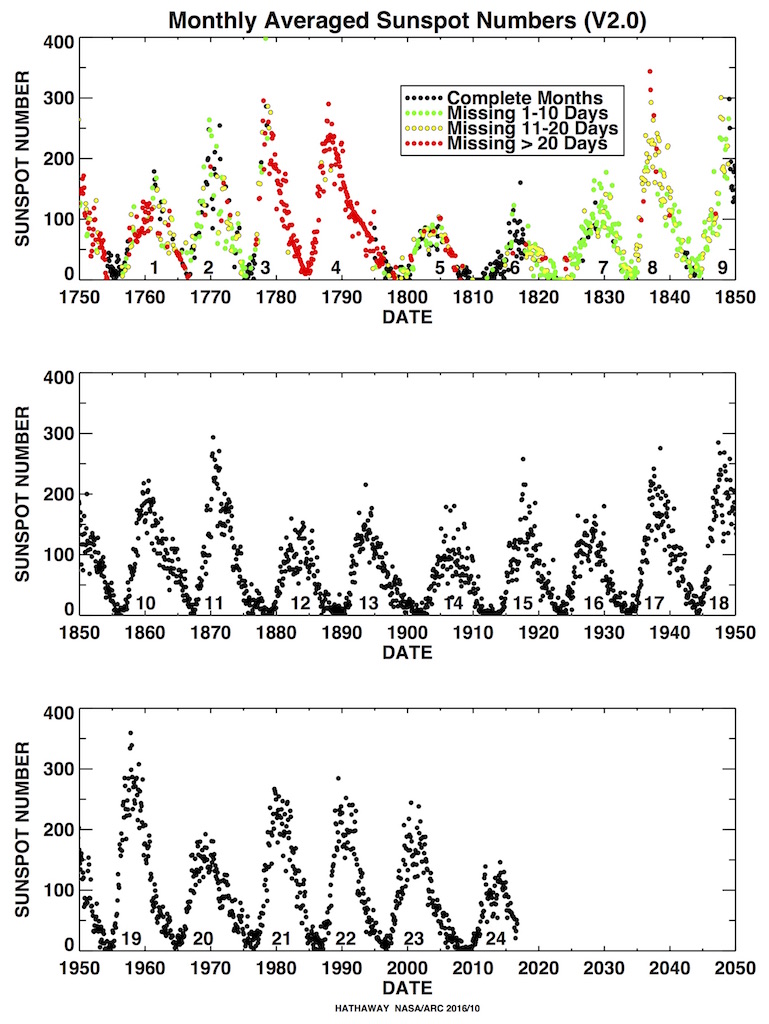
The sun is 4.6 BILLION years old and we are concerned with a couple of years difference in the Solar Cycle? How many of our empirical evidence cycles have we measured in this sort of accuracy? The whole cycle measures within 2.3e-8% of its lifespan and we are surprised that we haven't got the accuracy narrowed down? What other natural phenomenon have we measured to this accuracy cause I would really like to see the ruler that was used...
What got your panties in a twist? Just because something might vary over 4.8 Billion years has nothing to do with the fact that based on our current set of measurements this period was a bit longer. Hell, it doesn't matter if we measured only ONE other cycle, we could STILL make the observation "Hey, this cycle is longer than the last one".
However since you did ask. Sunspots were what we first used as a 'ruler'. Discovered in 800 BC, drawn later, and eventually the cycle was first showin in 1843 using data going back to 1755. We now know sunspot data (from historical observations not always available to the first discoverers of the cycle) going back to 1610.
And it's not like it's a 'slight' cycle either. These things vary by 150+ appearances per day during the peak, down to a dozen or fewer during the minimum.
Take a look at this picture: http://solarscience.msfc.nasa.gov/images/Zurich_Color_Small.jpg
You don't exactly have to be a statistical wizard to see a pattern in that data.
-
Ask the correct crowd -- Earth Science Informatics
You said you're dealing with physical science. From what you describe, I'd guess that you're dealing with earth science, from what we call "small science". (lots of smaller investigations that can be done with a small team, rather than the multi-million dollar satellite or sensor grid projects).
I'd suggest talking to one of the following groups:
- The Federation of Earth Science Information Partners
- The American Geophysical Union's Earth and Space Science Informatics group
There's a hell of a lot more groups out there, but those two larger groups would be able to stear you towards more specialized groups that deal with a specific scientific discipline.
-
Not all IT is the same -- you want 'Informatics'
The problem is, most IT people have no idea what do with science data -- it'd be like going to a dentist because you're having a heart attack. They might be able to give general advice, but have clue what specifics need to be done. Likewise, IT might be people who are really good at diagnosing hardware, but they might suck at writing code. Not all IT specialists are cross-trained in enough topics to deal with this issue effectively (data modeling, UIs, database admin, programming, and the science discipline itself).
There's a field out there called 'Science Informatics'. It's not a very large group, but there's a number of us who specialize in helping scientists organize, find, and generally manage data. Think of us as librarians for science data.
Most of us would even be willing to give advice to people outside our place of work, as the better organized science data is in general, the more usable and re-usable it is. There's even a number of efforts to have people publish data, so it can be shared, verified, etc. And most of us have a programming background, so we might be able to share code with you, as we try to make it open source where we can, so we don't all have to re-solve the same problems.
Because each discipline varies so much, both in how they think about their data, and what their ultimate needs are, we tend to be specialists, but there's a number of different groups out there, for example:
- Geoinformatics : GEON Grid
- Earth Science : ESIP Federation
- Earth and Space Science : ESSI
- Astronomy : IVOA
There's also Bioinformatics, Health/medical informatics, chemical informatics, etc. plug in your science discipline + 'informatics' into your favorite search engine, and odds are you'll find a group, or person you can write to to try to get more info and advice.
Recently, NSF just funded a few more groups to try to build out systems and communities : DataOne and the Data Conservancy, and I believe there's some more money still to be awarded.
-
Re:Too bad the original series extra scenes suck
Eternity is two robots and sand.
There is nothing but sand.
And robots
For about six years.... Epic fail.
Yeah? Tell that to these guys
-
Re:Wow
some Star Trek nerds might speculate on how an economy like that depicted on Star Trek might work
In a way, that's the whole point of SF -- To explore how people relate to new technology, new cultures and new ways of living.
In 1966 it may have seemed far fetched to have the crew of the Starship Enterprise carrying around flippy communicators and tricorders while jotting down notes on tiny pad-like computers, but after years of watching and wondering "Why not?", here we are.
-
Re:about fucking time
Voyager 1 and 2 are still collecting data, 48 years later. Until a human can subsist on heat and power from an RTG unit alone, at the edges of the solar system, robotics are still going to be doing the heavy lifting. Us meatbags are fairly high maintenance =(
http://voyager.jpl.nasa.gov/mission/weekly-reports/index.htm
-
Re:What to do
The primary mission was to map the whole sky once. They left themselves some reserves in case of problems, so they were expecting to be able to do a second partial map, but we covered their success when it happened back in July. So, this is news, but not a surprise. You can find more details on their site.
-
Warm Mission
In May of 2009, the Spitzer IR space telescope ran out of coolant and transitioned to a "warm mission":
http://www.jpl.nasa.gov/news/news.cfm?release=2009-086
However...
http://en.wikipedia.org/wiki/Wide-field_Infrared_Survey_Explorer
-
Re:And
From the Exploration Precursor Robotic Missions (xPRM) briefing :
Per NASA Johnson Space Center analysis: 44-known NEOs are reachable humans assuming notional Ares V-class launch vehicle performance;
-
The actual presentation
Here is the actual presentation, from the agenda (which has all of the presentations).
Perusal of that shows that gravity was to be obtained by a rotating tether, not within a module.
-
The actual presentation
Here is the actual presentation, from the agenda (which has all of the presentations).
Perusal of that shows that gravity was to be obtained by a rotating tether, not within a module.
-
Robocup
- has been going for a very long time, and often involves more sophisticated physical robots.
Also, as many people have pointed out, this is not really all that original. One of the oldest Genetic Programming's PhDs (in 1980) evolved card players. Tierra pre-dates this stuff. Nothing surprising has emerged here, but I guess it is a nice popular science article for those not familiar with the field.
As others have pointed out, Roger Alsing's Mona Lisa is very cool, as is the work that went into evolving an aerial design for NASA:
http://ti.arc.nasa.gov/projects/esg/research/antenna.htm
RS.
-
Re:Bad Science
The number you are quoting is the solar constant, as measured by satellite.
The number the grandparent is quoting is the average atmospheric insolation over all of Earth for a calendar year. I found a nice calculator provided by NASA that generates "a numerical table of monthly latitude insolation at top-of-atmosphere for a given calendar year" that backs up his provided average of ~342 W/m^2 -- see the bottom right.
-
Re:SUV's trunk...
You know, I was thinking the same thing. The area commonly called "trunk" is usually under the rear deck of a passenger car, separated from the passenger compartment.
Then I thought about my car (2000 TransAm). It has what's called a trunk area, but it's under the rear hatch, and doesn't necessarily have a separation to it. There is a removable interior cover, but I'd hardly call it a separator.
I went looking for a more accurate definition of the "trunk". It's the main cargo, luggage, or storage area in a vehicle. It would not generally be the passenger area, as humans prefer to not be considered "cargo".
With all the seats installed, it had two front captains chairs, two mid captains chairs, and a bench in the rear. The cross section dimensions were roughly 4' wide by 5' tall. The "trunk" area (between the rear of the rearmost seat and the cargo doors) would be roughly 2'x4'x5', or 40 cubic feet.
The rear bench seat was easily removable, which would change the "trunk" area to roughly 4'x4'x5' or 80 cubic feet.
Removal of the interior trim in creased the cross section to approximately 5.5' wide by 5' tall. This would increase the "trunk" area of the rear to 4'x5.5'x5', or 110 cubic feet.
Removal of the mid captains chairs and associated interior trim increased the distance from the back of the front seats to the rear of the truck to 8', so the "trunk" area would be 4'x5.5'x8', or 176 cubic feet. This would be about standard if the truck was configured from the manufacturer as a work truck, rather than a passenger truck.
So the article's precision explanation for stupid people of "about the size of an SUV's trunk" is just plain wrong. They did also say each side is nearly 1 square meter, or nearly 9 square feet. As 1 square meter is 10.76 square feet, which is over the given sizes, we can deduct it to be not larger than 9 square feet, or 0.83 square meters. So 6 equal sides of 9 sq/ft would make it 81 cubic feet.
Easy, huh? Well, they threw us with "each wall is 9 square feet", because that lets us assume the walls are square. Looking at the picture provided, it appears to be a cube. But, if you look at this NASA photo, you'll see there are 6 square sides, and two hexagonal sides. So, if it were a cube, it would be the size of the cargo area of a suburban with the third row. But, it's not a cube, and there are no less than two different sizes for the sides.
You can't blame the article's author for it though. They got the details from NASA's own article. Great. Dimensions from the same organization that said "oh, we made a mistake in our unit conversion, and lost a $125 million dollar satellite."
Sure, if you're going to go around saying a square meter is 9 square feet, there's obviously something wrong with your conversions.
-
Re:SUV's trunk...
You know, I was thinking the same thing. The area commonly called "trunk" is usually under the rear deck of a passenger car, separated from the passenger compartment.
Then I thought about my car (2000 TransAm). It has what's called a trunk area, but it's under the rear hatch, and doesn't necessarily have a separation to it. There is a removable interior cover, but I'd hardly call it a separator.
I went looking for a more accurate definition of the "trunk". It's the main cargo, luggage, or storage area in a vehicle. It would not generally be the passenger area, as humans prefer to not be considered "cargo".
With all the seats installed, it had two front captains chairs, two mid captains chairs, and a bench in the rear. The cross section dimensions were roughly 4' wide by 5' tall. The "trunk" area (between the rear of the rearmost seat and the cargo doors) would be roughly 2'x4'x5', or 40 cubic feet.
The rear bench seat was easily removable, which would change the "trunk" area to roughly 4'x4'x5' or 80 cubic feet.
Removal of the interior trim in creased the cross section to approximately 5.5' wide by 5' tall. This would increase the "trunk" area of the rear to 4'x5.5'x5', or 110 cubic feet.
Removal of the mid captains chairs and associated interior trim increased the distance from the back of the front seats to the rear of the truck to 8', so the "trunk" area would be 4'x5.5'x8', or 176 cubic feet. This would be about standard if the truck was configured from the manufacturer as a work truck, rather than a passenger truck.
So the article's precision explanation for stupid people of "about the size of an SUV's trunk" is just plain wrong. They did also say each side is nearly 1 square meter, or nearly 9 square feet. As 1 square meter is 10.76 square feet, which is over the given sizes, we can deduct it to be not larger than 9 square feet, or 0.83 square meters. So 6 equal sides of 9 sq/ft would make it 81 cubic feet.
Easy, huh? Well, they threw us with "each wall is 9 square feet", because that lets us assume the walls are square. Looking at the picture provided, it appears to be a cube. But, if you look at this NASA photo, you'll see there are 6 square sides, and two hexagonal sides. So, if it were a cube, it would be the size of the cargo area of a suburban with the third row. But, it's not a cube, and there are no less than two different sizes for the sides.
You can't blame the article's author for it though. They got the details from NASA's own article. Great. Dimensions from the same organization that said "oh, we made a mistake in our unit conversion, and lost a $125 million dollar satellite."
Sure, if you're going to go around saying a square meter is 9 square feet, there's obviously something wrong with your conversions.
-
GISS
BTW, if anyone is going to claim that this is due to EVIL OIL COMPANIES causing GLOBAL WARMING, here's a link to the GISS weather stations around that part of the world:
I just took a look at a few of the ones with long-term weather trends and Greenland appears to be cooler today than it was around 1920/1930.
-
Re:Open a windows
Dear troll, it depends on whether you are on the light side or dark side. You'd be losing your heat via your body's radiation.
From NASA article Staying Cool on the ISS:
Without thermal controls, the temperature of the orbiting Space Station's Sun-facing side would soar to 250 degrees F (121 C), while thermometers on the dark side would plunge to minus 250 degrees F (-157 C). There might be a comfortable spot somewhere in the middle of the Station, but searching for it wouldn't be much fun!
Oh come off it GP is not trolling. Temperature is always a matter of perspective, even in the room where I am now. If your spacecraft decompressed you would feel cold because of adiabatic expansion. Stand or float in the sun and you will feel warm, but radiation would still be cooling you.
-
Re:Open a windowsDear troll, it depends on whether you are on the light side or dark side. You'd be losing your heat via your body's radiation.
From NASA article Staying Cool on the ISS:Without thermal controls, the temperature of the orbiting Space Station's Sun-facing side would soar to 250 degrees F (121 C), while thermometers on the dark side would plunge to minus 250 degrees F (-157 C). There might be a comfortable spot somewhere in the middle of the Station, but searching for it wouldn't be much fun!
-
The press release.
Typical Slashdot, a bit behind. This is the press release they sent out on Tuesday.
Aug. 03, 2010
Stephanie Schierholz
Headquarters, WashingtonJames Hartsfield
Johnson Space Center, HoustonMEDIA ADVISORY: M10-107
NASA MOVES SPACE STATION REPAIR SPACEWALK TO FRIDAY, SETS BRIEFINGS
HOUSTON -- The first of two spacewalks by NASA astronauts to replace a
failed ammonia pump on the International Space Station has been
delayed by 24 hours to Friday, Aug. 6. A second spacewalk is planned
for Monday, Aug. 9, to complete the repairs.Flight controllers and station managers made the decision Monday night
after reviewing proposed timelines, final procedures for the repair
work, and the results from a spacewalk dress rehearsal conducted in
the Neutral Buoyancy Laboratory near NASA's Johnson Space Center in
Houston.Expedition 24 Flight Engineers Doug Wheelock and Tracy Caldwell Dyson
are scheduled to perform the spacewalks. The two NASA astronauts will
replace an ammonia coolant pump that failed July 31.NASA Television coverage of both spacewalks will begin at 5 a.m. CDT.
Wheelock and Caldwell Dyson are expected to begin the spacewalks from
the Quest airlock at 5:55 a.m. Friday's spacewalk will be the fourth
for Wheelock and Caldwell Dyson's first.Approximately two hours after the conclusion of each spacewalk, NASA
TV will broadcast a briefing from Johnson. The briefing participants
will be Mike Suffredini, International Space Station program manager;
Courtenay McMillan, Expedition 24 spacewalk flight director; and
David Beaver, Expedition 24 spacewalk officer.Reporters may ask questions from participating NASA locations, and
should contact their preferred NASA center to confirm participation.
Johnson will operate a telephone bridge for reporters with valid
media credentials issued by a NASA center. Journalists planning to
use the service must contact the Johnson newsroom at 281-483-5111 no
later than 15 minutes prior to the start of a briefing. Phone bridge
capacity is limited and will be available on a first-come,
first-serve basis.Engineers and flight controllers continue to review data on the
failure, which resulted in the loss of one of two cooling loops
aboard the station. This caused a significant power down and required
adjustments to provide the maximum redundancy possible for station
systems. The systems are stable, and the six crew members aboard are
not in any danger.Wheelock and Caldwell Dyson originally were scheduled to perform a
spacewalk to outfit the Russian Zarya module for future robotics work
and prepare the station for the installation of a new U.S. permanent
multipurpose module. However, because of the importance of restoring
redundancy to the station's cooling and power systems, the two new
spacewalks will be dedicated to the pump module replacement.For NASA TV streaming video, schedules and downlink information,
visit:For more information about the station and the Expedition 24 crew,
visit:-end-
-
The press release.
Typical Slashdot, a bit behind. This is the press release they sent out on Tuesday.
Aug. 03, 2010
Stephanie Schierholz
Headquarters, WashingtonJames Hartsfield
Johnson Space Center, HoustonMEDIA ADVISORY: M10-107
NASA MOVES SPACE STATION REPAIR SPACEWALK TO FRIDAY, SETS BRIEFINGS
HOUSTON -- The first of two spacewalks by NASA astronauts to replace a
failed ammonia pump on the International Space Station has been
delayed by 24 hours to Friday, Aug. 6. A second spacewalk is planned
for Monday, Aug. 9, to complete the repairs.Flight controllers and station managers made the decision Monday night
after reviewing proposed timelines, final procedures for the repair
work, and the results from a spacewalk dress rehearsal conducted in
the Neutral Buoyancy Laboratory near NASA's Johnson Space Center in
Houston.Expedition 24 Flight Engineers Doug Wheelock and Tracy Caldwell Dyson
are scheduled to perform the spacewalks. The two NASA astronauts will
replace an ammonia coolant pump that failed July 31.NASA Television coverage of both spacewalks will begin at 5 a.m. CDT.
Wheelock and Caldwell Dyson are expected to begin the spacewalks from
the Quest airlock at 5:55 a.m. Friday's spacewalk will be the fourth
for Wheelock and Caldwell Dyson's first.Approximately two hours after the conclusion of each spacewalk, NASA
TV will broadcast a briefing from Johnson. The briefing participants
will be Mike Suffredini, International Space Station program manager;
Courtenay McMillan, Expedition 24 spacewalk flight director; and
David Beaver, Expedition 24 spacewalk officer.Reporters may ask questions from participating NASA locations, and
should contact their preferred NASA center to confirm participation.
Johnson will operate a telephone bridge for reporters with valid
media credentials issued by a NASA center. Journalists planning to
use the service must contact the Johnson newsroom at 281-483-5111 no
later than 15 minutes prior to the start of a briefing. Phone bridge
capacity is limited and will be available on a first-come,
first-serve basis.Engineers and flight controllers continue to review data on the
failure, which resulted in the loss of one of two cooling loops
aboard the station. This caused a significant power down and required
adjustments to provide the maximum redundancy possible for station
systems. The systems are stable, and the six crew members aboard are
not in any danger.Wheelock and Caldwell Dyson originally were scheduled to perform a
spacewalk to outfit the Russian Zarya module for future robotics work
and prepare the station for the installation of a new U.S. permanent
multipurpose module. However, because of the importance of restoring
redundancy to the station's cooling and power systems, the two new
spacewalks will be dedicated to the pump module replacement.For NASA TV streaming video, schedules and downlink information,
visit:For more information about the station and the Expedition 24 crew,
visit:-end-
-
Re:So should I unplug all my stuff or not?
I *reallly* hope it's all nothing and not this http://science.nasa.gov/science-news/science-at-nasa/2009/21jan_severespaceweather/
-
Re:More please!!!
Well, if the precision needed surpasses practical approaches possible to us, that's moderately close to fundamental, as far as seing it soon goes... Or perhaps, at the least, you'd probably need zero drag spacecraft; while doing it with a large part containing mirrors plus including all the "portholes" for incoming and outgoing (to the hub) light...fun.
There are certainly good reasons why one ESA mission was put on hold (without managing to determine if what they want to do, with only 3 spacecraft, is technically feasible), or that one NASA interferometer, one spacecraft relying on rigid frame, needed a decade of technical feasibility studies (again, rigid), and still probably won't launch for another decade...
And none of the two above can give actual "pretty pictures" (about which the initial post was), merely finally resolve the dot of a terrestrial planet (more or less). We should see Pluto-like images (those before New Horizons; and not the best out of those, too) in our lifetimes, I guess; anything more - better don't count on it too much. -
Re:RIP little buddy
The two rovers may be the greatest achievement of mankind to date. Lasting this long is beyond heroic. They may be robots but they have both shown a stubborn determination that is impressive for man or machine.
Speaking of which: http://voyager.jpl.nasa.gov/
"On June 28, 2010, Voyager 2 completed 12,000 days of continuous operations since its launch on August 20, 1977. For nearly 33 years, the venerable spacecraft has been returning unprecedented data about the giant outer planets, the properties of the solar wind between and beyond the planets and the interaction of the solar wind with interstellar winds in the heliosheath. Having traveled more than 21 billion kilometers on its winding path through the planets toward interstellar space, the spacecraft is now nearly 14 billion kilometers from the sun. Traveling at the speed of light, a signal from the ground takes about 12.8 hours to reach the spacecraft."
-
already fixed.
This rover is carrying it's own power and will not have any solar panels. http://mars.jpl.nasa.gov/msl/mission/technology/technologiesofbroadbenefit/power/
-
Nuclear Power
This rover does not have solar panels, it runs on Nuclear Power . .
http://mars.jpl.nasa.gov/msl/mission/technology/technologiesofbroadbenefit/power/ -
Re:All your eggs in one basket
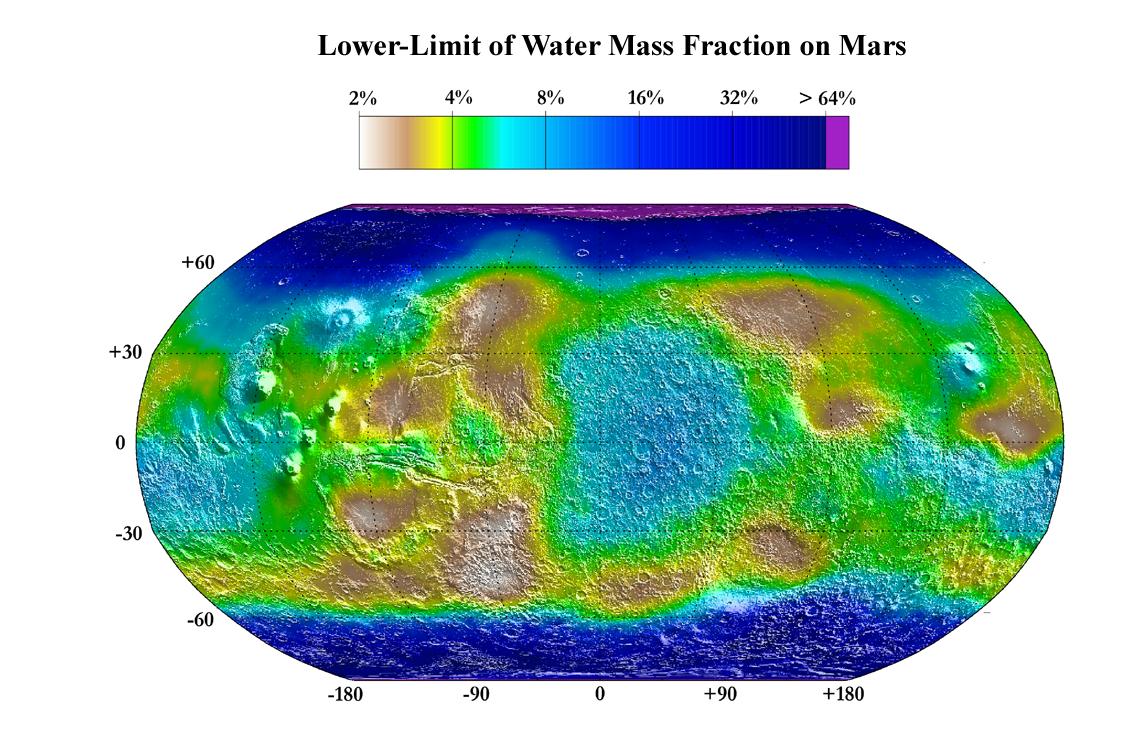
Because rovers are PR stunts. Real work gets done from orbit. We already have a map of the underground water reserves of Mars, we even have a clear picture of water snow (we know it is not CO2 snow). All of these results brought from ESA orbiters. Sadly, ESA lacks the public relation office that NASA has...
-
Re:Wheels
-
Re:Overweaning care
The common internal cumbustion engine is not exactly rocket science. If I sent my CRX engine over to the wiz kids ahd had it rebuilt I would EXPECT them to re-check the oil, timing, etc, crank it over a few times without fire to make sure nothing clanks inside, and have the oil pressure gauge hooked up when it is fired off for the first time just to make sure nothng was forgotten or missed. Some shops even do compression tests just to spot obvious problems.
So I'm entirely pleased that JPL gave this new Rover a cautious and careful initial drive. Why destroy a motor or break something else just because you 'know what you're doing'?
Now, sadly, we have to deal with the fear that this Rover will get to Mars, drive off the landing pad, and lurch to a halt 12 meters away just because of something no one thought of. I'd rather we make a dozen copies of Opportunity. that rover design seems to have stood the test. Make a few and land them as a MIRV'd mission. Or maybe update the power system with the nuclear option. We'll be pretty disappointed if this fancy new Rover grinds to a halt for something either stupid or unknown.
-
Re:"Undeniable"
Just in case anyone is interested, this is the graph you can be looking at. It's from the same data set, and though it begins in 1880, the spike does not occur until 1950.
You can also look at reconstructed data here that shows that the current temperature spike lies outside of the Medieval Warming period. Claims that the Northwest Passage was open at that time are unverified. There isn't any archaeological evidence for any European seafaring past certain points in modern Canada.
What about the spike from 1910 up until about 1940? It's just as steep as the one from 1960 onwards. Noone is denying warming, it's how strong the causal link with CO2 is that's being questioned and whether or not the warming will be an issue. As far as the Northwest Passage claims go, those are not evidence of anything either. Ice melt around the northern latitudes is more dependant on wind factors than actual temperature, since it's below freezing almost all year around (wind pushes the ice to lower latitudes where it can actually melt).
Your graph also shows about 0.8 degrees of warming from 1910 to present, hardly something to be so alarmed about. If that trend continues, we're looking at a total of 1.6 degrees by 2100. Hardly the kind of catastrophic values that everyone in the alarmist camp is peddling. As far as the proxy graph goes, I'd have to take a look at the actual methodology in the studies because I do not trust graphs like that. I am sure you are painfully aware of the hockey stick generator Mann built that generates hockey stick shapes even from random noise and then used that as evidence.
This simply means that any species that can't adapt may die out(if a change that small even necessitates adaptation), but they will be replaced by species that can live in that environment. Why this is considered to be catastrophic or even bad I do not understand.
Because our current way of life is very dependent on the current food chain, and some of us don't want to have a toxic lifeless soup for an ocean. Oysters in particular serve as filters, and are necessary to keep tidal creeks functioning. Corals are also a vital part of the shallow ocean ecosystem.
Here we go with alarmism again. Most of our food supply comes from farming and raising livestock, not from oysters. Are you suggesting that all fish will disappear within a hundred years? No? Your claim about oceans becoming toxic soup is funny as well, would you care to provide some form of evidence to support it? I'd also like some form of science to support that corals are being threatened by the current warming or ocean acidification or whatever it is you think they are being threatened by.
You're confusing CO2-induced warming and CO2-induced health effects in that argument.
I was pointing out that too much of anything is pollution.
And I was pointing out that CO2 will never reach levels that are anywhere near to actual pollution (which I define as emissions directly affecting human health, such as small particle emissions).
There's also a saying I heard somewhere: "Lack of food kills you in weeks, lack of water kills you in days, but lack of warmth can kill you in hours."
There's also a saying: this is the 21st Century, and very few people die of simple exposure. Humans that die in the winter are people whose immune systems fail to protect them from communicable diseases that are more prevalent when everyone's immune system is weakened. Any variation in weather will present the same seasonal death rate - that's why the curve is the same from Greece to Norway. So the equatorial states have little variation, but that's due to the lack of weather changes, not due to the h
-
Re:This research is FALSE!
You continue to assert that climate and weather are the same thing. They aren't. It is not semantics, it is a fundamental difference. For instance, I can predict that on average over the next year, Arizona will be hotter than Alaska. That is climate. Yet I can not predict accurately whether, on any given day, Arizona will be hotter than Alaska. That is weather. Now, if I can't predict on any given day whether Alaska or Arizona will be hotter, how can I tell that Arizona will be hotter on average? Because Alaska is in the fucking arctic circle. get it?
There are many cases where we can predict the aggregate but not the specifics. Are men or women taller, on average? Easy, men are taller. Is a given man taller than a given woman? No way to predict. On average, yes, but any given woman may be taller than any given man.
Here's NASA's explanation for laymen of the difference between climate and weather.
http://www.nasa.gov/mission_pages/noaa-n/climate/climate_weather.html
-
Re:"Undeniable"
Just in case anyone is interested, this is the graph you can be looking at. It's from the same data set, and though it begins in 1880, the spike does not occur until 1950.
You can also look at reconstructed data here that shows that the current temperature spike lies outside of the Medieval Warming period. Claims that the Northwest Passage was open at that time are unverified. There isn't any archaeological evidence for any European seafaring past certain points in modern Canada.
This simply means that any species that can't adapt may die out(if a change that small even necessitates adaptation), but they will be replaced by species that can live in that environment. Why this is considered to be catastrophic or even bad I do not understand.
Because our current way of life is very dependent on the current food chain, and some of us don't want to have a toxic lifeless soup for an ocean. Oysters in particular serve as filters, and are necessary to keep tidal creeks functioning. Corals are also a vital part of the shallow ocean ecosystem.
You're confusing CO2-induced warming and CO2-induced health effects in that argument.
I was pointing out that too much of anything is pollution.
There's also a saying I heard somewhere: "Lack of food kills you in weeks, lack of water kills you in days, but lack of warmth can kill you in hours."
There's also a saying: this is the 21st Century, and very few people die of simple exposure. Humans that die in the winter are people whose immune systems fail to protect them from communicable diseases that are more prevalent when everyone's immune system is weakened. Any variation in weather will present the same seasonal death rate - that's why the curve is the same from Greece to Norway. So the equatorial states have little variation, but that's due to the lack of weather changes, not due to the heat.
There are no variations with water supply. If you don't have access to clean water and sanitation, you're going to be very sick, and probably dead.
Anyway, enough of reality. Go back to blogging against those evil scientists, whose plot to Destroy America will surely succeed if they aren't thwarted by your amazing intellect.