Slashdot Mirror
Domain: nasa.gov
Stories and comments across the archive that link to nasa.gov.
Comments · 16,365
-
not gravity assist!
A gravity assist trajectory is using the gravitational field of a large planet to divert a spacecraft to it's final destination. Since you are falling down a gravity well with this trajectory, you generate acceleration. The reason this works is that you are essentially "stealing" some of the momentum from the planet (think billiard balls colliding and exchanging momentum, but this is just without the collision).
This technique is almost the dual of the gravity assist in that it has the spacecraft follow the 3 dimensional paths of zero-net gravitational acceleration. Think of this like walking between two mountains mostly along the isolines (instead of taking a path where you are walking down into a valley and have to walk back up). The path might be long and windy to walk across the iso lines, but you reduce the total energy you have to expend (except to get from your starting point to the iso-line and from the iso-line to your destination). The reason these paths are called currents is that it really isn't a 2-d isopath with minimum energy you are following, but really a 6-d iso path (position and velocity thus a "current"). This is where the analogy breaks down with the 2d isopath.
BTW, this is really, really old news... http://www.jpl.nasa.gov/releases/2002/release_2002_147.html
And also a DUPE http://science.slashdot.org/article.pl?sid=03/03/07/215211&mode=thread&tid=160
-
Manned Earth to Mars = Radiation Overdose18 months is currently too long for a manned Mars mission, much less anything slower and therefore longer.
Quote: Mars will be even tougher, these models suggest. Some scenarios call for missions that would last 18 months or more. "Right now there's no design solution to stay within safety limits for such a Mars mission," Cucinotta says. "Putting enough radiation shielding around a spacecraft would make it far too heavy to launch, so we need to find better lightweight shielding materials, and we probably need to develop medical techniques to counteract damage to cells caused by cosmic rays." He notes that one of the biggest obstacles to progress in this area is "uncertainty in the types of cell damage deep cosmic ray exposure can cause. We still have a lot to learn."
Source: http://science.nasa.gov/headlines/y2009/27may_phantomtorso.htm?list776758
-
Bad article, !toxicity
They aren't testing toxicity, they're testing for effective disinfection (by ensuring there is the correct residual disinfectant remaining in the water). That's pretty uninteresting, actually. It's standard practice to test for a disinfection residual in the water treatment industry.
Common disinfectants are chlorine (either gaseous or in hypochlorites, e.g. sodium hypochlorite = liquid bleach, or calcium hypochlorite which is in the form of solid granules or tablets), chloramines (a chlorine/ammonia compound), ozone, and ultraviolet. Ultraviolet, of course, is a one-time hit and leaves no residual disinfecting agent in the water. Ozone dissipates quite rapidly, so the residual is gone in a short matter of time. Chlorine dissipates over the course of several days, while chloramines stay in the water for several weeks. Large water systems typically need a disinfectant which will stay in the water for several days or weeks, because it takes that long for the water to travel from the treatment plant out through the piping system to the edges of the distribution region. You have to have an adequate disinfectant residual even at the edges of your system in order to prevent microbial growth inside your pipes.
Frankly, I'm very not-impressed with TFA. This is somewhat better, it at least explains the disinfection process and why they need to test for these two substances (iodine and silver):
NASA uses iodine as a disinfectant on U.S. space crafts, and Russians use pure-silver nanoparticles that at low levels are non-toxic, but it's a balancing act. If the levels of iodine and silver in the water are too low, microbes will grow, Porter said. Levels of iodine that are too high result in bad-tasting water that the astronauts will not drink, putting them at risk for dehydration. A long-term effect of drinking an excess of iodine is the possibility of developing thyroid problems. Excess levels of silver can permanently turn the skin a grayish-blue color.
Of course, if you really want the low-down on the process, you get it from NASA's website...
-
'Nebula' cloud computing platform at NASA Ames
According to a comment over at NASA Watch, this is going to be at least conceptually based on the NEBULA cloud computing platform developed by NASA Ames. It seems pretty cool and potentially quite useful. Calling it an "app store" is a really dumb analogy though, and gives absolutely no idea of what it actually entails:
http://nebula.nasa.gov/
http://www.nasawatch.com/archives/2009/09/ames_will_help.htmlI am the Project Coordinator for Nebula, the cloud computing pilot at NASA Ames. Nebula has been in R&D and under development for well over a year. There are many reasons that a large organization, such as NASA, would explore cloud. The Nebula team did an extensive trade study to see what public clouds out there could meet NASA's needs. None did. Either they were not fast and powerful enough to handle NASA's massive data sets or they did not comply with security requirements. NASA needed its own cloud. I won't go into technical specifics (you can read about them at http://nebula.nasa.gov/ but the Nebula team ended up creating something that is smart, powerful, and incredibly energy-efficient to boot.
NASA was approached by the Feds because Nebula solves some cloud problems that are common among other Government Agencies. It is wicked fast, complies with FISMA and can scale to Government-sized demands. It is also rather forward-thinking in that it is built using open-source components and is incredibly energy efficient. Again, Nebula was created with NASA - not the Feds - in mind, but when they caught wind, they were interested too.
I suggest that people spend some time reading about what is actually going on before they jump to conclusions. To my knowledge there have been no announcements that Ames will orchestrate the Fed's move to cloud computing or develop any new systems or technologies that were not already under development. NASA has been responsible for a number of innovative new technologies over the years. Memory foam, for example. NASA invented it, but are they out there selling mattresses?
Posted by: Gretchen at September 16, 2009 8:42 PM
-
'Nebula' cloud computing platform at NASA Ames
According to a comment over at NASA Watch, this is going to be at least conceptually based on the NEBULA cloud computing platform developed by NASA Ames. It seems pretty cool and potentially quite useful. Calling it an "app store" is a really dumb analogy though, and gives absolutely no idea of what it actually entails:
http://nebula.nasa.gov/
http://www.nasawatch.com/archives/2009/09/ames_will_help.htmlI am the Project Coordinator for Nebula, the cloud computing pilot at NASA Ames. Nebula has been in R&D and under development for well over a year. There are many reasons that a large organization, such as NASA, would explore cloud. The Nebula team did an extensive trade study to see what public clouds out there could meet NASA's needs. None did. Either they were not fast and powerful enough to handle NASA's massive data sets or they did not comply with security requirements. NASA needed its own cloud. I won't go into technical specifics (you can read about them at http://nebula.nasa.gov/ but the Nebula team ended up creating something that is smart, powerful, and incredibly energy-efficient to boot.
NASA was approached by the Feds because Nebula solves some cloud problems that are common among other Government Agencies. It is wicked fast, complies with FISMA and can scale to Government-sized demands. It is also rather forward-thinking in that it is built using open-source components and is incredibly energy efficient. Again, Nebula was created with NASA - not the Feds - in mind, but when they caught wind, they were interested too.
I suggest that people spend some time reading about what is actually going on before they jump to conclusions. To my knowledge there have been no announcements that Ames will orchestrate the Fed's move to cloud computing or develop any new systems or technologies that were not already under development. NASA has been responsible for a number of innovative new technologies over the years. Memory foam, for example. NASA invented it, but are they out there selling mattresses?
Posted by: Gretchen at September 16, 2009 8:42 PM
-
Re:and NASA
NASA usually contracts private contractors to do their work.
They don't design or build much of anything themselves.
False, at least if "anything" includes things like science experiments and life support systems. When I was an electrical engineering student (2001-2005), co-oping at the Mashall Space Flight Center, I worked on the printed circuit board designs for several different in-house projects, including control modules for the the Environmental Control & Life Support System (ECLSS) and the Material Science Research Rack (MSRR) (If the PDFs bother your philosophical beliefs, you can look them up in wikipeadia). So yes, NASA does both design and build things, or at least as of 2005 they did. I was there, I helped (in a small way) design some of these things, and they are in orbit today. Furthermore I very much resent, both personally and on behalf my former co-workers, how prevalent the idea that "NASA doesn't really design or build much of anything themselves" in a supposedly intelligent, informed, and technologically sophisticated group.
Now launch vehicles they don't completely design, and certainly don't build, themselves (which IMHO is something that the private sector ought to be able to handle by now). However, that doesn't mean important and challenging engineering work isn't happening at NASA!
-
Re:and NASA
NASA usually contracts private contractors to do their work.
They don't design or build much of anything themselves.
False, at least if "anything" includes things like science experiments and life support systems. When I was an electrical engineering student (2001-2005), co-oping at the Mashall Space Flight Center, I worked on the printed circuit board designs for several different in-house projects, including control modules for the the Environmental Control & Life Support System (ECLSS) and the Material Science Research Rack (MSRR) (If the PDFs bother your philosophical beliefs, you can look them up in wikipeadia). So yes, NASA does both design and build things, or at least as of 2005 they did. I was there, I helped (in a small way) design some of these things, and they are in orbit today. Furthermore I very much resent, both personally and on behalf my former co-workers, how prevalent the idea that "NASA doesn't really design or build much of anything themselves" in a supposedly intelligent, informed, and technologically sophisticated group.
Now launch vehicles they don't completely design, and certainly don't build, themselves (which IMHO is something that the private sector ought to be able to handle by now). However, that doesn't mean important and challenging engineering work isn't happening at NASA!
-
Re:and NASA
NASA usually contracts private contractors to do their work.
They don't design or build much of anything themselves.
False, at least if "anything" includes things like science experiments and life support systems. When I was an electrical engineering student (2001-2005), co-oping at the Mashall Space Flight Center, I worked on the printed circuit board designs for several different in-house projects, including control modules for the the Environmental Control & Life Support System (ECLSS) and the Material Science Research Rack (MSRR) (If the PDFs bother your philosophical beliefs, you can look them up in wikipeadia). So yes, NASA does both design and build things, or at least as of 2005 they did. I was there, I helped (in a small way) design some of these things, and they are in orbit today. Furthermore I very much resent, both personally and on behalf my former co-workers, how prevalent the idea that "NASA doesn't really design or build much of anything themselves" in a supposedly intelligent, informed, and technologically sophisticated group.
Now launch vehicles they don't completely design, and certainly don't build, themselves (which IMHO is something that the private sector ought to be able to handle by now). However, that doesn't mean important and challenging engineering work isn't happening at NASA!
-
Re:and NASA
Rather than "hate" or "like" NASA, there's a very well written history of how Apollo was compromised (Apollo 18-20 were cancelled), and how the Shuttle ended up with solid rocket boosters, at: http://history.nasa.gov/SP-4221/contents.htm .
It boils down to: This was what NASA could do with the money given them by the OMB (Office of Management and Budget).
I found this process to be quite interesting.
From a historical point of view, history seems to be repeating itself. Another "outside" committee has looked into NASA's plans and other options. The committee has priced the options for lowest possible, plod along, and even (remarkably) do something worthwhile.
I assume "lowest possible" will be picked.
I recommend the above hyperlink to anyone.
Thanks,
Dave
-
Re:Wrong question
And science is slow - you can't follow Fermilab like some do a baseball team.
Well, maybe not exactly like a baseball team, but you can follow at least some of hat's going on. I used to listen to the Science@NASA podcast on the way to work and they were just reading -- with feeling, mind you -- the press releases; nevertheless, I found it informative, interesting, and valuable.
-
Re:This should be NASA's focus
That's not really NASA's job. NASA usually gets criticized for performing commercial or military missions. NASA's job is to do the science: quantify the threat and find good ways to fix it. Their scope might be expanded to a one-off, prototype deflection mission, but a standing "Deflection Corp" would be a millstone about NASA's neck.
-
Re:Or
What the hell are you talking about?
You want the data? You want the code? How many times are people going to ask the same fucking questions before they actually shut the hell up and read the IPCC report. IT IS ALL THERE.
They tell you what data was used. They tell you what models were used. And more importantly, they tell you WHERE TO GET THEM.
Or if you are too damn lazy to read the report use Google. How about this one: http://www.giss.nasa.gov/tools/modelE/
Or from the Wiki: http://en.wikipedia.org/wiki/Global_climate_model
It's not some uber-secret global conspiracy folks. Go and dig it up. The real reason people don't is simply because of the fact that the vast majority of people who feel they are qualified to criticize the models couldn't tell point out a computational fluid dynamics model if it came up and bit their asses.
~X~
-
Re:The "spikey cealing"
The borked link should have pointed to:
http://www.nasa.gov/multimedia/imagegallery/image_feature_1345.html
-
Re:Misses the point
amazingly, Columbia and Challenger launched on the same day in February like 20 years apart...go figure
I'll assume you were repeating something someone else said but next time try a quick internet search before passing it on.
Both missions where Challenger and Columbia were destroyed were launched in January not February.
The launches were 17 not 20 years apart.
They were not launched on the same day. (Challenger launched on Jan 28, 1986, Columbia launched on Jan 16, 2003)http://www.nasa.gov/mission_pages/shuttle/shuttlemissions/archives/sts-51L.html
http://www.nasa.gov/mission_pages/shuttle/shuttlemissions/archives/sts-107.html -
Re:Misses the point
amazingly, Columbia and Challenger launched on the same day in February like 20 years apart...go figure
I'll assume you were repeating something someone else said but next time try a quick internet search before passing it on.
Both missions where Challenger and Columbia were destroyed were launched in January not February.
The launches were 17 not 20 years apart.
They were not launched on the same day. (Challenger launched on Jan 28, 1986, Columbia launched on Jan 16, 2003)http://www.nasa.gov/mission_pages/shuttle/shuttlemissions/archives/sts-51L.html
http://www.nasa.gov/mission_pages/shuttle/shuttlemissions/archives/sts-107.html -
Russian Progress, not Shuttle, supplying ISS
I thought it was the unmanned Russian Progress spacecraft that has mostly been supplying the ISS:
http://www.nasa.gov/mission_pages/station/structure/elements/progress.html
-
Re:Where the shit are the images?
Don't feed the trolls, but I'm the author of this worst submission ever.
First link is to text-only release from NASA, link at end goes to NASA Hubble page, http://www.nasa.gov/hubble
Last link is to HubbleSite, All 52 release images. Site still has server issues it seems, but nasa.gov link works smoothly.
-
Half an hour until launch.
It should be launching in half an hour
Live video from JAXA
Live video from NASA -
God giving us a hint?
Eta Carina is a fascinating object
Indeed! It contains one of my favorite nebula's:
http://apod.nasa.gov/apod/ap030630.html
(Older Hubble file photo)
-
Re:Would like to see the improvement
If anyone finds a link to side-by-side images from the old and new cameras, please post it!
I'll give it a shot. (note: on some of these I'm using MAST's archive since the main NASA site seems to be down and I am not linking you to full resolution photos as well as seeming to be at different ranges)
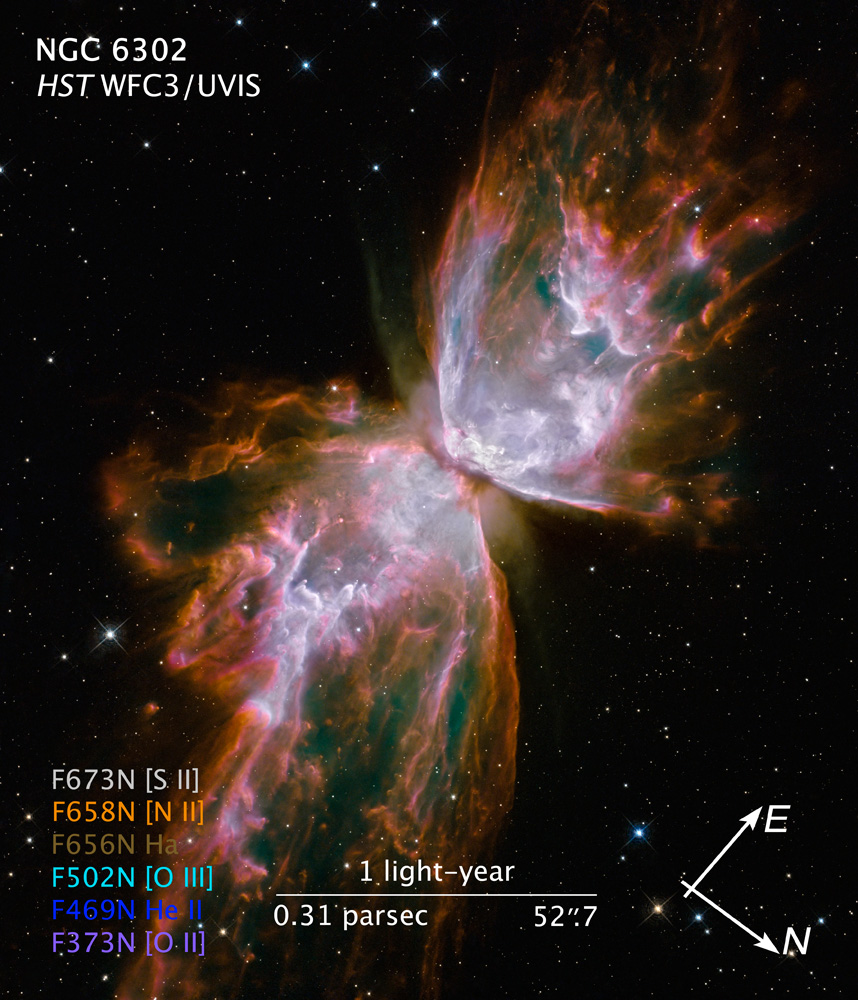
Old (2007) Image of NGC 6302 compare with new image of NGC 6302
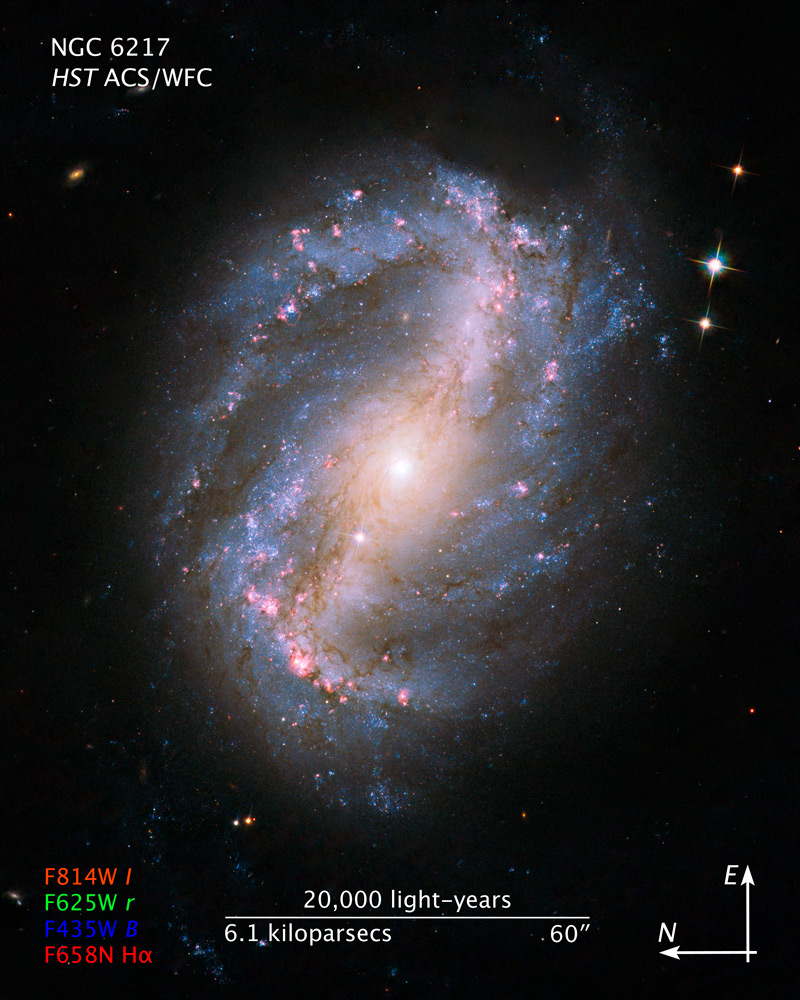
Old (2004 not HST, ground observatory can't find HST image) Image of NGC 6217 compare with new image of NGC 6217
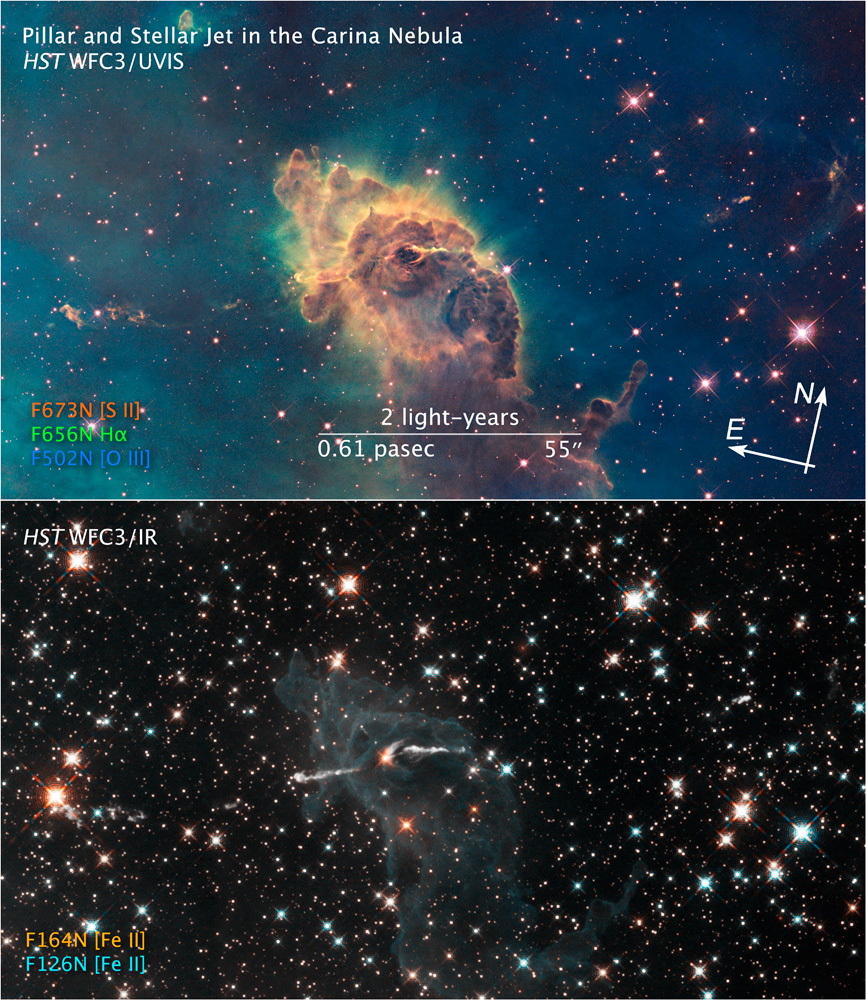
Old (2007) Image of Carina Nebula compare with new image of Carina Nebula
Old (1998 land observatory) Images (2000 HST) of Stephen's Quintet compare with new image of Stephen's Quintet
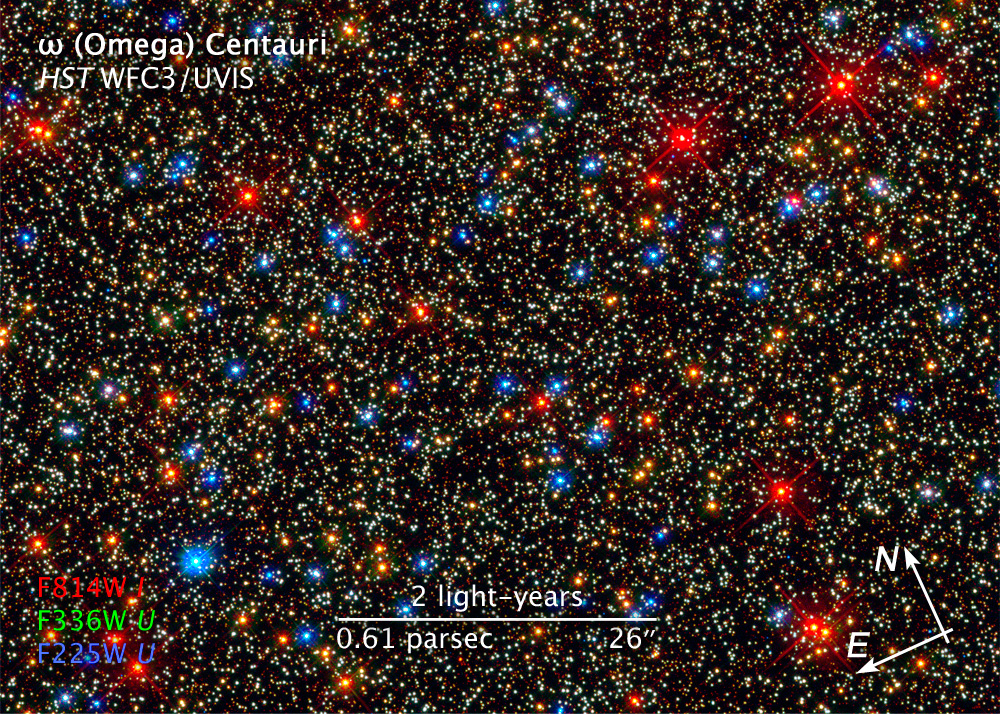
Old (2008) Omega Centauri compare with new Omega Centauri
Old (2005) Supernova Remnant LMC N132D compare with new Supernova Remnant LMC N132D
Hopefully that gives you an idea, most of those old images are Hubble but I threw in some ground based observatory ones so that you can get an idea of what Hubble's been doing for us for 15 years. -
Re:Would like to see the improvement
If anyone finds a link to side-by-side images from the old and new cameras, please post it!
I'll give it a shot. (note: on some of these I'm using MAST's archive since the main NASA site seems to be down and I am not linking you to full resolution photos as well as seeming to be at different ranges)
Old (2007) Image of NGC 6302 compare with new image of NGC 6302
Old (2004 not HST, ground observatory can't find HST image) Image of NGC 6217 compare with new image of NGC 6217
Old (2007) Image of Carina Nebula compare with new image of Carina Nebula
Old (1998 land observatory) Images (2000 HST) of Stephen's Quintet compare with new image of Stephen's Quintet
Old (2008) Omega Centauri compare with new Omega Centauri
Old (2005) Supernova Remnant LMC N132D compare with new Supernova Remnant LMC N132D
Hopefully that gives you an idea, most of those old images are Hubble but I threw in some ground based observatory ones so that you can get an idea of what Hubble's been doing for us for 15 years. -
Re:Would like to see the improvement
If anyone finds a link to side-by-side images from the old and new cameras, please post it!
I'll give it a shot. (note: on some of these I'm using MAST's archive since the main NASA site seems to be down and I am not linking you to full resolution photos as well as seeming to be at different ranges)
Old (2007) Image of NGC 6302 compare with new image of NGC 6302
Old (2004 not HST, ground observatory can't find HST image) Image of NGC 6217 compare with new image of NGC 6217
Old (2007) Image of Carina Nebula compare with new image of Carina Nebula
Old (1998 land observatory) Images (2000 HST) of Stephen's Quintet compare with new image of Stephen's Quintet
Old (2008) Omega Centauri compare with new Omega Centauri
Old (2005) Supernova Remnant LMC N132D compare with new Supernova Remnant LMC N132D
Hopefully that gives you an idea, most of those old images are Hubble but I threw in some ground based observatory ones so that you can get an idea of what Hubble's been doing for us for 15 years. -
Re:Would like to see the improvement
If anyone finds a link to side-by-side images from the old and new cameras, please post it!
I'll give it a shot. (note: on some of these I'm using MAST's archive since the main NASA site seems to be down and I am not linking you to full resolution photos as well as seeming to be at different ranges)
Old (2007) Image of NGC 6302 compare with new image of NGC 6302
Old (2004 not HST, ground observatory can't find HST image) Image of NGC 6217 compare with new image of NGC 6217
Old (2007) Image of Carina Nebula compare with new image of Carina Nebula
Old (1998 land observatory) Images (2000 HST) of Stephen's Quintet compare with new image of Stephen's Quintet
Old (2008) Omega Centauri compare with new Omega Centauri
Old (2005) Supernova Remnant LMC N132D compare with new Supernova Remnant LMC N132D
Hopefully that gives you an idea, most of those old images are Hubble but I threw in some ground based observatory ones so that you can get an idea of what Hubble's been doing for us for 15 years. -
Re:Would like to see the improvement
If anyone finds a link to side-by-side images from the old and new cameras, please post it!
I'll give it a shot. (note: on some of these I'm using MAST's archive since the main NASA site seems to be down and I am not linking you to full resolution photos as well as seeming to be at different ranges)
Old (2007) Image of NGC 6302 compare with new image of NGC 6302
Old (2004 not HST, ground observatory can't find HST image) Image of NGC 6217 compare with new image of NGC 6217
Old (2007) Image of Carina Nebula compare with new image of Carina Nebula
Old (1998 land observatory) Images (2000 HST) of Stephen's Quintet compare with new image of Stephen's Quintet
Old (2008) Omega Centauri compare with new Omega Centauri
Old (2005) Supernova Remnant LMC N132D compare with new Supernova Remnant LMC N132D
Hopefully that gives you an idea, most of those old images are Hubble but I threw in some ground based observatory ones so that you can get an idea of what Hubble's been doing for us for 15 years. -
Re:MAST Mirror Site
Also NASA's Weekly Top 10 page is worth a look. It'll take a week or maybe two for the cream of the latst Hubble pictures to filter to the top though; updates are every Tuesday night or Wednesday morning depending on your timezone.
-
Re:Fine by me.
...now that we've discovered that the real price tag is over a billion a flight.
Actually, the price to launch a shuttle averages at $450M, so half a billion. source: http://www.nasa.gov/centers/kennedy/about/information/shuttle_faq.html#10
-
Huh?
NASA is an independent agency of the US government; the NASA administrator reports directly to the President (but doesn't serve on the cabinet). NASA and DoD do have overlapping interests, co-operate on a lot of stuff, and have a lot of inter-agency agreements, which you can find at http://www.sti.nasa.gov/codeid/ but if NASA were under DoD, there wouldn't be any need for inter-agency agreements.
-
Proof? Right here.
-
Different summary
Ok, not to be whiny, but I didn't like this particular summary, as it mentions the panel's conclusion that NASA's current path is unworkable, but doesn't make any mention of the alternative paths forwarded presented by the Committee (and discussed in the article). Here's an alternative summary, with some links to the actual report summary (which I suspect none of the commenters so far have actually read):
A summary of the Augustine Committee's upcoming report on the future of US spaceflight has been submitted to the White House and NASA, and made available to the public. The committee's analysis found that NASA's current plans for a human lunar return by 2020 are unworkable, with NASA's status quo not likely to place them on the moon 'until well into the 2030s, if ever'. Raising NASA's budget by $3B/year opens two primary options: 'Moon First' with a lunar return and possible base-building starting in the mid-2020s, or 'Flexible Path,' which would initially focus on building an in-space architecture for supporting progressive exploration, starting with Lagrange points and Near-Earth Objects (asteroids and comets) in the early 2020s, and exploring the moons of Mars or Earth in the mid-2020s. Options for a heavy-lift launcher were also outlined: NASA's current plans for an Ares V, a less costly 'directly Shuttle-derived' vehicle, or the least costly (but politically most difficult) 'new way of doing business' of purchasing launches on an upgraded EELV. Other key findings are that the ISS should be extended to 2020, that developing in-space refueling would benefit all of NASA's options, that NASA should make use of commercial crew transportation, that NASA should revive its space technology development program (which had largely stagnated in past decades), and that while Mars should be the ultimate destination for human exploration, it is not the best first destination. The White House and NASA will review the report and announce NASA's forward path in early October.
-
Different summary
Ok, not to be whiny, but I didn't like this particular summary, as it mentions the panel's conclusion that NASA's current path is unworkable, but doesn't make any mention of the alternative paths forwarded presented by the Committee (and discussed in the article). Here's an alternative summary, with some links to the actual report summary (which I suspect none of the commenters so far have actually read):
A summary of the Augustine Committee's upcoming report on the future of US spaceflight has been submitted to the White House and NASA, and made available to the public. The committee's analysis found that NASA's current plans for a human lunar return by 2020 are unworkable, with NASA's status quo not likely to place them on the moon 'until well into the 2030s, if ever'. Raising NASA's budget by $3B/year opens two primary options: 'Moon First' with a lunar return and possible base-building starting in the mid-2020s, or 'Flexible Path,' which would initially focus on building an in-space architecture for supporting progressive exploration, starting with Lagrange points and Near-Earth Objects (asteroids and comets) in the early 2020s, and exploring the moons of Mars or Earth in the mid-2020s. Options for a heavy-lift launcher were also outlined: NASA's current plans for an Ares V, a less costly 'directly Shuttle-derived' vehicle, or the least costly (but politically most difficult) 'new way of doing business' of purchasing launches on an upgraded EELV. Other key findings are that the ISS should be extended to 2020, that developing in-space refueling would benefit all of NASA's options, that NASA should make use of commercial crew transportation, that NASA should revive its space technology development program (which had largely stagnated in past decades), and that while Mars should be the ultimate destination for human exploration, it is not the best first destination. The White House and NASA will review the report and announce NASA's forward path in early October.
-
Legos On Mars
My scientist's heart sinks when I remember the hopes I had and that the following would re-popularize the space program as well as science in general, then lost when nobody noticed...
So you've got these guys who built these robot car things and they're going to send them to Mars. One of the cool things they did was collect peoples' names and messages to the New Planet to send along. They burned the messages to CDs and then started looking for a way to attach the CDs to the 'dashboards' of their robots. How about... oh, I dunno... maybe some interlocking plastic blocks with the CD trapped between a pair of them, and a screw or two to hold each of the 3 pairs in place? I'll bet some of these guys even have some of these things laying around and would be glad to donate them to the cause.....
From the left science panaorama camera on each Mars Rover, taken on Sol 2 of each mission:
Spirit:
http://marsrovers.nasa.gov/gallery/all/2/p/002/2P126556804EFF0200P2205L1M1.JPG
http://marsrovers.nasa.gov/gallery/all/2/p/002/2P126556727EFF0200P2205L4M1.JPGOpportunity:
http://marsrovers.nasa.gov/gallery/all/1/p/002/1P128365194EDN0100P2205L5M1.JPG
http://marsrovers.nasa.gov/gallery/all/1/p/002/1P128365248EDN0100P2205L6M1.JPG -
Legos On Mars
My scientist's heart sinks when I remember the hopes I had and that the following would re-popularize the space program as well as science in general, then lost when nobody noticed...
So you've got these guys who built these robot car things and they're going to send them to Mars. One of the cool things they did was collect peoples' names and messages to the New Planet to send along. They burned the messages to CDs and then started looking for a way to attach the CDs to the 'dashboards' of their robots. How about... oh, I dunno... maybe some interlocking plastic blocks with the CD trapped between a pair of them, and a screw or two to hold each of the 3 pairs in place? I'll bet some of these guys even have some of these things laying around and would be glad to donate them to the cause.....
From the left science panaorama camera on each Mars Rover, taken on Sol 2 of each mission:
Spirit:
http://marsrovers.nasa.gov/gallery/all/2/p/002/2P126556804EFF0200P2205L1M1.JPG
http://marsrovers.nasa.gov/gallery/all/2/p/002/2P126556727EFF0200P2205L4M1.JPGOpportunity:
http://marsrovers.nasa.gov/gallery/all/1/p/002/1P128365194EDN0100P2205L5M1.JPG
http://marsrovers.nasa.gov/gallery/all/1/p/002/1P128365248EDN0100P2205L6M1.JPG -
Legos On Mars
My scientist's heart sinks when I remember the hopes I had and that the following would re-popularize the space program as well as science in general, then lost when nobody noticed...
So you've got these guys who built these robot car things and they're going to send them to Mars. One of the cool things they did was collect peoples' names and messages to the New Planet to send along. They burned the messages to CDs and then started looking for a way to attach the CDs to the 'dashboards' of their robots. How about... oh, I dunno... maybe some interlocking plastic blocks with the CD trapped between a pair of them, and a screw or two to hold each of the 3 pairs in place? I'll bet some of these guys even have some of these things laying around and would be glad to donate them to the cause.....
From the left science panaorama camera on each Mars Rover, taken on Sol 2 of each mission:
Spirit:
http://marsrovers.nasa.gov/gallery/all/2/p/002/2P126556804EFF0200P2205L1M1.JPG
http://marsrovers.nasa.gov/gallery/all/2/p/002/2P126556727EFF0200P2205L4M1.JPGOpportunity:
http://marsrovers.nasa.gov/gallery/all/1/p/002/1P128365194EDN0100P2205L5M1.JPG
http://marsrovers.nasa.gov/gallery/all/1/p/002/1P128365248EDN0100P2205L6M1.JPG -
Legos On Mars
My scientist's heart sinks when I remember the hopes I had and that the following would re-popularize the space program as well as science in general, then lost when nobody noticed...
So you've got these guys who built these robot car things and they're going to send them to Mars. One of the cool things they did was collect peoples' names and messages to the New Planet to send along. They burned the messages to CDs and then started looking for a way to attach the CDs to the 'dashboards' of their robots. How about... oh, I dunno... maybe some interlocking plastic blocks with the CD trapped between a pair of them, and a screw or two to hold each of the 3 pairs in place? I'll bet some of these guys even have some of these things laying around and would be glad to donate them to the cause.....
From the left science panaorama camera on each Mars Rover, taken on Sol 2 of each mission:
Spirit:
http://marsrovers.nasa.gov/gallery/all/2/p/002/2P126556804EFF0200P2205L1M1.JPG
http://marsrovers.nasa.gov/gallery/all/2/p/002/2P126556727EFF0200P2205L4M1.JPGOpportunity:
http://marsrovers.nasa.gov/gallery/all/1/p/002/1P128365194EDN0100P2205L5M1.JPG
http://marsrovers.nasa.gov/gallery/all/1/p/002/1P128365248EDN0100P2205L6M1.JPG -
Re:.. and in further news... from 1967http://www.nasa.gov/missions/research/x43-main.html
nasa have already achieved mach 9.6. Mach 6 should be a walk in the park
-
.. and in further news... from 1967
http://www.hq.nasa.gov/office/pao/History/hyperrev-x15/ch-0.html
perhaps one of the tags should have been "been there, done that" -
Re:Does it really matter?
Some of the maths behind `coded apertures` seems a little advanced, for me at least. It's cool though. The wikipedia article on it is rubbish - instead check out these:
http://groups.csail.mit.edu/graphics/CodedAperture/
http://astrophysics.gsfc.nasa.gov/cai/ -
Re:More info for these researchers
Uh. Not even close.
The sky is blue because the gases and particles in the atmosphere scatter blue light more effectively than other wavelengths. See this NASA page for more details.
-
Re:Sci-Fi
Have you seen the ISS? The future is looking pretty organized. http://www.nasa.gov/images/content/177653main_UTBI1.jpg
-
Re:Slowly convert an Asteroid to dust shade
Nuclear power is not so good for space applications near the Earth's orbit. Once you stick the radiators on it to loose the heat, you might as well use solar panels which give more energy per unit mass than a nuclear power system. Further out from the Sun things are different but even Jupiter is going solar now: http://sse.jpl.nasa.gov/missions/profile.cfm?Sort=Target&Target=Jupiter&MCode=JU
-
Re:That Analogy Falls Apart
Water ice makes a good shield from solar flares. If you use enough of it, it makes a nice solid building material too. As a fringe benefit the ice carved out can be melted to make water for drinking and irrigation, or split to make oxygen.
Now IF ONLY there were a significant amount of the stuff laying around on Mars. That would be SO cool. Sigh. So sad that it's not to be. Guess we'll have to give up.
-
Re:That Analogy Falls Apart
We have rovers on Mars now. Two of them, Spirit and Opportunity. You can learn more about them here. It's fascinating stuff. They're incredible machines.
They also average about 0.02 miles per hour. One of them has been stuck in a patch of sand since May.
Send people.
-
Re:For Earthbound, mebbe...
but I still think the best spot for observational astronomy has to be the far side of the Moon. You've got several thousand miles of light and EM shielding, and a good couple weeks' seeing a month when the Sun goes down. Once the 'scopes cool off, there's no warping. What's not to love?
For radio astronomy you may have a point. For optical astronomy, (a) EM shielding is irrelevant, and (b) you have the dust problem. The lunar dust is a big challenge to any precision work on the surface. Through mechanisms that are not well-understood, the dust appears to develop and retain a static electrical charge in sunlight, at which point it sticks to anything and everything. Think of those foam packing peanuts and how hard they can be to manage, then apply it to micron-sized particles. The Apollo astronauts had a hard time dealing with the dust during their excursions on the surface. Also the electrostatic repulsion is so strong that it is observed to loft dust as much as several kilometers above the surface, as "dust fountains". In general the surface of the moon is a pretty dirty place for doing precision optics, so you need a good reason to be there.
Potentially one such good reason would be to build a very large optical interferometer. The moon is geologically very stable, so conceivably one could build multi-kilometer synthetic apertures at optical wavelengths. The question is whether one could achieve something similar with a spacebourne constellation of telescopes in precise formation (e.g., Darwin, LISA), which would be much cheaper.
-
NASA Earth Observator fire pictures
Its actually just smoke, but interesting non the less.
http://earthobservatory.nasa.gov/IOTD/view.php?id=40011
The LA times photos of burnt/melted cars was interesting as well (picture 25).
-
Re:Tin Whiskers?
Here is some good reading material on the subject: http://it.slashdot.org/story/05/01/09/0833254/The-Tin-Whisker-Menace?art_pos=3 http://ask.slashdot.org/story/08/06/15/1732216/Tin-Whiskers-mdash-Fact-Or-Fiction?art_pos=1 http://nepp.nasa.gov/WHISKER/background/index.htm http://www.guardian.co.uk/technology/2008/apr/03/research.engineering
-
Re:Where can I find results of all those experimen
where can I find results of all those experiments?
You better clear out your calendar, you have a lot reading ahead of you.
-
Rosoideae Rosa By Alternative Nomenclature
The summary seems to imply a "British Company To Pick Up NASA's Dropped Asteroid Ball" slant. "Seems" is used here because rhetorical device is relied on because the facts themselves don't do the job.
One failure is the false dichotomy created by positioning the Near Earth Object program(s -- there's seven http://neo.jpl.nasa.gov/programs/ ) for detecting and tracking thousands of rocks against a vehicle intended to take one such rock and push it around. A tactic like this is common when the writer has little faith in the intended focus of the piece to carry the story alone, and they present a badly constructed straw man in contrast.
The second problem is in presenting NASA's possible future NEO (a currently operating and planned continued project, mind you) budget crunch as problematic, whereas this British company's announcement of what amounts to grand plans on paper that would admittedly require huge national or international funding to even begin is held up as "taking the lead".
If announcing one has plans that one considers viable is "taking the lead", the team in TFA is taking the lead behind dozens of other "programs" in equal or farther planning stages, some described in a recent Discovery/Science Channel program, many written up in popular media over the years and available to the search engine of your choice, with the Top Ten Ways listed at http://dsc.discovery.com/space/top-10/asteroid-stopping-technology/index-03.html . Harry Stamper's roughnecks and Spurgeon Tanner's shuttle crew are not among them, which didn't stop me from using them in the obligatory
-
Re:Gotta find them first
{snip} IMHO, lets work on finding and tracking large asteroids first.
Agreed. However, http://neo.jpl.nasa.gov/programs/ shows ten programs looking for Near-Earth Objects, including a joint Italio-German program and a Japanese project. Despite all of those, 2008_TC3 got within 20 hours of earth before detection. Had its composition been different, its 2 KT explosion would have been a ground burst. Scale the mass up by an order of magnitude, and we're talking Hiroshima. Its diameter and detectability need only be 3x larger, so detection within 60 hours before a town-buster arrives. Scale it up another order of magnitude, and we have less than a week to evacuate from a 200KT city-buster. What will your town look like when a mandatory evac order is declared?
-
Re:Ozone depletion...
Citing two papers doesn't show much. Particularly when you read the abstract for the first citation and it says "Additional climate forcing by changes in the Sun's output of ultraviolet light, and of magnetized plasmas, cannot be ruled out. The suggested mechanisms are, however, too complex to evaluate meaningfully at present."
Yes, that's why I've got an entire section (7b) in the index devoted to the Sun's magnetic field effects on the Earth's climate. And, yes, UV light might be forcing the climate in ways that aren't currently understood. But the Sun is unusually dim right now, especially in UV light. Also, solar output varies primarily on an ~11 year cycle, and the recent warming has been growing for ~40 years. As I've repeatedly explained, the lack of a long-term trend in solar output means that it's probably not responsible for the recent warming.
The second paper you cited says that both CO2 and the natural causes must be accounted for in order to make the current models fit the actual data. In other words CO2 is not the dominate controller.
Of course! As I've been saying repeatedly, climatologists aren't saying that human emissions are completely responsible for everything happening to the climate. It's just that the recent warming can't be explained without including human emissions, which is making up a larger and larger proportion of the overall forcing of the global climate each decade.
I can dig up just as many citations that show that solar output is sufficient. For example http://www.britannica.com/EBchecked/topic/235402/global-warming/274834/Variations-in-solar-output Those papers also question the validity of measuring a single portion of the spectrum at the earth surface and ignoring cosmis radiation and sunspot activity.
I can't load that page, but this may be my cable modem's fault. At any rate, your description makes it sound like a retread of Svensmark 1998, which I've discussed already.
-
Re:Not a problem. No action required.
This page shows the Antarctic ozone history. You can see that there is only a hint of recovery in the past few years, so to say it has been improving since the 1987 Montreal Protocol isn't quite correct. Chemical depletion of the ozone layer is mostly a polar issue, and looking at global ozone trends can be misleading. For example, global ozone is also governed by mid-latitude dynamics. The dynamics of the tropopause (the boundary between the ozone-rich stratosphere and lower atmosphere) is important, and there are some indications of change in stratosphere-troposphere exchange in recent years that is perhaps related to climate.