Slashdot Mirror
Domain: nationalacademies.org
Stories and comments across the archive that link to nationalacademies.org.
Stories · 26
-
Scientists Have Laid Out a Plan To Search For Life in the Universe (qz.com)
An anonymous reader shares a report: A blue-ribbon panel of researchers chaired by the University of Toronto's Barbara Sherwood Lollar assembled the report at the behest of the US Congress, which asked in a 2017 law that a "strategy for astrobiology" be developed to prioritize "the search for life's origin, evolution, distribution, and future in the universe." The 196-page report does not offer easy access to ET, but the steady drumbeat of scientific advancement it documents suggests an increasingly sophisticated understanding of what we know -- and don't know -- about biology on our planet and beyond.
Indeed, the recently gained knowledge it highlights is the front end of a wave: Only the Viking mission in the 1970s hunted rigorously for signs of life on other planets, and now the first new NASA mission to do so, the Europa lander, is being designed. In the past four years alone, scientists using data gathered by space probes on Mars discovered evidence of past surface water, the presence of nutrients and organic molecules, and methane gas in the atmosphere that varies by season. This doesn't mean life exists now on Mars, but it is helping contribute to an understanding of astrobiology as a discipline that looks at physical and chemical processes over time to determine if the conditions for life once existed or may do so in the future.
Much work on astrobiology is Earth-focused; it is the only place we know life exists and thus is our guinea pig for detecting life from a distance. The Galileo space probe found signs of life on our planet in 1990. The report stressed that recent discoveries of life on Earth that exists without the sun's energy, deep under the ocean or the ground, should inform what we look for on other worlds. Scientists are expanding their understanding of habitability beyond a binary and into a spectrum, which may sound trite, but previous research relied on blunt instruments and blunter assumptions about alien life -- starting with the idea that it would appear on the surface. -
Urgent Needs To Prepare For Manmade Virus Attacks, Says US Government Report (theguardian.com)
A major U.S. government report warns that advances in synthetic biology now allow scientists to have the capability to recreate dangerous viruses from scratch; make harmful bacteria more deadly; and modify common microbes so that they churn out lethal toxins once they enter the body. The Guardian reports: In the report, the scientists describe how synthetic biology, which gives researchers precision tools to manipulate living organisms, "enhances and expands" opportunities to create bioweapons. "As the power of the technology increases, that brings a general need to scrutinize where harms could come from," said Peter Carr, a senior scientist at MIT's Synthetic Biology Center in Cambridge, Massachusetts.
The report calls on the U.S. government to rethink how it conducts disease surveillance, so it can better detect novel bioweapons, and to look at ways to bolster defenses, for example by finding ways to make and deploy vaccines far more rapidly. For every bioweapon the scientists consider, the report sets out key hurdles that, once cleared, will make the weapons more feasible. The Guardian references a case 20 years ago where geneticist Eckard Wimmer recreated the poliovirus in a test tube. Earlier this year, a team at the University of Alberta built an infectious horse pox virus. "The virus is a close relative of smallpox, which may have claimed half a billion lives in the 20th century," reports The Guardian. "Today, the genetic code of almost any mammalian virus can be found online and synthesized." -
Ethicists Advise Caution In Applying CRISPR Gene Editing To Humans (washingtonpost.com)
New submitter Baron_Yam quotes a report from Washington Post (Warning: may be paywalled; alternate source): Ethicists have been working overtime to figure out how to handle CRISPR, the revolutionary gene-editing technique that could potentially prevent congenital diseases but could also be used for cosmetic enhancements and lead to permanent, heritable changes in the human species. The latest iteration of this ongoing CRISPR debate is a report published Tuesday by the National Academy of Sciences and the National Academy of Medicine. The report, a series of guidelines written by 22 experts from multiple countries and a variety of academic specialties, presents a kind of flashing red light for CRISPR. The report did not recommend an absolute prohibition of gene editing on the human "germline" if such interventions can be proved safe. This would involve genetic changes to eggs, sperm or embryos that would persist in an adult and could be inherited by future generations. For some ethicists, that represents a slippery slope. At the conclusion of a gene-editing summit in Washington at the National Academy of Sciences in December 2015, scientists said that although some basic research could proceed, it would be irresponsible to use genetically modified germline cells for the purpose of establishing a pregnancy. But the new report takes a slightly more permissive, forward-thinking position, saying that, if and when such interventions are proved safe -- which could be in the near future -- and if numerous criteria are met to ensure that such gene editing is regulated and limited, it could potentially be used to treat rare, serious diseases. "We say proceed with all due caution, but we don't prohibit germline, after considerable discussion and debate," said Richard Hynes, an MIT biologist and one of the leaders of the new study. "We're talking only about fixing diseases." -
Scientists Say Nuclear Fuel Pools Pose Safety, Health Risks (nbcnews.com)
mdsolar quotes a report from NBC News: Ninety-six aboveground, aquamarine pools around the country that hold the nuclear industry's spent reactor fuel may not be as safe as U.S. regulators and the nuclear industry have publicly asserted, a study released May 20 by the National Academies of Sciences, Engineering, and Medicine warned. Citing a little-noticed study by the Nuclear Regulatory Commission, the academies said that if an accident or an act of terrorism at a densely-filled pool caused a leak that drains the water away from the rods, a cataclysmic release of long-lasting radiation could force the extended evacuation of nearly 3.5 million people from territory larger than the state of New Jersey. It could also cause thousands of cancer deaths from excess radiation exposure, and as much as $700 billion dollars in costs to the national economy. The report is the second and final study of Japan's Fukushima Daiichi power plant, which was pummeled from a tsunami on March 11, 2011. The authors suggest the U.S. examine the benefits of withdrawing the spent fuel rods from the pools and storing them instead in dry casks aboveground in an effort to avoid possible catastrophes. The idea is nothing new, but it's been opposed by the industry because it could cost as much as $4 billion. The latest report contradicts parts of a study by Nuclear Regulatory Commission staff released two years after the Fukushima incident. The NRC staff in its 2014 study said a major earthquake could be expected to strike an area where spent fuel is stored in a pool once in 10 million years or less, and even then, "spent fuel pools are likely to withstand severe earthquakes without leaking." -
Microsoft On US Immigration: It's Our Way Or the Canadian Highway
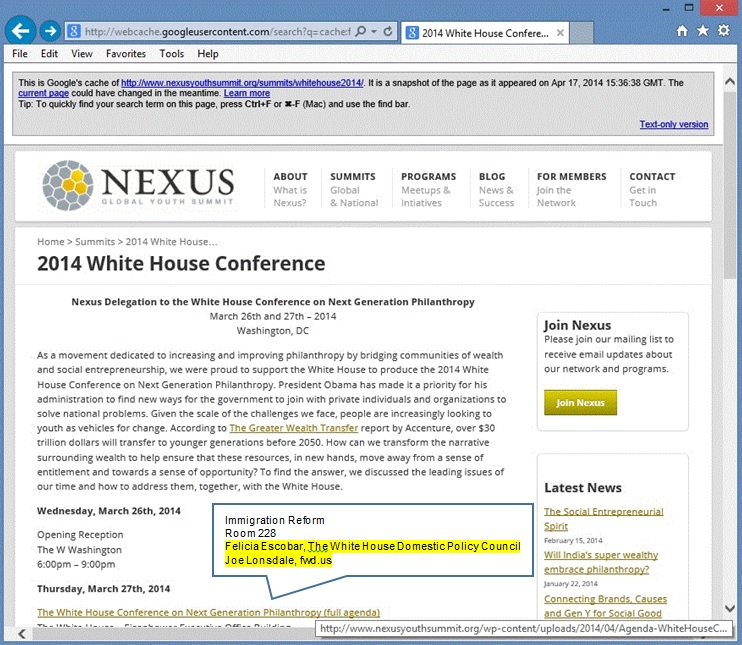
theodp writes Even as it cuts about 14% of its workforce, Microsoft is complaining that the company might be denied some of the "roughly" 1,000 H-1B visas for foreign workers it intends to seek, and made it clear that the company could shift some work to Canada or overseas if it can't get talent on its terms. "If I need to move 400 people to Canada or Northern Ireland or Hyderabad or Shanghai, we can do that," said William Kamela, a senior federal policy lead at Microsoft, who later explained that about 60% of Microsoft's workforce is in the U.S., yet it makes 68% of its profits overseas (where it also stashes its cash out of IRS reach). Kamela made the statements on a panel at a two-day conference on high-skilled immigration policy, where he sat next to Felicia Escobar, special assistant to President Barack Obama on immigration. The day before the conference, Mark Zuckerberg's FWD.us PAC — which counts Bill Gates as a Founder and Steve Ballmer and Microsoft General Counsel Brad Smith as Major Contributors — posted its "MythBusters" video on H-1B visas. -
Wyoming Is First State To Reject Science Standards Over Climate Change
Hugh Pickens DOT Com writes: "Time Magazine reports that Wyoming, the nation's top coal-producing state, has become the first state to reject new K-12 science standards proposed by national education groups mainly because of global warming components. The Next Generation Science Standards (NGSS) are a set of science standards developed by leading scientists and science educators from 26 states and built on a framework developed by the National Academy of Sciences. The Wyoming science standards revision committee made up entirely of Wyoming educators unanimously recommended adoption of these standards to the state Board of Education not once but twice and twelve states have already adopted the standards since they were released in April 2013. But opponents argue the standards incorrectly assert that man-made emissions are the main cause of global warming and shouldn't be taught in a state that ranks first among all states in coal production, fifth in natural gas production and eighth in crude oil production deriving much of its school funding from the energy industry.
Amy Edmonds, of the Wyoming Liberty Group, says teaching 'one view of what is not settled science about global warming' is just one of a number of problems with the standards. 'I think Wyoming can do far better.' Wyoming Governor Matt Mead has called federal efforts to curtail greenhouse emissions a 'war on coal' and has said that he's skeptical about man-made climate change. Supporters of the NGSS say science standards for Wyoming schools haven't been updated since 2003 and are six years overdue. 'If you want the best science education for your children and grandchildren and you don't want any group to speak for you, then make yourselves heard loud and clear,' says Cate Cabot. 'Otherwise you will watch the best interests of Wyoming students get washed away in the hysteria of a small anti-science minority driven by a national right wing group – and political manipulation.'" -
NASA Can't Ethically Send Astronauts On One-Way Missions To Deep Space
Daniel_Stuckey (2647775) writes "If NASA is serious about deep space missions, it's going to have to change its safety guidelines, because there's no conceivable way that, within the next few years, our engineering capabilities or understanding of things like radiation exposure in space are going to advance far enough for a mission to Mars to be acceptably "safe" for NASA. So, instead, the agency commissioned the National Academies Institute of Medicine to take a look at how it can ethically go about changing those standards. The answer? It likely can't.
In a report released today, the National Academies said that there are essentially three ways NASA can go about doing this, besides completely abandoning deep space forever: It can completely liberalize its health standards, it can establish more permissive "long duration and exploration health standards," or it can create a process by which certain missions are exempt from its safety standards. The team, led by Johns Hopkins University professor Jeffrey Kahn, concluded that only the third option is remotely acceptable." -
US Near Bottom In Life Expectancy In Developed World
Hugh Pickens writes "Louise Radnofsky reports that a study by the National Research Council and Institute of Medicine has found U.S. life expectancy ranks near the bottom of 17 affluent countries. The U.S. is at or near the bottom in nine key areas of health: infant mortality and low birth weight; injuries and homicides; teenage pregnancies and sexually transmitted infections; prevalence of HIV and AIDS; drug-related deaths; obesity and diabetes; heart disease; chronic lung disease; and disability. Americans fare worse than people in other countries even when the analysis is limited to non-Hispanic whites and people with relatively high incomes and health insurance, nonsmokers, or people who are not obese. The report notes that average life expectancy for American men, at 75.6 years, was the lowest among the 17 countries and almost four years shorter than for Switzerland, the best-performing nation. American women's average life expectancy is 80.8 years, the second-lowest among the countries and five years shorter than Japan's, which had the highest expectancy. 'The [U.S.] health disadvantage is pervasive — it affects all age groups up to age 75 and is observed for multiple diseases, biological and behavioral risk factors, and injuries,' say the report's authors. The authors offered a range of possible explanations for Americans' worse health and mortality, including social inequality, limited availability of contraception for teenagers, community designs that discourage physical activity such as walking, air pollution as well as individual behaviors such as high calorie consumption. The report's authors were particularly critical of the availability of guns. 'One behavior that probably explains the excess lethality of violence and unintentional injuries in the United States is the widespread possession of firearms and the common practice of storing them (often unlocked) at home,' reads the report. 'The statistics are dramatic.'" -
Apollo Veteran: Skip Asteroid, Go To the Moon
astroengine writes "It's 40 years to the day that the final mission to the moon launched. Discovery News speaks with Apollo 17 astronaut and geologist Harrison 'Jack' Schmitt about where he thinks the Earth's only satellite came from and why he thinks a NASA manned asteroid mission is a mistake. 'I think an asteroid is a diversion,' said Schmitt. 'If the ultimate goal is to get to Mars, you have a satellite only three days away that has a great deal of science as well as resources. The science of the moon has just been scratched. We've hardly explored the moon.'" The National Research Council came out with a report a few days ago which found that the inability for the U.S. to find a consensus on where to go is damaging its ability to get there. Bill Nye spoke about the issue, saying, "I believe, as a country, we want to move NASA from [being] an engineering organization to a science organization, and this is going to take years, decades. Now, through investment, we have companies emerging that are exploring space on their own and will ultimately lower the cost of access to low-Earth orbit, which will free up NASA to go to these new and exciting places." -
New Tech Makes Comprehensive Nuclear-Test-Ban Treaty Verifiable
Harperdog writes "In 1999, Senate Republicans rejected the Comprehensive Nuclear-Test-Ban Treaty on the grounds that it wasn't verifiable. The National Academy of Sciences feels this is no longer true, due to new technology. Quoting: 'Technologies for detecting clandestine testing in four environments — underground, underwater, in the atmosphere, and in space — have improved significantly in the past decade. In particular, seismology, the most effective approach for monitoring underground nuclear explosion testing, can now detect underground explosions well below 1 kiloton in most regions. A kiloton is equivalent to 1,000 tons of chemical high explosive. The nuclear weapons that were used in Japan in World War II had yields in the range of 10 to 20 kilotons.'" -
Report Warns of Space Junk Reaching a Tipping Point
intellitech sends this excerpt from a Reuters report: "The amount of debris orbiting the Earth has reached a tipping point for collisions, which would in turn generate more of the debris that threatens astronauts and satellites, according to a U.S. study released on Thursday (PDF). ... The amount of orbital debris tracked by the U.S. Space Surveillance Network jumped from 9,949 cataloged objects in December 2006 to 16,094 in July 2011, with nearly 20 percent of the objects stemming from the destruction of the Chinese FENGYUN 1-C satellite, the National Research Council said. ... the panel made two dozen recommendations for NASA to mitigate and improve the orbital debris environment, including collaborating with the State Department to develop the legal and regulatory framework for removing junk from space. The study, 'Limiting Future Collision Risk to Spacecraft: An Assessment of NASA's Meteoroid and Orbital Debris Programs,' was sponsored by NASA." -
National Academies Release Over 4,000 Free Science Books
Shipud writes "The National Academies Press are offering all their books for free in PDF format. These are all the publications of the National Academy of Sciences, National Academy of Engineering, Institute of Medicine, and National Research Council. Lots of great stuff there, and now for free." -
National Academy of Science Urges Carbon Tax
eldavojohn writes "Moving for the first time from a cautious message to a message of urgency, the National Academy of Science has advised the United States government to either adopt a carbon tax or cap and trade legislation. This follows a comprehensive study in three parts released today from the National Academies that, for the first time, urges required action from the government to curb climate change." -
Why Does the US Have a Civil Space Program?
BDew writes "The Presidents of the National Academy of Science and the National Academy of Engineering have commissioned a study on the Rationale and Goals of the US Civil Space Program. In short, the Academies are asking why the nation has a civil space program (including human, robotic, commercial, and personal spaceflight). The study is intended to provide a strategic framework for the nation's activities in space that can provide consistent guidance in an increasingly interconnected world. The members of the study committee are interested in the views (positive or negative) of the general public, particularly those people with a scientific and/or technological interest." -
Why Does the US Have a Civil Space Program?
BDew writes "The Presidents of the National Academy of Science and the National Academy of Engineering have commissioned a study on the Rationale and Goals of the US Civil Space Program. In short, the Academies are asking why the nation has a civil space program (including human, robotic, commercial, and personal spaceflight). The study is intended to provide a strategic framework for the nation's activities in space that can provide consistent guidance in an increasingly interconnected world. The members of the study committee are interested in the views (positive or negative) of the general public, particularly those people with a scientific and/or technological interest." -
Why Does the US Have a Civil Space Program?
BDew writes "The Presidents of the National Academy of Science and the National Academy of Engineering have commissioned a study on the Rationale and Goals of the US Civil Space Program. In short, the Academies are asking why the nation has a civil space program (including human, robotic, commercial, and personal spaceflight). The study is intended to provide a strategic framework for the nation's activities in space that can provide consistent guidance in an increasingly interconnected world. The members of the study committee are interested in the views (positive or negative) of the general public, particularly those people with a scientific and/or technological interest." -
National Academies on U.S. Science
theodp writes to tell us that the National Academies, the nation's 'leading science advisory group', is warning of the continued loss of America's competitive edge with regards to science in the global community. In a press release they call for the immediate increase of teachers and advanced research and development, citing that 'in 2001 U.S. industry spent more on tort litigation than on research and development.' The Committee includes, among others, Intel's Craig 'Don't Call Us Benedict Arnold CEOs' Barrett. -
Top Advisory Panel Warns Erosion of U.S. Science
fbg111 writes "From the NYT: A panel of experts convened by the National Academies, the nation's leading science advisory group, called yesterday for an urgent and wide-ranging effort to strengthen scientific competitiveness. The 20-member panel, reporting at the request of a bipartisan group in Congress, said that without such an effort the United States 'could soon lose its privileged position.' It cited many examples of emerging scientific and industrial power abroad and listed 20 steps the United States should take to maintain its global lead." -
Top Advisory Panel Warns Erosion of U.S. Science
fbg111 writes "From the NYT: A panel of experts convened by the National Academies, the nation's leading science advisory group, called yesterday for an urgent and wide-ranging effort to strengthen scientific competitiveness. The 20-member panel, reporting at the request of a bipartisan group in Congress, said that without such an effort the United States 'could soon lose its privileged position.' It cited many examples of emerging scientific and industrial power abroad and listed 20 steps the United States should take to maintain its global lead." -
New Reports on Health Risks of Rocket Fuel
An anonymous reader writes "A new study revealed in the journal Nature says children are being made sick by rocket fuel near the Baikonur Cosmodrome in Kazakhstan, Russia's main launch site. Space.com has a story about it that also tells of a new National Research Council report about rocket fuel contamination in the United States. It's in drinking water, bottled water, milk and even on lettuce. The Environmental Working Group has long fought for tougher standards on how much rocket fuel (actually, its main component, perchlorate) we ought to drink. Environmental Working Group has a response to the NRC report, and one of their officials is quoted in the Space.com story as saying the EPA will likely set tighter standards after considering the risk to infants. Bottom line: Rocket fuel probably isn't too good for us." -
NAE's Draper Prize Goes To PARC's Alto Developers
mccalli writes "The National Academy of Engineering has awarded the Charles Stark Draper Prize to various individuals 'for the vision, conception, and development of the principles for, and their effective integration in, the world's first practical networked personal computers.' The prize is shared amongst two ex-Xerox people, with MIT and HP also making a showing." -
NAE's Draper Prize Goes To PARC's Alto Developers
mccalli writes "The National Academy of Engineering has awarded the Charles Stark Draper Prize to various individuals 'for the vision, conception, and development of the principles for, and their effective integration in, the world's first practical networked personal computers.' The prize is shared amongst two ex-Xerox people, with MIT and HP also making a showing." -
Slashback: Australia, Nomenclature, Books
Slashback tonight brings a few updates on topics ranging from linux.conf.au and free books online to how you can help pay off Dan Peng's legal debt to the RIAA. Read on below for the details. Since you can never hear enough about linux.conf.au Kimberly Shelt writes: "Actually I wrote a whole article about it this month. Complete with hype about Kfishes, miniconf etc :) It included the direct link to the current LCA2004 pages :) and a tiny pic of scrubby :) what more can you want :)"Please, no more name changing. suqur writes "As a follow-up to many stories previously posted, News.com reports that the recently renamed Mozilla Firebird browser (previously known as Phoenix) has finally given up on its new name, and relinquished the name. The new names for the Mozilla Firebird and Mozilla Thunderbird will be Mozilla Browser and Mozilla Mail, respectively. Looks like they're right back where they started, eh?"
Whatever the name, Mozilla is still only almost perfect: GeekLife.com writes "An old Mozilla exploit continues to crash almost any version/flavor of Mozilla with just 5 lines of plain HTML code (no JavaScript, ActiveX, etc.). If you're very brave, you can test/crash your Mozilla by going here.
It's important to report fairly on issues like this, or people will come to think of the Open Source journals as biased, uninformative, irresponsible propaganda machines, which will greatly harm any legitimate cause that the OS folks are promoting."Books to download, at varying prices. Scott Pendergrast writes "We're working here at Fictionwise to convince publishers to release Neal Stephenson's works as eBooks. Recently his Cryptonomicon work finally became available in Secure Microsoft and Palm Reader formats (yes, the irony of this title being sold in an encrypted format is not missed ;-)
To encourage sales of this title, which hopefully will result in more of his works becoming ebooks, we're offering a 50% micropay rebate on it (so we're actually losing a bit on each sale)."
If you like your books free and non-fiction, though, mindpixel writes "I am not lying. The National Academies Press which was created by the National Academies to publish the reports issued by the National Academy of Sciences, the National Academy of Engineering, the Institute of Medicine, and the National Research Council, all operating under a charter granted by the Congress of the United States, has more than 2,500 free, searchable, high quality books online. Some random examples:
- The Genomic Revolution: Unveiling the Unity of Life
- Strange Matters: Undiscovered Ideas at the Frontiers of Space and Time
- Who Goes There?: Authentication Through the Lens of Privacy
- Microbial Threats to Health: Emergence, Detection, and Response"
This ought to be tax-deductable, too! ThreeToe writes "Recently the RIAA settled a lawsuit with four college students; one of them was Daniel Peng of Princeton University. Daniel is accepting donations to help pay his $15,000 settlement fee along with related legal fees. You can send money via paypal by clicking here. Remember that Daniel simply wrote an MP3 search engine; he didn't distribute MP3s himself. Those who share my belief that this lawsuit was wrong-headed should make a statement by assisting Daniel."
- The Genomic Revolution: Unveiling the Unity of Life
-
Gov't Report on Youth, Pornography, And The Internet
Frisky070802 writes "I don't recall seeing this already, nor am I finding it when searching for it ... the National Academies commissioned a report on how youths are affected by child pornography, predators, and other threats on the net. They've issued a 400-page report on their findings, which are very extensive, and were used to support the argument for the new kids.us domain." -
The 11 Greatest Unanswered Questions of Physics
Adn writes: "Discover magzine has a cover story on the "..11 Greatest Unanswered Questions of Physics" and why answering these might lead to a new age of science.... the full article can be found at The National Academy Site. Almost brings to mind Hilbert's 11 questions on Mathematics which if solved were supposed to usher in a new era of logic and formalism." -
National Academy of Sciences: Now We're Cookin'
matroid writes: "Today the National Academy of Sciences released their review of the IPCC's global warming diatribe finding that, except for the tremendously alarmist language in the document, the report is accurate. "Greenhouse gases are accumulating in the Earth's atmosphere as a result of human activities, causing surface air temperatures and subsurface ocean temperatures to rise." An article in the NYTimes is here. Maybe I shouldn't have bought that coal-based UPS after all ..."