Slashdot Mirror
Domain: nytimes.com
Stories and comments across the archive that link to nytimes.com.
Comments · 17,660
-
wisdom of the unwashed
One has to take into account the human momeostatic preference. Inflate like a blimp after a decade or so, or wander around in a low blood sugar haze all the damn time.
Hall's model actually demonstrates how consistently most people maintain their long term calorie intake. In the model, my extra 20 pounds correspond to a long term dietary excess of about 10% In many contexts, regulation within 10% is pretty good.
The problem with dietary controls is decision fatigue.
Do You Suffer From Decision Fatigue?You can expend a lot of will power depriving yourself of a little craving hundreds of times per day. That will show up in making poorer decisions elsewhere, unless you alleviate your decision fatigue with a dose of sugar.
In the food studies, when you put a person on a restriction diet, there seems to be a large osmotic term over and above what the subjects report. It doesn't take many weak moments to rupture the envelop in a ten percent caloric restriction. One tablespoon of olive oil has 120 calories. I get that much extra oil just licking the spoons if I whip up my Caesar salad dressing with too much gusto.
In the appetite system, fructose is particularly problematic. HFCS used in soda pop has about the same amount of fructose as table sugar (sucrose breaks down to glucose and fructose extremely promptly after ingestion).
Dr. Lustig's excellent presentation
Dr Mercola is a strange man. I think he would sign up to live in the Matrix with that tube coming out of the back of his scull if he was promised that it was a feeding tube, and that all the nutrients were purified by reverse osmosis to ten nines purity level. A bit like the space engineer in Contact: Why eat good and wholesome food when you can double the purity for ten times the price? His OCD purity compulsion notwithstanding, many of his links are highly informative.
A while back I also watched an excellent video by Dr Brian Wansink about the psychology of portion size. There was another good resource from his food lab at Cornell IIRC. Wansink won an ignoble for his bottomless soup bowl.
Here's another of his tricks: Gluttony even when the food tastes lousy.
Another odd duck is Gary Taubes. He's not all wrong, and he's not all right.
Science of Weightloss and Fat Accumulation
The obesity epidemic and metabolic syndrome are harder to unwind than 90% of the people here thinking they are posting wisdom for the unwashed.
-
Re:Just another reason...
That's interesting. You could be right. Next time I'm in the library, I'll do a search for the 1996 election and see how they covered it. I assume you're referring to the news coverage, not the editorial page.
The reason I read the WSJ for so long is that on the issues I followed, they seemed to do a good job, compared to the other papers. In the 1970s, I used to work for an engineering organization that published auto safety studies. There was a big debate about whether to pass laws that would require auto manufacturers to install seat belts. It was a good test of science policy: there were 50,000 automobile deaths a year, and the evidence was clear from engineering studies that seat belts would have prevented about half those deaths. The automobile industry was also one of the largest newspaper advertisers, and that influenced the coverage in a lot of newspapers, including the New York Times. The WSJ had very good coverage, even though that meant they were often trashing their own advertisers. I had a file of articles from different newspapers, including the WSJ, and the pattern was clear to me. I also did a database search, and the same thing came up.
I've seen that pattern in a lot of other stories. They covered welfare reform right down the middle, and had stories that showed a lot of the conservative policies, like mandatory work requirements, weren't working. They had a lot of stories about people who got life-threatening illnesses and didn't have health insurance, and reported how the hospitals basically left them to die. In their coverage of Israel and the middle east, they reported quite critically on Israeli abuses while still getting praise for their fairness by Arabs and Jews. They had at least one story exposing an airline that the CIA used as a cover. It was textbook journalism, getting both sides.
The reason people read the WSJ was that they could find things in there that other newspapers wouldn't print, for fear of offending advertisers, or because of politics. You just didn't see things like this http://www.nytimes.com/2009/12/14/business/media/14carr.html before Murdoch. I may be missing something, but that's what I saw in my daily reading of the WSJ. It clearly ended with Murdoch. They still have good stories, but I can no longer trust them to tell me everything they know.
If I were teaching a journalism course, I'd assign my students to look up the WSJ coverage on a particular topic in the archives, and see whether they covered it fairly and objectively. My reading was that the news stories were pretty good. If somebody came to a different conclusion, and documented it, I'd like to see it. I'll go with the facts.
-
Re:Just another reason...
I don't watch Fox News enough to critique it, but (if you want facts) Murdoch clearly turned the Wall Street Journal from a respected, objective news source into a propaganda vehicle:
-
Re:Just another reason...
This is not a debate where there is some merit to both sides. News Corp. is right-wing propaganda. They're not just a right-wing version of NBC, CBS and the Washington Post.
The only people who defend News Corp. are right-wing wackos who don't know the difference between truth and propaganda.
They're not like other American news organizations. Murdoch orders his editors to distort the news to advance his political goals.
Fox News made "Fair and balanced" a cynical joke. It's like cigarette companies advertising that their cigarettes are healthy and doctors recommend them.
The worst thing Murdoch did is destroy the Wall Street Journal, which used to be the best newspaper in the world, respected by left and right:
http://www.nytimes.com/2009/12/14/business/media/14carr.html
Under Murdoch, Tilting Rightward at The Journal
By DAVID CARR
December 13, 2009A little over a year ago, Robert Thomson, The Journal’s top editor, picked Gerard Baker, a columnist for The Times of London, as his deputy managing editor. Mr. Baker is a former Washington bureau chief of The Financial Times with a great deal of expertise in the Beltway. The two men came of age in the more partisan milieu of British journalism.
According to several former members of the Washington bureau and two current ones, the two men have had a big impact on the paper’s Washington coverage, adopting a more conservative tone, and editing and headlining articles to reflect a chronic skepticism of the current administration. And given that the paper’s circulation continues to grow, albeit helped along by some discounts, there’s nothing to suggest that The Journal’s readers don’t approve.
Mr. Baker, a neoconservative columnist of acute political views, has been especially active in managing coverage in Washington, creating significant grumbling, if not resistance, from the staff there. Reporters say the coverage of the Obama administration is reflexively critical, the health care debate is generally framed in terms of costs rather than benefits — “health care reform” is a generally forbidden phrase — and global warming skeptics have gotten a steady ride. (Of course, objectivity is in the eyes of the reader.)
The pro-business, antigovernment shift in the news pages has broken into plain view in the last year. On Aug. 12, a fairly straight down the middle front page article on President Obama’s management style ended up with the provocative headline, “A President as Micromanager: How Much Detail Is Enough?” The original article included a contrast between President Jimmy Carter’s tendency to go deep in the weeds of every issue with President George W. Bush’s predilection for minimal involvement, according to someone who saw the draft. By the time the article ran, it included only the swipe at Mr. Carter.
On Aug. 27, a fairly straightforward obituary about Ted Kennedy for the Web site was subjected to a little political re-education on the way to the front page. A new paragraph was added quoting Rush Limbaugh deriding what he called all of the “slobbering media coverage,” and he also accused the recently deceased senator of being the kind of politician who “uses the government to take money from people who work and gives it to people who don’t work.”
On Oct. 31, an article on the front of the B section about estate taxes at the state level used the phrase “death tax” six times, but there were no quotation marks around it. A month later, the newspaper’s Style & Substance blog suggested that the adoption of such a loaded political term was probably not a good idea: “Because opponents of estate taxes have long referred to them as death taxes, the term should be avoided in news stories.”
-
Re:fearmongering
Good read, that ID's the hype around cyber crime/terror:
NYT: The Cybercrime Wave That Wasn't
In less than 15 years, cybercrime has moved from obscurity to the spotlight of consumer, corporate and national security concerns. Popular accounts suggest that cybercrime is large, rapidly growing, profitable and highly evolved; annual loss estimates range from billions to nearly $1 trillion. While other industries stagger under the weight of recession, in cybercrime, business is apparently booming.
Yet in terms of economics, there's something very wrong with this picture. Generally the demand for easy money outstrips supply. Is cybercrime an exception? If getting rich were as simple as downloading and running software, wouldn't more people do it, and thus drive down returns?
http://www.nytimes.com/2012/04/15/opinion/sunday/the-cybercrime-wave-that-wasnt.html
-
Show me the questionnaire
I don't trust executive summaries of polling data; I want to see the entire questionnaire so I can understand the context in which the questions were asked. I'd bet that if people were asked an open-ended question about the "problems facing our country today" cyberterrorism would be lucky to get a 1% response. Here are the top items from the most recent New York Times/CBS poll released yesterday:
Economy and jobs 62%
Federal budget deficit 11
Health care 9
Same-sex marriage 7
Foreign policy 4
Immigration 2
Other/DK 4I don't see terrorism of any sort on that list.
Even if we accept the findings of the survey, what is most striking in the results is the substantial increase in respondents who say they are "not concerned" about the threats asked about compared to a year ago.
Moreover at least one question has nothing to do with IT, the one about respondents' ability to "meet essential financial obligations." For more relevant questions, solid majorities report being only "somewhat" or "not concerned" about the security of online shopping and banking, computer viruses and spam email, and their own personal security.
The IT media has a habit of touting these self-serving studies by organizations like, in this case, Unisys as somehow providing an "objective" view of public opinion. Puh-leeze.
-
Re:Nothing new here
What the fuck, indeed. You should read Boumediene's op-ed in the NYT.
http://www.nytimes.com/2012/01/08/opinion/sunday/my-guantanamo-nightmare.html?_r=1&ref=opinion
Also, I forgot a bit about Kurnaz
http://www.nytimes.com/2012/01/08/opinion/sunday/notes-from-a-guantanamo-survivor.html
Despite all this, I looked for ways to feel human. I have always loved animals. I started hiding a piece of bread from my meals and feeding the iguanas that came to the fence. When officials discovered this, I was punished with 30 days in isolation and darkness.
[...]
After two and a half years at Guantánamo, in 2004, I was brought before what officials called a Combatant Status Review Tribunal, at which a military officer said I was an “enemy combatant” because a German friend had engaged in a suicide bombing in 2003 — after I was already at Guantánamo. I couldn’t believe my friend had done anything so crazy but, if he had, I didn’t know anything about it.
A couple of weeks later, I was told I had a visit from a lawyer. They took me to a special cell and in walked an American law professor, Baher Azmy. I didn’t believe he was a real lawyer at first; interrogators often lied to us and tried to trick us. But Mr. Azmy had a note written in Turkish which he had gotten from my mother, and that made me trust him. (My mother found a lawyer in my hometown in Germany who heard that lawyers at the Center for Constitutional Rights represented Guantánamo detainees; the center assigned Mr. Azmy my case.) He did not believe the evidence against me and quickly discovered that my “suicide bomber” friend was, in fact, alive and well in Germany.
This is the kind of shit you see in movies (movies like Rendition, which was based on Khalid el-Masri's experience). It's almost hard to believe that my government can do this sort of thing to innocent people.
-
Re:Nothing new here
What the fuck, indeed. You should read Boumediene's op-ed in the NYT.
http://www.nytimes.com/2012/01/08/opinion/sunday/my-guantanamo-nightmare.html?_r=1&ref=opinion
Also, I forgot a bit about Kurnaz
http://www.nytimes.com/2012/01/08/opinion/sunday/notes-from-a-guantanamo-survivor.html
Despite all this, I looked for ways to feel human. I have always loved animals. I started hiding a piece of bread from my meals and feeding the iguanas that came to the fence. When officials discovered this, I was punished with 30 days in isolation and darkness.
[...]
After two and a half years at Guantánamo, in 2004, I was brought before what officials called a Combatant Status Review Tribunal, at which a military officer said I was an “enemy combatant” because a German friend had engaged in a suicide bombing in 2003 — after I was already at Guantánamo. I couldn’t believe my friend had done anything so crazy but, if he had, I didn’t know anything about it.
A couple of weeks later, I was told I had a visit from a lawyer. They took me to a special cell and in walked an American law professor, Baher Azmy. I didn’t believe he was a real lawyer at first; interrogators often lied to us and tried to trick us. But Mr. Azmy had a note written in Turkish which he had gotten from my mother, and that made me trust him. (My mother found a lawyer in my hometown in Germany who heard that lawyers at the Center for Constitutional Rights represented Guantánamo detainees; the center assigned Mr. Azmy my case.) He did not believe the evidence against me and quickly discovered that my “suicide bomber” friend was, in fact, alive and well in Germany.
This is the kind of shit you see in movies (movies like Rendition, which was based on Khalid el-Masri's experience). It's almost hard to believe that my government can do this sort of thing to innocent people.
-
Re:The most depressing thing is
I would agree with you if Social programs was 70% of our spending, but in reality it's not even 20%. Defense is the bulk of our spending
Well, bulk of our "discretionary" spending. The New York Times's "Obama’s 2011 Budget Proposal: How It’s Spent" chart (requires Flash) shows that - click on "Hide Mandatory Spending". That's probably what most of the replies to your post are talking about.
and is not needed to be that large.
That I certainly find credible.
-
Re:The most depressing thing is
I don't know where either of you are getting your numbers but these may help:
2010 US federal budget breakdown chart
US Military budget (uses 2010 number)
US Federal Budget (uses 2011 number)
Maybe this impressive chart from the New York Times on the 2011 budget
Then there is the XKCD Money poster that also has a federal budget breakdown Simple fact is that we spend more money on social programs than we do on military (hell I'll even toss in the veterans affairs stuff too if that makes you feel better). Yes we could probably cut massive amounts out of the budget but don't pretend that the majority of our federal spending is on the military granted it is a large portion but still not any where near the majority. -
Re:Nonsense
We know that ozone and petro-Diesel particulates have unambiguous and demonstrable effects on public health; where CO2 at atmospheric levels does not.
The Clean Air Act is not limited to short-term demonstrable effects on public health, in fact it explicitly covers atmospheric issues like ozone and SO2: "The 1990 amendments added provisions for addressing acid rain, ozone depletion and toxic air pollution..." (from linked Wikipedia article)
Section 109(b)(1) of the CAA (Clean Air Act) instructed the EPA to set "ambient air quality standards the attainment and maintenance of which in the judgment of the Administrator, based on [the] criteria [documents of Section 108] and allowing an adequate margin of safety, are requisite to protect the public health."
Re-read the quote - it does not support your argument. In fact, it delegates the legal authority to judge the necessity of regulation to the EPA Administrator. The Administrator has the power to decide and to enact whatever regulations are necessary to protect the public health.
There just is no mandate for the EPA to regulate CO2 at this time.
The Supreme Court has already ruled that the EPA has the authority. Your personal opinion may disagree with the legal rulings of the Supreme Court, but the legal situation is clear.
-
Not concerned
Loorz says kids his age are much more worried about climate change than many of their parents might imagine.
Sounds like Loorz has been well indoctrinated by his teachers. Because his assertion is demonstrably false. Unless my "many" he means "a few of us brainwashed cloistered kids".
-
No Goofing off Allowed in New York City!
In other news in the proper business world of New York City and Wall Street, Mayor Bloomberg of New York City has fired someone for leaving solitaire open on his computer mentioning something about your there to work and not play games.
https://www.nytimes.com/2006/02/10/nyregion/10solitaire.html?_r=1
-
Re:Another story on the subject
A better link about the US story (*)
Drones with an eye on the public cleared to fly
(*) Why the fuck can't I edit my own posts? If you can track my karma, then you should be able to let me edit what I wrote. Sure it could be misused by trolls -
Re:The problem no one will mention
News flash. Women want to have children
When we gave women access to contraception, and the ability to get an education and a decent job rather than simply being housewives and mothers, family size dropped to the replacement rate or below. In the US. In Canada. In Europe. And the same trend is very clear in developing countries. Women want to have a reasonable number of children. Population growth happens when women are disempowered.
Contrary to the Malthusian view that population will grow to the limit of however many kids can be fed, in fact parents choose to have enough kids to give them a high chance that several will survive to support them as they grow old.
(Bill Gates/Gates Foundation) (Also relevant: Bill Gates' TED Talk)
Evidence shows tackling high death rates leads to smaller families and the stabilisation of national populations, according to its report, ‘The World at 7 Billion’.
...“In the poorest countries, where parents are often petrified that their children will die and leave them to fend for themselves, it’s understandable that they would choose to have larger families," [Brendan Cox] added.
...Save the Children points to the example of Botswana where three decades ago women had an average of six children. The average is now three, following long-term investment in healthcare which has helped to nearly halve child mortality.
(Trust.org reporting on Save The Children's report)
Healthier and wealthier babies make for smaller families.
(The Solution To Global Population Growth is Saving Children) (Contains two talks by Hans Rosling using stats to show this. Look at the first video starting at 6:30 if you're impatient)
Well-designed programs can bring down growth rates even in the poorest countries. Provided with information and voluntary access to birth-control methods, women have chosen to have fewer children in societies as diverse as Bangladesh, Iran, Mexico, Sri Lanka and Thailand.
...A trial by Harvard researchers in Lusaka, Zambia, found that only when women had greater autonomy to decide whether to use contraceptives did they have significantly fewer children....
-
Re:Makes no sense
No, the primary problem is poverty.
If you control for socioeconomic status, a whole lot of the differences in testing just go away.
But, you say, isn't America a rich country? Yes, it is, but we also have a huge poverty and especially child poverty problem. Not just in relative terms, but also in absolute terms due to high inequality. Within the OECD, we have above average poverty and child poverty (absolute meaning that most OECD countries have a lower percentage of the population live below the US poverty line). We also have lots more wealthy people, of course, but that doesn't make children with low SES learn better, while the educational benefits of high SES eventually hit diminishing returns.
In short, standardized tests largely test the socioeconomic status of the student body, and not the quality of schools or teachers.
This particular test also appears to be norm-referenced rather than criterion-referenced, so it's a poor choice for evaluating student or teacher performance in different states (whereas it might be useful for comparing school curricula in different states; e.g., to critique California's science curricula).
Of course, that doesn't mean that we shouldn't also fix other problematic aspects of our educational system, but "let's dissolve teacher unions and throw out the bad teachers" isn't going to fix much. For starters, you'd either end up doing very little or end up with a teacher shortage: because being a teacher in America, as opposed to, say Finland is a comparatively low-status, low-income profession. Note that low-income is relative; it's not that teachers are necessarily starving, but the income you make based on a MAT degree is much lower than what you can get out of many other graduate degrees -- so, why go into teaching unless you're either (1) truly motivated or (2) can't hack it elsewhere? Contrast that with Finland, where teachers are well-paid, highly regarded people; a graduate degree is required (though university education is basically free) along with additional practical training; as a result, Finnish schools get to pick from the best of the best.
-
Re:No Question At All
In the United States at least, there are recent well documented cases of this exact tactic:
2008 Democratic Party Convention
2004 Republican Party Convention
Older uses of the same tactic are included in the reports of the Church Committee.
But yeah, that's all wild conspiracy theories.One of the basic rules of political protest: If you're at a peaceful demonstration, and somebody starts suggesting violence, (A) don't listen to him and certainly don't take his advice, (B) identify him as likely police, and (C) make sure protest organizers are alerted to what's going on.
-
Re:Makes no sense
Yes, this has been true for a long time. Moynihan pointed out in 1992 that "proximity to the Canadian border" correlated much more strongly with educational achievement than spending. So the solution to poor test scores is to move your school as far north as possible. http://www.nytimes.com/1992/02/03/opinion/north-dakota-math-country.html
-
no nonsense?
They used to have a no-nonsense school administrator in Michele Rhee.
No nonsense?
http://www.nytimes.com/2011/08/22/education/22winerip.html?pagewanted=all
-
Re:Does this guy even know anything about this?
Exactly. The speed of the elevator will be limited to the motor power. Now you could do something dangerous like waiting until 5 seconds after the door opens and then drop the elevator 10 feet. I don't know about the particular designs to know if there is a mechanical interrupt when the doors are open.
There is. Doesn't help when somebody bypasses it, but at least that has to be done on site.
-
More concerned about negligence than ter'ists
based on recent headlines like http://www.nytimes.com/2011/12/16/nyregion/elevator-that-killed-yr-executive-was-undergoing-maintenance-city-says.html, I'd be more afraid of negligent elevator repair staff than of terrorists.
-
Re:So what?To be fair to both Greenlining and the New York Times article, both did point out that the tax year figure might include portions assigned to previous or future years:
Without such tactics, Apple’s federal tax bill in the United States most likely would have been $2.4 billion higher last year, according to a recent study by a former Treasury Department economist, Martin A. Sullivan. As it stands, the company paid cash taxes of $3.3 billion around the world on its reported profits of $34.2 billion last year, a tax rate of 9.8 percent. (Apple does not disclose what portion of those payments was in the United States, or what portion is assigned to previous or future years.) NYT
The third method, which this report uses, is what a company reports on its 10-K as “cash taxes paid.” This is how much a company actually paid in taxes in a given year. But that figure includes the company’s taxes paid everywhere, including taxes paid to states, the U.S. federal government, and to other countries. Some of that money could be paid for back taxes and some could eventually be refunded. While imperfect, this is the best estimate of how much a company actually pays in taxes in a given year. Until the government or the Financial Accounting Standards Board requires companies to report more, this is the best figure available. Greenlining
-
Re:Maybe open a plant in the US?
You would think that with the 39 BILLION in profit, they would have opened/re-positioned that plant to gie [sic] jobs to the US
They can't do that because the US simply can't match what Foxconn can do in China.
-
Re:Once again
The cause is to much credit to available and to cheap due to government loan grantee and or direct lending programs.
O'Realy? So it's all "cheap loans" and not:
- * States slashing higher education funding so tuition is raised to make up the difference - see California for a recent example.
- * Student loans cannot be discharged in bankruptcy - even privately issued student loans. Meaning for-profit colleges hand out loans to everyone with a pulse because those loans must be paid back.
And see there are a whole lot of people in this story going on about "supply and demand" - without mentioning another market force: competition. There are thousands and thousands of colleges and universities in this country, both public and private, so why isn't competition a downward force on tuition costs?
Furthermore, how do you explain how health care costs have exploded at similar rates to tuition, yet there is no flood of low-interest loans for health care?
Finally, it's very interesting that the "solution" is to end student loans all together, as opposed to capping the amount of tuition universities can charge to get their hands on those loans. Or restoring bankruptcy protection to students while forcing schools to absorb some of the risk as well, returning the asset acquisition office back into the office of admissions.
-
Re:Mod parent up
True, but the main objections to raising the speed limits after the gas crunch eased were safety-based, and people still call for a return to 55MPH based on safety.
-
The Mafia State
Hell, NK has shelled islands belonging to the South, and is believed to have been behind the sinking of a South Korean Navy Vessel. Lives have been lost due to this, both of which constitute acts of war, yet nobody responded.
That's just the beginning. Abductions of South Korean and Japanese civilians, and probably a few citizens of some other countries as well. The 1983 Rangoon Embassy Bombing and 1987 Flight 858 Bombing. Probable government-level drug-smuggling and similar criminal enterprises.
From a standpoint of international law, North Korea's government level, large-scale counterfeiting of US Currency, just by itself, might be sufficient to constitute an act act of war.
-
Re:Turn about is fair play.
"I think the story here isn't that someone got knocked back from entering the UK, but rather the reasons behind it. "...
"Having said that, I do sort of agree that this isn't all that newsworthy for
Yes but this happens all the time when its the other way around. I agree that its just a non-story of a fairly common practice; Only instead of being denied over misunderstood slang that's real meaning is pretty obvious to anyone with half a brain on comments made on social networking, it was instead a guy teaching how to maximise injury on someone as a form of self defence. I don't think either denial was entirely justified, but then its not my career to make these decisions.
-
Re:Good science and hats off to him
I will admit that at least some of us basically troll for fun by denying part 1 and part 2 above, because we hate the "solutions" to part 3.
Yeah, so this isn't very productive. Maybe try to figure out which solutions are actually good and push for those? Remember, problems don't go away when we don't like the solutions.
Usually part 3 is the establishment of a neo-pol pot regime, or national socialism, or some financial scam to make the rich richer and the poor poorer, or most commonly meaningless feel good frippery that will do absolutely nothing but "raise awareness".
I'm curious incidentally which solutions you think fall into these categories. I agree that quite a bit falls into the feel good frippery category. Godwin's law aside, last I checked no one was advocating large scale genocide as a solution. At the very minimum, burning people in ovens would make more CO2.
I''m particularly interested into which category you put the most widely suggested method of dealing with CO2 - cap and trade. Cap and trade is a system that has worked quite well for other pollutants. For example, there's clear evidence that cap and trade has worked well in dealing with sulfur dioxide, both reducing emissions and having little negative economic impact. See for example http://www.epa.gov/capandtrade/documents/ctresults.pdf and http://www.jstor.org/stable/2647032 (although it certainly has had its bumps especially due to conflicting court cases and legislation. See http://online.wsj.com/article/SB10001424052748704258604575360821005676554.html. Cap and trade works, since it hybridizes government regulation with market solutions. It estimates the cost of the pollutant to society and then lets the market figure out the most efficient way of keeping the pollutant down. There's a reason that George H. W. Bush helped get cap-and-trade in the Clean Air Act and that many see it is as example of a successful government regulation http://www.nytimes.com/2009/05/17/us/politics/17cap.html?pagewanted=all.
I'm also curious as to what category you put improvements to the electric grid such as adding grid storage and smart grids. All of these can have real, substantial impact. And in the case of grid improvements, they have substantial other benefits as well. There isn't going to be one magic bullet solution to all our CO2 problems or a magic bullet to solve all our energy problems, and certainly not one that will solve both. But there are real, substantial steps that can be taken that don't involve loss of liberties. Comparisons to Nazis are unhelpful hyperbole.
-
Re:Google BetaThe article talked about how Google ran all of their initial tests without much pomp or circumstance. A few relevant quotes (all emphasis mine)
Harder to notice was that the person at the wheel was not actually driving.
The car is a project of Google, which has been working in secret but in plain view on vehicles that can drive themselves
seven test cars have driven 1,000 miles without human intervention and more than 140,000 miles with only occasional human control
At the point when the article was written 18 months ago, they'd already clocked all those miles, in secret, lending credence to the notion that they enjoy anonymity in this affair. There was slightly more fanfare for the current announcement, simply because they're getting a much bigger sandbox to play in. One does not post a million dollar insurance bond for the entire state of Nevada without someone taking notice.
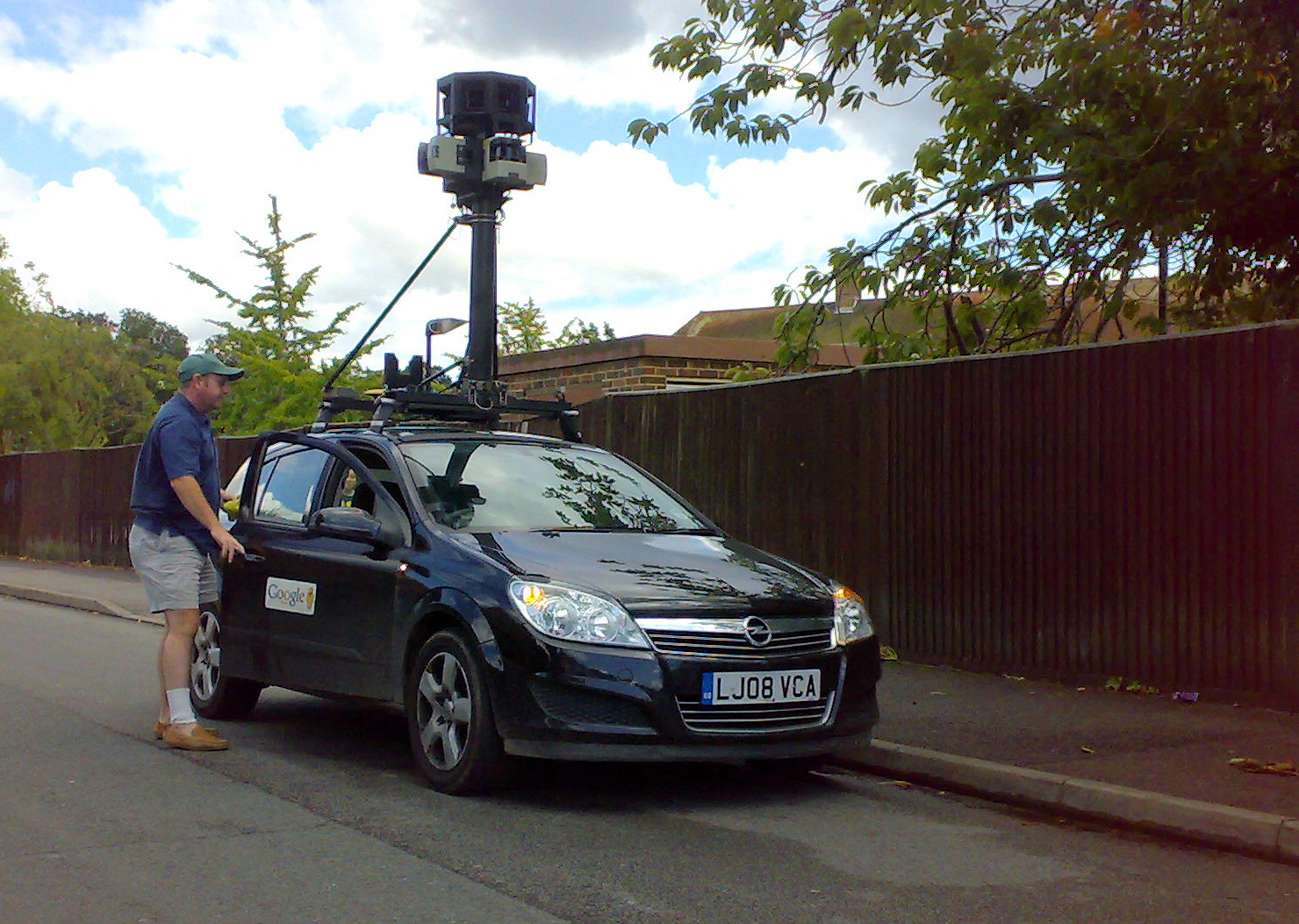
Also, if you'll look at the full picture of the test vehicle you'll easily see that a minimalist approach was taken to the modifications. The camera on the roof and off-center license plate are the only real hints that something is amiss. And with Google already known for cars with cameras on top, the camera atop the G'car looks rather subdued. As for the rest of your strawman about "a poorly disguised car with no driver," the picture at the top of the article was obviously a mock-up for the photo-op. They've said quite clearly that every test was conducted with both a driver and passenger.
-
Re:Obama knows how to play politics if anything.
If you think Social Security and Medicare will go broke, then you're just ignorant. That's a Republican Party scare claim.
The only way they will go broke is if Republicans somehow take over the entire federal government and destroy them (which is possible, but unlikely). You should start reading newspapers. I recommend reading Paul Krugman's column. As Krugman says, the Republicans want to discredit successful government programs, as part of their anti-government, anti-tax ideology.
http://krugman.blogs.nytimes.com/2011/03/13/cockroach-ideas/
Conscience of a Liberal
Cockroach Ideas
By PAUL KRUGMAN
March 13, 2011, 12:57 pm
“the Social Security trust fund doesn’t exist”If Ronald Reagan had said, back in the 1980s, “Let’s increase a regressive tax that falls mainly on the working class, while cutting taxes that fall mainly on much richer people,” he would have faced a political firestorm. But because the increase in the regressive payroll tax was recommended by the Greenspan Commission to support Social Security, it was politically in a different box – you might even call it a lockbox – from Reagan’s tax cuts.
Their answer to the pretty good numbers is to say that the trust fund is meaningless, because it’s invested in U.S. government bonds. They aren’t really saying that government bonds are worthless; their point is that the whole notion of a separate budget for Social Security is a fiction.
But there are two problems with their position.The lesser problem is that if you say that there is no link between the payroll tax and future Social Security benefits – which is what denying the reality of the trust fund amounts to – then Greenspan and company pulled a fast one back in the 1980s: they sold a regressive tax switch, raising taxes on workers while cutting them on the wealthy, on false pretenses. More broadly, we’re breaking a major promise if we now, after 20 years of high payroll taxes to pay for Social Security’s future, declare that it was all a little joke on the public.
The bigger problem for those who want to see a crisis in Social Security’s future is this: if Social Security is just part of the federal budget, with no budget or trust fund of its own, then, well, it’s just part of the federal budget: there can’t be a Social Security crisis.
-
Re:Obama knows how to play politics if anything.
As the sibling posters have pointed out, you're falsely equating two things. Although the Republicans essentially block any Democratic bill, that doesn't mean the Democrats knew they would oppose it. When it was revealed in 2004 that John Edwards was exploiting the tax loophole, Republicans everywhere assailed the loophole. According to that article/blog post, the Wall St. Journal's editorial page, which is just as conservative as Fox News, criticized Edwards. As did Robert Novak and Sean Hannity. So no, you're wrong. Only the Senate Republicans' proposal was made because they knew the Democrats would vote against it.
-
Re:Google Beta
Now I see where our assumptions differ. You assume that Google will emblazon their G'cars (as I will call them) with stickers: "AI CAR!! LOOK MA NO HANDS! WOO HOO," and put some geeky references like "Pod Bay Doors" and "I'm afraid I can't do that"
Where I assume the opposite: that Google will take every possible option to minimize the existence of these cars for as long as possible. I base this assumption on their track record. Though, the cat is a bit outta the bag now, so my assumption might not hold up. If anything, I think the biggest danger around these cars is just that: around these cars. The cars themselves could be perfectly safe, and would still cause plenty of accidents and traffic jams as rubbernecks try to sneak a peak.
-
Student loans are the next financial bubbleWhen the government is forced to pay or back a loan but has no control over the cost, then you get an inflationary where inflationary bubbles.come from.
The bubble in the housing market happened because the government didn't regulate the housing loan market, but ended up on the hook for the defaults anyway. If they had regulated the fly by night lenders and forced banks to adhere to their own standards instead of letting those banks play "pass the trash" , none of the liar loans and NINJA loans would have happened.
If the government could regulate prices of healthcare services the way Japan's government does , then we wouldn't have the industry making up the prices they like and passing the bill to the government.
If the government could have told the universities to go fuck themselves when they started implementing double digit inflationary tuition prices back in the 80s, then we wouldn't have the astronomical, unpaybackable student loans that are presently going to go into massive default.
If the government has to pay, then the government has to be able to control costs. That's the solution the rest of the developed world has come to in healthcare, in education and in housing
But here if you try to regulate these industries, the tea party crowd has a fucking aneurysm and starts screaming about "socialism".
The opposite anti-socialsm - seems to not be working out so well for anyone except the Angelo Mozilos of the world.
http://dealbook.nytimes.com/2011/02/17/long-after-fall-countrywides-mozilo-defended-his-legacy/
-
Re:What percentage of cancers leverage that?
Mod parent up. I just signed up for an account to say exactly the same thing.
To add to this, the major thing about Warburg metabolism is that not only does it allow cancer cells to survive in low-oxygen conditions; it actually produces the raw materials for making the protein needed to grow new cancer cells, so it allows cancer cells to grow faster than if they were using normal aerobic respiration. Here's James Watson talking about it in the NYT. So the low-oxygen conditions in a tumour are an evolutionary selection pressure for tumours to evolve towards dealing with low-oxygen conditions, but probably also for them to evolve towards growing faster and being more malignant too.
In the study in the OP they already knew the normal gubbins that engages the services of the protein-making machinery doesn't work in low-oxygen conditions, so they went looking for something that does work under these conditions and found it. It normally exists in cells so that they can make proteins when starved of oxygen. What's not clear from the Nature abstract, and what will probably need more work to study, is whether this pathway is massively boosted in cancer cells. My guess is that it will be. The Warburg effect is interesting and unique to cancer cells, but it's difficult to turn into a treatment as it's a perversion of a pathway that's essential in all cells - if you drug the pathway itself you'll likely kill the patient. This study is different as it's a pathway that's specific to oxygen-starved cells, so it may well (in about 20 years) provide some exciting new 'universal' drug targets for solid tumours, that may not kill them dead but might at least slow them down. Don't take up smoking yet though...
-
Re:Why the MS spite Frank?
why blame Microsoft? Have they been knowing for astroturfing here before?
Just a little...
http://lists.essential.org/1998/am-info/msg01529.html
http://www.theregister.co.uk/2009/01/27/microsoft_ie8_chain_letter/
http://www.1pstart.com/mercury-news-writer-accuses-microsoft-of-bribery/
http://www.dslreports.com/shownews/87901
http://news.cnet.com/8301-1035_3-57345892-94/microsoft-nokia-linked-to-comments-on-negative-lumia-review/
http://en.wikipedia.org/wiki/Astroturfing
http://linkprimer.com/internet-marketing/microsoft-encourages-reputation-management
http://www.velocityreviews.com/forums/t568832-microsoft-well-take-the-astroturf-supreme-please.html
http://www.nytimes.com/2009/07/30/business/smallbusiness/30reputation.html?_r=1
http://www.clickz.com/clickz/news/1698666/microsoft-tests-social-media-monitoring-product
http://www.informationweek.com/news/220200062
etc
etc
etc
etc -
Re:And who were the attackers?
Yes, it couldn't possibly be adversaries, and people want to do harm to the United States, in an environment where people like you firmly believe that everything must be a "false flag" operation designed to somehow take away your rights.
Or, it could be this:
Capability of the People’s Republic of China to Conduct Cyber Warfare and Computer Network Exploitation
http://www.uscc.gov/researchpapers/2009/NorthropGrumman_PRC_Cyber_Paper_FINAL_Approved%20Report_16Oct2009.pdfOccupying the Information High Ground: Chinese Capabilities for Computer Network Operations and Cyber Espionage
http://www.uscc.gov/RFP/2012/USCC%20Report_Chinese_CapabilitiesforComputer_NetworkOperationsandCyberEspionage.pdfHow China Steals Our Secrets
http://www.nytimes.com/2012/04/03/opinion/how-china-steals-our-secrets.htmlChina's Cyber Thievery Is National Policy—And Must Be Challenged
http://online.wsj.com/article_email/SB10001424052970203718504577178832338032176-lMyQjAxMTAyMDAwOTEwNDkyWj.htmlFBI Traces Trail of Spy Ring to China
http://online.wsj.com/article_email/SB10001424052970203961204577266892884130620-lMyQjAxMTAyMDAwNzEwNDcyWj.htmlNSA: China is Destroying U.S. Economy Via Security Hacks
http://www.dailytech.com/NSA+China+is+Destroying+US+Economy+Via+Security+Hacks/article24328.htmChinese Espionage Campaign Targets U.S. Space Technology
http://www.businessweek.com/news/2012-04-18/chinese-espionage-campaign-targets-u-dot-s-dot-space-technologyReport: Hackers Seized Control of Computers in NASA’s Jet Propulsion Lab
http://www.wired.com/threatlevel/2012/03/jet-propulsion-lab-hacked/
http://oig.nasa.gov/congressional/FINAL_written_statement_for_%20IT_%20hearing_February_26_edit_v2.pdfChinese hackers took control of NASA satellite for 11 minutes
http://www.geek.com/articles/geek-pick/chinese-hackers-took-control-of-nasa-satellite-for-11-minutes-20111119/Chinese hackers suspected of interfering with US satellites
http://www.guardian.co.uk/technology/2011/oct/27/chinese-hacking-us-satellites-suspectedFormer cybersecurity czar: Every major U.S. company has been hacked by China
http://www.itworld.com/security/262616/former-cybersecurity-czar-every-major-us-company-has-been-hacked-chinaChina Attacked Internet Security Company RSA, Cyber Commander Tells SASC
http://defense.aol.com/2012/03/27/china-attacked-internet-security-company-rsa-cyber-commander-te/Chinese Counterfeit Parts Keep Flowing
-
Remember Google Books?
How much did they pay on the Google Books settlement? Oh, wait, that wasn't 'breaking the law', as there wasn't a court involved
- Deceptive AdWords, Australia
- Content regulation, India
- Copyright of news snippets, Germany
- Copyright of books, France
And how many do you need? Only one to disprove your claim that there aren't any. To claim 'tons of'
(and look, I'm supportive of some of the stuff Google does
-
Re:Time for the Judges ruling?
Where did they break the law with the wifi thing? Hint: they didn't.
Let's not forget Google's willful violation of US law to advertise illegal drugs in the US to US consumers, which they settled with the DOJ recently.
Also, perjury is generally considered to be an actionable offense. You may have heard EU regulators are thinking of reopening the investigation into Google over the wifi snooping they did, which they said were more or less the actions of a single rogue engineer - except it turns out was known, reported, and coordinated inside the company. Courts generally frown on people lying to them.
I know this comes as a horrible blow to the ego boost you must get from identifying yourself so strongly with Google, but Google has done plenty of shady and downright illegal shit. Get your nose out of their asshole, there's a whole world out here that doesn't smell like shit.
-
Re:Life in Syria sucks all around
Of course, smugly, Obama is yet again just a ditto-head on this sanction issue (this despite his Tony Rezko's inspired Syrian "reset" policy)
http://www.examiner.com/article/clinton-calls-syrian-tyrant-a-reformer-despite-assad-s-bloody-record
http://www.nytimes.com/2010/05/04/world/middleeast/04syria.html
http://finance.yahoo.com/news/obama-levies-tech-sanctions-syria-120642375.html
http://www.washingtonpost.com/business/obama-tightens-penalties-on-iran-and-syria-for-trying-to-evade-get-around-us-sanctions/2012/05/01/gIQAz2ZNuT_story.html(and we'll see how this last one plays out)
http://thecable.foreignpolicy.com/posts/2012/02/24/exclusive_state_department_quietly_warning_region_on_syrian_wmds -
Not only that...
...but for those who say the threat "isn't there", I guess this is just a figment of the imagination then? And they certainly didn't have any "help"...
Oh, I know, China isn't a "threat". The fact that it's on track to exceed US military spending by 2025 must be for "peaceful regional defense". This isn't really happening.
What about the F-35? Oh, yeah — that, too.
-
Not only that...
...but for those who say the threat "isn't there", I guess this is just a figment of the imagination then? And they certainly didn't have any "help"...
Oh, I know, China isn't a "threat". The fact that it's on track to exceed US military spending by 2025 must be for "peaceful regional defense". This isn't really happening.
What about the F-35? Oh, yeah — that, too.
-
Re:Microsoft Business Disaster Model
I'm a younger person, and I don't really have a head for business. However, it seems a little silly to me that you would discredit Microsoft's decisions to invest in research and development. Technology is more of a "moving target" than resource harvesting/processing/delivery, and even Exxon-Mobil is putting effort into diversification. What happens to Microsoft if the open movement blows up one day and free/open solutions like Linux, and OpenOffice outstrip Windows and MS Office, and Microsoft doesn't have products like Xbox to fall back on? I would expect them to go the way of the Dodo, man.
-
Re:Obvious troll
Can't decide if I agree or disagree. We are generally in the same insurance pools, it will generally save us money (and cut down on the societal awfulness of car crash deaths) if more people wore seat belts.
On the other hand, in the grand scheme of causes-and-numbers-of-death, it's just not that big a deal. The simple act of driving the car instead of walking, biking, or even just standing on a subway or bus (just plain sitting turns out to be bad for us) kills more people by far. One estimate of the risks and rewards of bicycling (crashes, vs health benefits) was 20 years of life gained for each year of life lost. Given that bicycles offer little protection from crashes other than their low speed, this suggests that lack of exercise is really bad for you, and that driving cars to excess is one reason for this lack. Another study found a 28% lower mortality rate for bicycle commuters even after adjusting for other cardiovascular risk factors.
Probably the best plan for saving lives would be mandatory helmet laws for car drivers and passengers. Head injuries from car crashes are a significant cause of death and disability, so this is not an outlandish thing to do. Australian researchers have even developed a prototype helmet for just this purpose that is less expensive and less cumbersome than your average motorcycle helmet. What makes this plan "best" is not that it is necessarily super-effective at reducing car deaths, but that encouraging just a fraction of car drivers to use some healthier form of transit will save many lives through their improved cardiovascular health (if we believe the 20:1 figure for bicycling rewards:risks, and assume that bicycles and cars have the same risk of crash death, diverting 5% to cycling would save about as many lives as are lost to car crashes in total. Similar ratios probably also apply for walking).
And yeah, I know this is an inflammatory proposal, that's why I included all the links to back up my argument.
-
Re:OMG
Are you actually serious?
DOD and the military services (particularly the Navy) has been saying that climate change is a major national security threat for YEARS. This is NOT NEW, and it's not about the "war on terror", or anything else, "running out of steam".
"Climate change", as a measurable phenomenon with very real national security implications, is real. The political debacle which claims it is caused mostly or exclusively by humans, and therefore we need to decimate/tax/etc. industrial capability even as developing nations whose greenhouse gas emissions are skyrocketing do absolutely nothing, is the travesty here.
You do realize the US has adversaries, and that there are actual threats in the world that hope to displace the US as a global power and are even on track to exceed US military spending by 2025?
-
Re:Whatever happened in Ohio?
In this case, we have some small amount of voter fraud... dead people voting, vote buying, etc. An obvious solution is to do a better job with voter identity.
In this case we have such a small amount of voter fraud that it is significantly less than the margin of error in the counting process. Given that basic fact, any argument for tightening up access to voting must be seen as disinegenuous.
-
Re:Greenies have won while the majority in Japan l
I'll play along... quick question: how much time is there between safety issues being discovered? Since that's how much time the reactors will be safe and usable before they should be fixed.
So you say they are safe now? The Westinghouse AP1000 was approved by the NRC in 2005. The NRC approved two plants in 2011 (in GA). and it's being built at the Sanmen Nuclear Power Plant in China. "Unequaled safety".. a Gen III+ reactor.
http://en.wikipedia.org/wiki/AP1000They break ground in Georgia and China... and then they find it has a safety flaw:
http://www.nytimes.com/2011/05/21/business/energy-environment/21nuke.html?pagewanted=allThis is it.. the latest, greatest nuclear tech we have.. and we're still making mistakes with it.
-
Re:No one sees...
you are rather simpleminded and frozen in your political outlook if you think the D party doesnt covent defense spending nearly as much as the R party. Two sides of the same coin.
You're the one who's "frozen in your political outlook". Obama's budget proposal would cut military spending. By quite a bit, in fact. See for yourself. Click the department totals tab.
Nice fantasy: depending on Obama's budget. I live in reality. Obamas budget was defeated by a unanimous vote (0 voting for, 414 D and R voting against) in case you didn't notice. Try to read what I said instead of being frozen to your preconceived "D Good R Bad" misconception: 2 sides, same coin. Learn. Or else all you will ever be is a convenient dupe for one side or the other.
-
Re:No one sees...
you are rather simpleminded and frozen in your political outlook if you think the D party doesnt covent defense spending nearly as much as the R party. Two sides of the same coin.
You're the one who's "frozen in your political outlook". Obama's budget proposal would cut military spending. By quite a bit, in fact. See for yourself. Click the department totals tab.
-
Re:Weird
Yes, they handled Afghanistan really well
Actually, yes, Soviet Union did that better. If you google around, you can find the list of things that Soviets build in Afghanistan while they were there. It's a pretty long list, and it includes things such as schools, colleges and universities; roads, factories and power plants. It was a real, old-school effort to civilize a country, similar to what the British did in colonial parts of their empire.
Aside from a bunch of FOBs, what is the American legacy in Afghanistan after the pull-out?
The problem that USSR had in Afghanistan was not the way it handled things. It was ISI and CIA backing of the most extremist militant opponents of the Soviet DRA regime that spelled its downfall. That, and the crumbling of USSR itself.
Chechnya is a shining model of how to get along with crazy Islamists.
I'm kinda curious, what do you suppose should be done with Chechnya?
When it was a problem 15 years ago, Russian response was to level the country flat. Didn't work out so well (it's mostly mountains), and mostly conscript ground forces - already in shambles with the country being in collapse - were suffering heavy casualties trying to hold ground. Of course, back then, Western press has also referred to Chechens as "freedom fighters" - the fact that they were fighting for the right to have a "Ministry of Sharia Security", headed by a person who had personally executed several hostages in a captured Russian hospital, was conveniently omitted.
So the second time things were handed differently: pick the clan that is willing to nominally declare allegiance for you in exchange for money and other special deals, buy them out, and declare them the legitimate government of the country. If anything, it seems much closer to what U.S. is trying to do in Afghanistan today. It kinda works out, too... except that you have to keep paying. Which many people are understandably unhappy about.
-
Re:If you don't support the war on drugs, piracy..
That's a very tricky statement. Many terrorist cells are tracked by FBI informants, and of course said informants must take an active role as part of their undercover persona.
The key thing to ask is whether or not the terrorists would have acted without the FBI presence. It seems to me that in many cases the answer is clearly yes.
http://www.nytimes.com/2012/04/29/opinion/sunday/terrorist-plots-helped-along-by-the-fbi.html