 Slashdot Mirror
Domain: pcisig.com
Stories and comments across the archive that link to pcisig.com.
Comments · 72
-
China has the CPU future
This is what happened after China acquired AMD license to produce x64 chips in China, and acquired VIA's x86 license which VIA got from acquiring Cyrix.
The CPU license pool is cracked opened. Soon CPUs in China will be 1/4 the price of Intel/AMD but has better performance.
https://www.reddit.com/r/hardw...
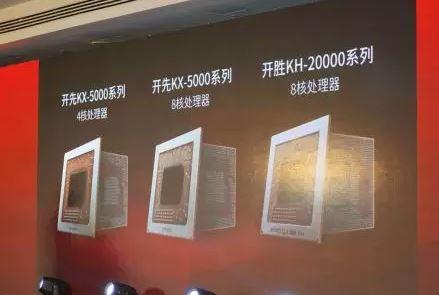
Zhaoxin launched KX-5000 quad/octa-core x86 processors on Dec 28, 2017 in Shanghai, China: image, report, translation.
Zhaoxin revealed KX-6000 & KX-7000 roadmap: image, report, translation.
Other reports: golem.de, pcgameshardware.de, bitsandchips.it, phoronix
KX-5000:
Full SOC design (integrated southbridge)
28nm process by HLMC, 2.1 billion transistors
4-core / 8-core SKUs, no SMT
2.0-2.2GHz base clock, 2.4GHz max turbo
IMC supports dual channel DDR4-2400
PCIe 3.0 lanes
iGPU
integrated audio codec
ZX-200 I/O extension (chipset): SATA3.0, USB 3.1 Gen2, Gigabit Ethernet
OEM: Lenovo desktop M6200KX-6000: 16nm tick-tock
KX-7000: new uArch, DDR5, PCIe 4.0
Related info:
About VIA & Zhaoxin: wikipedia and wikichip.
KX-5000 preview: image, report
KaiXian KX-5000 series was listed in PCI-SIG integrators list on Nov 10, 2017.
Zhaoxin KaiXian KX-5640 in SiSoftware database.
Zhaoxin ZX-C, KX-5000 series on exhibition on Nov 21, 2017 in Ukraine: report, translation.
KX-5000 CPU arch: block diagram, report, translation.
-
Re:Stand their ground
Well no, however consider this
http://www.ffmpeg.org/legal.html
Q: Bottom line: Should I be worried about patent issues if I use FFmpeg?
A: Are you a private user working with FFmpeg for your own personal purposes? If so, there is remarkably little reason to be concerned. Are you using FFmpeg in a commercial software product? Read on to the next question...Q: Is it perfectly alright to incorporate the whole FFmpeg core into my own commercial product?
A: You might have a problem here. There have been cases where companies have used FFmpeg in their products. These companies found out that once you start trying to make money from patented technologies, the owners of the patents will come after their licensing fees. Notably, MPEG LA is vigilant and diligent about collecting for MPEG-related technologies.So what happens in practice is if you use FFMpeg non commercially there's no reason for them to pursue you for license fees. However if your company uses H.264 commercially and starts to make money they would.
It's sort of like if you violate a software patent in your FOSS library you will not be sued. However if someone uses that FOSS library in a device and they start to make money the patent holder may well come after you.
A good example would be Linux. Linux implements things like FAT32 long filenames which are most likely patented. You don't get sued as an individual user. However suppose TomTom make millions selling GPS devices in the US. Then there is a fair chance they helpful folks at Microsoft may sue you and demand you sign a license. At that point you can pony up the cash or counter sue them
E.g.
http://en.wikipedia.org/wiki/Microsoft_Corp._v._TomTom_Inc.
Note there actually is a lot wrong with this system. It gives old, large companies with an extensive patent portfolio an advantage over new, small ones with a smaller portfolio for example and that seems to me to be the opposite of what the law should do in the interests of competition. Many software patents are of dubious originality. Even companies like Google and Microsoft have fallen victim to dubious patents. In fact the reason they build up patent portfolios is primarily defensive - it means that if they are sued for patent violation they most likely have a patent which the company suing them is violating too.
Still the idea that people will be sued because they encode or decode videos using FFMPEG is bogus. As is the idea that putting a H.264 video on the internet will mean you need to pay a license fee. In practice only people who are making enough profit to make them a target get sued for patent infringement. Or that the Linux Foundation of people like Canonical will be sued for infringing patents. Canonical declined to discuss patents with Microsoft but they did license the MPEG LA patents. They also joined the PCI SIG. So it seems like industry standards with a patent pool are something they accept. Microsoft trying to collect royalties on their patents unilaterally they won't. There's a certain amount of sense in this position.
Incidentally once you understand how the system works you can see why FFMPEG or other open source products don't get granted 'unlimited no cost license'. Not to distribute - they can already do that for free. What they can't do is to offer a free license to their end users to decode or encode H.264. If they could do that people would just use FFMPEG in their products and not pay the license fee to the MPEG LA.
Of course another point people miss is about video is that 'not patent encumbered' is a rather dishonest phrase. With something like WebM all you can say is that they are not currently known to use any technology, rather than they ar
-
Re:As a game developer...
According to the PCI-SIG(or at least their press flacks, actual standards are members only) revision 3 is compatible with both 2 and 1, and 2 is compatible with 1(excepting one minor hiccup where 2.1 increased the allowable PCIe x16 slot power draw compared to 2.0 and earlier, so there are 2.1 cards in the wild that are logically compatible with 2.0 and 1.0; but which will only function with auxiliary power).
Internet anecdote suggests that this glorious vision may or may not actually be 100% realized, your BIOS isn't our problem, go cry to your vendor, etc; with graphics cards being the most common offenders(probably both because they are the most common user-installed PCIe peripheral, and because most motherboards won't POST properly if they can't find a working video device, while all but the really dysfunctional ones can ignore missing or confused NICs and such)...
I don't have enough personal experience to give any odds, but the SIG says yes and some people say 'not in my case'.... -
Re:I must admit...
There have been various ad-hoc solutions to the problem, nothing standardized has yet hit the field, though the PCI-SIG has an initial standard. These guys are representative enough of the sort of products actually available, usually break-out boxes to allow laptops or undersized desktops to run a few more cards. A few more specialized instances, for the laptop market, have consisted of basically your usual docking station; but with a cable that plugs into an expresscard port, rather than a proprietary connector.
-
Re:Delayed the release?
So the spec is complete, but were not gonna tell you what it says!
Doesn't make sense!
The article says they're working on getting it to be backward compliant with the current PCIe specs. You probably don't want to start building to the spec until that's in place anyway. You can find a lot of information on PCIe 3.0 on the FAQ on their site. If you're a member of PCI SIG, you might even be able to get the preliminary spec, who knows?
-
Re:"PCI" or "PCI" ?
Oh, so this is not about PCI compliance workshops? http://www.pcisig.com/events/compliance_workshop/
-
Re:Sigh
Probably not in the next few months, but vendors will probably have products out in 2008.
I know the
There is a lot of cool stuff going on in the PCI-SIG, the SR and MR (single root and multi root) specifications for I/O virtualization are especially cool. SR allows an endpoint (PCIe device) to export virtual functions to a host running a hypervisor. So for example, this means that Xen could use SR to provide physical access to a fibre channel HBA to each guest and the guest would load the native driver for the HBA.
MR is really cool too - it allows multiple hosts to share the same PCIe device. So think of a blade chassis where you have PCIe slots in the back, all the blades could share a single 10Gbps NIC or HBA or whatever. This also has the added advantage of separating the I/O from the blade (currently any expansion devices have to go directly on the blade).
A small blurb on SR and MR can be found here:
http://www.pcisig.com/specifications/iov/
http://www.techworld.com/opsys/features/index.cfm? featureid=2728&pagtype=samecatsamechan -
Re:PCIx
I think you mean PCIe. PCIx is something else.
See http://www.pcisig.com/specifications/ -
Re:Perpetual Payment Processing
-
Re:Confusion
Curse me for not doing any recent research on this. A year ago or so (maybe more), everyone was talking about how PCI-X was the second coming of christ. I hadn't read anything from pcisig.com for a long time, and apparently I didn't read up enough on PCI-E the last time I was there. Thanks for the clarification.
Regardless of PCI-X, there will be something else after PCI-E. I have no idea what it'll be. But it's going to happen again. Such is life. -
PCI Express IS backwards compatible
According to PCI-SIG, the guys that created PCI, PCI Express is not only software backwards compatible, but also hardware backwards compatible with PCI and PCI-X using the appropropriate hardware bridge.
-
PCI Express IS backwards compatible
According to PCI-SIG, the guys that created PCI, PCI Express is not only software backwards compatible, but also hardware backwards compatible with PCI and PCI-X using the appropropriate hardware bridge.
-
Re:IBM has been doing it for years!
MiniPCI is a PCI SIG standard. See here.
-
Re:Why does RAM suck so much?
Note that PCI-X and PCI-Express are not the same thing.
-
Re:Why does RAM suck so much?
Note that PCI-X and PCI-Express are not the same thing.
-
Re:PCI Express -- the new AGP?
No, the bandwidth (2.5 Gbps in each direction) of the 1x PCI Express Lane in an ExpressCard can't compete with an AGP8X built in solution (2.1 GB/sec). The ExpressCard power limitations would keep it from working as well, but primarily its bandwidth.
However, the beauty of PCI Express (and ExpressCard) is that your entire machine will be using the same buses for all communication (from the Northbridge on...). None of this AGP for the GPU, PCI for the other devices and an adapter chip to provide CardBus/16-Bit PC Card support that adds complexity and cost to every motherboard. Each device will speak PCI Express and/or USB. All you need is a good Northbridge and the appropriate connectors.
Two ExpressCard/32 cards will fit in the space currently used by a PC Card slot. And the fact that the PCIExpress/USB connection simply taps into the existing buses means that your ExpressCard connectors don't have to be co-located. (Right now your CardBus/PC Card slot MUST be as close as possible to the (typically TI) Cardbus Host Adapter.)
Similarly it should be trivial to add an ExpressCard connector to a desktop (as all new desktops have PCIExpress and USB) and your ExpressCard modules can be reused.
Software isn't an issue because PCI Express is simply a Physical Layer change. All existing PCI code will work with PCI Express out of the box.
There's a fly in the ointment though. Along with ExpressCard, there's also PCI Express Mini Card. PCI Express Mini Card (51mm x 30mm) is very similar in physical size to ExpressCard (75mm x 34mm), but though they both have USB and PCIExpress connections, the connectors are completely different. ExpressCard is a mere 26 pins, but PCI Express Mini Card is 52 (and a PCI Express 1x is 36).
ExpressCard and PCI Express Mini Card aren't competitors, though. PCI Express Mini Cards are for internal connections while your ExpressCard is physically encased and protected. As a hardware designer, though, I wish the two standards shared a bit more commonality. If, at least, the PCB sizes could be exactly the same, we would probably see most ExpressCard products come out as PCI Express Mini Cards (and visa versa). I don't know if that will happen as the circuit board would have to be completely redesigned (for space-constrained designs).
Oh, and one more thing...
PCI Express, even in its 32 Lane (8 GB/sec unencoded) form, has too much latency for direct memory access. Hypertransport does not suffer from this same deficiency. -
Re:GamePC
PCI-X is backwards-compatable (warning: PDF) with PCI.
-
Re:HyperTransport blows PCI-X out of the water
That's PCI Express not PCI-X.
-
Re:HyperTransport blows PCI-X out of the water
That's PCI Express not PCI-X.
-
macs..
Why bother to couple GeForce GPUs with the Macs, if you aren't going to bother to utilize that power for games? It makes no sense. That's like buying a Ferrari just to drive to church every sunday.
I see a lot of comments already about how the Macs cost a lot..
Let me pose this question to those people then - with the recent changes in the industry, who is really paying more? The Mac users or the Windows users? Any high end card nowadays comes in PCI Express, which almost certainly requires you to buy a new motherboard, and possibly a new processor, on top of that $200-$400 card. Gaming definitely knows how to suck that money out of your wallet quicker than any Mac will.
Windows users are allowed to play more , but we pay the price for it. I suppose it's a necessary evil in order to enjoy gaming at its finest.. -
Re:10 gigabit is kinda much
Almost correct.
Most Mainboards have only 33MHz/32bit PCI slots.
However "Conventional PCI" actually goes up to 66MHz/64bit = (533 MB/s), although you'll only find that in older workstation/server mainboards (newer ones often use PCI-X instead).
Then there is PCI-X. The latest PCI-X standard specifies PCI-X 533 (64bit), giving you a theoretical I/O limit of 4.3 GB/s.
And of course there is this new PCI-Express, with a transfer rate of 250 MB/s for a single lane (and you can bundle 32 of them = 8 GB/s). However most new mainboards that offer PCI-Express come with only one 16X-PCI-Express slot (as replacement for AGP) and a couple of 1X-PCI-Express slots (still faster than 'normal' PCI). -
Re:Toys for the rich
Actually, Nvidia and Alienware are both working on solutions that accomplish this goal. Nvidia's solution is their own (called SLI, probably because they gobbled up 3d Labs -- remember the Voodoo2 boards you could link up?), while Alienware's is (video card) manufacturer independent and based on technology from Metabyte a/k/a Wicked3D. The performance is promising (with gains from 70-90% on various benchmarks).
You can read about Nvidia's solution here, and Alienware's here. The problem is that two x16 PCIe slots are required (PCI-Express, not to be confused with PCI-X which is a different beast altogether). Right now, the only manufacturer shipping PCIe enabled boards is Intel, and even they didn't last too long (see The Grantsdale Recall), but none as of yet have two x16 PCIe slots, other than the "x2" motherboards which are custom OEM to Alienware. I'm sure that in the near future the major tier one motherboard manufacturers like Asus and Gigabyte will provide these solutions as well, but it remains to be seen what kind of price premium can be expected (other than the cost of a second video card!). -
Re:Toys for the rich
Actually, Nvidia and Alienware are both working on solutions that accomplish this goal. Nvidia's solution is their own (called SLI, probably because they gobbled up 3d Labs -- remember the Voodoo2 boards you could link up?), while Alienware's is (video card) manufacturer independent and based on technology from Metabyte a/k/a Wicked3D. The performance is promising (with gains from 70-90% on various benchmarks).
You can read about Nvidia's solution here, and Alienware's here. The problem is that two x16 PCIe slots are required (PCI-Express, not to be confused with PCI-X which is a different beast altogether). Right now, the only manufacturer shipping PCIe enabled boards is Intel, and even they didn't last too long (see The Grantsdale Recall), but none as of yet have two x16 PCIe slots, other than the "x2" motherboards which are custom OEM to Alienware. I'm sure that in the near future the major tier one motherboard manufacturers like Asus and Gigabyte will provide these solutions as well, but it remains to be seen what kind of price premium can be expected (other than the cost of a second video card!). -
Re:too bad
PCI-X is not PCI-E (or PCI-Express). PCI-E is a completely new interface and is not backwards-compatible like PCI-X.
To read the specs on both, click right here. -
Re:A source of confusion...backwards compatible with any newer PCI (2.2) card.
If you read the PCI-Express crud it actually is only SOFTWARE compatable with regular PCI. PCI-X is the one that is HARDWARE compatable with PCI 2.2 cards.
There are specs for a PCI PCI-Express bridge, so you could have a breakout box full of PCI cards for every PCI-X slot.
-
The use of such bandwith?
at the PCI Express Specification Page, they call it PCI-Express and nothing more. The use of the term PCI-X should stop and we already got the idea from the first few posts heh.
I'm just hoping that the future boards will keep at least two standard pci slots consdering that I doubt I'd change my soundcard or nic card to something which needs an incredible amount of bandwith. Or is this another way to tell consumers "hey, buy this one, its newer and better and FASTER!" -
PCI Express is backwards compatible with PCI &
PCI Express is software compatible with PCI and PCI-X, but the physical connection is different. There are already specifications available for PCI Express-to-PCI/X bridge, so you need'nt worry about your "legacy" PCI devices becoming useless after PCI Express' adoption.
-
Re:My Apologies...
You know, I have the feeling the industry *won't* called PCI Express PCI-X, what with both standards being set by the same people
See here.
Also, hopefully, a fair few manufacturers will put some x4 slots on their motherboards as well as x16. And we've seen hints of dual x16 slots too.
-
Re:Nice...
ARRGGGHH
Will people *PLEASE* stop calling PCI-Express "PCI-X". PCI Express is completely and utterly different to PCI-X, if you have to abbreviate it call it "PCI-e" or similar.
PCI-e is a completely new bus, it's serial, it has lots of speed grades.
PCI-X is basically faster clocked, 64bit, parallel PCI, at 66mhz and 133mhz (extending up to 266mhz and 533mhz with PCI-X 2.0).
Read about it all here.
And please fail to make the mistake again, I'm fed up of shouting at my monitor, thankyou. -
Re:PCI-X != PCI express
Yep, this is what happens when ignorant fanboi's submit before doing a quick check. Here are the PCI-Express and PCI-X specs. It's unlikely PCI-X will make it onto the average consumer level motherboard, but PCI-Express certainly will.
-
Re:PCI-X != PCI express
Yep, this is what happens when ignorant fanboi's submit before doing a quick check. Here are the PCI-Express and PCI-X specs. It's unlikely PCI-X will make it onto the average consumer level motherboard, but PCI-Express certainly will.
-
Re:Missed opportunity?... those horrendous semi-proprietary mini-PCI cards...
Mini-PCI is an open standard, just like PCI. You even buy the specifications from the same place, the PCI SIG. What nVidia is doing is pre-empting what the PCI SIG will eventually come out with, perhaps in the hopes that the PCI SIG will adopt their standard as the official PCI graphics standard for laptops.
If a couple of big players like Dell and Toshiba adopt it for their notebooks, this will most likely become the standard.
Someone else on this thread added that CardBus does exactly what you are asking for. I would also like to add that audio capabilities should be absorbed into the video card anyway so that you can send it a single datastream and get both video and audio out, so you don't need to add audio capabilities to the bus.
-
Re:Big Deal - PCI Express. Any one can add two vid
-
Re:Big Deal - PCI Express. Any one can add two vid
-
Let me check my notes...
I did a paper on the topic of general-purpose GPU programming for my parallel computing course just this last semester here, interestingly enough. I believe our research indicated that even a single PCI card was so badly throttled by the bus throughput that it was basically useless. AGP does a lot better taking data in, but it's still pretty costly sending data back to the CPU. I have a feeling your proposed setup will be a whole lot more feasible if/when PCI Express becomes mainstream.
-
Re:buyers of last-gen AGP cards?PCI-X != PCI-Express
Check out PCI-SIG.
-
Re:The future is the past
You are thinking of PCI Express. PCI-X is faster than standard PCI but no where near as fast as PCI Express and is not intended as a replacement for AGP.
PCI Express, which is set to replace AGP comes in several speeds and motherboards will only have one 16x PCI Express slot suitable for use with graphics cards
So unfortunatly this will have no effect on CPU prices
-
Re:Misunderstandings...
As opposed to the state of Microsoft, where they have standards you *can't* license.
OpenGL is open for anyone to license and implement.
DirectX is not. It is proprietary and you *have* to agree with Microsoft's vision.
In fact I am incredibly surprised you would call DirectX a standard; it is a platform tied, closed, proprietary, and controlled API.
They are the 'standard' in the sense that Microsoft, having the largest market, in supporting it and pushing it also makes it the most common API. Of course I'm sure you mean to imply that by saying the 'standards' I list aren't standards at all, but despite the fact that they have patents and licensors, I think they are still standards! (I also listed open source groups too, if that's confusing you).
MP3, MPEG4, AAC, are all defined by the ISO-MPEG group.
Firewire was created by Apple, but has it's own trade association
OpenGL has it's Architecture Review Board.
PDF is an open format, and as such a subset has been adopted by the ISO as a document interchange format and standard.
Zeroconf, as well as WebDAV, is an IETF working group. Included in that list is LDAP, Kereberos, IPv6, and DHCP.
Java is questionable, I probably should not have included it there ^^
PCI, PCI-X, USB, and AGP are all standards as well, with working groups and standards bodies.
My point is that Microsoft will take 'standards' and then change them to suit their needs, and Apple does not. If Microsoft is to become like Apple, then that means endorsing and supporting open source groups (Apache, SMB, KHTML, SSH, etc), opening the source of their own programs (IE core, OS core, etc), and using industry standards instead of rolling their own to control the market (DirectX, ActiveX, XDocs, etc).
So what is a standard? I propose that a standard is any format, API, or interface that you can license, get access to, and not worry that it is being controlled by a single organization who's wishes may differ markedly from yours. By that definition, Java definitely doesn't qualify; but also none of Microsoft's "standards" as well, while MP3, MP4, Firewire, etc, all do.
Despite them not being free, libre, or open. -
Re:Maybe someone knows
Well, yes, except this isn't about PCI-X. Intel's BTX boards are shown with PCI Express not PCI-X. PCI Express is serial, PCI is parallel. However, as I understand it, PCI-X is something different. It's basically 64-bit PCI slots at 66MHz or higher.
-
Re:Maybe someone knows
Well, yes, except this isn't about PCI-X. Intel's BTX boards are shown with PCI Express not PCI-X. PCI Express is serial, PCI is parallel. However, as I understand it, PCI-X is something different. It's basically 64-bit PCI slots at 66MHz or higher.
-
Re:Maybe someone knows
Well, yes, except this isn't about PCI-X. Intel's BTX boards are shown with PCI Express not PCI-X. PCI Express is serial, PCI is parallel. However, as I understand it, PCI-X is something different. It's basically 64-bit PCI slots at 66MHz or higher.
-
PCI-X ??? Already ???
-
Re:PCI-X?Sorry to rain on your conspiracy parade, and I'm not sure who "they" refers to in your post, but the "they" that will be using PCI-Express (at least at first: servers) did (and still does) use PCI-X. And Intel did not make PCI-Express. Intel is one of the members of PCI-SIG, which is the spec-making org for PCI-X and PCI-Express (and all other PCI flavors) but they didn't make it.
In fact, PCI-X is the most common bus in servers these days. If you mean why didn't PCI-X make it into desktop PC's, well, because the smaller size and hot-plug wasn't reason enough to warrant the cost increase. PCI-Express is another story. FYI, the PCI history goes like this:
PCI 1.0 (1992): plug & play! 33MHz
PCI 2.0 (1993): power mhgmt
PCI 2.1 (1994): 66MHz/3.3V
PCI 2.2 (1998): Hot plug 1.0
PCI-X 1.0 (1999): mini PCI
PCI-X 1.0b/2.0 (2002) Hot plug 1.1
PCI 2.3, 3.0 (2002) new features? PCI-Express 1.0 (2003) see below
There's a lot more to PCI-Express than people here seem to realize:- cost is same or less than PCI (system level)
- scalable support for multiple market segments: mobile, desktop, server, comm devices
- allows balancing feature sets to target market segments
- estimated ~10 year life expectancy given scalability
- boot existing OSes with no changes, use existing components with no changes
- point-to-point full-duplex interconnect
- differential low-voltage signaling
- scalable frequency (2.5Gb/s initially)
- scalable width (2.5Gb/s times 1, 2, 4, 8, 12, 16, or 32)
- low latency and high utilization
- PCIPM software compatible
- fully-packetized split-transaction protocol
- credit-based flow control (credits applicable per link)
- heirarchical topology support
- virtual channel mechanism (independent paths, traffic class labeling, up to 8 VC's, software mappable)
- enhanced config and power mgmt (no more complex side-band messaging, in-band support)
- RAS (reliability, accessibility, scalability): CRC-based data integrity checks, hot-plug, surprise removal, advanced error logging and reporting
-
Firewire? How about PCI Express?What I'd really like to know is why not use 3gio / PCI Express, the upcoming variable-width PCI bus that can shrink to a 250 million byte per second point-to-point "one lane" configuraturation that sounds like it could replace USB, firewire, ethernet, serial ATA and serial SCSI. The drive would be "directly" on the PCI bus. I would think that this approach would involve the least amount of silicon on a computer that already had PCI Express.
n.b.: Putting the controller logic back in the drive unit harkens back to the original In Drive Electronics approach.
-
Re:Ok, So I've noticed a couple of corrections.
With PCI-X 1066 8.6GB/s bus tranfers are possible so that should be too much of a problem. Also, the InfiniBand aims to solve that problem. One can see that 6GB bus' were planned even in this older dell whitepaper suggests.
-
Re:hmmm
Um, considering PCI Express is an industry standard, it probably will be a chipset with PCI Express. Of course AMD has already developed Hypertransport to use in some places where PCI Express would fit also.
-
PCI Express FAQ
PCI Express FAQ here.
Quick summary: Formerly known as 3GIO, Software compatibility. Point-to-point instead of bus. 1 to 32 bits wide @ 2Gbps per bit = 16 GB/sec max (vs. 1-4 GB/sec for regular PCI; this is about AGP16X) -
Re:Why NewCard?KiahZero opined: I don't understand why revamped PC-cards are being pushed for desktop computing.
The parent makes it seem as if PCI Express only defines the standard for new generation PC Cards. It doesn't simply do that; otherwise it would be nearly worthless as the next generation successor to PCI. Take a look at relevant quotes from the PCI-SIG:
The "Mini PCI Express Electromechanical specification, an alternate for the existing Mini PCI form factor specification, is being completed for membership review and is expected to be finalized for publication in the first quarter of 2003."
"IBM is excited about the PCI Express architecture because of its compatibility with the past and its high-bandwidth options for the future," said Peter Hortensius, Vice President of Development, IBM Personal Computing Division. "IBM embraces open industry standards and provides innovation on top of them, and PCI Express presents outstanding opportunities for solving real customer problems."
Mini-PCI Express, then, is a spec in its infancy that is designed to replace the previous generation PC Card. It should make future laptops far more expandable, which is a great thing. And PCI Express is one of multiple candidates for desktop expansion. Yet, it seems that PCI Express is going to be backward compatible with important specs, and that it seemingly has industry support. I just wanted to make sure everyone understands the PCI card isn't going to be replaced by the PC Card.
-
"PCI": a not so special acronymHi!
Here are the first 10 hits of a GOOGLE search for "PCI" (somewhat edited by me). As you see, the Term is not that individual...
-
PCI Geomatics Home Page - Committed to GEO-Intelligence Solutions
PCI Geomatics is a worldwide-class leader in the geomatics software industry.
Description: Software provider for remote sensing, photogrammetry, cartography, spatial analysis, and GIS. -
PCI News
Welcome to the Precast/Prestressed Concrete Institute (PCI), headquartered in Chicago, Illinois, with membership throughout the world.
Description: Organizational site includes trade, technical and public affairs information for precast/prestressed... -
PCI-SIG - Home
PCI-SIG Logo,
Description: Unincorporated association of members of the microcomputer industry set up to for the purpose of monitori... -
pci.chadwyck.com/
[Periodicals Contents Index] -
pcift.chadwyck.co.uk/
[Periodicals Contents Index] -
PLANEX COMMUNICATIONS INC.
The summary for this Japanese page contains characters that cannot be correctly displayed in this language/character set. - pci.chadwyck.co.uk/ [Periodicals Contents Index]
-
PCI Vendor and Device Lists
PCI Vendor and Device Lists. This page is primarily intended as an engineering resource for people who need to deal with computers built around the PCI bus. -
PCI Technologies Inc. designs and manufactures custom and
Description: Designs and manufactures filters and traps, as well as test signal generators and splitting/combining... -
PICMG - PCI Industrial Computer Manufacturers Group
The PICMG (PCI Industrial Computer Manufacturers Group) is a consortium of over 250 companies who collaboratively develop specifications that adapt PCI
Bye, Pat!
-
PCI Geomatics Home Page - Committed to GEO-Intelligence Solutions
-
Re:Google rulesMod the parent up! I'd love to see this backfire on PCI-SIG by having someone build a similar database, complete with logos and names (but with perhaps a small disclaimer buried in lawyer speak at the bottom).
Also, someone should tell the poor Alan Deikman to forward all the hate-mails he's receiving on to the PCI-SIG folks. It'd be a shame for them not to hear them, as I imagine most people who did send them have moved on to the next
BTW, you can send yours through their website (true, an annoying little CGI form instead of a tangible email address, but better than nothing).
.jpg)
.jpg)
