Slashdot Mirror
Domain: phoronix.com
Stories and comments across the archive that link to phoronix.com.
Stories · 652
-
As of Tonight, 1900 Steam Games For Linux (phoronix.com)
New submitter KGIII writes: "After a recent Steam change, there were more than 1,900 Steam Linux games listed as Valve ended up including yet-to-be-released Linux game ports. That total including unreleased Linux games is now up to 2,009! But in terms of released Linux game titles available for download right now, the 1,900 threshold was crossed tonight to end out February." It's getting there. All of you gamers might just be able to make the choice to move to Linux soon. It looks like there are quite a few more games coming down the pipe. This is a good thing as it gives gamers more options for their operating system. I imagine this bodes well for the SteamOS project and for the dedicated SteamOS devices. -
CompuLab Rolls out Fanless, High-End PCs With Unique Design (phoronix.com)
An anonymous reader writes: Israeli PC maker CompuLab has begun shipping the Airtop PC that allows assembling high-end PC components into a completely fanless design. Phoronix's initial testing of the Airtop PC showed that it has a Core i7 5775C Broadwell processor, 16GB of RAM, 256GB SSD, and GeForce GTX 950 all while being fan-less thanks to the innovative design. The early results are quite positive for this uniquely designed PC but it comes at a cost premium of a fully-loaded system costing more than $2,200 USD. -
Valve's SteamOS Now Supports Vulkan, The Cross-Platform Alternative To DirectX 12 (pcworld.com)
SteamOS just gained support for Vulkan, the cross-platform alternative to Microsoft's DirectX 12 and Apple's Metal. This should make it easier for developers to write and optimize games for SteamOS, closing the performance gap with Windows and encouraging more developers to support Linux. This feature arrived in SteamOS Brewmaster version 2.63. Valve added version 355 of the Linux Nvidia driver, which means SteamOS offers Vulkan support when used alongside Nvidia hardware. Intel's graphics hardware should also support Vulkan on SteamOS in the near future. AMD is still working on its new driver, known as AMDGPU, that will replace the current fglrx driver for SteamOS and other Linux-based platforms. If you use Linux distribution besides SteamOS, you can download Nvidia's Vulkan-ready Linux driver or an experimental version of Intel's Vulkan-enabled graphics driver. -
Microsoft To Acquire Xamarin (phoronix.com)
New submitter androlinuz writes: Microsoft has signed an agreement to acquire Xamarin, a leading platform provider for mobile app development. In conjunction with Visual Studio, Xamarin provides a rich mobile development offering that enables developers to build mobile apps using C# and deliver fully native mobile app experiences to all major devices, including iOS, Android, and Windows. Xamarin's approach enables developers to take advantage of the productivity and power of .NET to build mobile apps, and to use C# to write to the full set of native APIs and mobile capabilities provided by each device platform. -
Multimedia Powerhouse FFmpeg Hits 3.0
An anonymous reader writes: The milestone release FFmpeg 3.0 "Einstein" has been unleashed. For those who need a reminder, FFmpeg comprises several libraries and command-line tools (the main command-line tool being "ffmpeg") that encode, decode, transcode, and stream audio/visual data, etc. FFmpeg supports a multitude of codecs, filters, and container formats too numerous to mention here. FFmpeg is used by MPlayer, VLC, HandBrake, Chrome, and many other projects. Changes from 2.x to 3.0 include: a much better native AAC encoder, better hardware acceleration, and some API/ABI breakage. See this, this, this, this, and the changelog for much better descriptions of the improvements. -
Khronos Group Announces Release of Vulkan 1.0 (phoronix.com)
An anonymous reader writes: Vulkan 1.0 was released this morning as a surprise for those looking towards a high-performance, cross-platform (everyone but Apple) API. In a lengthy overview of Vulkan 1.0, the stage is set for making Vulkan what it's been talked up to be, but it's not there yet for end-users to fully enjoy: NVIDIA has conformant drivers out for major platforms, AMD doesn't have any conformant driver yet, and Intel only has a conformant Linux driver. The lone launch title for Vulkan 1.0 is Talos Principle, but don't expect it to perform better than the OpenGL port at this time. While it's easy for many game developers to port to Vulkan, it will require significant investment to make the engines really much faster than their OpenGL/DirectX11-geared code-bases while new games should be much better from the start when designed around this lower-level API. The spec will be available at Khronos.org and the Vulkan SDK is available from LunarG.com. -
NVIDIA Begins Providing Open-Source 3D Driver Support For GeForce GTX 900 Series (phoronix.com)
An anonymous reader writes: In late 2014 NVIDIA announced their GPUs would begin requiring signed firmware images before the open-source driver could enable hardware acceleration. That led the Nouveau developers to call the latest GPUs "very open-source unfriendly", but that criticism can now be laid to rest as NVIDIA has finally released the signed firmware and basic open-source driver code. The open-source driver can now move on with its open-source 3D enablement for Maxwell GPUs and the NVIDIA developer is hoping it will be ready for the next kernel cycle (Linux 4.6). -
Fresh Wayland Experiences With Weston, GNOME, KDE and Enlightenment
jones_supa writes: Software developer Pavlo Rudyi has written a blog post about his experiences with the various desktop environments currently supporting Wayland. The results are not a big surprise, but nevertheless it is great to see the continued interest in Wayland and the ongoing work by many different parties in ensuring that Wayland will eventually be able to dominate the Linux desktop. To summarize, Pavlo found Weston to be "good," GNOME is "perfect," KDE is "bad," and Enlightenment is "good." He also created a video from his testing. Have you done any testing? What's your experience? -
First Steps Towards Network Transparency For Wayland (phoronix.com)
munwin99 writes: For the longest time, when bringing up Wayland a recurring question was 'what about network transparency?!' Well, Samsung's Derek Foreman has today published the set of Wayland patches for providing Wayland network transparency by pushing the Wayland protocol over TCP/IP. -
Raspberry Pi's Raspbian OS Finally Ships With Open-Source OpenGL Support (phoronix.com)
An anonymous reader writes: With this month's Raspbian OS update, the Debian-based operating system for the Raspberry Pi ships experimental OpenGL driver support. This driver has been developed over the past two years by a former Intel developer with having a completely open and mainline DRM kernel driver and Mesa Gallium driver to open up the Pi as a replacement to the proprietary GPU driver. -
Talos Secure Workstation Is Free-Software Centric — and $3100 [Updated]
jones_supa writes: These days, the motivation to use open source software for many people is to avoid backdoors placed by intelligence organizations and to avoid software that has hidden privacy-intruding characteristics. For the operating system and userspace software, open choices are already available. The last remaining island has been the firmware included in various ROM chips in a computer. Libreboot has introduced an open BIOS, but it is not available for newer systems featuring the Intel ME or AMD PSP management features. Talos' Secure Workstation fills this need, providing a modern system with 8-core POWER8 CPU, 132 GB RAM, and open firmware. The product is currently in a pre-release phase where Raptor Engineering is trying to understand if it's possible to do a production run of the machine. If you are interested, it's worth visiting the official website. Adds an anonymous reader about the new system, which rings in at a steep $3100: "While the engineers found solace in the POWER8 architecture with being more open than AMD/Intel CPUs, they still are searching for a graphics card that is open enough to receive the FSF Respect Your Freedom certification." Update: 02/08 18:44 GMT by T : See also Linux hacker and IBM employee Stewart Smith's talk from the just-completed linux.conf.au on, in which he walks through "all of the firmware components and what they do, including the boot sequence from power being applied up to booting an operating system." Update: 02/08 23:30 GMT by T :FSF Licensing & Compliance Manager Joshua Gay wrote to correct the headline originally appeared with this story, which said that the Talos workstation described was "FSF Certified"; that claim was an error I introduced. "The FSF has not certified this hardware," says Gay, "nor is it currently reviewing the hardware for FSF certification." Sorry for the confusion. -
The Performance of Ubuntu Linux Over the Past 10 Years (phoronix.com)
An anonymous reader writes: Tests were carried out at Phoronix of all Ubuntu Long-Term Support releases from the 6.06 "Dapper Drake" release to 16.04 "Xenial Xerus," looking at the long-term performance of (Ubuntu) Linux using a dual-socket AMD Opteron server. Their benchmarks of Ubuntu's LTS releases over 10 years found that the Radeon graphics performance improved substantially, the disk performance was similar while taking into account the switch from EXT3 to EXT4, and that the CPU performance had overall improved for many workloads thanks to the continued evolution of the GCC compiler. -
Running "rm -rf /" Is Now Bricking Linux Systems (phoronix.com)
An anonymous reader writes: For newer systems utilizing UEFI, running rm -rf / is enough to permanently brick your system. While it's a trivial command to run on Linux systems, Windows and other operating systems are also prone to this issue when using UEFI. The problem comes down to UEFI variables being mounted with read/write permissions and when recursively deleting everything, the UEFI variables get wiped too. Systemd developers have rejected mounting the EFI variables as read-only, since there are valid use-cases for writing to them. Mounting them read-only can also break other applications, so for now there is no good solution to avoid potentially bricking your system, but kernel developers are investigating the issue. -
GNU Hurd Begins Supporting Sound, Still Working On 64-bit & USB Support (phoronix.com)
An anonymous reader writes: GNU developer Samuel Thibault presented at this weekend's FOSDEM conference about the current state of GNU Hurd. He shared that over the past year they've started working on experimental sound support as their big new feature. They also have x86 64-bit support to the point that the kernel can boot, but not much beyond that stage yet. USB and other functionality remains a work-in-progress. Those curious about this GNU kernel project can find more details via the presentation media. -
Intel Gets Called Out Again For Their M.I.A. 3.0 X.Org Driver (phoronix.com)
An anonymous reader writes: The xf86-video-intel 3.0 DDX driver has been in development the past two and a half years without seeing an official release. The last development release even of xf86-video-intel 3.0 Git was 13 months ago with the xf86-video-intel 2.99.917 release. At that time it was said by Intel's lead DDX developer, "3 months have passed, we should make one more snapshot before an imminent release." Since then, there's been no communications about a stable release of this DDX driver that makes SNA the default acceleration architecture over UXA. Over on the intel-gfx mailing list users are bringing up again the state of xf86-video-intel 3.0 and why it isn't released yet, questioning if Intel is "able to maintain its own device driver in a usable way?" -
FreeBSD-Powered Firewall Distro OPNsense 16.1 Released (phoronix.com)
An anonymous reader writes: OPNsense, the open-source firewall project powered by FreeBSD that began as a fork of pfSense, is out with a new release. OPNsense 16.1 was developed over the past half-year and is a big update. OPNsense 16.1 has upgraded to using a FreeBSD 10.2 base, support for a high-speed IPS mode, a redesigned captive portal, firewall improvements, and a wide range of other work. -
Linux 4.5 Adds Raspberry Pi 2 Support, AMD GPU Re-Clocking, Intel Kaby Lake (phoronix.com)
The Linux 4.5 merge window has been open for the last two weeks; that means that the 4.5-rc1 kernel is expected to emerge, with the official kernel following in about eight weeks. An anonymous reader writes with this top-level list of changes to look for, from Phoronix: Linux 4.5 is set to bring many new features across the kernel's 20 million line code-base. Among the new/improved features are Raspberry Pi 2 support, open-source Raspberry Pi 3D support, NVIDIA Tegra X1 / Jetson TX1 support, an open-source Vivante graphics driver, AMDGPU PowerPlay/re-clocking support, Intel Kaby Lake enablement, a Logitech racing wheel driver, improvements for handling suspended USB devices, new F2FS file-system features, and better Xbox One controller handling. -
GNU Emacs Now Has Native Support For GTK Widgets (phoronix.com)
An anonymous reader writes: The GNU Emacs text editor now has merged the X Widgets branch. What this work allows is for embedding GTK+ user interface widgets within Emacs for features like landing MPlayer or a full web browser in Emacs. This allows now for more endless opportunities for the 40 year old GNU text editor. The X/GTK widgets support will come with GNU Emacs 25.1. -
How OpenGL Graphics Card Performance Has Evolved Over 10 Years (phoronix.com)
An anonymous reader writes: A new report at Phoronix looks at the OpenGL performance of 27 graphics cards from the GeForce 8 through GeForce 900 series. Various Ubuntu OpenGL games were tested on these graphics cards dating back to 2006, focusing on raw performance and power efficiency. From oldest to newest, there was a 72x increase in performance-per-Watt, and a 100x increase in raw performance. The NVIDIA Linux results arrive after doing a similar AMD comparison from R600 graphics cards through the R9 Fury. However, that analysis found that for many of the older graphics cards, their open-source driver support regressed into an unworkable state. For the cards that did work, the performance gains were not nearly as significant over time. -
How OpenGL Graphics Card Performance Has Evolved Over 10 Years (phoronix.com)
An anonymous reader writes: A new report at Phoronix looks at the OpenGL performance of 27 graphics cards from the GeForce 8 through GeForce 900 series. Various Ubuntu OpenGL games were tested on these graphics cards dating back to 2006, focusing on raw performance and power efficiency. From oldest to newest, there was a 72x increase in performance-per-Watt, and a 100x increase in raw performance. The NVIDIA Linux results arrive after doing a similar AMD comparison from R600 graphics cards through the R9 Fury. However, that analysis found that for many of the older graphics cards, their open-source driver support regressed into an unworkable state. For the cards that did work, the performance gains were not nearly as significant over time. -
Open Source Could Help Bring Vulkan To More AMD GPUs (phoronix.com)
An anonymous reader writes: AMD has confirmed that their Vulkan Linux driver will only work with the new AMDGPU kernel driver, meaning that for right now on the desktop, Vulkan will just work on the Radeon R9 285, R9 380, R9 380X and R9 Fury series — not even the other Rx 200/300 series graphics cards. This limitation exists because the AMDGPU driver only works with GCN 1.2 and newer. In time, AMD may allow the driver to work on older GCN GPUs going back to the HD 7000 series. But wait: AMDGPU is open-source. AMD is welcoming community support to help bring AMDGPU (and thereby Vulkan) to these older GPUs. The work involved would be porting GCN 1.0/1.1 support from the existing open-source Radeon DRM driver over to the new AMDGPU DRM driver. The Vulkan code itself is said to already be compatible with all GCN GPUs going back to the HD 7xxx series. -
Open Source Could Help Bring Vulkan To More AMD GPUs (phoronix.com)
An anonymous reader writes: AMD has confirmed that their Vulkan Linux driver will only work with the new AMDGPU kernel driver, meaning that for right now on the desktop, Vulkan will just work on the Radeon R9 285, R9 380, R9 380X and R9 Fury series — not even the other Rx 200/300 series graphics cards. This limitation exists because the AMDGPU driver only works with GCN 1.2 and newer. In time, AMD may allow the driver to work on older GCN GPUs going back to the HD 7000 series. But wait: AMDGPU is open-source. AMD is welcoming community support to help bring AMDGPU (and thereby Vulkan) to these older GPUs. The work involved would be porting GCN 1.0/1.1 support from the existing open-source Radeon DRM driver over to the new AMDGPU DRM driver. The Vulkan code itself is said to already be compatible with all GCN GPUs going back to the HD 7xxx series. -
GNOME Settings Area Getting a Refurbishment (gnome.org)
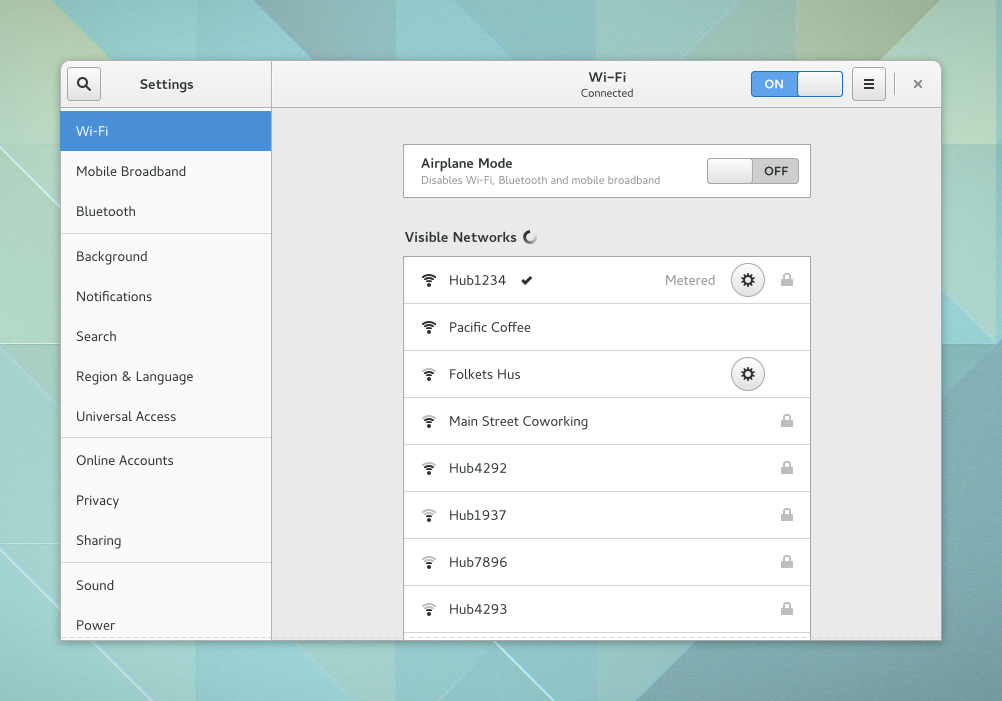
jones_supa writes: Allan Day has written a blog post today about some of the improvements that are being worked on for GNOME's settings area. The new GNOME Settings area is working toward a model that uses a list sidebar for navigation. The window is now resizable, and overall should be a nice upgrade. The new GNOME settings area certainly bears some resemblance to the Windows 10 settings app. Work is also ongoing specifically around improving GNOME's network settings, redesigned sound settings, experiments around improved display support, and various other enhancements to GNOME's settings area. For now, this work is considered experimental and all may not be completed in time for the GNOME 3.20 release in March. -
Intel's Clear Linux Distribution Offers Fast Out-Of-The-Box Performance (phoronix.com)
An anonymous reader writes: In a 10-way Linux distribution battle including OpenSUSE, Debian, Ubuntu, Fedora, and others, one of the fastest out-of-the-box performers was a surprising contender: Intel's Clear Linux Project that's still in its infancy. Clear Linux ships in an optimized form for delivering best performance on x86 hardware with enabling many compiler optimizations by default, highly-tuned software bundles, function multi-versioning for the most performant code functions based upon CPU, AutoFDO for automated feedback-direct optimizations and other performance-driven features. Clear Linux is a rolling-release-inspired distribution that issues new versions a few times a day and is up to version 5700. -
Linux Kernel 4.4 LTS Officially Released
prisoninmate writes: January 10, 2016, will enter in the Linux history books as the day when the Linux kernel 4.4 LTS (Long-Term Support) has been officially released by Linus Torvalds and his team of hard working kernel developers. Prominent features of Linux kernel 4.4 LTS include 3D support in the virtual GPU driver, allowing for 3D hardware-accelerated graphics in virtualization guests, a leaner and faster loop device that supports Asynchronous I/O and Direct I/O, thus increasing the system's performance and saving memory, and support for Open-Channel Solid State Drives (SSDs) through LightNVM. Phoronix also took a look during the newest kernel's development cycle, and has an overview of 4.4's new features. -
After Years of Serving X11, X.Org Stands To Lose Its One-Letter Domain (phoronix.com)
An anonymous reader writes: The X.Org domain predates the X.Org Foundation. It was used in the '90s as a destination by The Open Group around the X Window System. While many are expecting Mir and Wayland to eventually succeed the X.Org Server, it seems the X.Org/X11 Server may outlive the valuable domain. Thanks to poor management by the X.Org Foundation, they risk losing access to their one-letter domain. Procrastination, paired with not transferring the domain when forming the non-profit foundation, has led to a last-minute mess. They left the domain registered for years to a person who is no longer involved with X.Org — and doesn't want to relinquish it. In the few days until the domain expires, they are hoping for a "Hail Mary." Let this be a lesson for open-source projects to better manage their assets. -
KDE Plasma 5.5 Has Matured Past the Point of Plasma 4 (phoronix.com)
An anonymous reader writes: KDE's Plasma 5 desktop received a lot of early heat for being unstable, missing functionality compared to the older Plasma 4, and other changes that irritated Linux desktop users. Fortunately, with the recent release of Plasma 5.5, they have hit a stage where there's fairly wide agreement that Plasma 5 has now matured past the point of Plasma 4. Ken Vermette looked meticulously at the KDE stack for 2016, including how it's working on Wayland, the setup, widgets, various new features, and more. -
List of Major Linux Desktop Problems Updated For 2016 (narod.ru)
An anonymous reader writes: Phoronix reports that Artem S. Tashkinov's Major Linux Problems on the Desktop has been updated for 2016. It is a comprehensive list of various papercut issues and other inconveniences of Linux on the PC desktop. Among the issues cited for Linux not being ready for the desktop include graphics driver issues, audio problems, hardware compatibility problems, X11 troubles, a few issues with Wayland, and font problems. At the project management side, there is also cited a lack of cooperation among open source developers and fragmentation of desktops. Let's discuss. -
Mesa's Highlights Reel: An Impressive Year For Open Source 3-D Drivers
Michael Larabel at Phoronix has been assiduously reporting on some of the small advancements in open source 3-D graphics; in aggregate, those small advancements make for big improvements in hardware (and platform) support, as well as higher performance. Phoronix published today a year-end wrap-up highlighting some of the ways that Mesa has developed; it's quite a list. An excerpt: This time last year core Mesa and the drivers were still limited to OpenGL 3.3 compliance while in 2015 we've seen core Mesa reach up to OpenGL 4.2 support. The AMD RadeonSI and R600g drivers have raised up through OpenGL 4.1 (though R600g is limited in what supports GL4) and the Nouveau NVC0 driver is at OpenGL 4.1 as well. The Intel Mesa driver is still at OpenGL 3.3, but they are extremely close to OpenGL 4.2 and should hit that milestone in early 2016 after having been recently focusing up on OpenGL ES 3.1 support, which they did achieve this year. Besides tackling more GL4 support, Mesa this year has seen the new VirtIO GPU driver for 3D support in guest VMs, continued work on the new Raspberry Pi 3D driver (VC4), video encode/decode improvements, and other Gallium3D state tracker highlights. -
APT Speed For Incremental Updates Gets a Massive Performance Boost
jones_supa writes: Developer Julian Andres Klode has this week made some improvements to significantly increase the speed of incremental updates with Debian GNU/Linux's APT update system. His optimizations have yielded the apt-get program to suddenly yield 10x performance when compared to the old code. These improvements also make APT with PDiff now faster than the default, non-incremental behavior. Beyond the improvements that landed this week, Julian is still exploring other areas for improving APT update performance. More details via his blog post. -
Ubuntu User Count Pegged At Over One Billion (phoronix.com)
An anonymous reader writes: In response to an article claiming Ubuntu didn't reach its goal of 200 million users this year — a goal set out by Mark Shuttleworth in 2011 to surpass 200 million users by 2015 — a Canonical engineer has come out to say the opposite. Dustin Kirkland, a member of Ubuntu Product and Strategy team, has come out to say there are more than one billion Ubuntu users. His billion tally though does include cloud/container instances as well as those shopping online at Wallmart, watching popular movies where the studios used Ubuntu servers, streamed from Netflix, rode with Uber, and other businesses that rely upon Ubuntu servers. -
Super Mario Inspired SuperTux Issues Its First Official Release In 10 Years (phoronix.com)
An anonymous reader writes: SuperTux, the free software game inspired by Nintendo's Super Mario Brothers, has put out its first stable release in a decade. SuperTux 0.4 rewrites the game engine to make use of OpenGL, SDL2, and other modern open-source game tech. SuperTux 0.4 additionally features a lot of new in-game content, an in-game download manager, and support for translations. SuperTux 0.4 can be downloaded for Linux, Windows and Mac via GitHub. -
Wine 1.8 Released (winehq.org)
An anonymous reader writes: Wine 1.8.0 is now the latest stable release of Wine Is Not An Emulator and available from WineHQ.org. Wine 1.8 features include support for DirectWrite, Direct2D support, very limited Direct3D 11 support, simple application support of DIrect3D 10, support for process jobs, 64-bit architecture support on OS X, networking updates, and over 13,000 other individual changes. -
Khronos Delays Vulkan Graphics API To 2016 Release (phoronix.com)
An anonymous reader writes: The Khronos Group has announced that the Vulkan specification is complete and undergoing legal review and final polishing, but it means that Vulkan will not be published this year. Khronos reports that the Vulkan 1.0 specification will be published when the first conformant implementations are confirmed. Phoronix received some more details about the state of Vulkan in that there were a lot of changes since GDC and " the gating factor for release will be availability of product-quality implementations." -
$5 Raspberry Pi Zero Compared To Intel's NetBurst CPUs & Newer (phoronix.com)
An anonymous reader writes: Curious about the performance of a Raspberry Pi Zero, Phoronix has published a number of Raspberry Pi 2 + Pi Zero performance benchmarks with paired power consumption data. They found the Pi Zero performed slower than even an Intel Celeron 320 from the NetBurst era, but that the Raspberry Pi 2 was performing between that Celeron and a Pentium 4 "C" 2.8GHz CPU from 2004. While the Raspberry Pis didn't win in raw performance, the performance-per-Watt of the Raspberry Pi 2 was 220x greater than the Pentium Northwood. The Pi Zero had an average power consumption of 2.7 Watts and the Raspberry Pi 2 was at 3.5 Watts; however, compared to newer Broadwell and Skylake processors, Intel's low-end parts delivered greater power efficiency while the Raspberry Pi had the best value. -
DragonFlyBSD 4.4 Switches To the Gold Linker By Default (phoronix.com)
An anonymous reader writes: DragonFlyBSD 4.4 is now available for download (x86_64 ISO) and is a feature release that presents many improvements and new features. DragonFlyBSD now uses the Gold Linker by default rather than GNU Ld, updates the Intel and Radeon graphics support against the Linux 3.18 kernel, improves its experimental HAMMER2 file-system updates the locale system and provides collation for named locales, changes out its regex library, and has new hardware drivers. More details on the 4.4 release page. -
Enlightenment E20 Released With Full Wayland Support (enlightenment.org)
An anonymous reader writes: Enlightenment DR 0.20 has been released. The most significant change is full Wayland support where E20 can act as its own Wayland compositor and the whole shebang. Enlightenment 0.20 also has better FreeBSD support, introduces Geolocation support, new screen management, and other changes. -
Hardware For a Cheap Linux Desktop (phoronix.com)
An anonymous reader writes: Outside of the limelight of Intel's Core "Skylake" processors is the cheapest model, a $60 Intel Pentium G4400 dual-core processor that runs at 3.3Gz and has built-in HD Graphics 510. Ubuntu Linux results for this CPU show the cut-down Skylake graphics are the worst aspect of this budget processor while the CPU performance is okay if speed isn't a big factor and your workloads don't mind the lack of AVX support. To pair with the cheap Skylake Pentium processors are more Intel H110-powered motherboards appearing, with some also retailing for under $60 while being basic yet functional as a severely cutdown version of the Intel Z170 chipset. If pursuing this route for a budget Linux PC, it's possible to build a socketed Skylake system for less than $200. Those of you who have recently built, or are planning out a new budget Linux machine, what internals do you recommend? -
Hardware For a Cheap Linux Desktop (phoronix.com)
An anonymous reader writes: Outside of the limelight of Intel's Core "Skylake" processors is the cheapest model, a $60 Intel Pentium G4400 dual-core processor that runs at 3.3Gz and has built-in HD Graphics 510. Ubuntu Linux results for this CPU show the cut-down Skylake graphics are the worst aspect of this budget processor while the CPU performance is okay if speed isn't a big factor and your workloads don't mind the lack of AVX support. To pair with the cheap Skylake Pentium processors are more Intel H110-powered motherboards appearing, with some also retailing for under $60 while being basic yet functional as a severely cutdown version of the Intel Z170 chipset. If pursuing this route for a budget Linux PC, it's possible to build a socketed Skylake system for less than $200. Those of you who have recently built, or are planning out a new budget Linux machine, what internals do you recommend? -
AMD's Crimson Radeon Driver For Linux Barely Changes Anything (phoronix.com)
An anonymous reader writes: AMD Windows customers were greeted this week to the new "Crimson" Radeon Software that brought many bug fixes, performance improvements, and brand new control panel. While AMD also released this Crimson driver for Linux, it really doesn't change much. The control panel is unchanged except for replacing "Catalyst" strings with "Radeon" and there's been no performance changes but just some isolated slowdowns. The Crimson Linux release notes only mention two changes: a fix for glxgears stuttering and mouse cursor corruption. -
AMD's Crimson Radeon Driver For Linux Barely Changes Anything (phoronix.com)
An anonymous reader writes: AMD Windows customers were greeted this week to the new "Crimson" Radeon Software that brought many bug fixes, performance improvements, and brand new control panel. While AMD also released this Crimson driver for Linux, it really doesn't change much. The control panel is unchanged except for replacing "Catalyst" strings with "Radeon" and there's been no performance changes but just some isolated slowdowns. The Crimson Linux release notes only mention two changes: a fix for glxgears stuttering and mouse cursor corruption. -
Jolla Goes For Debt Restructuring (phoronix.com)
jones_supa writes: Months after the smartphone company Jolla announced its split and intent to focus on Sailfish OS licensing, its financial situation has not improved. Jolla's latest financing round has been delayed and so they have had to file for debt restructuring in Finland. As part of that, the company is temporarily laying off a big part of its personnel (Google translation of Finnish original). Jolla co-founder Antti Saarnio said, "Our operating system Sailfish OS is in great shape currently and it is commercially ready. Unfortunately the development until this point has required quite a lot of time and money (PDF). To get out of this death valley we need to move from a development phase into a growth phase. At the same time we need to adapt our cost levels to the new situation. One of the main actions is to tailor the operating system to fit the needs of different clients. We have several major and smaller potential clients who are interested in using Sailfish OS in their projects." -
NVIDIA Jetson TX1 Performance Shines For GPU Computing (phoronix.com)
An anonymous reader writes: Following last week's announcement of the Jetson TX1 development board, NVIDIA is now allowing independent reports of performance for their $599 USD 64-bit ARM development board. Linux results published by Phoronix show very strong performance for the Jetson TX1 when looking at the Cortex-A57 speed relative to the Tegra K1 and older Tegra SoCs along with other ARM hardware like Calxeda and Raspberry Pi. The Jetson TX1 was generally multiple times faster than ARM hardware a few years old. The graphics performance was twice as fast as the year-old Jetson TK1 thanks to the Maxwell GPU. Compared to x86 hardware, in CPU-bound tasks the performance is comparable to an AMD Sempron/Phenom except when utilizing GPGPU computing where it's then faster than Intel Skylake and Xeon processors. The Jetson TX1 had a peak power consumption of 16 Watts and an average power use of under 10 Watts. -
Linux 4.4 Kernel To Bring Raspberry Pi Graphics Driver, Open-Channel SSD Support (phoronix.com)
An anonymous reader writes: Linux 4.4-rc1 has been released. New features of Linux 4.4 include a Raspberry Pi kernel mode-setting driver, support for 3D acceleration by QEMU guest virtual machines, AMD Stoney APU support, Qualcomm Snapdragon 820 support, expanded eBPF virtual machine programs, new hardware peripheral support, file-system fixes, faster SHA crypto support on Intel hardware, and LightNVM / Open-Channel SSD support. -
NVIDIA Releases JTX1 ARM Board That Competes With Intel's Skylake i7-6700K (phoronix.com)
An anonymous reader writes: NVIDIA has unveiled the Jetson TX1 development board powered by their Tegra X1 SoC. The Jetson TX1 has a Maxwell GPU capable of 1 TFLOP/s, four 64-bit ARM A57 processors, 4GB of RAM, and 16GB of onboard storage. NVIDIA isn't yet allowing media to publish benchmarks, but the company's reported figures show the graphics and deep learning performance to be comparable to an Intel Core i7-6700K while scoring multiple times better on performance-per-Watt. This development board costs $599 (or $299 for the educational version) and consumes less than 10 Watts. -
Steam Has Brought 1,600 Games To Linux In the Past Three Years (phoronix.com)
An anonymous reader writes: Today marks three years since Valve's Steam client went into beta on Linux. In that time over 1,600 games have become natively available for Linux. Going beyond having many new Linux games, Phoronix recaps, "we've seen Valve make significant investments into the open-source graphics stack and other areas of Linux (in part through their sponsorship of Collabora and LunarG). Valve developers are significantly pushing SDL2. We've seen more mainstream interest in Linux gaming, and Valve has been heavily involved in the creation of the Vulkan graphics API. They have given away their entire game collection to the Mesa/Ubuntu/Debian upstream developers, and much more." The three-year anniversary is coincidentally just days before the release of Steam Machines. -
Linux 4.3 Released As Stable; Improves On Open-Source Graphics, SMP Performance (lkml.org)
An anonymous reader writes: The Linux 4.3 kernel was released as stable today. The Linux 4.3 kernel brings Intel Skylake support, reworked NVIDIA open-source graphics support, and many other changes with the code count hitting 20.6 million lines of code. -
GNU Hurd 0.7 and GNU Mach 1.6 Released
jones_supa writes: Halloween brought us GNU Hurd 0.7, GNU Mach 1.6, and GNU MIG 1.6. The new Hurd comes with filesystem driver improvements, provides a new rpcscan utility, and the Hurd code has been ported to work with newer versions of GCC and GNU C Library. The Mach microkernel has updates for compiler compatibility, improvements to the lock debugging infrastructure, the kernel now lets non-privileged users write to a small amount of memory, timestamps are now kept relative to boot time, and there are various bugfixes. MIG 1.6 is a small update which improves compatibility with newer dialects of C programming language. Specific details on all of the updates can be found in the full release announcement. jrepin adds some more details: The GNU Hurd 0.7 improves the node cache for the EXT2 file-system code (ext2fs), improves the native fakeroot tool, provides a new rpcscan utility, and fixes a long-standing synchronization issue with the file-system translators and other components. The GNU Mach 1.6 microkernel also has updates for compiler compatibility, improvements to the lock debugging infrastructure, the kernel now lets non-privileged users write to a small amount of memory, timestamps are now kept relative to boot time, and there are various bug-fixes. -
Open-Source GPU Drivers Show Less Than Ideal Experience For SteamOS/Linux Gaming (phoronix.com)
An anonymous reader writes: Phoronix's recent 22-Way SteamOS Graphics Card Comparison showed that NVIDIA wins across the board when it comes to closed-source OpenGL driver performance. However, when it comes to the open-source driver performance for Steam Linux gaming, no one is really the winner. A new article, "Are The Open-Source Graphics Drivers Good Enough For Steam Linux Gaming?" answers that question with "heck no" by its author. While AMD is generally regarded as having better open-source support, their newer graphics cards still can't run at their rated clock frequencies due to lack of power management support, the lack of enough OpenGL 4.x support means many AAA Linux games simply cannot run yet, not enough QA means regressions are common, and other issues were noted when it comes to testing a number of modern graphics cards on the open-source drivers. -
22-Way SteamOS Graphics Card Comparison: NVIDIA Wins Across the Board (phoronix.com)
An anonymous reader writes: A 22-way AMD Radeon vs. NVIDIA GeForce graphics card comparison on SteamOS 2.0 "Brewmaster" was carried out with one month to go until Steam Machines begin to ship. The article looks at the OpenGL performance of this Debian-based Linux distribution as well as the power/performance efficiency, thermal efficiency, and value of the entire line-up. The results make it pretty clear why the current range of Steam Machines with SteamOS all ship with NVIDIA graphics.