Slashdot Mirror
Domain: slashdot.org
Stories and comments across the archive that link to slashdot.org.
Stories · 37,380
-
Amazon's Ambitious Bets Pile Up, and Its Losses Swell
New submitter shirleymarone sends word that investors are becoming impatient with Amazon's willingness to absorb short-term losses for theoretical long-term gains. The company brought in over $19 billion in revenue last quarter, but reported a net loss of $126 million. The company warned of even greater losses this quarter. Amazon officials exude a serene if vague confidence. "We're not trying to optimize for short-term profits," Thomas J. Szkutak, the chief financial officer, said in a conference call. "We're investing on behalf of customers and share owners," he said. "We're fortunate to have these opportunities." But even the analysts, who are generally enthusiastic about the company and its global ambitions, are asking slightly more pointed questions these days. For all these investments, one analyst asked Mr. Szkutak, why are sales not increasing even faster? His answer: Just wait. ... Amazon, which is based in Seattle, long ago transcended its roots as a simple retailer. In recent weeks it introduced Zocalo, a document storage and sharing service that grew out of its fast-growing web services division. It began a program to allow readers to consume as many e-books as they want for a set monthly fee. And it is starting to ship its long-awaited entry in the smartphone sweepstakes. The phone, the result of years of development by thousands of Amazon programmers and designers, is meeting some resistance from reviewers. -
Lawrence Krauss: Congress Is Trying To Defund Scientists At Energy Department
Lasrick writes Physicist Lawrence Krauss blasts Congress for their passage of the 2015 Energy and Water Appropriations bill that cut funding for renewable energy, sustainable transportation, and energy efficiency, and even worse, had amendments that targeted scientists at the Department of Energy: He writes that this action from the US Congress is worse even than the Australian government's move to cancel their carbon tax, because the action of Congress is far more insidious: "Each (amendment) would, in its own way, specifically prohibit scientists at the Energy Department from doing precisely what Congress should mandate them to do—namely perform the best possible scientific research to illuminate, for policymakers, the likelihood and possible consequences of climate change." Although the bill isn't likely to become law, Krauss is fed up with Congress burying its head in the sand: The fact that those amendments "...could pass a house of Congress, should concern everyone interested in the appropriate support of scientific research as a basis for sound public policy." -
A Warm-Feeling Wooden Keyboard (Video)
Plastic, plastic everywhere! Except on most surfaces of the Keyboardio ergonomic keyboard, which started as a 'scratch his itch' project by Jesse Vincent. According to his blurb on the Keyboardio site, Jesse 'has spent the last 20 years writing software like Request Tracker, K-9 Mail, and Perl. He types... a lot. He tried all the keyboards before finally making his own.'
His objective was to make a keyboard he really liked. And he apparently has. This video was shot in June, and Jesse already has a new model prototype under way that Tim Lord says is a notable improvement on the June version he already liked. || Note that the Keyboardio is hackable and open source, so if you think you can improve it, go right ahead. (Alternate Video Link) -
Laser Eye Surgery, Revisited 10 Years Later
gunner_von_diamond (3461783) happened upon Ask Slashdot: Experiences with Laser Eye Surgery from ten years ago, and asks: I was just reading a story on /. from 10 years ago about Lasik Eye Surgery. Personally, I've had Lasik done and loved every single part of the surgery. I went from wearing contacts/glasses every day to having 20/15 vision! In the older post, everyone seemed to be cautious about it, waiting for technical advances before having the surgery. Today, the surgery is fairly inexpensive [even for a programmer :) ], takes about 10-15 minutes, and I recovered from the surgery that same day. So my question is: what is holding everyone else back from freeing themselves from contacts and glasses? -
Sony Agrees To $17.75m Settlement For 2011 PSN Attack
mrspoonsi (2955715) writes with word that Sony has agreed to settle a class action lawsuit brought by PSN users affected by the 2011 breach. From the article: Sony has finally agreed to a preliminary settlement of $15m, which may be able to appease most of the customers that suffered from this attack. The PlayStation Network users that did not partake in the "Welcome Back" program that Sony unveiled shortly after their online services were brought back will be able to choose from two of several options for compensation: One PlayStation 3 or PlayStation Portable game selected from a list of 14 games; three PlayStation 3 themes selected from a list of six themes; or a three-month subscription to PlayStation Plus free of charge. Claiming these benefits will be done on a first come, first serve basis ...The settlement isn't just about free games or services. Customers with documented identity theft charges are eligible for up to $2,500 per claim. -
Microsoft's CEO Says He Wants to Unify Windows
Deathspawner writes A lot of people have never been able to understand the logic behind Microsoft's Windows RT, with many urging the company to kill it off so that it can focus on more important products, like the mainline Windows. Well, this is probably not going to come as a huge surprise, especially in light of mass layoffs announced last week, but Microsoft CEO Satya Nadella has said that his company will be working to combine all Windows versions into a unified release by next year. -
Autonomous Sea-Robot Survives Massive Typhoon
jfruh (300774) writes Liquid Robotics and its Wave Glider line of autonomous seafaring robots became famous when Java inventor James Gosling left Google to join the company. Now one of its robots has passed an impressive real-world test, shrugging off a monster typhoon in the South China Sea that inflicted hundreds of millions of dollars of damage on the region. -
Microsoft FY2014 Q4 Earnings: Revenues Up, Profits Down Slightly
Microsoft has released their latest earnings report, and it's not as bleak as last week's news might have you suspect. Quoting Forbes: Microsoft reported $23.38 billion of revenue for the fourth quarter, up 17.5% from the same period last year. Net income, however, came in at $4.6 billion, down from last year and behind Wall Street analysts' consensus estimate, both about $5 billion. At 55 cents earnings per share were down 4 cents and a nickel short of the Street’s call. For the full year, revenue clocked in at $86.8 billion an 11.5% increase from a year earlier. Net income was $22.1 billion and earnings per share were $2.63. They took a hit from finalizing the acquisition of Nokia's handset division (not unexpected). The cloud services side of the business appears to be growing, while traditional software sales have stagnated. The layoffs will cost Microsoft between $1.1 and $1.6 billion over the first half of next year. -
Firefox 33 Integrates Cisco's OpenH264
NotInHere (3654617) writes As promised, version 33 of the Firefox browser will fetch the OpenH264 module from Cisco, which enables Firefox to decode and encode H.264 video, for both the <video> tag and WebRTC, which has a codec war on this matter. The module won't be a traditional NPAPI plugin, but a so-called Gecko Media Plugin (GMP), Mozilla's answer to the disliked Pepper API. Firefox had no cross-platform support for H.264 before. Note that only the particular copy of the implementation built and blessed by Cisco is licensed to use the h.264 patents. -
Buying New Commercial IT Hardware Isn't Always Worthwhile (Video)
Ben Blair is CTO of MarkITx, a company that brokers used commercial IT gear. This gives him an excellent overview of the marketplace -- not just what companies are willing to buy used, but also what they want to sell as they buy new (or newer) equipment. Ben's main talking point in this interview is that hardware has become so commoditized that in a world where most enterprise software can be virtualized to run across multiple servers, it no longer matters if you have the latest hardware technology; that two older servers can often do the job of one new one -- and for less money, too. So, he says, you should make sure you buy new hardware only when necessary, not just because of the "Ooh... shiny!" factor" (Alternate Video Link) -
Why Are the World's Scientists Continuing To Take Chances With Smallpox?
Lasrick writes: MIT's Jeanne Guillemin looks at the recent blunders with smallpox and H5N1 at the Centers for Disease Control and the National Institutes of Health to chronicle the fascinating history of smallpox eradication efforts and the attempts (thwarted by Western scientists) to destroy lab collections of the virus in order to make it truly extinct. "In 1986, with no new smallpox cases reported, the World Health Assembly, the decision-making body of the WHO, resolved to destroy the strain collections and make the virus extinct. But there was resistance to this; American scientists in particular wanted to continue their research." Within a few years, secret biological warfare programs were discovered in Moscow and in Iraq, and a new flurry of defensive research was funded. Nevertheless, Guillemin and others believe that changes in research methods, which no longer require the use of live viruses, mean that stocks of the live smallpox virus can and should finally be destroyed. -
NVIDIA Launches Tegra K1-Based SHIELD Tablet, Wireless Controller
MojoKid (1002251) writes NVIDIA just officially announced the SHIELD Tablet (powered by their Tegra K1 SoC) and SHIELD wireless controller. As the SHIELD branding implies, the new SHIELD tablet and wireless controller builds upon the previously-released, Android-based SHIELD portable to bring a gaming-oriented tablet to consumers. The SHIELD Tablet and wireless controller are somewhat of mashup of the SHIELD portable and the Tegra Note 7, but featuring updated technology and better build materials. You could think of the SHIELD Tablet and wireless controller as an upgraded SHIELD portable gaming device, with the screen de-coupled from the controller. The device features NVIDIA's Tegra K1 SoC, paired to 2GB of RAM and an 8", full-HD IPS display, with a native resolution of 1920x1200. There are also a pair of 5MP cameras on the SHIELD Tablet (front and rear), 802.11a/b/g/n 2x2 MIMO WiFi configuration, GPS, a 9-axis motion sensor, and Bluetooth 4.0 LE. In addition to the WiFi-only version (which features 16GB of internal storage), NVIDIA has a 32GB version coming with LTE connectivity as well. NVIDIA will begin taking pre-orders for the SHIELD Tablet and wireless controller immediately. -
NVIDIA Launches Tegra K1-Based SHIELD Tablet, Wireless Controller
MojoKid (1002251) writes NVIDIA just officially announced the SHIELD Tablet (powered by their Tegra K1 SoC) and SHIELD wireless controller. As the SHIELD branding implies, the new SHIELD tablet and wireless controller builds upon the previously-released, Android-based SHIELD portable to bring a gaming-oriented tablet to consumers. The SHIELD Tablet and wireless controller are somewhat of mashup of the SHIELD portable and the Tegra Note 7, but featuring updated technology and better build materials. You could think of the SHIELD Tablet and wireless controller as an upgraded SHIELD portable gaming device, with the screen de-coupled from the controller. The device features NVIDIA's Tegra K1 SoC, paired to 2GB of RAM and an 8", full-HD IPS display, with a native resolution of 1920x1200. There are also a pair of 5MP cameras on the SHIELD Tablet (front and rear), 802.11a/b/g/n 2x2 MIMO WiFi configuration, GPS, a 9-axis motion sensor, and Bluetooth 4.0 LE. In addition to the WiFi-only version (which features 16GB of internal storage), NVIDIA has a 32GB version coming with LTE connectivity as well. NVIDIA will begin taking pre-orders for the SHIELD Tablet and wireless controller immediately. -
MIT's Ted Postol Presents More Evidence On Iron Dome Failures
Lasrick (2629253) writes In a controversial article last week, MIT physicist Ted Postol again questioned whether Israel's vaunted Iron Dome rocket defense system actually works. This week, he comes back with evidence in the form of diagrams, photos of Iron Dome intercepts and contrails, and evidence on the ground to show that Iron Dome in fact is effective only about 5% of the time. Postol believes the real reason there are so few Israeli casualties is that Hamas rockets have very small warheads (only 10 to 20 pounds), and also Israel's outstanding civil defense system, which includes a vast system of shelters and an incredibly sophisticated rocket attack warning system (delivered through smart phones, among other ways). -
No RIF'd Employees Need Apply For Microsoft External Staff Jobs For 6 Months
theodp (442580) writes So, what does Microsoft do for an encore after laying off 18,000 employees with a hilariously bad memo? Issue another bad memo — Changes to Microsoft Network and Building Access for External Staff — "to introduce a new policy [retroactive to July 1] that will better protect our Microsoft IP and confidential information." How so? "The policy change affects [only] US-based external staff (including Agency Temporaries, Vendors and Business Guests)," Microsoft adds, "and limits their access to Microsoft buildings and the Microsoft corporate network to a period of 18 months, with a required six-month break before access may be granted again." Suppose Microsoft feels that's where the NSA went wrong with Edward Snowden? And if any soon-to-be-terminated Microsoft employees hope to latch on to a job with a Microsoft external vendor to keep their income flowing, they best think again. "Any Microsoft employee who separated from Microsoft on or after July 1, 2014," the kick-em-while-they're-down memo explains, "will be required to take a minimum 6-month break from access between the day the employee separates from Microsoft and the date when the former employee may begin an assignment as an External Staff performing services for Microsoft." Likely not just to prevent leaks, but also to prevent any contractors from being reclassified as employees. -
Why My LG Optimus Cellphone Is Worse Than It's Supposed To Be
Bennett Haselton writes My LG Optimus F3Q was the lowest-end phone in the T-Mobile store, but a cheap phone is supposed to suck in specific ways that make you want to upgrade to a better model. This one is plagued with software bugs that have nothing to do with the cheap hardware, and thus lower one's confidence in the whole product line. Similar to the suckiness of the Stratosphere and Stratosphere 2 that I was subjected to before this one, the phone's shortcomings actually raise more interesting questions — about why the free-market system rewards companies for pulling off miracles at the hardware level, but not for fixing software bugs that should be easy to catch. Read below to see what Bennett has to say.How long would it have taken you to find these bugs, as a beta tester?
-
The phone's auto-correct changes single-quotes to double-quotes in contractions -- for example, when you type you're, the phone auto-corrects it to you"re .
-
When you backspace over part of a word that you've typed and then type the rest of the word, auto-correct corrects based on the letters that you type after you've finished backspacing, rather than the letters in the entire word that you've just completed. For example, if you type couchsurfing and the phone auto-corrects it to concurring, then backspace over all of the letters except the initial co, and then type "uch" followed by a space to form the word "couch", the Optimus changes "uch" to "such" to form "cosuch", because it thinks it's auto-correcting just the "uch" fragment and doesn't see the entire word "couch".
-
Taking a screen capture still doesn't work, just like it didn't work on the Stratosphere 2. There are official directions on how to do it, but you can follow the steps and nothing happens.
-
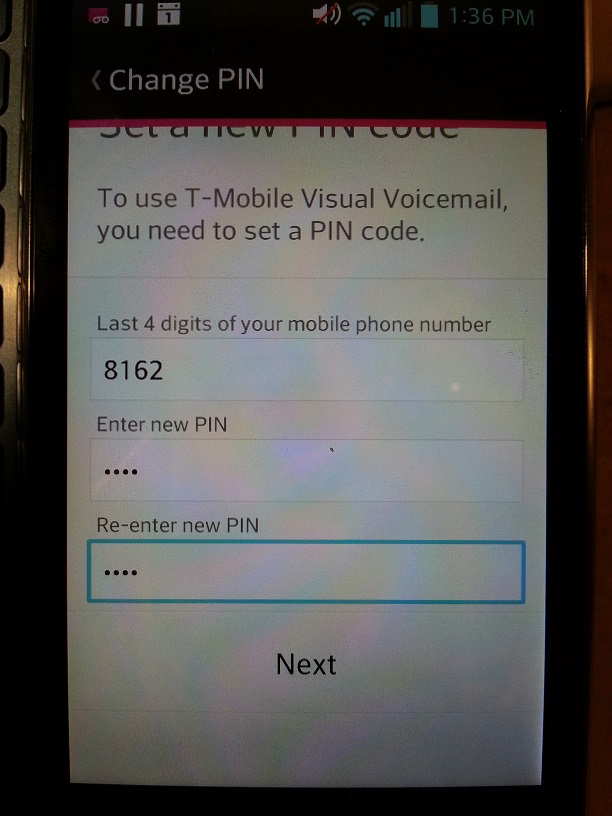
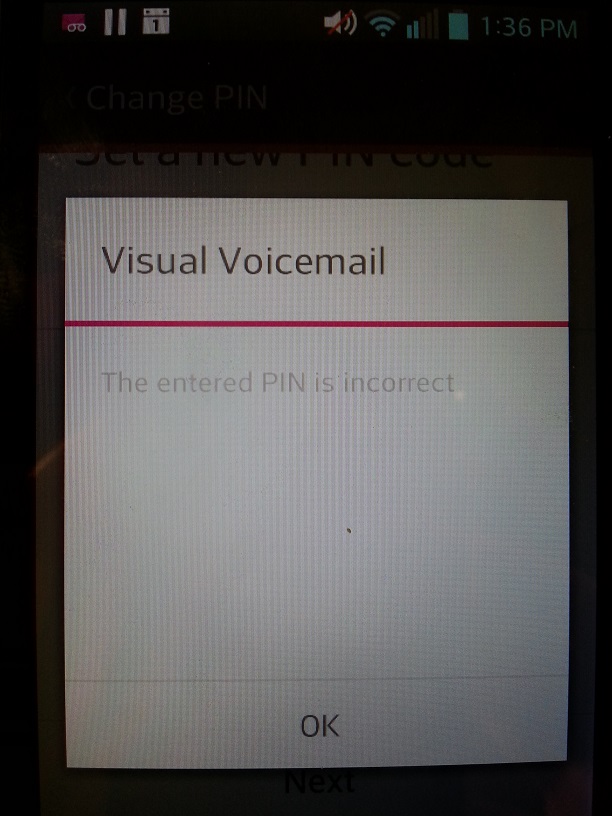
The first time I launched the voice mail application, the app prompted me to freely choose a new PIN code, and then sternly warned me, Mao-like, that my supposedly freely chosen PIN code was "incorrect". (I never got it working, and just called in to the voice mail number manually whenever I wanted to check my messages.)
-
When I bought a movie on Google Play and wanted to "pin" it to the phone -- i.e. download a static, non-streamed copy so that I could watch it offline, e.g. on a plane ride -- the phone didn't have enough internal storage left to save a copy of the movie (1.27 GB, most of it taken up in 1-2 MB increments by crapware already loaded on to the phone, so that only about 200 MB was left). So I tried saving the movie to a 32 GB SD card that I had plugged into the phone, but ran into the problem that Google Play wouldn't let me save the movie to the SD card, a problem described in Joe Levi's 2013 article "Why does Google hate your SD card?" and still not fixed almost a year later. (The comments posted on his article indicate that lots of people are pissed.)
Unlike the other bugs, this may be an example of stupidity not at the testing level but at the design specification level -- perhaps this was done in a misguided effort to prevent illegal copying. But, as Levi says of this theory, "If the DRM being used on Android is sufficient enough for content providers to accept it when media is saved internally, they should also accept it when media is saved to an SD card. Otherwise, the DRM isn't really that trustworthy, is it?" It's pointless from a copy-protection point of view, since anyone who wants to pirate a movie can just download it from various BitTorrent sites anyway; all this "feature" does is alienate people who are trying to pay for a movie legally.
-
In the Messaging (i.e. texting) app, you cannot search for messages by the name of the sender. Your conversations are listed in reverse chronological order by the date of the most recent message in each conversation, but to find a conversation with a particular person, you have to scroll down the entire list of conversations and keep your eyes peeled for the person's name.
- On certain mobile website forms (the Fandango site, for instance, and some others that I don't remember -- it's not clear why this happens on some website forms but not others), the phone won't let me type "special characters", the ones that appear in the upper-right corner of the keyboard keys (so that you can type the "@" symbol by first hitting the "Fn" key to access special characters, and then pressing the "2" key). This means that since I can't type the "@" symbol, I can't log in to any form that requires an email address as a username. (The workaround is to open the Gmail app, find an email address in an email message, copy the "@" symbol from the email address to the clipboard, and then paste it back in the browser form -- yes, I have to do every time I log in to a mobile site that has this problem.)
In my previous phone-suck article about the Samsung Stratosphere, I listed as many problems as I could think of at the time, and I completely forgot the fact that the phone recorded videos without any sound. (I know it wasn't a hardware problem with the microphone, since the phone app picked up my voice fine.) As part of my research into how to ruin Burning Man forever by telling "tourists" how to get there easily, I wanted to post a video of the quintessential Burning Man spectacle that makes all the dust and thirst and heat worthwhile -- and I had to post it with no sound recording, because Samsung's product testing is done by the same drunken bonobos that worked on the LG Optimus.
And both products raise the same question, not rhetorically, but seriously: How did this happen? More specifically, in a theoretical free market, any product improvement that costs only a small amount compared to the benefit it brings to consumers, should be implemented (and consumers will reward the company by paying additional dollars for the improvement, in proportion to the benefit it brings them). While it doesn't always work out that way in practice, it's hard to believe LG couldn't spring for a few English-language testers to point out that the phone shouldn't be correcting you're to you"re.
I think the answer in both cases is that the free market optimizes mainly for things that are easily quantifiable, like camera resolution and network speed, because those can be listed on the packaging and compared against other products. But the amount of stupid s*#t you run into while actually using the phone, is hard to define on an objective scale, so that's the first thing that companies will cut corners on, even if it's something that consumers would be willing to pay money for.
So my solution is still essentially the same as what I proposed after trashing the Stratosphere: Some Consumer-Reports-type outlet should rate phones on a Stupid S*#t Index (along with speed, reception, etc.), based on how much stupid s*#t they run into in a week of typical usage. Ideally the Stupid S*#t Index should be reduced to a number so that you can do a quick comparison between different models. If a cheap phone has a lot of stupid s*#t problems, but you don't mind because you want to save money, that's a valid choice, and if you want to pay more for a phone with less stupid s*#t, that's fine too. But people should know what they're buying.
More generally, I think people vastly overestimate the ability of the free market to meet consumer demand, in cases where the demand is for something that can't be easily quantified. I've spent a fair amount of time in "entrepreneurial" circles (while bouncing back and forth myself between entrepreneurship and regular jobs) and have heard the faithful reciting a lot of platitudes like "The market rewards the best product," or "Focus on building the best product you can make, and the customers will come." But most of them evidently didn't even believe it themselves -- they spent most of their efforts on search engine optimization, running content farms, networking with important business contacts, and other activities that didn't directly relate to the quality of their products. And who could blame them? Since their products weren't competing on qualities that were precisely quantifiable, there was no reason for any of them to try to create the "best" product, or even a particularly good one. And that strategy worked quite well for several of them.
On the other hand, when you're competing on a quantifiable metric like price, the best product or service can shoot straight to the top without wasting any time on zero-sum games like SEO or networking ass-kissery. If you're selling external hard drives on Amazon for $0.01, you'll make a lot of sales. You'll go broke, but in the meantime, the free market will connect you quite effectively with your customers.
So, make the mobile phone Stupid S*@t Index into something quantifiable, and maybe we'll have less stupid s#*t. One review body could publish the average rating from several different reviewers, or several different review bodies could publish their ratings and consumers could weight the averages themselves.
Not that it's a panacea -- I bought the LG Optimus not because it was the cheapest or because I didn't expect it to have bugs, but because it was the only offering with a slide-out keyboard, and I've become addicted to the precision of physical keys. (It is so much easier to let your fingertip feel its way to the right key first, and then actually press the key in a separate motion, rather than having to hope your fingertip lands on the right spot in the first place.) So I never returned the phone, they kept my money, and I suppose that makes me part of the problem.
-
-
Why My LG Optimus Cellphone Is Worse Than It's Supposed To Be
Bennett Haselton writes My LG Optimus F3Q was the lowest-end phone in the T-Mobile store, but a cheap phone is supposed to suck in specific ways that make you want to upgrade to a better model. This one is plagued with software bugs that have nothing to do with the cheap hardware, and thus lower one's confidence in the whole product line. Similar to the suckiness of the Stratosphere and Stratosphere 2 that I was subjected to before this one, the phone's shortcomings actually raise more interesting questions — about why the free-market system rewards companies for pulling off miracles at the hardware level, but not for fixing software bugs that should be easy to catch. Read below to see what Bennett has to say.How long would it have taken you to find these bugs, as a beta tester?
-
The phone's auto-correct changes single-quotes to double-quotes in contractions -- for example, when you type you're, the phone auto-corrects it to you"re .
-
When you backspace over part of a word that you've typed and then type the rest of the word, auto-correct corrects based on the letters that you type after you've finished backspacing, rather than the letters in the entire word that you've just completed. For example, if you type couchsurfing and the phone auto-corrects it to concurring, then backspace over all of the letters except the initial co, and then type "uch" followed by a space to form the word "couch", the Optimus changes "uch" to "such" to form "cosuch", because it thinks it's auto-correcting just the "uch" fragment and doesn't see the entire word "couch".
-
Taking a screen capture still doesn't work, just like it didn't work on the Stratosphere 2. There are official directions on how to do it, but you can follow the steps and nothing happens.
-
The first time I launched the voice mail application, the app prompted me to freely choose a new PIN code, and then sternly warned me, Mao-like, that my supposedly freely chosen PIN code was "incorrect". (I never got it working, and just called in to the voice mail number manually whenever I wanted to check my messages.)
-
When I bought a movie on Google Play and wanted to "pin" it to the phone -- i.e. download a static, non-streamed copy so that I could watch it offline, e.g. on a plane ride -- the phone didn't have enough internal storage left to save a copy of the movie (1.27 GB, most of it taken up in 1-2 MB increments by crapware already loaded on to the phone, so that only about 200 MB was left). So I tried saving the movie to a 32 GB SD card that I had plugged into the phone, but ran into the problem that Google Play wouldn't let me save the movie to the SD card, a problem described in Joe Levi's 2013 article "Why does Google hate your SD card?" and still not fixed almost a year later. (The comments posted on his article indicate that lots of people are pissed.)
Unlike the other bugs, this may be an example of stupidity not at the testing level but at the design specification level -- perhaps this was done in a misguided effort to prevent illegal copying. But, as Levi says of this theory, "If the DRM being used on Android is sufficient enough for content providers to accept it when media is saved internally, they should also accept it when media is saved to an SD card. Otherwise, the DRM isn't really that trustworthy, is it?" It's pointless from a copy-protection point of view, since anyone who wants to pirate a movie can just download it from various BitTorrent sites anyway; all this "feature" does is alienate people who are trying to pay for a movie legally.
-
In the Messaging (i.e. texting) app, you cannot search for messages by the name of the sender. Your conversations are listed in reverse chronological order by the date of the most recent message in each conversation, but to find a conversation with a particular person, you have to scroll down the entire list of conversations and keep your eyes peeled for the person's name.
- On certain mobile website forms (the Fandango site, for instance, and some others that I don't remember -- it's not clear why this happens on some website forms but not others), the phone won't let me type "special characters", the ones that appear in the upper-right corner of the keyboard keys (so that you can type the "@" symbol by first hitting the "Fn" key to access special characters, and then pressing the "2" key). This means that since I can't type the "@" symbol, I can't log in to any form that requires an email address as a username. (The workaround is to open the Gmail app, find an email address in an email message, copy the "@" symbol from the email address to the clipboard, and then paste it back in the browser form -- yes, I have to do every time I log in to a mobile site that has this problem.)
In my previous phone-suck article about the Samsung Stratosphere, I listed as many problems as I could think of at the time, and I completely forgot the fact that the phone recorded videos without any sound. (I know it wasn't a hardware problem with the microphone, since the phone app picked up my voice fine.) As part of my research into how to ruin Burning Man forever by telling "tourists" how to get there easily, I wanted to post a video of the quintessential Burning Man spectacle that makes all the dust and thirst and heat worthwhile -- and I had to post it with no sound recording, because Samsung's product testing is done by the same drunken bonobos that worked on the LG Optimus.
And both products raise the same question, not rhetorically, but seriously: How did this happen? More specifically, in a theoretical free market, any product improvement that costs only a small amount compared to the benefit it brings to consumers, should be implemented (and consumers will reward the company by paying additional dollars for the improvement, in proportion to the benefit it brings them). While it doesn't always work out that way in practice, it's hard to believe LG couldn't spring for a few English-language testers to point out that the phone shouldn't be correcting you're to you"re.
I think the answer in both cases is that the free market optimizes mainly for things that are easily quantifiable, like camera resolution and network speed, because those can be listed on the packaging and compared against other products. But the amount of stupid s*#t you run into while actually using the phone, is hard to define on an objective scale, so that's the first thing that companies will cut corners on, even if it's something that consumers would be willing to pay money for.
So my solution is still essentially the same as what I proposed after trashing the Stratosphere: Some Consumer-Reports-type outlet should rate phones on a Stupid S*#t Index (along with speed, reception, etc.), based on how much stupid s*#t they run into in a week of typical usage. Ideally the Stupid S*#t Index should be reduced to a number so that you can do a quick comparison between different models. If a cheap phone has a lot of stupid s*#t problems, but you don't mind because you want to save money, that's a valid choice, and if you want to pay more for a phone with less stupid s*#t, that's fine too. But people should know what they're buying.
More generally, I think people vastly overestimate the ability of the free market to meet consumer demand, in cases where the demand is for something that can't be easily quantified. I've spent a fair amount of time in "entrepreneurial" circles (while bouncing back and forth myself between entrepreneurship and regular jobs) and have heard the faithful reciting a lot of platitudes like "The market rewards the best product," or "Focus on building the best product you can make, and the customers will come." But most of them evidently didn't even believe it themselves -- they spent most of their efforts on search engine optimization, running content farms, networking with important business contacts, and other activities that didn't directly relate to the quality of their products. And who could blame them? Since their products weren't competing on qualities that were precisely quantifiable, there was no reason for any of them to try to create the "best" product, or even a particularly good one. And that strategy worked quite well for several of them.
On the other hand, when you're competing on a quantifiable metric like price, the best product or service can shoot straight to the top without wasting any time on zero-sum games like SEO or networking ass-kissery. If you're selling external hard drives on Amazon for $0.01, you'll make a lot of sales. You'll go broke, but in the meantime, the free market will connect you quite effectively with your customers.
So, make the mobile phone Stupid S*@t Index into something quantifiable, and maybe we'll have less stupid s#*t. One review body could publish the average rating from several different reviewers, or several different review bodies could publish their ratings and consumers could weight the averages themselves.
Not that it's a panacea -- I bought the LG Optimus not because it was the cheapest or because I didn't expect it to have bugs, but because it was the only offering with a slide-out keyboard, and I've become addicted to the precision of physical keys. (It is so much easier to let your fingertip feel its way to the right key first, and then actually press the key in a separate motion, rather than having to hope your fingertip lands on the right spot in the first place.) So I never returned the phone, they kept my money, and I suppose that makes me part of the problem.
-
-
Why My LG Optimus Cellphone Is Worse Than It's Supposed To Be
Bennett Haselton writes My LG Optimus F3Q was the lowest-end phone in the T-Mobile store, but a cheap phone is supposed to suck in specific ways that make you want to upgrade to a better model. This one is plagued with software bugs that have nothing to do with the cheap hardware, and thus lower one's confidence in the whole product line. Similar to the suckiness of the Stratosphere and Stratosphere 2 that I was subjected to before this one, the phone's shortcomings actually raise more interesting questions — about why the free-market system rewards companies for pulling off miracles at the hardware level, but not for fixing software bugs that should be easy to catch. Read below to see what Bennett has to say.How long would it have taken you to find these bugs, as a beta tester?
-
The phone's auto-correct changes single-quotes to double-quotes in contractions -- for example, when you type you're, the phone auto-corrects it to you"re .
-
When you backspace over part of a word that you've typed and then type the rest of the word, auto-correct corrects based on the letters that you type after you've finished backspacing, rather than the letters in the entire word that you've just completed. For example, if you type couchsurfing and the phone auto-corrects it to concurring, then backspace over all of the letters except the initial co, and then type "uch" followed by a space to form the word "couch", the Optimus changes "uch" to "such" to form "cosuch", because it thinks it's auto-correcting just the "uch" fragment and doesn't see the entire word "couch".
-
Taking a screen capture still doesn't work, just like it didn't work on the Stratosphere 2. There are official directions on how to do it, but you can follow the steps and nothing happens.
-
The first time I launched the voice mail application, the app prompted me to freely choose a new PIN code, and then sternly warned me, Mao-like, that my supposedly freely chosen PIN code was "incorrect". (I never got it working, and just called in to the voice mail number manually whenever I wanted to check my messages.)
-
When I bought a movie on Google Play and wanted to "pin" it to the phone -- i.e. download a static, non-streamed copy so that I could watch it offline, e.g. on a plane ride -- the phone didn't have enough internal storage left to save a copy of the movie (1.27 GB, most of it taken up in 1-2 MB increments by crapware already loaded on to the phone, so that only about 200 MB was left). So I tried saving the movie to a 32 GB SD card that I had plugged into the phone, but ran into the problem that Google Play wouldn't let me save the movie to the SD card, a problem described in Joe Levi's 2013 article "Why does Google hate your SD card?" and still not fixed almost a year later. (The comments posted on his article indicate that lots of people are pissed.)
Unlike the other bugs, this may be an example of stupidity not at the testing level but at the design specification level -- perhaps this was done in a misguided effort to prevent illegal copying. But, as Levi says of this theory, "If the DRM being used on Android is sufficient enough for content providers to accept it when media is saved internally, they should also accept it when media is saved to an SD card. Otherwise, the DRM isn't really that trustworthy, is it?" It's pointless from a copy-protection point of view, since anyone who wants to pirate a movie can just download it from various BitTorrent sites anyway; all this "feature" does is alienate people who are trying to pay for a movie legally.
-
In the Messaging (i.e. texting) app, you cannot search for messages by the name of the sender. Your conversations are listed in reverse chronological order by the date of the most recent message in each conversation, but to find a conversation with a particular person, you have to scroll down the entire list of conversations and keep your eyes peeled for the person's name.
- On certain mobile website forms (the Fandango site, for instance, and some others that I don't remember -- it's not clear why this happens on some website forms but not others), the phone won't let me type "special characters", the ones that appear in the upper-right corner of the keyboard keys (so that you can type the "@" symbol by first hitting the "Fn" key to access special characters, and then pressing the "2" key). This means that since I can't type the "@" symbol, I can't log in to any form that requires an email address as a username. (The workaround is to open the Gmail app, find an email address in an email message, copy the "@" symbol from the email address to the clipboard, and then paste it back in the browser form -- yes, I have to do every time I log in to a mobile site that has this problem.)
In my previous phone-suck article about the Samsung Stratosphere, I listed as many problems as I could think of at the time, and I completely forgot the fact that the phone recorded videos without any sound. (I know it wasn't a hardware problem with the microphone, since the phone app picked up my voice fine.) As part of my research into how to ruin Burning Man forever by telling "tourists" how to get there easily, I wanted to post a video of the quintessential Burning Man spectacle that makes all the dust and thirst and heat worthwhile -- and I had to post it with no sound recording, because Samsung's product testing is done by the same drunken bonobos that worked on the LG Optimus.
And both products raise the same question, not rhetorically, but seriously: How did this happen? More specifically, in a theoretical free market, any product improvement that costs only a small amount compared to the benefit it brings to consumers, should be implemented (and consumers will reward the company by paying additional dollars for the improvement, in proportion to the benefit it brings them). While it doesn't always work out that way in practice, it's hard to believe LG couldn't spring for a few English-language testers to point out that the phone shouldn't be correcting you're to you"re.
I think the answer in both cases is that the free market optimizes mainly for things that are easily quantifiable, like camera resolution and network speed, because those can be listed on the packaging and compared against other products. But the amount of stupid s*#t you run into while actually using the phone, is hard to define on an objective scale, so that's the first thing that companies will cut corners on, even if it's something that consumers would be willing to pay money for.
So my solution is still essentially the same as what I proposed after trashing the Stratosphere: Some Consumer-Reports-type outlet should rate phones on a Stupid S*#t Index (along with speed, reception, etc.), based on how much stupid s*#t they run into in a week of typical usage. Ideally the Stupid S*#t Index should be reduced to a number so that you can do a quick comparison between different models. If a cheap phone has a lot of stupid s*#t problems, but you don't mind because you want to save money, that's a valid choice, and if you want to pay more for a phone with less stupid s*#t, that's fine too. But people should know what they're buying.
More generally, I think people vastly overestimate the ability of the free market to meet consumer demand, in cases where the demand is for something that can't be easily quantified. I've spent a fair amount of time in "entrepreneurial" circles (while bouncing back and forth myself between entrepreneurship and regular jobs) and have heard the faithful reciting a lot of platitudes like "The market rewards the best product," or "Focus on building the best product you can make, and the customers will come." But most of them evidently didn't even believe it themselves -- they spent most of their efforts on search engine optimization, running content farms, networking with important business contacts, and other activities that didn't directly relate to the quality of their products. And who could blame them? Since their products weren't competing on qualities that were precisely quantifiable, there was no reason for any of them to try to create the "best" product, or even a particularly good one. And that strategy worked quite well for several of them.
On the other hand, when you're competing on a quantifiable metric like price, the best product or service can shoot straight to the top without wasting any time on zero-sum games like SEO or networking ass-kissery. If you're selling external hard drives on Amazon for $0.01, you'll make a lot of sales. You'll go broke, but in the meantime, the free market will connect you quite effectively with your customers.
So, make the mobile phone Stupid S*@t Index into something quantifiable, and maybe we'll have less stupid s#*t. One review body could publish the average rating from several different reviewers, or several different review bodies could publish their ratings and consumers could weight the averages themselves.
Not that it's a panacea -- I bought the LG Optimus not because it was the cheapest or because I didn't expect it to have bugs, but because it was the only offering with a slide-out keyboard, and I've become addicted to the precision of physical keys. (It is so much easier to let your fingertip feel its way to the right key first, and then actually press the key in a separate motion, rather than having to hope your fingertip lands on the right spot in the first place.) So I never returned the phone, they kept my money, and I suppose that makes me part of the problem.
-
-
Amazon Isn't Killing Writing, the Market Is
An anonymous reader writes: Amazon has been struggling for price control of the book and ebook markets for years, battling publicly and privately with publishers while making a lot of authors nervous. With yesterday's announcement of "Kindle Unlimited," a Netflix-like ebook subscription service, Amazon is reaching their endgame in disrupting the book-selling business. But there are other companies doing the same thing, and an article at TechCrunch makes the case that it's the general market, rather than any company in particular, that's making it harder for authors to earn a living. "Driving the prices lower isn't likely to expand the market of readers, since book prices don't seem to be the deciding factor on whether someone reads a book (time is). But those lower prices directly shrink the incomes of authors, who lack any other means of translating their sales into additional revenue. That's why I don't think the big revolution for writers and other content producers will come from Amazon, but rather from startups like Patreon, which allow producers to build audiences directly and develop their own direct subscription model with their most fervent fans." -
Amazon Isn't Killing Writing, the Market Is
An anonymous reader writes: Amazon has been struggling for price control of the book and ebook markets for years, battling publicly and privately with publishers while making a lot of authors nervous. With yesterday's announcement of "Kindle Unlimited," a Netflix-like ebook subscription service, Amazon is reaching their endgame in disrupting the book-selling business. But there are other companies doing the same thing, and an article at TechCrunch makes the case that it's the general market, rather than any company in particular, that's making it harder for authors to earn a living. "Driving the prices lower isn't likely to expand the market of readers, since book prices don't seem to be the deciding factor on whether someone reads a book (time is). But those lower prices directly shrink the incomes of authors, who lack any other means of translating their sales into additional revenue. That's why I don't think the big revolution for writers and other content producers will come from Amazon, but rather from startups like Patreon, which allow producers to build audiences directly and develop their own direct subscription model with their most fervent fans." -
Amazon Isn't Killing Writing, the Market Is
An anonymous reader writes: Amazon has been struggling for price control of the book and ebook markets for years, battling publicly and privately with publishers while making a lot of authors nervous. With yesterday's announcement of "Kindle Unlimited," a Netflix-like ebook subscription service, Amazon is reaching their endgame in disrupting the book-selling business. But there are other companies doing the same thing, and an article at TechCrunch makes the case that it's the general market, rather than any company in particular, that's making it harder for authors to earn a living. "Driving the prices lower isn't likely to expand the market of readers, since book prices don't seem to be the deciding factor on whether someone reads a book (time is). But those lower prices directly shrink the incomes of authors, who lack any other means of translating their sales into additional revenue. That's why I don't think the big revolution for writers and other content producers will come from Amazon, but rather from startups like Patreon, which allow producers to build audiences directly and develop their own direct subscription model with their most fervent fans." -
Amazon Isn't Killing Writing, the Market Is
An anonymous reader writes: Amazon has been struggling for price control of the book and ebook markets for years, battling publicly and privately with publishers while making a lot of authors nervous. With yesterday's announcement of "Kindle Unlimited," a Netflix-like ebook subscription service, Amazon is reaching their endgame in disrupting the book-selling business. But there are other companies doing the same thing, and an article at TechCrunch makes the case that it's the general market, rather than any company in particular, that's making it harder for authors to earn a living. "Driving the prices lower isn't likely to expand the market of readers, since book prices don't seem to be the deciding factor on whether someone reads a book (time is). But those lower prices directly shrink the incomes of authors, who lack any other means of translating their sales into additional revenue. That's why I don't think the big revolution for writers and other content producers will come from Amazon, but rather from startups like Patreon, which allow producers to build audiences directly and develop their own direct subscription model with their most fervent fans." -
Japan To Offer $20,000 Subsidy For Fuel-Cell Cars
An anonymous reader writes "Toyota is on track to launch the first consumer fuel-cell car in Japan next year, and the country's Prime Minister says the government wants to assist the new alternative to gas-driven vehicles. Shinzo Abe announced that Japan will offer subsidies of almost $20,000 for fuel cell cars, which will decrease the Toyota model's cost by about 28%. He said, "This is the car of a new era because it doesn't emit any carbon dioxide and it's environmentally friendly. The government needs to support this. Honda is also planning to release a fuel-cell car next year, but experts expect widespread adoption to take decades, since hydrogen fuel station infrastructure is still in its infancy." -
US Senator Blasts Microsoft's H-1B Push As It Lays 18,000 Off Workers
dcblogs (1096431) writes On the floor of U.S. Senate Thursday, Sen. Jeff Sessions delivered a scalding and sarcastic attack on the use of highly skilled foreign workers by U.S. corporations that was heavily aimed at Microsoft, a chief supporter of the practice. Sessions' speech began as a rebuttal to a recent New York Times op-ed column by Microsoft founder Bill Gates, investor Warren Buffett and Sheldon Adelson ... But the senator's attack on "three of our greatest masters of the universe," and "super billionaires," was clearly primed by Microsoft's announcement, also on Thursday, that it was laying off 18,000 employees. "What did we see in the newspaper today?" said Sessions, "News from Microsoft. Was it that they are having to raise wages to try to get enough good, quality engineers to do the work? Are they expanding or are they hiring? No, that is not what the news was, unfortunately. Not at all." -
UK Government Faces Lawsuit Over Emergency Surveillance Bill
judgecorp (778838) writes The British Government has had to produce an emergency surveillance Bill after the European Court of Justice ruled that European rules on retaining metadata were illegal. That Bill has now been passed by the House of Commons with almost no debate, and will become law if approved by the House of Lords. But the so-called DRIP (Data retention and Investigatory Powers) Bill could face a legal challenge: the Open Rights Group (ORG) is fundraising to bring a suit which would argue that blanket data retention is unlawful, so these emergency measures would be no more legal than the ones they replaced. -
Appeals Court Affirms Old Polaroid Patent Invalid
mpicpp (3454017) writes with news of a notoriously abused (basically "method of displaying images on a machine") software patent being declared invalid. From the article: The ruling from last week is one of the first to apply new Supreme Court guidance about when ideas are too "abstract" to be patented. ... The patents in this case describe a type of "device profile" that allows digital images to be accurately displayed on different devices. US Patent No. 6,128,415 was originally filed by Polaroid in 1996. After a series of transfers, in 2012 the patent was sold to Digitech Image Technologies, a branch of Acacia Research Corporation, the largest publicly traded patent assertion company. ... In the opinion, a three-judge panel found that the device profile described in the patent is a "collection of intangible color and spatial information," not a machine or manufactured object. "Data in its ethereal, non-physical form is simply information that does not fall under any of the categories of eligible subject matter under section 101," wrote Circuit Judge Jimmie Reyna on behalf of the panel. -
$10 Million Lawsuit Against Wikipedia Editors "Stragetically" Withdrawn
First time accepted submitter The ed17 (2834807) writes with new developments in the $10 million defamation lawsuit against a few Wikipedia editors. From the article: On the same day the Wikimedia Foundation announced it would offer assistance to English Wikipedia editors embroiled in a legal dispute with Yank Barry, the lawsuit has been dismissed without prejudice at the request of Barry's legal team — but this action is being described as "strategic" so that they can refile the lawsuit with a "new, more comprehensive complaint." -
Tesla Model S Hacking Prize Claimed
savuporo sends word that a $10,000 bounty placed on hacking a Tesla Model S has been claimed by a team from Zhejiang University in China. The bounty itself was not issued by Tesla, but by Qihoo 360, a Chinese security company. "[The researchers] were able to gain remote control of the car's door locks, headlights, wipers, sunroof, and horn, Qihoo 360 said on its social networking Sina Weibo account. The security firm declined to reveal details at this point about how the hack was accomplished, although one report indicated that the hackers cracked the six-digit code for the Model S's mobile app. -
Ask Slashdot: How Many Employees Does Microsoft Really Need?
An anonymous reader writes: Yesterday, word came down that Microsoft was starting to lay off some 18,000 workers. As of June 5th, Microsoft reported a total employee headcount of 127,005, so they're cutting about 15% of their jobs. That's actually a pretty huge percentage, even taking into account the redundancies created by the Nokia acquisition. Obviously, there's an upper limit to how much of your workforce you can let go at one time, so I'm willing to bet Microsoft's management thinks thousands more people aren't worth keeping around. How many employees does Microsoft realistically need? The company is famous for its huge teams that don't work together well, and excessive middle management. But they also have a huge number of software projects, and some of the projects, like Windows and Office, need big teams to develop. How would we go about estimating the total workforce Microsoft needs? (Other headcounts for reference: Apple: 80,000, Amazon: 124,600, IBM: 431,212, Red Hat: 5,000+, Facebook: 6,800, Google: 52,000, Intel: 104,900.) -
Meet LibreOffice Volunteer Robinson Tryon (Video)
When Slashdot's Tim Lord went to Texas Linux Fest, one of the people he met there was Robinson Tryon. He's a volunteer with LibreOffice, and in this conversation he gave us a nice look at what's going on these days with LibreOffice and its parent organization, The Document Foundation. (Alternate Video Link) -
More Forgotten Vials of Deadly Diseases Discovered
schwit1 (797399) writes FDA officials now admit that when they discovered six undocumented vials of smallpox in a facility in Maryland they also found 327 additional vials that contained dengue, influenza, and rickettsia. "FDA scientists said they have not yet confirmed whether the newly disclosed vials actually contained the pathogens listed on their labels. The agency is conducting a nationwide search of all cold storage units for any other missing samples. Investigators destroyed 32 vials containing tissue samples and a non-contagious virus related to smallpox. Several unlabeled vials were sent to the Centers for Disease Control and Prevention for testing and the remaining 279 samples were shipped to the Department of Homeland Security for safekeeping." The FDA's deputy director is quoted with what might be the understatement of the year. "The reasons why these samples went unnoticed for this long is something we're actively trying to understand." -
Interviews: Ask Dr. Andy Chun About Artificial Intelligence
samzenpus (5) writes "Dr. Andy Chun is the CIO for the City University of Hong Kong, and is instrumental in transforming the school to be one of the most technology-progressive in the region. He serves as an adviser on many government boards including the Digital 21 Strategy Advisory Committee, which oversees Hong Kong's long-term information technology strategies. His research work on the use of Artificial Intelligence has been honored with numerous awards, and his AI system keeps the subway in Hong Kong running and repaired with an amazing 99.9% uptime. Dr. Chun has agreed to give us some of his time in order to answer your questions. As usual, ask as many as you'd like, but please, one question per post." -
Interviews: Ask Dr. Andy Chun About Artificial Intelligence
samzenpus (5) writes "Dr. Andy Chun is the CIO for the City University of Hong Kong, and is instrumental in transforming the school to be one of the most technology-progressive in the region. He serves as an adviser on many government boards including the Digital 21 Strategy Advisory Committee, which oversees Hong Kong's long-term information technology strategies. His research work on the use of Artificial Intelligence has been honored with numerous awards, and his AI system keeps the subway in Hong Kong running and repaired with an amazing 99.9% uptime. Dr. Chun has agreed to give us some of his time in order to answer your questions. As usual, ask as many as you'd like, but please, one question per post." -
X.Org Server 1.16 Brings XWayland, GLAMOR, Systemd Integration
An anonymous reader writes The much anticipated Xorg Server 1.16 release is now available. The X.Org "Marionberry Pie" release features XWayland integration, GLAMOR support, systemd support, and many other features. XWayland support allows for legacy X11 support in Wayland environments via GL acceleration, GLAMOR provides generic 2D acceleration, non-PCI GPU device improvements, and countless other changes. The systemd integration finally allows the X server to run without root privileges, something in the works for a very long time. The non-PCI device improvements mean System-on-a-Chip graphics will work more smoothly, auto-enumerating just like PCI graphics devices do. As covered previously, GLAMOR (the pure OpenGL acceleration backend) has seen quite a bit of improvement, and now works with Xephyr and XWayland. -
Cosmologists Show Negative Mass Could Exist In Our Universe
KentuckyFC (1144503) writes The idea of negative mass has fascinated scientists since it was first used in the 16th century to explain why metals gain weight when they are oxidized. Since then, theoretical physicists have shown how it could be used to create exotic objects such as wormholes and the Alcubierre warp drive. But cosmologists' attempts to include negative matter in any reasonable model of the cosmos have always run into trouble because negative mass violates the energy conditions required to make realistic universes with Einstein's theory of general relativity. Now a pair of cosmologists have found a way around this. By treating negative mass as a perfect fluid rather than a solid point-like object, they've shown that negative mass does not violate the energy conditions as had been thought, and so it must be allowed in our universe. That has important consequences. If positive and negative mass particles were created in the early universe, they would form a kind of plasma that absorbs gravitational waves. Having built a number of gravitational wave observatories that have to see a single gravitational wave, astronomers might soon need to explain the absence of observations. Negative mass would then come in extremely handy. -
Nearly 25 Years Ago, IBM Helped Save Macintosh
dcblogs (1096431) writes "Apple and IBM, which just announced partnership to bring iOS and cloud services to enterprises, have helped each other before. IBM played a key role in turning the Macintosh into a successful hardware platform at a point when it — and the company itself — were struggling. Nearly 25 years ago, IBM was a part of an alliance that gave Apple access to PowerPC chips for Macintosh systems that were competitive, if not better performing in some benchmarks, than the processors Intel was producing at the time for Windows PCs. In 1991, Apple was looking for a RISC-based processor to replace the Motorola 68K it had been using in its Macintosh line. "The PCs of the era were definitely outperforming the Macintoshes that were based on the 68K," he said. "Apple was definitely behind the power, performance curve," said Nathan Brookwood, principal analyst at Insight 64. The PowerPC processor that emerged from that earlier pairing changed that. PowerPC processors were used in Macintoshes for more than a decade, until 2006, when Apple switched to Intel chips. -
Open Hardware and Digital Communications Conference On Free Video, If You Help
Bruce Perens writes The TAPR Digital Communications Conference has been covered twice here and is a great meeting on leading-edge wireless technology, mostly done as Open Hardware and Open Source software. Free videos of the September 2014 presentations will be made available if you help via Kickstarter. For an idea of what's in them, see the Dayton Hamvention interviews covering Whitebox, our Open Hardware handheld software-defined radio transceiver, and Michael Ossman's HackRF, a programmable Open Hardware transceiver for wireless security exploration and other wireless research. Last year's TAPR DCC presentations are at the Ham Radio Now channel on Youtube. -
Open Hardware and Digital Communications Conference On Free Video, If You Help
Bruce Perens writes The TAPR Digital Communications Conference has been covered twice here and is a great meeting on leading-edge wireless technology, mostly done as Open Hardware and Open Source software. Free videos of the September 2014 presentations will be made available if you help via Kickstarter. For an idea of what's in them, see the Dayton Hamvention interviews covering Whitebox, our Open Hardware handheld software-defined radio transceiver, and Michael Ossman's HackRF, a programmable Open Hardware transceiver for wireless security exploration and other wireless research. Last year's TAPR DCC presentations are at the Ham Radio Now channel on Youtube. -
Canadian ISP On Disclosing Subscriber Info: Come Back With a Warrant
An anonymous reader writes "Canadian ISP Rogers has updated its privacy policy to reflect last month's Supreme Court of Canada Spencer decision. That decision ruled that there was a reasonable expectation of privacy in subscriber information. Canada's largest cable ISP will now require a warrant for law enforcement access to basic subscriber information, a policy that effectively kills the Canadian government's efforts to expand the disclosures through voluntary means." -
Apple Agrees To $450 Million Ebook Antitrust Settlement
An anonymous reader writes: Last year, a U.S. District Judge ruled that Apple conspired with publishers to control ebook prices in violation of antitrust laws. Apple launched an appeal which has yet to conclude, but they've now agreed to a settlement. If the appeal verdict goes against Apple, they will be on the hook for $450 million, most of which will go to consumers. If they win the appeal, they'll still have to pay $70 million. $450 million is much more than the other publishers had to pay, but much less than the expected penalty from a damages trial set for August (and still only about one percent of Apple's annual profit). -
SRI/Cambridge Opens CHERI Secure Processor Design
An anonymous reader writes with some exciting news from the world of processor design: Robert Watson at Cambridge (author of Capsicum) has written a blog post on SRI/Cambridge's recent open sourcing of the hardware and software for the DARPA-sponsored CHERI processor — including laser cutting directions for an FPGA-based tablet! Described in their paper The CHERI Capability Model: Reducing Risk in an age of RISC, CHERI is a 64-bit RISC processor able to boot and run FreeBSD and open-source applications, but has a Clang/LLVM-managed fine-grained, capability-based memory protection model within each UNIX process. Drawing on ideas from Capsicum, they also support fine-grained in-process sandboxing using capabilities. The conference talk was presented on a CHERI tablet running CheriBSD, with a video of the talk by student Jonathan Woodruff (slides).
Although based on the 64-bit MIPS ISA, the authors suggest that it would also be usable with other RISC ISAs such as RISC-V and ARMv8. The paper compares the approach with several other research approaches and Intel's forthcoming Memory Protection eXtensions (MPX) with favorable performance and stronger protection properties. The processor "source code" (written in Bluespec Verilog) is available under a variant of the Apache license (modified for application to hardware). Update: 07/16 20:53 GMT by U L : If you have any questions about the project, regular Slashdot contributor TheRaven64 is one of the authors of the paper, and is answering questions. -
Is the Software Renaissance Ending?
An anonymous reader writes Writer and former software engineer Matt Gemmell adds his voice to the recent rumblings about writing code as a profession. Gemmell worries that the latest "software Renaissance," which was precipitated by the explosion of mobile devices, is drawing to a close. "Small shops are closing. Three-person companies are dropping back to sole proprietorships all over the place. Products are being acquired every week, usually just for their development teams, and then discarded. The implacable, crushing wheels of industry, slow to move because of their size, have at last arrived on the frontier. Our frontier, or at least yours now. I've relinquished my claim." He also pointed out the cumulative and intractable harm being done by software patents, walled-garden app stores, an increasingly crowded market, and race-to-the-bottom pricing. He says that while the available tools make it a fantastic time to develop software, actually being an independent developer may be less sustainable than ever. -
Pseudonyms Now Allowed On Google+
An anonymous reader writes When Google+ launched, it received criticism across the internet for requiring that users register with their real names. Now, Google has finally relented and removed all restrictions on what usernames people are allowed to use. The company said, "We know you've been calling for this change for a while. We know that our names policy has been unclear, and this has led to some unnecessarily difficult experiences for some of our users. For this we apologize, and we hope that today's change is a step toward making Google+ the welcoming and inclusive place that we want it to be." -
HP Claims Their Moonshot System is a 'New Style of IT' (Video)
Didn't we already have something kind of like this called a Blade server? But this is better! An HP Web page devoted to Moonshot says, 'Compared to traditional servers, up to: 89% less energy; 80% less space; 77% less cost; and 97% less complex.' If this is all true, the world of servers is now undergoing a radical change. || A quote from another Moonshot page: "The HP Moonshot 1500 Chassis has 45 hot-pluggable servers installed and fits into 4.3U. The density comes in part from the low-energy, efficient processors. The innovative chassis design supports 45 servers, 2 network switches, and supporting components.' These are software-defined servers. HP claims they are the first ones ever, a claim that may depend on how you define "software-defined." And what software defines them? In this case, at Texas Linux Fest, it seems to be Ubuntu Linux. (Alternate Video Link) -
OpenWRT 14.07 RC1 Supports Native IPv6, Procd Init System
An anonymous reader writes Release Candidate One of OpenWRT 14.07 "Barrier Breaker" is released. Big for this tiny embedded Linux distribution for routers in 14.07 is native IPv6 support and the procd init system integration. The native IPv6 support is with the RA and DHCPv6+PD client and server support plus other changes. Procd is OpenWRT's new preinit, init, hotplug, and event system. Perhaps not too exciting is support for upgrading on devices with NAND, and file system snapshot/restore so you can experiment without fear of leaving your network broken. There's also experimental support for the musl standard C library. -
Massive Job Cuts Are Reportedly Coming For Microsoft Employees
mrspoonsi (2955715) writes with news that Microsoft is reportedly planning a major staff reduction that would top Steve Ballmer's record 5,800-head layoff in 2009. From the article: The reductions — which may be unveiled as soon as this week — will probably be in areas such as Nokia and divisions of Microsoft that overlap with that business, as well as marketing and engineering, said the people, who asked not to be identified because the plans aren’t public. -
German NSA Committee May Turn To Typewriters To Stop Leaks
mpicpp (3454017) writes with news that Germany may be joining Russia in a paranoid switch from computers to typewriters for sensitive documents. From the article: Patrick Sensburg, chairman of the German parliament's National Security Agency investigative committee, now says he's considering expanding the use of manual typewriters to carry out his group's work. ... Sensburg said that the committee is taking its operational security very seriously. "In fact, we already have [a typewriter], and it's even a non-electronic typewriter," he said. If Sensburg's suggestion takes flight, the country would be taking a page out of the Russian playbook. Last year, the agency in charge of securing communications from the Kremlin announced that it wanted to spend 486,000 rubles (about $14,800) to buy 20 electric typewriters as a way to avoid digital leaks. -
Interviews: Juan Gilbert Answers Your Questions
Last week you had a chance to ask the Associate Chair of Research in the Computer & Information Science & Engineering Department at the University of Florida, Juan Gilbert, about the Human Centered Computing Lab, accessibility issues in technology, and electronic voting. Below you'll find his answers to your questions. Internet Voting ?!!
by mtrachtenberg
Here are some questions for Professor Gilbert, regarding internet voting:
1. How will non-mathematicians know with certainty that votes have been properly received and counted?
Gilbert: What we do is called Televoting. It’s not internet voting the way most people think of it. Take a look at this video. You will see that the printed paper ballot is still the ballot of record.
2. If the security depends upon encryption, how will we know that encryption has not been broken by a secret agency with vast computing power? Further, how will we know that those involved in developing the encryption have not secretly offered back doors to such agencies, as has happened in the past?
Gilbert: The encryption isn’t the key in Televoting. We use standard encryption and could use more advanced encryption, but it’s not the key because the ballot of record is the printed ballot.
3. What will a voter do if they experience an election-day denial of service attack?
Gilbert: Denial of service attacks can be detected and terminated. There are many researchers working on this with success from my understanding.
4. How can we know that a vote has not been coerced if the voter votes from home (bullying spouse, etc...)?
Gilbert: Televoting is for military and overseas voters. However, there are many states that have mail-in voting, so this is no different than mail-in voting with respect to coercion.
5. What are the insurmountable difficulties with a paper-based election process that make internet voting desirable despite risks? Why is the United States no longer capable of counting cast ballots in public? It is clearly not the vast number of voters, since this is a distributed problem with a vast number of potential counters. What has become so broken among our pseudo-elites that this KISS approach is now considered so inappropriate?
Gilbert: I really don’t know how to answer this question. From my perspective, we use our technology to count the ballots and we do so in public, so it can be done.
Re:Internet Voting ?!!
by Anonymous Coward
Do you think either party will have enough political will to make internet voting a reality? Winning in politics in large part is about who can play the game best, do you think the parties will let the rules change?
Gilbert: I don’t know if they will change or not. I do the research to address societal issues, i.e. making voting more accessible, usable and secure for all voters. Once I have done the research, I share it with everyone and we simply state the facts and hopefully, the solutions are implemented. Only time will tell. Stay tuned
Re:Question
by Anonymous Coward
I watched your TED talk about multiple teacher single student learning. Has any further progress been made on the project or have you integrated it into any real-life schools?
Gilbert: We haven’t added anything new to it, but we have the platform and we can set it up. Our other projects have really taken us away from this project, but we are still very much interested in this issue.
Re:"culturally relevant computing or ethnocomputing"
by Anonymous Coward
You've said that you created the Application Quest program in response to the Michigan affirmative action rulings to help colleges keep diversity without giving preference to race. Are any colleges using the system or expressed interest? Have you had an backlash over your stance that the issue really isn't about race but about capacity?
Gilbert: Auburn University has used it, Clemson University is using it and there are others that I can’t name. We have used it in several pilots and in every case, Applications Quest (AQ) recommended applications that resulted in great diversity than the actual admitted applicants selected by the committee, the results were found in a fraction of the time and probably most important, AQ reached the same academic achievement levels as the committee.
People haven’t pushed back on my notion of the capacity issue. I think most people get it. For those that don't know about this; I have said that affirmative action, specifically, the use of race in admissions isn’t about race/ethnicity, gender, national origin, etc. It’s a capacity issue. Whenever you have more qualified applicants than you have available slots, offers, etc. you have to turn away someone who is qualified. If you could admit all of the qualified applicants, this would not be an issue. Therefore, I created AQ, which addresses the capacity issue and results in greater holistic diversity without preferential treatment to any attribute.
Accessibility
by Anonymous Coward
How much impact will wearables have on the accessibility of technology to people with disabilities? A smart watch is a lot easier to move around with than a laptop. Do you think these smaller devices will have a big impact or is this just another fad?
Gilbert: These devices are already having a huge impact for people with disabilities. The mobile phone has enhanced accessibility greatly with GPS, text to speech and speech recognition. This is not a fad, it’s reality and happening now.
Churn Rate
by Anonymous Coward
From what I can tell most of the work done at the Human Centered Computing Lab seems to be from students. Since this means a fairly quick churn rate does this make it harder to complete big projects or does the constant influx of new blood make up for that?
Gilbert: We work on things that address societal issues. Our students are excited to be a part of these projects and they keep coming. Plus, these students are PhD students; therefore, I have them for 3-6 years, so we do pretty well on keeping the projects afloat. The Prime III project is over 10 years old and I estimate more than 35 students (undergrad and graduate students) have worked on this project.
automotive interfaces
by DriveDog
Most of the recent changes I've seen to driver controls seem wrong-headed. So many require the driver to look down at some screen or closely-spaced identically-feeling buttons. Only a few decades ago, car makers began moving functions to stalks to put them within easy reach, but the makers' usage is so different that it's more confusing than ever, particularly in this day when people are more likely to drive several different vehicles in a single day. I like steering wheel-mounted buttons, but now there are so many it has again become confusing, and again, makers refuse to adopt any standard placements/usage. Can we have programmable controls that follow a driver from car to car, always working the way that particular driver prefers? Must we resort to voice control? I despise talking to my car or any other device, including my phone. Is there no solution until cars can be controlled by thought?
Gilbert: We like the idea of voice controls, but we have also considered something called MyDash. Imagine your dashboard being stored on your phone. When you enter the car, the phone connects with the car and loads your dash; therefore, you can take your dashboard with you. Now, this would require the manufacturers to agree on certain controls, but it’s certainly doable.
Perspectives on End-User Development
by TuringTest
With today programming languages, creating new new software requires learning a complex syntax with very specialized rules on how to combine words, even for creating very simple software (for example, web pages with trivial interactions such as folding and dragging items).
Some approaches to allow end users to build automated behavior exist, but they can only go so far. There are "drag and drop" interface builders for building web pages with forms, and graph languages for transforming data. But they only allow reusing pre-defined components which are built with traditional languages. Any behavior not supported by those components can not be added to the program.
There are also rule-based visual systems like Agentsheets that allow defining new behaviors without a strict complex syntax, but those are difficult to reason about when behaviors depend on several levels of nested rules.
My question is: what would be your preferred approach to achieve the goal of allowing end users build their own simple software programs? This assumes that we define "program" in a loose way, not necessarily in the traditional way but referring to any software artifacts for defining repeatable processes to handle information such as:
* building and classifying collections of related data, transforming the shape of parts of a document
* or for automation of actions in time (turning on and off lights and engines at particular times or in a pre-defined pattern, sending messages to groups of people that follow certain criteria under some triggering condition)...
All this without requiring that the user learns a scripting language or otherwise needs to form a mental model of how exactly the program's execution evolves in time within the machine components.
Gilbert: I don’t know if this is possible without an AI backend of some sort. What you are describing is an intelligent programming backend. Essentially, allow a user to specify the interaction and the system builds it. Interesting idea and I believe the drag and drop systems we have today work fairly well, but I don’t know if we will have a true AI backend that can write code using natural language input. -
Interviews: Juan Gilbert Answers Your Questions
Last week you had a chance to ask the Associate Chair of Research in the Computer & Information Science & Engineering Department at the University of Florida, Juan Gilbert, about the Human Centered Computing Lab, accessibility issues in technology, and electronic voting. Below you'll find his answers to your questions. Internet Voting ?!!
by mtrachtenberg
Here are some questions for Professor Gilbert, regarding internet voting:
1. How will non-mathematicians know with certainty that votes have been properly received and counted?
Gilbert: What we do is called Televoting. It’s not internet voting the way most people think of it. Take a look at this video. You will see that the printed paper ballot is still the ballot of record.
2. If the security depends upon encryption, how will we know that encryption has not been broken by a secret agency with vast computing power? Further, how will we know that those involved in developing the encryption have not secretly offered back doors to such agencies, as has happened in the past?
Gilbert: The encryption isn’t the key in Televoting. We use standard encryption and could use more advanced encryption, but it’s not the key because the ballot of record is the printed ballot.
3. What will a voter do if they experience an election-day denial of service attack?
Gilbert: Denial of service attacks can be detected and terminated. There are many researchers working on this with success from my understanding.
4. How can we know that a vote has not been coerced if the voter votes from home (bullying spouse, etc...)?
Gilbert: Televoting is for military and overseas voters. However, there are many states that have mail-in voting, so this is no different than mail-in voting with respect to coercion.
5. What are the insurmountable difficulties with a paper-based election process that make internet voting desirable despite risks? Why is the United States no longer capable of counting cast ballots in public? It is clearly not the vast number of voters, since this is a distributed problem with a vast number of potential counters. What has become so broken among our pseudo-elites that this KISS approach is now considered so inappropriate?
Gilbert: I really don’t know how to answer this question. From my perspective, we use our technology to count the ballots and we do so in public, so it can be done.
Re:Internet Voting ?!!
by Anonymous Coward
Do you think either party will have enough political will to make internet voting a reality? Winning in politics in large part is about who can play the game best, do you think the parties will let the rules change?
Gilbert: I don’t know if they will change or not. I do the research to address societal issues, i.e. making voting more accessible, usable and secure for all voters. Once I have done the research, I share it with everyone and we simply state the facts and hopefully, the solutions are implemented. Only time will tell. Stay tuned
Re:Question
by Anonymous Coward
I watched your TED talk about multiple teacher single student learning. Has any further progress been made on the project or have you integrated it into any real-life schools?
Gilbert: We haven’t added anything new to it, but we have the platform and we can set it up. Our other projects have really taken us away from this project, but we are still very much interested in this issue.
Re:"culturally relevant computing or ethnocomputing"
by Anonymous Coward
You've said that you created the Application Quest program in response to the Michigan affirmative action rulings to help colleges keep diversity without giving preference to race. Are any colleges using the system or expressed interest? Have you had an backlash over your stance that the issue really isn't about race but about capacity?
Gilbert: Auburn University has used it, Clemson University is using it and there are others that I can’t name. We have used it in several pilots and in every case, Applications Quest (AQ) recommended applications that resulted in great diversity than the actual admitted applicants selected by the committee, the results were found in a fraction of the time and probably most important, AQ reached the same academic achievement levels as the committee.
People haven’t pushed back on my notion of the capacity issue. I think most people get it. For those that don't know about this; I have said that affirmative action, specifically, the use of race in admissions isn’t about race/ethnicity, gender, national origin, etc. It’s a capacity issue. Whenever you have more qualified applicants than you have available slots, offers, etc. you have to turn away someone who is qualified. If you could admit all of the qualified applicants, this would not be an issue. Therefore, I created AQ, which addresses the capacity issue and results in greater holistic diversity without preferential treatment to any attribute.
Accessibility
by Anonymous Coward
How much impact will wearables have on the accessibility of technology to people with disabilities? A smart watch is a lot easier to move around with than a laptop. Do you think these smaller devices will have a big impact or is this just another fad?
Gilbert: These devices are already having a huge impact for people with disabilities. The mobile phone has enhanced accessibility greatly with GPS, text to speech and speech recognition. This is not a fad, it’s reality and happening now.
Churn Rate
by Anonymous Coward
From what I can tell most of the work done at the Human Centered Computing Lab seems to be from students. Since this means a fairly quick churn rate does this make it harder to complete big projects or does the constant influx of new blood make up for that?
Gilbert: We work on things that address societal issues. Our students are excited to be a part of these projects and they keep coming. Plus, these students are PhD students; therefore, I have them for 3-6 years, so we do pretty well on keeping the projects afloat. The Prime III project is over 10 years old and I estimate more than 35 students (undergrad and graduate students) have worked on this project.
automotive interfaces
by DriveDog
Most of the recent changes I've seen to driver controls seem wrong-headed. So many require the driver to look down at some screen or closely-spaced identically-feeling buttons. Only a few decades ago, car makers began moving functions to stalks to put them within easy reach, but the makers' usage is so different that it's more confusing than ever, particularly in this day when people are more likely to drive several different vehicles in a single day. I like steering wheel-mounted buttons, but now there are so many it has again become confusing, and again, makers refuse to adopt any standard placements/usage. Can we have programmable controls that follow a driver from car to car, always working the way that particular driver prefers? Must we resort to voice control? I despise talking to my car or any other device, including my phone. Is there no solution until cars can be controlled by thought?
Gilbert: We like the idea of voice controls, but we have also considered something called MyDash. Imagine your dashboard being stored on your phone. When you enter the car, the phone connects with the car and loads your dash; therefore, you can take your dashboard with you. Now, this would require the manufacturers to agree on certain controls, but it’s certainly doable.
Perspectives on End-User Development
by TuringTest
With today programming languages, creating new new software requires learning a complex syntax with very specialized rules on how to combine words, even for creating very simple software (for example, web pages with trivial interactions such as folding and dragging items).
Some approaches to allow end users to build automated behavior exist, but they can only go so far. There are "drag and drop" interface builders for building web pages with forms, and graph languages for transforming data. But they only allow reusing pre-defined components which are built with traditional languages. Any behavior not supported by those components can not be added to the program.
There are also rule-based visual systems like Agentsheets that allow defining new behaviors without a strict complex syntax, but those are difficult to reason about when behaviors depend on several levels of nested rules.
My question is: what would be your preferred approach to achieve the goal of allowing end users build their own simple software programs? This assumes that we define "program" in a loose way, not necessarily in the traditional way but referring to any software artifacts for defining repeatable processes to handle information such as:
* building and classifying collections of related data, transforming the shape of parts of a document
* or for automation of actions in time (turning on and off lights and engines at particular times or in a pre-defined pattern, sending messages to groups of people that follow certain criteria under some triggering condition)...
All this without requiring that the user learns a scripting language or otherwise needs to form a mental model of how exactly the program's execution evolves in time within the machine components.
Gilbert: I don’t know if this is possible without an AI backend of some sort. What you are describing is an intelligent programming backend. Essentially, allow a user to specify the interaction and the system builds it. Interesting idea and I believe the drag and drop systems we have today work fairly well, but I don’t know if we will have a true AI backend that can write code using natural language input. -
Want To Ensure Your Personal Android Data Is Truly Wiped? Turn On Encryption
MojoKid writes We've been around the block enough times to know that outside of shredding a storage medium, all data is recoverable. It's just matter of time, money, and effort. However, it was still sobering to find out exactly how much data security firm Avast was able to recover from Android devices it purchased from eBay, which included everything from naked selfies to even a completed loan application. Does this mean we shouldn't ever sell the old handset? Luckily, the answer is no. Avast's self-serving study was to promote its Anti-Theft app available on Google Play. The free app comes with a wipe feature that overwrites all files, thereby making them invisible to casual recovery methods. That's one approach. There's another solution that's incredibly easy and doesn't require downloading and installing anything. Before you sell your Android phone on eBay, Craigslist, or wherever, enable encryption and wait for it to encrypt the on board storage. After that, perform a wipe and reset as normal, which will obliterate the encryption key and ensure the data on your device can't be read. This may not work on certain devices, which will ask you to decrypt data before wiping but most should follow this convention just fine.