Slashdot Mirror
Domain: stanford.edu
Stories and comments across the archive that link to stanford.edu.
Comments · 4,853
-
Re:National Instruments LabView
And there are other flow-based systems that significantly pre-date LabView. For one, the flow-based system IBM's Morrison developed for a Canadian bank decades ago that's is still in use.
And another, lesser known (but perhaps more relevant in today's world) implementation of a similar idea from the middle 1980's, and was explained in the the not-as-famous-as-it-ought-to-be paper, The UNIX Shell as a Fourth Generation Language. (FWIW, *every* Unix/Linux programmer or power user should be very familiar with this paper and Mike Gancarz' "Unix Philosophy".)
Interestingly, the idea in the paper (build database and data manipulation operators as fast filters that you string together with pipes to form a flow-based system) has been implemented similarly several times: the original
These systems generally use flat text files for tables, which means your app benefits from any filesystem improvements (they scream on a RAMfs, or a layered FS like unionfs or aufs with a RAM front-end), and backup, version control, and ETL are made orders of magnitude easier than usual. This idea on something like Ousterhout's new RAMcloud would be flat amazing...
-
Re:Typo?
The Tor guys just went through this process of creating deterministic builds to solve this problem. Fascinating process and some more info here: https://mailman.stanford.edu/pipermail/liberationtech/2013-June/009257.html
-
Re:Of all the things to go extinct...
...why not mosquitos?!!! The most vile, annoying creatures to ever to roam the earth!
Seems you need some education about mosquitos and "vile creatures". Mosquitos are far from vile - they are actually a VERY IMPORTANT part of the ecosystem. Without the little mosquitos, you would have less food to eat never mind all the birds and other critters that would go extinct as mosquitos are their core diet.
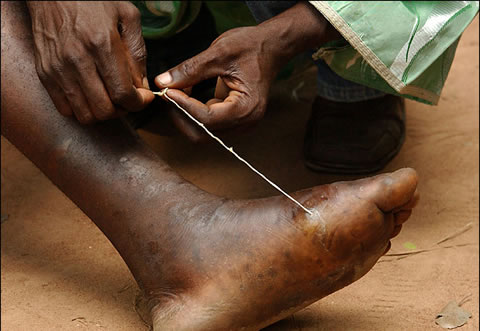
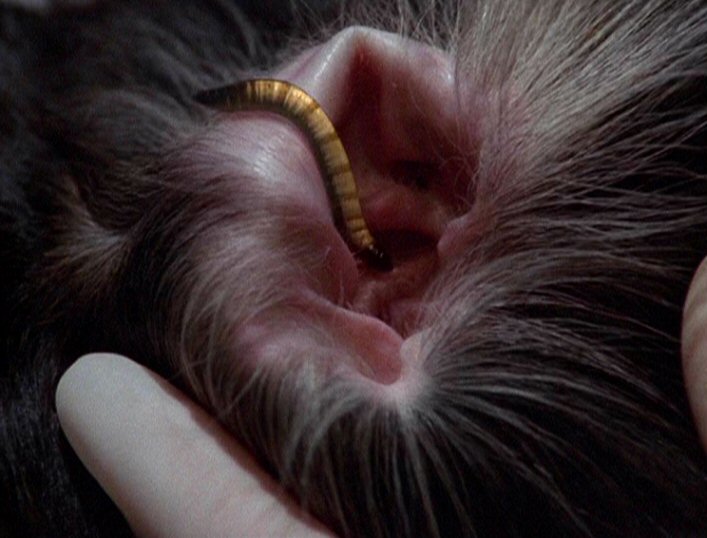
If you want "vile creatures" that serve no purpose but to be parasites and generally vile, please consult the following photos of some real vile creatures. Enjoy and be happy that mosquitos are the most vile thing you have to deal with.
http://www.geotimes.org/june08/feature_salt2.jpg http://4.bp.blogspot.com/-jYoQxXygln4/T4b1e9A8eVI/AAAAAAAAAfw/55tk8GXFD-0/s1600/Roundworms+1.jpg
http://www.gearfuse.com/wp-content/uploads/2013/06/Guinea-Worms.jpg
http://www.stanford.edu/class/humbio103/ParaSites2006/Loiasis/Images/loa_loa_eye.gif
-
examples... Re:Fascinating!
turns out on the professor's web page Emmanuel Candes, there is a link to Some old talks that shows an example of the kind of transforms / cleanup they're talking about (they're lengthy PDFs, but worth skimming if you're curious about the kidns of images). Nothing like real world pictures; synthetic examples with some shapes (almost like something you could mock up with MS Paint), but the premise is rather interesting.
And I just saw this like on the Candes web page above: this does have some interesting more real-world pictures. Fill in the Blanks: Using Math to Turn Lo-Res Datasets Into Hi-Res Samples (wired, 2010) -
examples... Re:Fascinating!
turns out on the professor's web page Emmanuel Candes, there is a link to Some old talks that shows an example of the kind of transforms / cleanup they're talking about (they're lengthy PDFs, but worth skimming if you're curious about the kidns of images). Nothing like real world pictures; synthetic examples with some shapes (almost like something you could mock up with MS Paint), but the premise is rather interesting.
And I just saw this like on the Candes web page above: this does have some interesting more real-world pictures. Fill in the Blanks: Using Math to Turn Lo-Res Datasets Into Hi-Res Samples (wired, 2010) -
Re:pictures please?
The paper from Candes is here:
http://www-stat.stanford.edu/~candes/papers/ExactRecovery.pdfHe was not actually looking at MRI images, but on a test image.
The application to MRI was done a bit later:http://www.eecs.berkeley.edu/~mlustig/CS/SparseMRI.pdf
http://www-mrsrl.stanford.edu/studygroup/2/Files/Block_2007_Undersampled.pdf -
Re:pictures please?
The paper from Candes is here:
http://www-stat.stanford.edu/~candes/papers/ExactRecovery.pdfHe was not actually looking at MRI images, but on a test image.
The application to MRI was done a bit later:http://www.eecs.berkeley.edu/~mlustig/CS/SparseMRI.pdf
http://www-mrsrl.stanford.edu/studygroup/2/Files/Block_2007_Undersampled.pdf -
Re:informercial
CompTop: Applied and Computational Algebraic Topology
http://comptop.stanford.edu/You need to do more than, "Google: I feel lucky".
-
Re:Dissident Speech
If they plan on censoring it, I prefer no comments at all. Censorship seems to be the trend these days. It started with filtering spam comments. Oops, I included a $ sign in my comment, my post was blocked. But now it is different. Now if you make a comment the site owners simply disagree with, it disappears. Freedom of speech? Meet the memory hole. With algorithms that can identify sentiment, I fear for the future of open discourse on the web.
-
Re:How about....
It's worth pointing out that this sort of dislocation of people from their homes is hardly unique to nuclear plants. Construction of Three Gorges Dam included forcefully relocating 1.3 million people. Itaipu required relocating 59,000 people. About 3000 were relocated for Grand Coulee. And the failure of the Banqiao series of hydroelectric dams resulted in 11 million people losing their homes (in addition to ~170,000 being killed).
At least with Fukushima, these people were dislocated only because of an accident, and will eventually be able to reclaim their homes. With hydroelectric dams, those homes and towns are gone for as long as the dam is operational. But that doesn't fit the narrative that renewable energy is harmless while nuclear is evil, so nobody thinks of it that way. -
Re:Microsoft research
Can you show some examples of Microsoft research?
Pick any top-tier CS conference. They'll probably have something there.
For example, OSDI '12 (MSR personnel on 5 papers, 2 of which all coauthors worked at MSR), PLDI 2012 (MSR personnel on 6 papers), SIGGRAPH 2013 (harder to sort through, but I count 16 papers with at least one MSR co-author), VLDB 2011 (8 research papers as well as several other things like demos, a keynote, an industrial paper, and a 10-year-retrospective best paper award), STOC 2013 (16 papers if I counted right!), etc.
Seriously, I was not being choosy with those conferences -- the only choosy things I did was pick years for which there was an obvious page that listed the institutions with the authors instead of just the authors (e.g. VLDB 2013) because I'm lazy. If you pick a conference that covers a topic of interest, MSR has had something there.
-
Fedora + PlanetCCRMA = audio production OS
Installing the PlanetCCRMA http://ccrma.stanford.edu/planetccrma/software/ collection of packages on Fedora has been my preferred open source audio production installation for quite some time. There isn't really all that much in the way of audio production distros, I guess because a real-time kernel is necessary for audio multitracking, which presents a lot of problem for most other use cases.
This has been one area where Fedora has consistently stood out among its peers. For a short time, Ubuntu Studio was almost the perfect fit for this niche, but the complete incorporation of an early, incomplete, and buggy PulseAudio killed that chance.
I think that dates to around Fedora 7 or 8. Since then, I have yet to come across a cleaner & more efficient combination for Linux based multitrack audio production. -
Re:Open source?
Le sigh.
Open source and public domain are not mutual, nor is one needed for the other. Public domain means anyone can have it for free as long as they don't try and sell itNo. Public domain means that it's in the public domain: that means nobody owns it, and anybody can do whatever they like with it.
(under most licenses, EG Creative Commons),
If you have to agree to a license to use it, it's not public domain.
while open source means anyone can try and make it better. You can have one without the other, and vice versa.
-
Re: Points to Ponder
The P believes in "facts" and thinks he follows science.
Ah, a Mr Gradgrind
-
Re:Metastatic snooping
For Firefox users, Stanford research discovered recently that using a script-blocking extension actually isn't as effective at privacy protection as using privacy & ad-blocking lists with an ad-blocking extension (I use AdBlock Plus). I double-checked the domains you listed, and all of them appeared in at least one of the blocklists, either blocking everything from their sites or blocking things from being executed from another domain.
If you're in Firefox (and have a *lot* of patience/time), you might like another whitelisting-based extension they labeled extremely effective, though:
"Request Policy, a Firefox extension, takes the opposite approach: all requests to third-party domains are blocked, save those the user explicitly allows. While Request Policy offers nearly comprehensive protection from third-party tracking, properly configuring it requires substantially greater patience and expertise than the average user can reasonably be expected to possess." -
Re:Sounds like an episode of Doomsday PreppersYou do realize that the flu has killedstanford.edu more people (est 20-40 million) in the last century than just about anything short of Communism, right? To quote the Standford site about the sheer scale of the pandemic:
The pandemic affected everyone. With one-quarter of the US and one-fifth of the world infected with the influenza, it was impossible to escape from the illness.
Now, I'm not defending the doomsday preppers, I'm rather inclined to think some of them are nuts from what I've seen on TV, but I wouldn't be so quick to dismiss the flu out of hand.
-
Re:Paelo History
I think animals with shells survived well enough in the past when atmospheric CO2 levels were far, far higher. They'll adapt.
Oh, the irony.
The actual paleobiological literature suggests this statement is wrong in every particular. Not only is ocean acidification implicated in the worst mass extinction in the history of mulitcellular life (see here [PDF] or here)-- although it may not have been the main kill mechanism-- it may actually be a general cause of mass extinctions (see here). If it is, that would be very interesting; it would be the only general mechanism for mass extinctions that I am aware of.
Moreover, natural selection operates differently during a mass extinction. Selective pressures are wildly different from those operating "normally." The usual rules do not apply-- traits that were previously advantageous no longer matter, or may even be detrimental. One of the very few qualities which seems to enhance the odds of survival is species-level geographic range, and in a really bad mass extinction, even that can stop being important, giving way to clade-level geographical range. I'm astonished that you could make a blithe statement like "they'll adapt" without consulting the relevant literature; in particular, we have strong evidence that animals with calcium carbonate shells fared very poorly in the past when atmospheric CO2 levels were far, far higher, and did not "survive well enough."
-
Re:Paelo History
Climate change 10x faster than evolution:
http://news.stanford.edu/pr/2013/pr-climate-change-speed-080113.html
-
Re:Paelo History
No he's trying to point you to a previous mass extinction caused by ocean acidification. Technically life did "adapt" but it took a length of time to recover that I wouldn't say is tolerable for a human civilization.
Open up for spoon feeding! Here comes the choo-choo!
http://news.stanford.edu/news/2010/april/prehistoric-mass-extinction-042710.html
-
Re:Private Browsing
I was kinda curious what he meant, myself, so I checked out this old-ish paper.
http://crypto.stanford.edu/~dabo/pubs/papers/privatebrowsing.pdfI don't know if things have changed much, but their fairly thorough review seems to indicate firefox and chrome are pretty similar.
Looking at their table, one possible area of concern they listed (that Chrome might no longer have a problem with) is zoom level.
That could give information to a site that it is the same person, if they cared, although, that seems to be a pretty minor leak, given all the other information you could be revealing even if you hid your IP (a la panopticlick).
Looks like Chrome retains it from the non-private session, Firefox does not. The download list thing doesn't seem like a big deal. Depends on what you're using it for I guess.Some leaks they fixed...
http://code.google.com/p/chromium/issues/detail?id=3493
http://code.google.com/p/chromium/issues/detail?id=21341Open issues:
http://code.google.com/p/chromium/issues/detail?id=867
http://code.google.com/p/chromium/issues/detail?id=34593 (I'm not a fan of this one either, but multiple private windows in Firefox do the same thing)Back in 2010 Flash added support for private browsing in their plugin (that is, wrt local storage) in Firefox. I have no idea if/when that got added to Chrome.
I saw one complaint that disabled plugins (like Flash) in Chrome were reactivated in Incognito, but I don't know enough about the browser to check that.
Anyway, they seem pretty similar to me.
-
Re:This needs to be taken out of their hands
There was also a radiocative fish [huffingtonpost.com] caught near California, but it wasn't deemed dangerous
That's the kind of report I was talking about. The fish caught away from Japan haven't registered above background radiation, depending on where you live. The cessium radiation in the fish referrenced from that HuffPost article was 40 times lower than the natural level of radiation present in the fish from natural potassium. Of course, HuffPost would never mention that little tidbit, let alone link back to the source document.
The difference is that K-40 decays 90% of the time by beta emission to stable Ca-40, and 10% of the time by electron-absorption and neutrino emission to 40Ar, but even still that beta decay is not very often (half-life measured in billions-of-years); In short, not all that bad in terms of long-term effect to us
Cs-137 decays a lot more often (half-life measured in decades), itself by beta-emission also to Ba-137m. Ba-137m decays almost immediately, though (HL 153s) by gamma emission to stable Ba-137.
Cs-137, therefore, is a lot hotter, and generally always emits both beta and gamma radiation in its decay-chain.
Nasty, nasty stuff, it is...
-
Re:This needs to be taken out of their hands
There was also a radiocative fish [huffingtonpost.com] caught near California, but it wasn't deemed dangerous
That's the kind of report I was talking about. The fish caught away from Japan haven't registered above background radiation, depending on where you live. The cessium radiation in the fish referrenced from that HuffPost article was 40 times lower than the natural level of radiation present in the fish from natural potassium. Of course, HuffPost would never mention that little tidbit, let alone link back to the source document.
-
Re:Poor people are poor because they're lazy
Sorry but that's a BS statement. Again I'll link:
-
Re:FTFY
As much as I'm sure you like to believe those in wealth don't deserve it, it can be proven otherwise in the majority of cases:
-
Re:The main obstacle isn't technological
>No state currently has laws in place that address this issue.
Nevada does. Many state legislatures are at least looking into it.
-
Re:A youtube clip that you might want to watch
There you go: Positive and Negative Liberty.
-
Re:A youtube clip that you might want to watch
You may be surprised to see, with your own eyes, that the current POTUS has said the following "... that generally the Constitution is a charter of negative liberties "
Yes. Inasmuch as liberty can be divided into positive and negative freedoms, it's most useful to to think of the constitution as a guarantor of negative liberty.
See Positive and Negative Liberty for more details.
-
Re:Regular students pissed?
how do you spend $100,000 on an undergrad degree?
After scholarship, MIT undergrads average $24,000 a year.
http://mitadmissions.org/afford/basics
Carnegie Mellon $46,000 annual tuition.
http://admission.enrollment.cmu.edu/pages/tuition-fees
Stanford $14,000 per quarter
http://exploredegrees.stanford.edu/tuitionfeesandhousing/#tuitiontext
-
Re:Doom and gloom
"The first and funniest to yell will be the ones pointing out that the WSO telescope looks like the illuminati symbol. Many people will believe it to be impossible that it is natural.
-
Re:I thought Google defined the data-center.
I thought Google defined the data-center.
http://infolab.stanford.edu/pub/voy/museum/pictures/display/0-4-Google.htm
They just re-defined it. Don't forget, Google began with a ton of commodity PC motherboards stuck in racks.
Now they have money, the redefined their needs.
Meanwhile
-
I thought Google defined the data-center.
I thought Google defined the data-center.
http://infolab.stanford.edu/pub/voy/museum/pictures/display/0-4-Google.htm
-
The classics
- "The Machine Stops", by E. M. Forster. Covers the collapse of a technological society. Written in 1909, 12,000 words, copyright expired, and still relevant, readable, and worrisome.
- Doug Engelbart's demo, 1968" Today, you can do this on your phone. This is where it all began - point and click, editing, search engines, the first mouse, hyperlinks, networks, online collaboration.
-
Re:Right of asylum cannot be assumed
Not sure I agree with sam_vilain's claim that it's "worth reading" (seems more like a string of poorly-reasoned ad-hominem to me), but here you go:
Following his request for asylum in Russia, it's become pretty clear that Edward Snowden is officially the most naïveperson in the room.
Not only is he surrounded by members of Russia's Foreign Security Service (FSB) — the successor to the KGB — but he's loudly trumpeting the moral superiority of the Putin government, one of the most repressive, cutthroat regimes in modern history.
David Francis' Fiscal Times write-updigs into Snowden for his "mind boggling naiveté":
He is asking for asylum in a country that continues to openly squash dissent, often using violent tactics. Putin runs the country with an iron fist, has jailed people who oppose him, and has chased others out of the country. Opponents have been known to meet early deaths, often under suspicious circumstances.
Francis notes theuntimely,often gruesomedeathsof several political opponents to Putin over the years.
Snowden's statements about Russia's sterling Human Rights image come within days of the imprisonment of high-profile political opposition leader Alexei Navalny,on what some call trumped-up embezzlement charges.
Snowden himself acknowledged his potential for naivetyto Bart Gellman of the Washington Post: “Perhaps I am naïve, but I believe that at this point in history, the greatest danger to our freedom and way of life comes from the reasonable fear of omniscient State powers kept in check by nothing more than policy documents.”
To make matters worse, the person seemingly speaking for Snowden now —Russian attorney Anatoly Kucherena — also happens to be the head of public relations for the FSB.
Freelance reporter and intelligence expert Joshua Foust writes:"The involvement of known FSB operatives at his asylum acceptance
"The Russians are very good at what they do," wrote Foust, referring to their simultaneous control of the "principal" — Snowden — and the public message.
Putin — a former lieutenantcolonelin the KGB — drew laughs from Finland students when he said regarding Snowden, "If you want to stay, please, but you have to stop your political activities. We have a certain relationship with the U.S., and we don’t want you with your political activities damaging our relationship with the U.S."
The Russian president just as deftly shifted the blame to the U.S., a foreseeable consequence of the State Department's decision to revoke Snowden's passport.
It seems in all of this, Snowden is not the super-intelligent super spy he makes himself out to be, but just an analyst who is in over his head.
Looking at his statement that he could be "petting a phoenix, in a palace" in China, indicates that he expected to be gree
-
Re:Testla is good...
You are not counting the energy losses from charging the battery. According to a source I found this was 80-90% (three year old source).
-
No, copyright is about copying
Distribution is only part of the story. IANAL, but let's focus on US law, starting with the software-relevant portions of 17 USC 106:
"The owner of copyright under this title has the exclusive rights to do and to authorize any of the following: (1) to reproduce the copyrighted work in copies or phonorecords; (2) to prepare derivative works based upon the copyrighted work; (3) to distribute copies or phonorecords of the copyrighted work to the public by sale or other transfer of ownership, or by rental, lease, or lending;"
A common interpretation is that copies from storage to RAM are copies, and thus, you have to get a copyright holder's permission to run the software. I HATE this interpretation, I think it's a vile distortion of the original intent. However, it was upheld in "MAI Systems Corp. v. Peak Computer, Inc., 991 F.2d 511 (9th Cir. 1993)". For more about this controversial but widespread interpretation, see A new perspective on temporary copies: The Fourth Circuit's Opinion in Costar v. Loopnet (Band and Marcinko). After the MAI decision, Congress then added 17 USC 117: "it is not an infringement for the owner of a copy of a computer program to make or authorize the making of another copy or adaptation of that computer program provided: (1) that such a new copy or adaptation is created as an essential step in the utilization of the computer program in conjunction with a machine and that it is used in no other manner,
But wait! That means you have to be the "owner of a copy of a computer program" to use the program (or get the owner's permission). Did github say you were the owner of a copy? No, it said that you could "view" and "fork". "View" sure isn't "owner of a copy", and it's dubious that "fork" means that either. Note that the github TOS doesn't define "fork", so it has no clear legal definition. Yes, technically there's no "use" right in copyright law, but under at least some common US law interpretations you can't use the software in US if the code is just posted on github. Many software EULAs claim you aren't the owner, and then grant you permission to run the program through contracts, but if there's no license you can't claim that a license gave you such permission.
If you don't clearly give a right in a copyrighted work you create, then some judge gets to decide what rights (if any) are granted to users. You will probably not like what the judge says, especially since most judges don't understand software at all (there are glorious exceptions, but they're exceptional). Maybe "fork" gives users enough rights... but I wouldn't count on it. And since legal cases cost a lot of money, wise users will avoid software without licenses; they're not worth the legal risk. I hope that the "RAM copy as copy" interpretation is completely overturned someday, but that has not yet happened, and I wouldn't count on it happening soon.
Lots of people have worked out software licenses for sharing software. Just pick a common open source software license (MIT, BSD 3-clause, Apache 2.0, LGPL 2.1 or 3, GPL 2+ or 3+).
-
Stanford Introduction to Databases
When Stanford first offered free online courses, I took a couple including Intro to DB. It's an online course and it was very informative and I learned a lot through it. I'm not sure when it starts next (and if you can just enroll whenever to see material), but here it is: https://class2go.stanford.edu/db/Winter2013/preview/
Keep in mind though: this is a full fledged college class, not some sort of YouTube tutorial or anything like that. If you want to follow it properly, be prepared to spend some time a week doing homework and following lectures. -
Re:What choice do they have?
It's worse than that. Joseph Nacchio at Qwest did resist and is now in prison. Given the secrecy and that Qwest is the only company to have publicly resisted, he certainly looks like a political prisoner, visibly targetted pour encourager les autres. Key evidence was suppressed on "national security" grounds. This was even before the "patriot" act. A couple of links:
-
Re:like anything else..
It is based on the fact that all human fields of knowledge use without exception logic as the tool to solve problems and math is the formalization of logic.
That is just not true. For a starters, it is a meta-physical question whether the mathematical laws really model anything, and already we are outside of "logic" and into the larger field of esoteric experience. Science itself is an esoteric experience, because you know things through an experience of knowing. Spend some time studying epistemology, and you'll figure out that logic isn't as straight-forward as it seems, and certainly doesn't encompass all fields of human knowledge.
Now I believe that there is a non-self-referential epistemology that grounds the stuff of through in physical laws, but as of today, we've barely come up with an acceptable definition of addiction that isn't self-referential, and have no clue what thoughts really are -- the so called "hard problem". -
Re:CPython uses reference counting, like objective
Generational GC can still be mark and sweep (and most of them are).
So looking around, it seems like "mark and sweep" does not have a single meaning. I didn't actually know this, and it means that I was wrong to say that the AC I replied to was wrong.
However, I learned "mark and sweep" (and my use is supported by this survey paper and, I believe, the second edition of the dragon book (see, e.g., the lecture 17 slides from here) though I can't check right now) to be a specific GC algorithm that basically works like an automated free() that traces and marks reachable objects then walks all heap blocks and frees any unmarked blocks. Specifically, this is a non-moving collector.
I also learned generational GCs to necessarily be moving collectors, though I suppose you could come up with some somewhat convoluted scheme that does not do this and would still be somewhat deserving of the term.
I'm not sure, but suspect that my usage is more standard.
-
Re:CPython uses reference counting, like objective
Generational GC can still be mark and sweep (and most of them are).
So looking around, it seems like "mark and sweep" does not have a single meaning. I didn't actually know this, and it means that I was wrong to say that the AC I replied to was wrong.
However, I learned "mark and sweep" (and my use is supported by this survey paper and, I believe, the second edition of the dragon book (see, e.g., the lecture 17 slides from here) though I can't check right now) to be a specific GC algorithm that basically works like an automated free() that traces and marks reachable objects then walks all heap blocks and frees any unmarked blocks. Specifically, this is a non-moving collector.
I also learned generational GCs to necessarily be moving collectors, though I suppose you could come up with some somewhat convoluted scheme that does not do this and would still be somewhat deserving of the term.
I'm not sure, but suspect that my usage is more standard.
-
Re:How likely this will be cost-effective?
Nuclear depends on supply of refined fuel.
Yeah but one load of fuel lasts for 18 months, so you can depend on the power not running out while you are refining.
http://www-formal.stanford.edu/jmc/progress/nuclear-faq.html
Solar depends on the sun.
The sun is always shining... solar depends on the clouds not being in the way. (Yeah sorry about the nitpick.)
-
Re:Depends on the energy source duh!
The fact is, per mile driven, it's more efficient to store the carbon on site and burn as needed, than it is to burn it in a plant and transmit the resultant energy down electric power lines.
Source? Here's a back-of-the-envelope calculation with some hastily-sourced numbers that shows the reverse.
Internal combustion engine: 18-20% efficiency (ref)
Electric engine: 33% (coal power plant efficiency) * 93.5% (electricity transmission efficiency) * 80-90% (Li-ion battery discharge efficiency) * 85-90% (electric engine efficiency) = 21-25%
To be fair, I really should include the power used in refining gasoline (which will be much more significant than for coal), and in distributing it to gas stations. These would only shift the balance further in favour of electric vehicles.
-
@home?
I wonder if there is any opportunity for public participation?
cern@home ????
-
Re:Threat from r/c planes
The difference you are describing is the difference between detonate and deflagrate. Even in a pipe you are not turning black powder into a high explosive - it is still just burning not detonating. See http://www-cs-faculty.stanford.edu/~eroberts/courses/ww2/projects/firebombing/detonation-and-combustion.htm for some good info.
-
Re:Distance estimate
Not for the people on spaceship - and you care about them, not Earth. You can colonize the galaxy, you just cannot exploit settlers afterwards.
http://einstein.stanford.edu/content/relativity/q917.html0.9c 2.29
0.99c 7.08
[...]
0.999999c 707.1
0.9999999c 2236.0Of course, at high speed you will get problems with acceleration... fortunately, your fuel will get heavier as well. It all depends on that imaginary, perfect 0.1g engine which can sustain it even at close-to-lightspeed pace.
-
The meaning of democracy
Whatever one can say about what really went on around 1776 in North America, in theory, the whole meaning of a democratic republic is supposedly that it is "government of the people, by the people, for the people".
As John Gardner wrote in "Self-Renewal: The Individual and the Innovative Society", every generation must learn anew for itself the meaning of the world carved in the stone monuments.
http://books.google.com/books?id=U5hXpnwUmW4C&printsec=frontcoverOr as he wrote here:
http://faculty-gsb.stanford.edu/aaker/pages/documents/JohnGardner-RoadtoSelf-Renewal2.pdf
"We cannot dream of a Utopia in which all arrangements are ideal and everyone is flawless. Life is tumultuous -- an endless losing and regaining of balance, a continuous struggle, never an assured victory. Nothing is ever finally safe. Every important battle is fought and refought. You may wonder if such a struggle, endless and of uncertain outcome, isn't more than humans can bear. But all of history suggests that the human spirit is well fitted to cope with just that kind of world."Or, as Edmund Burke said, "When bad men combine, the good must associate; else they will fall one by one, an unpitied sacrifice in a contemptible struggle."
So, the struggle against bad government , to ensure the government remains responsive and accountable and appropriately effective, is a bit like fighting mildew in a bathroom -- a never ending struggle. Still, we also need both hierarchy and meshworks in our lives, and indeed, we always have a mix of them as they keep turning into each other:
http://www.t0.or.at/delanda/meshwork.htmAnd if the Earth does become one big thinking war machine (like in "Colossus: The Forbin Project") then the algorithms running on its internal homogenous API interfaces become the new actors struggling for resources and democratic accountability (in a purely computational meshwork/hierarchy context).
http://en.wikipedia.org/wiki/Colossus:_The_Forbin_ProjectOf course, we "people" all may be such already.
http://www.simulation-argument.com/How many googols of years has this been going on?
"The World Was Probably Already Destroyed"
http://www.digitalcosmology.com/Blog/2012/12/06/t/
"Some people wonder if our planet will be destroyed on December 21, 2012. I have friends asking me every day whether I think the world will end in a few weeks. But it is possible that our planet was already destroyed and before that occured its scientists managed to send a capsule in space with a supercomputer running its simulation.Still, there is always the first time...
http://en.wikipedia.org/wiki/Omega_Point
http://noosphere.princeton.edu/Yet, each time, people (or creatures that act like people) must find anew some balance of competition and cooperation, of meshwork and hierarchy, of a middle ground between fire and ice (to ignore the n-dimensional aspects as another layer of complexity).
-
Re:So...
http://theory.stanford.edu/~aiken/publications/papers/sigmod03.pdf seems a similar type of thing, and I'm not sure that's original either. (2003)
-
Greetings, slashdotlings
Hi. I'm running the Cookie Clearinghouse. I'd like to do a good job with it. From prior experience with Do Not Track, I notice two things: (1) it's impossible to actually get anything *done* with too many people in the room, yet (2) users are basically not part of the discussions, yet alone decisions. How, if at all, would you like to be involved? What's a good way to get more smart voices into the discussion without it being a DDOS on my time?
-
Re:Bogus argument
The latest alpha release of the Tor Browser uses a deterministic build process for exactly that reason: users of open source software (or the small minority of users with the necessary technical skills) should be able to check that the published binaries match the published source exactly - no malware, no easter eggs, no backdoors. If someone detects a mismatch, they can alert the rest of the community.
Mike Perry, who spent six weeks getting deterministic builds working for Tor, has some interesting thoughts on why this is an important issue for security tools, even if the users completely trust the developers.
I'd like to see more open source projects following Tor's lead. Gitian is a deterministic build tool that might help - it enables multiple people to build a binary from the same source and check that they get identical results.
-
Flawed premissesFrom http://cch.law.stanford.edu/our-projects/
If Stanford hosted all of their images on www.stanford-images.edu, but users only visit www.stanford.edu, then cookies would set from www.stanford.edu (presumption 1) but not from www.stanford-images.edu (presumption 2.) This does not make any logical sense, since both websites are part of Stanford.
Not according to the whole way the Internet works. These are two completely unrelated domains. If you wanted the system to work for you, call your images server images.stanford.edu. Now see how simple your decision to allow or deny Stanford cookies is?