Slashdot Mirror
Domain: taxfoundation.org
Stories and comments across the archive that link to taxfoundation.org.
Comments · 618
-
Re:Not surprised
There is room for improvement; after all, California is only number 4 in terms of tax burden as a percent of state income. We can beat CT, NJ, and NY!
-
Re:Basic Income
Canada, Germany, Norway, etc. have higher tax rates for the wealthy
Top marginal income tax rates are about 53% in the US, significantly higher than both Germany and Norway. Worse yet, top marginal income tax rates in Europe start applying to people in the middle class, often barely above the median. Furthermore, comparisons to Canada and Norway, two resource-rich countries in favorable locations and with small populations, are invalid anyway; we couldn't run the US like Canada or Norway if we wanted to. The only really valid comparison of the US is to the EU as a whole, rather than cherry-picking the wealthiest European states. Otherwise, you ought to compare the US to at least the larger countries, like France and Germany.
and their MEDIAN incomes are about the same or higher than USA
Among industrialized Western nations, the US has some of the highest pre-tax MEDIAN incomes in the world. More importantly, the income tax burden on low and average income earners is substantially lower in the US than in Europe, and Europeans pay massive and regressive VAT taxes on top of that. German/Scandianvian style social welfare states are paid for by the middle class. (Note that the Tax Foundation actually understates US taxes.)
and WITH better social safety nets.
The US has one of the highest amounts of per capita social spending in the world, higher than all of Europe and most of the Nordic countries. Even as percentage of GDP (an invalid comparison because it's absolute spending in $PPP that actually matters), US spending is very high. Countries like Germany have cut their social safety nets massively because they found that generous social safety nets result in people staying out of the workforce. And the services you get from the government in Europe are shitty: long wait times, limited choices, demeaning rules.
We don't have to theorize, their middle is doing better.
No, we don't need to theorize. Have you actually lived in Europe? And I don't mean as an American expat with full access to American opportunities whenever you want to? I have. The European middle class is highly taxed, has limited economic opportunities, and is less economically well off than the US middle class. Much of the European middle class lives below the US poverty line (that is, when you don't cherry-pick Norway and Luxembourg for your comparisons.) The situation in Europe is grim, both economically and politically. And if the US were really as repressive and miserly towards the working class and the middle class, it wouldn't be the migration destination of choice for so many people.
-
Re: Taxes are for dummies
So you would dramatically increase taxation for the lowest 50% of all taxpayers. I'm all for it - is that what you really wanted to say, though? You would also give most of the upper-middle-class and lower-upper-class a significant tax break as well...(see this summary of 2016 tax returns for a breakdown of what we already pay).
-
Re: Taxes are for dummies
No, true. Short term capital gains are taxed as ordinary income and long-term capital gains for "the rich" are taxed at a rate not much lower than the average rate already paid on income by the rich (20% versus an average of 27%).
-
We HAVE to start cutting programs...
Last fiscal year, the US Federal Government spent $1.423 trillion more than it brought in (source: US Department of Treasury). There are approximately 140 million taxpayers. This represents a DEFICIT spending $10,160 per taxpayer - spending above and beyond income. It is more than all the Federal Income tax paid! We would have to literally more than double the current Federal tax rate for all taxpayers to cover our deficit spending...
Or, we start cutting things that are outside the domain of the Federal Government, and scale back on spending. It's either increase revenue or cut spending - but it has to be done. We cannot keep blowing over $4 billion dollars a day in deficit spending (that is $29 per day, 7 days a week, 52 weeks a year, per taxpayer).
-
Re:Taxes are for dummies
These are some pretty impressive logical jumps - that poor people, despite paying no federal income tax, still manage to have high tax rates? You might consider reading TFA, which states pretty clearly:
"But let’s get back to America. The average single U.S. worker with no kids earned $52,543 last year and paid a combined $13,649 in payroll taxes, federal income tax, state and local government taxes. Their employer pitched in another $4,020 in payroll taxes. That overall rate, of 31.7 percent, might seem like a lot, but it’s more than 4 points below the OECD average."Perhaps you might think that to consult the IRS numbers that indicate that the top 1% have a higher tax rate than the top 5%, who have a higher tax rate than the top 10%? - https://taxfoundation.org/summ...
Further - the FEDERAL Government (mostly through the Earned Income Tax Credit) sets a NEGATIVE tax rate for the individuals in the bottom quintile, , in an effort to try to reduce effective tax burden. http://www.taxpolicycenter.org...
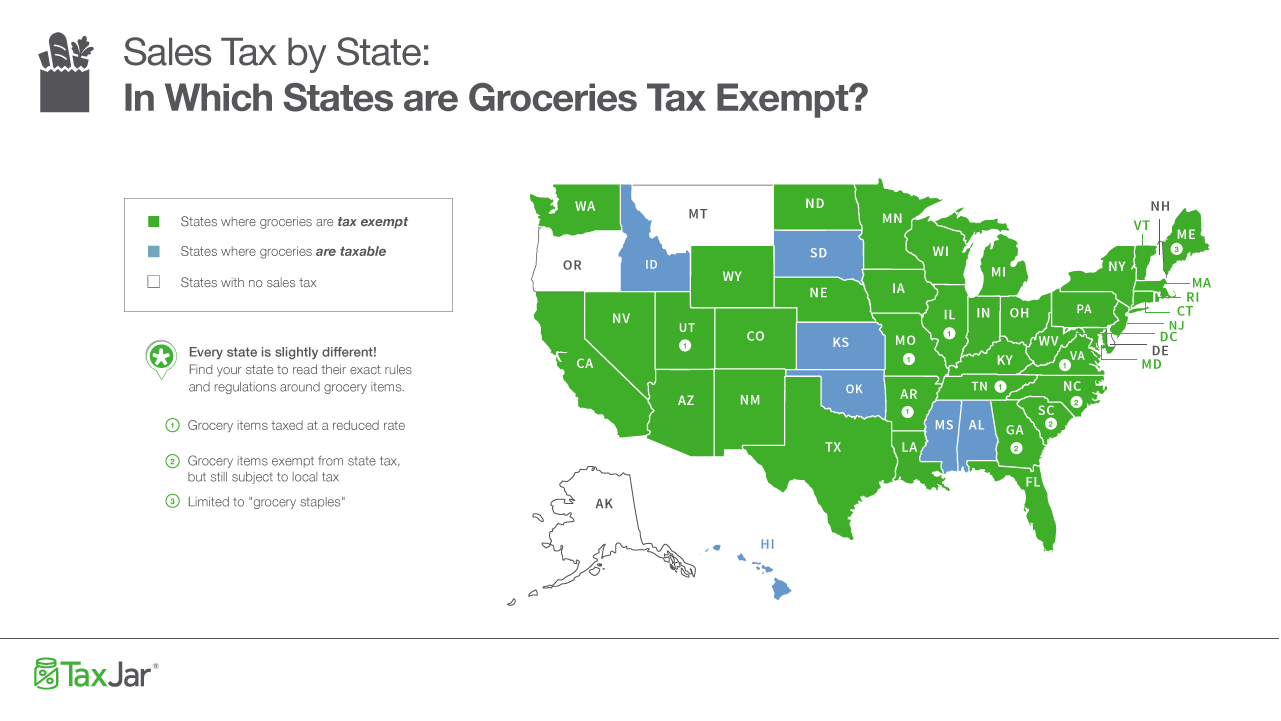
Further - >95% of unprepared food is exempt for taxing, with the only exceptions being Oregon and Montana. http://blog.taxjar.com/wp-cont...
Notably, TFA _DID_ consider Social Security and Medicare/Medicaid a tax (http://www.oecd.org/tax/tax-policy/taxing-wages-methodology-and-limitations-2017.pdf). Despite your protests, the OECD found that Americans are in the bottom third of tax-paying countries, and included the working poor among their numbers. You can still make a case that poor people are hit hard (they are), but they are not hit as hard as they are in other countries, effectively. The article specifically has a category for income earners making only 67% of average wages (totaling about $30K/year in USA, 50hr/wk @ $12/hr). Source (http://www.oecd.org/tax/tax-policy/taxing-wages-methodology-and-limitations-2017.pdf).
-
Re:Taxes are for dummies
According to actual IRS data the bottom 50% pay 2.75% of all Federal income taxes, but make 11.27% of all income. The top 1% pay 39.48% of all income taxes, but make 20.58% of all income. That's about an 8:1 change in taxes-per-income...
-
Re:Taxes are for dummies
That's not true, at least for income taxes. Likewise for capital gains taxes.
-
Re:MBA logic
14 states tax inventory. https://taxfoundation.org/does-your-state-tax-business-inventory/.
Apparently, the US government does not tax inventory (I had believed otherwise), but there may be some subtle tax advantages to minimizing inventory. I don't think you can avoid paying taxes on profits by just using all your profits to buy stuff. -
Re: Lesson 1
That person who earned $300,000 didn't pay $5,000; they probably paid (if we go by the published data) $60,000 in taxes. So exactly what you demand to happen IS happening. The data's posted, it's right here and it's completely correct. "The rich" pay disproportionately more of their income to taxes than the rest of the population.
So here's an interesting question: how much more should they pay? What would be the appropriate multiple of tax-to-income relative the middle class? Twice as much? Three times as much? Ten times as much?
-
Re: Lesson 1
He may be the exception to the rule, because actual data shows the top 1% pay not only the highest effective tax rate, but twice their "share of income" relative to the total income tax paid. Buffet is most likely the exception rather than the rule - unless the rest of the top 1% are doing it wrong?
-
Re: Lesson 1
Facts say otherwise about who the wealthy support. And I know it's popular to talk about "rich don't pay taxes" even though data says otherwise. The claim about "they earn money in different ways" is about capital gains taxes, which are taxed, for the rich, at 20%, which is a tax rate solidly in the top 10% of all payers. Essentially - everything you posted is wrong.
-
Re: Lesson 1
Actual data shows that those "rich Republicans" tend to pay the most in income tax. The wealthiest 1% pay 40% of all income taxes even though they make just 20% of all income. We have a highly progressive tax structure with the rich paying well above "their fair share". Unless your implication is that only Democrats are rich?
-
Re:if it were cheaper, yes.
Stop giving the wealthy so many tax breaks and you would be able toafford welfare systems that address the 45m Americansbelow the poverty line.
The bottom 50% paid 2.8% of all US Income tax paid in 2015; the top 50% paid 97.2%. While it's commonplace to see stories of very rich individuals paying absurdly low marginal tax rates, those are by and large members of the fabled 0.01%, whose numbers are so few (138,000 tax returns in 2013) that raising their taxes wouldn't have much effect on the bottom line. The fact is that the average tax rate paid by the top 1% is over 27%. That's average, not marginal. Raising it back up to the 34% it was at in 1980 wouldn't solve the problems of the 45 million Americans below the poverty line.
-
Re:Yeah
-
Re:Yeah
Perhaps some facts can help? US marginal effective tax rate is the highest in the OECD. But then, I know your post was loaded with solid facts and references, so...
-
Re:YeahThat was true 15 years ago. But not after 2006.
It is well known that the United States has the highest corporate income tax rate among the 35 industrialized nations of the Organisation for Economic Co-operation and Development (OECD).[1] However, it is less well known how the United States stacks up against countries throughout the entire world. Expanding the sample of countries and tax jurisdictions to 188, the U.S.’s corporate tax rate of almost 39 percent is the third highest in the world, lower only than the United Arab Emirates’ rate of 55 percent and Puerto Rico’s rate of 39 percent. The U.S. tax rate is 16.4 percentage points higher than the worldwide average of 22.5 percent and a little more than 9 percentage points higher than the worldwide GDP-weighted average of 29.5 percent. Over the past ten years, the average worldwide tax rate has been declining, pushing the United States farther from the norm. https://taxfoundation.org/corp...
see also: https://en.wikipedia.org/wiki/...
-
Re:Not top 1% of earners
No, that is the average income of the top 1%, not the lower cutoff:
The top 1 percent of earners in the United States had an average income of $1,153,298 in 2013
According to the Tax Foundation, the top 1% US gross income cutoff point was > $434,682 in 2012. So you needed to earn more than $434,682 to be in the top 1% percentile. Of course, some people earn far more than that, hence the very high average.
Anyway, if you are reading this, you are almost certainly in the top 1% by global standards. The World Bank puts the global 1% threshold at $34,000 US.
-
Bill Gates' spending habits would change.
Bill Gates is only going to buy so many TVs, cars, and houses. Doubling his wealth is not going to change his spending habits.
Actually, I can say with high confidence that his spending habits would change. If his income increased by 100%, the amount he gives to the Bill & Melinda Gates Foundation would increase by more than 100%.
That's simply how philanthropy works. A group of poor people, as much as they might want to engage in philanthropy, simply doesn't have the means to. If their situation improves, such that their own basic needs are taken care of, they tend to become philanthropists who donate a small percentage of their income. If the group's situation improves further, such that their basic needs as well as their more frivolous wants are taken care of, they tend to become philanthropists who donate a large percentage of their income. (There are, of course, exceptions to every rule.)
I look forward to the day when the economy has grown to the point where the social safety net can be funded entirely by voluntary contributions, as opposed to tax revenue that is collected coercively, even while providing more robust services than it does today.
That idea is not farfetched. Americans gave $373.25 billion to charity in 2015. I.e., about 16% of wealth redistribution was voluntary, while the other 84% was coercive. (Ok, the second statistic was from 2012; sorry I don't have something more current.) A few more decades of robust growth in Americans' incomes -- which would result in even more robust growth in their charitable contributions -- would bring us into a much better situation, where it is no longer necessary to redistribute any assets coercively. Imagine how much political rancor would dry up in that situation.
It's true that Boards of Directors often approve very large compensation packages for CEOs. They don't do this for lulz, or because they like to squander the company's resources. They do it because of a sincere belief that it's worth it; that the overall health of the company will be optimized by providing the kind of compensation it takes to attract a top-quality CEO.
Critical thinking should be applied to everything, including those who would second-guess Boards of Directors. What makes them qualified to do so? Have they ever even served on a Board of Directors? They often claim that CEO pay structure is not based on actual scarcities. Actually, top-quality CEOs are quite scarce. It's not a job I could do.
-
Re: Let's Face the Facts...
A 4 bedroom 2000 sq ft house with basement in TN. Taxes $1,500-2000/yr. My 4 bedroom in the far north Burbs was $8K! Probably more now.
Fuel, sales tax, traffic. Good riddance
Sales tax? And you moved to Tennessee, with its 9.45% average sales tax rate?
-
Re:Let's Face the Facts...
The overall tax rate is actually higher in Illinois than in California (for the average citizen). California has higher income and sales taxes, but Illinois has substantially higher property taxes, placing its overall tax burden just above California. The rankings change a bit if you include local taxes (county and city), but Illinois still taxes more than California.
-
Re:A more basic question
"many countries the bulk of tax revenue comes from income taxes."
OECD averages from 2012...
https://files.taxfoundation.or... -
Texas among lowest taxed states
Texas is one of the least-taxed states. We have no state income tax (on individuals) and reasonable sales taxes. Texas total state tax burden is 7.6%. Compare California, Wisconsin, and llinois at about 11%. Some states are 12%. Only Alaska is less than 7.1%.
-
The safety net
You have no safety net for your people.
Here's the figure for 2012: more than $2 trillion was transferred from the top 40 percent of families to the bottom 60 percent. https://taxfoundation.org/dist...
How many additional trillions must be transferred before you'll acknowledge that there's a safety net? Serious question.
Here's an interesting piece by a U.K. citizen that asks, and answers, the question "given that the United States spends vast amounts of money alleviating poverty then how come there is still any poverty in the United States?"
-
Re: Or it could be globalism
The United States has the third highest general top marginal corporate income tax rate in the world at 39.1 percent, exceeded only by Chad and the United Arab Emirates. http://taxfoundation.org/article/corporate-income-tax-rates-around-world-2014. This makes the US uncompetitive for some new businesses. The historical comparison internal to the US is interesting but not relevant.
-
Re: Economic refugees
No he's not wrong, remember the controversy when Romney was illegally taped saying the same thing at a fund raiser? 45% of Americans pay no federal income taxes, and for the most part if you pay no Federal, you likely pay little or no State income tax as well.
he Tax Policy Center has updated its estimate of the percentage of households that will not pay federal income tax this year. We now figure it is 45.3 percent, nearly 5 percentage points higher than our 2013 estimate of 40.4 percent. But that doesn’t mean more Americans have moved off the tax rolls. Instead, the higher estimate reflects new and better estimates of the number of Americans who don’t file tax returns. Those additional non-payers were there all the time—we just failed to count them. New Estimates Of How Many Households Pay No Federal Income Tax
The Internal Revenue Service has recently released new data on individual income taxes for calendar year 2012
The tax codes have become insanely complicated, mostly due to the codes being used for a social engineering carrot and stick, and if this doesn't get fixed, things will get ugly and it will be uglyist for those on unearned entitlements.
-
Re:Ummm $6 per person?
It was taxpayers not citizens. A quick look up show that in 2013 (the latest year I can find data for) there were 138.3 million taxpayers. So that gives us $600,000,000/138,300,000 people so ~ $4.34 per tax payer, still not $6/taxpayer but much closer than the $1.85/person.
-
Re:No
Primarily, I think you've got several screws loose. I think the rich voted for Trump because of things like the estate tax...
This implies that rich and upper-middleclass people are stupid. 90% of Americans have a net worth < $1 million. 99.5% have a net worth < $11.8 Million. Under current tax law, you only pay federal estate taxes on the part of your net worth that exceeds $10.9 Million for 2016, which is automatically adjusted for inflation. That < 1% of the population obviously couldn't have elected trump on their own, so the rest of the rich and semi-rich who voted for him must either be stupid or naively optimistic about their future earning prospects. Even if the Democrats were in power and bumped the estate tax exemption down to the pre-Bush $1 million level, that's still only 10% of Americans who'd pay a penny in estate taxes.
Speculating about the higher order effects of how large structural changes in the tax code will effect the income distribution is akin to astrology, but the 1st order effects are clearly more beneficial for a small minority of the wealthiest Americans.
Note that this post isn't rhetorical. It's entirely possible that Trump voters did vote primarily on personal economics and fall into these three categories:
- 1. Think Trump's tax policies will directly benefit them, but just can't or didn't bother to do the very simple math.(i.e. the stupid and the lazy)
- 2. Understand that Trump's tax policies will lower taxes on people richer than them a lot more than it will lower taxes on them directly, but believe the higher-order effects will have a net benefit to them (i.e. trickle-down economics).
- 3. Are really rich and will benefit from Trump's tax policies
I'm just saying that #3 is far too small a voting block to even move the needle in the popular or electoral college votes. If economics was a deciding factor for a significant number of voters, some combination of #1 and #2 were heavily involved.
-
Re:Poor Nazis
That makes the alt-right attractive to degenerates like pick up artists, men's rights activists and other far right groups that want to go back to some idealised version of the 1950s.
The idyllic 1950's, a conservative's dream. There were a lot of bad things back in the 50's. Separate, and unequal treatment of minorities. For example, sit at the back of the bus, can't buy a house in a reasonably nice neighbourhood, women and minorities blacklisted from education and opportunities.
But there was good as well. Take 1954 for example. America was strong, the economy was great and the American worker could earn a living and have a great retirement without all of the socialism. It was also the year that Union membership reached its peak at 23.8%. Since then, as union power and influence has declined, so has the real adjusted income of the American worker. Good thing we've gotten rid of those evil unions who fought hard for so many American worker's rights.
The good old days had so much less government that they didn't need all of those high taxes like they have today, am I right? Yes sir, why back in 1954 the richest Americans only had to pay 87% of their income in taxes! Yes you read that correctly. The highest tax bracket was 91%, but if you read the notes in the linked documents you see that the highest effective rate on net income in 1954 was 87% of income. There were a lot more tax brackets as well, which actually worked out much more fairly. About 26 tax brackets. Anyone earning between $0 and $2,000 was taxed at 20%.
The 1950's when America was great and strong thanks to all those union workers and the high tax rates. Sounds like a conservatives dream, if you include nightmares.
-
Re:Wow
The Tax Foundation only had 2005 numbers available when I bookmarked the page a month or two ago. And i know things have changed since then, but none of your links provide the full picture, so I"m going to post this one for some historical data:
http://taxfoundation.org/artic...
As of 2005, the States that paid more to the Federal Government than the spending they received in return were:
New Jersey
Nevada
Connecticut
New Hampshire
Minnesota
Illinois
Delaware
California
New York
Colorado
Massachusetts
Wisconsin
Washington
Michigan
Oregon
Texas
and FloridaRhode Island was break even.
The rest of the states, at that point, were the recipients of that taxation.
-
Re:Is This a Joke?
To be clear, the US also used heavy taxation at the top end (90% in the top bracket!) in the past. From the Reagan era onward, we have continually decreased the top rates until you get what we have now - a very slightly progressive income tax scheme alongside a capital gains tax rate that ensures the top of the top wealthiest individuals pay less as a percentage of income than the average person does.
Not much point to a 90% bracket when almost no one ever paid that marginal rate due to tax loopholes such as trusts.
a very slightly progressive income tax scheme alongside a capital gains tax rate that ensures the top of the top wealthiest individuals pay less as a percentage of income than the average person does.
You have evidence for that? I see stuff like this or this or this.
-
Re: Can we see this evidence?
Oh, you need more? How about asking Hillary what this magical "Fair Share" is that she keeps telling everyone we should be paying. Here is a hint, if she does not give you a number and we already pay the highest taxes in the world it's probably 100%. She want's fossil fuels to become stranded resources. How do we power a country with no assets exactly?
Since when does the US pay the highest personal taxes in the world? Not even close...
http://www.taxpolicycenter.org...
http://www.tradingeconomics.co...If you are referring to the corporate tax rate, it may be around the 2nd highest but I guarantee you that not one company pays that rate due to write offs, tax deductions, and loopholes.
-
Re:not gonna happen
1) Your link seems to just prove my point. 45% average tax rate across EU is much lower than that damn 60+24 VAT of Finland. QED.
No, it doesn't. How many links and explanations do you need?
http://taxfoundation.org/artic...
The tax burden on average workers in the Czech Republic is 42.6%, in the US, it's 31.5%. Sales tax in the Czech Republic is around 20%, in the US it is somewhere between 0% and 10%. Your claims don't even make sense for the Czech Republic, let alone for a regular European welfare state.
2) 3 out of the 10 best high schools in US are in my area. I don't think I picked specifically a place with the lousy education system. Who should I have picked? Kansas?
Yes, you live in a luxury enclave. California as a whole, however, ranks near the bottom of school performance among US states. And all Californians pay the same tax rates that you do.
3) I mean they are lacking electricity, running water, hospital within 4 hour driving distance,
I used to be living in a place "lacking electricity and runing water". There are multi-million dollar rural American homes have generators, wells, and septic systems. What you don't seem to understand is that people in the US choose rural living, for the high quality of life it provides. You project your Bohemian prejudices and preferences onto how other people live.
-
Re: And Russians landed on that thing, 10 times
They pay the majority of taxes in terms of total sum, true. However, on an individual level, the rich pay a much lower percent of their income to taxes than many other income levels.
Nonsense.
The average tax rate for the bottom 50% by income: 3.13%
The average tax rate for the top 50% by income: 13.8%
The average tax rate for the top 25% by income: 15.8%
The average tax rate for the top 10% by income: 18.9%
The average tax rate for the top 5% by income: 20.9%
The average tax rate for the top 1% by income: 23.5%Source: http://taxfoundation.org/artic...
Notice a trend there? If you look at the top 0.1%, the trend is slightly broken; their average tax rate is 22.8%, slightly lower than the top 1%... but still far more than the lower tiers.
The rich *do* pay the bulk of the taxes, both in dollars and as a percentage of their income. That doesn't necessarily mean they shouldn't pay even more than they do... but they already do pay quite a lot.
-
Re:Does anybody really doubt it
Here you go. She also wants to stop you from contributing to your 401K or IRAs if they have "too much money" inside them. In other words, if you've been putting away a lot for your retirement, you're going to lose the ability to do so...
-
Re:Punishment Must Exceed Profit
I give you General Motors, bailed out at a final cost of $10.6 billion to the US taxpayers. Assuming you're one of the 69 million with a tax return above $3000/month, how did you like paying $140 to save General Motors?
-
Re:She seem like a commie...
You are very misinformed - income taxes started decades after the Napoleonic wars. Look at the actual history of US income tax regulations. See here.
-
Re:Crap like this
Exactly. See here. It presents the bare facts of marginal rates adjusted to 2013 dollar values for direct comparisons. Notice the swift decline in the highest marginal tax leading up to the the stock market crash in 1929, and only in 1932 returned from the disastrous 25% to the 40-50%+ normal before the crash era, roughly when the US economy was brought to recovery with the New Deal. Since then fluctuations have held up roughly the same pattern - wealth interest lowering the highest marginal rate only for financial collapse to restore it to a sustainable and significantly higher rate.
This data damns the fantasies of the wealthy that they are the best users of funds gained at such disproportionate rates compared to the population. -
Re:Time to replace the system.
"Herp a Derp" yourself... The rich already pay more than 20% and the gardener pays zero. So what does the gardener care when his Congressman says he's going to raise taxes and increase spending? No skin off his back, right? Just tell Peter to steal from Paul...
-
Re:paying dividends is dumb
In addition to having one of the highest nominal corporate tax rates in the world, the US also has one of the highest median corporate tax rates as well (i.e., after "loopholes"). If it didn't, US corporations wouldn't be trying to hard to get taxed overseas, and that is on top of high capital gains taxes. Sweden, incidentally, has one of the lowest median corporate tax rates.
-
Re:headline is misleading
The top 1% pay an average of 27% in income taxes, well above capital gains. Those who do live strictly on capital gains are few and far between. The overwhelming majority of the top 1% pay quite a bit in Federal income taxes - especially when you look at their share of income relative to all income.
-
Re:Better Idea
To be in the top 1%, you have to earn over $428,000 per year. I'd venture that most of
I'd venture that it's even higher than that, since not all rich people earn there wealth through big tax-declared salaries (eg Steve Jobs).
One of the great conspiracies of the wealthy is to not let everyone else know how truly rich they are. -
Re:WTF?
Take the bottom 50% (which inevitably includes those above the poverty line, who are earning income). In 2014, they earned about $1 trillion dollars. Total EITC payments were around $65.6 billion. Which more than offsets the 6.2% paid by FICA. And we're not even talking about other benefits - this is direct tax compensation given on the 1040 (which also lists your FICA you're responsible for). So no, the poor generally do NOT pay FICA taxes.
EBT purchases are tax exempt. Yes, they pay property tax, like we all do. But we also gave $50 billion in 2014 to the poor, about $725 per taxpayer in the bottom 50%. I assume that offsets most of the aggregate property taxes paid..
Overwhelmingly, the aggregate tax load (taxes paid minus direct compensation given) for the poor is negative. EITC offsets FICA, Section 8 offsets property taxes, EBT is tax free, etc. Some do fall into corner cases - but many do not.
Now consider that everyone in the top 10% is also paying $8000 in FICA annually (a capped, defined benefit plan that is not available to all the rich - it phases out, even if they paid in). They overwhelmingly pay all of the capital gains taxes, the luxury taxes, and corporate profits (which are given to the rich as bonuses). The top 1% probably fund - directly - 50% of the Federal Government. And they are apparently NOT paying their fair share?
-
Re:Better Idea
To be in the top 1%, you have to earn over $428,000 per year. I'd venture that most of
-
Re: WTF?
If taxes are, as you basically argue, a use tax/service fee - then let's structure it as such. The US Federal Government is spending about $4 trillion this year for the 320 million of us present. So let's go ahead and send every man, woman, and child a bill for $12,500. That's their fee for the service provided.
Many on the left want to use taxes not to pay for the goods and services received, but to redistribute wealth to "make it equal". THAT is the fundamental difference between Conservatism and Liberalism in the US: Conservatives want to see equality of opportunity - everyone starts the race at the same line. Liberalism seeks equality of results - we all cross the finish line at the same time. And for the liberal politicians, they see the tax code as a way to enforce their belief. All the while exempting themselves from such levels (for example, President Obama pays about 20% in taxes even though the typical 1%er like he is pays much more. Heck, he pays a lower rate than the top 5% even though he's towards the very top end of that group).
-
Re:An old Soviet joke ...
Yes, that's what I mean. Leaving all other taxation and programs as they are, you could fund an UBI of x% the mean income (as in GDP per capita) by taxing every person (whether they have an income or not) an additional x% of their income.
Well, then you end up with 70% taxes on high income earners, QED. Both the US and Europe tried this for a while and it didn't work. Top marginal income taxes in most of Europe are now lower than in the US, and some of the best performing and wealthiest countries have much lower income tax rates than the US.
The super-rich would sure like to make sure that any taxes raised are raised on the middle class only, and that their ludicrously high incomes are left untouched, but that doesn't mean that the only way to do it is to concede to their ridiculous demands.
The "super rich" don't have "ridiculously high incomes", they often don't have incomes at all, they simply are rich. If you tax income, you are going to hit the middle class and the upper middle class, people like older doctors, lawyers, and engineers while they have a few lucky years. In fact, 12% of Americans will be in the top 1% of income earners during their lifetimes, and 39% of Americans will be in the top 5% at some point.
The super rich have capital gains, but only when they actually sell stuff to consume it. If you tax capital gains, they are simply not going to invest in things that have capital gains anymore.
And if 25% isn't high enough, and I agree it's not, then we make it higher. I'd personally go for 50% myself, and have been advocating for exactly that for decades,
At that point, you reach to marginal taxes of above 100%; people certainly aren't going to work for that. Even at lower rates, many people are not going to bother working extra, or working at all, anymore. The question is not whether they can make additional money at all (which is how you think about it), but how much they value their time relative to the money they can receive. A doctor or lawyer isn't going to bother working an extra hour if he gets $20/h for it after taxes. And in the long term, smart people are just not going to bother going into those professions at all, they are going to find other ways of making money that avoid these high income taxes.
And if you make life unpleasant enough for the wealthy, they are simply going to leave the country altogether, another lesson Europe learned.
Note that high income households already pretty much are the only ones that pay substantially more into the system than they get out; even that is not sustainable:
http://taxfoundation.org/blog/...
http://taxfoundation.org/artic...
And, seriously, even forgetting about the injustice of randomly taking away people's money and giving it to other people, what's the point of all of this? Why do you want to punish older upper-middle-class professionals?
-
Re:An old Soviet joke ...
Yes, that's what I mean. Leaving all other taxation and programs as they are, you could fund an UBI of x% the mean income (as in GDP per capita) by taxing every person (whether they have an income or not) an additional x% of their income.
Well, then you end up with 70% taxes on high income earners, QED. Both the US and Europe tried this for a while and it didn't work. Top marginal income taxes in most of Europe are now lower than in the US, and some of the best performing and wealthiest countries have much lower income tax rates than the US.
The super-rich would sure like to make sure that any taxes raised are raised on the middle class only, and that their ludicrously high incomes are left untouched, but that doesn't mean that the only way to do it is to concede to their ridiculous demands.
The "super rich" don't have "ridiculously high incomes", they often don't have incomes at all, they simply are rich. If you tax income, you are going to hit the middle class and the upper middle class, people like older doctors, lawyers, and engineers while they have a few lucky years. In fact, 12% of Americans will be in the top 1% of income earners during their lifetimes, and 39% of Americans will be in the top 5% at some point.
The super rich have capital gains, but only when they actually sell stuff to consume it. If you tax capital gains, they are simply not going to invest in things that have capital gains anymore.
And if 25% isn't high enough, and I agree it's not, then we make it higher. I'd personally go for 50% myself, and have been advocating for exactly that for decades,
At that point, you reach to marginal taxes of above 100%; people certainly aren't going to work for that. Even at lower rates, many people are not going to bother working extra, or working at all, anymore. The question is not whether they can make additional money at all (which is how you think about it), but how much they value their time relative to the money they can receive. A doctor or lawyer isn't going to bother working an extra hour if he gets $20/h for it after taxes. And in the long term, smart people are just not going to bother going into those professions at all, they are going to find other ways of making money that avoid these high income taxes.
And if you make life unpleasant enough for the wealthy, they are simply going to leave the country altogether, another lesson Europe learned.
Note that high income households already pretty much are the only ones that pay substantially more into the system than they get out; even that is not sustainable:
http://taxfoundation.org/blog/...
http://taxfoundation.org/artic...
And, seriously, even forgetting about the injustice of randomly taking away people's money and giving it to other people, what's the point of all of this? Why do you want to punish older upper-middle-class professionals?
-
Re: Recession is really a depression
Middle class typically runs from ~$46K to $140K per household. The top 1% starts at $428K, quite a bit above the middle class level.
-
Please answer one question
The working classes have largely been strip-mined for their wealth
Here's an interesting article: United States governments redistributed more than $2 trillion in wealth from the top 40 percent to the bottom 60 percent in 2012.
How many additional trillions in wealth redistribution would it take, to get you to stop claiming that the working classes are being "strip-mined for their wealth"?
Serious question... would you be so kind as to give me a number, so I can understand what your definition of "being strip-mined" is.
-
Re:Not funneled into
It's not as simple as lowering corporate tax, since that would cause us to go deeper into debt. Instead we need to make up that revenue elsewhere. The problem isn't just that our corporate taxes are high, it's that our personal taxes our low too. U.S. taxes are catered toward individual wealth instead of "public wealth".
We tax corporations heavily while taxing the populace (comparatively) lightly. To add some perspective, one thing taught to me early on is "you work one week a month for uncle sam" implying a roughly 25% effective tax rate... that's light compared to a large part of the world.
Sorry folks, we can't just lower corporate tax... We'll need to start taxing individuals a hell of a lot more. I say we start with the 1% and work our way down.