Slashdot Mirror
Domain: technologyreview.com
Stories and comments across the archive that link to technologyreview.com.
Comments · 996
-
Re:2010? Sigh...
or you just arrange to buy power from other places during peak periods or at any other time your generation is below demand.
The superconducting angle was a front page article recently on slashdot, here's a little summary if you missed it: http://www.technologyreview.com/Energy/18790/
Though in that respect I think they were more interested in reliability than added capacity.
Googling for "solar power desert transmission loss" we find losses quoted anywhere from 10-40%, probably varying on distance.
One article quotes,
The way we do things now the transmission losses would be considerable â" from the middle of the Sahara to the United Kingdom might involve a transmission loss of 30% of the power generated although here are ways to considerably reduce this loss if the reduction is cost effective; it may not be, because, after all the source of the power â" sunlight â" is free.
And I think that's a good point... 30% loss doesn't sting so bad when the power is free. (though the start point infrastructure was not, but is a one time payment)
-
Re:consumer uses
If it was lower on the Moh's scale than the other material, it would not cut it.
Since graphene is the sheet form of graphite, and graphite is less than one on the Moh's scale, cutting shouldn't be an issue. But if the graphene condom is made flawlessly, it should never break because it will be the strongest material ever made. -
Re:consumer usesWhy wait? Just make your own!
One common technique is called the "Scotch tape method," in which a piece of tape is used to peel graphene flakes off of a chunk of graphite, which is essentially a stack of graphene sheets
not sure how to make that into a functioning prophylactic, but the methods and materials to make graphene are readily available.
-
Re:Themoelectrics Already Pretty Good
But this new material is already projecting a zT:3 as part of their current scope of R&D.
A Technology Review article explains that in car engines, these zT jumps deliver efficiency from the old 6%, to the new 10%, looking at 21%. So it seems that this material does quite well at that hard job.
-
Re:Technical point
The Technology Review article about the tech is more specific about the material's heat/electricity conversion efficiency. Evidently the current zT:0.87 material is about 6% efficient; the zT:1.5 material already achieved therefore is about 10% (about 10.3448276%) efficient. A zT:3.0 device is about 21% (about 20.6896552%) efficient.
10% of the 60% of gasoline's energy content wasted as heat is 6% of the gasoline's energy. If the car got the average 20% fuel efficiency, that extra 6 points would be 30% more than the original 20%. A zT:3.0/21% would be 12.6 points extra, or 63% more than 20% to 32.6%.
A 30MPG car today would get 39MPG tomorrow with the current version material. It would get 48.9MPG with the forecast zT:3 material.
What I'm really interested in seeing is how embedding the higher zT materials inside fuelcells boost their efficiency. Because fuelcells aren't heat engines, they're not limited to the Carnot Cycle's 40% max efficiency. They already get 50% efficiency or greater at "native" voltages (like 1.48V), where their max theoretical efficiency is 83%. But still, much of their 17%+ inefficiency is generating heat. So they can be even more efficient with heat reclamation, perhaps in practice actually approaching that 83% efficiency.
-
The comments attached to the fine article...
... contain a link to a possibly more useful article with some more comprehensible numbers:
http://www.technologyreview.com/Energy/21125/
e.g. The device could increase fuel efficiency of vehicles by approximately 10 percent.
-
Should look at thermoelectrics from automakers
These researchers should look at the thermoelectric power systems that automakers are exploring.
More information in this technology review article.
-
Re:Patent Office penalties
Here is one way to fix the problem: let the Patent Office be heavily penalized for every patent overturned by the courts.
Here's another one: Let the federal courts be heavily penalized for every patent lawsuit overturned by higher courts.
The rubberstamping going on in Eastern Texas makes me ashamed of our justice system. It's become a farce, and unless the DoJ does something soon, people will lose all faith that there is any "just" in "justice". -
Patently Silly
Patents are supposed to protect an inventor from others stealing his invention--not his ideas. If you're non-specific about the METHOD by which your "invention" pushes a wish-list to a database (some proprietary programming or a new custom protocol), then you don't have anything to patent.
Unfortunately, the patent office knows only how to patent physical devices and they fail to understand the difference between the broad concept and the actual methodology.
Ignorant backwoods judges and juries don't understand either. That's why trolls love Marshall, TX.
-
As a long-distance sailor, and surfer
...this is interesting, to say the least.
The topic of "rogue waves" has gotten much more interest in the past few years. They have been determined to be both larger and more prevalent than thought before. Perhaps Jason will complement the data from the EU mission to help with statistics, and maybe even predictions...
One can hope. -
Draconian Legislation.
Big publishers are buying draconian legislation because only that will preserve their place in the world. They have gotten away with as much as they have because they control broadcast media, but fewer people are paying attention to that. We are in a race to save the internet before big publishers can destroy it. They demand the same kinds of control over the internet that they had over print and broadcast. That is, the ability to limit what can be shared regardless of who creates it. It's not about entertainment and "piracy", it's about control. The DMCA gives them channel control and the nastier provision give them ability to harass other publishers with cease and desist letters. Windows and Mac have have "copy protection" built in that enforces the rest.
-
Re:Patent Busing
-
Let's be realistic
-
I hope they don't find life
I for one don't hope they find any signs of any kind of life whatsoever. Here's why:
https://www.technologyreview.com/Infotech/20569/
An intricate argument but well worth the read. (Bugmenot has passwords if you're too lazy to sign in.) -
Re:From the "Read between the lines" department"Pooley says he agrees with Baxter. 'I know the judges there, and I think very highly of all of them. This is a point of view offered by a group that's trying to bring a national perspective to the issue,' Pooley says."
Yes, surely the AIPLA prefers the judges and juries in that venue because of their fair and equitable methods that give defendants a fair chance, and not at all because if defendants started winning IP-related suits the AIPLA would be largely out of a job. the two articles in TFS contradict one another....
"Indeed, patent plaintiffs whose cases go to trial in Marshall win 88 percent of the time, according to research firm Legalmetric, compared with 68 percent nationwide."
http://www.technologyreview.com/Infotech/16280/page2/
vs
""We thought it was chock-full of errors," Sam Baxter, a partner in Dallas-based McKool Smith who is lead counsel for the ad hoc committee, says of the AIPLA amicus brief. Baxter says Eastern District judges regularly grant Â1404(a) transfer motions. In 2007, plaintiff-patent holders won 57 percent of the suits they filed in the Eastern District, which is below the national average win rate for patent holders, he says."
http://www.law.com/jsp/article.jsp?id=1202421640751
so who do you believe? legalmetric, who says 88% of patent 'owners' win in marshal, or a lawyer who makes his living in Marshall Texas, saying that only 57% win there?
I think, that given the fact that we all know a tank full of lawyers would win over a tank full of sharks, even if we gave the sharks lasers, that I'd prefer to trust legalmetrics numbers, not some lawyer desperately clinging to his lifeblood, winning cases for patent trolls in east Texas..
BTW, the first link was indirect, you had to follow the blog's link that was linked second in the fine summary.. -
same problem with global warming "hockey stick"
The so-called hockey stick - a temperature "spike" of a half degree at the end of the 20th dentury happened to be a statistical error in the data analysis program. The program de-averaged (found baseline) of different temperature datasets incorrectly, magnifying the effect of a new 1990s dataset. The warmest years in the 20th century were the 1930s, not the 1990s.
P.S. Other data probably points to global warming, but this most-touted example is incorrect. -
Face Masks?
I'm really hoping that those medical face masks get popular again. That's a look that should really be cyclic like bell-bottoms and thongs.
You need full Respirator gear if you want to stop nano-tubes from getting in your lungs. Even then, with it being so small, your only chance of stop those tubes is if they are even long enough to get caught in the filter.
Thank GOD people have taken the initiative and developing nanotube filters. -
deep TMS
If you think that was something, then you can await much more amazing effects from deep TMS, which may be only months away from being approved in Europe (sorry about FDA!) http://www.technologyreview.com/Biotech/20789/
-
Algae is made out of carbon!
We NEED hydrogen power.
Elect officials that build mass transit systems.
And have those who can't afford it will be stuck paying for it? While I support mass transit, I like many others will not give up our cars. And I don't drive much, in 2000 I bought a brand new car. When I drove out of the dealership it had 6 miles on it, now almost 9 years later I still haven't driven it 45,000 miles. I drive it less than 5000 miles a year.
Our cities our built with the assumption that people can very cheaply get from one end of it to the other, but they can't anymore.
Those elected officials can help, they can enact mixed use zoning regulations. They can allow people to operate a business from their homes easily. They can also make room, and use it, for designated bike lanes on the roads.
The neo-hippies with their lattes and they horn rimmed glasses are not helping the cause, they're hurting it by buying into a false reality and encouraging others to do so.
Hay, though I drink espresso and don't wear glasses, I'm a hippy. Actually I want hemp, marijuana, made legal again. It's a good source for vegetable oil, and Rudolph Diesel designed his diesel engine to run on vegetable oil. Henry Ford designed and built an auto on his Iron Mountain estate that used hemp in it's construction as well as was fueled by hemp. Hemp can also be used for making Bioplastic. And hemp seeds are nutritious.
Falcon -
Re:you are all sheep, stupid fucking sheep!
I apologize for not explicitly defining every single absolute. Obviously I, and the submitter of the article, were not perfectly clear in such statements. I will attempt to fix this issue immediately.
The article, the first link in the submission, which ultimately leads down to http://www.technologyreview.com/Biztech/13597 is a tech piece from May 2004 describing a hardware device for deploying sound along a narrow beam and being able to control and direct it. This first article describes the technology behind the device that is listed in the second link of the submission which leads to http://www.newscientist.com/blog/technology/2008/05/loudhailer-or-weapon.html, a product review as of May 2008.
Here is where the disconnection has occurred and again I apologize. Both articles are speaking of the same thing. The first article relates to the technology in a general scope that the product in the second article is based off of. While the May 2004 article doesn't explicitly discuss that the technology can be used to modify behavior, it is indeed the same technology being used for the LRAD product being sold currently.
For future correspondence, instead of using so many words for personal attacks, assumptions, and generally unintelligent conversation you should concentrate on looking at the sources displayed. I understand that today's Slashdot may be suffering from some quality control issues but that is a far cry from being able to pen every reader into the same field. I hope I've been able to clear up this inconsistency for you. -
Re:you are all sheep, stupid fucking sheep!
Did you read both? And after doing so do you not realize that the author of this "news" blurb co-mingled two completely different types of technology from two different articles in an effort to portray a device with the characteristics of both? A device which doesn't exist? Yes, both pieces of tech come from the same company, ATC, but they are completely different, and have completely different applications. He crafted this shit to make it appear something exists in the real world that doesn't. When you read the article at http://www.technologyreview.com/Biztech/13597/ that is double linked through his hyperlink "directed sound weapon", did you read the word "weapon" anywhere in said article? No, you didn't, because it's not there. The ultrasound device can't reach anywhere close to the sound pressure levels of that "LRAD" device, which is nothing more than a high power high efficiency compression driver and horn. This LRAD is little different than the civil defense (tornado warning) sirens installed in cities and towns all over the US, technology that is decades old, and has never been considered a weapon. Again, this is totally fabricated, sensationalized, BULLSHIT. Plain and simple. Put your common sense cap on. Please.
-
Re:Good article and GREAT PICTURES of the Phoenix
There is also an awesome graphic novel from Technology Review, containing an entertaining yet factual account of the history of the Phoenix mission.
-
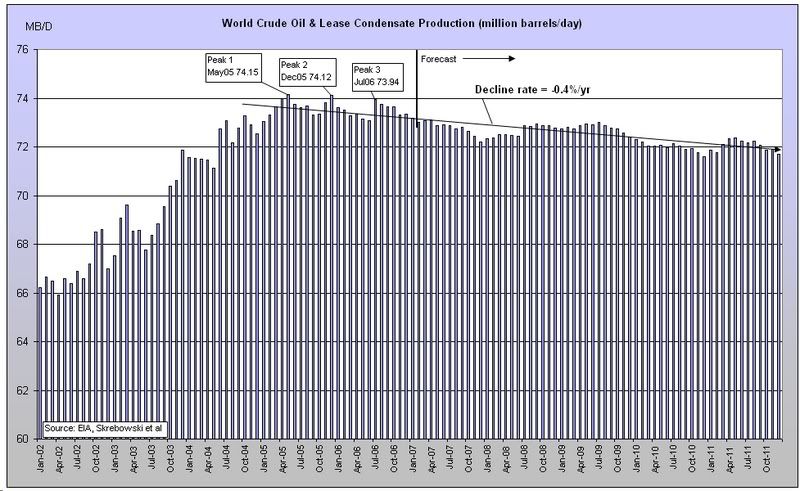
the Candidates are facing Bigger Problems.Oil production peaked in 2005. The USA decided stealing oil was a better idea than buying it, so they invaded Iraq, and that took 112 billion barrels off the market, so as it comes on tap, the plateau of production would remain longer.
In the meantime, the current administration let the nutty banking policies developed under Clinton's watch to http://www.usa-foreclosure.com/">fester and metasticise, and now the country's technically insolvent.
As a consequence, I think putting people in space is going to be seriously backburnered, and I would humbly submit that the majority of people who will ever be in space have already gone.
I'm not happy about that - I would love to go put bases on the moon to harvest He3 and do all that kind of groovy stuff, but I think we shot our wad, and pissed away the resources on crap like highways for Cadillac Escalades and useless cities like Las Vegas. We had our chance, and we blew it.
RS
-
PV panels
That was then, this is now. PV panel prices have gone up significantly since that study.
According to "Tech Review" because of new silicon production fabs prices could drop by 50% by 2010.
His installed cost for materials alone was just over $10/watt.
Did he check for incentives, subsidies, or tax credits? DSIRE, Database of State Incentives for Renewables & Efficiency, is a database of what each state offers in the US.
Falcon -
yeah right, solar is what, $10 per watt still?
Citation please. Heck, I'll provide one. MIT's "Tech Review" says "Solar power cost about $4 a watt in the early 2000s". That's less than half of what you say.
Falcon -
Re:Why not worry about water shooting out of wells
If it was stored in gas form at atmospheric pressure, it wouldn't be a problem (it would just be silly). The problem is that if it's stored in highly compressed or solid form, then if something goes wrong and it goes back to gas, it *will* go up and escape, potentially killing anyone in the area.
Gas at atmospheric pressure in air is only one possible solution. For another, consider that at higher pressure, CO2 is denser than water under the same conditions. Thus, if sequestered under the sea it would be even more stable than the gas at one atmosphere in air case. There are other solutions as well.
CO2 is not as simple a substance as you seem to be supposing, nor are extrapolations from familiar situations always valid..
--MarkusQ
-
Re:5 billion years ago ?
The above taken from this essay by Nick Bostrom: http://www.technologyreview.com/Infotech/20569/?a=f
-
Re:i couldn't have said it better myself
GE's apparently got a way to generate hydrogen at the site of distribution (i.e. no transport/less storage issues) that doesn't require some pie-in-the-sky scientific breakthroughs.
I'll admit, pebble beds are nifty (Toshiba's model for Alaska seemed pretty cool), but in Hydrogen vs nuclear; 'no waste' beats 'less waste' like scissors beats paper. -
Re:Nail on the head
Yes, but the OP's choice of universities is mildly amusing to say the least.
MIT blows its own horn very loudly. Hell, they do a better job of marketing and hyping themselves than Apple do.
The Media Lab might not produce a great deal of "legitimate" scientific output, but it does a fantastic job of capturing the imagination of the public.
Their magazine also serves as a fantastic vehicle for bolstering their own reputation.
This isn't all necessarily a bad thing, although you've got to acknowledge that most of the "top" universities owe much of reputations by shrewdly marketing themselves to the people providing the research grants. -
Re:Google Thunderstorm
That would be the Chinese who control the weather... http://www.technologyreview.com/Infotech/20463/ not Google.
-
TFA with no ads and on one page
-
No ads, all on one page
The printer-friendly version:
http://www.technologyreview.com/printer_friendly_article.aspx?id=20423 -
Re:HmThe US Military admitted there were 'some unknown dangers' associated with DU
Citation?
Just because Doug Rokke got radiation poisoning after the first Iraq war doesn't mean the radiation came from the DU. Prior to Desert Storm, Saddam was running Calutrons in an attempt to enrich Uranium. If Rokke came in contact with the junk Saddam was making, that would be far more dangerous. -
Re:Problem Needs a Solution, Not Political Bickeri
It doesn't take a gallon of diesel to produce a gallon of ethanol, that's why I said it was a net positive energy producer. Don't take my word for it, here's a technology review article: http://www.technologyreview.com/Energy/19924/page1/ From the text: "... 54 percent of the total energy represented by a gallon of ethanol is offset by the energy required to process the fuel; another 24 percent is offset by the energy required to grow the corn." That's less that 100% energy consumption, so it's net positive. There are lots of other issues, food supply, cost, production unable to meet our current energy demands but it is a net positive producer meaning it does make sense to use it as a fuel.
-
In 2001 #4 was Digital Rights Management
Just one paragraph given to the skeptics. http://www.technologyreview.com/Infotech/12264/?a=f
-
Re:Don't forget TR10: 2007
-
Don't forget TR10: 2007
-
Re:What's that I smell?
"Since utilities have built enough power plants to provide electricity when people are operating their air conditioners at full blast, they have excess generating capacity during off-peak hours. As a result, according to an upcoming report from the Pacific Northwestern National Laboratory (PNNL), a Department of Energy lab, there is enough excess generating capacity during the night and morning to allow more than 80 percent of today's vehicles to make the average daily commute solely using this electricity. If plug-in-hybrid or all-electric-car owners charge their vehicles at these times, the power needed for about 180 million cars could be provided simply by running these plants at full capacity."
http://www.evpowersystems.com/PHEVs%20Save%20Grid.htm
Or, "PG&E's experimental EV tariff would likely deter PHEV owners from charging during summer afternoon hours..."
http://www.autobloggreen.com/2007/08/10/phevs-cost-more-to-operate-than-gas-cars/
Or, the following PHEV fact sheet from Wisconson Public Power...
http://www.wppi.org/media/PHEV_Fact_Sheet.pdf
Or, "The next step would be to add smart meters that would track electricity use in real time and allow utilities to charge more for power used during times of peak demand, and less at off-peak hours."
http://www.technologyreview.com/Energy/17930/
Or, " A new study for the Department of Energy finds that "off-peak" electricity production and transmission capacity could fuel 84 percent of these 198 million vehicles if they were plug-in hybrid electrics.
http://www.pnl.gov/news/release.asp?id=204
BTW, the phrase "quoted" for emphasis of "SUBSTANTIAL GRID EXPANSION WOULD BE NEEDED" occurs NOWHERE in the linked article.
If I were you I wouldn't post anything more on this topic either... -
Re:sunlight is at 6000KDoes anyone know if there is any potential to use a chemical process to harness sunlight to disassociate water? You mean like this?
-
and here's...
... the print friendly version so you don't get attacked by the annoying ads.....
-
Re:My favorite.
Because it was in 2003?
http://www.technologyreview.com/Infotech/13060/page4/
--Tim -
Re:My favorite.
Offline Web Applications AIR is a "runtime environment," an extra layer of software that allows the same program to run on different operating systems and hardware. (Java is another example.) With AIR, developers can use Web technologies such as HTML and Flash to write software for the desktop. Users won't have to seek out AIR to enjoy its benefits; they'll be prompted to download it along with the first AIR applications they want to use.
I thought it was a joke at first. This line actually made me check the date -
Re:How good were their 2001 picks?
On the other hand, they did pick up on nanosolar research in 2004, which is coming into its own now.
-
How good were their 2001 picks?Let's test their past! From 2001:
Brain-Machine Interface | Flexible Transitors | Data Mining | Digital Rights Management | Biometrics | Natural Language Processing | Microphotonics | Untangling Code | Robot Design | Microfluidics
DRM hasn't really changed my life other than add one more annoyance.
"Data Mining" sounds basically like "Reality Mining" in the new list.
I'm sure there has been great strides in "Robot Design" that help in manufacturing, but what about the others?
I don't think these technologies have changed my life at all seven years after they were predicted, or have they?
*iza
-
My favorite.Modeling Surprise - Much of modern life depends on forecasts: where the next hurricane will make landfall, how the stock market will react to falling home prices, who will win the next primary. While existing computer models predict many things fairly accurately, surprises still crop up, and we probably can't eliminate them. But Eric Horvitz, head of the Adaptive Systems and Interaction group at Microsoft Research, thinks we can at least minimize them, using a technique he calls "surprise modeling." The rest of the entry is pretty interesting, although Microsoft may be in for more "surprises" in the coming year than many might think...
-
Re:Butanol is a much better alternative than ethan
Interesting. I hadn't heard of this before.
It seems that BP is thinking along the same lines too.
BP's Bet on Butanol
BioButanol: a better biofuel (fact sheet) -
Great, if standardized
As I pointed out previously, there were at least three companies demonstrating wireless charging systems. This new article lists two more, Powercast and Fulton Innovation.
Short-range systems using long-wave near-field RF are probably the way to go. Power ratings can be quite high. The GM EV-1 charger used an inductive paddle operating at 400KHz, and could transfer kilowatts across about half an inch at 90%+ efficiency. The MIT system operates in the 4-10 MHz band.
-
Re. Point 6 and 7
Assuming better technology (as in your point 7), one should also allow for better photovoltaic and related technologies in the comparison.
1) Aside from the new solar plant in TFA, there is a company named Nanosolar that claims to have a new, very cost-efficient technology for producing photovoltaic cells. The cost per kWh is supposed to be lower than when producing from coal. http://gristmill.grist.org/story/2007/12/23/2919/8613.
While that news still lacks independent confirmation, it is less "science fiction" than assuming we can mine the rest of the solar system.
2) Batteries have greatly improved over the last years. In some places, large-capacity batteries are already used to buffer the grid: http://www.technologyreview.com/Energy/19584/. Assume a further improvement of those technologies and you have a way to bridge phases of low production
3) According to Wikipedia (http://en.wikipedia.org/wiki/Power_grid#Bulk_power_transmission), long range power transmission is already feasible at reasonable cost. -
no ads please
http://www.technologyreview.com/printer_friendly_article.aspx?id=19627 for those who don't want the ads
but even without ads the article is very shallow. how is it "semantic" web exactly? -
Hitachi's already done this, and recently too..Hitachi, Ltd. has already done this... but in a much better way..
Also, it looks like this story about Microsoft has been out since June.
What ever happened to innovation, and sticking to a core business model? What is Microsoft thinking, they're not a hardware company. So there advanced technologies R&D lab thinks up something they can throw a patent application up for. They won't execute on it. They'll just litigate on it if someone does actually try to deliver something to the market.
Oh wait... I guess this is Microsoft's core business model, never mind my bad.