Slashdot Mirror
Domain: ubc.ca
Stories and comments across the archive that link to ubc.ca.
Comments · 348
-
Movie: The Corporation
See the movie, The Corporation,
The purpose of a corporation is to make money for its investors. That is all. A corporation is amoral. Viewed as a "person" a corporation is psychotic. This is the nature of corporations.
Outside influences to get corporations to "behave" can only have limited control due to the structure of our society.
Good Summary -
Open source maybe?
Who says that just because men aren't "buying" more electronics that they're not getting the same amount? And don't kid yourself that Linux still has a primarily male usership; most women I know aren't so much worried about performance speed and stability as they are in software that does something interesting. Heck, that's (paraphrased) a proposed motto of a feminist programming group I worked alongside. (Though, I'm not sure it ever got beyond a printout taped to the wall).
-
Re:6bucks + this = bad service
I'm not trying to pretend that six dollars an hour CDN is a lot, it certainly isn't, but converting it to U.K. pounds with the exchange rate is a bit misleading -- the value of the Canadian dollar is signicantly higher: Puchasing Power Parity. Check the U.K. pound and Canadian dollar to see that the Canadian dollar is quite undervalued in terms of what it actually buys, and that the graph suggests that a Canadian dollar buys approximately the same goods as a pound -- which is what I hear anecdotally from people who visit the U.K.
-
MagnetohydrodynamicsSupposedly they even tried developing a system called an MHD that would push water with no moving parts
MHD is Magnetohydrodynamic. It's like a coilgun, but with water as the projectile. Let water pass through the middle of a large electromagnet, put current through it, and it will want to move.
Unfortunately the effect of this is rather weak compared to the power required, which is why the people who are working on it are using superconductors and such. Here's a good overview.
Also it requires an ionic solution such as salt water to work. Submarines are often used to stealthily swim up rivers and into freshwater ports - this may not be possible with MHD propulsion, although maybe the average river is polluted enough to allow it to work.
-
Move
Move to (or just study in) Canada. Those $500 scholarships are half a semesters' tuition, and there's less competition to boot. UBC (not my alma mater) has a good CS/IT department, just for an example.
-
Re:MIRROR NOT LENS
Not when mercury is used:
-
Re:automatic image stitching software
-
Large-format cameras
The author mentions large-format cameras. Here is a link to a lowcost large-format camera project, built by cannibalizing a 1200dpi scanner to make a 122 megapixel camera.
-
Automatic panoramic image stichingFrom http://www.publicaffairs.ubc.ca/media/releases/20
0 3/mr-03-87.htmlso excuse the PR'y nature of the article.
UBC computer science student's research leads to new software that can build digital panoramas automatically
UBC computer science PhD candidate Matthew Brown, 25, has developed panorama software with a new object recognition feature that surpasses the capability of panorama-building software currently on the market.
Brown's AutoStitch Panorama software can automatically recognize and match images that are similar. The software then "stitches" the images together to create a seamless panoramic view of up to 360 degrees. All the user has to do is download their digital photos from their camera.
The software's ability to automatically recognize unordered image sets represents a major step forward in object recognition and computer vision, says Brown's supervisor Professor David Lowe, a leading researcher in the field.
With currently available Panorama software, photos have to be carefully taken in a fixed sequence, downloaded and then manually identified and aligned by the computer user. It's a process that takes time and some technical expertise.
With Autostitch Panorama, the matching process is fully automated - and quick. A standard PC takes about three minutes to match and register all images and then render the panorama. Brown, a native of Manchester, England, is hoping to improve on that time in the future.
Brown and Lowe built on Lowe's previous research to create the Autostitch software, which uses a probabilistic model to detect and verify similarities to match the images and then automatically stitch them into the panoramic view.
Brown is set to present a paper on the research, entitled Recognizing Panoramas, for the first time at the 10th International Conference on Computer Vision in Nice, France, October 13-16.
Sample images produced by AutoStitch Panorama software can be viewed at www.cs.ubc.ca/~mbrown/panorama/panorama.html.
As with the Panorama software currently on the market, the final composite image is a computer graphic that allows the user to explore the panorama by simply dragging the mouse around the image. Images can also be mapped to the surface of a sphere or cylinder to provide a 360-degree photograph. While no special camera is required, one restriction the researchers hope to overcome in the near future is to enable the software to match images of one scene taken from a multitude of locations.
Currently a photographer can't move around snapping photos from multiple locations and use this software. If the pair master that problem, they will have achieved something that 20 years of research in this area has yet to conquer.
For now, they're hoping an outside company will licence the software and develop it further for commercial use. Virtual tourism websites and online walkthroughs of interiors to sell real estate are just two practical applications where Panorama software is already in use.
After Brown returns from the Nice conference, he will be heading to Microsoft and a four-month internship with Rick Szeliski, a pioneer in this area of computer science research.
The UBC Department of Computer Science is a dynamic, youthful, and growing community renowned internationally for its excellence and depth of research. Recognized for teaching innovation, the Department places a conscious focus on interdisciplinary programs. There are approximately 900 undergraduates, 185 graduate students and 41 full time faculty.
-
Houston Next?
Based on this press release, it looks like a lot of people may be watching how this project is turning out. I'd be interested in what's motivating the city of Houston to dump $15 million into their telephone system. Are they trying to get away from paying the telcos or will residents have access to parts of this system?
I'd love to see my university, UBC, take part in some of these projects. We have a massive campus, with a great wireless network that's free for the students. It'd be great to see some projects set up for additional services once the wireless network reaches full coverage.
Another interesting way the telephone companies may be combating this behavior is by offering free student-to-student calling. I believe it's AT&T doing that around here. You register your university and calls to others who're registered at the same university are free.
I sense a massive battle between the telcos and us freeloaders coming on -
Houston Next?
Based on this press release, it looks like a lot of people may be watching how this project is turning out. I'd be interested in what's motivating the city of Houston to dump $15 million into their telephone system. Are they trying to get away from paying the telcos or will residents have access to parts of this system?
I'd love to see my university, UBC, take part in some of these projects. We have a massive campus, with a great wireless network that's free for the students. It'd be great to see some projects set up for additional services once the wireless network reaches full coverage.
Another interesting way the telephone companies may be combating this behavior is by offering free student-to-student calling. I believe it's AT&T doing that around here. You register your university and calls to others who're registered at the same university are free.
I sense a massive battle between the telcos and us freeloaders coming on -
Surveillance for some timeSince I live near Vancouver and am writing a paper on privacy right now, I decided to look into this a little bit. Here's what I've found:
- The organization in question, Barwatch, donated $5000 to the incredibly right-wing Liberal party (go figure) that currently runs the province. The same organization was behind a fight with the worker's compensation board of BC regarding the rights of workers not to have to work in a cloud of second-hand smoke. The Liberals changed the law to remove the WCB ventilation requirements.
- The same liberals have passed (I think) some privacy legislation that allows disclosure of personal information collected by observation at a performance, sports meet, or a similar event that is open to the public (Think Tampa superbowl), and allows organisations not to tell individuals what information they have, "if the disclosure of the personal information would reveal confidential commercial information that if disclosed, could, in the opinion of a reasonable person, harm the competitive position of the organization". In other words, it's pretty wide open.
- This isn't the first time Barwatch has cranked up surveillance of its patrons: This article mentions that video taping has been going on in Barwatch bars for three years before the article was written, in 1999. It also demonstrates that while these programs are justified by safety concerns, they are also used for marketing data.
- These guys have some power: Apart from the smoking legislation, Barwatch also lobbied to implement bus service later, and allow bars open later. Recently, the BC Liberal party allowed bars to be open until 4 AM on Fridays, and Translink began offering night bus service to at least SFU.
- On his geocities resume web site, Bradley Shende claims to be the Barwatch founder. According to his site, "Barwatch is an original concept. It's purpose was to establish communication between licensed establishments and the various branches of municipal law enforcement and regulation to create a forum of co-operation rather than adversity, and to set standards by which we would all operate our licensed premises. The organization has been a success over the years and is now branched out into the US and all over Canada." Apparently he is also "a quick study on systems and software". Nice win2k experience, Bradley.
- Barwatch has changed their phone number, and no longer has a web presence (www.barwatch.org as posted on Shende's web site). I was unable to contact them before posting this. The often cited name of the chair and spokesman of Barwatch is Vance Campbell.
-
Re:certainty
The graph doesn't show what you think it does, no correlation is being made between the level of CO2 and the temperature change since pre-industrial times.
It is undeniable that CO2 levels have increased since pre-industrial times, this has been measure by direct sampling of the atmosphere as well as by proxy measurement of the Icelandic and Greenland ice sheets.
"To state that the increase in CO2 is undeniably causing the increase in temperature" is bad science, but only because you provided no context. There is strong evidence that CO2 absorbs strongly in the infra red and weakly in the visible. Incoming radiation from the Sun is allowed in, outgoing is absorbed and causes the CO2 and surrounding gases to heat up.
Further, if we take the two other terrestrial planets as "test Earths" for extreme climates, both Mars and Venus have 90 % CO2, as such their not in the same regime as the Earth, however, Mars should be approximately 20K cooler than has been measured, this is due to the heat absorbed the the atmosphere.
Venus, which also has global cloud coverage has a heat increase of over 400 K compared to what it "should" be (under reasonable black body assumptions). This was agreed on as early as the 60's (proposed by Sagan in 60/62), there are no other plausible reasons for such a huge increase in heat, the clouds on Venus block out 95% of the incoming light from the surface, yet it's hot enough to melt lead.
We have experiments to back up the scientific conclusions that have been made, numerical models (CPDN for example) have performed numerous experiments where concentrations of CO2 and other GhG are increased over a period, the mean temperature increase is positive even when no other conditions are explicitely changed. Theoretical chemistry can calculate pretty well how different gases will react under given conditions. When Chapman devised the Ozone balance, it turned out it wasn't quite right, until CFC and OH/NO radicals were included. Models of CO2 and other GhG are simple enough, they absorb IR, they don't absorb Visible, there aren't many conclusions that can be drawn from that.
I'm not entirely sure which four in you list you refer to,but...
- The heat balance of the earth is measured in numbers much bigger than the heat output of fuel burning, one second of solar input is 0.7 kW per square metre average over the entire Earth,compared to an estimated 0.01 Kw/m^2 for the total power output, that's 1% of the total (that's current day values).
- Is the Earth going through a warmer part of the what now? The galaxy/ Universe is slightly bigger than the Earth, and it has a mean value of 2.7 K
- How would this Earth core heating manifest itself? more volcanos I guess? Also regular Earthquakes as the mantle reconfigures to a more stable state, neither of these have been seen to my knowledge.
- We can measure the output form the Sun pretty accurtaly, either by, you know, looking at it, which we have been doing (wrt Ozone) since 1920. Proxy measurements from sedimentiary rocks and ice sheets extend this to at least a billion or two years. The paleoclimatalogical solar constant was about 7% lower than the present day value, the Earth was covered in ice, even to the equator.
- The total area covered by satellites is so depressingly small that they probably won't even register on the millikelvin instruments used to measure absolute zero. The satellites which absorb significant amount of heat (most of them) rotate in order the face cold space to radiate the heat away from the Sun, this is the "barbecue roll" theat they talk about in Apollo 13 just before the explosion. The moon is huge, satellites small, no effect here, move on.
- Aliens, deat
-
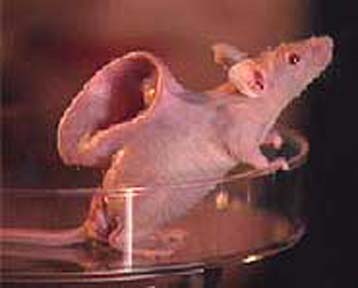
Re:Really an Award for Best Ear Transplant Techniq
They've done that already
I predict the solution will involve "The final front-ear", or something. -
Arrogance
Just because MIT students who had one Java course previous to his software engineering class could not understand how to use Java properly to build webapges, doesn't mean Java is bad for web applications.
I also teach a second year software engineering course using Java to write web applications. My approach, however, is very much different to MIT. I actually took the time to run tutorials on how to write a proper application using servlets and jsps IN CLASS! That's the only way, imo, to teach these "beginners" how to write programs properly.
The MIT approach (as well as most large universities) is to let the students learn the tools themselves while they cover the theory in class. This sounds all good on paper since theory is the "essence" of computer science while being able to compile and run a program is more of an "accident". I believe, however, that since the "accidents" are what is keeping eveyone employed, we have to teach the proper way to code using CLASS time. Espeically in an introductory SOFTWARE ENGINEERING class.
Anyway, with support from the right IDE, programming web applications using servlets and jsps (a subset of J2EE) is pretty easy even for second year students. BTW, our students also had only one other course in Java.
I have written a paper on my experience and it is here
Cheers -
Colon classification
Colon classification (faceted analysis) has never been widely used in libraries (except in India) but has influenced a lot of other work in information sciences. Perhaps it's time to bring it into libraries, for which it was originally designed. It is far better than Dewey or LOC but those systems were better entrenched.
-
A better historyI found this history of the DDS at A History of the Dewey Decimal System
I found this line most interesting: He originated the DDC in 1873 and had it published and patented in 1876.
Doesn't that mean that it should now be in the public domain since the patent has expired?
-
Re:Efficiency?It would be nice to know what the cost efficiency of this plant is
You'll probably never know, since economists don't practice whole-cost accounting, don't recognize the triple bottom line, and governments don't consider ecological footprints when doing environmental assessments.
As those grating wacky culture jammers at adbusters say, economists need to learn to subract!
-
Re:Universities in Canada?
How well do they fare wrt functional programming though? It's a general statement, but nevertheless quite true that functional programming isn't even a blip on the radar in most Canadian institutions. The closest I've seen is Scheme being taught in the introductory CS course, like it is at UBC. But even UBC, in recent times, has been rumoured to be discussing moving to teaching Java as first language (some even say they only really taught Scheme to emulate MIT, though that's probably unfair to say). Other universities teach fp mainly through courses in programming languages, but these end up being survey courses that often degrade into shallow syntax comparisons.
-
Come to Canada instead
C'mon up to Canada for your education. The tuition is about half (or less) of what it is in the states, if you're gay you can get married, and we're about to decriminalize marijuana.
Better yet, you don't have to pay to see our rankings:
1 Toronto
2 Queen's
*3 McGill
*3 Western
5 UBC
6 Montreal
7 Alberta
8 Sherbrooke
9 Ottawa
10 McMaster
11 Dalhousie
12 Saskatchewan
13 Laval
14 Calgary
15 Manitoba -
Re:Summary
I would add NoteAbility Pro to your list, as well. It's apparently an evolution out of the NeXTStep world, so its native Cocoa-ness is very striking. I haven't used it, but I've been aware of it for a while now. Demo-ware, $225 for a license. Looks interesting, to say the least...
-
NoteAbility
this looks like a neat product from the University of British Columbia. Been meaning to try it but haven't yet. Screen shots look nice.
-
NoteAbility
this looks like a neat product from the University of British Columbia. Been meaning to try it but haven't yet. Screen shots look nice.
-
Another interesting BCI link
-
Just what we all need
Just what we all need,
Another Thunderbird Project -
Read it, you're still wrongLet's take a look at that page. Ah, the first definition they give:
"The term mass was introduced by Newton in Principia, 1687."
Okay, let's take a look at Principia. Oh look! He was talking about Inertial mass, which is exactly what the rest of us are talking about!
Oh, wait a second, i missed a little bit, the page you showed us is titled "Mass In Special Relativity."
That's great news! I hadn't heard that they'd put new Space Shuttles in service that traveled a significant fraction of c! When did that heppen?
Oh wait, it didn't.
I doubt that there's a single physics professor on the planet that would claim that special relativity needs to be applied to a Space Shuttle and a one pound chunk of foam traveling only 1000 or 2000 mph over the space of a few seconds, especially given what we're trying to calculate. The only conceivable case in which relativity might be usefully applied involving the space shuttle is if you were trying to calculate the fraction of a thousandth (or millionth?) of a second that is "lost" after a week or so of orbiting the earth. Guess what, that's not what we're trying to do.
And not only is that the only source on the web that i can find that claims "mass is not a measure of inertia," it itself specifies, "From the point of view of relativity[...]" which as previously shown, we're not using in this discussion and have no reason to use.
And if you think the best way for your kids to be taught in school is to skip clasical physics and go straight to special relativity, your kids are going to be in a world of pain, and probably not very well educated to boot.
-
Monitor Man and Al Franken
Anyone else old enough to remember Al Franken and the "One Man Mobile Satellite Uplink?" Hopefully the Monitor Man is a bit easier on the neck!
http://www.journalism.ubc.ca/thunderbird/frontpag
e -
synthetic aperature interferometry needs 2 MOSTsThank you for the pointer to the pertinent poster. I think I know the answer to the question. 2 MOSTs should be able to do very precise synthetic aperature terrestrial planet finding.
GO CANADA! NASA can't tell Earth from Jupiter.
-
Re:Photons vs Gas... Orders of magnitude?Um, sorry, no. Photons have no mass. You need the full form of the equation: E^2=(pc)^2+(mc^2)^2 which for a massless photon (m=0) would become E=pc.
Umm, sorry, yes! Photons DO have a mass. What you probably meant is that photons do not have a rest mass (which an academic statement of sorts, since photons can never be observed at rest). Everybody agrees that photons carry energy E=hf, and Einstein's famous equation E=mc^2 therefore gives photons a mass m=hf/c^2. Now one could argue that "yes, but it's not real mass... it's really energy...", but this would be completely beside the point. The proper way to interpret Einstein's equation is that mass and energy are one and the same thing! If it weren't for their mass, light would not be affected by gravitational forces, and gravitational lenses (which are routinely observed by astronomers) would not exist!
After this rant, I have to add a disclaimer though: A brief google taught me that by commonly accepted convention, the word mass always seems to imply rest mass. In this sense, the above poster is of course right. It boils down to bickering about words and definitions, which is usually best avoided
-
My former schoolUniversity of British Columbia is going to launch 802.1x this coming fall.
See this
-
synthetic apperature interferometry?From the MOST project summary ("Detection and characterisation of
Are they? If so, are they planning cooperation with land-based or other space telescopes?
P.S. Has anyone noticed that NASA/JPL switched the labels of Earth and Jupiter in this picture on the "What is TPF?" page?
-
Re:What happened to the Law?
Dumping is defined as follows URL (
This might be off topic, but what you call a URL in your case is just a random collection of characters thrown together which have the tendency of producing 404 errors if you don't remove embedded spaces.
http://pacific.commerce.ubc.ca/john/baim503/dum p.h tm)
Perhaps you meant to write, dumping is defined as follows -
Re:spinning mercury mirror
The people of which you speak are most decidely not amateurs. Check them out.
-
Re:DNA computing and Cryptography
Try this page
-
Re:europeans? asians? australians? suckers!
It's probably has nothing to do with Akamai, for one previews are available and working.
The reason this isn't available in, say, Norway, is that a CD costs $27 here, and the record companies branches here are separate entities from their owners. They won't let the US branch sell CDs to Norwegian customers for $10 and start competing with themselves on price. In the US the difference in price between iTunes and CDs doesn't seem to be of the same order of magnitude, rather quite reasonable.
Its the same thing that has given us regional coding on DVDs. In the long run, though, theory goes that a internationally traded commodity will equalize in price over the borders.
-
AOP Resources
The Software Practices Lab at UBC has been doing all sorts of AOP research lately. Of particular interest:
- A study to determine whether AOP is actually useful.
- Implementation of all the GoF Design Patterns in both vanilla Java and AspectJ.
They're also working on AspectC and AspectSmalltalk. It's my understanding that UBC is one of the major world centers in AOP research -- do you think I should do a PhD there?
-
AOP Resources
The Software Practices Lab at UBC has been doing all sorts of AOP research lately. Of particular interest:
- A study to determine whether AOP is actually useful.
- Implementation of all the GoF Design Patterns in both vanilla Java and AspectJ.
They're also working on AspectC and AspectSmalltalk. It's my understanding that UBC is one of the major world centers in AOP research -- do you think I should do a PhD there?
-
AOP Resources
The Software Practices Lab at UBC has been doing all sorts of AOP research lately. Of particular interest:
- A study to determine whether AOP is actually useful.
- Implementation of all the GoF Design Patterns in both vanilla Java and AspectJ.
They're also working on AspectC and AspectSmalltalk. It's my understanding that UBC is one of the major world centers in AOP research -- do you think I should do a PhD there?
-
Others...
The best have been mentioned. A couple not mentioned include:
- GMT (Generic Mapping Tools) Which is a command line driven set of plotting tools that excell in plotting data on a map. There are some GUI's based upon this. The best I have seen for mapping.
- M Map (for Matlab) Also does mapping plots, but from Matlab.
- Guppi (gnome based)
- SciGraphica
- Peakster Simple real time plotting.
- RTP Also very simple real time plotter.
- Biggles Python based plotter.
- GRI Python based plotter.
- GRE Perl based plotter.
I don't know if some of these are MacOS compatible or not. They are Unix compatible though.
-
Re:WEPAgreed, on the padding. Misunderstanding of a couple texts I came across.
However, RC4 has had some setbacks recently.
A paper on attacking RC4
A more theoretical attack paper
A paper describing an attack that requires some guessing and probability theoryI have a few problems with the RC4 algorithm, only one of which I'll talk about. It's not implemented poorly in one or two protocols, but several. If it's that hard for engineers to implement properly, then my brain simply thinks "Don't use that protocol! It's not worth it!" Perhaps, it's an okay protocol. Perhaps, there are just too many engineers that don't know how to implement it properly.
Thank you for your time,
Quadgoatboy
P.S. As a side note, I don't know about you, but I just don't trust a protocol that padds itself 64 times on a 32 bit key. That just kind of... creeps me out
-
Re:German DSL
One more comment, for linux users: You will need to know how to get linux working with the PPP protocol to get "T-DSL" up and running. One good website I've seen is this one. Not sure which distributions work with it off the bat, but I know it wasn't too easy for me. The telekom provided directions for getting it to work, but in German unfortunately, and I cannot translate German and linux at the same time yet!
-
Network wins over disk...
Since the questioner is looking at using commodity hardware with a commodity OS using a commodity networking protocol, my gut feeling is that (s)he doesn't have a prayer. It is a cool idea, but latencies are likely to be too high.
The
The motivating example came from Boeing. They had a bunch of CAD workstations all with lots of RAM (by the standards of the day). However, looking at any nontrivial part of the design required more memory than any single workstation. Paging to disk was S-L-O-W. So why not use the frequently idle memory on the other workstations? The result of the UW work was a sort of global memory management, with paging to remote workstations in the cluster as well as to disk. Using memory on the remote workstations was significantly faster than using the local disk.
So what about latency from the network stack? IIRC (and it has been five years since I talked to Mike about this...) they used myranet. In some sense myranet is basically DMA to remote workstations. One myranet node issues a write request in software, which includes the source address in memory for the data to be copied, a target node in the cluster, and the target memory address on the target node. The myranet hardware on the local workstation does DMA from the source memory location, fires it over fibre to the remote workstation, which dutifully does DMA from the myranet card to the memory locations specified by the sender. This is very fast, but not the stuff traditional general-purpose computing has been made of.
Brian
-
Re:Eh?now this is scary.
-
Re:Q. Spherical expansion & Planet's Orbits
A1. The CMB dipole shows that there is a center and that we're moving away from it at roughly 600 km/s, but that center isn't in any way special. More information here. There is no bulge because everything is expanding in an uniform way (gravity interactions notwhitstanding).
A2. I don't know, sorry. Anyway, the expansion of the Universe would account for a really tiny variation in the size and shape of the orbits; the effects of solar wind and interactions between the planets themselves are much more significant.
-
Re:Yeah. Right.
I have a better idea! Why don't we use unassigned nerve cells to do our wiring? They tend to be more friendly to nervous tissue, they can have the same genetic material as the rest of your brain (with adult stem cells), they are already used to create circuits, and we know a lot more about the behavior of nerve cells in forming functional circuits, as opposed to using bacteria or some other non-animal cell source. I personally trust my own cells more than a foreign organism in EVERY circumstance.
-
Re:Question
Sorry to nitpick but "proportion of variance within a given phenotype" is not a unit. The argument is silly though, you obviously mean qualitative instead of quantitative in the original post
My mistake. If you are going with proportions, the equation is %V_g + %V_e + %V_n = 1. Sorry, its been almost 10 years.
Of course the units of variance is the square of the units you are measuring. If you are measuring height units would be cm^2 and weight the units would be km^2. If you don't know enough statistics to know this, then you probably should not be throwing around terms you don't understand such as quantitative and qualitative. Cliff Notes makes a good starter guide
Here are some good study notes on quantitative genetics. -
Re:Dark Matter?Could you provide some sort of support for that claim?
Aside: Really, it's not about the egos of scientists, or the perfection of our telescopes and instruments. Goodness knows, if they were so perfect, we wouldn't be begging for money to build new and better ones!
The link that pyrrho mentioned describes the basic reasons why baryons can't be all of the hypothesized dark matter. And since 1996 (when the article was written), the evidence has become vastly more convincing. I'll attempt to summarize.
Sure, we could hypothesize that the Universe is filled with "dim, normal stuff" like brown dwarfs, white dwarfs, lost airline luggage, missing socks, dryer lint... but we're just not able to see them. Fair enough. But there is a limit to this argument for numerous reasons.
-
There are not enough baryons in the Universe. The Big Bang only made so many baryons, and this is something we can measure. The limits on the number of baryons in the Universe are quite tight -- only, say, 5% of the mass needed to give the Universe an uncurved geometry.
Okay, so maybe we just live in an empty, open Universe! But numerous measurements of the curvature of the Universe, in particular recent observations of the cosmic microwave background itself suggest that the curvature is not open but uncurved. So we live in a Universe with plenty of gravitational matter of some form or another. Aside: we are gathering a huge amount of information by looking at the angular sizes of the bumps and dips in the cosmic microwave background, which is fossil radiation from the Big Bang and a few percent of the static you see on your TV when tuned to a blank UHF channel. This page shows what the CMB power spectra (that is, how many inhomogeneities occur at a given angular size) look like, and how changing various cosmological parameters has an effect on the spectrum you'd expect to see. Try out changing the baryon density -- the effect is quite pronounced. It also says that the Universe has the number of baryons that Big Bang theory says it should have.
- Even if we can't see brown dwarfs (or basketballs, for that matter) by their reflected light, we CAN infer their existence by their gravitational interactions with light, i.e. gravitational (micro)lensing. It's not that we "haven't looked hard enough" -- but rather that "if the Universe was full of brown dwarfs, there'd be tons of observable microlensing events". But microlensing events are exceedingly rare. In this case, the null result is interesting, because it highlights that baryonic matter is not as prolific as we want/need!
So this makes us all feel a bit uncomfortable, because either some of the fundamental tenets of cosmology are flawed (even though they explain nearly all of the observable Universe, right down to the abundances of the elements and the large scale structure of galaxies and the cosmic microwave background, the recession of galaxies etc.)
It's going to be a fun ride!
-
There are not enough baryons in the Universe. The Big Bang only made so many baryons, and this is something we can measure. The limits on the number of baryons in the Universe are quite tight -- only, say, 5% of the mass needed to give the Universe an uncurved geometry.
-
Re:i cant copy my own dvds?
>Up here in Canada, I was informed that I can only photocopy up to roughly 10% of a book
I believe you are talking about CANCOPY. This is normally applied to books borrowed for your educational use, and to photocopied handouts given to students.
Otherwise, my local library explained to me that with a map book I needed to copy, published by the government, but copyrighted, and no longer published, I would have to choose up to 25% of the book I wanted to copy.
Making a copy of a book you own for personal use would be difficult unless you own your own copier, since Kinko's, etc. will kick you out for trying to copy a whole book (I suggest you copy 100 pages at each shop -- I did this because I had a book stolen from me that was no longer available). I doubt it's illegal, though.
Someone needs to repeal copyright law on all government documents, though. -
Google Image Search...
Here are a few uses:
--Suit of Armor, Shield, Sword, and Helmet
--Scare Grackles from your bird feeder for cardinals
--Robot wheels
--Microwaveable dish -
Re:They need geography lessons !Then, being icelandic, I am half american, half european...
Apparently the dividing line goes near Pingvellir, the location of the original Icelandic parliament.