Slashdot Mirror
Domain: ucsb.edu
Stories and comments across the archive that link to ucsb.edu.
Comments · 436
-
Re:I'll be the first to say it...Their user guide says you can use Linux or other Unix OS's, but they're not officially supported. And their news page says:
"For those of you who are using Linux on you computers, your computer may be at risk. Linux and other flavors of Unix are advanced operating systems. If you are going to run Linux you need to keep it constantly up-to-date. Vigilance is required for successful operation without putting yours and others data at risk." [Emphasis theirs]
So I suppose if a student ran Debian, subscribed to the announcements mailing list to keep abreast of security updates, and did "apt-get update/apt-get upgrade" frequently, and was able to prove the above to the ResNet people, they'd be OK.
-
No no YOU read it againThey also agreed that if you have to run win2k they you can aslong as you secure the system and talk to them about it.
Actually, no. See the resnet page, which saysExceptions will not be granted for reasons other than academic necessity.
See also the Resnet forum thread where a user saysI am a computer science major and have more than 15 GBs of SDKs, source code, compilers, and Homework that would take weeks to restore to a point where i can use it again. I do want to upgrade to windows XP, but i can not sacrifice the time necessary to do so. And regarding the request for an exception, i did request it, and was denied, desipite my knowledge.
They even went as far as giving all of the students antivirus software
How is this related to Windows 2000 being fundamentally broken? Are you saying that only Windows 2000 users neglected to install their anti-virus software? Is this because they were using Windows 2000 instead of another OS? Otherwise, that statement is not relevant.
I think XP is allowed because it would be hard for them to block XP Profesional without blocking the Home edition.
XP is allowed because there are certain problems in Windows 2000 which do not exist in Windows XP. Nothing more, nothing less. See the above links. Banning one and recommending another hurts the network in general at least as much as it improves certain aspects of security. -
No no YOU read it againThey also agreed that if you have to run win2k they you can aslong as you secure the system and talk to them about it.
Actually, no. See the resnet page, which saysExceptions will not be granted for reasons other than academic necessity.
See also the Resnet forum thread where a user saysI am a computer science major and have more than 15 GBs of SDKs, source code, compilers, and Homework that would take weeks to restore to a point where i can use it again. I do want to upgrade to windows XP, but i can not sacrifice the time necessary to do so. And regarding the request for an exception, i did request it, and was denied, desipite my knowledge.
They even went as far as giving all of the students antivirus software
How is this related to Windows 2000 being fundamentally broken? Are you saying that only Windows 2000 users neglected to install their anti-virus software? Is this because they were using Windows 2000 instead of another OS? Otherwise, that statement is not relevant.
I think XP is allowed because it would be hard for them to block XP Profesional without blocking the Home edition.
XP is allowed because there are certain problems in Windows 2000 which do not exist in Windows XP. Nothing more, nothing less. See the above links. Banning one and recommending another hurts the network in general at least as much as it improves certain aspects of security. -
Like I said on the resnet forum
I'm kinda pissed that slashdot completely neglected my submission of the same story (I submitted it 3 weeks ago), but I'll reprint what I said here here. Please give your comments, but I still stand by what I said.
8/30/2002 2:49:15 AM
I'm writing this to the people in charge of Resnet policy, but also to people using Resnet. An outright ban on Windows 2000 will prove to be a costly and ineffective policy for increasing the security of Resnet.
1. Software and Bugs
Windows 2000, like any operating system, is a complex bundle of computer code. Like Windows XP, GNU/Linux, or MacOS, people find bugs in the software from time to time. Certain malicious people try to exploit the bugs to damage networks, reputations, etc. Other people develop software patches to fix the bugs.
Oftentimes, bugs are found with application software, like web browsers, web servers, e-mail clients, and the like. The operating system is generally not at fault. In this case, it just so happened that problems with some Microsoft application software were found in 2001 and combined creatively to create a series of rather devastating worldwide attacks.
2. Who is to Blame
It is important to realize that Windows 2000 was not the vulnerable software in these cases. Rather, bugs in Internet Information Server and Internet Explorer were exploited; they were the cause of the widespread effectiveness of the worms called "Code Red" and "Nimda." In other words, there are computers running Windows 2000 that are not and never were susceptible to Code Red, and there are devices not running Windows 2000 that were susceptible. Similarly, there are plenty of computers not running Windows 2000 that helped spread the problem through the Nimda worm.
Thus, these problems cannot be blamed on Windows 2000. Where does the blame lie? Programmers are bound to make mistakes, especially in an environment where a for-profit company is trying to produce and sell a modern operating system. Since few pieces of software are ever bug-free, it is ultimately up to system administrators and everyday users to make sure that their systems are as secure as possible (or practical). One of the ways to help increase the security of a computer is to apply security patches once they are released.
3. Patching Problems
A properly maintained computer is like a properly maintained car. Using a two-year-old unpatched computer on the Internet is like driving a car too fast on a twisting mountain road during an ice storm on bald tires. Using such a system or driving such a car is asking for trouble.
The bug in IIS that made it vulnerable to Code Red was announced two months before Code Red. The bug in Internet Explorer used by the Nimda worm was announced a full 5 months before Nimda. Yet even today, nearly a year after these attacks, thousands of machines worldwide are still unpatched. In other words, they are either infected with Code Red, or vulnerable to it. Unfortunately, many of these machines are likely to remain unpatched forever.
With that in mind, we turn now to the proposed ban of Windows 2000.
4. What problems does it solve?
Windows XP is not vulnerable to Code Red and Nimda. So upgrading to Windows XP does protect against certain problems.
5. What problems doesn't it solve?
It does not change the fact that improperly configured or improperly managed systems are vulnerable. It does not protect against attacks that have yet to be developed. It does not help educate users about ways to make their systems more secure. It does not help users of other operating systems running vulnerable versions of Internet Explorer. It does not protect against the thousands of other vulnerabilities that plague other operating systems. It does not stop denial of service attacks and port scans (that for some reason were blamed on Windows 2000 by the Resnet web page).
6. What problems does it cause?
Bugs that were introduced during the development of Windows XP could conceivably outweigh the bugs that were patched during that time. It would be naive to think that every bug in Windows XP is also present in older Windows operating systems.
The Products Use Rights document for Windows XP now includes a clause saying that Microsoft may access and change the operating system and its components without your agreement, and in fact without your knowledge. Suggesting that users of Resnet upgrade to Windows XP puts them in a position where they agree to relinquish control of their computers. Incidentally, versions of Windows 2000 up to service pack 2 do not contain this clause.
The ban of an operating system creates a dangerous precedent. Nowhere in the Resnet Acceptible Use Policy has there been any mention of the ban of a specific software product. The AUP does state that users cannot interfere with others, or with the proper functioning of the network. However, anyone would be hard put to prove that Windows 2000 was the sole cause of any problems by virtue of any fundamental and uncorrectable security flaws.
7. What are the costs of the upgrades?
As always, these costs are generally borne by the end users. They must acquire and install the software and learn to use it. This costs time and money and doesn't appreciably increase the security of the network.
8. What are the alternatives?
Requiring that users patch Windows 2000 systems would take less time and money. Verifying that a system was patched by probing the computer for the Red Alert vulnerability is no more difficult than fingerprinting the OS and checking that it is not Windows 2000. Certainly, installing a patch is a less intensive operation than upgrading an operating system and dealing with any problems and incompatibilities that may arise, so support problems faced by the RCCs are fewer.
In conclusion, the proposed Windows 2000 ban is both costly and ineffective. It seems as if the Resnet staff has already decided on implementing this "solution," which is lamentable. As there has been no discussion of or opposition to the ban on this forum, I felt it was necessary to provide a different opinion.
9. Resources:
Resnet Policy:
http://www.resnet.ucsb.edu/information/win2k.html
http://www.resnet.ucsb.edu/information/use_policy. htm#policy
Code Red:
http://www.cert.org/advisories/CA-2001-19.html (exploit)
http://www.cert.org/advisories/CA-2001-12.html (bug)
Nimda:
http://www.cert.org/advisories/CA-2001-26.html (exploit)
http://www.cert.org/advisories/CA-2001-06.html (bug)
Windows XP PUR:
http://www.microsoft.com/licensing/resources
http://www.infoworld.com/articles/op/xml/02/02/11/ 020211opfoster.xml -
Like I said on the resnet forum
I'm kinda pissed that slashdot completely neglected my submission of the same story (I submitted it 3 weeks ago), but I'll reprint what I said here here. Please give your comments, but I still stand by what I said.
8/30/2002 2:49:15 AM
I'm writing this to the people in charge of Resnet policy, but also to people using Resnet. An outright ban on Windows 2000 will prove to be a costly and ineffective policy for increasing the security of Resnet.
1. Software and Bugs
Windows 2000, like any operating system, is a complex bundle of computer code. Like Windows XP, GNU/Linux, or MacOS, people find bugs in the software from time to time. Certain malicious people try to exploit the bugs to damage networks, reputations, etc. Other people develop software patches to fix the bugs.
Oftentimes, bugs are found with application software, like web browsers, web servers, e-mail clients, and the like. The operating system is generally not at fault. In this case, it just so happened that problems with some Microsoft application software were found in 2001 and combined creatively to create a series of rather devastating worldwide attacks.
2. Who is to Blame
It is important to realize that Windows 2000 was not the vulnerable software in these cases. Rather, bugs in Internet Information Server and Internet Explorer were exploited; they were the cause of the widespread effectiveness of the worms called "Code Red" and "Nimda." In other words, there are computers running Windows 2000 that are not and never were susceptible to Code Red, and there are devices not running Windows 2000 that were susceptible. Similarly, there are plenty of computers not running Windows 2000 that helped spread the problem through the Nimda worm.
Thus, these problems cannot be blamed on Windows 2000. Where does the blame lie? Programmers are bound to make mistakes, especially in an environment where a for-profit company is trying to produce and sell a modern operating system. Since few pieces of software are ever bug-free, it is ultimately up to system administrators and everyday users to make sure that their systems are as secure as possible (or practical). One of the ways to help increase the security of a computer is to apply security patches once they are released.
3. Patching Problems
A properly maintained computer is like a properly maintained car. Using a two-year-old unpatched computer on the Internet is like driving a car too fast on a twisting mountain road during an ice storm on bald tires. Using such a system or driving such a car is asking for trouble.
The bug in IIS that made it vulnerable to Code Red was announced two months before Code Red. The bug in Internet Explorer used by the Nimda worm was announced a full 5 months before Nimda. Yet even today, nearly a year after these attacks, thousands of machines worldwide are still unpatched. In other words, they are either infected with Code Red, or vulnerable to it. Unfortunately, many of these machines are likely to remain unpatched forever.
With that in mind, we turn now to the proposed ban of Windows 2000.
4. What problems does it solve?
Windows XP is not vulnerable to Code Red and Nimda. So upgrading to Windows XP does protect against certain problems.
5. What problems doesn't it solve?
It does not change the fact that improperly configured or improperly managed systems are vulnerable. It does not protect against attacks that have yet to be developed. It does not help educate users about ways to make their systems more secure. It does not help users of other operating systems running vulnerable versions of Internet Explorer. It does not protect against the thousands of other vulnerabilities that plague other operating systems. It does not stop denial of service attacks and port scans (that for some reason were blamed on Windows 2000 by the Resnet web page).
6. What problems does it cause?
Bugs that were introduced during the development of Windows XP could conceivably outweigh the bugs that were patched during that time. It would be naive to think that every bug in Windows XP is also present in older Windows operating systems.
The Products Use Rights document for Windows XP now includes a clause saying that Microsoft may access and change the operating system and its components without your agreement, and in fact without your knowledge. Suggesting that users of Resnet upgrade to Windows XP puts them in a position where they agree to relinquish control of their computers. Incidentally, versions of Windows 2000 up to service pack 2 do not contain this clause.
The ban of an operating system creates a dangerous precedent. Nowhere in the Resnet Acceptible Use Policy has there been any mention of the ban of a specific software product. The AUP does state that users cannot interfere with others, or with the proper functioning of the network. However, anyone would be hard put to prove that Windows 2000 was the sole cause of any problems by virtue of any fundamental and uncorrectable security flaws.
7. What are the costs of the upgrades?
As always, these costs are generally borne by the end users. They must acquire and install the software and learn to use it. This costs time and money and doesn't appreciably increase the security of the network.
8. What are the alternatives?
Requiring that users patch Windows 2000 systems would take less time and money. Verifying that a system was patched by probing the computer for the Red Alert vulnerability is no more difficult than fingerprinting the OS and checking that it is not Windows 2000. Certainly, installing a patch is a less intensive operation than upgrading an operating system and dealing with any problems and incompatibilities that may arise, so support problems faced by the RCCs are fewer.
In conclusion, the proposed Windows 2000 ban is both costly and ineffective. It seems as if the Resnet staff has already decided on implementing this "solution," which is lamentable. As there has been no discussion of or opposition to the ban on this forum, I felt it was necessary to provide a different opinion.
9. Resources:
Resnet Policy:
http://www.resnet.ucsb.edu/information/win2k.html
http://www.resnet.ucsb.edu/information/use_policy. htm#policy
Code Red:
http://www.cert.org/advisories/CA-2001-19.html (exploit)
http://www.cert.org/advisories/CA-2001-12.html (bug)
Nimda:
http://www.cert.org/advisories/CA-2001-26.html (exploit)
http://www.cert.org/advisories/CA-2001-06.html (bug)
Windows XP PUR:
http://www.microsoft.com/licensing/resources
http://www.infoworld.com/articles/op/xml/02/02/11/ 020211opfoster.xml -
Like I said on the resnet forum
I'm kinda pissed that slashdot completely neglected my submission of the same story (I submitted it 3 weeks ago), but I'll reprint what I said here here. Please give your comments, but I still stand by what I said.
8/30/2002 2:49:15 AM
I'm writing this to the people in charge of Resnet policy, but also to people using Resnet. An outright ban on Windows 2000 will prove to be a costly and ineffective policy for increasing the security of Resnet.
1. Software and Bugs
Windows 2000, like any operating system, is a complex bundle of computer code. Like Windows XP, GNU/Linux, or MacOS, people find bugs in the software from time to time. Certain malicious people try to exploit the bugs to damage networks, reputations, etc. Other people develop software patches to fix the bugs.
Oftentimes, bugs are found with application software, like web browsers, web servers, e-mail clients, and the like. The operating system is generally not at fault. In this case, it just so happened that problems with some Microsoft application software were found in 2001 and combined creatively to create a series of rather devastating worldwide attacks.
2. Who is to Blame
It is important to realize that Windows 2000 was not the vulnerable software in these cases. Rather, bugs in Internet Information Server and Internet Explorer were exploited; they were the cause of the widespread effectiveness of the worms called "Code Red" and "Nimda." In other words, there are computers running Windows 2000 that are not and never were susceptible to Code Red, and there are devices not running Windows 2000 that were susceptible. Similarly, there are plenty of computers not running Windows 2000 that helped spread the problem through the Nimda worm.
Thus, these problems cannot be blamed on Windows 2000. Where does the blame lie? Programmers are bound to make mistakes, especially in an environment where a for-profit company is trying to produce and sell a modern operating system. Since few pieces of software are ever bug-free, it is ultimately up to system administrators and everyday users to make sure that their systems are as secure as possible (or practical). One of the ways to help increase the security of a computer is to apply security patches once they are released.
3. Patching Problems
A properly maintained computer is like a properly maintained car. Using a two-year-old unpatched computer on the Internet is like driving a car too fast on a twisting mountain road during an ice storm on bald tires. Using such a system or driving such a car is asking for trouble.
The bug in IIS that made it vulnerable to Code Red was announced two months before Code Red. The bug in Internet Explorer used by the Nimda worm was announced a full 5 months before Nimda. Yet even today, nearly a year after these attacks, thousands of machines worldwide are still unpatched. In other words, they are either infected with Code Red, or vulnerable to it. Unfortunately, many of these machines are likely to remain unpatched forever.
With that in mind, we turn now to the proposed ban of Windows 2000.
4. What problems does it solve?
Windows XP is not vulnerable to Code Red and Nimda. So upgrading to Windows XP does protect against certain problems.
5. What problems doesn't it solve?
It does not change the fact that improperly configured or improperly managed systems are vulnerable. It does not protect against attacks that have yet to be developed. It does not help educate users about ways to make their systems more secure. It does not help users of other operating systems running vulnerable versions of Internet Explorer. It does not protect against the thousands of other vulnerabilities that plague other operating systems. It does not stop denial of service attacks and port scans (that for some reason were blamed on Windows 2000 by the Resnet web page).
6. What problems does it cause?
Bugs that were introduced during the development of Windows XP could conceivably outweigh the bugs that were patched during that time. It would be naive to think that every bug in Windows XP is also present in older Windows operating systems.
The Products Use Rights document for Windows XP now includes a clause saying that Microsoft may access and change the operating system and its components without your agreement, and in fact without your knowledge. Suggesting that users of Resnet upgrade to Windows XP puts them in a position where they agree to relinquish control of their computers. Incidentally, versions of Windows 2000 up to service pack 2 do not contain this clause.
The ban of an operating system creates a dangerous precedent. Nowhere in the Resnet Acceptible Use Policy has there been any mention of the ban of a specific software product. The AUP does state that users cannot interfere with others, or with the proper functioning of the network. However, anyone would be hard put to prove that Windows 2000 was the sole cause of any problems by virtue of any fundamental and uncorrectable security flaws.
7. What are the costs of the upgrades?
As always, these costs are generally borne by the end users. They must acquire and install the software and learn to use it. This costs time and money and doesn't appreciably increase the security of the network.
8. What are the alternatives?
Requiring that users patch Windows 2000 systems would take less time and money. Verifying that a system was patched by probing the computer for the Red Alert vulnerability is no more difficult than fingerprinting the OS and checking that it is not Windows 2000. Certainly, installing a patch is a less intensive operation than upgrading an operating system and dealing with any problems and incompatibilities that may arise, so support problems faced by the RCCs are fewer.
In conclusion, the proposed Windows 2000 ban is both costly and ineffective. It seems as if the Resnet staff has already decided on implementing this "solution," which is lamentable. As there has been no discussion of or opposition to the ban on this forum, I felt it was necessary to provide a different opinion.
9. Resources:
Resnet Policy:
http://www.resnet.ucsb.edu/information/win2k.html
http://www.resnet.ucsb.edu/information/use_policy. htm#policy
Code Red:
http://www.cert.org/advisories/CA-2001-19.html (exploit)
http://www.cert.org/advisories/CA-2001-12.html (bug)
Nimda:
http://www.cert.org/advisories/CA-2001-26.html (exploit)
http://www.cert.org/advisories/CA-2001-06.html (bug)
Windows XP PUR:
http://www.microsoft.com/licensing/resources
http://www.infoworld.com/articles/op/xml/02/02/11/ 020211opfoster.xml -
Same deal at UCSB, too
This really isn't news. UCSB instituted the same policy starting January of 2001. As a result, all the P2P (napster being the most popular at the time) was dropped to less than a Megabit, while everything else was left functional. All of a sudden, ssh sessions and first person shooters became real-time again... UCSB's information about it is at http://www.resnet.ucsb.edu/information/bwinfo.htm
. For the most part, all UCs are taking this stance and each of them are slowly acquiring Packeteer units. -
Re:It has potential, but...
You need a fundamentaly different method of IP addressing, new routing protocols, and methods for interacting with the current net as it exists.
Such a routing protocol exists : the Ad hoc On Demand Distance Vector (AODV) routing algorithm is a routing protocol designed for ad hoc mobile networks. AODV is capable of both unicast and multicast routing.
There are several free (speech and beer) implementations for intel or ARM (I use this one)
Some hotspots are already using AODV in Europe (AFAIK in Bruxelles and Paris). -
Re:Blue LED, what took so long
Well, blue LEDs have been out for a while, sort of. They were really white LEDs (or perhaps some other color) with blue paint on the inside of the bulb to make a blue light. What Shuji did was create an LED that actually generates a blue light of the correct wavelength/frequency. I'm not familiar with the technical aspects of this, but I've read a lot about his work and this was the dumbed down explaniation that was told to me some time ago.
He's also worked on the blue laser (more). The benefit of blue is the short wavelength which can do more stuff that I don't fully understand at less electric power and higher precision. A CD sized disk that can be encoded/decoded with a blue laser can hold something like 5 times a DVD (IIRC, but for some reason my scattered brain wants to say 12 times instead of 5). More information about Shuji can be found in a recent article by the UCSB engineering dept. at http://www.engineering.ucsb.edu/Announce/2awards.h tml. -
Re:Blue LED, what took so long
Well, blue LEDs have been out for a while, sort of. They were really white LEDs (or perhaps some other color) with blue paint on the inside of the bulb to make a blue light. What Shuji did was create an LED that actually generates a blue light of the correct wavelength/frequency. I'm not familiar with the technical aspects of this, but I've read a lot about his work and this was the dumbed down explaniation that was told to me some time ago.
He's also worked on the blue laser (more). The benefit of blue is the short wavelength which can do more stuff that I don't fully understand at less electric power and higher precision. A CD sized disk that can be encoded/decoded with a blue laser can hold something like 5 times a DVD (IIRC, but for some reason my scattered brain wants to say 12 times instead of 5). More information about Shuji can be found in a recent article by the UCSB engineering dept. at http://www.engineering.ucsb.edu/Announce/2awards.h tml. -
Shuji at UCSB
Shuji is now a professor at UCSB and is making wonderful advancements in materials engineering. Here's a quick link to whats he's up to recently.
http://www.engineering.ucsb.edu/Announce/2awards.h tml.
Just a little more information on this great thinker. -
Re:On the subject of proving that God exists...
Science at one time did believe the world was flat.
When? Certainly the scientist among the greeks and afterward didn't believe that, as shown here. Are you referring to science predating them? -
Assembly language word processing?
Granted, you wouldn't write a word processing suite in assembler,
Shhhh! Don't tell that to these guys:
In October 1978 [...] Barnaby began coding WordStar. In four months, Barnaby wrote 137,000 lines of bullet-proof assembly-language code. Rubenstein later checked with some friends from IBM who calculated that Barnaby's output was equal to 42 man years. [link]
...or...
For the past three years, [Jeff Wilson] has been employed by WordPerfect Corporation as a software engineer. While there, he participated in development of WordPerfect for the Apple IIe/IIc computer line. He is currently managing development of WordPerfect for the Atari ST, which should be available shortly after you read this. He programs exclusively in assembly language, and enjoys it! [link]
Also, from what I understood, the WordPerfect Corporation actually required that all programs be written in assembler. BTW, some more interesing WP history.
Oh, you mean, you wouldn't use assembler to write a word processing suite nowadays. Ok, I getcha. Yeah, I think you're right. After all, WordPerfect Corp has been out of business for how long? (Well technically, bought out and resold, and resold... They're just a name now.)
--Joe -
Re:Important Step?it is my belief that the best we can do is clone the existing system (and that is wishful thinking). we could never, as fallen creatures, duplicate the level of perfection found in nature. we have yet to produce any machine nearly as efficient and graceful as its counterpart in nature. consider flight. we burn up much fuel and make lots of noise in the process of flying a very heavy chunk of metal across the world whilst the birds of the air do it with much grace while singing us a pretty song too. or consider the bacterial flagellum (complete with rotors, bearings, etc). they are miniature outboard motors (and much more efficient than anything we could ever produce). give Glory to the Creator of all things! peace to you in the name of Christ Jesus.
-
Re:Why not use a balloon?I don't think that obstruction of view would be too big of a factor. The high-alititude balloons that I've seen photos of seem to generally be very large (need room for gas to expand into), but also extremely tall. The only constraint would be that you couldn't point your telescope within, say, 15 degrees or so of straight overhead. But foolish's point about it being very heavy is probably the main factor. BOOMERANG was relatively small. Check out this picture of the gondola with the telescope inside. The whole thing can't be more than 6m or 7m tall, and the main mirror only weighed about 12kg.
-
Why not use a balloon?I was surprised to see that the platform for the telescope is a 747. I was under the impression that most stratospheric observation was done with balloons. This is what BOOMERANG used to map the cosmic microwave background, which (along with COBE) was pretty groundbreaking. So is there something about infrared astronomy that makes a jet a more suitable platform? I would assume that a jet's flight would cause a lot of small-scale vibration in the telescope that would seriously degrade the quality. Is there some way around that? Adaptive optics or something?
Also, slightly OT, but a new ground-based gamma ray telescope has just been put into action. Interesting, because it detects the rays indirectly by observing the Cherenkov radiation.
-
Some GPL'ed implementations and other linksI don't know what protocols the two companies discussed in the article use, but there are GPL'ed implementations of mesh routing protocols linked from these pages about MobileMesh, and Ad Hoc On Demand Distance Vector.
Also, is a collection of links on mobile routing protocols, and mesh routing protocols that were originally designed for wired backbone links.
-
Links
Myth of eletronic terrorism (trollish site, but still interesting)
Definition of electric terrorism.
Tips on preventing electronic terrorism.
Opinion article by a MIT student about overreacting to terrorism.
First article I can find mentioning electronic terrorism -
Re:Why are some people better Cooks?What are the three rules of Slashdot? Check your post, always include a link, and check your post!
So I didn't do that, and I got a bad edit there where I repeat the term "Cognative [skill] transfer" - d'oh.
And I didn't inlcude a like, like this one to Richard E Mayer's homepage
-
Re:The land of the free, indeed
Why is a government official stumping for the interests of a single company?
When was this? Maybe before the US backed execution of Allende in Argentina to the great benefit of ITT but after installing a friendly dictator for United Fruit (Chiquita) in Guatemala?
Those are the examples that come to mind that combine both the stumping for single companies and the deaths of thousands of people instead of promoting freedom, the world is littered with more.
A recent gem in the stumping for individual companies department that comes to mind is the Bush administration putting pressure on India for an Enron power plant.
I think you need to read some more history. -
This happens all the time
I work for UC Santa Barbara, and I've seen a lot of this before. We force users to select usernames and passwords, and until recently, did not encrypt the users passwords in our database. Just out of curiosity, I tried using the applicants username/password on the e-mail accounts they entered.
Sure enough, I was able to access many of the e-mail accounts. I quickly stopped, realizing that some of these people probably also used the same username/password combinations for their bank accounts, etc.
Now, when users log in, an MD5 hash is compared against the hashed password in the database.
Many of the people were Hotmail users. Just think when your -
Re:Crop circle originators -- Bower and Chorley
Its the animals and birds and things that get wierd.. because they are only truly visible from the air.
I've heard this bandied about before, but it seems to be only a myth. My former archaeology professor, Kathy Schreiber, says that it is fairly easy to make out the designs from the ground, mainly because the drawings are not as big as most people imagine. And I value her judgment a little more than some random website. She has studied the Nasca extensively, including the Nasca lines, and has access to them that is denied to most folks. -
Re:Fax vs. Email spamming
Ok, maybe 30% is a bit high, but it can't be that far off:
[newsgroups make up] 11.5% of total Internet traffic www.library.ucsb.edu/untangle/mullin.html This was back in 1999? Unknown how much of that traffic was spam.
To get an idea of how much bandwidth is consumed by spam, America Online estimated that one-third of the 30 million daily email messages it transfers is spam., from http://www.nolo.com/lawcenter/ency/article.cfm/obj ectID/A6F26AE8-C831-469E-81157FC4252D98CB
One month's worth of mailings from one of the most nefarious bulk email outfits was estimated at over 134 gigabytes. Each message was sent over the email wires, consuming bandwidth. Then, each message was eitherstored locally or "bounced" back to the sender, taking up storage space and even more bandwidth., from http://www.more.net/security/presentations/spam/sl d005.htm
Hotmail, owned by Microsoft, is, by virtue of its 110 million users, among the world's biggest e-mail providers. It is, therefore, one of the world's biggest spam buckets. The number of messages it gets each day is closing in on two billion. Up to 80% are spam. (Sorry, it's a WSJ article "Hotmail Has Quite a Job to Save Its E-Mail Empire From Spam", from 7/8/2002)
-
inventor info
-
Re:Need for Speed Nitpicks
YF-12A not A-11. The A-11 was the original name for the SR-71 airframe. The SR-71 BTW was supposed to be called the SR-17, but LBJ screwed up the public announcement, and thenceforth, SR-71 it was.
SR stands for Strategic Reconaissance. YF stands for Service Test Fighter. A full explanation of the codes is available here. Data comparing YF-12A and SR-71 is available here and on many other websites. For some strange reason, it's a popular subject for air freaks
All you never wanted to know about the A-12, YF-12A, D-21 Drone, and other SR-71 "Blackbird"-related variants is available here, and the YF-12A section of the same site here. It's an auto-translation from the original French, but pretty darn good - quiet progress in this area has been significant over the last few years, though it's still got a a way to go.
-
Re:Need for Speed Nitpicks
YF-12A not A-11. The A-11 was the original name for the SR-71 airframe. The SR-71 BTW was supposed to be called the SR-17, but LBJ screwed up the public announcement, and thenceforth, SR-71 it was.
SR stands for Strategic Reconaissance. YF stands for Service Test Fighter. A full explanation of the codes is available here. Data comparing YF-12A and SR-71 is available here and on many other websites. For some strange reason, it's a popular subject for air freaks
All you never wanted to know about the A-12, YF-12A, D-21 Drone, and other SR-71 "Blackbird"-related variants is available here, and the YF-12A section of the same site here. It's an auto-translation from the original French, but pretty darn good - quiet progress in this area has been significant over the last few years, though it's still got a a way to go.
-
Re:Hey, c'mon...15 bucks is NOT reasonable, and was the price point initially agreed upon to finance the cost to convert to the new format (i.e. from vinyl). CDs were supposed to cost about eight bucks in stores.
CD's came out in 1983, according to this page on the history of the CD. If you adjust for inflation, a CD that cost US$8.00 in 1983 ended up costing US$14.09 in 2001. Taking inflation alone into account (and ignoring improvements in technology, etc.), 15 bucks actually ends up being somewhat reasonable. Of course, we all know there's a lot more involved, but I just thought I should point out the effect of inflation alone.
First they ignore you, then they laugh at you, then they fight you, then you win. -- Gandhi
-
Re:Whatever happened to MBONE?
Multicast keeps going. There are now many multicast connected IPV4 networks exchanging MBGP routes, but yes, very few networks multicast down to the end-user.
I've asked a few Internet2 people about multicast, and while the backbone certainly is, the "last mile" to users often is not.
I was recently working for a company that was delivering multicast webcasts from major streaming providers over satellite to ISPs. But most of us were laid off, I don't know what is going on now.
There are a few companies to help you get going with multicast such as Multicast Technologies. Also the GEANT network in Europe is multicast capable. And here is a list of active SDR listings, kind of a "tv guide" for multicast. -
Re:So what?No, binary is too simple. I use The Intercal Programming Language.
Here's a sample:
Shown below is a relatively simple INTERCAL program which will read in 32-bit
unsigned integers, treat them as signed, 2's-complement numbers, and print out
their absolute values. The program exits if the absolute value is zero.
DO (5) NEXT
(5) DO FORGET #1
PLEASE WRITE IN
DO
DO (1) NEXT
DO
~'#0$#65535'"$"'V":1~'#0$#65535'"
$#65535'~'#0$#65535'"
DO
PLEASE DO (4) NEXT
(4) DO FORGET #1
DO
$#0'"'~'#0$#65535'"$"'V":1~'#0
$#65535'"$":2~'#65535$#0'"'~'#0$#65535'"
DO (1) NEXT
DO
$"'":2~'#65535$#0'"$#0'~'#32767$#1'"
DO (4) NEXT
(2) DO RESUME
(1) PLEASE DO (2) NEXT
PLEASE FORGET #1
DO READ OUT
PLEASE DO
DO (3) NEXT
PLEASE DO (5) NEXT
(3) DO (2) NEXT
PLEASE GIVE UP -
Evolutionary Psych will still govern our actions
Faces may change, names may change, superheroes and villains may change. But evolutionary psychology will still describe all our interactions. Game theory rocks.
-
The Ekpyrotic Theory...
There's a lot of theories about alternatives to the big bang besides the one mentioned in the Yahoo article. The main one that is getting a lot of interest in scientific circles isn't this new one in the Yahoo article. Instead, it's the so called Ekpyrotic theory, with the name coming for the Greek word for fire. It is so intresting because it brings together two disparate areas of physics: inflation and M branes. Inflation is a weird concept that says the universe expanded from the diameter or an atom to the size of a grapefruit almost instantly - required to explain the way galaxies are clumped and clustered in the sky we see today and first postulated by a guy named Alan Guth. M branes are an offshoot of string theory postulated by Ed Whitten. There's tons of stuff on these topics on the web; all of it is facinating, enter any of these terms in a search engine and keep reading. Next stop, Google...
-
Re:Odd about the west.
I think it's because way back when one of the major land owners in California sat on the board of Goodyear tires..yup build LOTS of roads and no public transportation and you'll sell alot of tires.
-
Re:What web services were meant to be?
Or an in-browser app that automatically Google-linked everything in a page? Like M$'s proposed auto-linking, but populist. True hypertext.
Good luck! Don't count on feeling lucky d;-) -
In the book
Just because it's in a book doesn't mean thats it's true!-Christian mom upon seeing son with genetics textbook.
Doubly hilarious because said mother would also claim that other things are true because they're in The Book.
Triply hilarious because the actual data (not necessarily the conclusions the book makes on said data) in the genetics textbook actually destroys the idea of Darwinist evolution (and PunkEek, if you care) pretty thoroughly. Michael Behe's book Darwin's Black Box makes some of the points involved in a really clear and readable way. So in theory Mum should be encouraging the reading of it...
I wonder... are we far enough off topic yet? (-: -
Re:bsdThese links might be of interest.
-
Let's not forget the beloved \Paul Allen has claimed credit for this:
"Blame me for having to type the backslash in DOS," he jokes.and see: dos shell(sic) history.
-
Re:Yes but...Well, all the details say is the laser is 'blue-violet' - now I'm guessing that this is Gallium Nitride (educated guess, I did my PhD on this stuff), which isn't that old a technology (LEDs of this material were first demonstrated in 1994 by Shuji Nakamura).
So, economies of scale have to come in, they probably still need to improve the lifespan of the lasers further - in short, I suspect if you want a DVD player now, you should buy one now. A cheap one, anyway.
-
Re:Who did the QA on the GBA?
Probably this bunch: Bioluminescent Organisms
-
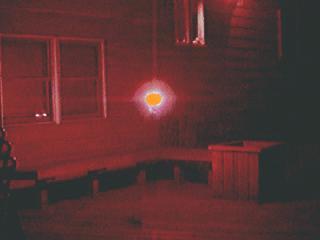
Pictures of Ball Lightning
-
Later this month...Later this month Bob will connect into NASA's Tracking and Data Relay Satellite System using a "Amana Radar Range" microwave oven and 100 meters of Cat 5 cable.
On "This Old Geek hosted by McGyver" Feb 29th (not availiable on all PBS stations, ask your parents for permission first.)
-
OS X is another proprietary Unix based on BSD.This is what Linux was developed to get away from. I started using Linux in 1993 not because it was better than proprietary Unix systems, but because of the freely redistributable source code.
Finally there was something that really delivered on the promise of freedom. Unix gave you a platitude about freedom embossed on a license plate; Linux gave you the actual freedom.
So people who are comparing OS X and Linux nearly a decade later simply don't get the point. Taking BSD code and making a proprietary layer on top of that is old hat. What do you think SunOS was?
Take a look at some family trees:
OS X is another SunOS, another Ultrix, another NeXTStep. From the point of view of someone who values freedom, not only technical excellence, it is just as irrelevant as these predecessors. -
The problem is ...
Zhang is actually the reserve member of the Pine-Laughlin tag team!
Gross's partner should have been....
Dr. Joe "The Big Book " Polchisnki! -
Re:Dune, by Frank Herbert
Actually, coffee is a weaker cousin of Niven's Tree of Life fruit. It makes me smarter, faster stronger in the morning. And if I drink too much of it, my ears start to ring and the Angels sing to me.
All hail coffee! -
Re:whats the big deal ?
Actually, you can get short-run IC fabrication for a reasonable price. Check out the MOSIS website, they will do fabrication runs of 25 chips or so. For a price example, we did a 3mm by 3mm chip in 0.5 micron Agilent (HP-14B), that cost about $8000 for 25 chips, all packaged. If you are a university student, you may be able to get fabrication donated, so you might want to check that out. I've had one chip made through this program. (It's a PIC16C6x compatible microcontroller, for those interested.) And if you want a layout tool, there is a freely available program called MAGIC that can handle this task (sorry too lazy to find link).
-
Academic P2P researchJavelin is a generalized framework for fault-tolerant, scalable global computing, a la SETI@home.
CFS and PAST are P2P readonly file systems a la Napster/Gnutella/Freenet. Both had papers in this year's SOSP. Both are based on log(N) P2P overlay routing/lookup substrates.
OceanStore seeks to be a more general (writable) global storage system.
And several P2P conferences have formed and will continue to form.
Some of these projects have been going on for years. So you shouldn't buy the "Academic networking/CS researchers are a bunch of P2P haters" line without a few grains of your favorite seasoning.
-
Space: Tons o' benefit
I highly recommend a book called "The High Road" by Ben Bova. Unlike most of Bova's work, this isn't fiction, but more of an essay regarding the need for increased investment and work towards space travel. No pictures available, the book is out of print, so an amazon.com link is kinda pointless.
Even when the book was printed (1981), drastic cuts in space funding were evident. Remember this is BEFORE the Challenger incident! Many different sources are cited in this book to back up his facts, but I will still try to not stray from the obvious.
1. Satellites. Sat phones, many nodes of the Internet, GPS systems, XM radio, spy satellites, anti-spy satellites, the Star Wars program (Think Reagan, not Jar Jar) all owe their existence to satellites. You can complain about those all you want, some are pointless, but all have been put with the idealistic thought of making life better in general. Some fail, and some are to make money, but I am glad all of them are there.
2. Secondary technical innovations. Velcro, Most plastics, and tertiary technical advancements for such things as bone marrow transplants (Remember the old commercial with Jesse Jackson, specifically to rally support for the space program, citing bone marrow transplants as one of the effects of earlier space exploration?)
3. Energy. This is the one that bites my tail most that SHOULD have been done in the 70's, and still should be done. A Solar Power Station. The idea is a large satellite, positioned so that it is never blocked from the sun, could gather and redirect the energy to a large array of solar power cells (we're talking a few dozen square miles worth, but well worth it). Environmental impact would be nill, and the land could still be used for grazing by livestock. Just plop the array of cells into some flat section of New Mexico or Montana, and be done with it. The power that could be produced by such a station could easily be twice that of the energy produced by imported and domestic oil gathered at the same rate. While I would recommend reading this book for the full explanation, this link will take you to a PDF with an excellent overview if you cant find the book. Imagine, free, practically limitless energy available. The electricity could be used to separate water into hydrogen and water, so even transportation would benefit.
4. Economy. Every dollar spent into the space program would change hands an avarage of 8 times before 'settling'. This is a matter of spending money to make money. It creates jobs, technology, and even patriotism.
5. Survival of the Human Race. As unlikely as it may seem, the Earth is our biggest Single Point of Failure. If anything happens to the Earth in a manner that makes it inhospitable to human life, the race will end. We must, for the survival of the species eliminate that single point of failure. Asteroids, nasty bacteria(e.g. Ebola), greenhouse effect, are all problems whose affect on the race could be limited if we got rid of the single point of failure. However improbable, they are still possible, and the human race must overcome.
6. Moon exploration. Boy, I'd love to get my hands on a killogram of diterium(Hydrogen ion +3?). There's only a few metric ton naturally occuring on the planet, almost all in the oceans. But, its on the surface of the moon, and the lack of atmosphere makes extracting it from the dust (notice I didn't say 'soil'. Just the dust, no more than 2" deep, would yeild enough diterim to satisfy a huge energy consumption for an enourmous amount of time.
There are more, but I grow tired of typing. Space exploration is not for short sighted people. It has produced amazing results for the entire human race, and as pessimistic as it may sound, failing to properly support it by the Americans is both bad for the U.S. as a whole, and failure by the world to investigate further is accepting the eventual end of the human race.
Toodles -
economics journalsCheck out Ted Bergstrom's home page, and this list of particularly expensive journals in economics.
Given that Elsevier is charging an obscene $1893 a year to nearly every major academic library in the world for the Journal of Econometrics, why doesn't someone come in and undercut them? Well, it's not so easy. Journals have reputations that are developed over many years, and for researchers, it matters that your article gets published in a "good" journal. That's really the whole point of a journal: it acts as a kind of stamp of quality. If you start a new journal, besides all the usual costs associated with starting a print magazine, there is a chicken and egg problem with developing a reputation: in order to get a high standing in the field, you need to get the best quality articles submitted to you; but no one wants to submit a good article to a new journal without a good reputation. In economic terms, it's not a classical market where many suppliers can produce identical commodities. Instead there is a lot of product differentiation, and associated with the product differentiation are major barriers to entry.
Also, the market can only sustain a few journals in any specialized area. There have been some big mergers in the academic publishing industry lately, and some people argue that the industry is now so concentrated that the DOJ should consider antitrust action; see here for instance.
Academic publishers are really just middlemen, and with the possibility of publishing directly on the web, it makes sense to try to cut out the middleman altogether while maintaining the peer-review and archival properties of traditional journals. The key is figuring out how to overcome the reputation problem, but given how dissatisfied people are with journal these days, that really should be doable. If I were Elsevier or one of the other major publishers, I would be (a) making a lot of money, but (b) worried about what the internet will eventually do to my business.
-
economics journalsCheck out Ted Bergstrom's home page, and this list of particularly expensive journals in economics.
Given that Elsevier is charging an obscene $1893 a year to nearly every major academic library in the world for the Journal of Econometrics, why doesn't someone come in and undercut them? Well, it's not so easy. Journals have reputations that are developed over many years, and for researchers, it matters that your article gets published in a "good" journal. That's really the whole point of a journal: it acts as a kind of stamp of quality. If you start a new journal, besides all the usual costs associated with starting a print magazine, there is a chicken and egg problem with developing a reputation: in order to get a high standing in the field, you need to get the best quality articles submitted to you; but no one wants to submit a good article to a new journal without a good reputation. In economic terms, it's not a classical market where many suppliers can produce identical commodities. Instead there is a lot of product differentiation, and associated with the product differentiation are major barriers to entry.
Also, the market can only sustain a few journals in any specialized area. There have been some big mergers in the academic publishing industry lately, and some people argue that the industry is now so concentrated that the DOJ should consider antitrust action; see here for instance.
Academic publishers are really just middlemen, and with the possibility of publishing directly on the web, it makes sense to try to cut out the middleman altogether while maintaining the peer-review and archival properties of traditional journals. The key is figuring out how to overcome the reputation problem, but given how dissatisfied people are with journal these days, that really should be doable. If I were Elsevier or one of the other major publishers, I would be (a) making a lot of money, but (b) worried about what the internet will eventually do to my business.
-
Re:It is different, not worse...
Can you give me some examples of Japanese inventions?
How about the blue laser diode invented by Shuji Nakamura, formerly of Nichia Semiconductor. (Nichia'sOTOH, this Scientific American article says that he left Japan for UC Santa Barbara because he considers the Japanese industrial R&D system as "communist". "Here I can start a venture company-in five or 10 years, if I could invent a new device. I want to achieve the American dream."
-
Estimate of Lambda -- more infoBy itself Boomerang says very little about the value of the cosmological constant Lambda; but as this diagram shows, with its accompanying caption here (second box from the bottom), when combined with data from supernovas it suggests that the vacuum energy density ("dark energy") accounts for about two-thirds of the total mass-energy of the universe.
Such "dark energy" acts as a source for gravitational attraction and lensing, but it also exerts an outward pressure similar to the Caisimir effect, which accelerates the expansion.