Slashdot Mirror
Domain: ucsc.edu
Stories and comments across the archive that link to ucsc.edu.
Comments · 594
-
Re:Did they do this before?
Actually, only the killjoys in the econ department on the 4th floor destroyed the mural. The CS, EE, CompE, and School of Engineering offices departments on the 2nd, 3rd and 5th floors didn't have with it. They later got "revenge" by putting the game over scene on 4th floor after removing the notes from the other floors.
This time there's a sign on the back of the 4th floor (the bottom floor in the video and pics is actually the 2nd floor) barrel indicating that this artwork was actually comissioned by Jim Whitehead and it should not be tampered with.
The installation runs until the end of the month. -
Responsibility for ScrewingFrom a certain point of view, you're correct; we have no immediate need to concern ourselves in Darfur. But there is some very good evidence out there that countries with large disparities in wealth suffer all sorts of problems. A prime example is Brazil, wherein the rich are largely housed behind reinforced steel because crime is so prevalent.
We don't need to intervene, but it is a good idea for us to stabilize these regions before they spin out of control. I don't think military intervention is the best idea; I think that people are most peaceful when they have the most to lose. Instead, we let their infrastructures get destroyed, large itinerant populations to arise, and wealth to be suspiciously dealt to only a few. Wealth, like power, is best distributed as evenly as possible. The result of allowing wealth to concentrate in one place is that it creates a class of dispossessed; never as easy to deal with as we'd like to think. Any sane person would pay attention to these issues for their own long-term interest, if not for their humanitarian nature; especially if they're hands-down the richest country in the world.
In short, of course we shouldn't gut our way of life in an ill-aimed crusade to save the world. But we should share the wealth, and we should never believe that we are somehow more worthy of the wealth than the poorest of the poor in the backwater countries that are experiencing such strife. Realize you did not work for your wealth; you were born into it.
-
Re:Sad that money means so much in the courtroom
that reminds me of a little rant of REP Jo Bonner ewww squishy cake
-
Re:A simple question
C-SPAN has, in the past, aggressively asserted ownership of the C-SPAN "bug" that they overlay on the floor footage, as well as the captions that identify who is speaking. Metavid was forced to overlay the "bug" with one of their own that says, "Public Domain". (See http://metavid.ucsc.edu/wiki/index.php/Democratiz
i ng_the_Archive:_An_Open_Interface_for_Mediation#Me tavid.E2.80.99s_Legal_Framework for details and other discussion.) -
slight correction...C-SPAN has made broad claims of copyright without being specific in their take down requests
For our readers and members this means that we will no longer post videos or information from C-SPAN including Senate speeches
but their present stance is a step away from such actions and a step in the right direction. Metavid is applauds their efforts but ofcourse metavid will continue its efforts to maximize the freedom of participants. This means capturing the public domain feeds and putting them online in free and open formats, freely distributing the entirety of the meta-data (close captions, person tags etc), and freely distributing all of the software which mediates that meta data. -
Metavid
Does this mean metavid can resume its activities (in high quality ogg theora, as always) using C-SPAN material without problems?
-
Re:Right...
Aside from that, I found some very interesting things in his descriptions of the HTM. For instance, I found the following precise description of enabling religious behavior: [standard description of training a classification algorithm on data] Sounds like the perfect recipe for a priest or supplicant to me. Does that not sound like the very core definition of "unshakable faith"?
No, it sounds more like you should share whatever it is you've been smoking...
What you've described applies equally well to, say, Fisher's Linear Discriminant. You optimize the algorithm on a set of data points, and then you can apply it to some other data if you like. If you think that's an adequate model for human reasoning and consciousness, then maybe you are the one with the strange beliefs... -
Re:Mankind
You can have any of the 4 different base pairs at each position, though, so each base is equivalent to 2 binary digits, e.g.:
T = 00
C = 01
A = 10
G = 11
(the paired base on the other DNA strand doesn't add any information, of course, since its identity is specified by its partner).
In fact, 2 bit binary formats are commonly used to represent large DNA sequences in a compact way, as in UCSC's
http://genome.ucsc.edu/FAQ/FAQformat#format7
This makes (e.g.) whole human genome BLAT alignment searches manageable on a 32-bit PC with 1.5 Gb RAM (less once the server is up and running). -
Re:If you believe life on Earth came from outer sp
Have a look for yourself:
ftp://hgdownload.cse.ucsc.edu/goldenPath/hg18/bigZ ips/ -
and in the meanwhile...... at the same conference, Bianca Schroeder presented a paper disk reliability that developed sophisticated statistical models for disk failures, building on earlier work by Qin Xin and dozen papers by John Elerath...
C'mon, slashdot. There were about twenty other papers presented at FAST this year. Let's not focus only on the one with Google authors...
-
Wealth Doesn't Just Sit ThereThe concentration of wealth is not a problem that harms anybody, it's a non-problem that already solves itself- new wealth is constantly eclipsing the old, and sustained intergenerational wealth transfer is exceedingly rare.
Bull-loney.
Once into the top- It owns the major share of equity, securities, and non-residential real estate.
- It sets the tone for what, where, and how business is done.
- It can farm out the task of monitoring what's going on in local, state, Federal, and international governing bodies that may affect their interests 24/7/365.
- It exercises a large degree of editorial control over almost all mass media.
- It provides the seed money for nearly all state and federal races, and therefore...
- It enjoys the opportunity for frequent personal access to officeholders at all levels.
If the holders of wealth take too literally the fantasy that their fortunes aren't tied to the fortunes of their fellow citizens, the Republic as a whole suffers. Wikipedia's articles on the US economy focus too much on yearly income. For a look at asset allocation, take a look here. - It owns the major share of equity, securities, and non-residential real estate.
-
Re:Everything? I think not.
I heard about this on NPR a couple of weeks ago. The new congress purports to be more open and honest, and c-span is calling them on it. Everybody knew they wouldn't expand coverage. If congress really wanted to open up, they'd put in a bunch of cameras, offer real-time feeds - including votes - to anyone citizen or registered US corporation who wants them, and archive the video footage in a way that could be easily retrieved by any citizen.
You're absolutely wrong. C-SPAN is the bad guy here. If you had RTFA you'd realize that CSPAN wants to use their own cameras to defeat the attempts of people like metavid to have access to and remix CSPAN's footage, which, besides their logo, is the work of US. Government employees in the course of their duties, and as such is public domain. This is the way it should be. Were CSPAN to use their own cameras, true, they could provide more angles, but they would OWN this very important public record. They have already demonstrated (see link) that they are extremely unwilling to allow anyone to use this footage in any way, even though at the moment, the only legal right they have to it is their additions, which amount to their logo and the name of the person speaking. -
for more info see:
A recent blog post on metavid explains the issue in more detail. For example we already can't use the footage of Alito's Confirmation until 2101 assuming copyright is not extended again.
And the wikipedia article on C-SPAN IP enforcement which documents some of C-SPAN's take down requests to people that have used legislative footage online. -
Re:Good !
Making that content freely available is exactly what metavid is trying to do. This is important because if C-SPAN gets control of the cameras we will have to take down future floor footage as well. We have already been forced by C-SPAN to take down the committee hearings. See our most recent blog post for more info
-
Re:eminent domain
Humans may be living longer, but no thanks to the American system. The U.S. ranks poorly in life expectancy, https://www.cia.gov/cia/publications/factbook/ran
k order/2102rank.html behind most of the industrialized world.
The U.S. also falls well below other inductrial nations in every public health measure, according to a study by the Harvard School of Public Health which, unfortunately, I can not locate on the web. However, one important measure, infant mortality, is documented at http://dll.umaine.edu/ble/U.S.%20HCweb.pdf (PDF alert!).
And this dismal performance comes at a per capita cost that's about double the cost in the nations that do better at keeping their people alive longer http://ucatlas.ucsc.edu/spend.php.
It's no great leap of logic to conclude that in the U.S., the government supports corporate profits as being more valuable than human lives. (DOH!) -
Re:Risk assessment is lowered, politics apart
Much of the world's ice is already floating on the oceans and is therefore displacing the water.
Flat out wrong. I couldn't immediately find a reference to contrast your lack of proof, but it becomes a moot point shortly.
All that floating ice melting would not raise the oceans even a millimeter. All the ice on land melting would not make much of a rise either... The worlds major ice stores are in Antarctica and Greenland. If that all melted the oceans would not rise enough to cause many problems.
All the ice on Greenland alone would cause a 15 to 20 foot rise in sea level (4th paragraph). Although the article states that it is unlikely for all of it to melt in this century, Greenland isn't "all the ice on land".
Just get yourself a globe and look how much ice area on land there is compared to the vastness of the oceans.
Wow; just wow. You do realize that the earth is in 3 dimensions right? Since talk about climate doesn't work and you demonstrated such a colossal knowledge of physics, let's try math. Earth ocean's are a combined total of just under 142,000,000 square miles. An iceberg named B-15 fell of the Ross Shelf and is approximately 4250 square miles with a thickness between 20 and 60 meters, so I'll be conservative and go with 20. 20 * 11,000 / 142,000,000 = -
Re:ban images?
I guess they fixed this little problem, then.
-
Re:USPTO is a joke...
Patent #6944634 is a more specific kind of file caching: caches where the files are named by a secure hash of the contents. Something we described in a set of papers we published in 1997-99 (see this paper and this paper and this paper). That doesn't even count the LBFS paper (SOSP 2001) and Venti paper (best paper award from FAST in January 2002). From our 1999 paper:
When an attempt is made to load a library [which is named by a secure hash, as described earlier in the paper], the system first looks in the directories specified for content-named files on the local system. If the library is not found there, it proceeds to query each of the URLs contained in a list of likely download sites.
Since the query can only be answered by looking in the cache under the content-derived name, and we built a working system, I'd consider it to be prior art.I just love it when "inventors" don't bother to look at prior art because they're afraid of what they might find.
-
Re:USPTO is a joke...
Patent #6944634 is a more specific kind of file caching: caches where the files are named by a secure hash of the contents. Something we described in a set of papers we published in 1997-99 (see this paper and this paper and this paper). That doesn't even count the LBFS paper (SOSP 2001) and Venti paper (best paper award from FAST in January 2002). From our 1999 paper:
When an attempt is made to load a library [which is named by a secure hash, as described earlier in the paper], the system first looks in the directories specified for content-named files on the local system. If the library is not found there, it proceeds to query each of the URLs contained in a list of likely download sites.
Since the query can only be answered by looking in the cache under the content-derived name, and we built a working system, I'd consider it to be prior art.I just love it when "inventors" don't bother to look at prior art because they're afraid of what they might find.
-
Re:USPTO is a joke...
Patent #6944634 is a more specific kind of file caching: caches where the files are named by a secure hash of the contents. Something we described in a set of papers we published in 1997-99 (see this paper and this paper and this paper). That doesn't even count the LBFS paper (SOSP 2001) and Venti paper (best paper award from FAST in January 2002). From our 1999 paper:
When an attempt is made to load a library [which is named by a secure hash, as described earlier in the paper], the system first looks in the directories specified for content-named files on the local system. If the library is not found there, it proceeds to query each of the URLs contained in a list of likely download sites.
Since the query can only be answered by looking in the cache under the content-derived name, and we built a working system, I'd consider it to be prior art.I just love it when "inventors" don't bother to look at prior art because they're afraid of what they might find.
-
Tsunami "expert" Ted Bryant
After RTFA, I found out Ted Bryant is the Tsunami expert in this group of researchers. While researching for my thesis, I was confronted with his book, "Tsunami: the underrated hazard". This work, while being quite easy to understand, can hardly be called scientific based on his way of making citations (grouping all references at the beginning of a chapter which leaves you without the possibility to look up where he drew his conclusions from).
Reviews of his book can be found here: http://hol.sagepub.com/cgi/reprint/12/5/637 and here http://dx.doi.org/10.1016/S0025-3227(03)00086-0 and here: Synolakis, C.E., and G.J. Fryer, 2001. Book Review: Tsunami: the underrated hazard by Edward Bryant, Eos, Trans. Am. Geophys. Union, 82, 588 (can't find a quick link right now).
The existence of so-called megatsunamis is hardly scientifically proven, especially not by the work of Bryant (he classified sedimentary features embedded in sandstone somewhere in Australia as relics of an ancient megatsunami when in a nearby graveyard the same sandstone wouldn't resist local climate and erosion for more than a few centuries).
The propagation of tsunamis with huge waveheights seems to be limited due to dispersion effects and the so-called "Van-Dorn-Effect" should cause these huge waves to break as soon as they reach the continental shelf (http://www.agu.org/pubs/crossref/2005/2004GL02191 8.shtml and http://www.lpl.arizona.edu/~jmelosh/ImpactTsunami. pdf , but also http://www.spaceref.com/news/viewpr.html?pid=10986 ).
After working some time in the field of megatsunamis (my thesis concentrated on the Cumbre Vieja Scenario postulated by Ward&Day back in 2001 (http://www.es.ucsc.edu/~ward/papers/La_Palma_grl. pdf) and, based on scientific grounds, I had to "debunk" it as several researchers have done before me), I have learned to take these reports with a grain (or better, a big portion) of salt. -
TCP-PR = neat stuff
Here's a link to the paper (PDF) on the packet reordering if you're interested. Being a former banana slug, I was very interested to see this research coming out of UCSC. It makes me feel warm and fuzzy whenever something theory-based is actually implemented.
-
yea... does not seem very tech-friendly to me.If congressman Ron Paul is so tech centric why does he link to proprietary windows media for his video clips, when he could link to the all open source ogg theora archive of his appearances
I am sort of joking but seriously its not like Ron Paul is campaigning for full transparency (he falls under the Transparency is not a priority list. He is not campaigning for open source software in government nor an end to DMCA. Although he does appear good on de-federalization...
In terms of so called "free trade"...the removal of local/national government regulatory structures in favor of transnational corporate regulatory structures against labor, the environment and local determinism guided by the single metric of maximizing profit does not really fall on either side of tech-friendly IMHO.
-
cost to benefits?
60% does sound like an awful lot. I wonder what sort of quality of life that buys you. When I was living in California, my rent chewed up about 60% of my (after tax) paycheck. (so, ~30% tax, ~5% retirement, 42% rent, 23% of paycheck for food, utilities and the rest) It makes me wonder if the invisible hand of cost of living/taxation is effectively a constant. What does the tax buy me? A social security check whos total is guaranteed not to approach the amount put into it, poorly implemented social programs (why educate when the morphene of money will placate those with crappy fortunes), a wasteful war on drugs (and on other ills that I apparently cannot protect my children from) and a foreign policy I strongly disagree with.
I'd be curious to hear what you get in Sweden.
If you think you are paying more for health care than the US, you would be wrong, however :
http://ucatlas.ucsc.edu/spend.php
It's an interesting graph, but I wouldn't say that it was a relationship between quality of care and spending. I think it more points out the general health of the citizenry. Are Americans so unhealthy on average that the amount spent really is required, or is it that US doctors like to buy the latest gee-wiz gadgets or what?
Yes, this is off topic but is still an interesting little discussion. -
Stream processing is NOT new
Stream processing is not new. There's been academic projects working on massively parallel systems for decades. One particular project I know of is UCSC's Kestrel processor, a 512-way 8-bit stream processor.In the late 90s this thing blew high-end desktops out of the water for linear processing tasks like image convolution and at a fraction of the power.
-
Re:er... thats a bit of a leap
No it isn't two data points - I have the article.Magdalena C. Popesco et. al. Human Lineage-Specific Amplification, Selection, and Neuronal Expression of DUF1220 Domains. Science 1 September 2006: Vol. 313. no. 5791, pp. 1304 - 1307
I'd love to get a an opinion from a someone who works in genetics.
They do claim that taken together the data from three seperate methods (BLAT http://genome.ucsc.edu/cgi-bin/hgBlat, aCGH and QPCR - I know what PCR is and I'm reading up on the others but this is not my field) they do claim that DUF1220 is "highly expanded in humans, reduced in African great apes, further reduced in orangutan and old world monkeys, single copy in non-primate animals, and absent in nonmamalian species." They've a graph of the the number they predict from PCR for different primate species and humans and though there is some spread it seems clear that humans have more DUF1220 domains than the other primate species tested again.
However, the point remains they do not know what DUF1220 does and so saying that it leads to human traits is not very convincing. The researchers do speculate that they "may play an important role in human-lineage specific traits." So its not entirely the reporter/submitter hype. Yes I'd agree that correlation is strong basis for further investigation and thats what I asked for when I said I'd wait for there to be more evidence. Again I do not work in genetics and don't know if this is possible but it'd be a lot stronger evidence if they could implant more copies of this gene and then see that it lead to greater brain complexity or something.
Topics like this tend to get a lot of hype and sensationalism and people jump to conclusions and I'd think it would be much better to wait until the genetics community says something strongly.
And yes I was joking about the lots of stupid people Daniel. And yes they are a lot smarter than the smartest chimp or monkey. Though ever since I saw Project X I'm ashamed that chimps are better at Flight Simulator than me -
More Common Elsewhere
I sent a link of the Slashdot article to my brother, with the requisite Duff joke. He responded by saying that DUF1220 is more common in rabbits, elephants, and some other stuff than it is in humans.
I for one welcome our new armadillo overlords.
http://genome.ucsc.edu/cgi-bin/hgTracks?hgsid=7703 1393&hgt.out2=+3x+&position=chr1%3A142191957-14219 9015 -
Re:Free Software
>RMS and people in the Free Software movement, believe that there is no room for software that takes >away the freedoms of the user. And its important to teach kids in schools just that, so that they >know to respect those freedoms as they grow older as well.
There is at least one license which some of us feel actually accord users greater freedom than the GPL, yet Stallman doesn't advocate it...if anything, he's In the same way as Stallman himself does, you've actually said here that the only type of freedom anyone should have is the "freedom" to adhere to the FSF's perspectives.
Stallman is a divisive troll, and so tend to be those who follow him. The thing about people like you that is actually even worse is that at least Stallman can claim that he came up with his ideas on his own...you're merely parroting his ideas, without using your own brain. I've noticed, however, that on here at least Stallman's clone army is gradually shrinking, and may yet disappear entirely...there is hope.
And before you rhetorically accuse me of it, no, I don't entirely agree with ESR's call for completely selling out, either...but Raymond stands at one extreme, and Stallman on the other. Neither are attractive from my own perspective. -
Re:Are standard file formats fine for use on flash
Most filesystems are in fact optimized for use on magnetic media. Ext3 uses algorithms to place data on the disc in order to minimize the amount of waiting done for data.
There are research filesystems that are optimized for this kind of a hybrid environment. These were written for MEMS insetead of flash, but the basic ideas are nearly the same.
http://www.ssrc.ucsc.edu/proj/mems.html
Disclaimer: I work there. I may be biased. -
Re:Great hard drive companion
Making MRAM visible to file systems is a great idea, as is using MRAM for directory structures. You can even compress the heck out of the directory structures to save space. It doesn't take much time, and you can get a factor of 2-3 over "standard" Unix inodes. Check out http://www.ssrc.ucsc.edu/mram.shtml for more information.
-
Re:Sure... .but
At a recent Digital Arts/New Media symposium, Nigel Helyer suggested that the danger in talking on a cellphone while driving has to do with the psychology of Place. The gist of it is that when we speak with another individual occupying a different space, we tend to imagine their location and transport ourselves there psychologically, probably as a means of rationalizing the conversation. Given this conjecture, it would stand to reason that a conversation with an internal passenger would not have the same effect on a driver's attentiveness to his surroundings. Things get even more complicated when both participants in the conversation are on cellphones, because their locations are not presuppositionally static, as they are calling a land line. Hence one of the first questions that often comes up in a cellphone conversation is not "How are you", but "Where are you".
-
my take on this whole net-neutrality thing
http://metavid.ucsc.edu/blog/?p=27
my take on the net-neutrality issues and how it will impeed the types of projects we are working on. -
Re:Science?
Here are a couple of links to MacOSX science applications http://www.macinchem.fsnet.co.uk/macosx.htm , http://osx.hyperjeff.net/Apps/apps.php?sub=20, http://xanana.ucsc.edu/xtal/
I was in Harvard/MIT last week talking to a few people and I'd say >50% were using Macs -
Check out UCSC CE185, CMPE285 classes/instructors
UC Santa Cruz has had a tech writing for computer scientists program, with both an undergrad and graduate level class, for years now. See for example http://www.soe.ucsc.edu/classes/cmpe185/. There's a pretty senior professor behind it, though they use lecturers for most of the sections. They probably would love to help out other schools...
-
Universities have it already
UCSC (University of California, Santa Cruz) already started its own videogame library in preparation for its new Computer Science & Videogame Design major that starts in 2007. The plan is to accept games as donations from students, and purchase several consoles and powerful PCs to play them. Also, many colleges with videogame design/engeneering majors already have notable videogame collections.
-
Re:Simplistic? (reply)The articles somewhat confuses the concept of complexity hiding, because the article seems to narrow the definition of complexity hiding to "ease of use" GUI interface interactions, when complexity hiding is already the core development ideology for software in general. The development we do on metavid for example is dependent on huge mountains of complexity being hidden for us in software libraries command line utilities and programming environments. And what metavid does is essentially hide that complexity so that I and others can easily do complex tasks such as collectively mediate audio video streams.
What makes open source different from closed source is not that the complexity is truly hidden rather the complexity is visible upon request. This quality of open source software could more accurately be called freedom to engage complexity. Truly free software is really good at minimizing the amount of complexity necessary to be engaged at any given context.
-
simplistic argument rebuttalI am not sure how this got posted and all but It represents a pretty linear engagement with the issue of complexity hiding.
I have replied to this article with a more complex(no pun intended) engagement with the issue. Check out the full posting here
an experpt:
The articles somewhat confuses the concept of complexity hiding, because the article seems to narrow the definition of complexity hiding to "ease of use" GUI interface interactions, when complexity hiding is already the core development ideology for software in general. The development we do on metavid for example is dependent on huge mountains of complexity being hidden for us in software libraries command line utilities and programming environments. And what metavid does is essentially hide that complexity so that I and others can easily do complex tasks such as collectively mediate audio video streams.
What makes open source different from closed source is not that the complexity is truly hidden rather the complexity is visible upon request. This quality of open source software could more accurately be called freedom to engage complexity. Truly free software is really good at minimizing the amount of complexity necessary to be engaged at any given context.
Dizon's article hits on is a reoccurring criticism of open source software which essentially is; open source developers are comfortable with a different level of complexity than participants who come to use that software in a different context/level of complexity. But if you look at these seemingly complex open source tools they are popular because they hide complexity very well for the context in which they are engaged. Whenever anyone chooses to engage with software they are counting on someone to have abstracted away the complexity of completing a given task, which enables them to engage at the minimal level of complexity possible to accomplish a given task. This is the same principal that governs choices among open source software systems. In the ideal Open Source development scenario, you engage with a minimal level of complexity necessary to accomplish your task and then share that solution making future engagements/enhancements that much easier.
read more -
simplistic argument rebuttalI am not sure how this got posted and all but It represents a pretty linear engagement with the issue of complexity hiding.
I have replied to this article with a more complex(no pun intended) engagement with the issue. Check out the full posting here
an experpt:
The articles somewhat confuses the concept of complexity hiding, because the article seems to narrow the definition of complexity hiding to "ease of use" GUI interface interactions, when complexity hiding is already the core development ideology for software in general. The development we do on metavid for example is dependent on huge mountains of complexity being hidden for us in software libraries command line utilities and programming environments. And what metavid does is essentially hide that complexity so that I and others can easily do complex tasks such as collectively mediate audio video streams.
What makes open source different from closed source is not that the complexity is truly hidden rather the complexity is visible upon request. This quality of open source software could more accurately be called freedom to engage complexity. Truly free software is really good at minimizing the amount of complexity necessary to be engaged at any given context.
Dizon's article hits on is a reoccurring criticism of open source software which essentially is; open source developers are comfortable with a different level of complexity than participants who come to use that software in a different context/level of complexity. But if you look at these seemingly complex open source tools they are popular because they hide complexity very well for the context in which they are engaged. Whenever anyone chooses to engage with software they are counting on someone to have abstracted away the complexity of completing a given task, which enables them to engage at the minimal level of complexity possible to accomplish a given task. This is the same principal that governs choices among open source software systems. In the ideal Open Source development scenario, you engage with a minimal level of complexity necessary to accomplish your task and then share that solution making future engagements/enhancements that much easier.
read more -
Re:How will it compare?For those unaware, you can currently browse the genome libraries: http://www.ncbi.nlm.nih.gov/genome/guide/human/re
s ources.shtmlIts not as if the NCBI is the only ones publishing genomes. taking a few examples from our useful links page
Its Google is not even doing something new type in a human gene (say ABCA1and you will get taken to the gene data pages anyway
The only reason why they picked on Google is that it would get headlines, now move along nothing to see here
-
Re:Whose profits will be reduced if Googe
Uh-huh. And what matter all of the patented genomic sequences if Google publishes them?
You are conflating multiple issues. As far as I understand matters, simple sequence data is not patentable, any more then value for the pH of water, or the molecular weight of hydrogen is patenable. You must come up with a function for the sequence to make it patenable. Patents have been granted for fairly idiotic functions, like using the sequence as a probe to detect the itself in assays, but this it still a separate issue from publishing sequence data.if all this data is already considered public domain, why the fuss about Google publishing it?
Considered nothing. Go to NCBI or UCSC Genome Browser. There it all is, help yourself. Why there is a fuss about it is beyond me.Can you suggest a better motive than profit for such an activity, or is there a simpler explanation than greed?
Ignorance, or a desire to attract public attention by using high-profile buzz words. -
Re:Nothing new, academics have been doing this
Yes! And thanks to the brilliant algorithmic computer musicians at University of California Santa Cruz, anyone can learn how!!! I went to the Workshop for Algorithmic Computer Music ( http://summer.ucsc.edu/wacm/ ) a few years ago and it blew me away! Learn the history of computer music (it's been going on for a while as the parent poster claims) and get the tools to compose neato tunes and masterpieces using LISP! Breed songs with genetic algorithms! It's open to anyone -- check it out.
-
Re:The next likely advancement:
Yep that's what you can do - zoom in (spatial interpolation) via multiple samples of the same point.
http://www.cse.ucsc.edu/~milanfar/SR/sr-examples.h tm
Just look at the infrared example - from blobs to definition in only 8 frames. Resolution enhancement is a very busy field, the examples there are not the best possible but citeseer seems to have died on me. -
Re:His sign
College professors aren't supposed to be wishy-washy and neutral: the reason for tenure is to encourage them to have opinions, even strong ones. It's the interplay of multiple strong opinions, sometimes polar opposites, that makes the university experience useful.
That's why, for example, the University of California not only tolerated, but defended Angela Davis and her pro-Comummunist party views, despite the current "governator" being one Ronald Reagan.
So maybe he didn't say it very well. It's what he believes. -
Re:The Dead == The Man
Well, as I said, Jim told me that himself. You can scramble to dispute even the simple facts of Jim's tenure during that timeframe, then accuse me of speculation and shoveling shit on you. I have made the responsible decision to accept your denial until I can challenge Jim with it, which is an indefinite timeframe. Likewise for Oswald - what else can I tell you? Chant your denial as much as you like; I already told you I would exercise appropriate discretion now that you've taken the time to address it.
But I'm much more interested in your defense of (some of) the Dead's new policy: "they now want to remove all Dead music from the Web" (Barlow). Sure, you had a contract for commercial radio broadcasts of the Dead's music. And I've only complimented you on what the public has gotten from your lucrative, fun and chosen career, especially considering how much total bullshit comes with any job in the music business. I haven't called your motives "foul", though they do seem selfserving - both at first, and now with your defense, which doesn't address the central issue which I'll repeat again. You can wave around the "American Disease" of unmitigated selfinterest, with its cute "I'm in the collective" accessory, but you have stood up to defend the monetizing of noncommercial recordings to which of course you will continue to get your customary access. I'm sorry to hear you're sick, that you've sacrificed so much to get on and off the bus whenever you like, but you have to defend the obviously selfserving comments you've made that strike at the heart of the community which is most of "the Grateful Dead" at this point. Invent whining about someone calling you a bad guy for your books and publicizing the music all you want, but of course that does nothing but undermine the credibility you've done nothing to service, though you've had such ample opportunity - including this thread.
The GD archive as you apparently think about it hasn't been open to the public, but the "archive" to which I refer is Archive.org. Which is now forced underground - where the actual profiteering bootleggers will exploit Deadheads where that was not possible before. You can ignore that simple dynamic, which I'm sure you understand - it underlies the entire success of the entire business that is your career, if not your life. But you ignore it at your peril.
You might not care, but I do care to understand how you could rationalize your stance. It's clear that you can't. All you've got is a load of distractions, guilt-tripping, and gloating - the doubletalk I first referred to. In the report we're discussing, in this thread and on your blog. Thanks for the memories, and no thanks for your part in the tainting of one of the Dead's greatest contributions to the culture they helped create. You might be sick of it, but you're going to have to live with it, and your rationalizations, for the rest of your life. Maybe Lesh can explain it to you, since you ignore my words: I'm just a Deadhead, just about a hundred shows to my credit, just a few dozen people whose lives I "turned on" by pointing them at Archive.org. I miss Jerry.
"Let there be songs to fill the air."
- Ripple, The Grateful Dead -
Re:WWJD
The song "Box of Rain" is actually about a son (Phil Lesh) dealing with the slow death of his father. The
lyric "What can I do for you to see you through
sharing dope in Haight-Ashbury.
See http://arts.ucsc.edu/gdead/agdl/box.html for a discussion of the song. -
Re:The Dead == The Man
Jerry apparently was pretty sick of the old gang by the time he "got tired of living" - see the "candid camera" scenes in "Grateful Dog". And with these revealing looks at Hart and Kreutzmann, grabbing back recordings preserved and traded in the community with their (at least tacit) approval for decades, it's not hard to see why. Hart has been stone deaf for years, and Kreutzmann has been a sourpuss for longer - phoning it in even longer than that. Lesh's true colors obviously haven't faded. I wish Jerry had mustered the "harshness" to get off the bus along with Phil after they flogged all their old songs in 1990-3. They'd still be making fresh music, judging from Lesh's performance I saw last week. And the dream could have kept busy being born, instead of working hard at dying.
"Please don't dominate the rap Jack
If you got nothing new to say
If you please don't back up the track
This train got to run today
Spent a little time on the mountain
Spent a little time on the hill
Heard some say better run away
Others say you better stand still
Now I don't know but I been told
It's hard to run with the weight of gold
Other hand I heard it said
it's just as hard with the weight of lead
Who can deny? Who can deny?
It's not just a change in style
One step done and another begun
In I wonder how many miles?
Spent a little time on the mountain
Spent a little time on the hill
Things went down we don't understand
But I think in time we will
Now I don't know but I been told
In the heat of the sun a man died of cold
Do we keep on coming or stand and wait
With the sun so dark and the hour so late?
You can't overlook the lack Jack
Of any other highway to ride
It's got no signs or dividing lines
And very few rules to guide
Spent a little time on the mountain
Spent a little time on the hill
I saw things getting out of hand
I guess they always will
I don't know but I been told
If the horse don't pull you got to carry the load
I don't know whose back's that strong
Maybe find out before too long
One way or another
One way or another
One way or another
This darkness got to give
One way or another
One way or another
One way or another
This darkness got to give"
- "New Speedway Boogie", The Grateful Dead -
Antartic ice cap
getting thicker/bigger, not thinner/smaller
http://www.ucsc.edu/currents/01-02/01-28/antarctic a.html -
Re:Well, there are some causes for concern...
Actually, you can signifigantly improve video resoultion, see this link:
http://www.soe.ucsc.edu/~milanfar/SR-Software.htm
It shows that resoultuion can be improved based on frame-to-frame data, which could be used to enhance cctv data (depending on the frequency of frame capture)
Interesting!! -
Re:Destination Moon! For crissake!!
Great minds think alike
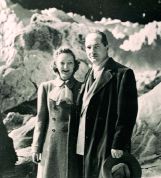
A combination of "Rocketship Galileo" and "The man who sold the moon" was used for the screenplay, if anybody is interested. Pic of RAH and Ginny on the set -
Gene linksThe CCR5 gene (which includes the CC5's with the delta 32 mutation) is on chromosome #3. You can look over the DNA code (nucleotides, codons etc.) and get more information on a number of sites:
UCSC Genome browser - has the whole gene, but you can zoom in on segments if you want.
NIH - this has links or links to links of everything you'd want to know.