Slashdot Mirror
Domain: ucsd.edu
Stories and comments across the archive that link to ucsd.edu.
Comments · 1,055
-
Re:heh they should jam all the religious nuts
sometimes but not always sparing (*and* raping) young women.
what changed? now we have priests raping young boysRead the books about what happened to the Romans they empire stretched the known world and culture that build great work, science that was ahead of their time, roads and aqueducts built, funny how their downfall came around the time the "church" came into existence and for the next 1000 years europe was plunged into a feudal dark age
Then go to America, look around.
american talibanThe first well-known ones were buddhism
buddhism is not a religion btwIf you've got the balls, go to Darfu
why doesnt they US military go there to protect the people from barbaric brutality like they did in Iraq? hmm let me see, no oil -
Old and ripoff from even older paper
The article is a year old, and basicly just rehashes part of this paper from 2004...
-
Re:How far down ?
Rotating fluids that are perturbed tend to form columns parallel to the axis of rotation called Taylor columns, after G.I. Taylor. On the Earth, these are sometimes seen over seamounts in the oceans, and back when people assumed that Jupiter had a surface, it was hypothesized that the Great Red Spot was a taylor column over an obstruction on the surface below. This now seems highly unlikely, as a solid surface seems highly unlikely. Some more theory is here.
More recently, it has been hypothesized that the belts of the gas giants Jupiter and Saturn (which are organized in pairs at opposite latitudes) may be Taylor columns (i.e., that they may extend part or all the way through the planet as cylinders, keeping the same distance from the rotation axis). A Taylor column at the pole could in principle go all the way through the planet, if there was nothing below it, or could mark the size of a rocky core, thousands of kilometers down. Thus my original question.
This explains the idea pretty well :
The proposed atmospheric cylinders were first demonstrated in a series of laboratory experiments 25 years ago to chart atmospheric flow in a wholly gaseous planet. Friederich Busse, University of Bayreuth, Germany, and John Hart, University of Colorado, Boulder, used liquid-filled spheres with high rotation speeds and imposed interior-exterior temperature differences. The experiments showed that the convective and most other disturbances in these fast-rotating spheres of fluid almost always produced cylindrical vortices parallel to the test vessel's spin axis, called Taylor columns.
-
Additional colors available,
-
Re:Don't worry about global warming
Please post here the measured atmospheric carbon dioxide levels and global temperatures for that period in the 1940s that you mentioned.
Temperatures are here. For CO2, direct measurements didn't start until the late 1950s. You can see those here. Earlier than that, you have to look at ice cores (which also extend later than that, although nobody uses them for times when instrumental data is available). You can see those here.
If nobody can provide the data, I'm going to assume that this global warming stuff is all just alarmism, and not actually objective science at all.
That is a pretty silly statement. How paranoid do you have to be to believe that we don't even have data on global warming? It just shows how polarized the skeptics have become.
-
boo hoo
When medical schools have trouble recruiting students, then you can start talking about barriers that exist which keep people from applying.
There are not too few people applying to medical school. The admissions percentages have basically stayed the same for at least 10 years. If medical schools want to admit more people now, they can. There's no need to broaden the application pool. This is just the Journal taking potshots at science and medical doctors who are still upset over being taken down a peg in a hard class.
-
Re:How?
Depends on which college. If it's UCSD (where I went for 3 years before dropping out), 50k would get you 2 years.
-
Re:So.....
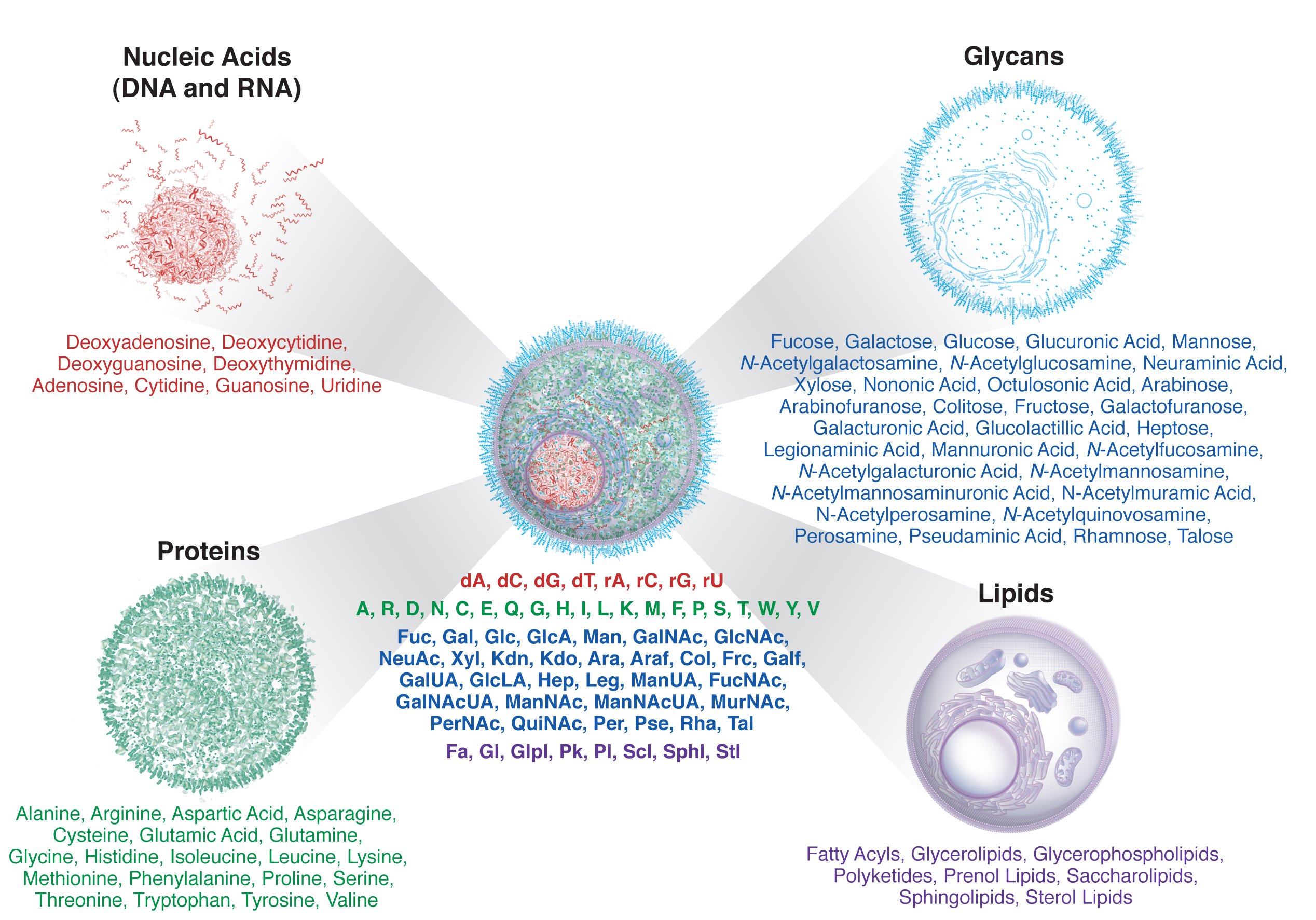
You have to admit, it is an awfully pretty picture: http://ucsdnews.ucsd.edu/graphics/images/2008/09-08MolecularBuildingBlocksBIG.jpg
And I thought the write-up was fine. TFS focused on the '68 molecules' thing, which is nothing new. TFA just mentions that his research includes the illustration, but the thrust seems to be encouraging a focus on lipid and glycan research for disease control and steering away from our current tunnel vision of genetic research. Seems like a reasonable and interesting opinion considering that the lion's share of funding is going to the genetic researchers.
-
Mendeleev!
From TFA: "Like the periodic table of elements, first published in 1869 by Russian chemist Dmitri Mendeleev, is to chemistry, Marth's visual metaphor offers a new framework for biologists." OK, the article is thin and the work derivative, but the picture shows promise. I like any decent web-based periodic table, it just need links.
-
Re:Not actually 3D?
I just uploaded a picture of Escher's Relativity, and broke Microsoft.
-
Measuring from Jeju?!? It's out of the pollution!
From TFA:
Data-gathering flights... will originate at the South Korean island of Cheju, located
But take one look at the map in the article and
This is a factual inconsistency in the article, as the map and the text contradict each other. Granted, most Americans couldn't find Jeju on the map, but that's still no excuse for poor attention to geography on the part of the article writers.
Which makes one wonder why these measurements aren't being taken in China. Oh wait, but of course they are. It's just that the measurements are being done by Chinese scientists
-
Re:Who's really being self obsessed?
You wouldn't be republican by any chance ? The whole "Why should we subsidize intellectual curiosity?" thing ?
I you admit the principle of public funding for science, then I think every areas should deserve equal support. There is no reason why we should support paleontology, particle physics, genetics, etc... but not space science.
As for your argument on low return, I think it is misguided. You can't put everything in the same basket. Most of the money has been spent on human spaceflight which IMHO has teached us nothing and hasn't gotten us any closer to the goal of affordable space travel.
I don't known what the total budget for unmanned scientific missions is, but it is not that big and the return has been enormous.
Take solar system exploration. Practically all our knowledge about the solar system comes from space probes. Just look at the wikipedia pages on the planets and major moons. Most of the information there comes from space probes.
Or take astronomy. Chandra, Compton and Spitzer revolutionized our understanding of the universe.
As for the practical usefulness, I find your comment funny because I don't think paleontology (on earth), which you don't seem to object too, has much practical applications.
Of course, I don't think we should only fund research that has a potential for practical applications, but that's another debate.
Anyway, I do think solar system research has a lot of practical uses. Mostly because a better understanding of the solar system leads to a better understanding of the earth. The problem with understanding the Earth is that there is only one. You can learn a lot if you have the opportunity to compare it with similar yet different bodies. Studying the climate of Venus for example will help us better understand Earth's climate. Just like studying the hydrocarbon cycle of Titan, the volcanism of Io, or the interaction of Mars's atmosphere with the solar wind will yield new insights.
Oh, about the ocean thing. I don't know where this myth comes from but oceanography is far from underfunded. Look at what NOAA or Scripps is doing. They have pretty solid research programs.
-
Re:Go Europe!
The Apollo astronauts left retroreflectors on the moon. These are devices that reflect a laser beam back in the direction it came from. If you were to shine a laser beam at the moon, you would see its reflection (given a powerful enough laser).
-
Classroom Tool
I recently saw a demo of a classroom tool. It played upon the peer aspect of a classroom, rather than teacher-to-student. It allowed the professor, with a tablet PC, to actively write on powerpoint slides, save the edits, etc. Nothing new there. But from the student perspective, anyone with a tablet could take their own notes the same way, watching along with the slides on their own computer (those without a tablet could type as it was web-based).
In addition, there was a blogging feature -- a few students with tablet PCs could become "bloggers" for the class, and students could tune their browsers to the blogging students' pages, and watch what they were writing.
Peer respect kept it mostly to good notes but the professor said that even if she heard the class laughing at something the blogger wrote (she never actually looked at the blogs), at least the kids were awake and possibly engaged in some part of the content. More than that, it let others consider parts of the lecture they might not have before -- sort of a group collaboration, but without the professor. A blogger might note something on a slide you hadn't thought of yet, or do a quick visible search on a word you hadn't really focused on, but upon reading the definition, more made sense.
It was really interesting and I felt a very different way of performing in the classroom. Kids staying engaged is professor's number one concern -- not every teacher is dynamic and exciting. Using a tool like this kept the kids interested because it was what they were used to: reading other kids' notes and perspectives on topics.
The tool was put out by UC San Diego:
-
AI, cpu resources
If processor power isn't enough to handle a crowd of NPCs that don't have much of an agenda in a game, how do we have enough processing power to handle the game AI PLUS Ray Tracing?
I'm not much of a gamer, but I'm skeptical of the claim that AI is really using all that CPU power. I would guess that most of the CPU resources in a modern game are devoted to managing the complexity of the 3-d models the GPU has to render. But, if we assume that AI and physics really do use the whole CPU, and that the CPU is fast enough to do ray tracing and nothing else, and that Moore's law holds, t hen we can just wait another 18 months and have a CPU that's fast enough to do both at the same time. I don't really see this as a show-stopper for ray tracing except maybe in the near future (the next five years or so).
Also, consider that the ability to trace rays is not just useful for graphics but also for physics and AI. Storing all that geometry data in one place rather than having one copy in the video card and another copy in memory for the physics and AI seems like a good idea to me.
Also, it's pretty likely that if ray tracing does become popular, we'll have some form of hardware-accelerated ray tracing eventually, making your concerns moot.
If Ray Tracing gives a 100 percent perfect rendering, and the tricks allow for something to get to 98 percent, how many people will really notice the difference?
There are several reasons. Firstly, I don't think it's realistic to say it's a difference between 100% and 98%; if I had to make up some numbers, I'd say it's more like 50% vs 60%. Rasterization algorithms are never going to be confused with reality without a lot of pre-baked lighting effects and a lot of squinting, no matter how many polygons they can handle. Polygon counts aren't the only measure of realism.
Whitted-style ray tracing isn't really all that realistic either, but with ray tracing there is a more obvious upgrade path to real-time global illumination, which is where we're going to have to go in order to get to 98%. (I recommend you spend some time browsing Henrik Jensen's web page if you want to know what I mean.)
Also, ray tracers are in many ways easier to work with (as the article attests). Artist can focus on the actual art, rather than being distracted by all the little tricks you need to do to make everything work. Ray tracers are also less sensitive to scene complexity, so artists are less constrained about the kinds of details they can show. Tools that are easier to use translate to better games on smaller budgets.
-
Re:EVERYBODY PANIC!
They did a long time ago. Coke servers, anyone?
Screwing with the pop machine, the snacks machine and the coffee pot all at once probably qualifies as a terror attack these days, though. -
Re:Police State!
Right, the two major parties are identical. Except for the fact that their voting records show that the gap between the two parties has only widened.
-
Re:One good reason to move ...
If anything I can see members of the scientific community establishing a platform similar to this. Scripps already has the Flip-ship ( http://www.sio.ucsd.edu/voyager/flip/ ), NOAA's NWS weather buoys + hurricane forecasting system, and MBARI's MOOS system ( http://www.mbari.org/moos/mooring/mooring.htm ).
This would extend the capabilities for our oceans , especially for real time data and observing trends for global warming. The possibilities, even if a city cannot be established, are still endless. -
Re:In other news
-
Re:Hey! It's Debian!
apt-get is not perfect. In fact, you may call "a hack." I don't think there's any real "theory" behind it. apt-get may even remove a user's kernel package, as one of the 600 traces in this study reveals:
OPIUM: Optimal Package Install/Uninstall Manager
http://pho.ucsd.edu/rjhala/papers/opium.html
Also worth reading are:
Search heuristics and optimisations to solve package
installability problems by constraint programming
http://www.info.ucl.ac.be/~pvr/report_ingi2800_C.pdf[pdf]
Maintaining large software distributions:
new challenges from the FOSS era
http://pauillac.inria.fr/~xleroy/bibrefs/EDOS-FRCSS06.html
where they mention "Theorem 1 (Package installability is an NP-complete problem). Checking whether a single package
P can be installed, given a repository R, is NP-complete." (result is to be published elsewhere, though). -
Re:That's definitely a problem I have
Take a look at the relatively recent history of the "science" of climate change . . .
First, you are not quoting science, but headlines of popular newspapers and magazines that need to grab your attention to sell
In 1895, quotes from geologists describing the relatively recently (at the time) discovered geological record that suggest past cycles of ice ages and supposing that it will happen again is not in the same category as predicting climate change from models considering man-made inputs
Besdies the fact that '30s headlines stating that the earth is steadily growing warmer are correct (at least for some suitable length of time-averaging), that period in the US was known as the dustbowl for the lengthy droughts, so such headlines were understandable
Also, that major cooling was seen in the early '70s as widely inevitable should be no shock, as the cycles of ice ages IS widely seen as inevitable, in the geological sense of 100,000 year, 41,000 year, and 23,000 year cycles in the light of evidence that was just becoming understood in the '50s and '60s. http://earthguide.ucsd.edu/virtualmuseum/climatechange2/03_1.shtml/
Same for the sensationalist TIME headline in the middle of a cold snap.
Of course, you think that the above makes current warnings about global warming probably "just as worng", even though the "science" referred to in your quotes was NOT wrong and does not contradict current theories with "better" computer models (were any of the headlines before the last one based on theory from computer models?) and a "little better" (in the sense of "much greater") data gathering capability.
-
Ironic to see this
Mere days after having stumbled upon http://www.cse.ucsd.edu/users/swanson/WACI-VI/docs/08_slides.pdf There is a whitepaper out there by King and company describing indepth the breaks in our retail chain. ICS shipped from overseas etc, and how they are used in high level places where security is tight but these items could use little modification to provide a virtual back door that would almost never be found. Here is the abstract document. http://www.usenix.org/event/leet08/tech/full_papers/king/king.pdf
-
This assumes there's a "you" that decidesPeople like Ramachandran have come up with interesting evidence that the "you" that you think you are is not really more than an epiphenomenon of the brain - a way to ride herd on a bunch of zombies in your brain that allow you t osurvive by taking very complex activities and accomplishing them automatically. The "conscious" mind is thus an illusion.
Assuming this is so, then the notion of "free will" is of no consequence. It's not that you don't have it, it just doesn't matter, because there is not "you" to have "it".
RS
-
Re:IMHO switching doors doesnt increase your odds
Here's a simulator that doesn't require free registration yada yada yada.
-
Re:Great Blazing Colors
The three types of cones are generally referred to as L, M and S cones (for long, medium and short wavelength peak sensitivity) The S cones peak at what we call blue (~435nm), the M at green (~534nm) but the L do not peak at red. The L cones have a peak sensitivity at about yellow-green (~564nm).
We use red because red is way out the end of the visible spectrum and red light excites the L cones but not the M cones. If we were to use yellow-green we'd be exciting the M cones too much. The average person has about twice as many M cones than L or S cones, (we're very sensitive to green light) so yellow-green ends up exciting the M cones more than the L cones. By adjusting the amount of red (L cone excitation), green (M cone excitation) and blue (S cone excitation) we can replicate in the eye the cone response any visible colour would generate.
The human vision system is not like a camera - the cone response is only one part of a long and complex chain. Afterimages are somewhat a function of photo-pigment bleaching and later stages of visual processing in the nervous system and brain.
Cone response references:
Stockman, A. & Sharpe, L., "The spectral sensitivities of the middle- and long-wavelength-sensitive cone derived from measurements in observers of known genotype'', Vision Research, Volume 40, Issue 13, Pages 1711-1737, 16 June 2000
http://cvision.ucsd.edu/cones.htm -
Congestion Control?
We don't need no stinking congestion control
http://www.cs.ucsd.edu/~savage/papers/CCR99.pdf
http://www-cse.ucsd.edu/~whphilli/wsteal.pdf -
Congestion Control?
We don't need no stinking congestion control
http://www.cs.ucsd.edu/~savage/papers/CCR99.pdf
http://www-cse.ucsd.edu/~whphilli/wsteal.pdf -
Re:Science of Political Agenda?
It reminds me of Stephen Hawking's wonderfully understated comment that 'Isaac Newton was not a pleasant man'
http://checfs2.ucsd.edu/~samcho/scientists.html
As the row [over who invented Calculus - actually both Leibniz and Newton did independently] grew, Leibniz made the mistake of appealing to this Royal Society to resolve the dispute. Newton, as president, appointed an "impartial" committee to investigate, coincidentally consisting entirely of Newton's friends! But that was not all: Newton then wrote the committee's report himself and had the Royal Society publish it, officially accusing Leibniz of plagiarism. Still unsatisfied, he then wrote an anonymous review of the report in the Royal Society's own periodical. Following the death of Leibniz, Newton is reported to have declared that he had taken great satisfaction in "breaking Leibniz's heart."
During the period of these two disputes, Newton had already left Cambridge and academe. He had been active an anti-Catholic politics at Cambridge, and later in Parliament, and was rewarded eventually with the lucrative post of Warden of the Royal Mint. Here he used his talents for deviousness and vitriol in a more socially acceptable way, successfully conducting a major campaign against counterfeiting, even sending several men to their death on the gallows. -
Re:Why not?
I am a fourth-year university computer science student facing the prospect of graduation within a year. I am considering going to graduate school, or just going directly into industry with a BS. I am currently applying to the PRIME research program, hoping to conduct research in Asia for the summer. Either way, I will most likely end up working for a company, making enough money to pay the bills and survive. Will I start a family later? Maybe. I'm not in a serious relationship right now.
Anyway, the point is: after reading these posts, if the technology was developed enough for people to make one-way trips to Mars to colonize it, would I do it?
Of course I would. I have actually thought about how significant colonizing other planets would be for several years. I wouldn't have to wait until I am old and have nothing else to live for. I would do it today. If the technology develops within ten years, I will do it in ten years. If there is any way that I could contribute to a colony with the technical skills that I have, I would be in the first shuttle there as fast as anyone would let me. -
Subsurface scattering
Don't forget to add subsurface scattering.
You're starting to get close when that 3D human model describes the different layers of the skin and the amount of blood near the surface of the skin. -
Damned if you do
And damned if you don't. I was just reading about a new study that found people who slept more than 6 or 7 hours a night were likely to die younger. I believe it was a BBC story, but I'm having trouble digging it up on google. Here are a couple of older studies though.
http://www.scienceblog.com/community/older/2002/C/20025782.html
http://health.ucsd.edu/news/2002/02_08_Kripke.html
I have trouble sleeping more than 7 hours. During the week I get 6 hours a night on average. I spent several years in the navy getting 4 or less but I functioned well and survived.
Go to sleep when you're tired. Get up when you wake up. That's probably the amount your body needs. -
Quick and Most Secure Drive Erasing
DoD5220.22-M is what most use and is becomming old-school. That means three passes. Ones, Zeros, then Random. However, the national standard in America is NIST 800-88. Newer drives have a function built into the firmware that do a secure erase in one pass, even covering spare sectors. It's called Secure Erase or SE. The NSA likes it, rating it higher than using an external program. It meets security requirements of HIPAA, PIPEDA, GLBA, and Sarbanes-Oxley. If you want it, check into this man's utility and its educational document.
-
Quick and Most Secure Drive Erasing
DoD5220.22-M is what most use and is becomming old-school. That means three passes. Ones, Zeros, then Random. However, the national standard in America is NIST 800-88. Newer drives have a function built into the firmware that do a secure erase in one pass, even covering spare sectors. It's called Secure Erase or SE. The NSA likes it, rating it higher than using an external program. It meets security requirements of HIPAA, PIPEDA, GLBA, and Sarbanes-Oxley. If you want it, check into this man's utility and its educational document.
-
realism
Higher polygon counts, sure nice to have, but again not really all that important...
This is a rather good point; at some point, adding more polygons doesn't do anything to make an unrealistic scene look more realistic. This is true for raytracing and polygon rendering alike. Ray tracing has some advantages here, for what it's worth; it scales better with huge scenes, and it can represent non-triangular primitives natively (though all the fast ray-tracers I've seen only deal with triangles). I wouldn't call reflection a non-issue; currently, no one cares because current implementations aren't very good, and there aren't any better alternatives to compare with. Same with refraction. Ray-tracing can do soft shadows, but they're computationally more expensive (at least, all the approaches I know are).
Ray tracing is just the next step towards realism. Once we start doing ray tracing, we can move on to global illumination. Photon mapping is a GI algorithm that works like ray tracing in reverse; it casts rays out from the light source, and then they can bounce of off or be absorbed by the objects they hit (depending on surface properties), and their final location is stored as a point in a data structure called a photon map. Then, when you ray trace, you use the local density of the photon map to approximate the amount of light. Photon mapping can be used to simulate ambient light, caustics (patches of light reflected off of or refracted by shiny things), and subsurface scattering in a way that is physically correct and unbiased. See "The Light of Mies van der Rohe" animation on this page for an example of ambient light, or here for some images of caustics.
Ray tracers can do all the things that polygon renderers can do, plus a bit more. Once the hardware gets fast enough (and it looks like that will happen within a few years), there's no real reason not to use ray tracing. Photon mapping is more expensive (there's an nlogn sort involved in constructing the photon map), so it will probably be quite a while before we start to see real-time global illumination updates, but that's the next big step, and we can't go from here to there with the polygon rendering algorithms we're using now.
-
realism
Higher polygon counts, sure nice to have, but again not really all that important...
This is a rather good point; at some point, adding more polygons doesn't do anything to make an unrealistic scene look more realistic. This is true for raytracing and polygon rendering alike. Ray tracing has some advantages here, for what it's worth; it scales better with huge scenes, and it can represent non-triangular primitives natively (though all the fast ray-tracers I've seen only deal with triangles). I wouldn't call reflection a non-issue; currently, no one cares because current implementations aren't very good, and there aren't any better alternatives to compare with. Same with refraction. Ray-tracing can do soft shadows, but they're computationally more expensive (at least, all the approaches I know are).
Ray tracing is just the next step towards realism. Once we start doing ray tracing, we can move on to global illumination. Photon mapping is a GI algorithm that works like ray tracing in reverse; it casts rays out from the light source, and then they can bounce of off or be absorbed by the objects they hit (depending on surface properties), and their final location is stored as a point in a data structure called a photon map. Then, when you ray trace, you use the local density of the photon map to approximate the amount of light. Photon mapping can be used to simulate ambient light, caustics (patches of light reflected off of or refracted by shiny things), and subsurface scattering in a way that is physically correct and unbiased. See "The Light of Mies van der Rohe" animation on this page for an example of ambient light, or here for some images of caustics.
Ray tracers can do all the things that polygon renderers can do, plus a bit more. Once the hardware gets fast enough (and it looks like that will happen within a few years), there's no real reason not to use ray tracing. Photon mapping is more expensive (there's an nlogn sort involved in constructing the photon map), so it will probably be quite a while before we start to see real-time global illumination updates, but that's the next big step, and we can't go from here to there with the polygon rendering algorithms we're using now.
-
Re:Darik's Boot and Nuke
There is a low level drive utility,
http://cmrr.ucsd.edu/people/Hughes/SecureErase.shtml
which erases on the ATA command level. To my knowledge, this will zap data that DBAN misses, because DBAN can't access the hard disk's sector relocation tables (sectors that were about to go bad, so were remapped), and this low level utility is able to.
DBAN plus this utility should be OK for most things, however as always if the drive had relatively sensitive data on it, don't give it away, and destroy it physically (lots of creative methods. For drives I want to be sure that are decommissioned, I personally pull the platters apart, run over them with a vehicle, then chuck each platter in a separate garbage bin.) -
Re:And impact employment and insurance?
What I care about, is what rights I have, which is what prevents a totalitarian government
And anonymity, privacy, is one of those rights. The right to remain anonymous is a basic part of the right to free speech. Anyone who can't reasonably remain anonymous does not have the right to speak out due to any concern that what they say can be used against them. Most of the pamphlets supporting the American Revolutionary War were written and published anonymously. Take the "Federalist Papers".
By arguing over the collection of information, you make yourself look guilty.
And by supporting collection of information you look like you support a dictatorship. But say you don't, would you like your opponent to have access to all of your data? Would you be comfortable with the Taliban, either those in Afghanistan or the Christian Talibans in the US, having that info? If you're a Muslim Ann Coulter wants to carpet bomb you.
I don't think you're a troll but I don't think you've thought this all the way through.
Falcon -
Re:And free content....well, sort of.
In support: It is possible to "borrow" eBooks from libraries. For example, my community's library http://www.pvld.org/ebooks.htm Another example, my university's library http://orpheus.ucsd.edu/disc/eresources.htm
-
Re:!Hacking
Nope, but I still have the original VIM patch around somewhere...
Ah:
http://www-cse.ucsd.edu/~wkerney/vim_bill.README
http://www-cse.ucsd.edu/~wkerney/vim_bill.tar.gz -
Re:!Hacking
Nope, but I still have the original VIM patch around somewhere...
Ah:
http://www-cse.ucsd.edu/~wkerney/vim_bill.README
http://www-cse.ucsd.edu/~wkerney/vim_bill.tar.gz -
Re:Respect for the environment?
For those who are interested, Douglas gave a lecture just a few weeks before his tragic demise. You can watch it here:
http://webcast.ucsd.edu:8080/ramgen/UCSD_TV/5779UniCalSanBar.rm
I've been a fan of douglas adams ever since I caught the very first broadcast of episode one of Hitch-hikers on the radio by pure, joyous chance.
I was somewhat surprised in later years to realise that it was actually his factual work 'Last Chance to See' that was my favorite of all his works (thought the Dirk Gebtly books are a close second). I never much liked the h2G2 books, I prefer the radio play. -
Dban also doesn't work
This does work: http://cmrr.ucsd.edu/people/Hughes/SecureErase.shtml
-
Re:Exactly as I suspected
There is a delete utility built into all drives that actually does work. Most people don't know this and still waste money on erase utilities that don't actually work...
See this: http://cmrr.ucsd.edu/people/Hughes/SecureErase.shtml -
Most new HDDs have intenral "secure wipe" function
which can be accessed with Secure Erase, a free disk wiping utility.
Takes a few minutes, and is allegedly more secure than DBAN but still not as secure as physical destruction.
You're welcome. -
Re:Paraphrase?
If the continuum of communication went from rolling over to get a doggy treat to writing a sonnet.
The percentage of humans who can actaully pen a sonnet may be so low as to un-making your own point. (...or possibly making it on what amounts to a technicality.)
Good luck!
-Matt
(Check this for a related hoot: http://iacs5.ucsd.edu/~pbang/dance_monkeys.htm)
((Yes, it's old.)) -
Re:If they keep drifting around
Very true (I'd mod you up if I had points). More precisely an Argo float generally drifts at 2000m (2000db pressure actually) and then ascends every 10 days to take salinity and temperature profiles and send the data to a satellite. An Argo float lasts about 4 or 5 years after which I suppose the battery is drained and the float may sink or wash ashore.
It's not a cheap undertaking, but the data is absolutely invaluable to oceanographers since it's damn near impossible to sample such a huge body using only ships!
Usefull link: http://www.argo.ucsd.edu/FrHow_Argo_floats.html -
Re:A short history of the OSU Buoy Group
I was part of a team that designed instrumentation that does the same thing: http://www-ccs.ucsd.edu/research/sbcsmb/drifters/
-
Re:Apollo
that thing might not be able to see it, but there is a lab that regularly bounces laser light off of reflectors that were left there by americans and russians
http://physics.ucsd.edu/~tmurphy/apollo/apollo.html -
Raytracing
Graphics hardware is Way behind.
http://www.idfun.de/temp/q4rt/
Ray Tracing requires a huge amount of hardware. After that is being drawn > 30 fps, then we can move on to Sub-surface scattering so that marble and milk look right. -
Wireless with real time webcams of fire
NSF funds a wireless research network with webcams on mountains and in valleys.
http://hpwren.ucsd.edu/cameras/
It's called the High performance wireless research network. Firefighters and police have been using it for communications in past fires and are undoubtedly using this time as well.