Slashdot Mirror
Domain: ucsd.edu
Stories and comments across the archive that link to ucsd.edu.
Comments · 1,055
-
Re:Does it crash less?
Why does the compiler writer giving something a useful definition make it part of the C standard? Or even a superset? If the behavior is UNDEFINED, and you write code that depends on a particular behavior, you aren't conforming to any standard right?
I agree that implementation defined behavior makes it next to impossible to guarantee portability across different implementations. I'm guessing the spec was written that way so it wouldn't make any assumptions about the types of hardware it'd be implemented on. The best you could probably do to ensure portability is follow guidelines like these. -
FREE Tablet PC classrooms systems
Check out a few of the active research projects and (some free) products specifically designed to support the classroom learning environment -- both lecturing, active learning, peer evaluation, noteblogging, etc. --Ubiquitous Presenter http://up.ucsd.edu/ (yes, I'm a co-inventor) --Classroom Presenter http://www.cs.washington.edu/education/dl/present
e r/ --(not free, but good) DyKnow http://dyknow.com/ These systems have been designed (and studied) not only to support standard fare of "inking up" lecture materials, but to support improved pedagogies in the classroom -- such as engaging students in trying out their learning, supporting reflection on exercises or demos, empowering students to contribute or share knowledge, etc. All of these products have publications web pages with pubs targeted at the instructor. You can also look for more publications in the proceedings of WIPTE (Workshop on the Impact of Pen Technology in Education). http://www.itap.purdue.edu/tlt/conference/wipte/ If you want to hear from students about what THEY like about Tablet PCs and some of the things they like instructors to do with them check out http://www.studenttabletpc.com/ -
Magnetically confined plasma fusion reactors
Related links: * LDX@MIT
* Physics of magnetically confined fusion [pdf]
* The main principles of magnetic fusion
* Magnetic fusion experiments at LANL
* High density magnetic fusion
* Has a good bit on magnetic confinement
* Can a magnetic field be used to contain plasma?
* International Thermonuclear Experimental Reactor
* What's happening in fusion?
* Design of magnetic fields for fusion experiments [pdf]
* Wikipedia article on the topic
* Magnetized target fusion bibliography
* Plasma physics bibliography
* Databases for plasma physics
* Plasma physics laboratories
* List of plasma physicists
* Plasma on the internet -
Re:Not harder than chess
You're right that ideally we'd fold the times he has the King.
But the odds you gave are wrong, and so is everybody else's. We want the chance of him having a King given that the flop is three Kings and we have no King. 4/45 is actually the chance of him getting a King after this point. The actual probability of him having a King already is 0.243%, or about 412 to 1 against. This is an application of Bayes' Theorem which I'll show at the end.
Given these odds, you still might not want to play. You need to consider the size of the pot and what you're risking in addition to the chance of success. The expected value, or the average result, is [reward]*[% success] - [wager]*[% failure]. Here it is EV = 11 *
You would also want to consider the play on the turn and river if possible, and I think pot equity makes that easier but I forget the details. Risk is another thing to consider, because even winning a massive amount per play on average might still be a bad decision if, for example, you became homeless 99 times out of 100.
In considering the "psychological" instead, you could predict that the opponent definitely has the King, but then assume your predictions are only 95% accurate. Then EV = 11*0.05 - 1*0.95 = -0.4. This is ignoring the rest of the hand, but because bets double calling becomes a much worse idea.
Back to the interesting probability. What most people miss is that the chance of those three Kings coming on the flop is less likely if he had a King to begin with, and more likely if he didn't. Those two factors together mean the King is very unlikely.
These questions are what we need to answer: A: what are the odds he is dealt a single King? B: Given that he was dealt a single King, what are the odds that three Kings will come on the flop? C: What are the odds he is dealt no Kings? D: Given that he was dealt no Kings, what are the odds that three Kings will come on the flop? The final probability is A*B/(A*B+C*D). If my math is right, it works out to: [(3311/48645)*(1/13244)]/{[(3311/48645)*(1/13244)] +[(135751/194580)*(1/3311)]}. I'm fairly confident that I'm correct, but I wouldn't be surprised if I were wrong so YMMV.
As resources, the Monty Hall problem is an easier example, and there is An Intuitive Explanation of Bayesian Reasoning, which is good. -
Re:Wireless Sensor Networks
I posted this earlier in the thread, but there's quite a bit of work in this field already; it just needs to be implemented on a wid scale.
http://healthmonitoring.ucsd.edu/index.jsp
http://healthmonitoring.ucsd.edu/info.jsp -
Re:Wireless Sensor Networks
I posted this earlier in the thread, but there's quite a bit of work in this field already; it just needs to be implemented on a wid scale.
http://healthmonitoring.ucsd.edu/index.jsp
http://healthmonitoring.ucsd.edu/info.jsp -
Re:Barriers/Lights
-
Lies, damned lies, and Excel
It's not like Microsoft is well known to the accuracy of the calculations in Excel to begin with, let alone how they translate to other formats. Here is a link to an (old) article discussing the suitability of excel for statistical calculations. If you search for references to the accuracy of calculations in excel, it becomes clear that this is not excel's stong point.
http://gcrc.ucsd.edu/biostatistics/Excel.pdf -
Re:bad idea
Regarding waves...
The design reminds me of FLIP -- the Floating Inertial Platform -- of Scripps Oceanographic.
It's basically a huge buoy consisting of a ship like prow on a long steel cylinder. It is towed into place and the end of the cylinder is flooded, causing the prow to be jackknifed into the air above the ocean surface, providing a quiet, highly stable platform from which to perform oceanographic research. The vessel is so stable that when a large wave hits, it doesn't tilt at all, although researchers are sometimes thrown from their seats by lateral motion. -
Mirror neuron theory
One theory of autism that has received a fair amount of attention in the past few years is that autistic spectrum disorders may result from mirror neuron dysfunction. The mirror neuron system is thought to allow humans (and some primates) to mentally simulate the actions of others, thereby allowing greater understanding of their intentions and motivations. Preliminary results (PDF) indicate that this system may be impaired in individuals with ASD, resulting in characteristic social deficits as the result of inability to internally simulate observed actions.
-
Re:Hah.
God demands faith. God does not provide proof, because proof kills faith. If you see something that you think is proof of God's existence, you're wrong. He's ineffable. That means you can't effing figure him out.
That postulate leaves the existence of God vulnerable to a Babel Fish Argument -- i.e. were someone to experience a true miracle, it would disprove the existance of such a God. -
Earthquake Tested
A related link at the end of the article describes how Sun took one of their Black Box systems to a giant shake table at the seismic research center at UCSD, to see how well it would hold up during an earthquake. Some things pulled loose, and some things will need a little redesign, but it was able to keep functioning during and after the simulated earthquake. Sun produced a slick little video of it.
-
Re:Original article here
The urls in the article did not work for me. So I looked them up myself.
This is what I found: The article and its source. -
Control key Emacs under *nix
Yeah thankfully there are no confusing control key combos in emacs, whew...
http://acs.ucsd.edu/info/emacs.php -
Re:Barely an investment
We just called it Spamfilter.
Readme:
http://www-cse.ucsd.edu/~wkerney/spamfilter.README
Download:
http://www-cse.ucsd.edu/~wkerney/spamfilter.tar.gz -
Re:Barely an investment
We just called it Spamfilter.
Readme:
http://www-cse.ucsd.edu/~wkerney/spamfilter.README
Download:
http://www-cse.ucsd.edu/~wkerney/spamfilter.tar.gz -
Re:Barely an investment
-
Re:Barely an investment
-
Re:This bears repeating
TIA can probably be populated very easily from second-hand drives bought on Ebay.
The sad thing is that ALL modern drives have an effective erase capability built in:
http://cmrr.ucsd.edu/Hughes/SecureErase.html
but few people know that and fewer still use it before disposing of a drive. -
Re:This is worth sending a probe.
then it communicates back data by laser
Please sit down and do the math. Do you realize the pointing requirements for what you suggest. With the best tech we have the laser would be swinging between Pluto and the Sun thinking it was right on target.
Yes, please do sit down and do the math. The dispersion of the beam would be great enough that even if the center of the beam was pointed at Pluto - the other side of Pluto's orbit would still be deep within the beam. Laser beams are damm near perfectly parallel for most ordinary human purposes - but they aren't perfectly parallel. This matters over extremely long distances. (The laser beam they shoot at the moon to reflect off of the Apollo retroreflectors is over a mile wide by the time it reaches the moon.)
Laser beam communication is still a dumb idea though - because even if Earth was at the center of the beam, we probably still couldn't collect enough photons. -
Re:Somebody saw this coming
-
Re:Somebody saw this coming
-
Re:Structural engineers built it, not comp. engine
For those who didn't get the references in the above post, the on-campus shake table at UCSD has neon signs what flash the vices and virtues late into the night: http://stuartcollection.ucsd.edu/StuartCollection
/ nauman/49530049.jpg -
Re:Somebody saw this coming
The link that should have been provided: http://ucsdnews.ucsd.edu/newsrel/supercomputer/04
- 07Earthquake.asp -
Re:Somebody saw this coming
-
Picture LInk
Link to UCSD news release with pictures.
-
Re:Important side note
Do you have any clue how little the naysayers know? You can be intentionally arrogant all you want, but stop pretending you have even bothered to check any facts at all.
Got yelled at in the spring for standing on the sidewalk casting a shadow causing the sidewalk to cool causing the ice to freeze on the sidewalk. Noted that in spite of my shadow, the trees budding out and the end of studed snow tires on cars. Was accused of not reading a thermometor.
After having read said thermometor showing 30 degrees above freezing, but droping because it is evening, shook head and moved on.
Yes I have looked at the sunspot cycle. I have looked at the SOHO records. I have looked at the polar ice caps on mars back a few years. (I even provided a link from National Geographic, not Fox News) Being accused of following a conspiriocy theory instead of the facts is a WTF??? moment.
http://news.nationalgeographic.com/news/2007/02/07 0228-mars-warming.html
http://www.shortnews.com/start.cfm?id=59498
http://calspace.ucsd.edu/Mars99/docs/library/scien ce/climate_history/polar_caps1.html
http://mars.jpl.nasa.gov/msp98/mission_overview.ht ml
http://www.astrodigital.org/mars/timeline1.html
http://solarsystem.nasa.gov/educ/themes/display.cf m?Item=polarice
http://images.google.com/imgres?imgurl=http://plan etary.chem.tufts.edu/MarsPolarCap.jpg&imgrefurl=ht tp://planetary.chem.tufts.edu/chronos.html&h=225&w =290&sz=10&hl=en&start=2&um=1&tbnid=TYj58QRSbsjd4M
http://images.google.com/imgres?imgurl=http://www. cosmiclight.com/imagegalleries/images/space/mars-p olarcap.jpg&imgrefurl=http://www.cosmiclight.com/i magegalleries/mars.htm&h=359&w=600&sz=16&hl=en&sta rt=9&um=1&tbnid=gBBAUkXCr9kpWM:&tbnh=81&tbnw=135&p rev=/images%3Fq%3Dmars%2Bpolar%2Bice%2Bhistory%26s vnum%3D10%26um%3D1%26hl%3Den%26safe%3Doff%26sa%3DN
NASA's and the Hubble Space Telescope images spanning from October 1996 until March 1997, show the viritable felting of Mar's polar ice cap, in just 6 months... Such an event would have been utterly devastating on our planet, making the Tsunami seem like a needle in a haystack in comparison. -
Re:sounds like tagging , not image search
Tagging images (as this system does) is in fact an effective way to do "real" image search. The work in Vasconcelos' lab and similar work on music annotation/retrieval UCSD's Computer Audition lab. has shown that representing an image as a distribution over semantic concepts (basically a "tag cloud") makes more reliable and accurate searches than using image- or audio-based feature comparisons alone. Basically, it's easier to find an image if you tell the computer "I'm looking for a white, fluffy cat" than if you say "I'm looking for a connected, amorphous set of white-ish pixels with a fluffy texture".
-
Why is it better?
I wish the article would mention more about why it is better than similar techniques that have been proposed in the past. (For example, http://luthuli.cs.uiuc.edu/~daf/papers/WAP-fin.pd
f seems similar) For instance, where do they get their labels for the training data? A lot of people have tried using contextual words drawn from surrounding web text to limited success due to noise. It's also questionable how well their techniques can do if they need to pre-build a separate classification for each keyword. Finally, there are words that it seems impossible that they could ever distinguish. For example, 'man' vs. 'woman,' would be incredibly complicated for anything but a human. Where are the details? Oh yeah, it's a news story! Here's a link to the paper http://www.svcl.ucsd.edu/publications/journal/2007 /pami/pami07-semantics.pdf -
I can assure you
air cars don't work
-
Re:Bt toxin?
Since you're so anti-GMO I assume you feel much safer buying organic food. Organic farmers use BT to kill pests on their crops BECAUSE the chemical is safe for human consumption. http://www.bt.ucsd.edu/organic_farming.html The only difference is that with bt corn only produces one chemical, whereas the organic method covers your food in
-
Re:Wait for it....
-
this is what I found
Article reporting the milliHz hum in 1998
IDA (International Deployment of Accelerometers) used to detect the hum.
Article in Nature (1979) assesses if IDA can be used to detect very low frequency seismic data. Looking at the figure 1 of amplitude(?) ("MD counts" at Rarotonga station not shown on the current IDA map) I can see the aftershocks in 2 hour intervals after the Indonesia earthquake, but the subj frequencies could be detected only by obtaining the spectrum (Fig.2) at mHz range which frankly looks like white noise - irregular beats.
Most interesting figure is Fig.3 which shows the 0.43-0.52mHz of the _processed_ spectrum measured at six different stations around the world at Hour 25 and on. The Alaska station (CMO) has much clearer spectrum compared to the closest (?) RAR station.
All of it must have meant something for a seismologist which I am not. -
this is what I found
Article reporting the milliHz hum in 1998
IDA (International Deployment of Accelerometers) used to detect the hum.
Article in Nature (1979) assesses if IDA can be used to detect very low frequency seismic data. Looking at the figure 1 of amplitude(?) ("MD counts" at Rarotonga station not shown on the current IDA map) I can see the aftershocks in 2 hour intervals after the Indonesia earthquake, but the subj frequencies could be detected only by obtaining the spectrum (Fig.2) at mHz range which frankly looks like white noise - irregular beats.
Most interesting figure is Fig.3 which shows the 0.43-0.52mHz of the _processed_ spectrum measured at six different stations around the world at Hour 25 and on. The Alaska station (CMO) has much clearer spectrum compared to the closest (?) RAR station.
All of it must have meant something for a seismologist which I am not. -
Re:cult of global warming
There may be a correlation, but that doesn't mean that there's a cause-effect relationship between CO2 levels and temperature. I've seen it argued that due to things like the 800 year lag, it's unlikely, at least for the first 800 years of the cycle, that CO2 *causes* the temperature increase, and in fact in previous cycles it's probably been the other way around. One theory I read was that with increased temperature the oceans lose their ability to trap CO2 so it gets released into the atmosphere. (Note that the first link I gave above explains why high CO2 levels may still be a problem despite this). Anyway, all I wanted to say was that the relationship is no doubt many times more complex than Al Gore and some other alarmists would have you believe. P.S. I think it's worth pointing out that I'm not a supporter of big-oil or corporate interests or anything like that. I'm only interested in having the full story told. Regardless of the debate I'm still doing everything in my power to reduce my personal contribution to CO2 emissions because I'd rather not take any chances with this planet that we call home. I'd love for it to still be able to support a diversity of life for many years into the future.
-
Wrong--Not About String Theory at All
If this is the same story referenced here, it's bogus. To quote Not Even Wrong,
It is based on a paper which has nothing to with string theory and doesn't do a string theory calculation at all. The paper first appeared on the arXiv last April with the title Falsifying String Theory Through WW Scattering, and was extensively discussed here. In October a new version of the paper was put on the arXiv, with a changed title Falsifying Models of New Physics via WW Scattering (and this was discussed here). I'm guessing that the removal of the claims about string theory from the title was due to a referee at PRL not being willing to go along with such a title [...].
-
Re:Bandwagon posts are just annoyingOh yeah?
Here's something for ya: Empirical evidence. You know, we have a good record of atmospheric composition and temperatures for the past 50-60-70 years.
Somebody tested various models on historical data. You know where you started, you know what happened, and you know the outcome.
Good enough for you?
They tried it. More here.If you take this data and combine it with a decade of earlier results, the debate about whether or not there is a global warming signal here and now is over at least for rational people.
But, feel free to post any good rebuttals on this study if you indeed know more than I do. -
Re:Well, it is named Greenland isn't it?
So Greenland used to be green. Then it froze. Now it's turning green again. It's almost like it's a natural cycle.
Greenland used to be covered in ice with a few small areas in fjords that were habitable. What evidence we have of the Norse settlements (and there is a reasonable amount) shows that they were a farily marginal colony. For instance their cows were the smallest known, due to such a short period when they could be outside in pasture. There is evidence that while kept inside barns in the winter they had to be forcefed kelp to help fatten them up/keep them alive. Doesn't sound like a lush paradise.
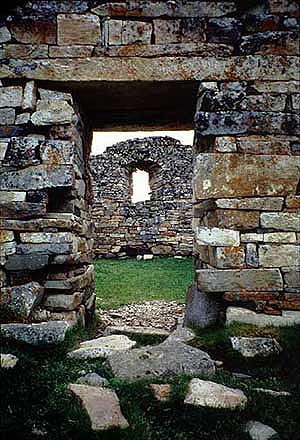
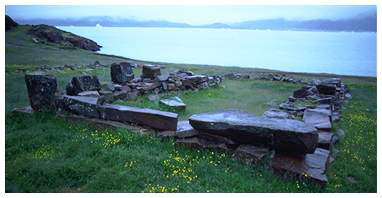
And on the other hand, its not as if today the Norse settlements are just starting to melt out from under the ice. The areas of Greenland that were settled by the Norse are and have been since they were rediscovered) quite green and habitable. Try looking at photos of the ruins: Hvalsey ruins, another shot of Hvalsey, ruins at Gardar, another shot of the Gardar ruins, ruins at Brattahlid, a general shot (I can't identify the location), and to round things out, a couple shots of modern day Greenland in summer. Things have looked that way for a while - the ice was always inland from these fjords. It didn't take anything special for the Norse to be able to settle there - just a little determination to survive the winters. -
Re:Photoshop?
If you have any computer skills and really enjoy composing music then linux is at least as good a choice as windows. For starters, you chould checkout Rosegarden ("the closest native equivalent to Cubase® for Linux" according to Sound on Sound). If you prefer a lower-level solution then give ChucK a try. Or maybe you want a compromise of the two, perhaps similar to Max/MSP with a block diagrams interface? Look at Pure Data or jMax
If those don't tickle your fancy then maybe you should take a look at the list of Software Sound Synthesis & Music Composition Packages available for linux! Oh, and if you're completely new to linux then Ubuntu Studio offers a baby spoon-fed approach to creating a linux digital audio workstation (the project is still in its infancy, but it looks promising).
-
Re:Heh!
OK!
First is WMAP Cosmology 101: Big Bang Concepts. I think this page is reputable, because the domain is map.gsfc.nasa.gov. There are a few things about this link- First, it makes no real commitments to shape. It says it's possible that the universe has a more complex shape than "closed sphere, flat, or open," but it's unwilling to commit to anything. That said, it suggests flat, by pointing out that "If the density just equals the critical density, the universe is flat, but still presumably infinite.
Another important thing to note there, is that they use the terms "universe" and "visible universe" almost interchangably. (See, for example, the first paragraph under "The Origin of the Cosmic Microwave Background.") This jives with what Wikipedia says about "Observable universe:" "Both popular and professional research articles in cosmology often use the term "universe" to mean "observable universe"." I try not to use Wikipedia, but if it points out something that seems to agree with other websites, I conditionally take it. So: When they talk about the "size" of the universe, they almost always mean the size of the observable universe. (see also...)
Yet another thing to note here, is that it says that the universe doesn't necessarily start at a point. The Big Bang may have occurred everywhere. The "bang" is about the space that is appearing between all galaxies, not that the universe was first bound into a nutshell, and then exploded outwards. A picture I have made in my head, (which may reflect astrophysicists understand, which may not reflect astrophysicists understanding,) is that, plausibly, first there was stuff everywhere, infinitely, in all direction, but, that as time passed, "additional blank space" was put between all the things that exist. The entire observable universe came from just one small tiny dot of the stuff that is everywhere. The space that we see is mostly stuff that was added, since time began. So it's not so much that the universe started out small, and then grew large, as it is that the universe started out infinite, and that infinite universe is scaling outward, like scaling the real numbers out by some multiplier, over and over and over again. (Supporting link: "In this picture the Big Bang occurred everywhere."
Here's another website, on curious.astro.cornell.edu. Cornell "astro"
Here's a 2006 educational publication, chapter 4 says that the universe is very nearly flat. This is typical of what I've seen on most sites. Note that in 5.1, he notes that the universe may be infinite; This, too, is fairly typical, in sites I see.
There are a number of newspaper articles, that have news of astronomers finding "hints" at one shape, or another shape, but there's nothing conclusive. In my experience, these articles are usually (A) confusing, and very likely (B) confused, and seem to be okay with that: "What will these wacky scientists come up with, next?" A funnel, a soccer ball, a pill,
When -
Can it beat 18 Gbps transatlantic speed ??
http://ucsdnews.ucsd.edu/thisweek/2005/oct/10_03_
v ideo.asp
10 Gbps is no big deal nowadays. -
Re:How is this different
There is one underlying assumption here that should be looked at more deeply. How long will the storage media last?
CD Disks: < 300 years due to degradation of plastics and reflective layers - (unless placed in vacuum & chilled to liquid Nitrogen temps)
Hard Disk: drive mechanism < 5 years due to degradation of heads (oxidation) drying & degradation of lubricants (I have two Apple LISA 5 MB HDD's that are still operational, but that is probably just Apple over spec-ing components and the robustness of the technology). disk platters < 10 years due to thermal & magnetic noise affecting domain orientation
Scrolls: ink on scraped goat or sheep skin < 10,000 years (earliest Dead Sea Scroll is about 150 BC, or about 2,150 years old), Cuneiform on Papyrus < 10,000 years (earliest writing on Papyrus is about 2,600 BC or about 4,600 years old)
Clay Tablets: writing indentations in clay ~ practically imperishable (earliest writing on clay tablets is about 3,000 BC or about 5,000 years old)
We can come up with many ideas for universal data formats, embedded universal virtual machines that can be run on future systems to read, display, play... our data, but the underlying storage infrastructure must change as well. It is a bit difficult to store a 17 MB JPEG image, or a Seu Jorge album on clay tablets.
-
Re:How is this different
There is one underlying assumption here that should be looked at more deeply. How long will the storage media last?
CD Disks: < 300 years due to degradation of plastics and reflective layers - (unless placed in vacuum & chilled to liquid Nitrogen temps)
Hard Disk: drive mechanism < 5 years due to degradation of heads (oxidation) drying & degradation of lubricants (I have two Apple LISA 5 MB HDD's that are still operational, but that is probably just Apple over spec-ing components and the robustness of the technology). disk platters < 10 years due to thermal & magnetic noise affecting domain orientation
Scrolls: ink on scraped goat or sheep skin < 10,000 years (earliest Dead Sea Scroll is about 150 BC, or about 2,150 years old), Cuneiform on Papyrus < 10,000 years (earliest writing on Papyrus is about 2,600 BC or about 4,600 years old)
Clay Tablets: writing indentations in clay ~ practically imperishable (earliest writing on clay tablets is about 3,000 BC or about 5,000 years old)
We can come up with many ideas for universal data formats, embedded universal virtual machines that can be run on future systems to read, display, play... our data, but the underlying storage infrastructure must change as well. It is a bit difficult to store a 17 MB JPEG image, or a Seu Jorge album on clay tablets.
-
Actually, it is when you look at ALL the effects.
FWIW, I came out for something like this last April.
Shading the Earth won't get rid of the direct effects of excess CO2, such as ocean acidification and preferential growth promotion of undesirable plants like woody vines vs. trees. But the beauty of injecting a few million or tens of millions of tons of sulfur in the upper atmosphere is that it spreads out much more widely, the effects will reduce drought and heat stress which are killing plants and turning land into desert, and you might even cut the original pollution by taking the sulfur from some existing source.
Cutting heating and stress on plants looks like it reduces the CO2 problem directly, by enabling better CO2 uptake. If you don't believe me, take a look at the Keeling curve and tell me what else could explain the flattening in the two years after Pinatubo. Take your time, I'll wait.
-
Re:Lame List
This is assuming one has a survey knowledge of the sciences. Thanks, to MIT's OCW and webcast.berkeley.edu (among other various colleges) you can find material on the introductory level for everything.
Some less obvious sites:
modern physics (not too bad)
http://modphys.ucsd.edu/2dw05/video/video.html
organic chemistry (I haven't watched these at all)
http://chem241.blogspot.com/
http://www2.haverford.edu/wintnerorganicchem/
Before you judge the OP too hard, remember that learning (especially the autodidactic kind) should be fun. Not everyone wants to have gun powder skills +5. For whatever it's worth I agree with you, but without a basic knowledge of chemistry, the study of gun powder and munitions is going to be superficial at best. -
Re:ballpark
And yet categeory theory gets far more use in computer science in the field of functional programming. Your definition "the study of relations" is, I agree, sufficiently abstract and vague that category theory and OO both sort of qualify, but I would suggest they are far more divergent than similar - a point of intersection "they both deal with the study of relations" amongst many properties is hardly insightful. I may as well say math and poetry are pretty much the same since they both deal with the manupilation of symbols into effective structures. It is a a strange sort of reductionist thinking to dismiss category theory as "just math with objects". Why not try looking into Intuitionistic Type Theory or Institutions or Monads for examples of category theory in computer science.
-
Re:What is computer science?
In one camp, you have the guys that see Computer Science as a branch of Mathematics, and find it unfortunate that "Computer" appears in the name. For them Computational Science would be a much better name.
Unfortunately, the term "computational science" has now been taken by a third camp, which is completely different from the two that you mention. Computational science refers to the application of computers to solve scientific problems, typically by simulating physical phenomena. Computational scientists are what we traditionally think of scientists (e.g. chemists, physicists, climatologists, biologists, etc.) who do their work in computer simulation and use those big, expensive computers. For example, UCSD has a computational science program.
-
The main hockey stick is C02, not temp
The temp graphs measure small changes, so far. A much more dramatic hockey-stick is the graph of atmospheric C02 -- see http://earthguide.ucsd.edu/globalchange/images/ra
w /fig01.gif Nobody disputes that C02 is a greenhouse gas. So unless we can reduce atmospheric C02, temp increases are unavoidable. Put another way, the only way to avoid unpleasant climate consequences is to reduce our output of C02. -
Take the Initiative!
I turned 18 on October 7th- just a few weeks ago. I'm a senior in high school, and I've worked as a programmer at the San Diego Supercomputer interfacing the Open Croquet 3D operating system to their GIS servers, a database engineer at the University of California, San Diego, a researcher at Calit2, and lastly a network security analyst for Softwink, Inc.
I have no special contacts, no utterly unremarkable skill- I'm not trying to show off. My point is that if you can take the initiative to teach things to yourself so much as to qualify for a job (by the fact that you're asking for one, I can assume that you have), you need to put yourself out there and get one. It's not that hard- people are hiring, and if you're qualified, there's really not that much to stop them from letting you be an employee- or at least an intern.
Sorry for this horribly long-winded post. To summarize: just put yourself out there; don't ask slashdot.
- dshaw -
Watch the sample videos
The system has a success rate of 80%, which means that far too many false positives (or, in the case of crimes, false negatives) will be flagged. If you look at the videos that they used to typify the violent/non-violent behaviors, showing a hug and a push, you can see that the actors they had moved in very deilberate and unrealistic manners.
So, we have a system that fails 20% of the time (for really, in a system such as this, it is failure rate that is the concern) when using highly exaggerated actions. How many hugs have you had where the impact of it send you and the person in your arms staggering backwards? How many confrontations have you seen where one person is within inches of another's face, pushing and bumping in very small stages? How many muggings or holdups have you seen that are kept low-profile? Many. So, imagine this system, which already fails 1/5 of the time, trying to deduce the complexities of human interaction.