Slashdot Mirror
Domain: vt.edu
Stories and comments across the archive that link to vt.edu.
Stories · 96
-
Using YouTube For File Storage
First time accepted submitter ememisya writes "Ever thought it might be a good idea to store encrypted data in a QRCode video? Using this technique one could easily store 10GB of data to be available anywhere in the world, and completely free." -
Virginia Tech's RoMeLa Answers DARPA Robotics Challenge With THOR
smackay writes "Virginia Tech's Robotics and Mechanisms Laboratory is building a humanoid robot designed for dangerous rescue missions as part of the new DARPA Robotics Challenge. Lab founder/director Dennis Hong calls it the 'greatest challenge of my career.' The robot's name: THOR" From the article: "The task is massive: The adult-sized robot must be designed to enter a vehicle, drive it, and then exit the vehicle, walk over rubble, clear objects blocking a door, open the door, and enter a building. The robot then must visually and audibly locate and shut off a leaking valve, connect a hose or connector, climb an industrial ladder and traverse an industrial walkway. The final and possibly most difficult task: Use a power tool and break through a concrete wall. All these tasks must be accomplished under a set time limit." -
Virginia Tech's RoMeLa Answers DARPA Robotics Challenge With THOR
smackay writes "Virginia Tech's Robotics and Mechanisms Laboratory is building a humanoid robot designed for dangerous rescue missions as part of the new DARPA Robotics Challenge. Lab founder/director Dennis Hong calls it the 'greatest challenge of my career.' The robot's name: THOR" From the article: "The task is massive: The adult-sized robot must be designed to enter a vehicle, drive it, and then exit the vehicle, walk over rubble, clear objects blocking a door, open the door, and enter a building. The robot then must visually and audibly locate and shut off a leaking valve, connect a hose or connector, climb an industrial ladder and traverse an industrial walkway. The final and possibly most difficult task: Use a power tool and break through a concrete wall. All these tasks must be accomplished under a set time limit." -
Interrupted Sleep Might Be the Best Kind
Hugh Pickens writes "BBC reports that a growing body of evidence from both science and history suggests that eight-hours of uninterrupted sleep may be unnatural as a wealth of historical evidence reveals that humans used to sleep in two distinct chunks called first and second sleep. A book by historian Roger Ekirch, At Day's Close: Night in Times Past, unearths more than 500 references to a segmented sleeping pattern — in diaries, court records, medical books and literature, from Homer's Odyssey to an anthropological account of modern tribes in Nigeria. 'It's not just the number of references — it is the way they refer to it, as if it was common knowledge,' says Ekirch. References to the first and second sleep started to disappear during the late 17th Century with improvements in street lighting, domestic lighting and a surge in coffee houses — which were sometimes open all night. Today most people seem to have adapted quite well to the eight-hour sleep, but Ekirch believes many sleeping problems may have roots in the human body's natural preference for segmented sleep which could be the root of a condition called sleep maintenance insomnia, where people wake during the night and have trouble getting back to sleep. 'Our pattern of consolidated sleep has been a relatively recent development, another product of the industrial age, while segmented sleep was long the natural form of our slumber, having a provenance as old as humankind,' says Ekrich, adding that we may 'choose to emulate our ancestors, for whom the dead of night, rather than being a source of dread, often afforded a welcome refuge from the regimen of daily life.'" -
Making Sensitive Data Location Aware
An anonymous reader writes "In a breakthrough that could aid spies, keepers of medical records, and parents who want to prevent their kids from 'sexting,' a team of Virginia Tech researchers has created software to remotely put smart phones under lockdown. The phones are given permission to access sensitive data while in a particular room, but when the devices leave the room, the data is completely wiped. A general, for example, could access secret intelligence while visiting a secure government facility without fear that his or her smart phone or tablet computer might later be lost or stolen, the team's lead researcher said. 'This system provides something that has never been available before. It puts physical boundaries around information in cyberspace.'" Unless the phone or other device can also take screenshots, or doesn't have that software installed. -
Virginia Tech Students Build CHARLI, a Human-Sized Robot
smackay writes "As CHARLI takes his first steps, anxious onlookers stand ready to catch him if he falls. His stride is short, but upright, as one foot is placed in front of the other in the basement of Virginia Tech's Randolph Hall. But CHARLI is no toddler. He is a 5-foot-tall humanoid robot. Video of this ground-breaking robot included." -
Introducing L2Ork, World's First Linux Laptop Orchestra
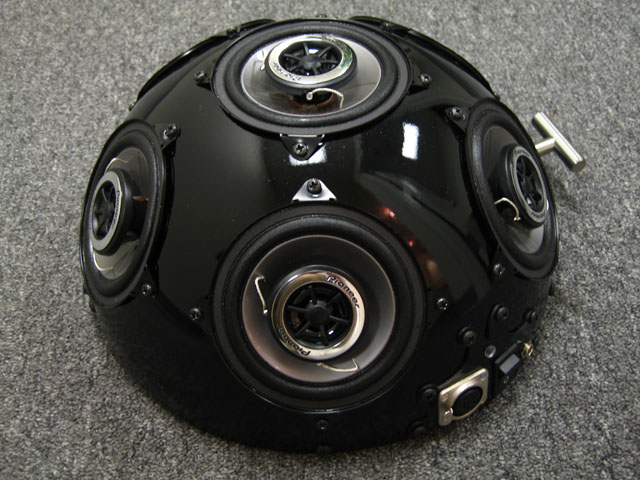
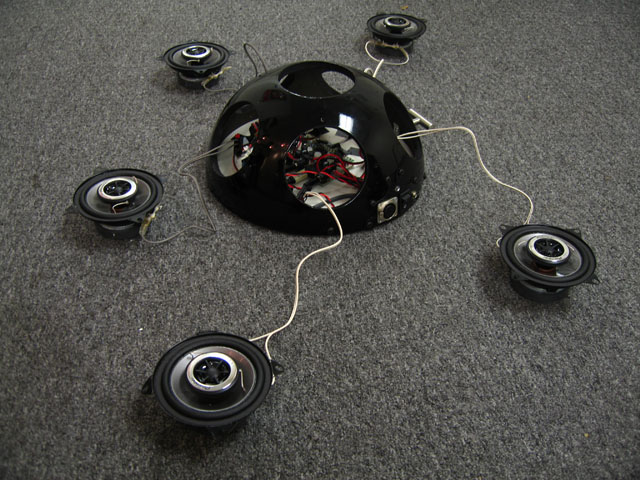
Agram writes "Take a netbook, Wiimotes, Nunchuks, and hemispherical speakers (which were once IKEA salad bowls), toss it up with some Ubuntu goodness and what you get is Virginia Tech's L2Ork, the world's first Linux-based laptop orchestra. With its affordable design and support from the Linux community, L2Ork hopes to bring laptop orchestras to K-12 education and beyond. So, regardless whether you wish to hear how L2Ork might sound or to learn how to build your own Linux-based *Ork infrastructure, perhaps this is a good opportunity to reopen the age-old debate: is Linux finally ready for some serious audio work?" -
Introducing L2Ork, World's First Linux Laptop Orchestra
Agram writes "Take a netbook, Wiimotes, Nunchuks, and hemispherical speakers (which were once IKEA salad bowls), toss it up with some Ubuntu goodness and what you get is Virginia Tech's L2Ork, the world's first Linux-based laptop orchestra. With its affordable design and support from the Linux community, L2Ork hopes to bring laptop orchestras to K-12 education and beyond. So, regardless whether you wish to hear how L2Ork might sound or to learn how to build your own Linux-based *Ork infrastructure, perhaps this is a good opportunity to reopen the age-old debate: is Linux finally ready for some serious audio work?" -
Introducing L2Ork, World's First Linux Laptop Orchestra
Agram writes "Take a netbook, Wiimotes, Nunchuks, and hemispherical speakers (which were once IKEA salad bowls), toss it up with some Ubuntu goodness and what you get is Virginia Tech's L2Ork, the world's first Linux-based laptop orchestra. With its affordable design and support from the Linux community, L2Ork hopes to bring laptop orchestras to K-12 education and beyond. So, regardless whether you wish to hear how L2Ork might sound or to learn how to build your own Linux-based *Ork infrastructure, perhaps this is a good opportunity to reopen the age-old debate: is Linux finally ready for some serious audio work?" -
Introducing L2Ork, World's First Linux Laptop Orchestra
Agram writes "Take a netbook, Wiimotes, Nunchuks, and hemispherical speakers (which were once IKEA salad bowls), toss it up with some Ubuntu goodness and what you get is Virginia Tech's L2Ork, the world's first Linux-based laptop orchestra. With its affordable design and support from the Linux community, L2Ork hopes to bring laptop orchestras to K-12 education and beyond. So, regardless whether you wish to hear how L2Ork might sound or to learn how to build your own Linux-based *Ork infrastructure, perhaps this is a good opportunity to reopen the age-old debate: is Linux finally ready for some serious audio work?" -
CT Scan "Reset Error" Gives 206 Patients Radiation Overdose
jeffb (2.718) writes "As the LA Times reports, 206 patients receiving CT scans at Cedar Sinai hospital received up to eight times the X-ray exposure doctors intended. (The FDA alert gives details about the doses involved.) A misunderstanding over an 'embedded default setting' appears to have led to the error, which occurred when the hospital 'began using a new protocol for a specialized type of scan used to diagnose strokes. Doctors believed it would provide them more useful data to analyze disruptions in the flow of blood to brain tissue.' Human-computer interaction classes from the late 1980s onward have pounded home the lesson of the Therac-25, the usability issues of which led to multiple deaths. Will we ever learn enough to make these errors truly uncommittable?" -
Gravitational Currents Could Slash Fuel Needed For Space Flight
Hugh Pickens writes "BBC reports that scientists are mapping the gravitational corridors created from the complex interplay of attractive forces between planets and moons that can be used to cut the cost of journeys in space. 'Basically the idea is there are low energy pathways winding between planets and moons that would slash the amount of fuel needed to explore the solar system,' says Professor Shane Ross from Virginia Tech. 'These are free-fall pathways in space around and between gravitational bodies. Instead of falling down, like you do on Earth, you fall along these tubes.' The pathways connect Lagrange points where gravitational forces balance out. Depicted by computer graphics, the pathways look like strands of spaghetti that wrap around planetary bodies and snake between them. 'If you're in a parking orbit round the Earth, and one of them intersects your trajectory, you just need enough fuel to change your velocity and now you're on a new trajectory that is free,' says Ross. 'You could travel between the moons of Jupiter essentially for free. All you need is a little bit of fuel to do course corrections.' The Genesis spacecraft used gravitational pathways that allowed the amount of fuel carried by the probe to be cut 10-fold, but the trade off is time. While it would take a few months to get around the Jovian moon system using gravitational currents (PDF), attempting to get a free ride from Earth to Mars on the currents might take thousands of years." -
Prototype Vehicle For the Blind
An anonymous reader writes "A student team from Virginia Tech Robotics and Mechanisms Laboratory have created a vehicle which allows the blind to drive. The vehicle uses a laser range finder to determine distances and alerts the driver through voice commands and vibration. Tomorrow [Friday] morning, the vehicle will have its first public test drive at the University of Maryland. At last, Braille on drive-up ATMs may finally be vindicated." -
Not All Cores Are Created Equal
joabj writes "Virginia Tech researchers have found that the performance of programs running on multicore processors can vary from server to server, and even from core to core. Factors such as which core handles interrupts, or which cache holds the needed data can change from run to run. Such resources tend to be allocated arbitrarily now. As a result, program execution times can vary up to 10 percent. The good news is that the VT researchers are working on a library that will recognize inefficient behavior and rearrange things in a more timely fashion." Here is the paper, Asymmetric Interactions in Symmetric Multicore Systems: Analysis, Enhancements and Evaluation (PDF). -
How Do You Deal With Sensitive Data?
imus writes "Just wondering how most IT shops secure sensitive data (customer records). Most centrally managed databases seem to be monitored and maintained very well and IT workers know when they are tampered with or when unauthorized access occurs. But what about employees who do legitimate selects from these databases and then load CSV files and other text files onto their laptops and PDAs? How are companies dealing with situations where the database is relatively secure, but end-use devices contain bits and pieces of sensitive business data, and sometimes whole segments? Does anyone use sensitive data discovery software such as Find_SSNs or Senf or other tools? Once found, how do you deal with it? Do you force encryption, delete it or prevent extracts?" -
Gravity Lamp Grabs Green Prize
eldavojohn writes "A lamp powered by gravity has won the second prize at the Greener Gadgets Conference in NYC. From the article, "The light output will be 600-800 lumens — roughly equal to a 40-watt incandescent bulb over a period of four hours. To "turn on" the lamp, the user moves weights from the bottom to the top of the lamp. An hour glass-like mechanism is turned over and the weights are placed in the mass sled near the top of the lamp. The sled begins its gentle glide back down and, within a few seconds, the LEDs come on and light the lamp ... Moulton estimates that Gravia's mechanisms will last more than 200 years, if used eight hours a day, 365 days a year." The article contains links to the patents and the designer/inventor Clay Moulton's site." I think my laptop would require a slightly larger weight to pull this off. -
Driving on Starch
Roland Piquepaille writes "Using sugar contained in corn or potatoes to build hydrogen-powered fuel cells has already been done. But now, a team of U.S. researchers has developed a new sugar-to-hydrogen technology. Why not put the starch inside the tank of your car? With the help of 13 specific enzymes, 'a car with an approximately 12-gallon tank could hold 27 kilograms (kg) of starch, which is the equivalent of 4 kg of hydrogen. The range would be more than 300 miles, estimates one of the researchers. One kg of starch will produce the same energy output as 1.12 kg (0.38 gallons) of gasoline.' The beauty behind this idea is that no special infrastructure would be needed. Starch could be distributed by your local grocery store." -
Could You Be Addicted to the Internet?
Billosaur writes "Over at The Register, Dr Stephen Juan has this interesting article on Internet Addiction Disorder (IAD). Apparently this has been around since at least 1995 and there are those lobbying for it to be included in the DSM-IV. While some people use the Internet a lot for work or to keep in touch with family & friends as well as banking and bill-paying, it's interesting to thing that some people actually become addicted. There's still a lot of controversy over the diagnosis, whether this is true addiction or not. There is more detailed information available in this paper from Viriginia Tech." -
Slashback: Sony Blu-Ray, Phone Records, Korean Cloners
Slashdot tonight brings some corrections, clarifications, and updates to previous Slashdot stories, including a few thoughts on the McKinnon situation, New Zealand revises their views on OSS, Korean cloners facing possible jail time, the fight for .xxx continues, more details on Diebold problems, the Supreme Court sides with eBay, AT&T denied a closed hearing, and Sony's Blu-Ray demo on the level. -- Read on for details.Mathew Bevan speaks out on McKinnon case. mrkuji writes "Ex military hacker Mathew Bevan AKA Kuji has released his comments and thoughts about the goings on of the McKinnon hacker extradition trial."
New Zealand revises their view of OSS. sam_vilain writes "As previously noted here on Slashdot, the New Zealand State Services Commission has some problems with open source software. The new version of their legal guidelines document for OSS in NZ government, however, is a breath of fresh air."
Korean cloners facing possible jail time. reporter writes "In a stunning conclusion to the saga of the Korean cloning scientist who fabricated his results, the Korean government wants to throw him in prison. The BBC reports, "The South Korean cloning scientist who faked his stem cell research has been charged with fraud and embezzlement. [...] Prosecutors claim he [, using grant funds,] bought a car and paid contributions to politicians and company officials who helped to arrange his grants. [...] The misuse of state funds carries a jail term of up to 10 years, while a violation of bio-ethics laws can mean up to three years in prison.'"
The fight for .xxx to continue? Robert writes "ICANN has played down the role that the conservative US government had in its decision to reject a plan to launch a porn-only internet domain, while the company backing the .xxx proposal said it was considering an appeal. From the article: 'Stuart Lawley, president of ICM, after spending at least two years and over $2m on campaigning for .xxx to be approved, told us he thought the deal was shot down for political reasons, and said he was weighing a response. [...] The reason people suspect that US concerns were key, and the reason that the media keeps harping on about it, is because ICANN's powers are granted under a contract with the US Department of Commerce. That contract ends in four months, and so far nobody seems to know what happens after it expires.'"
More details on the Diebold problem. An anonymous reader writes "SecurityFocus' Rob Lemos has published an article with many more details on the critical Diebold problems, implications for upcoming state elections next week, and quotes from key scientists who have detailed knowledge of how easily the flaws can be exploited." Relatedly eldavojohn writes "USA Today is reporting that Diebold CEO Walden O'Dell has resigned. From the article: "The board of directors and Wally mutually agreed that his decision to resign at this time for personal reasons was in the best interest of all parties," said John Lauer, Diebold's non-executive chairman of the board."
Supreme Court sides with eBay in patent suit. theodp writes "In a unanimous decision, the Supreme Court sided with eBay in a fight over the use of its 'Buy It Now' feature, which will make it easier for companies to avoid court injunctions barring the continued use of technology after a patent infringement finding, such as the one used by Amazon against Barnes & Noble in the midst of the Christmas holiday season over its soon-to-be-reexamined 1-Click patent."
AT&T denied a closed hearing. guygee writes "According to the San Francisco Chronicle, AT&T has lost its '11th hour bid' to force closed hearings on unsealing critical documents in EFF's class-action lawsuit alleging AT&T's illegal transfer of its customer's telephone and Internet records and communications to the National Security Agency. According to the report, 'An AT&T lawyer sent a letter by fax to Chief U.S. District Judge Vaughn Walker on Tuesday asking that the courtroom be closed during any discussion of its trade secrets or confidential information.' EFF is also reporting the breaking news on the case." Relatedly DarkAudit writes "A commissioner for the FCC wants an investigation into whether or not phone companies broke the law by handing over their records to the NSA."
Sony's Blu-Ray demo on the level. eaglebtc writes "Gearlog.com has retracted a previous accusation against Sony regarding their alleged use of a DVD+R instead of a Blu-Ray disc in a demonstration. In the original announcement, Gearlog.com claimed that Sony was using a DVD+R to demonstrate Blu-Ray technology, in an attempt to show that Sony was not ready to market the product."
-
A Recipe for Newspaper Survival in the Internet Age
I've spent seven years working as a writer and editor for Slashdot's parent company. During this time I've been to at least a dozen mainstream journalists' and editors' conferences where the most-asked question was, "How do we adapt to the Internet?" You'd think, with all the smart people working for newspapers, that by now most of them would have figured out how to use the Internet effectively enough that it would produce a significant percentage of their profits. But they haven't. In this essay I will tell you why they've failed to adapt, and what they must do if they want to survive in a world where the Internet dominates the news business. I'm going to use the Bradenton Herald as an example, not because it's a bad newspaper but because I live in the middle of its circulation area. The Herald is a typical Knight Ridder small-city newspaper in every way except one: it serves Manatee County, an area with a fast-growing population where most new residents are old enough that they grew up reading newspapers every day. Despite these favorable factors, the Herald's circulation has declined by 3.5% in the last year. Of course, newspaper circulation declines are now normal rather than exceptional. Other newspapers have done far worse, with the San Francisco Chronicle recording a 16.4% drop in the last six months alone.
Readership vs. Circulation
Much of the Chron's circulation decrease was because it stopped giving away free papers. The Boston Globe also stopped a giveaway program and suffered a circulation decline as a result, although only about half as big a loss as the Chron's, but the Globe's marketing people have said that only half of the loss came from stopping the giveaways, and blamed the rest of it on the usual suspects, notably TV and the Internet.
These figures only measure paper newspaper circulation. They don't include Web readership, which generally seems to be trending (slowly) upwards on newspaper Web sites. Circulation figures can also be misleading because they only measure the total number of newspapers distributed, not the kind of people who read them. And readership quality can often be more important, in a business sense, than quantity. This is especially true for those newspapers (namely, just about all of them) that rely on advertising for the bulk of their income.
By definition, anyone who reads a newspaper online at home can afford a computer and an Internet connection, which means they aren't at the very bottom of the economic pile. Online readers are also likely to be more open to new experiences, products, and services than those who don't feel they need to use the Internet -- which by some estimates may be as many as half of all households within the Herald's circulation area, which has a higher percentage of retirees than all but a few other U.S. counties.
Journalism professor Douglas Fisher and media executive Alan Mutter have both talked about intentional circulation losses on their blogs. In his post, Fisher says, "The industry evolves to the point of small, expensive print publications and most of the 'mass' news on the Web somehow. Then, as we evolve toward paid content online will come issues such as whether a certain amount of 'base' information should be free for every person -- sort of like a public utility of information (perhaps presented as a social utility necessary in a functioning democratic society)."
Meanwhile, when newspapers talk about readership vs. circulation, they're typically trying to estimate how many people read each copy of their print product (pdf download) rather than come up with a total picture of their publication's readership, including its online presence. This is a mistake. Instead of treating their Web sites like unwelcome stepchildren, newspapers should turn them into their primary method of news delivery -- and teach their reporters, editors, and ad sales people how to work effectively with this new -- to them -- medium.
Slashdot Lessons
1. No matter how much I or any other reporter or editor may know about a subject, some of the readers know more. What's more, if you give those readers an easy way to contribute their knowledge to a story, they will.
Imagine a newspaper with a space for comments below each story on its Web site. This Slashdot story has comments directly attached to it, not tucked away from public view the way the Bradenton Herald's site hides reader comments on Bulletin Boards that aren't directly connected to any of the paper's articles or editorials. To make matters worse, the Herald's Bulletin Boards require a separate login to post. Even if you're a logged-in reader you must put in your username and password again to use them.
As a result of these posting barriers, you hardly see any reader comments on the Herald's site, and what few there are seem to come from a small group that posts over and over. Even the Herald's single (hard to find) blog, maintained by token hip-dude entertainment reporter Wade Tatangelo, draws so few daily comments that you could count them on the fingers of one hand -- and usually have four or five fingers left over.
By contrast, the Washington Post's Web site has two blogs, Achenblog and The Debate, prominently displayed on the Opinions page that almost always draw 100+ comments per post.
A truly Web-hip newspaper would not only allow but encourage reader comments on all of its stories, not just on a blog or two. With thousands of readers as fact-checkers, mistakes would rarely go uncorrected for long, and if there was any perceived bias in a controversial article, reader comments would make sure the other side got heard. Even better, a reader who witnessed an event the paper covered would be able to add his or her account of it to the reporter's, which would give other readers a richer and deeper view of it.
2. Not all readers know what they're talking about.
While some readers know more about any given topic than a professional journalist writing about it, most don't. Some, indeed, post anything about anything, including misleading or false information. This is why Slashdot has a moderation system, and why all newspaper Web sites need to have moderation systems in place before they allow reader posts attached directly to stories. Slashdot's, which is built into the code that runs the whole site, is probably too complicated for most newspapers, but everyone (including newspaper publishers) is free to download, use, and modify it. For those who don't want to use the code behind Slashdot, there are many other free (and proprietary) content management programs available that have similar -- and often simpler and less geeky -- moderation features built into them.
3. No matter what you do, some readers will post malicious and/or obscene comments
Slashdot removes posts only in response to Cease and Desist orders or legitimate copyright infringement complaints. We find that malicious or obscene posts are usually moderated into oblivion almost immediately, because our readers -- hundreds of whom have moderation power at any given moment -- have a sharp eye for stupid stuff.
A mainstream newspaper might choose to remove blatantly disgusting posts, which would take some staff time. There would also -- inevitably -- be second-guessing and complaints, including whines from readers who believed their posts were removed because they didn't follow the [fill in political party here] line, not because they used offensive language.
Moderation never makes everyone happy. Someone will always feel the rules are too loose, while someone else will believe they're too tight. And moderates -- I mean moderators -- will always get flak from ____-wingers who think they're biased. But these problems shouldn't stop grown-up newspaper people from soliciting and publishing readers' posts. They should already be accustomed to bias accusations.
4. What if readers post comments that advertisers don't like?
This is a problem, and one to which some newspapers are extremely sensitive --not just over readers' comments but sometimes over their own reporters' stories. A 1999 Washington Monthly article had some examples of how newspapers sometimes cater to advertisers instead of their readers. Allowing readers to comment on stories, and allowing them to post anything they want (other than obscenities, blatant hate speech, and personal attacks) increases readers' faith in the newspaper, which makes it a more effective advertising medium in the long run because some of that trust will rub off on advertisers that support it.
The Business Side of a Newspaper Web Site
Slashdot, like almost all other Web, broadcast, and print media outlets, depends on ad revenue for most of its income. For the first few years of its existence as a commercial entity, major advertisers were afraid to buy ads on Slashdot or other free-wheeling, community-driven sites. They worried that every time they touted a product, all the customers they'd ever irritated would post bad things about them. It's impossible to run a company of any scale without having at least a few dissatisfied customers, no matter how good your products and services are, so this was not an unjustified fear.
Luckily for Slashdot (and our parent company), many companies have learned that they are going to get criticized online whether they like it or not, so at the very worst, running ads on pages where they get slammed gives them a chance to tell their side of the story.
Keyword-based ad placement helps them do this. Imagine making software that's often knocked for its security vulnerabilities, while competing software is available that costs little or nothing and doesn't share your product's problems. You'd want to run a Get the FUD (Fear, Uncertainty, and Doubt) campaign on every Web page where the competing product was being discussed so that you could tell people who are (obviously) interested in the competing product how awful it is, and why they should buy yours instead.
On a local newspaper Web site, a developer intent on replacing pristine wilderness along a scenic river with ugly condominium towers in the face of opposition from local citizens' groups could run a keyword-targeted campaign explaining why their buildings would be better than a swampy, mosquito-ridden riverfront. They could stress the fact that they would reduce the population of turtles, spiders, alligators, shore birds, frogs, and other annoying wildlife, and that runoff from their chemically-fertilized landscaping would help keep local fish populations down by contributing to red tide, thereby reducing the number of smelly fishermen infesting the area.
Other, more sensible, businesses would use the same tactic -- keyword ad placement -- to sponsor discussions in a positive way. An obvious example here in Florida would be resort property owners linking ads to tourism-related stories and the discussions attached to them. With geotargeting becoming common on the Web, ads aimed at visitors could be visible to all of a Florida newspaper's online readers, while ads for a local business would only be shown to local residents -- unless the local advertiser was canny enough to realize that Florida has many thousands of seasonal residents, and that reaching these snowbirds through the local newspaper's Web site before they come South is a great way to get a leg up on competitors.
Some other ways to exploit the Web that newspapers don't seem to do well:
- Print-them-yourself coupons. This is lots cheaper than putting coupons in a print newspaper. Many newspapers boast that today's paper contains $___ worth of coupon savings. Why don't more papers make this boast about their online editions? TV stations could do this on their sites, too. This would be an entirely new source of revenue for them, since there is no way to put a coupon in a TV spot.
- Online ad circulars, similar to the paper ones that pack print newspapers on Sundays and holidays. The print ones are expensive to produce and deliver, especially in color. Online circulars would be far less costly.
- Selling sponsorships for community calendars and other "public interest" sections that should be on every newspaper's Web site -- but often aren't or are produced in too scattered a manner to be useful for readers. C'mon, newspaper (and local TV) people! A well-organized, database-driven events calendar is easy to produce. If you don't have one (and sponsors for it), you should.
- Sponsored, "free to individuals and small businesses," local classifieds. craigslist and eBay are busily taking the classified ad market away from newspapers, with Google getting ready to help them with this effort. The Poynter Institute's Steve Outing suggests that the best way to beat back this threat is to "Turn newspaper classifieds into an active and interactive community, instead of just static, dull listings. A cold-hearted newspaper classifieds database could well be smothered by Google classifieds. A local-focused interactive community may be less vulnerable."
I believe the future of not only classified ads but of local news gathering and distribution is the "local-focused interactive community." According to this article, craigslist founder Craig Newmark agrees with me. So do plenty of other Web entrepreneurs and venture capitalists who are busily building and financing "community" sites.
Local newspapers should have dominated all of this interactivity from the beginning. They had the name recognition and -- through their print editions -- the promotional muscle to make their Web sites into unassailable community hubs. But they didn't, and now they're reduced to playing catch-up.
If the Sarasota Herald-Tribune had followed through on its plans to incorporate reader-written blogs into its site, Suncoastblog.com probably wouldn't exist. This group blog is an admittedly lame effort, barely begun, put together by several people in this area (including me) who thought it would be nice to have a local site that might eventually cover events and places that don't make their way into the local papers. We know the Herald-Tribune, whose circulation area overlaps the Bradenton Herald's, had thought about hosting reader blogs at one point, because they asked readers to submit blog ideas several months ago. I submitted one and never heard back.
I also submitted a local computer business column concept to the Herald. I came up with it because the Herald has a Sunday business page it calls "Digital Manatee," on which I have never seen anything other than out-of-town wire service material even though there is more than enough local computer and Internet business activity to fill a weekly column, and enough local computer and computer service vendors to surround that column with profitable advertising.
The Herald's editor didn't respond to my proposal. I've written three computer-oriented books, and thousands of articles that have run online and in print all over the world, but I am apparently not worth even a polite turndown from my local paper's editor. No problem. A week later I was having lunch with a couple of local entrepreneur buddies. I told them what had happened. They suggested an online computer business magazine instead of a Herald column, and offered to finance it on the spot, out of their pockets.
I don't have time to start a new publication. But I am in a position to help someone else start one, and to write a story or two for it now and then. Financing's in place. So is a domain name. So at some point the Herald and Herald-Tribune may have (yet) another niche publication competing with them. It won't be a big competitor, but its ad revenue will come from lucrative business-to-business accounts you'd think a local newspaper would be eager to lock up with a weekly (or more frequent) column for local computer-using business people.
This doesn't mean the Herald has a bad editor or that another small paper would have reacted differently. I use this anecdote only to point out that it is now easier to start an online publication than for even a highly-qualified outsider to get his or her work into a local paper. Is it any wonder that local blogs and other online niche publications are springing up like mad? And as a corollary, is it any wonder that newspaper circulation and influence continues to decline?
Newspapers need to open up more to the communities around them. They need to stop confining their interaction with readers to advisory board meetings and questionnaires, and allow readers' stories, opinions, and thoughts to become an integral part of the newspaper itself. They should not allow readers to alter the newspaper's own words, as the Los Angeles Times did back in June with their laughable wikitorial experiment. Moderated comments are a much better way to give readers a voice. So are journals that allow (logged-in) readers the same level of freedom they'd have with their own blogs, but also give them the cachet of being published on a "major brand" Web site.
'Local' is the Key Word
The Herald, Herald-Tribune, and many other (if not most) local newspapers seem to think that they are still their readers' primary source of national and international news, just as they were 20 years ago. So that's what fills their front pages most of the time, with local and regional news stuck in a "B" or "C" section.
Welcome to the Internet age, local newspaper (and TV) people. I can and do get my national and international news from the New York Times, The Washington Post, BBC, Al Jazeera, Fox News, CNN, and other online media that cover faraway events better and faster than you ever will. I turn to you for local news. You tell me more about last week's home invasion robbery on 11th Street East than they ever will.
It's time for local newspapers to become truly local; to feature local news on the front pages of both their Web sites and print editions, with only a few out-of-the-area stories up front, augmented by an above-the-fold story list that tells readers where to find national and international news on their inside pages.
Add readers' stories and comments to the mix and you suddenly have a local online community, not just a newspaper. This will not take work away from professional reporters, photographers, and editors, who will still be the foundation of local news-gathering. In fact, increased interaction with local community members will probably give them more work than ever, because they will find themselves inundated with news tips and story suggestions they never would have found on their own. Some of these story ideas will be dreck and some will be invaluable. It will be up to the newspaper's editors to find the (rare) nuggets in the huge pile of dross they will need to sort through every day, and up to the newspaper's reporters to follow up on them.
One important thing a community-oriented, Web-based newspaper must do is credit readers for their story leads unless they specifically request anonymity. Another good idea is to pay readers who submit news stories that are written well enough that they can run with only routine editing and fact-checking. Those readers are, in effect, doing a reporter's work, and they should get some sort of compensation for it. Some may even turn into stringers capable of covering government meetings and other events when staff reporters aren't available, and a few of those stringers eventually ought to become staff members. After all, if a newspaper is going to be about, by, and for its local community, shouldn't that community be its primary recruiting ground?
Newspapers Will Not Die
Some newspapers (and newspaper chains) will probably not survive the shift from news-as-monologue to news-as-dialog. Most will, although those that wait too long to adjust will have much of their audience, influence, and ad revenue taken away by more agile competitors.
The smartest newspapers will follow my survival recipe or come up with their own way to become an integral part of their community instead of a building full of people who have been sprinkled with Secret Journalism Powder that makes them better and smarter than their readers. These newspapers will not only survive, but prosper. They may even become the prime outlets for bloggers in their communities, which will increase their readership and ad revenue. Extreme ____-wing bloggers won't want their words associated with the hated Mainstream Media, but most others will be happy to have a widely-read, influential outlet for their work.
Eventually, I expect print newspapers to become "snapshots" of their Web editions taken at 1 a.m. or another arbitrary time, poured into page templates and massaged a little by layout people, then sent to the printing presses, a pattern that has potential for significant production cost reductions if handled adroitly. From that point on, their paper editions will be distributed the same way newspapers are now.
Senior citizens and others who can't afford (or don't want) computers are and will continue to be a viable market. So will commuters who use public transportation. Then there are those -- a substantial part of the population -- who simply prefer reading words and looking at pictures on paper to seeing them on a screen. They will still want physical newspapers, even if they are not as up-to-date or as complete as what they'd get on the Web.
However it is delivered, text will not go away anytime soon. For a fast reader, it is the most efficient way to take in large quantities of information. Most people speak at a rate of between 130 and 200 words per minute. Most college students, according to a Virginia Tech student guide, can read non-technical material at 250 to 300 words per minute, and can increase that reading speed significantly with a little thought and practice. Listening to a city council meeting at 150 words per minute takes much longer than reading a meeting transcript at two, three, four or ten times that speed. Now have a skilled reporter -- whether a staff member, paid contributor or volunteer -- write an intelligent summary of that meeting, and even an average reader can learn what happened there in a few minutes instead of slogging through a two hour audio or video recording.
The Web version of that summary can be posted without waiting for the printing presses and delivery trucks to roll, and can have audio or video snippets embedded in it, but there is no reason not to make the text portion of it available on paper for those who prefer it in that form, unless the paper's editors decide so few people are interested in a city council meeting that it doesn't deserve a spot in the print version -- and tracking page readership on the Web version of the paper before the paper edition goes to press should give those editors a good idea of what they should and shouldn't put on paper.
Printed newspapers will have a significant following for many years to come. They may or may not become "expensive," as Professor Fisher predicts, but they will likely become smaller than they are now, and subscription sales efforts will probably be targeted more closely at groups unlikely to have Internet connections, especially senior citizens.
On the Web side, it's likely that newspapers will end up keeping most of their content free, with specialty sections (and posting privileges) reserved for logged-in users. Whether they'll be able to charge for some or all of their Web content is questionable. I paid $50 for a year's subscription to the NYT's Times Select program, and I don't think it's a good enough value that I'll renew my subscription when it runs out. I would be more likely to pay if I lived in New York and that subscription, in addition to what it gives me now, offered access to additional features like complete transcripts of government meetings. Indeed, I would happily pay at least $30 per year to the Bradenton Herald for a well-organized Web edition that gave me what I now get in the paper edition, plus government meeting transcripts and other useful subscriber-only features.
But if I paid for an online subscription to the Herald, I'd probably drop my subscription to the paper edition. I'd still be the same person, with the same interests, earning power and spending habits. The only thing that would change about me, from the newspaper's perspective, would be my news delivery preference.
The challenge for local newspapers that beef up their Web editions at the expense of their paper versions won't be to keep (or add) readers, but to teach advertisers that the Web, not paper, is the best way to reach their most lucrative potential customers.
This may not be easy, but it will be a lot easier than explaining to advertisers why they should keep spending money in a newspaper that has fewer readers, and less influence, every year. -
Quick, Standard Measurement for CPU Power?
captnitro asks: "A particular research project I'm developing right now needs to compare 'potential' (idle/none) and 'load' for various hardware capabilities, and quickly -- maybe up to a several times every minute. For disk space, for RAM, it's relatively easy -- find what's used and what's not and report the ratio. For CPU, I have plenty of time to test 'potential' when the app starts. But for testing CPU load, I need a standard 'ruler' that will be able to compare across varying platforms and processors (e.g., x86, PowerPC, embedded, single and multi-proc) -- so for example, idle percentage won't work. At the same time, I don't have the ability to time 'openssl speed' every 25 seconds without bringing the system to a halt. I'm willing to sacrifice precision of the measurement for generalization of the unit -- that is, the operations that this test is for would be primarily mathematical and not say, text sorts -- but I'd prefer a generic, quick test of the current processor load rather than an average of 25 different tests. Regardless of hardware, the OS distribution is mostly *nix-based -- NetBSD, Linux, and even Mac OS X. Wild ideas are perfectly acceptable -- any thoughts?" -
DARPA Grand Challenge Teams Submit Videos to DARPA
doughnuthole writes "The deadline for DARPA Grand Challenge teams to submit their videos to DARPA just passed and some have posted them online. Some of the teams with these videos posted are Team Caltech, Axion Racing, Virginia Tech (on the Media page), Insight Racing, and UMass Dartmouth. The Grand Challenge is a 175 mile race run by fully autonomous vehicles. Since no teams completed the 2004 race, DARPA decided to run it again, this time for $2 million." -
Tim Bray's Top Twenty Software People in the World
jg21 writes "Although this reader-compiled list of software development's giants omits pioneers like George Boole, John Louis von Neumann, and the 'Forgotten Father of the Computer' John Vincent Atanasoff - among others - it does a pretty good job of mapping the Code Masters, from Alan Turing who gave us the algorithm, to Klaus Knopper the one-man band behind Knoppix. They're mostly here - the inventors of C, C++, C#, Java, and Python; example. There are a couple of programmers who have snuck in more for their business acumen than their programming talent, like the former Powersoft/Sybase CEO Mitchell Kertzman but otherwise the 40 nominees seem pretty 'pure' and the overall idea is to narrow the list down to the Top Twenty Software People in the World - a phrase invented by Tim Bray, who blogged that Adam Bosworth would be among them. Be careful what you wish for when blogging - looks like Bray's about to find out who the community thinks the the 19 others are." -
Digital Retro
I spent several hours this week poring through Gordon Laing's beautiful book Digital Retro , and it's one I'm sure to return to at odd moments, the same way I like to flip through old copies of The Whole Earth Catalog. Digital Retro represents years of research into a 14-year stretch of personal computing history, distilling that effort into a work that is graphically appealing, but also an informative, informal historical look at the machines it celebrates (all 40 of them). Depending in part on what year you were born (and at what age computers entered the picture) you may recognize most of these machines, or only a few -- it's an equally fun read either way. Read on for the rest of my review. Digital Retro: The Evolution and Design of the Personal Computer author Gordon Laing pages 192 publisher Sybex rating 9 reviewer timothy ISBN 078214330X summary Eye-candy mixed with a good dose of history, perfect for the library of a modern techno fetishist.Digital Retro is about personal-use (though not necessarily home-use) machines: there are no PDP11's or mainframes represented, nor devices like the DECWriter, which gave computer access to individuals but required a mainframe or minicomputer in the background. The book covers hardware that was sold at retail (barring the Altair and a few other mail-order-only kit machines), at prices householders could afford for their hobby use, including gaming, or that businesses could afford for their executives and other knowledge workers. All the same, the prices are sure to make you calculate every so often things like how many BogoMIPS could be had today for the $3,250 that a 613KHz HP-85 cost in 1980 -- and those are 1980 dollars. Early adoption has its risks as well as its rewards.
From iconic to obscure
Too many computer makers (and even more computers) came and went in the decade-plus spanned by this book for it to cover all of them; Laing's list of chosen machines is representative rather than comprehensive. More than 30 of the machines came from the The Museum of Computing in Swindon, and despite their age most look like they just popped out of their delivery boxes.
Digital Retro's central section starts out with a MITS Altair, the machine generally considered the first computer practical for a hobbyist to buy. (And the buyer had to be a dedicated hobbyist; the Altair was sold in kit form for home-assembly, and its display was a series of winking lights, its input facilities a row of toggle switches.) "Practical" in the case of the Altair meant affordable and accessible -- there wasn't much of a practical nature for the solder-weary user to actually do with an Altair once it was assembled; the chicken and the egg of availability and usefulness were still fighting it out at this point in computer history. The Altair also has another interesting spot in personal computer history: it provided the first platform for an operating system from Bill Gates and Paul Allen.
(There's an Apple I in homemade wooden raiment snuck into the book's introduction -- an Apple I proved too difficult to find for a full writeup and photoshoot, however, and no Apple II clones made the cut.)
From the Altair to the NeXT cube which caps off the Digital Retro's collection, the 38 machines (and in some cases machine families, such as the MSX computers mentioned below) are presented in order of appearance. The book presents too many interesting machines to give each a proper summary, but here are a few to whet your appetite:
- The Sharp MZ-80K (December, 1978) -- with its 10" screen and built-in drive (tape drive, though -- the 3.5" diskette wasn't invented yet), the MZ-80K seems ahead of its time; the choice of a Zilog Z80 processor didn't do much for its longevity as a business system, though; Z80 systems were soon eclipsed by other choices.
- The GCE/MB Vectrex (June, 1982) -- the only video game system I really wanted as a kid, and one of the seeming few I've never encountered used in thrift stores. Bright vector graphics, built-in screen and a quality joystick gave it the same kind of appeal that the arcade-console versions of Asteroids and Battlezone had for me.
- The Jupiter ACE (September, 1982) -- an impossibly simply looking machine, a terraced slab of white plastic with a minimalist typewriter layout (just 40 grey keys). The ACE was aimed at programmer-hobbyists, though, like the similar-looking Sinclair ZX-80, but the ACE ran a version of FORTH and had raised keys rather than the Sinclair's flat membrane.
- The Sinclair QL (January, 1984) -- one of which, Laing notes, was Linus Torvalds' machine (between a VIC-20 and the 386 with which Torvalds started a quaint Unix-like operating system).
Game consoles are also well represented; six dedicated game machines, starting with the Atari VCS (1977) are included; a whole book could be devoted to consoles, but the ones chosen for Digital Retro (besides Atari and the Vectrex mentioned above, the others come from Colleco, Mattel, Nintendo, Sega) are an eclectic bunch, and a good use of space.
Because Laing is based in the UK, the book features quite a few machines that most Americans have probably never encountered in person, like the Acorn Atom, the Dragon 32 (a Welsh-made near-clone of the Tandy TRS-80) and the Grundy NewBrain. If this book had been an American production, many of these UK-made machines might have gone overlooked.
No incentive to work together
In the wilder days of the personal computer's adolescence, the quest for compatibility and standardization among machines was anything but a top priority -- and when it was a factor at all, it was usually about software compatibility between sibling computers (like the TI 99/4 and its 99/4A successor) or at most within a single model line.
As the book's back cover points out, "Compatibility? Forget it! Each of these computers was its own machine and had no intention of talking to anything else." An overstatement, but not much of one.
Laing covers an intriguing exception to this one-off philosophy, a multi-manufacturer line of machines that appeared in 1983 (starting a 5-year run), sharing a Zilog processor and adherence to an early Microsoft attempt at standardization called MSX. Mostly-compatible machines were launched by JVC, Hitachi, Sony (a name that didn't pop up in the American computer market for quite a few more years) and 18 other Japanese manufacturers as well as SpectraVideo, the only non-Japanese maker. Each manufacturer tweaked their entries in the line to distinguish themselves, adding features like (in Pioneer's case) control of laser-disc players. The differences soon rendered the attempt at standardization moot, and the MSX standard fell from grace. And if you're wondering what MSX stands for, you'll have to choose from the three possibilities listed: I prefer "Matsushita Sony X, where X could stand for any other company."
Get a good look
The photographs dominate; they give external views of each machine from several angles, over two two-page spreads apiece. (The pictures are well-chosen, but not exhaustive: there are no shots from the underside, and in only a few cases are internals exposed. Don't expect to replicate the innards of an Altair from the photographs.) You can make out what sort of ports each device provided, see what kind of display it used in most cases, and look at the included input peripherals. (Many of these machines, though, were hooked to televisions, and only the main unit and its input devices are pictured.)Speaking of peripherals, one of the nice things about a photo book like this is for the mugshots it provides of unique physical arrangements tried by computer manufacturers: the integrated tape drive of the black-clad Amstrad CPC-464 (which sits to the right of the keyboard) makes it one of the most interesting to me; it sure is a lot neater arrangement than the cassette drive linked messily to the family C64 in the early '80s.
Besides the photographs, though, the spreads devoted to each computer provide a compact history of the machine, list its country of origin, and give a rundown of the most important specs (processor type and available I/O ports).
Practical Upshot
Digital Retro is a coffee-table book which happens to have quite a bit of interesting history, not a deep historical text. For each machine displayed, though, a chunk of text titled "What happened next" gives an idea of what developments each one led to (or prevented); some of these are only a paragraph or two, others are mini-essays in themselves. If you crave more technical and historical details, Laing's book makes an excellent companion volume to narrative-centric books which cover the same period of computer history though, like Fire in the Valley and Steven Levy's Hackers. It's a perfect way to appreciate the aesthetic appeal (and exuberant variety) of personal computers from the mid '70s to the late '80s.
You can purchase Digital Retro from bn.com. Slashdot welcomes readers' book reviews. To see your own review here, carefully read the book review guidelines, then visit the submission page. -
Oldest Animal: Fossilized While Hatching
An anonymous reader writes "Thousands of 600 million years old embryo microfossils have been found in China that may be among the first animals. It is a case of preserving the seemingly unpreserveable. The Precambrian coral-like animals seem to have spiral patterns that show some were preserved at the moment of hatching, according to the researchers: 'These organisms lived 600 million years ago -- before big animals. This would be the very first moment of animal evolution preserved in the fossil record.'" -
Cockroach-Like Robot to Help Explain Animal Movement
neutron_p writes "A cockroach-like robot named RHex is the starting point for a major project to understand animals' most distinguishing trait: how they move without falling over. Researchers from several universities will focus on RHex, a short, six-legged robot that scampers like a cockroach, as a working model of the principles they're seeking to uncover. By tweaking the robot and using it as a physical model, they hope to tease apart the complex neural and muscular networks in insects." -
Virginia Tech "Corpse Plant" To Bloom On August 4th
Radical Rad writes "Virginia Tech has a second Amorphophallus titanum, or 'corpse plant,' ready to bloom and emit its intensely powerful stench. The plant only blooms once every 4 to 20 years and lasts only 2-3 days. Its stench attracts carrion beetles and flesh flies to pollinate it. See this link for photos of the bloom." Instant road-trip excuse. -
Virginia Tech "Corpse Plant" To Bloom On August 4th
Radical Rad writes "Virginia Tech has a second Amorphophallus titanum, or 'corpse plant,' ready to bloom and emit its intensely powerful stench. The plant only blooms once every 4 to 20 years and lasts only 2-3 days. Its stench attracts carrion beetles and flesh flies to pollinate it. See this link for photos of the bloom." Instant road-trip excuse. -
Virtual Reality/CAVE Software?
WorthlessManatee asks: "I work for a company that is in the beginning stages of constructing our own CAVE and I would like some advice on a few topics. Which hardware vendors should I go through? I know of Fakespace, but are there other vendors I should be looking at? What software solution works best for a CAVE? So far I know of: VR Juggler, DIVERSE, and CAVELib? What are the pros and cons of each of them? Answers to these questions and any other hints or experiences you would care to share would be most appreciated. Thank you very much." -
Using Math To Design Cities And Supercomputers
caek writes "If you've played Sim City you've wrestled with one of the problems faced by supercomputer designers. Unfortunately there's no GameFAQs.com for the technical staff at Japan's Earth Simulator or Srinidhi Varadarajan and colleagues at Virginia Tech. True enough, they won't have to deal with rising crime or Godzilla but, as hinted at in a recent paper in Journal of Physics A, the physical layout of a massively parallel supercomputer is fundamentally the same problem as minimizing the time commuters spent stuck in traffic jams. Read the rest of my kuro5hin article for a popular explanation." -
Bicycling Science, Third Edition
sdedeo writes "Perhaps the only competitor of rock climbing for the canonical geek sport, cycling -- for utility or amusement -- asks for a good blend of engineering and physiological savvy. For many the hands-on tinkering of bicycle maintenance and cycling technique provides welcome relief from more abstract manipulations in the library or office. Whether you think of cycling as the ultimate open source engineering project, or as a handy metaphor for your computer-of-choice, its appeal to the mechanism-oriented mind is undeniable." Read on for the rest of DeDeo's review. Bicycling Science, Third Edition author David Gordon Wilson pages 476 publisher MIT Press rating 10 reviewer Simon DeDeo ISBN 0262232375 summary A technical look at two-wheeled self-propulsion blending engineering and physiological savvy.Released this April, David Gordon Wilson's updated Bicycling Science fills the gap between, on the one hand, shop manuals and training guides, and on the other the contemporary literature on human powered vehicles. Wilson, Professor Emeritus at MIT, navigates physics and physiology to produce a hefty source of insight.
Wilson splits his book into three broad sections -- the biology of human power generation, the physics of turning complicated muscle motions into linear velocity, and radical redesigns of the standard diamond bicycle frame.
The first section explains, among other things, the role of oxygen uptake and distribution, and gives empirical and theoretical backing to some, but not all, of the conventional wisdom surrounding cycling. The curious will find a detailed explanation of why high pedal cadence allows for long-term, low-intensity, high-efficiency power generation. Modifications to the standard choices -- from elliptical chain-wheels to hand-powered cranks -- are analyzed critically.
The second section might be jokingly termed "extreme high school physics." Wilson explains how people intuitively balance and steer on two wheels, and the design of braking systems to avoid flip-over. He gets down-and-dirty in the metallurgical literature to explain the role of metal fatigue in frame failure, and into fluid dynamics to discuss air drag in laminar and turbulent air flows.
Wilson manages to give a sense of how the different demands physics makes on all aspects of bike design cohere into the more-or-less efficient system that we recognize today as the road and mountain bike. Wilson is an innovator, but he has a healthy respect for current designs along with a good deal of skepticism for passing fads such as that for ultralight components.
The final section covers Wilson's love: the radical redesigns of human powered vehicles to enable people to not only cover vast distances or reach high speeds, but also to swim, submarine, fly and even hover or flap on the power -- between 100 and 700 W -- the "NASA standard" man or woman can provide on timescales between hours and seconds.
The text occasionally jumps into a wider historical and social context to provide lighter relief, such as the diagrams that compare cycling's efficiency to other modes of of transportation (cyclists handily undercut a fully loaded diesel commuter train for calories expended per rider.) Wilson is not amused by those who would compare cyclists to dolphins or hawks in terms of efficiency, distance, or speed -- too bad. A brief rant against cars near the end is the exception to the rule of Wilson's professional, honest style.
Bicycling Science can be used as a handbook for the armchair designer of human powered vehicles. Or, if you prefer, as a way to answer the nagging science questions that arise after a thoughtful bike ride. Perhaps its most inspiring use, however, is as a bed-table compendium of stand-alone investigations into what engineers have come up with on a device that has been perfected, again and again, for decades longer than the internal combustion engine.
You can purchase the Bicycling Science, Third Edition from bn.com. Slashdot welcomes readers' book reviews -- to see your own review here, carefully read the book review guidelines, then visit the submission page. -
Academics Turn Their Attention To Videogames
Onyxviper writes "As one who is an avid gamer, an article by USA Today/AP discussing the growing academic study of games, or 'Ludology', makes some points about gaming that I had only begun to think about. Seems like the plots and composition of the game are starting to overtake the gameplay itself, and it is interesting to see that others are starting to look at it in a more serious light. What do the rest of you think, are any of you actually involved in one of these programs?" Is there plenty important being done in this field, or is it possible that academic study of videogames can tend towards overanalysis? -
Own a Piece of An Apple-Based Supercomputer
Graff writes "Now that Apple has come out with the Xserve G5, Virginia Tech has been swapping out parts of their 'System X' supercomputer for the more compact 1U Xserves. MacMall is selling some of those System X component G5 systems with an approximate $200 savings and an extra 512 megs of RAM over a normal G5. You can read more about it at MacCentral." -
Wolfram's New Kind of Science Now Online
gotscheme writes "When Stephen Wolfram of Mathematica fame self-published A New Kind of Science in 2002, he raised the suspicions of many in scientific communities that he was taking advantage of a lot of other people's work for his sole financial gain and that he was going against the open nature of academia by using restrictive copyright. Yesterday, Wolfram and company released the entire contents of NKS for free on the Web (short registration required). Perhaps Wolfram is giving back to the scientific community; perhaps it is simply clever marketing for a framework that is beginning to gain momentum. For any matter, the entire encyclopedic volume is online, and this appears to be a positive step for scientific writing." -
Best Web Forums for Businesses?
ClintJCL asks: "I've recently been tasked to create an online web forum for my employer. Actually, they said 'weblog' but when I got more clarification, it is not really a blog but more of a message forum that is what they want. How do I find a good forum? I have looked into many, many forums, and there are simply too many out there to compare them all myself. Is there a website that reviews online forums and their software? Is there somebody who is experienced in doing this, that perhaps has some good advice?" We last touched on this subject exactly a year ago, and it seems that businesses are warming to the idea. Have new and better options popped up in the intervening time?"I had started one with a particular provider and worked a few hours on customizing it. Then they wiped my settings back to the defaults without explanation. This is -exactly- the type of thing I would wish to avoid.
The forum would have to support privacy (only approved users get access, since this would be for internal communication only), and it would have to support attachments (since one of the main purposes is for us to store our official documents there).
I strongly suggested that we run one on our own servers, but it seems that this is not an option, so we must look for a 3rd party to supply us with the forum." -
Top Searches of 2003, A Dave Odyssey, Banned Words for 2004
Shockmaster writes "Yahoo! has released their top searches of 2003. Google also has a year-end Zeitgeist wrap-up for popular search queries." Elsewhere, TheFairElf writes "The Miami Herald has Dave Barry's annual roundup of the year's main events titled 2003: A Dave Odyssey. The most significant events include the release of the fifth Harry Potter book 'Harry Potter Reaches Puberty and Starts Taking Really Long Showers' and the discovery of large quantities of sugar in Iraq which the CIA claimed 'is a leading cause of tooth decay'." Finally, wideangle writes "'Calling all metrosexuals: Get rid of that bling-bling - or at least find another word for it. In its annual compilation of language irritants, Lake Superior State University singled out 17 words and phrases that it says ought to be banned as overused, trite, euphemistic or just plain inaccurate." LOL, we wish everyone an Xtreme New Year from Slashdot, OMG. -
Cheap TV Broadcasting Solutions?
captnitro asks: "I'm heading up a studio renovation at a rather large college's TV station. Ever since I've been there, we've operated on a huge ten year replacement cycle for equipment; that is to say, a few new pieces trickle in every year, and none of it ends up being compatible with the stuff we already have that was purchased in 1996. This is due t: a dwindling budget due to budget cuts ($12k); and management, never the station engineers, making the purchasing decisions. Here's an example: since lighting isn't deemed a crucial point of the station by management, we have ceiling mounted hardware-store-standard floodlamps which make the studio incredible hot while shooting; our cameras are eight years old, but nobody wants to buy new cameras because management wants $35k ENG cams when we don't even have the broadcast resolution to be able to use them. This year, however, things have changed, and the station geeks have been given full authority to choose what they want. My question is this: what would other A/V engineers in my position recommend for cheap solutions?""Our wishlist is as follows:
(1) New Lighting. I'm thinking some nice non-strobing flourescents to properly flood the studio but stay cool (KinoFlos?)
(2) Cameras. Canon XL1s's are the best idea I have, but I really haven't heard much concerning 'pro-sumer' priced studio cameras, so perhaps someone can help me out here. Cameras are more of a long-term goal. While we're at it, does anyone have ideas for a camera-mounted prompter solution? Right now we're running a shareware prompter app off of a Win95 box whose VGA signal is mirrored to camera-mounted prompter monitors.
(3) Audio. Cheap mixers and compressors -- anybody have experience with the Behringer UB series? Lav mics. Does anyone have success with wireless lav mics in a studio situation, or should we stick to our XLRs?
(4) Decks and format. Currently we're STILL using SVHS to record shows. I've been considering recommending a switch to something a little more versatile. Others like MiniDV, but I have preservation issues. In my heart of hearts it would be great to record master to BetaSP, but as I've said before, we don't even need that kind of resolution.
(5) IT. Right now more than anything we need to come up to speed on 'convergence technologies', such as streaming our shows. At a conference a few months ago I looked at Sonic Foundry's 'MediaSite Live' system, I liked it, but could probably put something together myself much cheaper. I've also considered an Xserve and QT Streaming Server, but I don't really have much experience with that. Being a BSD junkie myself I'm fully and completely open to Linux/BSD solutions.
Finally, anyone know a company that makes newsdesks? The one's we built on our own look like crap.
Mostly this question is to see what other small, budget-minded stations have done to creatively solve their technical needs. Any help is appreciated." -
Factual 'Big Mac' Results
danigiri writes "Finally Varadarajan has put some hard facts on the speed of the VT 'Big Mac' G5 cluster. Undoubtedly after some weeks of tuning and optimization, the home-brewn supercluster is happily rolling around at 9.555 TFlops in LINPACK. The revelations were made by the parallel computing voodoo master himself at the O'Reilly Mac OS X conference. It seems they are expecting and additional 10% speed boost after some more tweaking. Srinidhi received standing ovations from the audience. Wired news is also running a cool news piece on it. Lots of juicy technical and cost details not revealed before. Myth dispelling redux: yes, VT paid full price, yes, it's running Mac OS X Jaguar (soon Panther), yes, errors in RAM are accounted for, Varadarajan was not an Apple fanboy in the least... read the articles for more booze." -
More on Virginia Tech G5 Cluster: 17.6 Tflops
daveschroeder writes "BBC World's Click Online has a video report (with text transcript) on Virginia Tech's new 1100-node dual 2.0 GHz G5 Terascale Cluster. The report quotes the performance as 17.6 Tflops. As a point of reference, the cluster would be number 2 on the most recent June Top 500 list, behind only Japan's Earth Simulator, and considerably more than doubling the performance of the current number 3 1152-node dual 2.4 GHz Xeon MCR Linux cluster. Assuming the performance figure accurately reflects the LINPACK score (which it should; since the deadline for submissions for the upcoming list of Oct 1 has already passed, one would imagine VT would quote that figure), and depending on new entries for November's upcoming list, the cluster should almost certainly rank in the top 5 - all for only US$5.2 million. The video report is available in Windows Media 9 and Real formats; the relevant portion starts at 13:00." -
Drooling Over VA Tech's 1100-Node G5 Cluster
Mr. Slurpee writes "Virginia Tech's 1100-node dual 2 GHz Apple G5 Terascale Cluster is getting racked up and ready to roar. If you're a penniless geek like me, at least there's some tech pr0n for us to drool over. There's 1100 of them ... think they could part with one?" Update: 09/22 02:55 GMT by T : Matt submits a link to this full mirror of the photos, writing "The page owner's comment on the original mirror being taken down due to bandwidth? 'Bring it on!'" -
Virginia Tech Announces Supercomputer Plans
CousinVinnie writes "Previously noted in this Slashdot story, the administration of Virginia Tech has announced they're puchasing 1100 G5's (another story) in hopes to build a top-10 supercomputer by October 1. Tech will be spending $5.2 million over five years on the project, which should help it pull in more research money." Maybe VT can use the new computers to beef up their web site. -
Online Scientific Information Portals?
Knacklappen asks: "On August 5th, vascoda, Germany's new central access point for comprehensive scientific information, goes online. It will incorporate 23 virtual libraries and 4 scientific information networks, and offer these information for free. For the paying customer, there will also be access to electronic journals. What freely accessible scientific information portals do you use? I usually turn to the following when searching for articles: arxiv.org, AVEL, CiteSeer, dissonline.de, DOE Information Bridge, DSpace, ETD, NDLTD, OAIster, OPUS, TheO. Are there any others that you can recommend?" -
Napster, Audio Fingerprinting, and the Future of P2P
mjmalone writes "Napster founder Sean Fanning is poised for a comeback, seems the now 22 year old Fanning has developed technology which creates "audio fingerprinting" of individual tracks and compares them against fingerprints in his firm's database to determine legality. A fee may be set and collected on a copyrighted track by its rightful owner. Fanning is actively recruiting industry support as well as pushing the idea to p2p services such as kazaa and grokster. " This isn't exactly new technology, but it's still interesting to see what Fanning is up to these days besides movie cameos. -
A Comet To Watch
Anonymous Coward writes "Ever since comet Hale-Bopp I have been waiting for a new, bright(as in visible to the naked eye), comet. It seems that my wait may have come to an end. Recently discovered comet C/2002 X5 can currently be seen by northern sky watchers through a telescope. It is predicted that it will brighten considerably (magnitude -3) in late January. Let's hope it lives up to expectations. Spaceweather.com has the whole story." -
Examples of Programming Gone Wrong?
LightForce3 asks: "I'm a beginning CS student, and in my studies I've come across examples of programmer error causing very large problems, such as the Ariane 5 failure and the Therac-25 accidents, often as tales of caution to beginner programmers such as myself. My (morbid?) curiosity has been piqued, and I'm looking for other examples of programmer error leading to serious problems. After all, it is better to learn from the mistakes of others than from your own, right? ;) What programming-related accidents, incidents, and failures, both well-known and obscure, do Slashdot readers know about, and are there any good resources for researching these?" -
Scanning Large Amounts of Pictures?
ClintJCL asks: "My wife & I are involved in scanning every photo I've ever taken in my life. She can lay down 4 or 5 pictures into the flatbed scanner at once, thereby saving the scanning time which is the bottleneck. But then she has to split them with Photoshop, which is also somewhat time-consuming. I've searched on the net for hours for a piece of software that would automatically split these 'Batch image scans' into single images and it just doesn't seem to exist. There are plenty of pieces of software to split a single image arbitrarily into sections for the purpose of loading faster on an HTML page (which I disagree with anyway and is not what I'm looking for). But -nothing- that seems to do any sort of edge-detection to determine what pictures exist in a given 'scan batch'. I'm out of resources. I've nowhere else to go. Perhaps someone can clue me in on a piece of software that can do this for me." -
Quake For the Blind
Kirby-meister writes: "An interesting article on The Boston Globe talks of a company, ZForm, which has modified Quake for the visually-impaired. The article also goes into an interesting discussion on how visual our world is becoming, possibly leaving the visually-disabled behind the technological advances." -
Intel Wakes Up To DDR-SDRAM
-
Slashback: Dell, 800, Disclosure
Slashback this evening brings you an update on the (departed, or departing) Bleem; an open letter from Dell on Linux support for some of its line; another creative way to fight spam; and some gaming updates for everyone whose thumbs still function.Spinning so had they can feel it in Ft. Worth. L-Wave writes: "This Story is running on linux.com. Apparently Dell has written an open letter toLinux users. 'Dell has published an open letter to its Linux customers "clarifying" its position as regards the insurgent OS. Actually, the letter is headed "Clarifying Dell and Linux," but either of these would be a massive task, and we think we know what they meant to say.'"
Please note that all Dell is saying here is that they will load customer-specified software at the factory -- it's probably convenient for some customers, but nothing new for Dell. In the case of software with expensive licenses, it means some simplified paperwork. With Free software, it just means convenience. The letter is therefore rather lukewarm, but at least a lot better than refusing to install software that doesn't include a licensing markup.
Brush up on your polite conversation skills. doublem writes: "This site lists the toll-free numbers of known Spammers, so they can be called, harassed and otherwise vented against for their crimes. Something tells me the ./ crowd will like this sort of thing as evidenced by this recent article. I'd like to add 1-888-288-9043 as the number for the well-known VORTEX SUPPLIES, a collection of jerks who refuse to take me off their mailing lists." I started doing the same a few months ago, but this guy has me beat by miles, even if he doesn't list Miss Cleo's number thanks to Psychic spam that knew I'd react with a call.
Yessir, our team goes into action right after the first fortnight. jeffy124 writes "Microsoft has admitted knowledge of an IE bug a full week before a security firm announced it. Turns out sec firm Online Solutions privately informed MS of the bug Nov. 1, but MS initially said they first heard of it Nov. 9 after Online made the find public the same day. MS claims standard procedure of allowing themselves two weeks in order to make sure someone's not cryin wolf and write a patch. They also claimed that no breaches occured during that wait. MS says that Online acted responsibly in their actions, and "'apologizes for innacurate statements.'"
You mean the lawsuits didn't kill it? Far from certain conpiracy theories advanced after Bleem published their own epitaph ShadeEagle writes: "Here we find out that Sony didn't know about Bleem's death until they were asked about it. Gamespot has more relevant information as to the possible (or impossible) future of Bleem." And another gaming note: mickeyreznor writes "According to this article on CNet, Sega appears to be in good financial shape despite the trouble they've had with the dreamcast. In addition, 60 games are being planned for X-box and PS2 over the next year. Sega's future looks bright, and that can only be a good thing for gamers."
-
Compiler/Interpreter Validation Guidelines for C?
pjdepasq asks: "For my PhD work, I've developing a programming environment for novice users. It basically interprets the C programming language, plus or minus a few things as we teach the novice programming course here at Virginia Tech. In doing so, I'd like to have one of the students working with me use a compiler validation guideline to validate we're covering the key bases. For example, initially, I'd like them to ensure that the operator precendence is working correctly. My advisor tells me that NIST used to have a software product for doing this, but I don't see it there any longer for C. I'd really just be happy with some type of guide that the student can work from. Does anyone know of some type of free/cheap guideline we can utilize? It would likely need to include other types of validation, since we'll expand this effort later in the semester."