Slashdot Mirror
Domain: zdnet.com.au
Stories and comments across the archive that link to zdnet.com.au.
Comments · 476
-
Re:Wow
So it's ok to "promote" shooting people, running people down and using / abusing prostitutes (GTA and plenty of others)but it's not ok to "promote" tagging a wall.
GTA was banned in Australia too
Hmmmm we have a very weird society.
I'm not sure whether you're talking about the USA or Australia - you seem a little confused. (but yes, they're both quite weird) -
Re:The fifth quality is trueNo. That's what the marketeers would like you to believe, though. Here's how it is:
- Two years ago [1995], the company hired an outside consultant, Craig Smith, to devise a strategic plan to direct Microsoft's corporate giving in ways that guarantee the greatest return to the company.
- "Billg's personal $100 million goes to health initiatives over ten years, while $421 million of Microsoft's money goes, over a mere three years, to support MS-friendly development and 'educational' initiatives."
- the software tycoon's global philanthropy exercises carry a hidden agenda to persuade beneficiary governments to reverse policies promoting the use of open source software.
- Two years ago [1995], the company hired an outside consultant, Craig Smith, to devise a strategic plan to direct Microsoft's corporate giving in ways that guarantee the greatest return to the company.
-
Cowhand-A trojan for MacOS XThere are a few MacOS-X attacks in the wild. Cowhand-A was the most significant one of 2005. It's a Trojan, and it turns the computer into a proxy zombie for remote connections. It's primitive by Windows virus standards. It just installs a program in the startup folder, and makes no attempt to conceal itself.
So it's clearly possible to craft attacks for MacOS-X. But Mac market share is so tiny that few bother. Back before the PowerPC transition, when Apple had more market share, there were more Mac viruses. "Back in the late 1980s, viruses used to be a much bigger problem on Macs than on PCs. We here at F-Secure used to have an antivirus product for Mac but discontinued it after the macro viruses died out".
There have been some gaping holes in MacOS-X browsers that allowed execution of remote code. But nobody bothered to exploit them. Or so it is thought. There's always the possibility of quiet exploits that extract some useful information from the target, ship it somewhere, then clean up and exit.
-
Re:Useless functionality..
Microsoft *has* changed Windows Update in Vista so that it is no longer a web application. Here, I took a screenshot of this for you.
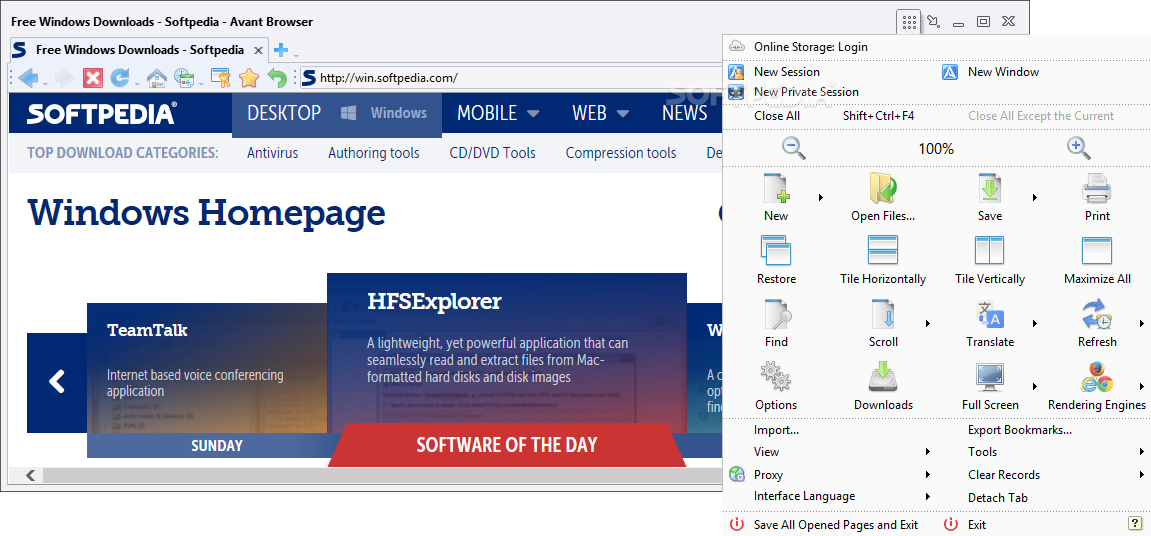
Just because it doesn't run in a regular IE window, doesn't mean it isn't a web application that's running in IE. Here, take a look at these:
http://www.zdnet.com.au/shared/images/tandb/avant_ 546x437.jpg
http://www.informanews.net/imagenews/avant-browser .jpg
http://www.softpedia.com/screenshots/Avant-Browser _2.png
Do any of those look like Internet Explorer? No? That's because they're not. They're screenshots of Avant, which uses the IE engine to render HTML!!
That Vista update screen could look just the same way, but be an HTML page rendered by IE. -
Open sourse
It seems logical to me that if Symantic wants to be involved with "Open Source" that they should become open source first.
Then maybe the open sourse community can help them with some of their problems like this one:
"Symantec has admitted its flagship consumer security application, Norton AntiVirus 2005, has a security vulnerability that allows certain types of malicious script to infect a user's personal computer with a virus."
http://www.zdnet.com.au/news/security/0,2000061744 ,39165825,00.htm -
Re:And why again is Symantec trustworthy ?
Not only did they miss the root-kit:
"Symantec has admitted its flagship consumer security application, Norton AntiVirus 2005, has a security vulnerability that allows certain types of malicious script to infect a user's personal computer with a virus."
http://www.zdnet.com.au/news/security/0,2000061744 ,39165825,00.htm
-
Re:Simple question -- simple answer.
First, I don't think it has been anywhere near "firmly established"
It's been discussed on Slashdot, and the opinion is mostly in favour and the reasons robust. So if you can't trust what you read on Slashdot, what can you trust?
I think it is somewhere near firmly established that good open source apps on windows drive adoption of the broader open-source platform rather than diluting it, for the two reasons given.
Other Linky here. -
Politics and investments clothed as charityAll of his "charity" seems more like politics and investment. Sure chumps and good-hearted people who choose to close their eyes to what they see and project their goodness onto the actions will see it as charity, but that was the goal:
- The virtual philantropist:
- "{In 1995} the company hired an outside consultant, Craig Smith, to devise a strategic plan to direct Microsoft's corporate giving in ways that guarantee the greatest return to the company.
- Bill Gates is not so much a philanthropist as he is a Virtual Philanthropist. Of the $73.2 million that Microsoft donated to charity in 1995, $62.1 million, or about 85 percent, was in the form of software licenses.
- "the software tycoon's global philanthropy exercises carry a hidden agenda to persuade beneficiary governments to reverse policies promoting the use of open source software."
- "100 m over 10 years vs 421 m over 3 years, is Linux four times worse than AIDS?"
Furthermore, the focus on AIDS/HIV is purely for the benefit of US audiences where it is a high profile issue. Heart disease, car accidents, violent crime, even smoke from cooking fires all individually cause more deaths than AIDS/HIV. Plus most of Gates' "donations" don't deal with preventative measures, but instead rely on corrective measures and squeeze matching funds from local governments and charities to buy expensive pharmaceuticals produced by the large pharmas that Gates is heavily invested in.
I don't call any of that charity. I call it conflict of interest. Besides, what about his heavy investments six and seven years ago in the "Military-Industrial Complex". Investments like that, especially some of the larger ones, don't give a good return unless protracted and/or large scale war can be instigated. Even if Gates' "donations" were real and true charity, bad karma like that doesn't just go away over night.
Time apparently is for sale in more ways than one. And the New York Magazine is playing the fool for going along with it.
- The virtual philantropist:
-
Re:This should really spur progress
There have been large scale commmercial trials of BPL technology occuring in Tasmania, Australia see article below. http://zdnet.com.au/news/communications/soa/Tasma
n ia_powers_up_12Mbps_broadband/0,2000061791,3921161 6,00.htm -
Good samaritans or investors with good PR?Funny. But lets look at the actions, which do speak louder than words, and then again at the definition of Good Samaratin
I find it peculiar that these acts of "charity" tend to be timed to fight Linux and Open Source more than to fight disease. It's been the same pattern whether in Australia, India or many of the African nations: Gates gives $100m to fight HIV, $421m to fight Linux.
Another thing that makes it stink of PR is the focus on HIV/AIDS which, compared to other problems like heart problems, smoke from cooking fires, etc, is not a major health problem. However, it is a high profile item for US audiences.
Yet another problem is that the solutions offered by Chairman Bill and his foundation focus on expensive pharmaceutical treatments, often draining significant matching funding coming from the target region. Most health issues are solved more effectively and cheapy with preventative measures not corrective measures, especially expensive ones. Cheaper is better, but it just so happens he's also heavily invested in the same pharmas, so maybe, jsut maybe there is a bit of conflict of interest.
Read the interview Time had earlier with Chairman Gates. He seriously couldn't seem less interested in the health and social aspects of the charity. The definition I had previously heard for Good Samaritan involved an active interest in helping and helping in an altruistic manner, not with strings attached or with major conflicts of interest.
-
Is this related to this Perl exploit?
http://www.zdnet.com.au/news/software/soa/Danger_
l evel_rises_for_Perl_flaws/0,2000061733,39225008,00 .htm
I would have thought this is bigger news being that it is reported to be possible on Linux as well as M$
Oh wait, I forgot I was on -
Re:What about the kids?
Just do a simple google search and you'll find this plagarised post on the ZDnet forums.
-
Re:200-man headcount?
There's hidden evidence in the pictures. Why else would there be an entire floor devoted to a toilet cleaning company unless we're talking about 200 geek men?
-
Re:Non-karma whoring link
wow, i like how this link doesn't work and how 2 mods wasted 2 mod points modding a non-working link up...
this link works tho
http://zdnet.com.au/insight/software/print.htm?TYP E=story&AT=39223136-39023769t-10000102c
and yes, karma whore me plz
kthxbye -
AUD$3 on 3G vs AUD$1.69 on iTunes - why bother ?Why would you bother downloading songs from Hutchinson's Australian 3G network at $3 a pop, when you could get them from iTunes (Australia) at $1.69 each, export to MP3 and then upload to your phone ??
Plus the fact that the 3G songs are encumbered with DRM such that you can't migrate, or export the music off the particular 3G that first "bought" the music
It's even worse with ringtones, you don't even download them to your phone, they get stored for 90 days on the network, then vanish !
Don't these people get it ? We want interoperability for the digital content we purchase.
-
Sony encouraging piracy?
"... rather than adopting technological methods to try to stop unauthorized copying of music, record companies need to do more to remove the incentive for piracy."
I do find it rather ironic that I was, not five minutes ago, looking for an Oasis song (forgive me, its stuck in my head) on iTunes music store to purchase legally only to find out they are published by Sony-BMG who, in their infinite wisdom, have declined to be involved with the Australian iTunes music store.
Given their current predilication for sticking DRM crap on CDs and the fact I only want one or two specific tracks, no sale for you. Good going Sony. What's a possible customer meant to do if you insist on treating us like (potential) criminals?
-
Ditto, but might helpThere was a study done (Gartner, courtesy of ZDNet Australia) of 200 European companies where they looked at outsourcing contracts. Only 23% of the respondents were NOT expecting to renegotiate. One in eight contracts were renegotiated within the first year.
Your RFP, irrespective of how well thought out it is, will be incomplete at best. It's going to take a significant amount of time to get at and negotiate the whitespace in the contract. Especially in this instance, where you likely won't have a very complete idea of what this guy does.
I'm no fan of Gartner, but the point is that your company is going to have a relationship with the outsourcer, which will need fine tuning throughout the life of the contract(s). It's a (not terribly) hidden cost of the outsourcing paradigm, but people seem to consistently miss it.
-
Computer Associates Removes Sony DRM
CA antivirus is now removing the DRM. I think this is a violation of the DMCA, right? 5 years in prison and a big fine? Let the fireworks begin. story
-
Article Text
Gates memo warns of 'disruptive' changes
Ina Fried, Special to ZDNet
November 09, 2005
URL: http://www.zdnet.com.au/news/software/soa/Gates_me mo_warns_of_disruptive_changes/0,2000061733,392214 68,00.htm
Aiming to stir up the same kind of momentum as his Internet Tidal Wave memo of a decade earlier, Microsoft chairman Bill Gates has penned a memo outlining the challenges Microsoft faces from a host of online competitors.
"This coming 'services wave' will be very disruptive," Gates said in an Oct. 30 e-mail to top Microsoft employees. "We have competitors who will seize on these approaches and challenge us."
In the memo, Gates cites an earlier missive from Ray Ozzie, outlining the importance of tapping online advertising and services as new revenue sources.
"It's clear that if we fail to do so, our business as we know it is at risk," Ozzie wrote. "We must respond quickly and decisively."
Ozzie's memo, which was also seen by CNET News.com, includes a laundry list of missed opportunities for the software maker, citing competitive threats from rivals such as Google, Skype, Research In Motion and Adobe.
Ozzie notes areas that Microsoft could have led, such as Web-based applications, but where other companies are instead more heavily focused.
"We should've been leaders with all our web properties in harnessing the potential of Ajax, following our pioneering work in OWA (Outlook Web Access)," Ozzie wrote. "We knew search would be important, but through Google's focus they've gained a tremendously strong position."
In the memo, Ozzie talks about Google as Microsoft's most prominent of the emerging competitors, but also makes reference to Yahoo and Apple Computer.
"Google is obviously the most visible here, although given the hype level it is difficult to ascertain which of their myriad initiatives are simply adjuncts intended to drive scale for their advertising business, or which might ultimately grow to substantively challenge our offerings," Ozzie wrote. "Although Yahoo also has significant communications assets that combine software and services, they are more of a media company and--with the notable exception of their advertising platform--they seem to be utilising their platform capabilities largely as an internal asset.
"The same is true of Apple, which has done an enviable job integrating hardware, software and services into a seamless experience with dotMac, iPod and iTunes, but seems less focused on enabling developers to build substantial products and businesses," Ozzie wrote in his memo.
He also makes reference to smaller, emerging companies that are developing software and services that use the Internet, rather than Windows, as their base platform.
"Developers needing tools and libraries to do their work just search the Internet, download, develop and integrate, deploy, refine," Ozzie wrote. "Speed, simplicity and loose coupling are paramount."
At the same time, Ozzie sees am opportunity if Microsoft can create a Web-based development platform.
"The work of these startups could be improved with a 'services platform'," Ozzie said. "Ironically, the same things that enable and catalyse rapid innovation can also be constraints to their success. "
Microsoft has talked of a developer platform in conjunction with Windows Live, but the company has offered few details of how third parties will be able to build on top of Microsoft's work.
Microsoft has already reorganised the company and outlined some of its plans, but the two memos make clear the urgency and importance that the company is placing on this effort.
The company announced in September that it was reorganising itself into three units and tapping Ozzie to lead a companywide services push. Last week, Microsoft announced the first fruits of that effort--products called Windows Liv -
Heres the correct URL...
-
Mysterious future.
From: xenex@opinionstick.com
Subject: [DP] ITunes Australia Goes Live
Date: 25 October 2005 12:32:57 PM
To: daddypants@slashdot
The link is dead.
http://www.zdnet.com.au/news/software/soa/iTunes_M usic_Store_comes_to_Australia/0,2000061733,3921879 8,00.htm seems to work though.
The article comes up here just fine. Also, another interesting article: Apple: Our biggest competitor is P2P. -
Mysterious future.
From: xenex@opinionstick.com
Subject: [DP] ITunes Australia Goes Live
Date: 25 October 2005 12:32:57 PM
To: daddypants@slashdot
The link is dead.
http://www.zdnet.com.au/news/software/soa/iTunes_M usic_Store_comes_to_Australia/0,2000061733,3921879 8,00.htm seems to work though.
The article comes up here just fine. Also, another interesting article: Apple: Our biggest competitor is P2P. -
Mysterious future.
From: xenex@opinionstick.com
Subject: [DP] ITunes Australia Goes Live
Date: 25 October 2005 12:32:57 PM
To: daddypants@slashdot
The link is dead.
http://www.zdnet.com.au/news/software/soa/iTunes_M usic_Store_comes_to_Australia/0,2000061733,3921879 8,00.htm seems to work though.
The article comes up here just fine. Also, another interesting article: Apple: Our biggest competitor is P2P. -
Correct URL
-
Correct Link
-
The correct URL is...
-
Re:Mod up dumbasses
-
URL Correction?
I had trouble with the link but this seems to do the trick: http://www.zdnet.com.au/news/software/soa/iTunes_
M usic_Store_comes_to_Australia/0,2000061733,3921879 8,00.htm -
Re:About bloody time
This is probably the reason Australia is second largest downloader of TV programmes from the web at 15.6% ahead of the UK(18.5%) and the US(7.3%), according to figures from the linked article. Rather astounding considering our relatively small population.
-
Re:Who is behind this?EDS.
This report says Customs will change from a single outsourcer, EDS, to several beginning in June 2007.
-
Re:Does it really matter?Consider Ellen Spertus's take on how it feels to be a woman in CS.
And, for a more recent point of view, try Raven Alder's take on it, too... -
Linux hacked more often than Windows
Linux hacked more often than Windows - the title of an article posted on ZDNet (http://www.zdnet.com.au/news/software/0,20000617
3 3,39116229,00.htm)
Sorry to breach the bad news guys. -
No , the submission whas too simple.
No what happened is the Lawyer tought it would be an open shut case and did not deliver enough paper
and documents to support his claim :
http://www.zdnet.com.au/shared/images/news/linux/l inux_tm.pdf
- The main reason the Trademark registration whas refused for now is that the lawyer did not offer enough proof he whas working for Linus Thorvalds.
- The second is an already registered Linux trademarked product : Linuxworld magazine.
The Government employee for once actually did his job properly. -
Decision doesn't mean anything for other marketsI don't think this Australian decision has anything to do with the validity of the Linux mark in other places. The information in the article suggests that Linus Torvalds has been poorly represented and/or IP Australia didn't fully understand that Linux is not a "generic" term, or it could be a combination of both.
This passage here looks like the lawyer failed to do his job properly: It is not clear from the declaration in what way Mr Jeremy Malcolm is authorised and qualified to make this declaration on behalf of Mr Linus Torvalds. It should be a routine task to provide documentation that satisfactorily answers that question before it's even asked. Probably a document with Linus' signature (and some official confirmation of its authenticity, such as by a notary public along with a so-called apostille) would have done the job.
I've opened the PDF file of the IP Australia letter, and the examiner says that the decision could be reconsidered on the basis of better evidence. That means some more effort will have to be put into this than printing out a Wikipedia article and a few pages of Google search results. A key question will be "the date when use of the trade mark commenced".
-
OpenDocument may render MS Office irrelevant
Open Office was perfectly free to make their own document format, but
Every word processor, spreadsheet, or presentation package has had their own formats. That's not news.However, I suspect that OpenDocument may have been meant instead, which is OASIS' Open Document Format for Office Applications. OpenDocument is the work of a consortium of companies and organizations and not the sole work of a single project as implied in the comment above. Microsoft is the only member taking a "wait-and-see" approach to the format. Everyone else, is moving ahead.
-
Security researchers problematic bunch?
An article by Mary Ann Davidson (CSO, Oracle)
Security researchers problematic bunch? -
Re:Lawsuits
I hate to tell you this, but they're trying...
http://www.zdnet.com.au/news/communications/0,2000 061791,39202379,00.htm
http://www.cnet.com.au/mp3players/musicsoftware/so a/Music_industry_gains_discovery_win_in_Aussie_MP3 _site_case/0,39029154,40003501,00.htm
http://www.zdnet.com.au/news/business/0,39023166,3 9177280,00.htm
http://www.out-law.com/page-5942
http://addict3d.org/index.php?page=viewarticle&typ e=news&ID=275
They're all stories about the Australian ISP being sued for hosting a site that contained links to copyrighted material.
Not good. -
Re:Lawsuits
I hate to tell you this, but they're trying...
http://www.zdnet.com.au/news/communications/0,2000 061791,39202379,00.htm
http://www.cnet.com.au/mp3players/musicsoftware/so a/Music_industry_gains_discovery_win_in_Aussie_MP3 _site_case/0,39029154,40003501,00.htm
http://www.zdnet.com.au/news/business/0,39023166,3 9177280,00.htm
http://www.out-law.com/page-5942
http://addict3d.org/index.php?page=viewarticle&typ e=news&ID=275
They're all stories about the Australian ISP being sued for hosting a site that contained links to copyrighted material.
Not good. -
Working Link
-
ZDNet Australia Version
-
Here's more examples of why this is neededHopefully, removing BigPond's unfair advantage might force them to lift their game, and avoid problems like this.
No longer will they be able to attract customers just by hiding their costs in their wholesale arm. They'll actually have to provide decent service and reliability for a change (BigPond has consistently rated bottom of the heap in customer service surveys - which they of course deny).
-
Here's more examples of why this is neededHopefully, removing BigPond's unfair advantage might force them to lift their game, and avoid problems like this.
No longer will they be able to attract customers just by hiding their costs in their wholesale arm. They'll actually have to provide decent service and reliability for a change (BigPond has consistently rated bottom of the heap in customer service surveys - which they of course deny).
-
Re:Is Outlook really the killer app?Evolution doesn't count since it doesn't run on Windows, and is a BLATANT copy of Outlook.
- Evidently, the developers have built Evolution for Windows, though they warn off would be beta-testers.
- To entice Outlook users to make a switch to Evolution, wouldn't BLATANCY in resembling Outlook be a Good Thing? I despise MS business practices as much as anyone, but much of Outlook's design is good, just as piling together admittedly existing technologies (SQL, SMTP, etc) to create Exchange made a product that is actually useful.
P.S. My SO can figure out how to use Oo.o better than I can on our home Linux box because her 8 years of experience with MS Word trumps my two decades of UNIX command line wizardry.
-
Re:Err, excuse me?
Is there any evidence that Linus requested this.
The Linux Mark Institute? Yes, he approved. See Linux Mark Institute: Protecting the Linux trademark (written by Jon "maddog" Hall in 2002) and a more recent comment by the same author.
Of course it is a bit strange to release some piece of software, tell everyone it's free, and then register a trademark with the name of the software and try to enforce it. Surely this was done with good intent, but it really hurts projects like Debian, which would have to buy trademark licenses for Linux, Mozilla, Bacula, and God knows what. -
Re:Err, excuse me?
Doesn't Linus own the 'Linux' trademark already?
Indeed, his fees are about the same. Indeed, it turns out that Jeremy Malcolm is acting on Linus' behalf. There is even a web site which explains the situation. -
Re:Austrailia
The law is the same in the USA, and you have to pay higher fees over there. http://www.linuxmark.org/fees.html
The requirement for payment to use the Linux trademark section of this story isn't an Australian issue, it's the freaky lawyer who sent out the letters of demand that make this story interesting. He's not all bad though, he's had some success fighting spammers http://zdnet.com.au/news/business/soa/Perth_man_wi ns_T3_spam_case/0,39023166,20269057,00.htm, and it looks like this current venture is intended to protect the Linux trademark rather than being a scam. I'd say there's a fair chance the bulk of the fees collected in Australia will go to the US based parent organisation anyway. -
Old News
This isn't exactly the latest news. From ZDNet Australia, 13-August-2004:
As reported by ZDNet Australia on Tuesday, Linux Australia Inc has secured Linus Torvald's support to register the word "Linux" as a trademark with Australia's intellectual property regulator. The move is designed to prevent local companies attempting to claim the word as their own, but it will also throw open the possibility that local Linux vendors will start paying royalties to trade on the term for the first time.
Still not particularly good news, though.
-
Claim: LINUS supports it
This article, Suspicions fade over Linux trademark move on ZDNet Australia that I dug up claims that, "letters sent out by a lawyer acting on behalf of Linus Torvalds are part of a legitimate process to ensure the open source software's creator maintains control of the 'Linux' trademark."
Can someone please get LINUS to verify this preposterous claim? I would not be surprised if Linux Australia is not a legitimate user group at all. -
Re:Err, excuse me?
Here's an article stating as much.
-
ZDNet crashing privoxy?
When attempting to view the article, my privoxy crashes. After restarting privoxy I tried again - same result. After the next restart I simply attempted to access the homepage at http://www.zdnet.com.au/... Same result, you guess it. Is this just a problem of my privoxy installation or do other people have the same problem? And if, got anyone an idea if that's simly due to a privoxy bug or an intended part of my ZDNet viewing experience?