 Slashdot Mirror
How Computers Transformed Baby Boomers
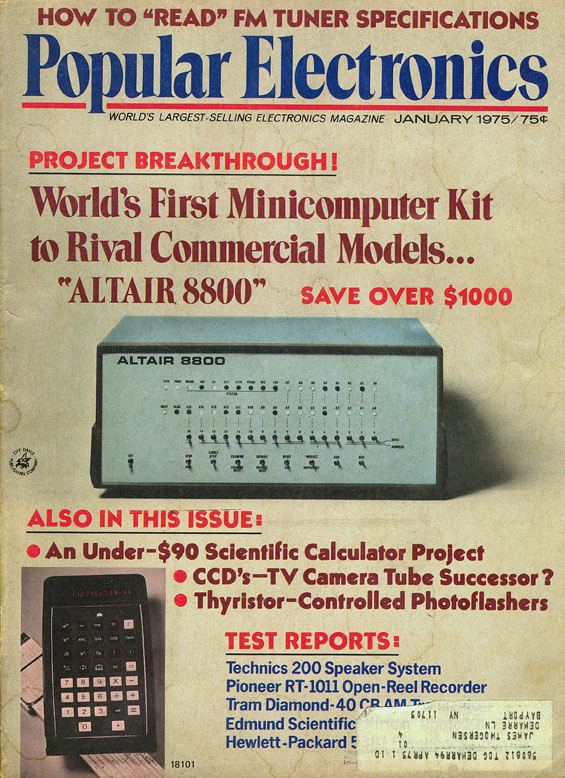
theodp writes "Newsweek's Steven Levy takes a look at how the baby boomer generation formed our tech landscape. Many of the realities boomers grew up with are today's metaphors, including cut-and-paste, the origin of which the 56-year-old Levy had to explain to 20-something Google employees. Levy cites two texts as crucial in pushing the boomers' vision toward power-to-the-people computing — Ted Nelson's Computer Lib/Dream Machines, which inspired Mitch Kapor, and the January 1975 Popular Electronics, which got Bill Gates jazzed. You kids might want to check out Dad's bookshelf — used copies of Computer Lib are going for $130-$225 at Amazon."
I had no idea that CL/DM was selling for so much. I just checked my shelf, I bought a copy for $18.95 in 1992 at the local university bookstore - the sticker's still on it.
I wonder why it's so expensive? The book is terrible, virtually unreadable. Ted Nelson is a nutcase by all reports. Look at the repeated failures of his Xanadu idea.
I guess I should probably sell it; it has no value to me and $150-200 would be pretty nice.
Did baby boomers use scrolls, too?
The shareholder is always right.
I can hardly wait until the Boomers die.
... shut ... the ... fuck ... up.
Christ what a narcissistic, infantile, self-important, hypocritical generation!!
And they never
What winners the two Boomers Presidents have been?
The story is how BABY BOOMERS SHAPED COMPUTERS. The summary makes no sense with the current title.
Apparently the Boomers were responsible for everything, including all technology! Nevermind that your parents don't know the first thing about computers.
...and it works spectacularly well.
The modern version works like this: you need a photocopier, your source material, a pair of scissors, and a stick of solid glue. Photocopy all your source materials. Cut them up. Stick them onto a blank piece of paper in the order you want. Photocopy. All the seams miraculously vanish, and you end up with an extremely professional-looking end result.
It's a great deal easier than scanning and using a DTP package, it's faster, and it can also produce better results depending on your photocopier and scanner. I wouldn't use it for anything that needed to be stored for long periods of time --- your template is fragile and will fall apart if stored --- but for quickly putting together posters, exam questions (I inherited the technique from my father, who was a teacher), simple fliers, news clipping collections etc, it's first rate.
Don't get glue on the photocopier plate. It'll never come off.
"I wonder why it's so expensive? The book is terrible, virtually unreadable"
History is expensive.
"Ted Nelson is a nutcase by all reports."
So is a certain zealot.
"Look at the repeated failures of his Xanadu idea."
The price one pays for being too far ahead. At least it's inspiring some people out there.
Many 19th century inventions invented by 19th century inventors. Film at 11.
Don't think of it as a flame---it's more like an argument that does 3d6 fire damage
I call B.S. on this one. Anyone dumb enough not to figure out where "cut and paste" came from doesn't deserve a job (must less a promotion to second grade).
I was so pissed during one of Bush's SoU addresses when the Dems clapped about stopping SocSec reform. ... and they blocked it!!!
That is why I supported Tsongas way back when. Both Dems & Reps have been telling us for years (decades?) now how fucked SocSec and the other entitlements are and now we finally had someone willing to do something about it (someone how was using Dem ideas too)
Fuckers!!!
Obviously they love their own power more than they love this country.
The "for the children" arguments are almost always BS, but here was an issue clearly for the children.
SocSec: How much do you want to steal from your grandkids.
You know, I just figured it out. Blue states have the lowest birthrates (~1.3). They are not stealing from their grandkids because they don't/won't have any.
ResidntGeek
"I can't wait until they all go on medicare/social security so I can pick up a second job to pay for it."
Spoken as someone with limited vision. The health care industry is going to explode. Plus a lot of them will have disposable income. You can either get your slice, or wait for overseas/immigrants to get it first.
please, please, please, please, please, please, please will someone reprint Computer Lib!!!! I remember hearing about it and Ted Nelson at college but his book is long out of print.
I have excellent Karma and I am not afraid to Troll it.
Railroads and electricity made much bigger changes in people's lives. Before railroads, most people spent their lives within 50 miles of their birthplace. Before electricity, it was, well, dark at night almost everywhere. Huge amounts of effort went into activities like basic cooking and cleaning clothes.
The changes between 1850 and 1900 were far, far greater than those between 1950 and 2000. In communications, in 1950 we had radio, television, teletype, and telephones. Even newspaper delivery via broadcast radio fax, although that never really caught on. Most important info was getting to its destination fast. Most of the communication things you can do today, you could do in 1950, but more expensively.
Steven Levy deserves a lot of credit for his book Hackers, which was the first place to publicly discuss "the hacker ethic." He really "got" a lot of the things that journalists today still don't get. You can disagree with a lot of what he says, and his "ethic" list is a little goofy, but as a "third" generation hacker (someone who grew up hacking on an Apple ][e), I found his interpretation of what was going on in the golden age deeply insightful. IMO, "computer journalism" has never really produced someone like him again -- today it's all David Pogue type "gadget reviewers" who really don't get what was, and still is, revolutionary about computing and the people involved in it.
Protect your liberties. Donate to the ACLU
And hop in the DeLorean... we're going back to 1975 to make sure Popular Electronics never prints that issue...
you had me at #!
get a grip.
I know, it's sad, but they still use those in high schools.
Wait... did I read that right? Did Bill Gates say "iPod"? Ooooh... you're on enemy territory now!
Almost anything that has been built in history, great and small, can excite a few, but until it is adopted by the masses it is nothing.
Of course, computers used to fill entire rooms and governments and businesses adopted them but as I see it, my generation (usually referred to as Generation X) made up a large portion of the early adopters of personal computers and computing devices. We were the first people to buy or build computers that cost more than the car that we drove or would cost several months of our lame salaries to purchase.
We were not the ultra-geeks that dropped out of college to build computer hardware and software, but we were the people, or better yet, the market that helped to allow these garage based businesses to grow into solid, large companies.
When we told our parents (Boomers) of the virtues of personal computers we were mocked, laughed at, or just ignored for a decade or two before these "PC things" caught on.
"A government is a body of people, usually notably ungoverned." - Shepard Book Quoting Malcolm Reynolds
Unless the writer has access to the sales history, it shouldn't have said that the books are going at going at $150-200. The books are simply listed at that price.
The big prices show something that is true of a large number of computer books. When the books are out of print they can shoot way up in price. Often you will find some poor schmuck having to support a legacy program and they are willing to spend a good deal of money on used books.
If you happen to have computer books for older versions of software that you no longer need, you can often sell the used book for more than you bought it.
One way of playing the Amazon used book game is to list all of the out of print books you are willing to part with at a price some 25% higher than the going sale price. You wait, and every once in a while a book will sell and you will ge money for more computer books.
His book came out in 1984, and Wargames came out in 1983. I think Wargames deserves a lot of credit for bringing a somewhat realistic image of a hacker to the mainstream public.
Copiers. What copiers? I started my first engineering job in 1973. Copies were made with carbon paper. If it was really important there was the "Ozlid" process on thermal paper IF you could get the supervisor to approve it. Otherwise I used white out, correction tape, and cut slivers of the previously typed document to make a new version to give back to the secretary (remember them?) to retype. Give it to the secretary more than twice and she let you know what she thought about you, your family, and various barnyard animals you may or may not own (or know).
Please slashdot, can we have more stories like this?
I'm a 24 year-old they called part of generation Y. The funny part about the older generation is they somehow assume that the younger is clueless about something because they've never done it themselves. Cut and Paste is pretty simple, and I have done it, my whole generation did it in school.
And the internet and computers have not changed my simple life all that much from my fathers. Yes, I post on an internet discussion, but: I get up in the morning, get in my EFI ran car, but for the end user its not that much different than a carburetor, and drive to work. At work I'm the desk guy at a shop, Yes I use the computer to do invoices, but I could just as well do it on paper, and then I drive home. My house doesn't greet me, and I still eat regular meals. You could take someone from thirty years ago and dump them right into today and they would have no problem. Go back a hundred years and they might have a problem, considering that my grandfather rode a mule to school (He's 83), but even he can run his DVD player.
"Where have all the good people gone?" - Jack Johnson
This article is totally bogus -- I don't believe there has been a more useless generation (per capita), than the extremely egotistical Baby Boomers. There are notable exceptions of course, but on average they were egotistical, lazy and left the world a fucked up place. It is the GenX and later that created the hi-tech boom!! Any self-serving claims that they are responsible for the hi-tech or any other scientific boom are ludicrous. It was their parents that won the world war against the Nazis, split the atom, and put the man on the Moon!!! Baby boomers "golden years" (when they were 25-50), were mired in crisis (1960-1985). They considered themselves as progressive, but in fact avoided fighting at any cost no matter how worthy the cause was (either militarily or by simply by applying themselves to achieve a seemingly unobtainable goal -- like space exploration). If the trend they parents achieved was continued, we would be colonizing Mars right now. One might say that the scientific development after their parents retired in the 70s almost totally stopped for 20 years and only started booming when GenXers and later got into the game. Due to their egotism, social system in the West is going to collapse. They will do anything to prolong their lives at the expense of their (very few) children. They were raised in multiple sibling families, and their parents worked very very hard to provide everything for them. As opposed to their parents, Baby boomers, on average, had very few children and were more interested in being stoned throughout their 30s, accumulating wealth and wasting resources only on themselves. I do not believe there was ever a more egotistical and uninspiring generation then the Baby Boomer generation, aka the spoiled brats. Pissed of Gen-Xer
I love when Boomers describe themselves as "middle-age".
Middle-age?!?
You are 60! How many people do you know that live to 120?
At 35, _I_ am middle-age (based on an average lifespan of 77)
Damn right, the "Me Generation"
You had nice comfy caves! We had to make do with the overhead shade of traveling mammoths, and plait their hair into crude runes which others had to read whilst avoiding getting trampled! And it was in the snow, all the time, and dammit if they didn't look for every hill to climb they could find!
"Railroads and electricity made much bigger changes in people's lives."
I disagree. Sanitation has historically had a much bigger influence than what you listed, from BC to AD.
The war (Nam) ended when sufficiently large numbers of returning, blooded combat veterans came back and joined the ranks of the protesters, because they realized they had been scammed and had been taken advantage of so a few fatcats could get rich off the stupid war. The powers that be realized they were a year or two max away from serious revolt from guys who would have enjoyed wasting them. And it got to be pretty hard for the clueless pro war people to argue with "protesters" when the entire front ranks were all returned combat vets at a lot of the latter demonstrations. The stupid pigs really couldn't argue with that, and the pigs bosses knew they had pushed their luck and made their billions, so they decided to end it, that and the vietnamese were just damn tough dudes. Build a bigger bomb, they would dig deeper, etc.
It was the same with racial civil rights, no matter laws passed, it took the PTB guys to finally realize that they could quite easily lose control of their major cities and cash cows at any time and there wasn't much to stop it, so they finally relented and then we had real efforts towards enforcing civil rights at all levels of government, whereas before it was quite iffy and random. Again, a lot of returned black and brown combat vets made this threat a reality.
In both cases, rhetoric helped a lot, peaceful protest helped a lot, all sorts of normal politicing helped a lot, but violence and the actual perceived threat of violence is what got things moving-same as it has in most other situations similar down through history. People with huge amounts of power never allow that power to be lost without fighting hard to retain it, and only give up when they realize that retention is just more dangerous. Why some civilizations wait longer than others to rebel against tyranny though-can't answer that, but will say they do a pretty good job in the schools and news media now to keep people cowed/pacified in advance, for example, they have most people accepting random roadblocks, whereas a few decades ago that would have never worked. People accept "security cameras" everywhere, and just the word "security" when used by government is now enough to squash any investigations into serious corruption or wrongdoing. And really, forced drugging? A generation raised as children addicted to drugs the swine give them as "medicine" and they believe that???? That's a clue right there some of the ways they control people.
With that said, sure a lot of bad came from my generation, hell ya, but a lot of good as well. I can think of a lot of bad from the preceding generation to mine (blind trust in government-total, blind trust in corporations-total), etc, along with the good, the tech advances and sense of civility and pride, etc.
Boomers have been not much better or worse, we just have a demographic of having large numbers, that's mostly it. Right now in the younger generations I see bad and good, the worst I see now though is the "don't give a fuck about anything at all" mindset and general apathy about things, there's not much in the way of any sort of "spirit" if I can use that term. Little passion for things. There's a lot of pretty smart younger folks, but not seeing passion for the important things in life, just a bland acceptance as if there is a normal birthright-which there isn't. All your life you have to fight for things, to keep from getting ripped off and abused by the powerful people around you. About the closest I can see for passion there is P2P file trading.
It's a start I guess, but you'll have to come to grips with yo9ur generations sense of values as well, we had abbie hoffman and timothy leary and jimi hendrix-you have paris hilton, britney spears and...who's your main political guys? Oh ya, they don't exist yet in x or y, still having to fall back on the older guys! Why is that again?
Consumerism is quite bad and stupid,agreed.. so..why dont ya'all just stop and do something better? We'd sure like to see it, if you can drop your iPods and drag yourselves away from WoW long enough to take a look at the real world crumbing around you right now. If you want to make it better..than do so, nothing stopping you besides apathy.
glass houses
I feel it should be pointed out that there are Boomers and then there are Boomers. Many of the most influential Baby Boomers for personal computers were born more or less in the mid fifties. They were barely teenagers when Woodstock happened and they became eligible for the draft just around the time America left Vietnam. To call them Baby Boomers isn't exactly wrong, (some demographers call them Generation Jones, but it's all bullshit anyway) but to lump them in with those "damned self-important idealists" as some of the other posters are doing is unfair, since by the time these guys came of age, the idealism had already begun to go the other way.
"Never attribute to malice that which can be adequately explained by stupidity." -- Hanlon's Razor
Your comment about people spending their lives within 50 miles of their birth may be very true in Europe but not so much in the US.
I have been reading some pre-Civil War memoirs/histories and it is stunning how much people moved around. Even bouncing from side-to-side of the continent and this is pre-Panama Canal. They would take a boat to Central America, and then over land to the other ocean, and then another boat. Sea travel seems to be the main means of mass transit, although long horse/stage coast journeys where not scoffed at.
For example: Ohio, New York (university), San Fransisco (multiple jobs), Florida, Philly/DC/Boston (multiple financing trips), Missouri, Kansas, Tennessee through Georgia, up to New York, then back to Ohio for retirement.
Or the New Orleans based guy who spent most of his time around New Orleans, Florida, Cuba, Mexico, various trips to the East Coast (especially DC) for lobbying, and then some work in France.
I thought I moved around a lot, but these people bounced around like pin balls. Of course, you could argue that the people writing memoirs/histories are not average. And no doubt it was easier to not move 50 miles pre-1850, but frequent travel was not unusual.
Of course, moving (to the Western frontier especially) is an American tradition.
It seems to me that things that made the biggest impact on the way people lived in was advent of agriculture and then the industrial revolution. Prior to the advent of agriculture, people were hunter gathers. Prior to the industrial revolution most people's livelihoods were in agriculture. While computers have revolutionized information based activities in the Western world, these are only a small portion of overall activity. Most people are still engaged in affecting the physical world in some way (medcial industry, service industry, retail industry, transportation industry, etc.). The next revolution will be the robotic revolution were machines take over more and more of these activities and more and more people become engaged information based activities.
Software Inventor
The 'Facebook' generation is calling the 'Boomer' generation self-absorbed? Honestly, is there anything more self-centered than MySpace and Facebook?
Just for the record, kids - you try pulling this shit and Dad will spank your arse, no matter whether you're bigger than him now or not.
..and I'll form the head!!
Comment removed based on user account deletion
That there is more to baby boomers and computers than meets the eye.
The fact that I can call you a moron at my discretion should prove the point.
Facebook is something used occasionally for that specific purpose. Boomers are like that 24/7/365.
THE HILLARYCARE MYTHOLOGY: Suddenly, we're being told that Hillary wasn't behind Hillarycare -- it was all Bill's idea!
The first lady was an active force in these discussions, but there was never any question that the president was in charge. We took our guidance from him. That, of course, was how it should have been (who else but the president ought to make such decisions?), except that many reporters and the public thought that Bill Clinton had handed over the policy to Hillary and that she would report back to him, which was not the case.
Presidents often downplay their own direct involvement in decision making to put some distance between themselves and policies that may eventually prove to be unsuccessful. Part of the job of cabinet members and advisors is to take the blame when things go wrong. Clinton's appointment of his wife to chair the task force did not, however, create the necessary distance and deniability. Not only did the fiction of Hillary's personal responsibility for the health plan fail to protect the president at the time, it has also now come back to haunt her in her own quest for the presidency.
Well, you know, tangled webs and all that. (Via Newsalert).
UPDATE: This, on the other hand, is just weird.
Okay, cool, but I had to read this a couple times to understand just what or whom was transforming what or whom.
Maybe it's just that I'm tired, but the poorly worded title caused me to take much longer than I would have liked to read the blurb for this story.
With that in mind, wording these titles correctly isn't just an issue of pedantry; it's a readability problem.
Funny you should say that the downfall of civilization should begin with Ivory soap. I was just reading how people didn't use to use soap to wash their bodies until P&G came out with Ivory.
I wonder if Gates realizes how much this might apply to his company (old guard) versus open source / open standards (next generation)?
Meh. I imagine he pays someone to write his crap, anyway. He could certainly afford it, with what he spends trying to hold progress back.
Don't thank God, thank a doctor!
The actual fine article bears the title "How Computers Transformed Baby Boomers." Slashdot's editors just echoed that title.
There is a fine line between recklessness and courage... -- Paul McCartney
including cut-and-paste, the origin of which the 56-year-old Levy had to explain to 20-something Google employees.
I guess all that drinking 19th century wines and fucking whores on piles of $100 bills must have erased their memory of kindergarten.
Hey - Computer Lib is something I've been hella interested in reading since I first heard about it, but I'm in no position to hunt it down or pay for it (as previous posts list heavy prices). as it was self-published in the first place, with no royalties to be gained, surely SOMEONE has thought to just get it online. ascii, pdf, i don't care. does anyone know where a soul can READ it?
I had no idea that Bill Gates was ever interested in FM tuner specifications.
Speaking of anacharisms, why do we still have telephone numbers at all? They should be hidden like IP numbers are hidden beneath web addresses and domain names. people who work exclusively with cells pretty much do that now. After the initial connection, you just automatically add the clller to your directory.
As a boomer I was bored when my parents or grandparents were told me how they did things in their time. I'm sure digressing about pubch cards, floppy disks, and command lines must bore the hell out of most kids these days.
I have a collection of slide rules which includes the model of Pickett 8" slide rule that was carried to the moon back in the day (not the actual slide rule, I hasten to add, just the same model). My 20-something son, who works as a network technician, asked me how they worked and so I demonstrated putting the "1" on the "C" scale over the "2" on the "D" scale and then the cursor over 2, 3, 4, etc. on the "C" scale to demonstrate multiplication.
He looked at it for a few moments and then asked, "Why didn't you just use a calculator?"
No one ever had to evacuate a city because the solar panels broke!
I found a copy cheap in a used bookstore some years back, after looking for awhile. I like it. Nelson was trying to convince the freaks that computers were fun and nothing to be afraid of (at the time, they were looked at with suspicion by the counterculture as tools of the Establishment). He didn't quite succeed, but computers had a culture all their own that was already beginning to grow...
I mean, this thread, nit the tech party; I'm 55. My internet connection at home is down, I've been throwing away too much money on booze and hookers and haven't paid my bill lately...
But at any rate, you youngsters might be interested in an article I wrote back in 2005, Growing Up With Computers. Other young folks were interested enough to vote it up to the front page.
Come to think of it, and also on-topic, I wrote a few geezertech articles back then. Useful Dead Technologies might amuse you (How many of you young nerds can use a slide rule?), as might Good Riddance to Bad Tech.
-mcgrew