Slashdot Mirror
Domain: atarimagazines.com
Stories and comments across the archive that link to atarimagazines.com.
Comments · 139
-
Re:Impossible
Computer versions of Solitaire pre-date the Windows versions. For example, Compute! ran listings for Canfield in one of its last issues that had type-it-in-yourself code (1988). Other links on the the Compute! index page show even earlier versions (e.g.,1986).
-
Re:Full source published
The text of some issues of Creative Computing magazine: http://www.atarimagazines.com/creative/index/
Not sure if they have the issue you mention though. -
Re:Disgusting
Any Amiga 3000 or 4000 with the appropriate monitor could do it. Perhaps some earlier models could as well, I'm not an Amiga fanboy. The Amiga 500 was an early model Amiga. The Amiga product line had churn for seven or eight years (as a Commodore owned venture. I don't speak of how Amiga is the IT landscape's equivalent of a zombie lurching across the landscape......) A review of the then new Amiga 4000 is here:
http://www.atarimagazines.com/compute/issue146/A18 _Previewing_the_Amiga.php
The last generation Amiga's could also accept third-party graphics cards based on some PC chipsets common at the time. An Amiga so equipped couldn't use the card to play games that touch the hardware directly but they could display graphics and productivity apps at any resolution and color depth PCs of the time could. This means 1024x768x24 (at least). But even without such help, the last Amigas could reach your 800x600 target. -
Re:Expensive!The quality is ridiculous by today's standards (60dpi). It's readable, in the same way that simulated alphabetical text on a 7 segment LCD (pager) screen is readable, but dot matrix makes a typewriter (or Daisy wheel printer) look like fine art by comparison.
You can get cheap ink, but they don't take plain paper... You need old ratchet-drive paper, and perhaps with time you've forgotten the nightmare of accidentally ripping finished printouts while removing those perforated strips.
Dot matrix printers were killed by laser printers long ago, and for very good reason. I'm not sure the current dpi on modern dotmatrix printers. The claim and reality tend to be different. Still, a 24pin in draft mode was perfectly readable which should be 180x180 dpi.
But I remember my last dotmatrix printer very well. I have to say I could do envelopes and plain paper, but why would I want to when onion skin tractor feed was so much cheaper than 20lb standard inkjet paper. Physicaly the feed requirements of an inkjet isn't all that different than a dot matrix. You have a head moving right to left, and paper rolling. Heck early inkjet printers were nice enough to support tractor feed.
The big thing missing on dot matrix was a lack of carbon ribbons like on daisy wheel / typewriters.
Here is a blast from the past... options for 24 pin printers with sheet feeders circa 1985. Only $1495. -
Re:Without doing actual research...
back in 1983, a decent computer cost $2000
Only if you measure "decent" by today's standards. In 1983, A Commodore 64 cost $400, a Tandy CoCo $199, a Texas Instruments 99/4A $100, and a Sinclair ZX81 $49, according to this page. -
We had that on the Atari ST... in 1986
Back then, it was called Murray and me, Mom and me, and the generic name was "Biotoon". Impressive it was.
-
Re:But are they sending any sailors there?
Oh yeah. Think of Japfuturism from the past.
-
Re:finger mouse
I was thinking the same thing: when exactly do you use a thumb with your mouse? I've got pretty much a plain "Logitec Optical Mouse", and I never use my thumb with it. I lay my hand on the mouse with the thumb on the side (but it doesn't ever move from there), index on left mouse button, middle finger on scrollwheel/middle mouse button and my ringfinger on the right mouse button.
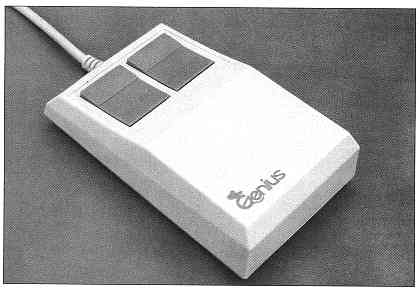
Works like a charm.... I used to have wrist pains when I was younger, but that was in the day that mice were square bricks like the Genius Mouse
-
Re:Everything old is new again
FWIW, here's the link about the Teleram notebook. Sweet.
-
Re:Very interesting...
How Microsoft, a software company, can develop such crappy software while Apple, arguably a hardware company, can develop such good software.
Because Steve Jobs, like him or not, has a hippy/beatnik vision to make computers easier to use. Since after the first Apple was released, money has never been his primary motivation.
Bill Gates on the other hand, has visions of profit. He might even be a confused and unstable person. http://slashdot.org/article.pl?sid=05/01/31/162121 0&from=rss
Read "Fire in the Valley" http://www.fireinthevalley.com/ or Accidental Empires
http://www.atarimagazines.com/compute/issue145/4_A ccidental_Empires.php sometime.
Enjoy, -
Next generation?
Let me introduce yourself to Nolan Bushnell's brand new prehipheral of the 80's .
-
In the days when Apple was king...
By the time the IBM PC was introduced in 1981, Apple had established itself as the market leader in home computing. Aside from the problems with the Apple III and the Lisa, they'd had an extraordinarily successful run; the expandability of Apple II systems put them in a league of their own, well above the VIC-20, TRS-80, and Atari 800. After the PC came out, Apple and IBM ran neck-and-neck for a couple of years; if you look at photos of the West Coast Computer Faire from that period, you see Apple IIs all over the place, and post-PC introduction, you see the Apple II running neck-and-neck with the PC. Giant booths advertising products "For the Apple II and IBM PC!", often with the Apple II getting first billing, and with both machines prominently displayed side by side. Businesses quickly took to the PC of course due to the IBM name, but in many other areas of computing it was Apple vs. IBM for at least a couple of years, and the outcome was far from clear at the time.
My first computer was an Apple II Plus that we used for word processing, home finances, games, BBS calls, recipes, everything you can think of. Boxes and boxes of 5.25" disks that I still have to this day - hundreds of programs. It was amazingly useful and it seemed eternal.
Here's an interesting excerpt from an article from Creative Computing magazine, March 1984:
Lisa, long heralded as the next step in microcomputing, was expensive ($9995) when first introduced in February 1983 and had relatively little software. The fact that Apple allowed more than six months to elapse between the announcement of the product and first shipments also hurt sales. It may have captured the world's imagination, but as John Sculley, said, "IBM captured corporate America's desktops."
There are two important questions about Macintosh. First, will it undermine sales of Lisa, since it essentially does what Lisa does at a lower cost; and second, will it cannibalize IIe sales? Macintosh probably will not hurt Lisa sales in the long run. True, it does look like a low-end Lisa, but Lisa can do more and has more expansion capability. Nor is it likely to harm sales of the IIe since Macintosh is not designed as a home machine. It can't use proDOS or DOS 3.3 based software, does not support a color display, and most important, is not being marketed by the Personal Computer Division.
Apple faces many problems. 1984 will be the most critical year in the company's history. If Macintosh does not make the impact for which its builders hope, if Lisa sales do not pick up, and if IIe/III sales remain sluggish in the face of competition from IBM, then Apple could become just another microcomputer manufacturer. But with the new direction and new blood at Apple, the company stands an excellent chance of regaining its position as an industry leader. Apple is growing up, and the process won't be easy. With the dedication of John Sculley and with Steve Wozniak back in the picture, it looks as if there will be an Apple in our future.
Notice the perspective with which this article was written: people were already used to Apple IIs in their homes, and so, to them, it followed that the Mac was not a home machine. It was perceived first as Apple's entry into the professional/business market, but the Apple IIe was, in the words of a later article, "the machine that just won't fade away." Sales of Apple IIe machines stubbornly persisted despite the fact that Apple had shifted its focus elsewhere.
I wish that Apple had taken this as a clue to put some real effort into quickly evolving the II line. If it had gotten a GUI long before the IIGS, who knows what might have happened? The expandability and flexibility of the Apple II combined with a slick GUI would have done wonders, perhaps even made it a real threat to I -
In the days when Apple was king...
By the time the IBM PC was introduced in 1981, Apple had established itself as the market leader in home computing. Aside from the problems with the Apple III and the Lisa, they'd had an extraordinarily successful run; the expandability of Apple II systems put them in a league of their own, well above the VIC-20, TRS-80, and Atari 800. After the PC came out, Apple and IBM ran neck-and-neck for a couple of years; if you look at photos of the West Coast Computer Faire from that period, you see Apple IIs all over the place, and post-PC introduction, you see the Apple II running neck-and-neck with the PC. Giant booths advertising products "For the Apple II and IBM PC!", often with the Apple II getting first billing, and with both machines prominently displayed side by side. Businesses quickly took to the PC of course due to the IBM name, but in many other areas of computing it was Apple vs. IBM for at least a couple of years, and the outcome was far from clear at the time.
My first computer was an Apple II Plus that we used for word processing, home finances, games, BBS calls, recipes, everything you can think of. Boxes and boxes of 5.25" disks that I still have to this day - hundreds of programs. It was amazingly useful and it seemed eternal.
Here's an interesting excerpt from an article from Creative Computing magazine, March 1984:
Lisa, long heralded as the next step in microcomputing, was expensive ($9995) when first introduced in February 1983 and had relatively little software. The fact that Apple allowed more than six months to elapse between the announcement of the product and first shipments also hurt sales. It may have captured the world's imagination, but as John Sculley, said, "IBM captured corporate America's desktops."
There are two important questions about Macintosh. First, will it undermine sales of Lisa, since it essentially does what Lisa does at a lower cost; and second, will it cannibalize IIe sales? Macintosh probably will not hurt Lisa sales in the long run. True, it does look like a low-end Lisa, but Lisa can do more and has more expansion capability. Nor is it likely to harm sales of the IIe since Macintosh is not designed as a home machine. It can't use proDOS or DOS 3.3 based software, does not support a color display, and most important, is not being marketed by the Personal Computer Division.
Apple faces many problems. 1984 will be the most critical year in the company's history. If Macintosh does not make the impact for which its builders hope, if Lisa sales do not pick up, and if IIe/III sales remain sluggish in the face of competition from IBM, then Apple could become just another microcomputer manufacturer. But with the new direction and new blood at Apple, the company stands an excellent chance of regaining its position as an industry leader. Apple is growing up, and the process won't be easy. With the dedication of John Sculley and with Steve Wozniak back in the picture, it looks as if there will be an Apple in our future.
Notice the perspective with which this article was written: people were already used to Apple IIs in their homes, and so, to them, it followed that the Mac was not a home machine. It was perceived first as Apple's entry into the professional/business market, but the Apple IIe was, in the words of a later article, "the machine that just won't fade away." Sales of Apple IIe machines stubbornly persisted despite the fact that Apple had shifted its focus elsewhere.
I wish that Apple had taken this as a clue to put some real effort into quickly evolving the II line. If it had gotten a GUI long before the IIGS, who knows what might have happened? The expandability and flexibility of the Apple II combined with a slick GUI would have done wonders, perhaps even made it a real threat to I -
Old coding practises, not conspiracy
> but what possible code could be "fallen through" into
> that would set CPU execution *inside* the metafile
Actually, I think it was done for performance releases (remember, existed back in the Win 3.0 days).
Back in ye olden days, there was a common software practise called self modifying code. It was used in some implementations of FORTH, but it was far more popular on systems that had few registers like C64. It was generally used as a way to dramatically speed up code on those slow processors.
Have a look at the popular C64/Atari program SpeedScript (see http://www.atarimagazines.com/compute/gazette/1987 05-speedscript.html or http://www.atariarchives.org/speedscript/ch3.php ).
The source code it gives an example:
"This module is chiefly concerned with the word processor editing functions.It contains many common subroutines, such as TOPCLR and PRMSG to clear the command line and print messages. It contains the initialization routines and takes care of memory moves (inserts and deletes). A second module, SPEED.2, is responsible for most input/output, including the printer routines. SPEED.1 is the largest file in the linked chain. UMOVE is a high-speed memory move routine. It gets its speed from self-modifying code (the $FFFFs at MOVLOOP are replaced by actual addresses when UMOVE is called). UMOVE is used to move an overlapping range of memory upward (toward location 0), so it is used to delete. Set FROML/FROMH to point to the source area of memory, DESTL/DESTH to point to the destination, and LLEN/HLEN to hold the length of the area being moved." -
Re:Considering.
My first exposure to gaming magazines was Nintendo Power and Sega Visions when they first came out.
I'm so old
My first game reviews came from Compute! Magazine. http://www.atarimagazines.com/compute/ -
Re:Shocking
I will concede that
I was just checking to be sure. I actually work with a guy named Gerard, and I've made the same mistake a billion times or so.
but will point out that you cannot seem to spell "Tramiel" correctly in two postings.
Touche.
Your posting from Gamespot is not as accurate as from the book *Game Over*.
According to "Phoenix: The Fall & Rise of Videogames", the entire incident between Kassar and Famicom was where the damage to the relationship came from. Every source I've found on that period states that Atari was losing one to two million dollars a day. Atari posted over a half-a-billion loss for 1983. (Note that the article is from 1984.) I don't see how Atari could have been left with much in the way of money.
I guess we'll just have to step out of this one for now, and let the historians argue it out.
Atari never intended on releasing the Famicom. It was a defensive move, and Atari Inc. would have sat on the Famicom while selling the 7800.
I could see that. Sun Microsystems later did the same thing to Microsoft with an exclusive license to produce Windows NT for SPARC. Unfortunately for Atari, that was a REALLY bad time to be playing those games. Tramiel (I think I got it right that time.
That being said, a lot of people in the retro crowd seem to like the 7800 better than the Nintendo. I can't understand why. The Nintendo did better on graphics, sound, and gameplay at every turn. For an example, just look at the compromises made for Double Dragon on the 7800 vs. the NES. The NES was definitely closer to the arcade. -
Remember, the original Mac didn't sell well eitherIt's worth remembering that the original Macintosh was a flop. The attempt to cost-reduce the Lisa resulted in a machine too weak to do much of anything. Remember the original specs: 128K, no hard drive, one floppy. Ever use one? Ever actually try to get work done on one? You had to fit the OS, the app, and your documents on one floppy. Or you could get an external floppy, which made the thing marginally useable. It was cute, but not productive.
The lack of a hard drive was the killer. By the time the Mac came out, IBM PCs had a hard drive, so Apple was playing catch-up. Apple had tried building hard drives (the LisaFile), but they were slow and crashed frequently. But at least the Lisa had a hard drive. Third parties added a 10MB hard drive to the Mac in early 1985, which brought performance up to an acceptable level. Some people say that third-party hard drives saved the Mac. But Apple fought them tooth and nail. Apple finally came out with a 20MB external hard drive for the Mac in 1986. This was very late; IBM PCs had been shipping with hard drives for five years.
Sales for the Mac were well below expectations. Apple had been outselling IBM in the Apple II era. (Yes, Apple was once #1 in personal computers.) In the Mac era, Apple's market share dropped well below that of IBM.
What really saved the Mac was the LaserWriter, which launched the "desktop publishing" era. But that required a "Fat Mac" with a hard drive and 512K. By then, the Mac had reached parity with the Lisa specs, except that the Lisa had an MMU and the Mac didn't. The Lisa also had a real operating system, with protected mode processes; the Mac had "co-operative multitasking" in a single address space, which was basically a DOS-like system with hacks to handle multiple psuedo-threads.
The MMU issue was actually Motorola's fault. The 68000 couldn't do page faults right, and Motorola's first MMU, the Motorola 68451, was a terrible design. The Lisa had an Apple-built MMU made out of register-level parts, which pushed the price up.
Apple might have been more successful if they'd just stayed with the Lisa and brought the cost down as the parts cost decreased. They would have had to push Motorola to fix the MMU problem, but as the biggest 68000 customer, they could have.
-
MDOS 6.0 was BOTH infringing AND defective!
As I recall, the issue with the disk compression software in DOS 6.0 was not that it was defective, but that the compression method MS used infringed on the property rights of a company called Stacker. Stacker sued MS and won, and MS was obliged to change the disk compression technique to something else, hence the release of DOS 6.2.
I remember the compression being defective in 6.0, and it was a bit of a "big deal" in the computer press, comparable to the Pentium FP divide bug (IIRC, the compression bug was worse, giving a much greater change of incorrect or lost data than Intel's divide problem). A little googling brings up this article, describing 6.2 as a 'bug fix' release over 6.0:
http://www.atarimagazines.com/compute/issue162/18_ Old_DOS_new_tricks.php
The release timeline in in this article:
http://en.wikipedia.org/wiki/MS-DOS
MSDOS 6.2 was a "Bug fix release", and the next release, 6.21, says "Following Stac lawsuit, removed DoubleSpace disk compression."
Microsoft put disk compression back into MSDOS in the final release, 6.22: "DoubleSpace replaced with non-infringing but compatible DriveSpace tool" -
I fondly remember...
the days prior to Netscape.
13 years old, armed with Commodore 64, tape drive, 9" b&w tv, and armfuls of magazines like these computer classics. -
What is old is new again
One of the earliest forms of AI I ever learned about was MENACE. A pre-computer means of training a system to play and win Tic-Tac-Toe. I will confess to loosing more than a little time "training" my system.
-
Re:Habitat closer to first.
Actually, they started building Habitat in 1985, and the beta test started in 1986 wrapping up in 1987. I misremembered the dates: http://www.fudco.com/chip/lessons.html
Air Warrior began its testing in 1986 as well and was released in 1987. That puts them in about the same time frame. There is an excellent timeline in http://www.gatecentral.com/shared_docs/Timeline1.h tml
The problem is that Air Warrior could only have 41 planes in each instance of the game. (http://www.atarimagazines.com/startv3n2/kesmaiwar rior.html) Multiplayer? Yes. Wicked cool? Absolutely. Ahead of its time? Without a doubt. Massively multiplayer? No.
Habitat was massively multiplayer at a time where other games were figuring out how to be online at all. -
a lot of pack-rat geeks like me
Yep, Packrat 4.0 was a right stinker.
Sure am glad I kept that thing all these years.
Here and the wife says I'm teh st00p3d. -
Finally after 20 years!!!
I get to see what happen to the Tandy Whiz Kids
-
Re:Not one more damn line of code, ever!
I dimly remember that ad. What comes to mind first is Borland's ObjectVision but that may be too early for '96. OV was kind of an early competitor to VB.
-
Check this out
Creative Computing, Vol. 9, No. 6, June 1983
But what are we to do? Teach seven-year-olds to use WordStar? That's simply not feasible. Fortunately, another package has recently appeared; it is so simple, accessible, forthright, and consistent, that kids are begging to write "What I Did on my Summer Vacation' on it, even in the off-season. It is Bank Street Writer, from Broderbund Software.
Developed in conjunction with a research and design team from the Bank Street College of Education in Chicago, Bank Street Writer was designed to embody the word simplicity, and it does so quite admirably. Selecting from screen-based menus with the keys , and the spacebar, the user chooses whether to enter or correct, manipulate, delete or save text.
And although it has been designed for ease of use by children, Bank Street Writer is quite capable of producing professional results with any short document. I wouldn't want to use it for a novel, but for ten- or twelve-page reports, it does just fine. Up to 2300 words can be stored in any single text file. Of course, files can be linked, so that larger documents can be stored.
The top of the Bank Street Writer screen always displays the choices which are available to the user. Among these are options to delete or undelete, move blocks of text, find and replace character strings, save, kill, rename, or print files. All of these modes can be selected straightforwardly by moving the highlighted bar to the desired choice, then hitting RETURN. It is that simple, and it becomes second nature very quickly.
Below the menu bars is a text box, in which your text appears. Entering text is as simple as, well, entering text. Full cursor control is available using the arrow keys on the Atari, and the I, J, K, and M keys on the Apple. Lowercase is generated through software in the Apple version.
Ah, back when lowercase was a luxury on some systems...
Special cursor control keys are also provided, to move to the beginning or to the end of a text file, or in jumps of 12 lines in either direction.
In addition, other keys allow for centering of lines and indenting of paragraphs, and indicate how much RAM storage space remains. You can even protect personal files with a password, so that others will not be able to access them from Bank Street Writer. (Because text resides in conventional DOS files, however, it is not too secure, and perhaps that is good, because kids have a way of forgetting passwords.)
Let's take a closer look at the estimable friendliness of the program.
Check out what was apparently considered hot shit for moving text:
I have decided, for an example, to move a block of text from one place to another. How to do it? First I move the selector on the top menu portion of the screen to "move.' I do that using the , or spacebar. Then I press RETURN. I have now entered the move screen. It prompts me to place the cursor at the beginning of the text to be moved. I do so, then press RETURN again. The move menu prompts me to move the cursor to the end of the block to be moved. I do so, and the text that will be moved is immediately highlighted. The screen prompts me to hit RETURN. I do so, and am prompted to move the cursor to the desired location of the transplanted text block. I do so, then hit RETURN. The text is moved there, and I am asked, "Is it OK to move text here?' If I say no, it will put everything back the way it was. If I say yes, it will effect the move. Even then, I can put things back by using "moveback.' Now that's friendly.
And that's all!
If you hold down ESCAPE while the program is loading, the utility program will boot up instead of the word processor. Through this, special disk drive or printer configurations can be custom-tailored. Even optional keyclick is offered, though I can't imagine why you would want it.
D -
Re:I remember the (Feb?) 1984 Byte Magazine/Interv
Not quite what you asked for, but you can read old issues of Creative Computing from that same time frame (they had an Apple column) at this website.
-
My experience/rant
My first experience with a computer was when I was five. My dad had an Atari 800. (He ended up selling it because he couldn't afford a disk drive! This was when disk drives cost hundreds of dollars.) I remember one night he typed in a program that acted like an etch-a-sketch.
I few years later, my parents bought me an Atari ST. I was hooked on computers from that point on. One day I was reading an article in Atari Explorer magazine about programming. The article presented a simple "Hello, world" type program in BASIC. I decided to play around with it and see if I could change it slightly. (This was back when every computer came with a copy of BASIC.)
I ended up teaching myself BASIC over the summer.
Anybody remember when computer magazines used to publish type-in programs?
I know nowadays a lot of people don't like BASIC because of goto and what not. But I think it is a good language to teach some basic principles (what a variable is, what a loop is, etc).
I'm currently learning python. I've wondered if it would be a good first language for someone. I'm not sure it would be. For one, I'm not sure if someone who learns it would appreciate all the things it does for you. Second, when they learn another language, I'm not sure what the learning curve will be like. It might take them a while to get used to the new ideas. On the other hand, maybe starting fresh and not carrying some of the baggage of older languages would be good for a new generation of programmers.
I've never used Pascal, but I've heard it's a good language for learning programming.
Now, I've heard some people say that OO is the way to go and should be taught to newbies. But even with OO you still use parts from procedural programming: you still use variables, still use loops, still call functions, etc. I see no harm in using a simpler language to teach the fundamentals before moving on to objects.
Maybe what we need is a version of knoppix set up for teaching programming.
Python links:
Main python site: http://www.python.org/
Dive Into Python book: http://diveintopython.org/
Pascal:
A free Pascal compilerhttp://www.freepascal.org/
Basic:
I don't have a link for a version of basic. But I know there are some on the web. And Win 95 & 98 have a copy (buried) on the setup disk. Look in the other\oldmsdos folder.
More:
http://thefreecountry.com/ Has links to free compilers & more for various languages.
Old computer magazine archives:
http://www.atarimagazines.com/
-
oh the days...
Heh-heh. That should be a topic almost everybody has their say on
Anyways - being a kid from the Eastern Europe (born in '79 so the iron curtain was not to be pulled up for another 8-9-10 years) I had quite a peculiar way of getting comfy with computers. I probably got quite lucky - my parents were computer specialists at our Tallinn Technical University (called Tallinn Institute of Polytechnics back then) which enabled them to, lo and behold, sometimes even drag some hardware home. The very first computer we had at home was Macintosh SE. The second computer I remember having on the desk in their bedroom was a Robotron - I don't even remember (guess I even never knew it) what was it a clone of. Nothing peculiar there, it ran some kind of DOS and I had my share of games there - Xonix, Sopwith, a Tetris clone thrown together by some guy from the same University. However, they used it for some project my mother was doing for some educational organization in FoxBase and I tried some data access and on-screen forms, probably wrote my first batch files too. If I remember at least somewhat correctly, I was about 8 or 9 at that time.
About the same time (right after they returned that Robotron) my mom and two of her colleagues somehow got hired to develop a simple scheduler/CRM for Finnish dentists. As the end users were supposed to use Macs, we had an absolutely 100% bona fide Macintosh SE for a year or two. This was probably the time I got my first shot at programming - MacOS Classic (version 6 at the time) had an application called HyperCard, created for storing card-based information or something like that. Quite peculiar now that I think back on it but it also featured a programming (or more like scripting) language called HyperTalk that was friendly enough to use constructs quite similar to English. I wrote some small programs that were quite fun - I could draw on the screen and use some sprite-like animations that I possibly would have had a harder time with in QBasic et al in DOS.
And then dawned one of the best days of my life - the dude responsible for the Finnish side of that aforementioned project found that he has a completely spare "computer" laying in his den. A Casio FP-200 (you can find some information here. I absolutely loved it. It was programmable, it had a freakin' graphical PLOTTER and it was mine. MINE. Mine to hack and mine to break. Not that it was great fun to hack it - no way to do anything with it but type BASIC code into its 8K memory. It also had a user manual with some sample programs and games. I remember typing about 500 lines of code into the machine, line by line, not knowing one bit about BASIC but being eager to learn. And learn I did - a few months later I coded a small game into it with help from my father, it was turn-based, had monsters, keys and locks and treasures and was lame than hell, but it was mine -
Nostalgia...
But still, games were better back then, when they concentrated more on the gameplay and/or story before the prettiness of the graphics.
Better? A bad game today is generally more entertaining than a bad game from back then. Plus, we tend to only remember the games we liked.
Speaking of bad games, it's funny how people forget the obvious.
Since I'm thinking about ET, here's an article that I find curious. Of importance:
1. The article is dated July 1983, which is after the release date of the original 2600 ET (fall 1982). This article is NOT about the infamous one, however I would expect references to lessons learned (which I can't seem to find).
2. I feel that the following quote disproves your statement: "These included high standards of graphic and sound representation, especially for the E.T. figure and voice, and a natural yet playable game concept that was true to the feeling of the film." Notice how graphics and sound are listed first (with emphasis on quality), and game concept just needs to be "playable".
Or, does "back then" refer to games made before 1983? -
Re:MPC
I found it. The Tandy CDR-1000
-
Re:Two words: Reveal Codes
When I was young, I cut my teeth on paperclip and that processor out of compute's gazette (I'm sure someone will chime in and say it's name) on my c64.
-
Re:Don't forget...You forgot HyperDOS! Lets not forget about the world's greatest desktop.
Who could dispute Compute Magazine's article mentioning it -
"HyperDOS is the neophyte computer user's best friend. In clear and concise language, this GUI (Graphical User Interface) teaches you what you need to know about your computer and gives you a great environment in which to apply your knowledge."
Its flexible, stylish, and yet striaghtforward GUI is hard to beat, and yet takes up no more than a floppy disk's worth of disk space.
And don't forget to pick up your copy of Dr. Sbaitso!
Heh, kidding aside, I saw a HyperDOS user manual in the library today. I almost got a contact high from all the memories that came back from paging through that thing. -
Re:It's 1984 Again!
In addition to the disk image mentioned above, the article itself is available at the invaluable Classic Computer Magazine Archive.
-
Re:It's 1984 Again!
In addition to the disk image mentioned above, the article itself is available at the invaluable Classic Computer Magazine Archive.
-
WayOut, BallBlazerDo these qualify?
-
Vector graphics came home in 1983
With the vectrex video game system
I wonder... could those games be made to run under SVG... with frame buffering.... -
Re:Nice...Yeah, he worked for Atari but I'm not going to give his real name as he has chosen not to do so. Any boy detective can find it if they make the slightest effort. I'll even give you a clue. He wrote Super Pac-Man for the Atari 5200 before going on to operating systems. He's mentioned in this article too. Sadly, he's right about TOS, or TOS-off as we disaffectionatelly called it. It sucked. Oh how I wish the Atari ST had shipped with OS 9. If it had, I might still have my hair.
I've been meaning to thank him for his object code converter. I just never thought today would be that day.
-
Re:Search for food...
-
YOU CAN'T HANDLE TEH SPOKE!!!
-
this is nothing new
Every Atari DOS disk had a hidden sector, keeping 128 whole bytes of storage out of your grasp.
-
other magazines
For other perspectives, see Creative Computing magazine: Apple Mac review and Compute magazine: Apple's Macintosh Unveiled
-
other magazines
For other perspectives, see Creative Computing magazine: Apple Mac review and Compute magazine: Apple's Macintosh Unveiled
-
Early Amigaian
To my knowledge, the A1000 was created by Jay Minor, who i believe has "passed on" now. For give me if im wrong
Anyway, eventualy commador bought the Amiga design and hired Jay, Made everyone involved famous and rich and then killed them Amiga less than 10 years later
Heres a nice, show report? and some technical details about the first Amiga or as it was code named, "lorraine".
http://www.atarimagazines.com/creative/v10n4/150_A miga_Lorraine_finally_.php
-
With a Microsoft Basic
I was unnerved a bit to learn the provider of the C64's basic. Rather like Luke felt a bit unnerved at the end of Empire Strikes back.
-
Re:Cool
Here's a brief review of the quadlink from Creative Computing
-
what about this genius?
-
actually it wasn't biorhythms
it was a lie detector, although I seem to remember this coming out much earlier than 1986...
-
Three words why not: "Fifth Generation Computing"
This sounds like a fresh coat of paint on the old Fifth Generation Computing program. For you youngsters, this was a Japanese effort launched in the early 1980's to develop "intelligent" computers capable of natural language interaction, etc. At the time it was perceived as a major competitive threat to US and European technology companies.
Of course it was a colossal failure. Japan has gone from being a contender in the computing world to a nonentity. If Japan wants to get back on track, it would be well-advised to take smaller steps. Try making a robot with the intelligence of a cockroach first.
Of course the problem with the whole approach is that producing an AI is not yet an engineering exercise (as Apollo was in 1963).
-
The Magazines Online
If you want to read some of those old magazines online, go here. They have all the Antic issues online plus a whole lot more of the other computer magazines of the time.
-
Color Printing Without the Inkjet Mess?
Dude, you should so get one of these.