Slashdot Mirror
Domain: blinkenlights.com
Stories and comments across the archive that link to blinkenlights.com.
Comments · 153
-
Re:This is it.
I agree. Lets start with An Open Letter to Hobbyists by our good ol pal, William Henry Gates III from the date of Feb, 3 1976. Thirty eight years later and the mentality at Microsoft hasn't really changed much. Let's not forget the Halloween Documents back from 1998. How can we forget the Initiave for Software Choice led by our friends at Microsoft back in 2002. Dare anyone to forget the Microsoft Get the Facts campaign? Or how about Microsoft messing with OLPC. How about the recent attempt at making us think ODF is bad? I think I am going to have to pull the BS card on this article as well.
-
Re:Not so fast
Why should one private company have the right to unilaterally declare this kind of planned obsolescence?
Because they made it?
You and the other responses to JDG1980 have missed the point.
Electrolux made my vacuum cleaner, but once I bought it they have no right to it. I can buy my vacuum bags and filters from Electrolux, or I can get clones of them from other manufacturers. With advances in 3D printing, I may even be able to replace parts of the machine itself without involving Electrolux.
It's not so with "intellectual property." I can't simply hire somebody else to support my Windows XP when Microsoft chooses not to. I have to get it from Microsoft itself, and Microsoft charges punitive rates to support Windows XP. You can't actually buy Windows. What you buy is a license to use Windows, with all the contractual limitations that Microsoft can apply.
This is a violation of intuitive, common sense concepts of buying. I have software, I should be able to give my friend a copy of it. Microsoft says each person will individually pay Microsoft for it. The conflict goes back all the way to the beginning of Microsoft, when people shared copies of Microsoft BASIC with each other. Bill Gates disapproved.
The disastrous end of Windows XP just proves that free software is the only long-term practical software.
-
Not Surprising
Those accusations still sound like sour grapes from Gary Kildall. The Microsoft - IBM deal was genius. Gary sounds upset he did not have the foresight to make it happen. He had his chance. Heck, MS even suggested that IBM talk to Gary and the CPM guys when they were looking for an operating system. But, Gary refused to play ball. Too bad.
So, Microsoft stepped up to the plate. They bought QDOS, worked with it and wrote MS-DOS. Sure, it was not an extraordinary operating system. But it wasn't terrible, and it worked like CP/M in a lot of ways because MS certainly took ideas from CP/M. That's perfectly OK (maybe not these days, software patents etc...) They were giving IBM and their customers what they wanted when Gary and Digital Research decided not to. That's the genius of Microsoft. Realizing the spectacular deal to be had and standing up to IBM to sign an agreement that would make them the biggest software company ever; keeping ownership of their software, regardless of how much big blue pushed them around. Sorry Gary, you missed out.
Lastly, I doubt the young Bill Gates would hypocritically allow his company to stoop to coping code after he wrote this and sent it to many of his future customers: -
Re:"PC"
It has an actual etymology: "PC" is a relic of the original "IBM PC" in 1981.
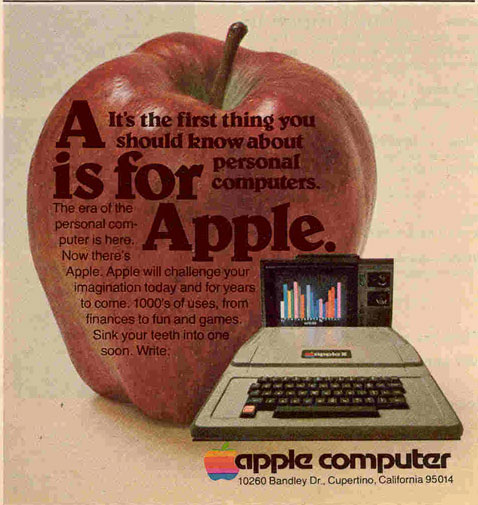
Nope. Apple at least since 1977 referred to their Apple II as a ”personal computer“:
http://www.macmothership.com/gallery/MiscAds2/AisFor1.jpg
Check out the rest of their ads from the late 70s, for many more occurrences of the term, here:
http://www.macmothership.com/gallery/gallery1.html
In 1974 HP published this:
http://www.hpmuseum.org/journals/65a.htm
Dig a little bit more in history and you may find who used the term first:
-
The beginning of the end
So we are now seeing top-down control of executable computer code.
The last remnants of user-programmable computing have been swept away forever. Fear will keep the local systems in line... Fear of key revokation!
:(
-
What was the first PC
For all who haven't seen it yet:
-
Re:Gotta love it.
Hmm, not sure where you want to go with this, as your comment doesn't particularly refute any of my points. Doesn't matter, I don't think you're going to reply, seeing how this is a tad old and you don't have actual arguments anyway
Fanboy,
OK, I'm guilty of starting the previous comment with a teaser myself... but care to elaborate?
Prepending disclaimers to everything is cumbersome, but here you go: I'm not affiliated with Google, don't have a particular interest in seeing them dominate or anything like that. I do like pointing out obvious nonsense on the internet
What is it you're a fanboy for?Seriously, Google starting to charge for VP8 at some point is about as likely as Microsoft opensourcing their most recent Windows and Office.
Look at the political and corporate landscape of 20 years ago and see how many ways you can begin the sentence, "...then seemed about as likely as Microsoft opensourcing their most recent Windows and Office." It takes a teenager, or someone with a teenage mindset, to look so much in the here and now.
Well, I'm obviously too young (but teenager? not so much) to have had a good overview over the corporate landscape of 20 years ago... but I think it's pretty clear that Microsoft is as likely to opensource their products now as they were then.
Besides, even just 5 or so years are half an eternity in tech, and I think my point holds pretty well for such time scales.The other "as likely as..." things? Well, people claiming this for Linux (server), laptops, Myspace (later Facebook) just lack foresight.
Also, Windows source code. "I meant open in precisely the way I want it to be open." Of course you did.
I was just using the common knowledge standard definition. Or would you seriously claim here and now, on a tech site, that the Windows source code is open source? And then you talk about "open exactly as I want it"...
Also, of course Google hasn't promised a blanko cheque for every user of VP8. MPEG-LA hasn't done it either for h264.
Which, after a long and complicated series of technical legal arguments, allows us to conclude that you're no safer with one than the other.
Exactly what I tried to conclude. You're not less safe with Google just because they don't give you unlimited insurance.
-
For those who did not get the joke
The original open letter to HOBBYIST
The OP only changed Hobbyist to China. Plus cela change.... -
Gates the villain, small or big
the "villain" that he was seen as being in the 1990s.
Gates marketeers never get tired of getting paid to whitewash his reputation, do they? Here is the whine he wrote in 1976. He wasn't always big, but he was always annoying and wrong. The myth of Horatio Alger is just that a myth, and Gates was a rich kid from rich parents and rich grandparents who's mom's connections were in a lucky place at a lucky time.
-
Re:the correct solution
If the boss isn't intelligent enough I wouldn't expect him or her to remain in business long
Meh. You really buy into the idea that success is determined by ability and virtue, or what? Like bad businesses never make money? If a company manages to stay afloat, it means the owner was smart and mature and professional?
No I don't, if ability and virtue determines success Microsoft would not of stayed in business. Though vaguely I recall Bill Gates issuing his open letter to hobbyist. Before he ever came on the scene programmers were sharing their software. Members of MIT's Tech Model Railroad Club would hang their software listings on boards so anyone could come along and improve it. The same happened at Stanford and UC Berkeley. Berkeley Software Distribution, Berkeley Unix, using the BSD license was released a year after Gate's letter. Then the original SCO, Santa Cruz Operation, was the "first UNIX company" and was founded in 1979. Microsoft didn't even have an operating system back then. It wasn't until MS finished, yes finished because Digital Research started programming it, DOS for the IBM Personal Computer which was released in 1981 when they had an OS. And DR started DOS with CP/M.
Falcon
-
Re:Thats fine by me...
I don't think so. MS allowed rampant piracy for years.
Actually, it's the opposite of what you just said. -
Re:How soon we forget
Indeed. Bill Gates had a vision; A computer in every home, and his companies software running on them. Moreover, a major part of his vision was that people were going to pay for that software. Remember that letter?.
It sounds silly now, but back in 1976, the idea that people were going to pay for the software on their home PCs was not a settled issue. If GNU programs, warez, freeware, we applications, and the Linuz kernel have shown one thing, it's that this is still not a settled issue. Software is not viewed in the same way as hardware. When it's so cheap and easy to copy bits, its understandable that people pay so little heed to their supposed worth.
Nevertheless, Bill Gates built an empire, probably the largest and most influential company in history, entirely around the concept of selling numbers to people with computers. You may not like the way he did it, but the fact is that his long term goals and ambitions have shaped the computer industry and indeed the world for the last 30 years. We would not have had a usable, cheap and pervasive home desktop OS in the 90s without Microsoft. We paid the price in security woes and lock in, but we got our desktops.
People talk about the internet, but people needed computers in their homes before they could go online. And that's where Bill Gates and Microsoft came in. Unfortunately, that's not where they intend to bow out.
-
Missing the point
Bill Gates called and wants his moral high ground back.
Seriously, if you feel some sense of entitlement because you write software that other people use, a proprietary model is a more effective way to get what you deserve. Though note, what you actually deserve and what you think you deserve may not be the same thing...
-
Re:But... but...
Sample code for how to use an API is not even close to open source.
Not sure what your all-encompassing 'etc' actually would refer to.
And here's Bill himself decrying 'hobbyists': http://www.blinkenlights.com/classiccmp/gateswhine.html
Win 1.0 wasn't even released until '85. Or are you actually claiming they open sourced DOS?
Get back to work, MS shill.
-
Re:Chumby homepage stinks, article OK
There has been a shift in corporate thinking over the last 20 years. They have slowly been moving from selling products, to licensing products. Companies worldwide have taken their cue from the software industry.
DRM laden musics. Not for rental DVDs and videos. EULAs on video games. Proprietary printer cartridges. Cars that can only be fixed at licensed dealers. Homeowners associations. The list goes on.
The sad reality is that many companies now think, or behave as if they do think, that once you buy their product they still have control and veto power over how, when, when and who can use it. This has been a huge shift in western industry, thirty years in the making. Its genesis can essentially be traced back to this letter. Once the idea of selling numbers to people, and retaining indefinite control over their use of that number, became firmly entrenched in the law, culture and mindset of our industry, it was much smaller step to apply that same principle to books, cars, nintendos and houses.
I'm not sure where this will end, but I can guarantee you one thing. The myriad of artificial restrictions being placed on property in the western world are most certainly not being applied or enforced in developing countries.
-
Re:"Leak 2.0" the new e-marketing campaign package
Well, the whole story of Microsoft and piracy goes all the way back to its early, early days of BASIC on the MITS Altair. Bill Gates wrote his Open Letter to Hobbyists in 1976. The whole idea that software piracy is theft and indeed the entire concept of software piracy goes back to this letter.
Understand that before Bill Gates came along demanding money for Altair BASIC, in general, software was commonly and freely passed around. This is exactly what Ken Thompson and Dennis Ritchey did with Unix and C starting around the early part of that same decade. Applications software was something you paid programmers to create for you in-house. Systems software came with the hardware. No one thought anything of passing software around. Bill Gates essentially single-handedly created the idea of retail software out of whole cloth.
So the anti-piracy stance is something that is and always has been part of the Microsoft ethos practically from day one. That's why I tend to doubt those who take Bill Gates quotes out of context and then turn around and say that Microsoft condones piracy. I don't think they do.
-
1985 called and wants it's name calling back.
If you are going to call someone smelly you should lay it on the right person.
The photo also unintentionally captures classic Gates: completely wrecked hair, terrible looking clothes, generally slovenly appearance, and two glazed eyes staring out past thick glasses. This image changed very little over the bulk of Gates' career, with the shower taps running at much less frequency than the money taps. It should also be noted that this isn't some heaping of sour grapes from the gutter staring up at Bill's mountain of success; throughout the time he has been known in public, Bill's dedication to all-nighters and in-the-trenches energy ensured a number of high-profile press conferences and demonstrations where his lack of hygiene became as breathtaking as the product being demonstrated.
The "bad name" meme is also really worn out, 32 years worn out
What about the guys who re-sell Altair BASIC, aren't they making money on hobby software? Yes, but those who have been reported to us may lose in the end. They are the ones who give hobbyists a bad name, and should be kicked out of any club meeting they show up at. I would appreciate letters from any one who wants to pay up, or has a suggestion or comment.
Can you assholes finally get a new angle for your lies? What's next, asking all GNU/Linux users for $699/cpu?
Finally, while many people admire and respect Mr. Stallman, he's never claimed to represent anyone.
-
Re:Thank you
It is not so much Windows that should be stopped as Microsoft that should be stopped. So when you are there, take a copy of the GPL with you and convince the players to GPL the code that MS will steal and work on (Altair Basic)
The date should be before February 3, 1976 and the company is the called Micro-Soft
The reason: http://www.blinkenlights.com/classiccmp/gateswhine.html
That way we can sue them to hell and back when they come out with Win98 and put all that money to good use for OSS.
-
Very Old News.
Microsoft has been doing this same thing from the very start. Notice that the language never changes:
What about the guys who re-sell Altair BASIC, aren't they making money on hobby software? Yes, but those who have been reported to us may lose in the end. They are the ones who give hobbyists a bad name, and should be kicked out of any club meeting they show up at.
They mostly go after mom and pop computer stores and scare them into a settlement even if it's not their fault. I know someone who fought and won.
The owner of Computer Heaven in Baton Rouge is one of the few people who bothered to fight them in court. He was innocent and everyone knew it. If there was any "piracy" involved it happened to his upstream suppliers. The man made a ton of money for M$ then they treated him like shit. The defense cost him just about everything he had, but he persisted out of principle and won. The poor man kept the store and kept selling Windows hoping the next upgrade wave would fill up his savings again. His reward for that was Vista disappointment. Now he has GNU/Linux experts on staff.
M$ greed does not pay.
-
Re:You will be missed billHave you ever met him, listened to him speak in "private" or the likes? Not that it's relevant, but have you? Bill never really ran Microsoft, he was too much an idealist for business at that end. He did, however, put himself in a position where he could easily make decisions. In fact, he was CEO for awhile, right? That's essentially a position where your whole fucking job is making decisions. He's got, what, a hundred billion dollars for doing absolutely nothing? His "business strategy" that I mentioned earlier was putting low cost PCs into the hands of the masses so that he could offer a universal system. That may have been the goal, if you believe him. I certainly can't deny that the way in which Microsoft screwed IBM early on was of benefit to everyone, in terms of how cheap hardware is now.
But that does not excuse what he, and Microsoft, have done before and since.
From what I remember, Microsoft's very first product was Altair BASIC. The reason they got the contract with Altair was a classic (perhaps the first?) example of vaporware: Bill Gates called the creators of the new microcomputer, MITS (Micro Instrumentation and Telemetry Systems), offering to demonstrate an implementation of the BASIC programming language for the system.[5] Gates had neither an interpreter nor an Altair system, yet in the eight weeks before the demo he and Allen developed the interpreter. Keep in mind, this was when Microsoft was Micro-Soft, a two-person company. Your argument that he "never really ran Microsoft" is not an excuse here -- he made the phone call, and he helped develop the software, with exactly one other person.
It warms my "zealot" heart to know that Microsoft was, quite literally, founded on a lie. His DREAM was one of oneness. His ideal wasn't "open source" but one of "openly available to all who wanted to partake in the scene." For a small fee. He was certainly against sharing, and demonstrated very early on a complete lack of understanding of the free software community (this was before the term "open source") -- read "An open letter to hobbyists."
Oh, and... if his dream was of openness, why didn't the Bill&Melinda foundation donate to OLPC? Now, I will say this carefully and as nicely as I can... Reading down, that's not particularly nicely.
And you still haven't said much of substance. -
Re:Very defensive about Vista.I agree with Gates, Win95 was as good as Windows got. Except it was still based on 16 bit code, didn't even attempt to be secure and crashed all the time once you installed a bunch of badly written applications that hacked it with VxDs. Nope, Windows XP was the best. No, I'm not Bill Gate's sockpupet. Their vision of a unified desktop and web browser has been better implemented by KDE since. XP's copy protection and Vista's digital restrictions were tremendous mistakes. I really don't get this. XP's copy protection was only an issue if you pirated it and didn't know what you were doing. People that paid for it or who knew what they were doing were fine.
And Vista's DRM is a non issue unless you want to play BlueRay or HDDVD's. I can listen to MP3 files on Vista, or play AVIs with no issues. I can even rip and encode CDs and DVDs. The people that licensed BlueRay and HDDVD were very scared of people ripping them, so they forced OS manufacturers to add a bunch of security features in return for being allowed to license the patents. Both Apple and Microsoft had to choose between implementing these features and not supporting the new formats. And both chose to implement them. But that only applies to the new formats. The seeds of M$'s demise were expressed early on.Who can afford to do professional work for nothing? What hobbyist
can put 3-man years into programming, finding all bugs, documenting his
product and distribute for free? The fact is, no one besides us has invested
a lot of money in hobby software.Free software has done all of these things better than non free software.
And it's not really surprising that Gates would say this. He's in the business of selling software, not giving it away.
And most people seem to be quite happy run the OEM copy of Windows they got with their machine rather than try to put together an alternative from free software. Hell I'd pay much more than the $50-$100 or so I pay for an OEM license for Windows because I've tried the alternatives and they really irritate me. $50 or $100 dollars or whatever the manufacturers pay Microsoft for a Windows license is not a high percentage of the machine cost, and it means I don't need to fart around trying to find clones of all the non free software I own. Every time I've done this, I end up spending weeks putting together a far inferior system. It's just not worth it to save $50-$100.
Now you can say it's Free as in Freedom. But that doesn't apply to me really. I want to be free to use the software I want to use. Most of the people that write it don't want to GPL it so the the Linux folks will regard them at best as leaches, even though I'm totally cool with people not giving their work away. Plus Linux has a tiny market share and they're not really too bothered about supporting it. So my Free as in Freedom machine will definitely not run the software I want to. Theoretically of course I could spend my time rewriting stuff to run on Linux, but why would I do that unless I could sell it to other people? And I can't do that if I give away the source code, since people will just take that and not pay me. But the whole Linux ecosystem is extremely hostile to people that don't GPL code. So the lack of the sort of software I want to use is not even a business opportunity.
So thanks, but no thanks. The OEM fee I pay for Windows when I buy a machine is fine by me. -
Very defensive about Vista.
Ballmer tried to counter Vista's reputation as a mistake and failure. CBS did not miss this.
Both Gates and Ballmer were asked about the success, or lack thereof, of Windows Vista, with Walt Mossberg asking if Vista was a failure or a mistake.
"It's not a failure and not a mistake," responded Ballmer. "With 20/20 hindsight, there are things we would do differently." Ballmer said Vista has sold 150 million units so far, but he did say that business customers will be able to request a "downgrade" to Windows XP after the company stops selling XP in June - obviously a response to the fact that many customers prefer XP to Vista.The Register has an article that focuses on this and what it means.
I agree with Gates, Win95 was as good as Windows got. No, I'm not Bill Gate's sockpupet. Their vision of a unified desktop and web browser has been better implemented by KDE since. XP's copy protection and Vista's digital restrictions were tremendous mistakes. The seeds of M$'s demise were expressed early on.
Who can afford to do professional work for nothing? What hobbyist can put 3-man years into programming, finding all bugs, documenting his product and distribute for free? The fact is, no one besides us has invested a lot of money in hobby software.
Free software has done all of these things better than non free software.
-
He's a liar.
He knows that free software has improved relative to itself and he knows that lots of free software is better than his own software in every kind of way. He would like his customers to think otherwise.
At this point, I'd say he was lying when he first proclaimed free software impossible back in 1976. The group of people he presented that letter to were making things that whipped the commercial world at the time and members moved on to form companies like Apple. The lie is so brazen today that it removes the last shadows of doubt.
-
Good news, actually.
Sounds to me like he still doesn't really understand the difference between free "as in speech" and free "as in price". That he still doesn't understand non-fiscal incentives after all these years means that he will likely never understand them, and thus will never be able to manipulate them to his advantage. Let's hope this mind set is pervasive at Microsoft.
-
Re:Interesting...It's pretty amazing that anything gets done, since what he describes as impossible is almost the only way Open Source software improves.
Bill Gates has never understood this. Read his open letter to hobbyists.
Who can afford to do professional work for nothing? What hobbyist can put 3-man years into programming, finding all bugs, documenting his product and distribute for free?
Amazing, isn't it?
-
My, how times haven't changed.
"Nobody develops software for charity.'"
I hear echoes of a letter written by a certain William Gates over 30 years ago:
http://www.blinkenlights.com/classiccmp/gateswhine.html
"What hobbyist can put 3-man years into programming, finding all bugs, documenting his product and distribute for free? " -
Re:No.
You must not remember the days when everybody loved that scrappy upstate Bill Gates.
Was that in 76? When Gates wrote a letter saying: 'Most of you steal your software.' http://www.blinkenlights.com/classiccmp/gateswhine.html -
Re:Well if anyone knows...
Wait Microsoft used to be cool? When was that?
Was it in 1976, when their only actual product (BASIC) was less well-known for its use than for Bill Gates's whining letter to the community scolding them for piracy?
Or was it in 1980, when they managed to dupe IBM into shipping machines with an OS they licensed in beta form, ported badly, and quietly acquired the rights to just before IBM made it popular?
Those events are my first knowledge of Microsoft, so maybe they had a few seconds of coolness somewhere even earlier than that. But if so, it was in a far more fetal stage than Google's current one.
-
Wanna be a billionaire?The results are far too crude for any serious use. So, build a better one. Where do you think the whole computing sector came from?
The first personal computers...
http://www.blinkenlights.com/pc.shtml
They all started looking like this thing. Someone will develop a better media, multiple colours, multiple media, a more accurate nozzle, finer motor control, better software etc etc. They might well turn out to be the next Hewlett or Packard. -
Riigght...
...yeah, real cool guy...
http://www.blinkenlights.com/classiccmp/gateswhine.html -
Re:Unintended Consequences
And that is the problem with their business model. Not only do they over-segment their OS's, but they're so paranoid (and have never shaken their founder's views on getting paid , that they won't admit that it would be cheaper in support and damage to their reputation to simply allow pirated copies to update and patch themselves. I would further argue they should go back to the three version pricing scheme, Personal, Server, Whomping-big-server, with the first notably cheaper than the latter, possibly in an activation-key-free version sold as a family pack.
This is where companies such as Apple (OSX, OSX Server), SUN (Solaris, period), RedHat (Server, Workstation, Enterprise), or Microsoft(Windows NT 4.0: Server,Workstation) get it (or got it) right. While legitimate, my Mac which originally shipped with 10.3 and was later upgraded to 10.4, never checks whether that's the only copy out there. -
It's hard to break through non free propaganda.
The following is a typical frustration for free software advocates:
Recently I gave a conference presentation about the benefits of F/OSS for educators -- how all teachers and students could use these tools and that they were free and would remain so. I distributed copies of TheOpenCD and talked about the F/OSS programs that it includes. Near the end of the hour-long presentation, a participant raised her hand and asked, "So I can use this software for free?" Even after an hour, F/OSS still did not quite make sense to her.
Every other source of information teachers have is full of non free propaganda. Don't copy that floppy (flash warning) is an annoying classic. The basic tenants were laid out by Bill Gates in his famous 1976 whine which says, "if you don't pay me, your computer won't work". Broadcasters and publishers justify their existence with a similar but more realistic story that reinforces the software lie. The lie is reinforced with confusing language, bogus arguments and, ultimately, name calling. The tactics are covered in detail here. Microsoft spends a billion dollars a month on marketing and each piece of that marketing conveys their propaganda.
It's very effective and can only be eliminated by free software use. The idea that software can be shared and improved is so completely foreign to them, so much that you can perform almost any demonstration with free software and they still won't understand, as evidenced above. It's only after they use free software, like Mozilla, that they can see that it is not only good enough, it's what they want and that's what free software is all about. At that point, the rest of the lies start falling down and they get very angry.
-
What really amazes me
Is that between 1975 and 1979 (just 4 short years) we went from the Altair kit and its switches and LEDs to the Atari 800 with multimode graphics, sprites, extensible OS and 4 channel sound. In the middle was the Apple II, affordable mass storage on floppies etc.
Interesting info here including several machines I'd never heard of:
http://www.blinkenlights.com/pc.shtml -
Re:Proprietary forks not bad for end users ...These are RIAA-like companies that believe their biggest asset is their(or other's) code. In free software knowledge how the code works is a big commodity. It's mostly traded on respect, but I see no reason not to be a financial commodity as well. These people that miss the point will end up alienating their biggest asset: people who know what the code does and how to modify it to do what you want.
Tivo right now reminds me of Bill Gates' Open Letter to Hobbyists. They think of these 'hobbyists' as a competitor rather as an asset. Companies like this, making free software, will destroy their chief assets due to their stupidity. the main winners seem to be the large companies. You say that large companies can create more code, but they can also use more code. Meaning that they can exploit a large codebase better than any 'hobbyist' would.
Those that choose to reinvent the wheel will be left buying real wheels from people that are already building jets. We can't have any sympathy for those greedy companies, there's more than enough code to go around. One person(or company) can't understand it all, and they shouldn't be able to! -
Skilled corporate guy masquerading as hobbyistIt's sad that no mind at Microsoft can conceive of a compelling argument why Jamie is wrong. I notice that Dan's argument includes comments like The vast majority of our customer base, now with 14 million downloads, isn't even professional developers, its non-professionals. [..] From a total number perspective, beginners are the largest segment of Express customers and they still find Express too complex, [..] Our Express customers haven't been asked for unit testing or extensiblity in much the same way as I didn't ask or even know to ask when I grew up programming BASIC on an Apple IIe. So? That wasn't the issue. If this is true, then the "vast majority" of Express users simply won't use it, so what was the point of bringing it up? If Dan was implying that Jamie is wasting his time, then that's Jamie's problem; it's not going to damage their experience, or MS/Express's reputation.
Is he attempting to steer the discussion (and basis of MS's actions) away from ground that may not be as firm as MS would like to pretend it is? "Our ickle novice programmers don't want or need TestDriven.NET". Then they won't use it, Dan. As you may remember from my previous posts, Visual Studio Express was a labor of love. MS would not have permitted the release of Express if it had not been to their benefit; in this case, giving low-end programmers the chance to use, learn and be steered towards their product without cannibalising sales of the full Visual Studio.
If it really was a "labor of love" for Dan, then I'd question why he's pouring his heart and soul into products for a company like Microsoft, and consider him somewhat deluded. On the other hand, he's a manager, not a low-level Bill-Gates-is-God-Kool-Aid-drinking peon, so you'll excuse my scepticism if I consider this to be an attempt to play the "I'm one of you and really enthusiastic about this" sympathy card.
The tone of such comments as It's unfortunate that this happened, but as you can see, we have been very patient with Jamie and it's our hope he will remain in compliance of the Visual Studio Express Editions license agreement. smacks of PR. It's the weaselly attempt to come over as firm-but-friendly whilst underneath making clear what they expect to be done and the veiled threat if it isn't. Either he or someone else has consciously worked on this.
I also notice that he states here: Back in 1975, Microsoft started out as *the* hobbyist company for a nascient software industry. While many things have changed since then, we always had a special place in our hearts for hobbyists. Yeah, MS has always been the hobbyist's friend, ever since Bill Gates' friendly letter to them in 1975. They've always been open and let people play around with their stuff.
Lying corporate fuck. -
Re:Maybe we just don't like you...
Bill Gates got to where he is because the members of the Homebrew Computer Club were so stunned at his Open Letter, they forgot to drag him into the Gents for a Bloody Good Kicking and a couple of head-flushings, then report him to the owners of the computer he had been misappropriating ("The value of the computer time we have used exceeds $40,000" -- except they never paid it).
Had a young RMS been there, I firmly believe that a free and fully-backward-compatible BASIC would have been whipped together in a couple of days and would have quickly taken over from Microsoft BASIC. Alternatively, had the decision been made that computer software was not subject to copyright, I think the course of history might have run differently again. -
Re:Yeah, but...
Nutria already gave some examples, but I've got more for you.
Tandy 1000, HP's 95LX (and 200LX) palmtop PC with DOS (the 200 had MS-DOS 5.0), the HP 1000CX DOS palmtop, some of the early IBM Aptivas, the HP model 110 line of desktops, the rather famous GRiDLite (my GRiD laptops all loaded DOS from hardrive -- always wanted a GRiDLite too though), the IBM EduQuest Model 30 and Model 40 (I have a few model 40s, but only one still boots -- into OS/2 Warp because I'm not using the on-chip DOS), the Sharp PC-5000 portable, the IBM PCJr, certain IBM PS/1 machines, the Tandy 2500 XL, and some others.
Also, Franklin, Commodore, TI, and Atari had systems with some form of OS in the ROM. Some Franklin systems had something called F-DOS in ROM which I think was mostly a ripoff of AppleDOS.
Notice that these examples are not modern hacks to try it out at home, but all commercially shipped systems from the late 1970s to early 1990s.
AMD and Intel still have documentation on DOS in ROM for embedded systems on their websites, and AMD even recommends Datalight's solution. -
Don't you get it? Linux is stealing their candy.
Hobbyists and free software advocates have succeeded where Bill Gates said they could not. They have put out a usable, alternative to solution to just about everything. This irritates people in the lock'em'in software business, as suddenly now they have competition that not only won't just go away, but is demanding and developing alternative standards to proprietary formats.
They are not only threatening as a competitor, but they threaten companies like MS with eventual obsolescence. And let's face it: no company wants to deal with something that will eventually put them out of business if it succeeds.
What's funny about Linux is that it is sort of a Microsoft tactic to get rid of competitors, namely, we'll give it away. That's how they put Netscape out of business, how they attained so much market share in media players, etc. Linux is the ultimate "we'll give it away" solution, giving away everything even the OS.
You can see why software businesses could feel threatened by Linux, but legally, they probably don't have a leg to stand on either way. Nobody can say they own a patent to a generic GUI, when Apple, MS, OS/2, etc. etc. have all used GUIs. Linux is in little to no legal trouble. But it's the last leg that they can stand on when competing for enterprise marketshare when all the other FUD runs through.
They are protecting what may soon be a failing business model: the proprietary software development house.
-
Re:No, because...
Microsoft didn't always suck
Sorry, but Microsoft has always sucked. It's just that at one time a) they were too small to have a significant impact, and later b) there were compatible alternatives (PC-DOS, DR-DOS, etc.) they had to compete against.
Evidence? Maybe you're too young to remember Bill Gates' 1976 open letter to computer hobbiests, where he stated, and I quote:
"As the majority of hobbyists must be aware, most of you steal your software."
Of course, I think the Open Source Software movement, and products like Linux and Firefox in particular, have caused him to have to eat these words from the letter:
Who can afford to do professional work for nothing? What hobbyist can put 3-man years into programming, finding all bugs, documenting his product and distribute for free?
Microsoft has long had a sucky mentality. It's a cancer that breeds from the top on down. At one time the effect of this was more minimal (and admittedly I think it was way worse in the early 1990's than it is today), but the suckiness was always there.
Yaz.
-
No Further Action Required.
It's nice of you to think of me, but the summary says it all. Blame the user is a bad policy, usually resorted to by people who own crappy software.
About the only thing that I can add to this is that non free software is hostile to users by it's very nature and Microsoft is the leading example. From the very beginning, the M$ mantra has been, "pay me or your computer won't work." After you have given them your money and your computer still does not do what you want, what is M$ supposed to say? They usually insult you until it's time for you to give them more money, at which time they promise the "new" version fixes the problems of the old version. If they were able to fix the problems and everything just worked, there would be no reason for you to buy another one. Exactly how bad things are was presented a few weeks back.
Amazingly enough, most users and IT people have realized the source of their problems. Most IT people I deal with understand the limitations of the software they work with and know how it frustrates users. They are also happy to help me out with non M$ software and are generally impressed by it's capabilities. I know things they don't and I don't have the problems most of their users do, that makes me fun to deal with. Outside of the Slashdot Astroturf, in real life that is, I've only run into one fanboy in the last five years or so. The rest of them are probably more fed up with M$ and other bullies than the users themselves are.
Mass adoption of free software will cure a lot of these problems. Free software is more consistent, less buggy and easier to fix and customize than non free. It's amazing how nice people can be when you give them a choice of applications to use.
-
But most hobbyists steal their software!
As the majority of hobbyists must be aware, most of you steal your software. Hardware must be paid for, but software is something to share. Who cares if the people who worked on it get paid? Is this fair?
http://www.blinkenlights.com/classiccmp/gateswhine .html -
Re:Er..
I think they've known about them for years and have always held them in suspicion of programming in BASIC without paying for it. I'm not surprised they didn't want them to be able to 're'-install Vista. http://blinkenlights.com/classiccmp/gateswhine.ht
m l -
Re:Er..Looks like Microsoft has just discovered this PC and hardware enthusiasts group?!
Not quite, but this is the first time they've actually liked us. I mean, given what Mr Gates used to think about computer hobbyists.
-
Re:Microsoft's Masterpiece of FUD?Unless the title is referring to the piece of work a journeyman turns in to become a master craftsmen, in which case he's scaring me.
I think that would have been 1976's an open letter to hobbyists.
-
Old and stale non free FUD.
Ah, the power of non free propaganda. People's heads are so filled with stuff that is at odds with their own experience. They might as well have asked, "How do I make money with a computer?" Of the bazillions of ways to do that, only one of them is the non free way and very few people really make money that way. Really, ask yourself, do you or anyone you know make most of their money writting non free code? Why is it that so many people feel the need to support a model so few people are involved with? That's the power of non free propaganda. It needs to be addressed by knocking down the assumptions that support the conclusions best expressed here: If you don't give me money, your computer will be useless. Most of the missconceptions the public has about software have been created to support that demonstrably false conclusion. Let's look at the particular question.
What kind of an economic model does an entrepreneur look at when he starts out with free software? is vague and hard to answer. What exactly does that mean? At best, they are asking for a laundry list of ways to make money with free software. There are as many ways to answer that question as there are ways to make money with a computer. The only difference between free software and non free is user freedom. You get all the tools you need for the job without cost and you can do anything you want with them. The only way you can't make money with free software is to take someone else`s work and make use it to deny the end user of their rights. The only reason people ask that question is because they are bombarded with FUD that says you can't make a living with free software and that the free software models will one day collapse because of that. After 20 years of GNU growth and mainstream acceptance, you would think that question would go away. It's important to understand that free software is not dependent on any economic model so it is here to stay.
Your statement,
I wonder why RMS is so opposed to economic acceptance. It seems that he believes F/OSS's noble goals will be corrupted if Linux gains momentum in the corporate world, but don't we have the GPL to prevent just that? Ultimately, corporate support will help secure the foundation of F/OSS -- I'm thinking of IBM and Sun, and the corporate support behind OpenBSD and FreeBSD
is equally vague and missleading. While free software is about freedom and not about making money, there is no hostility to commercial activity or corporate involvement. A FSF newsletter a while back was positively glowing over the way free software has been adopted by embedded developers. It's pretty obvious from this that free software can be commercial software and that no one has a grudge against that.
-
Re:Is this good or bad?He was also the first one who told people that they were stealing the software, while at that moment almost everybody was sharing.
http://www.blinkenlights.com/classiccmp/gateswhine .html
Some quotes, dated February 3, 1976.most of you steal your software.
So now you know where it comes from. He always wanted to have the money.
by stealing software -
The more things change....Bill Gates has a long history of nagging people into paying for his software.
Excerpted from Bill Gates's 1976 "Open Letter to Hobbyists"
http://www.blinkenlights.com/classiccmp/gateswhine .html:Why is this? As the majority of hobbyists must be aware, most of you steal your software. Hardware must be paid for, but software is something to share. Who cares if the people who worked on it get paid?
I would appreciate letters from any one who wants to pay up, or has a suggestion or comment. Just write to me at 1180 Alvarado SE, #114, Albuquerque, New Mexico, 87108. Nothing would please me more than being able to hire ten programmers and deluge the hobby market with good software. -
Re:What's new?
I'm sure it was brilliant, but it didn't sell so well. So Gates being the marketing genius that he is decided to lower the quality of the software Microsoft produced, and the rest is history!
-
Microsoft Does it All.... they don't prop up Dictatorships, cause civil unrest in 3rd world countries
Yes they do. They were only too happy to do that.
kill 10's of thousands of people and wash thier hands of it
You don't think software they provide to help China find dissidents won't lead to thousands of political murders? We're talking about a country that harvests organs from political prisoners, on demand and brag about it. (short version).
You might be able to rationalize that by all the cool things you can buy for cheap down at the Walmart, but that's what working with a Communist country supports.
If that's not special enough or bad enough for you, why not look at the very negative influence his greed worldview supports. Massive propaganda in support of the DMCA and other abominations of law. The BSA and lawsuits against US public school systems for copying a text editor. How about their current stupid fight against the best the internet has to offer, Google and Wikipedia, because free information does not fit into their greedy world view? How about fighting the internet itself and pressuring ISPs to reduce their services based on their own crappy software? Microsoft has retarded US computer technology by a decade and ultimately are enemies of knowledge. That's evil.
-
Things haven't changed since 1976...
I'm reminded of a movie called Revolution OS which enlightened me to Gates' history with hobbyists.
Remember the open letter to hobbyists that Gates penned on the third of February, nineteen seventy six?
A choice selection of his letter:
The feedback we have gotten from the hundreds of people who say they are using BASIC has all been positive. Two surprising things are apparent, however, 1) Most of these "users" never bought BASIC (less than 10% of all Altair owners have bought BASIC), and 2) The amount of royalties we have received from sales to hobbyists makes the time spent on Altair BASIC worth less than $2 an hour. Why is this? As the majority of hobbyists must be aware, most of you steal your software. Hardware must be paid for, but software is something to share. Who cares if the people who worked on it get paid? Is this fair? One thing you don't do by stealing software is get back at MITS for some problem you may have had. MITS doesn't make money selling software. The royalty paid to us, the manual, the tape and the overhead make it a break-even operation. One thing you do do is prevent good software from being written.
And for those of you that hate reading the word of Gates, I'll paraphrase the above for you in fewer words:
Remember, don't you dare try to write your own software. Leave that to me. Then buy it from me. Any resistance to this shows that you are ruining the software industry as we know it. If we fool everyone into thinking they need to pay us money for software, then we can rape the world, are you blind?
Look what you've done! You horrible hobbyists. You steal software. You make technology do what you want it to do. You write and distribute freely. For shame.
*Gates shakes rolled up newspaper at the world*
No DRM for you. No. Bad hobbyist. Get.
This is why we can't have nice things.