Slashdot Mirror
Domain: blogspot.com
Stories and comments across the archive that link to blogspot.com.
Stories · 3,021
-
Mercedes To Phase Out Gasoline By 2015
arbitraryaardvark sends in a story a couple of weeks back in Yahoo's Ecogeek blog, reporting that Mercedes will phase out petroleum-powered cars by 2015 (mirror), and notes: "Story is unconfirmed but well sourced." "In less than 7 years, Mercedes-Benz plans to ditch petroleum-powered vehicles from its lineup. Focusing on electric, fuel cell, and biofuels, the company is revving up research in alternative fuel sources and efficiency." -
Google Open Sources Its Data Interchange Format
A number of readers have noted Google's open sourcing of their internal data interchange format, called Protocol Buffers (here's the code and the doc). Google elevator statement for Protocol Buffers is "a language-neutral, platform-neutral, extensible way of serializing structured data for use in communications protocols, data storage, and more." It's the way data is formatted to move around inside of Google. Betanews spotlights some of Protocol Buffers' contrasts with XML and IDL, with which it is most comparable. Google's blogger claims, "And, yes, it is very fast — at least an order of magnitude faster than XML." -
Massive, Coordinated Patch To the DNS Released
tkrabec alerts us to a CERT advisory announcing a massive, multi-vendor DNS patch released today. Early this year, researcher Dan Kaminsky discovered a basic flaw in the DNS that could allow attackers easily to compromise any name server; it also affects clients. Kaminsky has been working in secret with a large group of vendors on a coordinated patch. Eighty-one vendors are listed in the CERT advisory (DOC). Here is the executive overview (PDF) to the CERT advisory — text reproduced at the link above. There's a podcast interview with Dan Kaminsky too. His site has a DNS checker tool on the top page. "The issue is extremely serious, and all name servers should be patched as soon as possible. Updates are also being released for a variety of other platforms since this is a problem with the DNS protocol itself, not a specific implementation. The good news is this is a really strange situation where the fix does not [immediately] reveal the vulnerability and reverse engineering isn't directly possible." -
Best DNS Naming Scheme For Small/Medium Businesses?
Bandman writes "My business just purchased a couple dozen blades, and with our existing servers, this brings us to around 60 machines. We're geographically dispersed, and most of the users who need to connect to servers are not technical (if that matters). We used to use theme-based naming schemes, but we've been migrating to a more utilitarian system. I think it's clearer and more concise, but I've had some feedback from users who didn't find it understandable. What do you use for your internal DNS schemes? How big is your network, and what do you recommend for future expansion? Does it matter to your users at all?" -
In Japan, a 900 Gigabyte Upload Cap, Downloads Uncapped
Raindeer writes "While the Broadband Bandits of the US are contemplating bandwidth caps between 5 gigabyte and 40 gigabyte per month, the largest telco in Japan has gone ahead and laid down some heavy caps for Japan's broadband addicts. From now on, if you upload more than 30 gigabyte per day, your network connection may be disconnected. Just think of it ... if you're in Japan and want to upload the HD movie you shot of yesterday's wedding, you soon might hit the limit. The downloaders do not face similar problems." -
Google Creates Tour de France Video Maps
An anonymous reader writes "In honor of the Tour de France's start today, Google has used its awesome Street View technology to compile amazing Tour de France route views. A great description of the technology that went into creating this can be found in this LinuxDevices article. At least, I'm assuming these are the cameras — Google acknowledged using Elphel cameras for book scanning and 'capturing street imagery in Google Maps.' And from the article, the cameras have come a long way from the days when crazy cat ladies and other privacy freaks scuppered Street View in San Francisco a couple of years back." -
Google Creates Tour de France Video Maps
An anonymous reader writes "In honor of the Tour de France's start today, Google has used its awesome Street View technology to compile amazing Tour de France route views. A great description of the technology that went into creating this can be found in this LinuxDevices article. At least, I'm assuming these are the cameras — Google acknowledged using Elphel cameras for book scanning and 'capturing street imagery in Google Maps.' And from the article, the cameras have come a long way from the days when crazy cat ladies and other privacy freaks scuppered Street View in San Francisco a couple of years back." -
RIAA Wants To Throw In the Towel On 3-Year-Old Case
NewYorkCountryLawyer writes "After three years of pursuing a home health aide in Brooklyn who has never even used a computer, the RIAA has announced it's ready to throw in the towel. Only thing; it wants the dismissal to be 'without prejudice' so it won't be liable for attorney's fees. The courts have been saying that where a copyright plaintiff gives up, the defendant is presumptively entitled to an attorney's fee award. So, Ms. Lindor says 'no way.' She wants the dismissal to be 'with prejudice,' and she wants her attorney's fees." We've been discussing this case and Ms. Lindor's fight against the RIAA for quite some time. -
RIAA Wants To Throw In the Towel On 3-Year-Old Case
NewYorkCountryLawyer writes "After three years of pursuing a home health aide in Brooklyn who has never even used a computer, the RIAA has announced it's ready to throw in the towel. Only thing; it wants the dismissal to be 'without prejudice' so it won't be liable for attorney's fees. The courts have been saying that where a copyright plaintiff gives up, the defendant is presumptively entitled to an attorney's fee award. So, Ms. Lindor says 'no way.' She wants the dismissal to be 'with prejudice,' and she wants her attorney's fees." We've been discussing this case and Ms. Lindor's fight against the RIAA for quite some time. -
RIAA Wants To Throw In the Towel On 3-Year-Old Case
NewYorkCountryLawyer writes "After three years of pursuing a home health aide in Brooklyn who has never even used a computer, the RIAA has announced it's ready to throw in the towel. Only thing; it wants the dismissal to be 'without prejudice' so it won't be liable for attorney's fees. The courts have been saying that where a copyright plaintiff gives up, the defendant is presumptively entitled to an attorney's fee award. So, Ms. Lindor says 'no way.' She wants the dismissal to be 'with prejudice,' and she wants her attorney's fees." We've been discussing this case and Ms. Lindor's fight against the RIAA for quite some time. -
NC Judge Takes "A Fresh Look" At RIAA Subpoenas
NewYorkCountryLawyer writes "When some North Carolina State students recently brought to the attention of the Court the apparent illegality of the RIAA's investigations by unlicensed investigators, they also caught the attention of the judges. After reading these new papers, District Judge Louise W. Flanagan, who admits that she's been routinely signing the RIAA's ex parte discovery orders in the past, has indicated that she is now going to take 'a fresh look' at the RIAA's tactics. She issued a stay of the subpoena, ordering NC State not to respond to it, and referred the motions to dismiss the cases to a Magistrate Judge for him to take that 'fresh look' at what has been going on." -
NC Judge Takes "A Fresh Look" At RIAA Subpoenas
NewYorkCountryLawyer writes "When some North Carolina State students recently brought to the attention of the Court the apparent illegality of the RIAA's investigations by unlicensed investigators, they also caught the attention of the judges. After reading these new papers, District Judge Louise W. Flanagan, who admits that she's been routinely signing the RIAA's ex parte discovery orders in the past, has indicated that she is now going to take 'a fresh look' at the RIAA's tactics. She issued a stay of the subpoena, ordering NC State not to respond to it, and referred the motions to dismiss the cases to a Magistrate Judge for him to take that 'fresh look' at what has been going on." -
Prominent Mathematicians Rebuke Recent Riemann Hypothesis Proof
Bryan writes "Xian-Jin Li's purported proof of the Riemann Hypothesis (reported on recently) has been rebuked by Fields Medalist Terence Tao. Fortunately, Dr. Li's proof fails alongside a respectable graveyard of previous attempts." Relatedly, jim.shilliday writes "The proof cites and appears to be based in part on the work of the leading French theorist Alain Connes. A few hours ago, Connes posted a comment on his blog stating that the purported proof is so badly flawed that he stopped reading it." -
A Year of GPLv3
javipas writes "GPLv3 and LGPLv3 were released one year ago, on 29 June 2007. Palamida, who tracks Open Source projects, has made a study of the current situation of these licenses along with AGPLv3, which was released later, in November. The number of projects that have made the transition to these licenses has grown over the last months, and it seems than AGPLv3 has captured a great interest lately. Black Duck Software, a company that tracks Open Source projects too, has made its own study with similar results, and although GPLv3 and its variants have a good adoption rate, the interviews published on the Palamida site (Stallman, Chris Di Bona) show that the acceptance of GPLv3 has still a long way to walk." -
Purported ACTA Wishlist Would Put DMCA To Shame
ulash writes "Ars Technica has an article about the (alleged) leaked 'wishlist' that RIAA submitted to the US government back in March of this year listing what they wish to see as a part of ACTA. The list includes such gems as forced filtering of materials by the ISPs, gutting the parts of the DMCA that provides safe harbor to the ISPs, and even restricting supplies of 'optical grade polycarbonate' in countries 'with high rates of production of pirated optical discs.' While the effectiveness of such a 'wishlist' on the law is not by any means objectively measurable, if one takes into account how *AA was instrumentative in the passing of DMCA, I think it is more than likely that they will get at least some of their wishes." -
Xandros Reportedly Buys Out Linspire
2muchcoffeeman writes "Former Linspire president and CEO Kevin Carmony — whose relationship with his former employer has turned acrimonious, to say the least — reported on his blog that Xandros and Linspire signed an agreement in principle for Xandros to buy Linspire June 19. Carmony includes a scan of the memo to Linspire shareholders announcing the deal, which requires the former Linspire company to change its name. According to the memo, the stockholders voted to change the company's name to Digital Cornerstone, Inc. Despite the wording of the Linspire memo to stockholders, this deal apparently came as a surprise to Carmony and other stockholders. Some here may remember that both Xandros and Linspire signed patent protection deals with Microsoft in 2007." -
Xandros Reportedly Buys Out Linspire
2muchcoffeeman writes "Former Linspire president and CEO Kevin Carmony — whose relationship with his former employer has turned acrimonious, to say the least — reported on his blog that Xandros and Linspire signed an agreement in principle for Xandros to buy Linspire June 19. Carmony includes a scan of the memo to Linspire shareholders announcing the deal, which requires the former Linspire company to change its name. According to the memo, the stockholders voted to change the company's name to Digital Cornerstone, Inc. Despite the wording of the Linspire memo to stockholders, this deal apparently came as a surprise to Carmony and other stockholders. Some here may remember that both Xandros and Linspire signed patent protection deals with Microsoft in 2007." -
Xandros Reportedly Buys Out Linspire
2muchcoffeeman writes "Former Linspire president and CEO Kevin Carmony — whose relationship with his former employer has turned acrimonious, to say the least — reported on his blog that Xandros and Linspire signed an agreement in principle for Xandros to buy Linspire June 19. Carmony includes a scan of the memo to Linspire shareholders announcing the deal, which requires the former Linspire company to change its name. According to the memo, the stockholders voted to change the company's name to Digital Cornerstone, Inc. Despite the wording of the Linspire memo to stockholders, this deal apparently came as a surprise to Carmony and other stockholders. Some here may remember that both Xandros and Linspire signed patent protection deals with Microsoft in 2007." -
Some Developers Leaving Google For Microsoft
recoiledsnake writes "We have heard about lots of talented developers jumping ship from Microsoft to Google, but is the trend beginning to turn? Dare Obasanjo (a Microsoft employee) writes about a few high-profile people picking Microsoft over Google — either making the jump directly, or choosing Microsoft after receiving offers at both. Sergey Solyanik is back to Microsoft and he primarily gripes about the culture and lack of career development at Google. He writes, 'Everything is pretty much run by [engineering] — PMs and testers are conspicuously absent from the process. Google as an organization is not geared — culturally — to delivering enterprise class reliability to its user applications.' Danny Thorpe, who was the key architect of Google Gears, is back at Microsoft for his second stint working on developer technologies related to Windows Live." -
NASA to Launch Solar Sail
arbitraryaardvark writes "Physorg reports that NASA will launch a solar sail around the end of July. It'll be the first of its kind; a previous attempt blew up. It's a small proof-of-concept gizmo, not a full-on spaceyacht. Solar sails operate on photon pressure from sunlight. They are well known to science fiction readers, otherwise not so much." C-net has coverage, too. -
Pieces of Ancient Earth May Be Hidden On the Moon
swestcott brings us a story from Space.com about the possibility of finding evidence for ancient Earth life on the moon. A team of scientists has published work confirming that meteorites originating from Earth could have remained sufficiently intact while colliding with the moon to allow the survival of biological evidence for life. Quoting: "Crawford and Baldwin's group simulated their meteors as cubes, and calculated pressures at 500 points on the surface of the cube as it impacted the lunar surface at a wide range of impact angles and velocities. In the most extreme case they tested (vertical impact at a speed of some 11,180 mph, or 5 kilometers per second), Crawford reports that 'some portions' of the simulated meteorite would have melted, but 'the bulk of the projectile, and especially the trailing half, was subjected to much lower pressures.'" -
A Marine's-Eye View of the Networked Battlefield
Ian Lamont writes "Tyler Boudreau, a Marine veteran of the war in Iraq and a blogger, has written an interesting analysis of the impact of email, IM, and other digital devices upon 'ground-pounders' and their commanders in the field. These innovations were introduced in hopes of increasing situational awareness, rapidly gathering data, analyzing it, organizing it, and then pushing it back out to operators as actionable intelligence. They also provide commanders with the freshest possible information and aid them in their moment-to-moment decision-making. However, Boudreau found that the technologies can lead to micromanagement and deep frustration, trends that he illustrates by describing a shooting incident in al Anbar and its aftermath. He also warns that soldiers can become too dependent upon headquarters for critical decisions, which can lead to dangerous situations when communications get cut off." -
Entertainment Weekly Bemoans Lack of Great Science Books
Bryan writes "A recent headline at Entertainment Weekly suggests that the '100 Best Reads' of the last 25 years do not include a single science book (not even a popular science book). In response, cosmologist Sean Carroll at Cosmic Variance has given an interesting analysis of EW's disappointing list, and Soul Physics is calling for suggestions on the Greatest Physics Books of the Last 25 Years. For all the great literature that science has produced in the last 25 years, EW's list seems to represent a major shortcoming in the field: it still isn't diffusing into popular culture." I'm not sure what Entertainment Weekly's standing to complain would come from. That aside, have science books ever in modern times been a driving force greater than ones intended as (mere) entertainment, religious instruction, etc? I'd put anything by Richard Feynman on this list, though. -
Entertainment Weekly Bemoans Lack of Great Science Books
Bryan writes "A recent headline at Entertainment Weekly suggests that the '100 Best Reads' of the last 25 years do not include a single science book (not even a popular science book). In response, cosmologist Sean Carroll at Cosmic Variance has given an interesting analysis of EW's disappointing list, and Soul Physics is calling for suggestions on the Greatest Physics Books of the Last 25 Years. For all the great literature that science has produced in the last 25 years, EW's list seems to represent a major shortcoming in the field: it still isn't diffusing into popular culture." I'm not sure what Entertainment Weekly's standing to complain would come from. That aside, have science books ever in modern times been a driving force greater than ones intended as (mere) entertainment, religious instruction, etc? I'd put anything by Richard Feynman on this list, though. -
Entertainment Weekly Bemoans Lack of Great Science Books
Bryan writes "A recent headline at Entertainment Weekly suggests that the '100 Best Reads' of the last 25 years do not include a single science book (not even a popular science book). In response, cosmologist Sean Carroll at Cosmic Variance has given an interesting analysis of EW's disappointing list, and Soul Physics is calling for suggestions on the Greatest Physics Books of the Last 25 Years. For all the great literature that science has produced in the last 25 years, EW's list seems to represent a major shortcoming in the field: it still isn't diffusing into popular culture." I'm not sure what Entertainment Weekly's standing to complain would come from. That aside, have science books ever in modern times been a driving force greater than ones intended as (mere) entertainment, religious instruction, etc? I'd put anything by Richard Feynman on this list, though. -
Georgia's New State Health Plan Is Google
theodp writes "In yet another case of life imitating Dilbert, the State of Georgia has issued a press release touting how helpful Google products will be in getting Georgians to go outdoors. According to the release and a follow-up Yo-State-So-Fat Official Google Blog post, this includes AdWords, Analytics, Maps, Earth, Picasa, Gadgets and a branded YouTube channel for the GO Georgia initiative 'We're thrilled that Google has joined us in the effort to help everyone in the state lead a healthier life,' said Sally Winchester, a manager for Georgia State Parks & Historic Sites. 'At Google, we are committed to helping our employees lead healthy lives,' added Maureen Schumacher, a Google regional sales director. 'We are very excited that Google products will be used as part of this effort to improve the health and well-being of all Georgians.'" -
House Votes For Telco Immunity; Obama Will Support?
We discussed telecom immunity yesterday ahead of the House vote. It passed by 293 votes to 129. Only one Republican voted against the bill; Democrats were evenly split. It now goes to the Senate. Reader Verteiron points out that Glenn Greenwald has up a post titled "Statement of Barack Obama supporting Hoyer FISA bill." It says that Obama will try to get the immunity provision removed, but failing that will vote for the overhauled wiretapping bill anyway. I couldn't find this on Obama's official site. Anyone seen a position from the McCain camp? -
Law Profs File Friend-of-Court Brief Against RIAA
NewYorkCountryLawyer writes "A group of 10 copyright law professors has filed an amicus curiae ('friend of the court') brief on the side of the defendant in Capitol v. Thomas, agreeing with the judge's recent decision that the $222,000 verdict won by the RIAA appears to be tainted by a 'manifest error of law.' The clear and well-written 14-page brief (PDF) argues that the 'making available' jury instruction, which the RIAA had requested and the judge ultimately accepted, was in fact a 'manifest error of law,' making the point, among others, that an interpretation of a statute should begin with the words of the statute. My only criticism of the brief is that it overstates the authorities relied on by the RIAA, citing cases which never decided the 'making available' issue as cases which had decided it in the RIAA's favor." As it turns out, the MPAA, close ally to the RIAA, has come forth with a more controversial view. They suggest that proof of actual distribution shouldn't be required. From their brief (PDF): "Mandating that proof could thus have the pernicious effect of depriving copyright owners of a practical remedy against massive copyright infringement in many instances." -
1 In 3 Sysadmins Snoop On Colleagues
klubar writes "According to a a recent survey, one in three IT staff snoops on colleagues. U.S. information security company Cyber-Ark surveyed 300 senior IT professionals, and found that one-third admitted to secretly snooping, while 47 percent said they had accessed information that was not relevant to their role. Makes you wonder about the other 2 out of 3. Did they lie on the survey or really don't snoop?" -
Bezos Buries Patent Office in Paper
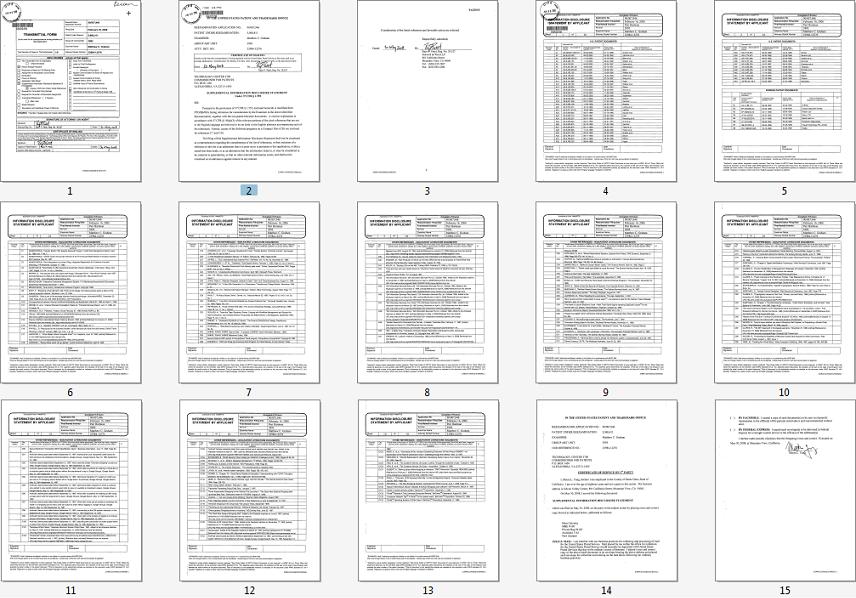
theodp writes "On June 2nd, almost two-and-half years after the USPTO initiated a reexamination of Amazon CEO Jeff Bezos' 1-Click Patent, Amazon dumped another load of documents on the USPTO Examiner assigned to the case, asking for consideration of the 185 or so listed references and 'favorable action.' Peter Calveley, the LOTR actor whose do-it-yourself legal effort prompted the reexam, notes that he was cc'ed on 20 kg of documents that Amazon sent earlier to the USPTO as it tried to stave off last October's nonfinal rejection of all but 5 of Amazon's 26 1-Click patent claims. So much for Bezos' 2000 pledge of 'less work for the overworked Patent and Trademark Office.'" -
Google Browser Sync To Be Discontinued
Dude With An Afro writes "What could have been a great Google project is now history. For those who never used it, Google Browser Sync was a Firefox extension that synchronized your bookmarks, web history, browser sessions and passwords across multiple computers by temporarily saving them to Google's servers. According to the Google Browser Sync team: 'It was a tough call, but we decided to phase out support for Browser Sync. Since the team has moved on to other projects that are keeping them busy, we don't have time to update the extension to work with Firefox 3 or to continue to maintain it.' For all of those who fell in love with Google's Browser Sync, our only hope now is to resort to poorly maintained 3rd party extensions without Google's blessing." While it was undoubtedly a useful utility, the argument can also be made that it wasn't the most secure extension in the world, what with having your personal data kept on Google's servers and shot around the internet. -
RIAA's Throwing In the Towel Covered a Sucker Punch
NewYorkCountryLawyer writes "The RIAA threw in the towel, all right, but was only doing it in preparation for throwing a sucker punch. After dropping its 'making available' case, Warner v. Cassin, before Judge Robinson could decide whether to dismiss or not, it was only trying to do an 'end run' (if I may mix my sports metaphors) around the judge's deciding the motion and freezing discovery. The RIAA immediately, and secretly, filed a new case against the family, calling this one 'Warner v. Does 1-4.' In their papers the lawyers 'forgot' to mention that the new case was related. As a result, Does 1-4 was assigned to another judge, who knew nothing about the old case. The RIAA lawyers also may have forgotten that they couldn't bring any more cases over this same claim, since they'd already dismissed it twice before. Not to worry, NYCL wrote letters to both judges, reminding them of what the RIAA lawyers had forgotten." -
RIAA Throws In Towel On "Making Available" Case
NewYorkCountryLawyer writes "The RIAA has thrown in the towel on one of the leading cases challenging its 'making available' theory, Warner v. Cassin, in which the defendant had moved to dismiss the RIAA's complaint. We have just learned that the RIAA submitted a voluntary notice of dismissal before the judge got to decide the defendant's motion to dismiss the complaint. It will be of interest to see if Ms. Cassin pursues a claim for attorneys' fees in view of recent court rulings that successful copyright defendants are presumptively entitled to an attorneys fee award, even if the dismissal came about from the plaintiffs' having 'thrown in the towel.'" -
RIAA Throws In Towel On "Making Available" Case
NewYorkCountryLawyer writes "The RIAA has thrown in the towel on one of the leading cases challenging its 'making available' theory, Warner v. Cassin, in which the defendant had moved to dismiss the RIAA's complaint. We have just learned that the RIAA submitted a voluntary notice of dismissal before the judge got to decide the defendant's motion to dismiss the complaint. It will be of interest to see if Ms. Cassin pursues a claim for attorneys' fees in view of recent court rulings that successful copyright defendants are presumptively entitled to an attorneys fee award, even if the dismissal came about from the plaintiffs' having 'thrown in the towel.'" -
Last "Hackers On Planet Earth" Conference In July
NewYorkCountryLawyer writes "The Last H.O.P.E. ('Hackers on Planet Earth') Conference is set for July 18-20, 2008, at the Hotel Pennsylvania in New York City. The organizers have announced their supplemental speaker list, adding on to the initial list. Topics will include 'Crafting a Security-Enhanced Wikipedia,' 'VoIP (in)security: Italians Do It Better,' 'AntiSocial Networking: Vulnerabilities in Social Nets,' 'SWF and the Malware Tragedy,' 'Simulating the Universe on Supercomputers,' and my personal favorite, 'RIAA Litigations: How the Tech Community Can Help.'" -
Blogging Now Good for You, Still Bad for Some
Several users have alerted us to a May Scientific American article that has been getting some attention more recently. Apparently, blogging is now good for you and, at least in this context, is the suggested reason for the explosion of blogging. This is quite the departure from some of the results we have seen in practice for more prolific bloggers. -
Gmail Labs Lets Users Experiment With 13 New Features
D Ninja writes "Yesterday, Google released Gmail Labs, which allows Gmail developers to decide what to include in the next feature releases of Gmail based on user feedback. As ZDNet has pointed out, essentially users are guinea pigs for these new features. Participants will vote on their favorite new features, and the ones that are voted the highest will stick around and the ones that are least popular will disappear." Reader physman_wiu points out an article at the BBC about the experiments on offer, writing: "Some of the features are really nice — like the option to use additional star icons, mouse gestures, and custom keyboard shortcuts. Others ... well, let's just say Old Snakey made it in." -
Record Labels Sue Spanish P2P Pioneer For $20M
elguillelmo writes "Promusicae, the Spanish record industry association, has sued MP2P Technologies and its founder, P2P pioneer Pablo Soto, for $20 million, citing unfair competition. Soto is behind the recently launched Omemo, an open source social media storage platform that allows users to share files anonymously, and the MP2P protocol, among other developments. Soto announced the organization's intention to defend itself in a statement published on his blog (in Spanish, Google translation)." TomTheGeek notes related news that Warner Brothers has admitted it employed one of the investigators in the case against the Pirate Bay founders. We discussed initial reports of this controversy last month. -
Record Labels Sue Spanish P2P Pioneer For $20M
elguillelmo writes "Promusicae, the Spanish record industry association, has sued MP2P Technologies and its founder, P2P pioneer Pablo Soto, for $20 million, citing unfair competition. Soto is behind the recently launched Omemo, an open source social media storage platform that allows users to share files anonymously, and the MP2P protocol, among other developments. Soto announced the organization's intention to defend itself in a statement published on his blog (in Spanish, Google translation)." TomTheGeek notes related news that Warner Brothers has admitted it employed one of the investigators in the case against the Pirate Bay founders. We discussed initial reports of this controversy last month. -
Mozilla Experiments With Site Security Policy
An anonymous reader writes "Mozilla has opened comments for an new experimental browser security policy, dubbed Site Security Policy (SSP), designed to protect against XSS, CSRF, and malware-laced IFRAME attacks which infected over 1.5 million pages Web earlier this year. Security experts and developers are excited because SSP extends control over Web 2.0 applications that allow users to upload/include potentially harmful HTML/JavaScript such as on iGoogle, eBay Auction Listings, Roxer Pages, Windows Live, MySpace / Facebook Widgets, and so on. Banner ads from CDNs have had similar problems with JavaScript malware on social networks. The prototype Firefox SSP add-on aims to provide website owners with granular control over what the third-party content they include is allowed to do and where its supposed to originate. No word if Internet Explorer or Opera will support the initiative." -
Rubik's Cube Algorithm Cut Again, Down to 23 Moves
Bryan writes "The number of moves necessary to solve an arbitrary Rubik's cube configuration has been cut down to 23 moves, according to an update on Tomas Rokicki's homepage (and here). As reported in March, Rokicki developed a very efficient strategy for studying cube solvability, which he used it to show that 25 moves are sufficient to solve any (solvable) Rubik's cube. Since then, he's upgraded from 8GB of memory and a Q6600 CPU, to the supercomputers at Sony Pictures Imageworks (his latest result was produced during idle-time between productions). Combined with some of Rokicki's earlier work, this new result implies that for any arbitrary cube configuration, a solution exists in either 21, 22, or 23 moves. This is in agreement with informal group-theoretic arguments (see Hofstadter 1996, ch. 14) suggesting that the necessary and sufficient number of moves should be in the low 20s. From the producers of Spiderman 3 and Surf's Up, we bring you: 2 steps closer to God's Algorithm!" -
Rubik's Cube Algorithm Cut Again, Down to 23 Moves
Bryan writes "The number of moves necessary to solve an arbitrary Rubik's cube configuration has been cut down to 23 moves, according to an update on Tomas Rokicki's homepage (and here). As reported in March, Rokicki developed a very efficient strategy for studying cube solvability, which he used it to show that 25 moves are sufficient to solve any (solvable) Rubik's cube. Since then, he's upgraded from 8GB of memory and a Q6600 CPU, to the supercomputers at Sony Pictures Imageworks (his latest result was produced during idle-time between productions). Combined with some of Rokicki's earlier work, this new result implies that for any arbitrary cube configuration, a solution exists in either 21, 22, or 23 moves. This is in agreement with informal group-theoretic arguments (see Hofstadter 1996, ch. 14) suggesting that the necessary and sufficient number of moves should be in the low 20s. From the producers of Spiderman 3 and Surf's Up, we bring you: 2 steps closer to God's Algorithm!" -
WarGames and the Great Hacking Scare of 1983
James W writes "Yesterday was the 25th anniversary of the release of WarGames and Christopher Knight has written a retrospective about the film and its impact on popular culture. In addition to discussing how the movie has held up over time, WarGames was responsible for what Knight calls the Great Hacking Scare of 1983. Some examples mentioned are 'one CBS Evening News report at the time that seriously questioned whether parents should allow their children to access the outside world via their personal computers at home. A magazine article suggested that computer modems be 'locked up' just like firearms, to keep them out of the reach of teenagers. I even heard one pundit proclaim that there was no need for regular people to be able to log in to a remote system: that if you need to access your bank account, a friendly teller was just a short drive away. And Bill Gates once declared that the average person would never have a need for more than 640 kilobytes of memory in a personal computer, too.'" 2008 is also 25 years after the real-life prevention of a WarGames-style nuclear incident. -
Google Releases Desktop Gadgets For Linux
mstrom writes "Google announced it has ported its Google Desktop Gadgets platform to Linux, making it the first cross-platform [desktop] gadgets framework. In a sign that Google is fully embracing the open source model, it admits the product is not feature-complete and has opened up the code base hosted on Google Code 'to give everyone a chance to tinker with the code powering the gadgets.' According to Google: "Gadget support is not just a single feature, but rather an entire platform for miniature applications.'" -
Google to Offer Real-Time Stock Quotes
Apro+im writes "Today, Google announced that Google Finance will report real-time prices on NASDAQ-listed securities. While real-time stock quotes are not new, they have long encumbered with subscriptions, legal agreements, or pay software. This may be the first free source for real-time quotes." -
Gartner Reveals Top 10 Technologies For Next 4 Years
Dr. Jim writes "The good folks over at the Gartner Group have revealed the top 10 technologies that they believe will change the world over the next four years. The usual suspects including multi-core chips, virtualization, and cloud computing are on the list. Multicore servers and virtualization will mean that firms will need fewer boxes, and apps can be easily moved from box to box (and right out the door to an outsourced data center). Workplace social networks and cloud computing means that the need for a centralized IT department will go away. Firms will no longer need to own/maintain the boxes that they use to run their firm's apps. With no need to touch a box, there will be no need to have the IT staff co-located with the boxes." -
Gartner Reveals Top 10 Technologies For Next 4 Years
Dr. Jim writes "The good folks over at the Gartner Group have revealed the top 10 technologies that they believe will change the world over the next four years. The usual suspects including multi-core chips, virtualization, and cloud computing are on the list. Multicore servers and virtualization will mean that firms will need fewer boxes, and apps can be easily moved from box to box (and right out the door to an outsourced data center). Workplace social networks and cloud computing means that the need for a centralized IT department will go away. Firms will no longer need to own/maintain the boxes that they use to run their firm's apps. With no need to touch a box, there will be no need to have the IT staff co-located with the boxes." -
Google Earth, Now With Browser Goodness
Google announced this week that their Google Earth application can now be used from the browser, instead of having to download and install the desktop application. "Google also launched an JavaScript API that lets you interact with the globe, draw markers, add layers or integrate with Google Maps. 'The Google Earth Plug-in and its APIs let you embed the full power of Google Earth and its 3D rendering capabilities into your web pages.' Google LatLong blog announced that each Google Maps mashup can take advantage of the new 3D view by adding a single line of code. 'Our goal is to open up the entire core of Google Earth to developers in the hopes that you'll build the next great geo-based 3D application, and change how we view the world.'" -
'90s Dot-Coms — Where Are They Now?
An anonymous reader writes "The Industry Standard has put together a list of 10 dot-com stars from the Internet bubble of the late 1990s, and tracked down what happened to the services and their founders. A lot of the services are still around, albeit under new ownership, including eToys, Garden.com, and DrKoop.com. Others have been completely reinvented — Boo.com, an online clothing retailer that burned through $125 million in funding in the late 1990s, is now an online travel community. Of the founders, many were able to cash out early and/or achieve later online success. Excite's Joe Kraus and Graham Spencer later started JotSpot, which was bought by Google, and Kraus now directs work on Google's OpenSocial initiative. Others did not fare as well, such as two of the co-founders of Garden.com, who declined to cash out at the height of the bubble, and are currently 'between business ventures.' The insiders' post-mortems of the failed dot-coms are interesting — several suggest the concepts were good but too early for their time, while others identify specific factors that led to the failures — ranging from a lack of advertising to 'intense' greed." -
Judge Refuses To Sign RIAA 'Ex Parte' Order
NewYorkCountryLawyer writes "The RIAA just can't get enough of going after University of Maine students, but it appears that the judges in Portland, Maine, may be getting wise to the industry's lawyers' antics. RIAA counsel submitted yet another ex parte discovery order to the Court ('ex parte' meaning 'without notice'), in BMG v. Does 1-11, but this time the judge refused to sign, pointing out that there is no emergency since there is no evidence that records are about to be destroyed [PDF]. This is the same judge who has previously suggested the imposition of Rule 11 sanctions against the RIAA lawyers, accusing them of gamesmanship."