Slashdot Mirror
Domain: boingboing.net
Stories and comments across the archive that link to boingboing.net.
Stories · 249
-
DHS Wants Mozilla To Disable Mafiaafire Plugin, Mozilla Resists
Davis Freeberg writes "The Department of Homeland Security is hard at work again, protecting the industry from websites that the big studios don't want you to see. This time they're targeting the Mafiaafire plugin by asking Mozilla to disable the addon at the root level. Instead of blindly complying with the government's request, Mozilla has decided to ask some tough questions instead. Unsurprisingly, when faced with legitimate concerns about the legality of their domain seizure program, the DHS has decided to clam up." -
Smell Like An Orc
You may have no trouble smelling like an orc after 12 straight hours of raiding, but if you do, Black Phoenix Alchemy Lab is here for you. The company has come out with a line of RPG inspired perfumes. Choose from: Dwarf, Elf, Half-elf, Hafling, Orc, Cleric, Fighter, or Mage and people will not only see that you're a geek, they'll smell it too. -
'Most Earth-Like' Exoplanet Gets Major Demotion
audiovideodisco writes "Last month, the team behind NASA's Kepler planet-finding mission announced the discovery of the most Earth-like planetary candidate ever spotted: KOI 326.01, an approximately Earth-sized planet orbiting in the habitable zone of its star. There was much excitement; one astrophysicist even calculated the value of the new planet as exactly $223,099.93. But when an innocent fact-checker's question sent one of the researchers back to look at some figures, she noticed that the star's brightness was listed incorrectly in a reference catalog, throwing the planet's properties into doubt. After jiggering the calculations, the Kepler team now says that KOI 326.01 is neither Earth-sized nor in the habitable zone, and may actually be orbiting a different star. The Kepler researcher says, 'We're seeing the scientific method playing out in real time.' While this news is a bit of a downer, Kepler is just getting going, and it's expected to find many, many more Earth-like planets." -
Tolkien Estate Censors the Word "Tolkien"
An anonymous reader writes "Following their recent attempt to censor a work of historical fiction containing Tolkien as a character, the estate have now issued a takedown notice to someone making buttons with the words 'While you were reading Tolkien, I was watching Evangelion' on them, claiming 'intellectual property right infringement.' Predictably, a new store has appeared offering a range of censored Tolkien items, and the 'offending' product has had vastly increased exposure as a direct result of the removal." -
HarperCollins Wants Library EBooks to Self-Destruct After 26 Loans
An anonymous reader writes: "HarperCollins has decided to change their agreement with e-book distributor OverDrive [and other distributors, too]. They forced OverDrive, which is a main e-book distributor for libraries, to agree to terms so that HarperCollins e-books will only be licensed for checkout 26 times. Librarians have blown up over this, calling for a boycott of HarperCollins, breaking the DRM on e-books -- basically doing anything to let HarperCollins and other publishers know they consider this abuse." Cory Doctorow, who wrote TFA, says: "For the record, all of my HarperCollins ebooks are also available as DRM-free Creative Commons downloads. And as bad as HarperCollins' terms are, they're still better than Macmillan's, my US/Canadian publisher, who don't allow any library circulation of their ebook titles." -
WikiLeaks Supporters' Twitter Accounts Subpoenaed
HJED writes "The US Justice Department has served Twitter with a subpoena for the personal information and private messages of WikiLeaks supporters. There's a copy of the subpoena here (PDF); boing boing has a detailed article. Twitter has 3 days to turn over the information." -
MagicJack Moving To Smartphones
robo45h writes "The late night infomercial VoIP company magicJack is moving into the smartphone space. The competition there is really going to be interesting. We have the likes of Skype and other VoIP companies competing against the wireless carriers still selling over-priced voice calls. It's such a big battle that the recent Verizon / Google Proposal specifically excludes (provides a loophole for) wireless. This has been brewing since cell phones added data capabilities, but it's coming to a head now." Free calls sounds nice, but it's worth noting that not everyone's happy with MagicJack's EULA. -
What To Do About CC License Violations?
An anonymous reader writes "In the past, I've seen my pictures used by big commercial companies despite the Creative Commons license that clearly limits them to non-commercial use. I just let it slide because a friend who's a lawyer says that all I can do is sue. They've ignored emails and comments. Today, I saw two other examples that show this is pretty rampant. These big commercial corporations are some of the most tech savvy publications around, but they just grabbed the image. One, BoingBoing, even reprinted the 'non-commercial' clause, warning others to stay away. But they've got their ads from Cheerios, HP and Mazda running alongside. Does anyone care that we've gone to all this trouble to create new, more flexible licenses? Does it even matter when very smart people just flip the bird to the license? Is the only alternative to sue? I wouldn't mind asking for $150k and settling for $1 for each copy made, but that seems a bit crazy. I hate to type out DMCA notices but their attitude is that only uncool people complain about this and I should be happy about the publicity. Then they can be happy about not sharing their ad revenue with artists or photographers. What can I do?" Update: 08/30 18:39 GMT by T : (Very belated; mea culpa.) Cory Doctorow writes: "The anonymous submitter is not the creator of the photo. The creator of that photo is Jennifer Trant, a friend and colleague of mine who has no trouble with my use of her photo. I have just gotten off the phone with her and confirmed that she did not submit the story and also that she is happy to have this photo on Boing Boing." The photo has since been added back to BoingBoing. -
Brazil Forbids DRM On the Public Domain
nunojsilva writes "Cory Doctorow reports that the Brazilian equivalent of DMCA explicitly forbids using DRM-like techniques on works in the public domain. 'Brazil has just created the best-ever implementation of WCT [WIPO Copyright Treaty]. In Brazil's version of the law, you can break DRM without breaking the law, provided you're not also committing a copyright violation.' This means that, unlike the US, where it is illegal to break DRM, in Brazil it is illegal to break the public domain." -
ASCAP Declares War On Free Culture, EFF
Andorin writes "According to Drew Wilson at ZeroPaid and Cory Doctorow, the ASCAP (American Society of Composers, Authors and Publishers), a US organization that aims to collect royalties for its members for the use of their copyrighted works, has begun soliciting donations to fight key organizations of the free culture movement, such as Creative Commons, the Electronic Frontier Foundation, and Public Knowledge. According to a letter received by ASCAP member Mike Rugnetta, 'Many forces including Creative Commons, Public Knowledge, Electronic Frontier Foundation and technology companies with deep pockets are mobilizing to promote "Copyleft" in order to undermine our "Copyright." They say they are advocates of consumer rights, but the truth is these groups simply do not want to pay for the use of our music. Their mission is to spread the word that our music should be free.' (Part 1 and part 2 of the letter.) The collecting agency is asking that its professional members donate to its Legislative Fund for the Arts, which appears to be a lobbying campaign meant to convince Congress that artists should not have the choice of licensing their works under a copyleft license." -
Mark Twain To Reveal All After 100 Year Wait
Hugh Pickens writes "The Independent reports that one of Mark Twain's dying wishes is at last coming true: an extensive, outspoken and revelatory autobiography which he devoted the last decade of his life to writing is finally going to be published one hundred years after his death. Twain, the pen name of Samuel Clemens, left behind 5,000 unedited pages of memoirs when he died in 1910, together with handwritten notes saying that he did not want them to hit bookshops for at least a century, but in November, the University of California, Berkeley, where the manuscript is in a vault, will release the first volume of Mark Twain's three-volume autobiography. Scholars are divided as to why Twain wanted his autobiography kept under wraps for so long, with some believing it was because he wanted to talk freely about issues such as religion and politics. Michael Shelden, who this year published Man in White, an account of Twain's final years, says that some of his privately held views could have hurt his public image. 'He had doubts about God, and in the autobiography, he questions the imperial mission of the US in Cuba, Puerto Rico and the Philippines,' says Shelden. 'He's also critical of [Theodore] Roosevelt, and takes the view that patriotism was the last refuge of the scoundrel. Twain also disliked sending Christian missionaries to Africa. He said they had enough business to be getting on with at home: with lynching going on in the South, he thought they should try to convert the heathens down there.' Interestingly enough, Twain had a cunning plan to beat the early 20th century copyright law with its short copyright terms. Twain planned to republish every one of his works the moment it went out of copyright with one-third more content, hoping that availability of such 'premium' version will make prints based on the out-of-copyright version less desirable on the market." -
Another Stab At a Canadian DMCA
whisper_jeff writes "News has come out that Prime Minister Stephen Harper is planning on bringing the DMCA to Canada. As a Canadian, this disgusts me. Watching Harper sell out Canadians in favour of US lobby groups is an affront. I am hopeful that enough Canadians write to Harper and their MPs to voice their disapproval of this effort." -
All of Gopherspace Available For Download
An anonymous reader writes "Cory Doctorow tells us that '[i]n 2007, John Goerzen scraped every gopher site he could find (gopher was a menu-driven text-only precursor to the Web; I got my first online gig programming gopher sites). He saved 780,000 documents, totalling 40GB. Today, most of this is offline, so he's making the entire archive available as a .torrent file; the compressed data is only 15GB. Wanna host the entire history of a medium? Here's your chance!' Get yourself a piece of pre-Internet history (torrent)." Update: 04/30 00:16 GMT by T: As several readers have pointed out below, our anonymous friend probably meant to say "pre-Web," rather than "pre-Internet." -
Indian Copyright Bill Declares Private, Personal Copying "Fair Dealing"
asp7yxia writes "India's new copyright bill sounds like a pretty good piece of work: it declares private, personal copying to be 'fair dealing' (like US fair use) and limits the prohibition on breaking DRM so that it's only illegal to do so if you're also violating copyright." -
iPad Launches, FCC Teardown Leaked
Apple's much-awaited iPad officially launched today, and iFixit has gotten their hands on photos from the FCC teardown. They've done an analysis of the internals and provided directions on doing it yourself, if you're so inclined. Predictably, it's a hot topic in the media. Cory Doctorow wrote about why he won't be getting an iPad, complaining about the closed, hacker-unfriendly design and what he calls the "Wal-martization of the software channel." Daring Fireball's John Gruber disagrees, pointing out that enthusiasts — even kids exercising their curiosity — are still quite capable of playing around with the iPad through app creation, and with much more of a chance to compete with big companies than in the Apple ][ days. Similarly, others are referring to it as the "bedtime computer" — technology that has a reasonable shot at expanding into completely new areas of use, like bedtime reading for kids. Such a device was predicted in 1972 by Alan Kay, the PARC scientist credited with the epigram "The best way to predict the future is to invent it." His hypothetical DynaBook bears striking similarity to what Apple finally came up with. So, those of you who have picked up or received an iPad already: how do you like it? -
Magicjack Loses Legal Attack Against Boing Boing
An anonymous reader sends word that USB VOIP company Magicjack lost a lawsuit against Boing Boing when the judge declared the legal action a SLAPP (strategic lawsuit against public participation). Magicjack must pay more than $50,000 in legal costs. Boing Boing has posted a page linking and summarizing all the legal documents relating to the lawsuit. -
Magicjack Loses Legal Attack Against Boing Boing
An anonymous reader sends word that USB VOIP company Magicjack lost a lawsuit against Boing Boing when the judge declared the legal action a SLAPP (strategic lawsuit against public participation). Magicjack must pay more than $50,000 in legal costs. Boing Boing has posted a page linking and summarizing all the legal documents relating to the lawsuit. -
ACTA Internet Chapter Leaked — Bad For Everyone
roju writes "Cory Doctorow is reporting on a leaked copy of the 'internet enforcement' portion of the Anti-Counterfeiting Trade Agreement. He describes it as reading like a 'DMCA-plus' with provisions for third-party liability, digital locks, and 'a duty to technology firms to shut down infringement where they have "actual knowledge" that such is taking place.' For example, this could mean legal responsibility shifting to Apple for customers copying mp3s onto their iPods." Adds an anonymous reader, "Michael Geist points out that the leaks demonstrate that ACTA would create a Global DMCA and move toward a three-strikes-and-you're-out system. While the US has claimed that ACTA won't establish a mandatory three strikes system, it specifically uses three-strikes as its model." -
PA School Spied On Students Via School-Issued Laptop Webcams
jargon82 writes "A Pennsylvania high school is using laptops they issued to students to spy on them in homes and outside of school. According to a class action filling the webcams and microphones in these laptops could be remotely activated by school officials, and have been used in this role. One student was accused of 'improper behavior in his home' and the school provided a photo taken via his laptop as proof." -
CBS Refuses To Preserve Jack Benny Footage
goosman writes "The president of the International Jack Benny Fan Club had the opportunity to review some holdings of the CBS vaults while assisting them with some transfers. In the vaults she found 25 shows on film that were unreleased, but in the public domain. The IJBFC offered to pay for the digitization and preservation of these shows; they got a letter of enthusiastic support from the Benny estate. CBS has so far refused to allow this preservation to happen." BoingBoing and TechDirt have both covered this act of cultural destruction. -
Minnesota Introduces World's First Carbon Tariff
hollywoodb writes "The first carbon tax to reduce the greenhouse gases from imports comes not between two nations, but between two states. Minnesota has passed a measure to stop carbon at its border with North Dakota. To encourage the switch to clean, renewable energy, Minnesota plans to add a carbon fee of between $4 and $34 per ton of carbon dioxide emissions to the cost of coal-fired electricity, to begin in 2012 ... Minnesota has been generally pushing for cleaner power within its borders, but the utility companies that operate in MN have, over the past decades, sited a lot of coal power plants on the relatively cheap and open land of North Dakota, which is preparing a legal battle against Minnesota over the tariff." -
Sci-Fi Author Peter Watts Beaten, Charged During Border Crossing
JoeGee writes "On December 8th, Canadian sci-fi author Peter Watts, author of the Rifters trilogy and Blindsight, was crossing the US/Canadian border at Port Huron, Michigan when he was involved in an altercation with US Border Patrol agents. According to Watts, he was beaten, left half-naked in a cold cell, and finally dumped on the Canadian side of the border with no coat. A legal consultant from the Electronic Frontier Foundation was successful in helping a civil rights lawyer in Michigan free Watts. Watts faces US charges of assaulting a federal officer. Based on the accounts, one can assume Watts did so by hitting the officer's hand with his face. If convicted, Watts faces two years in a US Federal prison." -
Spain's Proposed Internet Law Sparks Protest, Change
[rvr] writes "Last Monday, the Spanish Government published the latest draft for the Sustainable Economy Act, which would enable a Commission dependent of the Ministry of Culture to take down websites without a court order, in cases of Intellectual Property piracy. On Wednesday, using Google Wave, a group of journalists, bloggers, professionals and creators composed and issued a Manifesto in Defense of Fundamental Rights on the Internet, stating that 'Copyright should not be placed above citizens' fundamental rights to privacy, security, presumption of innocence, effective judicial protection and freedom of expression.' Quickly, more than 50,000 blogs and sites re-published the manifesto. On Thursday morning, the Ministry of Culture Ángeles González Sinde (former president of the Spanish Academy of Motion Picture Arts and Sciences) organized a meeting with a group of Internet experts and signers of the Manifesto. The meeting was narrated in real time via Twitter and concluded without any agreement. On Thursday afternoon, the Prime Minister's staff had a private meeting with the Ministry of Culture and some party members (who also expressed their opposition to the draft). Finally, Spain Prime Minister José Luis Rodríguez Zapatero announced in a press meeting that the text will be changed and a court order will continue to be a requirement, but [the government] still will search for ways to fight Internet piracy." -
Games Workshop Goes After Fan Site
mark.leaman writes "BoingBoing has a recent post regarding Games Workshop's aggressive posturing against fan sites featuring derivative work of their game products. 'Game publisher and miniature manufacturer Games Workshop just sent a cease and desist letter to boardgamegeek.com, telling them to remove all fan-made players' aids. This includes scenarios, rules summaries, inventory manifests, scans to help replace worn pieces — many of these created for long out of print, well-loved games...' As a lifelong hobby gamer of table, board, card and miniature games, I view this as pure heresy. It made me reject the idea of buying any Games Workshop (read Warhammer) products for my son this Christmas. Their fate was sealed, in terms of my wallet, after I Googled their shenanigans. In 2007 they forbid Warhammer fan films, this year they shut down Vassal Modules, and a while back they went after retailers as well. What ever happened to fair use?" -
Murdoch-Microsoft Deal In the Works
Hugh Pickens writes "The Financial Times reports that Microsoft is in discussions to pay Rupert Murdoch's News Corp, owner of newspapers ranging from the Wall Street Journal of the US to The Sun of the UK, to 'de-index' its news websites from Google, setting the scene for a search engine battle that could offer a ray of light to the newspaper industry. Microsoft is desperate to catch Google in search, and, after five years and hundreds of millions of dollars of losses, Bing, launched in June, marks its most ambitious attempt yet. Microsoft's interest is being interpreted as a direct assault on Google because it puts pressure on the search engine to start paying for content. 'This is all about Microsoft hurting Google's margins,' said the web publisher who is familiar with the plan. 'It's easy to believe that [Microsoft] may spew senseless riches into publishers' pockets, radically distorting the news market, just to spite Google,' writes Rob Beschizza at BoingBoing. 'Murdoch could be wringing cash out of a market he knows is doomed to implosion or assimilation. And he doesn't even have to be an evil genius, either; he just has to be smarter than Steve Ballmer.'" -
Secret UK Plan To Appoint "Pirate Finder General"
mouthbeef writes "A source very close to the UK Labour government just called me to leak the fact that Secretary of State Lord Mandelson is trying to sneak a revision into the Digital Economy Bill that would give him and his successors the power to create future copyright law without debate. Mandelson goes on to explain that he wants this so he can create private copyright militias with investigatory and enforcement powers, and so he can create new copyright punishments as he sees fit (e.g., jail time, three strikes)." -
MPAA Shuts Down Town's Municipal WiFi Over 1 Download
nam37 writes with this BoingBoing snippet "The MPAA has successfully shut down an entire town's municipal WiFi because a single user was found to be downloading a copyrighted movie. Rather than being embarrassed by this gross example of collective punishment (a practice outlawed in the Geneva conventions) against Coshocton, OH, the MPAA's spokeslizard took the opportunity to cry poor (even though the studios are bringing in record box-office and aftermarket receipts)." -
Secret Copyright Treaty Leaks. It's Bad. Very Bad.
Jamie found a Boing Boing story that will probably get your blood to at least a simmer. It says "The internet chapter of the Anti-Counterfeiting Trade Agreement, a secret copyright treaty whose text Obama's administration refused to disclose due to 'national security' concerns, has leaked. It's bad." You can read the original leaked document or the summary. If passed, the internet will never be the same. Thank goodness it's hidden from public scrutiny for National Security. -
Carl Sagan On Marijuana
eldavojohn writes "BoingBoing is reporting that, allegedly, Carl Sagan wrote a piece for 'Marihuana Reconsidered' under the pseudonym Mr. X that appears to look fondly upon the science of trippin' balls. Puff the Magic Sagan's full piece can be found here. It opens with 'It all began about ten years ago. I had reached a considerably more relaxed period in my life — a time when I had come to feel that there was more to living than science, a time of awakening of my social consciousness and amiability, a time when I was open to new experiences.' Too bad old Mr. Cosmos couldn't enjoy his latest vocals." -
Photoshop Disaster Draws DMCA Notice For Boing Boing
Pickens writes: "Cory Doctorow writes that Ralph Lauren issued a DMCA takedown notice after Boing Boing republished the Photoshop disaster contained in a Ralph Lauren advertisement in which a model's proportions appear to have been altered to give her an impossibly skinny body with the model's head larger than her pelvis. Doctorow says that one of the things that makes their ISP Priority Colo so awesome is that they don't automatically act on DMCA takedowns and proceeded to dare Lauren to sue. 'This is classic fair use: a reproduction "for purposes such as criticism, comment, news reporting," etc,' writes Doctorow. 'Copyright law doesn't give you the right to threaten your critics for pointing out the problems with your offerings.' Doctorow adds that every time Lauren threatens to sue he will 'reproduce the original criticism, making damned sure that all our readers get a good, long look at it,' 'publish your spurious legal threat along with copious mockery,' and 'offer nourishing soup and sandwiches to your models.'" -
Musician Lobby Terms Balanced Copyright "Disgusting"
An anonymous reader writes "While most of the attention at Thursday's Canadian copyright town hall was on the recording industry's strategy to pack the room and exclude alternate voices, the most controversial activity took place outside the hall. It has now been revealed that security guards threatened students and a Member of Parliament for distributing leaflets, and the American Federation of Musicians termed the MP's leaflet, which called for balanced copyright, 'disgusting' and demanded a retraction and apology. At this point, such an admission seems unlikely." -
AP Will Sell You a "License" To Words It Doesn't Own
James Grimmelmann performed an experiment using the AP's form to request a license to use more than four consecutive words from one of their articles. Except that he didn't paste in words from the (randomly chosen) article, but instead used 26 words written by Thomas Jefferson 196 years ago: If nature has made any one thing less susceptible than all others of exclusive property, it is the action of the thinking power called an idea. The AP cheerfully charged him $12 to use Jefferson's 26 words. Both Boing Boing and TechDirt have picked up the story so far. Grimmelmann adds an update to his blog: the AP has rescinded his license to Jefferson's words and issued a refund for his $12. They did not exhibit the grace to admit that their software is brain-dead. -
Mass Arrests of Journalists Follow Iran Elections
I Don't Believe in Imaginary Property writes "Reporters Without Borders is alarmed by the fact that no less than 23 journalists have been arrested in Iran in the week following the elections, making Iran one of the most dangerous places in the world to be a journalist. Online activists are trying to counter this trend by giving advice for helping Iranian protesters. One problem is that Iranian leaders are trying to delegitimize the reform movement by pretending that the reformers are puppets of foreign powers, so special discretion is required for anyone wanting to help the Iranian people." -
Student Who Released Code From Assignments Accused of Cheating
Death Metal sends in a story about Kyle Brady, a computer science major at San Jose State University, who recently ran into trouble over publishing the source code to his programming assignments after their due dates. One of Brady's professors contacted him and threatened to fail him if he did not take down the code. Brady took the matter to the Computer Science Department Chair, who consulted with others and decided that releasing the code was not an ethical violation. Quoting Cory Doctorow at Boing Boing: "There's a lot of meat on the bones of this story. The most important lesson from it for me is that students want to produce meaningful output from their course-assignments, things that have intrinsic value apart from their usefulness for assessing their progress in the course. Profs — including me, at times — fall into the lazy trap of wanting to assign rotework that can be endlessly recycled as work for new students, a model that fails when the students treat their work as useful in and of itself and therefore worthy of making public for their peers and other interested parties who find them through search results, links, etc. But the convenience of profs must be secondary to the pedagogical value of the university experience — especially now, with universities ratcheting up their tuition fees and trying to justify an education that can put students into debt for the majority of their working lives." -
Guatemalan Twitter User Arrested For "Inciting Panic"
talishte points out (with a snippet from BoingBoing) that "Amid protests in the streets and on social networks calling for Guatemala's president to step down after the assassination of a whistleblower attorney, Guatemalan police have arrested a Twitter user for 'inciting panic' through tweets. In the capital city today, police raided his home and confiscated his computer." -
The Ultimate "Doll House" For WoW Players
BoyIHateMicrosoft! writes "A friend of mine sent me this link today about a group of MIT students who have created something called a WoWPod. It's like a playhouse for WoW players. It has everything from Refreshing Spring Water, to food (Like Crunchy Spider Surprise of course!) to a toilet and of course the appropriate gaming gear." -
Update — No DRM In New iPod Shuffle
An anonymous reader writes "BoingBoing Gadgets has updated their story from yesterday on DRM contained in the new iPod Shuffle. (We also discussed this rumor last week.) It's a false alarm. There is a chip in the headphone controls but it is just an encoder chip. There is no DRM and no reason to believe that third party headphones wouldn't work with the new Shuffle. (Apple would still prefer you to license the encoder under the Made for iPod program, but with no DRM, there is no DMCA risk to a manufacturer reverse engineering it.) The money quote: 'For the record, we do not believe that the new iPod headphones with in-line remote use DRM that affects audio playback in any way.'" -
MySpace Verdict a Danger To Depressed Kids
Slashdot regular Bennett Haselton summarizes his essay this way: "Debate over the Lori Drew verdict has focused overwhelmingly on whether the ruling was technically correct, but there is another serious issue: the perverse incentives that this ruling creates for victims of online harassment." Read on for his essay.
Since a jury convicted Lori Drew of three misdemeanors for harassing Megan Meier on MySpace and causing her to commit suicide, most of the debate has focused on the question of whether proper legal procedure was followed in an attempt to punish someone for their obviously evil actions, when it wasn't clear that an actual crime had been committed. Emily Bazelon has argued that the rule of law is too important to convict someone for a crime for what was essentially a violation of the MySpace Terms of Service. Anne Mitchell has argued that the slippery slope is nowhere near as dangerous as the backlash is making it sound, because the doctrine of prosecuting people for violating a site's TOS is almost certainly only going to be used against people who commit horrific acts in the process, as Lori Drew did.
I'm more inclined toward the rule of law argument, but hang on — both sides seem to be assuming that it was a desirable outcome to punish Lori Drew publicly and severely. Hell yes she deserved it, but there is more at stake here. What about the consequences for kids who are current victims of harassment and who hear about the case and the verdict?
When anti-cyber-bullying laws were proposed in response to the original news of Megan Meier's suicide, I argued that the laws would be a terrible idea, especially if the criminal provisions of the law were conditional on the bullying victim harming themselves — because then you've created told victims of harassment: You can have your tormentors publicly vilified and even arrested, but only if you make it look like you tried to injure or kill yourself (and at which you might succeed in the process, intentionally or not).
What would be true of a cyber-bulling law is also true for the pseudo-caselaw created by the verdict. Surely there are other Megan Meiers out there who should not be led to believe that they can ruin their harasser's lives by committing suicide.
Now you might argue that by my reasoning, existing harassment laws which are contingent on the victim showing signs of emotional distress, could lead to the same problem — victims either consciously faking distress, or trying to fake distress so convincingly that they actually harm themselves, or subconsciously absorbing the fact that they can only get justice if they actually show harm. I had actually assumed that existing harassment laws governed only the conduct of the harasser, and did not depend on how the victim felt, but I was wrong — here in Washington State for example, RCW 10.14 states that harassing conduct is conduct that"shall be such as would cause a reasonable person to suffer substantial emotional distress,
and shall actually cause substantial emotional distress to the petitioner." [emphasis added]Reading that literally means that no matter how bad the harassment is, you still have to feel distressed in order to have them prosecuted, and the more distressed you "act," the more likely you are to succeed! But hang on — in order for that law to create incentives for victims of harassment to fake distress in order to have their personal enemies prosecuted, they would have to actually know that the law says that. I doubt that most people walking around Washington know the exact wording of the harassment law. More likely, they already realize that if they were to ever try and have someone prosecuted for harassment who didn't actually deserve it, a little tears and shaking would probably influence the judge, whether or not their feelings had any technical relevance under the law. And even if they were to exaggerate the effects of the harassment, all they would have to do would be to claim that they threw up or lost sleep from anxiety — they wouldn't have to show evidence of trying to harm or kill themselves.
On the other hand, everybody has heard about the Lori Drew and Megan Meier case, and it seems likely that the fact that Megan killed herself did contribute to the conviction. (At one point Judge George H. Wu had said that he would probably exclude evidence from the trial that Megan Meier had committed suicide as a result of the harassment, but later changed his mind and did allow it to be mentioned, saying "It's impossible to get a jury that doesn't know.") If Megan Meier had merely lost sleep, or suffered from panic attacks, or cut herself as a result of the harassment she endured from Lori Drew, would Drew have been convicted? Or even arrested?
These perverse incentives — "rewarding" Megan Meier for her suicide by vicariously exacting her revenge on Lori Drew — have been present ever since the wall-to-wall coverage of the case first started. Many news outlets have a policy of not publishing the names of suicide victims, not only to protect the privacy of grieving families but to avoid "rewarding" suicides by giving them the attention they may have wanted. The Associated Press Statement of News Values and Principles does not list any policy against printing the names of suicides. Maybe they should. (They do have a policy against printing the names of sexual assault victims, for example.) But it's a slippery journalistic slope to go down once you start deciding not to publish certain elements of a story, even for what seem to be compelling reasons. For example, take the policy of not publishing the names of alleged rape victims. If the rationale is that the AP doesn't want to cause unfair embarrassment to the alleged victims in case their story is true, why wouldn't the AP also avoid publishing the name of the defendant, to avoid causing them vastly greater unfair embarrassment in case the victim's story is false? So any decision to leave someone's name out of a story can lead to sticky "but-then-what-about" scenarios.
Perhaps the story should not have been covered at all, or anywhere near as much as it was. (I realize I may be contributing to the problem here, but my penance is that I'm calling for less coverage in the future, and I would never be writing about this if the mainstream media hadn't covered it so extensively.) What about all the other people who committed suicide during the same year, also as a result of vicious harassment, but with the only difference being that their suicides did not involve the Internet? Don't they deserve the same justice, and don't their tormentors deserve the same vilification?
Defenders of Internet civil liberties have for years been disgusted with the fact that crimes involving the Internet — from simple identity theft to rape and murder — have always gotten disproportionately more attention than the same or similar crimes committed without the aid of a computer. In the Megan Meier case, the effect of the coverage is even worse: Leading potential suicides to believe that they can have the sympathy they always wanted, and revenge on those they hate, if they kill themselves. -
James Boyle's New Book Under CC License
An anonymous reader writes "James Boyle has released his new book, The Public Domain: Enclosing the Commons of the Mind (Yale University Press) under a Creative Commons License. It can be downloaded free or read online. There are chapters on Thomas Jefferson's views of IP, musical borrowing and the birth of soul, free software, and synthetic biology. Lessig is impressed. Doctorow says he is a law prof who writes like a comedian (is this a good thing?), and credits Boyle's first book for getting him involved in online rights." -
IOC Trademarks Part of Canadian National Anthem
gravis777 sends us to BoingBoing for news that the International Olympic Committee has trademarked a line from the Canadian National Anthem and is threatening to sue anyone who uses it. The line in question is "with glowing hearts." "The committee is so serious about protecting the Olympic brand it managed to get a landmark piece of legislation passed in the House of Commons last year that made using certain phrases related to the Games a violation of law. The list includes the number 2010 and the word 'winter,' phrases that normally couldn't be trademarked because they are so general." -
Wal-Mart Ends DRM Support
An anonymous reader writes "So, you thought you did well to support the fledgling music industry by purchasing your tracks legally from the Wal-Mart store? Well, forget about moving these tracks to a new PC! Since they started selling DRM-free tracks last year, there's no money to be made in maintaining the DRM support systems, and in fact, support is being shut down. Make sure you circumvent the restrictions by burning the tracks to an old-fashioned CD before Wal-mart 'will no longer be able to assist with digital rights management issues for protected WMA files purchased from Walmart.com.' Support ends October 9th." -
Sneak Peek At Neal Stephenson's "Anathem"
Shawn M. Smith writes "Neal Stephenson (Cryptonomicon, The Baroque Cycle) has a new novel coming out in just a couple weeks — Anathem. Boing Boing has an excerpt from the amazing glossary (including a definition for 'bulshytt') so take a peek at a copy of an abridged glossary of neologisms and language-bending goodies from the book." -
Sneak Peek At Neal Stephenson's "Anathem"
Shawn M. Smith writes "Neal Stephenson (Cryptonomicon, The Baroque Cycle) has a new novel coming out in just a couple weeks — Anathem. Boing Boing has an excerpt from the amazing glossary (including a definition for 'bulshytt') so take a peek at a copy of an abridged glossary of neologisms and language-bending goodies from the book." -
Scotty's Final Mission
Jane Q. Public writes "According to Ars Technica, the ashes of James Doohan, who played "Scotty" in the original 'Star Trek' series and several movies, were aboard the SpaceX III launch and were lost when the launch vehicle failed." Which totally wouldn't have happened if Scotty was the engineer.
Update: 08/05 00:09 GMT by KD : BoingBoing has a tribute to Doohan from his son. -
Face-Swapping Software To Protect Privacy
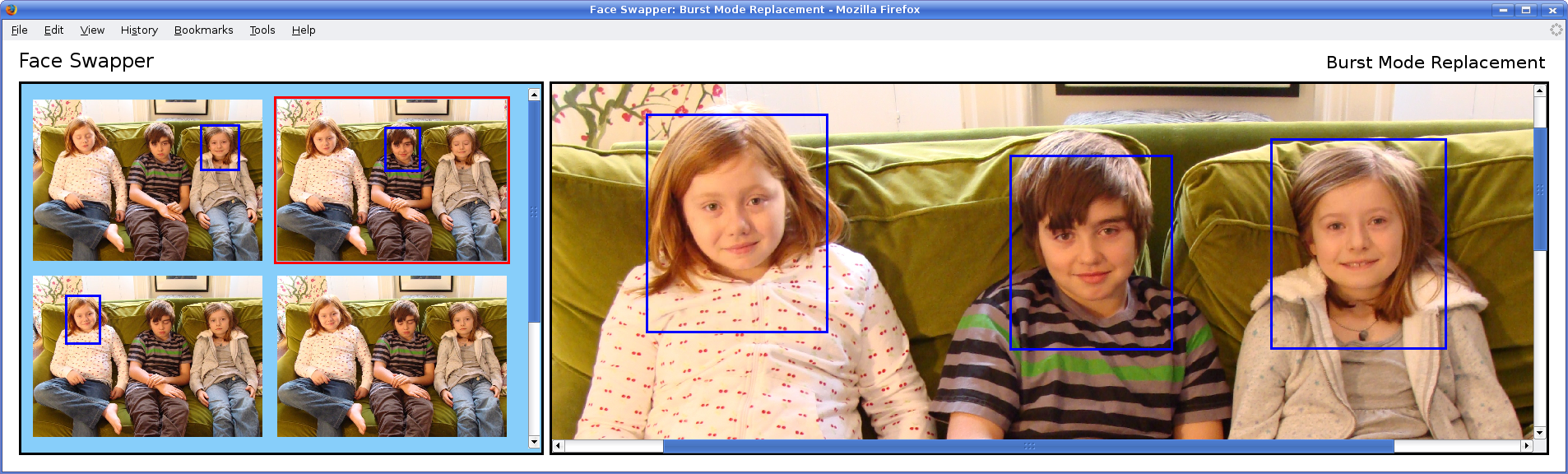
(0d0 writes "Some researchers at Columbia University's Computer Vision Labratory have developed software to automatically replace faces in batches of photos. Practical applications include protecting the identities of people in Google's Street View, coupling it with a digital camera's burst mode to create a perfect group photo, or protecting the identities of witnesses or law enforcement and military personnel. Other links to coverage include Boing Boing, American Public Media, and New Scientist." -
Ogg Theora In Firefox, With Wikimedia Support
An anonymous reader writes "Ogg Theora support for the HTML5 <video> tag is in the Firefox 3.1 nightlies. Theora is the only video format allowed on Wikimedia Commons, so Wikimedia people are pushing Wikipedia readers to download a nightly and try it out. Break it, crash it, report bugs, get it into good shape and nullify Apple and Nokia's FUD the best way possible. They may have gotten the words 'Vorbis' and 'Theora' removed from the HTML5 spec, but the market will tell them when their browsers are sucking." -
Corporate Behemoth Keeps Ripping "Real"
Slashdot contributor Bennett Haselton has written in with a tale of media rippers and corporate giants "In 2001 RealNetworks sued and blocked Streambox from distributing the Ripper, a program that let users rip and save RealAudio and RealVideo streams even if the stream contained a proprietary "do not copy" flag. Then one year ago this month, RealNetworks caused a stir by releasing a beta of RealPlayer 11 that similarly let the user record and save streams from sites like YouTube and Pandora. YouTube rippers and the like had existed before, but this was the first time a major company had included a stream ripper in its media player. And while RealPlayer 11 didn't explicitly ignore any copy protection flags, the release still provoked legal rumblings: in a Variety article by Scott Kirsner, an anonymous network exec said accused RealNetworks of 'aiding and abetting piracy' and said that they would 'more likely than not' take action against RealNetworks. But now that the feature has stayed in RealPlayer for a year, its real impact will be not on piracy but on the perceived legitimacy of ripping programs. The corporate behemoth, raked over the coals in the past for privacy violations and nuisance-ware, strikes a blow for free-culture hackers." The rest of Bennett's essay is available by following that magical link right below these words.First, the reasons I don't think that RealPlayer has much effect on actual piracy. Yes, if a pirate has uploaded your favorite song to YouTube, you can save a copy of the video file to hear the song over and over, but you can do the same thing on YouTube itself as long as you're connected to the Internet. The anonymous network exec in the Variety article points out that RealPlayer "allows you to own [content] forever on your hard drive, even if the Web site that distributed that content illegally has taken it down in because we've complained." But regardless of what complaints they've been sending, almost all popular songs are currently available for listening on YouTube so that anyone with a Net connection can get them on demand, and that's a separate issue, with or without RealPlayer.
So then it becomes a question of whether RealPlayer enables the user to do more interesting things with the song or video, like take it with them on an iPod. RealPlayer only lets you save YouTube videos as an FLV file. But as long as doing things like playing an FLV file on an iPod requires an outside hack, that option is only available to people who are resourceful enough to go out and find tools like that (admittedly not a very high bar, but too hard for many people). So, suppose you define a "resourceful" person as someone smart enough to figure out how to convert an FLV file into an iPod-viewable format. Then there are two possibilities: (a) either a person is not that "resourceful", in which case if they want content to take with them, they'll still have to get it through legitimate channels like the iTunes store, or (b) if the person is "resourceful", they would have known about tools for ripping YouTube videos to MP3, long before RealPlayer 11 came out (in fact, most sites that come up in a search for "flv to mp3 converter" are just rippers specifically for YouTube). In either case, RealPlayer's ability to save FLV files has no impact on the market for the song.
I haven't talked about some outlier cases where RealPlayer could perhaps help a novice user avoid paying for content (if a novice pirate didn't know enough to download a movie from a BitTorrent network, they could perhaps save up enough interesting videos from YouTube for a long plane ride where they won't have Internet access). But there's an easy way to get a verdict on RealPlayer's impact on piracy: How much have you heard teenagers talking about it? You heard teens through the years buzzing about Napster, KaZaA, and BitTorrent, but... RealPlayer? The cliche among teenagers today is to go "find something on YouTube", but "and then grab it with RealPlayer" has yet to prove useful enough to enter the vernacular.
Similarly, RealPlayer can be used to rip streams from Pandora, but it's just hard enough to do it that most people are likely to give up. Before going into details, I should say that I'm against anyone trying to circumvent paying for music. Most of the time when you read that on the Web, it carries this nudge-wink subtext right before the author launches into a detailed description about how, exactly, to circumvent paying for music. But I really do believe that there is a vast untapped potential of unwritten good music out there, and that it could be tapped if there were only lower barriers of entry for musicians, better channels to distribute music to users, and a guarantee that users would pay instead of stealing it -- all of which is helped by services like Pandora. On the other hand, I also believe that if a copying scheme can be circumvented, and especially if it can be circumvented in a way that's fairly easy to discover, there's no point in keeping it secret: We might as well push things forward by acknowledging that the scheme is beatable, and deciding what to do about it.
The outing commences: if you save a stream from Pandora, RealPlayer will give you an error if you try to play the stream back from your RealPlayer library. But if you find the "mp4" file in your RealPlayer downloads, you can play it in WinAmp. However, the file as saved will not play in Windows Media Player, iTunes, or RealPlayer itself. Plus, since Pandora does not let you pick which song you want to listen to on demand, your stream might contain all the songs that you had to skip past to get the one you wanted, and you'd have to find a utility to edit the mp4 file to get rid of that cruft at the beginnig. At some point, the effort probably exceeds the dollar you'd have to pay to get the song on iTunes (or, if you're a pirate, the effort to find it on a p2p network).
Again, the "teenager buzz test" is instructive. You do hear kids these days talking about listening to songs on Pandora, but not about ripping them with RealPlayer.
Where I think RealPlayer will make the most difference in the long run is in its political and legal impact, by legitimizing stream-ripping as something that "real" companies, so to speak, are allowed to do. In 2006, Google sent a cease-and-desist letter to TechCrunch for hosting a tool that lets users save YouTube videos to their hard drives. Michael Arrington of TechCrunch blogged at the time, "I am likely to remove the tool to preserve my relationship with the company [Google/YouTube]", but the tool is still up, and I don't know whether it was ever taken down at all (TechCrunch did not respond to an inquiry). Today, there are more YouTube rippers than ever, several of them even running AdSense ads. (I'm not sure if that's within Google's rules, but I mentioned those sites while e-mailing back and forth with Google for this article, and they're all still running AdSense ads a week later.) Certainly Google would look pretty silly trying to force TechCrunch to take their ripper down today, now that Google itself is distributing RealPlayer as part of the Google Pack.
RealNetworks could argue that the main difference between RealPlayer 11, and the Streambox Ripper that they sued to have outlawed in 2001, was that the Streambox Ripper ignored the "do not copy" flag present in some RealAudio and RealVideo streams, and thus violated the Digital Millenium Copyright Act. RealNetworks says the do-not-copy flag is no longer used, having been supplanted by more sophisticated Digital Rights Management, and RealPlayer 11 will honor any DRM-protected streams and refuse to save them. But how much difference is there between "ignoring" the do-not-copy flag and "ignoring" the Terms of Service for sites like YouTube (which the program may not be aware of, but which its makers certainly are)?
We've all heard about the First Amendment implications of DeCSS code, the code for decrypting the copy-protection scheme on DVDs, being outlawed in the U.S. But the Streambox case set the bar for "violating the DMCA" considerably lower -- the Streambox Ripper didn't actively decrypt anything, it just ignored a flag set in the streaming media. What are the implications if "ignoring" a flag counts as "breaking" copy protection? Suppose Behemoth Corp releases Version 1 of some media format, and I release a third-party player that plays Version 1. Then Behemoth Corp releases the specs for Version 2 of the format, which is similar enough that it works in Version 1 players, except Version 2 now contains a "do-not-copy" flag, which my player doesn't know about. Is my player now illegal? (Well, in this case Behemoth Corp would just make sure that Version 2 doesn't play in Version 1 players. But what about general-purpose programs like Total Recorder that can record any sound playing through your computer to an MP3 file? Does that program become illegal if a company releases a new sound file format that they don't want to be copyable?) So I think the acceptance of RealPlayer has nudged us closer to legal acceptance of software that can interact with third-party sites and programs in a way that their makers don't like. That's good. It should not be against the law to make a program that interacts with third-party web sites in a way that they haven't given permission for, something I literally grew up saying.
It's brave of Google especially to be distributing RealPlayer along with the Google Pack, at the same time that YouTube is constantly attacked for enabling copyright violations. A content owner mounting a lawsuit against Google, would be foolish not to say something like, "Your Honor, not only does YouTube host thousands of videos violating the intellectual property rights of my clients, they even distribute a tool called RealPlayer that lets people violate YouTube's own Terms of Service by saving the videos to their hard drive!" Logically, of course, it's a weak argument -- RealPlayer is universally available whether Google distributes it or not -- but rhetorically the argument is golden.
On the other hand, since that hasn't happened, and RealPlayer 11 is pretty well entrenched after being out for a year, the result has probably been an expansion of our rights. Anyone else who got sued or threatened for releasing a ripping program would be able to point to RealNetworks. "Look at them, Your Honor, their Web site even tells people, 'Grab videos from thousands of Web sites with just one click', something that those 'thousands of Web sites' would probably not be thrilled with. If it's legal for RealNetworks to tell people that, how can it be illegal for me just to have a ripping program on my site?"
If a small-time programmer had made themselves a legal test case before RealPlayer 11 came out, things might have gone differently; it is an unfortunate truth that courts are probably more likely to consider something legal when it is done by a large and legitimate-looking company like RealNetworks. Big companies do well in court partly because their lawyers are paid to make good arguments, but they almost certainly also get more benefit of the doubt just by virtue of being big companies. I think the time is long overdue for using controlled experiments to measure the bias and objectivity of judges -- for example, having different actors, one white and one black, go into different courtrooms for "mock trials" (which the judges think are real), where both actors are standing trial for exactly identical crimes and their lawyers say exactly identical things, and repeat this experiment enough times to see how differently black and white defendants are treated. (We already see this, for example, in the disparity of sentences for powder cocaine vs. crack, but skeptics may have a point when they say that's not a controlled experiment, because the effects of crack and cocaine are different.) Similarly, have mock trials where a small-time "activist" and a large company are sued for doing exactly the same thing. I would bet that the disparity in the outcomes of those cases would far exceed any bias due to race or gender.
But since it was RealNetworks, with their lawyers and their NASDAQ listing and their former exec in the U.S. Senate, that brought ripping to the masses, that probably makes it OK for you and me. It's not fair, but in this case, it's a good thing.
-
Leaked ACTA Treaty to Outlaw P2P?
miowpurr writes to tell us that a draft of the ACTA (Anti-Counterfeiting Trade Agreement) has been posted on Wikileaks. Among others, Boing Boing's Cory Doctorow has weighed in on the possible ramifications of this treaty. "Among other things, ACTA will outlaw P2P (even when used to share works that are legally available, like my books), and crack down on things like region-free DVD players. All of this is taking place out of the public eye, presumably with the intention of presenting it as a fait accompli just as the ink is drying on the treaty." -
Amusement Park Bans PDAs and Smartphones
Ant writes in with news that an amusement park in the UK is trying out a ban on smartphones and PDAs, with the intent to enable families actually to have fun together. The press release says that from May 25 to June 1, adults found using a PDA will be asked to drop it off at a "PDA Drop Off Zone" — no word on what happens if they refuse. But both the Sun and BoingBoing, which picked up their brief story, strike a more ominous note with the claim that "special wardens" will confiscate the devices. If the experiment is deemed a success the park may make the ban permanent. -
Mining the Cognitive Surplus
Clay Shirky has been giving talks on his book Here Comes Everybody — his "masterpiece," per Cory Doctorow — and BoingBoing picks up one of them, from the Web 2.0 conference. Shirky has come up with a quantification of the attention that TV has been absorbing for more than half a century. Shirky defines as a unit of attention "the Wikipedia": 100 million person-hours of thought. As a society we have been burning 2,000 Wikipedias per year watching mostly sitcoms. We're stopping now. Here's a video of another information-dense Shirky talk, this one at Harvard.