Slashdot Mirror
Domain: census.gov
Stories and comments across the archive that link to census.gov.
Comments · 1,746
-
Men in nursing
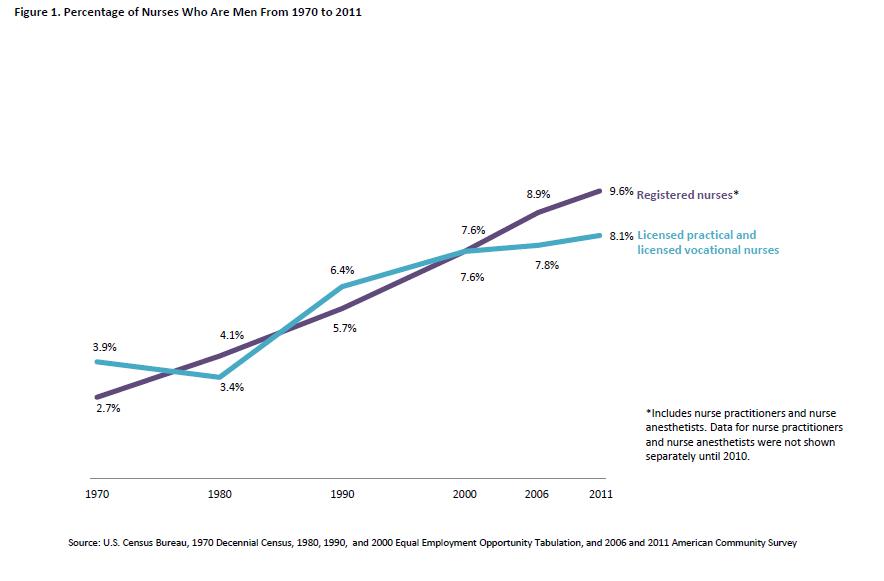
Why isn't there a similar push to get men into kindergarten education or nursing?
Men in nursing has been increasing for a while, although the figures are still pretty small.
But rising at a pretty good rate: http://www.census.gov/content/dam/Census/newsroom/releases/2013/cb13-32_figure1-hi.jpg
-
Re:Er..
The Census Bureau says that there are about 116 million households in America. From that perspective, and assuming that the vast majority of Amazon customers don't have multiple Prime accounts per household, "half" sounds about right.
-
Re:Meh.
Wrong graph.
-
Re:Meh.
The real issue is global overpopulation, and until we're ready to let natural Darwinism supersede political correctness, it's not going to change
We're doomed! Doomed I tells ya! Run away population growth
-
Re:Why is teen pregnancy bad exactly?
Look around you, I guess birth verus death rate is 1:1 likley the burth rate is lower
Really? http://www.worldometers.info/w... http://www.census.gov/popclock...
-
Re:More proof
The unemployment rate among Black and American Indian and Alaska Native science and engi-neering graduates is 6.6 percent.
Well the difference is very small overall, especially if you consider that the employment rates are very close to each other, so there is not much discrimination, or at least not enough to justify these radical means.
Female science and engineering graduates are also less likely to be in the labor force.
Well that's just statistics speak for "women are more likely to be homemakers than men", probably because they chose to stay at home because they wanted children. Nothing wrong with wanting children, is there?
http://www.census.gov/people/l...
Not in Labor Force – All people 16 years old and over who are not classified as members of the labor force. This category consists mainly of students, homemakers, retired workers, seasonal workers interviewed in an off season who were not looking for work, institutionalized people, and people doing only incidental unpaid family work (less than 15 hours during the reference week).
American Indian and Alaska Native science and engineering graduates have the highest rates of labor force exit
Well this too can have multiple reasons, but if a racist boss kicks someone out solely because they are American indian, or they quit because of discrimination inside the job, that person is unemployed, and not outside of the labor force.
-
Re:More proof
are hiring a *higher* percentage of minorities than are graduating from college
Do you have some stats for that? TFA links to this paywalled article that says there are more minority graduates than jobs. This US government report says the same thing.
male nurses, male teachers, male social workers
Read the news, at least in the UK this has been a major issue since the 90s at least and is getting millions of Pounds spent on fixing it. Men looking to become primary school teachers get massive incentives, for example.
-
Re:Driving yes, but charging?
Furthermore, according to the US Census Bureau ~80% of homes have a garage or carport, so the 67% of US homeowners drops to around 53% of the US population who can install systems like you say you have. It's technically still a majority, but I don't think anyone can call it vast. And we haven't even got into people's financial abilities or who legitimately need the range of an ICE.
http://www2.census.gov/program...Look, as I said before I support EVs and I own one. What you've been able to do with your EVs is great. But we're not helping EV adoptions by not being realistic about limitations for significant portions of the population.
Exactly! Of the 3 houses I've owned, one had no off-street parking, and the other had a driveway, but no garage. House #3 has a carport. No electrical outlet, but I could get one put in, if I had any money left after buying an EV with enough range (I often drive over 100 miles on the weekend).
-
Re:Driving yes, but charging?
All I do is point out that for the vast majority of people, there are several things that can make it work. Then you point out that, for the minority, it might be hard. Yay...
What's your definition of "vast majority"? According to the US Census Bureau homeownership is approximately 67% the US population, so that's 1/3 of the US population who will probably have a significant limitation for charging an EV where they live. Furthermore, according to the US Census Bureau ~80% of homes have a garage or carport, so the 67% of US homeowners drops to around 53% of the US population who can install systems like you say you have. It's technically still a majority, but I don't think anyone can call it vast. And we haven't even got into people's financial abilities or who legitimately need the range of an ICE.
http://www2.census.gov/program...Look, as I said before I support EVs and I own one. What you've been able to do with your EVs is great. But we're not helping EV adoptions by not being realistic about limitations for significant portions of the population.
-
Re:Very Basic Income
Based on your figures, that amounts to ~$1.47 trillion if we use the 2010 census data. Social Security, Medicare (and similar health programs), and other safety net programs accounted for a little over $2.18 trillion in 2015.
At that rate you could pay adults 18 and over $700 per month and children under the age of 18 $350 per month and break even assuming you eliminated those other programs. I'd suggest that all payments to children be deferred until they hit 18 otherwise you'll get some idiots acting like baby farms so they can get more money. $350 per month over 18 years comes out to about $75,000 which is enough to afford a 4 year college education for most people.
There may be some other reasonable changes such as a more graduated rate that slowly increases over time, such that people who have just turned 18 are only getting a small payment closer to $400, whereas older individuals are getting over $1000 as they're far less likely to be able to work full time and probably have increased medical expenses. -
Re:In the U.S., why isn't this obsolete by now?
And does the Constitution say the census must be conducted door-to-door salesmen style rather than by the plethora of other ways we have to know how many citizens live in which district?
Sacre bleu! Why didn't those dolts at the Census Bureau think of this!
Oh, wait, they did: The 2020 Census Operational Plan includes a goal of "Knock on doors only when necessary".
-
Re:Refute this - Tell me why you think I'm wrong.
You have an interesting definition of "almost all of the population is poor white people": http://factfinder.census.gov/b...
-
Re:Duke Nukem Forever Young
False.
I'm sorry, but of course it's true. Most people in the US, in the UK and in the world live in cities.
http://www.nytimes.com/2014/07...
-
Re: A disturbing setback
A rather clever approach used to poll the other side of the equation (Lesak & Miller 2002, McWhorter 2009, etc) is, rather than to use the word rape in the surveys, simply survey about their various sexual experiences, and include some experiences in the list that are rape, without using the word rape to describe them.
Depending on the group and the study,usually in the ballpark of 10% of young men confess to having committed rape at least once, and about a third of them to having done it multiple times...
Sorry, but this sort of crap doesn't help, I know you'll now start quibbling about which 'group' of young males we're talking about here, but it is heavily implied that we're all just as bad, and the '10%' and 'about a third of them' figures are designed to evoke a specific reaction, so, seeing as we're playing 'ballpark' figures here...
US Census data 2010: Ages 10-69 years (arbitrarily chosen range): 119,561,848
10% being rapists, gives us: 11,956,184Ok, so young men were mentioned, let's tune it down a bit
US Census data 2010: Ages 10-29: 43,533,295
10% being rapists, gives us: 4,353,329
and, assuming the surveys you talk about above mean that 33% of this 10% figure are repeat rapists, gives us 1,436,598.... Which are numbers that correlate well with the victim reporting incidence.
Official FBI's statistics for 2010: 84,767 'forcible' rapes, and, bear in mind, they do not differentiate between rape types (e.g. male rape, homosexual rape..), but, for 'ballpark' purposes we're assuming rape as per discussion here so will take these figures as an absolute maximum.
Assuming each rape in the FBI's statistics was carried out by a different individual, and that these individuals were all from the same age range as published in the US census.
Running through the age ranges on the table gives you a figure of between 0.74% and 1.48% of the males in each range being rapists (up to 65-69 years old range), after that, obviously, the figures become a bit meaningless (rise to 925% for 100 years and over group...and, no, I'm not going to get drawn into the 'historical abuse' argument)
Taking wider ranges,
Assuming we're talking about the aggregate age range 10-29, gives us a figure of 0.2%
Assuming we're talking about the aggregate age range 10-69, gives us 0.07%..
Assuming we're talking about the aggregate age range 15-24, gives us 0.38%So, not quite 10%.
Rape is not rare. Rapists are not rare. But convictions are. And victims know this latter fact, and few want to go through hell for something that is almost certain to be futile.
Rape and rapists may not be rare, however that doesn't mean they're as common as implied either. 'but, unreported and rapes...', yes, I know this happens and understand (from family experience) why people are reluctant to proceed with legal action in these cases, sorry, but as harsh and callous as this may sound they should proceed legally, horrible as the experience might be, as It is only rape if a court of law decides it to be so, until then, I'm afraid it is just allegations and innuendo.
Yes the legal system stinks, it might fail them, here's the thing though, it might not. -
Re:What I think?
-
Re:How about
How about we get out of this stupid fascination with our favorite pet topic.
While calling all policy makers and education leaders to consider 'computer science education for all' is a good thing
Begging the question: why is it a good thing? Half of the current CompSci grads don't even get CompSci jobs.
I could claim teaching everyone agricultural management is a good idea, and I would be wrong; of course a huge flock of neo-conservative anarchocapitalists would get behind me on that one, citing that we should all be able to independently make our own food, so a mandatory master's in farming is a good thing.
People don't need computer science education; they need education in operating a computer, and, as much as you want it to be true, programming is *not* operating, in the same way that *engineering a car* is not *driving*.
-
Re:When you can't do real work....
3) If you don't, they'll cite you as an example of a company that's not "embracing diversity" and is clearly racist/sexist/homophobic blah blah. You must be, otherwise you would have embraced diversity by giving them money, right?
Good Luck with that! The USA is 77% white! That means "zero discrimination" should have 23% other races. Of course if you account for poverty which limits access to college, then the number goes beyond 80% white as a "zero discrimination" goal. Take a look at Reddit's Headquarters in San Francisco, yep, 77% white.
Oh, my. The office I'm at has 10 employees and 4 are black guys! Better fire one or two of those black fellas so we can get back to the 77% white census statistic for my town. I'd hate to be biased!
-
Re:And still moe people have more things
$3500 in 200 lawns is $17/lawn ($50 adjusted for inflation). These days a kid mowing a lawn is lucky to get $20. I know for $20 I can get a whole family of illegals to mow, edge, rake and weed my yard and garden. Sure, the computer costs less now, but people are paid less too.
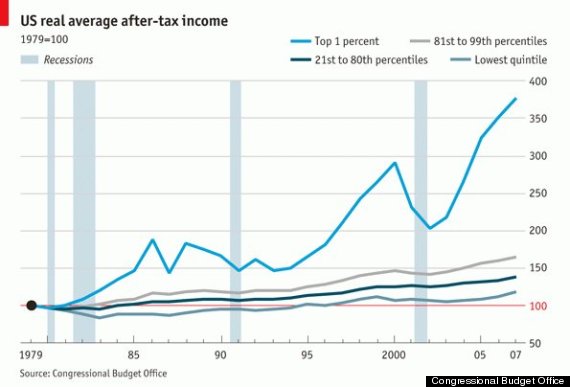
It's amazing how people can prattle on about how things were back then and how if someone was a hard worker they could have the same things you had. It's even more fun when you tie things to the price of gold: http://www.mybudget360.com/40-...
In 1969, the median salary was $9302, or 265.8oz of gold
In 2010, the median household income (from here) was $51,144, or 43.6oz of gold.
Over the same time that household income decreased to about 1/5th of their 1969 level, housing prices (in terms of gold) dropped to 1/4th of their level.
So no, the same amount of hard work just doesn't cut it anymore, and it's clear that the value of labor is going to keep dropping, with or without attempts to stop it by increasing the minimum wage.
-
Re:Wait until they start making a bit of money
These numbers are deceiving, chosen for propaganda rather than enlightenment. For example, if this number makes you feel poor: "'Half the world' wealth is held by the top 1% of individuals PBS", then check out how you stack up. If you're a programmer in the US and you contribute regularly to your 401k, then you are in the top 1%. Rich hypocrite.
Secondly, it's easy to make these wealth numbers deceptive (we're not talking about income here). For example, if you have $1 saved in assets, you are richer than 20% of the population below age 65. Source Again, you rich hypocrite.
So stop looking at crap numbers you get from people who are trying to deceive you. -
Re:So is he wrong?
Really now? Has there been a 25% increase in welfare since the 1980s? Please show your work.
https://www.census.gov/hhes/ww...
So how do you account for the average increase if welfare sets the minimum rent?
By my estimation all rents are set by supply and demand. There is no minimum rent. Numerous buildings go vacant and become dilapidated because there isn't even enough interest for someone to live there as a caretaker or squatter, and prevent the building from being demolished. Not to mention all rents have to compete with sleeping under a bridge or jail at a minimum. Welfare has nothing to do with it.
What an ignorant argument.
-
Re:I want to know the questions
I really hate news stories that cite a poll, survey, or scientific paper and don't give a reference so I can see what was actually asked in the poll or survey or actually stated in the paper, rather than something filtered through the kidneys of the person writing the story.
If the data came from the American Community Survey, then the questions were probably something like these questions from the 2016 American Community Survey, and the options, each one offering "yes" or "no", are:
- "cellular data plan for a smartphone or other mobile device";
- "broadband (high speed) Internet service such as cable, fiber optic, or DSL service, installed in this household";
- "satellite Internet service installed in this household";
- "dial-up Internet service installed in this household";
- "some other service", with a box in which to specify the service.
So, if that's the case, the questions appear to be specific and precise enough to rule out somebody with wired broadband and Wi-Fi reporting it as wireless broadband.
-
Re:I want to know the questions
I really hate news stories that cite a poll, survey, or scientific paper and don't give a reference so I can see what was actually asked in the poll or survey or actually stated in the paper, rather than something filtered through the kidneys of the person writing the story.
If the data came from the American Community Survey, then the questions were probably something like these questions from the 2016 American Community Survey, and the options, each one offering "yes" or "no", are:
- "cellular data plan for a smartphone or other mobile device";
- "broadband (high speed) Internet service such as cable, fiber optic, or DSL service, installed in this household";
- "satellite Internet service installed in this household";
- "dial-up Internet service installed in this household";
- "some other service", with a box in which to specify the service.
So, if that's the case, the questions appear to be specific and precise enough to rule out somebody with wired broadband and Wi-Fi reporting it as wireless broadband.
-
Re:Homeless, and a dozen other names
More important than the graphic is knowing how it was derived. The criteria for poverty has changed at least twice within my lifetime. Anyhoo- the current definition-
https://www.census.gov/hhes/ww...
You'll note the homeless that aren't even counted unless they are under some government program.
And the number of homeless people have been increasing despite improvements in the economy:
https://www.minnpost.com/commu...
And most telling is the rate of bankruptcy for the past century (hint- it has exploded in the later 1/3)
So what am I to make of this? If you set the bar low enough, poverty rates have been consistent around 15% for the past 50 years (even with near exponential productivity gains). But if you set the bar even lower, the number of homeless and bankruptcies have shown an even greater increase.
-
Re:Yeeeeeahaaaaaw!
You're operating on a vacuum assumption in your own head without looking at the world around you. You go, "Oh, that doesn't make sense to me, so I'll make up bullshit and claim everything based on solid analysis and understanding is made-up bullshit."
Put up or shut up time: predict the next major recession. Right now. Can't? Hmmm.... So, with that out the way, you've made some other major assertions that many just don't agree with:
No, the cost-of-living hasn't gone down; the standard-of-living has gone up.
I'd say inflation has done a number on the median income and reduced disposable income to lower levels. So I suppose it's a good thing those toys cost less, because there is less to spend on them.
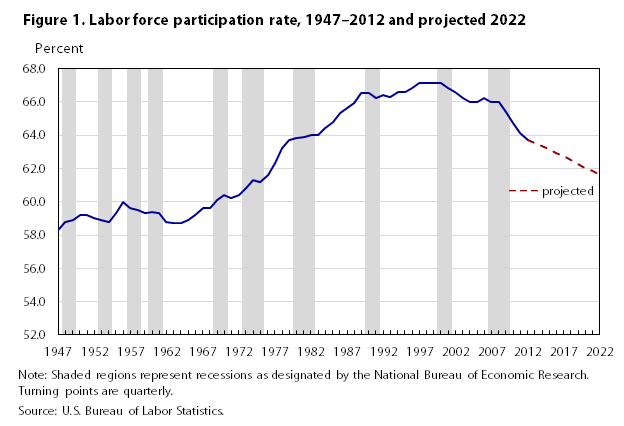
I already demonstrated that we're in a labor force participation rate bubble,
TBBA (Truth by Blatant Assertion) Merely pointing at a graph or mentioning various cherry picked statistics doesn't prove a bubble.
Let's not argue so much over *why* labor force participation suddenly grew. Let's ask another question: Why was it so low in 1970? Well, I can find as far back as 1947 at a glance, and the answer is it's always been that low.
Actually, let's do discuss it, because it's quite relevant. You see, in the late 60s, with women's lib and societal upheavel in the US and the rejection of the June Cleaver role, women actually demanded that they be treated as equals in society. Because of the aforementioned appliances etc, they had more free time and they not only went to work but stayed at work, developing careers as a normal activity. That increased the labor pool, it was not a bubble, but a raising of the available level. Now you can dispute that the pool got bigger or address the drop off since the peak, but you can't say the increase was a bubble as several fundamental shifts in society occurred to drive that effect. That would be like saying an asteroid only caused some minor temporary damage 65 million years ago.
Globalization started in the 19th century--some economists want to take this back further--with the reduction of shipping costs. That whole shipping textiles and spices and liquor around? That's outsource labor, pushing manufacture to cheaper labor markets.
Really? Try the 70s for when textiles really started losing business fast. You're seriously stretching there with ancient trade. That trade was for goods unique to production areas, not a move to replace domestic production with cheaper foreign production. It's a simple test really, was whatever was being brought in made domestically as well? No? Then it wasn't outsourcing.
At the same time, income per household has increased even as labor force participation decreased, which suggests the jobs we're gaining are higher-paying jobs.
You might want to check your numbers as it is obvious that real median income has dropped since the 70s, with the exception of the last report, which still indicates that median income has dropped since 2000. Add to that that actual cost of living has increased....
First, we don't have a lowered median income.
TBBA - Several links from authoritative sources a
-
Re:And this is...news?
That is after taxes so... Franklin County, Maine.
http://quickfacts.census.gov/q...It'd not be too bad. Figure it's at least $10 before taxes so it's at least $20,000/year. The median income is cited at the link. That's about $22,000/year. I think poverty is $12,000/year.
-
Re:Politician-Speak
When the Government gets to redefine what is considered in rating unemployment, inflation, or GDP growth - it can always look good. Looking at measures from 1980 or 1990 and things are decidedly less rosy. We're "doing better" because we've moved the goalposts and dropped pesky things like food and housing (saying that 12 ounces of bacon is all you "need" and since it's the same price as 16 ounces was just 4 years ago - zero inflation for bacon, even though the quantity is cut by 25%).
After all, we have a higher percentage of people on Government assistance today than in 2009. But don't worry, the Government has increased your chocolate ration from 30 grams to 25 grams!
-
Re:Important 3rd party API lesson
The US Census used to run the "Tiger Map Server", they retired that and now there is TIGERweb http://tigerweb.geo.census.gov/tigerwebmain/TIGERweb_main.html.
-
Re:Trump to the rescue!
You do, I hope, know that Reagan had been governor of California (the most populous state) for two terms. Hence, he was no more 'a movie star' when elected President than Hillary Clinton would be 'a cookie baking housewife' if she is elected President.
Governorships are executive positions with 'buck stops here' accountability (level varying by state). Senators (Obama and Hillary, for example) are just posturing positions with no signficant power (each Senator has only 1% the power of the full Senate). The only remotely credible (?) Democrat in the race with executive experience is Martin O'Malley.
Many of us in the United States are amused by 'coalition' governments that regularly fall apart in many European countries. Seems like an unwillingness of the populace to commit to anything even mid/short term. Many of us are also shocked by the lack of fundamental rights in most European countries that the United States Constitution enumerates as protected rights in the United States.
-
Re:Move to a proper country
There are multiple empty houses for every man, woman, and child in America
No, there aren't. The house vacancy rate in the US is currently under 2 percent (and falling), which translates to about 1.4 million vacant homes. http://www.census.gov/housing/...
-
Re:The worst humanity has to offer
A similar thing happens to credit card debt stats. Among households which carry a balance, the average (mean) debt is about $15,000. The median credit card debt among those households is about $3500 though. What's going on is that a small fraction of households (about 1 in 10) which carry a credit card balance have a huge amount of credit card debt - like $20,000 to $100,000. So when you use the average (mean), it gets heavily skewed by those few people with huge debt and make the stats look a lot worse than they really are.
On top of that, the above stats apply only to the households which carry a balance - about a third of all households. Another third pays off their cards every month (no debt), and a third have no credit cards (also no CC debt). So the median credit card debt nationwide is actually $0. But when someone in the press wants to write an article about the horrible state of credit card debt (or divorce), they glom onto those alarming but irrelevant statistics. Many of them have never taken a statistics course so they don't know what they're doing, they just find these juicy numbers which seems to prove their point, so they write an article without really understanding what they're writing about.
Anyway, if you want the actual marriage/divorce stats, they're on the US Census website. A quick glance over the numbers confirms that the majority of first marriages succeed. The percent of people who have ever been divorced is less than half the percent of people who have ever been married. Eyeballing the numbers, it looks like about 2/3rds of first marriages succeed (do not or have not yet ended in divorce). The divorce numbers are just hyper-inflated by a small number of people (about 3%) who get married and divorced many times. -
Re:Business is Booming
I went to the local gun range today and was chatting with the owner. His business spiked since the Paris shootings, with weekly concealed carry classes booked solid through February. With this he's going to have his best Christmas sales season in years.
I'm not sure what scares me more -- random shootings, or the thought of so many yokels with concealed carry permits who've only fired a gun once or twice in their, now life trying to return fire (or thinking they can).
The state of Florida has over 1.3 million concealed weapon permit holders. I can only think of two cases off the top of my head where a lawfully permitted holder has used their weapon in a questionable manner. The first was the case when George Zimmerman shot Trayvon Martin. The second is the case of a retired police officer shooting someone at a movie theater in Tampa (2014 I believe). There may be other incidents, but statistics show that Florida permit holders do not generally cause problems. Of course, I believe that Florida has very strict laws that take affect if you do violate the terms of your permit. You're required to learn those laws and demonstrate safe handling of a gun in Florida. There are 18M people in Florida and approximately 80% of them are of the age of majority (if I am reading the data right). Since you must be over 21 to have a permit in Florida, that would suggest that more than 1 in 14 Floridians have a concealed weapons permit. This data comes from the Census Bureau. It doesn't seem like the yokels in Florida are misbehaving too much. Of course, if you live in a multifamily dwelling you have to have a concealed weapons permit to even own a gun in Florida. This is due to the fact that there is no legal way to transport a firearm to your home if you do not own or rent a single family dwelling.
-
Re:Eat truth!
Have you given up on the idea that women stayed at home 40 years ago because they needed to breastfeed?
By your definition are engineering firms also "state run" because their work is subject to inspection and their staff need to be licensed by the state? What about electrical contractors? Law firms? Food processing plants?
You do realize that affluent families throughout history have employed others to help raise their kids even though the mom "stayed at home", right? Nannies, boarding schools, maids, butlers, even slaves. Not so affluent families often used older siblings, grand parents, and other relatives.
But today is different right? Not so much. Only about 20% of children of employed mothers go to a day care center. About half them are taken care of by dad, grandparents, or some other relative.
http://www.census.gov/data/tab...
And these are the kids of Moms that work. Not included are kids of stay at home moms which represent almost 1/3 of the population. It appears that the idea that the state is raising our kids is pretty much BS.
Since you are a student of history, I'm sure you'll be interested to learn that it's also a myth that 40 years ago the majority of moms in the US did not work outside the home. I was surprised myself. In fact, back in 1967 only about 49% of moms were stay at home moms. That number did decrease into the 90's down to about 23% but by 2012 it had risen to 29%.
http://www.bls.gov/opub/mlr/20...
So again, neither your view of history, nor your view of current parenting trends appear to be correct. Do with that information what you will. -
Re:Unbelievable
According to the US census bureau, there is one.
https://ask.census.gov/faq.php...
I guess it is voluntary now. But I keep getting asked my race or ethnicity every time I deal with the federal government (even in person) like when I recently applied for a replacement SS card.
BTW, there is answers from so called voluntary questions here.
http://www.census.gov/library/...
They are not considered accurate because of the law but they include the questions with the mandatory questions so I'm not sure a lot of people understand answering is optional.
-
Re:Unbelievable
According to the US census bureau, there is one.
https://ask.census.gov/faq.php...
I guess it is voluntary now. But I keep getting asked my race or ethnicity every time I deal with the federal government (even in person) like when I recently applied for a replacement SS card.
BTW, there is answers from so called voluntary questions here.
http://www.census.gov/library/...
They are not considered accurate because of the law but they include the questions with the mandatory questions so I'm not sure a lot of people understand answering is optional.
-
How many voters does Georgia have?
According to the US Census bureau, (table 4a) there are only 4.3 million registered voters of the 7.3 million voting age population.
Where did the other 1.7 million voters come from? Or am I reading the census data wrong?
-
Re:Go easy on the Adderall prescription...
You need to look at the Long Form Census documents. It is ridiculous in nature, and some of the questions are simply an invasion of privacy.
Here is a copy for your viewing pleasure. I realize that plenty of people love and trust the government, and wouldn't have a problem with the form, but I do.
-
Re:In line with current US thinking
if there is such a broad danger that a crime won't be a crime if there are enough criminals to support removing it from law, then perhaps it shouldn't be a crime.
Lynching niggers was a rather popular concept in some locales — a town, or even an entire State could've voted to decriminalize such a thing. Tax-evasion would be a more modern concern...
The way I see it, is that universal franchise itself is a mistake — it just as much of an extreme to allow everyone to vote, as the other extreme of making a monarch decide everything was.
I'd like to see access to the polls limited to people, who can a) solve a quadratic equation (randomly-generated by computer); b) cite (type into computer) an article from the Bill of Rights — of the would-be voter's choosing.
I also want everybody, who received over $10 worth of public assistance within 3 months prior to the current poll, to be automatically disenfranchised as well. We may or may not agree on whether criminals represent a big enough group to affect the vote, but public dole-recipients surely are, and the danger of these people voting more of other people's monies to themselves is evident.
if criminals can form enough of a voting bloc to where they make for a significant impact on politics, then perhaps we have made crimes of too many behaviors
First of all, some elections really do come down to only a few people: Al Franken's win, for example, was due to only 312 votes. This example is important, because it cites voting by at least 341 felons...
But I can turn your words around and claim, that, if the felons' numbers are so insignificant anyway, then who cares, whether they vote or not? That said, in my opinion, if the prescribed punishment for a particular crime does not officially include disenfranchisement, it should not be applied...
-
Not to suggest a paid solution, but
I commonly get asked to program things that already exist, and it seems counter productive to reinvent the wheel. This is not an endorsement of this product, but they provide what you are looking for: http://cqrollcall.com/products... Also if you want to do this yourself, you would want the kml files for congressional districts, they way you can geocode an address and determine which district is is inside. This I have done for other projects. https://www.census.gov/geo/map... https://www.census.gov/geo/map...
-
Not to suggest a paid solution, but
I commonly get asked to program things that already exist, and it seems counter productive to reinvent the wheel. This is not an endorsement of this product, but they provide what you are looking for: http://cqrollcall.com/products... Also if you want to do this yourself, you would want the kml files for congressional districts, they way you can geocode an address and determine which district is is inside. This I have done for other projects. https://www.census.gov/geo/map... https://www.census.gov/geo/map...
-
Re: How about
approximately 7.8 pct of households have unsafe drinking water. From http://www2.census.gov/program...
Is this before or after the EPA's incompetence polluted a river with toxic chemicals leached from the rock in an old mine?
-
Re: How about
From a HUD report:
"In January 2014, 362,163 people experienced
homelessness as individuals ""here were 216,261 homeless people in families
on a single night in January 2014, accounting
for 37 percent of all homeless people"approx. 500k homeless total, 30% unsheltered. see https://www.hudexchange.info/r...
approximately 7.8 pct of households have unsafe drinking water. From http://www2.census.gov/program...
I am ashamed and so should you.
-
Re:The freedom of not having a car
You might want to look up what is considered urban and what is considered rural by regulatory definition. It's probably not what you're thinking. It has been a while but I seem to recall that urban was defined as fifty or more people (or residencies?) per square mile. Suburban is considered urban, for example. Some towns have urban markers where they line is, they're usually on the major routes into the area. You may have never noticed but they're actually on the outskirts by quite a bit.
Hell, let me be less lazy...
Alright, skip the federal - it's also state defined. Check your local state regulations. You may be surprised at what is and isn't considered urban and rural. I'm not sure and can't find information as to what the Census used for this determination... Wait a minute. Google has to know... *sighs* The things I do for love.
Heh...
For the 2010 Census, an urban area will comprise a densely settled core of census tracts and/or census blocks that meet minimum population density requirements, along with adjacent territory containing non-residential urban land uses as well as territory with low population density included to link outlying densely settled territory with the densely settled core. To qualify as an urban area, the territory identified according to criteria must encompass at least 2,500 people, at least 1,500 of which reside outside institutional group quarters.
Source:
https://www.census.gov/geo/ref...Yes, 2500 people or even 1500 people qualifies as 'urban.' I'd thought the definition was a bit more exactly stated but it appears not. So, no, you're likely thinking that a town of 2500 isn't included. If you think a town of 2500 people is going to have public transportation (never mind a taxi or even Uber) then you might be in for a surprise.
Anyhow, I had bumped into the data/definition in the past and thought I'd lend a hand trying to make sure that you understand why your numbers are kind of silly and not really applicable for this conversation. I worked in traffic modeling for years and there are different expectations (sometimes regulations) for throughput based on the population density. 'Snot important but your numbers, as stated, don't really mean much.
-
Re:$22,000 / year is the 1%
Specifically, 99% of people live on less than $22,000 per year. So if your incom is higher than $22,000, you are the 1%. Whatever you say of "the 1%" you are saying of yourself.
Maybe if you're talking about "in the entire world", but the reference of "the 1%" usually refers to just in the US. It can refer to just in another country as well, usually modified with the country name like "the 1% of Canada", but I've never heard of it referring to the entire world's population without specifically mentioning the world.
If we limit our discussion to just the US, then the Census Bureau says that "The top 5 percent had incomes of $206,568 or more." Obviously, the top 1% would earn more than this. (For the record, 22K puts you in the 2nd lowest quintile - nowhere near the top 1%.)
-
Re:What if I don't want to own a car?
120 fatalities? Actually it's 32,719 fatalaties for 2013, or about 90 each day. Accidents wise, in 2009 there were over 10 million motor vehicle accidents. Now imagine you take the best driver in the world (NASCAR, F1, Indy or just uncle Joe who hasn't had an accident in 50 years) and have him "train" the auto pilot. Not to mention that computers do not get distracted and can respond thousands of times faster than any human can. Source: https://www.census.gov/compend... https://en.wikipedia.org/wiki/...
-
Re:How is this paid for?
The linked site promotes a scheme where every adult gets the basic income. It doesn't propose 'need based' criteria so your 33% assumption is wrong. Only about 23% of the American population is under 18 so you should be using a number of 77%.
Basic Income Action is a new national organization dedicated to winning a basic income for every American. A basic income is money provided to every adult -- enough to cover basic needs, independent of a job, with everyone getting the same amount. Imagine a world where everyone has enough money to make ends meet, as a human right.
(BTW, before criticizing others for not reading the articles, you might want to read them yourself).
-
Re:Free money isn't free$8,238,756,155,750.4 (8.2 QUADrillion) per year to estimated 245,201,076.07 americans above 18 years old (per http://quickfacts.census.gov/q...) at $2800
The money has to come from somewhere and that somewhere is the taxpayers.
I disagree - I say the money doesn't exist yet (if like the swiss, $2800 per year). Instead of a basic income, I support basic needs being met without monetary exchange.
-
Re:Nope... Wrong interpretation.
you realize there is only about 167m Americans of working age right? You mean that the unemployment rate is at 60%? Out of 318m people, 47.4% are not of the working age. http://quickfacts.census.gov/q...
-
Re:Not enough data
But that was exactly my point; Google knows about trees, and they have 3D models of them. Not everywhere in the world, but at least in the areas that Sunroof is covering now (and many others - like I just checked my parents' house in Wisconsin). As to your "most people don't live in urban areas" comment, the US Census Bureau would say otherwise. According to them, it's about an 80%/20% split between urban and rural.
As far as SolarCity, they put exactly what they can charge you in their contract. If someone didn't read the contract to find out what they'd be paying, that's their own damn fault. Personally, I got my solar panels from them, but I bought them outright - no lease, loan, or power purchase agreement. They still warrant both functionality and energy production (with a per-kWh payout if they're too low) for 30 years, but I owe them nothing. That said, the sales guy I dealt with was a bit of an asshat, trying to push me with high-pressure tactics. In the end, they were still the best deal, both in terms of price and future maintenance, and everybody besides that one sales guy was very nice.
Solar certainly doesn't make financial sense for everybody. And you can't put a solar system on every roof today and expect the grid to still function (see: Hawaii, where many places are not allowed to add new solar systems). However, California (for example) is mandating that utilities build a lot of energy storage, to help smooth out the burst of solar power available, so more people can install it. A friend of mine works for a company that provides such storage, in the form of gigantic flywheels.
In any case, for many people, solar is a good idea. Google's tool helps you determine what makes financial sense in your particular situation. And its estimates (compared to what I actually paid and what my panels actually produce) are more accurate than many of the other estimates I saw while shopping. And even if it's not a financial positive, some people prefer solar just to reduce the amount of carbon and other pollutants they are contributing to the atmosphere. As for your case, yeah - maybe the trees make it unprofitable to install solar. Or maybe you could do it, but you'd need more expensive microinverters to help counter the shade. The point is, this tool can tell you. (Well, at least it could, if it were offered in your area.)
-
Re:Suburban thinking
According to the census, there are 70million detached houses in the US.
-
Re:Ever killed a poacher?
There are 8.5 Billion of us.
I think that you must see dead people. There are ~7.257 billion people, not 8.5 billion.