Slashdot Mirror
Domain: charitynavigator.org
Stories and comments across the archive that link to charitynavigator.org.
Comments · 110
-
Re:Must be a 501(c)(3) charity
This. Totally this.
There is no law preventing amazon from discriminating between which so-called charities it supports. If they were too lazy to evaluate them individually, they could require a minimum rating on a charity evaluator like Charity Navigator.
Bigger picture here is that non-profit status just means they don't pay dividends to share holders. That doesn't stop them from paying outrageous salaries to employees. There are a LOT of grifters hiding behind 501c3 status. Its basically a given that any anti-vax "charity" is a grift.
-
Living in opposite world...
I like, in a sarcastic way, how you skirted the idea that charities would only help those they deemed worthy. I suspect that 'lazy' has a wealth of meanings for you. I am familiar with Charity Navigator. I would point you towards Rotten Tomatoes, which was, more or less, subverted the moment the big movie studios took a hit in profits they could trace back to the site. Do you think that the mega-churches would fail to do the same to Charity Navigator?
I don't like, in a literal way, how you made an allegation against Charity Navigator without doing any basic research. I looked at the top 4 megachurches (based on average attendance):
Life.Church. Charity Navigator has not rated it.
Church of the Highlands. Charity Navigator has not rated it.
Lakewood Church. Charity Navigator has not rated it.
North Point Community Church. Charity Navigator has not rated it.So yes, I'm confident Charity Navigator won't be subverted by organizations it doesn't rate.
Republicans whine about unfunded liabilities, then spend big.
Yes, I'm very unhappy with Republicans about that. At least they -- unlike the proponents of socialized medicine -- aren't proposing new programs that would cause $218 trillion in additional deficit spending over the next 30 years (to say nothing of what the new programs would do to unfunded liabilities). You complain about hypocrisy on the issue of unfunded liabilities, which is certainly true of some Republicans, but you offer no solutions to that issue yourself.
The only way the system breaks down is if people stop paying taxes
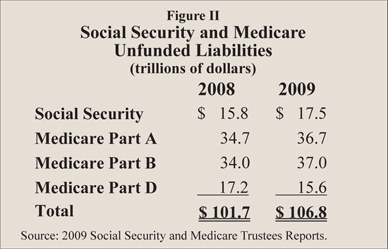
You don't think Social Security will break down if the ratio of retirees to FICA-paying workers grows a lot larger (due to lower birth rate, increasing life expectancy, etc.)? That's what's happening in Japan, and to say fixing that problem is "a major political challenge" might be the understatement of the century. Sorry, rather than trusting your bare assertion, I will trust the official report of the U.S. Social Security Board of Trustees, which back in 2009 had already announced $17.5 trillion in unfunded liabilities. I've never seen a credible definition of "Ponzi scheme" that doesn't describe Social Security to a T.
Again, this comes back to you and those like you. This belief that anything that doesn't directly benefit you is a waste of money, no matter the net benefit to our society as a whole, that people who need assistance are just "lazy." It is short-sighted, narrow-minded, and it is dragging the US down more effectively than any outside agent ever could.
You must live in opposite world, because the facts consistently support the opposite of your assertions.
* I advocate for making the social safety net sustainable, and much more robust. That certainly doesn't benefit me; just the opposite, it requires me to become more charitable.
* I didn't say people who need assistance are lazy. I said they are the opposite of people who are merely lazy, and that they should receive the opposite treatment (more resources directed to them). Does your reading comprehension really suck that much, or do you just -
Living in opposite world...
I like, in a sarcastic way, how you skirted the idea that charities would only help those they deemed worthy. I suspect that 'lazy' has a wealth of meanings for you. I am familiar with Charity Navigator. I would point you towards Rotten Tomatoes, which was, more or less, subverted the moment the big movie studios took a hit in profits they could trace back to the site. Do you think that the mega-churches would fail to do the same to Charity Navigator?
I don't like, in a literal way, how you made an allegation against Charity Navigator without doing any basic research. I looked at the top 4 megachurches (based on average attendance):
Life.Church. Charity Navigator has not rated it.
Church of the Highlands. Charity Navigator has not rated it.
Lakewood Church. Charity Navigator has not rated it.
North Point Community Church. Charity Navigator has not rated it.So yes, I'm confident Charity Navigator won't be subverted by organizations it doesn't rate.
Republicans whine about unfunded liabilities, then spend big.
Yes, I'm very unhappy with Republicans about that. At least they -- unlike the proponents of socialized medicine -- aren't proposing new programs that would cause $218 trillion in additional deficit spending over the next 30 years (to say nothing of what the new programs would do to unfunded liabilities). You complain about hypocrisy on the issue of unfunded liabilities, which is certainly true of some Republicans, but you offer no solutions to that issue yourself.
The only way the system breaks down is if people stop paying taxes
You don't think Social Security will break down if the ratio of retirees to FICA-paying workers grows a lot larger (due to lower birth rate, increasing life expectancy, etc.)? That's what's happening in Japan, and to say fixing that problem is "a major political challenge" might be the understatement of the century. Sorry, rather than trusting your bare assertion, I will trust the official report of the U.S. Social Security Board of Trustees, which back in 2009 had already announced $17.5 trillion in unfunded liabilities. I've never seen a credible definition of "Ponzi scheme" that doesn't describe Social Security to a T.
Again, this comes back to you and those like you. This belief that anything that doesn't directly benefit you is a waste of money, no matter the net benefit to our society as a whole, that people who need assistance are just "lazy." It is short-sighted, narrow-minded, and it is dragging the US down more effectively than any outside agent ever could.
You must live in opposite world, because the facts consistently support the opposite of your assertions.
* I advocate for making the social safety net sustainable, and much more robust. That certainly doesn't benefit me; just the opposite, it requires me to become more charitable.
* I didn't say people who need assistance are lazy. I said they are the opposite of people who are merely lazy, and that they should receive the opposite treatment (more resources directed to them). Does your reading comprehension really suck that much, or do you just -
Living in opposite world...
I like, in a sarcastic way, how you skirted the idea that charities would only help those they deemed worthy. I suspect that 'lazy' has a wealth of meanings for you. I am familiar with Charity Navigator. I would point you towards Rotten Tomatoes, which was, more or less, subverted the moment the big movie studios took a hit in profits they could trace back to the site. Do you think that the mega-churches would fail to do the same to Charity Navigator?
I don't like, in a literal way, how you made an allegation against Charity Navigator without doing any basic research. I looked at the top 4 megachurches (based on average attendance):
Life.Church. Charity Navigator has not rated it.
Church of the Highlands. Charity Navigator has not rated it.
Lakewood Church. Charity Navigator has not rated it.
North Point Community Church. Charity Navigator has not rated it.So yes, I'm confident Charity Navigator won't be subverted by organizations it doesn't rate.
Republicans whine about unfunded liabilities, then spend big.
Yes, I'm very unhappy with Republicans about that. At least they -- unlike the proponents of socialized medicine -- aren't proposing new programs that would cause $218 trillion in additional deficit spending over the next 30 years (to say nothing of what the new programs would do to unfunded liabilities). You complain about hypocrisy on the issue of unfunded liabilities, which is certainly true of some Republicans, but you offer no solutions to that issue yourself.
The only way the system breaks down is if people stop paying taxes
You don't think Social Security will break down if the ratio of retirees to FICA-paying workers grows a lot larger (due to lower birth rate, increasing life expectancy, etc.)? That's what's happening in Japan, and to say fixing that problem is "a major political challenge" might be the understatement of the century. Sorry, rather than trusting your bare assertion, I will trust the official report of the U.S. Social Security Board of Trustees, which back in 2009 had already announced $17.5 trillion in unfunded liabilities. I've never seen a credible definition of "Ponzi scheme" that doesn't describe Social Security to a T.
Again, this comes back to you and those like you. This belief that anything that doesn't directly benefit you is a waste of money, no matter the net benefit to our society as a whole, that people who need assistance are just "lazy." It is short-sighted, narrow-minded, and it is dragging the US down more effectively than any outside agent ever could.
You must live in opposite world, because the facts consistently support the opposite of your assertions.
* I advocate for making the social safety net sustainable, and much more robust. That certainly doesn't benefit me; just the opposite, it requires me to become more charitable.
* I didn't say people who need assistance are lazy. I said they are the opposite of people who are merely lazy, and that they should receive the opposite treatment (more resources directed to them). Does your reading comprehension really suck that much, or do you just -
Living in opposite world...
I like, in a sarcastic way, how you skirted the idea that charities would only help those they deemed worthy. I suspect that 'lazy' has a wealth of meanings for you. I am familiar with Charity Navigator. I would point you towards Rotten Tomatoes, which was, more or less, subverted the moment the big movie studios took a hit in profits they could trace back to the site. Do you think that the mega-churches would fail to do the same to Charity Navigator?
I don't like, in a literal way, how you made an allegation against Charity Navigator without doing any basic research. I looked at the top 4 megachurches (based on average attendance):
Life.Church. Charity Navigator has not rated it.
Church of the Highlands. Charity Navigator has not rated it.
Lakewood Church. Charity Navigator has not rated it.
North Point Community Church. Charity Navigator has not rated it.So yes, I'm confident Charity Navigator won't be subverted by organizations it doesn't rate.
Republicans whine about unfunded liabilities, then spend big.
Yes, I'm very unhappy with Republicans about that. At least they -- unlike the proponents of socialized medicine -- aren't proposing new programs that would cause $218 trillion in additional deficit spending over the next 30 years (to say nothing of what the new programs would do to unfunded liabilities). You complain about hypocrisy on the issue of unfunded liabilities, which is certainly true of some Republicans, but you offer no solutions to that issue yourself.
The only way the system breaks down is if people stop paying taxes
You don't think Social Security will break down if the ratio of retirees to FICA-paying workers grows a lot larger (due to lower birth rate, increasing life expectancy, etc.)? That's what's happening in Japan, and to say fixing that problem is "a major political challenge" might be the understatement of the century. Sorry, rather than trusting your bare assertion, I will trust the official report of the U.S. Social Security Board of Trustees, which back in 2009 had already announced $17.5 trillion in unfunded liabilities. I've never seen a credible definition of "Ponzi scheme" that doesn't describe Social Security to a T.
Again, this comes back to you and those like you. This belief that anything that doesn't directly benefit you is a waste of money, no matter the net benefit to our society as a whole, that people who need assistance are just "lazy." It is short-sighted, narrow-minded, and it is dragging the US down more effectively than any outside agent ever could.
You must live in opposite world, because the facts consistently support the opposite of your assertions.
* I advocate for making the social safety net sustainable, and much more robust. That certainly doesn't benefit me; just the opposite, it requires me to become more charitable.
* I didn't say people who need assistance are lazy. I said they are the opposite of people who are merely lazy, and that they should receive the opposite treatment (more resources directed to them). Does your reading comprehension really suck that much, or do you just -
Re:No, there are two ways he could obtain his insu
The beautiful thing about private charity is, you're in control. If you feel gay youth are underserved, that's where you can direct your dollars. You don't have that power when you write a check to the IRS.
Apparently you're not familiar with CharityNavigator.org. If you choose charities that have earned four stars from CharityNavigator, your dollars will be spent exceptionally efficiently and griftlessly.
Again, that's better than government attempting to do social good. It's terribly inefficient at that. I have participated in legal grift when I traveled on government contracts. The per-diem allowance is so extravagant, I was always able to stay at four- or five-star hotels, and enjoy fine dining every evening. That's totally unnecessary for someone at my level. I would have performed the job just fine, and taxpayers would have been much better served, if my lodging had been restricted to two-star hotels.
The PITA scholarship application process you described is what happens when privately-funded scholarship dollars are scarce. As the number of such dollars increases, the process will necessarily be relaxed somewhat, because it wouldn't be possible to give away all those dollars if the process remained as stringent as it is today.
It's true that private charities are more willing and able than government to make judgements about who is truly needy, and who is merely lazy. Don't act like that's a bad thing. For as long as the social safety net remains finite in size, it will be important to direct resources more in the direction of the truly needy, and less in the direction of the merely lazy.
Medicare alone is 702 billion dollars per year. 402 billion isn't going to cover it.
That's why I said "Within our lifetime, we might see voluntary charitable contributions exceed the size of coercive government wealth redistribution programs." I pretty clearly acknowledged that we haven't yet reached that point.
That reminds me. Private charities do not build up unfunded liabilities. Government entitlement programs, on the other hand, have built up $210 TRILLION in unfunded liabilities. In other words, $210 TRILLION in future obligations, for which we currently have no idea where the money will come from. The unfunded liabilities will inevitably begin to come due, like an apocalyptic balloon payment. This fact alone should make everyone want to make a shift toward private charity, rather than doubling down on the programs that created the unfunded liabilities.
I've heard people describe Lyndon Johnson's "Great Society" programs as "successful," but they couldn't possibly be aware of the unfunded liabilities while making that characterization. Johnson himself, if his advisors had been able to foresee and warn him about the unfunded liabilities, never would have endorsed his Great Society programs. He didn't have a deathwish for his country's economy.
-
Re:How about trimming the top level MOD?
> According to the google, at most 52% is spent on helping people.
Provide links of GTFO.
https://www.charitynavigator.o...
According to their tax filings, over 75% of their income goes towards their stated purpose.
=Smidge= -
Re:Sounds like a tempest in teapot
Someone posted above that their liability to assets ratio is 113%. That is, they owe more money than they're worth. This isn't a ploy. Their management seriously screwed up somehow.
-
Re:How about trimming the top level MOD?
SuperKendall pointed out:
In this somewhat old post on how MOD spends money, it spent $96 million on salaries and benefits. If they really needed to save $3 million, why could that money not have come from there?
Salary and related expenses are 37% of every dollar MOD gets as a donation...
Charity Watch's listing for the March of Dimes places it in the middle of the pack of USA 501(c)3 charitable organizations in terms of percentage of income devoted to expenses in general (2 stars out of 4). It also rates MoD quite highly for transparency regarding its finances. No member of the board derives any financial benefit (aside from recompense for attending board meetings) from his/her service to the organization, which is a good sign, as well.
The thing is that the Internet's apparent consensus that non-profits' overhead costs should be no more than 15% of their income is, like most Internet consenses on non-technical matters, primarily based on wishful thinking and handwaving. All charities are not alike. In particular, a local non-profit group (Friends of the Library being an exemplar with which I'm intimately familiar) whose board and workforce are all strictly volunteers will have distinctly lower overhead costs than a national organization with a full-time, paid staff, a direct-mail solicitation operation, and all the expenses those entail can possibly match. Big non-profits have to pay for things you probably haven't even considered: not just salaries, rent, utilities, office equipment (and its repair and maintenance), and the costs of annual audits by outside accounting, but things like the cost of putting on fundraising events (MoD recieved over $132 million as a result of such events in the last year for which Charity Watch has numbers), buying liability insurance to cover those events, and hiring outside contractors to provide everything from catering to professional entertainment at those events.
It's also important to keep in mind that MoD's major campaigns focus on soliciting small donations - and the labor involved in receiving, documenting, and conveying those donations often costs nearly as much as a given small donation brings in.
Mind you, I'm not supportive of non-profits who pay giant salaries to their executives, and lavish them with perks (I'm looking at YOU, United Way), but it's also helpful to remember that those folks spend their days begging non-stop for money for their organization. (I don't know about you, but that is definitely not a job I'd want.) The more effective they are at prying major donations out of rich patrons, generally the higher their salaries - and I have zero problems with tying their paychecks to their effectiveness at soliciting those donations.
The real question here is, "Why, exactly, have donations fallen significantly enough in the first half of this year to force MoD to renege on $3 million of its grant offers?" And, typically, TFS provides no clue to the answer
-
Re:How about trimming the top level MOD?
Charity Navigator rates the March of Dimes at 2 out of 5 stars, and 1 out of 5 on the financial scale.
Their program expenses, administrative expenses, fundraising expenses, and fundraising efficiency are all pretty good. But they basically ran out of money. Liability to assets should be 10% but it is 113%!!! I can't tell what they did wrong, other than paying their CEO a half a million dollars a year. That wouldn't be unreasonable if that CEO brought in millions of more dollars than a CEO who made $100k/year, but clearly something was mismanaged if it got to this point. -
Re:How about trimming the top level MOD?
Plus 13% fundraising expenses. Overhead is 25% total based on current numbers.
On the plus side, they have reduced their operating overhead.
-
Charity Navigator
They have a a two star overall rating on Charity Navigator and a one star for financials.
Their efficiency is for every dollar they raise, they spend $0.15 to raise it. And after admin expenses, $0.75 actually goes for the programs.
-
As much good as many charities do....
They have pitfalls.
Isn't it at least interesting to note that a charity serving the third world probably pays for its executives to live a significantly above average first-world life?Many of the biggest charities clearly have something improper going on.
Choose your source, here is one:
https://www.charitynavigator.o...In any case, suffering cannot be simply alleviated with no alternative in place to prevent the forces that caused the suffering to begin with from returning. The suffering will simply return.
Your best bet to help people is to tend to your own arena and exert your influence on your own society. Our society has deep problems and the suffering for these is passed down. How can we help others when we are so mired in our own problems?
Too often people give charity to try to fill a spiritual hole in themselves or even worse to inflate their own ego without being honest with themselves about it.
Either way most people lie to themselves about the good they are doing and giving to charity sublimates their sense of social responsibility.One thing is the identity politics divide. If you participate in the slinging against one identity of the other you are simply throwing away your greatest potential to change anything in the world by buying a false concept of the workings of the world. Then you are the one that needs help.
-
charities...
Before donating to any such charities, please do a quick search with charitynavigator or charitywatch:
https://www.charitynavigator.o...
https://www.charitywatch.org/ -
Re: That's what is supposed to happen
Firstly, you don't need to campaign to have your own taxes raised. You can give more than required, if you choose, already. So don't pretend that.
Secondly, you are wrong in your claim that conservatives are not more likely to give to "people in general who need help". See here.
"They were also 23 percentage points more likely to volunteer. When considering the average dollar amounts of money donated and time volunteered, the gap between the groups increases even further: religious people gave nearly four times more dollars per year, on average, than secularists ($2,210 versus $642). They also volunteered more than twice as often (12 times per year, versus 5.8 times)."
and
These enormous differences are not a simple artifact of religious people giving to their churches. Religious people are more charitable with secular causes, too. For example, in 2000, religious people were 10 percentage points more likely than secularists to give money to explicitly nonreligious charities, and 21 points more likely to volunteer. The value of the average religious household’s gifts to nonreligious charities was 14 percent higher than that of the average secular household, even after correcting for income differences. Religious people were also far more likely than secularists to give in informal, nonreligious ways. In 2002, religious people were far more likely to donate blood than secularists, to give food or money to a homeless person, and even to return change mistakenly given them by a cashier."
Now, I admit that this example conflates "religious people" with conservatives, but the strong correlation between those two groups is even better documented.
-
Re: Patrick
His salary was $86,192 in 2014. Patrick is effectively the entire administrative expense of the Save the Manatee Club (9.9% of the budget is taken up by administrative expenses, 7.13% of the budget is Patrick's salary). There are 8 additional "staff" positions - they seem to be a combination of volunteers or are compensated under "fund raising" or "program" expenses.
I'd say this is probably his major source of income. It's a small organization (around $1.4M) and seems to do good work, but its income flow is entirely dependent on donors that are concerned about the status of the manatee.
-
Re:Lining Jimmy Wales' pockets
Instead of a grant, how about a federal investigation to determine where the money is actually going?
Or... you could read the audited financial statements which Wikimedia posts on its website. It's not that hard.
The financial statements paint a picture of a financially healthy organization. Very healthy. But having solid financials is not a crime. The thing that sticks out about these financials is that Wikimedia has a huge amount of cash on hand. Now it's normal for charities to keep more cash on hand than a for-profit business. If you're Proctor and Gamble, well, things would have to get pretty bad before people give up on buying soap. You can count on future cash inflows. If you're a charity those cash inflows are a lot more volatile, so you keep more on hand.
How much? Well, normally a well-run charity keeps enough current assets to run for six months; Wikimedia has about eighteen months. However you have to take into account that Wikimedia is growing rapidly. It was almost 25% larger in FY 2016 than it was in 2015. It's normal in this situation to have more cash reserves than one that is a stable size.
And note -- we're talking cash or cash equivalents held by the foundation, not Jimmy Wales personally. If you look at the foundation's IRS 990 form, Jimmy Wales gets $0 in compensation from the foundation either in salary, in-kind, or (important to check as this is a common dodge) compensation from related organizations. The highest compensated executive is Lisa Tretikov, at $308K. Fundraising expenses, overhead, and executive compensation are all quite low for a charity with $82 million in income, 70% of which is spent on program (also a very good metric).
Charity Navigator gives Wikimedia Foundation a 91/100 combined score for transparency, accountability, and financial management. This puts it in the top tier of charitable foundations, roughly on par with the American Heart Association. Kind of like the charity equivalent of a blue chip stock. Your local food bank is more like a growth stock; if things go as planned your donation will have a bigger impact, but if things go south your donation may just go to pay off the debts of the defunct organization.
So when Wikipedia asks you to chip in $5, should you? There's no simple answer. Wikipedia won't go away if you don't, but on the other hand it provides something you probably use every day. In general a healthy charity will manage without your donation, but it still can't manage without any donations.
-
No Fucking Way
> I'd say both have been into unethical behavior equally,
I'm sorry but no fucking way.
Clinton's "unethical behavior" was so huge that when the AP reported on her malfeasance they spent 11 paragraphs on the 'scandal' of when Clinton tried to help Muhammad Yunus a former Nobel Peace Prize winner who’s also the recipient of a Congressional Gold Medal and a Presidential Medal of Freedom. When the NYT reported on her ethical failures, they spent nearly an entire story on the "expose" of how she arranged for Bill Clinton to rescue political hostages from North Korea. Meanwhile the Clinton Foundation received top scores from Charity Navigator and Charity Watch.
The only reason people think trump is at all equivalent to clinton is because trump's olympus-sized pile of shit caused outrage fatigue and the media tried to do its false balance reporting schtick by digging for bottom of the barrel stories on Clinton to somehow even out the coverage in the name of being 'objective.' But that's only a valid approach when they are actually equal.
-
Re: OMG that's a dodgy check
You do understand that the Clinton foundation proves only a small percentage to an actual charity. The bulk of every dollar is overhead
Where "small percentage" is 86.9%?
-
Re:Epic tone deafness
Probably goes through the Clinton Foundation first. Then she is payed for consulting fees for the Clinton Foundation.
Note there isn't evidence of specific to Feinstein doing this with the Clinton Foundation but this is what is going on in the Clinton Foundation.
The Clinton Foundation pays other Clinton Charities. Look here for the Clinton Foundation https://www.charitynavigator.o...
Then searching for the one of the sub programs Clinton Health Access Initiative Inc. https://www.charitynavigator.o...
Goes right back to the rating for the Clinton Foundation in one endless loop. -
Re:Epic tone deafness
Probably goes through the Clinton Foundation first. Then she is payed for consulting fees for the Clinton Foundation.
Note there isn't evidence of specific to Feinstein doing this with the Clinton Foundation but this is what is going on in the Clinton Foundation.
The Clinton Foundation pays other Clinton Charities. Look here for the Clinton Foundation https://www.charitynavigator.o...
Then searching for the one of the sub programs Clinton Health Access Initiative Inc. https://www.charitynavigator.o...
Goes right back to the rating for the Clinton Foundation in one endless loop. -
Re:Clinton Foundation numbers
I have a very hard time finding the evidence for your conclusion based on any sort of independent, non-partisan, non-cherry-picked evaluations:
Four Star, 93%+ rating from Charity Navigator https://www.charitynavigator.o...
Charity Watch: A Rating, 88% of funds go to programs not administrative costs: https://www.charitywatch.org/r...
The actual evidence seems to indicate that the vast majority of the money that goes to the Clinton foundation actually goes to what it's ostensibly for - charitable causes themselves. That's almost the exact opposite of a "slush fund" or a way to hide money, because they're not getting anything back out of it in any appreciable form. 12%? They'd keep more of the money if they paid standard taxes with no deductions! -
The facts disagree
it purely aligns with greed, rather than need
Charitable giving continued its upward trend in 2015, as an estimated $373 billion was given to charitable causes. For the second year in a row, total giving reached record levels, and taking 2014 and 2015 together, charitable giving has increased over 10% (using inflation-adjusted dollars).
The wonderful thing about that $373 billion redistribution of wealth is that it was not coerced by any government.
High-income people tend to give more of their income to charity, in percentage terms as well as in absolute terms, than middle-class people. (Of course there are exceptions to that rule: Bidens gave average of $369 to charity a year.) That explains why, say, 3% GDP growth results in greater-than-3% growth in charitable contributions. Most of that $373 billion in philanthropic donations was given by -- according to you -- "psychopaths who parasitically prey upon the rest of society".
If we can just obtain a few more decades of economic growth, we will be able to have a more robust social safety net than the one we have now, funded entirely by voluntary contributions. Government will be able to get out of the wealth redistribution business, and focus on the sole job it was created to do: securing our rights.
For that reason, I'm betting the economy will never be permitted to grow that much. Restoring that limited, Jeffersonian scope to government is anathema to too many people.
-
Book misses major pointsOne of the big apparent complaints is Gates focus on infectious rather than chronic diseases. From the article:
The same is true when it comes to the foundation’s work in public health. As McGoey briefly acknowledges, the foundation’s investment of more than $15 billion in this field “has done considerable good.” That seems an understatement. Thanks in part to the Gateses’ strong investment in vaccines for infectious diseases, deaths from measles in Africa have dropped by 90 percent since 2000. Over the last quarter century, tuberculosis mortality worldwide has fallen by 45 percent, while over the last dozen years the number of new malaria cases has dropped by 30 percent. And polio, which in 1988 was endemic in 125 countries, is today endemic in only two. The foundation has also played an important part in fighting the spread of HIV and helping those infected with the virus to lead productive lives. For this, Bill and Melinda Gates deserve much credit.
So far so good.
The question is, has this been the best use of their money? As McGoey notes, chronic diseases, as opposed to communicable ones, exact a staggering toll worldwide, yet the foundation has invested less than 4 percent of its funding in research on them, and the global health community has largely followed suit. “The failure to combat obesity, cancer and heart disease epidemics in poor nations,” she observes, “has been one of the most glaring mistakes of global development efforts in recent years.” An equally serious shortcoming has been the neglect of primary-care facilities in the developing world. The initial problems that the nations of West Africa faced in combating the Ebola outbreak stemmed in part from the weaknesses in their overall health systems. Interestingly, in late September, the Gates Foundation, together with WHO and the World Bank, announced a joint partnership aimed at improving access to primary care in poor and middle-income countries — a dramatic (if tacit) acknowledgement that the emphasis on fighting individual diseases has been too narrow.
The primary reason it makes sense to focus on infectious diseases is that once they are gone, they are completely gone. Obesity and other problems don't go away permanently. In contrast if we wipe out malaria or polio, we won't have to deal with it again.
Note also that every single one of the other major criticisms acknowledges that it is something that the Gates have changed already. For example, the article discusses how a number of the Foundation's early attempts at education reform didn't work well. But they changed what they were doing. So they are already using effective evaluations and metrics to decide things.
I find it deeply unfortunate that someone spent an entire book criticizing the Gates Foundation when there are far more clear cut wastes of money out there. The Make a Wish Foundation is an example. They spent 58 million dollars last year http://www.charitynavigator.org/index.cfm?bay=search.programs&orgid=4038#.VljSXnsyH3U and millions more came from businesses in parts of wishes to help a tiny number of dying children, whereas if that money was spent effectively on cancer research, there would be fewer children dying. Instead we have an entire book focusing on one of the most effective and efficient charities in on the planet which complains that they aren't efficient enough.
-
from the perspective of a small nonprofitFirst, I think it's great that not only are you interested in supporting worthwhile causes but are also interested in educating yourself about how different orgs use their resources. So . . . kudos!
Note: I run a nonprofit organization and have a different perspective (+ bias!) about donations.
[1] Generally, I think it's best to begin as you already have by identifying those causes which are most important to you.
[2] Next, ask yourself if you're interested in pursuing a global / regional / local approach? The local org might focus on issues which matter to you - and it might be directly related to issues in your neighborhood. On the other hand "big" issues like constitutional rights might only be addressed at the national level.
Also, are you looking for a large well-established nonprofit or a small up-start where your money will have a more significant impact? For example a donation of $1,000 to the Red Cross will certainly be welcomed but likely not celebrated. If instead you made that $1,000 donation to a nonprofit running on a shoestring budget of $20,000 a year then you've just increased their budget by 5% - which is definitely cause for celebration!
[3] By now you should have at least a handful of charities which meet your criteria and can begin validating their effectiveness, transparency, and legal status.
A good place to start is GuideStar ( http://guidestar.org/ ). You will get information on IRS status, financials, mission statements as well as reviews. CharityNavigator ( http://charitynavigator.org/ ) is another great resource and they provide independent ratings of charities. One important distinction though is that CharityNavigator focuses on larger nonprofits (total revenue must be > $1million in the previous fiscal year).
My nonprofit has a listing with CharityNavigator but no rating because we are (much much much) too small. On the other hand at GuideStar we have a "Gold" rating based on the amount of information which we have shared with them. So either of these are great resources but my bias is showing when I lean toward GuideStar.
If for some reason you'd rather not use either of these sites I would suggest that at a minimum that you verify that the nonprofit has a 501(c)(3) status with the IRS and that it has not been revoked. You can search for orgs by name or EIN here: http://apps.irs.gov/app/eos/
For more on charity scams here's some helpful info from the FTC: https://www.consumer.ftc.gov/a...
[4] Once you have narrowed your list down to 1 or 2 then you can decide if there's a specific funding mechanism which appeals most to you (e.g. PayPal, cash, check, bitcoin). Some donation methods can take 5% (or more!) of the donation off the top before the nonprofit gets the donation.
For example, PayPal charges nonprofits a reduced fee of 2.2% + $0.30 per transaction (details here: https://www.paypal.com/webapps...). Also, BitPay does not charge us anything for bitcoin donations through our site.
Hopefully by going through this you will wind up with at least one charity which meets all of your criteria and can then just confirm their status in the future without going through all of these steps every time. Thank you on behalf of nonprofit organizations everywhere for supporting their efforts!
Shameless Plug
Of course I have to say something about my nonprofit's work: Jennifer Ann's Group is a nonprofit charity preventing teen dating violence. Our most successful program is producing video games to help young people, parents, and educators learn more about this issue and how to seek help if needed. We have produced 20+ video games through an annual video g -
Ahhh... Charties. Start with 990 forms
First off, I strongly suggest not donating to a charity unless they produce a 990 form.
There are still a lot of charities that are flat out scams, like breast cancer "awareness" charities who's board member owns a marketing firm, that creates awareness by calling people and asking for donations to their breast cancer awareness fund. Avoid "awareness" charities. Most of them are complete bunk.
Here are my top three websites for researching charities.
http://www.charitynavigator.or...
http://foundationcenter.org/fi...
I shoot for a 90% efficiency ratio. But that isn't always possible for all diseases. Sometimes you will have to settle for a 80-85% efficiency ratio. Whenever you find a charity that you like, look it up and see if there are any charities that address the same issue, but perform better.
Also, start looking at the 990 forms for the charities that you do give to. This will help you to evaluate charities that are too small to have 3rd party evaluations.
Also start looking at their Annual Reports to see what they have actually accomplished for the past year. This will be especially important for charities that do not provide services or do research (like political/lobbying charities). Their efficiency ratio will be much lower, but their staff may be doing what you consider to be important work. Avoid charities that are not readily transparent about how their money is spent and what their accomplishments are.
Some exceptions are small charities such as food banks or soup kitchens that do not have any paid staff or management. Those are probably some of the most efficient charities out there.
-
401K
I know it sounds selfish, but put away a few percent ASAP. Then, the EFF is a good bet, unless you work in government and want them to flag you as a possible terrorist. Then, pick one that has a decent return. http://www.charitynavigator.or...
-
Re:Stop it already
Thank you very much. The only sites I knew of were:
http://www.charitynavigator.or...
https://www.charitywatch.org/It is amazing how many egregious NPOs are out there and even more amazing how many people do not pay attention to this. Chances are that if they are paying a huge sum of money to buy expensive ads and then place those ads then they are not a very good charity. So, if you are seeing them advertise on all the channels during prime slots there is probably no reason to donate to them, they can use the ad money to further their cause. (This is not exactly true in all cases and it may be different as I have not watched television in a number of years.)
I tend to donate "in the name of" and oft use the name of the site that I got the idea from. Thus this donation would be in the name of Slashdot members and so I like to ensure such donations go to good causes. Not too many people like them here but I am thinking that the Bill and Melinda Gates Foundation is a good cause but I doubt they take BC. EFF is a good cause too but I am not sure how they spend their cash so I will check into that.
Anyhow, do you have a charity in mind that you prefer? It is going to be, sort of, in your name too. They have to accept BC obviously. The total current value is a little over $11,000 (I have 48 of them, I checked) so it is not an insignificant sum to some folks. I think it would make somebody's day to see that message in their inbox. Also I am a bit shocked at how much they are worth. It is less than they were worth the last time I checked but it is still worth a lot more than the time and electricity I put into it. I am sure that this is because I did this within, literally, a month of them coming out with the software and whatnot. And, no, I am not going to give it to Dice.
-
Put this in perspective
Before getting alarmed about numbers with no context, take a look at Charity Navigator. Compare The Wikimedia foundation with your favorite charity and see how they look.
Charity navigator rates the Wikimedia foundation as 4/4 stars. The system they use is quite fascinating: the site is generates the numbers mathematically from non-profit tax filings. What the site doesn't tell you is if the charity is actually doing good work. If a charity's goal is to feed babies to demons, and they do it efficiently, they will get good marks.
-
Put this in perspective
Before getting alarmed about numbers with no context, take a look at Charity Navigator. Compare The Wikimedia foundation with your favorite charity and see how they look.
Charity navigator rates the Wikimedia foundation as 4/4 stars. The system they use is quite fascinating: the site is generates the numbers mathematically from non-profit tax filings. What the site doesn't tell you is if the charity is actually doing good work. If a charity's goal is to feed babies to demons, and they do it efficiently, they will get good marks.
-
Donate
But not just to any fly-by-night charity that hits your inbox with graphic pictures. Check them out here.
-
Re:Apparently "backers" don't understand the term
You're still obliged, in law, to deliver what you promised you would.
I'm pretty sure, if you look at the 'gifts' offered, they are all offered contingent on success of the project. Not success of the funding campaign, but success of the project. I'm pretty sure you'll find that the projects are all roadmaps or visions and subject to revision. So, E:D's kickstarter "promise" to deliver you a specific game is a lot like Comcast's promise to deliver up to 25 Mbps.
So far as I know, there is exactly one pending lawsuit aimed at testing the obligation to deliver promised goods. I don't expect it to be very successful, because funders are generally putting money into a risky venture without guaranteed success.
Even authentic, tax-deductible charities get away with diverting donations from their ostensible purposes. Look at a group like National Veterans Services Fund. Their administrative costs are 82% of their revenue. You can find 'charities' with administrative and fundraising costs as high as 95% of donations. The point is that "delivering" on marketing literature is very different than "delivering" on a contract.
-
Personal profit == funding?
The amount of funds that actually goes to ALS research from the Ice Bucket challenge is a very low percentage, while the people in charge of the charity are paying themselves well over living wages on the same charity dime. If you research various charities you will find that this is not a unique practice. I personally am very careful where my donations go, and would not donate to this one. This "charity" claims that 72.4% of the donations for "program expenses" which includes salaries. Here is a source in case you are interested, which shows that out of 24 million in donations they claim 21 million in "expenses" leaving a whopping 3 million for actual donation. Sadly this gets them a 4 star rating, because many charities only donate a fraction of a percent and yet can still be tax exempt "charities".
Microsoft could easily be using this for a similar objective. Obviously these programs entitle them to a tax write off, but longer term leads to reduced developer pay so increased profits. India and China have been increasing in costs, and are not that far from the US in costs for developers today. Obviously this is also used for public relations (propaganda).
-
Thinking outside the box yields a better solution
A lot of people are completely against this idea (government intrusion on freedom, etc.) but that's the only way we've ever solved problems based on the "tragedy of the commons"
Really... government coercion the only way? No one voluntarily shares their assets for the benefit of the greater good? The facts say otherwise:
"Total giving to charitable organizations was $335.17 billion in 2013 (about 2% of GDP). This is an increase of 4.4% from 2012. Although this is the fourth straight year that giving has increased, it is still not at the pre-recession level of $349.5 billion seen in 2007."
Charitable giving increases as a person's disposable income increases -- and not linearly, either: as income grows to exceed a person's basic needs, people tend to increase the percentage of income given to charity. That's why a 10x increase in GDP would result in greater than a 10x increase in charitable giving.
So if we just resume pursuing pro-growth policies for a few more decades, private charity will be more than capable of providing the entire social safety net -- bigger and better than our current social safety net -- and government will be able to streamline itself and stop performing that function. (Which will be a quite virtuous circle that has further benefits for the economy.) There is also quite a bit of value in the fact that it will be 100% funded by voluntary contributions, and 0% by coercive confiscation.
When philanthropists perceive that the social safety net is well-funded, they will shift a portion of their giving to other charitable purposes of their choosing: for example, subsidizing clean energy projects.
Remember, pursuing pro-growth policies is the key to realizing this rosy future. That means growth we come by honestly, as opposed to short-term growth that is forced by unsustainable, house-of-cards measures -- like deficit spending, or the Fed holding interest rates artificially low.
-
Re:Paving to the road to hell
Ummm... Not according to Charity Navigator.
http://www.charitynavigator.or...
They get 4 stars.
Or give.org
http://www.give.org/charity-re...
Or the Christian Science monitor.
http://www.csmonitor.com/Busin... -
Re:Projections
Here. Note that they are claiming that the WWF got $41 million in public funds for 2012. And WWF itself claims that it got $48 million in public funds in 2013.
I see that the World Wildlife Fund isn't piling climate change stories on their front page at the moment (the genre is notably absent with only one anti-oil story present) which is a big change from the last time I looked (November 14, 2013) where more than half of those stories were about climate change and/or anti-fossil fuel stuff. I guess they got word that they were overplaying climate change propaganda. -
I've heard that before somewhere... oh yeah, on ST
Look to the budgets and pay of SPLC leadership among others.
Been reading Stormfront, eh?
Here's their 2012 Charity Navigator info.
If you think of the SPLC as a company that shops a product called "tolerance" or "racial equity" (or even "pain and suffering for violent racist assholes") you might think it's a marvelously financially effective organization. What other CEO accepts $300,000 a year for a job that entails multiple assassination attempts and constant harassment? Of course if you are one of the SPLC's targets (and slashdot has always had a vocal racist contingent) you might think differently.
In any case, they are funded almost entirely (99.5%+) by donations freely given. So if you have a problem with them, don't give them money. Maybe the KKK and WAR will send you a thank-you note!
-
Re:Helpful guidelines from EFF
You missed the point, all those guys do is beg for money and produce no results, so go spend your 10$, maybe they will send a cardboard brick in your name to some clueless guy who is wondering where these damned cardboard bricks are coming from!
I'm not a member of the EFF, and I don't keep very close an eye on what they are (or aren't) doing, though I do make use of the quality tools and informational resources on their website.
I've been a member of the ACLU though since I turned eighteen though, and it is quite obvious to me that they produce results; they always in court — fighting for rights of everyone under US jurisdiction. It was ACLU's frequent appearance in mainstream news stories that led me to join in the first place, as it was obvious that they were doing something.
EFF is much smaller though, so of course they're not going to show up in the press or courts as frequently. Below are figures comparing ACLU and EFF for fiscal year ending 2011 — by the way, note where the dollar signs are positioned (i.e., to the left of the numeric values):
ACLU
Total Revenue: $80,607,745
Program Expenses: $60,521,983
Working Capital: $232,519,493EFF
Total Revenue: $5,536,559
Program Expenses: $2,805,604
Working Capital: $7,693,463 -
Re:Helpful guidelines from EFF
You missed the point, all those guys do is beg for money and produce no results, so go spend your 10$, maybe they will send a cardboard brick in your name to some clueless guy who is wondering where these damned cardboard bricks are coming from!
I'm not a member of the EFF, and I don't keep very close an eye on what they are (or aren't) doing, though I do make use of the quality tools and informational resources on their website.
I've been a member of the ACLU though since I turned eighteen though, and it is quite obvious to me that they produce results; they always in court — fighting for rights of everyone under US jurisdiction. It was ACLU's frequent appearance in mainstream news stories that led me to join in the first place, as it was obvious that they were doing something.
EFF is much smaller though, so of course they're not going to show up in the press or courts as frequently. Below are figures comparing ACLU and EFF for fiscal year ending 2011 — by the way, note where the dollar signs are positioned (i.e., to the left of the numeric values):
ACLU
Total Revenue: $80,607,745
Program Expenses: $60,521,983
Working Capital: $232,519,493EFF
Total Revenue: $5,536,559
Program Expenses: $2,805,604
Working Capital: $7,693,463 -
Re:Livestrong
Oh sure, I'm certain that Charity Navigator is just a scam too . . .
-
Re:Altruism...
Education is a broad category... geek-ish is equally broad depending on application.
Prime Directive... LOCAL...LOCAL...LOCAL. Your operative or key word is impact. You want to insure that as much as your dollar achieves its intended objective and that you have the ability to (if you choose) to verify the impact. Avoid a national or international blunderbuss -- such an approach scatters your money, creates too much dilution and generally includes excessive overhead.
Out-of-the-Box Brainstorm Suggestions:
Crisis Hotline, Woman's Center (or an similar support system for domestic abuse), Big Brothers Big Sisters, Homeless Shelters, Addiction and Rehabilitation Groups
You can also use Charity Navigator
to assist you in researching specific organizations.Each of these can be geeked-up to provide uplift and outreach were normal "geek enablement" or "geek opportunity" might otherwise simply be unavailable due to lack of funding. KEEP IN MIND -- Educational opportunities and technical services are very low priority when safety, food, and shelter are priority one!
Just a thought...
As the man said. LOCAL LOCAL LOCAL. Forget international organizations, even Red Cross, United way et al. Any charitable organization that pays it's board members and senior management 250k+ doesn't deserve our donations.
Best bang for your buck is anybody that feeds the poor. Downtown missions, Hare Krishna's and most non-denomination churches.
-
Altruism...
Education is a broad category... geek-ish is equally broad depending on application.
Prime Directive... LOCAL...LOCAL...LOCAL. Your operative or key word is impact. You want to insure that as much as your dollar achieves its intended objective and that you have the ability to (if you choose) to verify the impact. Avoid a national or international blunderbuss -- such an approach scatters your money, creates too much dilution and generally includes excessive overhead.
Out-of-the-Box Brainstorm Suggestions:
Crisis Hotline, Woman's Center (or an similar support system for domestic abuse), Big Brothers Big Sisters, Homeless Shelters, Addiction and Rehabilitation Groups
You can also use Charity Navigator to assist you in researching specific organizations.
Each of these can be geeked-up to provide uplift and outreach were normal "geek enablement" or "geek opportunity" might otherwise simply be unavailable due to lack of funding. KEEP IN MIND -- Educational opportunities and technical services are very low priority when safety, food, and shelter are priority one!
Just a thought...
-
Re:a problem with large nonprofits in general
Research before donating:
http://www.charitynavigator.org/
Interestingly, the Bill and Melinda Gates Foundation isn't evaluated 'cause it's ``a private foundation, not a public charity''.
-
Re:Suing the ACS, really?
Some of their money does go to things that are arguably worthwhile. But a lot of it isn't even going to things like family support or end of life quality care either. The Relays for example often cost almost as much money to run as they get out of them, so the Relay for Life ends up having no substantial amount of money go anywhere useful http://www.jafsica.com/2010/04/26/life-death-cancer/. This is a big part of why the ACS only gets three stars on financials by Charity Navigator http://www.charitynavigator.org/index.cfm?bay=search.summary&orgid=6495. Many other groups dedicated to fighting cancer get better numbers from Charity Navigator, either in the financial category or for overall, or both.
-
Re:For the two people who don't already know
The Susan J. Komen turned out to be a vanity charity, but Planned Parenthood actually delivers a surprisingly efficient operation
Aaaand here is evidence of someone who lets their political view color every aspect of their lives. The only reason you like Planned Parenthood and not Susan J Komen is because you chose the side that matches your political view when the two got in a fight. In reality, Susan J Komen does fine, and Planned Parenthood does well also.
The sad thing is, if you were Republican, you would have written the exact same comment, but switched the names of the two charities. -
Re:For the two people who don't already know
The Susan J. Komen turned out to be a vanity charity, but Planned Parenthood actually delivers a surprisingly efficient operation
Aaaand here is evidence of someone who lets their political view color every aspect of their lives. The only reason you like Planned Parenthood and not Susan J Komen is because you chose the side that matches your political view when the two got in a fight. In reality, Susan J Komen does fine, and Planned Parenthood does well also.
The sad thing is, if you were Republican, you would have written the exact same comment, but switched the names of the two charities. -
Re:For the two people who don't already know
Both Charities seem pretty good in review of their operations:
I'd hardly call either "poorly managed".http://www.charitynavigator.org/index.cfm?bay=search.summary&orgid=10751
http://www.charitynavigator.org/index.cfm?bay=search.summary&orgid=6495
-
Re:For the two people who don't already know
Both Charities seem pretty good in review of their operations:
I'd hardly call either "poorly managed".http://www.charitynavigator.org/index.cfm?bay=search.summary&orgid=10751
http://www.charitynavigator.org/index.cfm?bay=search.summary&orgid=6495
-
typical mod-abuse
I'm pleased to see this has been modded as it should be.
Don't speak too soon; the score has been bouncing up and down. The negative moderation varies between "troll" (which means saying something you don't believe; anyone familiar with my posting history knows I've been playing this harp since 2007!) and "overrated", which of course means "anything I don't agree with derp derp". If it deserves a lower score, it deserves that score for a reason, but the Overrated mod does not provide one — and it should probably be reserved for editors. Or if we should ever have them, Slashdot "experts". If tagging were done correctly (by editors, thoughtfully, at publishing time) then you could have categorical experts and it might actually kind of work, so long as they were allowed to both post and moderate.
Alas, most people are that naive when it comes to charities. That's what makes them a good vehicle for being above any kind of scrutiny.
Indeed, there are those charities which are scams right on their face. I'm always distressed in particular when someone claiming to be protecting the environment sends me multiple solicitations in windowed envelopes per month...
-
Re:Cross Out Red Cross
They also seem to have relatively low overhead, which is where the lion's share of every donated dollar goes at most charities.
You criticised the Red Cross - but their overheads are less than 8%. Is that the lion's share?
Source: http://www.charitynavigator.org/index.cfm?bay=search.summary&orgid=3277