Slashdot Mirror
Domain: classiccmp.org
Stories and comments across the archive that link to classiccmp.org.
Comments · 57
-
Re:I would go back to my 2400 baud modem
text only gopher-like services would run very well over Tor or I2P. Where bandwidth is so low it's not likely to catch anyone's attention, and latency is high but not such a big deal for Gopher.
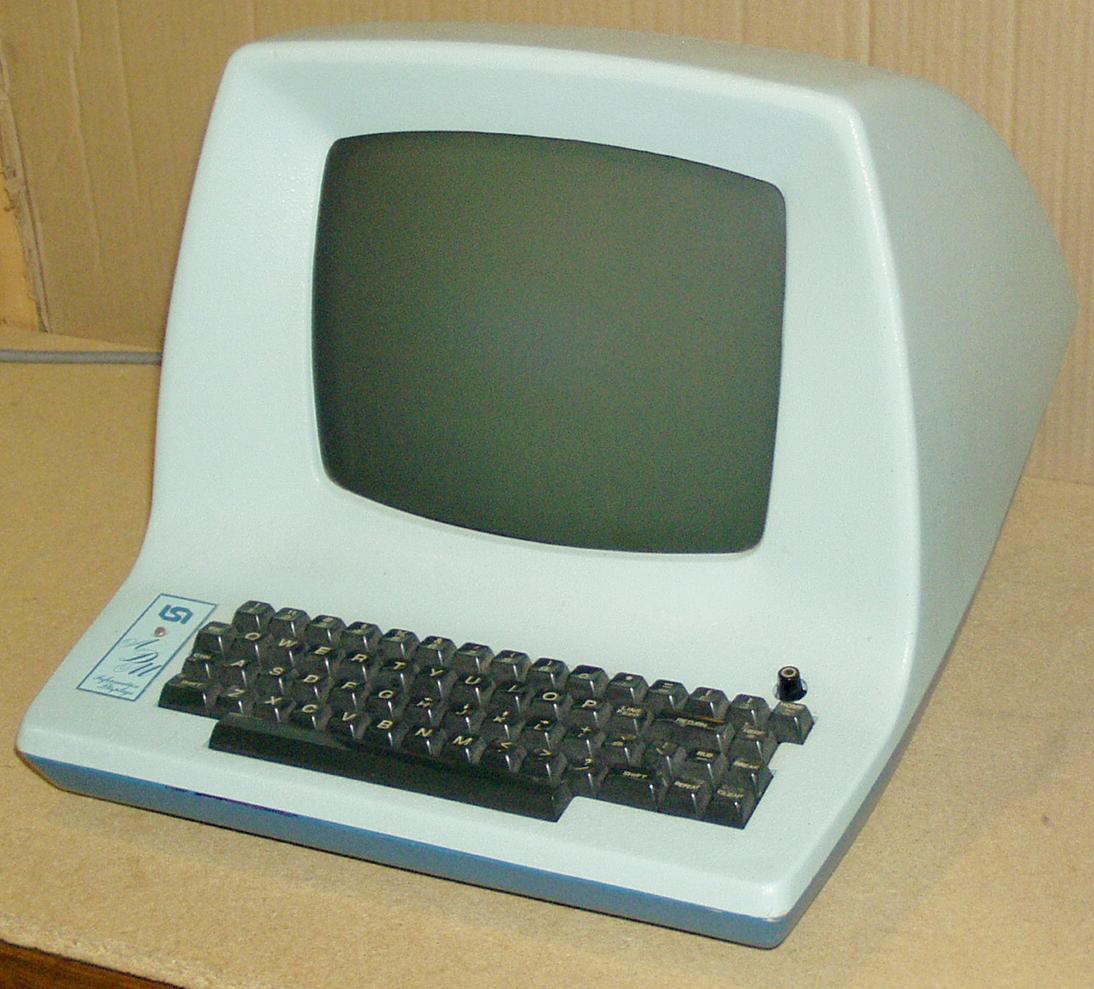
I'm writing a gopher client for CP/M-80. Usable over serial or ESP8266 (preferred). Next up is to support IPv6 using uIP and SLIP, but even with 56KB TPA (free memory) on my system, it is going to be tough to fit everything for a good solid Gopher. I only support ADM-3A terminals, and I do not support VT100. It would not be hard to add VT100 (or VT52), but easier to start with the most common low-end case.
-
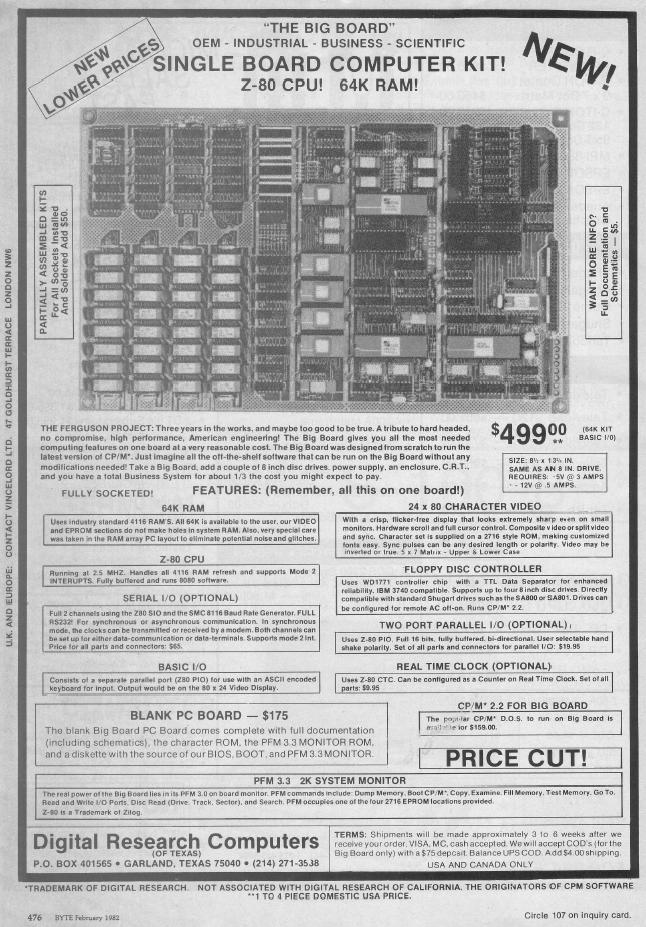
Re:Potetntial HackI love the fact that the last four digits of the above (3741) post happen to match an IBM system from 1974 that used the same diskettes described in TFA. The floppy was formatted to the standard described in the 3740 format. This format was later used on the first CP/M computer systems. My first real computer (a Ferguson Big Board II) used Shugart 850 8" floppy drives that used this same disk format. My second computer (an IMSAI 8080) used 851 drives that supported double sided floppy diskettes.
The standard 3740 diskette held 241kiB of data and was very slow. We've come a long way since then.
-
Re:TPU sounds familiar
Was that not something introduces about 20 years ago by Silicon Graphics? Or am I getting old
http://manx.classiccmp.org/mir...If you are old enough, you might remember, some of the googleplex used to be SGI buildings...
Maybe google did some remodeling and found some antiques -
TPU sounds familiar
Was that not something introduces about 20 years ago by Silicon Graphics? Or am I getting old
http://manx.classiccmp.org/mir... -
Re:Apple ][ was a great product
Indeed, the original Apple II user guide includes instructions on how to install your own RAM.
-
Re:C64 had a cassette drive
Early 5.25" floppy disks could only store around 180K of data
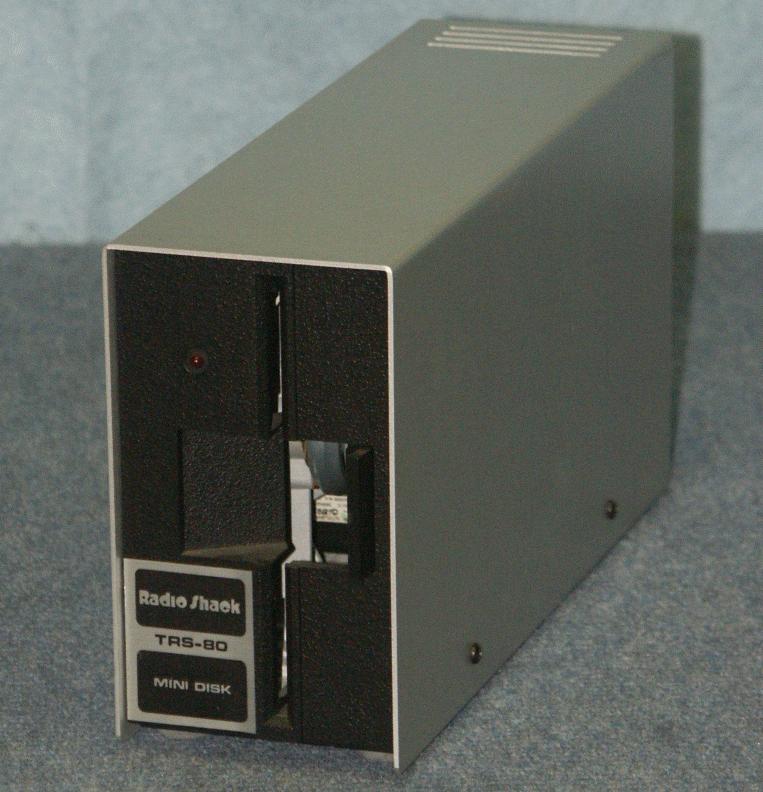
The single-sided, single-density 5.25" floppies I used with my TRS-80 Model 1 stored 72K of data.
http://classiccmp.org/dunfield... -
Re:TRS80 Color Computer
I found the extended color basic book, but not the first one (TRS80 color computer basic) or the 3'rd one (TRS80 color computer disk basic) I remember saving up for years and buying the $600 floppy drive that came with the controller. I cried because the first few didn't work. I didn't know at the time, but putting the drive on a rug rendered it useless. Anyway, here's a link to a nicely done pdf of the extended basic: http://www.classiccmp.org/cpma...
-
Re:You need to create the tutorial
Recently I was looking for some assembly language info for the original Altair (the first microcomputer), and I came across this. It was a different kind of assembly than I was expecting, it looks like some kind of Ikea manual but much worse. Apparently it cost twice as much to get it assembled, instead of merely a box of parts.
Then after you were done, you had 256 bytes of RAM, and no keyboard.
In any case, if you look at that, it will give you the imagination needed for a tutorial for something like this. -
Re:Huh?The article talked about 1983. In 1981, you could get the Cadillac of ASCII terminals, the Ann Arbor Ambassador, for about $1000. In today's terms, you might call that a dumb terminal, but in those days, dumb terminal was an LSI-ADM3A, and Ann Arbor Ambassador was the hacker's choice. The LSI ADM-3 cost about $1000 in 1975.
See: http://terminals.classiccmp.or...
You also had bitmap terminal options like Bell Labs Blit/Jerq and BBN Bitgraph that had Motorola 68000s but used them as display processors, sort of like an X Window System terminal, but with their own custom windowing systems.
By 1983, Sun, Apple, and dozens of other companies were selling fancier personal computers with UNIX and other OSes based on the Motorola 68000 series and other CPUs, but their cost was more like $10,000-$30,000.
-
Re:Really true.... R/S used to offer unique reason
The one computer Radio Shack had that I found very useful was its TRS 100 family.
It ran a long time on plain old penlight cells... like a calculator. It wasn't all that fast, but it did have I/O ports you could talk to and it would make a dandy datalogger. It was about the power of today's Arduino.
That's the one they quit making. -
"Beneath Apple DOS" was available then
There was Beneath Apple DOS, a fabulous book from the time which was invaluable for figuring out what was going on. My understanding was that Don Worth and Peter Lechner disassembled the shipped code and sorted out how things worked, with great explanations. Those were a great guide and helpful for writing all kinds of software. I suspect that a similar effort these days would not be resolved without legal intervention- I have no idea if they even asked permission or if it would have occurred to people that you might want to ask. (This PDF of the book says that Apple was not in any way involved in the book, did not endorse it, etc right on the title page.) Then again, the source code for important parts of the ROMS at the time (Woz's Sweet16) was distributed with the computer in hard copy manuals. I learned a great deal from reading the Sweet 16 source for that and also from Beneath Apple DOS. Beneath Apple DOS wasn't full source code, but it did explicitly identify what blocks of code did what in a way that made it easy to understand what was going on and how to change things.
-
Re:Maybe it was just my youth but...
Perhaps it was because you didn't read the very good Apple II manuals. You could learn BASIC and even 6502 stuff from them. There was plenty of technical info in them and they were quite clearly written. http://www.classiccmp.org/cini/pdf/Apple/Apple%20II%20Basic%20Programming%20Manual.pdf
ftp://ftp.apple.asimov.net/pub/apple_II/documentation/misc/a2_reference_manual_alt.pdfI was about 7 or 8 when I learnt BASIC and 6502 machine code from them. Because of that I believe we shouldn't underestimate what kids can learn.
-
Re:useless aspect ratio
So, why don't they make 1:1 monitors?
Once upon a time (ca. 1989-1990), they did. NCD (Network Computing Devices) made a series of X Terminals based on both the 68000 and some of the early MIPS CPUs. One model (the NCD16) featured a 16" square monochrome CRT, at 1024x1024 resolution, and a 1:1 aspect ratio. The Computer History Museum also has an NCD16 in its collection.
-
Re:this is good but...
Did you talk to the classiccmp mailing list folks?
http://www.classiccmp.org/lists.html
when I offered it all for free.
There is no "free" other than locals within maybe 10 miles or so, and there might not be any locals within 10 miles, so... The main problem I see is in your first line "Sussex (England)". The density of historical re-enactors or classic enthusiasts or whatever you want to call us, is pretty light on the ground in England, despite the cluster of people that hang around Bletchley Park.
If you were my neighbor, I'd take the VAX off your hands, sounds like fun to play with, I would even pay you a bit or buy you and your family a nice dinner, but there's that little "Sussex (England)" problem stopping us... Lets just say neither of us probably want to pay for the shipping required to guarantee it'll arrive in one working piece across the pond and halfway across the continent. Unless you've actually recent done transcontinental shipping of electronics, you have no idea what you're in for. Lets just say that properly shipping the vax to the other side of the planet might be "around a nice car payment"... for a start... for something that might not work when it arrives and is wired for 220. Its a non starter, sorry.
Also your stuff isn't old enough to be taken seriously by the serious collectors. The guy who owns a DEC straight-8 might have the resources to grab your terminals but a 500 series VT? Not old enough to be "interesting" yet.
Also as for the orange wall bitsavers and archive.org have killed doc collecting as a research and operational tool. All that's left is for doc collectors is collecting for the sake of collecting, and historically interesting trophies like my collection of yellowing PDP-8 semi-promotional material manuals. So unless bitsavers wants to scan your personal copy, or there is a rare undocumented manual stuck in between the binders or whatever, just recycle it. The pdf's are better than the paper originals in most regards. My ipad has probably spent most of its life on a hourly basis displaying pages from the DEC TOPS-10 software notebooks series (we all have our dirty little secrets I guess)
-
Re:No numpad? FAIL
At least they put the quote key where it belongs, right next to the RETURN key, rather than up on SHIFT-2.
Shift-2 was the stupidest place for the quote key - never could get the hang of it there.
-
Re:Nostalgic feeling != great tech
I know your probably trolling, but I would just like to point out a better comparison to the 6502 would probably be the 6800 (or 8080), not the 68000. When you do that you find that they are very similar in their limitations, as well as their release date
Back in the 70's computer designs were accelerating a lot faster than they are now. When you didn't have infinite transistors for the logic aspects of a CPU design things got cut. The 6502 (and 6800) ran in about 4k transistors, compared with the 68k which was about 68k transistors, or about 4 generations newer. See http://www.classiccmp.org/pipermail/cctalk/2001-May/170288.html. When you compare the 6502 to a CPU of its generation it comes out looking really good. By the time the 68k was out, the world had changed. Of course the 6502 (production in 1975), vs the 68k (production in 1980) game can also be played the other way. Compare the 68k with the ROMP, or if your willing to wait another 5 years the R2k.
-
There are already schematics on google from 2008
-
Re:Chris - see the Supercomputer Centers, CMU, UCS
Hey Gary, I remember you. Did you know that someone wrote a software Perq emulator? Last I saw he had it running all the demo programs, but still had a few bugs in the graphics.
-- Steve Clark
-
Re:Use the serial port ...
OK, I can agree that it's likely to be a MFM drive.
But the Altos 586 wasn't a PC, even though it did use the 8086 processor.
I found this one: http://www.classiccmp.org/dunfield/altos/index.htm, which I think clearly shows that it's not a PC so don't expect anything PC-related to work with it.
And yes - I have used the BIOS low level formatting routines once upon a time too. G=C800:5 was used now and then for a while.
-
Re:cu
Except it's early 80's (1983,) and it appears to be Version 7.
Which is Ancient Unix, although barely.
-
No Removable Media?
Your website, along with this website suggests that the ALTOS 586 has a 5 1/4 floppy drive in it.
-
Forth?
I'm sure you could find a version of http://www.forth.org/ to work on this machine. I recently (re)discovered this nice little language/environment and one of my summer projects is to learn more... Forth traditionally lives on a floppy, merging code and data in a way similar to Smalltalk images.
It's an efficient language, and pretty fast -- sometimes faster than C. It's essentially a "different" way to write structured assembly from what C is...
You might even be able to port openfirmware to you platform, and, with a bit of work, run forth directly from BIOS!
As others have suggested, being able to load code from the serial or parallel port might be the way to go... or you might be able to get an old harddrive to work?
See also: http://www.classiccmp.org/dunfield/img/index.htm
Good luck!
-
Re:Caps lock will be the end of unintended shoutin
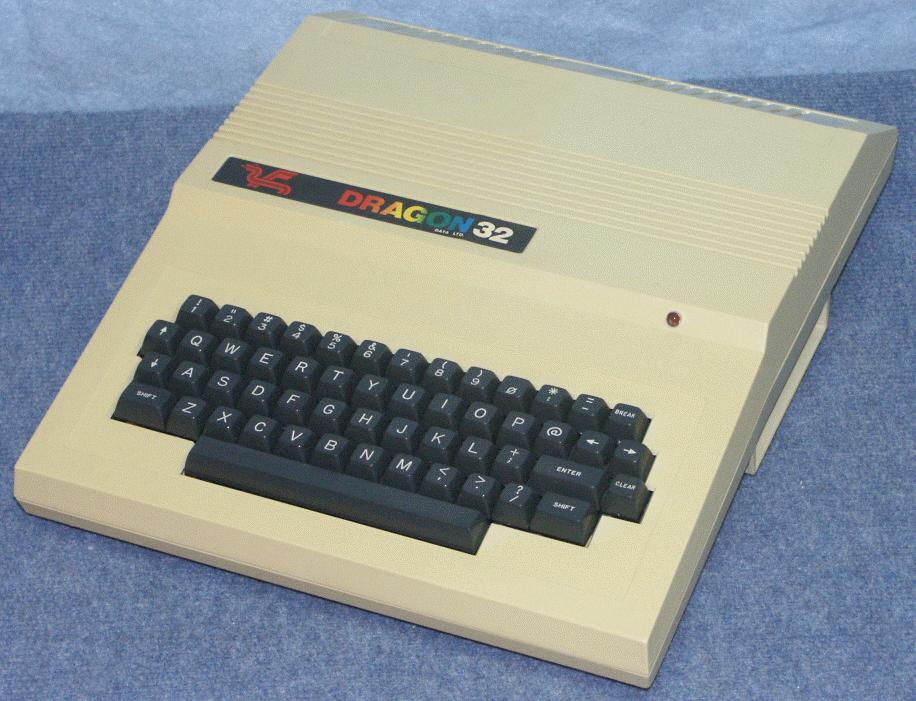
I'm using a Dragon 32, you insenstive clod
-
Re:You mean
The big question is: do you have the '386 DX Microprocessor Programmer's Reference Manual'??
I have two copies. Linus references it in one of his syllabuses of the books he used to create Linux. It's very much extremely rare in this day and age.
Of course, I also have multiple versions of Isis on original diskettes, with original documentation (and original Intel hardware to run it on)
Also an original printed CP/M-80 manual (those were rare even when they were current- very few people actually bought CP/M manuals, most people just ran 'copies' of CP/M-80 they got from here or there.)
-
more history than sense
"And it is not rocket science to design a game console."
Rocket science? No! But it's harder than you think to bring conflicting goals down to an economic level the majority can afford. Featuritus didn't help.
"Of course, we must acknowledge that MS tried to design custom hardware, a task for which it has no experience. "
Funny, the main two parts that caused most of the issues were from companies that had the expertise (IBM,ATI).
"What people fail to realize is that IBM spent the money to make rock solid products. "
You didn't read the article, did you? The yield on the new IBM processor was hardly "rock solid".
"The IBM PC was bulletproof. "
-
Classic Computing mailing list
Just sign up for one of these (I suggest cctalk) and ask around. Maybe somebody can convert them for you, maybe somebody else has an entire Amstrad system that they'll let you have cheap.
-
It looked like an ADM 3A
Certainly it didn't look like any other other computer.
Yes, it did:
-
NVidia is doing that? an insult to INMOS...
Many moons ago, when most slashdotters were nippers, a British company named INMOS provided an extensible hardware and software platform that solved the problem of parallelism, in many ways similar to CUDA.
Ironically, some of the first demos I saw using transputers was raytracing demos.
The problem of parallelism and the solutions available are quite old (more than 20 years), but it's only now that limits are reached that we see the true need for it. But the true pioneers is not NVIDIA, because there were others long before them.
-
Re:Zero boot time
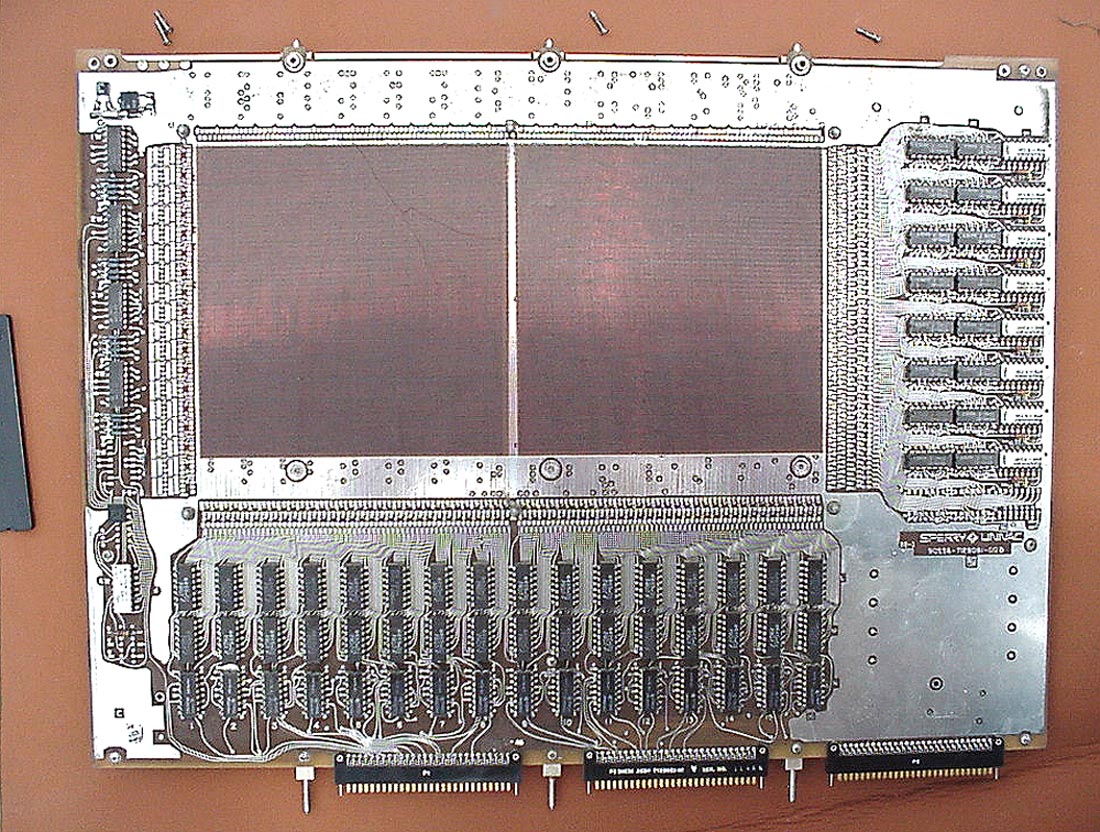
Exactly. Back in the day I ran several UYK-20 computers. http://www.kh6bb.org/photos1.html http://www.classiccmp.org/hp/UYK-20/core.jpg
http://www.classiccmp.org/hp/UYK-20/uyk%20panel.jpg
These things could lose power and restart in less than a second. -
Re:Zero boot time
Exactly. Back in the day I ran several UYK-20 computers. http://www.kh6bb.org/photos1.html http://www.classiccmp.org/hp/UYK-20/core.jpg
http://www.classiccmp.org/hp/UYK-20/uyk%20panel.jpg
These things could lose power and restart in less than a second. -
my opinion
they are aiming to restore a Unix-like environment to its former propriety glory
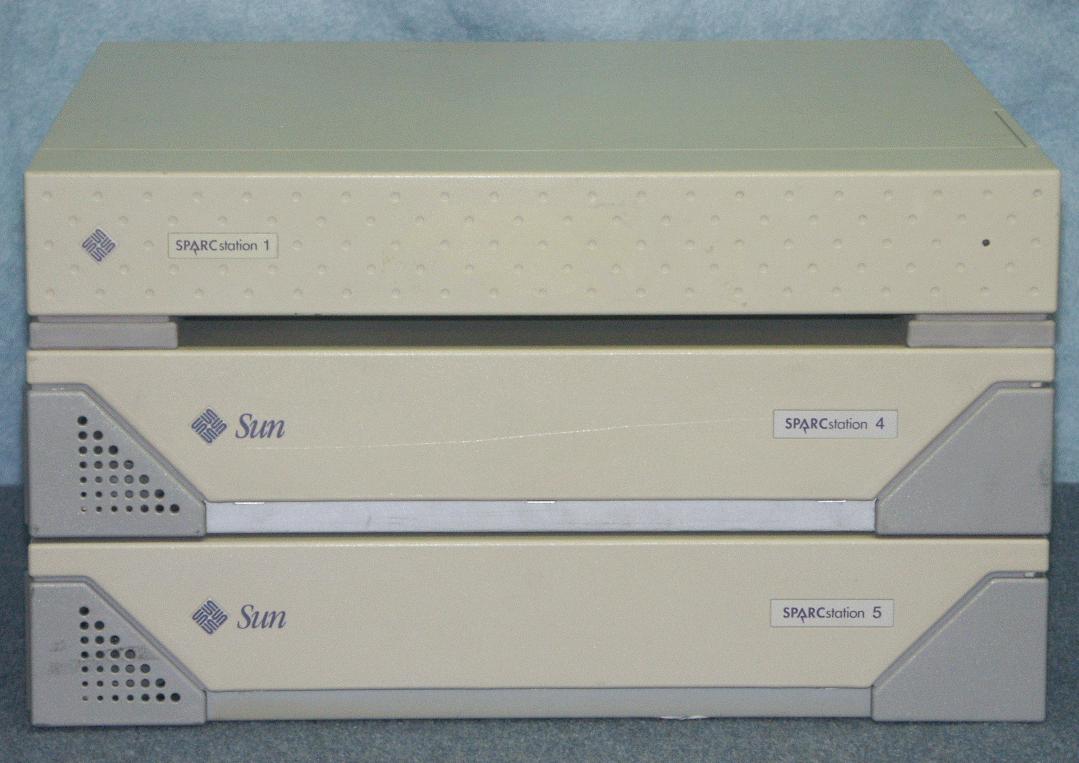
The most glorious thing that I can remember about proprietary unix was the awesome pizza box cases. I seriously have no idea why the PC "tower" caught on instead of that. -
Re:They Screwed Radio ShackI always wondered why Radio Shack didn't turn into a huge computer retailer, which was a perfect growth for the only store like that until PCs got huge, even selling the first laptop to sell well, the TRS-80 Model 100 [wikipedia.org]. Someone else pointed out Incredible Universe, not to speak of Computer City. Tandy did release many PCs including the Model 100 which was for the time period a nice laptop with stellar battery life.
The best of Radioshack was always the nitch aspect, the hobbyist/AV customer. You could pickup trivial electronic parts, they kept reasonable hours, and the educational toys were excellent. They did carry some decent audio gear at one point, but probably the most important was they offered schematics of their audio gear sold under their label, including the stuff made by RCA.
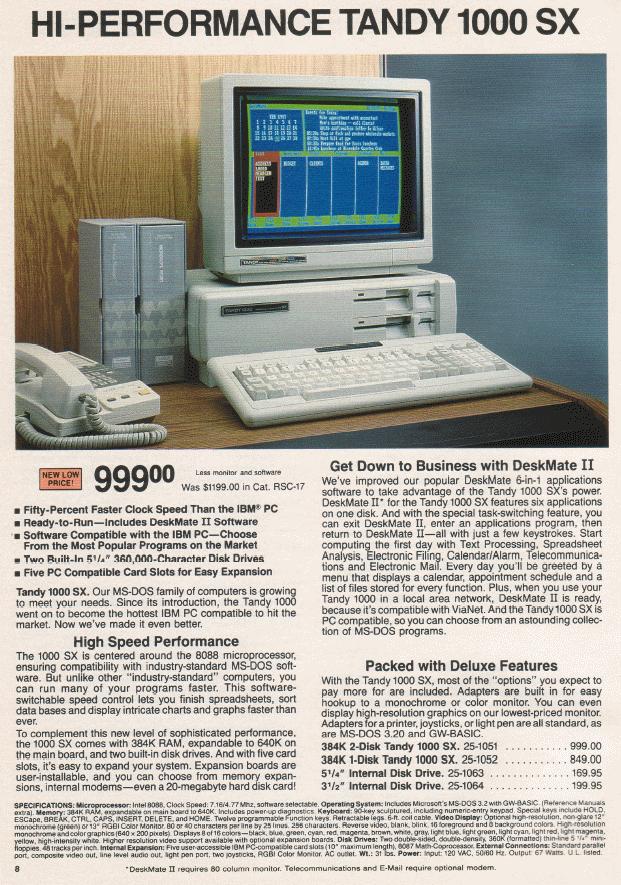
Part of their downfall was their attempt to enter the PC clone business. I don't know the inside details only the external man on the street perspective. They had a good thing going with the CoCo till the users IMHO humbly requested software. So the clones came. I'm not going to speak ill of the systems them selves, they did pretty well for them selves. They came with MS dos and Deskmate which was not horrible in 1984. They were first on the block to release a system with a 80186 which was a good deal faster than those other 8086/8088 clones on the market. They were among the LEAST IBM compatible in part IIRC due to the fact that their first clone was designed to be PCjr compatible. They had some good ideas but really lacked follow through and their timing was awful.
Another big loss of radio shack were those damned CueCats, $30 million IIRC. I'm among those who actually saw the CueCat as being a good idea. The biggest failure was not recognizing the power of the nitch market first. Those Cuecats sold lots of copies of media database software, something that Digital Convergence would have been wise to consider first. Imagine people willing to scan in their collection, give up their privacy and accept recommendations.
Their big loss IMHO was when they ditched their stock of component speakers, turn table styli, the stuff that was their bread and butter for years. Old enthusiasts would have to go mail order or specialized electronics shops. -
Re:Functional replacement with modern components?
Are you on the classic computer mailing list? You can find it at http://www.classiccmp.org/ - well worth it if you're trying to find out more about it.
-
classiccmp
No article such as this is complete without a link straight to the Classic Computer Mailing List, with its high volume of discussions, finds, swaps and technical solutions.
A couple of years ago I was involved in the dissemination of a collection in the south-east of England. From the PDP-11/43 that had people offering to drive over from northern Europe, to the blue Intel MDS to Spain, the old Dragon to America, the stalwart CJE Micros grabbing up the BBC's Torch coprocessor, to the steady stream of people each collecting a VAX, it was amazing to see the interest and enthusiasm.
Three nice things about old machines:
(1) Simple enough that a single human can understand how they work;
(2) Scaled such that this same human can fix problems in his garage;
(3) Sufficiently well built that (2) can sometimes be unnecessary even after 20 years. -
Re:VMs
I think id Games used to compile on SGIs. I know MS did some development on Xenix/i286 and Xenix/i386 (somewhere, there's an MS quote about how MS-DOS/Win is not suitable for serious development..hah). In fact, the i286 had a memory management unit, but the only OS (that I know of) which took full advantage of it was Xenix. Minix/i286 may have supported it to some extent, as well.
Some emulator pages....mac&ppc, simos (for SGI/IRIX5), DEC 10 and Big Iron, various DEC emulation, Apple Lisa, Z80 sim&development, yaze Z80, Apricot and Amstrad, bochs x86,
Other possibly helpful links:
emulators on freshmeat
OS kernels on freshmeat
OS's on freshmeat
bunches of old OS disk images
CP/M and MP/M
CP/M disks
Lisa Xenix
LisaOS
tandy xenix
elks and uclinux
freevms
freedos
Apple I (not II) development
reactos - winnt clone
MAME stuff and pinball Mame
info about tandy disk images
solaris minix
minix info and version 3
various free (as in beer and/or speech) OS list
The OS list at tunes.org -
Re:VMs
I think id Games used to compile on SGIs. I know MS did some development on Xenix/i286 and Xenix/i386 (somewhere, there's an MS quote about how MS-DOS/Win is not suitable for serious development..hah). In fact, the i286 had a memory management unit, but the only OS (that I know of) which took full advantage of it was Xenix. Minix/i286 may have supported it to some extent, as well.
Some emulator pages....mac&ppc, simos (for SGI/IRIX5), DEC 10 and Big Iron, various DEC emulation, Apple Lisa, Z80 sim&development, yaze Z80, Apricot and Amstrad, bochs x86,
Other possibly helpful links:
emulators on freshmeat
OS kernels on freshmeat
OS's on freshmeat
bunches of old OS disk images
CP/M and MP/M
CP/M disks
Lisa Xenix
LisaOS
tandy xenix
elks and uclinux
freevms
freedos
Apple I (not II) development
reactos - winnt clone
MAME stuff and pinball Mame
info about tandy disk images
solaris minix
minix info and version 3
various free (as in beer and/or speech) OS list
The OS list at tunes.org -
Re:Core memory...
Try asking on one of the classiccmp mailing lists. Someone there might be able to help you out.
-
Re:What about the hardware itself?
It seems at least a couple of important people there know about the situation, judging from this recent message on the cctalk classic-computing mailing list. (Sellam Ismail is the museum's software curator. I don't know if Al Kossow actually works for the museum, but he's certainly contributed a great deal to preserving computer history.)
-
Additional reading: Info on transputers
You write: Transputer != microprocessor
You really shouldn't comment on things you don't know anything about.
Here is some info on the transputer family, and links to data sheets on devices in each of the four main families. The T212, T414, and T805 became the most popular. And yes, they're all microprocessors, ie. a little integrated circuit CPU which you plug into a motherboard just like you do a Pentium, and with all the normal features of a normal microprocessor plus a few others of their own, like the 4 on-chip comms links. I've got a couple of T414's upstairs sitting on the shelf.
http://homepage.ntlworld.com/kryten_droid/inmos/im s_transputers.htm -- An intro to transputers
http://www.classiccmp.org/transputer/documentation
http://homepage.ntlworld.com/kryten_droid/inmos/im s_t414.htm - 32-bit IMS T414 transputer (T400 family)
http://www.classiccmp.org/transputer/t805.htm - 32-bit IMS T805 f/p transputer (T800 family)
http://www.classiccmp.org/transputer/documentation
These Inmos microprocessors were right down the middle of where Kutaragi wants to take the Cell, with lots of interdevice communications being handled directly by the hardware. Inmos even made graphics output chips which were often driven by multiple transputers in parallel, so graphics demos were really common on the transputer scene.
Interestingly, after being passed around between various European parties once Inmos ran out of money, the rights to the transputer were eventually sold off to some Japanese megacorp, iirc. -
Additional reading: Info on transputers
You write: Transputer != microprocessor
You really shouldn't comment on things you don't know anything about.
Here is some info on the transputer family, and links to data sheets on devices in each of the four main families. The T212, T414, and T805 became the most popular. And yes, they're all microprocessors, ie. a little integrated circuit CPU which you plug into a motherboard just like you do a Pentium, and with all the normal features of a normal microprocessor plus a few others of their own, like the 4 on-chip comms links. I've got a couple of T414's upstairs sitting on the shelf.
http://homepage.ntlworld.com/kryten_droid/inmos/im s_transputers.htm -- An intro to transputers
http://www.classiccmp.org/transputer/documentation
http://homepage.ntlworld.com/kryten_droid/inmos/im s_t414.htm - 32-bit IMS T414 transputer (T400 family)
http://www.classiccmp.org/transputer/t805.htm - 32-bit IMS T805 f/p transputer (T800 family)
http://www.classiccmp.org/transputer/documentation
These Inmos microprocessors were right down the middle of where Kutaragi wants to take the Cell, with lots of interdevice communications being handled directly by the hardware. Inmos even made graphics output chips which were often driven by multiple transputers in parallel, so graphics demos were really common on the transputer scene.
Interestingly, after being passed around between various European parties once Inmos ran out of money, the rights to the transputer were eventually sold off to some Japanese megacorp, iirc. -
Additional reading: Info on transputers
You write: Transputer != microprocessor
You really shouldn't comment on things you don't know anything about.
Here is some info on the transputer family, and links to data sheets on devices in each of the four main families. The T212, T414, and T805 became the most popular. And yes, they're all microprocessors, ie. a little integrated circuit CPU which you plug into a motherboard just like you do a Pentium, and with all the normal features of a normal microprocessor plus a few others of their own, like the 4 on-chip comms links. I've got a couple of T414's upstairs sitting on the shelf.
http://homepage.ntlworld.com/kryten_droid/inmos/im s_transputers.htm -- An intro to transputers
http://www.classiccmp.org/transputer/documentation
http://homepage.ntlworld.com/kryten_droid/inmos/im s_t414.htm - 32-bit IMS T414 transputer (T400 family)
http://www.classiccmp.org/transputer/t805.htm - 32-bit IMS T805 f/p transputer (T800 family)
http://www.classiccmp.org/transputer/documentation
These Inmos microprocessors were right down the middle of where Kutaragi wants to take the Cell, with lots of interdevice communications being handled directly by the hardware. Inmos even made graphics output chips which were often driven by multiple transputers in parallel, so graphics demos were really common on the transputer scene.
Interestingly, after being passed around between various European parties once Inmos ran out of money, the rights to the transputer were eventually sold off to some Japanese megacorp, iirc. -
Bollocks on the IBM 5100
Sticklers agree: The 5100 represents the first production portable computer. So does the Smithsonian, where a prototype now resides.
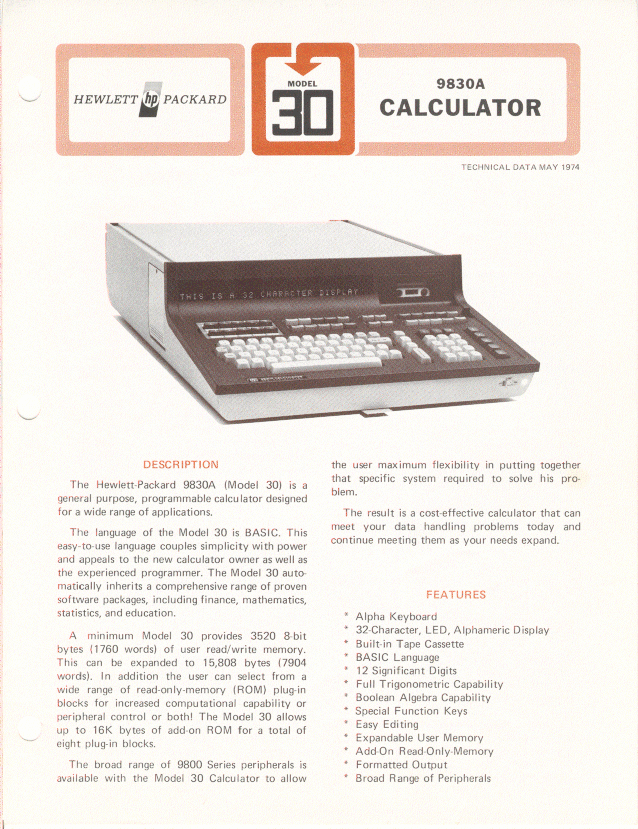
Sticklers do not agree. For some weird and stupid reason probably related to marketing, the HP9830 (1974) was classified as a "programable calculator". Balls. It was a 16 bit computer and had BASIC. (There was a thermal printer that attached to the top.) Guts and stuff -
Hurray!The wicked old witch at last is dead! Hail to Dorothy! Carly brought nothing but trouble to the good name HP. HP used to mean top quality laboratory instruments and computers.
I first learned to program on HP-45 and HP-67 calculators which my father brought home from the university Mathematics Department. The HP-67 featured a card reader which could store programs on small 3-inch magnetic strips. HP was a true innovator in the pocket calculator world. HP also gave us the LaserJet II, the first reliable laser printer.
I expect to see new innovations from this company as employee morale improves.
-
Re:Of course...
According to this history Moore added a push down stack around 1965 - While Polish and RPN had been around for some time since then I don't think there were too many calculators, probably some desktops, but the earliest HP calc I could find is this one - "In 1968, the Hewlett-Packard company was primarily a test equipment manufacturer." etc.
-
Re:I had one of these!!!Not to reply to myself 8-), but check out this article. An excerpt:
The more clever (IMHO) mod was to attach seven solenoids to the Selectric between the keyboard encoding mechanism and the print mechanism, to directly control the tilt and rotate. And two more for the carriage return and paper advance. This has the advantage that you can still use it as a typewriter without having to attach and remove the solenoid box, and it's potentially less expensive since it takes nowhere near as many solenoids. I seem to recall that Don Lancaster wrote a do-it-yourself article about this approach.
-
Re:Overkill
Half serious, half joking. It sounds silly, but it makes sense sometimes. (4 bit graphing calculators? I remember when HP had 16 bit CPUs. Okay, not a single chip.)
-
Yes, sounds like the Transputer reinventedAh, the Inmos Transputer, ideal for parallel applications. Now as dead as a doornail.
-
Re:Preserve the Hardware as Well?
There are some who do preserve old hardware and software. My current collection consists of (all working) a PDP-8/E, PDP-11/24, PDP-11/83, HP 9000/832, DecServer 3000, SparcClassic, and a C-64. I can read everything from papertape to DVDs, including both 10 track (DecTape) and 9 track tapes.
I have personally driven almost 3000 miles one way to keep a piece of vintage hardware from ending it's life on the scrap heap.
I think the biggest losses, howver, have been in documentation. People will tend to hang on to disks and hardware a lot longer than they will keep manuals.
People would not believe how much of the old software, documentation, and hardware has already been lost. That is why a few people spend a great deal of their personal funds and time trying to preserve as much as possible. -
Re:Is this really needed???I'm watching to see when the processors start talking serial directly. Getting rid of the exotic seven thousand pin packages for processors (and their associated sockets) will be another great savings.
I've long wondered why CPUs rely on bridge chips to talk to memory, but even at 2.5gbps you'd need several memory interfaces to keep the CPU full. So, while it would be cool to have a CPU that used a relatively high level serial interface for everything, you'd still want dozens (or maybe even hundreds) of independant ports to communicate with all the memory and other peripherals.
-
Re:Lossless compression is a jokeI seriously challenge ANYBODY, even those with true HI-FI equipment to tell me the difference between a CD and a good quality MP3Pro.
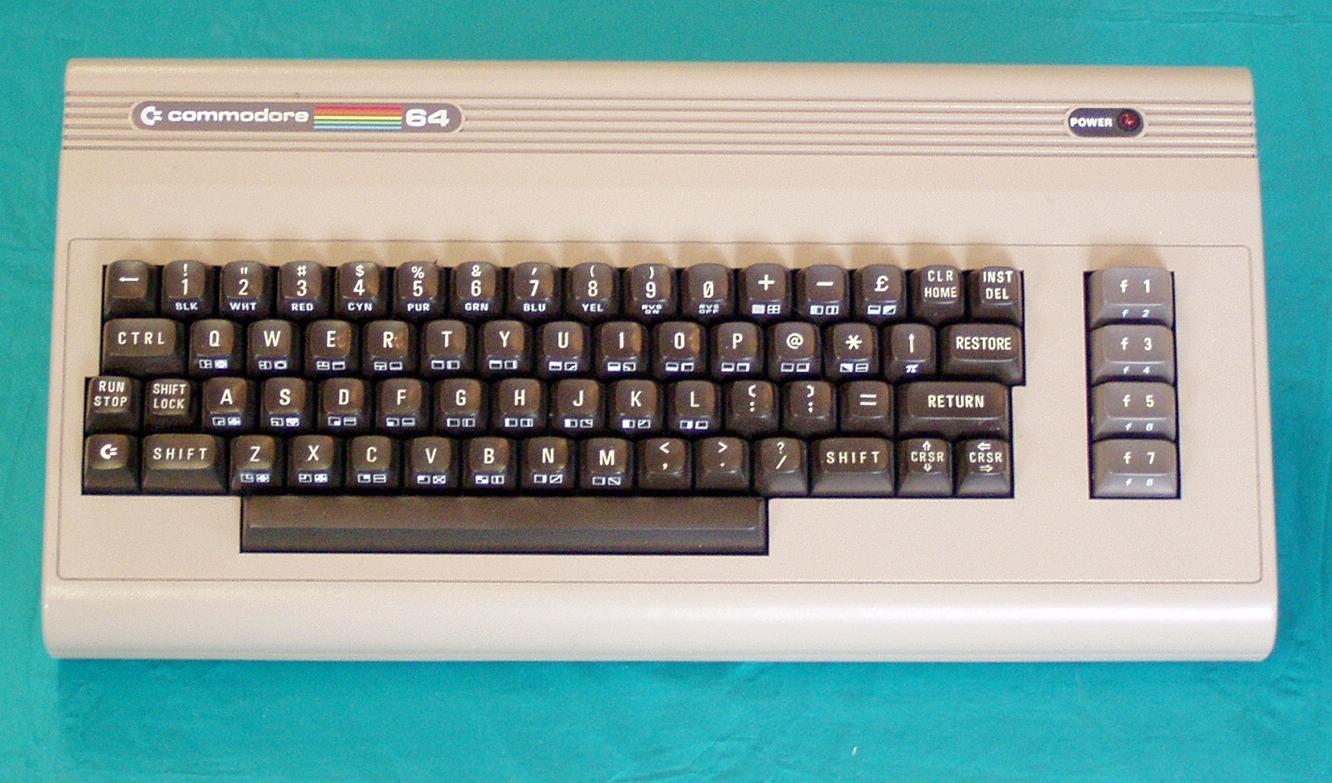
Easy. Try archiving old data cassette tapes, like those used with Commode Doors, Trash 80s, etc. This came up a while back on the ClassicCmp mailing list. The idea was to record the actual audio onto digital media that could then be played back into the computers' tape inputs. Sure, it may not be the most efficient way of getting data onto a machine, but classic computer enthusiasts often have rather unorthodox values