Slashdot Mirror
Domain: fb.com
Stories and comments across the archive that link to fb.com.
Stories · 98
-
Facebook Changes Feed To Promote Posts That Aren't Fake, Sensational, Or Spam (techcrunch.com)
TechCrunch is reporting that Facebook is prioritizing "authentic" content in News Feed with a ranking algorithm change that detects and promotes content "that people consider genuine, and not misleading, sensational, or spammy." The algorithm will also boost stories that are going viral in real-time. From the report: To build the update, Facebook categorized Pages that frequently share inauthentic posts like fake news and clickbaity headlines, or get their posts hidden often. It then used these posts to train an algorithm that detects similar content as its shared in the News Feed. Facebook will now give extra feed visibility to posts that don't show signs of similarity to inauthentic content. Meanwhile, Facebook wants to more quickly surface big stories going viral either because the topic is being posted about by lots of people, or a Page post about the topic is seeing tons of engagement. Facebook will then take that as a signal that you might temporarily care more about the topic, and therefore show it in your News Feed while it's still hot. Facebook says it doesn't anticipate significant changes to most Pages' News Feed distribution, but some might see a small increase or decrease in referral traffic or outbound clicks depending on if they share authentic, timely content vs inauthentic and outdated stories. -
Facebook Dumps Personalized 'Trending Topics' After Backlash (cnet.com)
As the company works to strengthen its reputation as a place for news and curb the spread of misinformation on the site, Facebook announced it has removed the personalized interest-based list of news topics on the right-hand side of your news feed. Now everyone in a geographic region will see the same trending topics. CNET reports: In addition to doing away with the personalized list, there are two other big changes to the trending topics section that will start rolling out today and will take place for everyone in the U.S. "in the coming weeks." First, instead of just seeing a bare-bones topic, like "Saturn" or "X-men," two things that had been trending for me, you'll see a full headline from one of the news stories about that topic. That's the headline that had always popped up when you hovered over the topic. Second, Facebook is changing the way the topics are selected. The topics had been chosen based on how many people on Facebook are engaging with it. With the new changes, Facebook will look at the number of outlets posting stories on a particular topic, and decide its inclusion based on engagement around that group of articles. "This should surface trending topics quicker, be more effective at capturing a broader range of news and events from around the world and also help ensure that topics reflect real world events being covered by multiple news outlets," Will Cathcart, vice president of product management, said in a statement. -
Facebook Messenger Launches 6-Screen Group Video Chat (techcrunch.com)
An anonymous reader quotes a report from TechCrunch: Facebook Messenger is launching its own split-screen group video chat feature. Six users can appear in split-screen at the time and don Snapchat-style selfie masks, while 50 total can listen and talk over voice while sending text, stickers, emojis, and GIFs. Group video chat starts rolling out worldwide on iOS, Android, and web, today, though Android will have to wait for the MSQRD-powered selfie masks that might not ever come to desktop. It's free on wi-fi but standard data charges will apply on cellular connections. The launch makes Messenger the first popular western messaging app with group video chat. It's managed to beat FaceTime/iMessage, Google Duo, and Snapchat to the punch. U.S. teens might be most familiar with the format from the recent rise of Houseparty, the new app from the makers of Meerkat. Messenger group video chat works a little differently, but with a similar design. Instead of simply logging into an ever-present video chat room that notifies friends like on Houseparty, you deliberately select friends or a group text thread to invite to a video call. Once in, up to 4 Messenger users can share big slices of the screen, while Houseparty accommodates 8. Between 4 and 6 callers, the Messenger screen switches to a gallery format, with whoever is speaking taking up the bulk of the screen with little thumbnails of everyone else at the bottom. And everyone beyond the first 6 up to 50 callers will only be able to listen, speak, and send content but won't appear in the video gallery. -
US Presidential Election Was Most 'Talked About' Topic In 2016, Says Facebook (phys.org)
What may come as no surprise to Facebook users, the social media company announced in a blog post that the U.S. presidential election was the most "talked about" topic on Facebook in 2016. Phys.Org highlights the other most-discussed topics in its report: The bitterly contested election in which Donald Trump defeated Hillary Clinton was ranked as the leading issue, followed by Brazil's political developments which included the impeachment of president Dilma Rousseff, Facebook said in a blog post. On the lighter side at number three was the runaway success of Pokemon Go, the location-based augmented reality game for smartphone users. Other subject matters shared among Facebook's 1.79 billion users were more sober, with the fourth leading topic the "Black Lives Matter" movement, followed by the election in the Philippines of Rodrigo Duterte. Number six on the list was the Olympic games, followed by Brexit, the Super Bowl and the deaths of rock star David Bowie and boxing icon Muhammad Ali. Facebook said it measured leading topics by how frequently an issue was mentioned in posts made between January 1 and November 27. -
Facebook Now Lets You Use Google Cast or AirPlay To Stream Video On Your TV (digitaltrends.com)
Facebook has made it a high priority over the years to improve its video platform so that it can better compete with the monolithic video service that is YouTube. Today, the company has added another feature, one that allows users to stream Facebook video content to the Apple TV via AirPlay and to various Google Cast-enabled devices. Digital Trends reports: The feature is available on the Facebook iOS app and, according to Facebook, it will be available on Android soon. The best thing about it, however, is how easy it is to use. Simply find a video you want to watch, then tap the TV button and select which device the app should stream to. Another highlight of the feature is that it is truly built for Facebook -- that is to say, when you are watching a video on the big screen, your phone is not on lockdown until the video is over. Instead, you can keep scrolling through the News Feed, treating your TV as more of a second screen than simply a mirror of your phone. -
Facebook Launches 'Workplace' So You Can Use Facebook At Work For Work (theguardian.com)
An anonymous reader quotes a report from The Guardian: Facebook's business platform will get an official pricing structure and a new name, Workplace by Facebook, on Monday. The service, a Facebook-hosted office communication tool, has been in the works for more than two years under the name Facebook at Work, but now the company says its enterprise product is ready for primetime. The platform will be sold to businesses on a per-user basis, according to the company: after a three-month trial period, Facebook will charge $3 apiece per employee per month up to 1,000 employees, $2 for every employee beyond up to 10,000 users, and $1 for every employee over that. Workplace links together personal profiles separate from users' normal Facebook accounts and is invisible to anyone outside the office. For joint ventures, accounts can be linked across businesses so that groups of employees from both companies can collaborate. Currently, businesses using Workplace include Starbucks and Booking.com as well as Norwegian telecoms giant Telenor ASA and the Royal Bank of Scotland. Facebook has said it will eventually require for-profit businesses who helped to test the service to pay for it, but it has not picked a date when those businesses' free service will end. Nonprofits such as Oxfam and Save the Children, as well as educational institutions, will continue to use the service at no cost. "We've been amazed by the breadth of organizations who've embraced Workplace -- from a shipping company that can now connect with their ship crews using Live video, to a bank that now uses Workplace instead of fax machines and newsletters to share updates with its distributed bank branches," the company said in its blog post. -
Facebook Launches 'Workplace' So You Can Use Facebook At Work For Work (theguardian.com)
An anonymous reader quotes a report from The Guardian: Facebook's business platform will get an official pricing structure and a new name, Workplace by Facebook, on Monday. The service, a Facebook-hosted office communication tool, has been in the works for more than two years under the name Facebook at Work, but now the company says its enterprise product is ready for primetime. The platform will be sold to businesses on a per-user basis, according to the company: after a three-month trial period, Facebook will charge $3 apiece per employee per month up to 1,000 employees, $2 for every employee beyond up to 10,000 users, and $1 for every employee over that. Workplace links together personal profiles separate from users' normal Facebook accounts and is invisible to anyone outside the office. For joint ventures, accounts can be linked across businesses so that groups of employees from both companies can collaborate. Currently, businesses using Workplace include Starbucks and Booking.com as well as Norwegian telecoms giant Telenor ASA and the Royal Bank of Scotland. Facebook has said it will eventually require for-profit businesses who helped to test the service to pay for it, but it has not picked a date when those businesses' free service will end. Nonprofits such as Oxfam and Save the Children, as well as educational institutions, will continue to use the service at no cost. "We've been amazed by the breadth of organizations who've embraced Workplace -- from a shipping company that can now connect with their ship crews using Live video, to a bank that now uses Workplace instead of fax machines and newsletters to share updates with its distributed bank branches," the company said in its blog post. -
Facebook Will Force Advertising On Ad-Blocking Users (wsj.com)
Long-time reader geek writes: Facebook is going to start forcing ads to appear for all users of its desktop website, even if they use ad-blocking software (Could be paywalled; alternate source). The social network said on Tuesday that it will change the way advertising is loaded into its desktop website to make its ad units considerably more difficult for ad blockers to detect. "Facebook is ad-supported. Ads are a part of the Facebook experience; they're not a tack on," said Andrew "Boz" Bosworth, Facebook's vice president of engineering for advertising and pages. -
Facebook Took Its Giant Internet Drone On Its First Test Flight (fastcompany.com)
An anonymous reader writes: A year ago, Facebook unveiled Aquila, its effort to put giant drones in the skies to beam Internet connectivity to areas in the developing world without mobile broadband Internet. Today, the company announced it has completed the first full-scale test of its Aquila drone, after months of testing one-fifth-size models. On June 28, the experimental aircraft (featuring a V-shaped wingspan the width of a Boeing 737) took off from the Yuma Proving Grounds in Yuma, Arizona, and flew for 96 minutes at low altitude, as CEO Mark Zuckerberg and many others watched in the dawn sunlight.. Possibly years of work remain before Facebook's connectivity effort fully takes off, according to a head engineer, including figuring out how to keep the drones aloft for hours at a time, and how to effectively send Internet with lasers.Quartz points out that Facebook may not have been given the permission to test the drones. From the article:Earlier this year, the Federal Aviation Administration (FAA) finalized its regulations for flying commercial drones in the US. These regulations, which require commercial drones to be kept within the line of sight of the person flying the drone, and that the drones be kept below 400 feet, do not go into effect until August. Prior to these regulations, any company wishing to fly or test drones outdoors in the US required an exemption from the FAA, called a Section 333. Quartz checked with the FAA last year to ask whether Facebook had one of these exemptions, and was told it did not. (We've asked the FAA again, and Facebook, to see if the company has since received permission to fly drones in the US.) The FAA has started to fine some companies that operate drones commercially without an exemption, including a nearly $2 million fine for a company that was flying drones over people in New York and Chicago without permission. -
Facebook Messenger Hits 1B Monthly Active Users, Accounts For 10 Percent Of All VoIP Calls (techcrunch.com)
Speaking of instant messaging and VoIP call apps, Facebook announced on Wednesday that Facebook Messenger has hit the 1 billion monthly active users milestone. The company adds that Messenger is just more than a text messenger -- in addition to the ambitious bot gamble, a digital assistant, and the ability to send money to friends -- Messenger now accounts for 10 percent of all VoIP calls made globally. Messenger's tremendous growth also underscores Facebook's mammoth capture of the world. The social network is used by more than 1.6 billion people actively every month. WhatsApp, the chat client it owns, is also used by more than one billion people.
TechCrunch has a brilliant story on the growth of Messenger from the scratch. -
Facebook To Shred 'Paper' News-Reading App On July 29th (theverge.com)
An anonymous reader writes from a report via The Verge: Facebook's Paper app for iOS is scheduled to shut down on July 29th. While the app impressed critics, it failed to impress the general public. The Verge reports: "The app transformed the core Facebook experience into a kind of newsreader, with customizable sections for politics, technology, food, and other subjects. When it was introduced in January 2014, Paper signaled the beginning of a design renaissance at Facebook. The look and feel of the app were orchestrated by Mike Matas, whose design firm Push Pop Press was acquired by Facebook in 2011. Paper was notable for the novel animations it used to guide you through the app -- tap on a link and it would unfold like a letter; pull down on the story and it would fold back up, returning you to the feed. But despite the enormous growth of Facebook, which surged to 1.09 billion daily users this year, Paper has not been among the 1,500 most-downloaded apps since December 2014, according to research firm App Annie. It never came to Android, and the iOS version was last updated in March 2015. Facebook says that ideas from Paper have made their way into other Facebook apps, most notably Instant Articles, the fast-loading story format that the company introduced last year. Instant Articles borrowed several design elements from Paper, including full-bleed images and custom designs for individual publishers' articles." -
Facebook Says It's Not Secretly Recording You (fb.com)
An anonymous reader writes: In 2014 Facebook introduced a feature which can use your phone's microphone to identify songs you're listening to -- but "we don't record your conversations," they're reminding users. A mass communication professor at the University of South Florida tried discussing specific topics near her phone, then discovered Facebook appeared to be showing ads related to what she'd said. Though she wasn't convinced there was a link, the Independent newspaper reported that "The claim chimes with anecdotal reports online that the site appears to show ads for things that people have mentioned in passing."
An official statement Thursday reiterated that "Facebook does not use your phone's microphone to inform ads or to change what you see in News Feed." But another news site sees these concerns as a reminder of all the permissions users routinely grant to their apps. "Go into your phone's application settings and you'll see a whole list of what an app like Facebook has access to: your camera, your location, your contacts, and, yes, your microphone too. How about this for a warning? By downloading Facebook you give the app 'permission to record audio at any time without your confirmation.' Tom's Guide security editor Paul Wagenseil says Facebook can...listen to your conversations...but it would be illegal to do so."
Meanwhile, the FBI "can neither confirm nor deny" that it's ever tapped an Amazon Echo device. -
Facebook Acquires VR Audio Company, Launches 'Facebook 360 Spatial Workstation' (theverge.com)
An anonymous reader writes from a report via The Verge: Facebook is looking to improve its virtual-reality audio experience with the acquisition of Two Big Ears. Facebook is rereleasing Two Big Ears' "Spatial Workstation" software as the Facebook 360 Spatial Workstation, reports VentureBeat. The software is designed to "make VR audio succeed across all devices and platforms," and Two Big Ears developers will be merged with Facebook's Oculus team of employees. The acquisition of Two Big Ears is being made by Facebook and not Oculus -- the program is branded as a Facebook product, focused on 360-degree video and VR. The Spatial Workstation was first released last fall and was a platform for mixing audio that sounded realistically three-dimensional. Two Big Ears will provide "support in accordance with your current agreement" for the next 12 months to those who purchased a paid license to the old workstation. The company says it "will continue to be platform and device agnostic," not being locked into the Rift or Gear VR. Facebook did not disclose the sum of the acquisition. Two Big Ears was previously partnered with YouTube to help bring 360-degree live streaming and spatial audio to the site. -
Mark Zuckerberg: 'No Evidence' Facebook Staff Suppressed Stories With Conservative Viewpoints (theverge.com)
An anonymous reader quotes a report from The Verge: Mark Zuckerberg has issued a statement in response to the controversy alleging that Facebook staff intentionally prevented stories with a conservative viewpoint from appearing in the site's Trending Topics section. "We take this report very seriously and are conducting a full investigation to ensure our teams upheld the integrity of this product," Zuckerberg writes on Facebook. "We have found no evidence that this report is true. If we find anything against our principles, you have my commitment that we will take additional steps to address it." Zuckerberg says he will invite "leading conservatives and people from across the political spectrum" to discuss the matter in the coming weeks, with the aim of having a "direct conversation about what Facebook stands for and how we can be sure our platform stays as open as possible." Earlier today, more evidence surfaced to support Gawker's two recent reports that claimed editors manipulate the trending news. Facebook published a blog post explaining how Trending Topics on its platform works, insisting there's no discrimination against sources of any political origin. -
Internal Docs Show Human Intervention at Almost Every Stage Of Facebook's News Operation (theguardian.com)
More evidence has surfaced to support Gawker's two recent reports that claimed editors manipulate the trending news and a few other aspects on Facebook. The Guardian, citing leaked documents it obtained, reports that the topics one sees on Facebook are determined on a number of factors including "engagement, timeliness, Pages you've liked and your location." From the report: But the documents show that the company relies heavily on the intervention of a small editorial team to determine what makes its "trending module" headlines -- the list of news topics that shows up on the side of the browser window on Facebook's desktop version. The company backed away from a pure-algorithm approach in 2014 after criticism that it had not included enough coverage of unrest in Ferguson, Missouri, in users' feeds. The guidelines show human intervention -- and therefore editorial decisions -- at almost every stage of Facebook's trending news operation, a team that at one time was as few as 12 people.Sam Biddle of Gawker, wrote: Never trust what a company tells you, on/off record -- FB straight up lied to Recode last year. He adds: unless they're under oath a company like Facebook has every incentive to lie about how it operates. It's not illegal to lie to a reporter!"
Update: 05/12 20:49 GMT by M : Facebook has published a blog post in which it explains how Trending Topics on its platform works. The company insists that there is no discrimination against sources of any political origin. -
Facebook Might Finally Kill Clickbait With New Algorithm Tweaks (thenextweb.com)
An anonymous reader quotes a report from The Next Web: Facebook is bringing two additional tweaks to its News Feed algorithm: time spent viewing and page post diversity. The former is an effort to weed out clickbait and bad content by attempting to quantify quality links. The change appears to be a mobile-first solution, as the announcement only states that Facebook will measure the time spent looking at Instant Articles or those within the mobile browser. Facebook also reports that users enjoy reading articles from a wide range of publishers, a revelation that led them to tweak the algorithm for greater diversity of page posts. In short, the idea is to reduce how often people see content back-to-back, or in short order, from the same page. For most pages, the content is spread out enough to where this shouldn't be much of a problem, but for those that post several updates in a few minutes, it could lead to some of the content not being seen. -
Facebook Rolls Out Major Live Video Update (usatoday.com)
An anonymous reader writes: Facebook Live was launched last year, allowing public figures and celebrities to live stream to their timeline. Today, Facebook has released a host of new features to its live broadcasting tool, which lets anyone post live streams of themselves to their timeline. Not only can users add filters to their videos, but they can also draw and add doodles as well. "Live Reactions" lets people react in a similar way to live videos as they do to posts, and it will also allow people to replay the comments they receive during their stream. The site has also added new ways of finding videos, either by location or by inviting friends. It also features a new button for people to ask their friends to watch a live video alongside them, for example. The live streaming features are limited to people in the U.S. right now, with new features rolling out to iOS and Android devices "in the coming weeks," the company said. -
Facebook Introduces Emojis, Live Video (thestack.com)
An anonymous reader writes: Facebook has announced that it would roll out a new live video tool called Live, available immediately for US iPhone users, and expanding to the rest of the world and Android users over the next few weeks. It is also expanding the 'Like' button to a range of emojis called 'Reactions'. The 'Live' video service has had a limited testing group since December, according to Product Manager Vadim Lavrusik. Starting today, Facebook users can access the service through the existing Update Status tool, and can control the audience for the video before uploading. Facebook also announced that it will roll out an expansion of the 'Like' button to a range of emojis called 'Reactions'.The 'Like' function will now include emojis for Love, Sad, Angry, Happy and Wow. The emoji for 'Yay' was discarded after testing. -
Are Phone Numbers Doomed To Die? (fortune.com)
HughPickens.com writes: Valentina Zarya writes at Fortune Magazine that the top 2016 prediction for David Marcus, Facebook's vice president of messaging products, is the disappearance of the phone number and its replacement by applications like Facebook's Messenger. " You can make video and voice calls while at the same time not needing to know someone's phone number," writes Marcus. "You don't need to have a Facebook account to use Messenger anymore, and it's also a cross platform experience – so you can pick up where you left off whether you're on a desktop computer, a tablet, or your phone." Jonah Berger, Wharton professor and author of "Contagious: Why Things Catch On" agrees. "For most of us, I think it's really hard to actually remember what someone's phone number actually is. We use our phones so often or we click on a button that has it. But if there was a test where you had to say, do you remember your best friends number or could you type in your best friend's number I think most of us would fail."
But not everyone agrees that Marcus' predictions are objective and disinterested. "It's all very well the company wanting to be the de facto Internet — especially in places like India. But drier minds and eyes might wonder whether the wish to eradicate phone numbers has something to do with not everyone having yet given Facebook their phone numbers," says Chris Matyszczyk. "It may well be that phone numbers will disappear. Some, though, might wonder how making their disappearance a company theme squares with what Marcus claims is the ultimate goal: 'It's all about delight.' This one's easy. It's all about delighting Facebook." -
Facebook Tweaks Its "Real Names" Policy (thestack.com)
An anonymous reader writes: Facebook has announced a US-based trial of minor changes to its controversial process of name verification, apparently in response to last year's controversy over LGBT and transgender users who were penalized for determining their own identity.
The post about the changes reveals that users who report someone else for using a 'fake' name can now provide more background information, and that users who have been asked to confirm their identity by uploading documents, such as a passport or birth certificate, can now also provide additional background information for Facebook to take into account.
This article argues that a frivolous social network should not be allowed to co-opt government-level identity checks simply because it began life in the university arena, and has telescoped the necessary supervision of teenagers transiting to adulthood into a far wider and more diverse network of users. -
Facebook Launches Initiative To Attract More Minorities and Women To Coding (thestack.com)
An anonymous reader writes: Facebook has launched TechPrep, a new initiative to attract more minorities and women into coding. The project draws a very strong analogy between the learning of computer coding skills and the learning of spoken languages, a field which is important to people whose first language is not English, and which engages with the popular understanding that women are better at learning languages. TechPrep is seeking to engage with parents and guardians to get its target audience into coding earlier in life. -
Facebook Is Building an 'Empathy Button'
jones_supa writes: The Dislike button has long been the most requested feature from Facebook users. So when Mark Zuckerberg said in a public Q&A session that the company was working on an alternative to things that are inappropriate to "Like," news outlets around the world sprung into action saying that the masses would soon get their wish. Don't hold your breath for a button called "Dislike." On the video, Zuck explicitly says that that's not what Facebook is building, but a way to express empathy towards sad occurrences. -
Facebook's Solution To 'One of Education's Biggest Problems' Is a Dashboard
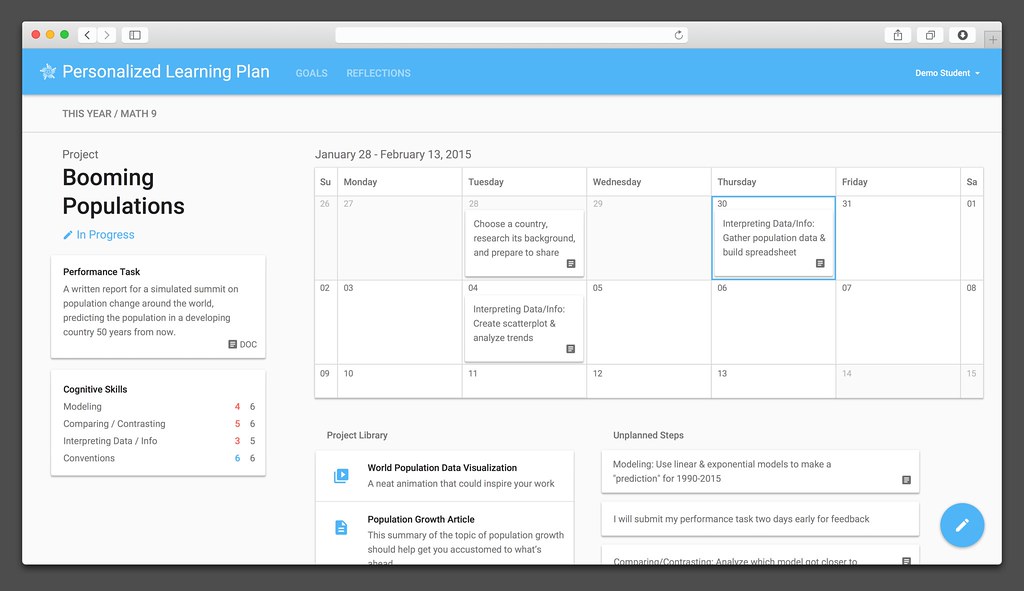
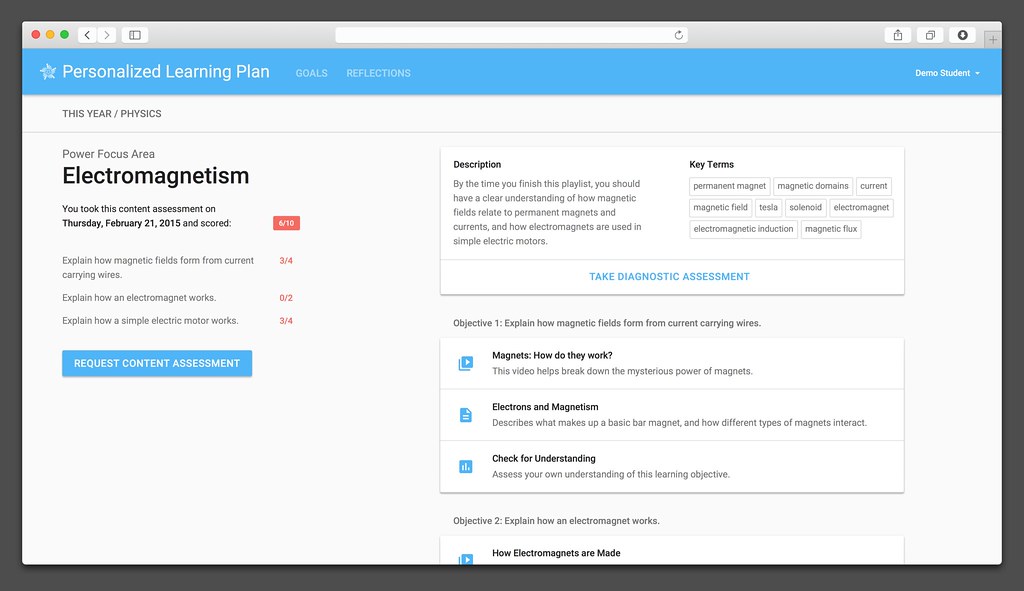
theodp writes: Gushing in July that Facebook engineers had solved one of education's biggest problems, Melinda Gates perhaps set up Segway-like expectations for Facebook's education software. And while The Verge sings the praises of what appears to be progress-tracking dashboards that connect students to mostly free 3rd-party lessons — not unlike Khan Academy or even the 50-year-old PLATO system — it's hard to get jazzed based on the screenshots (1, 2, 3) that Facebook provided in a .zip file accompanying its announcement. The "personalized learning plan" dashboards are a joint effort of Facebook and the Meg Whitman-led and backed Summit charter schools. In a nice circle-of-tech-CEO-education-reform-life twist, the first Summit high school opened in a building in Redwood City after students attending the Bill Gates-touted and backed Silicon Valley High Tech High charter there were evicted to make way, and the Gates Foundation is now spending $8M to bring HP CEO Whitman's Summit charter schools — and presumably Facebook CEO Mark Zuckerberg's personalized learning plans — to Seattle children. -
Facebook's New Data Center To Be Powered Entirely By Renewables
totalcaos writes: Facebook's new $500 million data center in Forth Worth will be powered entirely by renewable energy, thanks to a 200-megawatt wind project nearby. The data center will come online next year, and the company further plans to power the rest of its data centers with at least 50% renewables by the end of 2018. It's long-term goal is 100%. They claim the carbon impact of one person's yearly Facebook use is roughly the same as the impact of one medium latte. -
FB Reveals Woeful Diversity Numbers
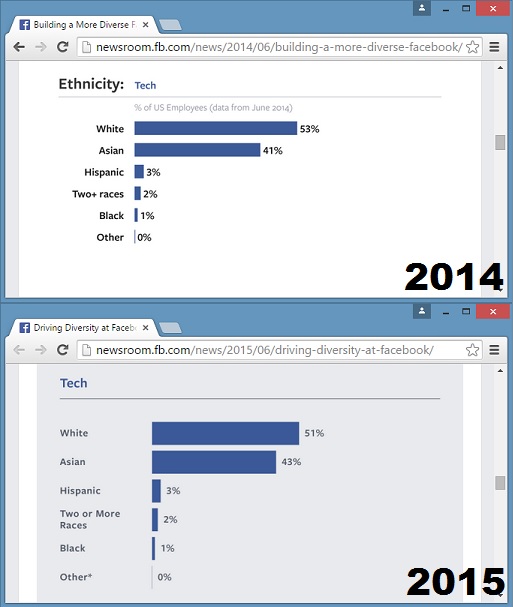
theodp writes: There's more work to do," said Facebook's Global Director of Diversity Maxine Williams, who issued a straight-out-of-How-to-Lie-With-Statistics diversity update on Thursday that essentially consisted of a handful of bar charts labeled with only percentages for select measures of the social networking giant's current demographics. In search of real numbers, the Guardian turned to Facebook's most recent Equal Employment Opportunity report filing, which showed that the ranks of black employees swelled by a grand total of seven (7) (1 woman) in the year covered by the filing, during which time Facebook saw an overall headcount increase of 1,231. Comparing Facebook's new bar charts of US tech employees to those issued last year shows the proportion of Hispanic and Black employees remained flat at 3% and 1% respectively, while a decline in the proportion of white employees from 53% to 51% was offset by an increase in the proportion of Asian employees from 41% to 43%. -
Facebook Has a New Private Mobile Photo-Sharing App, and They Built It In C++
jfruh writes: Facebook [on Monday] announced Moments, a new mobile app that uses Facebook's facial recognition technology to let you sync up photos only with friends who are in those photos with you. Somewhat unusually for a new app, the bulk of it is built in the venerable C++ language, which turned out to be easier for building a cross-platform mobile app than other more "modern" languages. -
Top Publishers To Post News Stories Directly To Facebook Timelines
An anonymous reader writes: The BBC, BuzzFeed, NBC, The New York Times and National Geographic are among some of the publishers which will post news items directly to a Facebook user's timeline thanks to a new feature called Instant Articles. Chris Cox, Facebook’s chief product officer, says the program will allow publishers to “deliver fast, interactive articles while maintaining control of their content and business models.” Under the terms of the plan, publishers can sell and embed ads in the articles and keep the revenue, or allow Facebook to sell ads. Publishers will also be allowed to track data and traffic with their own analytics tools. -
Facebook Launches Internet.org Platform and Opens Up To More Developers
Mark Wilson writes: The aim behind Facebook's Internet.org program is to bring internet access to the wider world. While an undeniably praise-worthy venture, it came in for criticism for going against the principles of net neutrality. Now, the company is launching the Internet.org Platform with a view to countering this criticism. The platform opens up Internet.org to more developers, giving them the chance to bring 'free basic services' to people around the world. There's also the promise of greater transparency. -
Facebook Successfully Tests Laser Internet Drones
rtoz writes: At its F8 conference in San Francisco, Facebook announced the first hardware it plans to use to beam the Internet down to billions of people around the world. Codenamed "Aquila," the solar-powered drone has a wingspan comparable to a Boeing 737, but weighs less than a small car. It will be powered by solar panels on its wings, and it will be able to stay at altitudes of more than 60,000 feet for months at a time. Facebook says it'll begin test flights this summer, with a broader rollout over the next several years. The drones were tested over the UK recently, and everything worked as expected. -
Facebook Introduces Payment System
An anonymous reader writes: Today Facebook announced a new feature for its Messenger services: the ability to send money to friends. The payment system will work by connecting debit cards from Visa or Mastercard — no credit cards, and no bank accounts. The company claims they aren't trying to make money on it, since it'd be such a small business compared to their ad revenue. "Once the $ button is tapped, users simply enter the dollar amount and hit Pay. The money is instantly taken from their debit account and delivered to the recipient's debit account. Facebook never holds the money, though the receiver's bank will usually take a few days to make the funds available as is standard. Both users see a confirmation message detailing the transfer status and time." Facebook says transaction information is encrypted, and users will protect their cards with a dedicated passcode (or fingerprint identification). -
Facebook's Colonies
sarahnaomi writes: Facebook this week released a major report on global internet access, as part of the company's Internet.org campaign, which aims to bring cheap internet to new markets in partnership with seven mobile companies. Facebook says 1.39 billion people used its product in December 2014, and it's natural for the company to try to corral the other four-fifths of the planet. But aside from ideals and growth markets, the report highlights a tension inherent to the question of access: When Facebook sets sail to disconnected markets, what version of the internet will it bring? In its report, Facebook advocates for closing the digital divide as quickly as we can, which is a good thing. But when Facebook argues that, "as use of the internet continues to expand, it will exert a powerful effect on the global economy, particularly in the developing world," it's arguing that any increase in access is inherently good, which isn't necessarily the case. -
Facebook Adds Legacy Contact Feature In Case You Die Before It Does
alphadogg writes "Facebook has added an option for users to delegate management of their account for when they die. The idea is to avoid awkward lingering Facebook pages after a person passes on, perhaps featuring images or posts that someone would rather not be remembered by....This isn't the first time Facebook has put thought into what happens to users' accounts when the users die. A year ago the social network outlined a more flexible approach to memorializing accounts. Now memorialized accounts will have the word "Remembering" hovering above a person's name. -
Facebook Launches ThreatExchange To Let Companies Share Threat Info
An anonymous reader writes Facebook today launched ThreatExchange, described as "an API-based clearinghouse for security threat information." It's really a social platform, which Facebook naturally excels at building, which allows companies to share with each other details about malware and phishing attacks. Pinterest, Tumblr, Twitter, and Yahoo participated in ThreatExchange and gave feedback as Facebook was developing it. New contributors Bitly and Dropbox have also recently joined, bringing the initial participant list to seven major tech companies. -
Facebook Will Let You Flag Content As 'False'
jfruh writes: If you're tired of seeing fake or misleading news articles posted by your friends to Facebook and then spreading like wildfire, you might be in luck. In a system that's something like Slashdot comment moderation on a grand scale, you'll now be able to flag a story as false. Links that have been flagged this way by many users will appear less frequently in people's newsfeeds, or with a disclaimer attached. -
Facebook 'Safety Check' Lets Friends Know You're OK After a Major Disaster
rtoz (2530056) writes Facebook has launched a new Tool called "Safety Check." The Facebook Safety Check tool will notify your friends so that they know you're OK after a major disaster. In times of disaster or crisis, people turn to Facebook to check on loved ones and get updates. "During a major disaster, Safety Check will help you: Let friends and family know you're safe; Check on others in the affected area; Mark your friends as safe ... When the tool is activated after a natural disaster and if you're in the affected area, you'll receive a Facebook notification asking if you're safe. [Facebook] will determine your location by looking at the city you have listed in your profile, your last location if you've opted in to the Nearby Friends product, and the city where you are using the internet. ... If you're safe, you can select "I'm Safe" and a notification and News Feed story will be generated with your update. Your friends can also mark you as safe." More creepy, or more reassuring? -
Code.org: Blame Tech Diversity On Education Pipeline, Not Hiring Discrimination
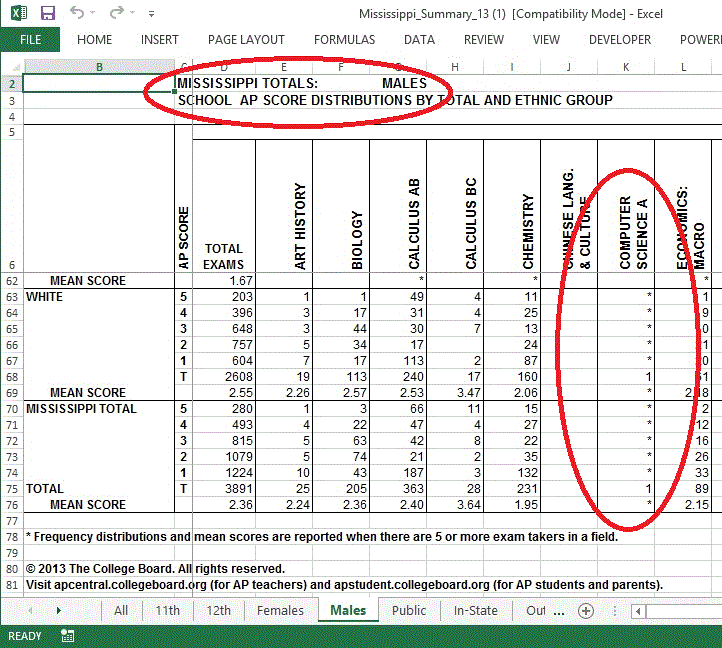
theodp writes: "The biggest reason for a lack of diversity in tech," says Code.org's Hadi Partovi in a featured Re/code story, "isn't discrimination in hiring or retention. It's the education pipeline." (Code.org just disclosed "we have no African Americans or Hispanics on our team of 30.") Supporting his argument, Partovi added: "In 2013, not one female student took the AP computer science exam in Mississippi." (Left unsaid is that only one male student took the exam in Mississippi). Microsoft earlier vilified the CS education pipeline in its U.S. Talent Strategy as it sought "targeted, short-term, high-skilled immigration reforms" from lawmakers. And Facebook COO and "Lean In" author Sheryl Sandberg recently suggested the pipeline is to blame for Facebook's lack of diversity. "Girls are at 18% of computer science college majors," Sandberg told USA Today in August. "We can't go much above 18% in our coders [Facebook has 7,185 total employees] if there's only 18% coming into the workplace." -
Code.org: Blame Tech Diversity On Education Pipeline, Not Hiring Discrimination
theodp writes: "The biggest reason for a lack of diversity in tech," says Code.org's Hadi Partovi in a featured Re/code story, "isn't discrimination in hiring or retention. It's the education pipeline." (Code.org just disclosed "we have no African Americans or Hispanics on our team of 30.") Supporting his argument, Partovi added: "In 2013, not one female student took the AP computer science exam in Mississippi." (Left unsaid is that only one male student took the exam in Mississippi). Microsoft earlier vilified the CS education pipeline in its U.S. Talent Strategy as it sought "targeted, short-term, high-skilled immigration reforms" from lawmakers. And Facebook COO and "Lean In" author Sheryl Sandberg recently suggested the pipeline is to blame for Facebook's lack of diversity. "Girls are at 18% of computer science college majors," Sandberg told USA Today in August. "We can't go much above 18% in our coders [Facebook has 7,185 total employees] if there's only 18% coming into the workplace." -
Facebook Cleans Up News Feed By Reducing Click-Bait Headlines
An anonymous reader writes "Facebook today announced further plans to clean up the News Feed by reducing stories with click-bait headlines as well as stories that have links shared in the captions of photos or within status updates. The move comes just four months after the social network reduced Like-baiting posts, repeated content, and spammy links." -
Tech Workforce Diversity At Facebook Similar To Google And Yahoo
theodp (442580) writes Facebook is mostly white dudes, writes Valleywag's Sam Biddle, cutting to the chase of Facebook's inaugural disclosure of diversity figures. "We're serious about building a workplace that reflects a broad range of experience, thought, geography, age, background, gender, sexual orientation, language, culture and many other characteristics," said Facebook, which has a tech workforce that's 15% female and only 1% Black. By contrast, Wikipedia's Baseball Color Line article notes that "by the late 1950s, the percentage of blacks on Major League teams matched or exceeded that of the general population." So, is it surprising that the company whose stated mission is "to give people the power to share and make the world more open and connected" is having problems connecting with the general population in 2014? -
Tech Workforce Diversity At Facebook Similar To Google And Yahoo
theodp (442580) writes Facebook is mostly white dudes, writes Valleywag's Sam Biddle, cutting to the chase of Facebook's inaugural disclosure of diversity figures. "We're serious about building a workplace that reflects a broad range of experience, thought, geography, age, background, gender, sexual orientation, language, culture and many other characteristics," said Facebook, which has a tech workforce that's 15% female and only 1% Black. By contrast, Wikipedia's Baseball Color Line article notes that "by the late 1950s, the percentage of blacks on Major League teams matched or exceeded that of the general population." So, is it surprising that the company whose stated mission is "to give people the power to share and make the world more open and connected" is having problems connecting with the general population in 2014? -
New Facebook Phone App Lets You Stalk Your Friends
Hugh Pickens DOT Com (2995471) writes "Iain Thomson reports that Facebook is adding a new application called 'Nearby Friends' that alerts smartphone users when their friends are nearby. 'If you turn on Nearby Friends, you'll occasionally be notified when friends are nearby, so you can get in touch with them and meet up,' says Facebook in a statement. 'For example, when you're headed to the movies, Nearby Friends will let you know if friends are nearby so you can see the movie together or meet up afterward.' The feature, which is opt-in, allows users to select which friends get a warning that you are in the area, and prepare a subset of people who might like to know when you're near, if they have the Nearby Friends activated as well. According to Josh Constine what makes 'Nearby Friends' different than competitors and could give it an advantage is that it's centered around broadcasting proximity, not location. 'If someone's close, you'll know, and can ping them about their precise location and meeting up. Broadcasting location is creepy so we're less likely to share it, and can cause awkward drop-ins where someone tries to come see you when you didn't want them to.'" -
Facebook Buying Oculus VR For $2 Billion
Several readers sent word that Facebook will acquire Oculus VR for $2 billion. Mark Zuckerberg says the Oculus Rift virtual reality headset is the beginning of something big: "This is really a new communication platform. By feeling truly present, you can share unbounded spaces and experiences with the people in your life. Imagine sharing not just moments with your friends online, but entire experiences and adventures." The obvious question is: why Facebook would buy a company focused on VR gaming? The Oculus team says, "But when you consider it more carefully, we're culturally aligned with a focus on innovating and hiring the best and brightest; we believe communication drives new platforms; we want to contribute to a more open, connected world; and we both see virtual reality as the next step. ... It opens doors to new opportunities and partnerships, reduces risk on the manufacturing and work capital side, allows us to publish more made-for-VR content, and lets us focus on what we do best: solving hard engineering challenges and delivering the future of VR." Put more simply: money and connections. -
Facebook Wants To Block Illegal Gun Sales
Nerval's Lobster writes "Most of the time, Facebook allows its users to hawk goods or solicit donations on Pages or Timeline postings, comparing such activity to placing a physical note on a bulletin board at a supermarket. Now it plans on regulating users who rely on this method to sell what it calls 'regulated' items, which includes firearms. 'Any time we receive a report on Facebook about a post promoting the private sale of a commonly regulated item, we will send a message to that person reminding him or her to comply with relevant laws and regulations. We will also limit access to that post to people over the age of 18,' Facebook announced as part of the new rules. The social network will also prevent users from posting any sort of items 'that indicate a willingness to evade or help others evade the law,' which means no offers to sell firearms across state lines or without a background check. Presumably, Facebook will have filters in place that allow it to scan for such content. Facebook is a private network, of course, and not (despite its ubiquity) a public utility — meaning it can do whatever it wants with regard to Terms of Use. But that likely won't stop some people from complaining about what they perceive as the company overstepping its boundaries." -
Facebook To Buy WhatsApp
Facebook has announced an agreement to buy WhatsApp, the mobile messaging platform used by over 450 million people. The deal involves $4 billion in cash and an additional $12 billion in Facebook stock. They say WhatsApp will remain independent; its headquarters won't move, and it will continue to exist separately from Facebook's Messenger app. Mark Zuckerberg indicated they will focus on growth: 'Over the next few years, we're going to work hard to help WhatsApp grow and connect the whole world. We also expect that WhatsApp will add to our efforts for Internet.org, our partnership to make basic internet services affordable for everyone.' On WhatsApp's blog, they say, "Here’s what will change for you, our users: nothing. WhatsApp will remain autonomous and operate independently." -
Yahoo and Facebook Join Google In FISC Petition After Government Talks Fail
msm1267 writes "Google, Yahoo and Facebook filed amended requests today with the U.S. Foreign Intelligence Surveillance Court reiterating their desire to publish numbers on requests for user data related to national security. Google, meanwhile, went a step further asking for an open, public hearing with the court so that the issue could be publicly debated." Statements from Yahoo's general counsel (filed motion [PDF]) and Facebook's general counsel (filed motion [PDF]). According to Facebook, "In recent weeks, it has become clear that the dialogue with the U.S. government that produced some additional transparency at the outset is at this point unlikely to result in more progress. As a result, today we are joining others in the industry in petitioning the Foreign Intelligence Surveillance Court to require the government to permit companies to disclose more information about the volume and types of national security-related orders they receive." -
Internet.org: Altruistic, Or the Ultimate In Cynicism?
Nerval's Lobster writes with one take on an effort to "make Internet access available to the two-thirds of the world who are not yet connected": "In conjunction with a variety of partners (including Nokia, Opera, Qualcomm and Samsung), Facebook is launching Internet.org, which will try to make Internet access more affordable to more people. The partnership will also work on ways to lower the amount of data necessary to power most apps and Internet experiences, which could help people in areas with poor connectivity access online services, and devise incentives for businesses and manufacturers to offer customers more affordable access. Why would Facebook and its partners want to connect another 5 billion people to the Internet? Sure, there are altruistic reasons — people online can access information that will improve or even save their lives. But for Facebook, more people online equals more ad revenue, which equals more profit. Social networking in the developed world is reaching a saturation point, with a significant percentage of the population already on one (or more) social networks; only by expanding into developing nations can Facebook and its ilk maintain the growth rates that Wall Street demands. In a similar vein, building devices and services accessible via weaker Internet connections would open up a whole new customer base for the app developers and manufacturers of the world. In theory, Internet.org plans on enlisting a variety of nonprofits and 'experts' to help in its effort; but the initial announcement only lists for-profit companies among its constituency. NGOs, academics and the aforementioned experts will apparently arrive 'over time.' So is this effort really charitable, or a cynical attempt to break into new markets?" -
Facebook and Microsoft Disclose Government Requests For User Data
wiredmikey writes "Facebook and Microsoft say they received thousands of requests for information from U.S. authorities last year but are prohibited from listing a separate tally for security-related requests or secret court orders related to terror probes. The two companies have come under heightened scrutiny since reports leaked of a vast secret Internet surveillance program U.S. authorities insist targets only foreign terror suspects and is needed to prevent attacks. Facebook said Friday it had received between 9,000 and 10,000 requests for user data affecting 18,000 to 19,000 accounts during the second half of last year and Microsoft said it had received 6,000 to 7,000 requests affecting 31,000 to 32,000 accounts during the same period." Meanwhile, an article at the Guardian is suggesting the government may have better targets to pursue than Edward Snowden. "[U.S. director of national intelligence James Clapper] has come out vocally to condemn Snowden as a traitor to the public interest and the country, yet a review of Booz Allen's own history suggests that the government should be investigating his former employer, rather than the whistleblower." -
Facebook Test Will Let You Message Strangers For $1
Spy Handler writes "According to PC Mag, 'Facebook is testing a feature that will let select users pay $1 to send messages to people with whom they have no connection on the social network. The $1 fee will open a thread with a non-Facebook friend. If that person replies to your note, you won't have to pay again to respond to them.' Facebook explained the test thus: 'Several commentators and researchers have noted that imposing a financial cost on the sender may be the most effective way to discourage unwanted messages and facilitate delivery of messages that are relevant and useful. This test is designed to address situations where neither social nor algorithmic signals are sufficient. For example, if you want to send a message to someone you heard speak at an event but are not friends with, or if you want to message someone about a job opportunity, you can use this feature to reach their Inbox. For the receiver, this test allows them to hear from people who have an important message to send them.'"