Slashdot Mirror
Domain: funet.fi
Stories and comments across the archive that link to funet.fi.
Comments · 81
-
Re:Poll idea
22 years give or take, started with SLS, can't remember which version probably older than this one ftp://ftp.ibiblio.org/pub/hist... as I can vaguely remember kernel 0.97 but SLS 1.03 has kernel 0.98pl.
FWIW this is the first Linux distro (there are earlier versions but I didn't bother to search) ftp://ftp.ibiblio.org/pub/hist...
And the place to get your kernel was ftp://ftp.funet.fi/pub/linux/
-
Re:Running gag
ftp://nic.funet.fi/ is still there. It's oh-my-god slow, though.
-
Amiga Apps; back from the 90's.
People have been calling software applications "apps" for years before the iphone existed. My bosses in the mid 90's said to make sure all of their apps were on the new computer. These were not geeky people by any means. I am sure people called software "apps" before that.
Indeed. The category "Applications" was often shortened to "Apps".
A quick search on the web found:
http://193.166.3.2/pub/amiga/apps/
where the Apps directory has the date "11-Aug-1999"That is mirrored at:
http://ftp.funet.fi/index/amiga/apps/
with the same date.An article posted in 3 Jan 2007 at:
http://www.theinquirer.net/inquirer/news/1025786/the-amiga-dead-long-live-amiga
details the Amiga platform after CBM's 1994 demise:
"Intent is amazing, like Java on steroids: the entire OS and all apps are compiled .
((Since then (of course)development went on for Amiga OS4 in a different direction.))
Intent was a 199'ties development direction. -
Re:Apple and patents...
That doesn't sound like the sort of thing Apple would do.
No, cuz it's not like Apple has a long track record of inventing or perfecting whole concepts and standards and then releasing them to the public.
Oh, wait...
-
Re:Once again: no
But the final 9.10 is still not on their website.
It's on the Finland mirror...
http://www.nic.funet.fi/pub/mirrors/releases.ubuntu.com/karmic/ -
Re:Remote X servers?
-
Re:I know how Microsoft can score BIG here . . .What exactly would the U.S. government be putting tax on ?
Windows ? Nah, the E.U. isn't buying Windows according to your plot.
Linux ? But Linux isn't "Made in U.S. of A.".. They'd just buy SuSE Linux, or go ftp://ftp.funet.fi
Methinks the EU wouldn't actually be in such a bad shape, even if Microsoft really would stop shipping Windows to the EU. The already sold licenses are still valid ( although they'd be a virus trap on the scale of O(n$) once the patches stop appearing in the EU
There would be a transition period, but business would recover soon enough and domestic solutions to POS, banking, TAX etc would appear. ( Although not an EU country, Iceland would suffer only for a brief period of time if Windows was banned. Banking and Tax returns are already multi-platform capable due to good back-ends, clueful programmers and a good browser
The EU might actually gain something from having Microsoft taken off of the market. Although it's only speculative, I think there's a lot of domestic tech-job-opportunities here
-
Re:DRM
The Linux kernel has _always_ been under the GPL v2. Nothing else has ever been valid.
Most certainly not! Linus has a surprisingly bad memory. Okay, that's a nitpick, but still =)
-
What the admins did......at ftp.funet.fi to allow tens of people to move files around, without su access:
ftp://ftp.funet.fi/pub/local/src/omi-file.tar.gz
It allows users to grab ownership[1] of files in certain per-user configured paths, whenever they need to (sample config file included). This allowed us to manage the incoming ftp directories without going insanse.
It was written some 15 years ago by Matti Aarnio.
[1] Ownership is "omistus" in Finnish, hence the name of the tool
-
i doubt it
Was that Linus? I thought that was someone else'e attempt at changing the kernel from C to C++?
I'm no Linux hacker, but this has Linus's name at the bottom, so I'm guessing it was indeed Mr. Torvalds's super-crazy and far-out versioning scheme....besides, I hear the man doesn't care for C++.
-
Re:What other pre-web services are out there?
Btw, you can download IMDB from ftp://ftp.funet.fi/.
It's located under
The diffs folder contains updates to the database which are released weekly. -
Re:What other pre-web services are out there?
I just logged in to ftp.funet.fi where I used to download MODs from in like '89 or '90.
-
MIRROR
Now also mirrored at ftp://ftp.funet.fi/pub/culture/tv+film/StarWreck/
-
Best Perl Practice ... in action ...
The best thing a perl user can do is run this script
rm
wget ftp://ftp.funet.fi/pub/mirrors/gcc.gnu.org/pub/gcc /releases/gcc-4.0.1/File: gcc-4.0.1.tar.bz2
bunzip2 gcc-4.0.1.tar.bz2
tar xvf gcc-4.0.1.tar
cd gcc-4.0.1
make
make install -
Odd disk formats, etc.One of my side hobbies seems to be converting PET documents to text files or PET disk/tapes to emulator friendly images.
Tapes are relatively easy as the 64 can read most of the, the hard part is that sone disk formats are hard to come by, the Commodore PET has several different format drives, the most popular are the 4040/2031 which a Commodore 64 can read, but the 512k single sided 8050 and double sided 8250/SFD-1001 disks are another matter both using quad density drives (nowhere related to the PC HD format) and GCR encoded to increase capacity. These drives (unless you are a hardware whiz) communicate exclusively using IEEE-488 so A PET/CBM or B128 are best employed.
I myself use the PC-to-pet interface the C2N232 with related software to get the files fron the PET to the PC, from there it's a matter of some home spun chipmunk BASIC programs to get the files tidyed up and in ASCII.
To be consistently successful at it you have to not only have the tools but knowledge of the various disk and file formats and system quirks that you are dealing with, which will help you get around the unexpected.
I've had requests to help convert 64 related software, but have passed on that as I am not into real time programming work (some sort of lighting program on a cartridge) but there are others up to that challenge.
Same goes for other platforms like old 400k Mac disks which use a varialble speed drive and can only be read IIRC on a 68k mac using System 6 or lower. There are also the protected disks or those that were recorded with utilities to improve speed or capacity (which makes the disks/tapes differ from any knwn standard format). Not everything can be done with an emulator.
-
Re:L2 larger than my first disk drive already.The ironic thing about those old 1541 drives (and the 1540, which just had earlier firmware), was that they had more processing power than the C64 it connected to.
The C64 had (essentially) a 6502 running at 1 MHz, the 1541 had a 6502B running at 2 MHz.
That's not true. The 1541 has a 6502 at 1MHz, and that's from the service manual and the schematics therein.
The main C64 clock is close. I'm going to quote a stunning description of the C64 and its video architecture:This clock signal is the reference for the complete bus timing. Its frequency is 1022.7 kHz (NTSC models) or 985.248 kHz (PAL models).
However, 25 times per video frame (so 1500 times a second in NTSC) the video chip needs more cycles:For this reason, the VIC uses the mechanism described in section 2.4.3. to "stun" the processor for 40-43 cycles during the first pixel line of each text line to read the character pointers. The raster lines in which this happens are usually called "Bad Lines" ("bad" because they stop the processor and thus slow down the computer and lead to problems if the precise timing of a program is essential, e.g. for the transmission of data to/from a floppy drive).
I highly recommend the paper above for anybody interested in just how far blackbox reverse engineering of LSI chips can go, and just how many amazing ways to stretch the C64 architecture have been discovered between 1982 and 1996, when the paper was written.
-
Clickable Links
ftp://gd.tuwien.ac.at/pc/OpenCD/
ftp://ftp.uni-bayreuth.de/pub/pc/TheOpenCD/
ftp://sunsite.informatik.rwth-aachen.de/pub/mirror
ftp://ftp.freenet.de/pub/filepilot/windows/tools/t he_open_cd/releases/
ftp://ftp.uoi.gr/mirror/opencd/
ftp://neacm.fe.up.pt/pub/OpenCD/
ftp://ftp.funet.fi/pub/mirrors/theopencd.org/TheOp enCD/
ftp://theopencd.hands.com/theopencd/
ftp://www.mirrorservice.org/sites/gd.tuwien.ac.at/ pc/OpenCD/
ftp://carroll.aset.psu.edu/pub/windows/opencd
ftp://planetmirror.com/pub/opencd/
ftp://ftp.heanet.ie/pub/TheOpenCD/
ftp://cs.ubishops.ca/pub/windows/opencd/
"Lameness filter encountered. Post aborted!
Reason: You can type more than that for your comment."
This text here to combat the lameness filter. -
Ah, the good old days...
For a real blast from the past, check out the REXX FAQ that I maintained for a couple of years. Copies are still floating around the net, including here:
http://www.funet.fi/pub/languages/rexx/rexxfaq.txt
It seems so... old, I guess. But REXX itself was fun to use, and I spent a lot of time using it and writing applications with (and for) it. It was very approachable, a good way to learn basic programming concepts. It definitely rocked on the Amiga because it was so well-integrated with the system. If OS/2 had not failed, it might still be here, because it was also decently integrated there.
Eric -
Re:I want my 8kb Space Invaders Please
-
I doubt it..
.. if they could be liberated.
Which is a mighty big 'if'.. Those books were copyrighted, even if ownership is now unclear. Given how the economic situation is in Russia at the moment, they are very unlikely to give anything away.
(Recently, a fight broke out over the rights to the classic Soviet childrens-show Cheburashka, which recently had become big in Japan (!))
Also, the best of these textbooks were republished in the west, such as Landau-Lifshitz "Course of Theoretical Physics", which is still in print.
(Not that Landau-Lifshitz is that good either.. Let's just say that translating it didn't do much. -
Sorta...Actually, the coco DID run a 6809, not a 6509. But don't think there weren't 6509s, too. The 6501 was the original as in the CAT single board computers and early apples, but when the 6502 was on the big screen in all those commodores Rockwell (and others) licensed the tech and had whole families of chips oriented toward embedded systems. They were the 6503, 6504, 6505, 6506, etc. and had fewer pins (24-28 pins). Then there was the 6510, which was a 6502 core with a multiplexed parallel port where part of the address bus would be on the 6502, etc.
So... what would you expect the 6509 to be used for? It didn't have the math instructions of the 6809, but it (and the 6510) did have certain useful features when it came to making "personal computers" of the day.
-
Re:wasnt MG originaly on that thing?
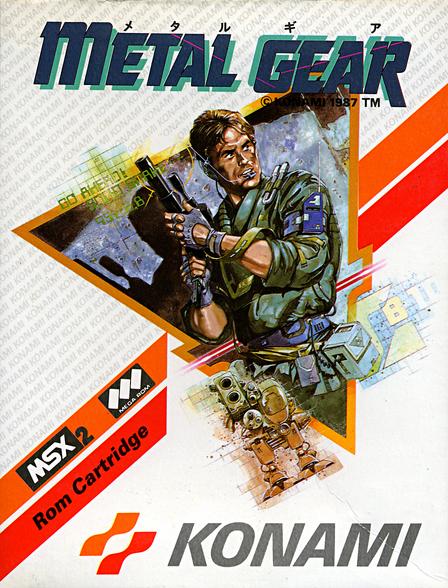
The original Metal Gear was an MSX2 cartridge released in 1987, so the NES and MSX2 versions were released (more or less) at the same time.
Konami at the time had lots of developers working on MSX, so I guess it would be a safe assumption to say that the MSX version was the main one, which was then ported to the NES. There's even an MSX computer in Metal Gear Solid 2: In the tanker sequence, in the room where Metal Gear is, there's a computer terminal that you must use to upload some photos. This terminal displays "MSX 5.0" or something like that when used (it was long time ago since I played that game, sorry).
Also, if I recall correctly, the "MSX Metal Gear team" is greeted in the ending titles at the end of the game. -
Re:Uh, noSecond, early on Amiga floppies had a reputation for being somewhat less reliable than their PC and Atari brethren, though personally, by 1991 when I got a 500+, I didn't see any real difference.
That's probably because the Amiga floppy controller wrote track-at-once, rather than secton-at-once but without either the controller or the trackdisk.device verifying that the entire track had been written correctly. Hence, if you updated a single sector on a track, the entire track would be re-written, and the "unmodified" tracks may get corrupted in the process.
There was a nice hack called TrackSalve which hacked the trackdisk.device so that it performed an automatic verify of tracks after writing. ISTR equivalent functionality may have been incorporated into trackdisk.device in 2.04/3.0+ Kickstarts, but before I started using TrackSalve, I used to frequently end up with corrupted diskette bitmaps (probably the most-rewritten track on an Amiga floppy).
Another, probably less significant factor is that the Amiga disk hardware wrote tracks with no gaps between sectors in order to get that extra 160KBytes. If a PC disk controller encountered an error in the inter-sector gaps, I doubt it would cause it many problems, but for Amigas, it increases the probability that an error will occur in an occupied cell of the disk.
--
-
The One True Joystick
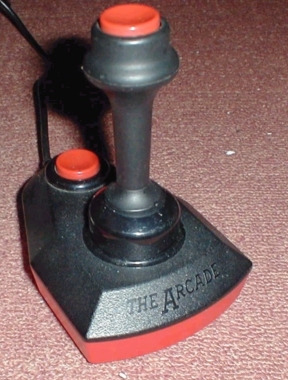
this one. I've had mine since the day I first bought my first computer, and despite heavy use I've never broken one of these babies. And thanks to this gadget, I look forward to using it again!
-
alt.gourmandgoogle for alt.gourmand. It began as net.recipies back in the '80s by Brian Reid who was very serious about his recipies... (the now infamous alt.* heirarcy was created, in part, because he thought that 'rec.food.recipes' denigrated his moderated newsgroup (I vaguely remember him lobbying to have it put int the soc(social) heirarchy. When I printed it (back in 1991, it was about 500+pages of recipies (one page/recipe). Back then it was done as a set of nroff/troff macros which (among other things) allowed you to specify whether you wanted metric or english measurments. and even allowed a permuted index (for those of you used to the old UNIX manual page books).
Some very nice recipies there, and a number of versions of some of the more popular ones.
The archive at http://www.funet.fi/pub/culture/recipes/ has about 700 recipes others may have more.
Each recipe has a rating for difficulty, time and precision needed. -
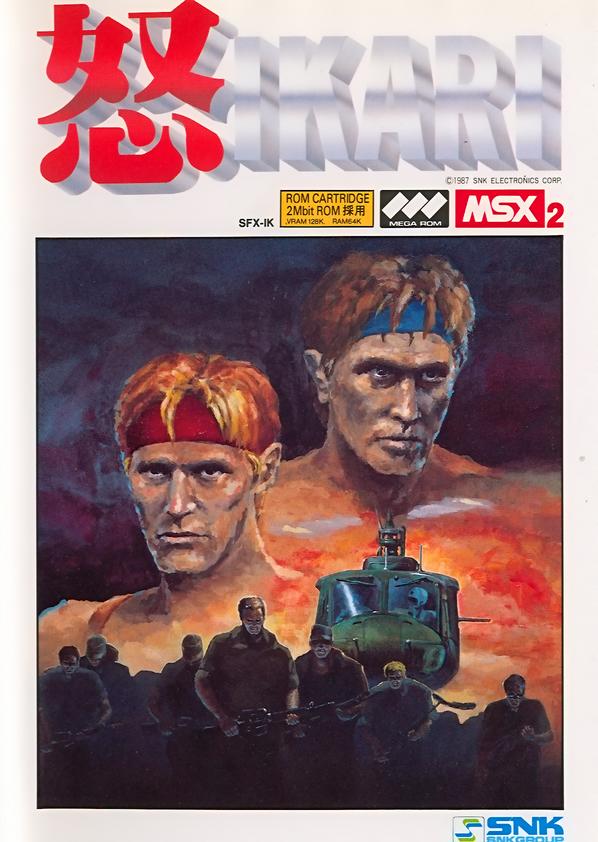
They forgot the MSX port of Ikari Warriors!
I just wrote the following e-mail to the author of the article:
Hello Frank,
I just read your SNK article on GameSpot.com. A very nice in-depth article!
Although, I think you forgot to mention that SNK also produced software for the MSX system, which is virtually unknown in the USA, but used to be very popular in Japan and certain parts of Europe, as well as Brazil.
For some more information about this home computer system, you might want to check out these sites:
The Ultimate MSX FAQ
The MSX Resource Center
The only MSX product of SNK I know is Ikari Warriors. For some information about the game, see this page: Ikari Warriors on Generation MSX.
In short: it was released in 1987 for the MSX2 system (the second generation standard of MSX). It's a 2Mbit game.
Some scans of the cover in a higher resolution: front, back, side.
I'm also in posession of this game myself.
I hope you will update the article!
(At least pages 2 (near the bottom) and page 31 should mention the MSX port of Ikari Warriors, I think. -
They forgot the MSX port of Ikari Warriors!
I just wrote the following e-mail to the author of the article:
Hello Frank,
I just read your SNK article on GameSpot.com. A very nice in-depth article!
Although, I think you forgot to mention that SNK also produced software for the MSX system, which is virtually unknown in the USA, but used to be very popular in Japan and certain parts of Europe, as well as Brazil.
For some more information about this home computer system, you might want to check out these sites:
The Ultimate MSX FAQ
The MSX Resource Center
The only MSX product of SNK I know is Ikari Warriors. For some information about the game, see this page: Ikari Warriors on Generation MSX.
In short: it was released in 1987 for the MSX2 system (the second generation standard of MSX). It's a 2Mbit game.
Some scans of the cover in a higher resolution: front, back, side.
I'm also in posession of this game myself.
I hope you will update the article!
(At least pages 2 (near the bottom) and page 31 should mention the MSX port of Ikari Warriors, I think. -
They forgot the MSX port of Ikari Warriors!
I just wrote the following e-mail to the author of the article:
Hello Frank,
I just read your SNK article on GameSpot.com. A very nice in-depth article!
Although, I think you forgot to mention that SNK also produced software for the MSX system, which is virtually unknown in the USA, but used to be very popular in Japan and certain parts of Europe, as well as Brazil.
For some more information about this home computer system, you might want to check out these sites:
The Ultimate MSX FAQ
The MSX Resource Center
The only MSX product of SNK I know is Ikari Warriors. For some information about the game, see this page: Ikari Warriors on Generation MSX.
In short: it was released in 1987 for the MSX2 system (the second generation standard of MSX). It's a 2Mbit game.
Some scans of the cover in a higher resolution: front, back, side.
I'm also in posession of this game myself.
I hope you will update the article!
(At least pages 2 (near the bottom) and page 31 should mention the MSX port of Ikari Warriors, I think. -
Re:and how do I use it?
-
server slow, mirror list:
Sorry, couldn't format it because of Slashdot's fucking filters.
ftp://ftp.is.co.za/applications/gimp/ ftp://ftp.planetmirror.com/pub/gimp/gimp/ http://ftp.planetmirror.com/pub/gimp/gimp/ ftp://mirror.aarnet.edu.au/pub/gimp/ http://mirror.aarnet.edu.au/pub/gimp/ ftp://gimp.zeta.org.au/gimp/gimp/ ftp://gd.tuwien.ac.at/graphics/gimp/gimp/ ftp://ftp.funet.fi/pub/sci/graphics/packages/gimp/ ftp://ftp.minet.net/pub/gimp/ http://ftp.iut-bm.univ-fcomte.fr/pub/gimp/ ftp://ftp.fh-heilbronn.de/mirrors/ftp.gimp.org/gim p/ ftp://ftp.gwdg.de/pub/misc/grafik/gimp/ http://ftp.gwdg.de/pub/misc/grafik/gimp/ ftp://sunsite.ics.forth.gr/sunsite/pub/gimp/ ftp://ftp.esat.net/mirrors/ftp.gimp.org/pub/gimp/ http://ftp.esat.net/mirrors/ftp.gimp.org/pub/gimp/ ftp://SunSITE.sut.ac.jp/pub/archives/packages/gimp -
The List of mirrors is slashdoted.
Africa ftp://ftp.is.co.za/applications/gimp/ Australia ftp://ftp.planetmirror.com/pub/gimp/gimp/
http://ftp.planetmirror.com/pub/gimp/gimp/
ftp://mirror.aarnet.edu.au/pub/gimp/
http://mirror.aarnet.edu.au/pub/gimp/
ftp://gimp.zeta.org.au/gimp/gimp/ Austria ftp://gd.tuwien.ac.at/graphics/gimp/gimp/ Finland ftp://ftp.funet.fi/pub/sci/graphics/packages/gimp/ France ftp://ftp.minet.net/pub/gimp/
http://ftp.iut-bm.univ-fcomte.fr/pub/gimp/ Germany ftp://ftp.fh-heilbronn.de/mirrors/ftp.gimp.org/gim p/
ftp://ftp.gwdg.de/pub/misc/grafik/gimp/
http://ftp.gwdg.de/pub/misc/grafik/gimp/ Greece ftp://sunsite.ics.forth.gr/sunsite/pub/gimp/ Ireland ftp://ftp.esat.net/mirrors/ftp.gimp.org/pub/gimp/
http://ftp.esat.net/mirrors/ftp.gimp.org/pub/gimp/ Japan ftp://SunSITE.sut.ac.jp/pub/archives/packages/gimp
ftp://ftp.u-aizu.ac.jp/pub/graphics/tools/gimp/
http://www.ring.gr.jp/pub/graphics/gimp/
ftp://ftp.ring.gr.jp/pub/graphics/gimp/
http://mirror.nucba.ac.jp/mirror/gimp/
ftp://mirror.nucba.ac.jp/mirror/gimp/ Korea ftp://ftp.kreonet.re.kr/pub/tools/X11/ftp.gimp.org
ftp://gnu.kookel.org/pub/gimp/ Norway ftp://sunsite.uio.no/pub/gimp/ Poland ftp://ftp.tuniv.szczecin.pl/pub/Linux/gimp/
ftp://sunsite.icm.edu.pl/pub/graphics/gimp/ Romania ftp://ftp.kappa.ro/pub/mirrors/ftp.gimp.org/
ftp://ftp.iasi.roedu.net/pub/mirrors/ftp.gimp.org/
http://ftp.iasi.roedu.net/mirrors/ftp.gimp.org/ Russia ftp://ftp.sai.msu.su/pub/unix/graphics/gimp/mirror
http://gimp.tsuren.net/mirror/gimp/ -
Re:Commodore 64's operating system
Nitpick on nitpick: The thing was actually called "kernal", not "kernel". That's how it's officially referred as, believe it or not. Kernal ROM. I am guessing that it originated as a typoed term, and they later explained that it actually was an acronym for "Keyboard Entry Read, Network And Link". (Source for this trivia here.) No idea why they put "network" there though =)
And GEOS was not the only program that implemented its own I/O routines. Every turboloader did this...
The article completely omits the fact that you could program in assembly right out of the box - most people seemed to start by writing BASIC "loaders" that read the program from data statements and poked it to memory - also, many magazines published machine language programs in this format. There were commercial and hobbyist-built assemblers, crossassemblers (for Amiga and PC), and even interpreters/compilers for other languages (notably Logo and Pascal - I forgot the package that I once futilely used).
-
MirrorsFrom World Wide Web://theopencd.sunsite.dk/mirrors.php
Please use one of the mirror sites below to download your copy of TheOpenCD (note: not all have v1.2 updates). The ISO and source tar are also available on BitTorrent. For more info on Bittorrent, click here, or click here for a BitTorrent client.
Australia World Wide Web | FTP | Mirror courtesy of Jason Andrade and PlanetMirror.
Austria World Wide Web | FTP | Rsync | Mirror courtesy of Antonin Sprinzl and the Vienna University of Technology.
Belgium World Wide Web | FTP | Mirror courtesy of Cedric Gavage and Skynet Belgacom.
Brazil World Wide Web | Mirror courtesy of Aleck Zander and Universidade Estadual Paulista.
Canada FTP | Mirror courtesy of Thomas Cort and Bishop's University.
Finland FTP | Mirror courtesy of Harri Salminen and Funet.
Germany 1 World Wide Web | FTP | Rsync | Mirror courtesy of Daniel Lang and Informatik der Technischen Universitt Mnchen.
Germany 2 FTP | Mirror courtesy of Tom Rueger and the Universitt Bayreuth.
Germany 3 FTP | Mirror courtesy of Thomas List and SunSite Aachen.
Germany 4 FTP | Mirror courtesy of Holger Weiss and Freie Universitt Berlin.
UK World Wide Web | FTP | Mirror courtesy of Yang He and UK Mirror Service.
USA 1 World Wide Web | FTP | Mirror courtesy of A. J. Wright and the The University of Tennessee.
USA 2 World Wide Web | FTP | Rsync | Mirror courtesy of Sam Chessman and Tux.org
USA 3 World Wide Web | FTP | Rsync | Mirror courtesy of Jason Holmes and the Pennsylvania State University.
USA 4 World Wide
-
Re:preponderance of evidence
On the subject of OJ and the murders, has anybody else had fun building and running this particular X11 root animation? It's pretty cool. I built it on Solaris at work once and even dared to run it in the firmware lab once.
Check it out. -
Re:Oh, THAT eolas patent
The head honcho in Eolas is of Irish descent.
'Eolas' is the Irish word for 'Knowledge'.
http://www.funet.fi/~magi/opinnot/gaelic/irish-dic -
My C64 was the first to teach me to Peek & Pok
...fortunately, I soon enough learned about other languages, not to mention the opposite sex.
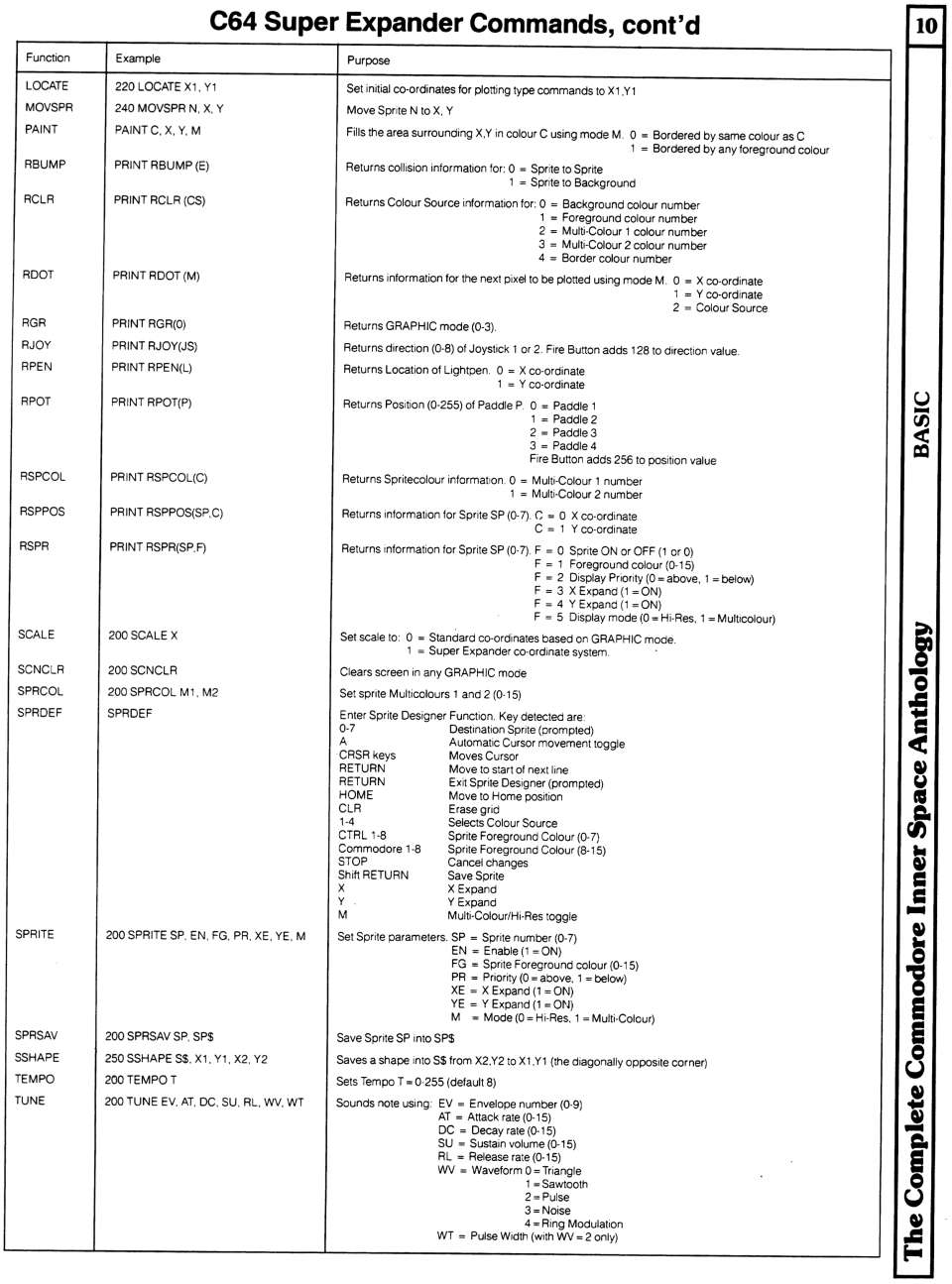
I mostly wrote slightly-sluggish video games with my Super Expander plugged in.
The world is in every way a better place for there not having been Flash when I was 13. -
For those who run into trouble looking for mirrors
Now at a station near you !
Windows : Linorg Projeto Brasil ISC | IndianaU | BinaryCode | ibiblio.org | PAIR | SecsUp | Telentente | Umbc Vienna UT
Linux : IndianaU | ISC | BehrSolutions | BinaryCode | ibiblio.org | pair | SecsUp | Telentente | Umbc Vienna UT Belnet | KULeuvenNet CVUT Sunsite FUNET -
Re:oh no!The code snippet shown looks like part of a standard malloc implementation - a google for the one of the comments (here) shows an identical snippet in several places - all unix based code. I'm not a Unix expert, but it looks like this is Sys6 and Sys7? From the FAQ at unix-archive.pdp11.org.ru, this is all copyright owned by SCO and therefore probably is infringing - it doesn't seem to appear in the BSD sources?
The patch where this was added seems to be here.
-
Clickable versions!Heise News shows code:
http://www.heise.de/newsticker/data/jk-19.08.03-00 0/imh1.jpgThe code seems to come from arch/ia64/sn/io/ate_utils.c, copyright by SGI:
http://www.funet.fi/pub/Linux/PEOPLE/Linus/v2.4/pa tch-html/patch-2.4.19/linux-2.4.19_arch_ia64_sn_io _ate_utils.c.htmlDoes this code come from:
http://minnie.tuhs.org/UnixTree/V5/usr/sys/ken/mal loc.c.html
http://minnie.tuhs.org/UnixTree/V7/usr/sys/sys/mal loc.c.htmlPlus...
For version referencing, look here
Justin.
-
Re:Heise News shows a code:
good stuff. just gotta fix the links
http://www.heise.de/newsticker/data/jk-19.08.03-00 0/imh1.jpg
http://www.funet.fi/pub/Linux/PEOPLE/Linus/v2.4/pa tch-html/patch-2.4.19/linux-2.4.19_arch_ia64_sn_io _ate_utils.c.html
http://minnie.tuhs.org/UnixTree/V5/usr/sys/ken/mal loc.c.html
http://minnie.tuhs.org/UnixTree/V7/usr/sys/ken/mal loc.c.html
gotta love the slash code. -
Re:Heise News shows a code:
Clickable links
Heise News shows the code:
The code seems to come from arch/ia64/sn/io/ate_utils.c, copyright by SGI:
Does this code come from: Here (V5) or Here (V7)? -
Re:Slashvertisement
The article praises the site's design, when the site's design looks like it was done by a five year old.
As does what content I could find.I actually like teletext, visually and as a concept. This is not "just like" teletext, it's just a crap template with a non-proportional font. Bring back Gif News.
-
Re:YES IT'S TRUE
-
Re:I would like to run...
Bochs runs Personal C64 adequately on my Celeron/700. I bet it would run PC64 *well* on your 1.5GHz machine, comparable perhaps to a 486/50, so about the same as a 6510/1 in emulation.
-uso. -
Re:Communism
Tell me about it. Linux is communism.
-
Re:Unofficial poll
-
Re:Darn...
Try software and instructions from FUNET's archive. I have used a cable to connect the 1541 to PC serial port and there was a DOS program used to transfer data back and forth - unfortunately for me, I have the Less Supported Cable (I wish my father had made an x1541 cable for me instead of a Trans64 cable, that might have also been supported by Linux software...). I believe there also are programs that make PC appear to C64 as a disk drive.
-
Re:What happened to our 100 gig CDROMS?
You mean like this?
-
Re:gimme warAnd you would think that slashdot readers would be at least a little more enlightened than the average cow grazing in Wal-mart.
I'm glad that you can have that opinion. Of course, without a strong military that spent the Soviet Union into bankruptcy, I think that you'd be singing a different tune right now.
-
Re:nice
Except on the VIC-20, it was spelled KERNAL, not kernel. Of course, as this page points out, KERNAL is an acronym:
Q $017) What does the acronym KERNAL stand for?
A $017) KERNAL = Keyboard Entry Read, Network, And Link. Again, I think this is a words after the letters acronym, so take it for what it is worth.Network? Network? I guess if you count that crazy daisy-chained patented-slow-as-cassette floppy-drive crap...