Slashdot Mirror
Domain: gnu.org
Stories and comments across the archive that link to gnu.org.
Comments · 13,360
-
gcc 3.4.1 does not exist yet
-
My ideal text widget...
would allow me to connect it to an emacsclient session. That way I can take advantage of all the goodies I have loaded into my main emacs session, have seamless integration with my kill and search rings and not take a year and a day (er, 10 seconds) to load.
I can only hope that the interfaces necessary to do this will fall out of this work.
-
My ideal text widget...
would allow me to connect it to an emacsclient session. That way I can take advantage of all the goodies I have loaded into my main emacs session, have seamless integration with my kill and search rings and not take a year and a day (er, 10 seconds) to load.
I can only hope that the interfaces necessary to do this will fall out of this work.
-
That's good news
This can help the GCJ project to build their free CLASSPATH faster.
Soon [I hope] this free Java compiler/interpreter will be ready to replace the "closed" Sun's Java. -
Re:Grow up
-
Other OS vendors
What are other OS vendors doing? It's clear that the new license isn't GNU compatible, and I think that Debian is also going into a direction similar to OpenBSD on this matter.
Anyone care to elaborate on this? -
This is good but...
If this kind of web-neighbor due diligence was carried out more often, we would not see all these spurious software patents being issued.
Why don't we create an industry funded board whose job is to make sure that silly software patents are no longer awarded? Oh wait... The industry only dislikes SOME software patents, while anyone who cares to look will see that all software patents threaten innovation and are largely anti-competitive because they rig the game in favor of big corporations.
Unfortunately, software patents have become the last hurdle that the proprietary world can throw at the free software movement.
Moglen and Lessig are both very persuasive (If you got a bit of free time, read "Free Culture" by the latter) I hope that upon hearing their arguments European Commission will be wise enough to reconsider its position on software patents.
-
Re:Missing the point
If you actually read the line below it says:
If I distribute GPL'd software for a fee, am I required to also make it available to the public without a charge?
No. However, if someone pays your fee and gets a copy, the GPL gives them the freedom to release it to the public, with or without a fee. For example, someone could pay your fee, and then put her copy on a web site for the general public.
What that means is that I CAN force you to pay whatever I want you to pay BUT then you can go off and undersell me. That makes it fine for contract work (one or two big payments) etc but not that good for Shrink Wrap as if it's get's popular someone else will try and sell it or give it away. What that means in real life is that if you try and GPL software you tend to sell the product + service which is standard once you get beyond shrinkwrap products. The besta example I can think of is ntop -
A link for you
-
Re:Missing the point> If you want it then you'll have to pay whatever the distributor is asking (which may or may not be nothing).
> The GPL does not in any sense state "who writes software can't charge for it".
According to the GNU GPL FAQ:
No. In fact, a requirement like that would make the program non-free. If people have to pay when they get a copy of a program, or if they have to notify anyone in particular, then the program is not free. See the definition of free software.
Sorry. The GNU GPL says you can charge anything you want for DISTRIBUTING the software. The GNU GPL FAQ says you can't force me to pay what you asked for.If you write and distribute your GPLed software, it's your obligation to make me able to use and distribute it for free (as in beer).
CHARGETo set or ask (a given amount) as a price.
PRICEThe amount as of money or goods, asked for or given in exchange for something else.
There is no charge when you can't force me to pay you. What you call a charge is in fact a tip or a donation:
TIPA small sum of money given to someone for performing a service; a gratuity.
DONATION The act of giving to a fund or cause.
-
"Java" doesn't play nice?
GNU Classpath
GCJ/GIJ
Kaffe VM
Jikes Java compiler
SableVM
Java-GTK
Documents about how to compile and use QTJava and KDEJava
What else do we need? How does all this not play well with Free software? We've got the tools, why not use them? -
"Java" doesn't play nice?
GNU Classpath
GCJ/GIJ
Kaffe VM
Jikes Java compiler
SableVM
Java-GTK
Documents about how to compile and use QTJava and KDEJava
What else do we need? How does all this not play well with Free software? We've got the tools, why not use them? -
Re:Missing the point>Richard Stallman has always tried to make the distinction between free-as-in-beer and free-as-in-freedom, and you seem to want to break it down.
He had? I think he believe thinks all suffer from some kind of cognitive disorder.
According to FAQ about the GNU GPL: The GPL is a free software license, and therefore it permits people to use and even redistribute the software without being required to pay anyone a fee for doing so.
In other words, the GPL and the FAQ about GPL states who writes software can't charge for it, just beg for a tip.
According to Selling free software:
"...we encourage people who redistribute free software to charge as much as they wish or can."
In other words, is economic better for someone to be a software salesman than a software writter. At least, software salesmen can try to charge for something no one is required to pay anyone a fee to get it.Poor GPL software writers...
>If no one bought free software, the free software movement would be unsustainable.
No one buy free software. They buy services and hardware which uses free software.
-
Re:Missing the point>Richard Stallman has always tried to make the distinction between free-as-in-beer and free-as-in-freedom, and you seem to want to break it down.
He had? I think he believe thinks all suffer from some kind of cognitive disorder.
According to FAQ about the GNU GPL: The GPL is a free software license, and therefore it permits people to use and even redistribute the software without being required to pay anyone a fee for doing so.
In other words, the GPL and the FAQ about GPL states who writes software can't charge for it, just beg for a tip.
According to Selling free software:
"...we encourage people who redistribute free software to charge as much as they wish or can."
In other words, is economic better for someone to be a software salesman than a software writter. At least, software salesmen can try to charge for something no one is required to pay anyone a fee to get it.Poor GPL software writers...
>If no one bought free software, the free software movement would be unsustainable.
No one buy free software. They buy services and hardware which uses free software.
-
SUSE cannot match what BSD offers...
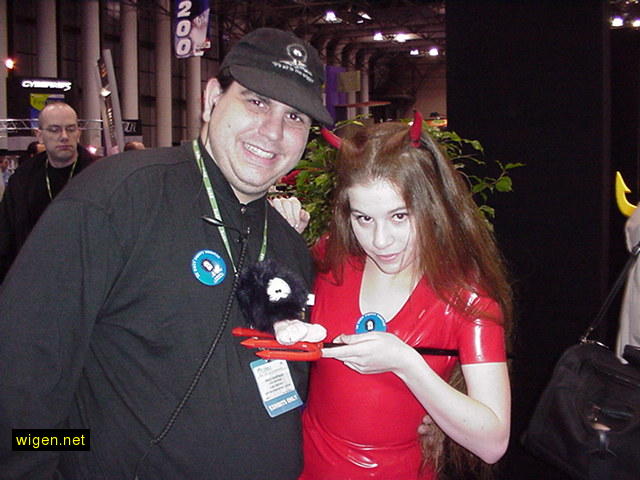
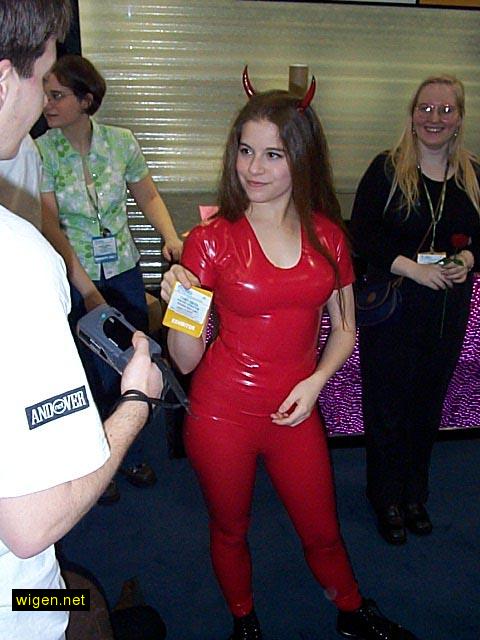
Is it any wonder people think Linux users are a bunch of flaming homosexuals when its fronted by obviously gay losers like these?! BSD has a mascot who leaves us in no doubt that this is the OS for real men! If Linux had more hot chicks and gorgeous babes then maybe it would be able to compete with BSD! Hell this girl should be a model!
Linux is a joke as long as it continues to lack sexy girls like her! I mean just look at this girl! Doesn't she excite you? I know this little hottie puts me in need of a cold shower! This guy looks like he is about to cream his pants standing next to such a fox. As you can see, no man can resist this sexy little minx. Don't you wish the guy in this pic was you? Are you telling me you wouldn't like to get your hands on this ass?! Wouldn't this just make your Christmas?! Yes doctor, this uber babe definitely gets my pulse racing! Oh how I envy the lucky girl in this shot! Linux has nothing that can possibly compete. Come on, you must admit she is better than an overweight penguin or a gay looking goat! Wouldn't this be more liklely to influence your choice of OS?
With sexy chicks like the lovely Ceren you could have people queuing up to buy open source products. Could you really refuse to buy a copy of BSD if she told you to? Personally I know I would give my right arm to get this close to such a divine beauty!
Don't be a fag! Join the campaign for more cute open source babes today!
$Id: ceren.html,v 7.0 2004/01/01 11:32:04 ceren_rocks Exp $ -
Open Source and Java
From the article:
Bruno Souza
IIRC, RMS wrote a piece encouraging developers to not use Java, because Sun still wants to keep people under their thumb. That position is now kinda mitigated by GCJ but I still agree with RMS's position... To be truly free [speech] software, your language cannot be under a corporate thumb like that.
I have never seen a Java advocate counted among the champions of free software and this is a very encouraging step.
One of many? How many times have we seen this on slashdot:
Sun is opening Java!
Wait, not yet
No, for real this itme, Sun is opening Java
Well, "real soon now"
etc. -
Software freedom, not "OSS"
tbray writes "They just had this huge OSS conference in Brazil. One good write-up by Simon Phipps is here. And hey, down there, OSS and Java play nice together."
No, they just had this huge free software conference in Brazil. Even robotic translation software gets this right. Lots of people around the world understand free software as being distinct from "open source software" (OSS). Not everyone is so eager to back a movement which caters to the percieved needs of businesses.
-
Re:THINK poster
This one puzzles me because it's so geeky and yet so tastefully done. It's like someone spending $100K to hire an artist, do preprint work, and print up a large poster just to say, "We Code in Perl".
iirc Apple built a *lot* of software with Pascal. The main alternatives were BASIC and 6502 / 68000 assembler, as C had not caught on in a critical mass sort of way (talking late 70s-mid 80s here.)
Perhaps the equivalent today would be the profitless spending of $$$ to build websites declaring your affection for a certain system or language. -
Re:Screw that
And that's exactly what scripts such as GNU Stow do.
The 'foo' application is installed in '/usr/local/foo-v1.x', and symlinks are placed into
This makes installation and removing applications simple - and you can share your applications across NFS if you're so inclined.
-
Re:If forking is a concern...
Heck, if forking is a concern, then they should see the writing on the wall and open source Java as soon humanly possible.
There'd be no better way to nip potential feature drift in the bud in the gcc, IBM, etc re-implimentations of Java in the bud than to open up Java. Yes, the compilers are going to be different, but noone in their right mind is going to reimplement a reasonably licensed set of libraries, and that's where almost all the real meat is in Java. -
No backdoors with BSD!
Is it any wonder people think Linux users are a bunch of flaming homosexuals when its fronted by obviously gay losers like these?! BSD has a mascot who leaves us in no doubt that this is the OS for real men! If Linux had more hot chicks and gorgeous babes then maybe it would be able to compete with BSD! Hell this girl should be a model!
Linux is a joke as long as it continues to lack sexy girls like her! I mean just look at this girl! Doesn't she excite you? I know this little hottie puts me in need of a cold shower! This guy looks like he is about to cream his pants standing next to such a fox. As you can see, no man can resist this sexy little minx. Don't you wish the guy in this pic was you? Are you telling me you wouldn't like to get your hands on this ass?! Wouldn't this just make your Christmas?! Yes doctor, this uber babe definitely gets my pulse racing! Oh how I envy the lucky girl in this shot! Linux has nothing that can possibly compete. Come on, you must admit she is better than an overweight penguin or a gay looking goat! Wouldn't this be more liklely to influence your choice of OS?
With sexy chicks like the lovely Ceren you could have people queuing up to buy open source products. Could you really refuse to buy a copy of BSD if she told you to? Personally I know I would give my right arm to get this close to such a divine beauty!
Don't be a fag! Join the campaign for more cute open source babes today!
$Id: ceren.html,v 7.0 2004/01/01 11:32:04 ceren_rocks Exp $ -
Re:Yeah, by IBM.
Actually, as many people here have pointed out, both Apache and Perl are under GPL compatable licences, so you can use them under the GPL(which is more restrictive than Apache's or Perl's licences). People do care about GPL compatability(I.E. X11's new licence).
-
Re:Lions book on V6 UNIX
there are plenty of atrocities in copyright law, but making students licensees of textbook publishers luckily isn't among them -- yet
Yet -
Aw shucksAnything but Java, please, I can't afford the hardware it'll require to run it!
I know how you feel, but gcc has been able to compile Java source straight to native code for quite some time now
-
Re:Easy: Its the people.(GPL question)
> The GPL requires release of the code only to the
> customer who pays you for it.
Totally wrong.
Payment has nothing to do with it.
Here is the beginning of section 3 of the GPL:
-----
3. You may copy and distribute the Program (or a work based on it, under Section 2) in object code or executable form under the terms of Sections 1 and 2 above provided that you also do one of the following:
* a) Accompany it with the complete corresponding machine-readable source code, which must be distributed under the terms of Sections 1 and 2 above on a medium customarily used for software interchange; or,
* b) Accompany it with a written offer, valid for at least three years, to give any third party, for a charge no more than your cost of physically performing source distribution, a complete machine-readable copy of the corresponding source code, to be distributed under the terms of Sections 1 and 2 above on a medium customarily used for software interchange; or,
* c) Accompany it with the information you received as to the offer to distribute corresponding source code. (This alternative is allowed only for noncommercial distribution and only if you received the program in object code or executable form with such an offer, in accord with Subsection b above.)
-----
IANAL, but as I read this, the issue is simply distribution - of the executable or object-code. You can download Linux, write a new scheduler, and release only part of your scheduling code, and that's fine under the GPL until you "distribute" a binary of your modified kernel. Then you are required to release the source.
Also, one of the replies to the parent claims that Netgear was "forced to release changes to the Linux kernel". Once again, the GPL cannot force anyone to release his/her code. The GPL is a *license*, not a contract, and it stipulates requirements for use of code licensed under it.
If company Foo is violating the GPL by releasing modified binaries of GPL code without releasing the source, company Foo can resolve this in at least two different ways:
1. release the source code
2. stop using the GPL code
If they opt for #2, it is likely they can be forced by the courts to pay a fee to the copyright holder (which is frequently the FSF).
The GPL is *not* enforceably viral - violators can always choose option #2. -
Re:No, not the GPL
How can you generalize over an entire standardized language what its licenses are?
I know it's a bit dubious. I tried to pick the initial open source implementation or the most popular implementation. Obviously, proprietary implementations don't count as they aren't open source. This is not about open source vs closed software.
MIT Scheme is GPL alone.
I found this when I searched for "scheme license" in google. After some searching, it seems they changed their license just after this version (in 2001) to the GPL. Obviously, this makes everything very unclear. It would be very interesting to know how their usage and contributions changed after they changed their license, though. Since you seem to be a big Scheme fan, do you know whether MIT Scheme became more or less popular after 2001?
And this list doesn't even include Bigloo, Chicken, Guache, Gambit, Guile, SCM, Pika, SCSH, and about a dozen others.
Obviously, I can't include every language, especially the ones that I don't even know. Also, comparisons with other languages of reasonable size is more prudent. What does it tell us if we discover that a little used language implementation is GPLed? Could it be little used because it is GPLed? The reverse is not true though. If we discover that an implementation for an often used language is GPLed, then we can conclude that those languages weren't held back by the GPL. However, my quick scan showed that BSD-like licenses are more popular. Not that I am claiming to have made a perfect comparison (but hey, this is slashdot
No it doesn't -- they can add exceptions for code that can't be GPL'd to the license.
Modifying the license would make it incompatible with the GPL, which would be incredibly stupid, because then you couldn't link with GPLed code anymore. If you want to grant more rights than the GPL, you could dual license it, but not allowing users to 'Freely' use linked code is an extra limitation. In other words, such a license would be incompatible with the GPL. So there is no solution, except to choose another license or to rewrite the code. -
GNU Java Compiler (Was: Re:This is news?)
There's also GJC, The GNU Compiler for Java which takes Java source or byte code which it can compile it onto a native executable. It can also compile Java source into byte code like javac does.
-
Re:"man" is the answer to everything
I remember in #linux of EFNet, "man" was the response to about every question.
Those people were wrong. Or at least, only half right. Manpages are a reference source, for situations like "I remember ls can do this, now what's the flag for it?" or "Let's see whether cat has an option for this".
I'm sure all the UNIXes came with documentation for new users (I know AIX has it). For the GNU tools that typically come on a UNIX distribution, the GNU manuals (not manpages) are good. The RedHat manuals are also good.
Then there was also the dreaded "info"...
Yeah, I never clicked with info either -- I assume if you ever managed to learn the Emacs UI, it would be a breeze. Nowadays however, there are GUIs for reading info files, there's info2html, and there's the rather wonderful pinfo. -
Re:What's the point?
If you open source a language, it's no longer really a language anymore is it.
Yeah, it's a shame that C isn't a programming language anymore. -
Re:Yeah, by IBM.Absolutely right. That mechanism would never work.
Before incorporating significant changes, make sure that the person who wrote the changes has signed copyright papers and that the Free Software Foundation has received and signed them. We may also need a disclaimer from the person's employer.
-
Too little, too late.
Let's assume this isn't horseshit fed to the masses to keep using Java technology.
(eg. like dressing up in a Penguin suit while handing SCO a paper bag full of money under the table.)
From a business point of view, what's the point?
Mono is nearing release 1.0 and is a very attractive platform for developers. Releasing Java open source 3 years ago would have screwed Microsoft hard, but now I'm not so sure.
I still think open sourcing is the best strategic move for Sun, but I think they have no clue on how to exploit it. They will probably do something silly like release it under the IBM CPL since that's what their competitors are doing.
The best move for them is obviously to GPL it, and use a Trolltech style licensing model. GNU Classpath will naturally get in the way. (again, should have did it 3 years ago).
However, the COO, Johnathan Schwartz recently teased in the media that they might release Looking Glass, Sun's new 3D desktop widget toolkit as open source. I've seen it, it looks great.
If they GPL'd that as well, Sun might have a chance at getting a serious revenue stream happening.
I doubt this will happen though. Sun will keep withering out of fear and inertia. It's the nature of the beast. -
Re:Easy: Its the people.(GPL question)
How does GPL treat for-pay customized code in terms of what must be released in the open to the public vs. can be kept closed and confidential?
You don't have to release it to the public (if there is an NDA in place, for example), but you do have to release it to the customer.
If a customer pays to add highly proprietary features added to a GPL codebase, does GPL force the release of that code?
Only to the customer.
Can a company that is using GPL code contract with its contirbuting development community to make closed-source customizations of GPL code under an NDA?
Yes.
If the customer with the customized GPL-derived code then sells that software to their customers or franchisees, does that force the release of the code?
Yes.
Your questions are covered by the GPL FAQ -
Devil's address: 1 Detail Lane.
Use "in your own code". That doesn't suggest runtime to me, but maybe you regularly include running binaries in your code?
One of the biggest disputes concerning GNU GPL compliance has to do with binaries that are uploaded to equipment (sometimes called firmware) and binaries that are executed or run on the computer as drivers. Sometimes the complete corresponding source code is not supplied thus creating a situation where the complete GPL-covered work becomes non-distributable because one cannot comply with all of the requirements in the GPL. Part of the discussion concerns what is sometimes called "glue code". Since RMS is co-author of the GPL, it helps to read what he says on the matter. From a recent post he made to Debian-legal:
The idea that "glue code" makes it ok to combine GPL-covered code with non-free code has no basis in the GPL. The GPL applies to the entire combination of code that is combined into a larger program. If a.o is under the GPL and talks to b.o which talks to c.o, the GPL covers all three files, if all three are combined as one program.
Linus [Torvalds] has implicitly and sometimes explicitly given permission for some kinds of non-free dynamically loaded modules; perhaps the concept of "glue code" is relevant in terms of the permission he has given. I'm not the one to ask about that kind of issue.
Provided under the same terms "to end users". That suggests he's talking about programs that have been distributed to me.
Then you would probably not be able to pass the GNU GPL quiz or be a very good GPL compliance person. Programmers are also end users of programs, and yet programmer employees of the same organization can share GPL-covered code amongst themselves without their sharing qualifying as a distributed copy the covered work. Hubbard's essay contains too brief a summary of the GPL and his lack of warning to get lawyers to review the licenses businesses like (the non-copylefted free software licenses) is also unwise and telling. Those licenses do nothing to grant you (the ostensible open source advocate who is willing to give your time and expertise to businesses at no charge) a license to deal in any patents that cover the algorithms you might need to do the work. By the way, I passed the aforementioned quiz with a perfect score.
-
Re:what MS funded "study" about Linux isn't FUD?GNU system was in use on top of other kernels years before Linux.
I'm sure it was. Unfortunately, I can't find any essays about why those should be called "GNU/xx" instead of "xx". Why is he so concerned about Linux and not those other kernels? Is it because of Linux's popularity?
the falsification of history perpetrated by ethics-less opportunists such as Linus Torvalds
Oh, please. I was with you until I hit this libelous hyperbole. Given my earlier remark, I could just as easily call RMS an "ethics-less opportunist" who's latched onto Linux's growing popularity to push his agenda to a wider audience that otherwise would never have heard of GNU.
I could say that, but A) I don't believe it's true because I respect RMS enough to give him the benefit of the doubt, despite his half-crazed zealotry, and B) I would have used "unethical", not "ethics-less".
Now, give me an example of Linus denying that Minix and/or GNU weren't vital ingredients in Linux's recipe. Otherwise, I'll just assume that you were throwing a little tantrum.
-
Re:Free as in Free Free.Actually, Public Domain is not a license at all. It is the voluntary relinquishment of ones copyright rights for a body of work, so nobody else needs to enter into an agreement with you (license) to use that body of work.
see this link for more information.
-
Re:Piracy.
The Business Software Alliance believes new technologies should enhance ways to access and distribute copyrighted works legally, not illegally.
Couldn't agree more, old chap! Three cheers for the BSA! -
New killer apps
Just the end to warez and code your own adventures.
The end to "code your own adventures" (as you seem to refer to free software) would mean only this.
For the vast majority of people their vision for computer use would be more comforting. The human mind ussually isn't goot at more then 5 or 6 choices.
What if somebody invents a brand new killer app, but you're still locked into a contract with your current PC vendor that doesn't include that killer app? Such would have been the case at the start of the consumer desktop video editing era. Because PCs are general-purpose, users could just install stripped-down video editing and effects software. With locked-down rental PCs, on the other hand, they would have to wait to re-up their PC leases before using such a killer app.
-
ESR and RMS are not the same.
I wouldn't say the same is true of both ESR and RMS. What RMS says and does is far more sensible than what ESR has been known to stand behind. For instance in this kerfluffle, ESR chimed in with an essay which contained this example:
"You claim that 'To date no other product comes to life in this way', presenting Linux as a unique event that requires exceptional explanations. This is wrong. Many other open-source projects of the order of complexity of the early Linux kernel predated it; the BSD Unixes, for example, or the Emacs editor. Torvalds was operating within an established tradition with well-developed expectations."
But to those who know the history of the two movements it comes off oddly, as though ESR were trying to get credit for work he didn't do; to claim that the Emacs text editor was in any way an "open-source project" doesn't jibe with the timeline of what work started when. Emacs was started by RMS for the movement he helped found -- the free software movement. This work and the work of the other two examples ESR gives all occurred before the open source movement began, so it seems like a revisionist view to push aside the important philosophical differences of the two movements. I'm reminded of an essay by fellow open source advocate Mark Webbink (chief lawyer for Red Hat) on software licensing which dishonestly uses the concept of copyleft to break up various licenses for better understanding without giving any credit to the FSF folks or using the word "copyleft" which predates the essay by about 20 years. Torvalds may find some philosophical common ground with the open source movement, but the Free Software Foundation continues to tell us that they stand for a different philosophy than that of the Open Source Initiative.
In another instance, the differences between ESR and RMS were noticed by one Usenet poster (also this article which refers to personal attacks from ESR).
-
Re:Wait...
Have you ever tried screen?
-
Re:I wonder if
the GPL prevents things like that from happening. You should read the GPL to avoid making common misconceptions more prevelant.
GPL -
Re:Interesting Software Development Strategy
Seriously, if I'm missing something (quite possible) let me know. But the way I'm reading this
If you really want to know the answer, consult a lawyer. For what it's worth, however, allow me to inform you that your opinion differs from that of the FSF: the GPL FAQ claims that you only need to make source available if you distribute a copy of the software to someone outside your organisation. And even then you only need to make it available to people who already have the software - you are not obliged to give it to any Tom, Dick, or Harry who asks. -
Re:Kudos to them
FYI, you have described the LGPL (L == lesser).
-
This would all be moot if everyone did what I said
As is the usual case, this would all be a moot argument if the whole world would set aside what it thinks it knows and let ME make all the important decisions.
My declaration to remove all the current problems with so-called "interference" (listen up HAMs, you guys complain the most about "interference", at least on Slashdot): Software defined digital radio
Seriously though, one of the issues that has been brought up with a software radio is that "interference" isn't what it's portrayed to be. Radio waves don't collide with one another, the way that "intereference" implies. Interference is actually an artifact of the low quality analog recievers we use to listen to radio. Their selectivity leaves a whole heckuva lot to be desired. A radio with greater selectivity (the ability to distinguish two radio boadcasts with similar carrier frequencies, even those coming form the same source) can eliminate this dated notion of interference.
Read This Salon article on the subject and be converted to the new way of thinking about "interference". Or not
P.S. This article was the subject of a previous Slashdot article. -
Re:Great way to start the day.
"Just a question, though, are some of the changelogs ESR mentions available for easy download? The kernel changelogs are easy to find, but what about the changelogs for emacs, Gnome, gzip/gunzip, and all of the other GNU software?"
Does someone know better web-CVS repositories than I can find in a 3-minute google search?
[*] EMACS ChangeLog on the web
[*] GNOME ChangeLog on the web
[*] GZIP: Download it
[*] Other GNU software? See Savannah
Bonus points for anyone who can link to the Internet Explorer changelog... -
Re:Great way to start the day.
"Just a question, though, are some of the changelogs ESR mentions available for easy download? The kernel changelogs are easy to find, but what about the changelogs for emacs, Gnome, gzip/gunzip, and all of the other GNU software?"
Does someone know better web-CVS repositories than I can find in a 3-minute google search?
[*] EMACS ChangeLog on the web
[*] GNOME ChangeLog on the web
[*] GZIP: Download it
[*] Other GNU software? See Savannah
Bonus points for anyone who can link to the Internet Explorer changelog... -
Re:Great way to start the day.
For GNU software? savanna.gnu.org should have most of them.
For example, here's is the wincvs repository for emacs
Also, most GNU projects have public mailing lists which are automatically fed the CVS checkins. Here is gcc's
The most annoying thing about GNU projects has always been the whole copyright-assigment thing.
The FSF makes sure that everything is out in the open and that there is a paper trail.
The funny thing is that a couple years ago RMS was been flamed for the whole thing and everybody admired Linus for not giving a damn. Now times have shown that there's a good reason for doing things their way. Maybe RMS wasn't wrong after all, just ahead of his time (No, I'm not idolizing him, it's just that he saw SCO coming a decade or two before it happened, he just thought it would be IBM instead). -
Re:Great way to start the day.
For GNU software? savanna.gnu.org should have most of them.
For example, here's is the wincvs repository for emacs
Also, most GNU projects have public mailing lists which are automatically fed the CVS checkins. Here is gcc's
The most annoying thing about GNU projects has always been the whole copyright-assigment thing.
The FSF makes sure that everything is out in the open and that there is a paper trail.
The funny thing is that a couple years ago RMS was been flamed for the whole thing and everybody admired Linus for not giving a damn. Now times have shown that there's a good reason for doing things their way. Maybe RMS wasn't wrong after all, just ahead of his time (No, I'm not idolizing him, it's just that he saw SCO coming a decade or two before it happened, he just thought it would be IBM instead). -
License (In)compatability
One problem you might hit is that Licence X is not necessarily compatible with Licenses Y & Z.
This becomes fun if your project needs to be released using License X, but makes use of libraries published under Y & Z.
For example: Depending on how your code binds to each library, you may be required to use the same license as those libraries. e.g. you may be required to use the GPL.
So,
- you should check what you already use and see what licenses you are already bound to - they may not be exactly right for your code or your situation, and be aware that
- Other licenses in use may not be comatible - i.e. License Z may also require derivative works to adopt it, so you may then have no choice but to find a new library.
-
GNU General Public Virus
i think the ii's are a sign he is infected. with somethign.
Infected with "somethign"? Don't you mean GNU/infected with somethiGNU?
-
Re:Same for GnuStep it seems...Can I ask, if you're running it on Linux, what distribution?
I've used RedHat and Gentoo. I'm not sure who maintains the Debian packages (or even *if* they're maintained). I always build from CVS since it's usually stable and there are often improvements and additions.
If you're going to do development with it, you might consider trying Renaissance. You describe your user interface in XML and it's portable to other platforms, languages, or themes. There's no GUI builder for it yet, however.
If you have any trouble, feel free to ask for help: jhclouse -at- juno -dot- com. You can also ask questions on the mailing list.