Slashdot Mirror
Domain: hexus.net
Stories and comments across the archive that link to hexus.net.
Comments · 190
-
Re:It's probably NOT fake...At least Slashdot didn't pick up the inquirer goofed story about Sony running GT:HD on PCs at the E3 conference. Apparently it was based on an image suggesting that only rack-mounted servers were to be found on the floor.
Too bad those rack-mounts are PS3 devkits! With all the faked Sony bashing, it's clear why no one pays attention when they do do something crooked.
-
Re:Maybe per watt performance is the best but...
While that may be true, let's not forget that the CoreDuo is still intended as a mobile processor. The fact that it is even competitive with the X2s is impressive. The real test will come when the Conroe comes out. Early reviews (granted, on intel supplied hardware) show Conroes kicking the crap out of even the fastest AMD processors (overclocked even) in everything from gaming to media encoding and synthetic benchmarks. They are cooler and more efficient to boot. Unless AMD pulls some magic out of its hat, my next rig will be Intel based. See here: http://www.pcper.com/article.php?aid=219&type=exp
e rt&pid=1 here: http://techreport.com/etc/2006q1/conroe/index.x?pg =1 here: http://www.anandtech.com/tradeshows/showdoc.aspx?i =2713 and here: http://www.hexus.net/content/item.php?item=4843 -
which benchmarks to believe?
ok, I'm confused. The linked article shows the Go 7800GTX beating the Mobility Radeon x1800.
This article shows the mobile x1800 with a slight lead. What gives? What's different between 3dMark05 and 3dMark06, and what does it mean in for real games? They're all pretty nice cards and would be great for a gaming laptop... now if only I could find one with a core duo and a 15" screen instead of all those 17" monsters.
Anyone have any more benchmarks or knowledge to contribute? -
Re:More Sources, no karma whoring
-
Re:Shock news.
It was an FX-60 (overclocked to 2.8 GHz), which is pretty much identical to the Athlon64 X2 series with the sole exception of having unlocked multipliers to support overclocking. Hexus did a review of the same machines over at http://www.hexus.net/content/item.php?item=4843.
-
Re:Let's all hope it is true
And if we look here, FEAR which is the most GPU-bound sees the most dramatic change (~47%) in framerate, while UT2k4 which is the most CPU-bound sees the least (~16%).
-
Differing definitions of neat...From the article:
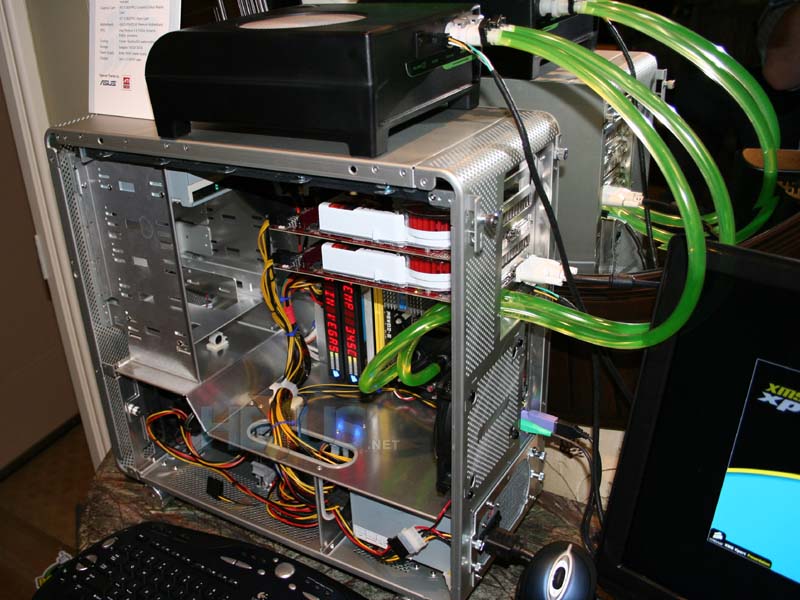
"Most of the cooling system is external, sitting neatly atop the PC's case"Also from the article:
A picture of this 'neat' set-up.Even by an utter slob's standards, though is no way in hell that thing can be considered neat. Not on this earth, not on any other earth either. I'll try to restrain obvious Apple fanboy'ism, but it's interesting they've attached to an already G5-a-like case. With the exception of the latest quads, which are apparently a bit messy internally, you can see what 'neat' actually means when applied to water-cooling by looking at the Power Macs. I'm sure people on the PC side can point me to considerably more aesthetically pleasing installations than this too.
Cheers,
Ian -
Re:This is "interesting news"?
Incidentally we now have more pictures of the XBox cooler taken at CES, showing just how invasive it is.
As for the Corsair Nautilus, it is news because it's a seemingly very easy to install watercooling kit, better than anything else that springs to mind.
Regards,
Steve from Hexus. -
Re:This article sucks
The article does suck, but it's simply covering a press release from "CoolIT Systems Inc.," albeit poorly. A few clicks into the article produce this forum post which then links to this (relatively) more in-depth coverage regarding the press release.
The only really informational bit:
"CoolIT Systems Inc. today announced that it is showcasing the world's first truly liquid-cooled Xbox 360 in Las Vegas at the Consumer Electronics Show from Jan. 4 - 8, 2006."
There are even pointless audio and video versions of the article for those of you who are illiterate. Do I even need to say RTFA? -
Re:Twice the machine, twice the posts!
OK, here's a page with the WidowPC reviewed on 16th December.
Now, compare this to the photo of the notebook reviewed today.
No doubt the insides vary. Yay. Two identically-clad notebooks, both with dual-core AMD two 7200 RPM hard drives, minor differences in screen, etc. I hate to be pedantic, but it's just the same story. -
Hack...Here is some info for those who have this card and want a little more out of it...
-
Re:Tux with a rocket launcher!
Here.
-
Dual-bus Xeon chipset (Twin Castle) available nowThings are different with multiprocessor setups:
Here each Opteron has its own memory interface, while the Xeons have to share one FSB.Despite what the freakin' article says, Lindenhurst (Intel E7250 chipset) is not the latest Xeon DP chipset (the often-cited GamePC benchmarks also use this chipset). Intel's latest Xeon chipset, the E8500 (Twin Castle), features dual independent FSBs running at 667MHz each. It's available now (e.g. Dell PowerEdge 6850 and PowerEdge 6800). The dual buses will be increased to 800MHz each in January (E8501 chipset). These new Paxville Xeons were released ahead of schedule (rushed in response to dual-core Opteron), so I think that's why the dual 800MHz bus chipset is trailing Paxville (which is capable of 800MHz FSB) by two months.
So I think the freakin' article is wrong when it says:
HEXUS have an article coming that evaluates the latest Intel Xeon DP platform, codenamed Lindenhurst... Lindenhurst (at its most basic definition) is the combination of the new Paxville Xeon processor in DP (dual processor) form (there's a multi processor version hosted by Truland), along with Intel E7520 core logic.
Also note that the GamePC benchmarks use two 800MHz Paxville Xeons on the E7250 chipset (single 800MHz bus). The current E8500 chipset has dual independent buses, but they only run at 667MHz each. I'm sure the dual-bus system will outperform the single-bus system by a lot, even though the dual buses each run 16.7% slower than the single bus. I'm also pretty sure the dual Opterons will still whup the dual Xeons, but not by so much. -
LCD ms numbers are a lie
I learned from this old Slashdot comment that LCD timings are highly misleading. The '3ms' number means something quite different from what you think it means. In short, see this article, or this forum topic. I've reposted the contents of the latter below.
-------
"Quoted response times by manufacturers are largely meaningless and misleading.
It's the same reason why monitors based on the 20ms Hydis panel outperform the 12ms Samsung panel, the 16ms AU Optronics panel, the 16ms LG/Phillips panel.......
In real world use, the vast majority of monitors (over 95% of them) don't perform anywhere near the quoted response times. That's why you see streaking on the 12ms Samsung panel - its performing at 25-30ms.
Let me try and explain further.
Look at the response times for the so called 'fast' Samsung 172X which is based on a '12ms' panel:-
http://www.xbitlabs.com/images/other/samsung-2/gr2 -2.gif
Since most people have their monitors set to medium brightness (about 80-180 on the grey level scale on the graph) and many applications - particularly games use grey to grey pixel transitions (or one colour to another colour) - the typical response time is somewhere between 25-30ms. Not quite 12ms is it?
Now look at the same response time graph for the Acer AL1721 - a mid level TFT with claimed 16ms response time:-
http://www.xbitlabs.com/images/other/response-6/a2 1-grey.gif
The graph is much flatter, so across brightness and contrast levels, you're going to get consistent response times. At most common user settings, the "slower" 16ms is actually faster than the "quicker" 12ms panel.
Not quite as straightforward as the manufacturers would like you to think. The problem is, by that time, most people have parted with their money. When I was first looking to buy a TFT monitor, I thought that Kustom PCs were a bit mad to stock the Acer monitors in preference to others. However, it's only on further examination that you discover they perform very very well in games - for example, the AL1731M is based on the Hydis panel - and will in fact, outperform the so called 'faster' TFT panels.
From Toms Hardware Guide:-
"For games, the Hydis 20ms panel is still the one to beat. It's not yet perfect, but we know of no other that is faster (based on our tests, of course, and not manufacturers' specifications). Once again, we must insist strongly that the manufacturers' specifications are not to be trusted. "
http://graphics.tomshardware.com/display/20040326/ lcd-08.html
"The response times suppliers associate with their panels vary, anywhere from 16 ms to 25 ms. The only problem is that these figures mean nothing. Or at least, not a lot. An article published in 2001 that can be viewed at Xtremtech explains the situation pretty well, and we have summarized it for you in the section entitled "RT between colors". But this isn't the only problem..."
http://graphics.tomshardware.com/display/20031105 -
Re:quake 4 linux
Well the first hint would be the GL_ lines in the config file.....
Then there's this. Note that Doom 3 and Riddick are used as OpenGL performance benchmarks.
And finally, this, particularly the quote "The Doom 3 engine is important to the gaming community as it continues id Software's commitment to OpenGL."
If I was in front of my desktop right now, I'd take a look at what libraries Doom 3 and Quake 4 link to for further proof, but alas, I'm on my Tablet PC which has no hope of even running Half-Life 1 at a decent framerate. -
Re:Honestly...
obviously you missed the fact that when gaming at 1600x1200 and are using 4x antialiasing and 8x anisotropic filtering that the x1800xt beats the shit out of the gf7800.
if you're buying a 500 dollar card, are you seriously worried about benchmarks that are run without aa+af? this card even does HDR (hi dynamic range) plus AA, something that the gf7800 can't.
this card is way more sophisticated and highly refined that the brute force 7800. the 7800 isn't bad but that this card can do with 16 pipelines what the 7800 can't do with 24, says a lot.
and that's just raw performance with todays games. never mind the fact that the 1800xt comes with 512megs of super fast ram... ready for well into the next generation of games, whereas 256meg 7800's are already obsolete for the high end of the next generation. sure 256 will be enough if you pare down the resolution and lower the texture detail. one example is the game F.E.A.R... on the 1800xt it absolutely trounces the 7800 in performance.
my advice... read ALL the reviews you can get your hands on. there are too many discrepencies if you only read one or two. if you want to get a more full picture, get to reading.
http://www.anandtech.com/video/showdoc.aspx?i=2552
http://www.beyond3d.com/reviews/ati/r520/
http://www.driverheaven.net/reviews/r520reviewxvxv /
http://www.extremetech.com/article2/0,1697,1867116 ,00.asp
http://www.firingsquad.com/hardware/ati_radeon_x18 00_xt_xl/
http://www.guru3d.com/article/Videocards/262/
http://www.hardocp.com/article.html?art=ODIy
http://www.hexus.net/content/item.php?item=3603
http://www.hothardware.com/viewarticle.cfm?article id=734&cid=2
http://www.neoseeker.com/Articles/Hardware/Reviews /ati_radeon_x1800_x1600preview
http://www.pcper.com/article.php?aid=172
http://www.tbreak.com/reviews/article.php?id=407
http://www.techreport.com/onearticle.x/8864
and check out the wicked new 3d tech demos... both are very impressive but the toystore demo is jawdropping.
http://www.ati.com/designpartners/media/edudemos/R adeonX1k.html
wmv9 hi def format but plays fine in mplayer or VLC. -
They just make up their benchmarks!
http://www.hexus.net/content/item.php?item=3603&p
a ge=8/ ATI IS FASTER!
http://www.hothardware.com/viewarticle.cfm?article id=734&cid=2/ ATI is slower
-
Links to other "Reviews"
Listed alphabetically so no preference to which site is good or not.
http://www.beyond3d.com/reviews/ati/r520/
http://www.driverheaven.net/reviews/r520reviewxvxv /
http://www.guru3d.com/article/Videocards/262/
http://www.hardocp.com/article.html?art=ODIy
http://www.hexus.net/content/item.php?item=3603
http://www.neoseeker.com/Articles/Hardware/Reviews /ati_radeon_x1800_x1600preview
http://www.noticias3d.com/articulo.asp?idarticulo= 527
http://www.pcper.com/article.php?aid=172
http://www.tbreak.com/reviews/article.php?id=407
http://www.techreport.com/onearticle.x/8864 -
hexus
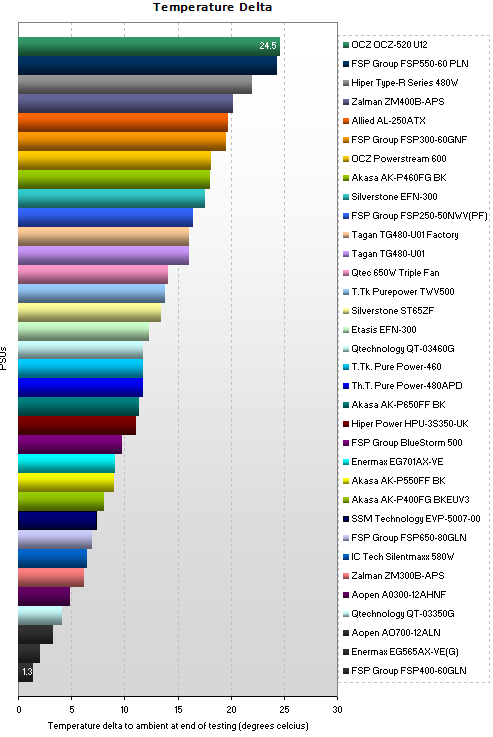
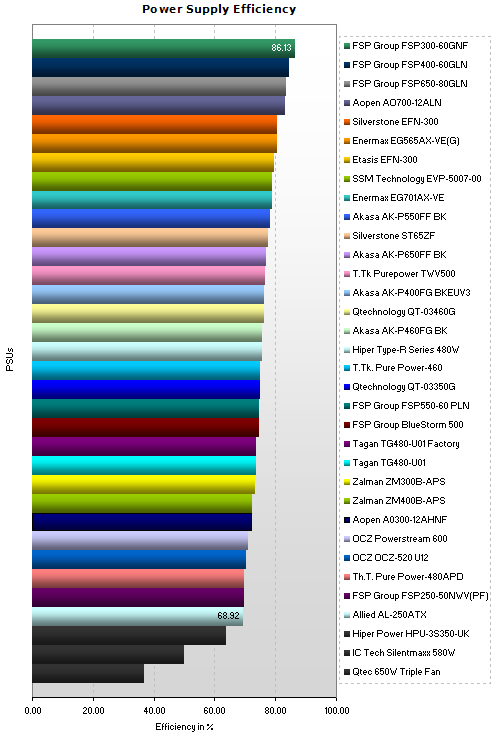
Hexus.net recently benchmarked 34 PSU's,
http://img.hexus.net/v2/psu/taoyuan_34_2005/images /bench_temp.png
http://img.hexus.net/v2/psu/taoyuan_34_2005/images /bench_efficiency.png
"Interestingly and one for the conspiracy theorists, the top 4, including two engineering samples given to us by FSP, are all manufactured by FSP Group. The vast majority of supplies have between 70 and 80% efficiency under heavy load however, and 75% is a fine figure to use in quick calculations based on input power, to find output power into the system, if you want a rough guide and can't measure and calculate it yourself.
An efficiency of 80% or more from the FSP Group units is from recent designs that make use of more expensive components that waste less input power as heat, converting more to output power. As time goes by, the other vendors in the group should catch up. 80% efficiency when outputting a true 700 watts is outstanding."
"The AOpen AO700-12ALN is an engineering sample of a design they've created whose connector bundle isn't final. AOpen plan to use the internals in an enthusiast-class PSU and wanted to know what I thought. The full 700W of output power being made at 82.82% efficiency without any huge heat issues left me gobsmacked. +12V was a little on the high side under heavy load, but a whopping 60A of current capacity from four separate +12V rails more than makes up for it.
They hinted that the design was capable of a frankly rediculous 900W or so of true output power at 75% efficiency, should they wish to set it up that way.
They've been experimenting in the labs to come up with a design for the enthusiast and while it won't be cheap, it should perform like a champ given the showing of the engineering sample."
"Funnies
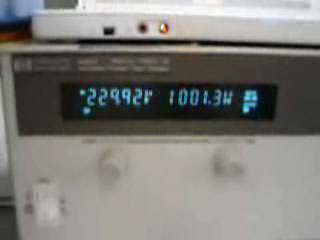
You don't spend a week in PD's company without hilarity ensuing. As I tested the QTec Triple Fan 650W, PD was sat nearby working on some copy for the site. He heard me laughing as the input power shot up to 900W for just 400W of output power. "Video it, Rys!". So I did. The following download is the last few seconds of that PSU's life, in input power terms, before I turn the camera off and stand back from the test bench to watch it pop. I really wish I'd caught it on camera for you, but I didn't want to stand too close as nearly 1100 watts made that piece of junk go bang.
Click the image below to download the ~600KiB
http://img.hexus.net/v2/psu/taoyuan_34_2005/images /psulol.jpg
http://img.hexus.net/v2/psu/taoyuan_34_2005/images /lol.avi
Review
http://www.hexus.net/content/item.php?item=1359&pa ge=22 -
hexus
Hexus.net recently benchmarked 34 PSU's,
http://img.hexus.net/v2/psu/taoyuan_34_2005/images /bench_temp.png
http://img.hexus.net/v2/psu/taoyuan_34_2005/images /bench_efficiency.png
"Interestingly and one for the conspiracy theorists, the top 4, including two engineering samples given to us by FSP, are all manufactured by FSP Group. The vast majority of supplies have between 70 and 80% efficiency under heavy load however, and 75% is a fine figure to use in quick calculations based on input power, to find output power into the system, if you want a rough guide and can't measure and calculate it yourself.
An efficiency of 80% or more from the FSP Group units is from recent designs that make use of more expensive components that waste less input power as heat, converting more to output power. As time goes by, the other vendors in the group should catch up. 80% efficiency when outputting a true 700 watts is outstanding."
"The AOpen AO700-12ALN is an engineering sample of a design they've created whose connector bundle isn't final. AOpen plan to use the internals in an enthusiast-class PSU and wanted to know what I thought. The full 700W of output power being made at 82.82% efficiency without any huge heat issues left me gobsmacked. +12V was a little on the high side under heavy load, but a whopping 60A of current capacity from four separate +12V rails more than makes up for it.
They hinted that the design was capable of a frankly rediculous 900W or so of true output power at 75% efficiency, should they wish to set it up that way.
They've been experimenting in the labs to come up with a design for the enthusiast and while it won't be cheap, it should perform like a champ given the showing of the engineering sample."
"Funnies
You don't spend a week in PD's company without hilarity ensuing. As I tested the QTec Triple Fan 650W, PD was sat nearby working on some copy for the site. He heard me laughing as the input power shot up to 900W for just 400W of output power. "Video it, Rys!". So I did. The following download is the last few seconds of that PSU's life, in input power terms, before I turn the camera off and stand back from the test bench to watch it pop. I really wish I'd caught it on camera for you, but I didn't want to stand too close as nearly 1100 watts made that piece of junk go bang.
Click the image below to download the ~600KiB
http://img.hexus.net/v2/psu/taoyuan_34_2005/images /psulol.jpg
http://img.hexus.net/v2/psu/taoyuan_34_2005/images /lol.avi
Review
http://www.hexus.net/content/item.php?item=1359&pa ge=22 -
hexus
Hexus.net recently benchmarked 34 PSU's,
http://img.hexus.net/v2/psu/taoyuan_34_2005/images /bench_temp.png
http://img.hexus.net/v2/psu/taoyuan_34_2005/images /bench_efficiency.png
"Interestingly and one for the conspiracy theorists, the top 4, including two engineering samples given to us by FSP, are all manufactured by FSP Group. The vast majority of supplies have between 70 and 80% efficiency under heavy load however, and 75% is a fine figure to use in quick calculations based on input power, to find output power into the system, if you want a rough guide and can't measure and calculate it yourself.
An efficiency of 80% or more from the FSP Group units is from recent designs that make use of more expensive components that waste less input power as heat, converting more to output power. As time goes by, the other vendors in the group should catch up. 80% efficiency when outputting a true 700 watts is outstanding."
"The AOpen AO700-12ALN is an engineering sample of a design they've created whose connector bundle isn't final. AOpen plan to use the internals in an enthusiast-class PSU and wanted to know what I thought. The full 700W of output power being made at 82.82% efficiency without any huge heat issues left me gobsmacked. +12V was a little on the high side under heavy load, but a whopping 60A of current capacity from four separate +12V rails more than makes up for it.
They hinted that the design was capable of a frankly rediculous 900W or so of true output power at 75% efficiency, should they wish to set it up that way.
They've been experimenting in the labs to come up with a design for the enthusiast and while it won't be cheap, it should perform like a champ given the showing of the engineering sample."
"Funnies
You don't spend a week in PD's company without hilarity ensuing. As I tested the QTec Triple Fan 650W, PD was sat nearby working on some copy for the site. He heard me laughing as the input power shot up to 900W for just 400W of output power. "Video it, Rys!". So I did. The following download is the last few seconds of that PSU's life, in input power terms, before I turn the camera off and stand back from the test bench to watch it pop. I really wish I'd caught it on camera for you, but I didn't want to stand too close as nearly 1100 watts made that piece of junk go bang.
Click the image below to download the ~600KiB
http://img.hexus.net/v2/psu/taoyuan_34_2005/images /psulol.jpg
http://img.hexus.net/v2/psu/taoyuan_34_2005/images /lol.avi
Review
http://www.hexus.net/content/item.php?item=1359&pa ge=22 -
hexus
Hexus.net recently benchmarked 34 PSU's,
http://img.hexus.net/v2/psu/taoyuan_34_2005/images /bench_temp.png
http://img.hexus.net/v2/psu/taoyuan_34_2005/images /bench_efficiency.png
"Interestingly and one for the conspiracy theorists, the top 4, including two engineering samples given to us by FSP, are all manufactured by FSP Group. The vast majority of supplies have between 70 and 80% efficiency under heavy load however, and 75% is a fine figure to use in quick calculations based on input power, to find output power into the system, if you want a rough guide and can't measure and calculate it yourself.
An efficiency of 80% or more from the FSP Group units is from recent designs that make use of more expensive components that waste less input power as heat, converting more to output power. As time goes by, the other vendors in the group should catch up. 80% efficiency when outputting a true 700 watts is outstanding."
"The AOpen AO700-12ALN is an engineering sample of a design they've created whose connector bundle isn't final. AOpen plan to use the internals in an enthusiast-class PSU and wanted to know what I thought. The full 700W of output power being made at 82.82% efficiency without any huge heat issues left me gobsmacked. +12V was a little on the high side under heavy load, but a whopping 60A of current capacity from four separate +12V rails more than makes up for it.
They hinted that the design was capable of a frankly rediculous 900W or so of true output power at 75% efficiency, should they wish to set it up that way.
They've been experimenting in the labs to come up with a design for the enthusiast and while it won't be cheap, it should perform like a champ given the showing of the engineering sample."
"Funnies
You don't spend a week in PD's company without hilarity ensuing. As I tested the QTec Triple Fan 650W, PD was sat nearby working on some copy for the site. He heard me laughing as the input power shot up to 900W for just 400W of output power. "Video it, Rys!". So I did. The following download is the last few seconds of that PSU's life, in input power terms, before I turn the camera off and stand back from the test bench to watch it pop. I really wish I'd caught it on camera for you, but I didn't want to stand too close as nearly 1100 watts made that piece of junk go bang.
Click the image below to download the ~600KiB
http://img.hexus.net/v2/psu/taoyuan_34_2005/images /psulol.jpg
http://img.hexus.net/v2/psu/taoyuan_34_2005/images /lol.avi
Review
http://www.hexus.net/content/item.php?item=1359&pa ge=22 -
hexus
Hexus.net recently benchmarked 34 PSU's,
http://img.hexus.net/v2/psu/taoyuan_34_2005/images /bench_temp.png
http://img.hexus.net/v2/psu/taoyuan_34_2005/images /bench_efficiency.png
"Interestingly and one for the conspiracy theorists, the top 4, including two engineering samples given to us by FSP, are all manufactured by FSP Group. The vast majority of supplies have between 70 and 80% efficiency under heavy load however, and 75% is a fine figure to use in quick calculations based on input power, to find output power into the system, if you want a rough guide and can't measure and calculate it yourself.
An efficiency of 80% or more from the FSP Group units is from recent designs that make use of more expensive components that waste less input power as heat, converting more to output power. As time goes by, the other vendors in the group should catch up. 80% efficiency when outputting a true 700 watts is outstanding."
"The AOpen AO700-12ALN is an engineering sample of a design they've created whose connector bundle isn't final. AOpen plan to use the internals in an enthusiast-class PSU and wanted to know what I thought. The full 700W of output power being made at 82.82% efficiency without any huge heat issues left me gobsmacked. +12V was a little on the high side under heavy load, but a whopping 60A of current capacity from four separate +12V rails more than makes up for it.
They hinted that the design was capable of a frankly rediculous 900W or so of true output power at 75% efficiency, should they wish to set it up that way.
They've been experimenting in the labs to come up with a design for the enthusiast and while it won't be cheap, it should perform like a champ given the showing of the engineering sample."
"Funnies
You don't spend a week in PD's company without hilarity ensuing. As I tested the QTec Triple Fan 650W, PD was sat nearby working on some copy for the site. He heard me laughing as the input power shot up to 900W for just 400W of output power. "Video it, Rys!". So I did. The following download is the last few seconds of that PSU's life, in input power terms, before I turn the camera off and stand back from the test bench to watch it pop. I really wish I'd caught it on camera for you, but I didn't want to stand too close as nearly 1100 watts made that piece of junk go bang.
Click the image below to download the ~600KiB
http://img.hexus.net/v2/psu/taoyuan_34_2005/images /psulol.jpg
http://img.hexus.net/v2/psu/taoyuan_34_2005/images /lol.avi
Review
http://www.hexus.net/content/item.php?item=1359&pa ge=22 -
Finally
I'd like to express my appreciation to these guys for performing a much-needed analysis and publishing the results for all to see. It's about time someone called PSU manufacturers' bluffs and published testing results for multiple brands and models. They even made sure to test mostly retail models to prevent the possibility of manufacturers supplying souped-up units.
Looks like the moral of the story is to look carefully to see whether the rating on the box is for peak or sustainable power output. I just had a cheap "550 Watt" PSU blow out on me a few weeks ago after about 8 months of moderate to heavy use (lots of hard drives, ATI Radeon 9800Pro, Athlon XP 3200+, but no neons or anything fancy like that), and bought a more expensive replacement in hopes that it will be of a higher quality. Several friends and family members have also had PSU troubles in the past few months. This article would have been nice to refer to when shopping for replacements.
Like many of the other posters here and in the HEXUS forum, I'm looking forward to future roundups that cover other brands. It was mentioned on the HEXUS forum that Antec and other brands will probably make the next round: http://forums.hexus.net/showpost.php?p=584160&post count=15 -
And what you really need
...is a link to the single page version:
http://www.hexus.net/content/reviews/review_print. php?dXJsX3Jldmlld19JRD0xNjUx -
Why can't they link directly to this?http://www.hexus.net/content/reviews/review_print
. php?dXJsX3Jldmlld19JRD0xNjAwPrinter friendly version for everyone so that this (click, load ads) doesn't (click, load ads) happen (click, load ads) to (click, load ads) you (click, load ads).
-
Optimistic claimsThe input current rating is 15A, but the safe rating of the IEC power connector shown in the photos http://img.hexus.net/v2/internationalevents/gc_20
0 5/galaxy_1.jpg is no more 12A by US standards: 15A connector rating x 80% for continuous loads, per the National Electrical Code(r). That rating would only apply with a #14 power cord. Check the cords you have: they're probably only #18, #16 if you're lucky. The attachment plug is overloaded, too. The NEMA 5-15P that comes on standard US power cords is limited to 12A (the same Code requirements apply).This unit is "1KW" only in the cut-throat realm of the PC industry. As with any PC supply, the rule-of-thumb is to use no more than half the rated output if you expect it perform well and be reliable.
-
More detais:
http://www.anandtech.com/printarticle.aspx?i=2504
http://theinquirer.net/?article=25623
http://www.hexus.net/content/reviews/review.php?dX JsX3Jldmlld19JRD0xNTAy
http://www.hexus.net/content/reviews/review_print. php?dXJsX3Jldmlld19JRD0xNTA0
http://www.hexus.net/content/reviews/review_print. php?dXJsX3Jldmlld19JRD0xNTAz
http://www.tomshardware.com/hardnews/20050823_1331 23.html -
More detais:
http://www.anandtech.com/printarticle.aspx?i=2504
http://theinquirer.net/?article=25623
http://www.hexus.net/content/reviews/review.php?dX JsX3Jldmlld19JRD0xNTAy
http://www.hexus.net/content/reviews/review_print. php?dXJsX3Jldmlld19JRD0xNTA0
http://www.hexus.net/content/reviews/review_print. php?dXJsX3Jldmlld19JRD0xNTAz
http://www.tomshardware.com/hardnews/20050823_1331 23.html -
More detais:
http://www.anandtech.com/printarticle.aspx?i=2504
http://theinquirer.net/?article=25623
http://www.hexus.net/content/reviews/review.php?dX JsX3Jldmlld19JRD0xNTAy
http://www.hexus.net/content/reviews/review_print. php?dXJsX3Jldmlld19JRD0xNTA0
http://www.hexus.net/content/reviews/review_print. php?dXJsX3Jldmlld19JRD0xNTAz
http://www.tomshardware.com/hardnews/20050823_1331 23.html -
Re:Who to believe? It's a classic shell game
Intel may also integrate most of the chipset (and the TPM along with it) into the CPU.
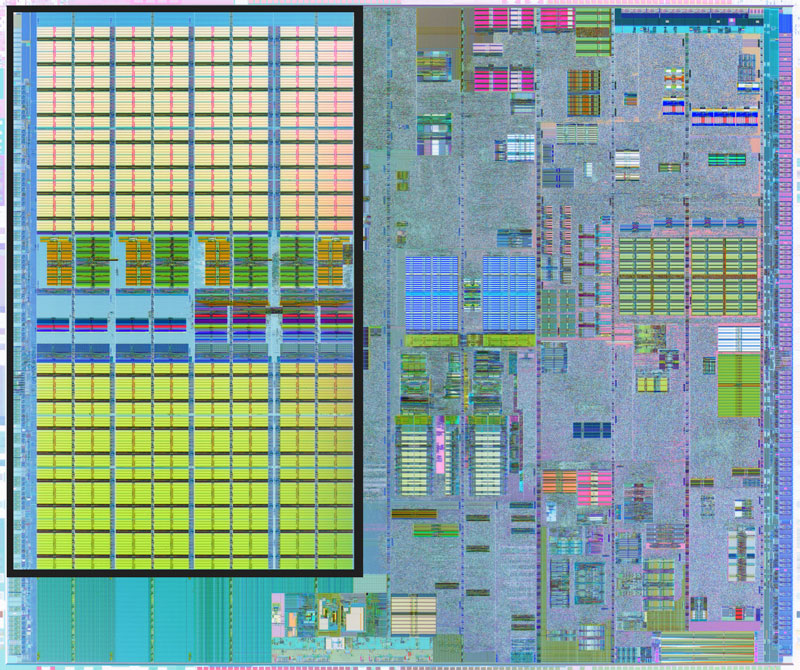
You do not need to use the future tense. Intel's CPU-embedded Trust system is codenamed La Grande. If you look at the bottom of this page from TWO AND HALF YEARS AGO you'll find that an inactive version of it is already embedded in the Prescott line and god knows how many other models. If you want to see a more detailed but unlabled micrograph of the chip look here. Note that that this image is rotated 90 to the right compared to the image in the first link I gave. With a little hunting it's not hard to match up the details in the two images, but it's real handy if you have image software to rotate the second image and flip between them.
AMD [] has also jumped on the TCG bandwagon (either that or be run over by it), so it is only a matter of time for them to add a TPM as well.
The AMD CPU-embedded Trust system is codenamed Presidio. AMD has been keeping a tight lid on the project and it took me months just to find the damn name documented anywhere on the 'net.
Cell processor, the TPM is already in the CPU itself,[] IBM claims it is not a full-bore implementation.
Any chance you can elaborate on that? It is well documented that there will be some such system in the Cell, but I haven't been able to pin down any details. In particular, what does "not a full-bore implementation" mean???
- -
ecs pf88
-
Do my eyes deceive me?
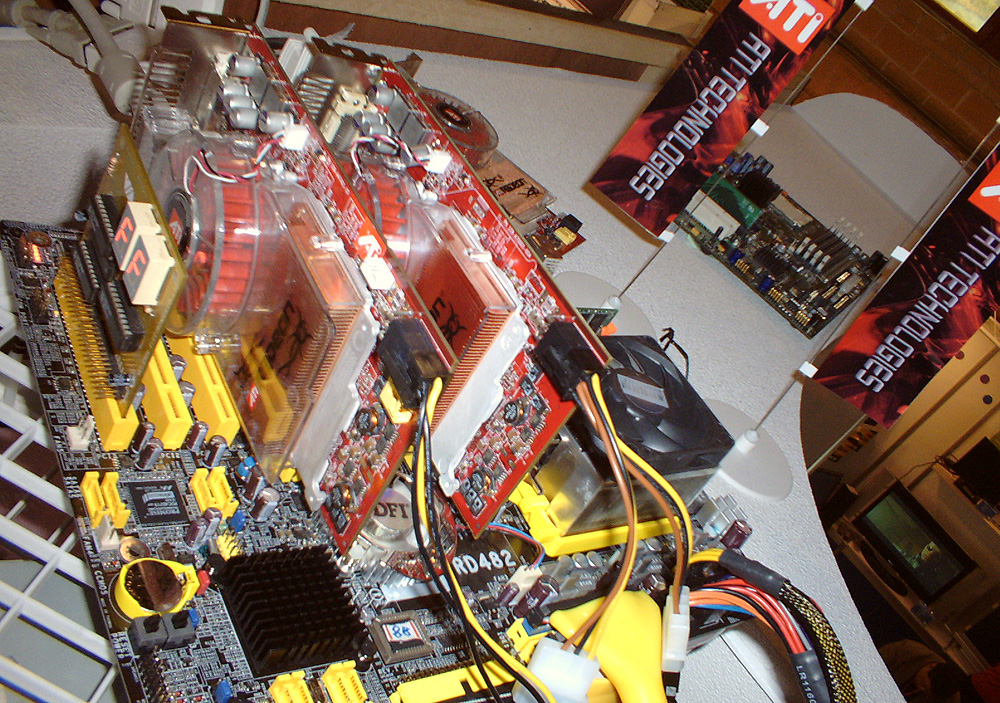
It looks like those video cards overlap not just one, but TWO empty expansion slots that I could use for other cards!
http://img.hexus.net/v2/features/dfi_crossfire_com putex/images/crossfire_big.jpg
This is why I have avoided upgrading to these new generation of cards... I have the lowly 6600 now and that's going to be it, perhaps. I don't like onboard sound (I prefer my Audigy 2, especially for Linux), thank God for the on board USB, FireWire and NIC though; I have a video capture card and a SCSI card for legacy stuff, and there'd be no room for these two cards in any PCI-E system I'd upgrade to... they all come with fewer slots now. -
Printer-friendly (aka ad-unfriendly) link
http://www.hexus.net/content/reviews/review_print
. php?dXJsX3Jldmlld19JRD0xMzE3
This is filler. This is more filler. This is even more filler. This is a rant about the captcha.
-theGreater. -
Shorter answer: Geeks.
-
Re:Asus?
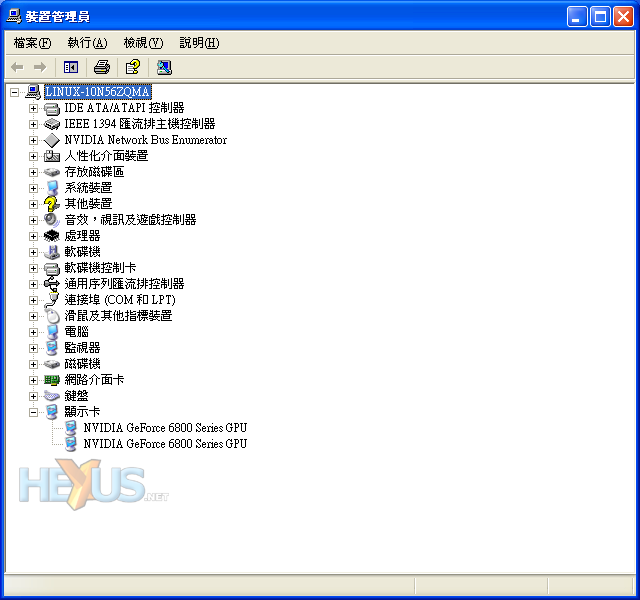
Ironically, if you read the Display Manager box they show, the computer name is called 'LINUX-10N56ZQMA'. Future Linux support, anyone?
-
Re:This is just pathetic
Read carefully - there's only one product mentioned in the original parent's post. You even quoted it.
And the product in question is the iPod -
Re:The Next Problem
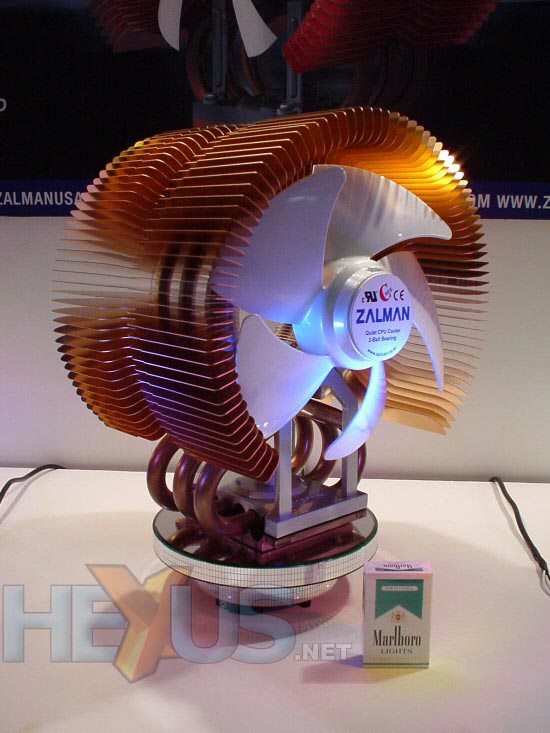
"How to I attach the heatsink? "
One of these silly
-
They are just blocking slashdot as a referrer
Just cut and paste the link into your browser: http://www.hexus.net/content/reviews/review.php?d
X JsX3Jldmlld19JRD0xMjE3
Website works fine then, never seen a site just block all slashdot connections...new to me... -
list of Athlon 64 X2 dual core reviewsJust one is never enough. Spread the love people. I've overclocked it to 2.7GHz by the way.
AMDZone.com Tech Report Sudhian Hexus Hot Hardware Anandtech xbit xbit PCWorld Trusted Reviews
-
Re:Applications?
I will quote in its entirety a post I put on a http://forums.hexus.net/showthread.php?t=23425 Hexus forum a few months ago:
Our world is such that we commonly work with numbers between positive and negative 2 billion. Everything from monetary amounts to the number of records in a database, from distance between places to weights and quantities - we generally work with numbers well within the 32-bit range.
When 32-bit processing came around we had a general and common need to process numbers bigger than what could be handled by 16-bit CPU registers, e.g. numbers bigger than 65,000. But this need for large number processing have stayed the same over time, and so it will not assist to drive the development of 64-bit CPUs!
There is also the ability of the CPU to do more accurate floating point mathematics. This, as well as the need to work with very big numbers, play a role only in engineering and science applications, and to a smaller degree in games.
Therefore the need for 64-bit processing is driven more by the need for addressing more memory than by the need for faster processing of very big or very small numbers.
We need 64-bit processing where the data width inherent in the problem exceeds the (32-bit) processor's registers' width. (Actually this is true for database memory requirements and for games' number crunching and engineering and scientific applications too
It is not generally possible to recompile or even rewrite an existing problem to "require" bigger registers or memory space. However if a problem already requires big numbers to be processed and had been "optimised" to fit into 32-bit world, then the program can be (un/re)"optimised" to utilise the full 64-bit processing capability by removing these initial optimisations, such as where 64-bit operations have been broken into multiple 32-bit operations.
In fact, someone (Adrian Cockroft) very aptly said http://www.sun.com/sun-on-net/itworld/UIR951101per f.html 64-bit CPUs increase application performance despite the 64-bit nature of these CPUs . 64-bit instructions and, in particular, 64-bit memory address pointers imposes a big additional load on memory, caching and the CPU, so if you're not using those extra bits, compiling to 64-bit actually makes the application execute slower!
To test this, take your favourite compiler and compile your favourite utility program to both 32 and 64-bit executables and run both and compare the timings on your trusted Althlon64 or Sun ULTRA 5 workstation.
Unless the program either processes lots of large numbers or utilise more than 4GB ram, the 32-bit version will run faster.
A program which does not process huge numbers and which does not process numbers bigger than 32-bits will run faster when compiled to a 32-bit executable, even on a 64-bit CPU. There is also the bigger 64-bit executable to load and instructions to move between memory and CPU.
Let me add something to this - as a pojnt in case, all the general purpose utils on Solaris 7, 8, 9 and 10 come as 32-bit executables by default (Some 64-bit utils are available, but not in your path by default). This is probably because the memory bandwidth overhead (read: Wasted memory bandwidth) due to 64-bit executables needing to transfer double the amount of bits from memory to find out where pointers point, even if it is just to point to next next memory address! (Eg pointers are bigger because they can address more memory, even if you don't need it)
A very simple comparisson will prove this, eg
timex -
Re:What undecagon?
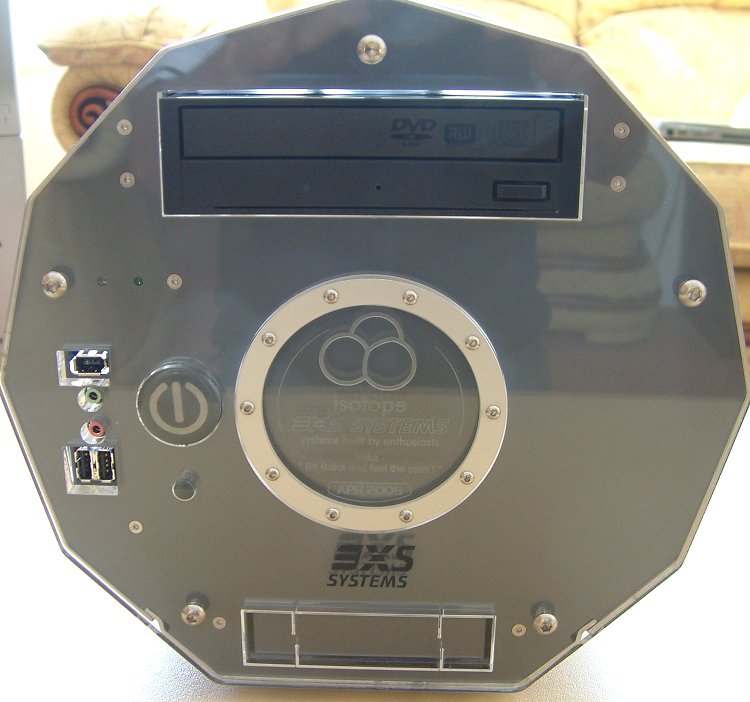
Did you look at it? The front face has eleven sides, so that face is an undecagon (or 11-gon), and the whole thing is a right undecagonal prism.
I'm not sure what an "undecagonal-faced prism" is, as written in the original write-up, though. Also, the case has thirteen faces, rather than eleven.
-
Printer friendly link
-
Thought it meant multi-monitor
But it turns out that this is just a specially-shaped case.
-
Also at Hexus.net...
hope this link works:
http://www.hexus.net/content/reviews/review.php?dX JsX3Jldmlld19JRD0xMTI5/ -
Single Page Layout
Singe page article.
-
Full article link and observations on rootAn easier-to-read 'formatted-for-print' version is here. (Not here, as I tried after decoding the base64-encoded GET, but that's beside the point.)
Not running as root works like this. Your data is no more inherently safe than it is when you
Running as root is like pointing a loaded gun at everyone just in case they're a criminal.
Not running as root is like fastening your seat belt. Sure, you're not intending to get in an accident...
Running as root is like driving down the highway with your hood open and your oil cap off.
Not running as root is like locking your door when you leave.
Running as root is like posting to slashdot without reading TFA.
-
Full article link and observations on rootAn easier-to-read 'formatted-for-print' version is here. (Not here, as I tried after decoding the base64-encoded GET, but that's beside the point.)
Not running as root works like this. Your data is no more inherently safe than it is when you
Running as root is like pointing a loaded gun at everyone just in case they're a criminal.
Not running as root is like fastening your seat belt. Sure, you're not intending to get in an accident...
Running as root is like driving down the highway with your hood open and your oil cap off.
Not running as root is like locking your door when you leave.
Running as root is like posting to slashdot without reading TFA.
-
Re:MP
-
Re:Dual P4 = Back to the old days?
Each core runs at 3.2Ghz, RTFA
http://www.hexus.net/content/reviews/review.php?dX JsX3Jldmlld19JRD0xMDg1
Going to be about £650 in the UK according to HEXUS.