Slashdot Mirror
Domain: ieee.org
Stories and comments across the archive that link to ieee.org.
Comments · 1,868
-
Re:what's that going to accomplish?
This article talks about Intel's design, which is based on two inverters in a ring. Both inverters are forced to the same state and then left to settle into one state or the other based on thermal noise. There's a bit more to it, but that is the basis.
-
Re:Higher prices = 80 years
Any argument that...
Please stop. I've now cited an official government source, and a reputable international source. Both of these analysis were done by a team of economists, nuclear engineers, and accounted for as many factors as reasonably can be taken into consideration. You have cited... absolutely nothing.
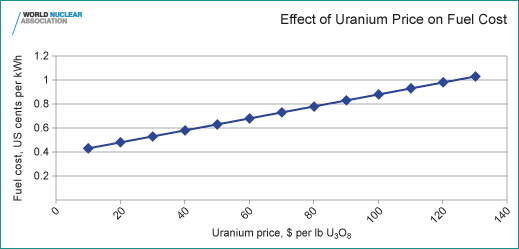
That the oceans contain enough uranium for 10,000 years of once-through energy production is well known and easily confirmed. The IEEE Spectrum article cites current research results that indicate the cost of seawater extraction can be performed at a cost of about $300/kg, a price point that the uranium spot market has already broken in the past, and the additional cost added to electricity by paying $300/kg vs current prices of around $100/kg is only about 0.6 cents per kwh still quite competitive with coal, gas and renewable energy sources.
Economists making government resource projections aren't permitted to consider emerging (aka unproven) technologies. Up until now there has been little incentive to try to develop seawater extraction (more expensive admittedly) as long as conventional mines were cranking out adequate supplies at low prices. This will change, and new technologies developed and exploited.
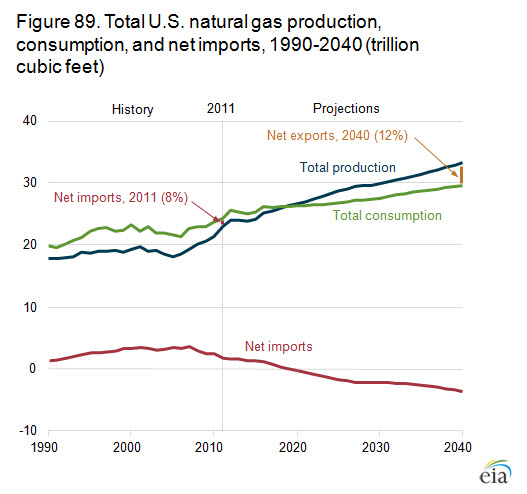
Just look at fracking. No production to speak of 10 years ago, now production is climbing steadily, soon to create a large gas surplus. Or renewable energy, with double digit increases in wind and solar power year after year. New technology and production processes with lower costs aren't limited to gas, solar and wind - uranium extraction benefits also. New processes often do not get perfected until there is economic demand for them.
-
Re:Wired wrote about this in 2009
Even earlier, IEEE Spectrum had an article about KIVA as early as 2007, and a more in-depth one following in 2008. Amazon bought KIVA last year (even Slashdot noticed) for obvious reasons -- workers get a new item to pack into a box about every 6 seconds. The whole AGV system is highly efficient, significantly speeding up the warehouse processes.
I'm quite surprised Slashdot didn't pick it up back then -- but then again, I suppose I could've posted it when I first read about it
-
Re:Wired wrote about this in 2009
Even earlier, IEEE Spectrum had an article about KIVA as early as 2007, and a more in-depth one following in 2008. Amazon bought KIVA last year (even Slashdot noticed) for obvious reasons -- workers get a new item to pack into a box about every 6 seconds. The whole AGV system is highly efficient, significantly speeding up the warehouse processes.
I'm quite surprised Slashdot didn't pick it up back then -- but then again, I suppose I could've posted it when I first read about it
-
Process Node
The most advanced process node on the market, defined by the size of the features on a chip, is due to reach 14 nanometers next year.
Actually, the "process node" hasn't meant anything for years now.
-
How to be a Star Engineer
The fact that you only talk to people when you need some from them is a problem.
This.
Years ago, my boss pointed me to a good article titled "How to Be a Star Engineer." (Apologies for the annoying format; if you're an IEEE member or university student you can download a PDF).
The article essentially says communication skills and attitude are what differentiates star performers from the rank and file. Understand the people you're working with, what they need, and provide that. Everyone will enjoy working with you, and you will become well-known.
-
Re:OT: Watch Pandora's Promise
There isn't any need for nuclear in the US. It is actually going away. http://spectrum.ieee.org/tech-talk/energy/nuclear/former-nrc-chairman-says-us-nuclear-industry-is-going-away Iran wants nuclear power. Perhaps your expansion should happen there once they can be trusted.
-
For $4, you can read the paper
Here's the actual paper's paywall. All the paper claims is that "A maximum of 36.8% of the incident power from a 900âMHz signal is experimentally rectified by an array of metamaterial unit cells." So they built a rectenna with a waveguide.
Rectennas have been around for decades, and 82% efficiency (DC watts out / microwave watts into antenna) has been achieved. So 37% is nothing to be excited about.
If you hook up two long wires or plates to a diode, any RF in the vicinity will produce some DC across the diode. This is the principle behind "crystal radios". The problem is that you need big antennas to get much power from ambient RF.
-
Re:This is bad
how long do you think it will take for the advertisers to track everybody in a different way?
About zero seconds.
-
Similar Idea to EnerJ Language
The idea of fault tolerable computing is similar to the EnerJ programming language being developed at the University of Washington for power savings The Language of Good Enough Computing
The jist of the idea is that the programmer can specify which variables need to be exact and which variables can be approximate. The approximate variables would then be stored a low refresh RAM which is more prone to errors to save power, while the precise variables would be stored a higher power memory which would be error free.
The example they gave was calculating the average shade of grey in a large image of 1000 by 1000 pixels. The running total could be held in an approximate variable since the error incurred by adding one pixel incorrectly out of a million would be small, while the control loop variable would be accurate since you wouldn't want your loop to overflow. -
Re:FTFY
Engineers are among the most unbiased people you will find.
Sorry to burst your bubble:
http://spectrum.ieee.org/telecom/security/extremist-engineers
http://atheism.about.com/b/2009/08/04/engineers-terrorism-and-creationism.htm
http://www.theguardian.com/commentisfree/2010/jan/02/extremism-engineering
http://www.nytimes.com/2010/09/12/magazine/12FOB-IdeaLab-t.html?_r=0You on the other hand strike me as someone who has read far too much people who have no education in mechanical engineering related to power generation and just shoot off beautiful political slogans. Most of which aren't rooted in reality, but are based on wishful thinking, which is why there's a massive coal build up going on in "we're transitioning to wind!" Germany. Because people cannot face reality, and instead base large plans on wishful thinking. Which ends up doing the exact opposite of what it's supposed to achieve.
Finished? Nice strawman. As a scientist, I'm merely debating technicalities. I do have an opinion on sustainable energy, of course, but it's quite nuanced. You will see below that it's very different from what you're assuming it is.
My opinion? Stop the bullshit, quickly push research into fission, build thorium reactors and update the current older generation nuclear plants to modern standards to avoid Fukushima-style failures. At the same time massively overfund the material research facility in Japan that is working on solving the fusion's material problems to expedite functional deuterium-tritium fusion reactor's arrival.
As mentioned in our other discussion, material science is not what is holding fusion back. I don't understand where that bizarre materials obsession of yours comes from - are your family members working on materials, perhaps?
Anyhow, the exact thing you're accusing me of actually apply to you. Yes, funding for fusion research should be a multiple of what it is now, but I'm not so naive as to think this alone (coupled with building fission plants based on not-yet-mature technology) will solve all our problems overnight. Fusion still has significant fundamental milestones to pass, and no-one can predict when that will happen. What can be reasonably predicted is that from the reaching of these milestones onwards, it will be 30 more years before a significant fraction of the world's energy needs are met by fusion; that's just how things go in any kind of industry (ask your family members). So we need something in the intervening time. Thorium is not ready for prime-time either (though I could see it beating fusion), and its economic profitability is unclear. What's ready for prime time are some of the newer generation uranium-based fission reactors, but the political and financial (including insurance) costs are not as favorable as they were in in the nuclear boom period. Compared to that, alternative energy sources are available right now, and are advancing at a steady and rapid pace. If you compare their complete lifecycle cost to the current lifecycle cost of a new nuclear plants, they're pretty close. They each have their weak spots, but those are largely complementary, so from a pure availability perspective, an all-of
-
Re:There is no Magic Energy Fairy
Not to mention the environmental cost of making an electric car, which is much higher than for an internal-combustion vehicle. IEEE had an article which explored this idea.
I figure, since I only drive 7,000 miles or so a year, mostly long trips (I go to work by train), my ICE car is much cleaner than an electric, especially after I buy carbon offsets for it (I think those cost me less than $50/year).
-
Scam
I realize the article is two years old but it may still be relevant;
Two things seem particularly interesting about Google's approach. First, it relies on very detailed maps of the roads and terrain, something that Urmson said is essential to determine accurately where the car is. Using GPS-based techniques alone, he said, the location could be off by several meters.
Google map data has been inaccurate and/or out of date a significant amount of the time. I would not trust my life to a Google map.
The second thing is that, before sending the self-driving car on a road test, Google engineers drive along the route one or more times to gather data about the environment. When it's the autonomous vehicle's turn to drive itself, it compares the data it is acquiring to the previously recorded data, an approach that is useful to differentiate pedestrians from stationary objects like poles and mailboxes.
So you have a human drive the road, record the path and then the semi-autonomous car does it's best to follow that path. That's cheating. A scan like that is only valid for a few days at most and how much data is needed to store that kind of scan? An everyday vehicle would need a high speed connection to just keep up with the changes.
-
Re:Patch Chord?
I was looking for an answer to this.. and came up with an interesting article (from last year) about scientists basically doing exactly that.
-
Re:The Second Law of Thermodynamics isn't your fri
This cannot possibly work:
http://spectrum.ieee.org/tech-talk/green-tech/advanced-cars/korean-bus-charges-itself-while-driving -
Re:lots of reasons, standards probably first
-
Re:Such is the life of a government project....
Multiple on the fly changes are, alas, typical in Federal projects.
The Classic case of project fail due to this:
-
other swarm self-ASM bots
Just a few very well known samples. That is not even the tip of the iceberg. http://www.geek.com/science/robot-swarms-self-assemble-into-flying-units-of-any-shape-or-size-1562961/
http://www.youtube.com/watch?v=SkvpEfAPXn4
http://naturalrobotics.group.shef.ac.uk/research.html
(Pay-walled articles) http://ieeexplore.ieee.org/xpl/login.jsp?tp=&arnumber=4108264&url=http%3A%2F%2Fieeexplore.ieee.org%2Fxpls%2Fabs_all.jsp%3Farnumber%3D4108264
http://link.springer.com/article/10.1007%2Fs11431-012-4748-2
This is a pretty popular research topic nowadays. I have no idea why this MIT news is literally in every tech-blog on the net(other than their excellent PR department, I wished the PR guys in my university had the same enthusiasm...). I'm not trying to discredit them or anything, but while their approach is somewhat novel, similar results have been achieved in many different ways. -
Re:Microsoft then and now
Actually, that was about the time of OS/2, and having watched that unfold you really have to say that was more IBM doing it to themselves than Microsoft doing it to them (it was expensive, pain in the ass to use, device drivers were rare and it was intuitive as an ancient foreign language - even if it was technically superior in just about every way).
Microsoft would in the following years perform many things that well justified their being sued for being a monopoly and of being a modern robber baron, but OS/2 wasn't one of them. Your probably thinking of of CP/M.
-
Re:Can we have standard laptop chargers next pleas
IEEE UPAMD/P1823
http://grouper.ieee.org/groups/msc/upamd/&%238364;ZBut for some reason it has been completely silent since start of draft vote a year ago.
-
We've surpassed baud rates?
-
The trick is to avoid solving the bigger problems
We're using Boost Multi-array as a multi-dimensional array, so that's not really a problem. And since we call back the original Fortran code users are still free to use their original libraries (some restrictions apply -- not all of these libraries will be able to handle the scale of current supercomputers).
Regarding the speed issue: yeah, that's nonsense today. It all boils down writing C++ in a way that the compiler can understand the code well enough to vectorize it.
-
seems the pivot didn't work
Back in February, IEEE Spectrum reported that Willow Garage was shutting down, which led to a rebuttal from WG in which they said that they were changing, not shutting down. I guess the change wasn't profitable enough.
-
Really, Slashdot?
-
RecycleBot
And here you go, somebody already is working on it:
http://theinstitute.ieee.org/people/profiles/less-expensive-and-greener-3d-printing
Sure, he's only dealing with recycling milk bottles now, but I'm sure many people are working on a more generic solution.
-
You never heard of 3D vein scanners?
That publication is 10 years old, and I've seen no evidence of any real improvement in the scanners themselves since then.
That's because you don't work in the biometrics field or have much interest in it. Check out these improved scanners used by Japanese ATMs http://spectrum.ieee.org/biomedical/imaging/the-biometric-wallet that were put into use more than 5 years ago.
The best readers arent small enough or cheap enough to put in a smartphone, but they are out there in commercial use.
-
Re:unless the NIST evaluation tools are broken...
-
Re:Iron Patriot
...or maybe not...
-
Re:If you're poor
No, I'm not saying that they shouldn't go to college. I think that everybody should get as much education as they're capable of.
However, I don't think they should have to pay for college, any more than they pay for high school. Education is a public good. It's valuable for society to have better-educated people. It's so valuable that it's worth paying more taxes to pay for it. Europe is like that, and the US used to be like that. They certainly shouldn't have to go into debt for college.
If you're following that other Slashdot story, on STEM employment, I agree with the conclusion of that IEEE Spectrum article (although I think it applies to all college subjects, not just STEM):
http://spectrum.ieee.org/at-work/education/the-stem-crisis-is-a-myth
A broader view, I and many others would argue, is that everyone needs a solid grounding in science, engineering, and math. In that sense, there is indeed a shortage—a STEM knowledge shortage. To fill that shortage, you don’t necessarily need a college or university degree in a STEM discipline, but you do need to learn those subjects, and learn them well, from childhood until you head off to college or get a job. Improving everyone’s STEM skills would clearly be good for the workforce and for people’s employment prospects, for public policy debates, and for everyday tasks like balancing checkbooks and calculating risks. And, of course, when science, math, and engineering are taught well, they engage students’ intellectual curiosity about the world and how it works.
Many children born today are likely to live to be 100 and to have not just one distinct career but two or three by the time they retire at 80. Rather than spending our scarce resources on ending a mythical STEM shortage, we should figure out how to make all children literate in the sciences, technology, and the arts to give them the best foundation to pursue a career and then transition to new ones. And instead of continuing our current global obsession with STEM shortages, industry and government should focus on creating more STEM jobs that are enduring and satisfying as well.
-
Re:HardwareAre you that mind-blowingly ignorant or are you just so stupid and lazy that you haven't bothered to glance over anything avbout the subject?
Dunning-Kruger is becoming the new Godwin.
-
Probably too late for this year
The competition is in December 2013, and this team may not be ready by then. Here are the other robots being entered.
The simulated challenge back in June revealed that the entrants' movement control software isn't very good yet. The winning team's simulated robot fell down 12 times. DARPA has posted only heavily censored videos of the results, possibly because they're so embarrassingly bad.
Some of the blame attaches to the simulator used. The Gazebo simulator's physics engine, which is borrowed from video games, is not good enough for the job. Video game simulators use tricks that look OK, but aren't physically realistic. That's no good when you're using them to match a real robot, or even if you're doing control based on reported forces from the simulator. This should be fixed in early 2014 when they get an honest physics engine from Mike Sherman, who knows what he's doing. (If you need a accurate humanoid robot simulator right now, try OpenHRP3, from AIST in Japan.)
I suspect that the December 2013 event, which will be public, will be rather disappointing. But the planned 2014 event may be very impressive.
That's how it went with 2004 DARPA Grand Challenge for automatic driving, which was so pathetic it was covered by the Comedy Channel. Then in 2005, all the robot vehicles at the event could drive autonomously without running into anything and several finished the whole course with good times. The second day of the 2005 Grand Challenge was the moment when automatic driving became real to the world.
-
Re:Evidence seems compelling - MAC address?
Your memory is still good. The first 3 are the manufacturer, and the remaining 3 are their 'serial' number. Link to first 3 lookup: http://standards.ieee.org/develop/regauth/oui/public.html
-
Re:Sooo....
Close. If we were to launch ALL of the copper found on the earth, every last scrap of it, we could do what they wanted, problem is there would be no copper left to make radios to transmit or receive with. This was the problem, Yes it "worked" but the scale needed would have required global strip mining and launching every ounce of copper that this planet has in it's crust.
Citation needed. From what I read it seams they did a succussfull test that formed a belt. I think your thinking of an actual unbroken wire going around the earth. Instead they launched short segments of wire. There was some distance between each bit.
Early in May, 1963 a package containing 4.8×10⁸copper dipoles, each 0.00178 cm in diameter and 1.78 cm in length, was placed into a nearly circular, nearly polar orbit at a mean altitude of 3650 km
http://ieeexplore.ieee.org/xpl/articleDetails.jsp?reload=true&tp=&arnumber=1444922&isnumber=31060
-
TFA from last time
EUV Chipmaking Inches Forward (IEEE Spectrum)
-
Re:Can superconductors compute?
http://spectrum.ieee.org/semiconductors/design/superconductor-logic-goes-lowpower
It appears that "logic" is done through wave form cancellation.
You have a waveform, if you pass through the same point an inverse waveform you cancel out the waveforms and end up with a 0, or a matches wave form will amplify the signal giving you a 1. Though, no, I don't fully understand how this is used for computation, it doesn't appear that they know either.
-
Here's a more informative link
Actually explains the process in detail:
http://spectrum.ieee.org/semiconductors/design/plans-for-nextgen-chips-imperiled
BTW, it's considered good practice in anything related to scientific research to define acronyms the first time they are used. In this case, EUV == extreme ultraviolet
-
Re: Curiouser and curiouser
All patents related to IEEE standards are listed on the IEEE website:
http://standards.ieee.org/about/sasb/patcom/patents.html
Any companies that have essential patents for an IEEE standard are required to disclose them and give letters of assurances that they will license them to users under FRAND conditions. Samsung did do this.
In my opinion, the terms that Samsung offered were not "Reasonable" and were completely out of line compared to all other license fees associated with IEEE standards. Typically these fees are "one time fees per company, often less than $1000.00 USD". I feel that this causes a "chilling effect" with all existing IEEE standards until IEEE defines what exactly "Reasonable" means. (disclaimer: I am technical editor for two IEEE standards)
Of course that in itself can be a huge problem for GPL and any open source implementations - for instance see the patents that Samsung has on Precision Time Protocol ( http://standards.ieee.org/about/sasb/patcom/loa-1588-samsung-12apr2007.pdf ) which were blocking RedHat from releasing ptpd: https://bugzilla.redhat.com/show_bug.cgi?id=556611 - It looks like in this ptpd case, Samsung was reasonable and allows people to do time stamping of packets for free as in GPL.
Regardless of my opinions, ITC said the fees to Apple were reasonable. I guess here the government steps in and says that the fees still stand but the ruling can't block the shipment of devices.
-
Re: Curiouser and curiouser
All patents related to IEEE standards are listed on the IEEE website:
http://standards.ieee.org/about/sasb/patcom/patents.html
Any companies that have essential patents for an IEEE standard are required to disclose them and give letters of assurances that they will license them to users under FRAND conditions. Samsung did do this.
In my opinion, the terms that Samsung offered were not "Reasonable" and were completely out of line compared to all other license fees associated with IEEE standards. Typically these fees are "one time fees per company, often less than $1000.00 USD". I feel that this causes a "chilling effect" with all existing IEEE standards until IEEE defines what exactly "Reasonable" means. (disclaimer: I am technical editor for two IEEE standards)
Of course that in itself can be a huge problem for GPL and any open source implementations - for instance see the patents that Samsung has on Precision Time Protocol ( http://standards.ieee.org/about/sasb/patcom/loa-1588-samsung-12apr2007.pdf ) which were blocking RedHat from releasing ptpd: https://bugzilla.redhat.com/show_bug.cgi?id=556611 - It looks like in this ptpd case, Samsung was reasonable and allows people to do time stamping of packets for free as in GPL.
Regardless of my opinions, ITC said the fees to Apple were reasonable. I guess here the government steps in and says that the fees still stand but the ruling can't block the shipment of devices.
-
Re:Really? Only $430 million?
There is a long list of patents and technologies that went into WiFi. CSIRO's patent only covered one part of that, so it's not the case that their chunk represents all the inventor royalties here.
-
Re:Not really
The version of events you're describing didn't happen. There was no "convergent evolution". CSIRO spin-off Radiata was involved in creating the standard. See the Register article. There's a license letter proving the IEEE was fully aware of CSIRO patent and its impact on the 802.11a standard. If you look at the letters of assurance list, there was a long list of such agreements hammered out as part of the standardization process. Given all that, the idea that CSIRO's technology was obvious and easily duplicated isn't true either, so your US patent system flamebait is unsupported by this example. The only part you got right here is that CSIRO's role as a research lab that spins off commercial products does not make them a patent troll.
-
Re:Not really
The version of events you're describing didn't happen. There was no "convergent evolution". CSIRO spin-off Radiata was involved in creating the standard. See the Register article. There's a license letter proving the IEEE was fully aware of CSIRO patent and its impact on the 802.11a standard. If you look at the letters of assurance list, there was a long list of such agreements hammered out as part of the standardization process. Given all that, the idea that CSIRO's technology was obvious and easily duplicated isn't true either, so your US patent system flamebait is unsupported by this example. The only part you got right here is that CSIRO's role as a research lab that spins off commercial products does not make them a patent troll.
-
Some good ideas, some catastrophically bad ideas
I find it telling that Liotta (the author from TFA) is not mentioned in any IEEE RFCs, except in RFC 5345 to say that he makes claims with no real-world measurements. But that's just appealing to authority.
The most troubling part of his proposal, I think, is the elimination of Postel's Law. The Telco-oriented people have been telling the Internet community people all along that what we need is an intelligent network that provides QoS guarantees. The Internet community rejected that, with the result being an Internet that grows in speed and adapts to countless unforeseen applications. Liotta uses the human autonomic nervous system as metaphor, but the fatal flaw is that the human autonomic system has only one brain. The Internet doesn't work with a single controlling entity.
Likewise, his illustration of the Youtube clip is not entirely accurate. Companies like Google and Netflix are making colocation deals with a bunch of the Internet Service Providers, so that most videos don't have to travel through the backbone, Time Warner Cable aside.
There are problems with the current Internet and projects to redo the basis of networking, but Liotta's proposals remind me of those fantasy "cities of the future" fiction that I used to read when I was a kid.
-
Re:Why?
For that matter, when did IEEE Spectrum become a weird, political clone of Wired? Check out the article that says our network architecture is shrinking the economy and impoverishing the middle class. He might have a point somewhere in there, but is that really something that the IEEE cares about?
-
Welcome to Cisco and MS's future...
The problem is the credible fear of a lifecycle attack is sufficient to require that such hardware be avoided. There is a reasonable fear that the chinese might try something using Lenovo kit, therefore the classified networks need to avoid it. Its the same reason why Huawei networking hardware is avoided in some circles.
Of course, with the NSA now clearly off the leash, US IT equipment is now in the same position. Microsoft clearly backdoored Skype to enable easy wiretapping, the NSA is reportedly hacking foreign networks to introduce monitoring (who knows, perhaps it was the NSA responsible for the Athens Affair?), and with any US Cloud service provider subject to PRISM-style requirements, US IT infrastructure is now in the same boat that the Chinese have been struggling with for years now.
-
Re:Something wrong with this picture!
AC wrote:
"PV is a hippie pipe dream.
ehhhh... energy companies or so evil... never mind that many municipalities own their own power generation infrastructure.
please show us a PV cell factory that itself runs entirely off the grid."
This is a troll. OK. But so too does it present a position and value set that's common among Libertarians, so someone ought to respond. Because underneath the derision is a point worth debating. And that's, can a governmental body invest in infrastructure to the benefit of a common good? Peru (and many other nations) are buying PV infrastructure because they believe it the best option to electrify outlying areas. Those of the Libertarian persuasion view this as wasted money, for reasons that the AC listed above in quotes.
In Germany, peak production of electricity by solar has hit 50% at times. This is causing the unintended consequence that the centralized power plant model is failing, because peak hours of consumption coincide with peak production by solar. That is, at the very time when central power plants have long expected to extract the highest price per kilowatt - during business hours in daylight - is also the time when privately installed PV offsets those costs. Thus disrupting an old centralized energy production and distribution model.
The same has happened in Australia. (I'm currently living in Australia for a short time, so I see this first hand). Last year, government subsidies for solar PV and hot water installation were scrapped early, because too many people took advantage of the opportunity, thus - just like in Germany - affecting income and profit projections across the power industry. Just like in the United States, industry players lobbied to remove the subsidies and won.
Yet this hasn't stopped solar installation. People still rush to buy. It's a long-term price lock-in, because even in the U.S. PV is already close to grid parityopportunity for those of the Libertarian persuasion?
Next, government subsidies given to central utility producers. There are massive costs involved in grid infrastructure that have to be amortized across its life, plus profit. This is then shifted out to customers, either through utility rates or by taxation if it's government run. As the AC notes, "many municipalities own their own power generation infrastructure." Doesn't that mean they're "taking money from person A to buy votes from person B"? That is, you can't have the argument both ways. If solar subsidies violate gains from a free market, then so does central power production and grid distribution.
Which is a red herring. Actually, the entire society benefits from grid infrastructure. The only question here is whether private interests can sustain investment to transition to new generation technologies like PV, or whether government subsidies are necessary to sustain this path. PV is already shown to be price competitive. If market forces work as Libertarians claim, then because prices are at parity and continuing to drop, grid upgrades and maintenance to support this new technology will occur whether they like it or not. And if the Libertarian 'free market' model fails, we'll know that by how well central producers throttle deployment of PV technology.
Finally, another red herring: Why must PV factories use self-produced electricity to manufacture PV cells and panels? Should aluminum factories be required to use aluminum in their production process?
-
Re:Laser defense
I really want to build a laser mosquito zapper (like this one: http://spectrum.ieee.org/consumer-electronics/gadgets/backyard-star-wars). However, this looks pretty pricey (multiple cameras and galvanometers).
If the expense/time is a bit daunting, mosquitoes are attracted to heat, so some incandescent bulbs in front of a fan, with a mesh bag behind it, will scoop them out of the air (along with lots of other insects.) I had a friend with one of these and she collected something like a pound of insects per night.
With that said, I don't think either one is going to make a dent in your local mosquito population unless you had two dozen of them running nonstop. Getting rid of stagnant water in your neighborhood will do far more than any amount of adult mosquito hunting. -
Re:Laser defense
I really want to build a laser mosquito zapper (like this one: http://spectrum.ieee.org/consumer-electronics/gadgets/backyard-star-wars). However, this looks pretty pricey (multiple cameras and galvanometers).
Pricey, yes, and you haven't even factored in the licensing fees to Intellectual Ventures yet. If you do get it working, Nathan Myhrvold can legally drink your blood.
Platforce
-
Laser defense
I really want to build a laser mosquito zapper (like this one: http://spectrum.ieee.org/consumer-electronics/gadgets/backyard-star-wars). However, this looks pretty pricey (multiple cameras and galvanometers).
-
Re:We've been saying this for over a decade!
Which article?
This? http://spectrum.ieee.org/energy/renewables/unclean-at-any-speed
Not sure there's a lot of meat on those bones but there does seem to be quite a bit of frequently-debunked conclusions.
The ACS study on REE availability is paywalled, unfortunately but most of the Spectrum article is so full of weasel words, it's sickening
For example "The materials used in batteries are no less burdensome to the environment, the MIT study noted. Compounds such as lithium, copper, and nickel must be coaxed from the earth and processed in ways that demand energy and can release toxic wastes"
Seriously? So we've only been getting these precious metals up to now by praying to the Earth Fey but because they'll all die from the anti-magic fields of EVs, we'll be forced to break rock, grind stone and poison water from here on out?
-
Economies of scale is a problem
The problem is not all in the extraction, the problem is in the growth. I had a buddy that worked on a algae oil business project, and they found that it is not economical because of the costs in building\maintaining the ponds and water ect. They found it was barely economical if you could find an existing pond, like cooling ponds found in many industries. Like all bio tech stuff, even if we could make it economical, we would have to destroy other ecologies (and farmland) to make room for biofuels and convert massive amounts of land. http://spectrum.ieee.org/energy/renewables/biofuels-arent-really-green