Slashdot Mirror
Domain: illinois.edu
Stories and comments across the archive that link to illinois.edu.
Comments · 162
-
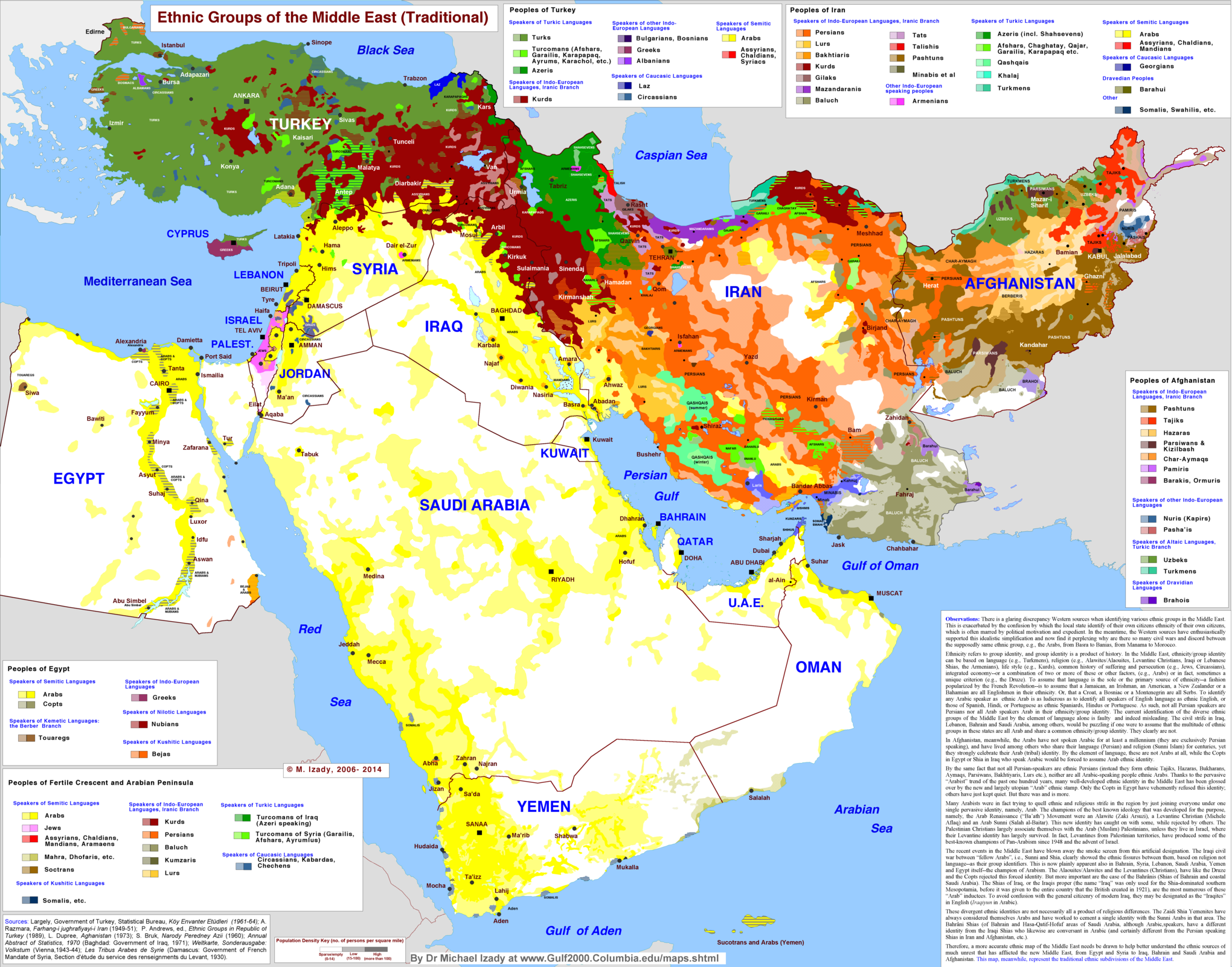
For those unaware of the history of the region
In a nutshell, a large part of the Middle East including part of modern-day Turkey used to be part of the Ottoman Empire. One of the less-known facts about WWI was that the Ottoman Empire was on the losing side, which eventually led to its dissolution. The European victors then carved it up with little regard for the cultural and religious boundaries of the indigenous people. The modern countries there - Turkey, Syria, Iraq, Kuwait, Lebanon, Israel - Palestine, Jordan were drawn with these arbitrary borders. The instability in the region is partially (mostly) due to the cultural borders not coinciding with the political borders. The Kurds (about 40 million of them) were the biggest ethnicity screwed out of a country to call their own. They're spread between Iraq, Iran, Syria, and Turkey, and all of those countries are paranoid that the Kurds will try to declare independence and secede.
-
Re:I am sure it's 20 years away
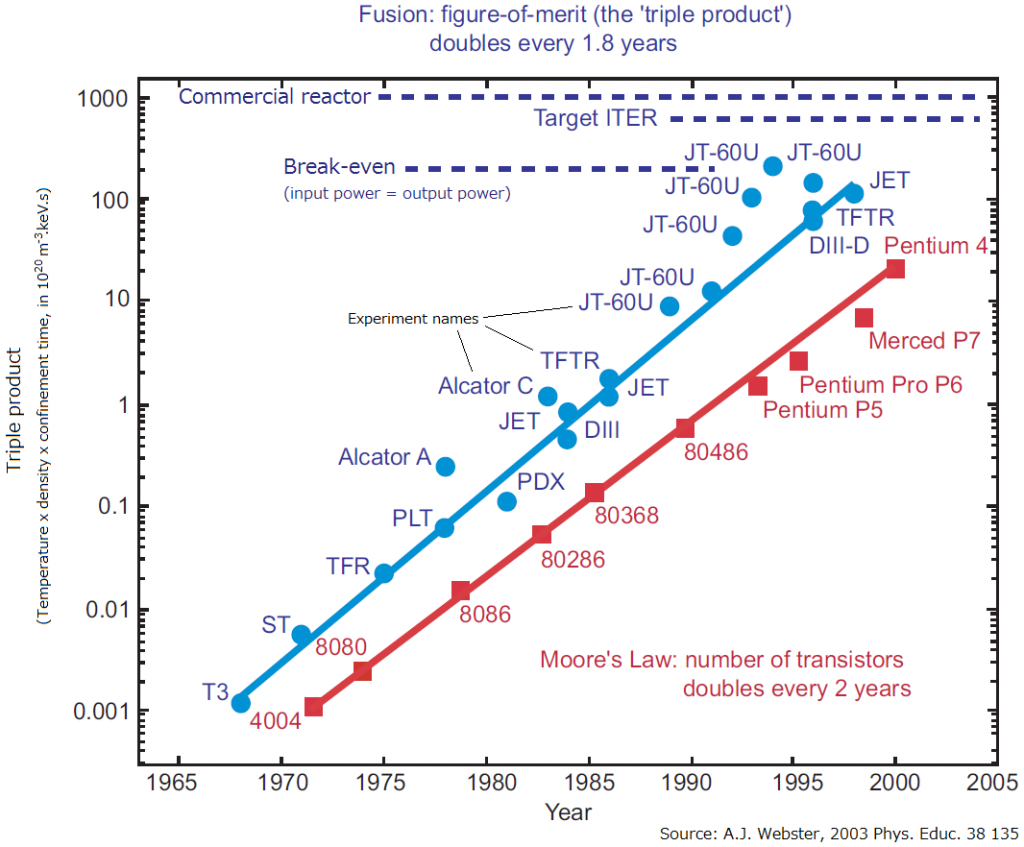
Worldwide funding for fusion research has already exceeded $50 billion with no meaningful result. Time to move on.
-
Re:This does not scale well skills, not .. needed
...until the power goes out. Trivial but illustrative example: I always carry at least a hundred or so in cash; many or my younger colleagues strictly use cards and see no point in having any cash at all. We walked over to the local food court and found that the Electronic Payment Processing System was down.
Who was given the opportunity to reconsider their positions on the utility of cash?
Answer - ALL of us! I was in a better position to pay for lunch, but the Restaurant was dependent on an electronic system for processing food orders and so could not serve anyone at all. Lunch was to be had elsewhere; Perhaps the restaurant learned something about the need for plans "B"
REF:
THE MACHINE STOPS
by E.M. Forster (1909)
http://archive.ncsa.illinois.edu/prajlich/forster.html -
Warm the US, but wet the Sahara
Last month, a study was posted in Science that said wind turbines in Africa could boost vegetation in the semi-desert regions at the edge of the Sahara: Study: Large-scale wind and solar farms in the Sahara would increase heat, rain, vegetation
Seems like there's no real reason to avoid using wind turbines in either study, at least not compared to fossil fuels, and yet inevitably this headline will make the rounds, no one will read the article, we'll all forget last month's study, and in the end we'll just have some wrong, dumb little talking point. -
Re:Funny ...
clang/LLVM had been developed in tandem with, practically for a project for making C code safer in the first place: SAFECode.
AT&T had a safe C variant called Cyclone but haven't heard anything about it in over a decade
-
Funny ...
clang/LLVM had been developed in tandem with, practically for a project for making C code safer in the first place: SAFECode.
-
Re:Yes, but other property is increasing in value.
How much of that ice is on land and how much is already floating?
The numbers I quoted were for the volume of the Greenland ice sheet and the Antarctic ice sheet which are both sitting on land. Admittedly a small portion of each is grounded below sea level but it's a relatively small percentage of the total. One cubic km of ice will melt to a slightly smaller volume of water but again it's a relatively small percentage. I was just trying to get a ballpark figure.
I found one source that says that "in general, a given volume of liquid water at room temperature will increase in volume by about 9.05% after freezing.". 9% does not seem like "a relatively small percentage" so your calculations are over inflated.
-
Re:WTF is LLVM?
You are not wrong, but you aren't entirely correct either.
Originally, LLVM stood for Low Level Virtual Machine
PROOF: click!, (Illinois Computer Science magazine), 2013, Volume II, Page 13
That prototype included a lot of the key design
elements of what would become LLVM, says Adve.
LLVM originally stood for "low level virtual machine,"
but as LLVM has expanded its capabilities it has left
that acryonym behind and is known only by its initialsAnyone who has worked in compilers knows that the "front-end" translates the programming language into a AST (Abstract Syntax Tree), whilst the "back-end" translates the AST into assembly language. LLVM "abstracted" the assembly language into two parts:
The two pieces of the LLVM code generator are the high-level interface to the code generator and the set of reusable components that can be used to build target-specific backends.
-
Re:Extreme as defined by the AWSSI
They defined extreme weather under the Accumulated Winter Season Severity Index which looks primarily at rapid changes in temperature and unusually heavy snowfalls. The metric is a standard one you can find more about here http://mrcc.isws.illinois.edu/research/awssi/indexAwssi.jsp. Note that the AWSSI does not include wind, general precipitation, or most unusually high temperature events.
Useful info.
If that's the case, then the Northeast is the only place this applies this year. It's been a mild, rather uneventful winter anywhere west of Ohio.
-
Re:Extreme as defined by the AWSSI
They defined extreme weather under the Accumulated Winter Season Severity Index which looks primarily at rapid changes in temperature and unusually heavy snowfalls. The metric is a standard one you can find more about here http://mrcc.isws.illinois.edu/research/awssi/indexAwssi.jsp. Note that the AWSSI does not include wind, general precipitation, or most unusually high temperature events.
-
explanation considered harmful
Please explain exactly how you catch a ball.
Much the same way my dog catches a ball, and yet we're aren't terrified of our prospective canine overlords.
Please explain how you managed to survive long enough to have the ability to post that remark without being able to think your way out of a wet paper bag.
No, on second thought, don't bother. We all know the answer already. You've become trapped in a shallow, knee-jerk dopamine loop of petty social one-upsmanship, where the key to obtaining your small, regular dopamine hit is to never write any remark beyond Twitter scale (the scale of Twitter as presented to its user base, as opposed to its engineers).
With your head bowed toward your phone, you just wandered out onto an eight-lane autobahn where sharp-tongued assholes such as myself are gathering to debate whether mathematical wunderkind Stephen Hawking is full of shit. And there you are, in the middle of a hostile expressway you barely noticed, armed with a short little dagger made of entirelymissingthepointium.
At present, the intelligence that terrifies humans is uniquely our own, especially once amplified to the next level.
Vonnegut spent the last half of his writing career explicitly advancing the hypothesis that the human brain was already far too big for our own good (his sentiment about this is probably brewing in his earlier works, as well).
Correlation is not causation, but the human cognitive fixation on narrative (aka story), which is largely congruent to explanation, seems to function as some kind of potent social steroid, making the human species qualitatively different than any species that's come before. Turns out, explanation has a shocking range of scale, from milliseconds of flighty dopamine, all the way to a decade of steady serotonin.
It's starts at "face your palm toward the ball at a position where the ball will soon arrive, with your fingers outstretched, and then contract your fingers when the ball arrives", but doesn't end here:
Catching fly balls: a simulation study of the Chapman strategy
Catching a baseball. American Journal of Physics, 36, 868-870] showed that a catcher may be guided to the landing spot of a fly ball by zeroing out its optical acceleration. Subsequently, various studies have provided evidence for what is now known as the Chapman strategy. However, in those studies the catcher's own acceleration and the visuo-motor delay were ignored.
This raises the question whether the Chapman strategy still provides an accurate description if those factors are taken into account.
To address this question, we implemented the Chapman strategy in a forward dynamical model of the catcher's locomotion in relation to the ball's actual trajectory.
Numerical simulations of the model revealed that catching performance was still successful under a broad range of ball trajectories. Furthermore, the model simulations largely reproduced the real running paths reported by McLeod and Dienes [McLeod, P., & Dienes, Z. (1996).
Do fielders know where to go to catch the ball or only how to get there?
Paradoxical pop-ups: Why are they difficult to catch?
For extra credit, explain explanation.
Concern over where we're headed in the near term is far from fear mongering.
Twitter and Facebook have already managed to accelerate our political discourse, until it's a full time job just to keep up.
I didn't completely get this until just this weekend, and I had the Asia trip (pretty please, don't nuke the planet!), stacked on top of the Texas shooting (and the "good man with a gun" fairy spin, who was nevertheless—by my count—about twenty deaths late to the party), stacked on top of the Paradise Papers (a mere 13.4 million documents), stacked on top of the V
-
Re:So what?
No, because that is how you destroy society and kill off all humans.
-
The machine stops
-
Re:Air raid sirens??? How delightfully "Cold War"
Yes, these are common in the USA as part of county emergency services.
They are tested monthly usually at noon on a Saturday. Hearing them at any other time means something else is up. If it is raining, I'll turn on the weather. If not, I'll turn on a local news channel.
Last week they went off and it was clear, but had been raining a bunch. Flash flood warnings for my area.
Dallas has tornadoes. Tornadoes travel many miles. Everywhere east of the Rockies does and a few have been seen west of there. Here's a map of some tornadoes in the USA since 1950:
http://mrcc.isws.illinois.edu/... I know it is missing some that came near my house, so it isn't 100%. Bldgs aren't a consideration for 300mph winds - they don't care - only a mountain will stop them. That is the normal use and only when there is a real warning. They (govt) don't cry wolf often, so we tend to believe them. Places that don't have tornadoes have other natural issues - earthquakes, extremely high winds, flooding caused from rain hundreds of miles away. In the canyon-lands, water gets channeled and flows hundreds of miles. Empty, dry, canyons can be fulled with 20 ft of rushing water without warning.Of course, way, way, out in the country, only the county "seat" would have these sirens, probably near the airport/weather station.
We don't "duck and cover" anymore here either. It would be useless. I grew up living at nuclear targets. I wouldn't want to survive any attack. Vaporize me immediately, please.
-
THE MACHINE STOPS by E.M. Forster (1909)
The logical conclusion? http://archive.ncsa.illinois.e... "Of course," said a famous lecturer - he of the French Revolution, who gilded each new decay with splendour - "of course we shall not press our complaints now. The Mending Apparatus has treated us so well in the past that we all sympathize with it, and will wait patiently for its recovery. In its own good time it will resume its duties. Meanwhile let us do without our beds, our tabloids, our other little wants. Such, I feel sure, would be the wish of the Machine."
-
Re:Great initiativeAn interesting ramble but let's have a go at one of your remarks:
Electrons are already moving at the speed of light around the atom
Actually, they move at more like 1% of the SoL.
-
Re:We should ban free speech
Bullying isn't protected by free speech
Unless it involves specific realistic threats, online "bullying" is protected speech. There is no law against insults and teasing. You have no right to not be offended. If you don't like it, then close the browser tab.
I found the definition https://news.illinois.edu/blog... "The participants, 700 children and 38 teachers, also were provided with a definition of bullying that included physical behaviors such as pushing or hitting, verbal abuse such as saying mean things or calling other people names, and relational aggression, such as excluding a classmate from play.
Ugh. This is offensive in itself. It reeks of safe spaces where no one can disagree with you, and an exceptionaly tight control of expression.
Saying mean things? Jeebuz that's weak. That means that a person can be bullied by a different person writing to a different person.
-
Re:interstellar mission
Don't you realize that anti-matter is simply a theory?
Antimatter has been created and stored (quote below) and noted here Q & A: How to make antimatter, so it's more than a theory, but doing so in large quantities and using it is still a wild impracticability.
This has been done at CERN, the European centre for nuclear research, by slowing the antiprotons in a machine called the AD (Antiproton Decelerator). Electric and magnetic forces then gather them together with positrons. Since 2009, ALPHA has trapped atoms in a magnetic bottle on a few hundred occasions.
In 2011, the ALPHA experiment at CERN managed to make atoms of antihydrogen, the antimatter equivalent of hydrogen, and store them for nearly 17 minutes.
-
Re:wait, wut?
Already posted elsewhere. I'm guessing you've not read "the machine stops", which had them in 1909. It's really REALLY worth a read, and it's not long. Also, out of copyright:
-
Re:wait, wut?
I know, this is stupid. Making calls? Making video calls? Ever see 2001: A space odyssey? Im sure there are older examples of video calling. Isn't that prior art? What the fuck?
I have something new for you!
http://archive.ncsa.illinois.e...
Video calls are there. It also skewers facebook, twitter, etc all the way from 1909. The guy had a real read on human nature. I have not yet found anything else of his which is nearly so good however.
-
Re:ummm.no.
Jeebus, why stop there? Let's just break out Netscape Communicator 4 or hell, let just go with the granddaddy of them all, mosiac.
-
soyFACE experimental results
Free-Air Concentration Enrichment studies such as soyFACE artificially raise CO2 (among other variables) and monitor plant response. SoyFACE, as the name implies, is focused on soy, an important food crop. Imagine a crop field surrounded by CO2 sprayers and heaters to simulate elevated CO2 and its effects.
Findings from the experiment include that increased temperatures will likely reduce yields of soy, even at elevated CO2. Higher average temperatures also increased susceptibility to herbivory by the Japanese beetle.
A related meta including 228 experimental observations found that barley, rice, wheat, soybean, and potato all have lower protein content at elevated CO2.doi: 10.1111/j.1365-2486.2007.01511.x
14 years of publications can be found here: http://www.igb.illinois.edu/so...
In short: even if water use efficiency were to increase, that does not result in increased yield, or crop quality.
-
Re:Radio exist we know this without seeing it.
That TED talk was awesome.
In terms of "spectrum" I think smell might take the sensory cake**. The senses don't nicely map to each other, so it depending on how we choose to define the problem any of them might win.
Vision lives within the same order of mangitude, wavelengths from ~380-720nm, with the ability to perceive maybe 10 million unique colors. But the sensitivity is tops, in theory able to detect a single photon.
Hearing ranges over 3 orders of magnitude, from 20-20,000Hz. Due to the logarithmic relationship between pitch and frequency, and the intricacies of the human ear, any of the other measures are pretty complex and frequency dependant. This is an excellent primer on the physics of hearing.
Back of the envelope, since humans are able to detect pitch differences on the order of 10 cents, if we're generous and give ourselves 11 octaves, we can maybe discern ~1,300 different pitches. Throw in timbre and loudness and things get more complicated. Sensitivity wise, there are frequencies in the lower register that have to be 60-70 dB before we perceive them.
Humans can possibly detect somewhere between a trillion and a quadrillion (but likely more than 80 million) odors, and the sensitivity to certain chemicals in the ppb to ppt range.
And it seems that sense of touch may be much more sensitive than previously thought. Like down to the nanometer scale, which is crazy.
**Even more than other types of cake, the sensory cake can be reasonably said to be a lie. Or at least, a cake with no universal truth value. -
Relevent Science Fiction stories
"The Machine Stops" by E.M Forster, ( http://archive.ncsa.illinois.e...), and "The Revolt of the Pedestrians" by David H. Keller. Extreme scenarios to be sure, but entertaining reading, and entirely relevant to the current discussion.
-
Re:The Cloud: 1, Users: 0
Found the millenial. ^^^
When I recently encountered a person who thought it was normal to have to reboot their light switches (some brand of automated switch) I finally realized that what old people say is true: sometimes the old way of doing things is better.
Hear, hear. Billowing, rickety complexity and interdependence for its own sake leads to only one logical conclusion. This was all foreseen in 1909 by E. M. Forster in The Machine Stops.
-
Re:cue the nuclear fanbois
Your reading comprehension is incredibly bad.
Considering that you missed the point that the report is discussing Joules as opposed to Dollars I find the irony of your statement hilarious. Specifically EROEI, Energy Return On Energy Investment is the discussion at hand.
I'll also note that personal attacks on me aren't an argument that you are right, just that you are acting like an asshole.
The spot price of uranium oxide is $36.50/lb, which can produce 35,000,000,000 Btu of energy. Each and every pound.
Each and every pound of uranium produced takes different amounts of energy to produce. You are clearly missing the point. One kilo of Uranium from sandstone takes less energy to process than one kilo of uranium from granite. This is an energetic input cost not a financial cost. Below 200grams U per ton of rock Nuclear power is no longer viable.
Which is from the same site that has the quote I pasted in it. Which says "measured over the full cradle-to-grave period". That includes waste storage and mothballing the site of the plant. It says so. And includes the duty cycle of the plant, in sentences just prior to the ones I quoted. There is no massive debt, by their own measure.
No, the study specifically says Large uncertainties exist with respect to the last phase of the nuclear chain: decommissioning and dismantling of the reactor. Preliminary estimates point to a multiple of the construction energy investments.
In other words the decommissioning/dismantling of the plant is an energetic cost deferred to the future and not fully known.
In other words, that site is full of self-contradictions and FUD and can't be trusted to be right about anything at all, since it can't get its own story straight.
Another possibility is that you skimmed one, maybe two pages of a peer reviewed study used to advise European Parliament (including France) that challenge the social proof and rhetoric that you commonly accept and decide to deride the report because the actual science takes a lot more mental energy for you to absorb and process than making baseless criticisms.
Additionally, FYI, these are the Universities internationally that contributed to the report that you claim can't get their story straight:
Australia. University of Sydney, University of New South Wales, Monash University, Belgium. NPX Research Leuven, IMEC Leuven, Germany. Universität Regensburg, Öko Institut Darmstadt, Italy. University of Florence, Netherlands. University of Utrecht, Technical University Eindhoven, ECN Petten, Singapore. National University of Singapore, Spain. Bank of Spain Economics
Switzerland. CERN Geneva, ETH Zürich
UK. Imperial College London, University of Edenburgh, Oxford Research Group London, USA Brookhaven National Laboratory, Columbia University New York, Princeton University
If you are able to overcome your prejudices and stop relying on your assumptions then you might learn what and why the issues exist.
-
Re:cue the nuclear fanbois
AND *IF* the ore grades mean the energetic input costs are low, which they aren't.
The last six words of the quote:
current world average uranium ore grade.
Your reading comprehension is incredibly bad.
That same page references both American and Japanese studies that say reprocessing nuclear fuel isn't cost effective because the price of uranium ore is so incredibly low. And it is that low. The spot price of uranium oxide is $36.50/lb, which can produce 35,000,000,000 Btu of energy. Each and every pound.
I'll refer you to chapter 16 on "Energy Debt"
After closedown of a nuclear power plants a massive energy debt is left to society, increasing over time due to the unavoidable deterioration of the temporary storage facilities and increasing leaks.
Which is from the same site that has the quote I pasted in it. Which says "measured over the full cradle-to-grave period". That includes waste storage and mothballing the site of the plant. It says so. And includes the duty cycle of the plant, in sentences just prior to the ones I quoted. There is no massive debt, by their own measure.
In other words, that site is full of self-contradictions and FUD and can't be trusted to be right about anything at all, since it can't get its own story straight.
-
Re:citation please
No evidence other than the fact that the summary and article indicate a 5% loss of efficiency due to bug debris? Or are you accusing NASA of just pulling an arbitrary number out of their asses? Hmm... who to believe...
And I'll bet no one has thought of dimpling an airplane wing before. Oh, wait...
-
Brittle
Nuclear power seems to add brittleness to the system. They get shut down when it is too hot in the summer. http://green.blogs.nytimes.com... They extend blackouts by being too big to fail gracefully. http://en.wikipedia.org/wiki/T... And, they don't allow consumers access to the lowest cost power by failing to shut down when not needed. http://will.illinois.edu/nfs/R... They seem to add more problems than they solve.
-
Opportunity cost
Nuclear is so much more expensive than wind, that using it slows the progress of clean energy by tying up resources. http://will.illinois.edu/nfs/R...
-
Re:Thanks for the informative link on PLATO hw!
Wow, I did not know that; thanks for the extra perspective. I had know the University of Illinois did great stuff with Smalltalk, so I'll have to extend my respect for them even further!
http://st-www.cs.illinois.edu/
http://st-www.cs.illinois.edu/... -
Re:Thanks for the informative link on PLATO hw!
Wow, I did not know that; thanks for the extra perspective. I had know the University of Illinois did great stuff with Smalltalk, so I'll have to extend my respect for them even further!
http://st-www.cs.illinois.edu/
http://st-www.cs.illinois.edu/... -
Intro CS Courses Vary by Majors at Large Schools
University of Illinois CS Courses: CS101 (Engineering & Science), CS102 (Non-Tech), CS125 (CS Majors). What seems to be missing is providing slower on-ramps for those who did not have good early training that may be interested in majoring in CS, perhaps one or two courses for no credit, not unlike what CS undergraduate degree holders seeking an MBA would be required to take to catch up on Business/Finance subjects before they can start coursework that counts towards the MBA degree.
-
Re:Hawking sure is a downer
The Machine Stops by EM Forster. An amazing read!
-
hands are dexterous
Hands are one of the most dexterous parts of the human body, so why keep them confined to the constraints of the keyboard or crouched around a plastic mouse? (An argument well articulated by John Underkoffler, who created the gestural language featured in The Minority Report.) Further, there is some research that suggests a link between handwriting and unique forms of cognition which is what led researchers at UIUC to offer a summer camp in cursive: http://www.library.illinois.ed...
-
Re:Control the carbs and you control blood lipids
So beans and rice is bad?
Maybe. Sometimes. It depends.
Your question is like asking "So, is water bad?"
The worst thing in dietary advice is trying to shove individual types of food into some ill-conceived set of two boxes labeled 'bad' and 'good'. It really destroys the discussion.I think the whole obesity and diabetes epidemic stems from a sedentary lifestyle
1. Depends on what you mean with sedentary life style. IIRC, 30 minutes of daily mild exercise (walking) is enough to let almost all the increased risk of being (reasonably) overweight disappear (it is enough to move the caches of visceral fat to the more external fat storage locations). Link: http://news.aces.illinois.edu/...
2. Diabetes is a disruption of insulin response that is brought about by insulin spikes. Insulin spikes are generally caused by food with a high insulin index (generally proportional to the glycemic index, with dairy as a clear exception to the rule). Although this depends in part on whether your blood sugar is low before eating (and a number of other factors). See also: http://en.wikipedia.org/wiki/I...
3. I believe the prevalence of engineered foods is higher in the US than in other developed countries, simply because people in other countries tend to be chauvinistic about (the purity of) their traditional food. Engineered foods are bound to elicit effects in the body that are driven by outdated but powerful mechanisms in our bodies ('engineered' means getting you to want more of it, either right then and there or the next time you're buying food). As it happens, sugar and carbs in general are one of the if not the most physically rewarding things to ingest. Just try to do a little bit of your own food engineering: it doesn't always work, but 9/10 times you can make pretty much anything self-prepared taste better by adding sugar. There's a reason pretty much every sauce in existence has a very high sugar content (20+% for ketchup and Sriracha).
-
Re:Nice and all, but where's the beef?
Take a look, there is some neat stuff going on with Blue Waters: https://bluewaters.ncsa.illino...
Most science is not breakthroughs; it's usually slow progress, with many failed experiments.
These computers are facilitating a lot of good science and increases like this in our computational infrastructure for research is great news. I do wonder how they are going to power this beast and what kind of hardware it will be made of. 300 PFlop is pretty unreal with today's technology.
-
Some technical info for slashdotters
I wanted to give some info on the technical aspect of getting this to work that might be appreciated by slashdotters.
You can read about the Blue Waters hardware profile here. Our simulation "only" utilized 20,000 of the approximately 700,000 processing cores on the machine. Blue Waters, like all major supercomputers, runs a Linux kernel tuned for HPC.
The cloud model, CM1, is a hybrid MPI/OpenMP model. Blue Waters has 16 cores (or 32 depending on how you look at it) per node. We have 16 MPI processes going and each MPI rank can access two OpenMP threads. Our decomposition is nothing special, and it works well enough at the scales we are running at.
The simulation produced on the order of 100 TB of raw data. It is easy to produce a lot of data with these simulations - data is saved as 3D floating point arrays and only compresses roughly 2:1 in aggregate form (some types of data compress better than others). I/O is a significant bottleneck for these types of simulations when you save data very frequently, which is necessary for these detailed simulations, and I've spent years working on getting I/O to work sufficiently well so that this kind of simulation and visualization was possible.
The CM1 model is written in Fortran 90/95. The code I wrote to get all the I/O and visualization stuff to work is a combination of C, C++, and Python. The model's raw output format is HDF5, and files are scattered about in a logical way, and I've written a set of tools to interface with the data in a way that greatly simplifies things through an API that accesses the data at a low level but does not require the user to do anything but request data bounded by Cartesian coordinates.
I would have to say the biggest challenge wasn't technical (and the technical challenges are significant), but was physical: Getting a storm to produce one of these types of tornadoes. They are very rare in nature, and this behavior is mirrored in the numerical world. We hope to model more of these so we can draw more general conclusions; a single simulation is compelling, but with sensitivity studies etc. you can really start to do some neat things.
We are now working on publishing the work, which seems to have "passed the sniff test" at the Severe Local Storms conference. It's exciting, and we look forward to really teasing apart some of these interesting processes that show up in the visualizations.
-
Clickbait Caption, but Valid Arguments
Of course general purpose CPUs exist, simply because we call them that way. But it is also true that each design has it's own strengths, and "dark silicon" is another driver for special purpose hardware. Efficiency is another. Andrew Chien has published some interesting research on this subject. In his 10x10 approach he suggests to use 10 different types of domain-specific compute units (e.g. for n-body, graphics, tree-walking...), each of which is 10x more efficient than "general purpose CPUs" in its domain (YMMV). Those compute units bundled together, make up one core of the 10x10 design. Multiple cores can be connected via a NoC.
Let's see how software will cope with this development...
ps: can special purpose hardware exist if general purpose hardware doesn't?
-
Re:Not exactly
Besides, the invention of accelerators order of 12" in size is very, very old news. The Betatron:
http://physics.illinois.edu/hi...
is, as one can see, order of a foot in diameter and could produce electrons at order of 6 MeV in 1940. Yes, that is actually before the US entered WWII and long before the invention of the cyclotron. That is gamma ~12, or v ~ 0.997 c. So if the top presentation were at all relevant to TFA it would actually be boring. One might safely conclude that it is wrong and boring.
The betatron was damn near the first particle accelerator truly worthy of the name, and was just about exactly 12" in diameter (a bit larger than that including the frame for the magnets etc) as one can clearly see in the second photo on this page if not the first.
rgb
-
Re:One real prediction in science fiction
Or for some prior art, The Machine Stops: http://archive.ncsa.illinois.e...
-
Re:Huh?
Do you need anti-matter for "annihilating the Milky Way's halo"?
Dark matter could be made of black holes:
"There have been many candidates for this theorized "dark" matter, and in truth it is probably some combination of them: hot or cold gas, neutron stars, white or brown dwarfs, exotic particles and, yes, even black holes!"
-
Re:Transition fuel
Particularly in the Midwest, wind power is shaving off gas price excursions http://will.illinois.edu/nfs/R... so the manufacturing consequences of your scenario seem irrelevant.
-
Re:Which site "collapses"?
-
Re:Since nuclear is "too cheap to meter"...
Nuclear seems unable to compete with natural gas and wind power. http://will.illinois.edu/nfs/R... So, the question is, will it be around to cover these costs at all? Waste is being generated without any fee being collected to clean it up now. Looks like it will be taxpayers footing the bill.
-
Re:NG/Coal kills. Nuclear might in an extreme case
Since nuclear is becoming uneconomic using existing plants more expensive uranium should not be included in reserve estimates. http://will.illinois.edu/nfs/R...
-
Re:mdsolar again
So, you agree that fission is unsafe. I wonder if their are alternatives available today that are replacing it? http://will.illinois.edu/nfs/R...
-
Re:Huge bird and fish kills
I'm afraid the fact that nuclear is too expensive is just too difficult for you to understand. http://will.illinois.edu/nfs/R...
-
Re:Very nice chart
Or read here: http://will.illinois.edu/nfs/R...
-
Wrong
They did anticipate renewable energy making nuclear power uneconomic though. https://will.illinois.edu/nfs/...