Slashdot Mirror
Domain: kde.org
Stories and comments across the archive that link to kde.org.
Comments · 3,588
-
Re:Excellent news, but replacements for s/w?
Well, there's these. I haven't tried them myself (no need, you see
-
Interesting project name..
.. does anyone else get a déja vù from the KDE-sponsored attempt to clone Qt back in the non-QPL 1.x days?
-
Virtual Post-It Notes
GTK+ dependencies:
http://xpad.sourceforge.net/ -
reminds me of QT
I remember a project called Harmony that had the purpose of being an API-compatible clone of QT but without the license issues: www.kde.org/whatiskde/qt.php. It never got off the ground though.
-
Re Linux Newbie?Basicly I could give you a turbo C++ compiler and tell you to build linux and it would not work.
Very true. For example, KDE builds with a specific versions of Qt and gcc compilers, if you are using Visual C++, you will even need the right fixpack.
Without a GCC version no one can tell if you are just building it with the wrong GCC.
Possibly, here's a link that might be useful, here the user is trying to build Linux and complains that it throws the 'conflicting types' error, and this didn't happen with the distros. Turns out the distros use the older, slower gcc-3.3 compilers. That is why sticking with one of the distros, might be a better idea. Otherwise you can try hitting the various support web sites.
-
Linux!
It made me very happy to find that Linux has support for it and that even better support is under way. http://dot.kde.org/1114696139/
-
Sysadmin and systems for the poorI used to do something like this, in Australia. I did my "mutual obligation" (slave labour for dole payments) at Computer Bank Victoria.
The goal of the project was to provide cheap (free) hardware and software to underprivledged people in Australia. We used Debian for single installs, and the KDE wm.
It was a fantastic experience - I learnt all about the insides of computers and how to put them together, com ports, (seemingly) thousands of types of cards (video, audio, nics) and how to configure them, etc etc - all common knowledge ot people here, but you need to start somewhere...
We started a project to give thin clients away to poorer groups (libraries/community groups/refugee action collectives or whatever) which we built from the ground up using common knowledge and the wonderful xserver. I think they have since expanded the project, but now use Mandrake/driva.
A lot of the forced vollies didn't want to be there, but for those of us that did, it was great - I spent my first month testing printers, mice, speakers and doing the last check on systems going out the door...
There are plenty of these things around, and it sure beat weeding public gardens....
-
Amarok + easytagIn Linux I'm really liking Amarok for searching and playing and Easy tag to mass tagging. Newer versions of Amarok are really cool, they even download the CD covers from Amazon, fetch lyrics, and submit what your are hearing to audioscrobbler. I also use Grip with cdparanoia to scan tracks from CDs.
My only problem is with accented chars in id3 tags. It looks like the id3 lib doesn't like the utf8 enconding, and they look corrupted in a lot of places. Does anyone know how to convert a bunch of id3 flags from utf8 to iso-8859-1?
-
Re:My pr0n example.
Jokes aside, KimDaBa is an excellent image database. You create your own tags to apply to each picture or selection, and then search on those tags. I don't know how it'd hold up to huge collections, but since it only stores metadata and not the images themselves, I imagine it'd do pretty well.
-
this was going off topic
suggestion for organising your work as a pimp: kde-pimp
-
Name one for yourself!
There are 12 new moons to name. For $10000 I will register the name of your moon in a book with the US copyright office ($500 for each extra foreign country). You will also get a chart of the night sky, and instructions on how to find saturn, and your moon[1]. But wait, there is more, I will also send you a customized version of kstars with your moon name and orbit clearly marked, so you can keep track of your moon at anytime.
Better hurry, there are only 12 moons to name, once they are gone they are gone.
Don't be fooled my cheap name a star offers. There are millions of stars to name, but Saturn only has unnamed 12 moons - once they are named I will never make an offer to name them again.
[1]Telescope powerful enough to view your moon is available for an extra charge.
-
AmarokHaven't used this app, but cool feature: it can be compiled with MySQL support.
These links aren't hard to find, but here they are for lazy clickers:
-
AmarokHaven't used this app, but cool feature: it can be compiled with MySQL support.
These links aren't hard to find, but here they are for lazy clickers:
-
AmarokHaven't used this app, but cool feature: it can be compiled with MySQL support.
These links aren't hard to find, but here they are for lazy clickers:
-
More switching! More, more!
-
Re:What about BillKoffice 1.4 beta1 is out ( release notes) and from the Changelog:
New features:
- OASIS file format support (almost complete)
- Copy/Paste and Drag-n-drop use the OASIS format
- Inline text frames can be navigated into using Left and Right keys
So OASIS support in KOffice is almost there. The final 1.4 release is scheduled for mid-June (see the release schedule)
-
Re:Fast KDE compile.
http://gcc.gnu.org/bugzilla/show_bug.cgi?id=20973
GCC bug report
http://lists.kde.org/?l=kde-cvs&m=111451142117674& w=2
KDE CVS report
It involves some problem with register allocation. It seems only to miscompile KHTML, and there is already a patch attached to the GCC bug report (although the patch just disables the optimization that is causing the problem, rather than fixing the core problem itself). -
Konqie
-
wasn't this in kde 3.2?
from http://svg.kde.org/
STABLE VECTORS
2004-02-18 18:38:29 by Andreas Streichardt KDE 3.2 has been released and thus KSVG is stable now. If you want to have KSVG installed on your system please install the kdegraphics package. The KSVG team wishes happy vectoring. Please report any bugs via http://bugs.kde.org./
-
wasn't this in kde 3.2?
from http://svg.kde.org/
STABLE VECTORS
2004-02-18 18:38:29 by Andreas Streichardt KDE 3.2 has been released and thus KSVG is stable now. If you want to have KSVG installed on your system please install the kdegraphics package. The KSVG team wishes happy vectoring. Please report any bugs via http://bugs.kde.org./
-
Re:Vlad the Impaler...
-
Is Apple committed to open source?From Rusin's post and links, it looks like the KHTML guys did quite a lot for Apple's sake (creating specific mailing lists and such).
And from this Apple e-mail, you can see the expectations set by Apple were more than doing just enough to fulfill their LGPL obligations. Are they really committed to open source (GCC, FreeBSD, KHTML,
It's important that you know we're committed to open source and contributing our changes, now and in the future, back to you, the original developers. Hopefully this will begin a dialogue among ourselves for the benefit of both of our projects.
-
Answer wrong - only took 4 days to port Gecko
Quote from article:
Within four days (and before the end of the marathon) the two had a working port: Gecko running on Qt.
http://dot.kde.org/1094924433/ -
Re:Grats to the Mac Community
2) WinXP UI shell running on Linux
You can download this here. -
Re:Shadows in the shadow world
Kerning is supported in X font renderers. Stop spreading false informations.
I'm sure that's true. But it ain't workin'. Go look for yourself. Type Wo or Ya or Tu and tell me that they look right to you. Get somebody to fix it and I will happily stop spreading false informations.
I removed the
That's fine. I was talking about
If you hose
That's quite different from "being harrassed by lawyers".
So if it were just the torch-and-pitchfork-waving Internet mob and not Moglen and his cadre of fanatics, that would somehow be okay with you?
I am also sure you'll find websites like http://i18n.kde.org/ worth reading.
Yes, I certainly did. The lesson? You have a very, very long way to go. I mean come on. Environment variables? And four different ones at that?
In order to localize, you have to adapt not just the UI language, but the number and currency formats, date and time formats, the system calendar and measurement units. For example, if you pick up your computer and move it to Tel Aviv, you have to switch the language to Hebrew and the writing system to right-to-left. You have to use the Hebrew calendar instead of the Gregorian calendar. You have to use 24-hour time instead of 12-hour time. You do get to continue to use the ###,###.## number format, but you have to switch currency units to the new sheqel and units of measurement to metric.
That's localization. Linux can't even approximate it yet.
Network autoconfiguration tools existed for a long time before Rendezvous.
You know we're not talking about DHCP here, right? We're talking about the fact that the routing table dynamically reconfigures itself based on available interfaces via configd. We're talking about the fact that if you're currently using your AirPort card and you plug in to an Ethernet port, all your services will invisibly move over to the new port instantly without interruption.
Beyond that, yes, we have Bonjour. Which, incidentally, we give away for free in a POSIX-compliant reference implementation on our Web site.
The goal of ZeroConf was to provide a way to do it (for network services) without the need of a server.
And that would have been really cool, had anybody actually done anything about it. Nobody did until we came along. We took the Zeroconf spec and turned it into Rendezvous, which thanks to a trademark settlement is now Bonjour. In the process, we built it into everything, created a compliance logo program for it, and distributed reference implementations to vendors. Now Bonjour is built into every network printer
Quoting the same article again: When a file does appear in that directory, cron automatically starts running.
I've lost track of which article you're quoting. But believe me, okay? I'm sitting in front of a computer with Tiger right this very second. The cron daemon is not running.
See for example http://www.tldp.org/HOWTO/Accessibility-HOWTO/
How is a blind person supposed to read a lengthy tutorial? Aside from that, the document you refer to consists of a lengthy list of third-party work-arounds for services that should be a core part of the operating system. Should be? No, in this case, they have to be. It's a bootstrap probl -
Re:Shadows in the shadow world
Um. No. Have you seen it? I mean actually looked at it? Looks like crap. There's this wonderful new technology that you guys might be interested in. It's called "electronic kerning." It's brand new; it was only invented about
Kerning is supported in X font renderers. Stop spreading false informations. Go read the docs, please.
Damaging one of the
Try it sometime. You'll be unpleasantly surprised.
That's what I did. I did even more - I removed the
Every couple of weeks there's a story in the technology trades about another company getting accused of some heinous crime by the Gnu people.
That's quite different from "being harrassed by lawyers".
I'm not talking about keyboard input or character sets. I'm talking about localization. You know, the ability to have your program switch from an English user interface to an Arabic or a Hebrew or a Farsi or a Chinese user interface based on the user's system-wide language preference. Linux has no facility for doing that, which is kind of okay, because if it did, there would be no facility for Linux applications to actually have localization built into them.
Go make some research about terms like the environment variables LANG, LC_LOCAL, i18n and i10n. I am also sure you'll find websites like http://i18n.kde.org/ worth reading.
Beg pardon? Are you saying that because Linux users are totally happy to live in a world where every computer and peripheral has to be configured by hand (an assertion which I totally dispute), that Bonjour was no big deal?
Network autoconfiguration tools existed for a long time before Rendezvous. You didn't need to "manually configure everything" on the client machine. The goal of ZeroConf was to provide a way to do it (for network services) without the need of a server.
But cron is no more. It doesn't run.
Quoting the same article again: When a file does appear in that directory, cron automatically starts running.
Accessibility
See for example http://www.tldp.org/HOWTO/Accessibility-HOWTO/
Cocoa
See for example GNUStep.
I could continue by taking your list point by point. I could also talk about virtualization (Xen), data security (Encrypted mounts, distributed fs, software raid), remote management (webmin), portability, high-level portable development APIs (SDL, GTK), networked installation, dependency-aware software installation (apt), on-site optimization (gentoo), support for handheld devices (uCLinux), free and native Java compilation (gcj), abstract data management (kio), mass storage virtualization (LVM)... But you wouldn't probably listen anyway.
Come back after you have informed yourself better about both the various operating systems available today. You'll understand that not only Linux and BSDs aren't as late as you'd like to see it, but also that their existence contributed to improve the overall quality of software in general. And in the meantime, let the Linux and OSX fans debate on sane grounds and exchange ideas on what computing would mean in the future - this proved much more productive than blindly uninformed bashing. -
Re:Argh. I thought I hit Extrans.
Quick apologies on that other post of mine, I followed the wrong link after reading your comment. Went to https://mail.kde.org/pipermail/khtml-devel/2004-J
u ly/001068.html instead of the blog post you had there. Clearly you weren't ignoring anything, and Apple DOES need to improve this.
-
Re:You are an idiot
I think that organizing your menu via function is much better than by "Manufacturer/producer of program". Furthermore, the KDE team is really pumping up the usability of their system. It won't be perfect overnight, but they do realize their faults. You have just offered constructive criticism for the project, ybut if you don't offer it through the proper channels, how do you expect it to change?
I have always found it amazing that when you approach people about a problem, they actually listen.
-
Re:You are an idiot
I think that organizing your menu via function is much better than by "Manufacturer/producer of program". Furthermore, the KDE team is really pumping up the usability of their system. It won't be perfect overnight, but they do realize their faults. You have just offered constructive criticism for the project, ybut if you don't offer it through the proper channels, how do you expect it to change?
I have always found it amazing that when you approach people about a problem, they actually listen.
-
Re:Another reason why open source is goodNot really, they talked about what changes had been made but the conclusion is the same as the initial email laid out. Why don't you read the archives for April 2005 - one of the KDE developers asks about the Acid2 patches and explicitly says "I was afraid you had stopped making incremental patches as we haven't seen any for a long time".
So there is a bit of co-operation there, or was a while ago, but it seems to be more a case of patches appearing when the Safari team feel sorry for the KDE team. Now go look at how Red Hat or SUSE have worked with the open source community to see how it should be done.
-
Re:Another reason why open source is good
No, they won't. Why don't you read what the KDE developers themselves found before assuming that Apple, a publically traded corporation not exactly known for its humility and openness, is working hand in hand with the original authors?
-
Re:Is Anyone Honestly 'Excited' About Longhorn
Linux already has the best desktop in the world, why wouldn't you switch? And if you like crappy desktops, well we've got one of those too.
-
Re:Jack of All Trades, Master of None
Just as a matter of comparison here... With my 2003 spec laptop (P4M 1.6Ghz, 256 meg RAM, 64 Meg Nvidia 4200) running Fedora Core 3, X 6.8.2, KDE 3.4 with Composite enabled, Top tells me X is using 13% memory and 2% CPU. Of course, the alpha channel and other nifty stuff is being pushed through the GPU but it still shows the alternatives out there. It would be interesting to see Longhorn running on a 2003 spec machine in 2006.
-
Re:KDE on FreeBSD
What's the point? To me and many others *BSD is about 1) a different license and 2) a different philosophy of development - that is, centralised development of an entire operating system, not just a kernel.
I definitely agree, but let's remember that KDE on FreeBSD is hardly news.
http://freebsd.kde.org/
--
Being able to read *other people's* source code is a nice thing, not a 'fundamental freedom'. -
Re:Open source software is splitering/fragmenting
No, I think we've already narrowed it down to one desktop environment.
-
Re:AnswerThree little letters:
K D EYou want a pretty little shell, install the thing.
-
Re:CUPSBoth Gnome and KDE offer very nifty printer configuration apps [...]
Amen to that. I'm partial to the KDEPrint system, and wish that it was half as easy to configure network printers in Windows as it is through the nice KDE GUI.
For those who didn't catch that, let me repeat it: in my experience, it's much easier to configure printers (particular network servers) in KDE than it is in Windows. As far as I'm concerned, this particular problem is well solved.
-
Re:Some mentioned Beagle, I'll mention Tenor
Doh! I didn't even notice that myself
This is the link I wanted to post
Ps. I know fairly well that Westvleteren 12 is a beer, it is in fact the best beer I've ever tasted. It is sadly also pretty rare -
Re:Innovators?I really hate this kind of reasoning because it makes the reasoner unwilling to accept anything open source as innovation. A similar argument is often used in AI -- since many people define intelligence as "that which sets humans apart", if a computer can do it using simple math, it's not intelligence. AI is defined as making computers do that which computers can't do, so nothing remains AI for long.
I've collected a list of Open Source projects that display innovation for situations like this. Here's the best ones:
- Dashboard
- Piper for a while was trying to implement an entire new Unix desktop based on GUI-based command-line scripting, but never quite got off the ground, and eventually abandoned the idea.
- Knoppix and other liveCDs are innovative -- an entire operating system on a CD-ROM! -- though you might quibble with "prior art" in the form of boot disks that you'd use to play your DOS games. They didn't have entire filesystems on them, though, so I'd maintain that this was innovation. A Windows liveCD exists in a primitive form somewhere, I think, but I don't know anything about it.
- gaim and other pluggable communication programs -- Firefox and xchat spring to mind -- are very useful, and you can probably find a plugin on one of those programs that does what you want. To my knowledge, the furthest the proprietary world got in this direction was skinning, but I could be wrong.
- Also in this vein is KDE, specifically the use of DCOP to help automate GUI tasks. DCOP isn't very well known and you have to discover it, but it can be very useful.
- GNU Screen, to my knowledge, is one-of-a-kind software, though you might cite inspiration in terms of VNC programs, which I don't know much about.
- I believe the concept of numerous virtual terminals on the same physical terminal (ie. Alt-F1, Alt-F2) is not only unique to OSS, but unique to Linux.
Ethan
-
Re:(nt)Konqueror will load it
so, file a bug report. sheesh!
-
Why again: audio info/structure
Well, one of the reasons why I have restarted a couple of times is that in The Beginning I would just rip 'em as they were; later, I would use CDDB to insert useful info; still later I started to use CDDB/FreeDB purely as a template, editing the info to ensure consistency and correctness. Then I decided to alter my "consistency default"...
Seems to me that once you've gotten the data off the disc, altering the data info in a structured, batchy way is nigh-on impossible.
Compared to choosing an audio format, it's at least as difficult to choose a "media library manager" that's smart about that additional info, instead of just a player that thinks of music as individual files.
I've found SnackAmp to be useful but (not very pretty), and JuK) to be prettier but not as useful. Comments? -
But
-
Re:He got one right
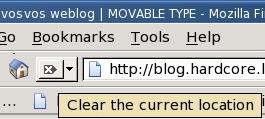
To someone not familiar with X11 programs, this might seem like a bug, but it certainly is not. As anyone who is familar with X11 programs knows, to copy something, all you need to do is highlight it. This means that if Firefox did auto-highlight the url every time you type in an address, you'd have your clipboard contents stolen from you. This is the reason that Konqueror includes a "Clear Location Bar" widget beside the location bar which does exactly what you want: clears the location bar, sets focus to it, and doesn't mangle your clipboard. There is a similar feature for Firefox if you install the extension for it.
-
Re:My opinion hasn't changed
I remember reading that headline somewhere. I just forgot it was on April 1st.
Damn you, Daniel Molkentin!! -
Re:True.I downloaded the AmaroK Livecd, and now I can't stop listening to internet radio stations on Shoutcast.com
It's based on PClinuxOS, so it's good.Guess I'm stuck here. Lemme see... how about some XTC radio 160 kps...
Yeah, that's the ticket...
-
HP had the answer
For a short time last year one could buy nx5000 HP notebook with SuSE 9.1 pre-installed (only in the US) http://h10010.www1.hp.com/wwpc/us/en/sm/WF06a/321
9 57-64295-89315-321838-f33-395654.html
Configure and buy link in the web page does not work now. I remember some press release HP announced that they would prefer to enter this (pre-installed linux) market and were testing the feasibility in the US. I think every other linux journal http://www.linuxjournal.com/article/7845 had rave reviews including one at MSNBC http://www.msnbc.msn.com/id/5831949/ but alas all has failed to deliver.
HP sponsored even a KDE summit in Germany by supplying Linux laptops. http://dot.kde.org/1094715499/ -
Kopete, too
Kopete has a warning message on its site as well.
-
Oh great...
-
Re:How about Gnome abandons effort...
Good idea since KDE on SUSE 10 will be Mono based anyway (http://www.guardian.co.uk/online/story/0,,144810
8 7 &w=2). -
Subtle April 1st jokesI agree, the jokes should be subtle enough to fool at least one person. I like to read something, think long and hard about it, and still not be able to figure out if it's true or not. Like these ones:
http://gentooexperimental.org/nt/
http://lists.kde.org/?l=kde-cvs&m=111233809718017
& w=2Real or fake? I don't know. On the other hand, "First PC Virus Spreads to Humans" is so bad that there is no real reason to click the link except that every story on