Slashdot Mirror
Domain: libero.it
Stories and comments across the archive that link to libero.it.
Comments · 123
-
.. also
With the risk of this being "Scotlands" space port
Lots of mentioning of scotland in the text.
I'm not well aware of the positiong issue you mention, though I do understand that part =P
Was is the advantage of the opposite such as the Esrange (Kiruna) base here in Sweden?
http://www.sscspace.com/esrang...
The amount of space available?
They mention " investigation of the aurora borealis" here so maybe that's it? http://digilander.libero.it/lo... -
Re:Do you follow the news at all
There are lots of other examples, and you DARE to say that incitement to hatred should not be a crime.
In most cases, they require a martyr to actually go beyond the belief stage. Just look at the internet, you can find statements to back up any belief, yet its only information. Look at the development of religions, especially Christianity, the more it was persecuted, the larger it grew and the more rapidly while today it isn't in a rapid phase of growth due to increased religious tolerance. Have you not heard of the Streisand effect? Basically the more you try to censor "hate" speech the further and more radical it gets. You only encourage "hate" speech by attempting to stop it. For example, on the internet you can find all sorts of crazy theries such as that contrails in the sky are actually mind altering chemicals ( http://educate-yourself.org/ct/ ) that Paul McCartney really died in the '60s ( http://digilander.libero.it/jamespaul/fc1.html ) and other more absurd conspiracy theories. However, they get lost in the sea of information that is the internet. The same thing happens with "hate" speech when it is not criminalized.
That is EXACTLY the same as saying that offering a contract on someones life should not be a crime because it is only words.
If it was a legal contract, the person was actually hired and really was going to commit murder, it is not a free speech violation to apprehend them. Signing the contract and agreeing to go through with it similarly is not a free speech violation if you get caught.
-
Re:Apples and apples
That's been covered too.
-
Re:GNAA
I'm sorry...it's just that...well...Timecop kinda sucked...and...well...maybe you should worship someone else?
You know...like the fonz?
http://digilander.libero.it/spaziowebceskino/img/griffin.png
I mean...Peter Griffin completely had it right. Timecop? What the hell were you thinking? -
Slighty offtopic.
Some Creative Commons (http://creativecommons.org/) music providers: Jamendo = http://www.jamendo.com/en/ Search CC = http://search.creativecommons.org/# OpSound = http://opsound.org/ w00tw0t0 Records http://w00tw0t0.net/ and a small internet Radio only CC music http://digilander.libero.it/freemusicstyle/ These are FREE and LEGAL. There is no need to pay anyone and sometimes, depending on the license, you are free to elaborate or even profit. So the estimated cost is "how much you want to donate". The quality is good if compared to the pieces of Britney Spears (for instance) but you won't easily find any boy band. As long as we know they are a marketing product and not real music. I know this is slightly offtopic, but I'll be glad if someone visits those sites and gets inspiration.
-
Re:As soon as you have people willing to cheat..
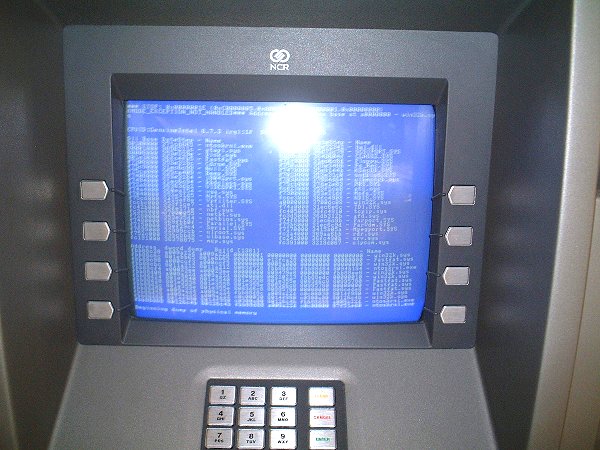
Just wait until you go to withdraw $500, the money is taken out of the account, and just when the machine is about to spit out the cash, BAM! Blue screen of death!
-
Re:At what time where you in Sweden?when Wartburg was a popular car in Finland, it would date to 1950s
In the 1980s you could still buy cars like this from the factory. I didn't mean "popular" as in "common", I meant it as "affordable", but I saw several Wartburgs in the streets of Helsinki.
I agree that environmental costs should be paid by fossil fuel users, through taxes on carbon content, for instance. But I don't think it's fair to tax cars and gasoline and other "luxury" items in order to have subsidized health care by the government. Only health care workers benefit by that system.
Many people in Sweden complained a lot about the quality of medical services. Someone I knew sprained his arm playing football in Sweden, and he complained a lot about the way he was treated in the emergency ward. The doctor did only the most basic examination to verify that no bones were broken and sent him to a nurse. Six months later my friend was still feeling pain when moving his arm. I also remember a case that was in the paper, a teenager was stabbed in a street fight in Stockholm and died because the ambulance took too long to arrive. When the case was investigated, they found that the ambulance driver wasn't at his place and it took about ten minutes to locate him when the hospital was called. Once I was in a tourist office and picked a brochure on skiing trips to Colorado. It recommended carrying extended health insurance, because if you had an accident you would get better treatment locally than in Sweden. And so on, government subsidized universal health care is a much better idea in theory than in practice. -
Re:A plug for GNU Radio
Why spend that much ($350+), when you can order a dirt-cheap shortwave radio for maybe $40 and just use a simple 455 kHz to 12 kHz adaptor?
SDR is a broad topic. Wide-band digital modes such as the 12KHz wide DRM or even narrow ones such as HamDream are a simple example.
SDR involves a variety of techniques, but the basic idea is using an A/D at an early stage, and performing operations traditionally done with RF components with DSP software instead.
In its extreme, an SDR has a broadband RF amplifier and a DSP.
Some systems use a tuned RF filter before the RF amplifier to improve dynamic range and reduce overload, and others put the DSP after the first analog mixer. Ham equipment that uses IF DSP does this, such as many of the ICOM radios.
Then there are devices that then mix down to somewhere around the audio range, at least to the 0-96KHz or 0-48KHz range handled by many popular PC sound cards. The RF signal is detected by a an I-Q detector, which produces two signals In Phase and Quadrature (90 degrees out of phase). You might notice that this is a decomposition of a periodic wave into real and complex parts, given v=cos(omega)+j sin(omega). Thus, DSP techniques such as FFT can be applied in the complex domain. If you're seriously interested in this math, look up the Hilbert transform. It lets you modulate or demodulate directly in the DSP, and as a result the transmit and receive software and hardware are very similar. (And wouldn't the Professor on Gilligan's Island like to know that you can make a receiver into a transmitter without using coconuts!)
Anyway, once you get the I-Q signals into the two channels of the sound card, you get a view of the RF spectrum all at once, up to the bandwidth of your sound card sampling. So, if you have a 48KHz sound card you get 48KHz of band scanned simultaneously, and can pick and choose what frequency you want to demodulate, and how you want to demodulate it in software (AM, Single-Side Band, FM, various digital modes such as the aforementioned DRM=digital radio mondial). See here and here.
The SoftRock 40 and its replacement, the SRv5, surface mount kits costing in the $30 range, do this. They're an excellent introduction to SDR techniques, without requiring DSP chip programming. People are doing fun things with them. It's not a transmitter yet, but it will be soon with another board and a ham license).
For software, among others, there is Gnuradio, and also SDRadio, a Windows app. And there's DTTSP, a SourceForge project that runs in Linux and also releases a DLL used by the FlexRadio people. DTTSP has a number of front ends in development, in Java and other languages.
A step up is the FlexRadio SDR-1000, alluded to above. It's a 100W transceiver that does the same thing that the SoftRock does, but does a better job, and also use a VFO that allows it to pick what frequency range it operates on, rather than being limited to a particular crystal-controlled band as the stock SoftRock does. It also costs quite a bit more, and they use a 96KHz sound card to get good quality. -
Indeed
Voodoo 5 6000 with quad GPU weren't sold in retails in shrink wrapped box.
But some where produced for AAlchemy graphic station.
There're still some in circulation, from time to time they show up on ebay, and, thanks to community efforts like those for AgminMerlin drivers, you even have a recent WindowsXP-compatible driver.
AAlchemy even has 8x way multi VSA-100 configuration PCI boards.
I just find I ironic that once every body (specially nVidia fans) was making fun of Voodoo 5 multichip-with-external-power-supply card.
And now this, a multi-chip-with-external-power-supply is considered the last "killer card to have". -
Re:I'm not an expert...
that site moved to Italy
-
Re:Highlights? Highlights?!!
If you mean Raffaello Sanzio, the Italian Renaissance painter, then, no, Italian Space Agency did not get it wrong when they named the module.
If you mean Rafael, the Teenage Mutant Ninja Turtle, then NASA probably screwed up. -
Re:One (perhaps four) Word(s) (Plus some others)
If you want to see more example of 3DFX insanity.. Quantum3D (made some of the larger parallelized SLI boards for commercial and defense applications) just see here:
http://digilander.libero.it/F1Land/3dfxarchive/med ia/pictures.html
Cards like these come to mind:
http://digilander.libero.it/F1Land/3dfxarchive/dow nload/media/gallery/quantum3D-mercury-16x3dfxvoodo o2pci-96mb-3.jpg
http://www.3dfx.ch/gallery/albums/collectors_xray/ Elliotts_Voodoo5_6000_Quantum3D_Obsidian_100SB_001 -
Re:One (perhaps four) Word(s) (Plus some others)
If you want to see more example of 3DFX insanity.. Quantum3D (made some of the larger parallelized SLI boards for commercial and defense applications) just see here:
http://digilander.libero.it/F1Land/3dfxarchive/med ia/pictures.html
Cards like these come to mind:
http://digilander.libero.it/F1Land/3dfxarchive/dow nload/media/gallery/quantum3D-mercury-16x3dfxvoodo o2pci-96mb-3.jpg
http://www.3dfx.ch/gallery/albums/collectors_xray/ Elliotts_Voodoo5_6000_Quantum3D_Obsidian_100SB_001 -
Re:How long until...
I guess you haven't seen the 3dfx ads? "You could use the technology to save lives.... or play games".
-
Re:How long until...
I guess you haven't seen the 3dfx ads? "You could use the technology to save lives.... or play games".
-
Re:Lotus Notes
The UI for Lotus Notes is so spectacularly bad, the Interface Hall of Shame had to devote a special section to it
http://digilander.libero.it/chiediloapippo/Engine
e ring/iarchitect/lotus.htm -
Re:He is the creator of Lotus Notes?
Right, 'cause Notes is famous around the world for its elegant design, ease of use, and lack of problems.
-
Some useful notes
Interface Hall of Fame
Interface Hall of Shame
Whenever I design a UI I always think "what would the lotus notes designers do?" and then make sure I do nothing like that. -
Some useful notes
Interface Hall of Fame
Interface Hall of Shame
Whenever I design a UI I always think "what would the lotus notes designers do?" and then make sure I do nothing like that. -
Re:I wonder what MS has stolen from firefox
you mean as in "tabbed dialog boxes" which were introduced into MS software as early as Word 6 which predates the Windows web browser.
-
Re:Volume Control
So you really enjoy using a circular control (the knob) that is controlled with a linear device (the mouse)??
Windows, Mac, KDE, GNOME and every other sane interfaces all actively avoid circular knobs in the computer screen because they're a bad idea. -
Re:Will Apple follow IBM and Sun?
It's a good thing for Apple, but only when compared to Apple not having software patents and other companies having them. Eliminating software patents (as I'm sure you all know) will help everyone - not just the big end of town like Apple.
Two patents in the Think Secret story shocked and utterly appalled me. The first was Apple patenting a text field to search for files on a computer. I mean, really.
The second - Steve Jobs is listed as a designer of the QuickTime 4 user interface. How can someone so brilliant be so stupid at times!? -
Re:Relocate serve to DMZ
I am able to recognize a joke. Sadly, it was not a good joke (the kind that makes me laugh so hard I fall off my chair, roll around on the floor, gag, and spew Pepsi from my nostrils). Instead we were treated to a pitiful flacid wisecrack with only passing resemblance to a real joke.
However on the off chance that the person making the remark was a really stupid individual, I gave them the benefit of the doubt. -
Re:Open dialog still a monstrosity?
"But why the hell don't all the multitude "file open dialog" designers on Linux just get their shit together and see how the Windows common dialogue does it ?"
Because it's in the User Interface Hall of Shame.
"Sorry but it's now 2005 and Gnome is STILL farting about trying to get a decent file open dialog. It's no wonder that Microsoft, despite all their myriad, well publicised faults, remains king of the desktop."
Is the MacOS X file dialog decent? Of course it is, everybody on Slashdot praises MacOS X. The GNOME file dialog is 99% identical to the OS X file dialog! -
Re:Well then.
Just try to imagine a Soyuz-based mission to fix the Hubble.
I don't see any problems here at all. What specifically makes you say it can't be done? The Soyuz can be brought to the same orbital plane as Hubble. The Soyuz can maneuver in space - and if you think it doesn't have enough fuel, just send a Progress ship to dock with Soyuz. The Soyuz has airlock. The Soyuz can fly with two people onboard, and extra cargo, needed for repairs, can be taken along.
Best of all, all of that was already successfully tried. Soyuz-4 and Soyuz-5 have docked in space in 1969. Progress was used to boost the orbit of another ship, ISS in this case. The Soyuz' airlock is the orbital module. Soyuz have flown with two people on board. Soyuz was actually used to repair a station in space, when all the control was lost. -
Re:Good, clean, free.
On the other hand, the question is about windows. Here's the best freeware list I've found, taken off of the neowin.net forums. These are not guaranteed Clean, but most of them are. Also, you might want to check tinyapps.org, which specializes in SMALL apps (usually not enough space for ad/spyware).
Category 3D Graphics: ----JunkCharactersToDefeatLameness/CharacterCountF ilterForAValidList----
3Delight Free - http://www.3delight.com/index.htm
Anim8or - http://www.anim8or.com/
Aqsis - http://www.aqsis.com/
Blender - http://www.blender3d.org/
gmax - http://www.discreet.com/products/gmax/
Houdini (Free Edition) - http://www.sidefx.com/apprentice/index.html
Maya Personal Learning Ed. - http://www.alias.com/eng/products-services...ple/i ndex.shtml
Now3D - http://digilander.libero.it/giulios/Eng/homepage.h tm
OpenFX - http://www.openfx.org
SOFTIMAGE|XSI EXP - http://www.softimage.com/products/exp/v3/
Toxic - http://www.toxicengine.org/
Wings 3D - http://www.wings3d.com/
Category Anti-Virus:----JunkCharactersToDefeatLameness/Char acterCountFilterForAValidList----
AntiVir - http://www.free-av.com/
Avast - http://www.avast.com/i_idt_1018.html
AVG - http://www.grisoft.com/
ClamWin - http://www.clamwin.com/
Category Anti Spyware:----JunkCharactersToDefeatLameness/Charact erCountFilterForAValidList----
Ad-aware - http://www.lavasoft.de/software/adaware/
Bazooka - http://www.kephyr.com/spywarescanner/index.html
Diet K - http://www.dietk.com/
SpyBot Search & Destroy - http://spybot.safer-networking.de/
SpywareBlaster - http://www.javacoolsoftware.com/spywareblaster.htm l
SpywareGuard - http://www.wilderssecurity.net/spywareguard.html
Category IRC Clients:----JunkCharactersToDefeatLameness/Charact erCountFilterForAValidList----
BersIRC - http://www.bersirc.com/
BitchX - http://bitchx.org/download.php
HydraIRC - http://www.hydrairc.com/
TinyIRC - http://www.tinyirc.net/
XChat - http://www.silverex.org/news/
Category Audio Players:----JunkCharactersToDefeatLameness/Charact erCountFilterForAValidList----
1by1 - http://www.rz.uni-frankfurt.de/~pesch
Billy - http://www.sheepfriends.com/?page=billy
CoolPlayer - http://coolplayer.sourceforge.net/
DeliPlayer. http://www.deliplayer.com/
Foobar 2 -
Re:Why is more dimensions "better"
Let's talk real 3D, glasses and all. This would completely change everything and for the better.
Yes, let's talk about this "better" world.
Putting things in a real background,
Okay in a real 3D, there is no "background", just like how there's no "background" in real life. There's just things that are farther away. The way you put things in the "background" is either by schlepping the window 5km away from where you're working, and then then return the 5km to your primary worksite. This method is incredibly annoying and inefficent.
Or you can perfom some action that moves automatically moves the window 5km, then perform some action that automatically retrieves the window from 5km away. How this is different from a 2d interface iconifying a window to a thumbnail, I don't know.
3D video,
Well all that requires is a 3d video player, not really a 3d interface, unless of course you're talking about fully immersive virtual reality, but I'm assuming your not.
parking windows,
I'm not familiar with parking windows.
3D representations of CD cases instead of ID3 tags,
Been there. Done that. Got the t-shirt.
Another example is all those media player skins that resemble radios, tubas, organ grinders, and what not. These are widely considered to be very poorly designed interfaces. Whatever intuitiveness is gained by modeling the interface to superficially resemble a real world device is lost the moment the user tries to use it. You can't twist dials easily with a mouse. It's much slower to click a series of button widgets, than press physical buttons. Compare onscreen keyboards to your physical keyboards.
Let's change your idea from id3 tags to cddb files, since id3tags are per track, and cd cases are per album. Right now I click "view info" and get a window that displays the tracklisting and possibly the album cover. With your idea I would click "view info" and magically the cd case would fly into view. I would then need to rotate the case to view the track listing, and then rotate it again to view the cover art. Presumably the case would be textured in high resolution scans of the physical cd's artwork. As anyone who has viewed the back cover art can attest, it's not always easily read (i.e. screwy fonts, text that spirals around the outside edge, tracks not always listed in order, etc.).
3D website deisgn
Of course websites are mostly text, an intrinsicly 2d object. So it's unclear on how you would actually add a third dimension to this. Sure you display one page, and then display outgoing pages farther away, but if you can't read them, then what's the point. You could achieve this same thing by displaying a thumbnail of the link's destination in a traditional 2d interface.
I think the thumbnail idea is alot more plausible than that Johnny Mnemonic crap.
remote control of real world objects
I'll give you this one if the device interacts in the world in 3d. So, a robot arm? Yes. A furnace? No.
Don't get me wrong. I'm not saying that all 3d are pure crap. I'm saying use them where appropriate (CAD, geospatial, some simulation, spreadsheets), and not where it's not (text, photographs, cd players,
>This is just another fantastic way to waste the CPU
So is anti-aliasing, so is even having a windowing system that isn't completely and utterly bare bones, etc.
Anti-aliasing isn't simply eyecandy. It enhances the user experience by making text easier to read. The easier it is read, the easier the user can perform his task.
Some of us buy our CPUs to use them, not coddle t -
Re:Why is more dimensions "better"
Let's talk real 3D, glasses and all. This would completely change everything and for the better.
Yes, let's talk about this "better" world.
Putting things in a real background,
Okay in a real 3D, there is no "background", just like how there's no "background" in real life. There's just things that are farther away. The way you put things in the "background" is either by schlepping the window 5km away from where you're working, and then then return the 5km to your primary worksite. This method is incredibly annoying and inefficent.
Or you can perfom some action that moves automatically moves the window 5km, then perform some action that automatically retrieves the window from 5km away. How this is different from a 2d interface iconifying a window to a thumbnail, I don't know.
3D video,
Well all that requires is a 3d video player, not really a 3d interface, unless of course you're talking about fully immersive virtual reality, but I'm assuming your not.
parking windows,
I'm not familiar with parking windows.
3D representations of CD cases instead of ID3 tags,
Been there. Done that. Got the t-shirt.
Another example is all those media player skins that resemble radios, tubas, organ grinders, and what not. These are widely considered to be very poorly designed interfaces. Whatever intuitiveness is gained by modeling the interface to superficially resemble a real world device is lost the moment the user tries to use it. You can't twist dials easily with a mouse. It's much slower to click a series of button widgets, than press physical buttons. Compare onscreen keyboards to your physical keyboards.
Let's change your idea from id3 tags to cddb files, since id3tags are per track, and cd cases are per album. Right now I click "view info" and get a window that displays the tracklisting and possibly the album cover. With your idea I would click "view info" and magically the cd case would fly into view. I would then need to rotate the case to view the track listing, and then rotate it again to view the cover art. Presumably the case would be textured in high resolution scans of the physical cd's artwork. As anyone who has viewed the back cover art can attest, it's not always easily read (i.e. screwy fonts, text that spirals around the outside edge, tracks not always listed in order, etc.).
3D website deisgn
Of course websites are mostly text, an intrinsicly 2d object. So it's unclear on how you would actually add a third dimension to this. Sure you display one page, and then display outgoing pages farther away, but if you can't read them, then what's the point. You could achieve this same thing by displaying a thumbnail of the link's destination in a traditional 2d interface.
I think the thumbnail idea is alot more plausible than that Johnny Mnemonic crap.
remote control of real world objects
I'll give you this one if the device interacts in the world in 3d. So, a robot arm? Yes. A furnace? No.
Don't get me wrong. I'm not saying that all 3d are pure crap. I'm saying use them where appropriate (CAD, geospatial, some simulation, spreadsheets), and not where it's not (text, photographs, cd players,
>This is just another fantastic way to waste the CPU
So is anti-aliasing, so is even having a windowing system that isn't completely and utterly bare bones, etc.
Anti-aliasing isn't simply eyecandy. It enhances the user experience by making text easier to read. The easier it is read, the easier the user can perform his task.
Some of us buy our CPUs to use them, not coddle t -
Interface hall of shame
-
GUI design - favorite site
Alas, this site is no longer updated, but it still serves as my very favorite "UI Hell" page...
http://digilander.libero.it/chiediloapippo/Enginee ring/iarchitect/index-1.htm
Check out the hall of shame section, it's hilarious!
PS - this link is a mirror of the original site -
Re:mnb Re:My experience: it just worked
But how do I put Linux on it? It has no internal CD or floppy, and can't boot from USB!
It seems to require some tinkering. -
Re:Max OS X is great, but...
It wasn't the Quicktime Player that won them anything other than a place in the Interface Hall of Shame.
It was Quicktime itself, which has been around far longer than the player/plug-in that people now know from watching movie trailers online. The reason it has contributed to video/film editing is because of the features and formats it offered to 3rd-party editing and presentation software. -
Ah, my thermionic friends
Yes, I love tubes. I love the wacko physics and great ideas people had in the past. Lessee here:
Miniaturized tubes (In german, but pretty pictures)
Mercury arc rectifer Evil-looking power tube! AH!!! An insane alien octopus!
A glass analog to digital converter? You betcha!!!
Tubes? Big? Don't think so!
I confess, I don't just like tubes, I like snap and tunnel diodes as well. -
Ham Radio in a Changing Electronics LandscapeGoing to the Dayton Hamvention this year after a 20 year absence was eye-opening. There just weren't many people under 50 to be seen.
I think several trends are at work in amateur radio right now. First is that advances in chip integration have made it more difficult to homebrew equipment. There are fewer and fewer "catalog" parts around with simple functions. This, plus surface mount packaging, have made electronic products cheaper but electronic experimentation much more difficult for the average person.
Another trend is the commercial annihilation of distance. Talking across the country on two-way radio loses its thrill when one can do the same on a cell phone more or less for free, and much more reliably.
Software Defined Radio (SDR) is a bright spot in ham radio today. Forget about the Big Project flavor of Gnu Radio. Amateur SDR projects tend to be quite simple - sometimes ingeniously so - and approach the subject from the experimenter's point of view, not the engineer's. Most are based on the simple proposition that a recent commodity PC plus sound card make a pretty decent digital signal processor.
Organizations like ARRL and TAPR have encouraged digital radio up to and including SDR, though they have each tried to firmly guide the direction of amateur SDR. In fairness, ARRL has published many articles in its experimenter's magazine and in an excellent online compendium.
Two independent projects show the range of amateur SDR. The SDR-1000 is a hardware/software project turned semi-commercial, with a steep price of entry. Flex Radio Systems also has a unique definition of Open Source. On the other hand, the SDRadio project is an independent software receiver that is slowly morphing into a community effort. The project forum is brimming with good ideas.
There are other, loosely related projects such as narrowband signal processing and Digital Radio Mondiale (broadcast) decoders being done by hams. From these resources it's easy to see SDR as an emerging force in rejuvenating ham radio, even though today the various efforts are quite fragmented.
-
Lotus Notes, Kill Bill, UI Hall of Shame, etc...
If Lotus Notes was a character on Kill Bill, it would go something like this...
Lotus Notes: Larry, there ain't no mail out there!
Larry Gomez : There ain't no mail out there... Larry... What's your point? That you're not needed here?
Lotus Notes: My point is, I'm the groupware... and there ain't no mail out there to deliver!
Larry Gomez : You're saying that the reason... that you're not doing the job... that I'm... paying you to do... is, that you don't have a job to do? Is that what you're saying? What are you trying to convince me of, exactly? That you're as useless as an asshole right here? Well guess what, Lotus Notes. I think, you just fucking convinced me!
Really, I have to use Lotus at my current job and have had to use it at previous ones too. I never thought I'd say it, but I miss MS Exchange Server. Who needs Lotus when you have pop3 and a text file every can edit...at least it would work most of the time. Never before have I used such a frustrating, stupid, ugly, ineffective product. Give me a ham sandwich over Lotus Notes.
Also of interest, an in-depth analysis of Lotus Notes on the User Interface Hall of Shame.
http://digilander.libero.it/chiediloapippo/Enginee ring/iarchitect/lotus.htm
-
Re:An all-U2 iPod?
-
Re:The good, the bad, the really, really uglyApple does a better job of making a UI work in Windows than MS does?
To be fair, some Apple interface decisions in multi-platform products have genuinely sucked ass, too...
-
Re:Too much like MS?
"I'd rather they copy apple, who's known for quality interfaces"
Does that include "quality interfaces" such as this one?
hehe, settle down apple fans, I'm just pointing out that no-one is perfect, not even apple.
-
Re:A double whammy for comcast and the RIAA!
Well if you were looking to get an entry into the interface hall of shame then you've certainly made a contender. I kind of assume you weren't looking to make a career of web design? If you were I'd start researching how food coupons work.
-
Hold on, researching.....
Hey, you're right! It goes on the head.
-
Re:Yes a technical problem, but of different natur
B) You can go to a Mac board and find numerous places where Apple ignores/violates thier own HIG.
They are the Human Interface Guidelines, not Human Interface Laws. No one document can describe with absolute certainty how each situation must be handled. A good designer will take the guidelines as a starting point, and apply them to an overall vision as appropriate.
While I am a Mac user and like most of Apple's designs, methinks you are placing too much faith in Apple's designers. They didn't get into the Interface Hall of Shame for nothing.
They are just as guilty as anyone else of making things look shiny at the expense of usability. There are many other examples: for instance, in the OS X help system, if the toolbar is hidden, so is the search field. It's pretty confusing for a new user to see "enter your question in the field above" when there is no field there.
They have also given several applications a brushed-metal appearance that do not warrant it (cough Finder), and in many cases this is ugly, a waste of screen space, and a detriment to usability. Brushed metal is only for windows that represent an interface to a specific piece of hardware, and IMHO should never have been there in the first place.
The list goes on: AppleWorks is the epitome of a "bad Carbon port" and trashes several parts of the HIG; iChat, while shiny, is very difficult to use for normal text chats. I use Adium instead: it has its own usability problems, but since it's open source, I can fix those (and have done so in several cases). It also doesn't waste so much screen space as iChat. iCal is terrible: slow, kludgy and full of nonstandard controls.
The list goes on. I still prefer Apple on the whole to either XP or *nix for usability reasons, but they're far from perfect... -
Re:Common User Access
IBM had some interface nightmares of it's own. Good to see they learned their lessons.
-
Re:Common User Access
IBM had some interface nightmares of it's own. Good to see they learned their lessons.
-
Re:YeahIMHO, the reason why OS GUIs tend to suck is that there's no one to argue with. When the developer sits down, he thinks about it for awhile and develops what he thinks is best.
I don't know--if an OSS programmer writes something that is hard to use, two things will happen:
1. People will complain. Long and loud.
2. People will write patches or offer constructive criticism.
Some developers will design solid UIs from the start, requiring only minor tweaks. Some will create freakish monstrosities requiring many iterations and possibly a fork to fix. Some programs will remain unspeakably awful, probably because nobody needs their functionality enough to use them and demand repairs.
Remember, this sort of thing happens with closed-source proprietary products, too. IBM and Microsoft are well represented in the Interface Hall of Shame alongside many smaller developers.
-
Re:It's Java
Are you on crack?
I'm certainly not. Although one might wonder since I'm arguing with a coward.
Azureus:
Redraws slowly when you perform opaque resizes.
Can't really say that I've noticed this. Not that Azureus is the type of application I resize much.
Consumes about 50MB of physical RAM doing nothing.
Nothing? You do realize that Azureus preallocates rather large buffers? That memory isn't going nowhere, it's used to increase performance! Why do you think it downloads faster than the original client? (Actually, early versions would allocate this memory on the fly, but that lead to some memory leakage problems that would eventually require you to restart the program.)
Creates fixed-sized dialogues without concern for viewability of text.
Ok, you've identified a UI issue. Explain to me how this is Java's fault and not the developers'? I've seen many a similar bone-headed mistakes in C programs as well. Or were we just supposed to forget hideous GUIs like GNUTella?
Routinely informs me that I've used it for 90,000+ hours.
Seen that screen once. And I run Azureus fairly often to download multi-gigabyte files. Either way, it's not like it's that annoying, and it certainly has nothing to do with Java.
G2GUI
Sancho
Besides the fact that you've again identified problems of the developers as "Java problems", I really have no friggin' idea what these programs are, nor do I care. Pulling out a random bad program does not demonstrate that a platform sucks. Intelligently explaining the underlying problems of the platform (which you have failed to do) does.
Allow me to point out a few very bad C programs:
XEdit:
The scrollbar is completely non-intuitive and requires the middle mouse button to scroll
It is difficult to understand how the "Search box" functions
Ctrl+C, Ctrl+V don't work
Filenames have to be typed instead of chosen via a GUI
Slow responsiveness
Does not resize without an add-on "Window Manager" program
GUI flashes on every update
FileMatrix:
Uses thousands of highly confusing tabs
Text in many areas does not fit in component
Confusing use of competing colors
Information overload
You can find a whole bunch more C/C++ programs like these on Interface Hall of Shame. I therefore declare that the C language platform is slow and sucks.
Now let's consider IDEA.
How about we take two minutes and consider that IDEA is a developers tool, not an end users program? Visual Studio.NET isn't exactly the smallest and snappiest program either. But both it and IDEA provide a lot of features that DEVELOPERS need. The tradeoff for this power and flexibility is high memory requirements. Since you don't get something for nothing, deal with it.
I can, on a 2.1GHz Thoroughbred B, watch it draw menus, all widgets on resize, paint text when scrolling, and construct dialogues when you load them.
I think you need a new graphics card or something. I run a PIII 733 w/512MB of RAM and a GeForce2 graphics card and I have NEVER seen GUIs that slow. If you can watch things paint on the screen, then there is a serious problem with your graphics card. Either that or your simply a troll who likes to spread FUD.
HAND.
-
Re:Old Technologies Die For A Reason
The difference between Apple and MS (or GNOME), though, is that Apple didn't _change_ their file browser' they just added functionality (without removing the old). The great thing about what Mac OS X does is that you can use one of three different modes, and you can set this option for each individual window. There is absolutely no reason why there should be a conflict between "spatial" and "browser" file management, because the two serve very different functions, and each has its own strengths. The fact that Apple has implemented an easy way to use whichever works best in a given situation shows that this whole debate is simply a matter of ideology and stubbornness more than anything else.
In OS X, the "View" menu has the options: "as Icons", which would be the equivalent of "spatial", "as Columns", which is closer to the Explorer thing (though not quite the same, and much faster in my experience), or "As List", which is like Icon view, but with drop arrows that let you browse folder structure hierarcharchaically (sorry, spelling). Note that "As List" has been around since at least System 7, so we're not exactly talking about spanking-new technology here.
The fact that this setting is retained individually for each window makes my life a lot easier--folders where I need to quickly go several levels deep stay in Column mode, while folders that I often copy files to stay in Icon mode. It's the best of both worlds. I have no idea why this guy is ranting so fervently against _extra_ functionality for the sake of the (random and to most people irrelevant) goal of the perfect metaphor. Experience has shown that focusing solely on emulating real-world objects is pointlessly frustrating for the user, while failing to take advantage of abstractions offered by the computer.
Here's a good example from IBM.
Apple itself has been guilty of this as well.
Now, granted, this guy isn't quite insisting that a file browser make use of drawer handles and coffee cup stains on the blotter, but it seems that most of the comments here agree that he's way out of wack in his adherence to metaphor over usability. I don't want to make blanket statements like "any time an interface designer tells a user that it's their problem, he's wrong", because there are always exceptions, but this article is about the farthest thing from an exception that I've ever seen.
I personally stopped using GNOME about a year ago, when I got a computer fast enough to handle OS X (Debian felt about ten times faster on my old iBook than did Jaguar, but my G4 is fine in OS X), but already there were a few things creeping in that bothered me; most glaringly the removal of viewports from Sawfish. It's a shame that so many developers see customizability as mutually exclusive with intuitiveness. It's even worse when guys like this rail on against both of them for no apparent reason other than bizarre ideology. -
Re:Old Technologies Die For A Reason
The difference between Apple and MS (or GNOME), though, is that Apple didn't _change_ their file browser' they just added functionality (without removing the old). The great thing about what Mac OS X does is that you can use one of three different modes, and you can set this option for each individual window. There is absolutely no reason why there should be a conflict between "spatial" and "browser" file management, because the two serve very different functions, and each has its own strengths. The fact that Apple has implemented an easy way to use whichever works best in a given situation shows that this whole debate is simply a matter of ideology and stubbornness more than anything else.
In OS X, the "View" menu has the options: "as Icons", which would be the equivalent of "spatial", "as Columns", which is closer to the Explorer thing (though not quite the same, and much faster in my experience), or "As List", which is like Icon view, but with drop arrows that let you browse folder structure hierarcharchaically (sorry, spelling). Note that "As List" has been around since at least System 7, so we're not exactly talking about spanking-new technology here.
The fact that this setting is retained individually for each window makes my life a lot easier--folders where I need to quickly go several levels deep stay in Column mode, while folders that I often copy files to stay in Icon mode. It's the best of both worlds. I have no idea why this guy is ranting so fervently against _extra_ functionality for the sake of the (random and to most people irrelevant) goal of the perfect metaphor. Experience has shown that focusing solely on emulating real-world objects is pointlessly frustrating for the user, while failing to take advantage of abstractions offered by the computer.
Here's a good example from IBM.
Apple itself has been guilty of this as well.
Now, granted, this guy isn't quite insisting that a file browser make use of drawer handles and coffee cup stains on the blotter, but it seems that most of the comments here agree that he's way out of wack in his adherence to metaphor over usability. I don't want to make blanket statements like "any time an interface designer tells a user that it's their problem, he's wrong", because there are always exceptions, but this article is about the farthest thing from an exception that I've ever seen.
I personally stopped using GNOME about a year ago, when I got a computer fast enough to handle OS X (Debian felt about ten times faster on my old iBook than did Jaguar, but my G4 is fine in OS X), but already there were a few things creeping in that bothered me; most glaringly the removal of viewports from Sawfish. It's a shame that so many developers see customizability as mutually exclusive with intuitiveness. It's even worse when guys like this rail on against both of them for no apparent reason other than bizarre ideology. -
Re:Someone explain?Agreed, in fact strict adherence to metaphor is well known in UI design to create needless limitations that exist only in real-world devices. It is a design flaw, which the gnome crowd are not the first to be guilty of.
An old example but still a good lesson in going too far down metaphor road.
-
Real world metaphors are not always goodThere seems to be an assumption in the spatial Nautilus idea that real-world metaphors are a Good Thing (tm). I disagree with that -- a different medium needs sometimes a different approach.
Good examples of bad metaphors are:
- Quicktime (see also the links to the RealPhone and RealCD on that page)
- the desktop
- and the recycle bin
The recycle bin is rather dangerous. I gave adult education classes in Windows once, and I had to learn that quite a few people empty it regularly: the full bin looks messy and they are not messy people. But that defeats the purpose of the recycle bin. (I won't go to discuss MS failure to provide this important facility where it really matters.)
The article links tries to tell me spatial Nautilus is good, because it is close to the real world. I haven't tried the new Nautilus yet, but while I actually work myself in the area of creating browsing spaces for data analysis, this particular description does not entice me at all. They can blame me for being someone who uses Windows and KDE (both true, though often Blackbox) and someone who "misuses" the browser tabbing feature (I use two windows if I have two completely different task sets -- reading Slashdot and linked sites counts as one). But that is their problem, for me the description is yet another reason not to use Gnome (the other one is that the Gnome project seems to lack pragmatism).
If they come up with a properly designed browsing space for documents (using metadata instead of tree-based hierarchies) I might be more interested.
Peter
-
Article has a lot of 'shoulds'
I'm sorry, but I don't like my file manager forcing me to change the way I browse ('should' have a shallow directory structure, 'shouldn't' nest folders too deep, etc.). I think the spatial paradigm is pretty cool, but it should be an easily-disabled option.
As for the screen clutter, sure you can close the containing folder when opening a subfolder etc. with non-obvious keyboard shortcuts, but I shouldn't have to RTFM to get rid of simple annoyances like that!
'Real-life interfaces' are generally a bad idea. The vast majority of people have cluttered desks in which stuff is impossible to find quickly. Review the Interface Hall of Shame's critique of 'real-life' inspired UIs (IBM RealCD and RealPhone, Apple QuickTime Player 4). They're quite thorough and brutal. Computers are not for the purpose of merely representing real-life objects electronically; they are there to aid us in improving productivity over 'real life' methods.