Slashdot Mirror
Domain: lowendmac.com
Stories and comments across the archive that link to lowendmac.com.
Comments · 581
-
The Mac's other salvation: square pixels
The Lisa, like other computers of the day, had rectangular pixels. The Mac's introduction of square pixels allowed true WYSIWYG, and was crucial to desktop publishing and computer art. The Mac's still strong position in the graphic arts industry is a direct result.
-
Re:At a guess
-
Beleaguered
Remember the 1997 buzzword "beleaguered"?
Does anyone else remember in the mid 1990s when Apple announced the same thing? It was around 1996, and Apple was finding it impossible to get its next generation Copland/Mac OS 8 operating system out the door. I think it was then-CEO Gil Amelio who announced after several years of delays that Apple wasn't going to do monolithic releases any longer. They would do little ones to be more manageable. Eventually, they came out with Mac OS 7.6, Mac OS 8 (what many considered to be 7.7), and Mac OS 9. That's also when they started shopping around, looking at Be and NeXT.
As Apple discovered--and now, I guess Microsoft is discovering the same thing-- it's really hard to keep backwards compatibility, drive new features, and do it within a reasonable budget when you have a big installed base. Apple's installed base was never more than a small fraction of Microsoft's, but Microsoft's resources were also proportionately more extensive.
Microsoft is having as many (or more) delays with Longhorn/Vista as Apple had with Copland/Mac OS 8. In the mean time, Apple bit the bullet with NeXT/Mac OS X back in 1997, and now they're seeing some pretty good returns on their investment. Releases have been fairly rapid, and they've introduced lots of innovative features.
So as far as coming up with their next OS, Microsoft, you can use the word now. Apple doesn't need it any more. -
Dental picks
No, seriously, dental picks. Absolutely the best tool to unstick fans, lever CPU's and chips out of their sockets, retrieve tiny screws and parts wedged in crevices, the list goes on. Probably the tool I turn to most.
Another essential is a long T-15 Torx screwdriver. With it, you can disassemble any Tier 1 box really really quickly. Ever try to change a board in a Compaq without one? Can't be done.
Several known good crossover cables, you gotta have'em. Why dick around with a hub or a switch?
Fish tape , and a very long highly flexible pole (fishing rods work good) for running Cat5 in a plenum. Essential. With the rod alone, it cuts your time to run the cable by at least half, as well as the number of ceiling tiles you have to remove by half
Finally, a good hardware troubleshooting kit
hth -
Get your facts straight
"...Mac OS was a lot prettier but then it cost the moon and the stars along with both your arms and legs."
In 1983-84 the list price for an IBM XT was $7,495. The initial price of the first Macintosh was $2,499.
The IBM AT which was also released in 1984 retailed at $4,000.
The Mac 512 was then released for something over $3000 but with twice the memory of the AT. The Mac Plus was later released back at the $2500 price point.Even in 1987 the high end macs continued to be a deal compared to other name brand PC's. To quote Dan Knight:
"The Compaq Deskpro 386 had been introduced six months earlier at US$7,900 with 1 MB of RAM, a 40 MB hard drive, and a monitor. The Mac II retailed at US$5,500 with 1 MB of RAM and a 40 MG hard drive. Adding an 8-bit video card, color display, and keyboard (not included with the CPU!) brought the package to around US$7,000."
You can read the rest of his article about the Mac-PC price relation at LowEndMac As far as I can tell, Microsoft had absolutely NOTHING to do with the eventual affordability of PC clones. The price dumping was due entirely to IBM's failure to patent their architecture, thus allowing anyone and their dog to carve out their own share of IBM's retail profit margin. -
Get your facts straight
"...Mac OS was a lot prettier but then it cost the moon and the stars along with both your arms and legs."
In 1983-84 the list price for an IBM XT was $7,495. The initial price of the first Macintosh was $2,499.
The IBM AT which was also released in 1984 retailed at $4,000.
The Mac 512 was then released for something over $3000 but with twice the memory of the AT. The Mac Plus was later released back at the $2500 price point.Even in 1987 the high end macs continued to be a deal compared to other name brand PC's. To quote Dan Knight:
"The Compaq Deskpro 386 had been introduced six months earlier at US$7,900 with 1 MB of RAM, a 40 MB hard drive, and a monitor. The Mac II retailed at US$5,500 with 1 MB of RAM and a 40 MG hard drive. Adding an 8-bit video card, color display, and keyboard (not included with the CPU!) brought the package to around US$7,000."
You can read the rest of his article about the Mac-PC price relation at LowEndMac As far as I can tell, Microsoft had absolutely NOTHING to do with the eventual affordability of PC clones. The price dumping was due entirely to IBM's failure to patent their architecture, thus allowing anyone and their dog to carve out their own share of IBM's retail profit margin. -
Re:Lisa Cut Apple's Throat
But he was a Believer, and he went back to the Kool-Aid trough again in summer of 1995 and bought a Quadra 950 for about $8,000. It was discontinued a few months later
The Quadra 950 came out in 1992 - considering the PowerMac 8100 was already available in 1994, one would say the writing's on the wall when it comes to 68k-based Macs.
Your friend's whining is like someone who buys a dual-CPU PowerMac G5 2.7GHz now, only to whine when the Intel-based Macs come out. You know what's coming, it might still be worth buying the soon-to-be-discontinued lines, but whining about it is really silly. -
Re:Lisa Cut Apple's Throat
But he was a Believer, and he went back to the Kool-Aid trough again in summer of 1995 and bought a Quadra 950 for about $8,000. It was discontinued a few months later
The Quadra 950 came out in 1992 - considering the PowerMac 8100 was already available in 1994, one would say the writing's on the wall when it comes to 68k-based Macs.
Your friend's whining is like someone who buys a dual-CPU PowerMac G5 2.7GHz now, only to whine when the Intel-based Macs come out. You know what's coming, it might still be worth buying the soon-to-be-discontinued lines, but whining about it is really silly. -
Re:this is surprisingly good news
I would love to go to the Apple if I could build my own machine instead of being locked into what they want me to have.
But that's just me...not everyone builds their computers. I do it cause it's cheaper and I just don't have the disposable income that others have. But I'll always crave a Mac.
So "they" want you to have it, but you crave it also. What is it you want out of a Mac? Why won't a cheap tower G4 work? Go to Low End Mac and browse their articles and found sales. You can get macs from less than $100 to over $10000; and you can't find something that matches your ideal?
If you only crave a mac, then you don't need it, and in that case you don't need a dual processer G5 to edit video in realtime with (or whatever). Sure you may want and crave the latest and greatest from Apple; but their older and now cheaper machines are great deals!
I have an 800 Mhz G3 iBook, and a dual 1.8Ghz G5. For day-to-day stuff (iTunes, email, web browsing, movie watching) the iBook holds up extremely well to the G5. It certainly doesn't feel limiting.
Rethink your "Mac Mini" doesn't cut it for me statement and try one out in the Apple store. Or pick up a cheap G4 if you really want customizability. But don't imply that Macs are only for the wealthy. -
Re:It's Cringly Though...
I'm not defending anyone here, but I am setting the record straight because the parent is full of bull. "Remeber [sic] Cringely famously posted in 1998 that the iMac launch was going to fail." Nowhere did Cringely say in his article that the iMac launch was doomed. Here, read the whole article that the parent conveniently neglected to link. Heck, even in the quote the parent used, there's nothing about lack of demand, or the souring of consumer opinion, only concerns about initial supply. "We didn't see stories about them because it was all bull." The parent has a short memory. Anyone paying attention to Apple knew about their supply problems. Here's an article I found in 30 seconds by using Google titled "Supply problems persist for Apple" from C|Net, dated November 4, 1999. You want a complaint from 1998? Here's another that mentions, you guessed it, supply problems. "The biggest problem with the weekend festivities, as you can imagine, was that there were not enough iMacs to go around." More supply problems.
-
Incompletely wrong...
There's quite a few Cocoa Java apps out there, and some seem quite good... but I've found that I'm using very few of them... probably due to the fact that I'm a low-end Mac user. Cocoa already has a fairly significant overhead (presumably due to Aqua rather then Objective C, since NeXTSTeP was quite practical on a 68030). Java just gave it that little extra punch to push it over the top, kind of like turning the lag up to 11.
On faster machines I'm sure it's a lot better, and I would assume that they'd run under native Java on Intel rather than adding Rosetta's overhead to the devilish mix, so I doubt that performance is a direct issue for Apple. But the lack of adoption of Java by users could be.
And of course there's a huge difference between the object models of Java and Objective C. Unlike languages like F-Script, I doubt that it's just a matter of translating the calling mechanism, so I suspect maintaining the interface has been pretty labor-intensive.
As for Swing, what does that do to the native look and feel? What's an example of an application that uses it that I can try on Mac OS X? -
Re:Color, multitasking?Technically, correct. But, for inexplicable reasons, I never laid eyes on a Lisa until months after my encounter with Mac, and I'm sure most computer shoppers can say the same thing. A machine which doesn't manage to actually surface in the markets almost doesn't qualify. (Of course, the Alto was a Xerox experimental thing, so it doesn't qualify either, except in this case as a benchmark of capability.)
Yes, I was mildly impressed by the Lisa. But 5 1/4" floppies? How gauche, how totally 1983! Besides, $20,000 was overkill for a Lisa, but only by 50%--Lisa's MSRP was about $10,000. (Yes, it was actually $9,995--we're not going to play those silly little marketeer price games!)
-
Re:Their web server...
-
What about Voyager? not a laptop exactly, but...
Sun's SPARCstation Voyager (1994) may not have been a laptop exactly, but "transportable" and at 12lb dubbed a "nomadic" solution... Maybe something like the 15.8lb Mac Portable (1989), a.k.a. the "Luggable".
-
Together at last!
heh, it certainly WAS part of their strategy
http://www.lowendmac.com/musings/boxes.shtml
Whatever they decide to do, it looks like the next few years will be interesting ones for Mac and Windows users. -
Re:BullshitEver hear of the Switchback Virus?
I certainly have. Everytime you tell a PC user that there aren't any OS X viruses, they go to google, and search for "OS X virus" and come up with "Switchback". You've just been hoaxed. Here's the "report" you found. See how many clues you can find. http://www.lowendmac.com/lite/03/0813.html Start with the author's name, then thing about molasses in January, then perhaps research what real version numbers there have been for OS X. And go on from there.
Notice that the article is placed in "The Lite Side" which is lowendmac.com's joke page. http://www.lowendmac.com/lite/index.shtml
Then read about the gullibility virus on the same site. http://www.lowendmac.com/virus.shtml
Try finding any other reference anywhere that doesn't just link back to lowendmac.com. If you're still not convinced, consult any of the virus encyclopedias at Symantec or Norton or MacAfee for example.
Don't feel bad. Lots of people fall for it.
There really are no OS X viruses. Not even one.
-
Re:BullshitEver hear of the Switchback Virus?
I certainly have. Everytime you tell a PC user that there aren't any OS X viruses, they go to google, and search for "OS X virus" and come up with "Switchback". You've just been hoaxed. Here's the "report" you found. See how many clues you can find. http://www.lowendmac.com/lite/03/0813.html Start with the author's name, then thing about molasses in January, then perhaps research what real version numbers there have been for OS X. And go on from there.
Notice that the article is placed in "The Lite Side" which is lowendmac.com's joke page. http://www.lowendmac.com/lite/index.shtml
Then read about the gullibility virus on the same site. http://www.lowendmac.com/virus.shtml
Try finding any other reference anywhere that doesn't just link back to lowendmac.com. If you're still not convinced, consult any of the virus encyclopedias at Symantec or Norton or MacAfee for example.
Don't feel bad. Lots of people fall for it.
There really are no OS X viruses. Not even one.
-
Re:BullshitEver hear of the Switchback Virus?
I certainly have. Everytime you tell a PC user that there aren't any OS X viruses, they go to google, and search for "OS X virus" and come up with "Switchback". You've just been hoaxed. Here's the "report" you found. See how many clues you can find. http://www.lowendmac.com/lite/03/0813.html Start with the author's name, then thing about molasses in January, then perhaps research what real version numbers there have been for OS X. And go on from there.
Notice that the article is placed in "The Lite Side" which is lowendmac.com's joke page. http://www.lowendmac.com/lite/index.shtml
Then read about the gullibility virus on the same site. http://www.lowendmac.com/virus.shtml
Try finding any other reference anywhere that doesn't just link back to lowendmac.com. If you're still not convinced, consult any of the virus encyclopedias at Symantec or Norton or MacAfee for example.
Don't feel bad. Lots of people fall for it.
There really are no OS X viruses. Not even one.
-
Re:Apple x86 copies will happen. So?
Sure, people out there will be building their own OS X boxen, but Apple won't help them do it. And if anyone tries to make a business out of selling boxen that are explicitly marked as "OS X compatible", Apple will bring their lawyers in, force them to remove whatever's making them compatible, and that will be the end of that.
Or...
Apple had authorized clones at one point in the past. They can do it again if they want. If they really feel like it, Apple can create a set of specific hardware standards (specifying things ranging from a list of allowed chips all the way to ergonomic things like placement of buttons) and a suite of tests that Apple must perform to certify a licensee's design compliant. Then they can license out the Macintosh name (or some language like "certified OS X compatible") and approve the vendor as an authorized reseller of preinstalled OS X.
There are some disadvantages to this idea, but there are some advantages too: if Apple made a deal with Dell so that Dell could sell authorized Macintosh clones, that could potentially get their software onto a LOT of desktops, and they'd still get money for every one of them. They'd be competing against Microsoft, which is why Dell (in particular) probably wouldn't do this, but on the other hand, if Dell's competitors do it, it could create some pressure for Dell to offer one as well.
-
Re:x86 daughter card
Like this one: http://www.lowendmac.com/quadra/q610dos.shtml
-
x86 alongside PPC?
This is quite unlikely, but could Apple run an x86 processor alongside an existing PowerPC processor (not simultaneously) like in this old Quadra and so allowing for a dual boot into Windows or Mac os X?
-
Re:Great device, but from Nokia????
I agree with most of what you said, but there is nothing wrong with a 800x480 touchscreen on this tiny thing, the screen is fantastic!
Also, just because Apple marketed the iPod into the history books doesn't make it a better, more useful, or more intuitive MP3 player.
Apple bought their esthetic design from Sony http://www.lowendmac.com/pb/100.shtml, and stuck to it. As the Rolling Stones did they just wait to see what will be popular; copy, add some clear plastic and round edges, double the price, and market the hell out of it.
When they don't, they end up with the Apple Lisa ($10000 computer), and the iPod Photo ($500 mp3 player). -
plugin boards
It's happened before. 10 years ago, Apple made a version of the Quadra 610 (codename Houdini) that had an 80486 on a plug in card. http://lowendmac.com/quadra/q610dos.shtml Sun did similar things, in addition to a 386 based workstation, they also made add in boards that let Sun workstations run DOS software.
Amigas also had plugin boards to run Windows, well DOS, and Mac OS on.
Falcon -
Re:Does this mean -
"Maybe a dual-processor system: one PowerPC and one Intel? Not likely, I grant you. "
It's happened before. 10 years ago, Apple made a version of the Quadra 610 (codename Houdini) that had an 80486 on a plug in card. http://lowendmac.com/quadra/q610dos.shtml Sun did similar things, in addition to a 386 based workstation, they also made add in boards that let Sun workstations run DOS software.
The problem with this approach is that it's a hedge. x86 add in boards (or second CPU's) aren't really a good way to run x86 applications, and eveb if they were, x86 applications aren't the reason to buy non-x86 hardware. Persumably, folks that buy Macs want to run Macintosh software more than they want to run x86 software, therefore Apple would be hard pressed to justify much of a premium for hardware that runs x86 software better.
Another old school example of this is the Commodore 128. It had both a 8502 for 'native' applications and a Z80 for CP/M applications. I doubt those Z80's got used at all, except in the boot process (it got control before the 8502). -
Re:Some predictions
I'm a card carrying member of the cult, but I offer this page on the LowEndMac website (where the TFA comes from.)
Road Apples: The Worst Macs -
Here's a better list of flops...
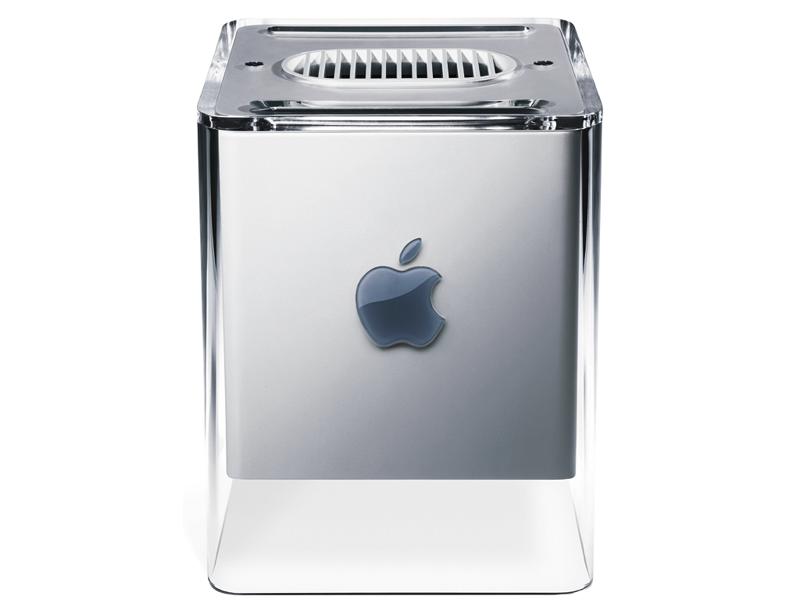
Here's a nice list of real (ongoing?) flops: LEM Road Apples They include the G4 Cube which, along with the Apple
-
Re:Question
Not always, my b&w G3 can't boot off of its firewire...
http://lowendmac.com/ppc/g3c.shtml -
Re:Even the judiciary loves Apple.
-
Re:The Switch Marketing Myth
Exhibit A
Yeah, they weren't at an all-time high in 2004, although they were on an upswing in terms of raw numbers sold.
Exhibit B
But come 2005, their unit sales were up 43%. So, taking a 3500KMac as the 2004 number, that means the 2005 number is around 5000KMac, which beats the 1996 spike.
So, apparently the ad campaign is working better than you think. -
Tiger Requires a Firewire machine
Tiger only runs on machines that have built-in firewire. That means the oldest laptop supported is the Pismo.
I'm sure the Xpostfacto folks are looking into how to get Tiger to run on older machines. -
Re:More copied features
-
Re:More copied features
We all know Apple invented the TabletPC, Media Center PC, PocketPC, XBox,
Okay, how about these? eMate (1997), MacTV (1993), Newton (1993), Pippin (1995) -
Re:2 words:
Networking, introduced in 1990 with AppleTalk and AppleShare in System 7
More like System 3 if not System 2 (and hardware support from the first Mac). The ANU Math department's Macs were running AppleTalk over their existing phone lines in 1985. System 7 added personal file sharing.
Color support, which allowed for Photoshop and other image programs, in 1988 with System 6
I was pretty sure this was wrong, so I checked.
1. Original MacOS supported 16 colors (but no hardware support).
2. Mac II shipped in 1987. Internal color representation was 48-bit (we're only just seeing mainstream support for this). Two graphics cards were initially offered, one supporting 16 colors from a 32-bit palette and another supporting 256. A 24-bit card soon became available.
3. It ran on System 4.1.
Mac II specs -
Another hardware phase-out?
When the Blue & White G3s came out in 1999, people were shocked that it lacked a 3.5" floppy disk drive. They provided a workaround, though: use a USB floppy drive.
Apple did it again when they released Macs that can no longer boot into OS 9. The workaround: use Classic.
And again with Panther, which requires a G3 with built-in USB, forcing many legacy Mac users to use XPostFacto as a workaround.
Then came iLife '04, which refuses to install certain iLife applications if you don't have a G4 processor. Third-party processor upgrade cards were the workaround.
Considering that all of Apple's current lineup of computers have optical drives that support DVD-ROMs, perhaps Apple is also, in its own way, gently nudging it's market to move away from data CD-ROMs to DVD-ROMs.
Especially when you consider the installation scheme for the retail version of Panther -- 3 CDs must be swapped if you want to install everything and iLife '04 & Classic aren't even included.
The retail version of Tiger may likely need only the one DVD (since iLife '05 isn't included) for the OS + XCode2.
While the "Apple Store visit for CDs" may be an inconvenient workaround, at least there is one. It beats buying a Mac-bootable Combo- or SuperDrive and installing it. -
iBook is not reliable!
The iBook is legendarily unreliable. My friend's iBook (nicknamed "iBork") has had to be sent back to apple for repairs no less than 3 times...
apple faced class action lawsuits over the iBook fiascos.
I'd seriously reconsider recommending an iBook to anyone. Just because it didn't happen to you doesn't mean it won't to the person you recommend it to. And statistically speaking, the ibook is very prone to failure compared to other laptops.
A powerbook is probably ok though. -
Yes, BeOS on a G3
Designed to run on a G3, no. Doesn't run? Not true. Plenty of people with G3 upgrade cards in their machines still running BeOS to this day... http://www.lowendmac.com/backnforth/010430.html
-
Re: For those who know"When Apple decided to go with NeXT over Be, Be couldn't even print. Be, while blazingly fast, was blazing fast for a reason. Nothing was running on it. Apple chose to go with the OS that was stable, proven, and gorgeous. Apple also got NeXT's unbelievably fast development environment, the leading application server software WebObjects, and the Mac's father and Apple's savior, Steve Jobs. (Personal note: I still remember leaving work late for Christmas vacation ecstatic after reading that Steve Jobs was back at Apple.)" -- David Puett
-
Re:License agreement
No. The reason there are no clones is because they'd get the living shit sued out of them, they'd have an injunction slapped against them halting all sales of their product, and they be out of business in months.
No, the reason there are no clones is that there used to be clones (like Power Computing), and one day Apple decided they didn't like it and they just pulled the plug on the licensing. Left with no way to continue to sell their only product(!), the companies quickly went out of business.
Anybody who might potentially want to start a clone company is involved enough in the Mac community to know the history, and they know that it's a losing proposition, because Apple has the power to wake up one day and decide to put you out of business, and past experience proves they're not afraid to do it if you make Macs that are cheaper and faster than Apple does.
Or at least that is the story told to me by a guy I used to work with who was one of the first 5 PowerComputing employees (and who stayed until the end, or even past the end, since he and another employee still did repairs and sold spare parts out of one guy's garage long after the company went kaput).
-
Already been done, an OSX virus
named Switchback which infected OSX Macs, but nobody noticed it.
There are others such as Renepo.B
MacOS MW2004 Trojan, MP3 Concept, Opener, and a sound driver virus.
I think clearly the only virus myth about OSX, is the myth that OSX has no viruses that can infect it. Apparently there are at least several examples of OSX viruses, and that number seems to grow. It may even double every year.
I've always felt that using a computer without virus protection was like having unprotected sex without a condom with multiple partners. Back in the old days, when they used to say that the Commodore Amiga had no viruses, and that only MS-DOS suffered from viruses, Amigas got their own viruses that infected their systems. Usually it was one of those Amiga demo programs that people downloaded from BBSes to show off the Amiga's graphics and sound. Someone would infect it with a virus and pass it around. Amiga users felt that the Amiga virus was a myth, and many got hit. Now I see the same thing happen for OSX, only OSX is on the Internet and is subject to more danagers than the BBS world once offered.
So yes, the facts speak for Symantec, that OSX viruses exist, and possibly they could grow in number.
This bone-headed stunt of offering a contest to virus infect two Macs only shows how gullable people are. It was a phoney contest. -
Re:Popularizing existing technologiesAnybody else remember the Radius Pivot monitors? 15 years ago, Radius had full-page Mac displays that would rotate 90 degrees while keeping everything right-side up... hooked up to a box with a 33Mhz 68030 more likely than not.
You could get NuBus interface cards for them, or even PDS (anyone even remember that format? toaster mac stuff.)
-
Re:And as ever, Apple creates the current paradigm
Yes, the Blackbirds were sweet. I wanted one so badly! Tell me, did Robert Brunner and his team design the case? Who designed the layout of the components? Was that Apple or Sony?
I don't doubt you because I know Brunner was the head of Apple's Industrial Design Lab at one time (and I think the "founder"), but I got my information from Lowendmac.com's PB 100 page, which states, "Sony designed the 100 by starting with the Mac Portable and reducing the size and weight of components as much as possible."
I'm not at all denigrating Brunner's design; I'm not one of those who slam aesthetics, especially when they serve (or at least compliment) functionality. I've loved every Mac that I've owned, even the ugly Centris 650 and the Beige G3. Do you know if Brunner designed the TiBook I'm typing this on, or had he already left Apple? -
Here it is
same site, lowend mac, after googling and getting turned onto the name from an old slashdot reference thread from years ago, oddly enough.
Daystar Genesis 2 or 4 processor, supposedly some upgrade cards made for them as well. Probably still an interesting machine in 4 processor maxed out memory mode. They claim 12 grand for the 4 processor model when it came out.
Me, still in the inventory here, a 512k, an LC, quadra (600? dang if I can remember now a nice one though, was GFs), (2) IIci, PB280, PB1400. All stick work fine, although the batts on the PBs are more or less totally gone. I keep the 1400 right here next to me in fact, rock solid get on the intarweb if needed, *securely* too. Beats the pants off of everyone else in that regard, heh.. Still can surf with iCab and listen to mp3 net streams with soundjam perfectly. 166 with 64 ram. -
Apple has been doing this for years ...
-
Re:WAIT...
Bring back the Daystar Genesis! Four 604e's; that was screaming! Of course, that one didn't come from Apple, but it's not correct that there has never been a 4-proc Mac.
-
that's cheap!
hey that's a bargin..... the single processor Mac IIfx cost $10,000 in 1990 and it was not even powerPC. it had a 40 MHz 68030 chip.
http://www.lowendmac.com/ii/iifx.shtml
i have one somewhere in a closet, i got it for free. -
Re:it's an empty case
Wasn't that the one designed and manufactured by Sony, way before Sony did the Vaio?
PB 100
I'm not saying you're completely wrong. I'm just pointing out that Apple isn't the font of all innovation, just most of it. =) And I guess one should credit them with partnering with Sony. -
Re:Wait until someone trys to market one...As if the all-in-one iMac form factor computer was something that Apple invented.
No kidding. I mean check this thing out - it's ancient. It totally predates the iMac, so I can't see how Apple gets all the credit for such a design.
-
Re:Wait until someone trys to market one...
As if the all-in-one iMac form factor computer was something that Apple invented.
My Macintosh SE/30 says they did, and its ancestors agree, starting from the original Mac 128k. Well, maybe Apple didn't invent the form factor entirely, but they definitely were the first to deploy it on a large scale.I distinctly remember Compaq Prolinea (sp?) 486 all-in-one computers, which crammed a CD-Rom, Floppy(!), and all the other needed parts into an oversized 14"-15" monitor.
Yes. This form factor was rather popular at the time. I don't know when the Prolineas hit the market, but the Macintosh Performa 520 appeared in 1993. -
Re:Wait until someone trys to market one...
As if the all-in-one iMac form factor computer was something that Apple invented.
My Macintosh SE/30 says they did, and its ancestors agree, starting from the original Mac 128k. Well, maybe Apple didn't invent the form factor entirely, but they definitely were the first to deploy it on a large scale.I distinctly remember Compaq Prolinea (sp?) 486 all-in-one computers, which crammed a CD-Rom, Floppy(!), and all the other needed parts into an oversized 14"-15" monitor.
Yes. This form factor was rather popular at the time. I don't know when the Prolineas hit the market, but the Macintosh Performa 520 appeared in 1993. -
Re:it's an empty case
eMachines copying the iMac wasn't the first. I'd probably have to say everyone copying Apple's first laptop/notebook computer was the first, check out the PowerBook 100. This is back when a PowerBook wasn't powerpc-based (68k) and portable PCs were only available as a "luggable" desktop. (very heavy!)