Slashdot Mirror
Domain: microsoft.com
Stories and comments across the archive that link to microsoft.com.
Stories · 1,971
-
Windows 7 RC Download Page Points To May Release
An anonymous reader writes "Someone over at Redmond flipped the wrong switch, it would seem. Ars Technica spotted that the Windows 7 download page on TechNet had switched to say Release Candidate instead of Beta. It's now back to Beta, but not before Ars got all the details off the page: 'The public RC will apparently be coming in May 2009, and not in April as previously rumored. The RC testing program will be available at least through June 2009, and the actual build will expire June 1, 2010. Both 32-bit and 64-bit versions will be available in English, German, Japanese, French, and Spanish.' A screenshot and all the text on the RC download page, which was set to be published 'May 2009' is saved over at Ars." -
Microsoft Launches Free Web Software Eco-System
An anonymous reader writes "Microsoft, inspired perhaps by the ease of selecting and installing iPhone apps, has taken a similar approach to gather back market share of its IIS web server in a predominantly Apache/PHP market. 10 open source CMS, gallery, wiki, and blog tools were chosen to populate the eco-system, dubbed Web App Gallery. Developers must agree to principles and can now submit their PHP or .NET application for inclusion. Once an application is in the gallery, Windows users use Microsoft Web Platform Installer, released in a keynote at MIX this week, which inspects the the local system, and installs and configures dependencies like the IIS webserver, PHP, URL re-writers, and file permissions. Screenshots show this to be quite easy for the typical computer user. This could provide some real competition for WAMP and Linux shell install processes." -
Microsoft Launches Free Web Software Eco-System
An anonymous reader writes "Microsoft, inspired perhaps by the ease of selecting and installing iPhone apps, has taken a similar approach to gather back market share of its IIS web server in a predominantly Apache/PHP market. 10 open source CMS, gallery, wiki, and blog tools were chosen to populate the eco-system, dubbed Web App Gallery. Developers must agree to principles and can now submit their PHP or .NET application for inclusion. Once an application is in the gallery, Windows users use Microsoft Web Platform Installer, released in a keynote at MIX this week, which inspects the the local system, and installs and configures dependencies like the IIS webserver, PHP, URL re-writers, and file permissions. Screenshots show this to be quite easy for the typical computer user. This could provide some real competition for WAMP and Linux shell install processes." -
UAC Whitelist Hole In Windows 7
David Gerard writes "Microsoft tried to make Vista secure with User Access Control (UAC). They relaxed it a bit in Windows 7 because it was such a pain in the backside. Unfortunately, one way they did this (the third way so far found around UAC in Windows 7) was to give certain Microsoft files the power to just ... bypass UAC. Even more unfortunately, one of the DLLs they whitelisted was RUNDLL32.EXE. The exploit is simply to copy (or inject) part of its own code into the memory of another running process and then telling that target process to run the code, using standard, non-privileged APIs such as WriteProcessMemory and CreateRemoteThread. Ars Technica writes up the issue, proclaiming Windows 7 UAC 'a broken mess; mend it or end it.'" -
UAC Whitelist Hole In Windows 7
David Gerard writes "Microsoft tried to make Vista secure with User Access Control (UAC). They relaxed it a bit in Windows 7 because it was such a pain in the backside. Unfortunately, one way they did this (the third way so far found around UAC in Windows 7) was to give certain Microsoft files the power to just ... bypass UAC. Even more unfortunately, one of the DLLs they whitelisted was RUNDLL32.EXE. The exploit is simply to copy (or inject) part of its own code into the memory of another running process and then telling that target process to run the code, using standard, non-privileged APIs such as WriteProcessMemory and CreateRemoteThread. Ars Technica writes up the issue, proclaiming Windows 7 UAC 'a broken mess; mend it or end it.'" -
Microsoft Phasing Out ESP Simulation Platform?
Ian Lamont writes "Overlooked in last month's news about Microsoft laying off the entire Flight Simulator dev team is the news that Microsoft's ESP development team has been gutted as well, and the future of the platform is in doubt. ESP is oriented toward industrial use, and lets companies build 3D simulations for flight and other applications. Late last year Microsoft announced big plans to expand ESP to other verticals, such as real estate, city planning, and law enforcement. That looks increasingly unlikely. Even though Microsoft declined to comment on ESP's future, companies which invested in the product are angry, judging by some of the comments on an MSDN thread. As noted by one user, 'my company used it for a solution and invested time and money into getting it approved and purchased. Microsoft sure handed us a raw deal for taking a gamble on their platform.'" -
Microsoft's Augmented Reality, Video Photosynth
Al writes "Microsoft demonstrated new augmented-reality software for cell-phones at the 2009 TechFest conference, which was held this week in Redmond. Instead of using GPS or WiFi triangulation, the prototype system relies entirely on scene-recognition to identify its position and add virtual objects to a video picture of the real world. TechFest is a showcase for lots of projects at Microsoft's various research labs. Other technologies on show included Photosynth for video, an image-tracking system for handwriting, a way of refining image searches using colors, and a 3-D version of Microsoft Surface." -
Microsoft Unveils "Elevate America"
nandemoari writes "In response to the current economic crisis, Microsoft Corp. has come out with a stimulus plan of their own. Their goal is to help a large group of individuals use their computers to land employment in ways other than to generate a compelling resume. The new online initiative, Elevate America, is set to equip close to 2 million people (over the next three years) with the skills needed to succeed in the field of technology." -
MS Publishes Papers For a Modern, Secure Browser
V!NCENT writes with an excerpt from a new publication by Microsoft: "As web sites evolved into dynamic web applications composing content from various web sites, browsers have become multi-principal operating environments with resources shared among mutually distrusting web site principals. Nevertheless, no existing browsers, including new architectures like IE 8, Google Chrome, and OP, have a multi-principal operating system construction that gives a browser-based OS the exclusive control to manage the protection of all system resources among web site principals. In this paper, we introduce Gazelle, a secure web browser constructed as a multi-principal OS. Gazelle's Browser Kernel is an operating system that exclusively manages resource protection and sharing across web site principals." Here's the full research paper (PDF). -
MS Publishes Papers For a Modern, Secure Browser
V!NCENT writes with an excerpt from a new publication by Microsoft: "As web sites evolved into dynamic web applications composing content from various web sites, browsers have become multi-principal operating environments with resources shared among mutually distrusting web site principals. Nevertheless, no existing browsers, including new architectures like IE 8, Google Chrome, and OP, have a multi-principal operating system construction that gives a browser-based OS the exclusive control to manage the protection of all system resources among web site principals. In this paper, we introduce Gazelle, a secure web browser constructed as a multi-principal OS. Gazelle's Browser Kernel is an operating system that exclusively manages resource protection and sharing across web site principals." Here's the full research paper (PDF). -
Microsoft Unveils Windows 7 File-Sharing Beta
nandemoari writes "Microsoft yesterday released a trial version of new file-sharing software intended for use with its upcoming and highly-anticipated operating system. The new software allows PC users to swap files with the computers of friends, family, and trusted colleagues along safe, secure channels. Dubbed 'Windows Live ID Sign-in Assistant 6.5,' the beta connects the Windows Live IDs of individual users with a Windows 7 account, essentially building a secure link between data stored on a hard drive and information accessible via Windows Live online." -
I'm a PC and I'm 4-1/2
theodp writes "Microsoft's new Windows ad made its debut during the Grammy Awards on Sunday. It stars a 4-year-old cutie named Kylie (Silverlight required) showing how easy it is to use Windows Live Photo Gallery to edit and share photos. And while it's impressive that little Kylie is able to transfer a snapshot of her pet fish from her camera to a PC, color-correct it, and e-mail it to her family, what's truly amazing is that the toddler was also apparently able to read, understand, and accept Windows Live's Terms of Use and Privacy Policy. (But minors can't legally execute contracts, can they?)" -
I'm a PC and I'm 4-1/2
theodp writes "Microsoft's new Windows ad made its debut during the Grammy Awards on Sunday. It stars a 4-year-old cutie named Kylie (Silverlight required) showing how easy it is to use Windows Live Photo Gallery to edit and share photos. And while it's impressive that little Kylie is able to transfer a snapshot of her pet fish from her camera to a PC, color-correct it, and e-mail it to her family, what's truly amazing is that the toddler was also apparently able to read, understand, and accept Windows Live's Terms of Use and Privacy Policy. (But minors can't legally execute contracts, can they?)" -
The Broken Design of Microsoft's "Fix it" Tool
$luggo writes "Curious about MS Fix It, I recently went hunting in the MS knowledge base for articles that provide the new EZ-button. After locating on few, I decided to click the button to download the Microsoft Installer package containing the executable and/or files that automatically enable the DVD Library feature in Windows Vista Home Premium and Ultimate — on my XP Media Center. 'Surely, MS will use some scripting, HTTP User-Agent sniffing, or even Genuine Windows validation to verify that I am running Vista,' I thought. It did not and I canceled the download when I received the prompt to save the file. So, I wonder: is there a Fix-it for Fix it? Because I can easily imagine someone doing what I did without scrolling to the bottom of the KB article and verifying that the article applies to their OS/version. This is a great example poor design. Why not simply use the download approach that other articles / fixes / service packs use, whereby the user must select the appropriate OS?" -
Microsoft Surface To Coordinate SuperBowl Security
suraj.sun writes to tell us that in preparation for nearly a quarter of a million people descending on Tampa for the Super Bowl, the Tampa authorities are deploying new tech for security communications and response. All of the incidents and communications will be plotted and tracked on a new implementation of Microsoft's Surface. Hopefully it wont have to reboot after every new incident report. "The Microsoft Surface device will display a Microsoft Virtual Earth map of the entire region tracking events, incidents, resources and tasks in real-time using its unique large display, multi-user, multi-touch and interactive capabilities, also allowing it to communicate with remote devices and PCs. With a quick hand-gesture, the map can zoom in and display a 3D image of the city, including detailed views of buildings and streets and real time resource tracking." -
Data Privacy Day Wrap-Up
Several companies, government bodies and other groups have decided to label January 28th as an annual tech holiday of sorts, Data Privacy Day. Mortimer.CA writes "Various organizations had events on it including Intel, Microsoft, Google, and the Privacy Commissioner of Canada. It seems to have been mostly a quiet affair this time around, but hopefully it will grow over time." -
Bill Gates' Plan To Destroy Music, Note By Note
theodp writes "Remember Mr. Microphone? If you thought music couldn't get worse, think again. Perhaps with the help of R&D tax credits, Microsoft Research has spawned Songsmith, software that automatically creates a tinny, childish background track for your singing. And as bad as the pseudo-infomercial was, the use of the product in the wild is likely to be even scarier, as evidenced by these Songsmith'ed remakes of music by The Beatles, The Police, and The Notorious B.I.G.." -
MS Silverlight To Stream Obama Inauguration Events
Ilgaz writes in to let us know that we will have to install MS Silverlight 2 to watch the US President's inauguration online. Everyone running Mac PPC, Linux, and FreeBSD has been left out, as there are no working Silverlight 2-capable alternatives on these systems. Here is Microsoft's press release announcing the selection of Silverlight yesterday. Streaming of various events around the inauguration begins today at the Presidential Inaugural Committee site, which touts its "inclusive and accessible" coverage. -
Microsoft Tag, Smartphone-Scannable Barcodes
dhavleak writes "Microsoft Research has come up with Microsoft Tag: '...just aim your camera phone at a Tag and instantly access mobile content, videos, music, contact information, maps, social networks, promotions, and more. Nothing to type, no browsers to launch!' Device support is fairly extensive (iPhone, WinMo, BlackBerry and more), and tag scanning appears to work quickly and reliably from different distances and angles. Long Zheng has an overview on his site. The Tag is similar to a barcode, but has obvious visual differences — colored vs. black and white, and triangles vs. squares or lines. The technology looks interesting, but will it get the adoption necessary to be successful? What applications do you see for such technology?" -
Microsoft Tag, Smartphone-Scannable Barcodes
dhavleak writes "Microsoft Research has come up with Microsoft Tag: '...just aim your camera phone at a Tag and instantly access mobile content, videos, music, contact information, maps, social networks, promotions, and more. Nothing to type, no browsers to launch!' Device support is fairly extensive (iPhone, WinMo, BlackBerry and more), and tag scanning appears to work quickly and reliably from different distances and angles. Long Zheng has an overview on his site. The Tag is similar to a barcode, but has obvious visual differences — colored vs. black and white, and triangles vs. squares or lines. The technology looks interesting, but will it get the adoption necessary to be successful? What applications do you see for such technology?" -
Windows 7 Beta Released To Public After Delay
Z80xxc! writes "The Windows 7 Beta release is now available for download by the general public, in 32-bit and 64-bit flavors. Microsoft had previously announced availability around 3 PM PST on Friday, but after unexpected numbers of people proved to be interested in the download, had to postpone it to add more servers." -
Windows 7 Beta Released To Public After Delay
Z80xxc! writes "The Windows 7 Beta release is now available for download by the general public, in 32-bit and 64-bit flavors. Microsoft had previously announced availability around 3 PM PST on Friday, but after unexpected numbers of people proved to be interested in the download, had to postpone it to add more servers." -
Windows 7 Beta Released To Public After Delay
Z80xxc! writes "The Windows 7 Beta release is now available for download by the general public, in 32-bit and 64-bit flavors. Microsoft had previously announced availability around 3 PM PST on Friday, but after unexpected numbers of people proved to be interested in the download, had to postpone it to add more servers." -
Panasonic Working On 2-Terabyte SD Cards
An anonymous reader writes "SD cards with a theoretical maximum capacity of 2TB are in development by Panasonic and the SD Association, it has been announced. The technology is called 'Secure Digital Extended Capacity', or 'SDXC', and Panasonic has announced it will soon show off a 64GB SDXC card. Using the new technology, read/write speeds are set to hit 300MBps. SanDisk and Sony are using the same standard to develop Extended Capacity cards in Sony's Memory Stick Pro and Memory Stick Micro range. SDXC utilises Microsoft's new exFAT file system — AKA 'FAT 64' — which first appeared in Windows Vista SP1, and has a theoretical file size limit of 16 exbibytes." Reader xlotlu adds a note about the "proprietary exFAT file system, which is available for licensing under NDA. There are currently no specific patents on exFAT, but its legal status is uncertain since it's based on FAT. The FAT patents have been previously upheld in court." -
Panasonic Working On 2-Terabyte SD Cards
An anonymous reader writes "SD cards with a theoretical maximum capacity of 2TB are in development by Panasonic and the SD Association, it has been announced. The technology is called 'Secure Digital Extended Capacity', or 'SDXC', and Panasonic has announced it will soon show off a 64GB SDXC card. Using the new technology, read/write speeds are set to hit 300MBps. SanDisk and Sony are using the same standard to develop Extended Capacity cards in Sony's Memory Stick Pro and Memory Stick Micro range. SDXC utilises Microsoft's new exFAT file system — AKA 'FAT 64' — which first appeared in Windows Vista SP1, and has a theoretical file size limit of 16 exbibytes." Reader xlotlu adds a note about the "proprietary exFAT file system, which is available for licensing under NDA. There are currently no specific patents on exFAT, but its legal status is uncertain since it's based on FAT. The FAT patents have been previously upheld in court." -
Phishing Is a Minimum-Wage Job
rohitm918 writes "A study by Microsoft Research concludes that phishers make very little (PDF): '...low-skill jobs pay like low-skill jobs, whether the activity is legal or not.' They also find that the Gartner numbers that everyone quotes ($3.2B/year etc) are rubbish, off by a factor of 50. 'Even though it harvests "free money," phishing generates total revenue equal to the total costs incurred by the actors. Each participant earns, on average, only as much as he would have made in the opportunities he gave up elsewhere. As the total phishing effort increases the total phishing revenue declines: the harder individual phishers try the worse their collective situation gets. As a consequence, increasing effort is a sign of failure rather than of success.'" -
Microsoft Uses WGA To Obtain Record Jail Sentences
theodp writes "According to Microsoft, 'No information is collected during the [Genuine Advantage Program] validation process that can be used to identify or contact a user.' That's little comfort to the software counterfeiters who were just handed jail sentences ranging from 1.5-6.5 years by the Futian People's Court in China, especially since Microsoft contends that much of the estimated $2B in bogus software was detected by its Windows Genuine Advantage program. 'Software piracy negatively impacts local economic growth,' explained Microsoft VP Fengming Liu in a celebratory New Year's Eve press release. But then again, so does transferring $16B of assets and $9B in annual profit to an Irish tax haven, doesn't it?" -
Microsoft Uses WGA To Obtain Record Jail Sentences
theodp writes "According to Microsoft, 'No information is collected during the [Genuine Advantage Program] validation process that can be used to identify or contact a user.' That's little comfort to the software counterfeiters who were just handed jail sentences ranging from 1.5-6.5 years by the Futian People's Court in China, especially since Microsoft contends that much of the estimated $2B in bogus software was detected by its Windows Genuine Advantage program. 'Software piracy negatively impacts local economic growth,' explained Microsoft VP Fengming Liu in a celebratory New Year's Eve press release. But then again, so does transferring $16B of assets and $9B in annual profit to an Irish tax haven, doesn't it?" -
Microsoft Invents $1.15/Hour Homework Fee For Kids
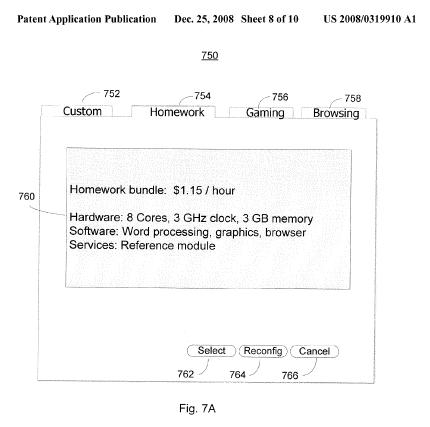
theodp writes "Microsoft's vision of your computing future is on display in its just-published patent application for the Metered Pay-As-You-Go Computing Experience. The plan, as Microsoft explains it, involves charging students $1.15 an hour to do their homework, making an Office bundle available for $1/hour, and billing gamers $1.25 for each hour of fun. In addition to your PC, Microsoft also discloses plans to bring the chargeback scheme to your cellphone and automobile — GPS, satellite radio, backseat video entertainment system. 'Both users and suppliers benefit from this new business model,' concludes Microsoft, while conceding that 'the supplier can develop a revenue stream business that may actually have higher value than the one-time purchase model currently practiced.' But don't worry kids, that's only if you do more than 52 hours of homework a year!" -
MS Issues Critical SQL Server Flaw Warning
silent wire writes "ZDNet is reporting on a pre-patch security advisory from Microsoft warning about an unpatched remote code execution vulnerability affecting its SQL Server line. Exploit code is publicly available so affected users should pay special attention to the workarounds from Microsoft." -
Experts Say To Switch Browsers In Light of IE Vulnerability
It appears that the exploit in IE briefly mentioned a few days ago is causing a serious reaction: SteveAU writes "Microsoft has begun flooding media outlets with information advising users to switch to an alternate browser while a serious security flaw is being patched. The flaw, which affects all versions of Microsoft Internet Explorer, is manifested via malware and has infected over 6,000 sites thus far. Microsoft states: 'The vulnerability exists as an invalid pointer reference in the data-binding function of Internet Explorer. When data binding is enabled (which is the default state), it is possible under certain conditions for an object to be released without updating the array length, leaving the potential to access the deleted object's memory space. This can cause Internet Explorer to exit unexpectedly, in a state that is exploitable.'" According to the BBC report, though, Microsoft itself is only asking that users be "vigilant while it investigated and prepared an emergency patch"; it's outside experts who say to dump IE (at least for now).
Update: 12/16 21:11 GMT by KD : Microsoft will issue an emergency critical update for IE tomorrow. -
Windows Vista Service Pack 2 Expected Tomorrow
arcticstoat writes "After dishing out a few copies of the beta of Windows Vista Service Pack 2 to select customers in October, Microsoft has now decided to let the general public get their hands on the beta of the service pack, starting from tomorrow. The beta of the service pack will be made available via Microsoft's Customer Preview Program on 4 December, and it includes all the updates since Service Pack 1, as well as a few other bits and pieces. Most notably, Microsoft says that Service Pack 2 'improves performance for Wi-Fi connection after resuming from sleep mode,' and adds the Bluetooth 2.1 Feature Pack, ID strings for VIA's Nano CPU and support for the exFAT file system for large flash devices." -
Microsoft Researchers Study "Cyberchondria"
Slatterz introduces us to the first major study on "cyberchondria" by Microsoft researchers (abstract, paper [PDF]). The news that it can be a bad idea to search the Internet to see if you have a terrible disease should come as no surprise. According to the NYTimes article, the syndrome has been known as "cyberchondria" since at least the year 2000 (we discussed it a few years back). It refers to increased anxiety brought on when people with little or no medical training go searching for answers to common medical complaints on the Web. The article compares cyberchondria with a phenomenon well known among second-year medical students, called "medical schoolitis." The researchers note that Web searchers' propensity to jump to awful conclusions is "basic human behavior that has been noted by research scientists for decades." -
Microsoft Researchers Study "Cyberchondria"
Slatterz introduces us to the first major study on "cyberchondria" by Microsoft researchers (abstract, paper [PDF]). The news that it can be a bad idea to search the Internet to see if you have a terrible disease should come as no surprise. According to the NYTimes article, the syndrome has been known as "cyberchondria" since at least the year 2000 (we discussed it a few years back). It refers to increased anxiety brought on when people with little or no medical training go searching for answers to common medical complaints on the Web. The article compares cyberchondria with a phenomenon well known among second-year medical students, called "medical schoolitis." The researchers note that Web searchers' propensity to jump to awful conclusions is "basic human behavior that has been noted by research scientists for decades." -
Microsoft To Offer Free Anti-Virus Software
Dynamoo writes "The good news is that Microsoft have announced free anti-virus software for consumers, dubbed Morro, available late next year. The bad news is ... well, exactly the same. Although Microsoft's anti-malware products are pretty good, this move could drive many competitors out of business and create a dangerous security monoculture; major rivals will be lawyering up already. On the other hand, many malware infections could be prevented even by basic software. So is this going to be a good or bad thing overall?" -
Programming .NET 3.5
lamaditx writes "The world of the .NET framework is taken to the next level by the release of .NET 3.5. The intended audience of this book are experienced .NET programmers. There are no sections that tell you details about C#, SQL servers or anything like that. I don't recommend this book if you never worked on a .NET project and don't know how to set up a SQL database. You should be aware that the code is written in C#. You might use one of the software code converters if you prefer Visual Basic instead. I think the code is still readable even if you do not know C#. I appreciate the fact that the authors decided to use one language only because it keeps the book smaller. The authors assume you are using Visual Studio 2008. You don't necessarily need to update to 2008 if you are working with an older edition because you can use the free Express Edition to get started." Keep reading for the rest of Adrian's review. Programming .NET 3.5 author Jesse Liberty & Alex Horovitz pages 476 publisher O'Reilly Media rating 7/10 reviewer Adrian Lambeck ISBN ISBN 978-0-596-52756-3 summary Covers all main .NET technologies found in .NET 3.5 The table of contents is available from O'Reilly — together with a chapter preview — here. The book does not come with any extras but includes the usual free 45 days access to the book on Safari.
This book covers the key technologies in .NET. There are books on each of these technologies: Windows Presentation Foundation (WPF), Windows Communication Foundation (WCF), XAML, AJAX,C# and Silverlight already, but this book shows you how everything is connected with each other. As the authors note: "Our goal is to show you the 25% that you will use 85% of the time.". From my point of view this is good because I have a .NET 2.0 background and wanted to know what is new in .NET 3.5 and how things are connected.
The book is divided in 3 main parts. The first is presentation, which covers XAML, WPF and AJAX. The second describes how to take advantage of the design pattern support in .NET. The last part covers the business layer which includes LINQ, WCF, WF and CardSpace.
The first part starts with XAML. This is the eXtensible A The next main topic is using WPF which is the successor of Windows Forms. The authors explain how to connect data structures to the user interface which I consider to be one of the most important parts of using WPF. You will also find a lot of code and XAML layout descriptions.
The chapter on Silverlight was not very helpful to me. Silverlight is the competitor of Adobe Flash. Giving samples how to layout a Silverlight application is essentially the same as a WPF application thus it dives into more details of XAML. I am missing the real Silverlight message so this part did not meet my expectations.
The third technology you will learn about is AJAX which leads us away from the desktop client to a web client. The explanation how AJAX works is pretty good. The authors show you step by step how to create a todo list web-application with a database backend using ASP.NET and AJAX. Again, this does not cover all AJAX controls or ASP.NET but it shows you how the parts are interconnected and assumes that if you know how to handle one control, then you can also figure out how to handle all the others. Most web applications need some kind of access control. At this point the authors argue that it is faster to implement your own security tables instead of using the ASP.NET forms-based controls.My opinion is that you should never do something that is not correct to teach something else. There are always people who get it wrong in a way you did not anticipate. My recommendation: use the ASP.NET components and do not implement them by yourself.
The second part about the design patterns was surprising to me because I expected the common introduction to standard design pattern. The Model-View-Controller project implements the pattern for ASP.NET and allows developers to incorporate it easily. The advantage is that you get a comprehensive and easy to understand introduction how .NET supports design pattern implementation. I guess this will lead some developers from theory of design patterns to actually implementing them.
I consider the third part to be the real interesting content. It starts with LINQ which bridges object-oriented code to relational databases. You get to know the differences to SQL and also the advantages it provides by explaining new concepts. The examples are easy to understand and successfully make their point.
Windows Communication Foundation (WCF) covers the hot Service-Oriented-Architecture (SOA) topic. The authors explain what it is all about but you will need some knowledge about Web Services and XML to really get it. The introduction is rather short but more details are explained in the corresponding example.
The chapter about Windows Workflow Foundation (WF) starts with a short example how you implement a workflow without WF. After that you get to see how you do the same with WF. This way the necessity for WF become clear and you understand how to take advantage of this technology.
Card Space is the successor of Microsoft passport which was not successful as an authentication service with respect to user acceptance. This is also the key issue that decides on the success of Card Space. Maybe the improved interoperability will help. The chapter provides you with a short authenticate-yourself test and shows you how to offer Card Space authentication in your ASP.NET application.
The book is a good entry to the world of .NET 3.5 because it gives you an idea about every part and what it is good for. Maybe you do not need all of it for your job but at least you know that it exists and how it might be useful. I think it is reasonable that a comprehensive introduction to .NET 3.5 can not satisfy everybody because the range of topics is too broad. One can argue that this kind of information could also be retrieved from the net. I consider the book to be a better resource because it already summarizes the important information such that you do not drown in a flood of information.
There is also some criticism as I pointed out earlier. Maybe I am just a little picky about the details but if you print code download references into a book, they must be available. Most examples can be downloaded but the Alex Horovitz site was not reachable when I tried to access it. Another personal remark is that I do not like to see quotes from Wikipedia. Other people might think different about that so you just need to decide on your own.
I rate this book a 7. The authors scratch the surface of every topic and choose an appropriate style to explain it. You can tell that they thought about how to explain each topic on it's own and give you not just the "how" but also the "why".
Adrian Lambeck is a graduate student in "Media and Information Technologies" and worked with .NET for a few years.
You can purchase Programming .NET 3.5 from amazon.com. Slashdot welcomes readers' book reviews -- to see your own review here, read the book review guidelines, then visit the submission page. -
Microsoft Announces Windows Azure, Cloud-Based OS
snydeq writes "Microsoft today introduced Windows Azure, its operating system for the cloud. The OS serves as the underlying foundation of the Azure Services Platform to help developers build apps that span from the cloud to the datacenter, to PCs, the Web, and phones. Cloud-based developer capabilities are combined with storage, computational, and network infrastructure services, which are hosted on servers within Microsoft's global data center network." -
Microsoft to Issue Emergency Patch For File-Sharing Hole
An anonymous reader writes "Microsoft said late Wednesday that it plans to release a critical security update today to plug a security hole present in all supported versions of Windows. The company hasn't released any details about the patch yet, which is expected to be pushed out at 1 p.m. PT. Normally, Redmond issues security updates on Patch Tuesday, the second Tuesday of each month. The Washington Post's Security Fix blog notes that each of the three times in the past that Microsoft has departed from its patch cycle, it was to fix some really nasty vulnerability that criminals already were exploiting to break into Windows PCs." Reader filenavigator points out an article which describes the hole as an SMB vulnerability, and says it "allows anyone to access a Windows machine remotely without any user name or password. Any machine that exposes Windows file sharing is vulnerable." Update: 10/23 17:42 GMT by T : Reader AngryDad adds a link to Microsoft's more detailed memo. -
Microsoft to Issue Emergency Patch For File-Sharing Hole
An anonymous reader writes "Microsoft said late Wednesday that it plans to release a critical security update today to plug a security hole present in all supported versions of Windows. The company hasn't released any details about the patch yet, which is expected to be pushed out at 1 p.m. PT. Normally, Redmond issues security updates on Patch Tuesday, the second Tuesday of each month. The Washington Post's Security Fix blog notes that each of the three times in the past that Microsoft has departed from its patch cycle, it was to fix some really nasty vulnerability that criminals already were exploiting to break into Windows PCs." Reader filenavigator points out an article which describes the hole as an SMB vulnerability, and says it "allows anyone to access a Windows machine remotely without any user name or password. Any machine that exposes Windows file sharing is vulnerable." Update: 10/23 17:42 GMT by T : Reader AngryDad adds a link to Microsoft's more detailed memo. -
Ballmer Admits Google Apps Are Biting Into MS Office
twitter points out coverage of a discussion between Steve Ballmer and two Gartner analysts in which the Microsoft CEO admits that Google Apps is enjoying an advantage over Office by users who want to share their documents. He points to Office Live as their response to Google, and adds, "Google has the lead, but, if we're good at advertising, we'll compete with them in the consumer business." Whether or not they're good at advertising is still in question, if their recent attempts are any indication. Ballmer also made statements indicating some sort of arrangement with Yahoo! could still be in the works, but Microsoft was quick to step on that idea. Regarding Windows Vista, he said Microsoft was prepared for people to skip it altogether, and that Microsoft would be "ready" when it was time to deploy Windows 7. -
Microsoft's Ethical Guidelines
hankwang writes "Did you know that Microsoft has ethical guidelines? It's good to know that 'Microsoft did not make any payments to foreign government officials' while lobbying for OOXML, and that 'Microsoft conducts its business in compliance with laws designed to promote fair competition' every time they suppressed competitors. In their Corporate Citizenship section, they discuss how the customer-focused approach creates products that work well with those of competitors and open-source solutions. So all the reverse-engineering by Samba and OpenOffice.org developers wasn't really necessary." -
Microsoft's Ethical Guidelines
hankwang writes "Did you know that Microsoft has ethical guidelines? It's good to know that 'Microsoft did not make any payments to foreign government officials' while lobbying for OOXML, and that 'Microsoft conducts its business in compliance with laws designed to promote fair competition' every time they suppressed competitors. In their Corporate Citizenship section, they discuss how the customer-focused approach creates products that work well with those of competitors and open-source solutions. So all the reverse-engineering by Samba and OpenOffice.org developers wasn't really necessary." -
Where's the "IronPerl" Project?
pondlife writes "A friend asked me today about using some Microsoft server components from Perl. Over the years he's built up a large collection of Perl/COM code using Win32::OLE and he had planned on doing the same thing here. The big problem is that as with many current MS APIs, they're available for .NET only because COM is effectively deprecated at this point. I did some Googling, expecting to find quickly the Perl equivalent of IronPython or IronRuby. But to my surprise I found almost nothing. ActiveState has PerlNET, but there's almost no information about it, and the mailing list 'activity' suggests it's dead or dying anyway. So, what are Perl/Windows shops doing now that more and more Microsoft components are .NET? Are people moving to other languages for Windows administration? Are they writing wrappers using COM interop? Or have I completely missed something out there that solves this problem?" -
Microsoft Updates Multiple Sysinternals Tools
wiedzmin writes "A couple of very useful updates have just been released by Microsoft for the ever so popular Sysinternals tool set. The most notable one is ProcessMonitor v2.0 which will now include 'real-time TCP and UDP monitoring.' Another one, released earlier this year — Desktops 1.0, provides a very unique multi-thread way to get multiple desktops running on your Windows box." -
Microsoft Updates Multiple Sysinternals Tools
wiedzmin writes "A couple of very useful updates have just been released by Microsoft for the ever so popular Sysinternals tool set. The most notable one is ProcessMonitor v2.0 which will now include 'real-time TCP and UDP monitoring.' Another one, released earlier this year — Desktops 1.0, provides a very unique multi-thread way to get multiple desktops running on your Windows box." -
Microsoft Updates Multiple Sysinternals Tools
wiedzmin writes "A couple of very useful updates have just been released by Microsoft for the ever so popular Sysinternals tool set. The most notable one is ProcessMonitor v2.0 which will now include 'real-time TCP and UDP monitoring.' Another one, released earlier this year — Desktops 1.0, provides a very unique multi-thread way to get multiple desktops running on your Windows box." -
Inexpensive USB LCD With Linux Drivers For LCDproc
An anonymous reader writes "The Windows Vista SideShow technology shows some promise. But what about Linux devices that can present snippets of information independent of the main display? Here's a review of the picoLCD-4x20, a relatively inexpensive USB device ($50) that supports both SideShow on Vista and LCDproc on Linux." -
IE8 Breaking Microsoft's Web Standards Promise?
An anonymous reader points out a story in The Register by Opera Software CTO Hakon Lie which tells the story of how Microsoft's interoperability promise for IE8 seems to have been broken in less than six months. Quoting: "In March, Microsoft announced that their upcoming Internet Explorer 8 would: use its most standards compliant mode, IE8 Standards, as the default. Note the last word: default. Microsoft argued that, in light of their newly published interoperability principles, it was the right thing to do. This declaration heralded an about-face and was widely praised by the web standards community; people were stunned and delighted by Microsoft's promise. This week, the promise was broken." -
Will W3C Accept DRM For Webfonts?
dotne writes "Microsoft has submitted Embedded OpenType (EOT) to W3C and a slimy campaign for EOT has been launched. EOT is a DRM layer on top of normal TrueType/Opentype files; EOT ties a font file to a certain web page or site and prevents reuse by other pages/sites. Microsoft's IE has supported EOT for years, but it has largely been ignored due to the clumsiness of having to regenerate font files when a page changes. Now that other browsers are moving to support normal TrueType and OpenType on the web (Safari, Opera, Mozilla, Prince), W3C is faced with a question: should they bless Microsoft's EOT for use on the web? Or, should they encourage normal font files on the web and help break Microsoft's forgotten monopoly?" -
IE8 Beta Released To Public
Tim writes "English, German, Simplified Chinese, and Japanese versions of Internet Explorer 8 have been released for public beta. New features include accelerators, which provide instant context menu access for a number of common tasks; automatic crash recovery, which prevents a single page's failures from taking down your entire browser; and browser privacy, a feature that didn't make Firefox 3. I'm primarily a Firefox user, and I've been using IE8 at work (MS) for the past few weeks. It's a definite improvement over previous versions, and brings a lot to the table that Firefox requires extensions for. Give it a spin, submit feedback, and help keep all browser makers on their toes by facing each other's competition."